Словари

Словарь английского языка | Значения слов, определения и примеры

verb
/ɪnˈvɛnt/
изобретать (izobretat')

to create or design something that has not existed before

"Thomas Edison invented the electric bulb."
"Томас Эдисон изобрёл электрическую лампочку." (Tomas Edison izobrely elektricheskuyu lampochku.)
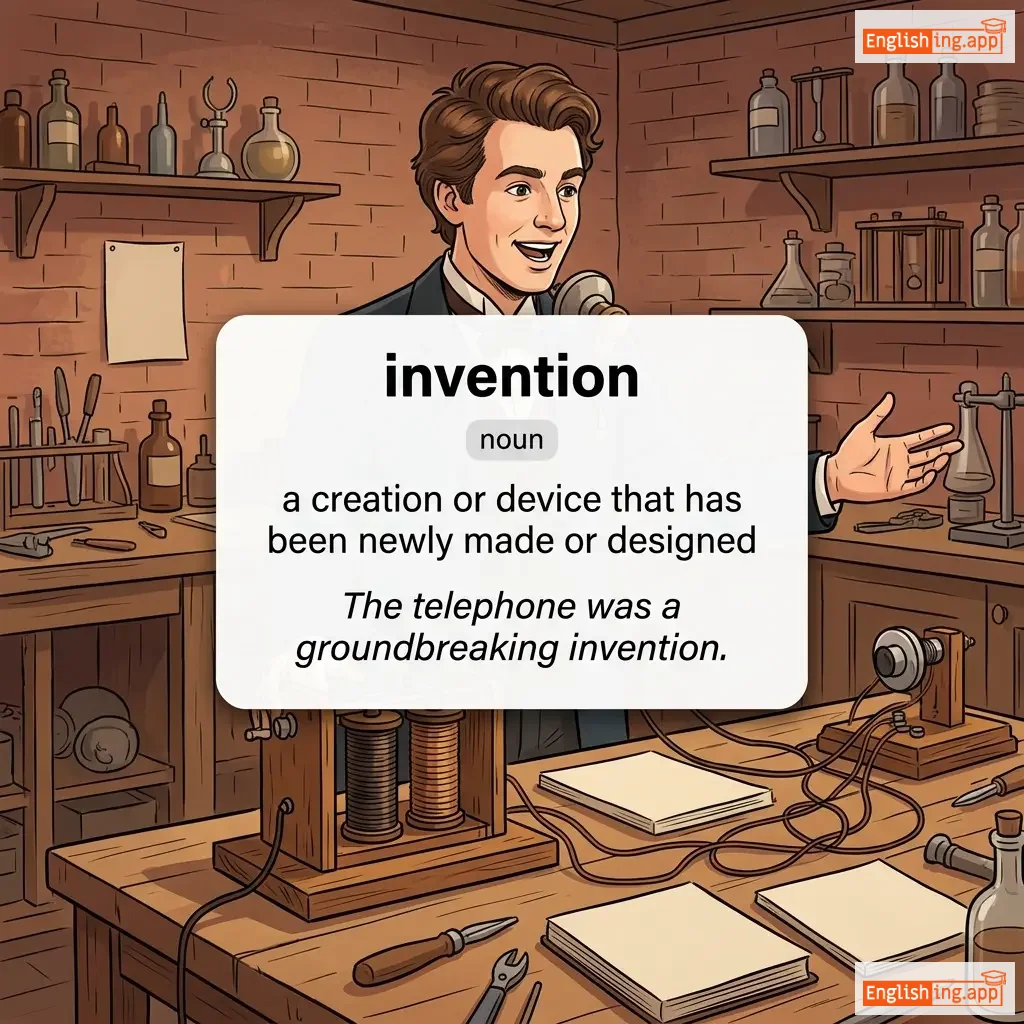
invention definition card — visual illustration of the meaning
noun
/ɪnˈvɛnʃən/
изобретение (izobretenie)

a creation or device that has been newly made or designed

"The telephone was a groundbreaking invention."

"Телефон был революционным изобретением." (Telefon byl revolyutsionnym izobreteniem.)
adjective
/ɪnˈvɛntɪv/
изобретательский (izobretatelskiy)

Having the ability to create or design new things or to think originally.

"The inventor was known for his inventive solutions to everyday problems."

"Изобретатель был известен своими изобретательскими решениями повседневных проблем." (Izobretatel' byl izvesten svoimi izobreterskimi resheniyami povsednevnykh problem.)
noun
/ɪnˈventər/
изобретатель (izobretatel)

a person who creates or designs something new, especially a device, method, or process

"The inventor patented her new medical device."

"Изобретатель запатентовал свое новое медицинское устройство." (Izobretatel zapatentoval svoe novoe meditsinskoe ustroistvo)
noun
/ˈɪnvənˌtɔːri/
инвентарь (inventar)

A complete list of items, such as goods in stock or property.

"The shopkeeper checked the inventory before opening the store."

"Продавец проверил инвентарь перед открытием магазина." (Prodavets proveril inventar' pered otkrytiyem magazina.)
adjective
/ˌɪnˈvɜːrs/
обратный (obratny)

Opposite in position, direction, order, or effect.

"There is an inverse relationship between price and demand."

"Существует обратная зависимость между ценой и спросом." (Sushchestvuet obratnaya zavisimost' mezhdu tsenoy i sprosom.)
adverb
/ɪnˈvɜːrs.li/
наоборот; противоположным образом (naoborot; protivopolozhnym obrazom)

in a way that is opposite or contrary; in reverse order or manner

"The price of goods is inversely related to their availability in the market."

"Цена товаров обратно пропорциональна их доступности на рынке." (Tsena tovarov obratno proporcionali naikh dostupnosti na rynke.)
noun
/ɪnˈvɜːrʒən/
инверсия (inversiya)

A reversal of the normal order, position, or relationship.

"In poetry, inversion is often used to create emphasis."

"В поэзии инверсия часто используется для создания акцента." (V poezii inversiya chasto ispol'zuyetsya dlya sozdaniya aktsenta.)
verb
/ɪnˈvɜːrt/
перевернуть (perevernut')

To turn something upside down or in the opposite position, order, or direction.

"He inverted the glass to let the water drain out."

"Он инвертировал стакан, чтобы вода стекала." (On invertiroval stakan, chtoby voda stekala.)
invest definition card — visual illustration of the meaning
verb
/ɪnˈvɛst/
инвестировать (investirovat)

to put money, time, or effort into something with the expectation of achieving a benefit

"He decided to invest in real estate to secure his future."

"Он решил инвестировать в недвижимость, чтобы обеспечить свое будущее." (On reshil investirovat' v nedvizhimost', chtoby obespechit' svoyo budushcheye.)
verb
/ɪnˈvɛs.tɪ.ɡeɪt/
расследовать (rassledovat)

to carry out a systematic inquiry to discover facts or information

"The police will investigate the incident thoroughly."

"Полиция будет тщательно расследовать происшествие." (Politsiya budet tchatel'no rassledovat' proisshestvie.)
noun
/ɪnˌvɛs.tɪˈɡeɪ.ʃən/
расследование (rassledovanie)

the process of inquiring into or examining something carefully to find the truth

"The investigation revealed new evidence about the fraud."

"Расследование выявило новые доказательства мошенничества." (Rassledovanie viyavilo novye dokazatel'stva moshenichestva.)
noun
/ɪnˈvɛstɪˌɡeɪtər/
счастье (schast'ye)

a person who carries out a formal inquiry or investigation

"The investigator gathered evidence from the crime scene."

"Она не могла скрыть своего счастья, когда получила награду." (Ona ne mogla skryt' svoego schast'ya, kogda poluchila nagradu.)
investing definition card — visual illustration of the meaning
verb
ɪnˈvɛst.ɪŋ
инвестирование (investirovanie)

The act of putting money into financial schemes, shares, property, or a commercial venture with the expectation of achieving a profit.

"Investing in stocks can generate long-term wealth."

"Инвестирование в акции может привести к долгосрочному богатству." (Investirovaniye v aktsii mozhet privedti k dolgосрochno bogatstvu.)
noun
/ɪnˈvɛstɪtʃər/
церемония посвящения (tseremoniya posvyashcheniya)

the formal ceremony of conferring authority, rank, or office

"The king held an investiture ceremony for the new knight."

"Король провел церемонию посвящения для нового рыцаря." (Korol' provel tseremoniya posvyashcheniya dlya novogo rytsarya.)
investment definition card — visual illustration of the meaning
noun
/ɪnˈvɛst.mənt/
инвестиция (investitsiya)

the action or process of putting money, time, or resources into something for future benefit

"Her investment in technology startups has paid off well."

"Её инвестиции в технологические стартапы принесли хорошие результаты." (Yeyo investitsii v tekhnologicheskiye startupy prinesli khoroshiye rezul'taty.)
noun
/ɪnˈvɛstər/
инвестор (investor)

a person or organization that puts money into financial schemes, property, or business ventures with the expectation of achieving a profit

"The investor funded the startup with a large sum of money."

"Инвестор профинансировал стартап крупной суммой денег." (Investor profinisiroval startup krupnoy summoy deneg.)
inveterate definition card — visual illustration of the meaning
adjective
/ɪnˈvɛtərət/
закоренелый (zakorenely)

having a long-established habit, activity, or interest that is unlikely to change

"He is an inveterate reader who spends hours in the library every day."

"Он закоренелый читатель, который проводит часы в библиотеке каждый день." (On zakorennelyy chitatel', kotoryy provodit chasy v biblioteke kazhdyy den'.)
verb
/ɪmˈbruː/
запятнать (zapyatnat')

To stain, especially with blood.

"His hands were imbrued with blood after the battle."

"Его руки были запятнаны кровью после битвы." (Ego ruki byli zapyatnany krovyu posle bitvy.)
Imbue definition card — visual illustration of the meaning
verb
/ɪmˈbjuː/
проникать (pronikát)

to inspire or permeate with a feeling or quality

"The teacher's passion for history imbued the students with curiosity."
"Страсть учителя к истории наполнила студентов любопытством." (Strast' uchitelya k istorii napolnila studentov lyubopytstvom.)
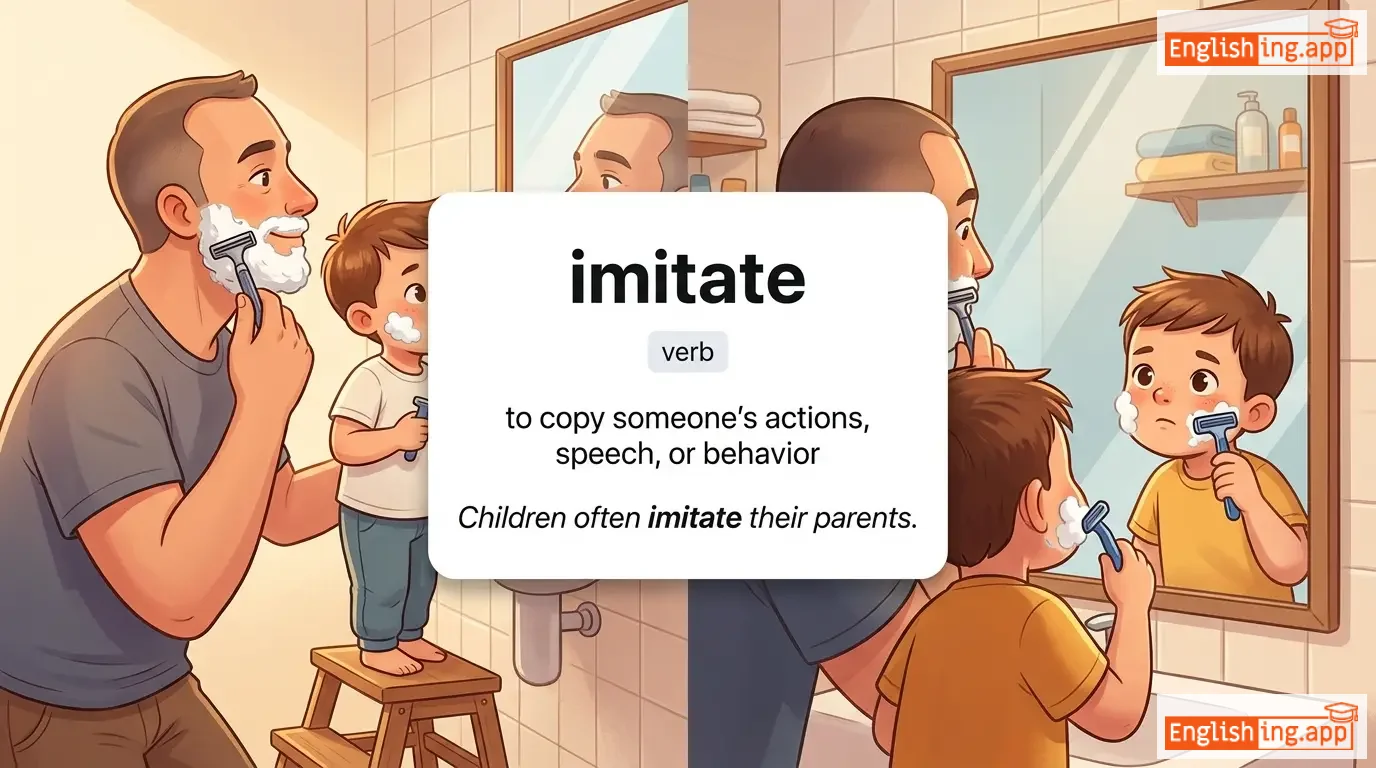
imitate definition card — visual illustration of the meaning
verb
/ˈɪmɪteɪt/
имитировать (imitirovat)

to copy someone's actions, speech, or behavior

"Children often imitate their parents."

"Дети часто имитируют своих родителей." (Deti chasto imitirovat svoikh roditeley.)
noun
/ˌɪmɪˈteɪʃən/
имитация (imitatsiya)

the act of copying or mimicking someone or something

"Children learn many skills through imitation."

"Дети учат много навыков через имитацию." (Deti uchat mnogo navykov cherez imitatsiyu.)
noun
/ˈɪmɪˌteɪtər/
имитатор (imitator)

a person who copies the behavior, style, or actions of others

"He became famous as an imitator of popular singers."

"Он стал известным как имитатор популярных певцов." (On stal izvestnym kak imitator populyarnykh pevtsov.)
adjective
/ɪˈmækjələt/
безупречный (bezuprichny)

perfectly clean, neat, or free from flaws

"Her room was immaculate, with everything in its place."

"Её комната была безупречной, всё было на своём месте." (Yeyo komnata byla bezuprechnoj, vsyo bylo na svoem meste.)
adjective
/ˈɪmənənt/
имманентный (immanentnyy)

existing or operating within; inherent

"He believed that moral values are immanent in human nature."

"Он верил, что моральные ценности имманентны человеческой природе." (On veril, chto moral'nye tsennosti immanentny chelovecheskoy prirode.)
adjective
/ˌɪməˈtɪəriəl/
неважный (nevajnyj)

Not important or relevant; lacking physical substance.

"The judge ruled that the argument was immaterial to the case."

"Судья постановил, что аргумент не имеет значения для дела." (Sud'ya postanovil, chto argument ne imeet znacheniya dlya dela.)
adjective
/ˌɪməˈtjʊər/
незрелый (nezrely)

Not fully developed; childish or lacking maturity.

"His immature behavior annoyed everyone at the meeting."

"Его незрелое поведение раздражало всех на собрании." (Yego nezreloye povedeniye razdrazhalo vsekh na sobranii.)
noun
/ˌɪməˈtjʊərəti/
незрелость (nezrelost)

the state of not being fully developed emotionally, mentally, or physically; lack of maturity

"His immaturity made it difficult for him to handle responsibility."

"Его незрелость мешала ему справляться с ответственностью." (ego nezrelost meshala emu spravlyatsya s otvetstvennostyu)
adjective
/ɪˈmɛʒərəbl/
неизмеримый (neizmerimyj)

Too great or extreme to be measured.

"Her kindness brought him immeasurable happiness."

"Ее доброта принесла ему неизмеримое счастье." (Eyo dobrota prinesla emu neizmerymoe schast'ye.)
immediacy definition card — visual illustration of the meaning
noun
/ɪˈmiːdiəsi/
неотложность, срочность (neotlozhnost, srochnoct)

The quality of bringing one into direct and instant involvement with something, giving rise to a sense of urgency or excitement.

"The immediacy of digital communication has reshaped business operations."

"Неотложность цифровой коммуникации изменила бизнес-операции." (Neotlozhnost tsifrovoi kommunikacii izmenila biznes-operacii.)
adjective
/ɪˈmiːdiət/
немедленный (nemedlennyy)

happening or done without delay

"The doctor gave her immediate attention."

"Доктор дал ей немедленное внимание." (Doktor dal yey nemedlennoe vnimanie.)
adverb
/ɪˈmiːdiətli/
немедленно (nemedlenno)

at once; without delay

"She responded immediately to the emergency call."

"Она немедленно ответила на экстренный звонок." (Ona nemedlenno otvetila na ekstrenny zvonok.)
adjective
/ˌɪməˈmɔːriəl/
вековой (vekovoy)

Extending back beyond memory or record; ancient.

"The tradition has been followed since time immemorial."

"Традиция соблюдается с незапамятных времен." (Traditsiya soblyudayetsya s nezapamyatnykh vremyon.)
adjective
/ɪˈmɛns/
огромный (ogromny)

Extremely large or great in size, amount, or degree.

"The project required an immense amount of effort."
"Проект потребовал огромного количества усилий." (Proyekt potreboval ogromnogo kolichestva usiliy.)
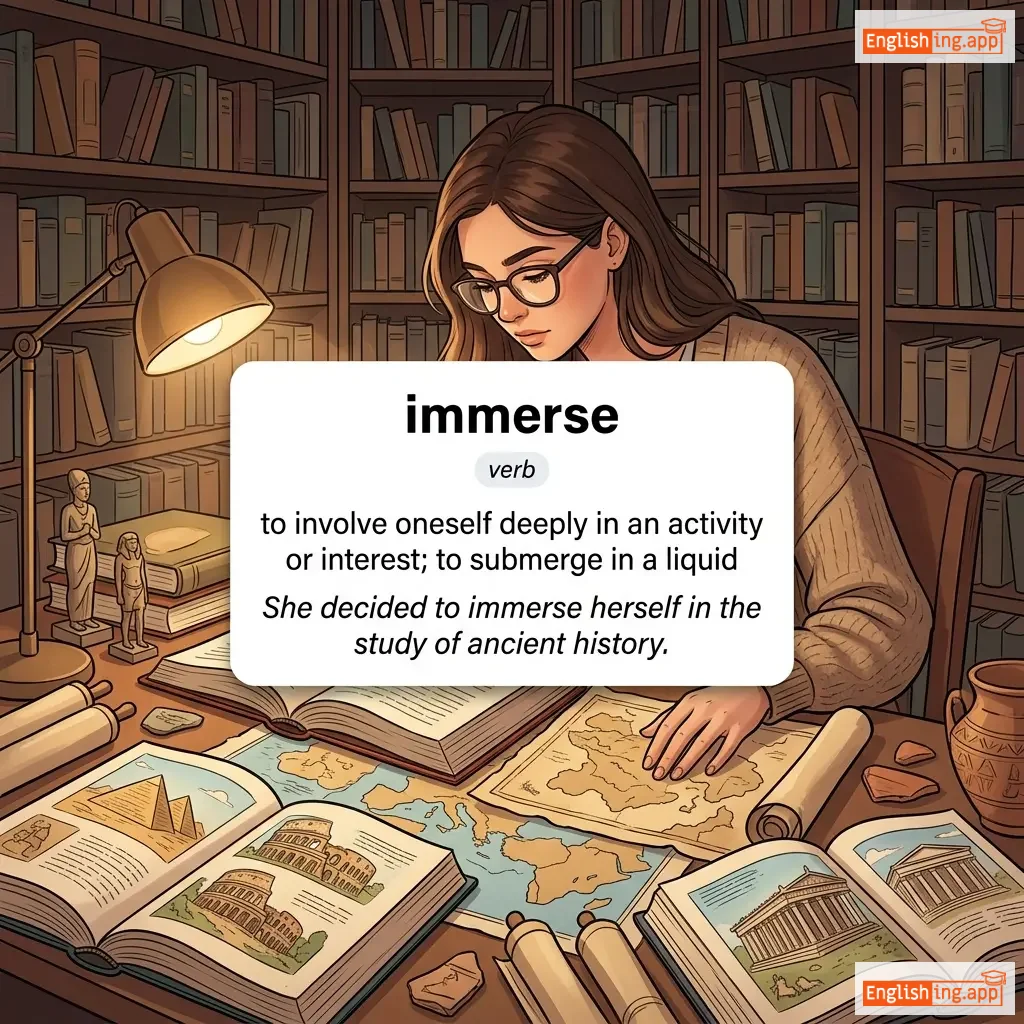
immerse definition card — visual illustration of the meaning
verb
/ɪˈmɜːrs/
погружать, углубляться (pogruzhat', uglubljatsya)

to involve oneself deeply in an activity or interest; to submerge in a liquid

"She decided to immerse herself in the study of ancient history."
"Она решила погрузиться в изучение древней истории." (Ona reshilas' pogruzit'sya v izuchenie drevney istorii.)
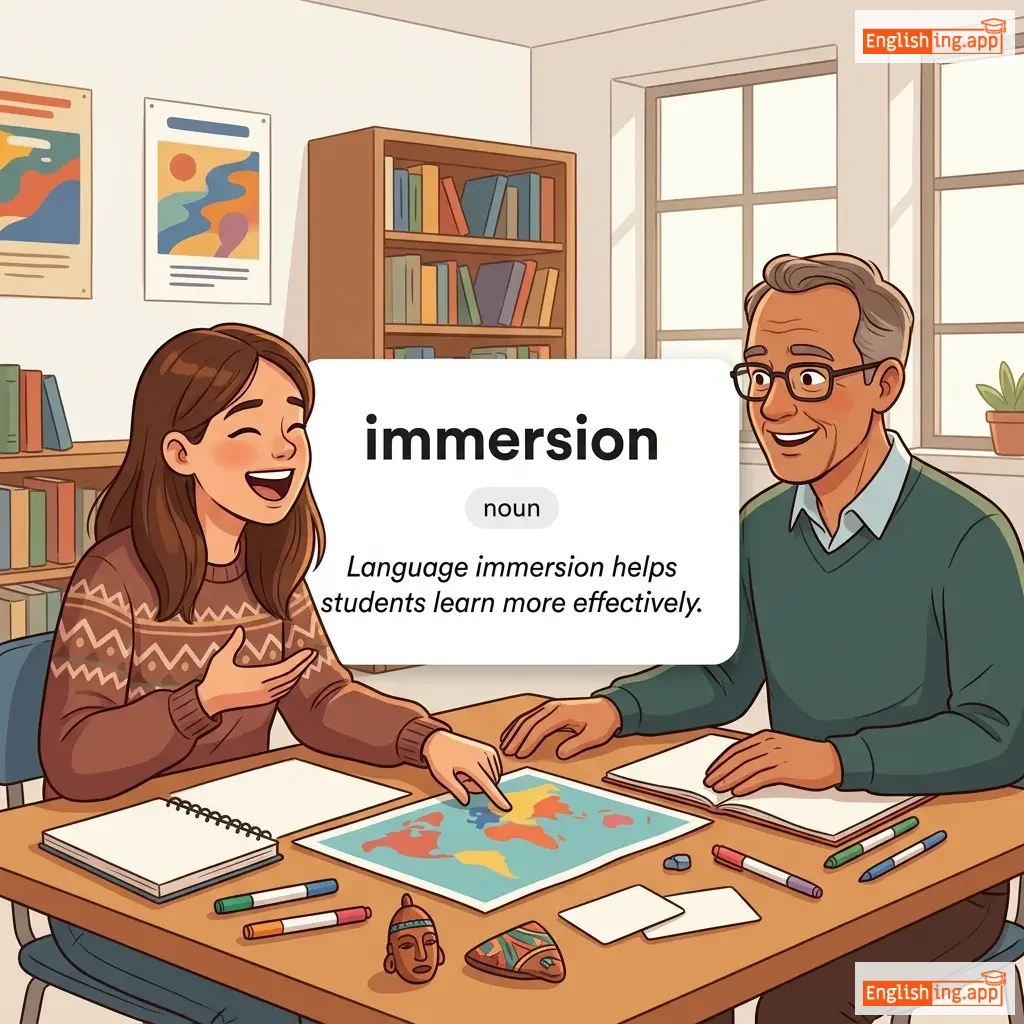
immersion definition card — visual illustration of the meaning
noun
/ɪˈmɜːrʒən/
погружение (pogruzhenie)

the act of deeply involving oneself in something; the state of being completely surrounded by liquid

"Language immersion helps students learn more effectively."

"Языковое погружение помогает студентам учиться более эффективно." (Yazykovoe pogruzhenie pomogaet studentam uchitsya boleye effektivno.)
immersive definition card — visual illustration of the meaning
adjective
ɪˈmɜː.sɪv
иммерсивный (immersivny)

Providing, involving, or characterized by deep absorption or immersion in something.

"The immersive experience of VR makes learning more interactive."

"Иммерсивный опыт виртуальной реальности делает обучение более интерактивным." (Immersivnyy opyt virtual'noy real'nosti delayet obucheniye boleye interaktivnym.)
noun
/ˈɪmɪɡrənt/
иммигрант (immigrant)

a person who comes to live permanently in a foreign country

"The city has welcomed many new immigrants this year."

"Город встретил много новых иммигрантов в этом году." (Gorod vstretil mnogo novykh immigrantov v etom godu.)
verb
/ˈɪmɪɡreɪt/
иммигрировать (immigrirovat)

to come to live permanently in a foreign country

"He immigrated to Canada five years ago."

"Он иммигрировал в Канаду пять лет назад." (On immigrivoval v Kanadu pyat' let nazad.)
noun
/ˌɪmɪˈɡreɪʃən/
иммиграция (immigratsiya)

the action of coming to live permanently in a foreign country

"Immigration policies vary from country to country."

"Политика иммиграции различается в зависимости от страны." (Politika immigratsii razlichayetsya v zavisimosti ot strany.)
noun
/ˈɪmɪnəns/
неотвратимость, близкое состояние (neotvratimosť, blizkoe sostoyanie)

the state of being about to happen

"The imminence of the storm forced people to take shelter."

"Неотвратимость шторма заставила людей искать укрытие." (Neotvratimosť shtorma zastavila lyudey iskat' ukrytiye.)
adjective
/ˈɪmɪnənt/
неотвратимый (neotvratimy)

About to happen; likely to occur very soon.

"Dark clouds signaled that a storm was imminent."

"Темные облака сигнализировали о том, что шторм был неминуем." (Temnye oblaka signalizirovali o tom, chto shtorm byl neminuem.)
adjective
/ɪˈmɪsəbl/
нерастворимый (nerastvorimy)

Describes liquids that do not mix together.

"Oil and water are immiscible liquids."

"Масло и вода - нерастворимые жидкости." (Maslo i voda - nerastvorimyye zhidkosti.)
adjective
/ɪˈmoʊbəl/
неподвижный (nepodvizhny)

unable to move or be moved

"After the accident, he was immobile for weeks."

"После аварии он был неподвижен несколько недель." (Posle avarii on byl nepodvizhen neskol'ko nedeley.)
noun
/ˌɪməʊˈbɪləti/
неподвижность (nepodvizhnost)

The state of being unable to move.

"After the accident, she suffered from immobility in her legs."

"После аварии она страдала от неподвижности в ногах." (Posle avarii ona stradala ot nepodvizhnosti v nogakh.)
adjective
/ɪˈmɒdərət/
чрезмерный (chrezmernij)

excessive; beyond reasonable limits

"He has an immoderate love for sweets."

"У него есть чрезмерная любовь к сладкому." (U nego est' chrezmernaia liubov' k sladkomu.)
adjective
/ɪˈmɒdɪst/
гордый / неприличный (gordyy / neprilichnyy)

lacking humility or decency; excessively proud or improper

"His immodest remarks offended the audience."

"Его высокомерные замечания обидели аудиторию." (Ego vysokomernye zamechaniya obideli auditoriyu.)
noun
/ɪˈmɒdəsti/
нескромность (neskromnost)

lack of modesty or decency; behavior or attitude that is overly bold or improper

"The article was criticized for its tone of immodesty."

"Статья была раскритикована за тон нескромности." (Statya byla raskritikovana za ton neskromnosti)
verb
/ˈɪməleɪt/
жертвовать огнем (zhertvovat ognyom)

To kill or sacrifice, especially by burning.

"The protesters threatened to immolate themselves in front of the building."

"Протестующие угрожали себя сжечь перед зданием." (Protestuyushchie ugrozhali sebya szhigat' pered zdaniem.)
adjective
/ɪˈmɒrəl/
аморальный (amoral'nyy)

Not conforming to accepted standards of morality; unethical or wicked.

"He was fired for his immoral behavior."

"Его уволили за его аморальное поведение." (Ego uvolili za ego amoral'noe povedenie.)