Словари

Словарь английского языка | Значения слов, определения и примеры

adjective
/ɪmˈpræktɪkəbl/
неосуществимый (neosuschestvimyj)

Not capable of being carried out or put into practice.

"The plan seemed impracticable due to limited resources."

"План казался неосуществимым из-за ограниченных ресурсов." (Plan kazalsya neosuschestvimym iz-za ogranichennyh resursov.)
verb
/ˈɪmprɪkeɪt/
проклинать (proklinat)

To utter a curse or invoke evil upon someone.

"The old woman imprecated her enemies with dark words."
"Старая женщина прокляла своих врагов темными словами." (Staraya zhenshchina proklyala svoikh vragov temnymi slovami.)
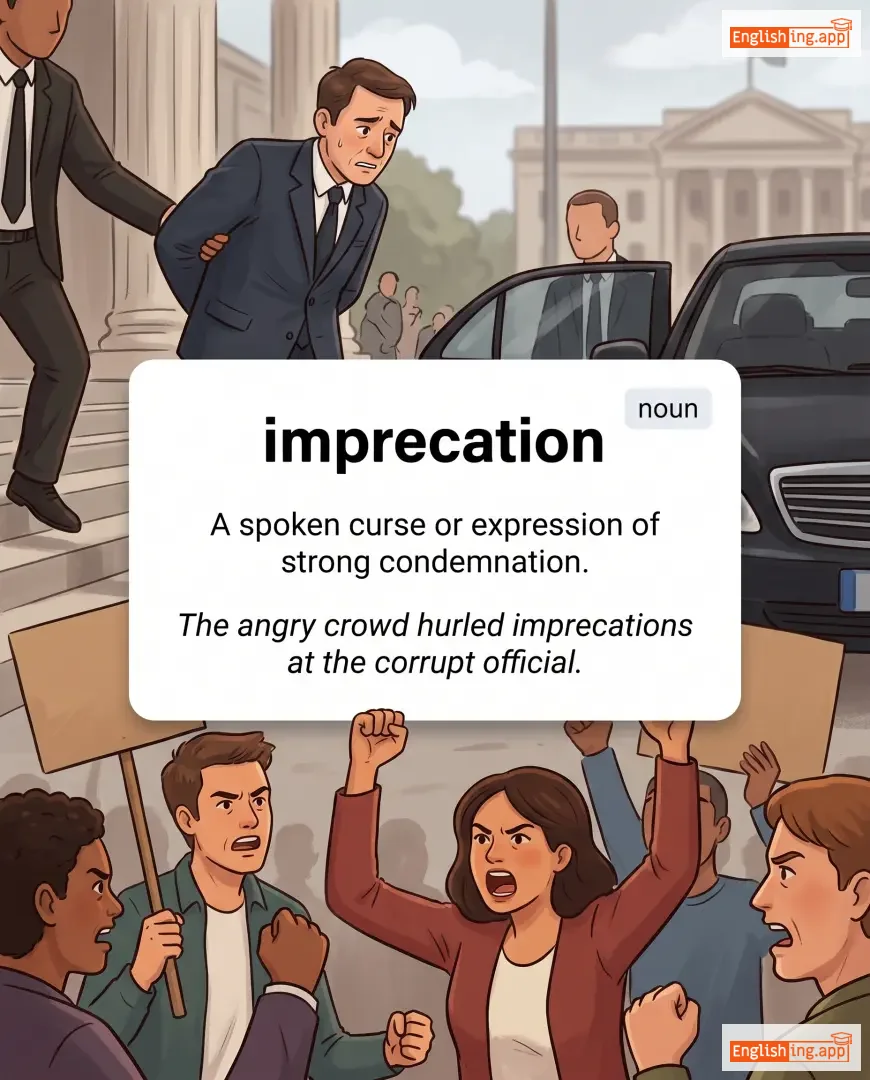
imprecation definition card — visual illustration of the meaning
noun
/ˌɪmprɪˈkeɪʃən/
проклятие (proklyatie)

A spoken curse or expression of strong condemnation.

"The angry crowd hurled imprecations at the corrupt official."

"Злая толпа бросала проклятия в сторону коррумпированного чиновника." (Zlaya tolpa brosala proklyatiya v storonu korruptsirovannogo chinovnika.)
adjective
/ˌɪmprɪˈsaɪs/
нечеткий (nechetkij)

Not exact or accurate; vague.

"His explanation was too imprecise to be helpful."

"Его объяснение было слишком неточным, чтобы быть полезным." (Ego obyasnenie bylo slishkom netochnym, chtoby byt' poleznym.)
adjective
/ɪmˈprɛɡnəbl̩/
неприступный (nepristupny)

Unable to be captured, broken into, or defeated.

"The fortress was considered impregnable by the enemy."

"Крепость была признана неприступной врагом." (Krepost' byla priznana nepristupnoy vragom.)
verb
/ˈɪmprɛɡneɪt/
пропитать / оплодотворить (propitat / oplodotvorit)

To make pregnant; to fill or saturate with something.

"The scientist used a method to impregnate the material with resin."

"Учёный использовал метод, чтобы пропитать материал смолой." (Uchyonnyy ispol'zoval metod, chtoby propitat' material smoloy.)
noun
/ˌɪmprəˈsɑːrioʊ/
импресарио (impresario)

A person who organizes or finances concerts, plays, or operas.

"The impresario arranged a series of concerts for the rising star."

"Импресарио организовал серию концертов для восходящей звезды." (Impresario organizoval seriyu kontsertov dlya voskhodyashchey zvezdy.)
verb
/ɪmˈprɛs/
впечатлять (vpechatlyat')

to cause someone to feel admiration or respect

"Her speech managed to impress the audience."

"Её речь впечатлила аудиторию." (Eyo rech' vpechatlila auditoriyu.)
noun
/ɪmˈprɛʃən/
впечатление, концепция (vpechatlenie, kontseptsia)

an idea, feeling, or opinion about something or someone

"The book gave me a good first impression."

"Книга оставила у меня хорошее первое впечатление." (Kniga ostavila u menya khoroshee pervoe vpechatlenie.)
adjective
/ɪmˈprɛsɪv/
впечатляющий, достойный восхищения (vpechatlyayushchiy, dostoynyy voskhishcheniya)

causing admiration or respect; remarkable

"The building is an impressive example of modern architecture."

"Здание является впечатляющим примером современной архитектуры." (Zdanie yavyayetsya vpechatlyayushchim primerom sovremennoy arkhitektury.)
noun
/ˌɪmprɪˈmɑːtər/
имприматур (imprimatur)

An official license or approval, especially to publish a book.

"The book was released with the official imprimatur of the church."
"Книга была выпущена с официальным imprimatur церкви." (Kniga byla vypushchena s ofitsial'nym imprimatur tserkvi.)
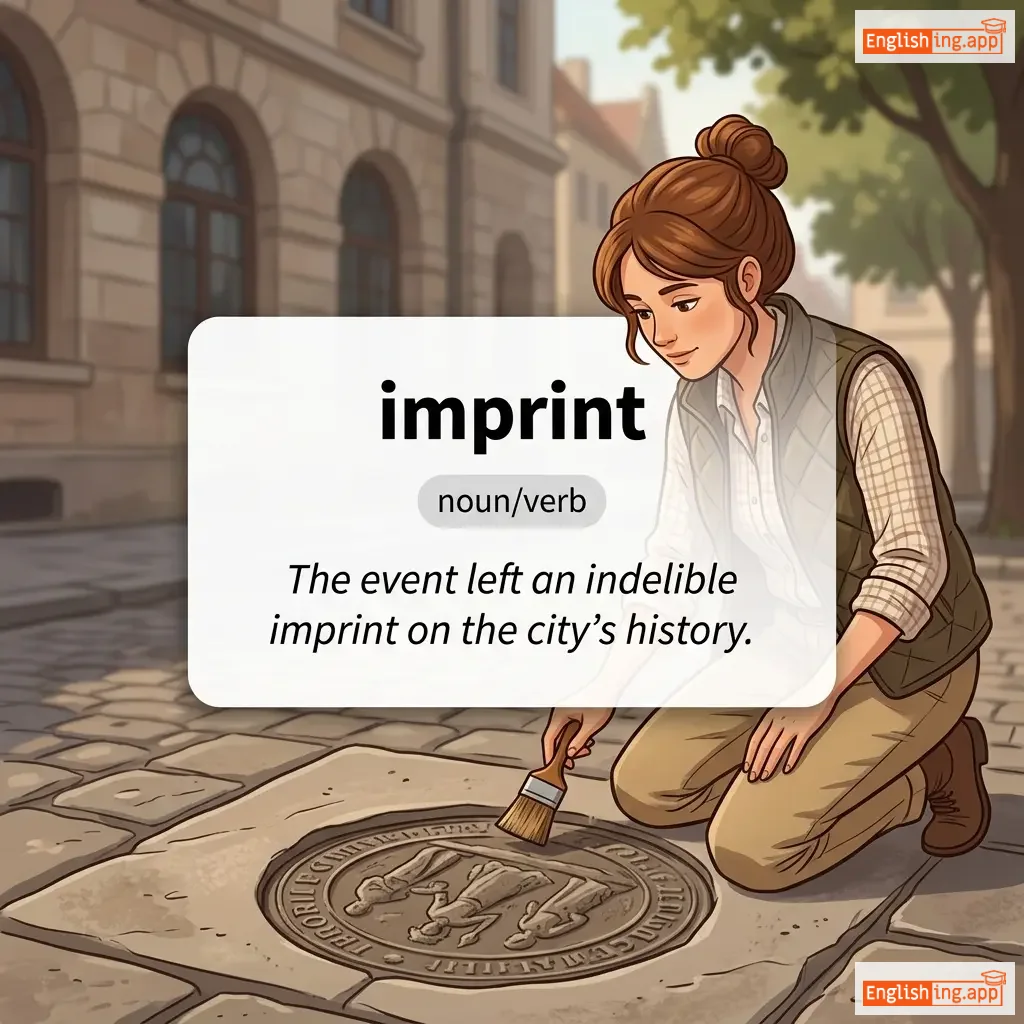
imprint definition card — visual illustration of the meaning
noun/verb
/ˈɪmprɪnt/
отпечаток; нанести отпечаток, впечатать в память (imprint)

A mark or impression made by pressure; to establish or fix firmly in someone's mind.

"The event left an indelible imprint on the city's history."
"Событие оставило неизгладимый след в истории города." (Sobytiye ostavilo neizgladimyj sled v istorii goroda.)
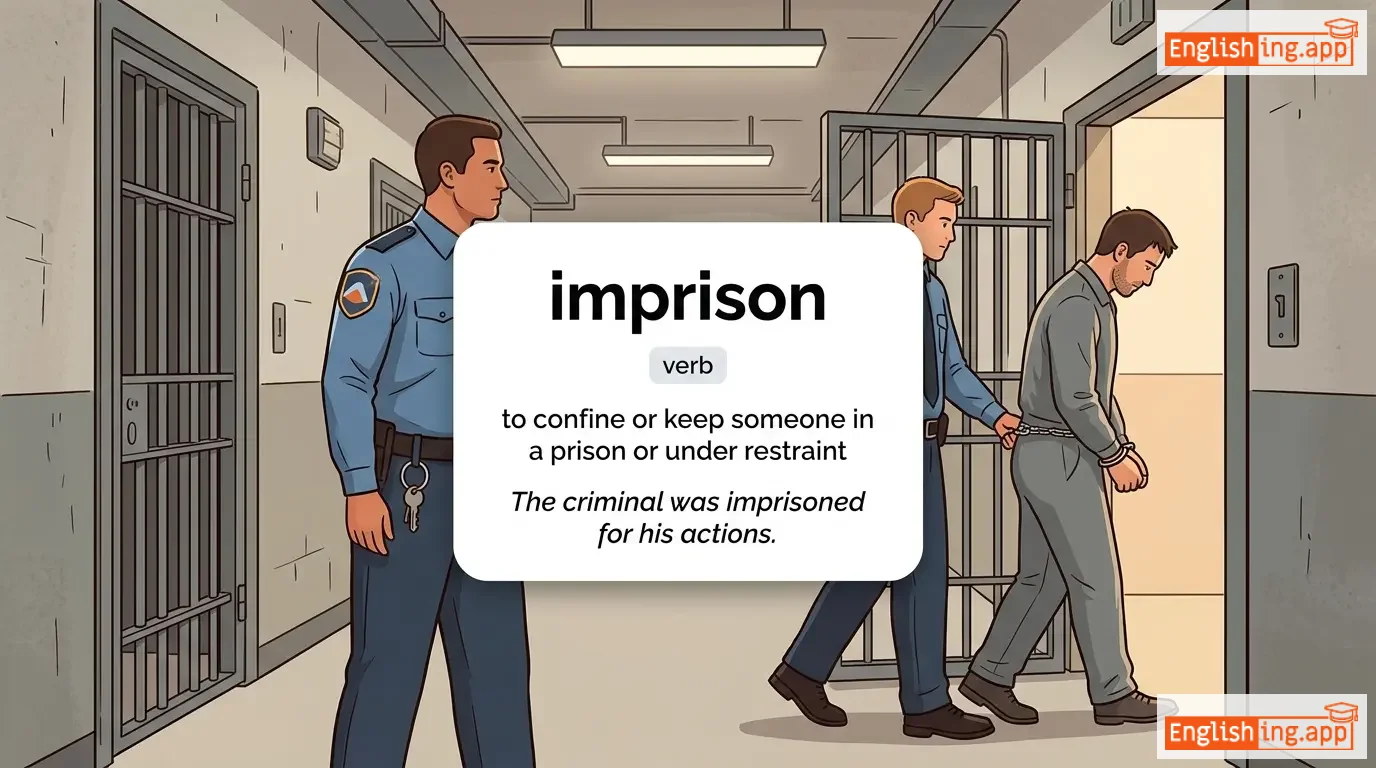
imprison definition card — visual illustration of the meaning
verb
/ɪmˈprɪzən/
заключать в тюрьму (zaklyuchat' v tyur'mu)

to confine or keep someone in a prison or under restraint

"The criminal was imprisoned for his actions."

"Преступник был заключен в тюрьму за свои действия." (Prestuplnik byl zaklyuchen v tyur'mu za svoi deystviya.)
noun
/ɪmˈprɪzənmənt/
тюремное заключение (tyuremnoe zaklyuchenie)

the act of putting someone in prison; the state of being confined as punishment

"He faced imprisonment for violating the court order."

"Ему грозило тюремное заключение за нарушение судебного приказа." (Emu grozilo tyuremnoe zaklyuchenie za narushenie sudebnogo prikaza)
noun
/ɪmˌprɒb.əˈbɪl.ə.ti/
невероятность (neveroyatnost)

the quality or state of being improbable; unlikely to be true or to happen

"The improbability of winning the lottery twice didn't stop her from buying tickets."

"Невероятность того, что она дважды выиграет в лотерею, не остановила её от покупки билетов." (Neveroyatnost togo, chto ona dvazhdy vyigrayet v lotereyu, ne ostanovila yeye ot pokupki bilete.)
adjective
/ɪmˈprɒbəbl/
маловероятный (maloveroyatny)

Not likely to be true or to happen.

"It seems improbable that he will arrive on time."
"Кажется маловероятным, что он приедет вовремя." (Kazhetsya maloveroyatnym, chto on priyedet vovremya.)
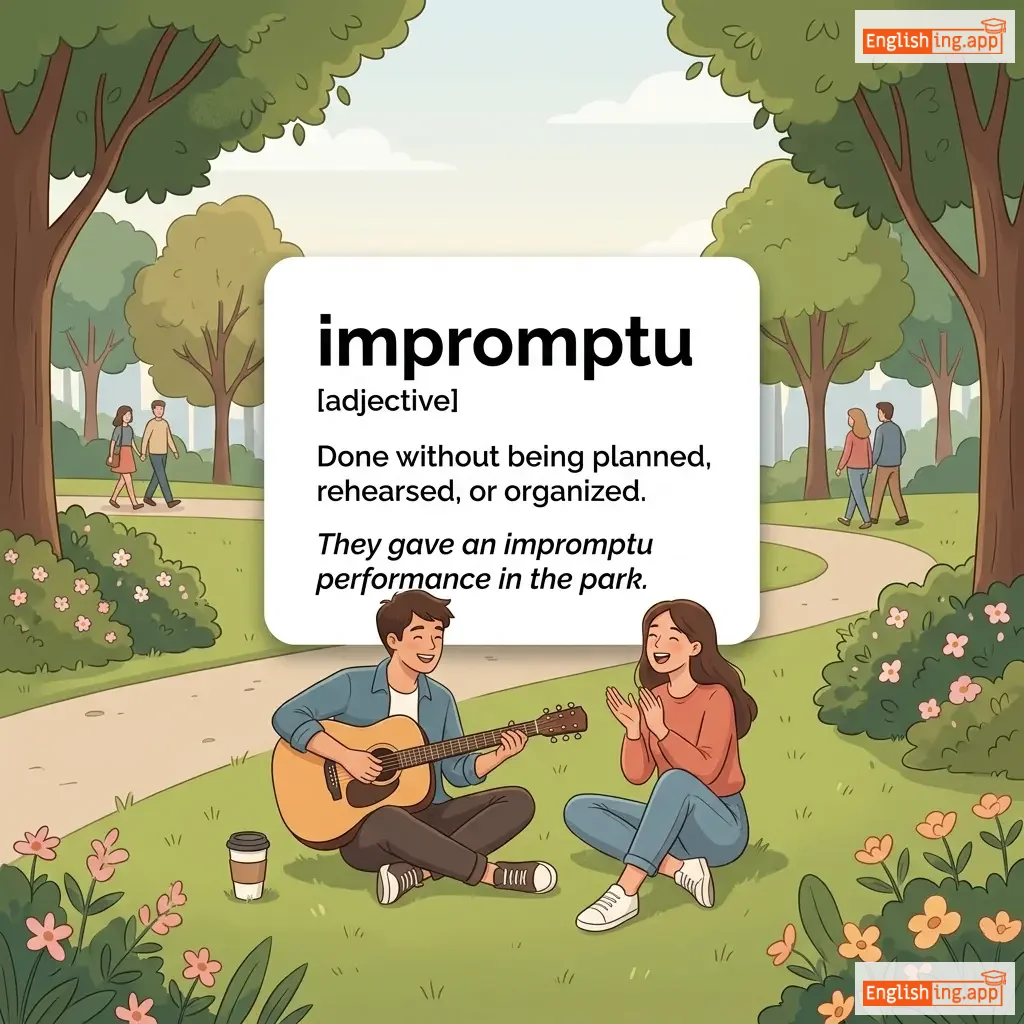
impromptu definition card — visual illustration of the meaning
adjective
/ɪmˈprɒmptjuː/
импровизированный (improvizirovannyy)

Done without being planned, rehearsed, or organized.

"They gave an impromptu performance in the park."

"Они устроили импровизированное выступление в парке." (Oni ustroili improvizirovannoe vystuplenie v parke.)
adjective
/ɪmˈprɒpər/
неподобающий (nepodobayushchiy)

Not suitable or appropriate; against accepted standards.

"It is improper to talk loudly in the library."

"Неприлично громко говорить в библиотеке." (Neprilichno gromko govorit' v biblioteke.)
noun
/ˌɪmprəˈpraɪəti/
неприличие (neprilichie)

Failure to observe standards of honesty or modesty; improper behavior.

"The politician was accused of financial impropriety."
"Политика обвинили в финансовом неприличии." (Politika obvinili v finansovom neprilichii.)
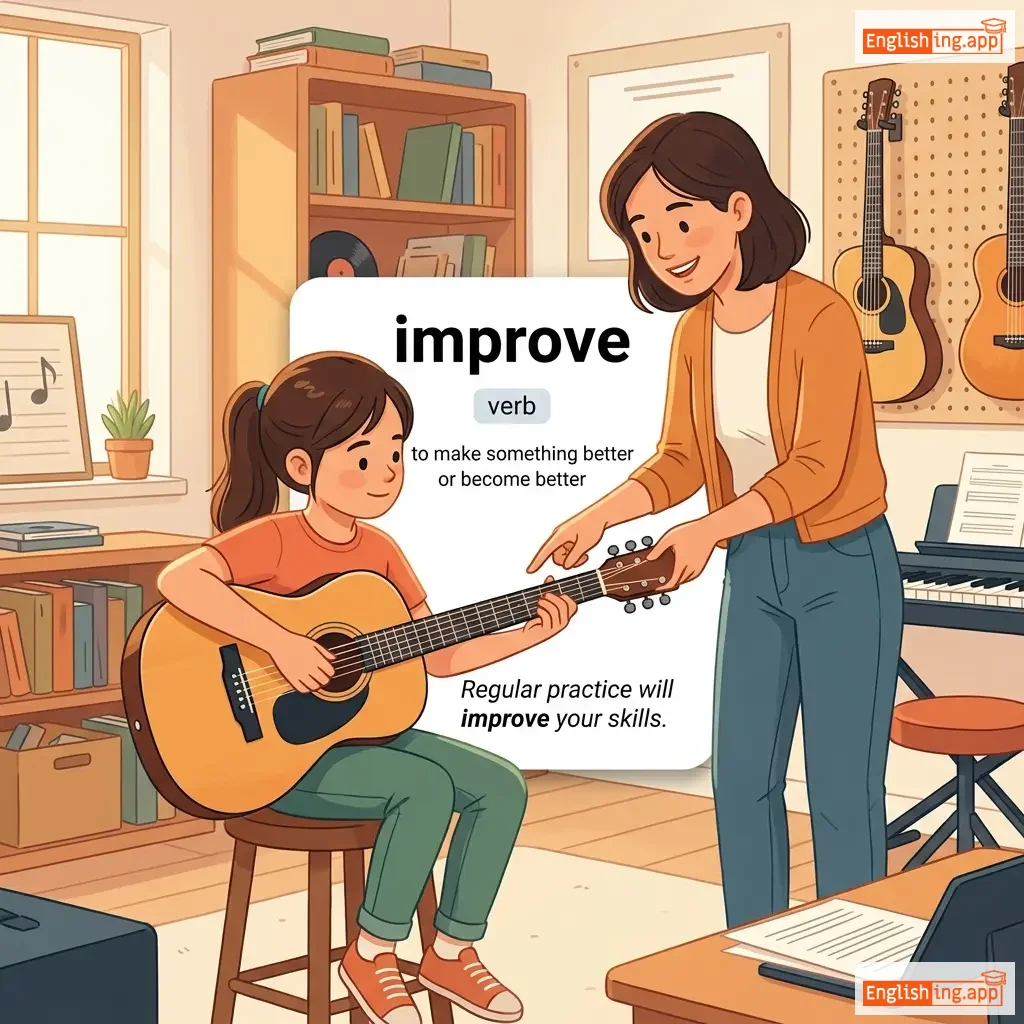
improve definition card — visual illustration of the meaning
verb
/ɪmˈpruːv/
улучшать (uluchshat')

to make something better or become better

"Regular practice will improve your skills."

"регулярная практика улучшит ваши навыки." (regulyarnaya praktika uluchshit vashi navyki.)
improved definition card — visual illustration of the meaning
adjective
/ɪmˈpruːvd/
улучшенный (uluchshennyy)

made better or enhanced in quality or condition

"Her health has significantly improved since last month."

"Её здоровье значительно улучшилось с прошлого месяца." (Yeyo zdorov'ye znachitel'no uluchshilos' s proshlogo mesyatsa.)
noun
/ɪmˈpruːvmənt/
улучшение (uluchsheniye)

the act of making something better

"There has been a significant improvement in his health."

"Произошло значительное улучшение его здоровья." (Proizoshlo znachitel'noe uluchsheniye ego zdorov'ya.)
improvements definition card — visual illustration of the meaning
noun
ɪmˈpruːv.mənts
улучшения (uluchsheniya)

The action of making or becoming better; an instance of something becoming or being made better.

"Continuous improvements increase productivity."

"Непрерывные улучшения повышают производительность." (Nepreryvnyye uluchsheniya povyshayut proizvoditel'nost'.)
noun
/ɪmˈprɑːvɪdəns/
непредусмотрительность (nepredusmotritelnost)

Lack of foresight or care for future needs.

"His improvidence led to financial difficulties."

"Его непредусмотрительность привела к финансовым трудностям." (Ego nepredusmotritel'nost' privela k finansovym trudnostyam.)
adjective
/ɪmˈprɒvɪdənt/
непредусмотрительный (nepredusmotritel'nyy)

Not having or showing foresight; spending wastefully or without thought for the future.

"His improvident habits left him with no savings."

"Его непредусмотрительные привычки оставили его без сбережений." (Ego nepredusmotritel'nye privychki ostavili ego bez sberezheniy.)
verb
/ˈɪmprəvaɪz/

To create or perform something spontaneously without preparation.

"The actor had to improvise his lines when he forgot the script."

noun
/ɪmˈpruːdəns/
неосмотрительность (neosmotritel'nost')

Lack of caution or good judgment.

"His imprudence in investing all his money in one stock was disastrous."

"Его неосмотрительность, вложив все свои деньги в одну акцию, была катастрофической." (Yego neosmotritel'nost', vlozhiv vse svoi den'gi v odnu aktsiyu, byla katastroficheskoi.)
adjective
/ɪmˈpruːdənt/
неосмотрительный (neosmotritel'nyj)

Not showing care for the consequences of an action.

"It was imprudent to drive in such stormy weather."

"Это было неосмотрительно — ехать в такую бурю." (Eto bylo neosmotritel'no — yekhat' v takuyu bur'yu.)
noun
/ˈɪmpjʊdəns/
наглость (naglost)

Rude and disrespectful behavior.

"The student's impudence shocked the entire class."

"Наглость студента шокировала весь класс." (Naglost studenta shokirovala ves' klass.)
adjective
/ˈɪmpjəd(ə)nt/
наглый, дерзкий (naglyy, derzkiy)

not showing due respect for another person; rude

"The impudent child talked back to the teacher."

"Наглый ребенок ответил учителю." (Naglyy rebenok otvetil uchitelyu.)
⚔️

impugn

verb
/ɪmˈpjuːn/

to dispute the truth, validity, or honesty of a statement or motive

"The lawyer tried to impugn the credibility of the witness."

noun
/ɪmˈpjuːɪsəns/
бессилие, неспособность (bessilie, nespobnost)

inability to take effective action; helplessness

"The government’s impuissance in the face of crisis frustrated the people."

"Бессилие правительства перед лицом кризиса разочаровало народ." (Bessilie pravitel'stva pered litsom krizisa razocharovalo narod.)
noun
/ˈɪmpʌls/
импульс (impuls)

a sudden strong desire or urge to act without thinking

"He bought the watch on impulse without planning to."

"Он купил часы по импульсу, не планируя этого." (On kupil chasy po impulsu, ne planirovaya etogo.)
noun
/ɪmˈpʌlʃən/
порыв (poryv)

a strong urge or drive to act; the act of impelling

"His impulsion to travel made him leave his job suddenly."

"Его порыв к путешествиям заставил его внезапно уйти с работы." (Ego poryv k puteshestviyam zastavil ego vnezapno uyti s raboty.)
adjective
/ɪmˈpʌlsɪv/
импульсивный, спонтанный (impulsivnyy, spontannyy)

acting suddenly without careful thought

"She made an impulsive decision to buy the car."
"Она приняла импульсивное решение купить машину." (Ona prinyala impulsivnoe reshenie kupit' mashinu.)
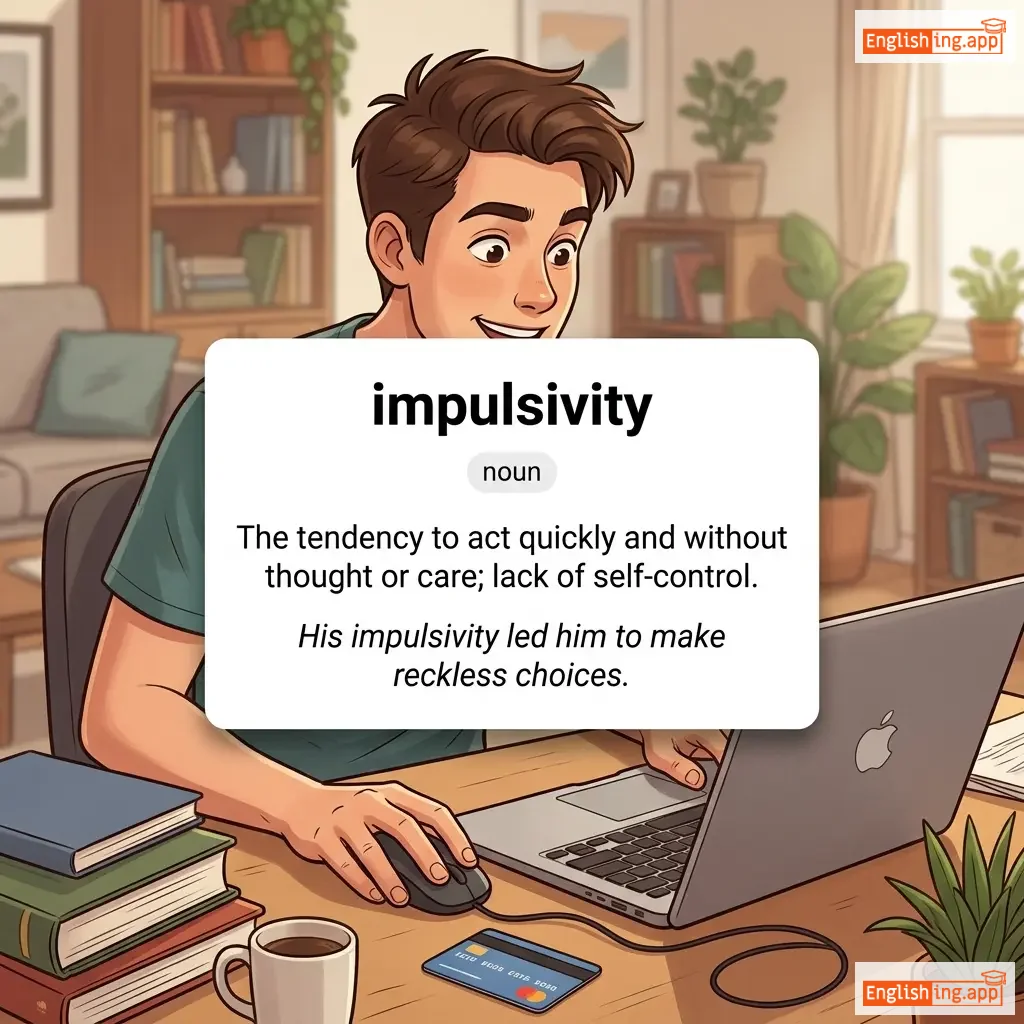
impulsivity definition card — visual illustration of the meaning
noun
ˌɪm.pʌlˈsɪv.ɪ.ti
импульсивность (impulsivnost)

The tendency to act quickly and without thought or care; lack of self-control.

"His impulsivity led him to make reckless choices."

"Его импульсивность привела его к необдуманным решениям." (Yego impulsivnost' privela yego k neobdumannym resheniyam.)
noun
/ɪmˈpjuːnɪti/
безнаказанность (beznakazannost)

freedom from punishment or harmful consequences for an action

"The dictator ruled with impunity, ignoring international laws."

"Диктатор правил безнаказанно, игнорируя международные законы." (Diktator pravil beznakazanno, ignoriruya mezhdunarodnye zakony.)
adjective
/ɪmˈpjʊər/
нечистый (nechisty)

not clean or free from contamination; morally corrupt

"The water was impure and unsafe to drink."

"Вода была нечистой и небезопасной для питья." (Voda byla nechistoj i nebezopasnoj dlya pit'ya.)
noun
/ɪmˈpjʊərəti/
примесь (primes)

the state of being unclean or contaminated; a substance that makes something impure

"The scientist removed every impurity from the water sample."

"Учёный удалил каждую примесь из образца воды." (uchenyi udalil kazhduyu primes iz obraztsa vody)
noun
/ˌɪmpjuˈteɪʃən/
импутация (imputatsiya)

an accusation or attribution of blame

"The politician denied the imputation of corruption."

"Политик опроверг импутацию коррупции." (Politik opovreg imputatsiyu korrupcii.)
verb
/ɪmˈpjuːt/
возлагать (vozlagat')

to attribute a fault or responsibility to someone

"They imputed the company's success to good leadership."

"Они возложили успех компании на хорошее руководство." (Oni vozlozhili uspekh kompanii na khoroshee rukovodstvo.)
preposition
/ɪn/
в (v)

expressing the situation of being enclosed or surrounded by something

"She is in the kitchen preparing dinner."

"Она на кухне готовит ужин." (Ona na kukhne gotovit uzhin.)
preposition
/ɪn ˈfrʌnt əv/
перед (pered)

positioned before or ahead of something; facing or located at the forward side of a person or object

"She stood in front of the building."

"Она стояла перед зданием." (Ona stoyala pered zdaniem)
noun
/ˌɪnəˈbɪləti/
неспособность (nesposobnost)

the state of being unable to do something

"His inability to make decisions affected his career."

"Его неспособность принимать решения повлияла на его карьеру." (Ego nesposobnost prinimat' resheniya povliyala na ego kar'yeru.)
adjective
/ˌɪnækˈsɛsəbl/
недоступный (nedostupnyy)

unable to be reached, entered, or understood

"The remote village is almost inaccessible during the rainy season."

"Отдаленная деревня почти недоступна в сезон дождей." (Otdalyonnaya derevnya pochti nedostupna v sezon dozhdey.)
noun
/ɪnˈækjʊrəsi/
неточность (netochnost)

lack of accuracy or precision; an incorrect or wrong detail

"The report contained several factual inaccuracies."

"Отчёт содержал несколько неточностей." (otchet soderzhal neskolko netochnostei)
adjective
/ɪnˈækjʊrət/
неверный (neverny)

Not correct, precise, or exact; containing errors.

"The report was full of inaccurate data."

"Отчет был полон неверных данных." (Otchet byl polon nevernykh dannykh.)
adjective
/ɪnˈæktɪv/
неактивный (neaktivnyy)

Not engaging in activity; not active.

"The account has been inactive for six months."

"Аккаунт был неактивен в течение шести месяцев." (Akkaunt byl neaktivnyy v techeniye shesti mesyatsev.)
noun
/ˌɪnækˈtɪvɪti/
бездействие (bezdeystviye)

the state of not being active physically or mentally; lack of action

"Prolonged inactivity can negatively affect both physical and mental health."

"Длительное бездействие может негативно сказаться на физическом и психическом здоровье." (dlitelnoye bezdeystviye mozhet negativno skazatsya na fizicheskom i psikhicheskom zdorovye)
noun
/ɪnˈædɪkwəsi/
неадекватность (neadekvatnost)

lack of sufficient ability, quality, or strength; a feeling of not being good enough

"She struggled with feelings of inadequacy at work despite her strong qualifications."

"Несмотря на хорошие квалификации, она испытывала чувство неадекватности на работе." (Nesmotrya na khoroshie kvalifikatsii, ona ispytyvala chuvstvo neadekvatnosti na rabote)