Словари

Словарь английского языка | Значения слов, определения и примеры

noun
/ˌɪməˈrælɪti/
безнравственность (beznravstvennost)

the quality of being immoral; behavior that violates accepted moral standards

"The community condemned the immorality of the corrupt officials."

"Сообщество осудило безнравственность коррумпированных чиновников." (Soobshchestvo osudilo beznravstvennost korrumpirovannykh chinovnikov)
adjective; noun
/ɪˈmɔːrtl/
бессмертный (bessmertnyy)

living forever; never dying; lasting forever in fame or memory

"Legends often describe heroes as immortal beings who never die."

"Легенды описывают героев как бессмертных." (legendy opisyvayut geroev kak bessmertnykh)
noun
/ˌɪmɔːrˈtæləti/
бессмертие (bessmertiye)

the state of living forever; eternal life or lasting fame beyond death

"Many ancient cultures believed that heroes could achieve immortality through great deeds."

"Многие древние культуры верили, что герои могут достичь бессмертия великими подвигами." (mnogiye drevniye kultury verili chto geroi mogut dostich bessmertiya velikimi podvigami)
verb
/ɪˈmɔːrtəlaɪz/
увековечить (uvekovechit)

to preserve the memory of someone or something forever

"The statue was built to immortalize the hero’s sacrifice."

"Статуя была построена, чтобы увековечить жертвенность героя." (Statuya byla postroena, chtoby uvekovechit' zhertvinnost' geroja.)
immovable definition card — visual illustration of the meaning
adjective
/ɪˈmuːvəbl/
неподвижный (nepodvizhny)

impossible to move or change

"The rock was too heavy and immovable."

"Камень был слишком тяжелым и неподвижным." (Kamen' byl slishkom tyazholym i nepodvizhnym.)
adjective
/ɪˈmjuːn/
иммунизированный (immunizirovannyy)

protected from disease or from the effects of something

"Children who are vaccinated are immune to many diseases."
"Дети, которые были вакцинированы, защищены от многих болезней." (Deti, kotorye byli vaktsinirovany, zashchishcheny ot mnogikh bolezney.)
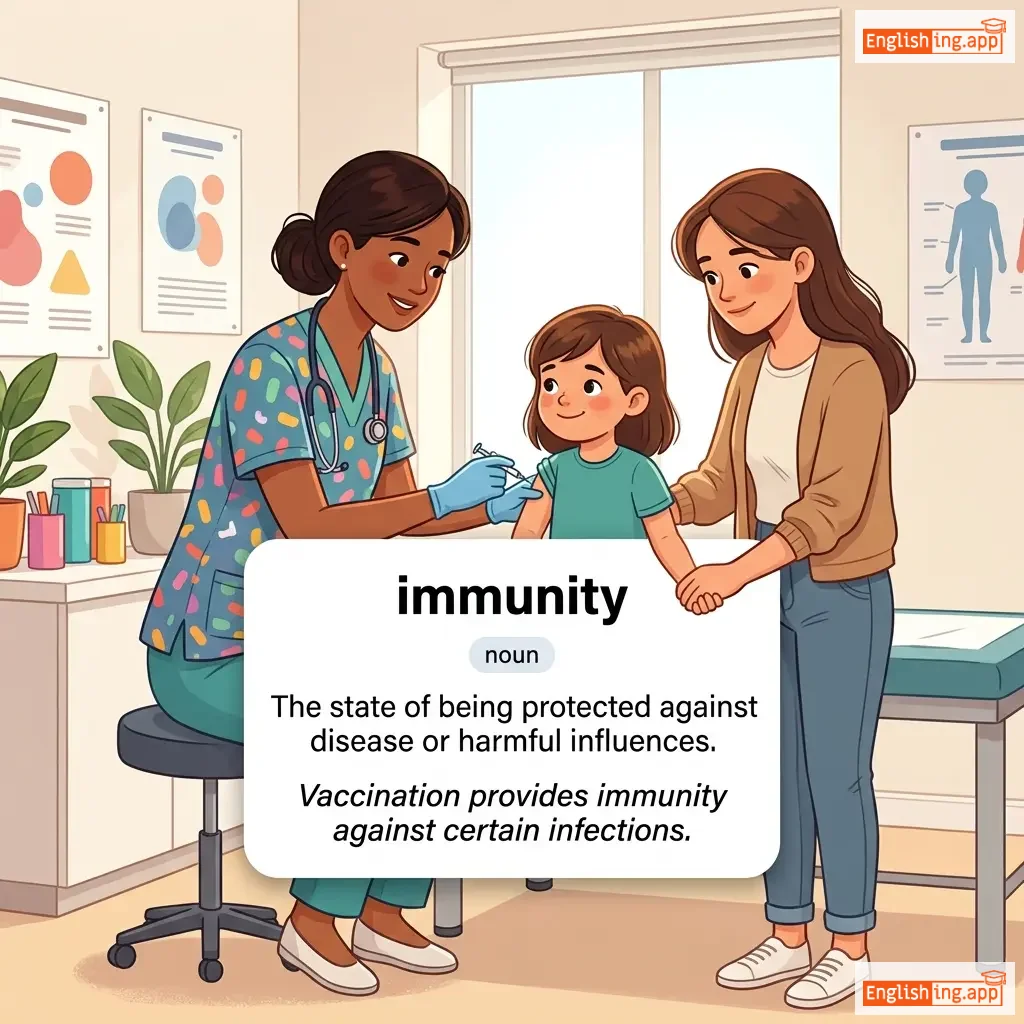
immunity definition card — visual illustration of the meaning
noun
/ɪˈmjuːnɪti/
иммунитет (immunitet)

The state of being protected against disease or harmful influences.

"Vaccination provides immunity against certain infections."

"Вакцинация предоставляет иммунитет от определенных инфекций." (Vaktsinatsiya predostavlyayet immunitet ot opredelennykh infektsiy.)
verb
/ɪˈmjʊər/
запирать (zapitrat)

to confine or enclose someone against their will

"The prisoner was immured in a dark cell."
"Заключенного заперли в темной камере." (Zaklyuchennogo zaperli v temnoy kamere.)
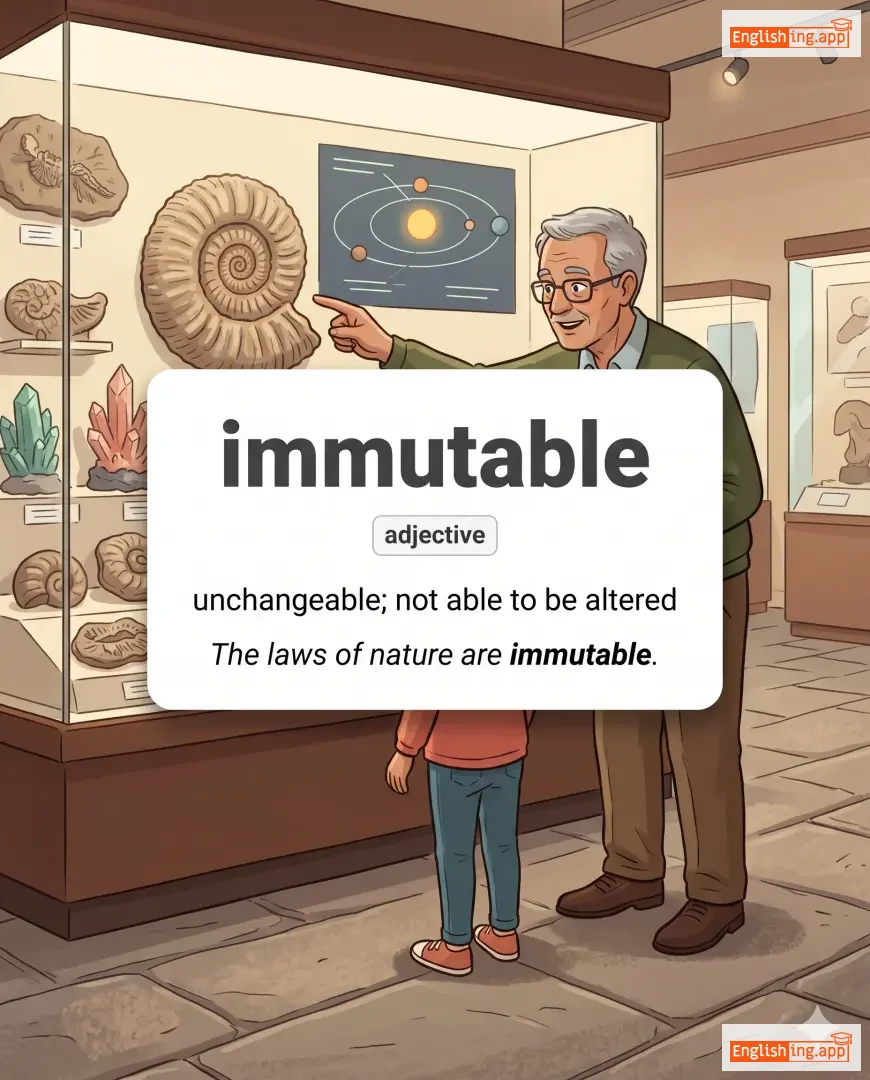
immutable definition card — visual illustration of the meaning
adjective
/ɪˈmjuːtəbl/
неизменный (neyizmenniy)

unchangeable; not able to be altered

"The laws of nature are immutable."

"Законы природы неизменны." (Zakony prirody neizmeny.)
noun
/ɪmp/
маленький озорной бес (malyen'kiy ozornoy bes)

a small mischievous devil or sprite; a playful troublemaker

"The child was acting like a little imp, hiding his toys everywhere."
"Ребёнок вел себя как маленький бес, пряча свои игрушки повсюду." (Rebyonok vel sebya kak malen'kiy bes, pr'yacha svoi igrooshki povsyudu.)
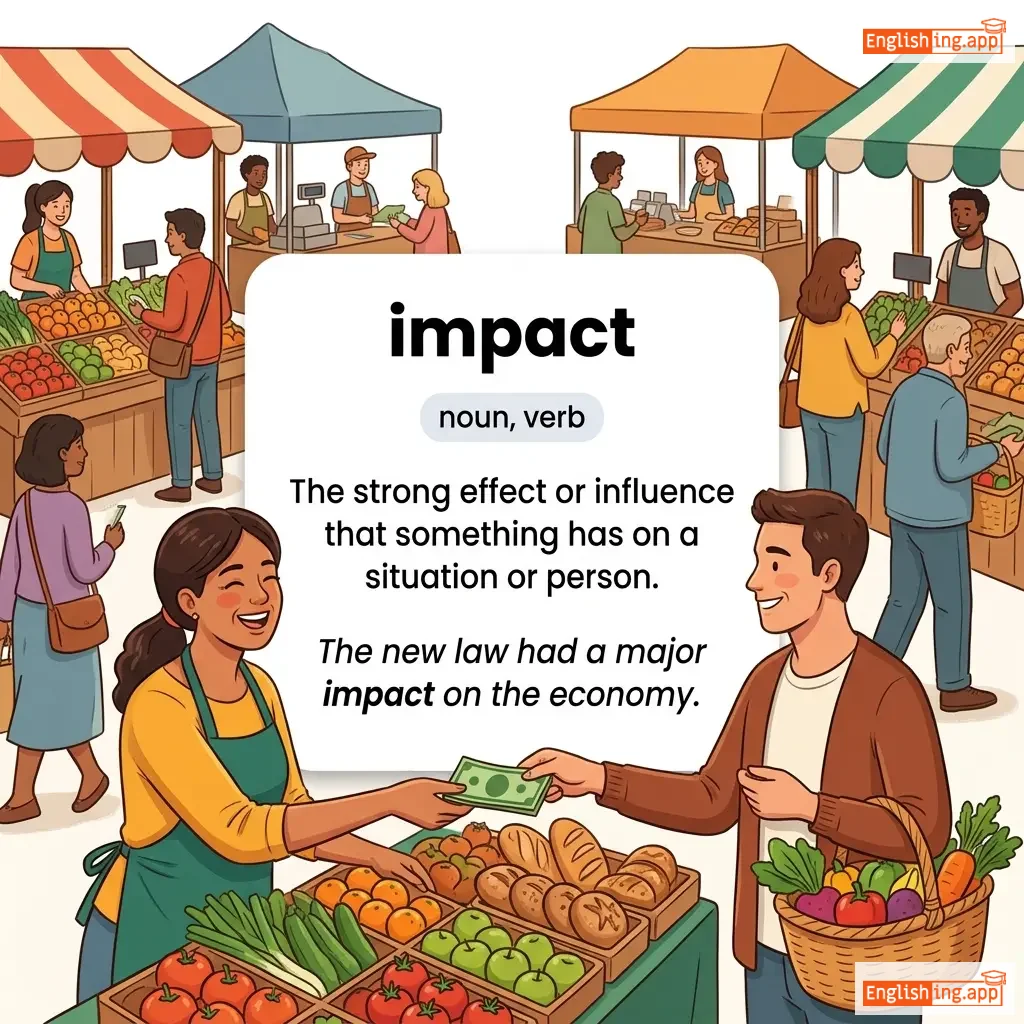
impact definition card — visual illustration of the meaning
noun, verb
/ˈɪmpækt/
влияние (vliyanie)

The strong effect or influence that something has on a situation or person.

"The new law had a major impact on the economy."
"Новый закон оказал большое влияние на экономику." (Novyy zakon okazal bol'shoye vliyanie na ekonomiku.)
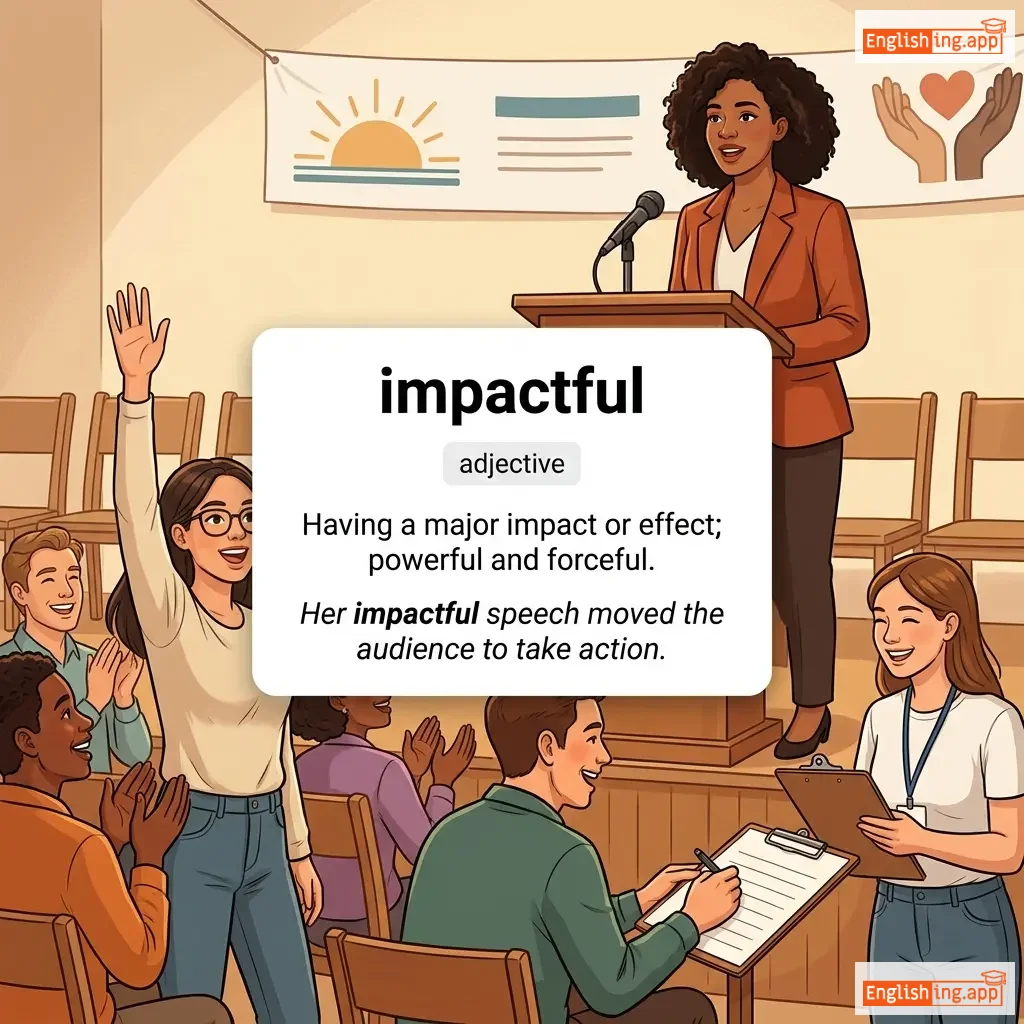
impactful definition card — visual illustration of the meaning
adjective
/ˈɪmpæktfʊl/
влиятельный (vliyatel'nyy)

Having a major impact or effect; powerful and forceful.

"Her impactful speech moved the audience to take action."
"Ее влиятельная речь побудила аудиторию принять меры." (Eyo vliyatel'naya rech' pobudila auditoriyu prinyat' mery.)
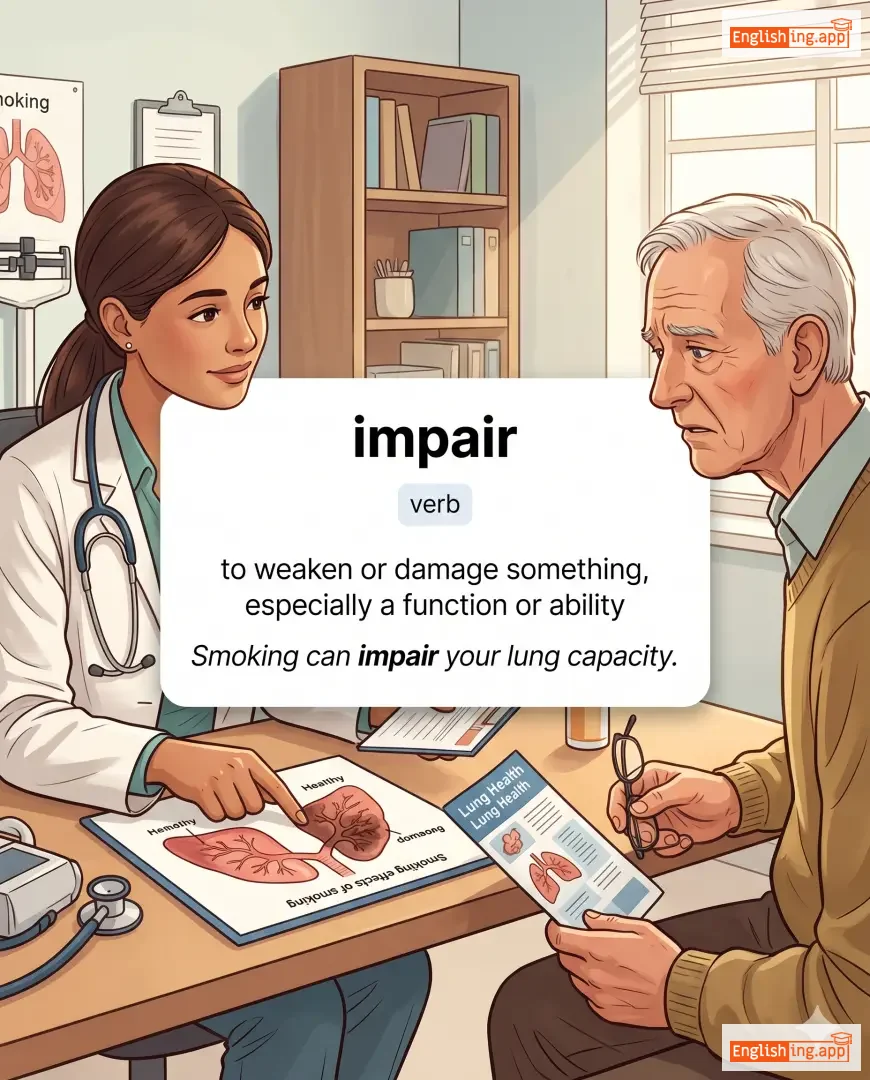
impair definition card — visual illustration of the meaning
verb
/ɪmˈpɛər/
повреждать (povrezhdat)

to weaken or damage something, especially a function or ability

"Smoking can impair your lung capacity."
"Курение может ухудшить ёмкость лёгких." (Kurenie mozhet ukhudshit yomkost' lyokhikh.)
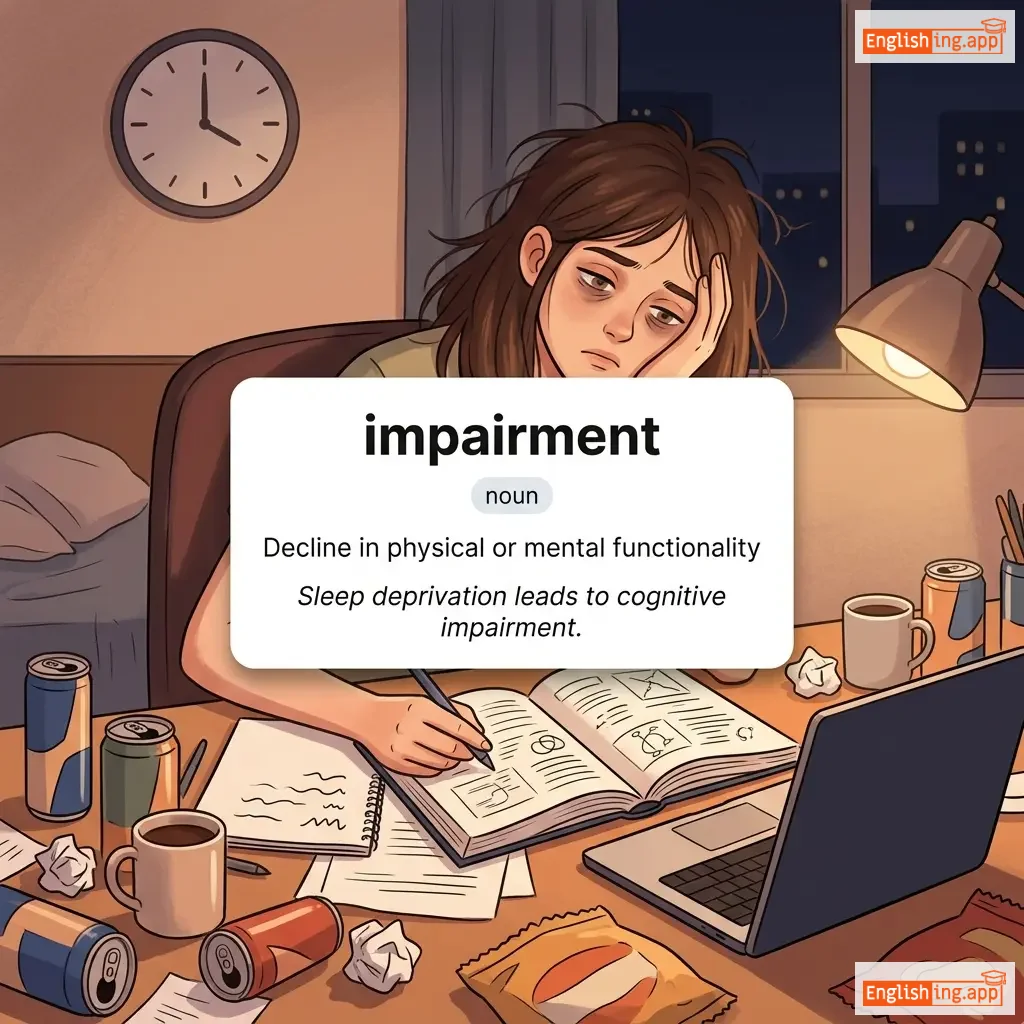
impairment definition card — visual illustration of the meaning
noun
ɪmˈpɛərmənt
нарушение (narushenie)

Decline in physical or mental functionality

"Sleep deprivation leads to cognitive impairment."

"Недосыпание приводит к когнитивным нарушениям." (Nedosypanie privodit k kognitivnym narusheniyam.)
verb
/ɪmˈpeɪl/
пронзать (pronzat)

to pierce or fix something with a sharp object

"The knight was impaled by the enemy’s spear."

"Рыцарь был пронзен копьем врага." (Rytsar' byl pronzen kop'yom vraga.)
adjective
/ɪmˈpælpəbəl/
неосязаемый (neosyazayemy)

unable to be felt by touch; difficult to grasp or understand

"There was an impalpable sense of fear in the room."

"В комнате было неосязаемое чувство страха." (V komnate bylo neosyazayemoe chuvstvo straha.)
verb
/ɪmˈpɑːrt/
передавать (peredavat')

to make information known; to bestow or communicate

"The teacher imparted valuable knowledge to her students."

"Учитель передал ценное знание своим ученикам." (Uchitel' peredal tsennoye znaniye svoim uchenikam.)
adjective
/ɪmˈpɑːrʃəl/
беспристрастный (bespristrastny)

Treating all rivals or disputants equally; fair and just.

"The judge remained impartial throughout the trial."

"Судья оставался беспристрастным на протяжении всего процесса." (Sud'ya ostavalsya bespristrastnym na protyazhenii vsego protsessa.)
adjective
/ɪmˈpæsəbəl/
непроходимый (neprokhodimyy)

Impossible to travel along or over.

"The road became impassable after the heavy snowfall."

"Дорога стала непроходимой после сильного снегопада." (Doroga stala neprokhodimoy posle sil'nogo snegopada.)
impasse definition card — visual illustration of the meaning
noun
/ˈɪmpæs/
тупик (tupik)

A situation in which no progress is possible; a deadlock.

"Negotiations reached an impasse after both sides refused to compromise."

"Переговоры зашли в тупик, после того как обе стороны отказались идти на компромисс." (Peregovory zashli v tupik, posle togo kak obe storony otkazalis idti na kompromiss.)
adjective
/ɪmˈpæsɪbəl/
неподвижный (nepodvizhnyy)

Incapable of suffering or feeling pain (used mainly in theological or philosophical contexts).

"Some philosophers argue that God is impassible and cannot experience human emotions."

"Некоторые философы утверждают, что Бог неподвижный и не может испытывать человеческие эмоции." (Nekotorye filosofy utverzhdayut, chto Bog nepodvizhnyy i ne mozhet ispytyvat' chelovecheskie emotsii.)
adjective
/ɪmˈpæʃənd/
страстный (strastny)

Filled with or showing great emotion.

"She gave an impassioned speech about human rights."
"Она произнесла страстную речь о правах человека." (Ona proiznesla strastnuyu rech' o pravax cheloveka.)
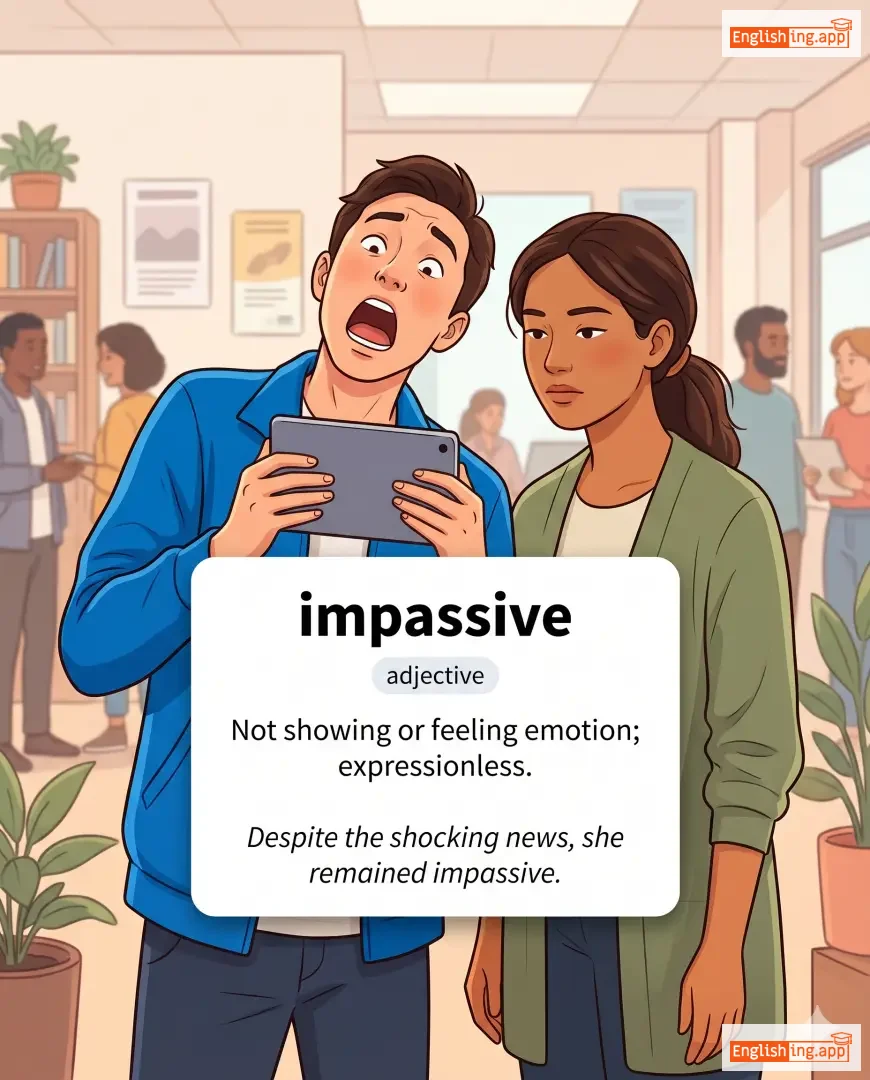
impassive definition card — visual illustration of the meaning
adjective
/ɪmˈpæsɪv/
безучастный (bezuchastny)

Not showing or feeling emotion; expressionless.

"Despite the shocking news, she remained impassive."

"Несмотря на шокирующие новости, она осталась безучастной." (Nesmotrya na shokiruyushchie novosti, ona ostalas' bezuchastnoj.)
noun
/ɪmˈpeɪʃəns/
нетерпение (neterpenie)

The state of being quickly irritated or unable to wait calmly.

"His impatience grew as the meeting dragged on."

"Его нетерпение росло, по мере того как встреча затягивалась." (Ego neterpenie roslo, po mere togo kak vstrecha zatyagivalas.)
adjective
/ɪmˈpeɪʃənt/
нетерпеливый (neterpelivyy)

Not able to wait calmly; restless and eager for something to happen.

"She grew impatient while waiting in the long queue."

"Она стала нетерпеливой, ожидая в длинной очереди." (Ona stala neterpelivoy, ozhidaya v dlinnoĭ ochenedi.)
adverb
/ɪmˈpeɪʃəntli/
нетерпеливо (neterpelivo)

in a manner showing annoyance or restlessness due to delay or waiting

"She tapped her fingers impatiently while waiting for the reply."

"Она нетерпеливо постукивала пальцами, ожидая ответа." (ona neterpelivo postukivala paltsami ozhidaya otveta)
verb
/ɪmˈpiːtʃ/
импичмент (impichment)

To charge a public official with misconduct while in office.

"The parliament voted to impeach the president."

"Парламент проголосовал за импичмент президента." (Parlament proglasoval za impeachament prezidenta.)
impeccable definition card — visual illustration of the meaning
adjective
/ɪmˈpɛkəbl̩/
безупречный (bezuprechniy)

Perfect; without flaws or faults.

"She delivered an impeccable performance on stage."
"Она выступила с безупречным выступлением на сцене." (Ona vystupila s bezuprechniy vystupleniyem na stsene.)
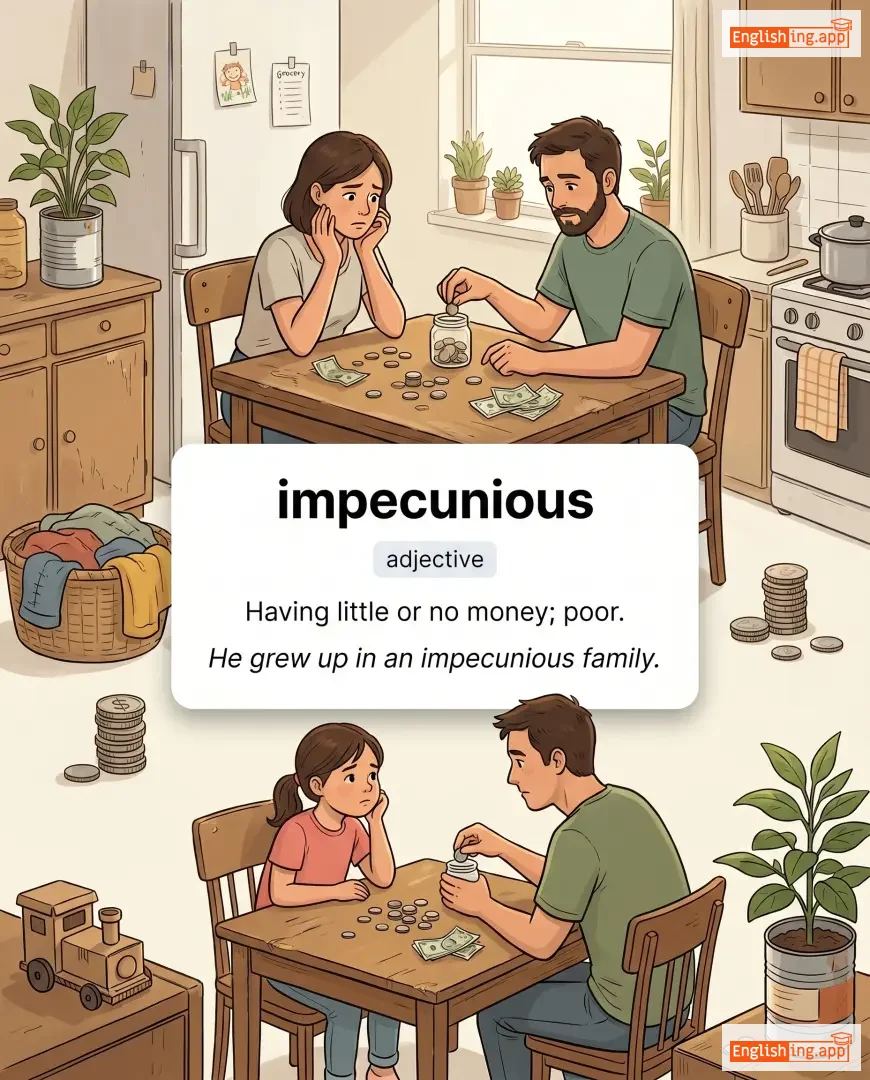
impecunious definition card — visual illustration of the meaning
adjective
/ˌɪmpɪˈkjuːniəs/
бедный (bedny)

Having little or no money; poor.

"He grew up in an impecunious family."
"Он вырос в бедной семье." (On vyros v bednoi sem'e.)
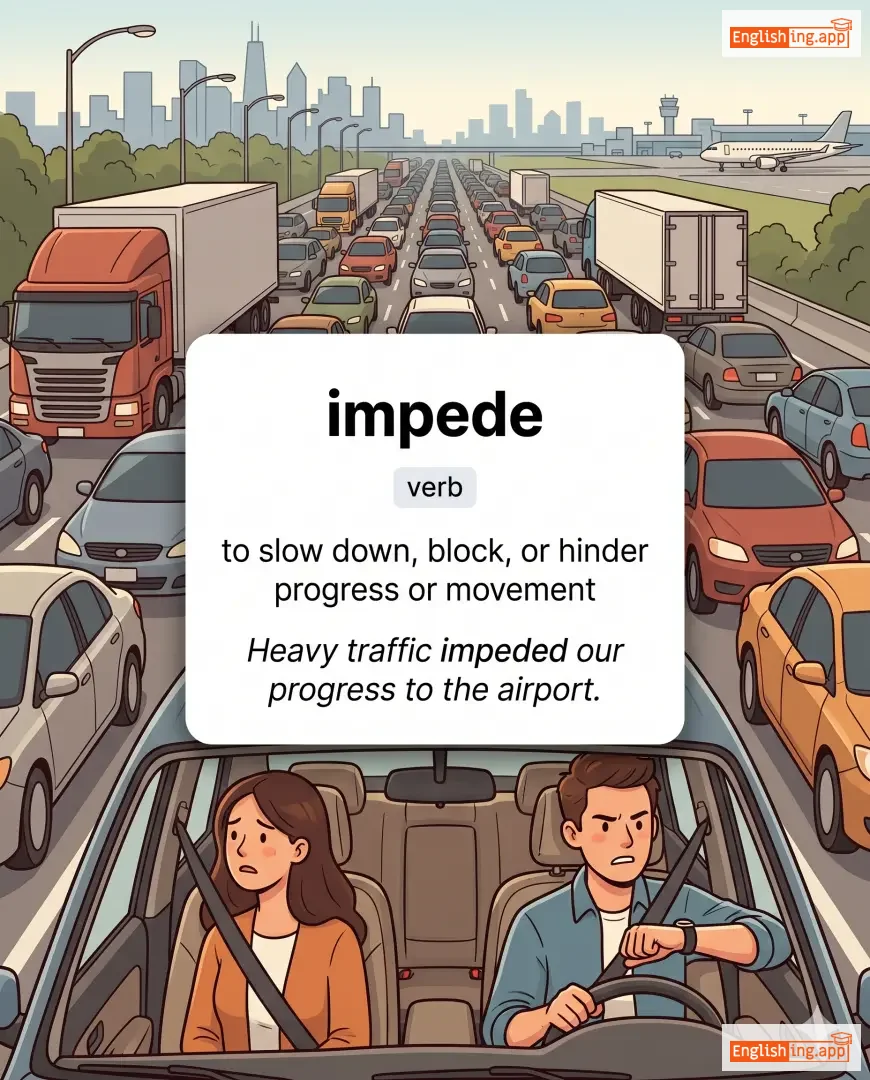
impede definition card — visual illustration of the meaning
verb
/ɪmˈpiːd/
препятствовать (prepyatstvovat')

to slow down, block, or hinder progress or movement

"Heavy traffic impeded our progress to the airport."
"Тяжелое движение замедлило наш прогресс к аэропорту." (Tyazheloe dvizhene zamedlilo nash progress k aeroportu.)
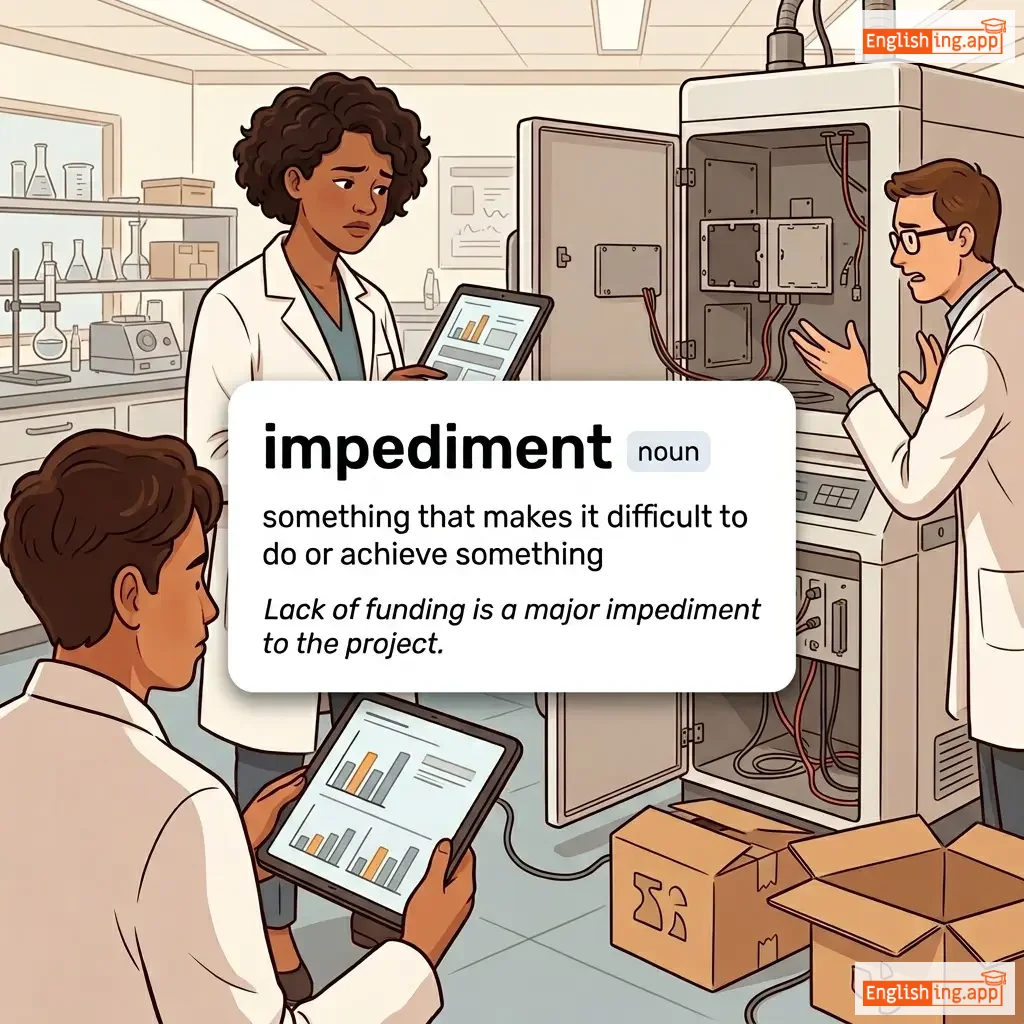
impediment definition card — visual illustration of the meaning
noun
/ɪmˈpɛdɪmənt/

something that makes it difficult to do or achieve something

"Lack of funding is a major impediment to the project."
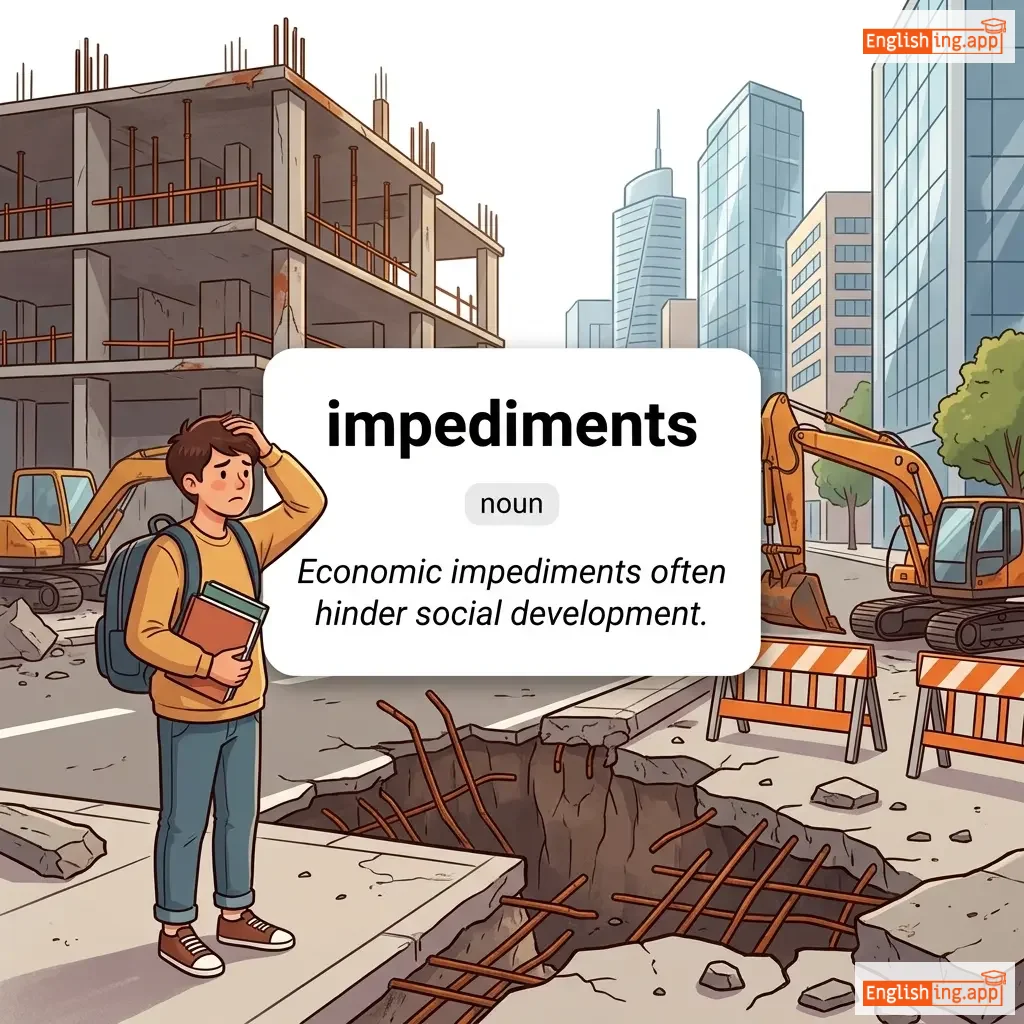
impediments definition card — visual illustration of the meaning
noun
/ɪmˈpɛdɪmənt/
препятствия (prepyatstviya)

A hindrance or obstruction in doing something; things that prevent progress or achievement.

"Economic impediments often hinder social development."

"Экономические препятствия часто мешают социальному развитию." (Ekonomicheskie prepyatstviya chasto meshayut sotsial'nomu razvitiyu.)
verb
/ɪmˈpɛl/
побуждать (pobuzhdat')

to drive, force, or urge someone to do something

"Her curiosity impelled her to open the mysterious box."

"Ее любопытство побудило ее открыть загадочную коробку." (Eyo lyubopytstvo pobudilo yeyo otkryt' zagadochnuyu korobku.)
verb
/ɪmˈpɛnd/
надвигаться (nadvigayatsya)

to be about to happen; to loom threateningly

"Dark clouds suggested that a storm was impeding."

"Тёмные облака предсказывали, что шторм надвигается." (Tyomnye oblaká predskazyvali, chto shtorm nadvigayetsya.)
adjective
/ɪmˈpɛndɪŋ/
надвигающийся (nadvigayushchiesya)

about to happen soon, usually something unpleasant or threatening

"The villagers were worried about the impending flood."

"Жители деревни беспокоились о надвигающемся наводнении." (Zhiteli derevni bespokoilis' o nadvigayushchemsya navodnenii.)
adjective
/ɪmˈpɛn.ɪ.trə.bəl/

Impossible to pass through or enter; impossible to understand.

"The dense forest was nearly impenetrable."

adjective
/ɪmˈpɛn.ɪ.tənt/
нераскаявшийся (neraskayavshiysya)

Not feeling regret or shame about one's actions.

"The criminal remained impenitent after the trial."
"Преступник остался нераскаявшимся после суда." (Prestuponnik ostalsya neraskayavshimsya posle suda.)
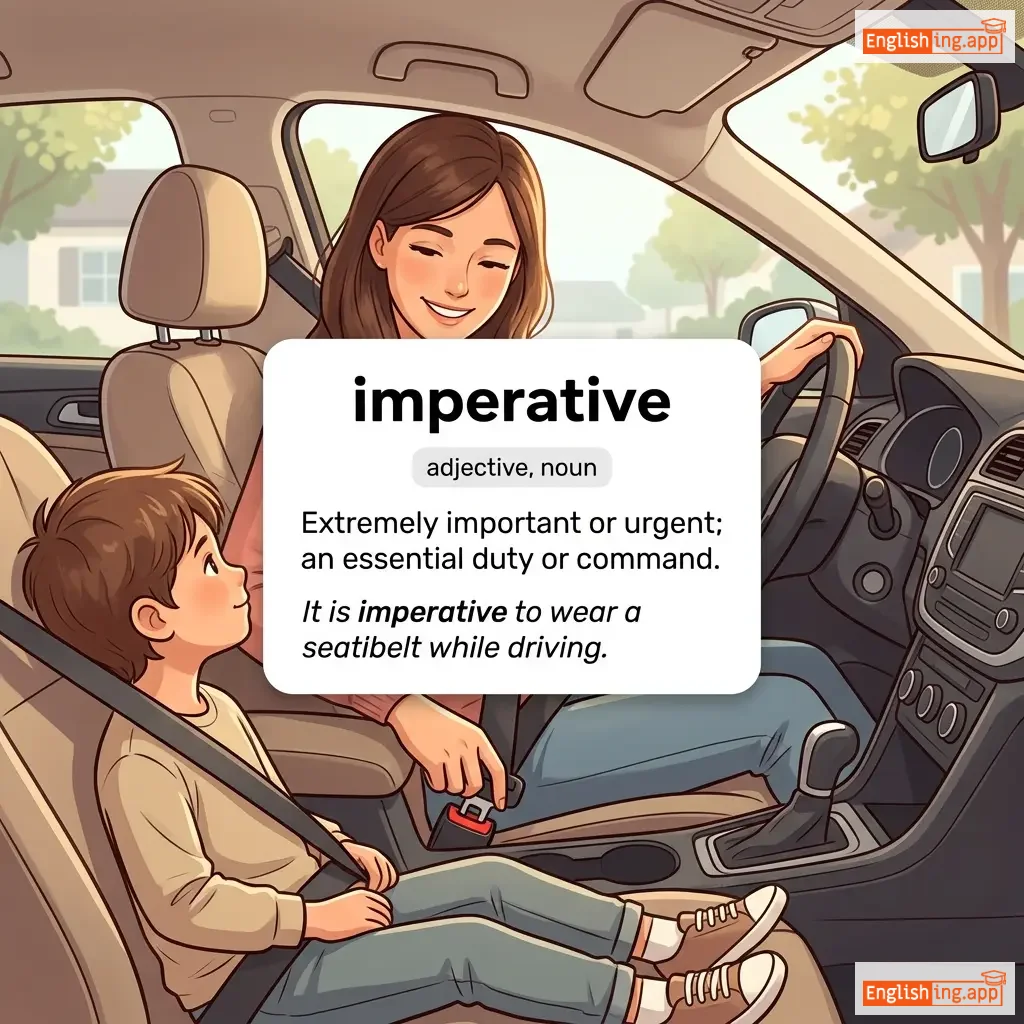
imperative definition card — visual illustration of the meaning
adjective, noun
/ɪmˈpɛr.ə.tɪv/
императивный (imperativny)

Extremely important or urgent; an essential duty or command.

"It is imperative to wear a seatbelt while driving."
"Крайне важно пристегнуть ремень безопасности во время вождения." (Krayne vazhno pristyegnut' remen' bezopasnosti vo vremya vozhdeniya.)
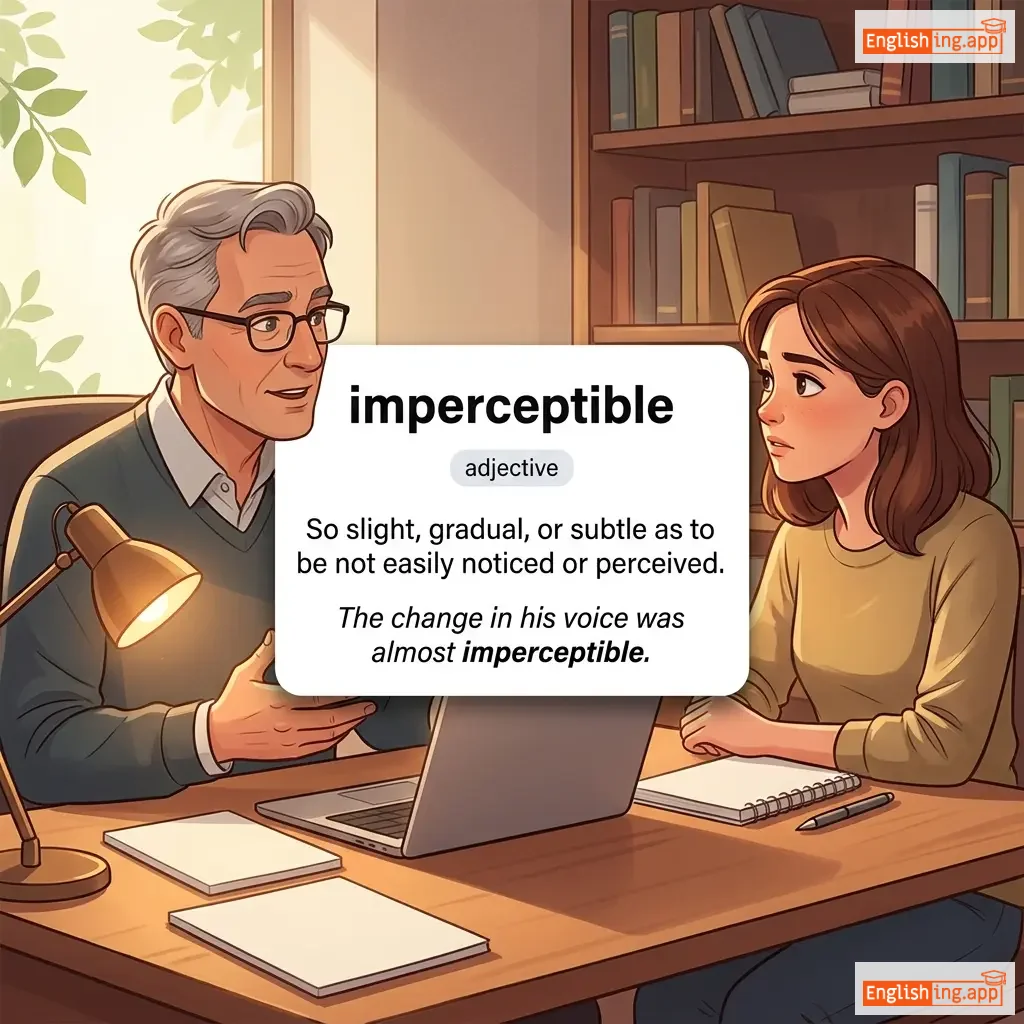
imperceptible definition card — visual illustration of the meaning
adjective
/ˌɪm.pəˈsɛp.tə.bəl/
незаметный (nezametny)

So slight, gradual, or subtle as to be not easily noticed or perceived.

"The change in his voice was almost imperceptible."

"Изменения в его голосе были почти незаметны." (Izmeneniya v ego golose byli pochti nezametny.)
adjective
/ɪmˈpɜːrfɪkt/
несовершенный (nesovershennyj)

Not perfect; having faults or flaws.

"The painting was beautiful despite being imperfect."

"Картина была красивой, несмотря на её несовершенство." (Kartina byla krasivoj, nesmotrya na yeye nesovershenstvo.)
adjective
/ˌɪm.pəˈfɛk.tə.bəl/
несовершенный (nesovershenny)

Incapable of being made perfect or complete.

"Some human qualities are considered imperfectible."

"Некоторые человеческие качества считаются несовершенными." (Nekotorye chelovecheskie kachestva schitayutsya nesovershennymi.)
noun
/ˌɪmpərˈfɛkʃən/
несовершенство (nesovershenstvo)

a flaw, defect, or weakness; the state of being imperfect

"She accepted her imperfection as part of being human."

"Она приняла своё несовершенство как часть человеческой природы." (ona prinyala svoyo nesovershenstvo kak chast chelovecheskoy prirody)
adjective
/ɪmˈpɪəriəl/
императорский (imperatorskiy)

Relating to an empire or emperor; having supreme authority.

"The imperial palace was a symbol of the emperor's power."

"Императорский дворец был символом власти императора." (Imperatorskiy dvorets byl simvolom vlasti imperatora.)
verb
/ɪmˈpɛrɪl/
подвергать опасности (podvergat' opasnosti)

To put in danger or at risk.

"Reckless driving can imperil the lives of others."

"Безрассудное вождение может поставить жизни других людей под угрозу." (Bezrassudnoe vozhdenie mozhet postavit' zhizni drugikh liudei pod ugrozu.)
adjective
/ɪmˈpɪəriəs/
властный (vlastny)

Arrogantly domineering or overbearing.

"Her imperious tone made it hard for others to argue."

"Её властный тон затруднял другим вести спор." (Yeyo vlastnyy ton zatrudnyal drugim vesti spor.)
adjective
/ɪmˈperɪʃəbəl/
неувядаемый; вечный; бессмертный (neuvyadayemy; vechnyy; bessmertny)

not subject to decay; lasting forever; eternal

"The imperishable beauty of classical art continues to inspire generations."
"Бессмертная красота классического искусства продолжает вдохновлять поколения." (Bessmertnaya krasota klassicheskogo iskusstva prodolzhayet vdokhnovlyat' pokolenia.)
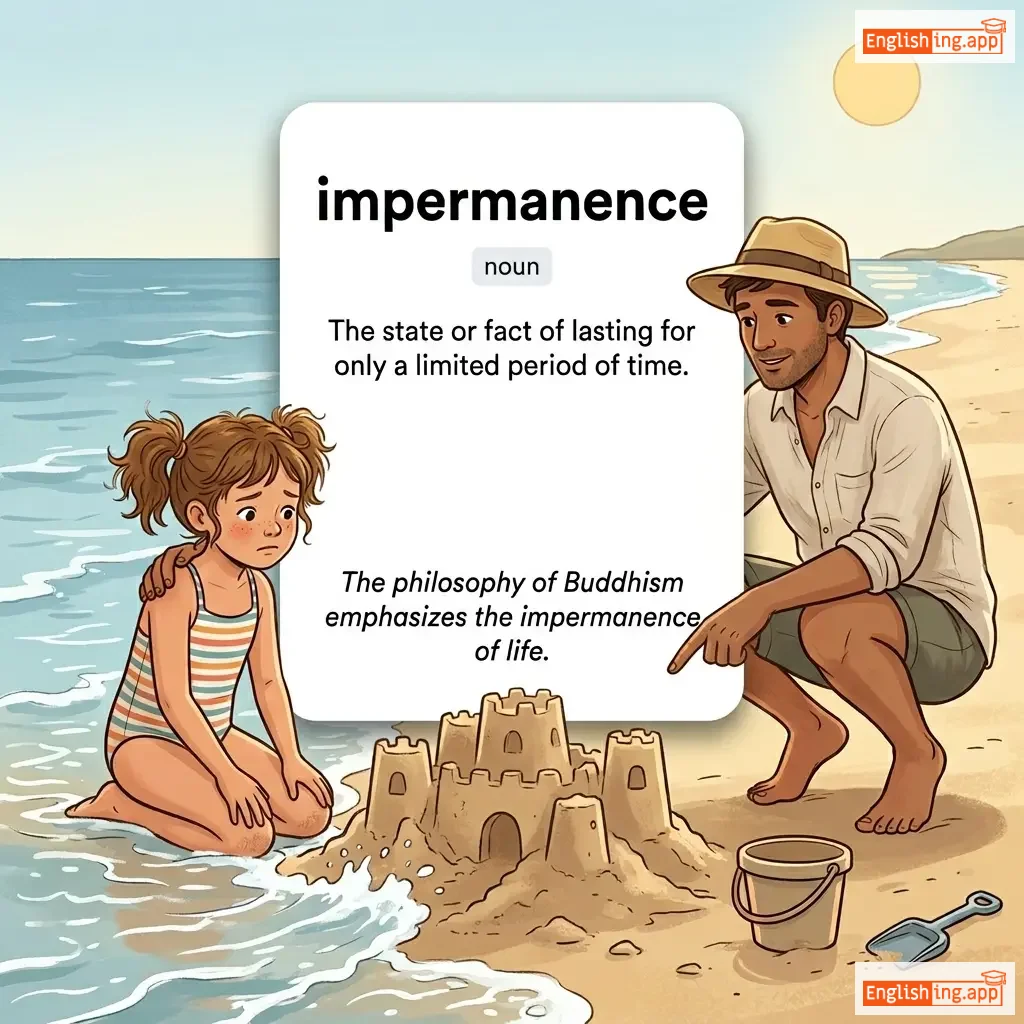
impermanence definition card — visual illustration of the meaning
noun
/ɪmˈpɜː.mə.nəns/
непостоянство (nepostoyanstvo)

The state or fact of lasting for only a limited period of time.

"The philosophy of Buddhism emphasizes the impermanence of life."
"Буддистская философия подчеркивает непостоянство жизни." (Buddistskaya filosofiya podcherkivayet nepostoyanstvo zhizni.)
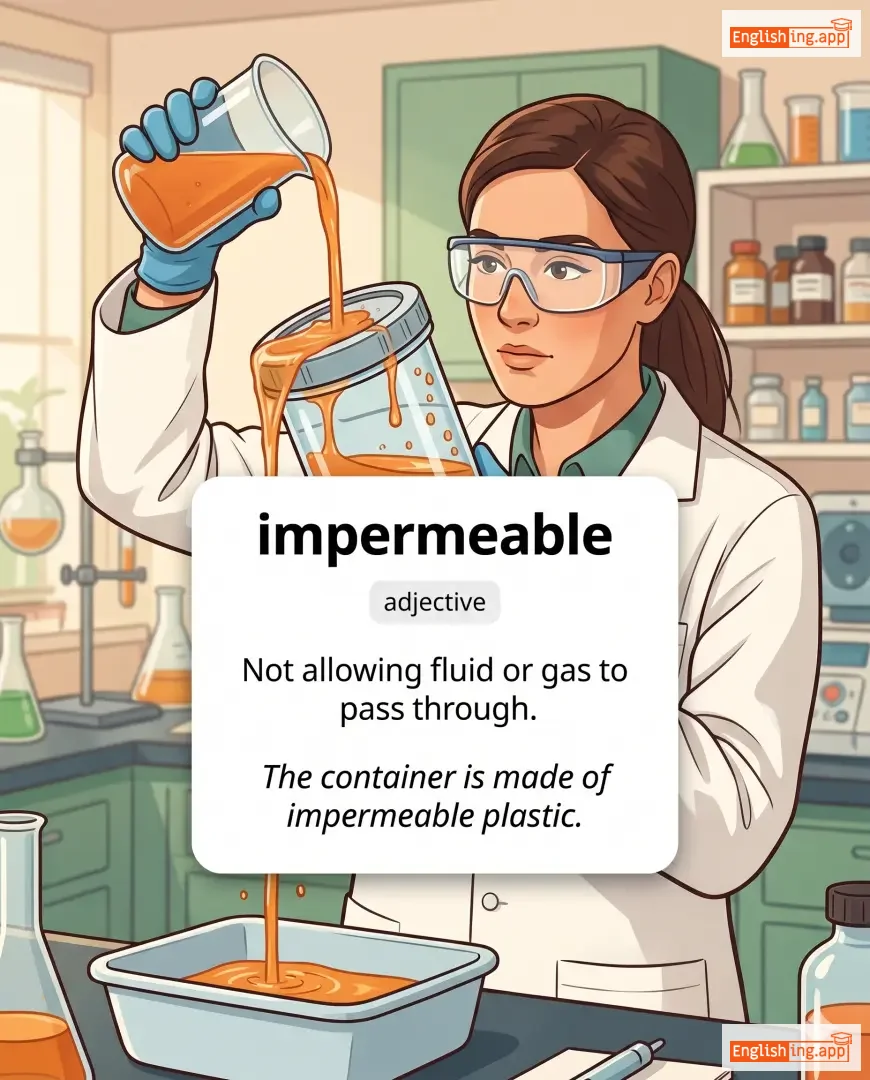
impermeable definition card — visual illustration of the meaning
adjective
/ɪmˈpɜːmiəbl/
непроницаемый (nepronitsaemyy)

Not allowing fluid or gas to pass through.

"The container is made of impermeable plastic."

"Контейнер сделан из непропускающего пластика." (Konteyner sdelan iz nepropuskayushchego plastika.)
adjective
/ˌɪmpəˈmɪsəbl/
неразрешённый (nerazreshyonny)

Not permitted or allowed.

"Such behavior is impermissible in the workplace."

"Такое поведение недопустимо на рабочем месте." (Takoye povedeniye nedopustimo na rabochem meste.)
adjective
/ɪmˈpɜːrsənl/
безличный (bezlichny)

not influenced by, showing, or involving personal feelings; lacking human warmth or emotion

"The letter was written in a very impersonal style."

"Письмо было написано в очень безличном стиле." (Pismo bylo napisan v ochen' bezlichnom stile.)