Vocabulaires

Découvrez, apprenez et maîtrisez le vocabulaire anglais

noun
/ˌɪməˈrælɪti/
immoralité (immoralite)

the quality of being immoral; behavior that violates accepted moral standards

"The community condemned the immorality of the corrupt officials."

"La communauté a condamné l’immoralité des fonctionnaires corrompus." (La communaute a condamne l immoralite des fonctionnaires corrompus)
adjective; noun
/ɪˈmɔːrtl/
immortel (immortel)

living forever; never dying; lasting forever in fame or memory

"Legends often describe heroes as immortal beings who never die."

"Les légendes parlent d’êtres immortels." (les legendes parlent detres immortels)
noun
/ˌɪmɔːrˈtæləti/
immortalité (immortalite)

the state of living forever; eternal life or lasting fame beyond death

"Many ancient cultures believed that heroes could achieve immortality through great deeds."

"De nombreuses cultures anciennes pensaient que les héros pouvaient atteindre l’immortalité par de grands exploits." (de nombreuses cultures anciennes pensaient que les heros pouvaient atteindre l immortalite par de grands exploits)
verb
/ɪˈmɔːrtəlaɪz/
immortaliser (immortaliser)

to preserve the memory of someone or something forever

"The statue was built to immortalize the hero’s sacrifice."

"La statue a été construite pour immortaliser le sacrifice du héros." (La statue a été construite pour immortaliser le sacrifice du héros.)
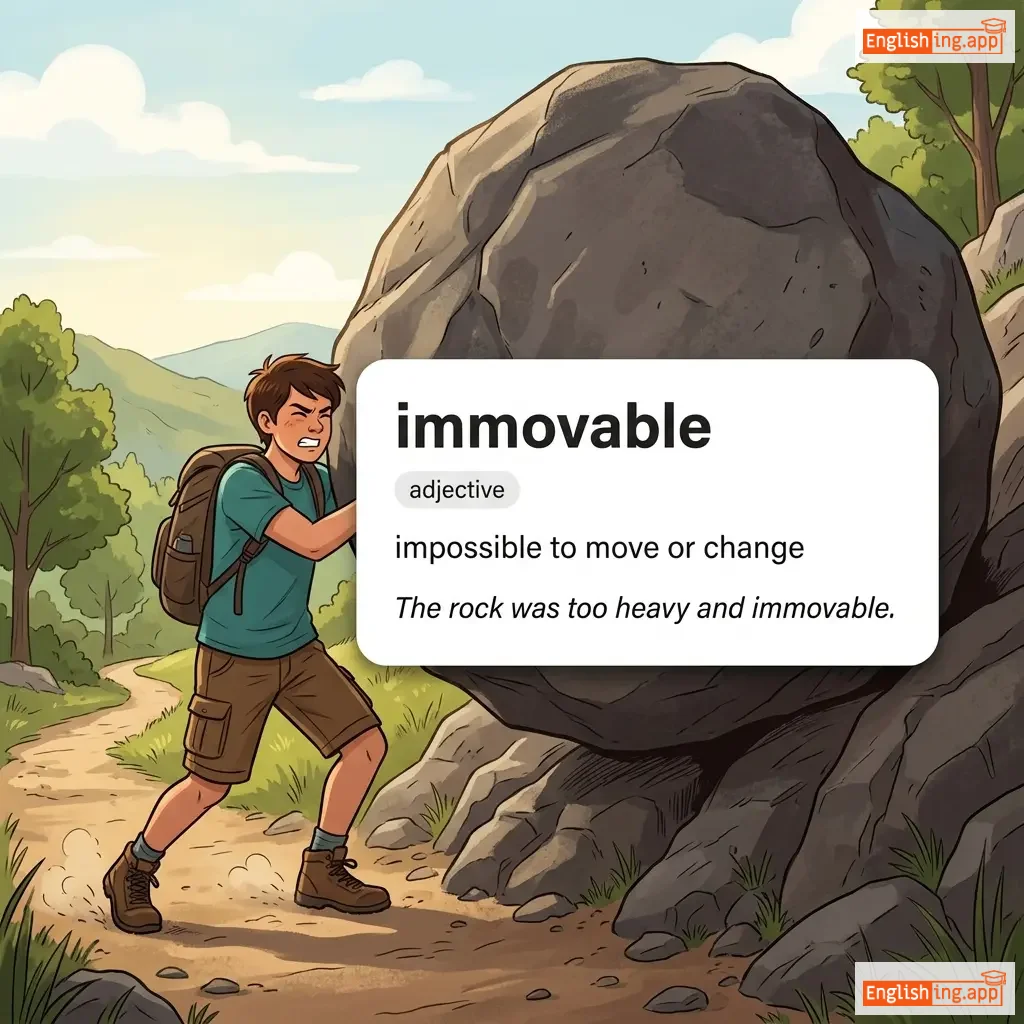
immovable definition card — visual illustration of the meaning
adjective
/ɪˈmuːvəbl/
immobile (immobile)

impossible to move or change

"The rock was too heavy and immovable."

"Le rocher était trop lourd et immobile." (Le rocher etait trop lourd et immobile.)
adjective
/ɪˈmjuːn/
immunisé (immunise)

protected from disease or from the effects of something

"Children who are vaccinated are immune to many diseases."

"Les enfants vaccinés sont immunisés contre de nombreuses maladies." (Les enfants vaccinés sont immunisés contre de nombreuses maladies.)
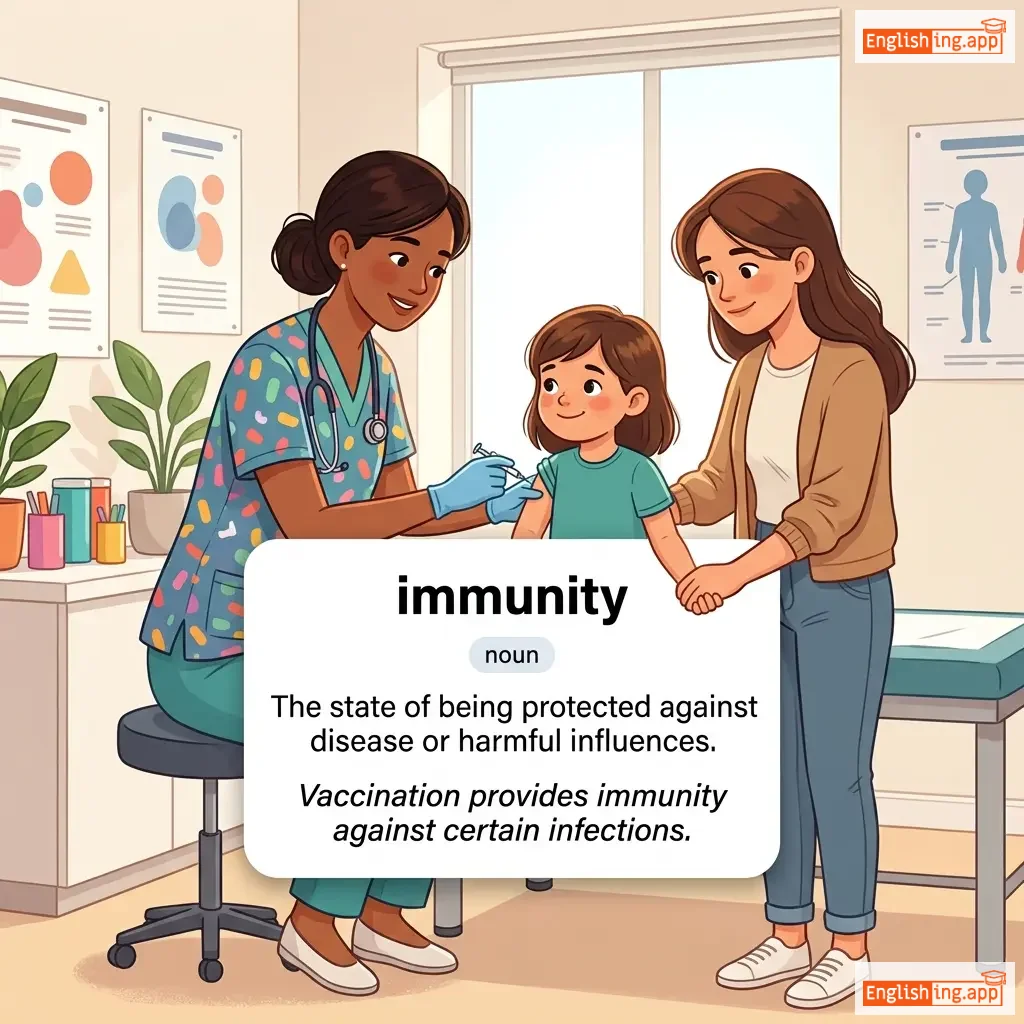
immunity definition card — visual illustration of the meaning
noun
/ɪˈmjuːnɪti/
immunité (immunité)

The state of being protected against disease or harmful influences.

"Vaccination provides immunity against certain infections."

"La vaccination procure une immunité contre certaines infections." (La vaccination procure une immunité contre certaines infections.)
verb
/ɪˈmjʊər/
enfermer (enfermer)

to confine or enclose someone against their will

"The prisoner was immured in a dark cell."

"Le prisonnier a été enfermé dans une cellule sombre." (Le prisonnier a été enfermé dans une cellule sombre.)
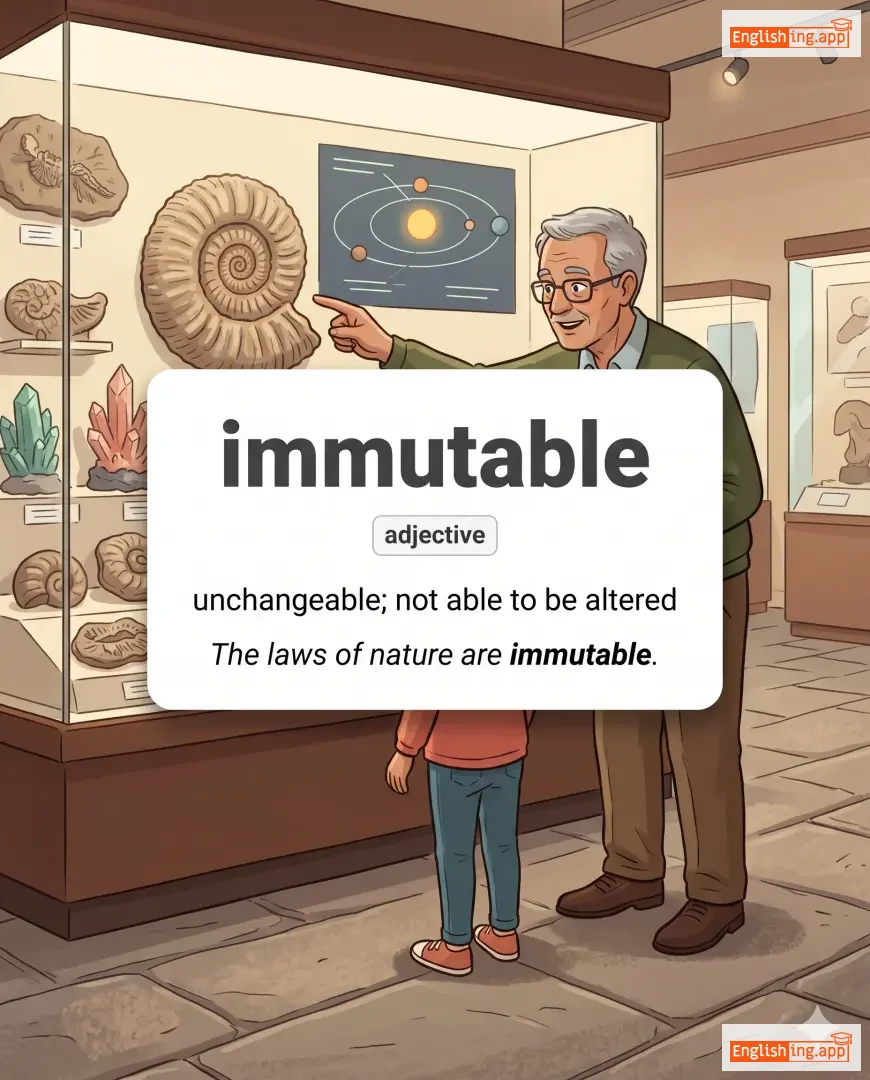
immutable definition card — visual illustration of the meaning
adjective
/ɪˈmjuːtəbl/
immuable (immuable)

unchangeable; not able to be altered

"The laws of nature are immutable."

"Les lois de la nature sont immuables." (Les lois de la nature sont immuables.)
noun
/ɪmp/
petit diablotin espiègle (petit diablotin espiègle)

a small mischievous devil or sprite; a playful troublemaker

"The child was acting like a little imp, hiding his toys everywhere."

"L'enfant agissait comme un petit diablotin, cachant ses jouets partout." (L'enfant agissait comme un petit diablotin, cachant ses jouets partout.)
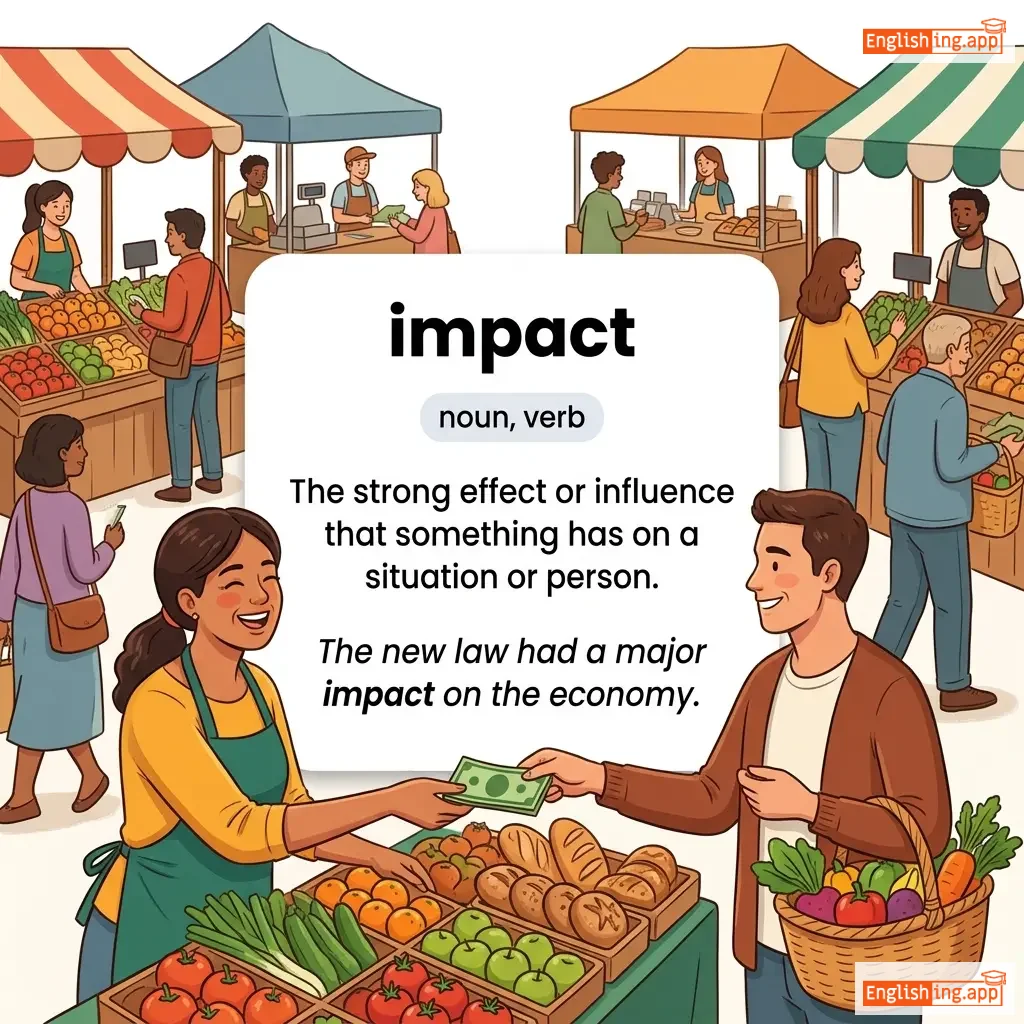
impact definition card — visual illustration of the meaning
noun, verb
/ˈɪmpækt/
impact (impact)

The strong effect or influence that something has on a situation or person.

"The new law had a major impact on the economy."

"La nouvelle loi a eu un grand impact sur l'économie." (La nouvelle loi a eu un grand impact sur l'économie.)
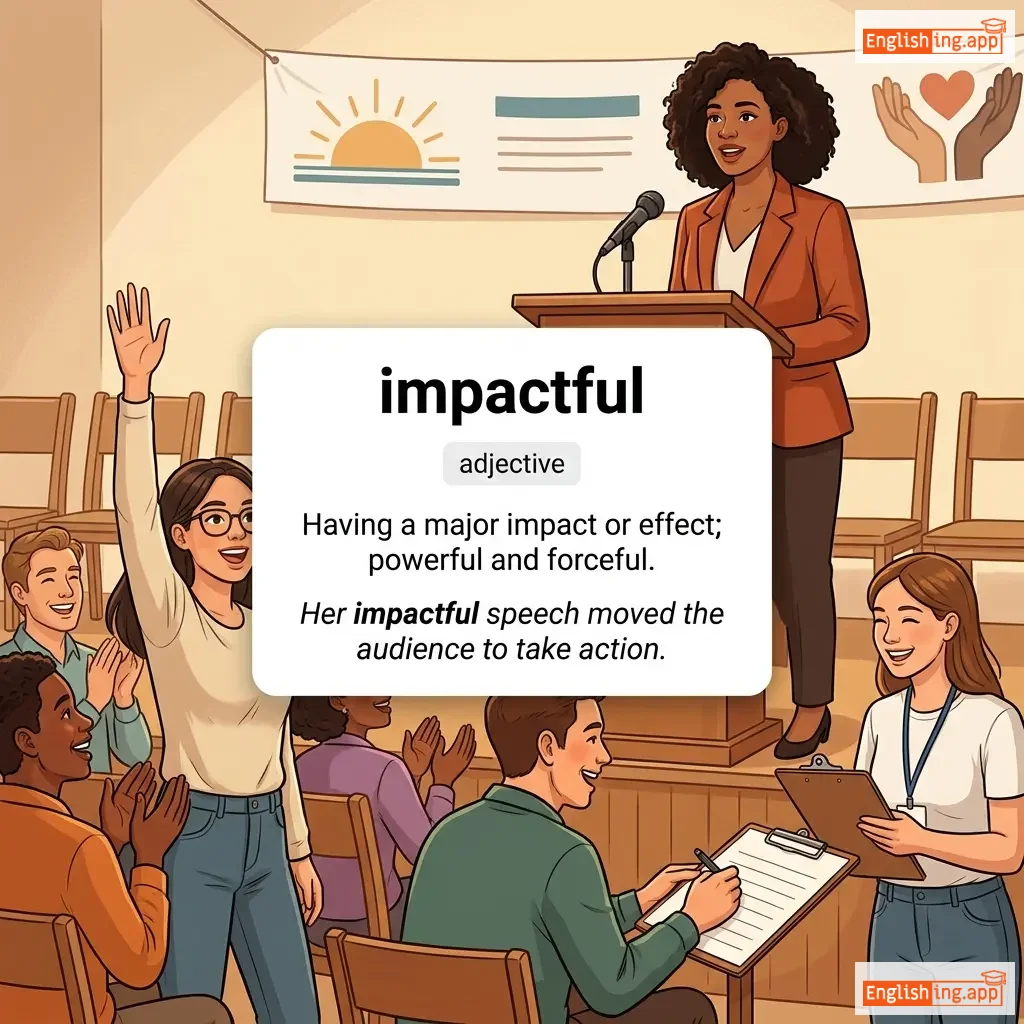
impactful definition card — visual illustration of the meaning
adjective
/ˈɪmpæktfʊl/
impactant (impactant)

Having a major impact or effect; powerful and forceful.

"Her impactful speech moved the audience to take action."

"Son discours impactant a poussé l'auditoire à passer à l'action." (Son discours impactant a poussé l'auditoire à passer à l'action.)
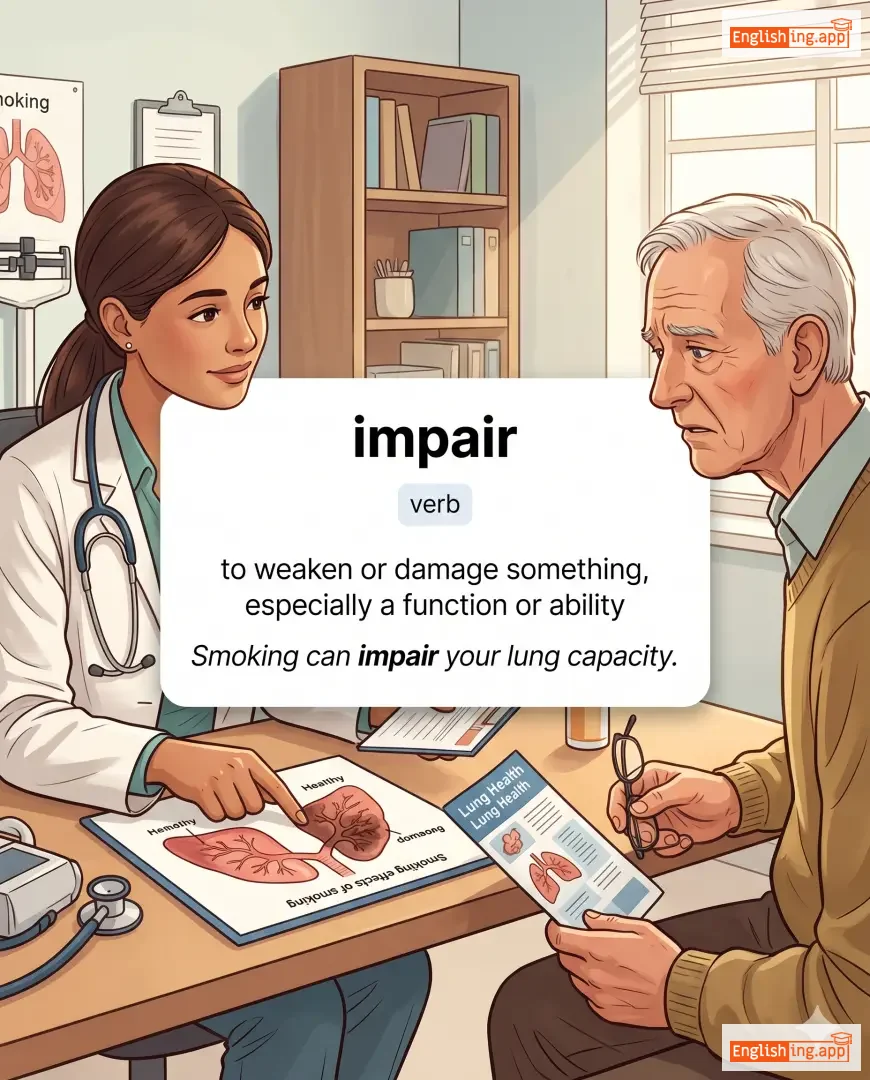
impair definition card — visual illustration of the meaning
verb
/ɪmˈpɛər/
altérer (alterer)

to weaken or damage something, especially a function or ability

"Smoking can impair your lung capacity."

"Fumer peut nuire à votre capacité pulmonaire." (Fumer peut nuire a votre capacite pulmonaire.)
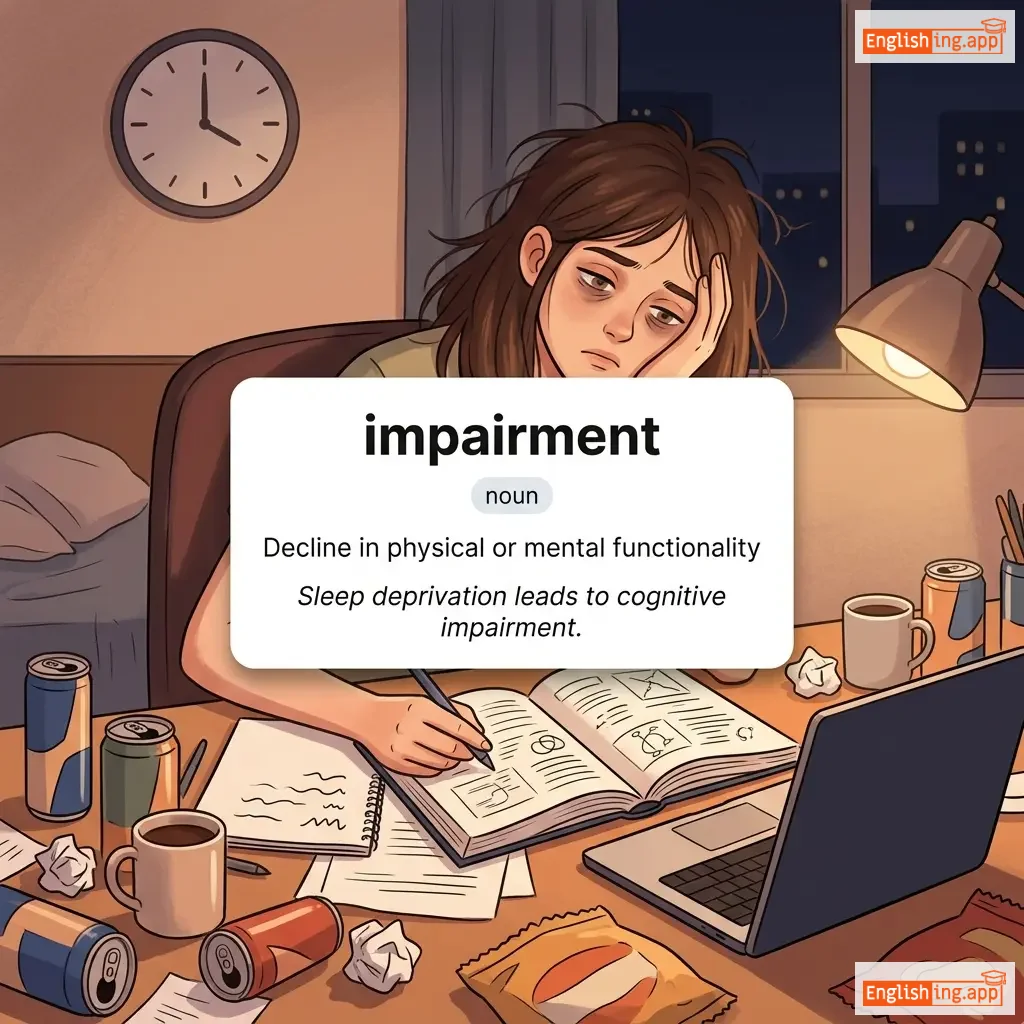
impairment definition card — visual illustration of the meaning
noun
ɪmˈpɛərmənt
déficience (defisience)

Decline in physical or mental functionality

"Sleep deprivation leads to cognitive impairment."

"La privation de sommeil conduit à une déficience cognitive." (La privation de sommeil conduit à une déficience cognitive.)
verb
/ɪmˈpeɪl/
empaler (empaler)

to pierce or fix something with a sharp object

"The knight was impaled by the enemy’s spear."

"Le chevalier a été empalé par la lance de l'ennemi." (Le chevalier a été empalé par la lance de l'ennemi.)
adjective
/ɪmˈpælpəbəl/
intangible (intangible)

unable to be felt by touch; difficult to grasp or understand

"There was an impalpable sense of fear in the room."

"Il y avait une sensation intangible de peur dans la pièce." (Il y avait une sensation intangible de peur dans la piece.)
verb
/ɪmˈpɑːrt/
transmettre (transmettre)

to make information known; to bestow or communicate

"The teacher imparted valuable knowledge to her students."

"L'enseignant a imparté des connaissances précieuses à ses élèves." (L'enseignant a imparté des connaissances précieuses à ses élèves.)
adjective
/ɪmˈpɑːrʃəl/
impartial (impartial)

Treating all rivals or disputants equally; fair and just.

"The judge remained impartial throughout the trial."

"Le juge est resté impartial tout au long du procès." (Le juge est resté impartial tout au long du procès.)
adjective
/ɪmˈpæsəbəl/
impraticable (impraticable)

Impossible to travel along or over.

"The road became impassable after the heavy snowfall."

"La route est devenue impraticable après la forte neige." (La route est devenue impraticable après la forte neige.)
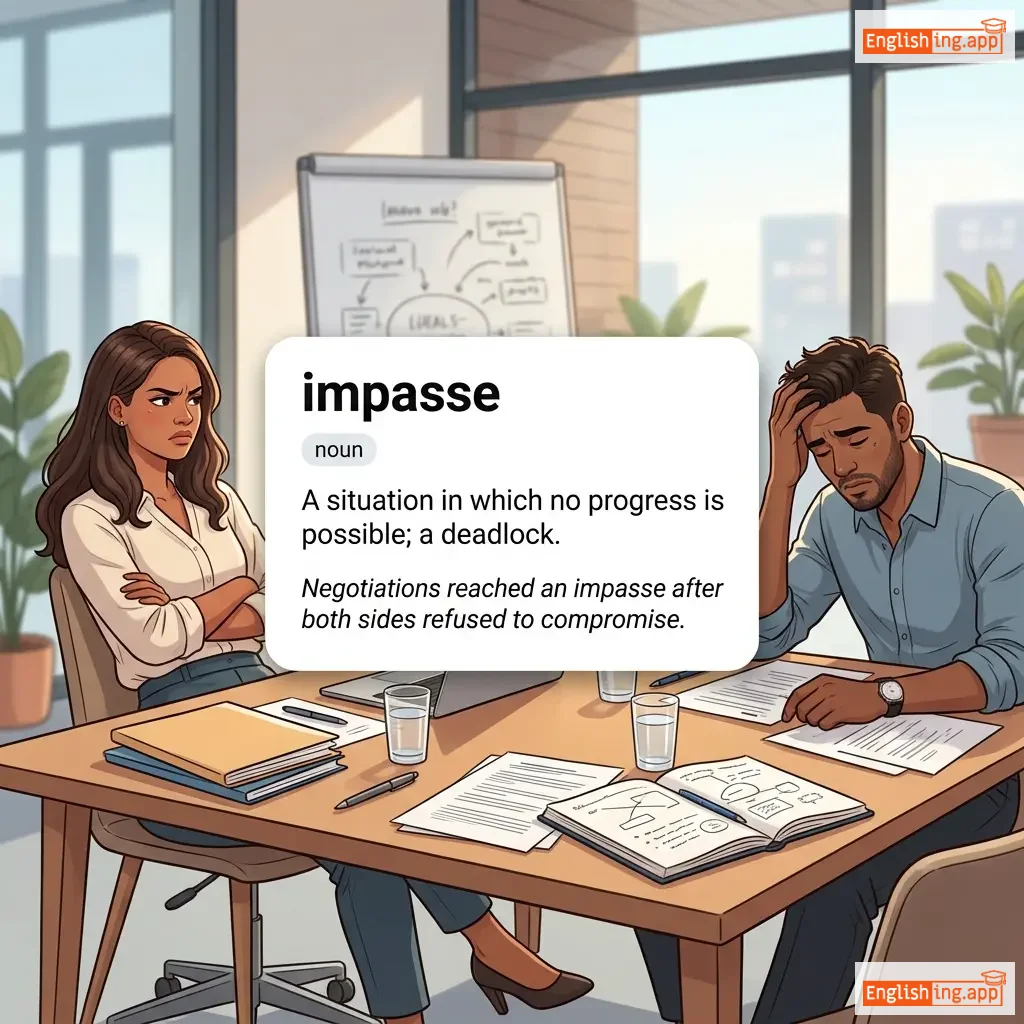
impasse definition card — visual illustration of the meaning
noun
/ˈɪmpæs/
impasse (impasse)

A situation in which no progress is possible; a deadlock.

"Negotiations reached an impasse after both sides refused to compromise."

"Les négociations ont atteint une impasse après que les deux parties aient refusé de faire des compromis." (Les negociations ont atteint une impasse apres que les deux parties aient refuse de faire des compromis.)
adjective
/ɪmˈpæsɪbəl/
impassible (impassible)

Incapable of suffering or feeling pain (used mainly in theological or philosophical contexts).

"Some philosophers argue that God is impassible and cannot experience human emotions."

"Certains philosophes affirment que Dieu est impassible et ne peut pas éprouver les émotions humaines." (Certains philosophes affirment que Dieu est impassible et ne peut pas éprouver les émotions humaines.)
adjective
/ɪmˈpæʃənd/
passionné (passionné)

Filled with or showing great emotion.

"She gave an impassioned speech about human rights."

"Elle a prononcé un discours passionné sur les droits de l'homme." (Elle a prononcé un discours passionné sur les droits de l'homme.)
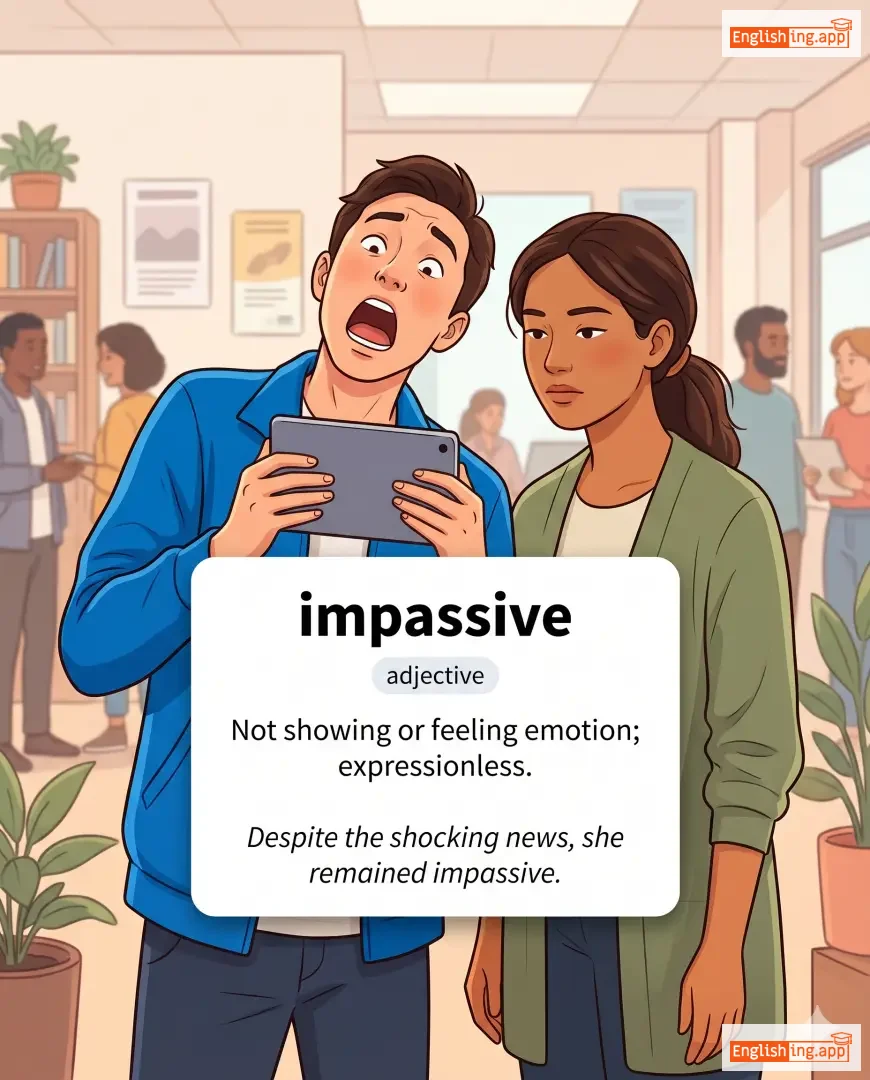
impassive definition card — visual illustration of the meaning
adjective
/ɪmˈpæsɪv/
impassible (impassible)

Not showing or feeling emotion; expressionless.

"Despite the shocking news, she remained impassive."

"Malgré les nouvelles choquantes, elle est restée impassible." (Malgré les nouvelles choquantes, elle est restée impassible.)
noun
/ɪmˈpeɪʃəns/
impatience (impatience)

The state of being quickly irritated or unable to wait calmly.

"His impatience grew as the meeting dragged on."

"Son impatience grandissait à mesure que la réunion s'éternisait." (Son impatience grandissait a mesure que la reunion s'eternisait.)
adjective
/ɪmˈpeɪʃənt/
impatient (impatient)

Not able to wait calmly; restless and eager for something to happen.

"She grew impatient while waiting in the long queue."

"Elle est devenue impatiente en attendant dans la longue file." (Elle est devenue impatiente en attendant dans la longue file.)
adverb
/ɪmˈpeɪʃəntli/
impatiemment (impatiemment)

in a manner showing annoyance or restlessness due to delay or waiting

"She tapped her fingers impatiently while waiting for the reply."

"Elle tapotait des doigts impatiemment en attendant la réponse." (elle tapotait des doigts impatiemment en attendant la reponse)
verb
/ɪmˈpiːtʃ/
destituer (destituer)

To charge a public official with misconduct while in office.

"The parliament voted to impeach the president."

"Le parlement a voté pour destituer le président." (Le parlement a voté pour destituer le président.)
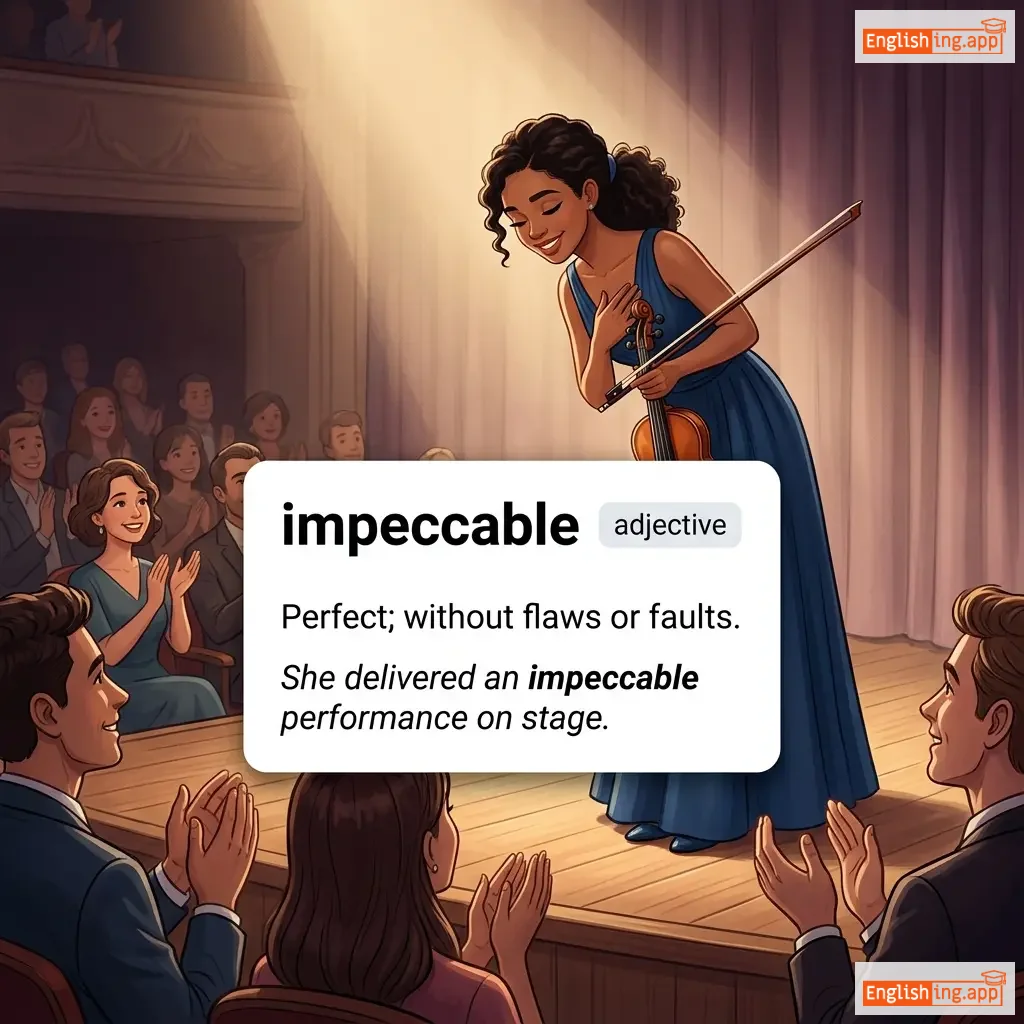
impeccable definition card — visual illustration of the meaning
adjective
/ɪmˈpɛkəbl̩/
impeccable (impeccable)

Perfect; without flaws or faults.

"She delivered an impeccable performance on stage."

"Elle a donné une performance impeccable sur scène." (Elle a donne une performance impeccable sur scene.)
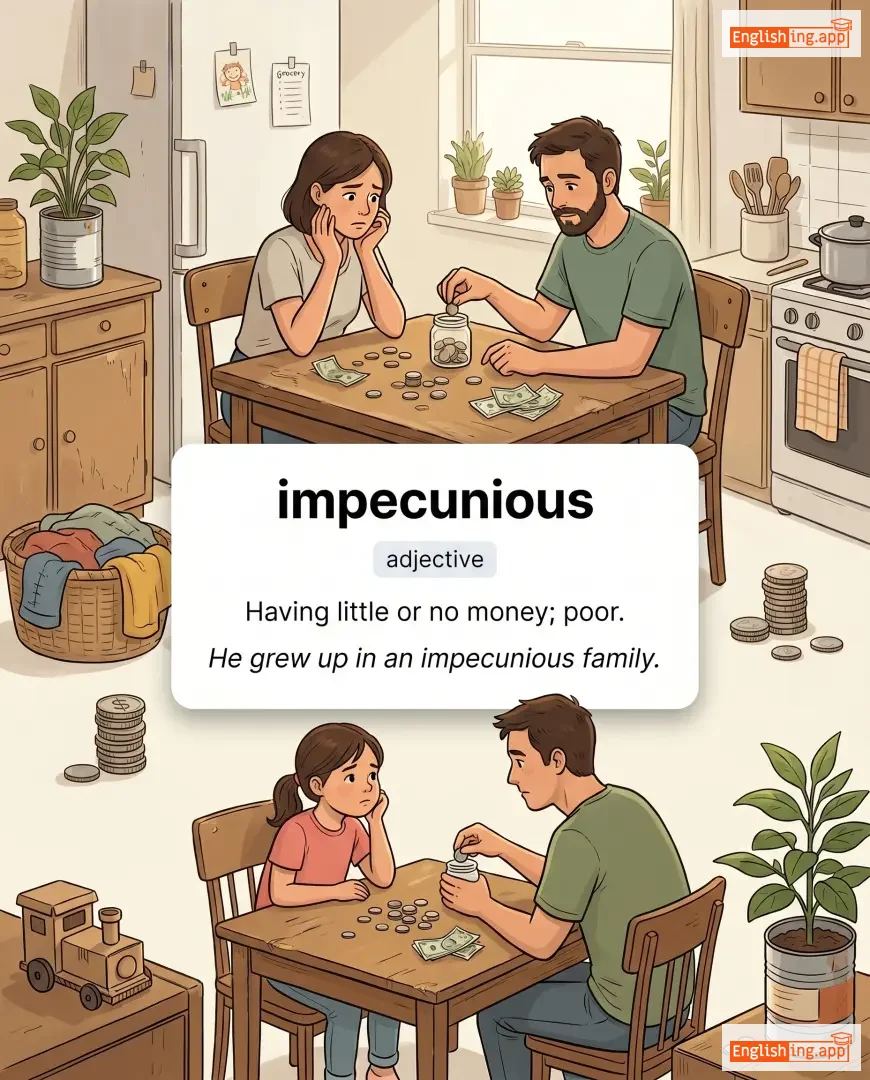
impecunious definition card — visual illustration of the meaning
adjective
/ˌɪmpɪˈkjuːniəs/
pauvre (pauvre)

Having little or no money; poor.

"He grew up in an impecunious family."

"Il a grandi dans une famille pauvre." (Il a grandi dans une famille pauvre.)
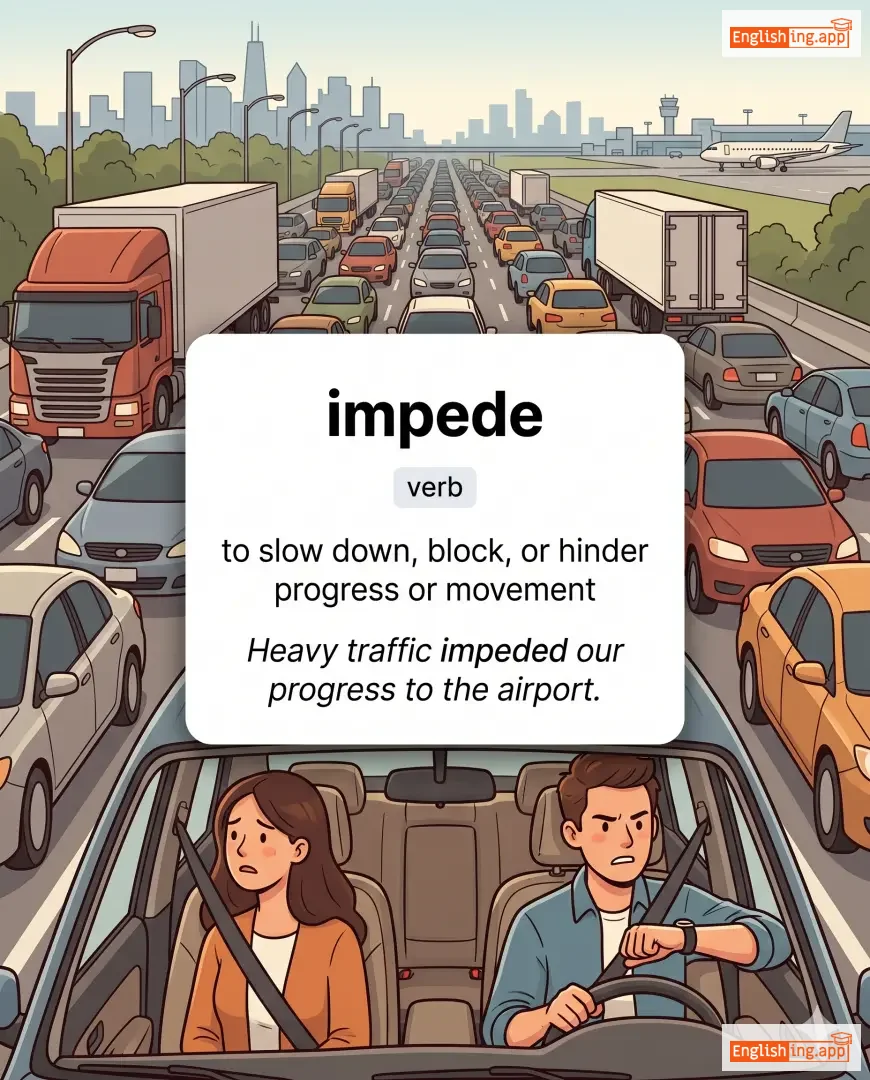
impede definition card — visual illustration of the meaning
verb
/ɪmˈpiːd/
entraver (entraver)

to slow down, block, or hinder progress or movement

"Heavy traffic impeded our progress to the airport."

"Le trafic dense a entravé notre progression vers l'aéroport." (Le trafic dense a entravé notre progression vers l'aéroport.)
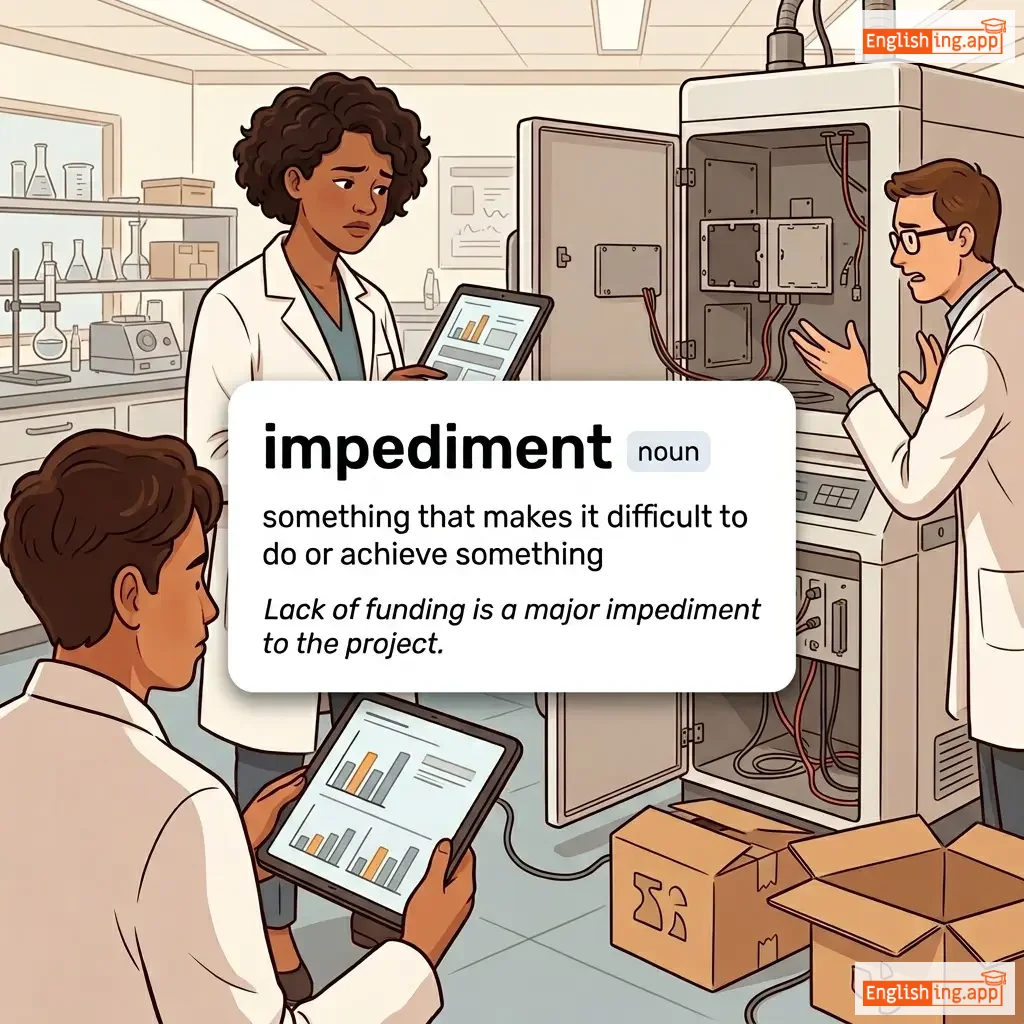
impediment definition card — visual illustration of the meaning
noun
/ɪmˈpɛdɪmənt/
empêchement (impediment)

something that makes it difficult to do or achieve something

"Lack of funding is a major impediment to the project."

"Le manque de financement est un obstacle majeur au projet." (Le manque de financement est un obstacle majeur au projet.)
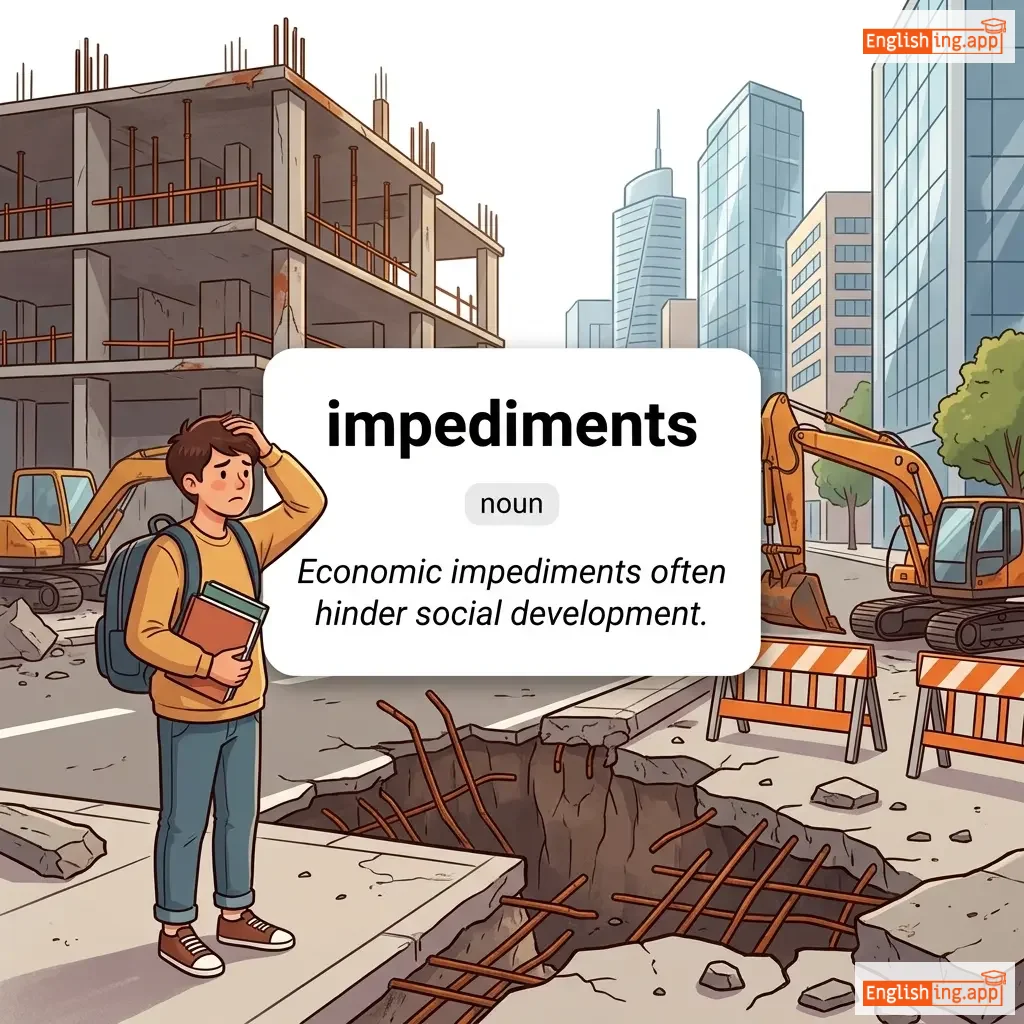
impediments definition card — visual illustration of the meaning
noun
/ɪmˈpɛdɪmənt/
obstacles (obstacles)

A hindrance or obstruction in doing something; things that prevent progress or achievement.

"Economic impediments often hinder social development."

"Les obstacles économiques entravent souvent le développement social." (Les obstacles economiques entravent souvent le developpement social.)
verb
/ɪmˈpɛl/
inciter (inciter)

to drive, force, or urge someone to do something

"Her curiosity impelled her to open the mysterious box."

"Sa curiosité l'a poussée à ouvrir la boîte mystérieuse." (Sa curiosité l'a poussée à ouvrir la boîte mystérieuse.)
verb
/ɪmˈpɛnd/
se profiler (se profiler)

to be about to happen; to loom threateningly

"Dark clouds suggested that a storm was impeding."

"Les nuages sombres suggéraient qu'une tempête était imminente." (Les nuages sombres suggéraient qu'une tempête était imminente.)
adjective
/ɪmˈpɛndɪŋ/
imminent (imminent)

about to happen soon, usually something unpleasant or threatening

"The villagers were worried about the impending flood."

"Les villageois étaient inquiets de l'inondation imminente." (Les villageois étaient inquiets de l'inondation imminente.)
adjective
/ɪmˈpɛn.ɪ.trə.bəl/
impénétrable (impenetrable)

Impossible to pass through or enter; impossible to understand.

"The dense forest was nearly impenetrable."

"La forêt dense était presque impénétrable." (La foret dense etait presque impenetrable.)
adjective
/ɪmˈpɛn.ɪ.tənt/
impénitent (impénitent)

Not feeling regret or shame about one's actions.

"The criminal remained impenitent after the trial."

"Le criminel est resté impénitent après le procès." (Le criminel est resté impénitent après le procès.)
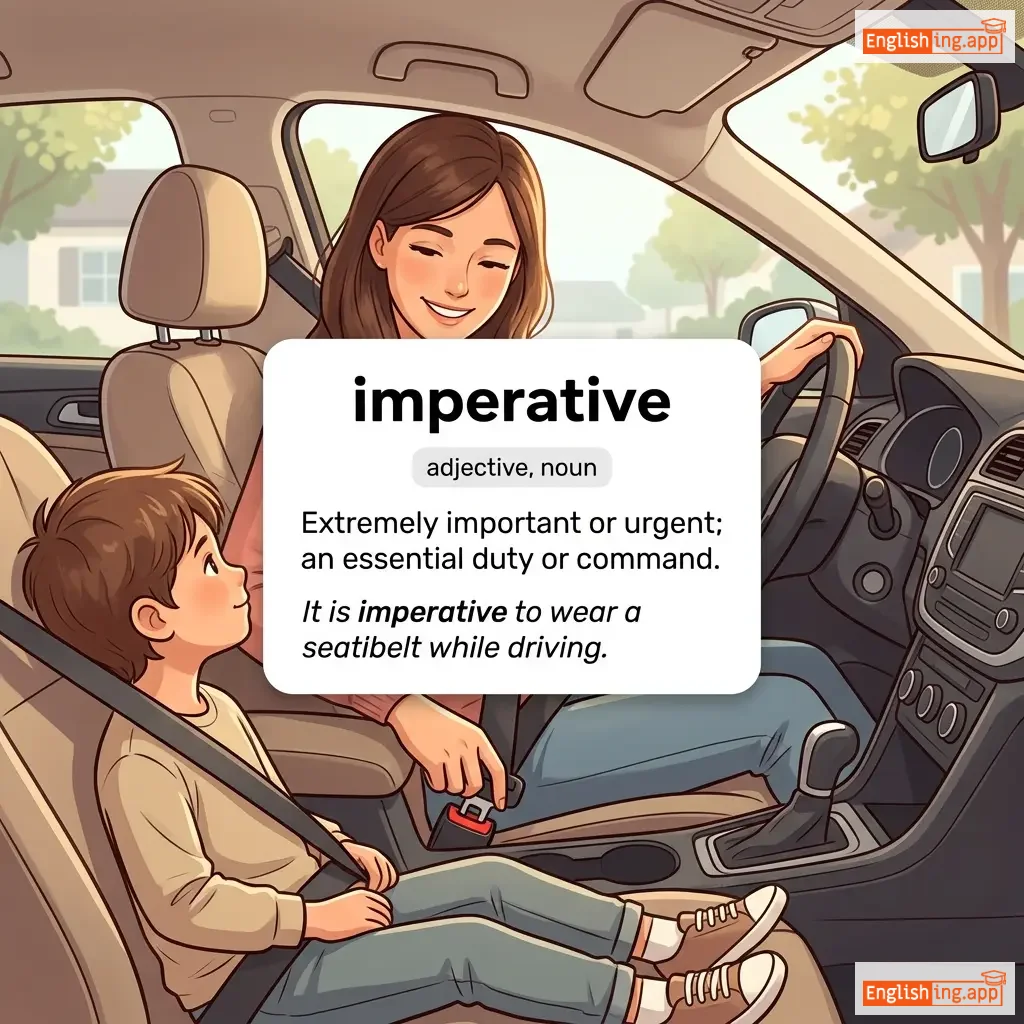
imperative definition card — visual illustration of the meaning
adjective, noun
/ɪmˈpɛr.ə.tɪv/
impératif (imperatif)

Extremely important or urgent; an essential duty or command.

"It is imperative to wear a seatbelt while driving."

"Il est impératif de porter une ceinture de sécurité en conduisant." (Il est imperatif de porter une ceinture de securite en conduisant.)
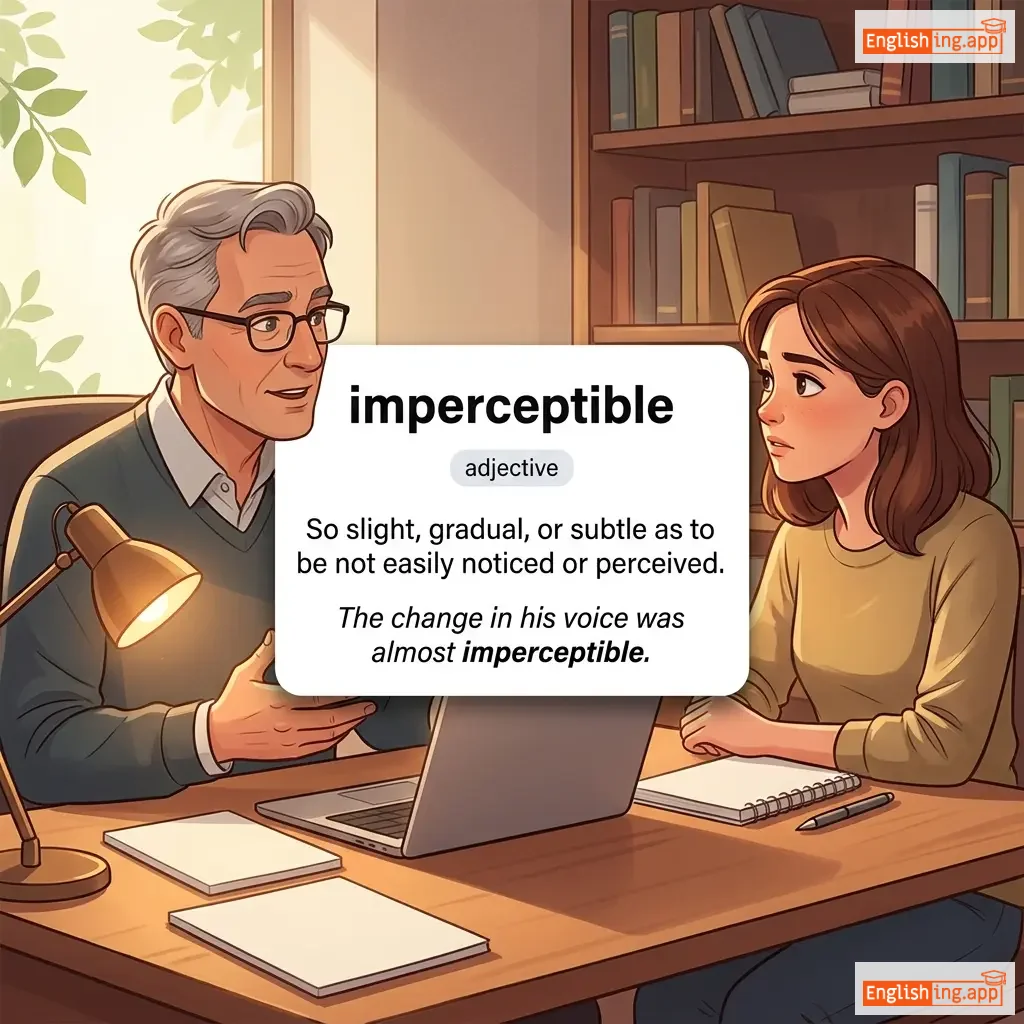
imperceptible definition card — visual illustration of the meaning
adjective
/ˌɪm.pəˈsɛp.tə.bəl/
imperceptible (imperceptible)

So slight, gradual, or subtle as to be not easily noticed or perceived.

"The change in his voice was almost imperceptible."

"Le changement dans sa voix était presque imperceptible." (Le changement dans sa voix était presque imperceptible.)
adjective
/ɪmˈpɜːrfɪkt/
imparfait (imparfait)

Not perfect; having faults or flaws.

"The painting was beautiful despite being imperfect."

"La peinture était belle malgré qu'elle fût imparfaite." (La peinture était belle malgré qu'elle fût imparfaite.)
adjective
/ˌɪm.pəˈfɛk.tə.bəl/
imparfaitible (imparfaitible)

Incapable of being made perfect or complete.

"Some human qualities are considered imperfectible."

"Certaines qualités humaines sont considérées comme imparfaitibles." (Certaines qualités humaines sont considérées comme imparfaitibles.)
noun
/ˌɪmpərˈfɛkʃən/
imperfection (imperfection)

a flaw, defect, or weakness; the state of being imperfect

"She accepted her imperfection as part of being human."

"Elle a accepté son imperfection comme faisant partie de l’humanité." (elle a accepte son imperfection comme faisant partie de l humanite)
adjective
/ɪmˈpɪəriəl/
impérial (imperial)

Relating to an empire or emperor; having supreme authority.

"The imperial palace was a symbol of the emperor's power."

"Le palais impérial était un symbole du pouvoir de l'empereur." (Le palais impérial était un symbole du pouvoir de l'empereur.)
verb
/ɪmˈpɛrɪl/
mettre en danger (mettre en danger)

To put in danger or at risk.

"Reckless driving can imperil the lives of others."

"La conduite imprudente peut mettre la vie des autres en danger." (La conduite imprudente peut mettre la vie des autres en danger.)
adjective
/ɪmˈpɪəriəs/
impérieux (impérayö)

Arrogantly domineering or overbearing.

"Her imperious tone made it hard for others to argue."

"Son ton impérieux rendait difficile pour les autres de discuter." (Son ton impérieux rendait difficile pour les autres de discuter.)
adjective
/ɪmˈperɪʃəbəl/
imperissable; éternel; immortel (imperissable; eternel; immortel)

not subject to decay; lasting forever; eternal

"The imperishable beauty of classical art continues to inspire generations."

"La beauté impérissable de l'art classique continue d'inspirer les générations." (La beaute imperissable de l'art classique continue d'inspirer les generations.)
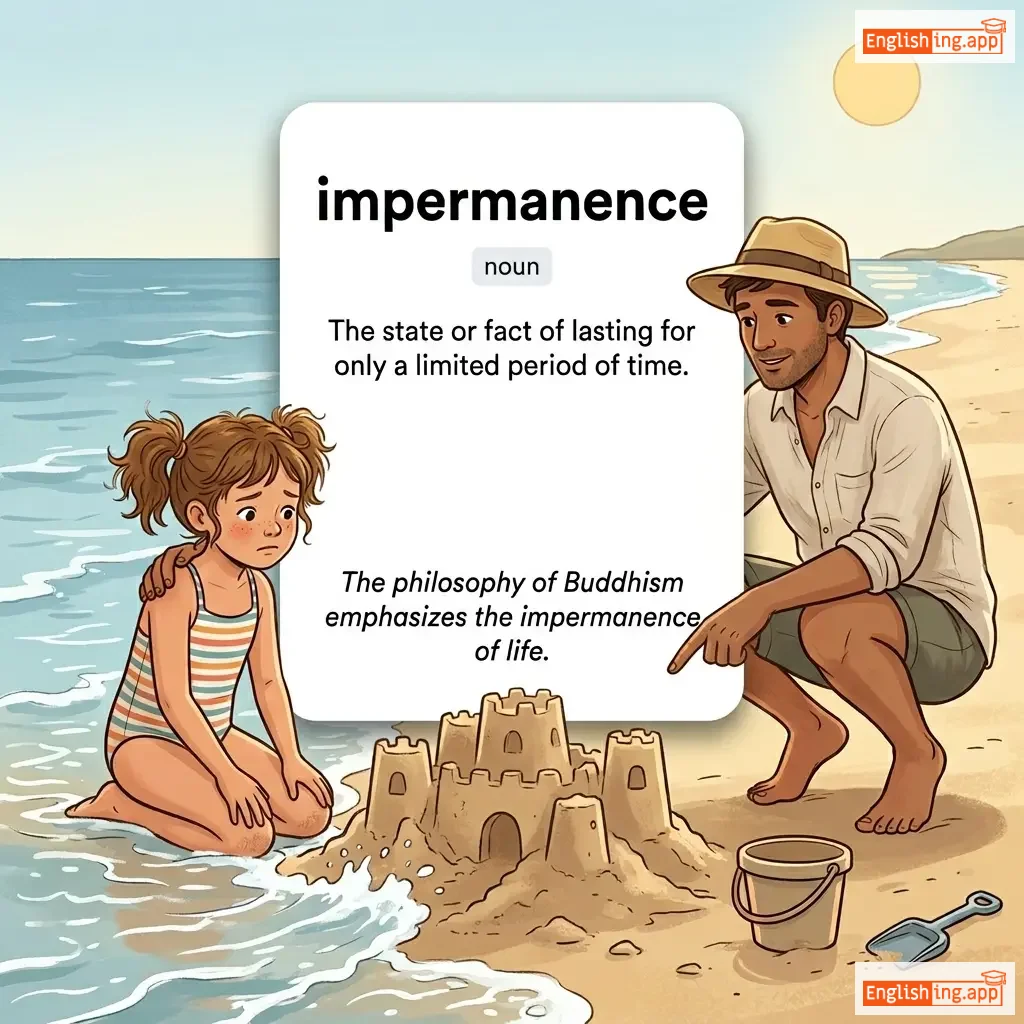
impermanence definition card — visual illustration of the meaning
noun
/ɪmˈpɜː.mə.nəns/
impermanence (impermanence)

The state or fact of lasting for only a limited period of time.

"The philosophy of Buddhism emphasizes the impermanence of life."

"La philosophie bouddhiste met l'accent sur l'impermanence de la vie." (La philosophie bouddhiste met l'accent sur l'impermanence de la vie.)
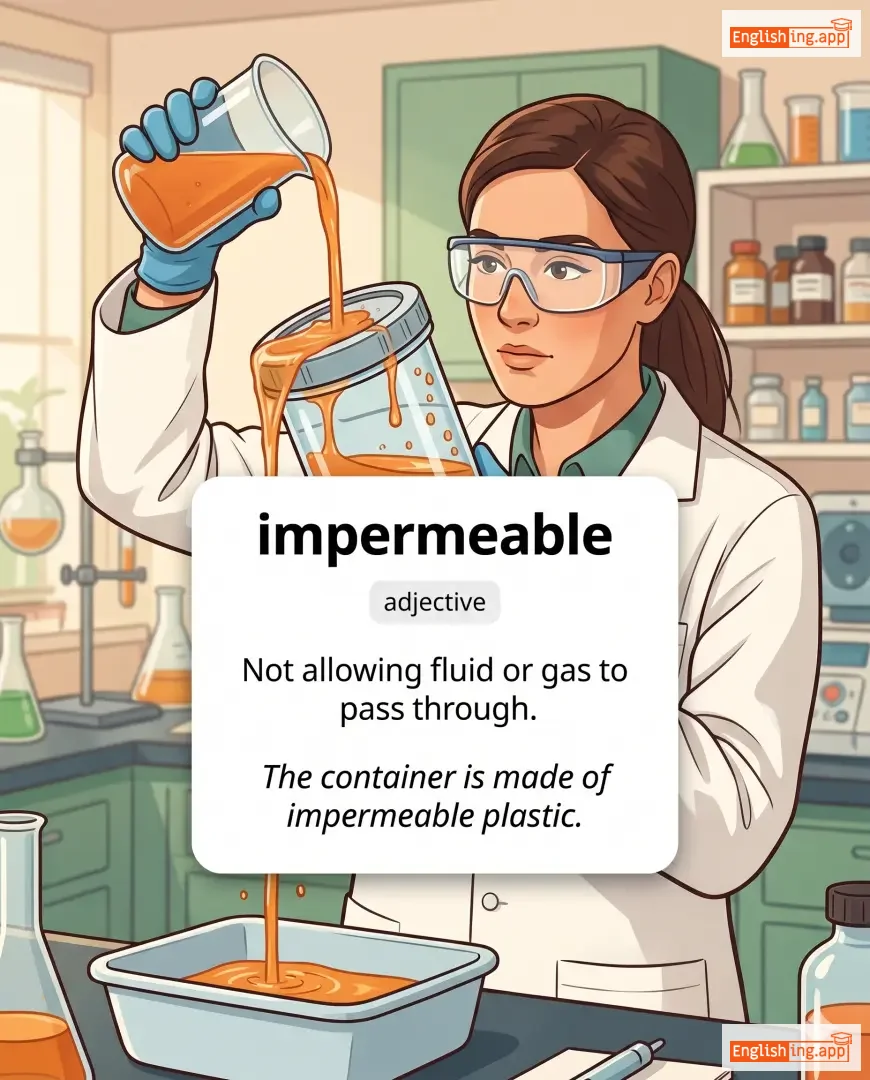
impermeable definition card — visual illustration of the meaning
adjective
/ɪmˈpɜːmiəbl/
imperméable (impermeable)

Not allowing fluid or gas to pass through.

"The container is made of impermeable plastic."

"Le conteneur est fabriqué en plastique imperméable." (Le conteneur est fabrique en plastique impermeable.)
adjective
/ˌɪmpəˈmɪsəbl/
interdit (interdit)

Not permitted or allowed.

"Such behavior is impermissible in the workplace."

"Un tel comportement est interdit sur le lieu de travail." (Un tel comportement est interdit sur le lieu de travail.)
adjective
/ɪmˈpɜːrsənl/
impersonnel (impersonnel)

not influenced by, showing, or involving personal feelings; lacking human warmth or emotion

"The letter was written in a very impersonal style."

"La lettre a été écrite dans un style très impersonnel." (La lettre a été écrite dans un style très impersonnel.)