Vocabulaires

Découvrez, apprenez et maîtrisez le vocabulaire anglais

adjective
/ɪnˈædɪkwət/
inadéquat (inadequat)

Not sufficient or good enough.

"The funding was inadequate to complete the project."

"Le financement était insuffisant pour terminer le projet." (Le financement était insuffisant pour terminer le projet.)
adjective
/ˌɪnədˈmɪsəbl̩/
inadmissible (inadmissible)

Not allowed, especially as evidence in a court of law.

"The judge ruled the evidence inadmissible."

"Le juge a déclaré que la preuve était inadmissible." (Le juge a déclaré que la preuve était inadmissible.)
noun
/ˌɪnədˈvɜːrtəns/
inadvertance (inadvertance)

Failure to pay attention; carelessness.

"The error happened through sheer inadvertence."

"L'erreur est survenue par pure inadvertance." (L'erreur est survenue par pure inadvertance.)
adjective
/ˌɪnədˈvɜːrtənt/
involontaire, non intentionnel (involontaire, non intentionnel)

Not resulting from or achieved through deliberate planning; unintentional.

"Her inadvertent mistake caused a delay in the project."

"Son erreur involontaire a causé un retard dans le projet." (Son erreur involontaire a causé un retard dans le projet.)
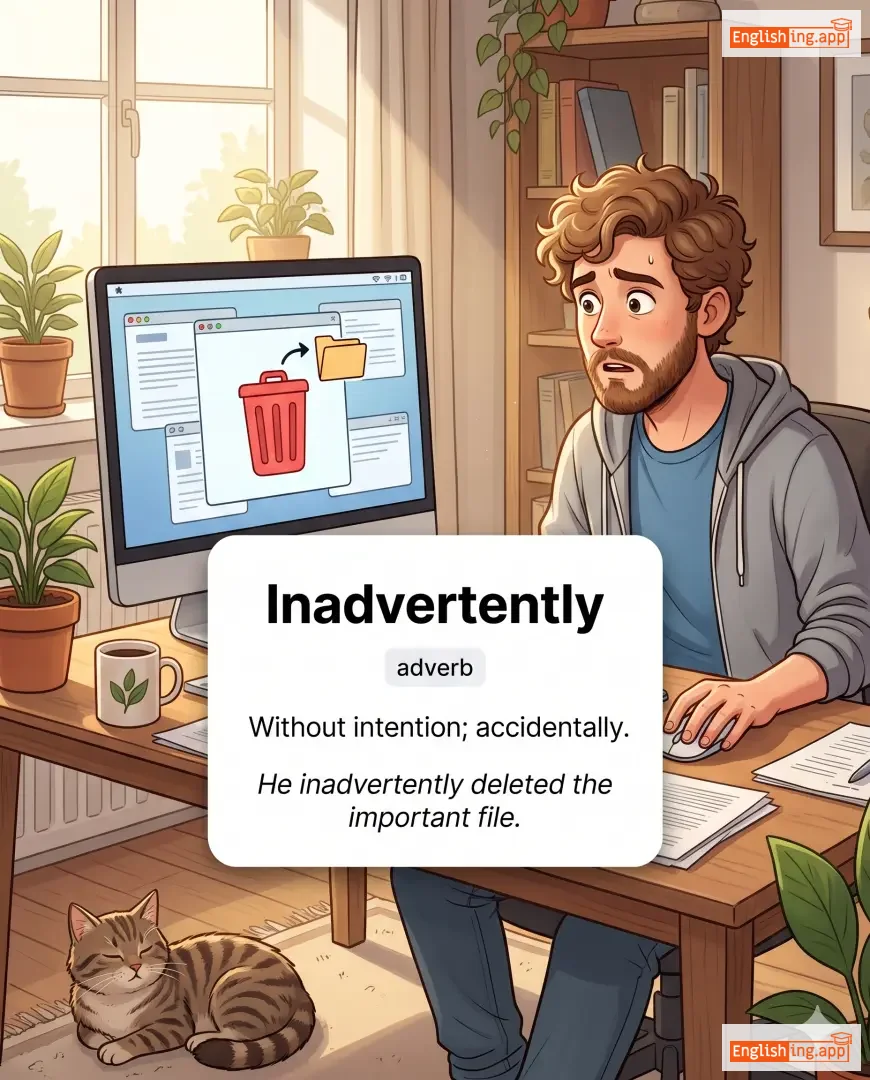
Inadvertently definition card — visual illustration of the meaning
adverb
/ˌɪnədˈvɜːrtəntli/
accidentellement (accidentellement)

Without intention; accidentally.

"He inadvertently deleted the important file."

"Il a accidentellement supprimé le fichier important." (Il a accidentellement supprimé le fichier important.)
adjective
/ˌɪnədˈvaɪzəbl/
déconseillé (deconseillé)

Not recommended; likely to have undesirable consequences.

"It is inadvisable to drive in such heavy rain."

"Il est déconseillé de conduire sous une telle pluie forte." (Il est déconseillé de conduire sous une telle pluie forte.)
adjective
/ɪnˈeɪliənəbl/
inaliénable (inalienable)

Unable to be taken away or transferred; absolute and permanent.

"Freedom of speech is an inalienable right."

"La liberté d'expression est un droit inaliénable." (La liberte d'expression est un droit inalienable.)
noun
/ˌɪnəməˈrɑːtə/
amante (amante)

A woman with whom someone is in love; a female lover.

"He wrote a poem dedicated to his inamorata."

"Il a écrit un poème dédié à son amante." (Il a ecrit un poeme dedie a son amante.)
adjective
/ɪˈneɪn/
insensé, stupide (insense, stupide)

lacking sense, meaning, or significance; silly or pointless

"The movie was criticized for its inane dialogue."

"Le film a été critiqué pour ses dialogues insensés." (Le film a ete critique pour ses dialogues insenses.)
adjective
/ɪˈnænɪmət/
objet inanimé (objet inanimé)

not alive, especially not in the manner of animals and humans; lifeless

"The museum was full of inanimate objects from ancient times."

"Le musée était rempli d'objets inanimés datant de l'époque ancienne." (Le musée était rempli d'objets inanimés datant de l'époque ancienne.)
noun
/ɪˈnænɪti/
ineptie, absurdité (ineptie, absurdité)

a nonsensical remark or action; silliness; emptiness

"The speech was full of inanities that bored the audience."

"Le discours était rempli d'inepties qui ennuyaient le public." (Le discours était rempli d'inepties qui ennuyaient le public.)
adjective
/ˌɪnæprɪˈhɛnsəbl/
incompréhensible (incomprehensible)

not understandable; incomprehensible

"The concept was so abstract that it seemed inapprehensible to most students."

"Le concept était si abstrait qu'il semblait incompréhensible pour la plupart des étudiants." (Le concept était si abstrait qu'il semblait incompréhensible pour la plupart des étudiants.)
adjective
/ˌɪnəˈproʊpriət/
inapproprié (inapproprie)

not suitable or proper in the circumstances

"It was inappropriate to talk loudly in the library."

"Il était inapproprié de parler fort dans la bibliothèque." (Il etait inapproprie de parler fort dans la bibliotheque.)
adjective
/ɪnˈæpt/
inapproprié (inapproprié)

not suitable or appropriate in the circumstances

"His inapt choice of words offended many people."

"Son choix inapproprié de mots a offensé de nombreuses personnes." (Son choix inapproprié de mots a offensé de nombreuses personnes.)
adjective
/ˌɪnɑːrˈtɪkjʊlət/
inaudible (inaudible)

Unable to express oneself clearly or effectively in speech or writing.

"She became inarticulate with emotion during the speech."

"Elle est devenue inaudible avec émotion pendant le discours." (Elle est devenue inaudible avec émotion pendant le discours.)
adverb
/ˌɪnəzˈmʌtʃ/
dans la mesure où (dans la mesure ou)

To the extent that; considering that.

"Inasmuch as you are their teacher, you should guide them carefully."

"Dans la mesure où vous êtes leur enseignant, vous devez les guider soigneusement." (Dans la mesure où vous êtes leur enseignant, vous devez les guider soigneusement.)
conjunction
/ˌɪnəzˈmʌtʃ æz/
puisque (puisque)

Because; since.

"He cannot attend, inasmuch as he is unwell."

"Il ne peut pas assister, puisque qu'il est malade." (Il ne peut pas assister, puisque qu'il est malade.)
adjective
/ˌɪnəˈtɛntɪv/
inattentif (inattentif)

not paying attention; lacking focus or concentration

"The inattentive student missed several important instructions."

"L'étudiant inattentif a manqué plusieurs consignes importantes." (L etudiant inattentif a manque plusieurs consignes importantes)
adjective
/ɪnˈɔːdəbl/
inaudible (inaudible)

Unable to be heard.

"Her voice was almost inaudible over the noise."

"Sa voix était presque inaudible par-dessus le bruit." (Sa voix était presque inaudible par-dessus le bruit.)
adjective
/ɪˈnɔːɡjərəl/
inaugural (inaugural)

marking the beginning of something; first; opening

"The president delivered his inaugural speech."

"Le président a prononcé son discours inaugural." (Le président a prononcé son discours inaugural.)
verb
/ɪˈnɔːɡjʊreɪt/
inaugurer (inaugurer)

To formally begin or introduce something, especially with a ceremony.

"The mayor will inaugurate the new bridge tomorrow."

"Le maire inaugurera le nouveau pont demain." (Le maire inaugurera le nouveau pont demain.)
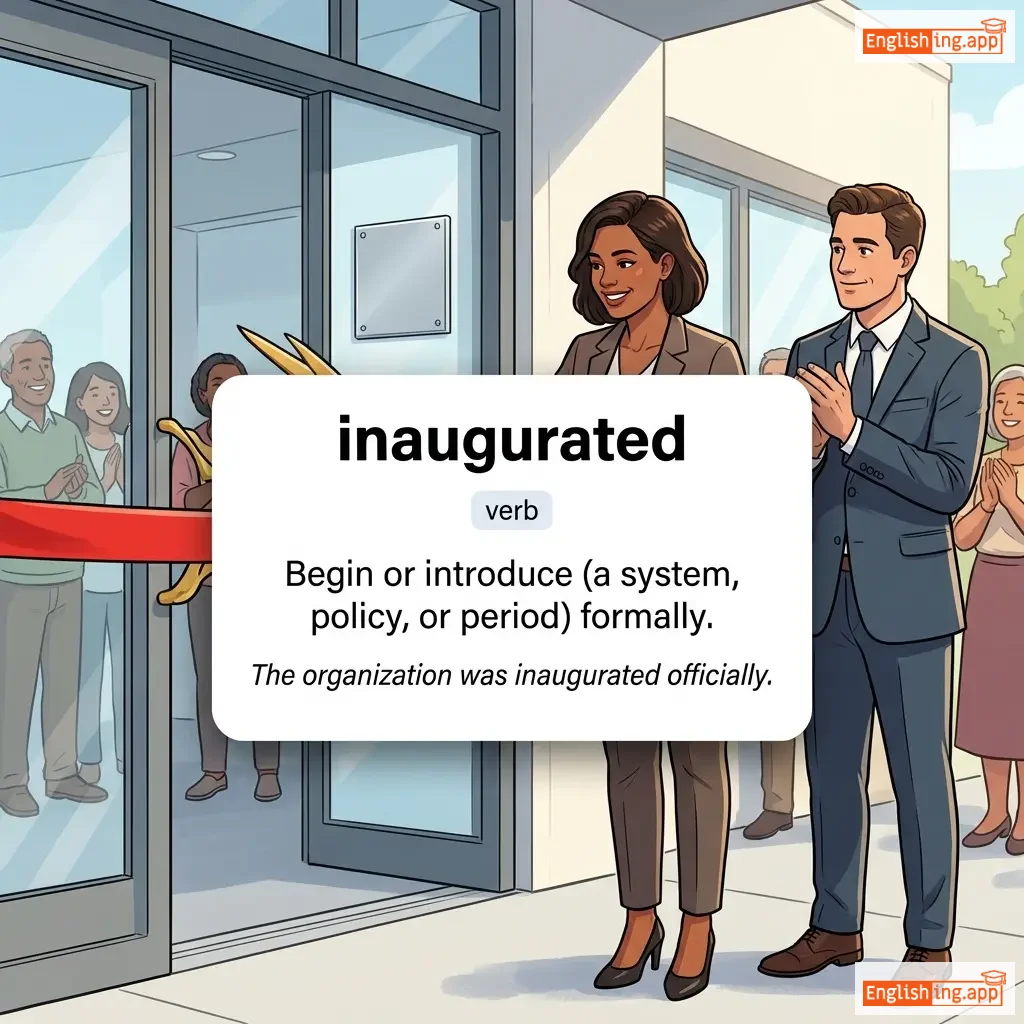
inaugurated definition card — visual illustration of the meaning
verb
ɪˈnɔː.ɡjə.reɪ.tɪd
inauguré (inaugure)

Begin or introduce (a system, policy, or period) formally.

"The organization was inaugurated officially."

"L'organisation a été inaugurée officiellement." (L'organisation a été inaugurée officiellement.)
adjective
/ˌɪnɔːˈspɪʃəs/
néfaste (nefast)

Not conducive to success; unpromising or unlucky.

"The event began under inauspicious circumstances."

"L'événement a commencé dans des circonstances défavorables." (L'evenement a commence dans des circonstances defavorables.)
adjective
/ˈɪnˌbɔːrn/
inné (inborn)

existing from birth; innate

"She has an inborn talent for music."

"Elle a un talent inné pour la musique." (Elle a un talent inne pour la musique.)
adjective
/ˈɪnˌbrɛd/
inné (inne)

existing naturally in a person or animal; also related to reproduction within a limited community

"He has an inbred sense of loyalty."

"Il a un sens inné de la loyauté." (Il a un sens iné de la loyauté.)
noun
/ˌɪnkænˈdɛsəns/
incandescence (incandescence)

the emission of light from a hot object; brilliance

"The incandescence of the candle filled the dark room."

"L'incandescence de la bougie remplit la pièce sombre." (L'incandescence de la bougie remplit la piece sombre.)
adjective
/ˌɪnkænˈdɛsənt/
incandescent (incandescent)

emitting light as a result of being heated; extremely bright or passionate

"The incandescent lamp lit up the entire hall."

"La lampe incandescente a éclairé toute la salle." (La lampe incandescente a éclairé toute la salle.)
noun
/ˌɪnkænˈteɪʃən/
incantation (incantation)

a series of words used as a magic spell or charm

"The wizard chanted an incantation to summon the spirits."

"Le magicien a récité une incantation pour invoquer les esprits." (Le magicien a recite une incantation pour invoquer les esprits.)
noun
/ˌɪnˌkeɪpəˈbɪləti/
incapacité (incapacite)

lack of ability or power to do something; inability or incompetence

"His incapability to manage the team led to serious problems."

"Son incapacité à gérer l’équipe a causé de graves problèmes." (son incapacite a gerer lequipe a cause de graves problemes)
adjective
/ɪnˈkeɪpəbəl/
incapable (incapable)

lacking the ability, skill, or capacity to do something

"He is incapable of understanding complex instructions."

"Il est incapable de comprendre des instructions complexes." (Il est incapable de comprendre des instructions complexes)
verb
/ˌɪnkəˈpæsɪteɪt/
incapaciter (incapaciter)

to deprive someone or something of the ability or strength to function

"The severe injury incapacitated the player for the rest of the season."

"La blessure grave a rendu le joueur incapable pour le reste de la saison." (La blessure grave a rendu le joueur incapable pour le reste de la saison.)
noun
/ˌɪnkəˈpæsəti/
incapacité (incapacite)

the lack of ability, power, or fitness to do something

"His mental incapacity prevented him from making important decisions."

"Son incapacité mentale l'a empêché de prendre des décisions importantes." (Son incapacité mentale l'a empêche de prendre des décisions importantes.)
verb
/ɪnˈkɑːrsəreɪt/
incarcérer (incarcérer)

to imprison or confine someone

"The authorities incarcerated the criminal after the trial."

"Les autorités ont emprisonné le criminel après le procès." (Les autorités ont emprisonné le criminel après le procès.)
noun
/ɪnˌkɑːsəˈreɪʃən/
incarcération (incarceration)

the state of being imprisoned or confined

"The criminal faced years of incarceration for his crimes."

"Le criminel a purgé des années d'incarcération pour ses crimes." (Le criminel a purge des annees d'incarceration pour ses crimes.)
adjective/noun
/ɪnˈkɑːrnədiːn/
rouge incarnat (rouge incarnat)

a bright crimson or pinkish-red color

"The sky turned incarnadine at sunset."

"Le ciel est devenu rouge incarnat au coucher du soleil." (Le ciel est devenu rouge incarnat au coucher du soleil.)
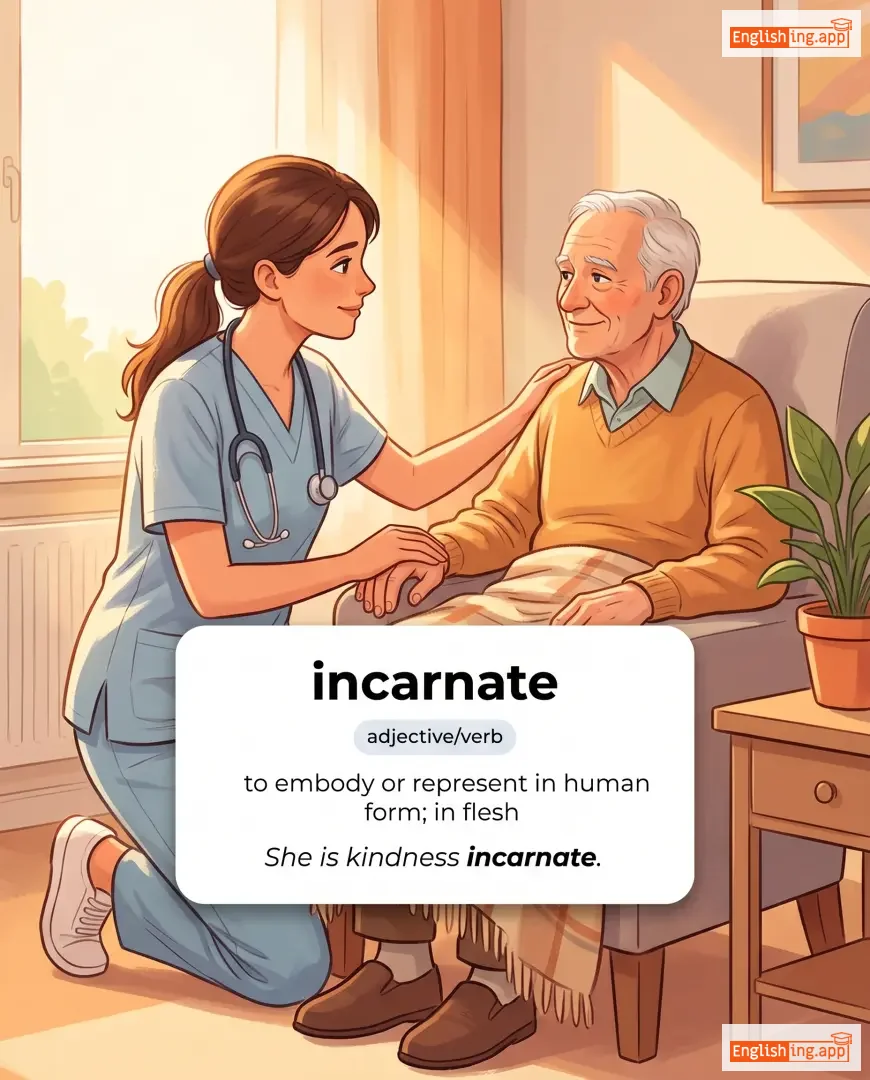
incarnate definition card — visual illustration of the meaning
adjective/verb
/ɪnˈkɑːrneɪt/
incarné (incarne)

to embody or represent in human form; in flesh

"She is kindness incarnate."

"Elle est la bonté incarnée." (Elle est la bonté incarnée.)
noun
/ˌɪnkɑːrˈneɪʃən/
incarnation (incarnation)

the embodiment of a deity, spirit, or quality in a physical form

"The monk was considered the incarnation of compassion."

"Le moine était considéré comme l'incarnation de la compassion." (Le moine etait considere comme l'incarnation de la compassion.)
adjective
/ɪnˈsɛndiˌɛri/
incendiaire / provocateur (incendiaire / provocateur)

designed to cause fires or stir up conflict

"The politician’s incendiary remarks angered the crowd."

"Les remarques incendiaires du politicien ont mis en colère la foule." (Les remarques incendiaires du politicien ont mis en colère la foule.)
noun/verb
/ˈɪnsɛns/
encens / irriter (encens / irriter)

a substance burned for its sweet smell (noun); to make very angry (verb)

"The smell of incense filled the temple, but his rude words incensed her."

"L'odeur de l'encens remplissait le temple, mais ses mots impolis l'ont mise en colère." (L'odeur de l'encens remplissait le temple, mais ses mots impolis l'ont mise en colère.)
noun
/ɪnˈsɛntɪv/
incitation (incitation)

a thing that motivates or encourages someone to do something

"The company offers bonuses as an incentive to increase productivity."

"L'entreprise offre des primes comme incitation pour augmenter la productivité." (L'entreprise offre des primes comme incitation pour augmenter la productivité.)
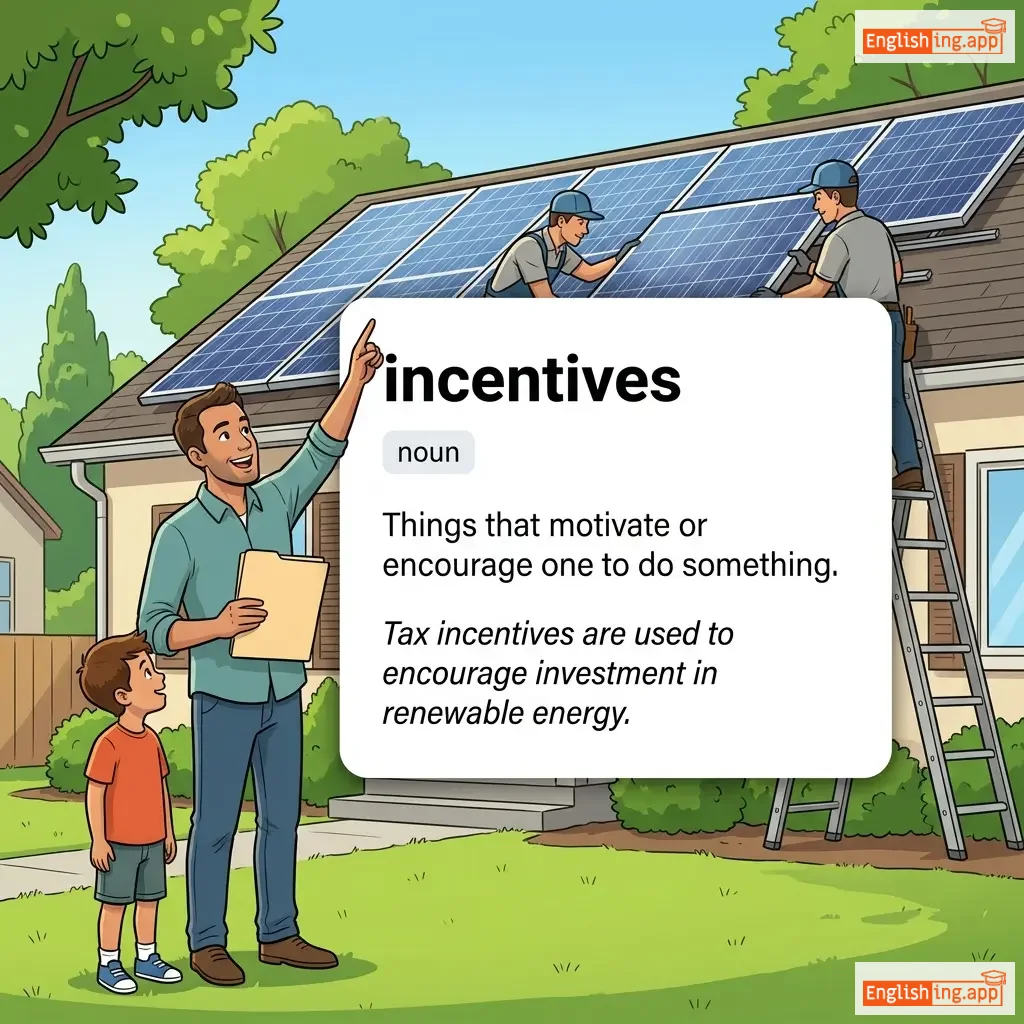
incentives definition card — visual illustration of the meaning
noun
ɪnˈsɛntɪvz
incitations, incitatifs (insitasyon, insitativ)

Things that motivate or encourage one to do something.

"Tax incentives are used to encourage investment in renewable energy."

"Les incitations fiscales sont utilisées pour encourager les investissements dans l'énergie renouvelable." (Lez ansitasyon fiskal son itilize pur ankouraje lez investisman dan lénerji renouvelable.)
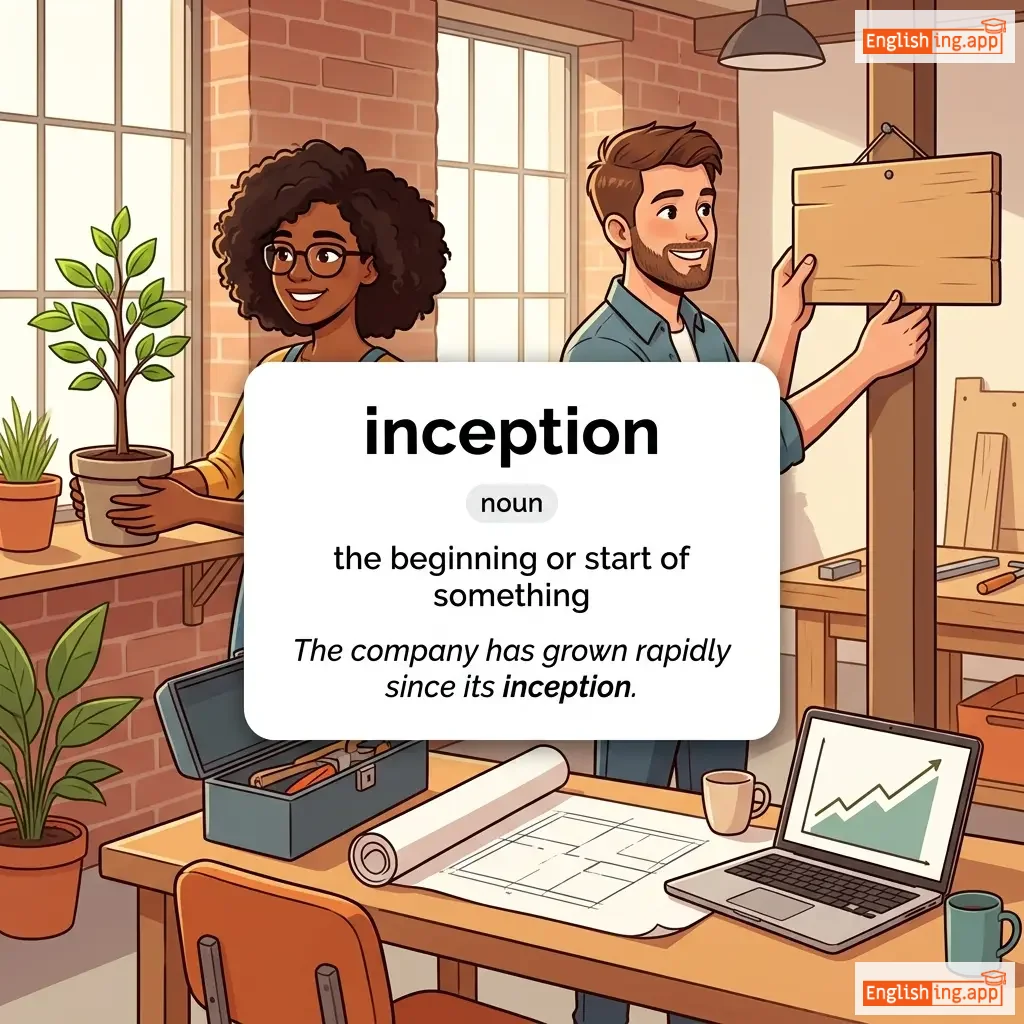
inception definition card — visual illustration of the meaning
noun
/ɪnˈsɛpʃən/
commencement (commencement)

the beginning or start of something

"The company has grown rapidly since its inception."

"L'entreprise a connu une croissance rapide depuis son commencement." (L'entreprise a connu une croissance rapide depuis son commencement.)
adjective
/ɪnˈsɛptɪv/
initial (initial)

Relating to or marking the beginning or initial stage of something.

"The inceptive phase of the project was marked by enthusiastic planning."

"La phase inceptive du projet a été marquée par une planification enthousiaste." (La phase inceptive du projet a été marquée par une planification enthousiaste.)
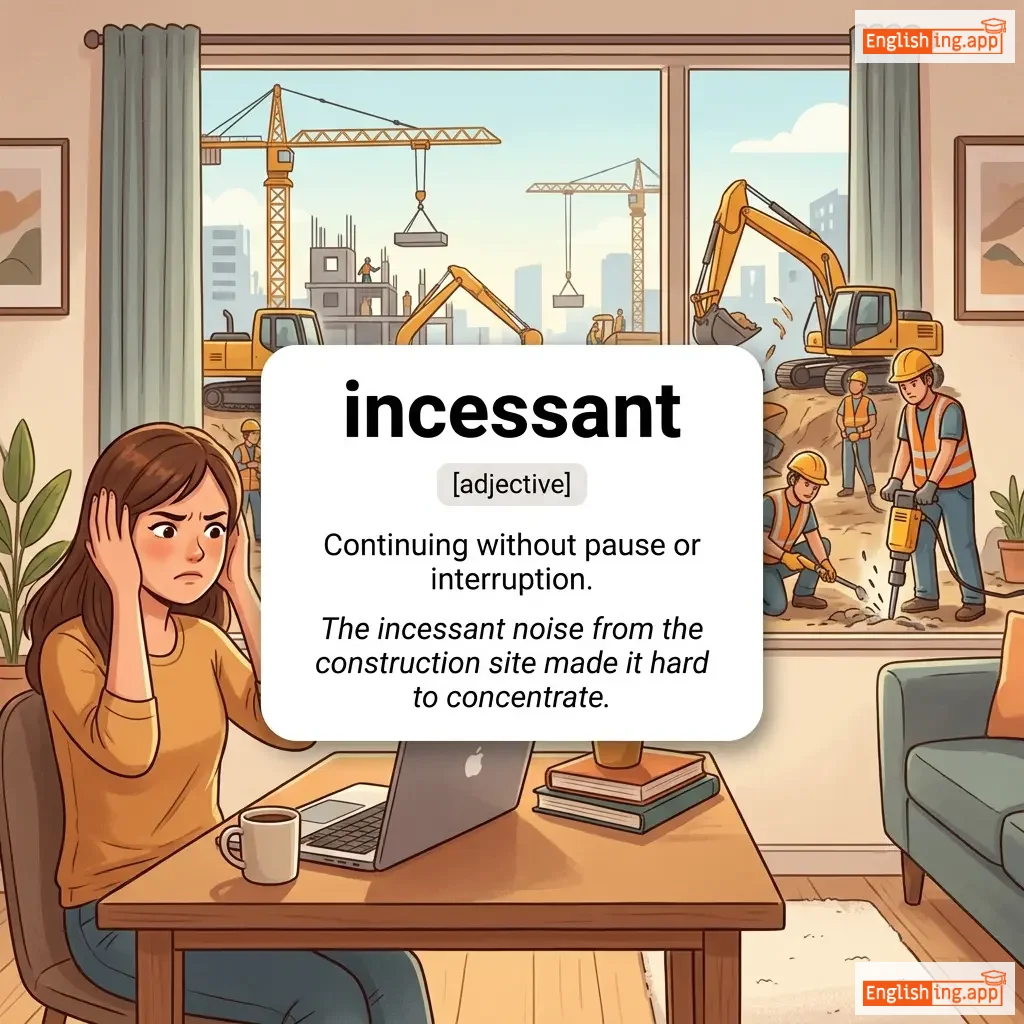
incessant definition card — visual illustration of the meaning
adjective
/ɪnˈsɛsənt/
incessant (incessant)

Continuing without pause or interruption.

"The incessant noise from the construction site made it hard to concentrate."

"Le bruit incessant du chantier rendait difficile de se concentrer." (Le bruit incessant du chantier rendait difficile de se concentrer.)
noun, verb
/ɪntʃ/
pouce / se déplacer lentement (pouce / se deplacer lentement)

A unit of length equal to 2.54 centimeters; or to move slowly and carefully in small amounts.

"She inched closer to the edge of the stage."

"Elle s'est lentement rapprochée du bord de la scène." (Elle s'est lentement rapprochee du bord de la scene.)
adverb
/ˈɪntʃmiːl/
petit à petit (petit a petit)

Gradually, little by little.

"The old castle fell inchmeal into ruin."

"Le vieux château est tombé petit à petit en ruine." (Le vieux château est tombé petit à petit en ruine.)
inchoate definition card — visual illustration of the meaning
adjective
/ɪnˈkoʊ.ɪt/ or /ɪnˈkoʊ.eɪt/
incomplet (incomplet)

Just begun and not fully formed; rudimentary.

"His inchoate ideas needed more research to be developed."

"Ses idées incomplètes avaient besoin de plus de recherches pour être développées." (Ses idées incomplètes avaient besoin de plus de recherches pour être développées.)
adjective
/ɪnˈkoʊətɪv/
inchoatif (inchoatif)

relating to the beginning of something; in an initial stage

"The poet used inchoative expressions to depict the dawn of creation."

"Le poète a utilisé des expressions inchoatives pour décrire l'aube de la création." (Le poète a utilisé des expressions inchoatives pour décrire l'aube de la création.)
noun
/ˈɪnsɪdəns/
incidence (incidence)

the occurrence, rate, or frequency of something

"The incidence of road accidents has decreased this year."

"L'incidence des accidents de la route a diminué cette année." (L'incidence des accidents de la route a diminué cette année.)
noun
/ˈɪnsɪdənt/
incident (incident)

an event or occurrence, often unpleasant or unusual

"The police quickly responded to the incident in the park."

"La police a rapidement répondu à l'incident dans le parc." (La police a rapidement répondu à l'incident dans le parc.)