Vocabulaires

Découvrez, apprenez et maîtrisez le vocabulaire anglais

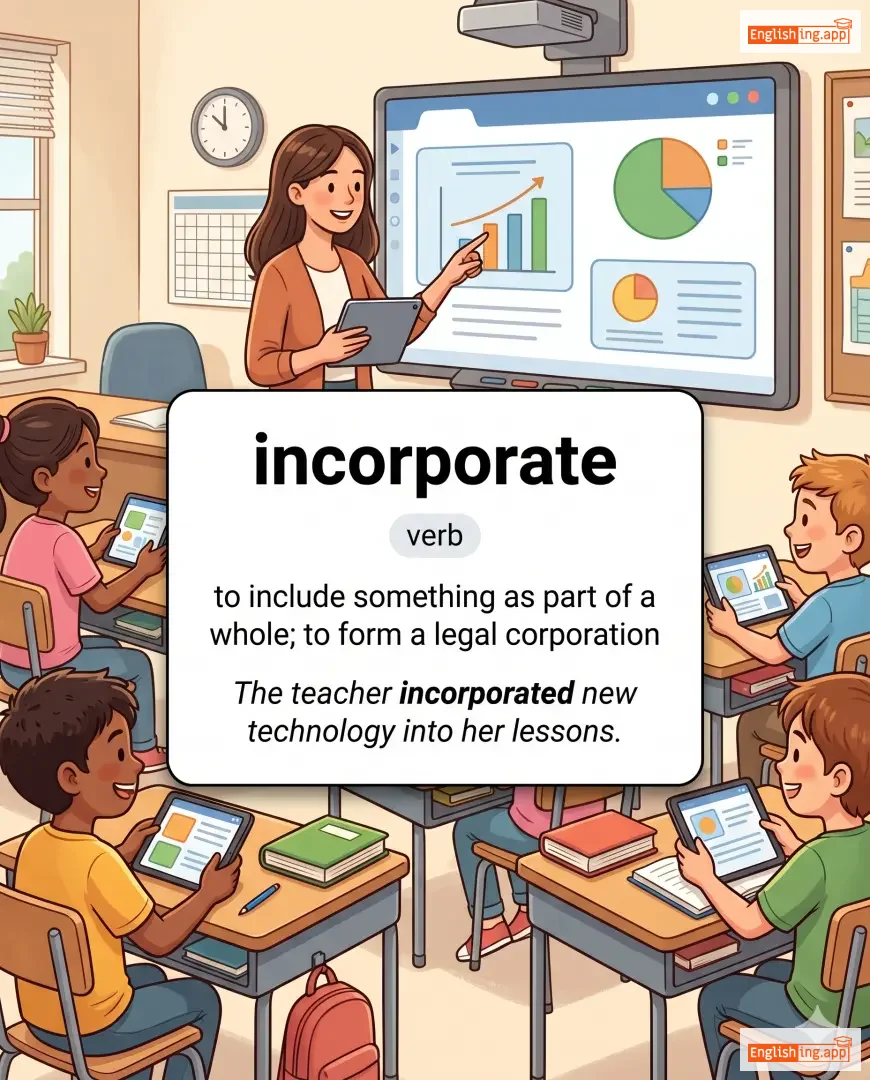
incorporate definition card — visual illustration of the meaning
verb
/ɪnˈkɔːpəreɪt/
incorporer (incorporer)

to include something as part of a whole; to form a legal corporation

"The teacher incorporated new technology into her lessons."

"L'enseignant a incorporé de nouvelles technologies dans ses cours." (L'enseignant a incorporé de nouvelles technologies dans ses cours.)
adjective
/ˌɪnkɔːrˈpɔːriəl/
incorporel (incorporel)

lacking a physical body; not composed of matter; intangible

"Ghosts are often described as incorporeal beings."

"Les fantômes sont souvent décrits comme des êtres incorporels." (Les fantômes sont souvent décrits comme des êtres incorporels.)
adjective
/ɪnkəˈrɛkt/
incorrect (incorrect)

not correct or accurate

"The information you provided was incorrect."

"L'information que vous avez fournie était incorrecte." (L'information que vous avez fournie etait incorrecte.)
adjective
/ɪnˈkɒrɪdʒəbəl/
incorrigible (incorrigible)

incapable of being corrected, improved, or reformed

"He is an incorrigible optimist who never loses hope."

"C'est un optimiste incorrigible qui ne perd jamais espoir." (C'est un optimiste incorrigible qui ne perd jamais espoir.)
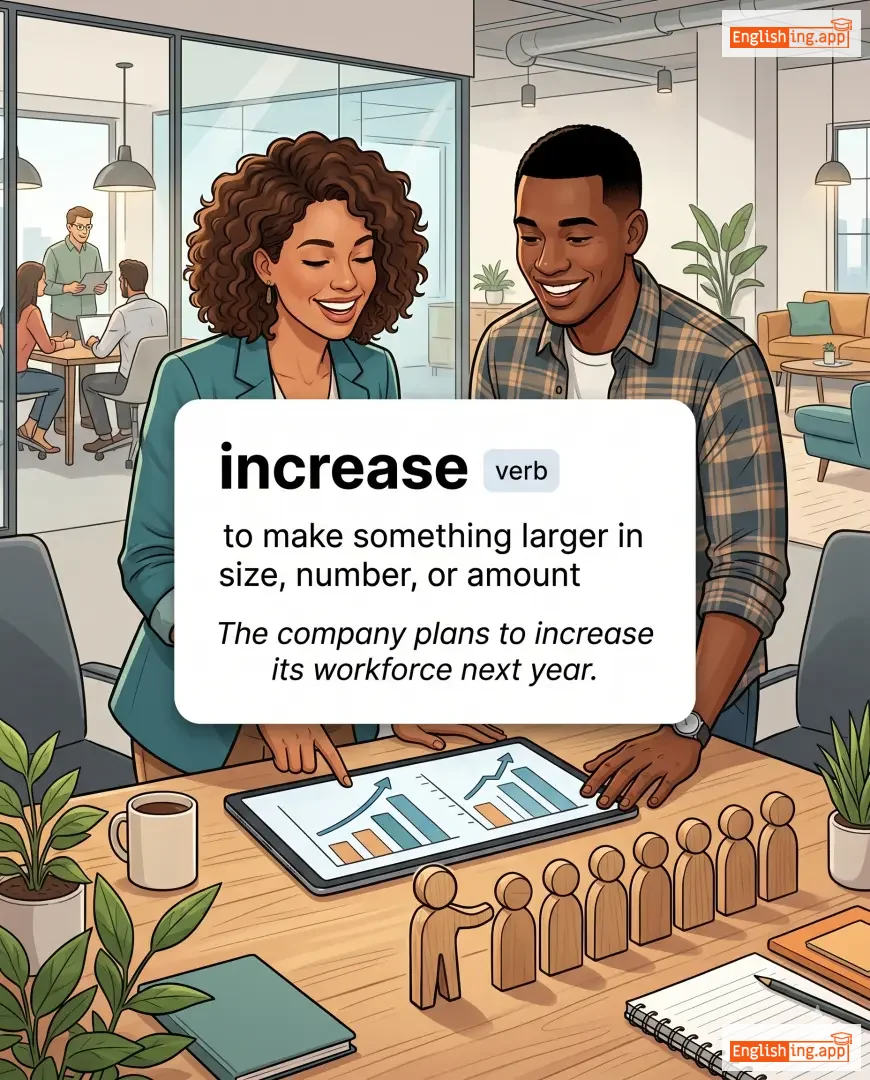
increase definition card — visual illustration of the meaning
verb
/ɪnˈkriːs/
augmenter (augmenter)

to make something larger in size, number, or amount

"The company plans to increase its workforce next year."

"L'entreprise prévoit d'augmenter sa main-d'œuvre l'année prochaine." (L'entreprise prevoit d'augmenter sa main-d'oeuvre l'annee prochaine.)
verb
/ɪnˈkriːst/
augmenté (augmente)

became greater in size, amount, or degree

"The company's revenue increased last year."

"Les revenus de l'entreprise ont augmenté l'année dernière." (Les revenus de l'entreprise ont augmente l'année derniere.)
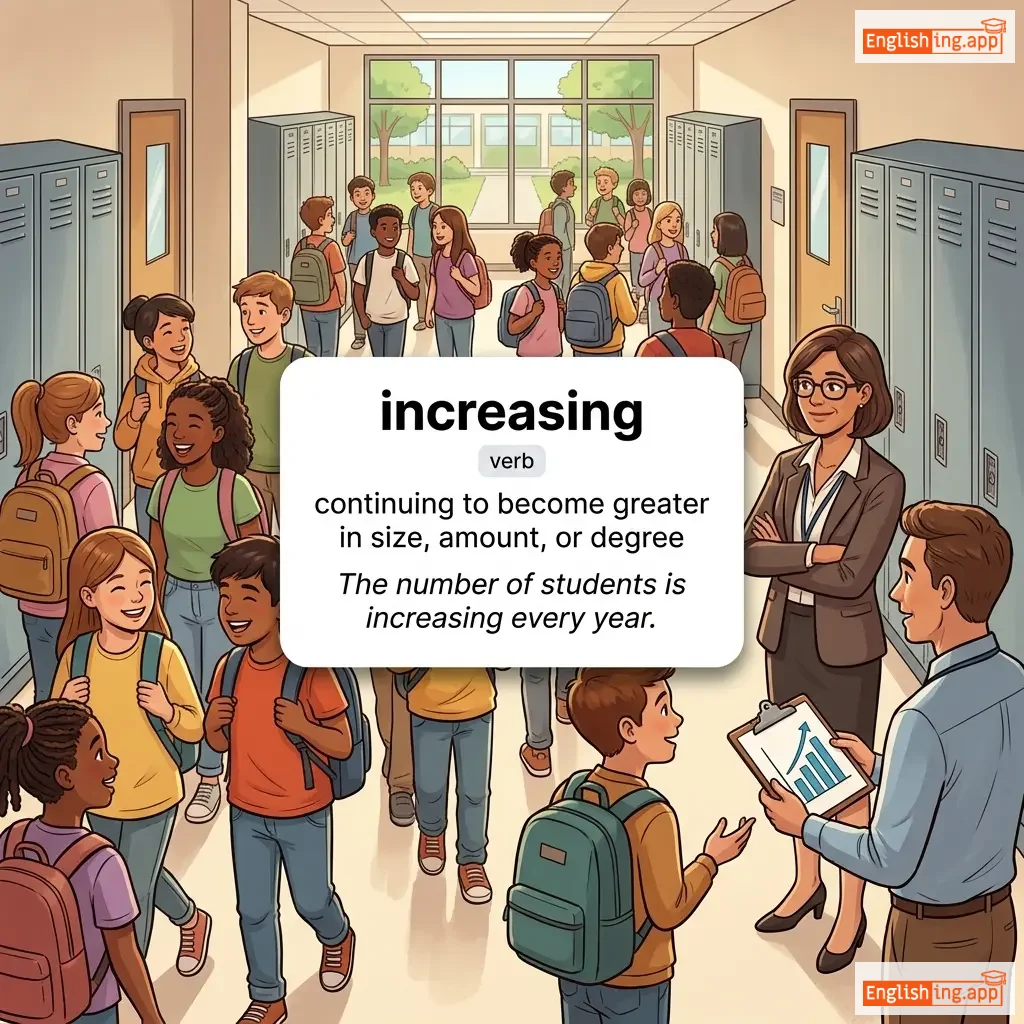
increasing definition card — visual illustration of the meaning
verb
/ɪnˈkriːsɪŋ/
augmenter (augmenter)

continuing to become greater in size, amount, or degree

"The number of students is increasing every year."

"Le nombre d'étudiants augmente chaque année." (Le nombre d'etudiants augmente chaque annee.)
adverb
/ɪnˈkriːsɪŋli/
de plus en plus (de plus en plus)

more and more over time

"People are increasingly concerned about climate change."

"Les gens sont de plus en plus préoccupés par le changement climatique." (Les gens sont de plus en plus preoccupes par le changement climatique.)
adjective
/ɪnˈkrɛdəbl/
incroyable (incroyable)

so extraordinary that it is hard to believe; amazing

"The view from the mountain was incredible."

"La vue depuis la montagne était incroyable." (La vue depuis la montagne était incroyable.)
adverb
/ɪnˈkrɛdɪbli/
incroyablement (incroyablement)

to a great degree; extremely or unbelievably

"The view from the top of the mountain was incredibly beautiful."

"La vue du sommet de la montagne était incroyablement belle." (La vue du sommet de la montagne etait incroyablement belle.)
noun
/ˌɪnkrɪˈdjuːləti/
incrédulité (incredulite)

the state of being unwilling or unable to believe something

"She looked at him with incredulity after hearing the strange story."

"Elle le regarda avec incrédulité après avoir entendu l'histoire étrange." (Elle le regarda avec incredulite apres avoir entendu l'histoire etrange.)
adjective
/ɪnˈkrɛdjələs/

unwilling or unable to believe something

"He gave her an incredulous look when she claimed she could fly."

noun
/ˈɪŋkrɪmənt/
augmentation (augmentation)

an increase or addition, especially one of a series on a fixed scale

"Employees received an annual salary increment."

"Les employés ont reçu une augmentation salariale annuelle." (Les employés ont reçu une augmentation salariale annuelle.)
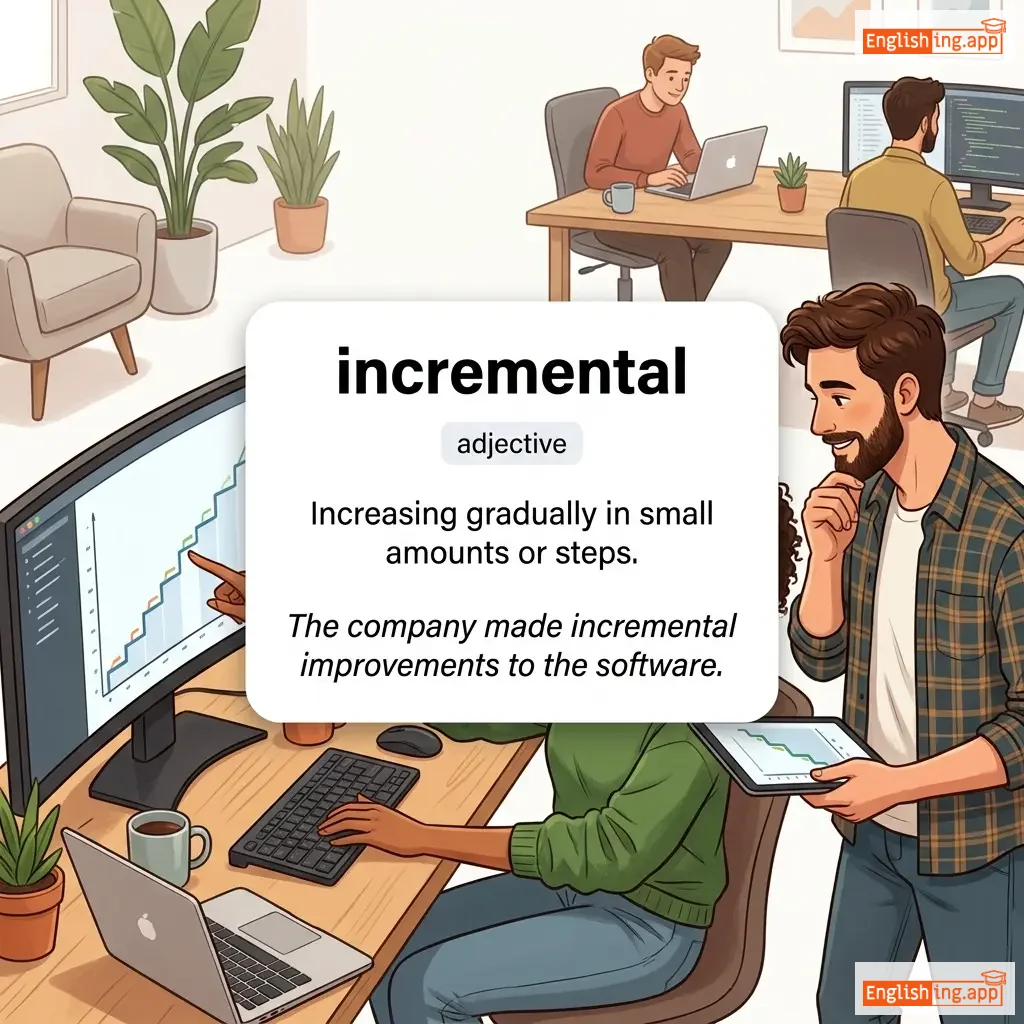
incremental definition card — visual illustration of the meaning
adjective
/ˌɪŋ.krɪˈmen.təl/
incrémental (incremantal)

Increasing gradually in small amounts or steps.

"The company made incremental improvements to the software."

"L'entreprise a effectué des améliorations incrémentales sur le logiciel." (L'entreprise a effectué des améliorations incrémentales sur le logiciel.)
verb
/ɪnˈkrɪmɪˌneɪt/
incriminer (incriminer)

to make someone appear guilty of a crime or wrongdoing

"The new evidence could incriminate the suspect in the robbery case."

"La nouvelle preuve pourrait incriminer le suspect dans l'affaire de vol." (La nouvelle preuve pourrait incriminer le suspect dans l'affaire de vol.)
noun
/ˌɪnkrʌˈsteɪʃən/
croûte (croute)

a crust or hard coating formed on the surface of something

"The old pipes were blocked due to heavy incrustation of minerals."

"Les vieilles tuyauteries étaient bloquées en raison d'une incrustation importante de minéraux." (Les vieilles tuyauteries étaient bloquées en raison d'une incrustation importante de minéraux.)
verb
/ˈɪnkjʊˌbeɪt/
incuber (incuber)

to keep eggs, cells, or organisms at the right conditions for development

"The hen will incubate the eggs until they hatch."

"La poule incubera les œufs jusqu'à ce qu'ils éclosent." (La poule incubera les œufs jusqu'à ce qu'ils éclosent.)
noun
/ˌɪnkjʊˈbeɪʃən/
le processus de maintenir des œufs, des cellules ou des organismes dans les conditions appropriées pour leur développement (le processus de maintenir des œufs, des cellules ou des organismes dans les conditions appropriées pour leur développement)

the process of keeping eggs, cells, or organisms in the right conditions for development

"The incubation of the eggs lasted for three weeks."

"L'incubation des œufs a duré trois semaines." (L'incubation des œufs a duré trois semaines.)
noun
/ˈɪnkjʊˌbeɪtər/
incubateur (incubateur)

a device or environment that provides suitable conditions for eggs, cells, or infants to develop

"The premature baby was placed in an incubator for care."

"Le bébé prématuré a été placé dans un incubateur pour ses soins." (Le bébé prématuré a été placé dans un incubateur pour ses soins.)
noun
/ˈɪŋkjʊbəs/
esprit maléfique (esprit malefique)

An oppressive or nightmarish burden; in folklore, an evil spirit that lies upon sleeping people.

"Debt became an incubus that weighed heavily on the family."

"La dette est devenue un esprit maléfique qui pesait lourdement sur la famille." (La dette est devenue un esprit malefique qui pesait lourdement sur la famille.)
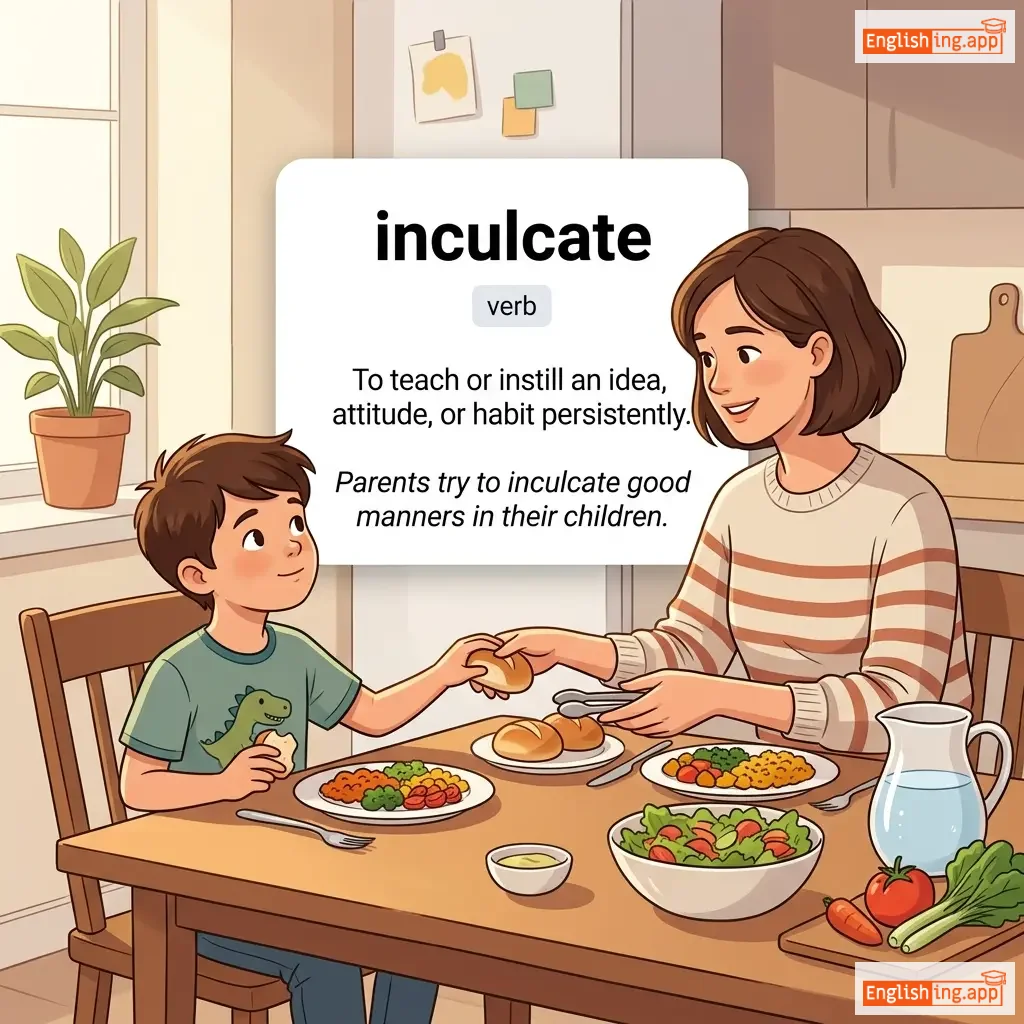
inculcate definition card — visual illustration of the meaning
verb
/ˈɪŋkʌlkeɪt/
inculquer (inculquer)

To teach or instill an idea, attitude, or habit persistently.

"Parents try to inculcate good manners in their children."

"Les parents essaient d'inculquer de bonnes manières à leurs enfants." (Les parents essaient d'inculquer de bonnes manières à leurs enfants.)
verb
/ˈɪŋkʌlpeɪt/
accuser (accuser)

To blame or accuse someone of wrongdoing.

"The evidence seemed to inculpate the suspect in the crime."

"Les preuves semblaient accuser le suspect dans le crime." (Les preuves semblaient accuser le suspect dans le crime.)
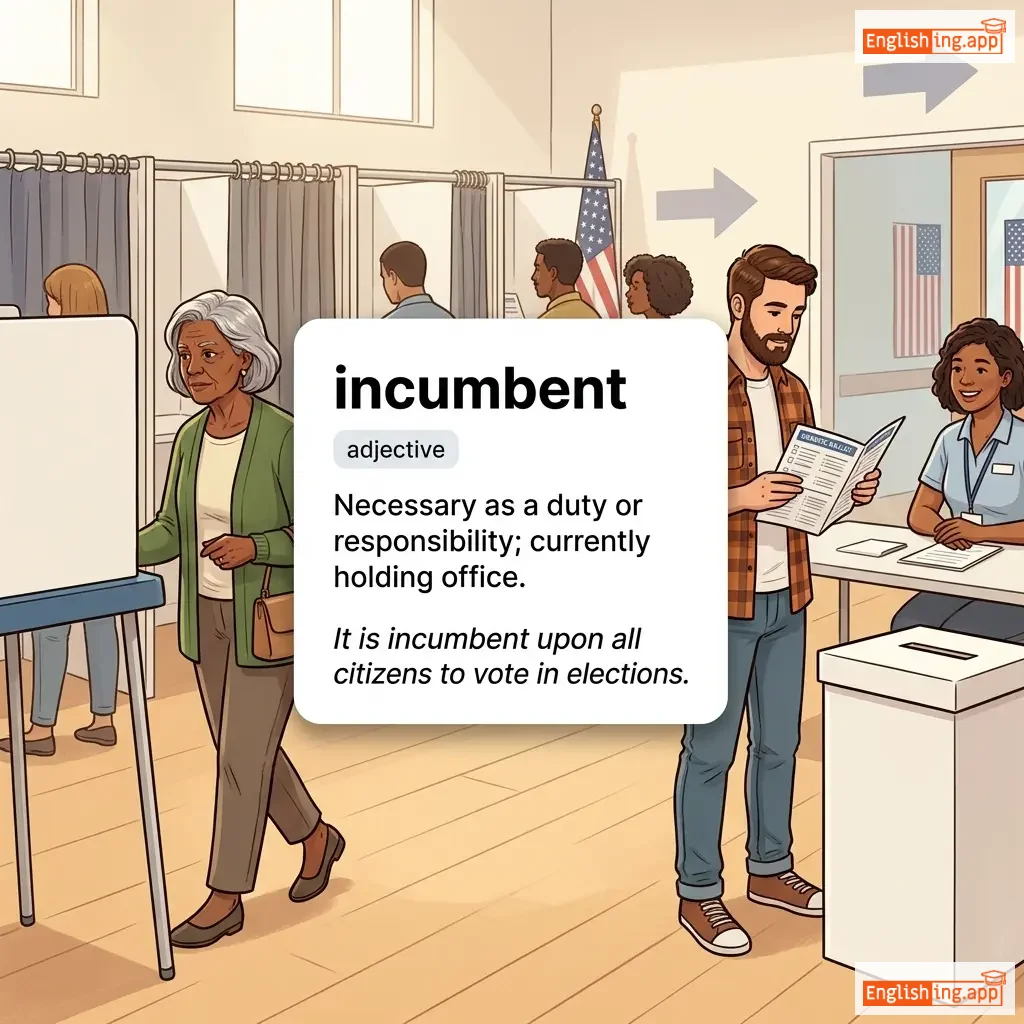
incumbent definition card — visual illustration of the meaning
adjective
/ɪnˈkʌmbənt/
incumbent (incumbent)

Necessary as a duty or responsibility; currently holding office.

"It is incumbent upon all citizens to vote in elections."

"Il est de la responsabilité de tous les citoyens de voter lors des élections." (Il est de la responsabilité de tous les citoyens de voter lors des élections.)
verb
/ɪnˈkɜːr/
encourir (encourir)

To bring upon oneself something undesirable, usually as a result of actions.

"He incurred a fine for parking in the wrong place."

"Il a encouru une amende pour avoir garé sa voiture au mauvais endroit." (Il a encouru une amende pour avoir garé sa voiture au mauvais endroit.)
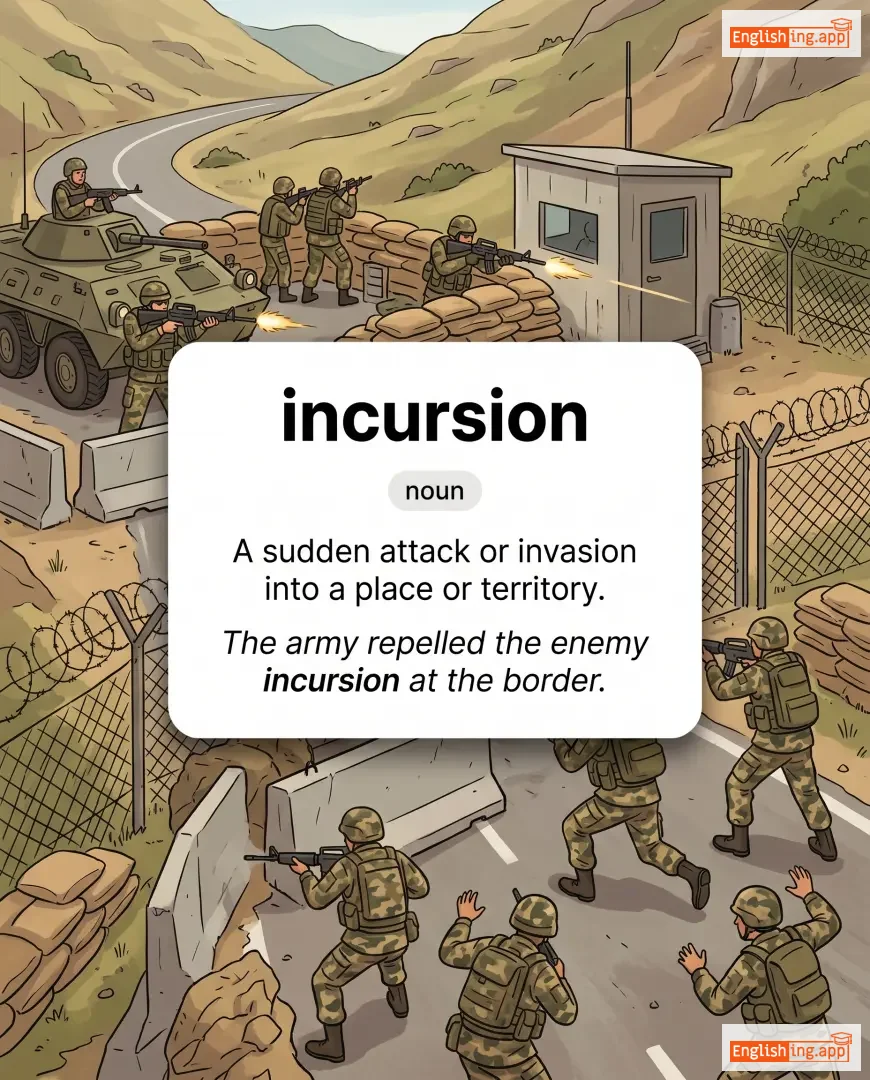
incursion definition card — visual illustration of the meaning
noun
/ɪnˈkɜːrʒən/
incursion (incursion)

A sudden attack or invasion into a place or territory.

"The army repelled the enemy incursion at the border."

"L'armée a repoussé l'incursion ennemie à la frontière." (L'armée a repoussé l'incursion ennemie à la frontière.)
adjective
/ɪnˈdɛtɪd/
reconnaissant (reconnaissant)

Owing gratitude or money to someone; obligated.

"I am deeply indebted to my teacher for her guidance."

"Je suis profondément reconnaissant envers mon professeur pour ses conseils." (Je suis profondément reconnaissant envers mon professeur pour ses conseils.)
adjective
/ɪnˈdiːsənt/
indécent (indecent)

not conforming to accepted standards of behavior or morality; improper or offensive

"He was warned for making an indecent remark during the meeting."

"Il a été averti pour une remarque indécente." (Il a ete averti pour une remarque indecente)
noun
/ˌɪndɪˈsɪʒən/
indécision (indecision)

The inability to make a decision quickly or confidently.

"Her indecision caused a delay in the project."

"Son indécision a causé un retard dans le projet." (Son indecision a causé un retard dans le projet.)
adjective
/ˌɪndɪˈsaɪsɪv/
indécis (indecis)

Unable to make decisions quickly or firmly.

"He is too indecisive to be a good leader."

"Il est trop indécis pour être un bon leader." (Il est trop indecis pour être un bon leader.)
adjective
/ɪnˈdɛkərəs/
indécent (indecent)

Not in keeping with good taste and propriety; improper.

"His indecorous behavior shocked the audience."

"Son comportement indécent a choqué l'audience." (Son comportement indécent a choqué l'audience.)
adverb
/ɪnˈdiːd/
en effet (en effet)

used to emphasize or confirm a statement

"It was a long journey indeed."

"C'était un long voyage, en effet." (C'était un long voyage, en effet.)
adjective
/ˌɪndɪˈfætɪɡəbl̩/
inébranlable (inebranlable)

persisting tirelessly; incapable of being fatigued

"Her indefatigable spirit kept the team motivated during the long project."

"Son esprit inébranlable a gardé l'équipe motivée pendant le long projet." (Son esprit inébranlable a gardé l'équipe motivée pendant le long projet.)
adjective
/ˌɪndɪˈfɛnsəbl̩/
indéfendable (indefendable)

not able to be protected or justified

"The minister’s remarks were considered indefensible by the public."

"Les remarques du ministre ont été jugées indéfendables par le public." (Les remarques du ministre ont été jugées indéfendables par le public.)
adjective
/ɪnˈdefɪnət/
indéfini (indefini)

not clearly defined; uncertain; vague; unlimited in time

"The meeting has been postponed for an indefinite period."

"La réunion a été reportée pour une période indéfinie." (La reunion a ete reportee pour une periode indéfinie.)
adverb
/ɪnˈdɛfɪnətli/
indéfiniment (indefiniment)

for an unlimited or unspecified period of time

"The project has been postponed indefinitely."

"Le projet a été reporté indéfiniment." (Le projet a été reporté indéfiniment.)
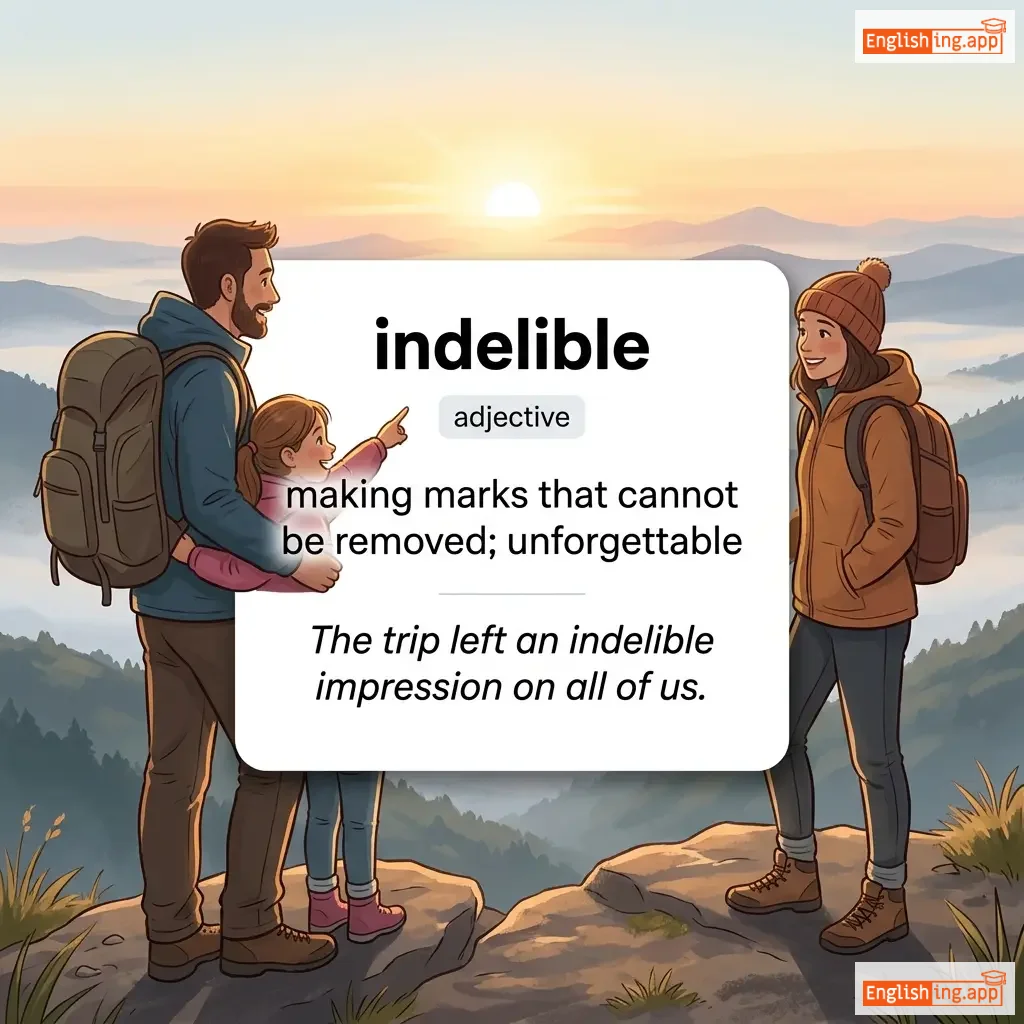
indelible definition card — visual illustration of the meaning
adjective
/ɪnˈdɛlɪbl̩/
indélébile (indelebile)

making marks that cannot be removed; unforgettable

"The trip left an indelible impression on all of us."

"Le voyage a laissé une impression indélébile sur nous tous." (Le voyage a laissé une impression indélébile sur nous tous.)
verb
/ɪnˈdɛmnɪfaɪ/
indemniser (indemniser)

to compensate someone for harm or loss; to secure against future damage or cost

"The insurance company agreed to indemnify the client for the damages."

"La compagnie d'assurance a accepté d'indemniser le client pour les dommages." (La compagnie d'assurance a accepte d'indemniser le client pour les dommages.)
noun
/ɪnˈdɛmnɪti/
indemnisation / protection (indemnisation / protection)

Security or protection against financial loss or damage; compensation for loss or damage.

"The insurance policy provides indemnity against fire damage."

"La police d'assurance fournit une indemnisation contre les dommages causés par un incendie." (La police d'assurance fournit une indemnisation contre les dommages causes par un incendie.)
noun
/ˌɪndɛnˈteɪʃən/
indentation (indentation)

A space left at the beginning of a line of text; a notch or deep recess on a surface.

"The teacher asked the students to use proper indentation in their essays."

"Le professeur a demandé aux élèves d'utiliser une indentation correcte dans leurs essais." (Le professeur a demandé aux élèves d'utiliser une indentation correcte dans leurs essais.)
noun
/ɪnˈdɛntʃər/
contrat d'indenture (contrat d'indenture)

A formal legal agreement, contract, or document, often relating to work or service.

"In the 18th century, many workers came under indenture to work overseas."

"Au XVIIIe siècle, de nombreux travailleurs étaient sous contrat d'indenture pour travailler à l'étranger." (Au XVIIIe siècle, de nombreux travailleurs étaient sous contrat d'indenture pour travailler à l'étranger.)
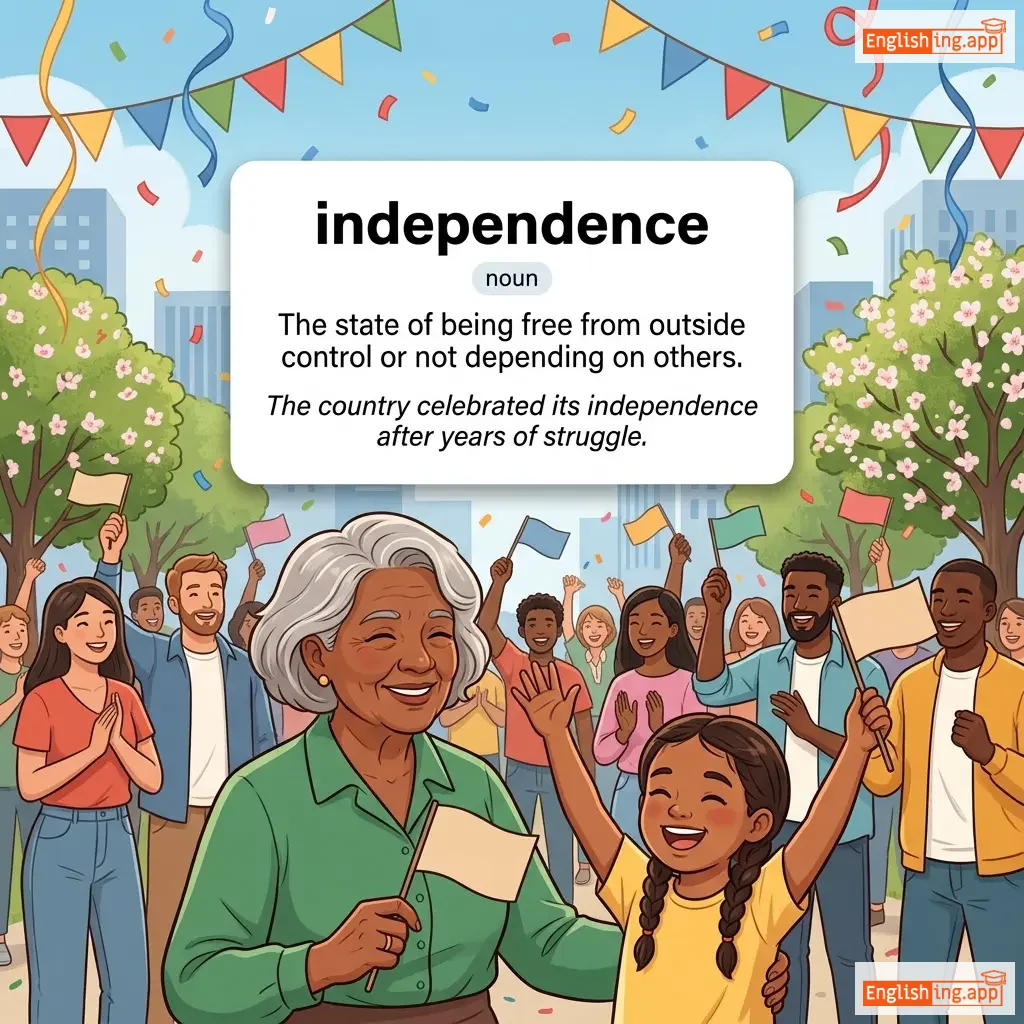
independence definition card — visual illustration of the meaning
noun
/ˌɪndɪˈpɛndəns/
indépendance (independance)

The state of being free from outside control or not depending on others.

"The country celebrated its independence after years of struggle."

"Le pays a célébré son indépendance après des années de lutte." (Le pays a célébré son indépendance après des années de lutte.)
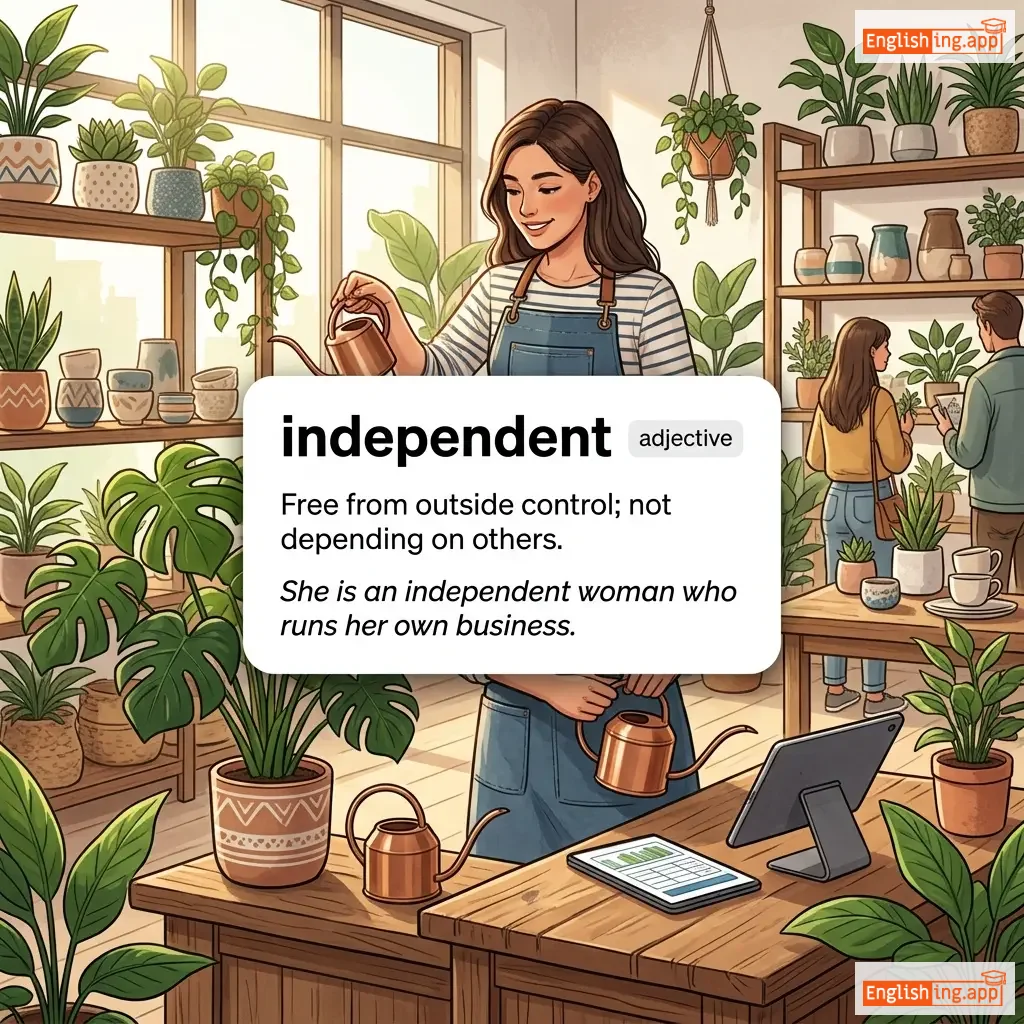
independent definition card — visual illustration of the meaning
adjective
/ˌɪn.dɪˈpen.dənt/
indépendant (independant)

Free from outside control; not depending on others.

"She is an independent woman who runs her own business."

"Elle est une femme indépendante qui gère sa propre entreprise." (Elle est une femme indépendante qui gère sa propre entreprise.)
adjective
/ˌɪndɪˈskraɪbəbl/
indescriptible (indescriptible)

Too unusual, extreme, or great to be adequately described in words.

"The beauty of the sunset was indescribable."

"La beauté du coucher du soleil était indescriptible." (La beauté du coucher du soleil était indescriptible.)
adjective
/ˌɪndɪˈstrʌktəbl/
indestructible (indestructible)

Impossible to destroy or break.

"The superhero's shield was said to be indestructible."

"On disait que le bouclier du super-héros était indestructible." (On disait que le bouclier du super-héros était indestructible.)
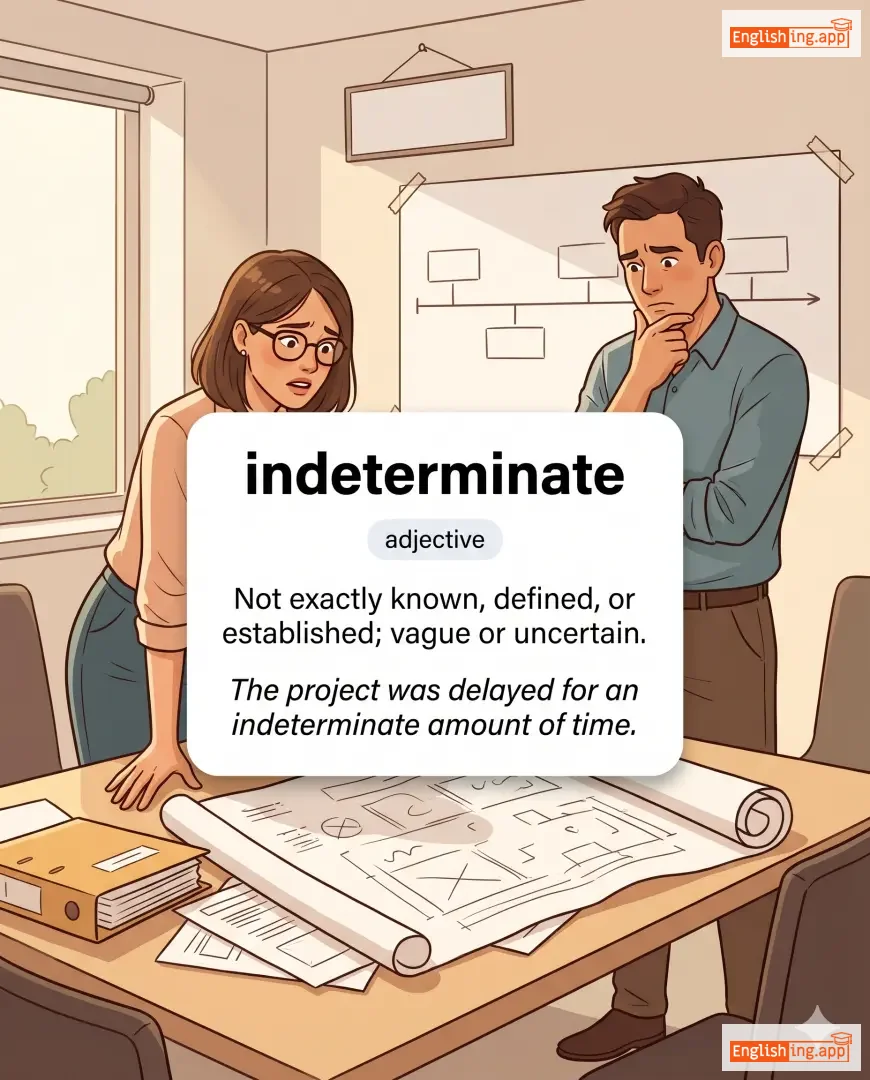
indeterminate definition card — visual illustration of the meaning
adjective
/ˌɪndɪˈtɜːrmənət/
indéterminé (indetermine)

Not exactly known, defined, or established; vague or uncertain.

"The project was delayed for an indeterminate amount of time."

"Le projet a été retardé pour une période indéterminée." (Le projet a été retardé pour une période indéterminée.)
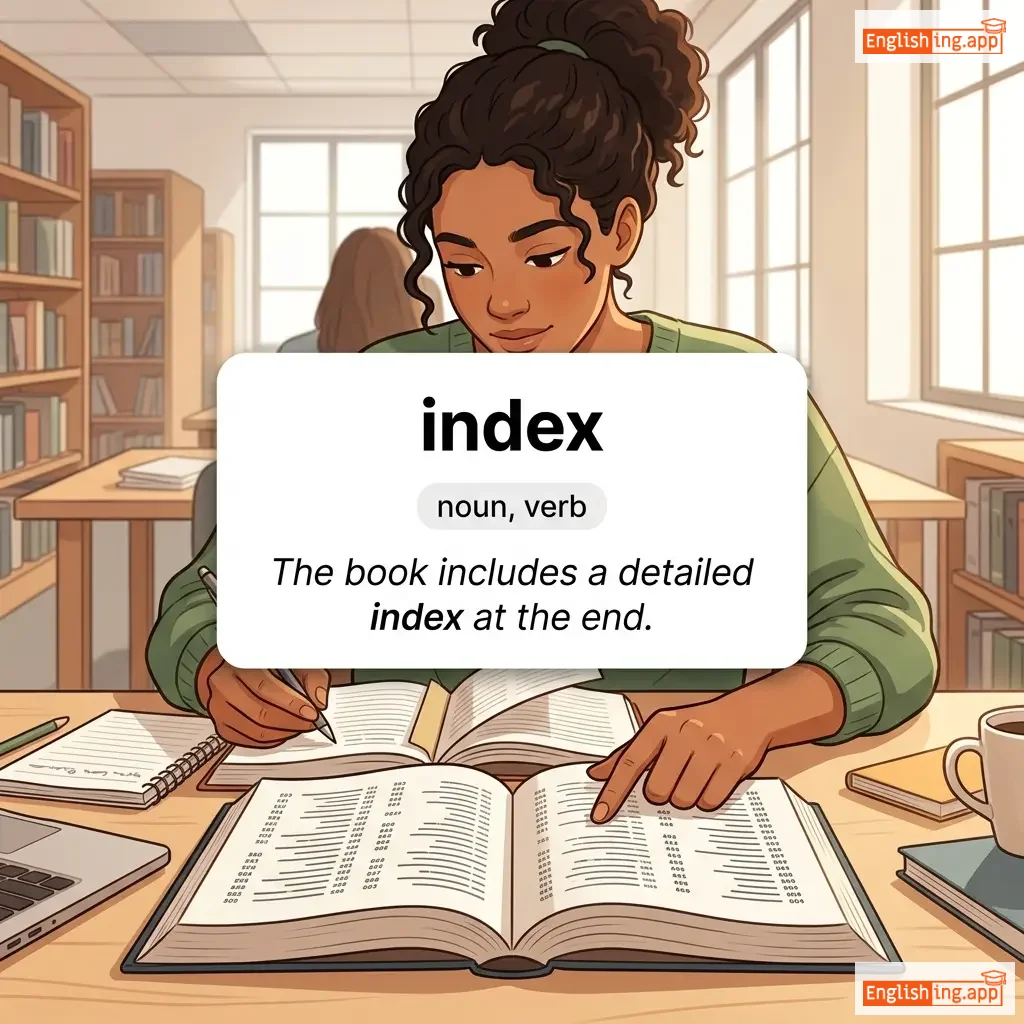
index definition card — visual illustration of the meaning
noun, verb
/ˈɪndeks/
index (index)

A list of items arranged in order, or to arrange data systematically for reference.

"The book includes a detailed index at the end."

"Le livre comprend un index détaillé à la fin." (Le livre comprend un index détaillé à la fin.)
adjective/noun
/ˈɪndiən/
indien (indien)

Relating to India, its people, or their culture.

"She loves Indian food, especially biryani."

"Elle adore la nourriture indienne, surtout le biryani." (Elle adore la nourriture indienne, surtout le biryani.)
noun
/ˈɪndɪkənt/
indicateur (indicateur)

Something that indicates or points to a fact or condition.

"High fever is often an indicant of infection."

"La fièvre élevée est souvent un indicateur d'infection." (La fièvre élevée est souvent un indicateur d'infection.)
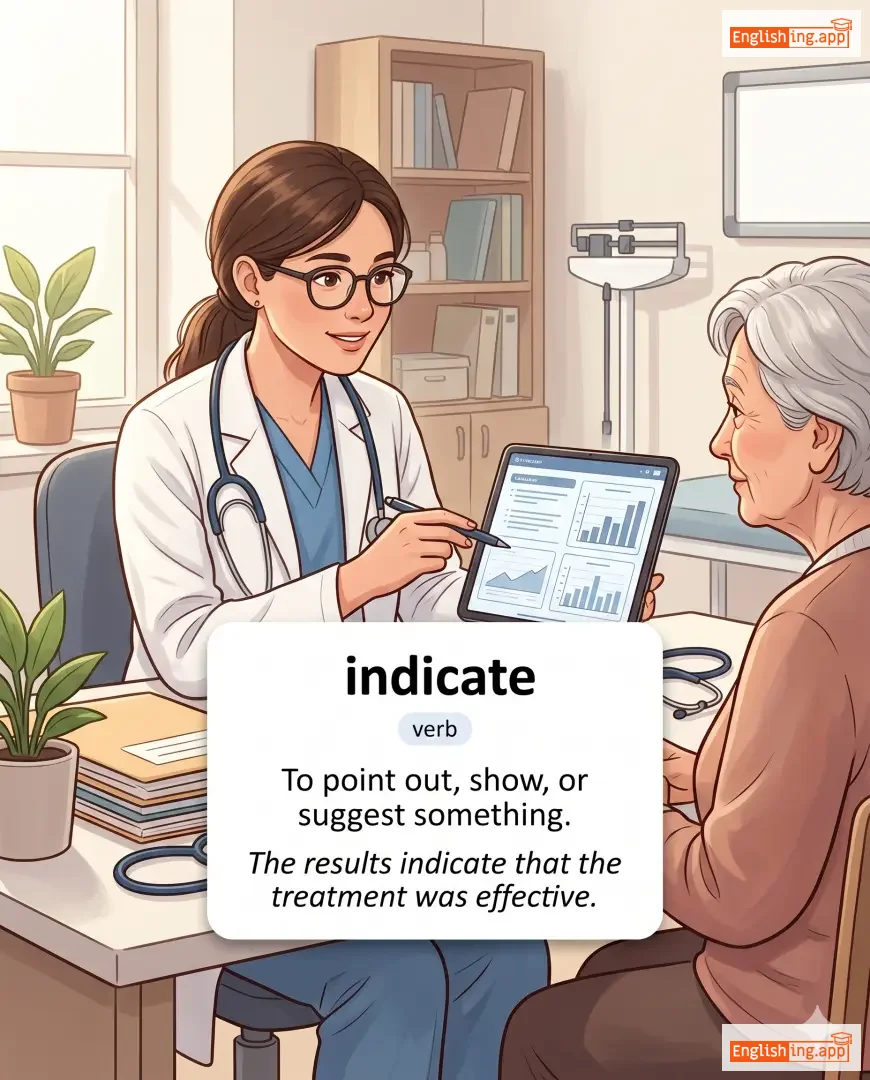
indicate definition card — visual illustration of the meaning
verb
/ˈɪndɪˌkeɪt/
indiquer (indiquer)

To point out, show, or suggest something.

"The results indicate that the treatment was effective."

"Les résultats indiquent que le traitement était efficace." (Les résultats indiquent que le traitement était efficace.)
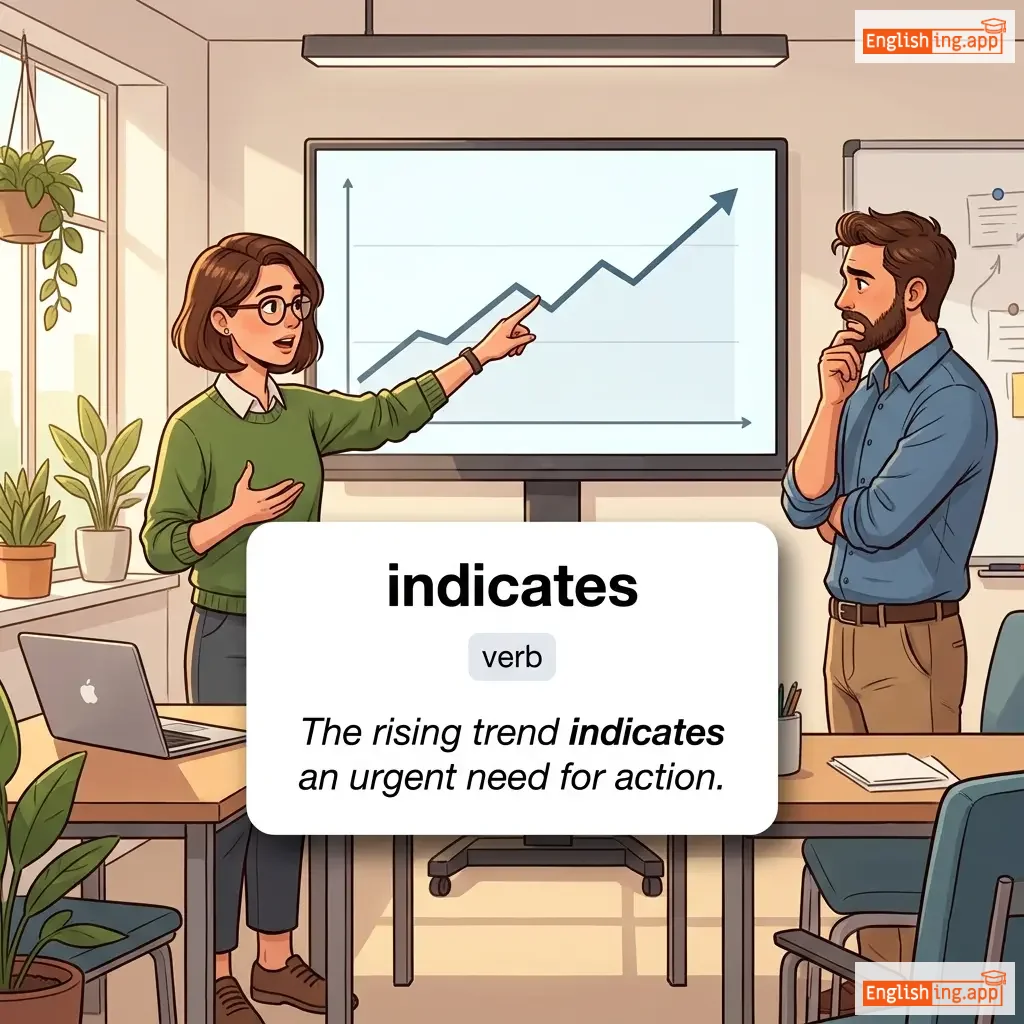
indicates definition card — visual illustration of the meaning
verb
ˈɪndɪkeɪts
indique (indike)

Point out; show; be a sign or symptom of; suggest as a desirable or necessary course of action.

"The rising trend indicates an urgent need for action."

"La tendance croissante indique un besoin urgent d'action." (La tendance croissante indique un besoin urgent d'action.)