वोकैबुलरीज

इंग्लिश वोकैबुलरी डिस्कवर, लर्न और मास्टर करें

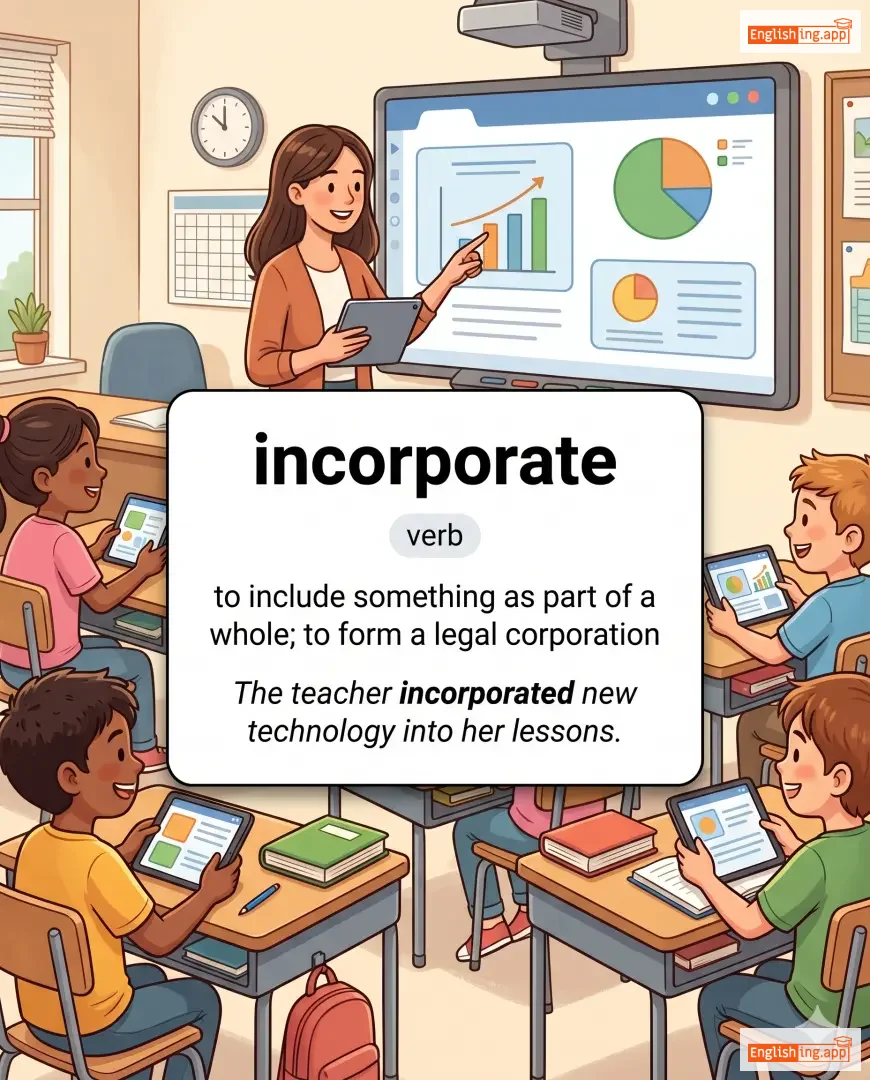
incorporate definition card — visual illustration of the meaning
verb
/ɪnˈkɔːpəreɪt/
शामिल करना (shamil karna)

to include something as part of a whole; to form a legal corporation

"The teacher incorporated new technology into her lessons."

"शिक्षक ने अपनी पाठ में नई तकनीक को शामिल किया।" (shikshak ne apni path mein nai takneek ko shamil kiya.)
adjective
/ˌɪnkɔːrˈpɔːriəl/
अदृश्य (adrishya)

lacking a physical body; not composed of matter; intangible

"Ghosts are often described as incorporeal beings."

"भूतों को अक्सर अदृश्य प्राणियों के रूप में वर्णित किया जाता है।" (Bhooton ko aksar adrishya praniyon ke roop mein varnit kiya jata hai.)
adjective
/ɪnkəˈrɛkt/
गलत (galat)

not correct or accurate

"The information you provided was incorrect."

"आपने जो जानकारी दी थी, वह गलत थी।" (Aapne jo jankari dee thi, wah galat thi.)
adjective
/ɪnˈkɒrɪdʒəbəl/
असुधारनीय (asudharniya)

incapable of being corrected, improved, or reformed

"He is an incorrigible optimist who never loses hope."

"वह एक असुधारनीय आशावादी है जो कभी उम्मीद नहीं छोड़ता।" (Wah ek asudharniya ashaavadi hai jo kabhi ummid nahin chhodta.)
increase definition card — visual illustration of the meaning
verb
/ɪnˈkriːs/
बढ़ाना (badhana)

to make something larger in size, number, or amount

"The company plans to increase its workforce next year."

"कंपनी अगले साल अपनी कार्यबल को बढ़ाने की योजना बना रही है।" (Kampani agle saal apni karyabal ko badhane ki yojana bana rahi hai.)
verb
/ɪnˈkriːst/
बढ़ी हुई (badhi hui)

became greater in size, amount, or degree

"The company's revenue increased last year."

"कंपनी की आय पिछले साल बढ़ी थी।" (Kampani ki aay pichhle saal badhi thi.)
increasing definition card — visual illustration of the meaning
verb
/ɪnˈkriːsɪŋ/
बढ़ना (badhna)

continuing to become greater in size, amount, or degree

"The number of students is increasing every year."

"छात्रों की संख्या हर साल बढ़ रही है।" (Chhatron ki sankhya har saal badh rahi hai.)
adverb
/ɪnˈkriːsɪŋli/
बढ़ते हुए (badhte hue)

more and more over time

"People are increasingly concerned about climate change."

"लोग जलवायु परिवर्तन को लेकर बढ़ते हुए चिंतित हैं।" (Log jalvayu parivartan ko lekar badhte hue chintit hain.)
adjective
/ɪnˈkrɛdəbl/
अविश्वसनीय (avishwasniya)

so extraordinary that it is hard to believe; amazing

"The view from the mountain was incredible."

"पहाड़ से दृश्य अविश्वसनीय था।" (Pahaad se drishya avishwasniya tha.)
adverb
/ɪnˈkrɛdɪbli/
अविश्वसनीय रूप से (avishwasneey roop se)

to a great degree; extremely or unbelievably

"The view from the top of the mountain was incredibly beautiful."

"पहाड़ की चोटी से दृश्य अविश्वसनीय रूप से सुंदर था।" (Pahaad ki chhoti se drishya avishwasneey roop se sundar tha.)
noun
/ˌɪnkrɪˈdjuːləti/
अविश्वास (avishwas)

the state of being unwilling or unable to believe something

"She looked at him with incredulity after hearing the strange story."

"वह अजीब कहानी सुनने के बाद उसे अविश्वास से देखने लगी।" (Wah ajeeb kahani sunne ke baad use avishwas se dekhne lagi.)
adjective
/ɪnˈkrɛdjələs/
अविश्वासी (inkredyulas)

unwilling or unable to believe something

"He gave her an incredulous look when she claimed she could fly."

"उसने उसे एक अविश्वासी निगाह से देखा जब उसने दावा किया कि वह उड़ सकती है." (usne use ek avishvasi nigah se dekha jab usne daava kiya ki vah ud sakti hai)
noun
/ˈɪŋkrɪmənt/
वृद्धि (vriddhi)

an increase or addition, especially one of a series on a fixed scale

"Employees received an annual salary increment."

"कर्मचारियों को वार्षिक वेतन वृद्धि मिली।" (Karmachariyon ko varshik vetan vriddhi mili.)
incremental definition card — visual illustration of the meaning
adjective
/ˌɪŋ.krɪˈmen.təl/
क्रमिक (kramik)

Increasing gradually in small amounts or steps.

"The company made incremental improvements to the software."

"कंपनी ने सॉफ़्टवेयर में क्रमिक सुधार किए।" (Company ne software mein kramik sudhaar kiye.)
verb
/ɪnˈkrɪmɪˌneɪt/
अपराधी ठहराना (aparadhi thahrana)

to make someone appear guilty of a crime or wrongdoing

"The new evidence could incriminate the suspect in the robbery case."

"नई साक्ष्य संदिग्ध को डकैती मामले में अपराधी ठहराने में मदद कर सकती है।" (Nayi saakshya sandigdh ko dakaitee mamle mein aparadhi thahrane mein madad kar sakti hai.)
noun
/ˌɪnkrʌˈsteɪʃən/
आवरण (avaran)

a crust or hard coating formed on the surface of something

"The old pipes were blocked due to heavy incrustation of minerals."

"पुरानी पाइप्स खनिजों की भारी आवरण के कारण अवरुद्ध हो गई थीं।" (Purani pipes khanijon ki bhari avaran ke karan avaruddh ho gayi thin.)
verb
/ˈɪnkjʊˌbeɪt/
अंडे को विकसित करने के लिए उचित परिस्थितियों में रखना (ande ko vikasit karne ke liye uchit paristhitiyon mein rakhna)

to keep eggs, cells, or organisms at the right conditions for development

"The hen will incubate the eggs until they hatch."

"मुर्गी अंडों को तब तक इन्क्यूबेट करेगी जब तक वे हैच न हो जाएं।" (Murgi ando ko tab tak incubate karegi jab tak ve hatch na ho jaayein.)
noun
/ˌɪnkjʊˈbeɪʃən/
अंडे, कोशिकाएँ, या जीवों को विकास के लिए सही परिस्थितियों में रखना (andé, koshikaen, ya jeevon ko vikas ke liye sahi paristhitiyon mein rakhna)

the process of keeping eggs, cells, or organisms in the right conditions for development

"The incubation of the eggs lasted for three weeks."

"अंडों का इन्क्यूबेशन तीन सप्ताह तक चला।" (andon ka incubation teen saptah tak chala.)
noun
/ˈɪnkjʊˌbeɪtər/
इनक्यूबेटर (incubator)

a device or environment that provides suitable conditions for eggs, cells, or infants to develop

"The premature baby was placed in an incubator for care."

"अर्ली प्रीमेच्योर बच्चे को देखभाल के लिए इनक्यूबेटर में रखा गया था।" (Early premature bachche ko dekhbhal ke liye incubator mein rakha gaya tha.)
noun
/ˈɪŋkjʊbəs/
दुष्ट आत्मा (dusht atma)

An oppressive or nightmarish burden; in folklore, an evil spirit that lies upon sleeping people.

"Debt became an incubus that weighed heavily on the family."

"ऋण एक दुष्ट आत्मा बन गया था जो परिवार पर भारी बोझ डाल रहा था।" (Rin ek dusht atma ban gaya tha jo parivar par bhari bojh dal raha tha.)
inculcate definition card — visual illustration of the meaning
verb
/ˈɪŋkʌlkeɪt/
बिठाना / सिखाना (bithana / sikhana)

To teach or instill an idea, attitude, or habit persistently.

"Parents try to inculcate good manners in their children."

"माता-पिता अपने बच्चों में अच्छे आदतें इन्कलकेट करने की कोशिश करते हैं।" (Mata-pita apne bachchon mein achhe aadatien inculcate karne ki koshish karte hain.)
verb
/ˈɪŋkʌlpeɪt/
दोषारोपण करना (dosharopan karna)

To blame or accuse someone of wrongdoing.

"The evidence seemed to inculpate the suspect in the crime."

"प्रमाण ने संदिग्ध को अपराध में दोषी ठहराया जैसा लगा।" (Pramaan ne sandigdh ko apradh mein doshi thaharaya jaisa laga.)
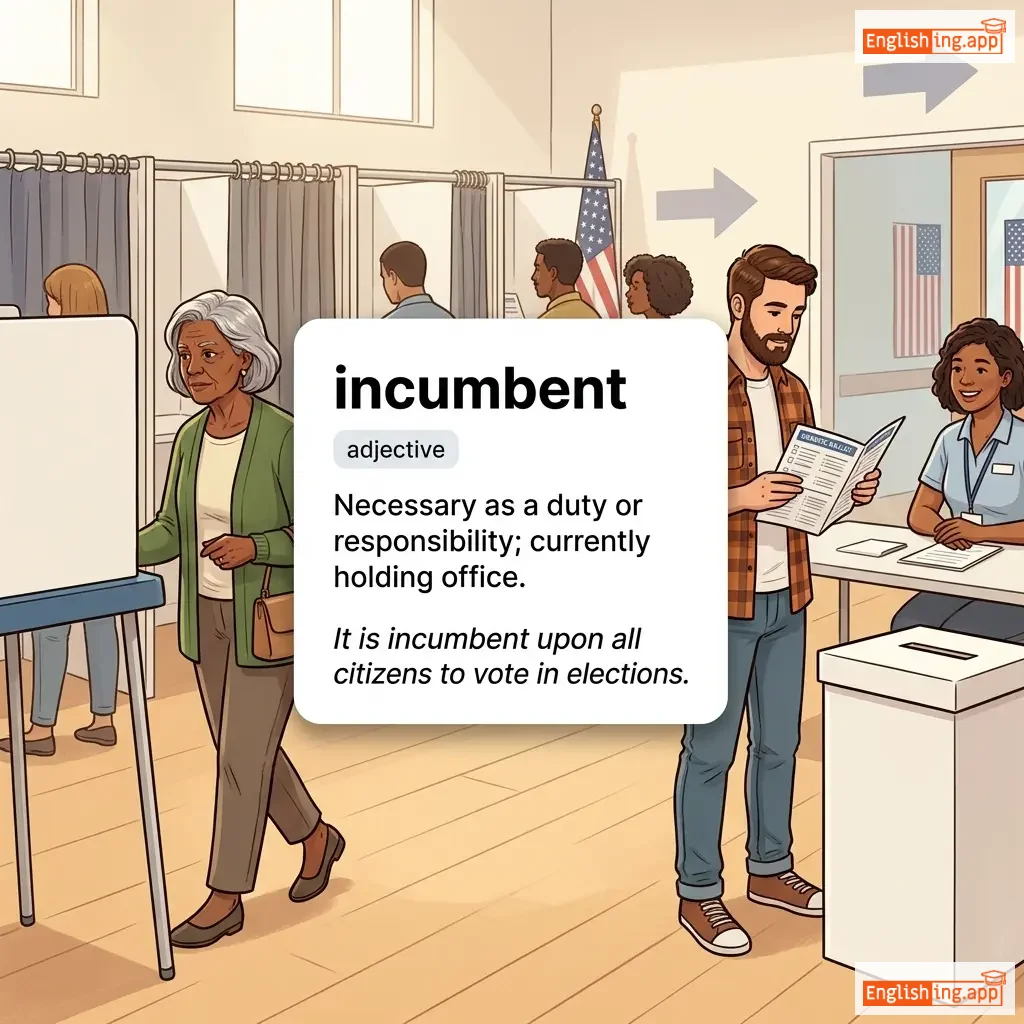
incumbent definition card — visual illustration of the meaning
adjective
/ɪnˈkʌmbənt/
कर्तव्यपूर्ण (kartavyapurn)

Necessary as a duty or responsibility; currently holding office.

"It is incumbent upon all citizens to vote in elections."

"यह सभी नागरिकों पर चुनावों में मतदान करना कर्तव्यपूर्ण है।" (Yah sabhi nagrikon par chunavon mein matdan karna kartavyapurn hai.)
verb
/ɪnˈkɜːr/
उठाना (uthaana)

To bring upon oneself something undesirable, usually as a result of actions.

"He incurred a fine for parking in the wrong place."

"उसने गलत जगह पार्क करने पर जुर्माना भरा।" (Usne galat jagah park karne par jurmana bhara.)
incursion definition card — visual illustration of the meaning
noun
/ɪnˈkɜːrʒən/
आक्रमण (akraman)

A sudden attack or invasion into a place or territory.

"The army repelled the enemy incursion at the border."

"सेना ने सीमा पर दुश्मन के आक्रमण को नाकाम कर दिया।" (Sena ne seema par dushman ke akraman ko nakam kar diya.)
adjective
/ɪnˈdɛtɪd/
कृतज्ञ (krutagnya)

Owing gratitude or money to someone; obligated.

"I am deeply indebted to my teacher for her guidance."

"मैं अपनी शिक्षिका का मार्गदर्शन के लिए गहरे आभारी हूं।" (Main apni shikshika ka maargdarshan ke liye gahare aabhaari hoon.)
adjective
/ɪnˈdiːsənt/
अशोभनीय (ashobhniya)

not conforming to accepted standards of behavior or morality; improper or offensive

"He was warned for making an indecent remark during the meeting."

"बैठक में अशोभनीय टिप्पणी करने पर उसे चेतावनी दी गई।" (baithak mein ashobhniya tippani karne par use chetavani di gai)
noun
/ˌɪndɪˈsɪʒən/
अनिर्णय (anirnay)

The inability to make a decision quickly or confidently.

"Her indecision caused a delay in the project."

"उसके अनिर्णय के कारण परियोजना में देरी हो गई।" (Uske anirnay ke kaaran pariyojana mein deri ho gayi.)
adjective
/ˌɪndɪˈsaɪsɪv/
अनिर्णायक (anirnayak)

Unable to make decisions quickly or firmly.

"He is too indecisive to be a good leader."

"वह अच्छा नेता बनने के लिए बहुत अनिर्णायक है।" (Vah acchā netā banne ke liye bahut anirnayak hai.)
adjective
/ɪnˈdɛkərəs/
अशिष्ट (ashisht)

Not in keeping with good taste and propriety; improper.

"His indecorous behavior shocked the audience."

"उसका अशिष्ट व्यवहार श्रोताओं को चौंका दिया।" (Uska ashisht vyavhaar shrothao ko chaunka diya.)
adverb
/ɪnˈdiːd/
वास्तव में (vastav mein)

used to emphasize or confirm a statement

"It was a long journey indeed."

"यह सच में एक लंबी यात्रा थी।" (Yeh sach mein ek lambi yatra thi.)
adjective
/ˌɪndɪˈfætɪɡəbl̩/
अविराम (aviraam)

persisting tirelessly; incapable of being fatigued

"Her indefatigable spirit kept the team motivated during the long project."

"उसकी अविराम आत्मा ने लंबे प्रोजेक्ट के दौरान टीम को प्रेरित किया।" (uski aviraam atma ne lambe project ke dauran team ko prerit kiya.)
adjective
/ˌɪndɪˈfɛnsəbl̩/
अक्षमता से बचाव योग्य नहीं (akshamata se bachav yogya nahi)

not able to be protected or justified

"The minister’s remarks were considered indefensible by the public."

"मंत्री के बयान को जनता द्वारा बचाव योग्य नहीं माना गया था।" (mantri ke bayan ko janata dwara bachav yogya nahi mana gaya tha.)
adjective
/ɪnˈdefɪnət/
अनिर्दिष्ट (anirdisht)

not clearly defined; uncertain; vague; unlimited in time

"The meeting has been postponed for an indefinite period."

"बैठक एक अनिर्दिष्ट अवधि के लिए स्थगित कर दी गई है।" (baithak ek anirdisht avadhi ke liye sthagit kar di gayi hai)
adverb
/ɪnˈdɛfɪnətli/
अनिश्चितकाल के लिए (anishchitkal ke liye)

for an unlimited or unspecified period of time

"The project has been postponed indefinitely."

"परियोजना को अनिश्चितकाल के लिए स्थगित कर दिया गया है।" (pariyojna ko anishchitkal ke liye sthagit kar diya gaya hai.)
indelible definition card — visual illustration of the meaning
adjective
/ɪnˈdɛlɪbl̩/
अक्षय (akshay)

making marks that cannot be removed; unforgettable

"The trip left an indelible impression on all of us."

"यात्रा ने हम सभी पर एक अक्षय प्रभाव छोड़ा।" (yatra ne ham sabhi par ek akshay prabhav chhoda.)
verb
/ɪnˈdɛmnɪfaɪ/
क्षतिपूर्ति करना (kshatipoorti karna)

to compensate someone for harm or loss; to secure against future damage or cost

"The insurance company agreed to indemnify the client for the damages."

"इंश्योरेंस कंपनी ने क्लाइंट को नुकसान के लिए क्षतिपूर्ति करने पर सहमति जताई।" (Insurance company ne client ko nuksan ke liye kshatipoorti karne par sahmati jatayi.)
noun
/ɪnˈdɛmnɪti/
क्षतिपूर्ति / सुरक्षा (kshotipurti / suraksha)

Security or protection against financial loss or damage; compensation for loss or damage.

"The insurance policy provides indemnity against fire damage."

"बीमा पॉलिसी आग से होने वाले नुकसान के खिलाफ क्षतिपूर्ति प्रदान करती है।" (Bima policy aag se hone wale nuksan ke khilaf kshotipurti pradan karti hai.)
noun
/ˌɪndɛnˈteɪʃən/
इंडेंटेशन (indentation)

A space left at the beginning of a line of text; a notch or deep recess on a surface.

"The teacher asked the students to use proper indentation in their essays."

"शिक्षक ने छात्रों से उनके निबंधों में सही इंडेंटेशन का उपयोग करने को कहा।" (Shikshak ne chatron se unke nibandhon mein sahi indentation ka upyog karne ko kaha.)
noun
/ɪnˈdɛntʃər/
अनुबंध (anubandh)

A formal legal agreement, contract, or document, often relating to work or service.

"In the 18th century, many workers came under indenture to work overseas."

"18वीं सदी में, कई श्रमिकों ने विदेशों में काम करने के लिए इंडेंचर के तहत आकर काम किया।" (18vi sadi mein, kai shramikon ne videshon mein kaam karne ke liye indenture ke tahat aakar kaam kiya.)
independence definition card — visual illustration of the meaning
noun
/ˌɪndɪˈpɛndəns/
स्वतंत्रता (svatantrata)

The state of being free from outside control or not depending on others.

"The country celebrated its independence after years of struggle."

"देश ने वर्षों के संघर्ष के बाद अपनी स्वतंत्रता मनाई।" (Desh ne varsho ke sangharsh ke baad apni svatantrata manayi.)
independent definition card — visual illustration of the meaning
adjective
/ˌɪn.dɪˈpen.dənt/
स्वतंत्र (svatantra)

Free from outside control; not depending on others.

"She is an independent woman who runs her own business."

"वह एक स्वतंत्र महिला है जो अपना खुद का व्यवसाय चलाती है।" (Vah ek svatantra mahila hai jo apna khud ka vyavsay chalati hai.)
adjective
/ˌɪndɪˈskraɪbəbl/
अवर्णनीय (avarnaniy)

Too unusual, extreme, or great to be adequately described in words.

"The beauty of the sunset was indescribable."

"सूर्यास्त की सुंदरता अवर्णनीय थी।" (Suryast ki sundarta avarnaniy thi.)
adjective
/ˌɪndɪˈstrʌktəbl/
अविनाशी (avinashi)

Impossible to destroy or break.

"The superhero's shield was said to be indestructible."

"सुपरहीरो का ढाल कहा गया था कि वह अविनाशी था।" (Superhero ka dhal kaha gaya tha ki vah avinashi tha.)
indeterminate definition card — visual illustration of the meaning
adjective
/ˌɪndɪˈtɜːrmənət/
अनिश्चित (anishchit)

Not exactly known, defined, or established; vague or uncertain.

"The project was delayed for an indeterminate amount of time."

"प्रोजेक्ट एक अनिश्चित समय के लिए स्थगित कर दिया गया था।" (Project ek anishchit samay ke liye sthagit kar diya gaya tha.)
index definition card — visual illustration of the meaning
noun, verb
/ˈɪndeks/
सूची (soochi)

A list of items arranged in order, or to arrange data systematically for reference.

"The book includes a detailed index at the end."

"पुस्तक में अंत में एक विस्तृत सूची है।" (Pustak mein ant mein ek vistaarit soochi hai.)
adjective/noun
/ˈɪndiən/
भारतीय (bhartiya)

Relating to India, its people, or their culture.

"She loves Indian food, especially biryani."

"वह भारतीय भोजन पसंद करती है, खासकर बिरयानी।" (Woh bhartiya bhojan pasand karti hai, khaaskar biryani.)
noun
/ˈɪndɪkənt/
संकेत (sanket)

Something that indicates or points to a fact or condition.

"High fever is often an indicant of infection."

"उच्च बुखार अक्सर संक्रमण का एक संकेत होता है।" (Ucch bukhaar aksar sankraman ka ek sanket hota hai.)
indicate definition card — visual illustration of the meaning
verb
/ˈɪndɪˌkeɪt/
संकेत करना (sanket karna)

To point out, show, or suggest something.

"The results indicate that the treatment was effective."

"परिणाम यह संकेत करते हैं कि उपचार प्रभावी था।" (Parinaam yah sanket karte hain ki upchaar prabhaavee tha.)
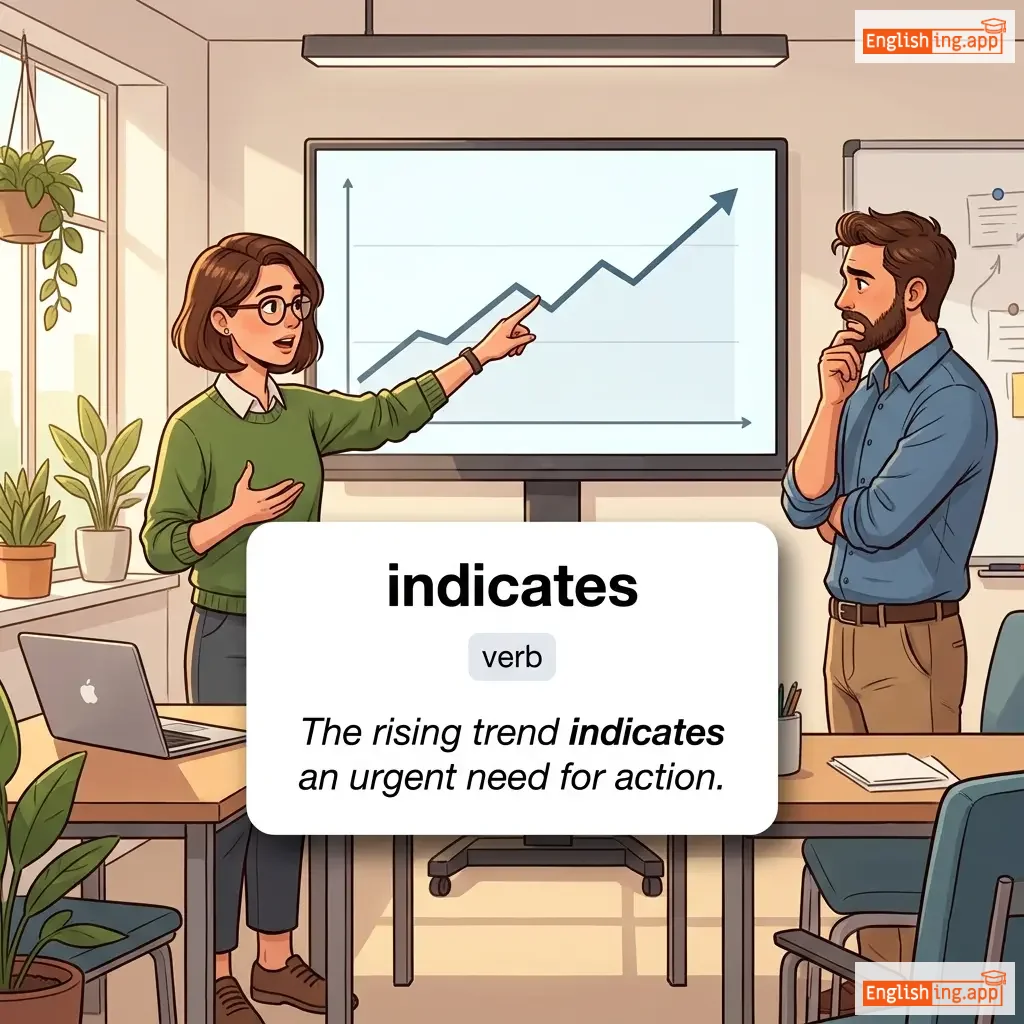
indicates definition card — visual illustration of the meaning
verb
ˈɪndɪkeɪts
सूचित करता है (soochit karta hai)

Point out; show; be a sign or symptom of; suggest as a desirable or necessary course of action.

"The rising trend indicates an urgent need for action."

"वृद्धिमान प्रवृत्ति एक तात्कालिक क्रियावली की आवश्यकता सूचित करती है।" (Vriddhiman pravritti ek tatkalik kriyavalee ki aavashyakta soochit karti hai.)