वोकैबुलरीज

इंग्लिश वोकैबुलरी डिस्कवर, लर्न और मास्टर करें

noun
/ˌɪndɪˈkeɪʃən/
संकेत (sanket)

A sign, piece of information, or signal that suggests something.

"Dark clouds are an indication of an approaching storm."

"काले बादल एक आने वाले तूफान का संकेत हैं।" (kaale baadal ek aane wale toofan ka sanket hain)
adjective, noun
/ɪnˈdɪkətɪv/
संकेतात्मक (sanketatmak)

Serving as a sign or expression of something; in grammar, a mood used to make factual statements.

"His tone was indicative of his frustration."

"उसकी आवाज़ उसकी निराशा का संकेत थी।" (Uski awaaz uski niraasha ka sanket thi.)
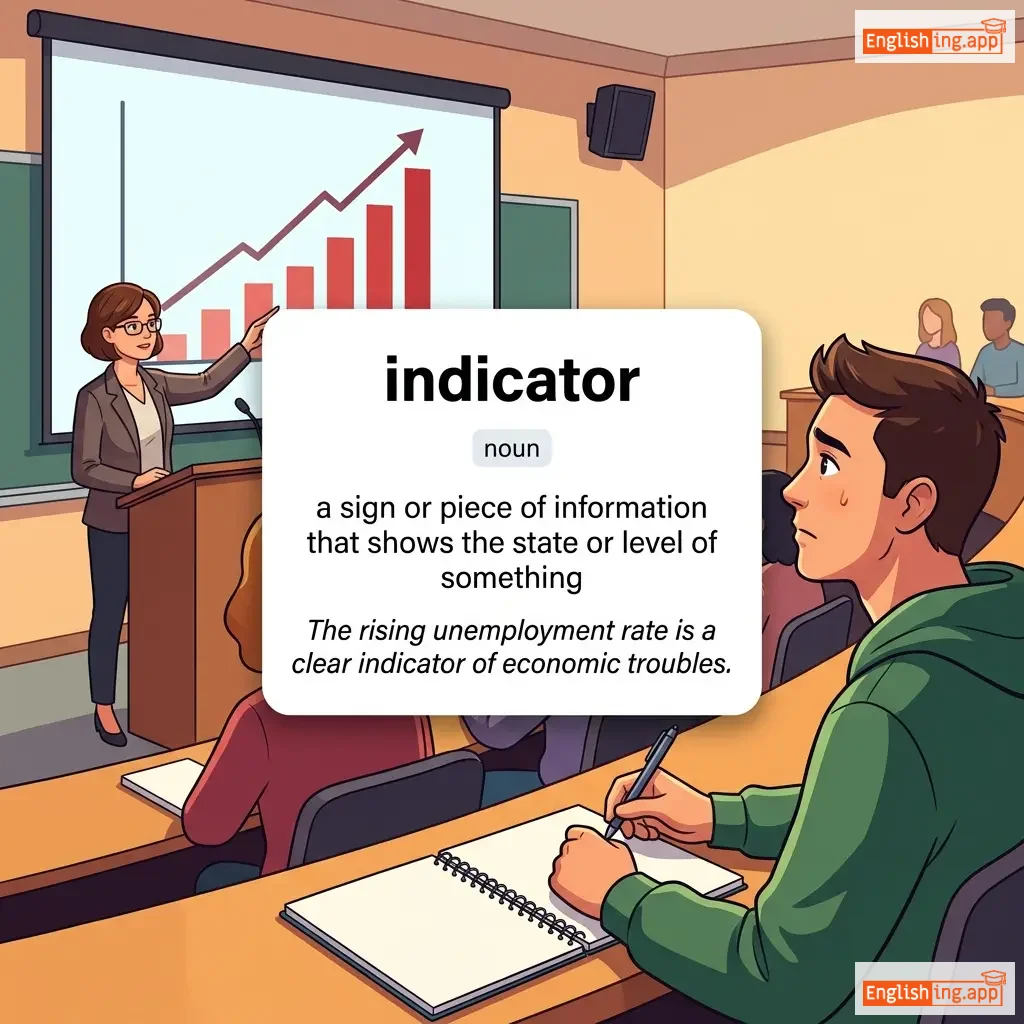
indicator definition card — visual illustration of the meaning
noun
/ˈɪndɪˌkeɪtər/
सूचक (soochak)

a sign or piece of information that shows the state or level of something

"The rising unemployment rate is a clear indicator of economic troubles."

"बेरोज़गारी दर आर्थिक समस्याओं का एक स्पष्ट संकेत है।" (Berozgaari dar aarthik samasyaon ka ek spashth sanket hai.)
noun (plural)
/ˈɪndɪˌsiːz/
सूचकांक (soochakank)

plural form of index; statistical measures or reference points used for comparison

"Stock market indices fell sharply after the announcement."

"घोषणा के बाद शेयर बाजार के सूचकांक तेजी से गिर गए।" (Ghoshna ke baad sheyar bazar ke soochakank tezi se gir gaye.)
verb
/ɪnˈdaɪt/
आरोपित करना (aaropit karna)

to formally accuse someone of committing a serious crime

"The grand jury decided to indict the politician for corruption."

"ग्रैंड जूरी ने भ्रष्टाचार के लिए राजनेता को आरोपित करने का निर्णय लिया।" (Grand jury ne bhrashtachar ke liye rajneeta ko aaropit karne ka nirnay liya.)
noun
/ɪnˈdaɪtmənt/
आरोपपत्र (aaroppatra)

a formal charge or accusation of a serious crime

"The indictment accused the company of multiple violations."

"आरोपपत्र ने कंपनी पर कई उल्लंघनों का आरोप लगाया।" (Aaroppatra ne company par kai ullanghano ka aarop lagaya.)
noun
/ɪnˈdɪfərəns/
उदासीनता (udasinta)

lack of interest, concern, or sympathy

"He showed complete indifference to the suffering around him."

"उसने अपने आस-पास की पीड़ा के प्रति पूरी उदासीनता दिखाई।" (Usne apne aas-paas ki peeda ke prati poori udasinta dikhayi.)
adjective
/ɪnˈdɪf.ər.ənt/
उदासीन (udaaseen)

having no particular interest or concern; not caring one way or another

"She was indifferent to the outcome of the match."

"वह मैच के परिणाम के प्रति उदासीन थी।" (Vah match ke parinaam ke prati udaaseen thi.)
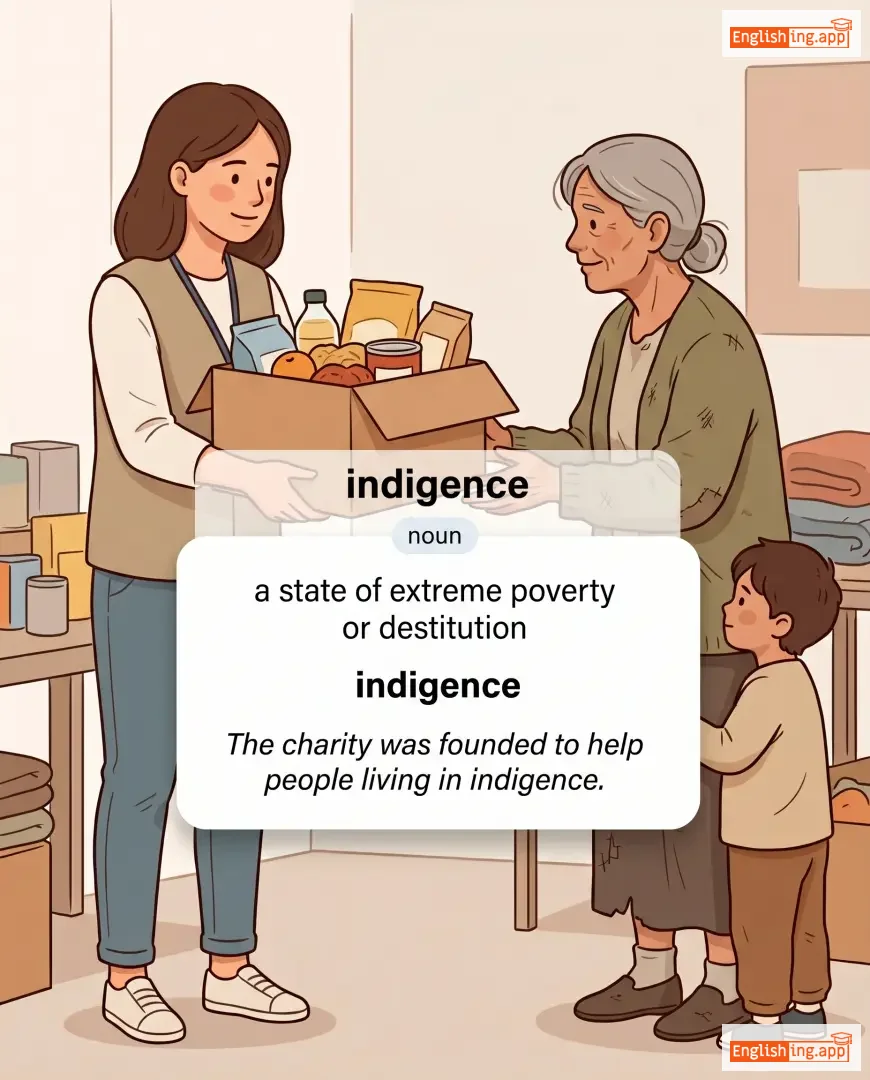
indigence definition card — visual illustration of the meaning
noun
/ˈɪn.dɪ.dʒəns/
दरिद्रता (daridrita)

a state of extreme poverty or destitution

"The charity was founded to help people living in indigence."

"चैरिटी को उन लोगों की मदद करने के लिए स्थापित किया गया था जो दरिद्रता में जीवन बिता रहे थे।" (Charity ko un logon ki madad karne ke liye sthapit kiya gaya tha jo daridrita mein jeevan bita rahe the.)
indigenous definition card — visual illustration of the meaning
adjective
/ɪnˈdɪdʒ.ə.nəs/
स्वदेशी (swadeshi)

originating or occurring naturally in a particular place; native

"These plants are indigenous to South America."

"यह पौधे दक्षिण अमेरिका के स्वदेशी हैं।" (Yeh paudhe dakshin amerika ke swadeshi hain.)
Indigenous Traditions definition card — visual illustration of the meaning
noun
ɪnˈdɪdʒɪnəs trəˈdɪʃənz
आदिवासी परंपराएँ (aadivasi paramparaen)

Cultural practices, beliefs, and customs that have been passed down through generations among native peoples.

"Indigenous traditions in the Chittagong Hill Tracts are unique."

"चित्तगांव हिल ट्रैक्ट्स में आदिवासी परंपराएँ अद्वितीय हैं।" (Chittagav Hill Tracts mein aadivasi paramparaen adwitiya hain.)
adjective
/ˈɪn.dɪ.dʒənt/
निर्धन (nirdhan)

lacking the necessities of life due to poverty; very poor

"The hospital offers free care to indigent patients."

"अस्पताल गरीब मरीजों को मुफ्त देखभाल प्रदान करता है।" (Aspataal gareeb mareezon ko muft dekhbhaal pradaan karta hai.)
adjective
/ˌɪn.daɪˈdʒes.tə.bəl/
हजम न होने योग्य (hajam na hone yogya)

difficult or impossible to digest; hard to accept or understand

"The report was so long and detailed that it became almost indigestible."

"रिपोर्ट इतनी लंबी और विस्तृत थी कि यह लगभग हजम न होने योग्य हो गई।" (Report itni lambi aur vistret thi ki yah lagbhag hajam na hone yogya ho gayi.)
noun
/ˌɪndɪˈdʒɛstʃən/
अपच (indigestion)

Discomfort or pain in the stomach associated with difficulty in digesting food.

"He avoided spicy food because it often gave him indigestion."

"उसने मसालेदार भोजन से परहेज किया क्योंकि उसे अक्सर अपच हो जाता था।" (Usne masaledar bhojan se parhez kiya kyunki uske aksar apach ho jata tha.)
adjective
/ɪnˈdɪɡnənt/
क्रोधित (krodhit)

Feeling or showing anger at something considered unfair or unjust.

"She was indignant when accused of cheating."

"वह धोखाधड़ी का आरोप लगाए जाने पर क्रोधित हो गई।" (Wah dhokhadhadi ka aarop lagaaye jaane par krodhit ho gayi.)
noun
/ˌɪndɪɡˈneɪʃən/
रोष (rosh)

Strong displeasure or anger caused by something unjust, offensive, or insulting.

"Public indignation grew after the unfair verdict."

"अन्यायपूर्ण फैसले के बाद सार्वजनिक रोष बढ़ गया।" (Anyaaypoorn faisle ke baad saarbhautik rosh badh gaya.)
noun
/ɪnˈdɪɡnɪti/
अपमान (apmaan)

Treatment or circumstances that cause one to feel shame or humiliation.

"He suffered the indignity of being ignored in the meeting."

"वह बैठक में अनदेखी किए जाने की अपमानजनक स्थिति को सहन कर रहा था।" (Vah baithak mein andekhi kiye jaane ki apmaanjanak sthiti ko sahan kar raha tha.)
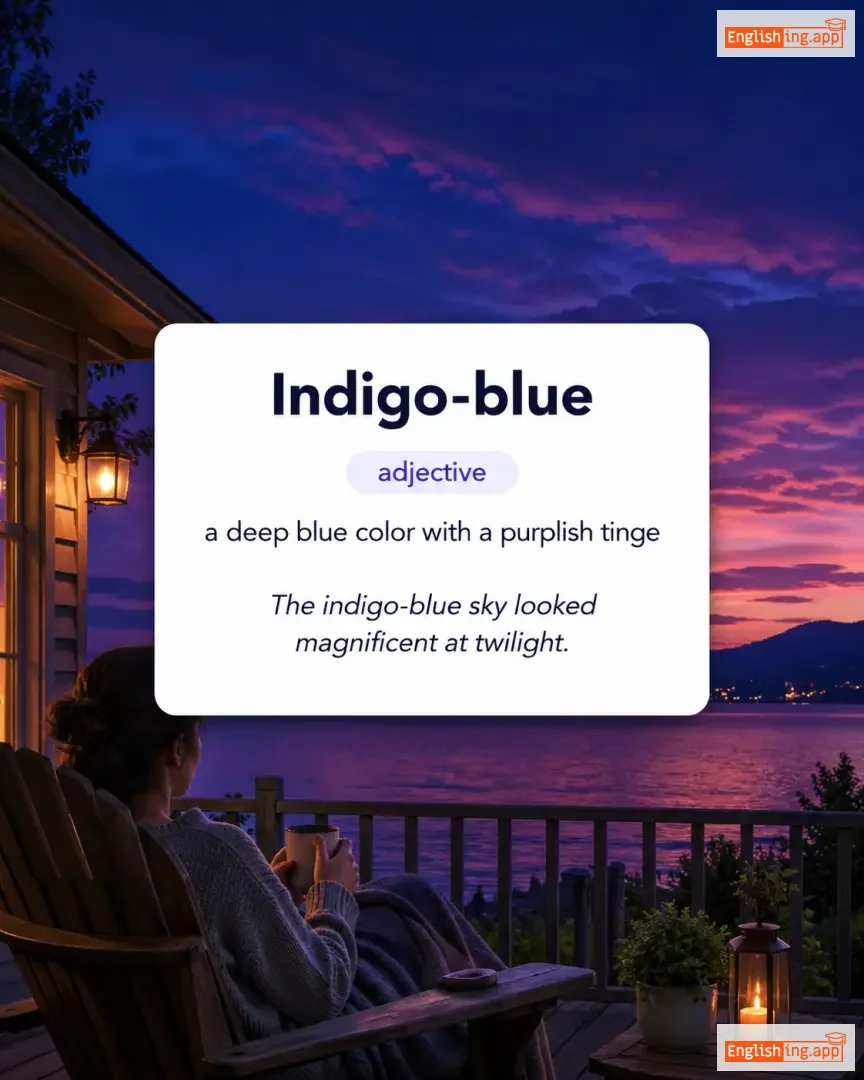
Indigo-blue definition card — visual illustration of the meaning
adjective
/ˈɪndɪɡoʊ bluː/
इंडिगो-नीला (indigo-neela)

a deep blue color with a purplish tinge

"The indigo-blue sky looked magnificent at twilight."

"इंडिगो-नीला आकाश संध्या में शानदार दिख रहा था।" (indigo-neela aakash sandhya mein shandaar dikh raha tha)
adverb
/ˌɪndəˈrɛktli/
परोक्ष रूप से (paroksh roop se)

in a way that is not direct; through an intermediate means or influence

"The policy affected small businesses indirectly."

"इस नीति ने छोटे व्यवसायों को परोक्ष रूप से प्रभावित किया।" (is niti ne chhote vyavasayon ko paroksh roop se prabhaavit kiya)
adjective
/ˌɪndɪˈsɜːrnəbl/
अस्पष्ट (asposht)

Impossible or difficult to see, notice, or distinguish.

"The difference between the two shades was almost indiscernible."

"दो रंगों के बीच का अंतर लगभग अस्पष्ट था।" (Do rangon ke beech ka antar lagbhag asposht tha.)
noun
/ˌɪnˈdɪsəplɪn/
अनुशासनहीनता (anushasanheenata)

lack of discipline or self-control; failure to obey rules or maintain order

"Indiscipline among the students disrupted the learning environment."

"छात्रों में अनुशासनहीनता ने सीखने के वातावरण को बाधित किया।" (chhatron mein anushasanheenata ne seekhne ke vatavaran ko badhit kiya)
adjective
/ˌɪndɪˈskriːt/
लापरवाह (laparwaha)

Not careful in what one says or does, likely to reveal secrets or offend.

"It was indiscreet of him to mention the plan in public."

"यह सार्वजनिक रूप से योजना का जिक्र करना उसकी लापरवाही थी।" (Yah saarbajanik roop se yojana ka zikr karna uski laparwahi thi.)
adjective
/ˌɪndɪˈskrɪmɪnət/
अनियंत्रित (aniyantrit)

Done without careful judgment; random or haphazard.

"The indiscriminate use of pesticides harms the environment."

"कीटनाशकों का अनियंत्रित उपयोग पर्यावरण को नुकसान पहुँचाता है।" (Keetnashako ka aniyantrit upyog paryavaran ko nuksan pahuchata hai.)
adverb
/ˌɪn.dɪˈskrɪm.ɪ.nət.li/
निरपेक्ष रूप से (nirpeksh roop se)

without making careful distinctions; randomly; without discrimination

"The company fired employees indiscriminately without considering their performance."

"कंपनी ने कर्मचारियों को उनके प्रदर्शन पर विचार किए बिना निरपेक्ष रूप से निकाल दिया।" (d company ne karyakartao ko unke pradarshan par vichar kiye bina nirpeksh roop se nikaal diya.)
indispensable definition card — visual illustration of the meaning
adjective
/ˌɪndɪˈspɛnsəbl/
अत्यावश्यक (atyavashyak)

Absolutely necessary; essential.

"Water is indispensable for human survival."

"मानव जीवन के लिए पानी अत्यावश्यक है।" (manav jeevan ke liye pani atyavashyak hai.)
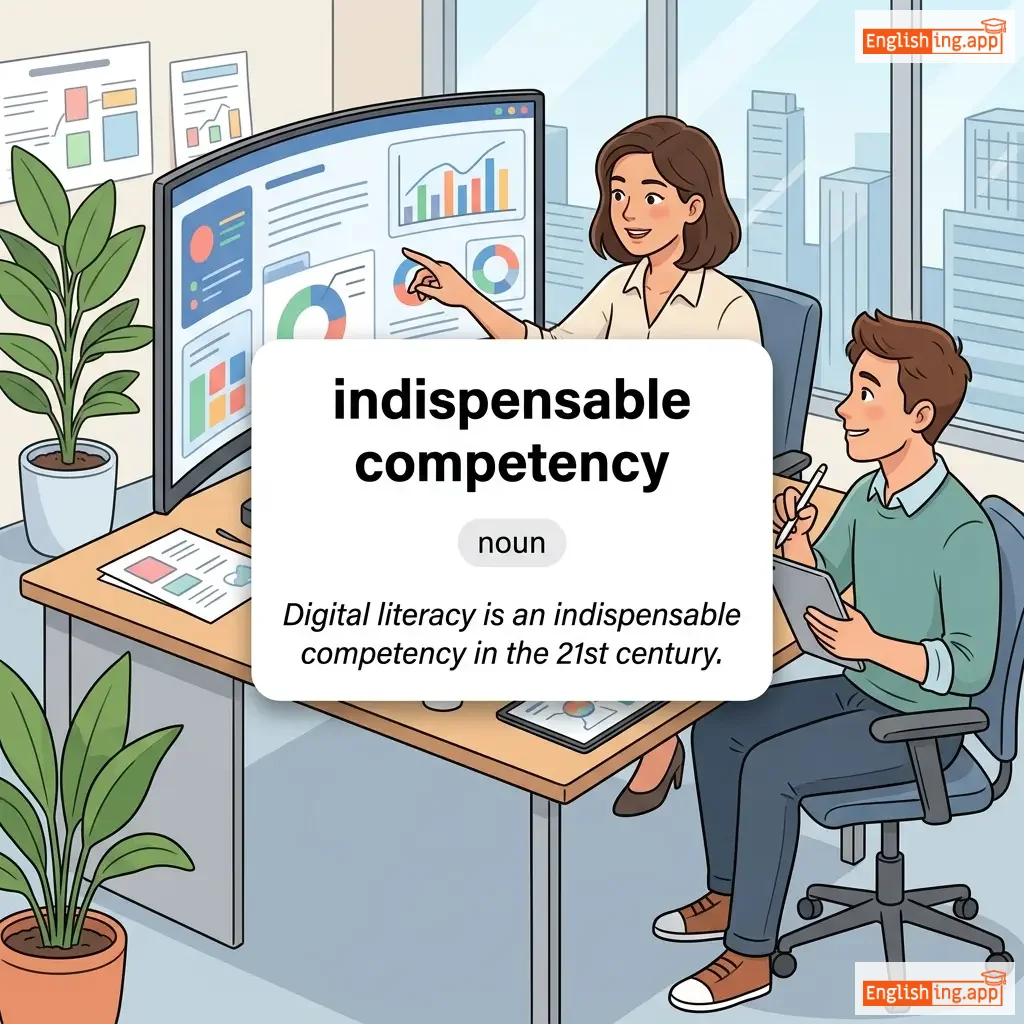
indispensable competency definition card — visual illustration of the meaning
noun
ˌɪndɪˈspensəbl̩ ˈkɒmpɪtənsi
अपरिहार्य कौशल (aparihaary kaushal)

Essential skill or ability that cannot be done without; a crucial capability that is absolutely necessary.

"Digital literacy is an indispensable competency in the 21st century."

"डिजिटल साक्षरता 21वीं सदी में एक अपरिहार्य कौशल है।" (Digital saksharta 21vi sadi mein ek apariharya kaushal hai.)
indispensable support definition card — visual illustration of the meaning
noun
ˌɪndɪˈspensəbl səˈpɔːrt
अपरिहार्य समर्थन (aparihaarya samarthan)

Essential assistance that cannot be done without; absolutely necessary help.

"Volunteers provide indispensable support to communities."

"स्वयंसेवक समुदायों को अपरिहार्य समर्थन प्रदान करते हैं।" (Swayamsevak samudaayon ko aparihaarya samarthan pradan karte hain.)
adjective
/ˌɪndɪˈspjuːtəbl/
अविवादित (avivadit)

Impossible to doubt or question; certain.

"It is an indisputable fact that the earth orbits the sun."

"यह एक अविवादित तथ्य है कि पृथ्वी सूर्य के चारों ओर घूमती है।" (Yeh ek avivadit tathya hai ki prithvi surya ke charon or ghoomti hai.)
adjective
/ˌɪndɪˈsɒljʊbl/
अविभाज्य (avibhajya)

Unable to be destroyed, broken, or dissolved.

"Marriage was once considered an indissoluble bond."

"विवाह को एक समय में अविभाज्य बंधन माना जाता था।" (Vivah ko ek samay mein avibhajya bandhan maana jaata tha.)
adjective
/ˌɪndɪˈstɪŋkt/
अस्पष्ट (aspasht)

Not clear or sharply defined; vague or blurred.

"The sound of voices was indistinct in the distance."

"दूर से आवाज़ें अस्पष्ट थीं।" (Door se aawaazain aspasht theen.)
verb
/ɪnˈdaɪt/
रचना करना (rachna karna)

To write or compose (literary or formal works).

"The poet indited a heartfelt sonnet."

"कवि ने एक दिल से लिखा हुआ सोननेट रचा।" (Kavi ne ek dil se likha hua sonnet racha.)
adjective
/ˌɪndɪˈvɜːrtɪbəl/
अटूट (indivertible)

Not able to be turned aside or diverted.

"The judge's indivertible attention was on the case."

"न्यायाधीश का अटूट ध्यान मामले पर था." (Nyaayadhish ka atoot dhyaan maamle par tha.)
noun/adjective
/ˌɪndɪˈvɪdʒuəl/
व्यक्ति (vyakti)

A single human being as distinct from a group; relating to one person.

"Each individual has the right to freedom of speech."

"प्रत्येक व्यक्ति को अभिव्यक्ति की स्वतंत्रता का अधिकार है।" (pratyek vyakti ko abhipray ki svatantrata ka adhikar hai.)
adjective
/ˌɪndɪˈvɪzəbl/
अविभाज्य (indivizibal)

Not able to be divided or separated.

"The country's unity was indivisible despite differences."

"देश की एकता भिन्नताओं के बावजूद अविभाज्य थी।" (Desh ki ekta bhinnataon ke baavjud avibhajya thi)
verb
/ɪnˈdɒktrɪˌneɪt/
विश्वासों को बिना सवाल किए स्वीकार करने के लिए किसी को सिखाना (vishwason ko bina sawal kiye svikaar karne ke liye kisi ko sikhaana)

To teach someone to fully accept a set of beliefs or ideas without question.

"The regime tried to indoctrinate the youth with propaganda."

"शासन ने प्रचार के साथ युवाओं को बंधनकारी शिक्षा देने की कोशिश की।" (Shasan ne prachar ke saath yuvaon ko bandhankaari shiksha dene ki koshish ki.)
noun
/ˈɪndələns/
आलस्य (aalsya)

Avoidance of activity or exertion; laziness.

"His indolence kept him from finishing the project on time."

"उसकी आलस्य ने उसे समय पर परियोजना को समाप्त करने से रोक दिया।" (uski aalsya ne use samay par pariyojna ko samaapt karne se rok diya.)
indolent definition card — visual illustration of the meaning
adjective
/ˈɪndələnt/
आलसी (aalsi)

Wanting to avoid activity or exertion; lazy.

"The indolent cat slept in the sun all afternoon."

"आलसी बिल्ली ने पूरे दोपहर धूप में सोया।" (aalsi billi ne poore dopahar dhoop mein soya.)
indomitable definition card — visual illustration of the meaning
adjective
/ɪnˈdɒmɪtəbl/
अडिग (adig)

Impossible to subdue or defeat.

"She had an indomitable spirit that inspired everyone."

"उसमें एक अडिग भावना थी जिसने सभी को प्रेरित किया।" (Usmein ek adig bhavna thi jismein sabhi ko prerit kiya.)
adjective
/ˈɪn.dɔːr/
घर के अंदर का (ghar ke andar ka)

situated, occurring, or used inside a building

"Indoor plants can improve air quality at home."

"घर के अंदर के पौधे घर की हवा की गुणवत्ता सुधार सकते हैं।" (ghar ke andar ke paudhe ghar ki hawa ki gunavatta sudhar sakte hain)
adverb
/ˌɪnˈdɔːrz/
घर के अंदर (ghar ke andar)

inside a building; within an enclosed space

"Because of the rain, everyone stayed indoors."

"बारिश के कारण सभी लोग घर के अंदर रहे।" (baarish ke kaaran sabhi log ghar ke andar rahe)
adjective
/ɪnˈdjuːbɪtəbl/
निर्विवाद (nirvivaad)

Impossible to doubt; unquestionable.

"It is indubitable that hard work leads to success."

"यह निर्विवाद है कि कठिन परिश्रम सफलता की ओर ले जाता है।" (yah nirvivaad hai ki kathin parishram safalta ki or le jata hai.)
adverb
/ɪnˈdjuːbɪtəbli/
निस्संदेह (nissandeh)

Without a doubt; certainly.

"She is indubitably the best candidate for the job."

"वह निस्संदेह नौकरी के लिए सबसे अच्छा उम्मीदवार है।" (vah nissandeh naukri ke liye sabse achha ummidvaar hai.)
verb
/ɪnˈdjuːs/
प्रेरित करना (prerit karna)

to cause or persuade someone to do something; to bring about a result

"The doctor induced sleep with a mild sedative."

"डॉक्टर ने एक हल्के सेडेटिव से नींद को प्रेरित किया।" (Doktor ne ek halke sedative se neend ko prerit kiya.)
noun
/ɪnˈdjuːsmənt/
प्रलोभन (prolobhan)

something that persuades or encourages someone to do something

"The company offered a bonus as an inducement to employees."

"कंपनी ने कर्मचारियों को प्रलोभन देने के लिए बोनस की पेशकश की।" (Kampani ne karyakartao ko prolobhan dene ke liye bonus ki peshkash ki.)
verb
/ɪnˈdʌkt/
आधिकारिक रूप से किसी को किसी पद, संगठन या कार्यालय में शामिल करना (adhikarik roop se kisi ko kisi pad, sangathan ya karyalay mein shamil karna)

to formally admit someone into a position, organization, or office

"She was inducted into the university's honor society."

"उसे विश्वविद्यालय के सम्मान समाज में आधिकारिक रूप से शामिल किया गया था।" (Use vishwavidyalay ke sammaan samaj mein adhikarik roop se shamil kiya gaya tha.)
adjective
/ɪnˈdʌktɪv/
सूक्ष्म से सामान्य अनुमान लगाने वाला (sookshm se samaanya anumaan lagane waala)

characterized by the inference of general laws from particular instances; reasoning from specific cases to general principles

"The scientist used inductive reasoning to form a hypothesis."

"साइंटिस्ट ने इन्डक्टिव रीजनिंग का उपयोग करके एक परिकल्पना बनाई।" (Scientist ne inductive reasoning ka upyog karke ek parikalpana banai.)
verb
/ɪnˈdʌldʒ/
आनंदित होना (aanandit hona)

to allow oneself to enjoy something enjoyable, often excessively

"He indulged in a piece of chocolate cake after dinner."

"उसने डिनर के बाद चॉकलेट केक का एक टुकड़ा खाकर आनंद लिया।" (Usne dinner ke baad chocolate cake ka ek tukda khakar aanand liya.)
indulgence definition card — visual illustration of the meaning
noun
/ɪnˈdʌldʒəns/
आनंद भोग (anand bhog)

The act of allowing oneself or others to enjoy pleasure, often excessively.

"Her favorite indulgence is eating chocolate late at night."

"उसका पसंदीदा आनंद भोग रात को देर से चॉकलेट खाना है।" (uska pasandeeda anand bhog raat ko der se chocolate khana hai.)
adjective
/ɪnˈdʌldʒənt/
अत्यधिक दयालु (atyadhik dayalu)

Having a tendency to be overly generous or lenient with someone.

"The indulgent mother allowed her child to stay up late."

"दयालु माँ ने अपने बच्चे को देर तक जागने की अनुमति दी।" (dayalu maan ne apne bachche ko der tak jaagne ki anumati di.)
verb
/ˈɪndjʊˌreɪt/
कठोर करना (kathor karna)

To harden or make something physically or emotionally tough.

"Years of hardship indurated his spirit."

"सालों की कठिनाई ने उसकी आत्मा को कठोर बना दिया।" (Saalo ki kathinai ne uski aatma ko kathor bana diya.)