語彙集

英単語辞書 | 単語の意味、定義、例文

noun
/ˌɪndɪˈkeɪʃən/
指示 (shiji)

A sign, piece of information, or signal that suggests something.

"Dark clouds are an indication of an approaching storm."

"暗い雲は近づいている嵐の兆候です。" (kurai kumo wa chikadzuite iru arashi no chōkō desu)
adjective, noun
/ɪnˈdɪkətɪv/
指示的 (shijiteki)

Serving as a sign or expression of something; in grammar, a mood used to make factual statements.

"His tone was indicative of his frustration."
"彼のトーンは彼のフラストレーションを示していた。" (Kare no tōn wa kare no furasutōrēshon o shimeshite ita.)
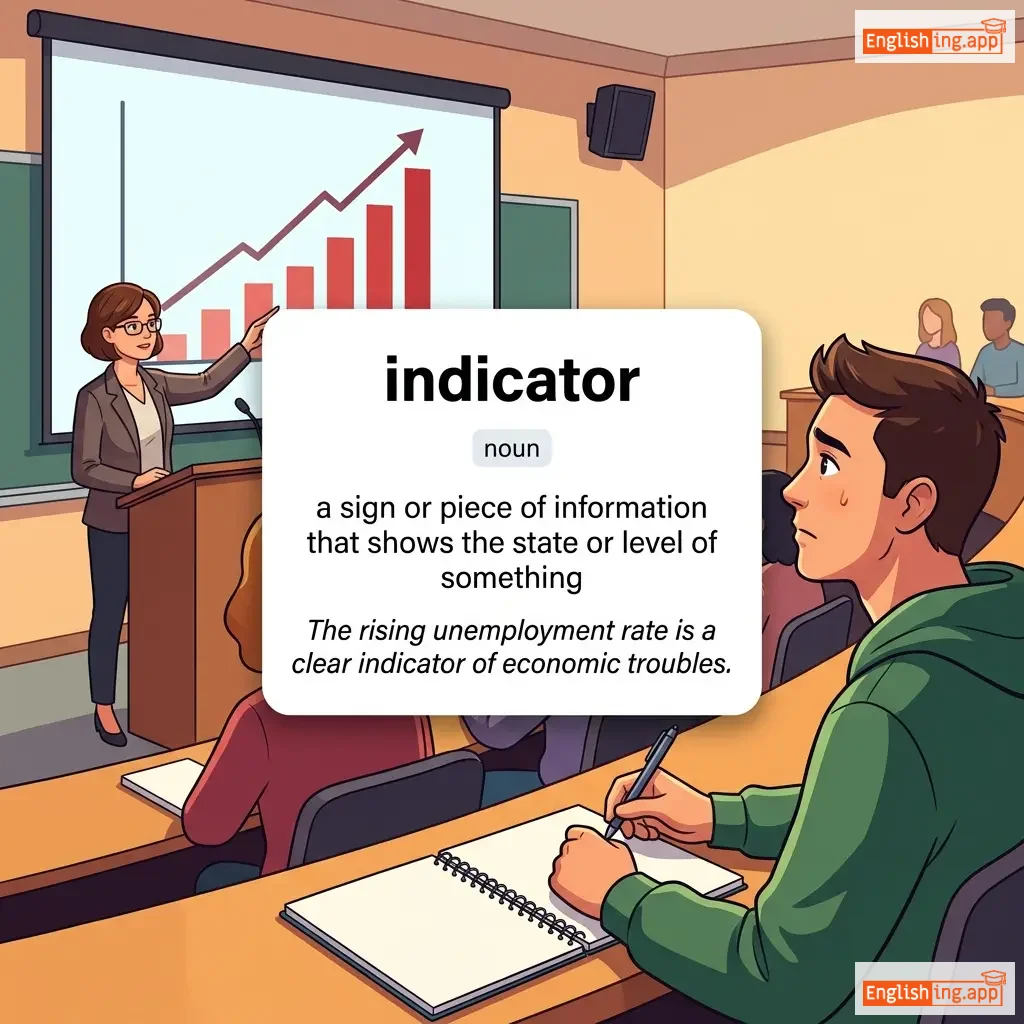
indicator definition card — visual illustration of the meaning
noun
/ˈɪndɪˌkeɪtər/
指標 (shihyō)

a sign or piece of information that shows the state or level of something

"The rising unemployment rate is a clear indicator of economic troubles."

"失業率の上昇は経済問題の明確な指標です。" (Shitsugyō-ritsu no jōshō wa keizai mondai no meikaku na shihyō desu.)
noun (plural)
/ˈɪndɪˌsiːz/
インデックス (indekkusu)

plural form of index; statistical measures or reference points used for comparison

"Stock market indices fell sharply after the announcement."

"発表後、株式市場のインデックスは急落しました。" (Happyo go, kabushiki shijō no indekkusu wa kyūraku shimashita.)
verb
/ɪnˈdaɪt/
起訴する (kiso suru)

to formally accuse someone of committing a serious crime

"The grand jury decided to indict the politician for corruption."

"大陪審団は腐敗のために政治家を起訴することを決定した。" (Dai baishindan wa fuhai no tame ni seijika o kiso suru koto o kettei shita.)
noun
/ɪnˈdaɪtmənt/
起訴状 (kisojou)

a formal charge or accusation of a serious crime

"The indictment accused the company of multiple violations."

"起訴状は、会社に対する複数の違反を告発しました。" (Kisojou wa, kaisha ni taisuru fukusū no ihan o kokuhatsu shimashita.)
noun
/ɪnˈdɪfərəns/
無関心 (mukanshin)

lack of interest, concern, or sympathy

"He showed complete indifference to the suffering around him."

"彼は周りの苦しみに対して完全に無関心を示した。" (Kare wa mawari no kurushimi ni taishite kanzen ni mukanshin o shimeshita.)
adjective
/ɪnˈdɪf.ər.ənt/
無関心 (mukanshin)

having no particular interest or concern; not caring one way or another

"She was indifferent to the outcome of the match."
"彼女は試合の結果に無関心だった。" (Kanojo wa shiai no kekka ni mukanshin datta.)
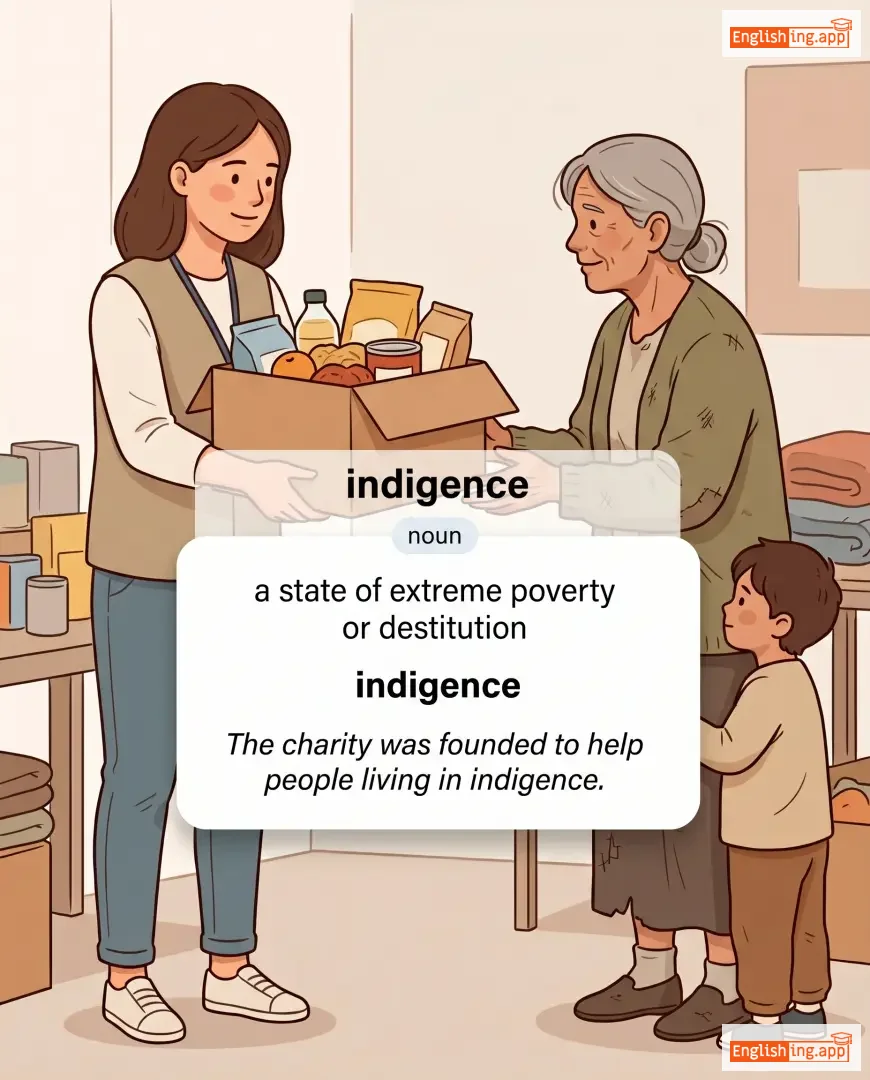
indigence definition card — visual illustration of the meaning
noun
/ˈɪn.dɪ.dʒəns/
貧困 (hinkon)

a state of extreme poverty or destitution

"The charity was founded to help people living in indigence."
"その慈善団体は貧困の中で生活している人々を助けるために設立されました。" (Sono jizen dantai wa hinkon no naka de seikatsu shite iru hitobito o tasukeru tame ni setsuritsu saremashita.)
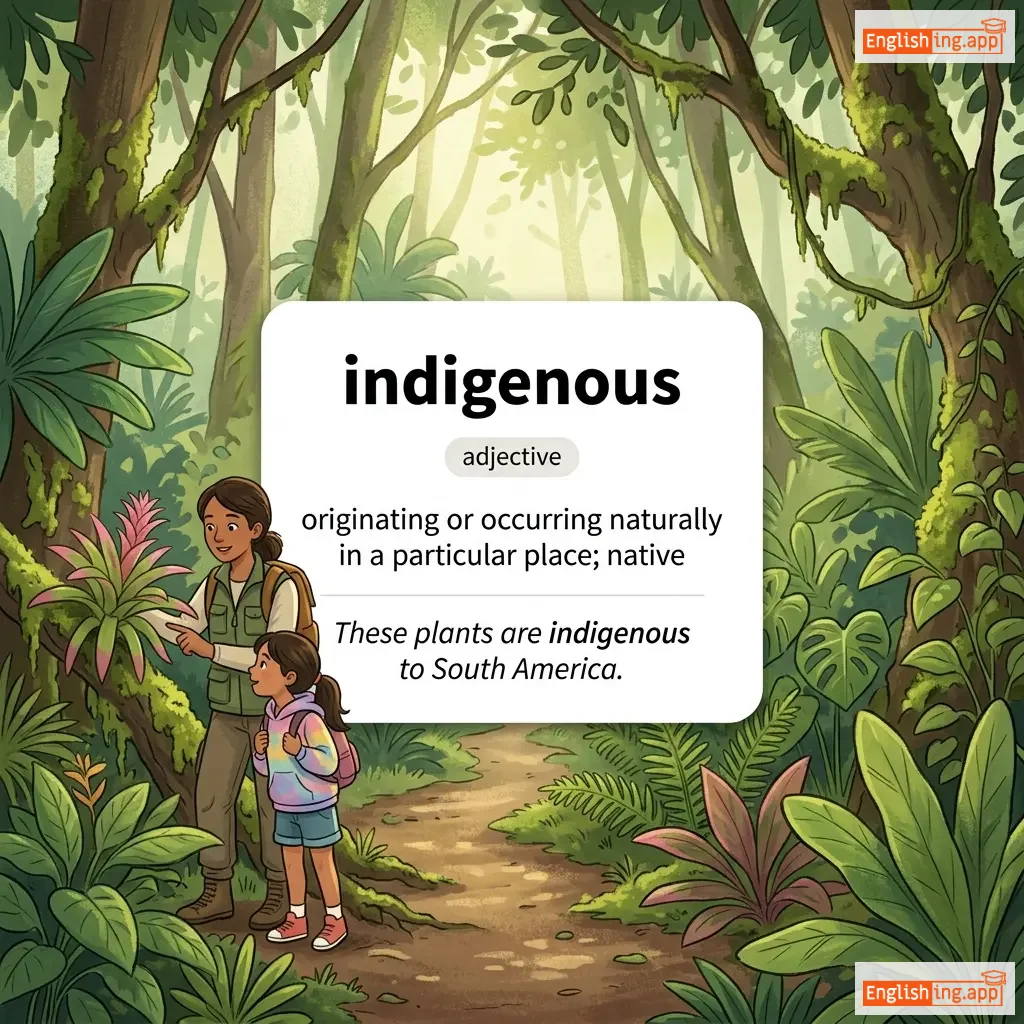
indigenous definition card — visual illustration of the meaning
adjective
/ɪnˈdɪdʒ.ə.nəs/
先住民の (senjūmin no)

originating or occurring naturally in a particular place; native

"These plants are indigenous to South America."

"これらの植物は南アメリカの先住民のものです。" (Korera no shokubutsu wa Minami Amerika no senjūmin no mono desu.)
Indigenous Traditions definition card — visual illustration of the meaning
noun
ɪnˈdɪdʒɪnəs trəˈdɪʃənz
先住民の伝統 (senjūmin no dentō)

Cultural practices, beliefs, and customs that have been passed down through generations among native peoples.

"Indigenous traditions in the Chittagong Hill Tracts are unique."

"チッタゴン丘陵地帯の先住民の伝統はユニークです。" (Chittagon kyūryō chitai no senjūmin no dentō wa yunikudesu.)
adjective
/ˈɪn.dɪ.dʒənt/
困窮 (konkyū)

lacking the necessities of life due to poverty; very poor

"The hospital offers free care to indigent patients."

"病院は困窮した患者に無料でケアを提供しています。" (Byōin wa konkyū shita kanja ni muryō de kea o teikyō shiteimasu.)
adjective
/ˌɪn.daɪˈdʒes.tə.bəl/
消化不良 (shōkafuryō)

difficult or impossible to digest; hard to accept or understand

"The report was so long and detailed that it became almost indigestible."

"その報告書は非常に長くて詳細だったため、ほとんど消化不良になってしまった。" (Sono hōkokusho wa hijō ni nagakute shōsai datta tame, hotondo shōkafuryō ni natte shimatta.)
noun
/ˌɪndɪˈdʒɛstʃən/

Discomfort or pain in the stomach associated with difficulty in digesting food.

"He avoided spicy food because it often gave him indigestion."

adjective
/ɪnˈdɪɡnənt/
憤慨した (fukaisita)

Feeling or showing anger at something considered unfair or unjust.

"She was indignant when accused of cheating."

"彼女は不正行為を非難されたとき、憤慨していた。" (Kanojo wa fusei kōi o hinan sareta toki, fukaisita.)
noun
/ˌɪndɪɡˈneɪʃən/
憤慨 (fukai)

Strong displeasure or anger caused by something unjust, offensive, or insulting.

"Public indignation grew after the unfair verdict."

"不公平な判決の後で、公衆の憤慨が高まった。" (Fukouhei na hanketsu no ato de, koushuu no fukai ga takamatta.)
noun
/ɪnˈdɪɡnɪti/
屈辱 (kutsujoku)

Treatment or circumstances that cause one to feel shame or humiliation.

"He suffered the indignity of being ignored in the meeting."
"彼は会議で無視された屈辱を味わいました。" (Kare wa kaigi de mushi sareta kutsujoku o ajiwaimashita.)
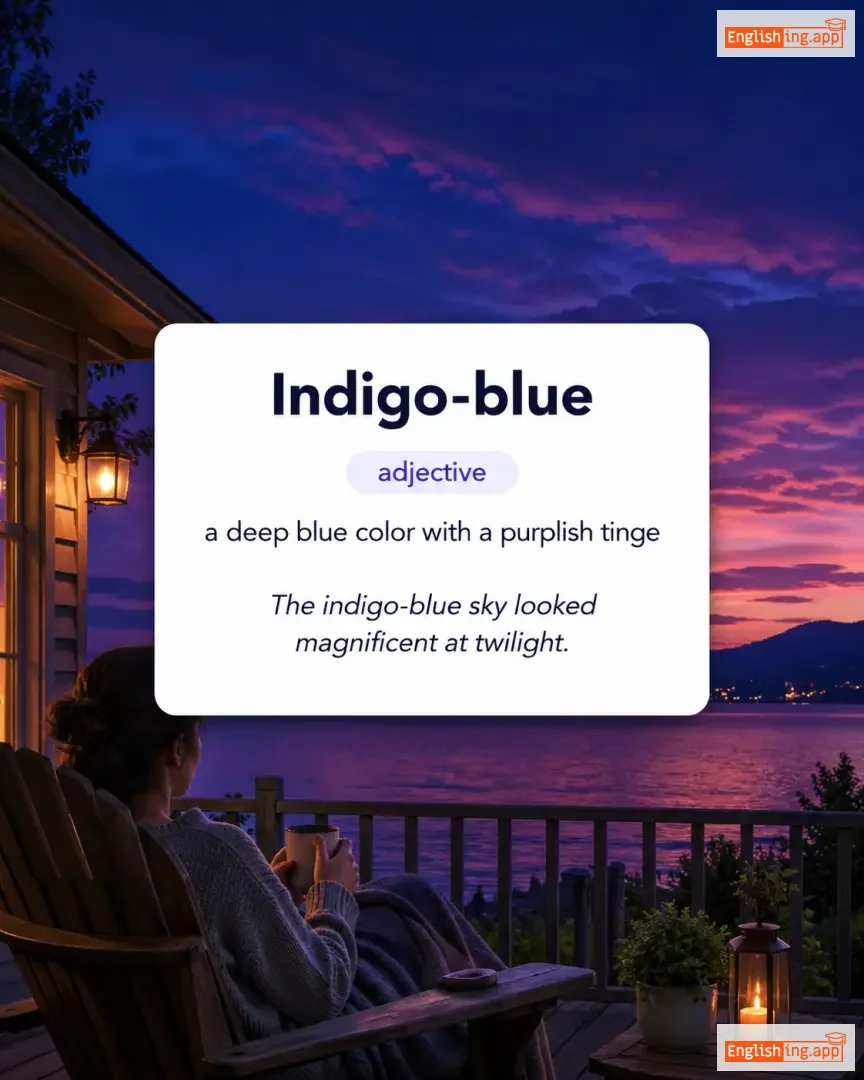
Indigo-blue definition card — visual illustration of the meaning
adjective
/ˈɪndɪɡoʊ bluː/
インディゴブルー (indigo burū)

a deep blue color with a purplish tinge

"The indigo-blue sky looked magnificent at twilight."

"インディゴブルーの空は夕暮れ時に壮大に見えた。" (Indigo burū no sora wa yūgure toki ni sōdai ni mieta.)
adverb
/ˌɪndəˈrɛktli/
間接的に (kansetsuteki ni)

in a way that is not direct; through an intermediate means or influence

"The policy affected small businesses indirectly."

"その政策は中小企業に間接的に影響した。" (sono seisaku wa chuusho kigyou ni kansetsuteki ni eikyou shita)
adjective
/ˌɪndɪˈsɜːrnəbl/
見分けがつかない (miwake ga tsukanai)

Impossible or difficult to see, notice, or distinguish.

"The difference between the two shades was almost indiscernible."

"二つの色調の違いはほとんど見分けがつかなかった。" (Futatsu no shikichou no chigai wa hotondo miwake ga tsukanakatta.)
noun
/ˌɪnˈdɪsəplɪn/
規律の欠如 (kiritsu no ketsujo)

lack of discipline or self-control; failure to obey rules or maintain order

"Indiscipline among the students disrupted the learning environment."

"学生の規律の欠如が学習環境を乱した。" (Gakusei no kiritsu no ketsujo ga gakushu kankyo o midashita)
adjective
/ˌɪndɪˈskriːt/
軽率 (keisotsu)

Not careful in what one says or does, likely to reveal secrets or offend.

"It was indiscreet of him to mention the plan in public."

"公衆の面前で計画について言及するのは軽率だった。" (Koushuu no menzen de keikaku ni tsuite genkyuu suru no wa keisotsu datta.)
adjective
/ˌɪndɪˈskrɪmɪnət/
無差別 (musabetsu)

Done without careful judgment; random or haphazard.

"The indiscriminate use of pesticides harms the environment."

"農薬の無差別な使用は環境に害を与えます。" (Nōyaku no musabetsu na shiyō wa kankyō ni gai o ataemasu.)
adverb
/ˌɪn.dɪˈskrɪm.ɪ.nət.li/
無差別に (musabetsu ni)

without making careful distinctions; randomly; without discrimination

"The company fired employees indiscriminately without considering their performance."
"会社は従業員を彼らのパフォーマンスを考慮せずに無差別に解雇しました。" (Kaisha wa jūgyōin o karera no pafōmansu o kōryo sezu ni musabetsu ni kaiko shimashita.)
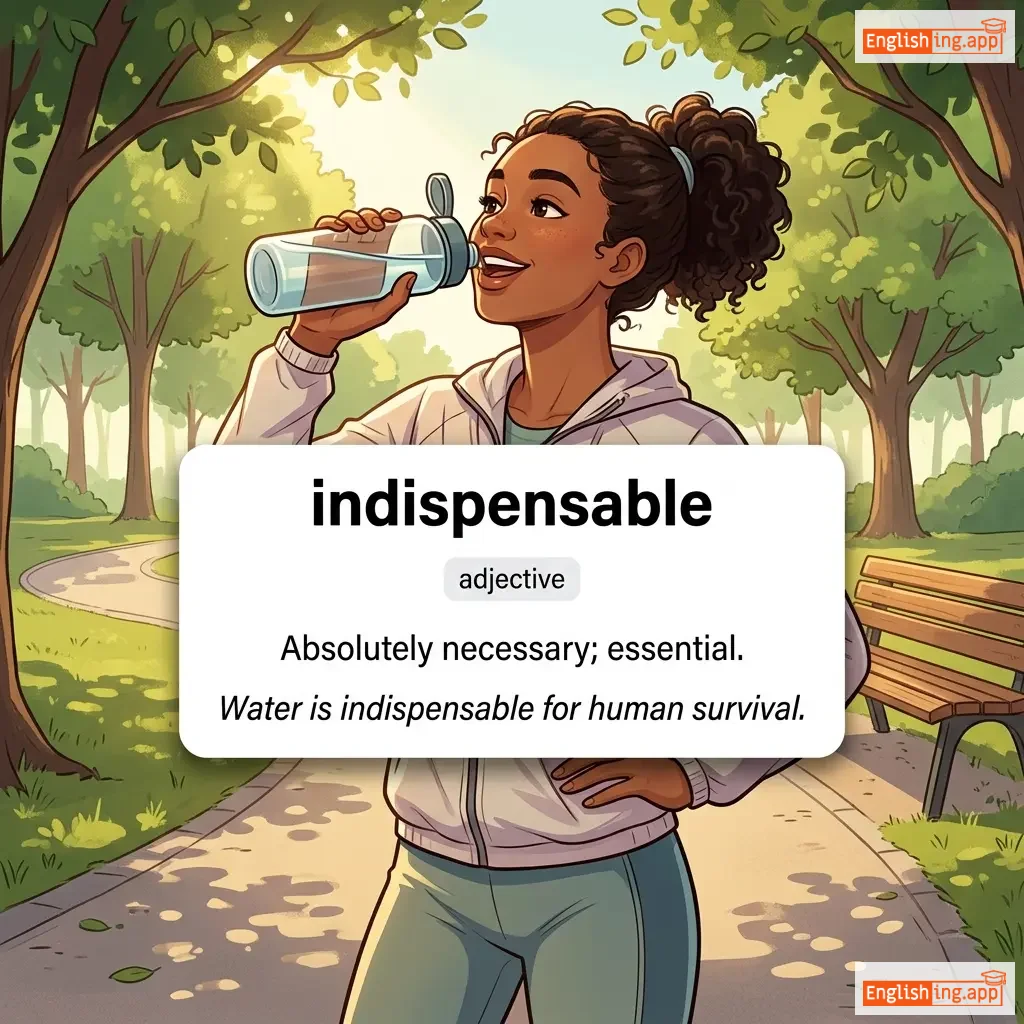
indispensable definition card — visual illustration of the meaning
adjective
/ˌɪndɪˈspɛnsəbl/
不可欠 (fukaketsu)

Absolutely necessary; essential.

"Water is indispensable for human survival."
"水は人間の生存に不可欠です。" (Mizu wa ningen no seizon ni fukaketsu desu.)
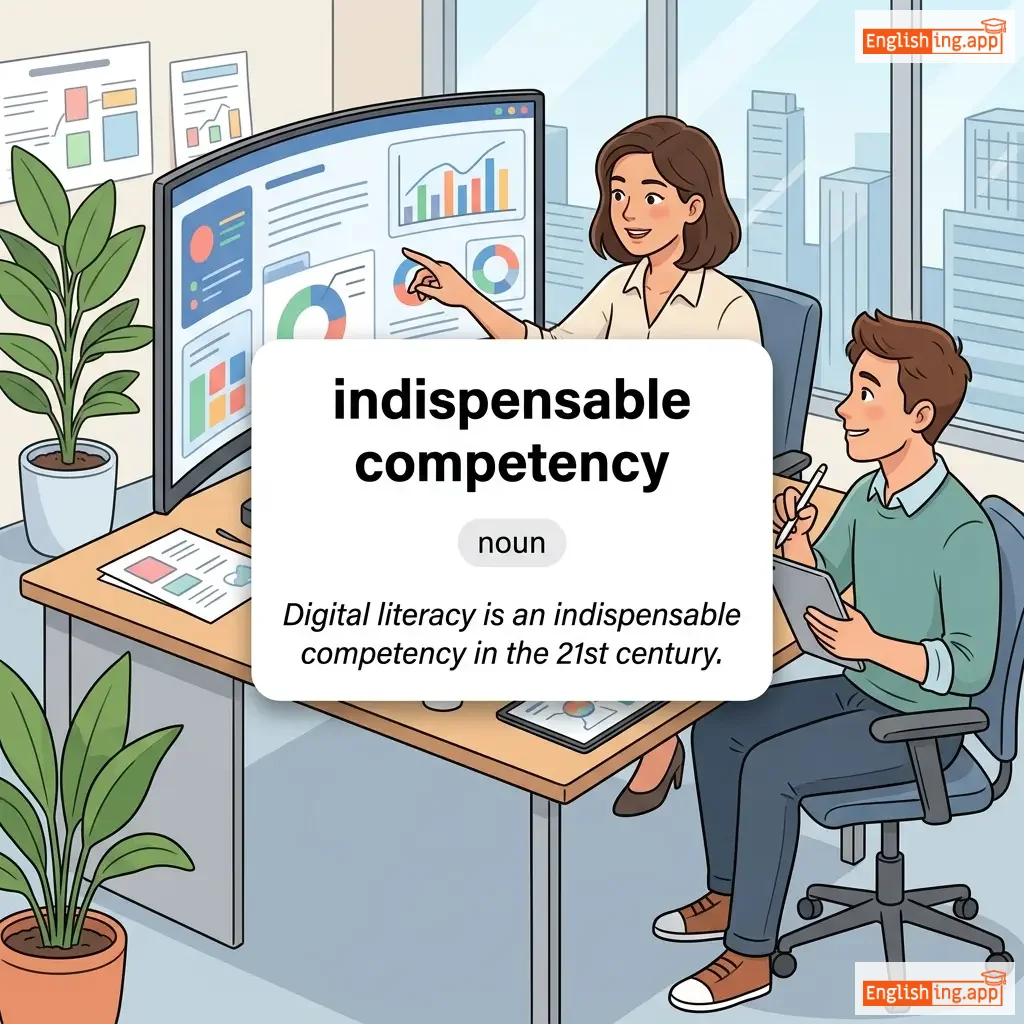
indispensable competency definition card — visual illustration of the meaning
noun
ˌɪndɪˈspensəbl̩ ˈkɒmpɪtənsi
不可欠な能力 (fukaketsu na nōryoku)

Essential skill or ability that cannot be done without; a crucial capability that is absolutely necessary.

"Digital literacy is an indispensable competency in the 21st century."

"デジタルリテラシーは21世紀のインディスペンセブルなコンピテンスです。" (Dejitaru riterashī wa 21 seiki no indisupeinseruburu na konpiteansu desu.)
indispensable support definition card — visual illustration of the meaning
noun
ˌɪndɪˈspensəbl səˈpɔːrt
欠かせないサポート (kakase nai sapōto)

Essential assistance that cannot be done without; absolutely necessary help.

"Volunteers provide indispensable support to communities."

"ボランティアはコミュニティに欠かせないサポートを提供しています。" (Borantia wa komyuniti ni kakase nai sapōto o teikyō shiteimasu.)
adjective
/ˌɪndɪˈspjuːtəbl/
議論の余地がない (giron no yochi ga nai)

Impossible to doubt or question; certain.

"It is an indisputable fact that the earth orbits the sun."

"地球が太陽の周りを回るのは議論の余地がない事実です。" (Chikyū ga taiyō no mawari o mawaru no wa giron no yochi ga nai jijitsu desu.)
adjective
/ˌɪndɪˈsɒljʊbl/
解消できない (Kaishou dekinai)

Unable to be destroyed, broken, or dissolved.

"Marriage was once considered an indissoluble bond."

"結婚はかつて解消できない絆と見なされていました。" (Kekkon wa katsute kaishou dekinai kizuna to minasareremashita.)
adjective
/ˌɪndɪˈstɪŋkt/
不明瞭な (fumiryōna)

Not clear or sharply defined; vague or blurred.

"The sound of voices was indistinct in the distance."

"遠くからの声は不明瞭でした。" (Tōku kara no koe wa fumiryō deshita.)
verb
/ɪnˈdaɪt/
作詞する (sakushisuru)

To write or compose (literary or formal works).

"The poet indited a heartfelt sonnet."

"詩人は心のこもったソネットを作詞した。" (Shijin wa kokoro no komotta sonetto o sakushi shita.)
adjective
/ˌɪndɪˈvɜːrtɪbəl/

Not able to be turned aside or diverted.

"The judge's indivertible attention was on the case."

noun/adjective
/ˌɪndɪˈvɪdʒuəl/
個人 (kojin)

A single human being as distinct from a group; relating to one person.

"Each individual has the right to freedom of speech."

"各個人には表現の自由がある。" (Kaku kojin ni wa hyōgen no jiyū ga aru.)
adjective
/ˌɪndɪˈvɪzəbl/

Not able to be divided or separated.

"The country's unity was indivisible despite differences."

verb
/ɪnˈdɒktrɪˌneɪt/
教義を押し付ける (kyōgi o oshitsukeru)

To teach someone to fully accept a set of beliefs or ideas without question.

"The regime tried to indoctrinate the youth with propaganda."

"その政権は宣伝を通じて若者を洗脳しようとした。" (Sono seiken wa senden o tōjite wakamono o sennō shiyō to shita.)
noun
/ˈɪndələns/
怠惰 (taida)

Avoidance of activity or exertion; laziness.

"His indolence kept him from finishing the project on time."

"彼の怠惰は彼が時間通りにプロジェクトを完成させるのを妨げました。" (kare no taida wa kare ga jikan dōri ni purojekuto o kansei saseru no o samatage mashita.)
indolent definition card — visual illustration of the meaning
adjective
/ˈɪndələnt/
怠惰 (taida)

Wanting to avoid activity or exertion; lazy.

"The indolent cat slept in the sun all afternoon."

"怠惰な猫は午後ずっと太陽の下で寝ていました。" (Taida na neko wa gogo zutto taiyou no shita de neteimashita.)
indomitable definition card — visual illustration of the meaning
adjective
/ɪnˈdɒmɪtəbl/
不屈 (fukutsu)

Impossible to subdue or defeat.

"She had an indomitable spirit that inspired everyone."

"彼女は誰もが感動するような不屈の精神を持っていた。" (Kanojo wa daremo ga kandou suru youna fukutsu no seishin wo motte ita.)
adjective
/ˈɪn.dɔːr/
屋内の (okunai no)

situated, occurring, or used inside a building

"Indoor plants can improve air quality at home."

"屋内の植物は家の空気の質を改善できます。" (okunai no shokubutsu wa ie no kuuki no shitsu o kaizen dekimasu)
adverb
/ˌɪnˈdɔːrz/
屋内で (okunai de)

inside a building; within an enclosed space

"Because of the rain, everyone stayed indoors."

"雨のため、みんな屋内で過ごしました。" (ame no tame, minna okunai de sugoshimashita)
adjective
/ɪnˈdjuːbɪtəbl/
疑う余地がない (utagau yochi ga nai)

Impossible to doubt; unquestionable.

"It is indubitable that hard work leads to success."

"努力すれば成功に繋がることは疑う余地がない。" (Doryoku sureba seikou ni tsunagaru koto wa utagau yochi ga nai.)
adverb
/ɪnˈdjuːbɪtəbli/
疑いなく (utagai naku)

Without a doubt; certainly.

"She is indubitably the best candidate for the job."

"彼女は疑いなくその仕事の最良の候補者です。" (Kanojo wa utagai naku sono shigoto no sairyō no kōhosha desu.)
verb
/ɪnˈdjuːs/
誘発する (yūhatsu suru)

to cause or persuade someone to do something; to bring about a result

"The doctor induced sleep with a mild sedative."

"医師は軽い鎮静剤で睡眠を引き起こしました。" (Ishi wa karui chinseizai de suimin o hikiokoshimashita.)
noun
/ɪnˈdjuːsmənt/
誘因 (yōin)

something that persuades or encourages someone to do something

"The company offered a bonus as an inducement to employees."

"会社は従業員にインセンティブとしてボーナスを提供しました。" (Kaisha wa jūgyōin ni insentibu toshite bōnasu o teikyō shimashita.)
verb
/ɪnˈdʌkt/

to formally admit someone into a position, organization, or office

"She was inducted into the university's honor society."

adjective
/ɪnˈdʌktɪv/
帰納的 (kinō-teki)

characterized by the inference of general laws from particular instances; reasoning from specific cases to general principles

"The scientist used inductive reasoning to form a hypothesis."

"科学者は帰納的推論を使って仮説を立てました。" (Kagakusha wa kinō-teki suisoku o tsukatte kasetsu o tatemashita.)
verb
/ɪnˈdʌldʒ/
楽しむ (tanoshimu)

to allow oneself to enjoy something enjoyable, often excessively

"He indulged in a piece of chocolate cake after dinner."
"彼はディナーの後でチョコレートケーキの一切れを楽しんだ。" (Kare wa dinaa no ato de chokoreeto keeki no hitokire o tanoshinda.)
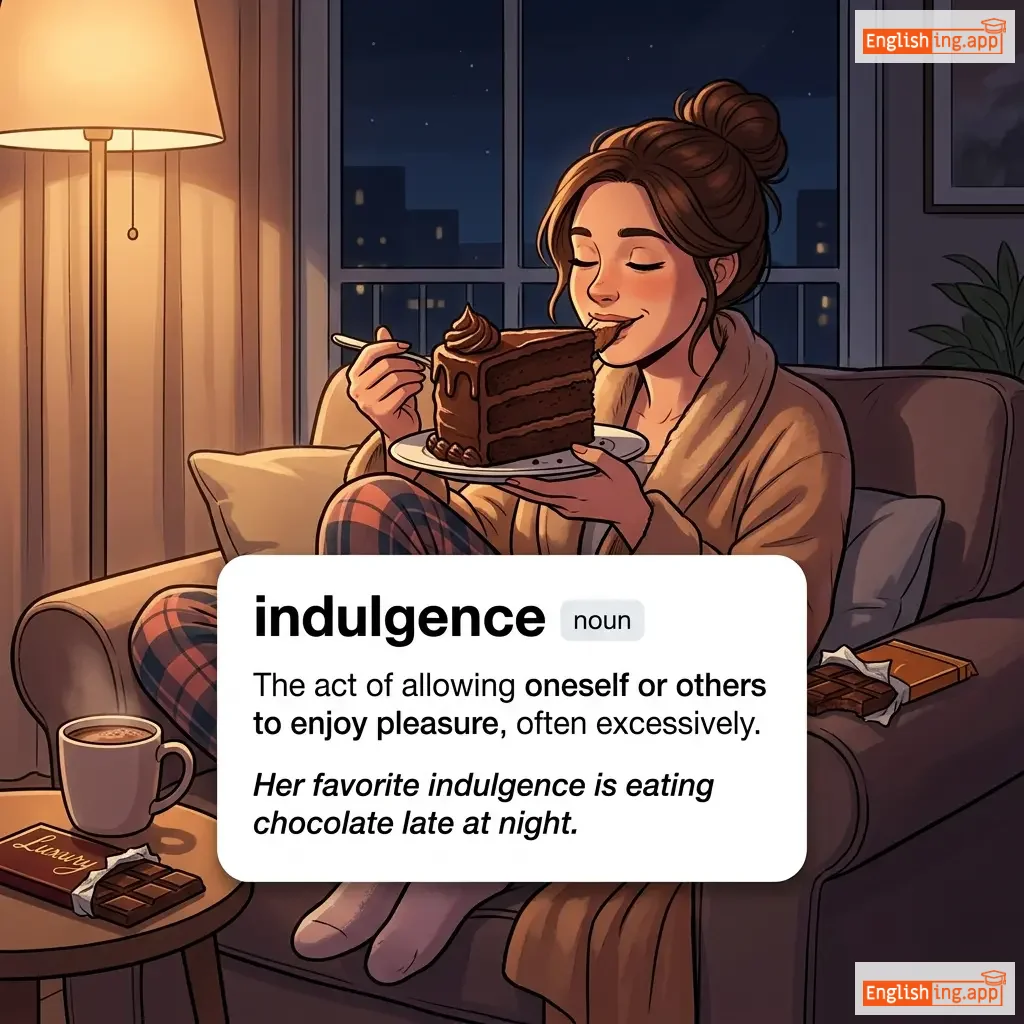
indulgence definition card — visual illustration of the meaning
noun
/ɪnˈdʌldʒəns/
享楽 (kyōraku)

The act of allowing oneself or others to enjoy pleasure, often excessively.

"Her favorite indulgence is eating chocolate late at night."

"彼女の好きな楽しみは夜遅くにチョコレートを食べることです。" (Kanojo no suki na tanoshimi wa yoru osoku ni chokorēto o taberu koto desu.)
adjective
/ɪnˈdʌldʒənt/
寛容な (kan'yō na)

Having a tendency to be overly generous or lenient with someone.

"The indulgent mother allowed her child to stay up late."

"寛容な母は子供を遅くまで起きていることを許しました。" (Kan'yō na haha wa kodomo o osoku made okite iru koto o yurushimashita.)
verb
/ˈɪndjʊˌreɪt/
硬化する (kōka suru)

To harden or make something physically or emotionally tough.

"Years of hardship indurated his spirit."

"長年の困難が彼の精神を鍛えました。" (Nagannen no konnan ga kare no seishin o kitaemashita.)