語彙集

英単語辞書 | 単語の意味、定義、例文

verb
/ɪnˈfɛkt/
感染させる (kansen saseru)

To contaminate with a disease-causing organism.

"The virus can infect healthy people quickly."

"ウイルスは健康な人々を迅速に感染させることができます。" (Uirusu wa kenko na hitobito o jinsoku ni kansen saseru koto ga dekimasu.)
noun
/ɪnˈfɛkʃən/
感染 (kansen)

The process of becoming infected with harmful microorganisms such as bacteria or viruses.

"The doctor prescribed antibiotics to treat the infection."

"医者は感染を治療するために抗生物質を処方した。" (Isha wa kansen o chiryo suru tame ni kōseibusshitsu o shohō shita.)
adjective
/ɪnˈfekʃəs/
感染性のある; 伝染する (kansensei no aru; densensuru)

capable of causing infection or disease; spreading easily from one person to another; able to spread feelings or attitudes such as enthusiasm

"Her infectious laughter made everyone in the room smile."

"彼女の感染力のある笑い声は皆を笑顔にした。" (kanojo no kansenryoku no aru waraigoe wa mina o egao ni shita)
adjective
/ˌɪnfəˈlɪsɪtəs/
不適切な (futekisetsu na)

not suitable or well chosen; awkward or unfortunate

"His infelicitous remark ruined the atmosphere of the meeting."
"彼の不適切な発言は会議の雰囲気を台無しにしました。" (Kare no futekisetsu na hatsugen wa kaigi no fun'iki o dainashi ni shimashita.)
🤔

infer

verb
/ɪnˈfɜːr/

to conclude or deduce something from evidence and reasoning rather than from explicit statements

"From his silence, I inferred that he was not happy with the decision."

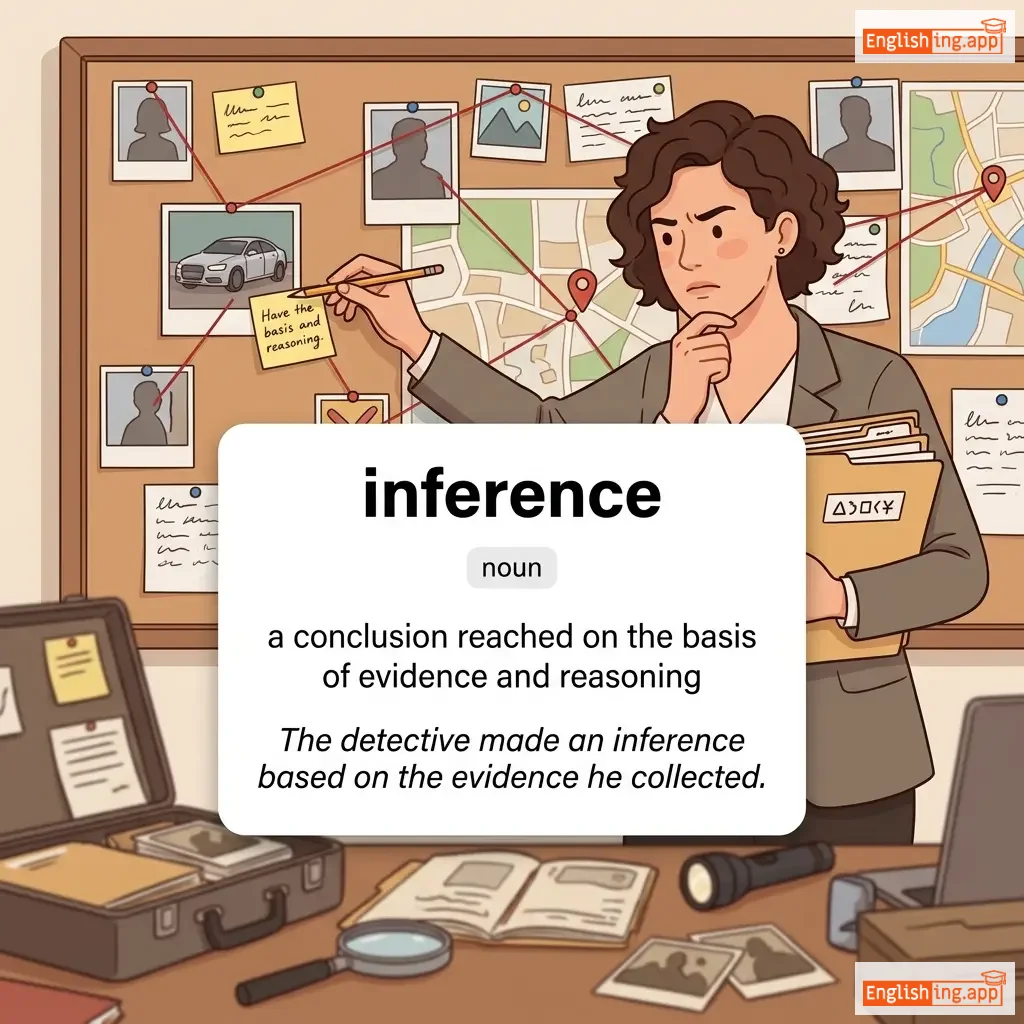
inference definition card — visual illustration of the meaning
noun
/ˈɪnfərəns/
推論 (suiron)

a conclusion reached on the basis of evidence and reasoning

"The detective made an inference based on the evidence he collected."

"探偵は集めた証拠に基づいて推論を行った。" (tantei wa atsumeta shouko ni motozuite suiron wo okonatta.)
adjective
/ɪnˈfɪə.ri.ər/
劣等 (rettou)

Of lower quality, rank, or status.

"This material is inferior to the one we used before."

"この素材は以前使ったものより劣っています。" (Kono sozai wa izen tsukatta mono yori rettotteimasu.)
adjective
/ɪnˈfɜːrnəl/
地獄の (jigoku no)

relating to hell; extremely troublesome or annoying

"The workers complained about the infernal noise from the construction site."

"労働者たちは建設現場からの地獄のような騒音について文句を言った。" (Rōdō-sha-tachi wa kensetsu genba kara no jigoku no yō na sōon ni tsuite monku o itta.)
noun
/ɪnˈfɜːrnoʊ/
火災 (kasai)

a large, intense fire that is dangerously out of control

"The building turned into an inferno within minutes."

"その建物は数分で火災に変わった。" (Sono tatemono wa suū-fun de kasai ni kawatta.)
verb
/ɪnˈfɛst/
侵入する (shin'nyū suru)

to overrun in large numbers, especially so as to cause damage or discomfort

"The old house was infested with rats."
"古い家はネズミで侵されていました。" (Furui ie wa nezumi de okosarete imashita.)
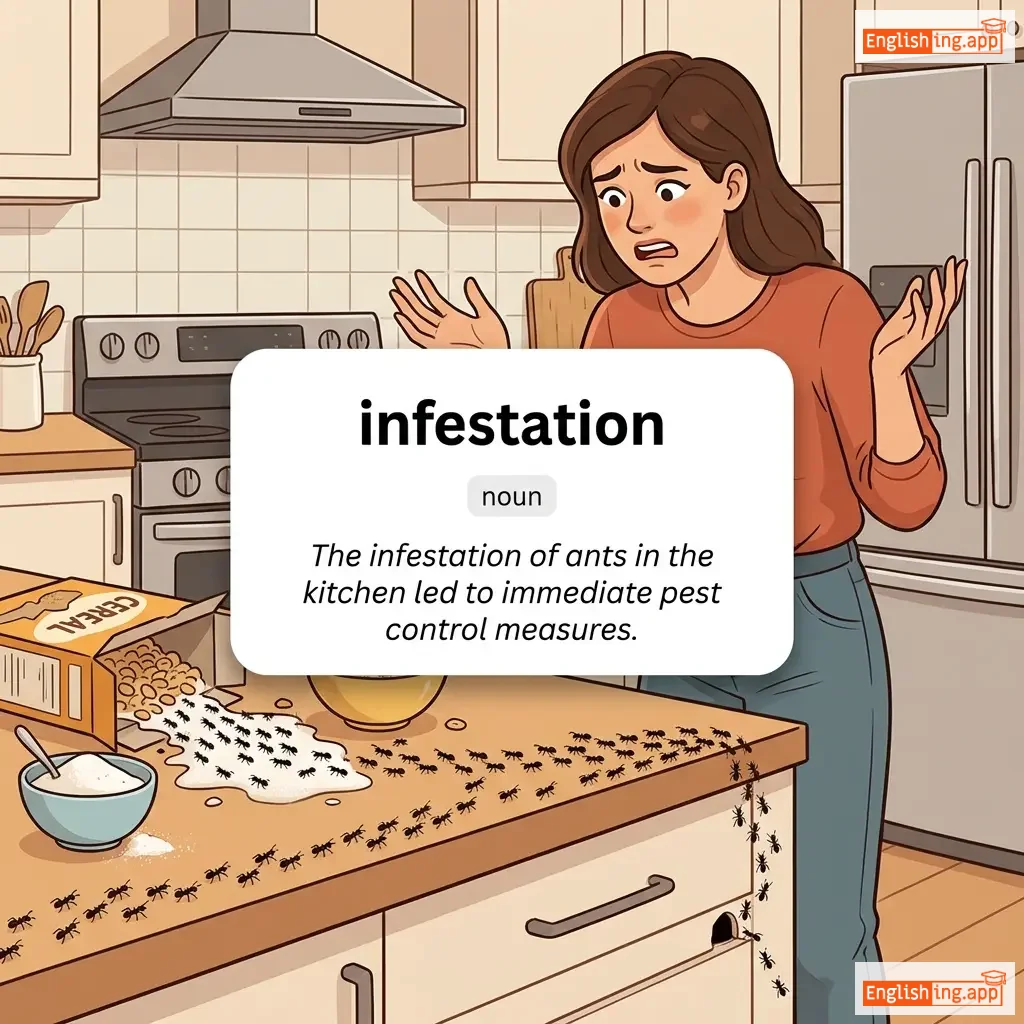
infestation definition card — visual illustration of the meaning
noun
ˌɪnfɛsˈteɪʃən
侵入, 異常に大量の昆虫や動物がある場所に存在すること (shinnyuu, ijou ni tairyou no konchuu ya doubutsu ga aru basho ni sonzai suru koto)

The presence of an unusually large number of insects or animals in a place, causing damage or disease.

"The infestation of ants in the kitchen led to immediate pest control measures."

"キッチンにおけるアリの侵入は、即座に害虫駆除対策を講じる結果となった。" (Kitchin ni okeru ari no shinnyuu wa, sokuzani gaichuu kujo taisaku o koujiru kekka to natta.)
noun
/ˈɪnfɪdɛl/
不信者 (fushin-sha)

a person who does not believe in a particular religion or faith

"In medieval times, people often called non-Christians infidels."

"中世では、人々はしばしば非キリスト教徒を不信者と呼んでいた。" (Chūsei de wa, hitobito wa shibashiba hi kirisutokyōto o fushin-sha to yonde ita.)
noun
/ˌɪnfɪˈdɛləti/
不倫 (furin)

the act of being unfaithful to a spouse or partner

"Their marriage ended due to his infidelity."

"彼らの結婚は彼の不倫が原因で終わった。" (Karera no kekkon wa kare no furin ga gen'in de owatta.)
verb
/ˈɪnfɪltreɪt/
浸透 (shintō)

to secretly enter or gain access to a place or group

"The spies managed to infiltrate the enemy base."
"スパイたちは敵基地に infiltrate できた。" (Supai-tachi wa teki kichi ni infiltrate dekita.)
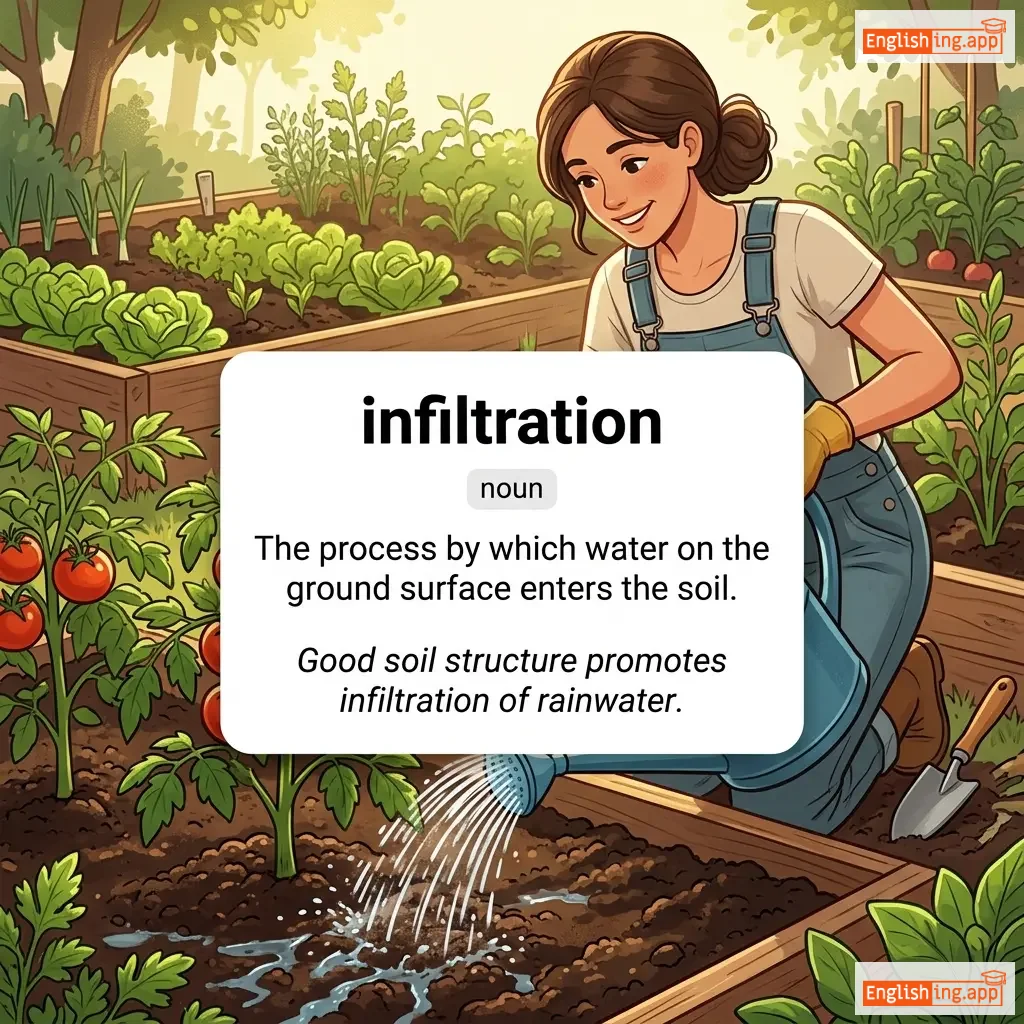
infiltration definition card — visual illustration of the meaning
noun
/ˌɪn.fɪlˈtreɪ.ʃən/
浸透 (infirutoreeshon)

The process by which water on the ground surface enters the soil.

"Good soil structure promotes infiltration of rainwater."

"適切な土壌構造は雨水の浸透を促進する。" (good soil structure promotes infiltration of rainwater)
adjective
/ˈɪnfɪnɪt/
無限 (mugen)

limitless or endless in space, extent, or number

"The universe is often described as infinite."

"宇宙はしばしば無限だと説明されます。" (Uchū wa shibashiba mugen da to setsumei saremasu.)
adjective
/ˌɪnfɪnɪˈtɛsɪməl/
微細な (bisai na)

Extremely small in size or amount; so tiny as to be almost negligible.

"The error was so infinitesimal that it didn’t affect the results."

"そのエラーは非常に微細で、結果に影響を与えることはありませんでした。" (Sono erā wa hijō ni bisai de, kekka ni eikyō o ataeru koto wa arimasen deshita.)
noun
/ɪnˈfɪnɪti/
無限 (mugen)

A concept describing something without any limit or end.

"The universe seems to stretch into infinity."

"宇宙は無限に広がっているように見える。" (uchū wa mugen ni hirogatte iru yō ni mieru.)
adjective
/ɪnˈfɜːm/
虚弱 (kyojaku)

Weak, especially due to old age or illness.

"The infirm old man needed assistance to walk."

"その虚弱な老人は歩くために助けが必要でした。" (Sono kyojaku na rōjin wa aruku tame ni tasuke ga hitsuyō deshita.)
adjective
/ˌhæpi ɡoʊ ˈlʌki/
おおらかで、気楽な、無頓着な (ōraka de, kirakuna, mutōchakuna)

cheerfully unconcerned about the future; carefree

"She has a happy-go-lucky attitude and never worries about tomorrow."
"彼女はハピゴーラッキーな態度を持っており、明日のことを心配することはありません。" (Kanojo wa hapigōrakkī na taido o motte ori, ashita no koto o shinpai suru koto wa arimasen.)
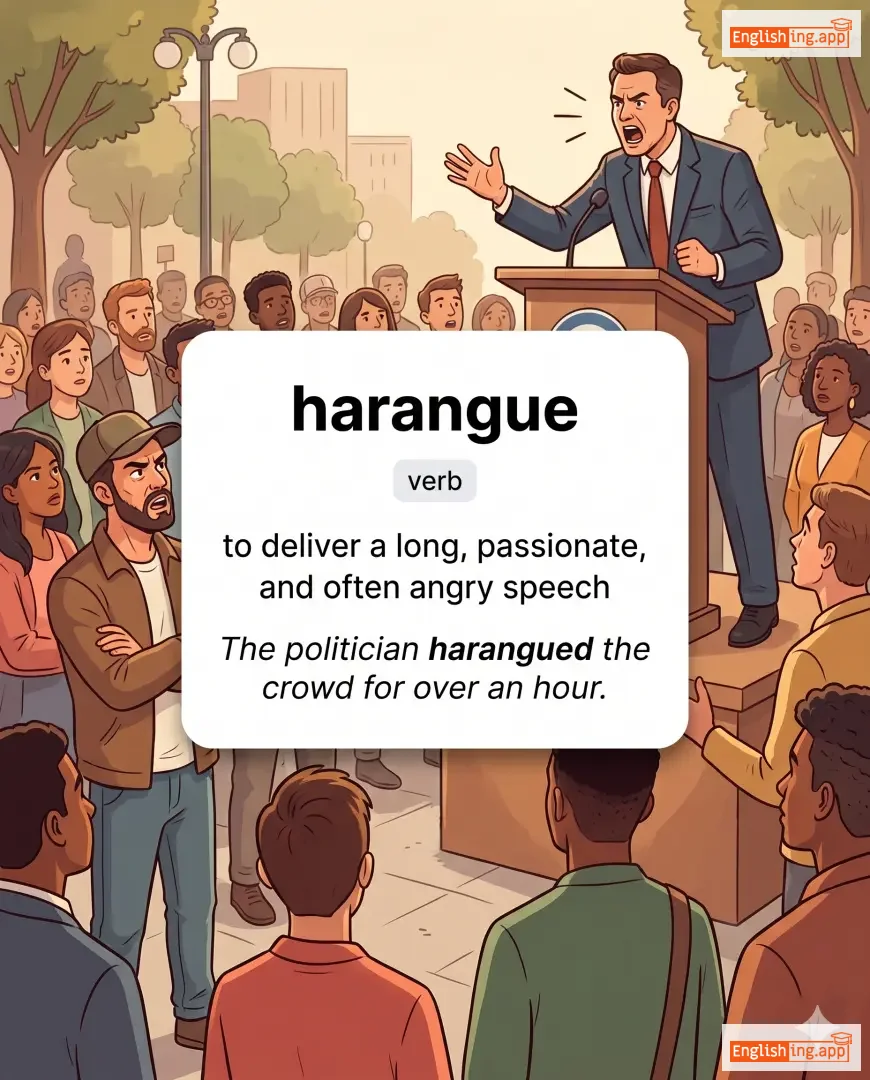
harangue definition card — visual illustration of the meaning
verb
/həˈræŋ/
長く情熱的な演説をする (nagaku jōnetsuteki na enzetsu o suru)

to deliver a long, passionate, and often angry speech

"The politician harangued the crowd for over an hour."

"政治家は群衆に一時間以上も演説をしました。" (Seijika wa gunshū ni ichijikan ijō mo enzetsu shimashita.)
verb
/həˈræs/

to annoy or trouble someone repeatedly in an aggressive or persistent way

"The journalist claimed she was being harassed online."

noun
/həˈræsmənt/
嫌がらせ (iyagarase)

aggressive pressure or intimidation; unwanted and repeated behavior causing discomfort

"The company has a strict policy against workplace harassment."

"その会社には職場でのハラスメントに対する厳しいポリシーがあります。" (Sono kaisha ni wa shokuba de no harasumento ni taisuru kibishii porishī ga arimasu.)
noun
/ˈhɑːrbɪndʒər/
前触れ (maebure)

a person or thing that announces or signals the approach of another

"The sudden drop in temperature was a harbinger of winter."
"気温の急激な低下は冬の前触れでした。" (Kion no kyūgeki na teika wa fuyu no maebure deshita.)
noun, verb
/ˈhɑːrbər/

noun: a place on the coast where ships may find shelter; verb: to keep (a thought or feeling, often negative) in one's mind

"He continued to harbor resentment towards his former boss."

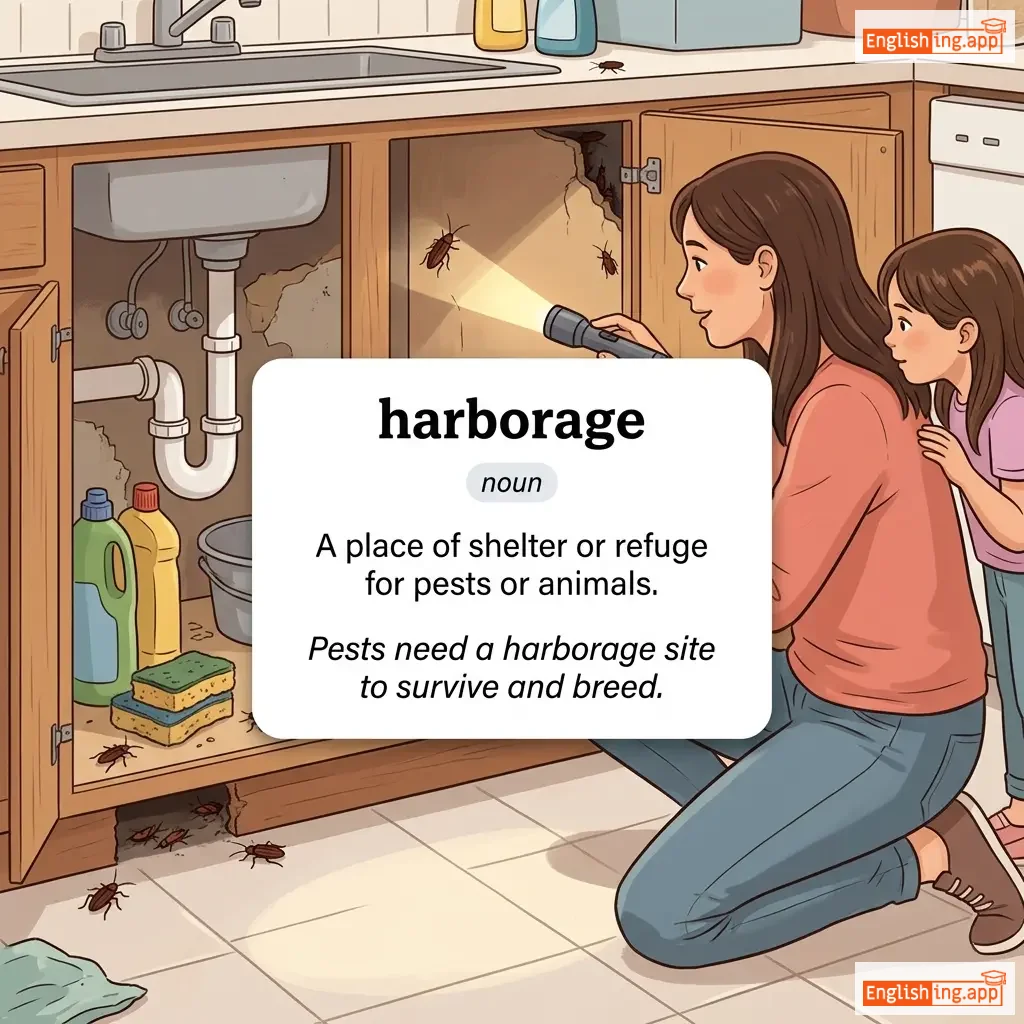
harborage definition card — visual illustration of the meaning
noun
ˈhɑːrbərɪdʒ
避難所 (hinanjo)

A place of shelter or refuge for pests or animals.

"Pests need a harborage site to survive and breed."

"害虫は生き残り、繁殖するために避難所が必要です。" (Gaichū wa ikinokori, hanshoku suru tame ni hinanjo ga hitsuyōdesu.)
noun
/ˈhɑːr.bər/
(minato)

a place on the coast where vessels may find shelter; a place of safety or refuge

"The fishing boats returned safely to the harbour before the storm hit the coastline."

"漁船は嵐が海岸を襲う前に安全に港に戻りました。" (Gyosen wa arashi ga kaigan o osou mae ni anzen ni minato ni modorimashita.)
adjective
/hɑːrd/
硬い (katai)

solid, firm, or difficult to do or endure

"The exam was very hard for most students."

"試験はほとんどの学生にとって非常に難しかった。" (Shiken wa hotondo no gakusei ni totte hijou ni muzukashikatta.)
adjective
/ˌhɑːrdˈbɪtn̩/
頑固で経験豊富 (ganko de keiken hōfu)

tough and experienced, not easily affected by emotions or hardship

"The hard-bitten detective showed no sign of surprise at the crime scene."

"その経験豊富な探偵は犯罪現場で驚きの兆候を見せませんでした。" (Sono keiken hōfu na tantei wa hanzai genba de odoroki no chōkō o misemasen deshita.)
adjective
/ˌhɑːrdˈhɑːrtɪd/
冷徹 (reitetu)

showing no kindness or sympathy; cruel

"The landlord was hard-hearted and refused to help the poor family."

"家主は冷徹で、貧しい家族を助けることを拒否しました。" (Yaju wa reitetu de, mazushī kazoku o tasukeru koto o kyohi shimashita.)
noun
/ˈhɑːdɪhʊd/
勇気、大胆さ (yūki, daitansa)

Courage, boldness, or daring behavior; also physical robustness.

"The mountaineer's hardihood impressed the entire team."

"登山家のハーディフッドはチーム全体を感動させました。" (Tōzanka no hādifuddo wa chīmu zentai o kandō saseshimashita.)
adverb
/ˈhɑːrdli/
ほとんどない (hotondo nai)

almost not; scarcely

"She could hardly believe her eyes."

"彼女は目を信じることができなかった。" (Kanojo wa me wo shinjiru koto ga dekinakatta.)
noun
/ˈhɑːrd.ʃɪp/
困難、苦難 (konnan, kunan)

severe suffering or privation; difficulty or distress

"Despite facing many hardships during the war, the family remained united and hopeful."

"戦争中に多くの困難に直面したにもかかわらず、家族は団結して希望に満ちていました。" (Sensou-chuu ni ooku no konnan ni chokumen shita ni mo kakawarazu, kazoku wa danketsu shite kibou ni michite imashita.)
noun
/ˈhɑːrdˌwɛr/
ハードウェア (hardware)

the physical parts of a computer or electronic system, such as the monitor, keyboard, and processor

"The company upgraded its computer hardware to improve performance."

"会社はパフォーマンスを向上させるためにコンピュータのハードウェアをアップグレードしました。" (Kaisha wa pafōmansu o kōjōsaseru tame ni konpyūta no hādowea o appurēdo shimashita.)
adjective
/ˈhɑːrdi/
頑丈, 強健 (ganjou, kyouken)

Strong, robust, and capable of enduring difficult conditions.

"Hardy plants can survive the harsh winter."
"頑丈な植物は厳しい冬を生き抜くことができます。" (Ganjou na shokubutsu wa kibishii fuyu wo ikinuku koto ga dekimasu.)
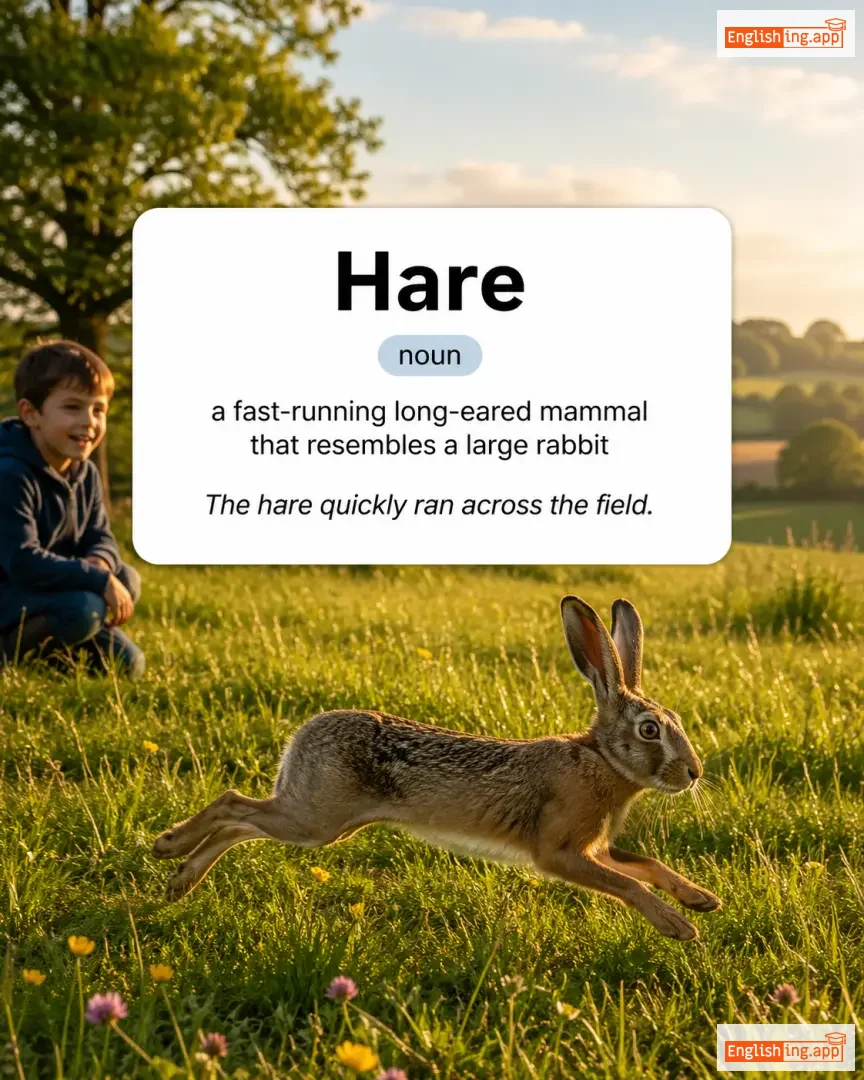
Hare definition card — visual illustration of the meaning
noun
/heə(r)/
野ウサギ (no usagi)

a fast-running long-eared mammal that resembles a large rabbit

"The hare quickly ran across the field."

"その野ウサギはフィールドを素早く走りました。" (Sono no usagi wa fīrudo o subayaku hashirimashita)
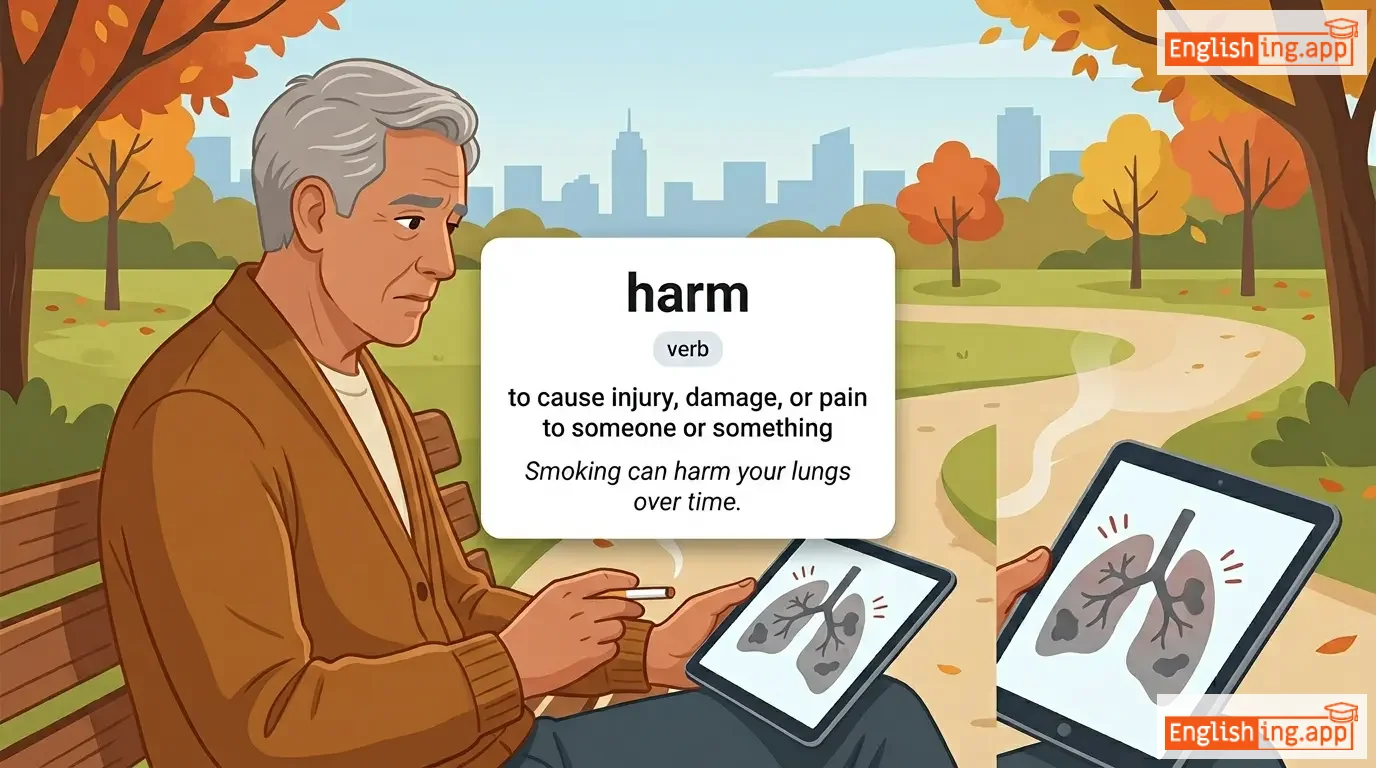
harm definition card — visual illustration of the meaning
verb
/hɑːrm/
(gai)

to cause injury, damage, or pain to someone or something

"Smoking can harm your lungs over time."

"喫煙は時間が経つにつれてあなたの肺に害を与える可能性があります。" (Kitsuen wa jikan ga tatsu ni tsurete anata no hai ni gai o ataeru kanousei ga arimasu.)
adjective
/ˈhɑːrmfəl/
有害な (yūgaina)

causing or likely to cause harm; damaging

"Smoking is harmful to your health."

"喫煙は健康に有害です。" (Kitsuen wa kenko ni yūgaina desu.)
adjective
/ˈhɑːrmləs/
無害な; 無実の; 安全な (mugai na; mujitsu no; anzen na)

not able or likely to cause harm; innocent; safe

"The snake looks dangerous but it's actually harmless."
"ヘビは危険に見えるが、実際には無害だ。" (Hebi wa kiken ni mieru ga, jissai ni wa mugai da.)
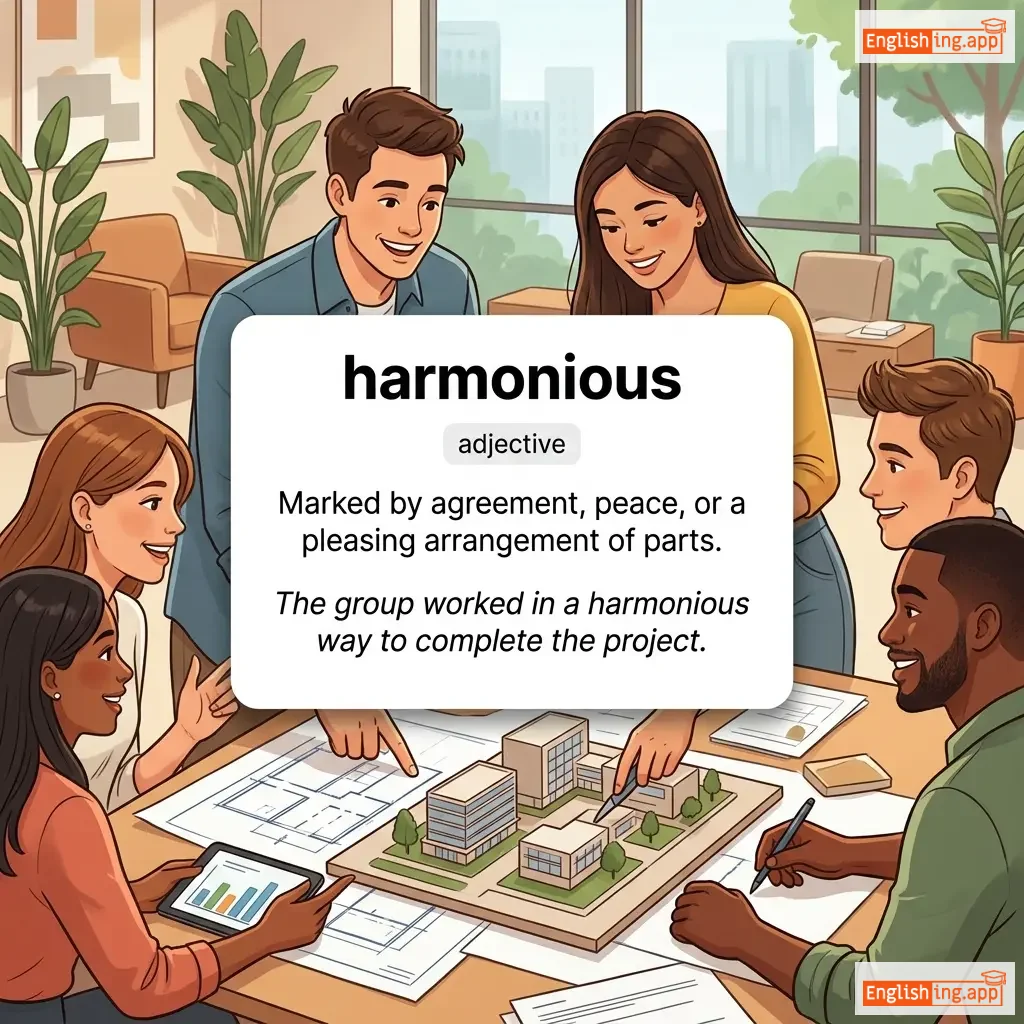
harmonious definition card — visual illustration of the meaning
adjective
/hɑːrˈmoʊniəs/
調和のとれた, 和やか (chouwa no toreta, nagoyaka)

Marked by agreement, peace, or a pleasing arrangement of parts.

"The group worked in a harmonious way to complete the project."
"グループはプロジェクトを完了するために調和のとれた方法で働きました。" (Gurūpu wa purojekuto o kanryou suru tame ni chouwa no toreta hōhō de hatarakimashita.)
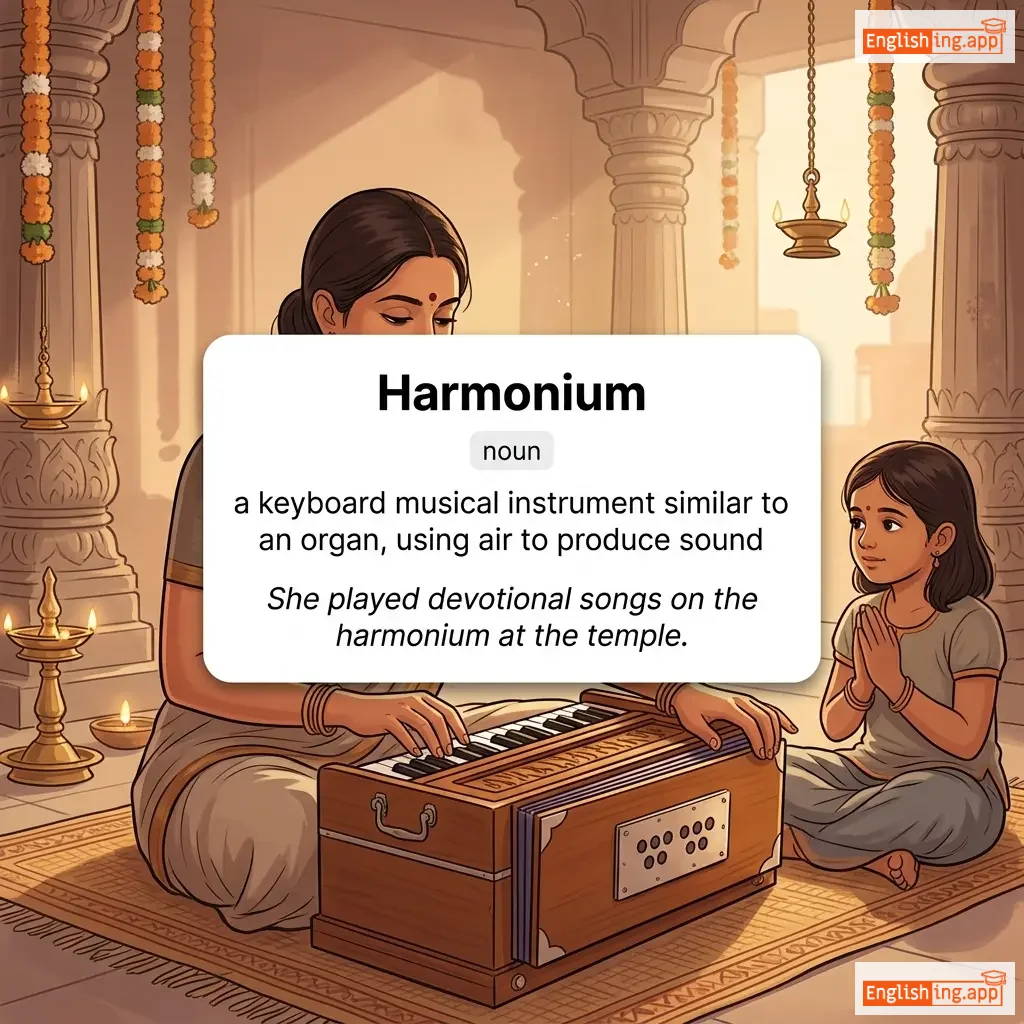
Harmonium definition card — visual illustration of the meaning
noun
/hɑrˈmoʊniəm/
ハーモニウム (haamonium)

a keyboard musical instrument similar to an organ, using air to produce sound

"She played devotional songs on the harmonium at the temple."

"彼女は寺院でハーモニウムを使って祈りの歌を演奏した。" (Kanojo wa jiin de haamonium o tsukatte inori no uta o ensou shita.)
harmonization definition card — visual illustration of the meaning
noun
/ˌhɑːmənaɪˈzeɪʃən/
調和、統一 (chouwa, touitsu)

The process of making things compatible or consistent with one another.

"The harmonization of different policies ensures consistent results."
"異なる方針の調和は一貫した結果を保証します。" (Kotonaru houshin no chouwa wa ikkanshita kekka wo hoshou shimasu.)
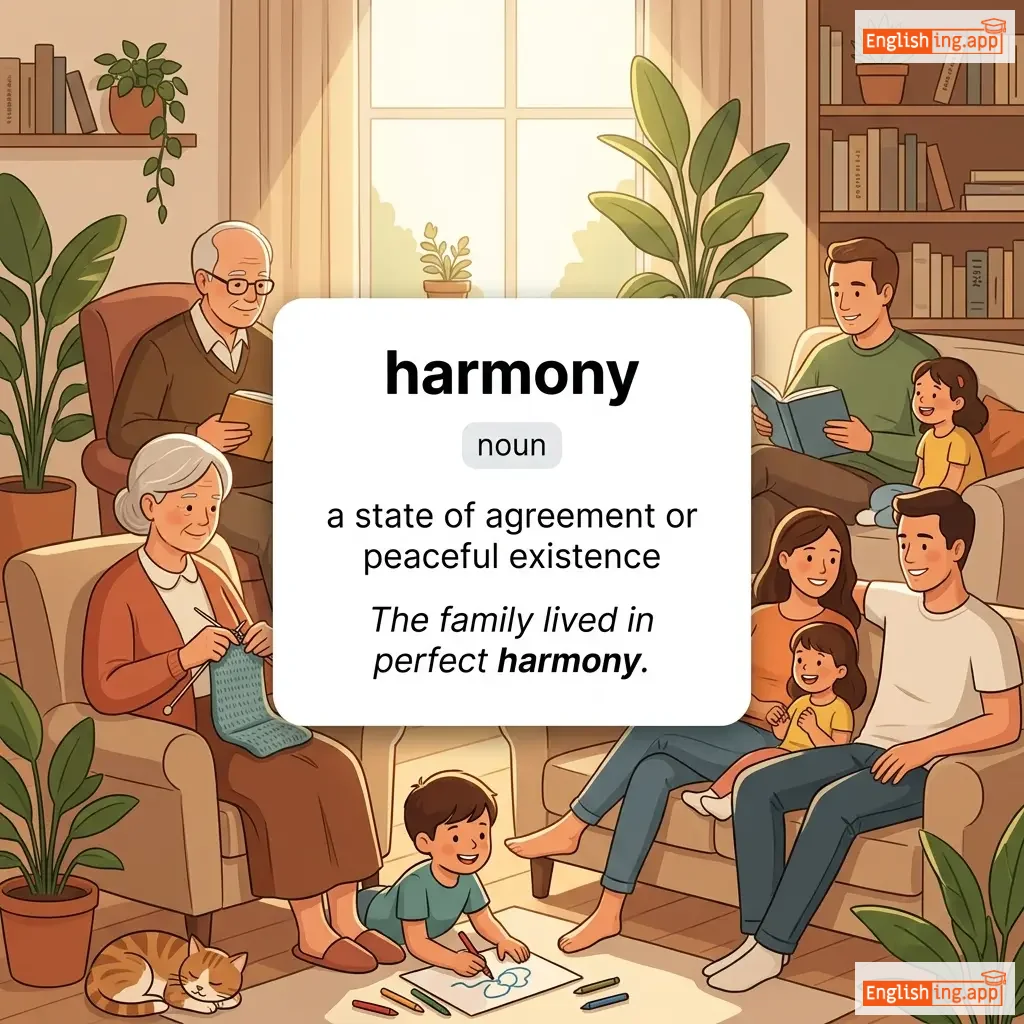
harmony definition card — visual illustration of the meaning
noun
/ˈhɑːrməni/
調和 (chouwa)

a state of agreement or peaceful existence

"The family lived in perfect harmony."

"その家族は完全な調和の中で暮らしていました。" (Sono kazoku wa kanzen na chouwa no naka de kurashite imashita.)
verb
/ˈhɑːrnɪs/

To control and make use of natural resources, especially energy.

"Scientists are working to harness solar power effectively."

Harp definition card — visual illustration of the meaning
verb
/hɑːrp/
繰り返し言う、文句を言う (kurikaeshi iu, monku wo iu)

To dwell on or complain about something persistently.

"He kept harping on the same mistake over and over."

"彼は同じ間違いについて繰り返し言っていた。" (Kare wa onaji machigai ni tsuite kurikaeshi itte ita.)
verb
/ˈhɑːrpɪŋ/
繰り返し不満を言う (kurikaeshi fuman o iu)

continuously talking or complaining about something in a tiresome way

"She kept harping on about the mistakes I made."

"彼女は私が犯した間違いについて繰り返し不満を言っていました。" (Kanojo wa watashi ga okashita machigai ni tsuite kurikaeshi fuman o itteimashita.)
adjective
/ˈhæriːd/
過労や絶え間ない干渉で緊張したりストレスを感じたりする (karou ya taemai kanshou de kinchou shitari sutoresu o kanjitari suru)

feeling strained or stressed due to being overworked or constantly bothered

"The harried teacher struggled to calm the noisy classroom."

"過労の教師は騒々しい教室を静めるのに苦労していました。" (Karo no kyoushi wa souzoushii kyoushitsu o shizumeru no ni kurou shite imashita.)
verb
/ˈhæroʊ/
苦しめる / すき (kurushimeru / suki)

to cause distress or torment; also to break up and smooth soil with a farm tool

"The tragic news harrowed the entire family."
"悲劇的なニュースは家族全員を苦しめました。" (Higeki-teki na nyūsu wa kazoku zen'in wo kurushimemashita.)
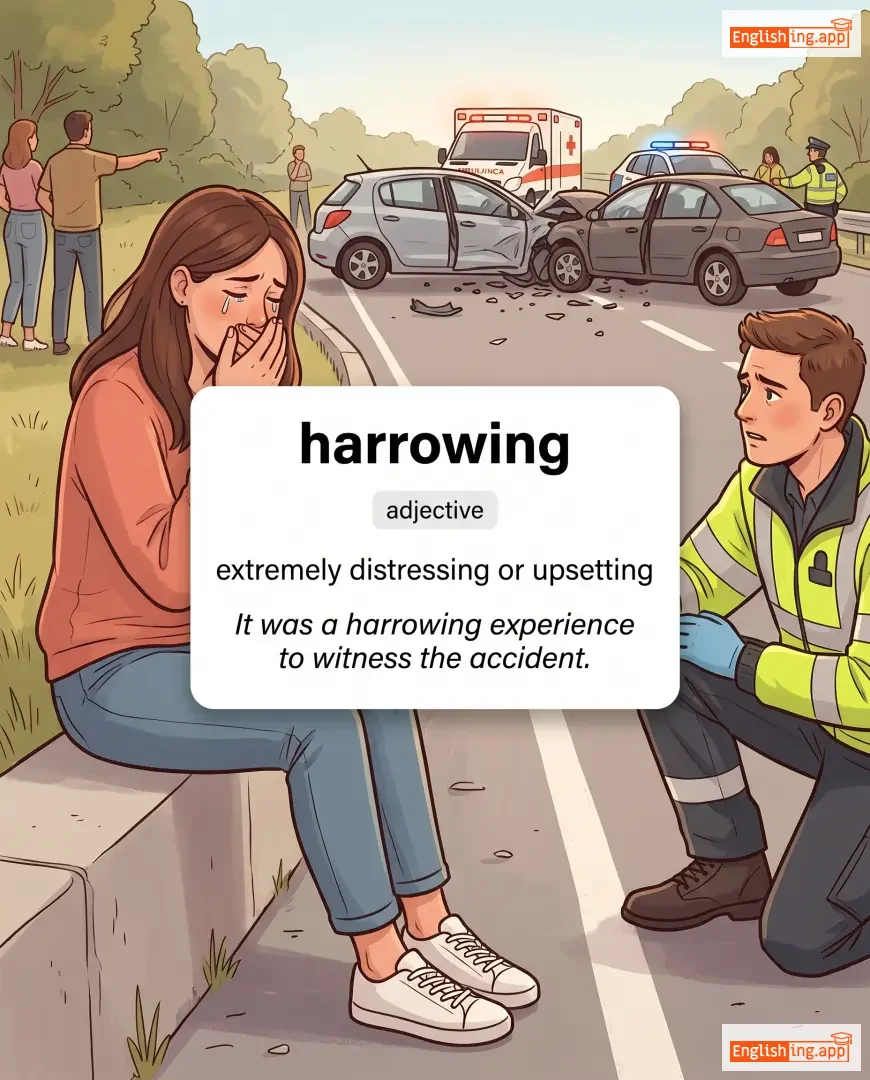
harrowing definition card — visual illustration of the meaning
adjective
/ˈhær.oʊ.ɪŋ/
恐ろしいと苦しみを伴う (osoroshii to kurushimi o tomonau)

extremely distressing or upsetting

"It was a harrowing experience to witness the accident."

"事故を目撃することは恐ろしい経験だった。" (Jiko o mokugeki suru koto wa osoroshii keiken datta.)
verb
/ˈhæri/
悩ます, 攻撃する (nayamasu, kougeki suru)

to constantly attack, harass, or annoy

"The army harried the enemy with sudden raids."

"軍隊は突然の襲撃で敵を攻撃した。" (Guntai wa totsuzen no shugeki de teki o kougeki shita.)