Словари

Словарь английского языка | Значения слов, определения и примеры

verb
/ɪnˈfɛkt/
инфицировать (infitsirovat)

To contaminate with a disease-causing organism.

"The virus can infect healthy people quickly."

"Вирус может быстро инфицировать здоровых людей." (Virus mozhet bystro infitsirovat' zdorovykh lyudey.)
noun
/ɪnˈfɛkʃən/
инфекция (infektsiya)

The process of becoming infected with harmful microorganisms such as bacteria or viruses.

"The doctor prescribed antibiotics to treat the infection."

"Доктор прописал антибиотики для лечения инфекции." (Doktor propisal antibiotiki dlya lecheniya infektsii.)
adjective
/ɪnˈfekʃəs/
заразный (zaraznyi)

capable of causing infection or disease; spreading easily from one person to another; able to spread feelings or attitudes such as enthusiasm

"Her infectious laughter made everyone in the room smile."

"Её заразительный смех заставил всех улыбнуться." (eyo zarazitelnyi smekh zastavil vsekh ulybnutsya)
adjective
/ˌɪnfəˈlɪsɪtəs/
неудачный (neudachny)

not suitable or well chosen; awkward or unfortunate

"His infelicitous remark ruined the atmosphere of the meeting."

"Его неудачное замечание испортило атмосферу встречи." (Ego neudachnoe zamechaniye isportilo atmosferu vstrechi.)
verb
/ɪnˈfɜːr/
делать вывод (delat' vyvod)

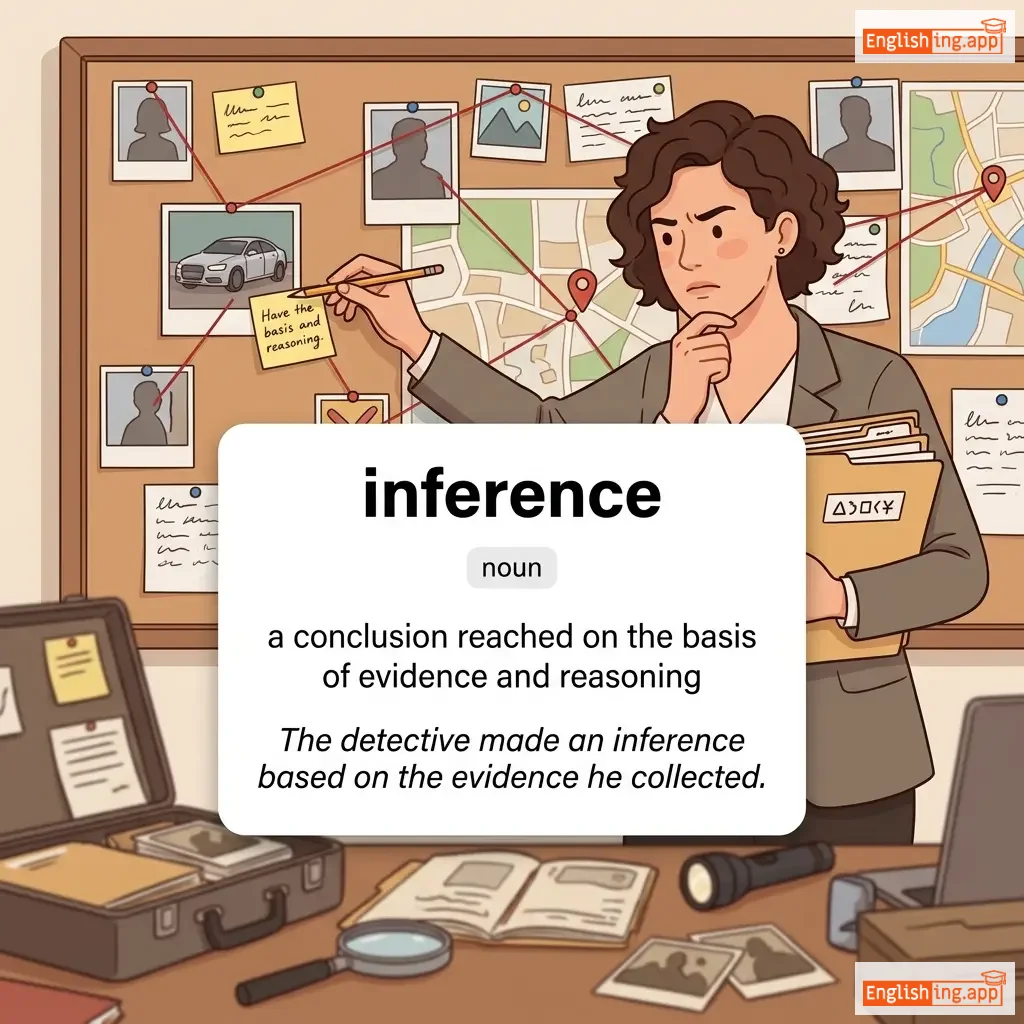
to conclude or deduce something from evidence and reasoning rather than from explicit statements

"From his silence, I inferred that he was not happy with the decision."
"Из его молчания я сделал вывод, что он не был доволен решением." (Iz ego molchaniya ya sdelal vyvod, chto on ne byl dovol'n s resheniem.)
inference definition card — visual illustration of the meaning
noun
/ˈɪnfərəns/
инференция (inference)

a conclusion reached on the basis of evidence and reasoning

"The detective made an inference based on the evidence he collected."

"Детектив сделал вывод на основе собранных им доказательств." (Detektiv sdelal vyvod na osnove sobrannykh im dokazatel'stv.)
adjective
/ɪnˈfɪə.ri.ər/
низший (nizhshiy)

Of lower quality, rank, or status.

"This material is inferior to the one we used before."

"Этот материал хуже того, который мы использовали раньше." (Etot material khuzhe togo, kotoryy my ispol'zovali ranshe.)
adjective
/ɪnˈfɜːrnəl/
адский (adskiy)

relating to hell; extremely troublesome or annoying

"The workers complained about the infernal noise from the construction site."

"Рабочие жаловались на адский шум с строительной площадки." (Rabochie zhalovalis' na adskiy shum s stroitel'noy ploshchadki.)
noun
/ɪnˈfɜːrnoʊ/
пожар (pozhár)

a large, intense fire that is dangerously out of control

"The building turned into an inferno within minutes."

"Здание превратилось в пожар за несколько минут." (Zdanie prevratilos' v pozhár za neskol'ko minut.)
verb
/ɪnˈfɛst/
заражать (zarazhat)

to overrun in large numbers, especially so as to cause damage or discomfort

"The old house was infested with rats."
"Старый дом был заражен крысами." (Staryy dom byl zaražen krysami.)
infestation definition card — visual illustration of the meaning
noun
ˌɪnfɛsˈteɪʃən
заражение, наличие необычно большого количества насекомых или животных в каком-либо месте (zarazhenie, naliichie neobychno bol'shogo kolichestva nasekomykh ili zhivotnykh v kakom-libo meste)

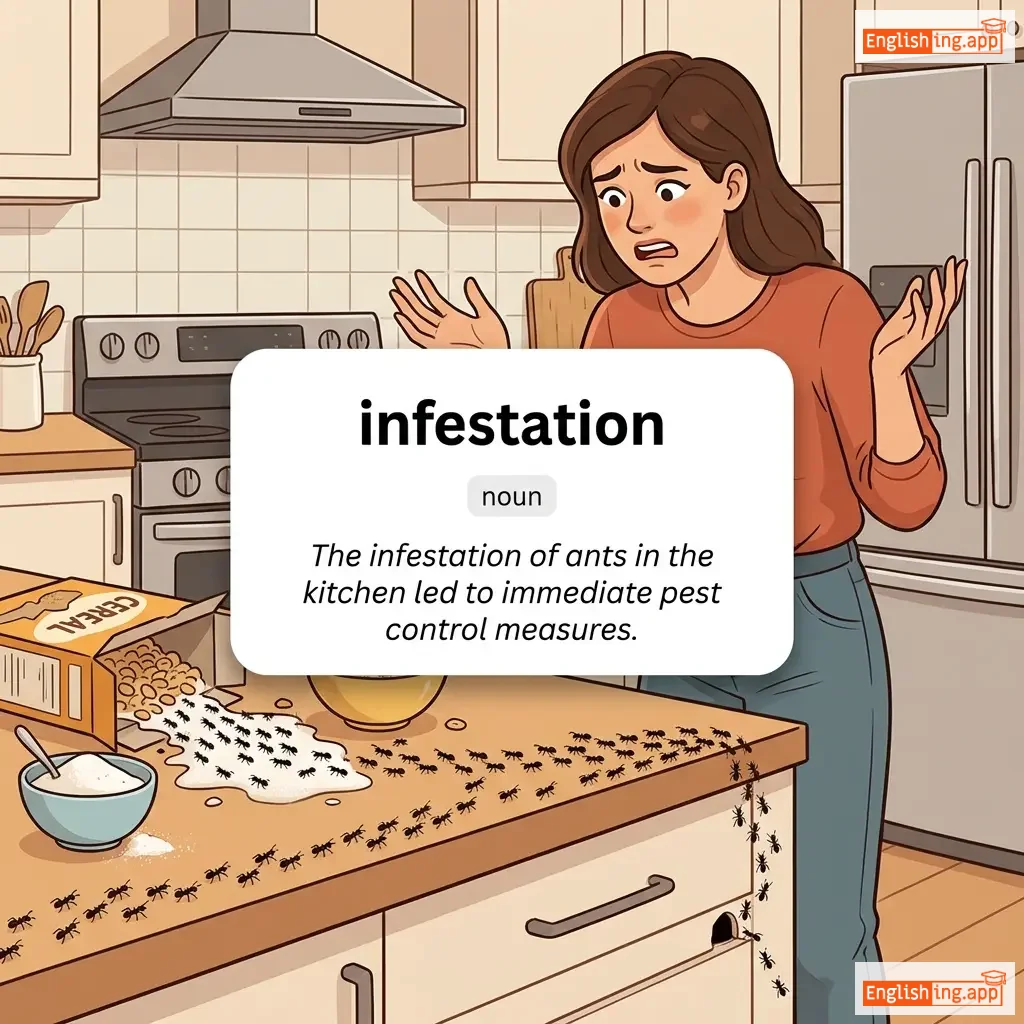
The presence of an unusually large number of insects or animals in a place, causing damage or disease.

"The infestation of ants in the kitchen led to immediate pest control measures."

"Заражение муравьями на кухне привело к немедленным мерам по борьбе с вредителями." (Zarazhenie muravyami na kukhne privedlo k nemedlennym meram po bor'be s vreditelyami.)
noun
/ˈɪnfɪdɛl/
неверующий (neveruyushchiy)

a person who does not believe in a particular religion or faith

"In medieval times, people often called non-Christians infidels."

"В Средние века люди часто называли неверующих неверными." (V Srednie veka lyudi chasto nazyvali neveruyushchikh nevernymi.)
noun
/ˌɪnfɪˈdɛləti/
неверность (nevernost)

the act of being unfaithful to a spouse or partner

"Their marriage ended due to his infidelity."

"Их брак закончился из-за его неверности." (Ih brak zakonchilsya iz-za ego nevernosti.)
verb
/ˈɪnfɪltreɪt/
инфильтровать (infil'trovat')

to secretly enter or gain access to a place or group

"The spies managed to infiltrate the enemy base."
"Шпионы смогли инфильтровать вражескую базу." (Shpiony smogli infiltrovat' vragovskuyu bazu.)
infiltration definition card — visual illustration of the meaning
noun
/ˌɪn.fɪlˈtreɪ.ʃən/
инфильтрация (infiltrayshun)

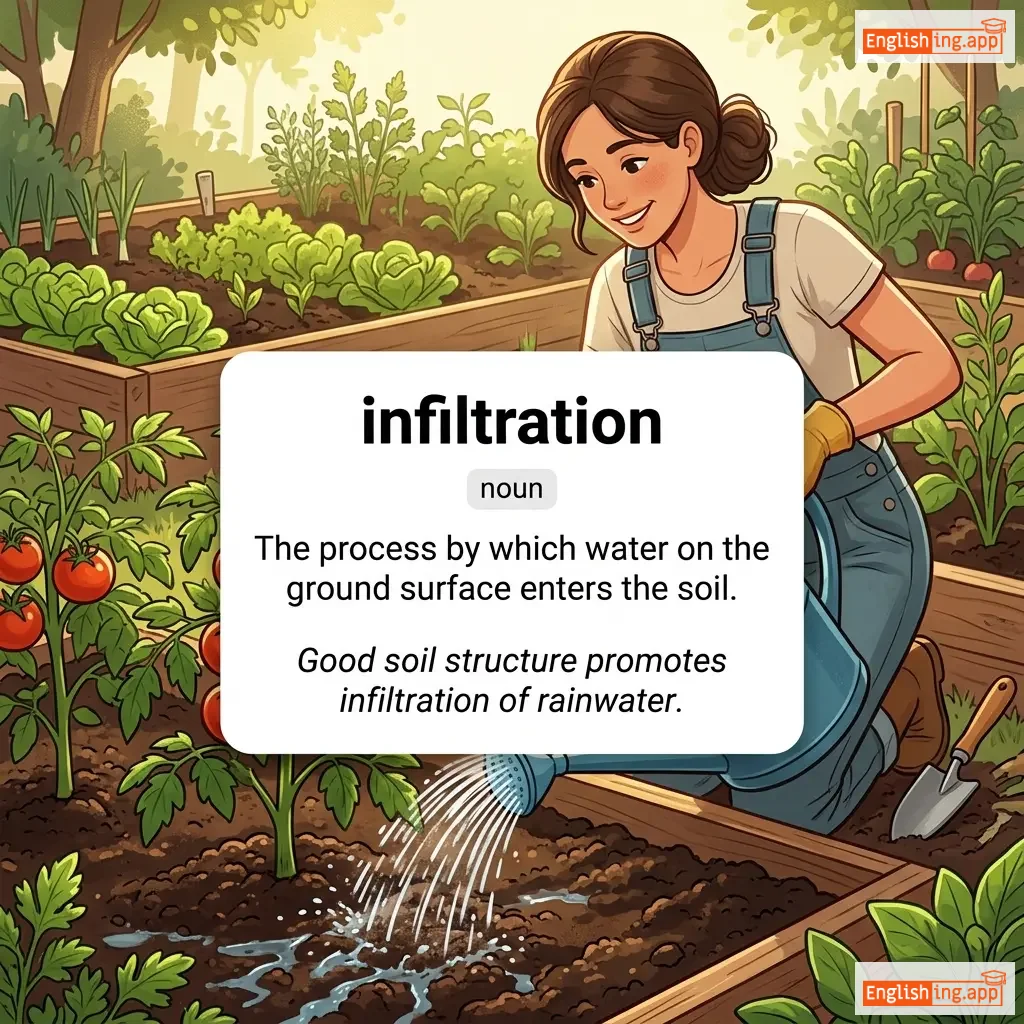
The process by which water on the ground surface enters the soil.

"Good soil structure promotes infiltration of rainwater."

"Хорошая структура почвы способствует инфильтрации дождевой воды." (Khoroshaya struktura pochvy sposobstvuyet infiltatsii dozhdevoy vody.)
adjective
/ˈɪnfɪnɪt/
бесконечный (beskonechny)

limitless or endless in space, extent, or number

"The universe is often described as infinite."

"Вселенная часто описывается как бесконечная." (Vselennaya chasto opisyvayetsya kak beskonechnaya.)
adjective
/ˌɪnfɪnɪˈtɛsɪməl/
инфинитезимальный (infinitesimalny)

Extremely small in size or amount; so tiny as to be almost negligible.

"The error was so infinitesimal that it didn’t affect the results."

"Ошибка была настолько инфинитезимальной, что она не повлияла на результаты." (Oshibka byla nastol'ko infinitesimal'noy, chto ona ne povliyala na rezul'taty.)
noun
/ɪnˈfɪnɪti/
бесконечность (beskonechnost)

A concept describing something without any limit or end.

"The universe seems to stretch into infinity."

"Вселенная, похоже, растягивается в бесконечность." (Vselennaya, pokhozhe, rastyagivayetsya v beskonechnost.)
adjective
/ɪnˈfɜːm/
слабый (slabyy)

Weak, especially due to old age or illness.

"The infirm old man needed assistance to walk."

"Старик был слишком слаб, чтобы ходить без помощи." (Starik byl slishkom slab, chtoby khodit' bez pomoshchi.)
adjective
/ˌhæpi ɡoʊ ˈlʌki/
беззаботный, расслабленный, без беспокойства (bezzabotny, rasslablenniy, bez bespokoystva)

cheerfully unconcerned about the future; carefree

"She has a happy-go-lucky attitude and never worries about tomorrow."
"У неё беззаботное отношение, и она никогда не переживает о завтрашнем дне." (U neyo bezzabotnoe otnoshenie, i ona nikogda ne perezhivayet o zavtrashnem dne.)
harangue definition card — visual illustration of the meaning
verb
/həˈræŋ/
выступать с длинной и яростной речью (vystupat s dlinnoi i yarostnoi rech'yu)

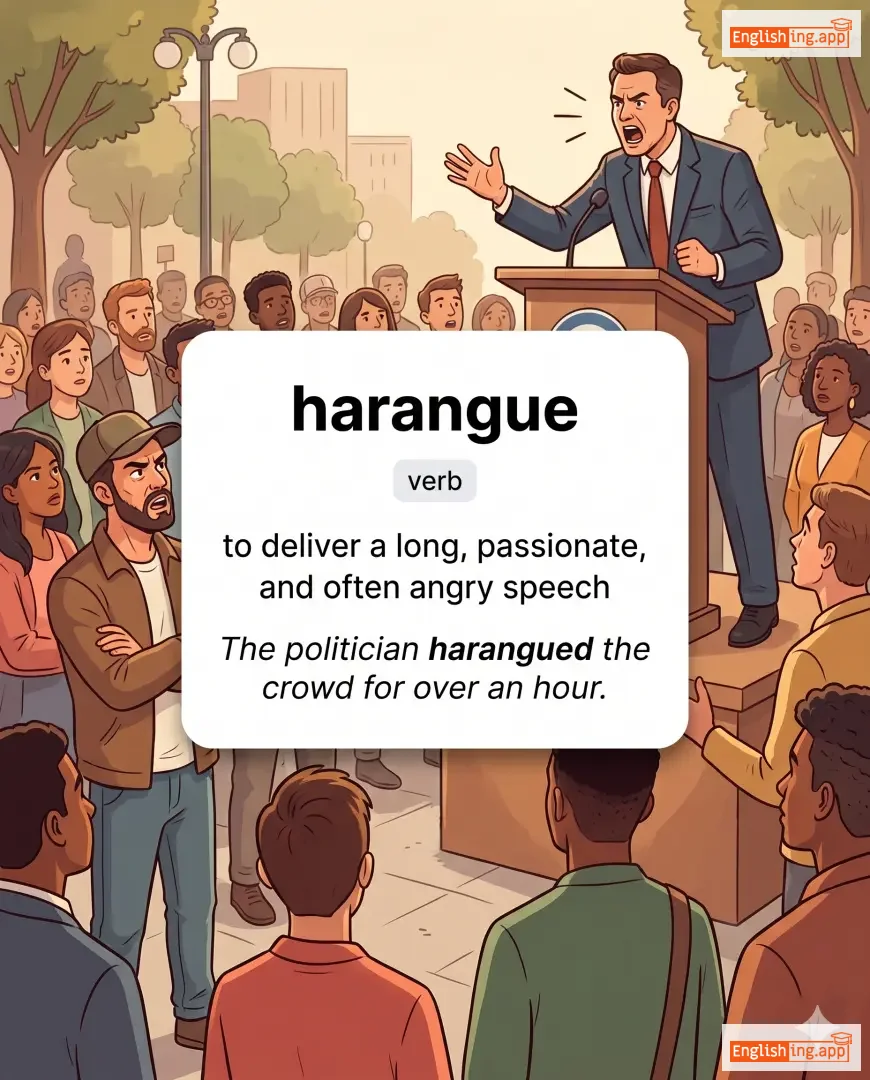
to deliver a long, passionate, and often angry speech

"The politician harangued the crowd for over an hour."

"Политик выступал перед толпой больше часа." (Politik vystupal pered tol'poy bol'she chasa.)
verb
/həˈræs/

to annoy or trouble someone repeatedly in an aggressive or persistent way

"The journalist claimed she was being harassed online."

noun
/həˈræsmənt/
домогательство (domogatiel'stvo)

aggressive pressure or intimidation; unwanted and repeated behavior causing discomfort

"The company has a strict policy against workplace harassment."

"Компания имеет строгую политику против домогательств на рабочем месте." (Kompaniya imeet stroguyu politiku protiv domogatel'stv na rabochem meste.)
noun
/ˈhɑːrbɪndʒər/
предвестие (predvestie)

a person or thing that announces or signals the approach of another

"The sudden drop in temperature was a harbinger of winter."

"Внезапное падение температуры было предвестием зимы." (Vnezapnoe padeniye temperatury bylo predvestiem zimy.)
noun, verb
/ˈhɑːrbər/

noun: a place on the coast where ships may find shelter; verb: to keep (a thought or feeling, often negative) in one's mind

"He continued to harbor resentment towards his former boss."
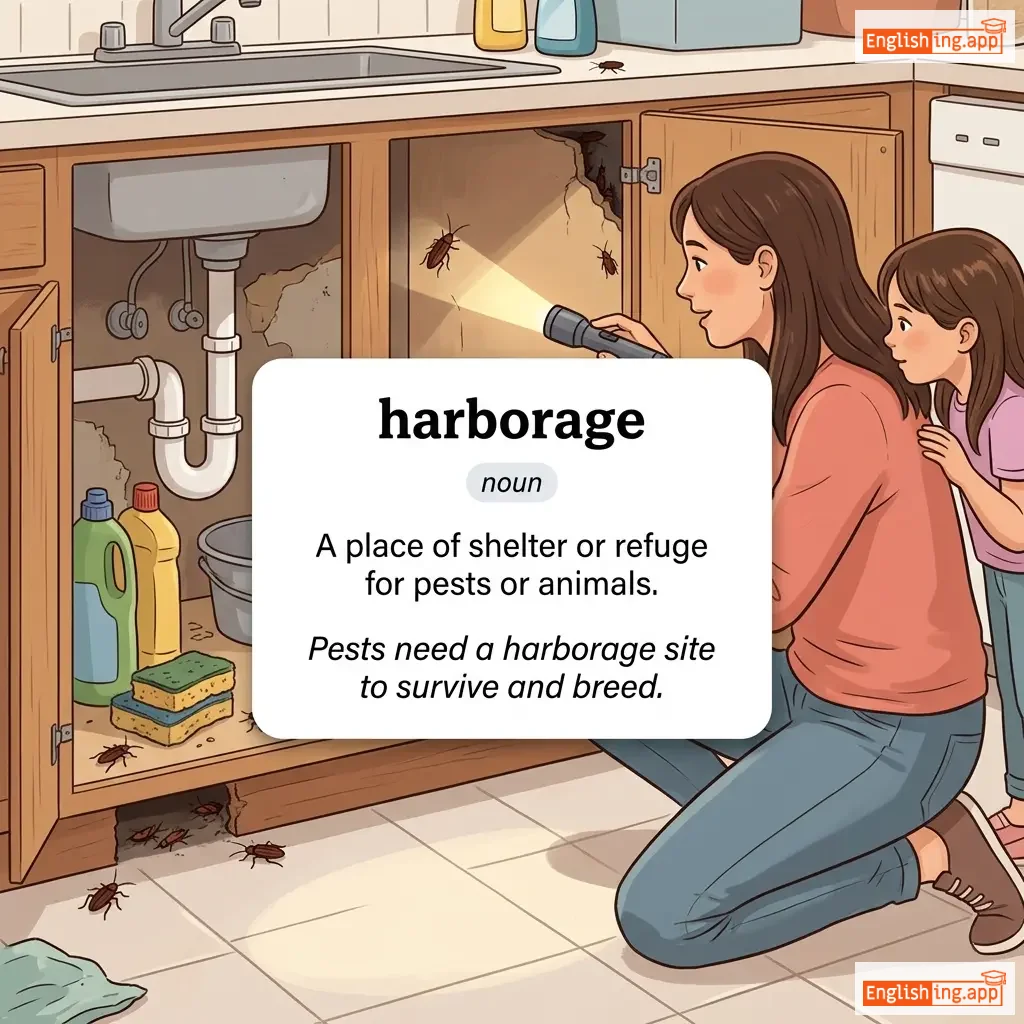
harborage definition card — visual illustration of the meaning
noun
ˈhɑːrbərɪdʒ
приют (priyut)

A place of shelter or refuge for pests or animals.

"Pests need a harborage site to survive and breed."

"Вредителям нужно место убежища для выживания и размножения." (Vreditelyam nuzhno mesto ubezhishcha dlya vyzhivaniya i razmnozheniya.)
noun
/ˈhɑːr.bər/
гавань (gavan')

a place on the coast where vessels may find shelter; a place of safety or refuge

"The fishing boats returned safely to the harbour before the storm hit the coastline."

"Рыболовные лодки безопасно вернулись в гавань до того, как буря ударила по побережью." (Rybolovnyye lodki bezopasno vernulis' v gavan' do togo, kak burya udarila po poberez'yu.)
adjective
/hɑːrd/
трудный (trudnyy)

solid, firm, or difficult to do or endure

"The exam was very hard for most students."

"Экзамен был очень трудным для большинства студентов." (Ekzamen byl ochen' trudnym dlya bol'shinstva studentov.)
adjective
/ˌhɑːrdˈbɪtn̩/
закаленный и опытный (zakalyonnyy i opytnyy)

tough and experienced, not easily affected by emotions or hardship

"The hard-bitten detective showed no sign of surprise at the crime scene."

"Опытный детектив не проявил удивления на месте преступления." (Opytnyy detektiv ne proyavil udivleniya na meste prestupleniya.)
adjective
/ˌhɑːrdˈhɑːrtɪd/
жестокий (zhestokiy)

showing no kindness or sympathy; cruel

"The landlord was hard-hearted and refused to help the poor family."

"Арендодатель был жестоким и отказался помочь бедной семье." (Arendodatel byl zhestokim i otkazalsya pomoch' bednoy sem'ye.)
noun
/ˈhɑːdɪhʊd/
отвага, смелость (otvaga, smelost)

Courage, boldness, or daring behavior; also physical robustness.

"The mountaineer's hardihood impressed the entire team."

"Отвага альпиниста впечатлила всю команду." (Otvaga alpinista vpechatlila vsyu komandу.)
adverb
/ˈhɑːrdli/
едва (yedva)

almost not; scarcely

"She could hardly believe her eyes."

"Она едва могла поверить своим глазам." (Ona yedva mogla poverit' svoim glazam.)
noun
/ˈhɑːrd.ʃɪp/
трудности, страдания (trudnosti, stradaniya)

severe suffering or privation; difficulty or distress

"Despite facing many hardships during the war, the family remained united and hopeful."

"Несмотря на многие трудности во время войны, семья оставалась единой и полной надежды." (Nesmotrya na mnogiye trudnosti vo vremya voyny, sem'ya ostavalas' yedinoy i polnoy nadezhdy.)
noun
/ˈhɑːrdˌwɛr/
аппаратное обеспечение (apparatnoe obespechenie)

the physical parts of a computer or electronic system, such as the monitor, keyboard, and processor

"The company upgraded its computer hardware to improve performance."

"Компания обновила аппаратное обеспечение своего компьютера для улучшения производительности." (Kompaniya obnovila apparatnoe obespechenie svoego komp'yutera dlya uluchsheniya proizvoditel'nosti.)
adjective
/ˈhɑːrdi/
выносливый, крепкий (vynoslivy, krepkij)

Strong, robust, and capable of enduring difficult conditions.

"Hardy plants can survive the harsh winter."
"Выносливые растения могут пережить суровую зиму." (Vynoslivye rasteniya mogut perezhit' surovuyu zimu.)
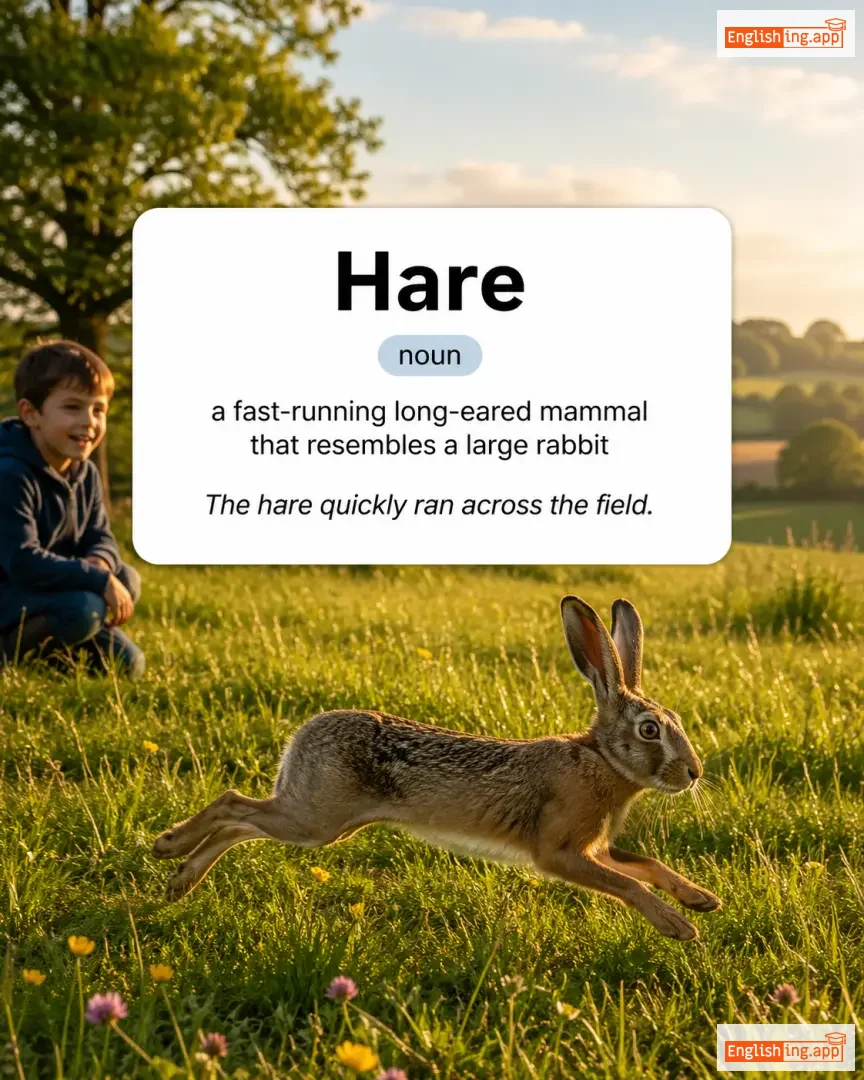
Hare definition card — visual illustration of the meaning
noun
/heə(r)/
заяц (zayats)

a fast-running long-eared mammal that resembles a large rabbit

"The hare quickly ran across the field."
"Заяц быстро пробежал через поле." (Zayats bystro probezhal cherez pole)
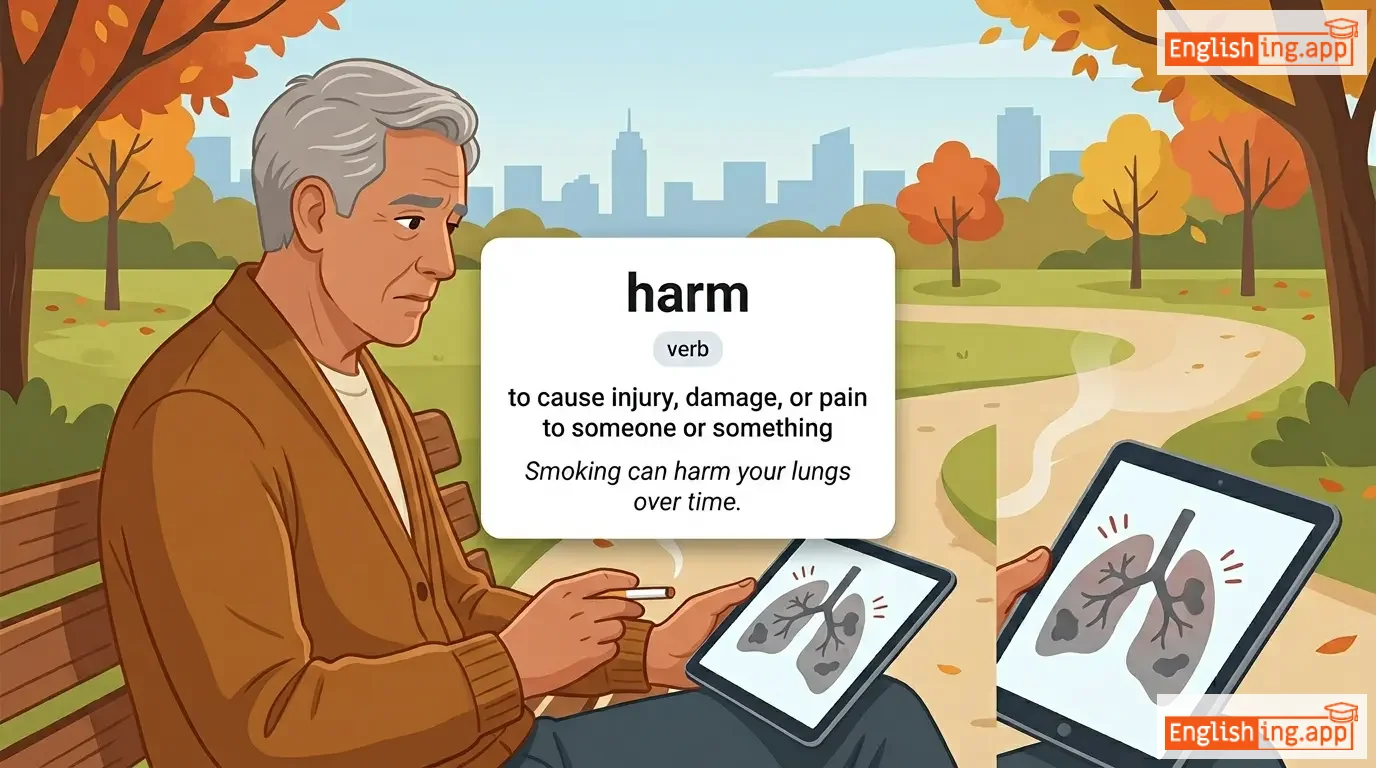
harm definition card — visual illustration of the meaning
verb
/hɑːrm/
вредить (vredit)

to cause injury, damage, or pain to someone or something

"Smoking can harm your lungs over time."

"Курение может повредить ваши легкие со временем." (Kurenie mozhet povredit' vashi legkiye so vremenem.)
adjective
/ˈhɑːrmfəl/
вредный (vrednyy)

causing or likely to cause harm; damaging

"Smoking is harmful to your health."

"Курение вредно для вашего здоровья." (Kurenie vredno dlya vashego zdorov'ya.)
adjective
/ˈhɑːrmləs/
безвредный; невинный; безопасный (bezvrednyy; nevinnyy; bezopasnyy)

not able or likely to cause harm; innocent; safe

"The snake looks dangerous but it's actually harmless."
"Змея выглядит опасной, но на самом деле она безвредна." (Zmeýa vyhlyadit opasnoy, no na samom dele ona bezvredna.)
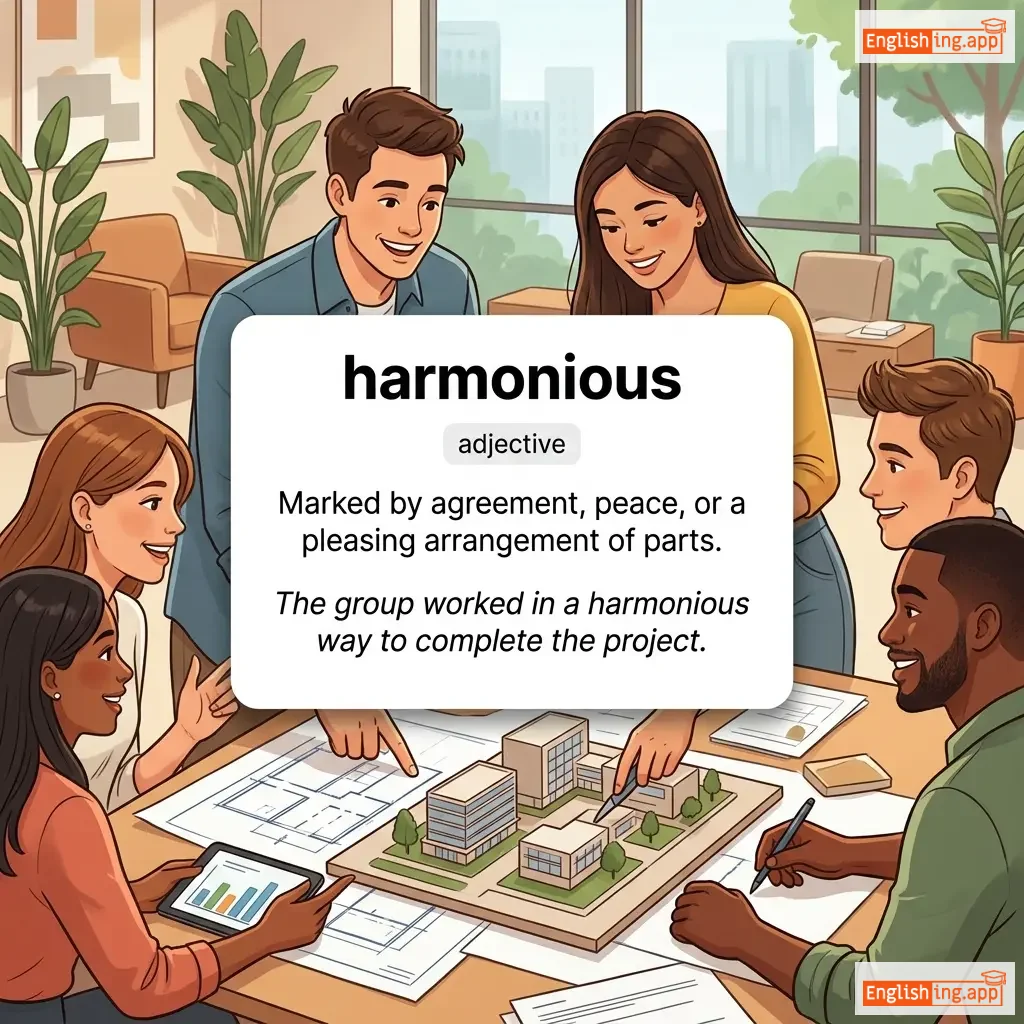
harmonious definition card — visual illustration of the meaning
adjective
/hɑːrˈmoʊniəs/
гармоничный, в гармонии (garmonichnyy, v garmonii)

Marked by agreement, peace, or a pleasing arrangement of parts.

"The group worked in a harmonious way to complete the project."
"Группа работала в гармонии, чтобы завершить проект." (Gruppa rabotala v garmonii, chtoby zavershit' proyekt.)
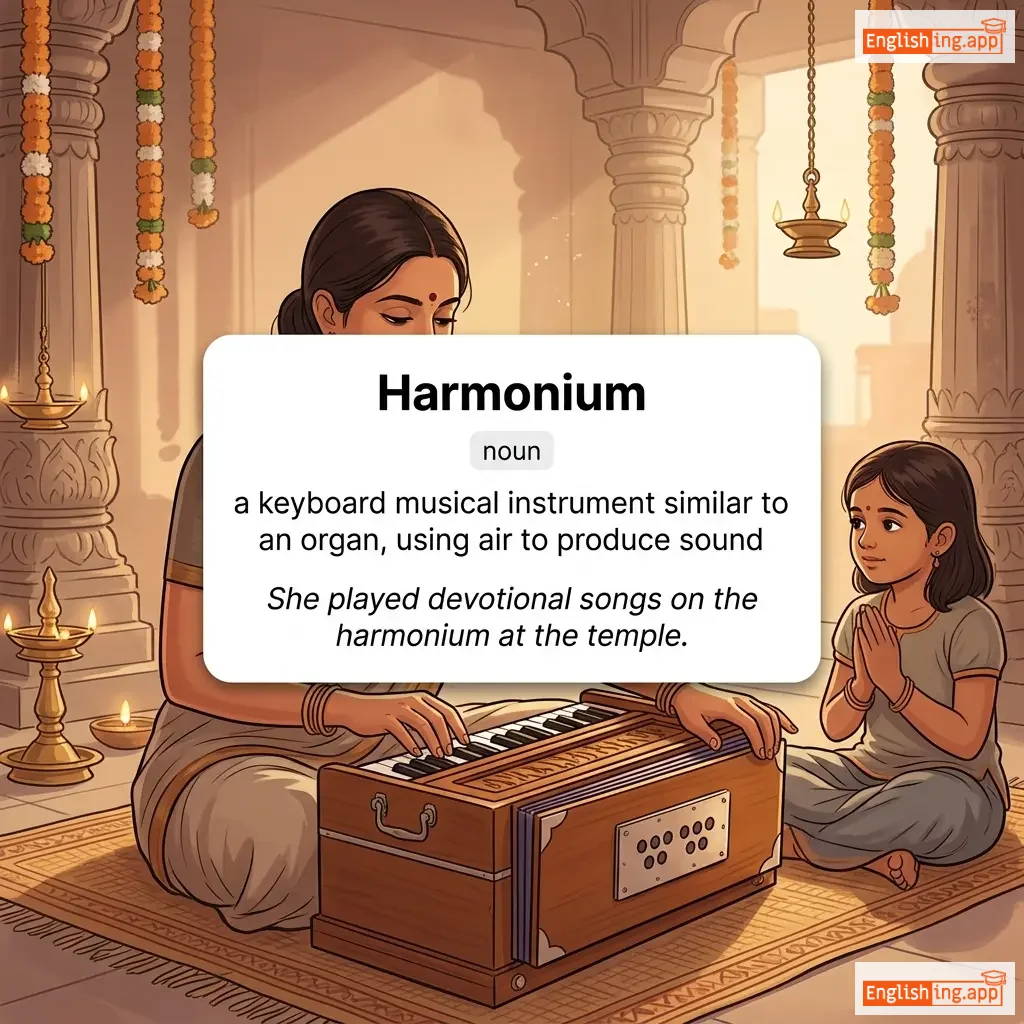
Harmonium definition card — visual illustration of the meaning
noun
/hɑrˈmoʊniəm/
гармониум (garmonium)

a keyboard musical instrument similar to an organ, using air to produce sound

"She played devotional songs on the harmonium at the temple."
"Она исполняла молитвенные песни на гармониуме в храме." (Ona ispolnyala molitvennyye pesni na garmoniyume v khrame.)
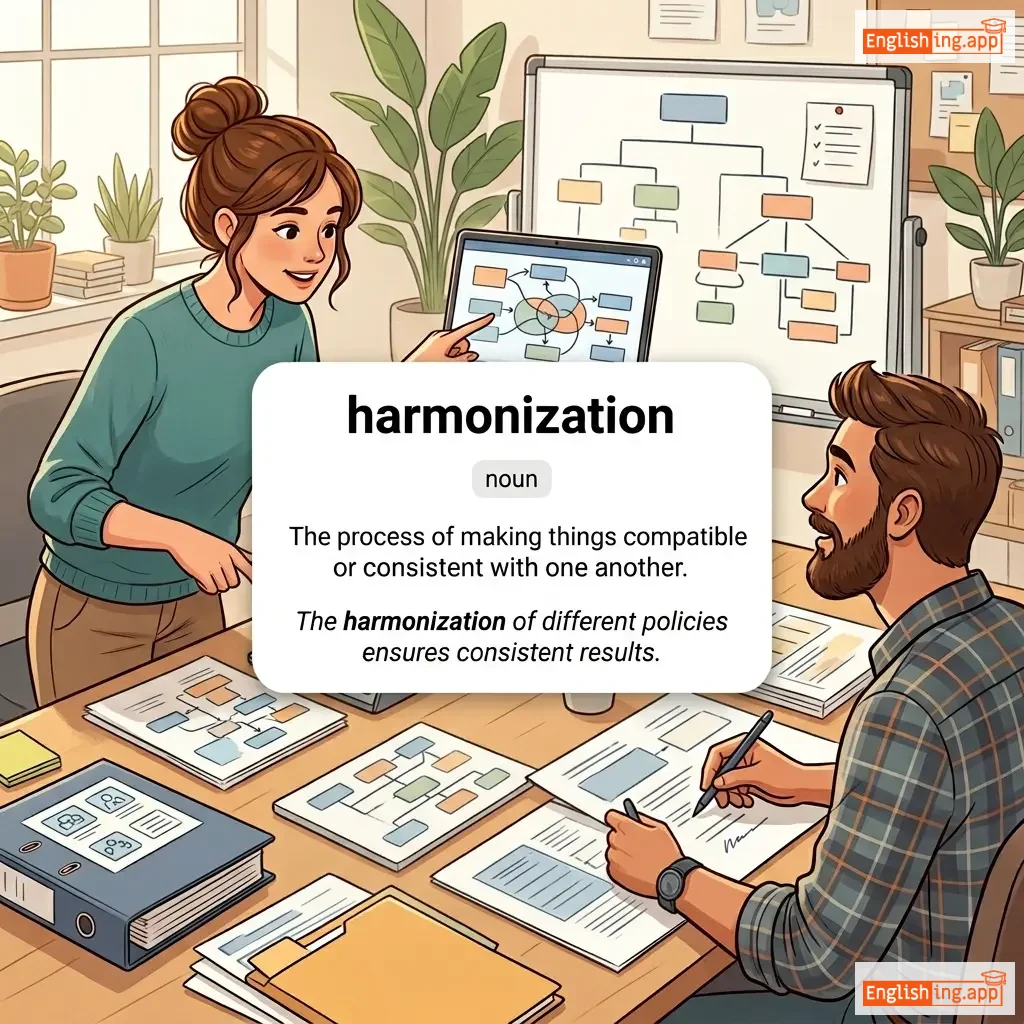
harmonization definition card — visual illustration of the meaning
noun
/ˌhɑːmənaɪˈzeɪʃən/
гармонизация, согласование (garmonizatsiya, soglasovanie)

The process of making things compatible or consistent with one another.

"The harmonization of different policies ensures consistent results."
"Гармонизация различных политик обеспечивает согласованные результаты." (Garmonizatsiya razlichnykh politik obespechivaet soglasovannye rezul'taty.)
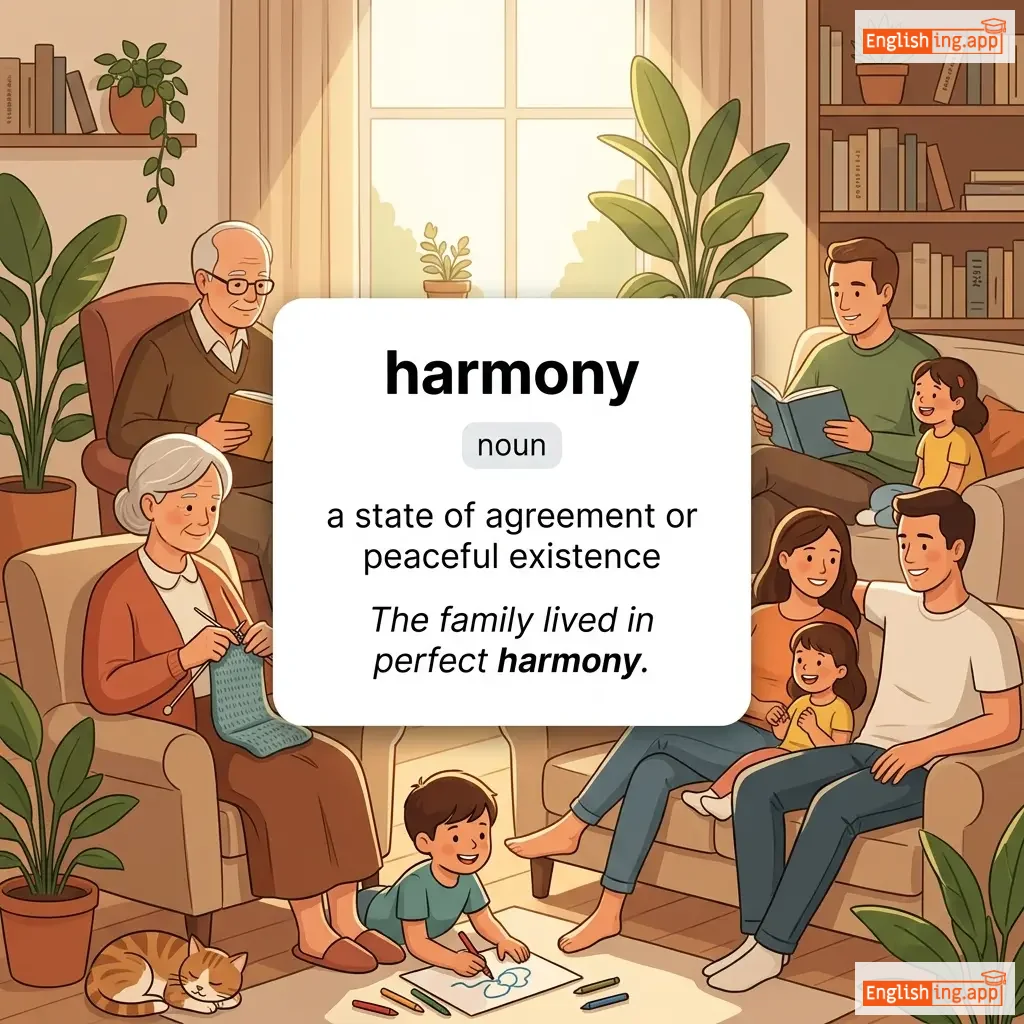
harmony definition card — visual illustration of the meaning
noun
/ˈhɑːrməni/
гармония (garmoniya)

a state of agreement or peaceful existence

"The family lived in perfect harmony."

"Семья жила в полной гармонии." (Sem'ya zhila v polnoy garmoniya.)
verb
/ˈhɑːrnɪs/
управлять и использовать (upravlyat i ispol'zovat)

To control and make use of natural resources, especially energy.

"Scientists are working to harness solar power effectively."

"Учёные работают над тем, чтобы эффективно использовать солнечную энергию." (Uchënyye rabotayut nad tem, chtoby effektivno ispol'zovat' solnechnuyu energiyu.)
Harp definition card — visual illustration of the meaning
verb
/hɑːrp/
постоянно жаловаться, упорствовать (postoyanno zhalovatsya, uporstvovat')

To dwell on or complain about something persistently.

"He kept harping on the same mistake over and over."

"Он продолжал жаловаться на одну и ту же ошибку снова и снова." (On prodolzhal zhalovatsya na odnu i tu zhe oshibku snova i snova.)
verb
/ˈhɑːrpɪŋ/
постоянно жаловаться (postoyanno zhalovatsya)

continuously talking or complaining about something in a tiresome way

"She kept harping on about the mistakes I made."

"Она продолжала жаловаться на ошибки, которые я сделал." (Ona prodolzhala zhalovatsya na oshibki, kotorye ya sdelal.)
adjective
/ˈhæriːd/
напряженный или перегруженный (napryazhennyj ili peregruzhennyj)

feeling strained or stressed due to being overworked or constantly bothered

"The harried teacher struggled to calm the noisy classroom."

"Напряженный учитель пытался успокоить шумный класс." (Napryazhennyj uchitel' pytalsya uspokoit' shumnyj klass.)
verb
/ˈhæroʊ/
мучить / борона (muchi t / borona)

to cause distress or torment; also to break up and smooth soil with a farm tool

"The tragic news harrowed the entire family."
"Трагическая новость привела в мучения всю семью." (Tragicheskaya novost' privela v mucheniya vsyu sem'yu.)
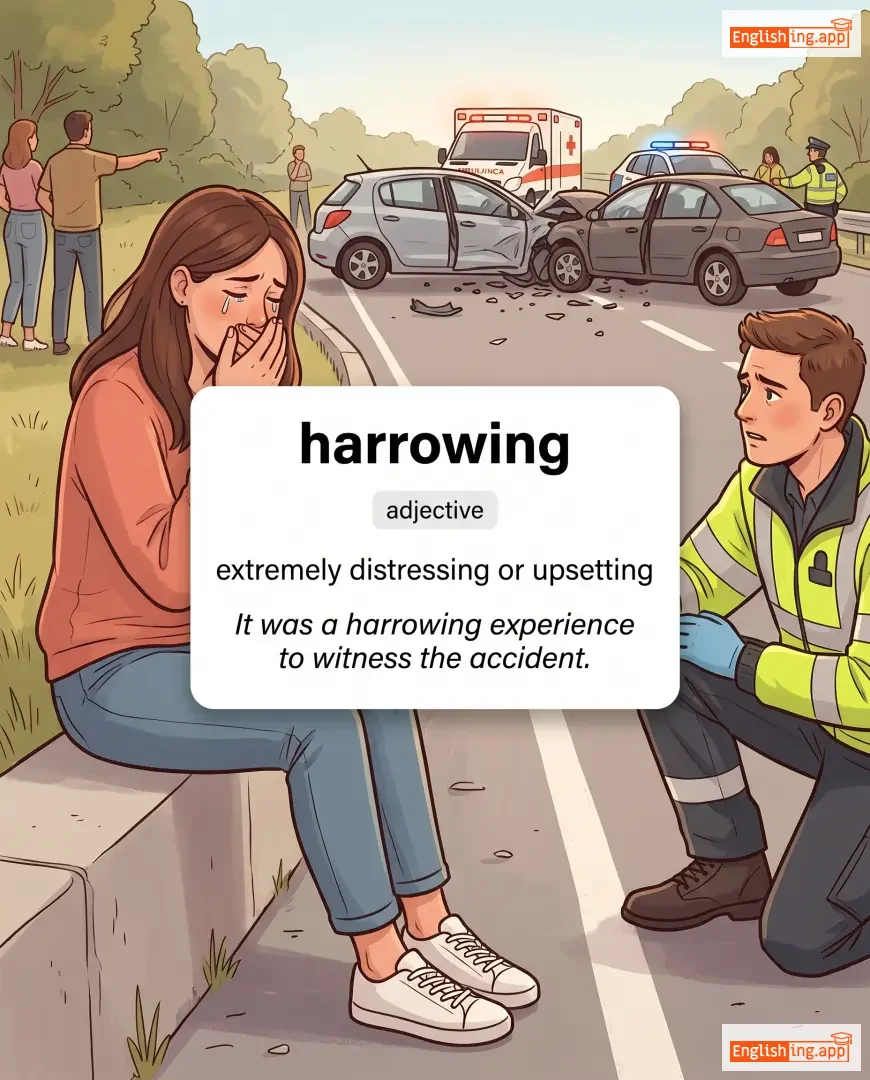
harrowing definition card — visual illustration of the meaning
adjective
/ˈhær.oʊ.ɪŋ/
ужасающий и мучительный (uzhasayushchiy i muchitel'nyy)

extremely distressing or upsetting

"It was a harrowing experience to witness the accident."

"Это был ужасный опыт — быть свидетелем аварии." (Eto byl uzhasnyy opyt — byt' svidetelem avarii.)
verb
/ˈhæri/
терзать, преследовать (terzat', presledovat')

to constantly attack, harass, or annoy

"The army harried the enemy with sudden raids."

"Армия терзала врага внезапными набегами." (Armiya terzala vraga vnezapnymi nabegami.)