Словари

Словарь английского языка | Значения слов, определения и примеры
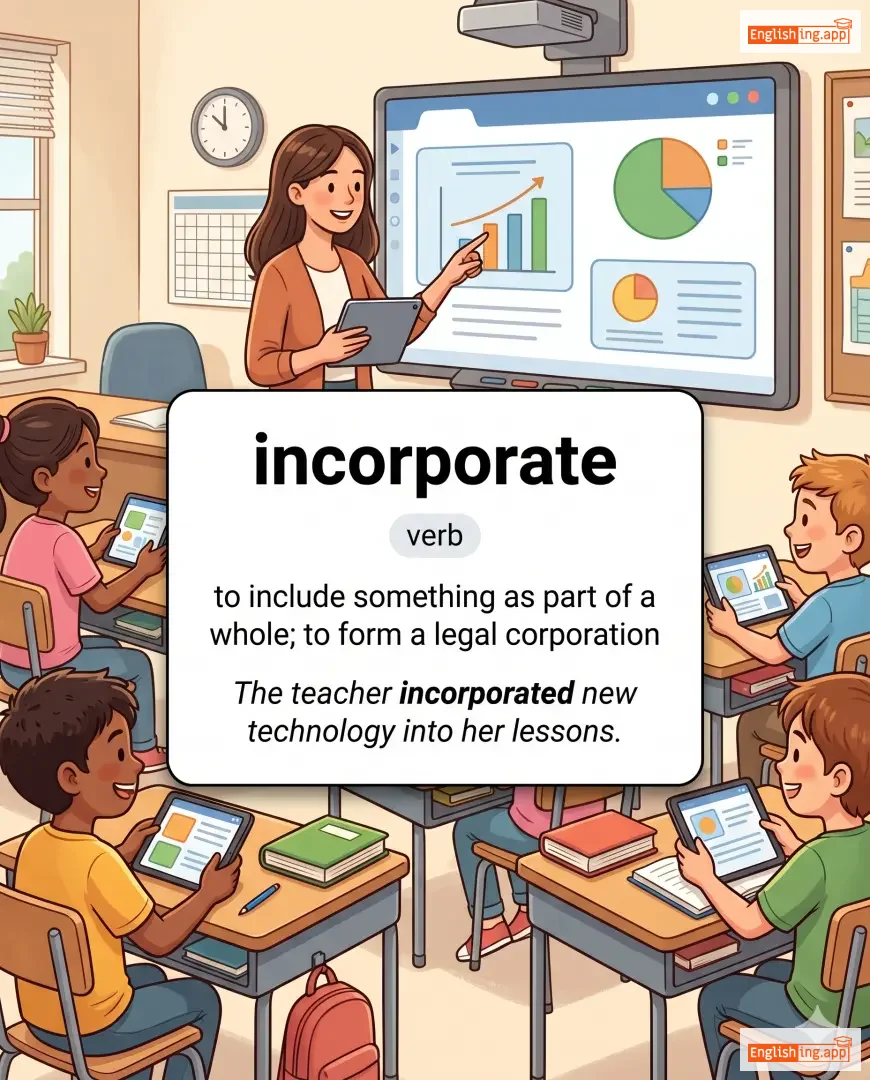
incorporate definition card — visual illustration of the meaning
verb
/ɪnˈkɔːpəreɪt/
включить (vklyuchit)

to include something as part of a whole; to form a legal corporation

"The teacher incorporated new technology into her lessons."

"Учитель включил новые технологии в свои уроки." (Uchitel' vklyuchil novye tekhnologii v svoi uroki.)
adjective
/ˌɪnkɔːrˈpɔːriəl/
бестелесный (bestelessnyy)

lacking a physical body; not composed of matter; intangible

"Ghosts are often described as incorporeal beings."

"Привидения часто описываются как невещественные существа." (Privideniya chasto opisyvayutsya kak neveshchestvennye sushchestva.)
adjective
/ɪnkəˈrɛkt/
неправильный (nepravil'nyy)

not correct or accurate

"The information you provided was incorrect."

"Предоставленная вами информация была неправильной." (Predostavlennaya vami informatsiya byla nepravil'noy.)
adjective
/ɪnˈkɒrɪdʒəbəl/
неисправимый (neispravimy)

incapable of being corrected, improved, or reformed

"He is an incorrigible optimist who never loses hope."

"Он неисправимый оптимист, который никогда не теряет надежды." (On neispravimy optimist, kotoryy nikogda ne teryayet nadezhdy.)
increase definition card — visual illustration of the meaning
verb
/ɪnˈkriːs/
увеличить (uvelichit)

to make something larger in size, number, or amount

"The company plans to increase its workforce next year."

"Компания планирует увеличить свою рабочую силу в следующем году." (Kompaniya planirovyet uvelichit' svoyu rabochuyu silu v sleduyushchem godu.)
verb
/ɪnˈkriːst/
увеличенный (uvelichenniy)

became greater in size, amount, or degree

"The company's revenue increased last year."

"Доход компании увеличился в прошлом году." (Dokhod kompanii uvelichilsya v proshlom godu.)
increasing definition card — visual illustration of the meaning
verb
/ɪnˈkriːsɪŋ/
увеличивать (uvelichivat)

continuing to become greater in size, amount, or degree

"The number of students is increasing every year."

"Количество студентов увеличивается каждый год." (Kolicestvo studentov uvelichivaetsya kazhdyy god.)
adverb
/ɪnˈkriːsɪŋli/
все больше и больше (vse bolshe i bolshe)

more and more over time

"People are increasingly concerned about climate change."

"Люди все больше обеспокоены изменением климата." (Lyudi vse bolshe obespokoyeny izmeneniem klimata.)
adjective
/ɪnˈkrɛdəbl/
невероятный (neveroyatnyy)

so extraordinary that it is hard to believe; amazing

"The view from the mountain was incredible."

"Вид с горы был невероятным." (Vid s gory byl neveroyatnym.)
adverb
/ɪnˈkrɛdɪbli/
невероятно (neveroyatno)

to a great degree; extremely or unbelievably

"The view from the top of the mountain was incredibly beautiful."

"Вид с вершины горы был невероятно красив." (Vid s vershiny gory byl neveroyatno krasiv.)
noun
/ˌɪnkrɪˈdjuːləti/
неверие (neverie)

the state of being unwilling or unable to believe something

"She looked at him with incredulity after hearing the strange story."

"Она посмотрела на него с недоверием после того, как услышала странную историю." (Ona posmotrela na nego s nedoveriem posle togo, kak uslyshala strannuyu istoriyu.)
adjective
/ɪnˈkrɛdjələs/
недоверчивый (nedoverchivyy)

unwilling or unable to believe something

"He gave her an incredulous look when she claimed she could fly."

"Он бросил ей недоверчивый взгляд, когда она заявила, что может летать." (On brosil ey nedoverchivyy vzglyad kogda ona zayavila chto mozhet letat)
noun
/ˈɪŋkrɪmənt/
повышение (povyshenie)

an increase or addition, especially one of a series on a fixed scale

"Employees received an annual salary increment."

"Сотрудники получили ежегодное повышение заработной платы." (Sotrudniki poluchili ezhegodnoe povyshenie zarabotnoi platy.)
incremental definition card — visual illustration of the meaning
adjective
/ˌɪŋ.krɪˈmen.təl/
инкрементальный (inkrementalnyy)

Increasing gradually in small amounts or steps.

"The company made incremental improvements to the software."

"Компания сделала инкрементальные улучшения в программном обеспечении." (Kompaniya sdelała inkremental'nye uluchsheniya v programmnoy obespechenii.)
verb
/ɪnˈkrɪmɪˌneɪt/
инкриминировать (inkriminirovat)

to make someone appear guilty of a crime or wrongdoing

"The new evidence could incriminate the suspect in the robbery case."

"Новые доказательства могут инкриминировать подозреваемого в случае ограбления." (Novye dokazatel'stva mogut inkriminorovat' podozrevaemogo v sluchaye ogrableniya.)
noun
/ˌɪnkrʌˈsteɪʃən/
корка (korka)

a crust or hard coating formed on the surface of something

"The old pipes were blocked due to heavy incrustation of minerals."

"Старые трубы были заблокированы из-за сильной корки минералов." (Starye truby byli zablokirovany iz-za sil'noy korki mineralov.)
verb
/ˈɪnkjʊˌbeɪt/
инкубировать (inkubirovat')

to keep eggs, cells, or organisms at the right conditions for development

"The hen will incubate the eggs until they hatch."

"Курица будет инкубировать яйца до тех пор, пока они не вылупятся." (Kurytsa budet inkubirovat' yaytsa do tekh por, poka oni ne vylupyatsya.)
noun
/ˌɪnkjʊˈbeɪʃən/
процесс поддержания яиц, клеток или организмов в правильных условиях для их развития (protsess podderzhaniya yaits, kletok ili organizmov v pravil'nykh usloviyakh dlya ikh razvitiya)

the process of keeping eggs, cells, or organisms in the right conditions for development

"The incubation of the eggs lasted for three weeks."

"Инкубация яиц продолжалась три недели." (Inkubatsiya yaits prodolzhalas' tree nedeli.)
noun
/ˈɪnkjʊˌbeɪtər/
инкубатор (inkubator)

a device or environment that provides suitable conditions for eggs, cells, or infants to develop

"The premature baby was placed in an incubator for care."

"Недоношенного ребенка поместили в инкубатор для ухода." (Nedonoshenogo rebenka pomestili v inkubator dlya ukhoda.)
noun
/ˈɪŋkjʊbəs/
демон ночных кошмаров (demon nochnykh koshmarov)

An oppressive or nightmarish burden; in folklore, an evil spirit that lies upon sleeping people.

"Debt became an incubus that weighed heavily on the family."

"Долг стал демоном ночных кошмаров, который тяжело давил на семью." (Dolg stal demonim nochnykh koshmarov, kotoryy tyazhelo davil na sem'yu.)
inculcate definition card — visual illustration of the meaning
verb
/ˈɪŋkʌlkeɪt/
внедрять (vnedryat)

To teach or instill an idea, attitude, or habit persistently.

"Parents try to inculcate good manners in their children."

"Родители пытаются привить своим детям хорошие манеры." (Roditeli pytayutsya privit' svoim detyam khoroshiye manery.)
verb
/ˈɪŋkʌlpeɪt/
обвинять (obvinyat)

To blame or accuse someone of wrongdoing.

"The evidence seemed to inculpate the suspect in the crime."
"Доказательства, похоже, инкриминировали подозреваемого в преступлении." (Dokazatel'stva, pokhоже, inkriminiruvali podozrevaemogo v prestuplenii.)
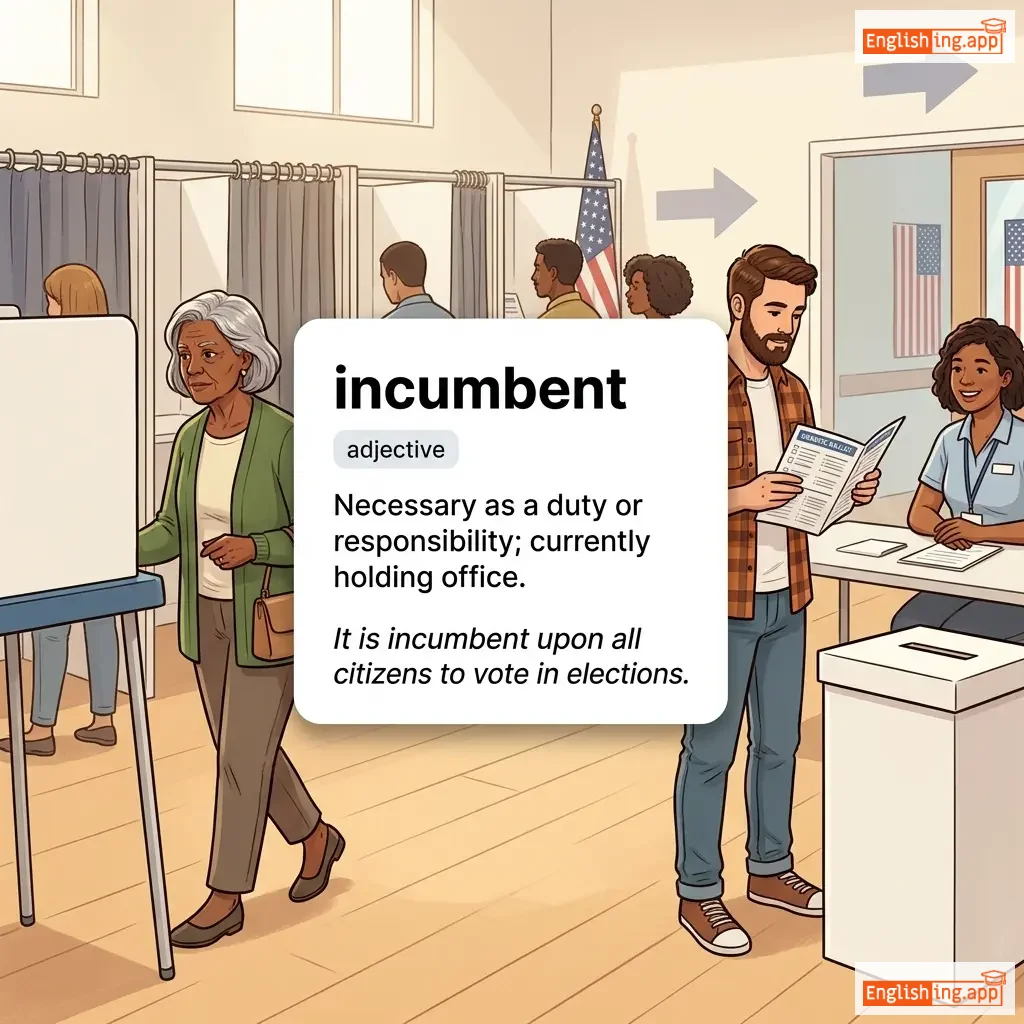
incumbent definition card — visual illustration of the meaning
adjective
/ɪnˈkʌmbənt/
исполняющий обязанности (ispolnyayushchiy obyazannosti)

Necessary as a duty or responsibility; currently holding office.

"It is incumbent upon all citizens to vote in elections."

"Это обязанность всех граждан голосовать на выборах." (Eto obazannost' vsekh grazhdan golosovat' na viborah.)
verb
/ɪnˈkɜːr/
понести (ponesti)

To bring upon oneself something undesirable, usually as a result of actions.

"He incurred a fine for parking in the wrong place."
"Он понёс штраф за неправильную парковку." (On ponyos shtraf za nepravil'nuyu parkovku.)
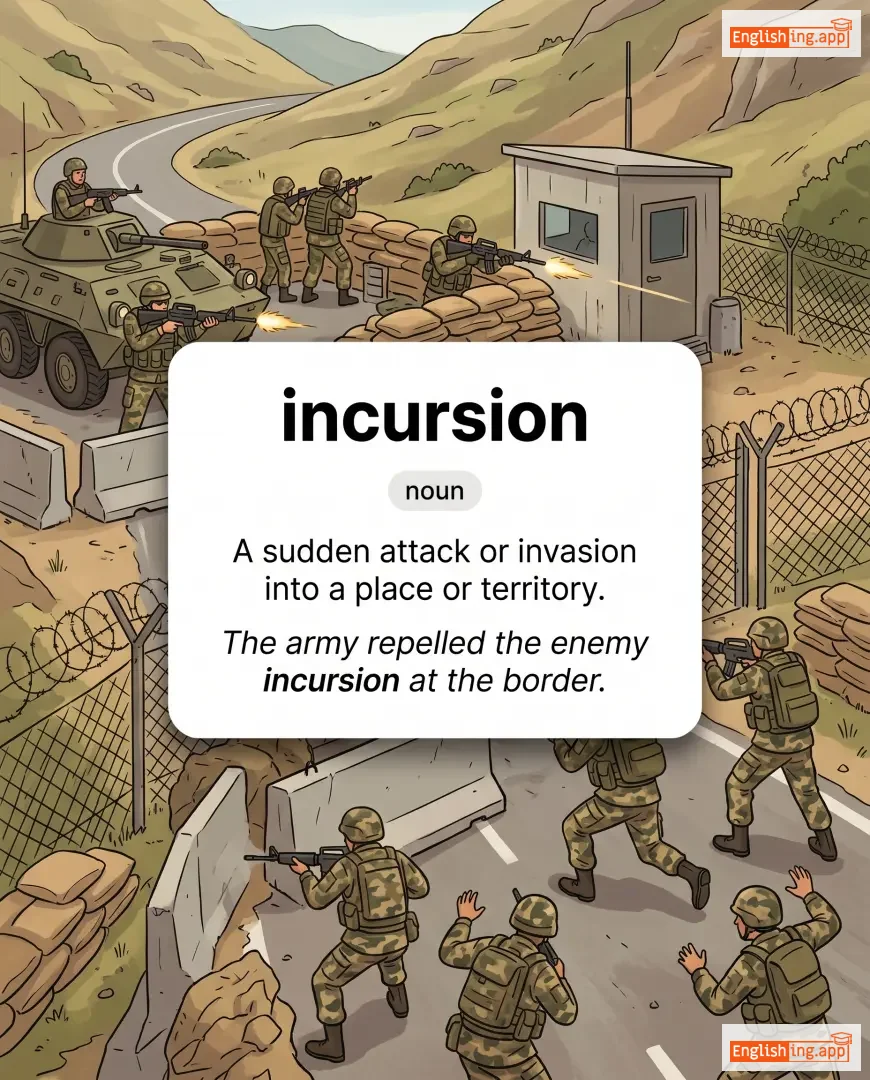
incursion definition card — visual illustration of the meaning
noun
/ɪnˈkɜːrʒən/
вторжение (vtorzhenie)

A sudden attack or invasion into a place or territory.

"The army repelled the enemy incursion at the border."

"Армия отразила вражеское вторжение на границе." (Armiya otrazila vrasheskoye vtorzhenie na granitse.)
adjective
/ɪnˈdɛtɪd/
обязанный (obyazannyy)

Owing gratitude or money to someone; obligated.

"I am deeply indebted to my teacher for her guidance."

"Я глубоко обязан своей учительнице за её руководство." (Ya gluboko obyazannyy svoey uchitelnitse za yeye rukovodstvo.)
adjective
/ɪnˈdiːsənt/
непристойный (nepristoinyi)

not conforming to accepted standards of behavior or morality; improper or offensive

"He was warned for making an indecent remark during the meeting."

"Его предупредили за непристойное замечание." (Ego predupredili za nepristoinoe zamechanie)
noun
/ˌɪndɪˈsɪʒən/
нерешительность (nereshitel'nost')

The inability to make a decision quickly or confidently.

"Her indecision caused a delay in the project."

"Её нерешительность вызвала задержку в проекте." (Eyo neresitel'nost' vyzvala zaderzhku v proyekte.)
adjective
/ˌɪndɪˈsaɪsɪv/
нерешительный (nereshitel'nyy)

Unable to make decisions quickly or firmly.

"He is too indecisive to be a good leader."

"Он слишком нерешительный, чтобы быть хорошим лидером." (On slishkom nereshitel'nyy, chtoby byt' khoroshim liderom.)
adjective
/ɪnˈdɛkərəs/
недостойный (niedostojnyj)

Not in keeping with good taste and propriety; improper.

"His indecorous behavior shocked the audience."

"Его недостойное поведение шокировало аудиторию." (Ego nedostojnoye povedeniye shokirovalo auditoriyu.)
adverb
/ɪnˈdiːd/
действительно (deystvitel'no)

used to emphasize or confirm a statement

"It was a long journey indeed."

"Это было долгое путешествие, действительно." (Eto bylo dolgoye puteshestviye, deystvitel'no.)
adjective
/ˌɪndɪˈfætɪɡəbl̩/
неутомимый (neutomimyj)

persisting tirelessly; incapable of being fatigued

"Her indefatigable spirit kept the team motivated during the long project."

"Её неутомимый дух поддерживал команду на протяжении всего долгого проекта." (Eё neutomimyj dukh podderzhival komandу na protyazhenii vsego dolgogo proekta.)
adjective
/ˌɪndɪˈfɛnsəbl̩/
необоснованный (neobosnovannyy)

not able to be protected or justified

"The minister’s remarks were considered indefensible by the public."

"Заявления министра были признаны необоснованными общественностью." (Zayavleniya ministra byli prinyaty neobosnovannymi obshchestvennost'yu.)
adjective
/ɪnˈdefɪnət/
неопределённый (neopredelyonny)

not clearly defined; uncertain; vague; unlimited in time

"The meeting has been postponed for an indefinite period."

"Встреча была отложена на неопределённый срок." (Vstrecha byla otlozhena na neopredelyonny srok.)
adverb
/ɪnˈdɛfɪnətli/
неопределённо (neopredeljonno)

for an unlimited or unspecified period of time

"The project has been postponed indefinitely."
"Проект был отложен на неопределённый срок." (Proyekt byl otlozhen na neopredeljonnyj srok.)
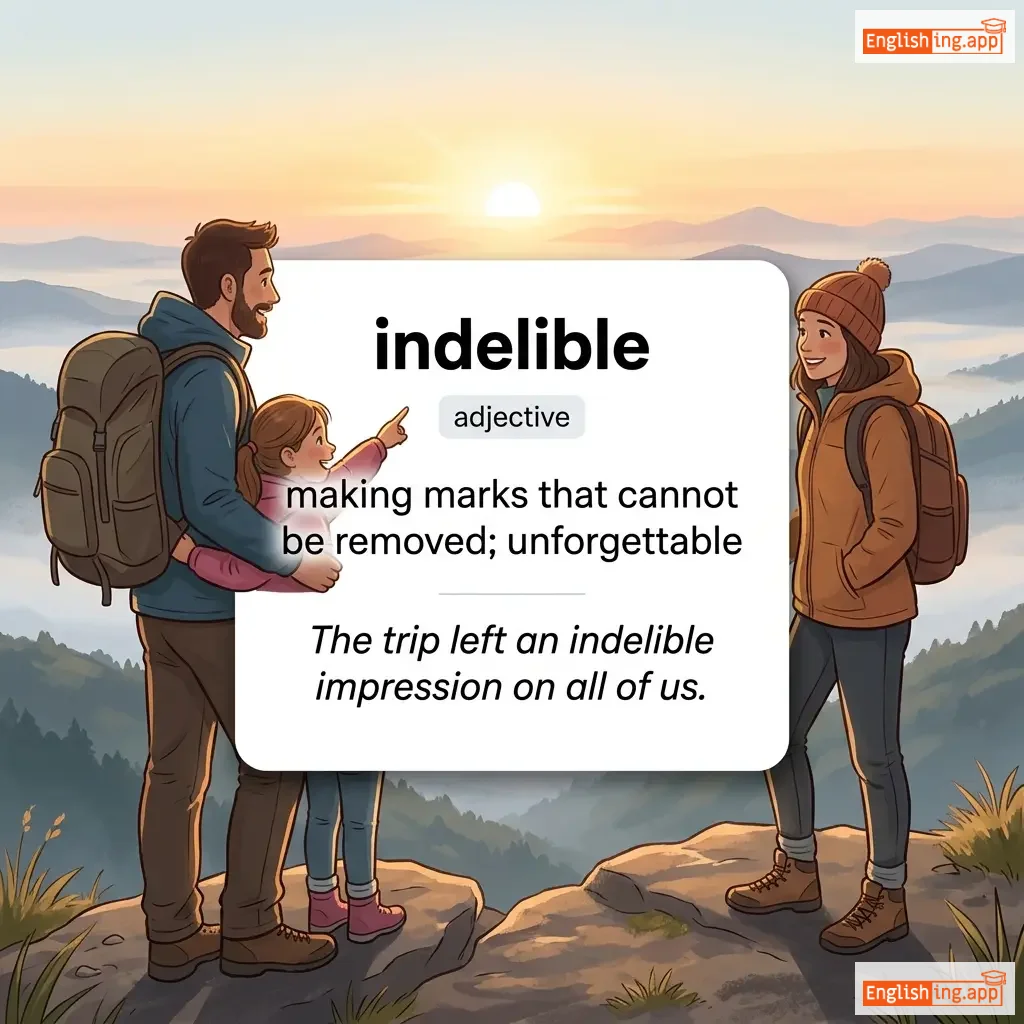
indelible definition card — visual illustration of the meaning
adjective
/ɪnˈdɛlɪbl̩/
неизгладимый (neizgladimy)

making marks that cannot be removed; unforgettable

"The trip left an indelible impression on all of us."

"Поездка оставила неизгладимое впечатление на всех нас." (Poezdka ostavila neizgladimoe vpechatlenie na vsekh nas.)
verb
/ɪnˈdɛmnɪfaɪ/
компенсировать (kompensirovat)

to compensate someone for harm or loss; to secure against future damage or cost

"The insurance company agreed to indemnify the client for the damages."

"Страховая компания согласилась компенсировать клиенту ущерб." (Strakhovaya kompaniya soglasilas' kompenzirovat' klientu ushcherb.)
noun
/ɪnˈdɛmnɪti/
компенсация / защита (kompensatsiya / zashchita)

Security or protection against financial loss or damage; compensation for loss or damage.

"The insurance policy provides indemnity against fire damage."

"Страховой полис предоставляет компенсацию за ущерб от пожара." (Strakhovoy polis predostavlyayet kompenstatsiyu za uscherb ot pozhara.)
noun
/ˌɪndɛnˈteɪʃən/
отступ (otstup)

A space left at the beginning of a line of text; a notch or deep recess on a surface.

"The teacher asked the students to use proper indentation in their essays."

"Учитель попросил студентов использовать правильный отступ в их эссе." (Uchitel' poprosil studentov ispol'zovat' pravil'nyj otstup v ikh esse.)
noun
/ɪnˈdɛntʃər/

A formal legal agreement, contract, or document, often relating to work or service.

"In the 18th century, many workers came under indenture to work overseas."

independence definition card — visual illustration of the meaning
noun
/ˌɪndɪˈpɛndəns/
независимость (nezavisimost)

The state of being free from outside control or not depending on others.

"The country celebrated its independence after years of struggle."

"Страна отпраздновала свою независимость после многих лет борьбы." (Strana otprazdnovala svoyu nezavisimost posle mnogikh let bor'by.)
independent definition card — visual illustration of the meaning
adjective
/ˌɪn.dɪˈpen.dənt/
независимый (nezavisimyy)

Free from outside control; not depending on others.

"She is an independent woman who runs her own business."

"Она независимая женщина, которая управляет собственным бизнесом." (Ona nezavisimaya zhenshchina, kotoraya upravlyaet sobstvennym biznesom.)
adjective
/ˌɪndɪˈskraɪbəbl/
неописуемый (neopisuemyj)

Too unusual, extreme, or great to be adequately described in words.

"The beauty of the sunset was indescribable."

"Красота заката была неописуемой." (Krasota zakata byla neopisuemoj.)
adjective
/ˌɪndɪˈstrʌktəbl/
неуничтожимый (neunistozhimy)

Impossible to destroy or break.

"The superhero's shield was said to be indestructible."

"Говорили, что щит супергероя был неуничтожимым." (Govori li, chto shchit supergeroya byl neunistozhimym.)
indeterminate definition card — visual illustration of the meaning
adjective
/ˌɪndɪˈtɜːrmənət/
неопределённый (neopredelyonny)

Not exactly known, defined, or established; vague or uncertain.

"The project was delayed for an indeterminate amount of time."

"Проект был отложен на неопределённое время." (Proyekt byl otlozhen na neopredelyonnoe vremya.)
index definition card — visual illustration of the meaning
noun, verb
/ˈɪndeks/
индекс (indeks)

A list of items arranged in order, or to arrange data systematically for reference.

"The book includes a detailed index at the end."

"Книга включает в себя подробный индекс в конце." (Kniga vklyuchayet v sebya podrobnый indeks v kontse.)
adjective/noun
/ˈɪndiən/
индийский (indiyskiy)

Relating to India, its people, or their culture.

"She loves Indian food, especially biryani."

"Ей нравится индийская еда, особенно бирьяни." (Yey nravitsya indijskaya yeda, osobenno biryani.)
noun
/ˈɪndɪkənt/
индикатор (indikator)

Something that indicates or points to a fact or condition.

"High fever is often an indicant of infection."

"Высокая температура часто является индикатором инфекции." (Vysokaya temperatura chasto yavylyaetsya indikatorom infektsii.)
indicate definition card — visual illustration of the meaning
verb
/ˈɪndɪˌkeɪt/
указать (ukazat)

To point out, show, or suggest something.

"The results indicate that the treatment was effective."

"Результаты показывают, что лечение было эффективным." (Rezultaty pokazivayut, chto lechenie bylo effektivnym.)
indicates definition card — visual illustration of the meaning
verb
ˈɪndɪkeɪts
указывает (ukazyvayet)

Point out; show; be a sign or symptom of; suggest as a desirable or necessary course of action.

"The rising trend indicates an urgent need for action."

"Растущая тенденция указывает на неотложную потребность в действиях." (Rastushchaya tendentsiya ukazyvayet na neotlozhnuyu potrebst' v deystviyakh.)