Vocabularios

Descubra, aprenda y domine el vocabulario en inglés

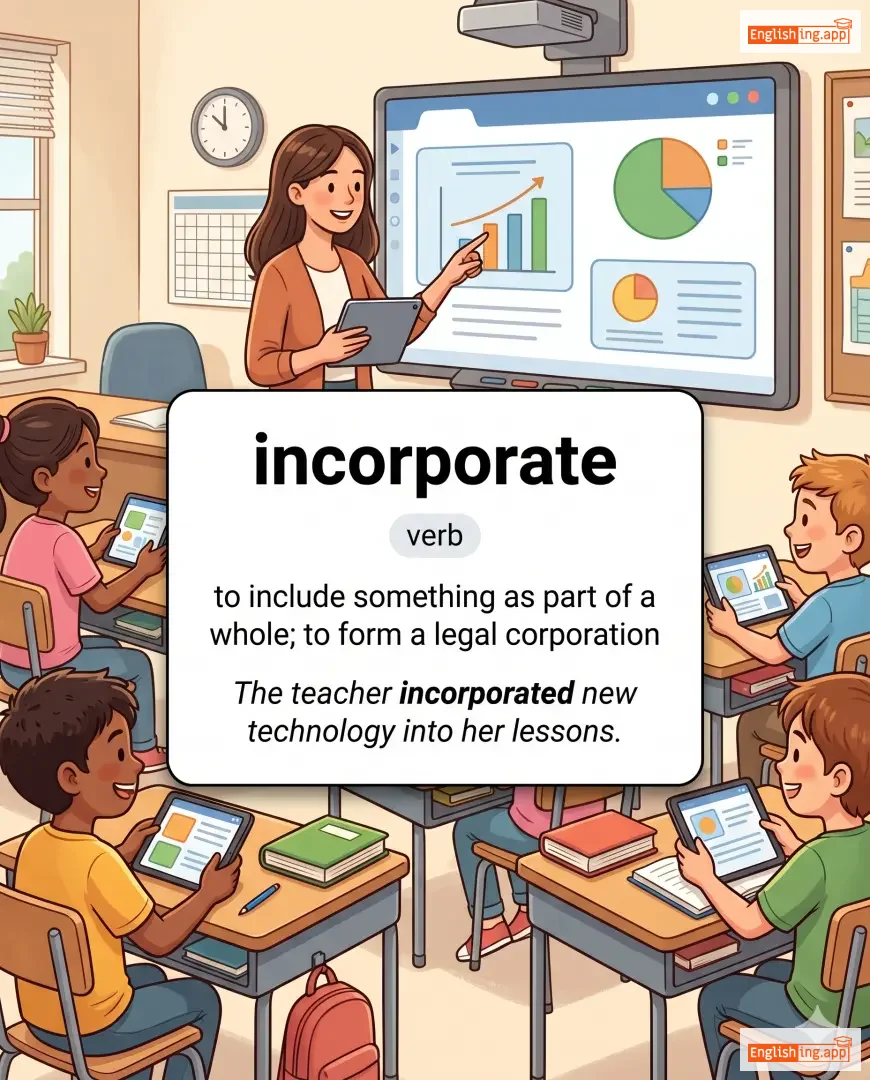
incorporate definition card — visual illustration of the meaning
verb
/ɪnˈkɔːpəreɪt/
incorporar (incorporar)

to include something as part of a whole; to form a legal corporation

"The teacher incorporated new technology into her lessons."

"El profesor incorporó nueva tecnología en sus lecciones." (El profesor incorporó nueva tecnología en sus lecciones.)
adjective
/ˌɪnkɔːrˈpɔːriəl/
incorpóreo (incorporeo)

lacking a physical body; not composed of matter; intangible

"Ghosts are often described as incorporeal beings."

"Los fantasmas a menudo se describen como seres incorpóreos." (Los fantasmas a menudo se describen como seres incorpóreos.)
adjective
/ɪnkəˈrɛkt/
incorrecto (incorrecto)

not correct or accurate

"The information you provided was incorrect."

"La información que proporcionaste era incorrecta." (La informacion que proporcionaste era incorrecta.)
adjective
/ɪnˈkɒrɪdʒəbəl/
incorregible (incorregible)

incapable of being corrected, improved, or reformed

"He is an incorrigible optimist who never loses hope."

"Él es un optimista incorregible que nunca pierde la esperanza." (Él es un optimista incorregible que nunca pierde la esperanza.)
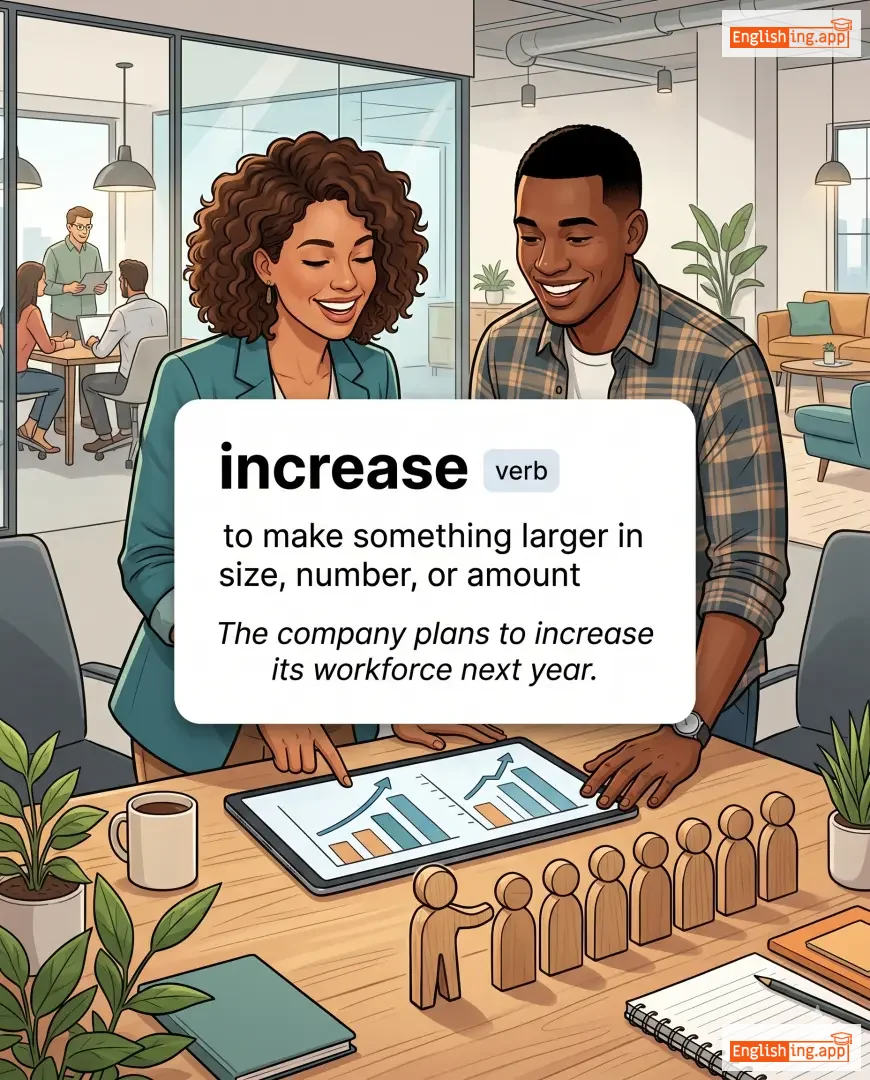
increase definition card — visual illustration of the meaning
verb
/ɪnˈkriːs/
aumentar (aumentar)

to make something larger in size, number, or amount

"The company plans to increase its workforce next year."

"La compañía planea aumentar su fuerza laboral el próximo año." (La compania planea aumentar su fuerza laboral el proximo ano.)
verb
/ɪnˈkriːst/
aumentado (aumentado)

became greater in size, amount, or degree

"The company's revenue increased last year."

"Los ingresos de la compañía aumentaron el año pasado." (Los ingresos de la compañía aumentaron el año pasado.)
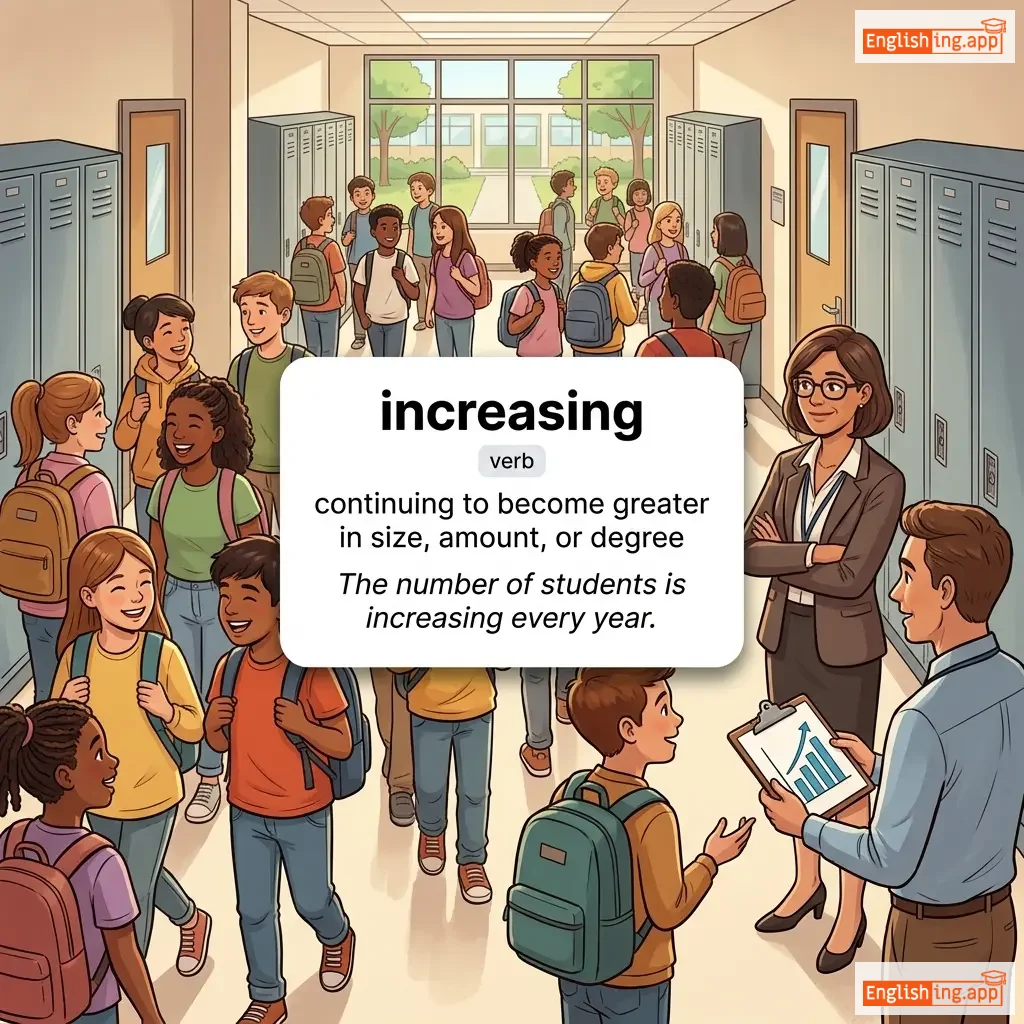
increasing definition card — visual illustration of the meaning
verb
/ɪnˈkriːsɪŋ/
aumentar (aumentar)

continuing to become greater in size, amount, or degree

"The number of students is increasing every year."

"El número de estudiantes aumenta cada año." (El numero de estudiantes aumenta cada ano.)
adverb
/ɪnˈkriːsɪŋli/
cada vez más (cada vez mas)

more and more over time

"People are increasingly concerned about climate change."

"Las personas están cada vez más preocupadas por el cambio climático." (Las personas estan cada vez mas preocupadas por el cambio climatico.)
adjective
/ɪnˈkrɛdəbl/
increíble (increible)

so extraordinary that it is hard to believe; amazing

"The view from the mountain was incredible."

"La vista desde la montaña fue increíble." (La vista desde la montaña fue increible.)
adverb
/ɪnˈkrɛdɪbli/
increíblemente (increiblemente)

to a great degree; extremely or unbelievably

"The view from the top of the mountain was incredibly beautiful."

"La vista desde la cima de la montaña era increíblemente hermosa." (La vista desde la cima de la montaña era increiblemente hermosa.)
noun
/ˌɪnkrɪˈdjuːləti/
incredulidad (incredulidad)

the state of being unwilling or unable to believe something

"She looked at him with incredulity after hearing the strange story."

"Ella lo miró con incredulidad después de escuchar la extraña historia." (Ella lo miro con incredulidad despues de escuchar la extraña historia.)
adjective
/ɪnˈkrɛdjələs/
incrédulo (inkredyulus)

unwilling or unable to believe something

"He gave her an incredulous look when she claimed she could fly."

"Le lanzó una mirada incrédula cuando afirmó que podría volar." (Le lanzo una mirada incredula cuando afirmo que podia volar.)
noun
/ˈɪŋkrɪmənt/
incremento (incremento)

an increase or addition, especially one of a series on a fixed scale

"Employees received an annual salary increment."

"Los empleados recibieron un incremento salarial anual." (Los empleados recibieron un incremento salarial anual.)
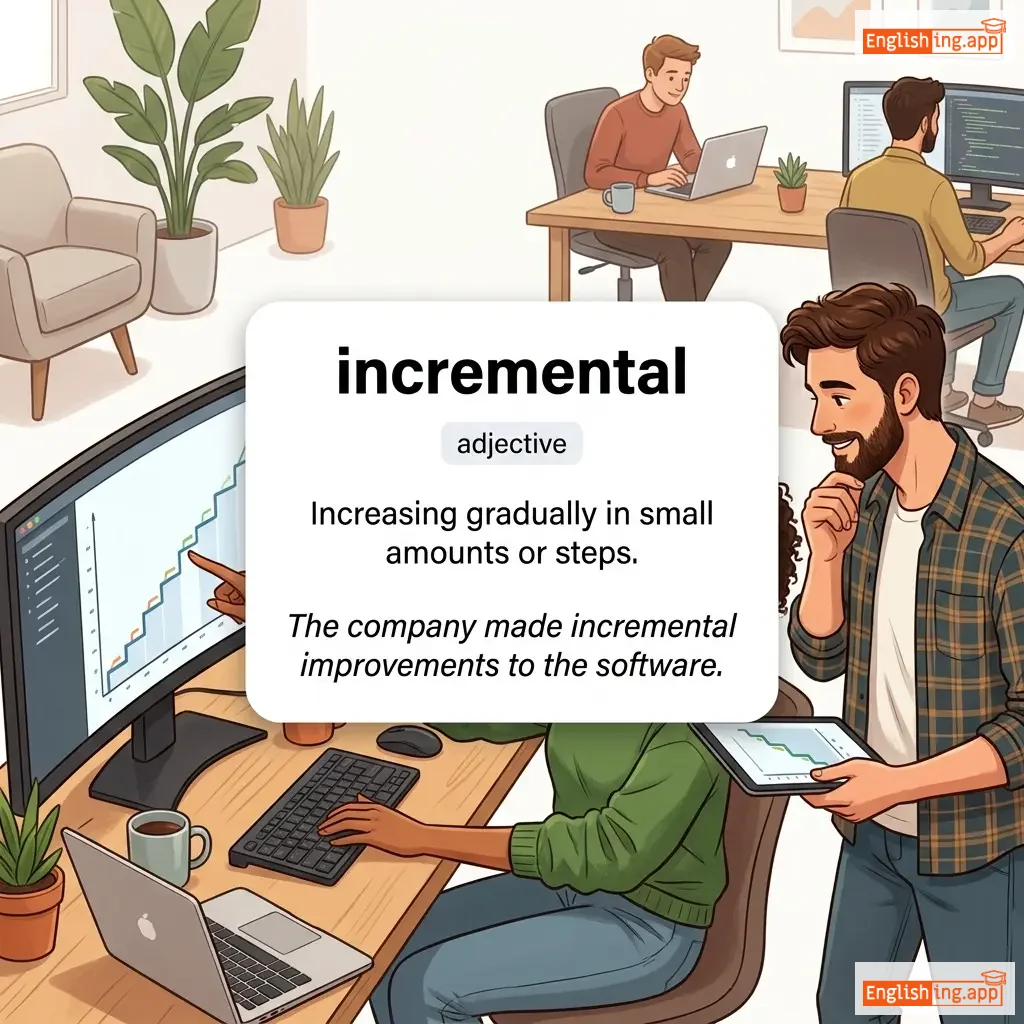
incremental definition card — visual illustration of the meaning
adjective
/ˌɪŋ.krɪˈmen.təl/
incremental (incremental)

Increasing gradually in small amounts or steps.

"The company made incremental improvements to the software."

"La empresa hizo mejoras incrementales en el software." (La empresa hizo mejoras incrementales en el software.)
verb
/ɪnˈkrɪmɪˌneɪt/
incriminar (incriminar)

to make someone appear guilty of a crime or wrongdoing

"The new evidence could incriminate the suspect in the robbery case."

"La nueva evidencia podría incriminar al sospechoso en el caso de robo." (La nueva evidencia podría incriminar al sospechoso en el caso de robo.)
noun
/ˌɪnkrʌˈsteɪʃən/
costra (costra)

a crust or hard coating formed on the surface of something

"The old pipes were blocked due to heavy incrustation of minerals."

"Las viejas tuberías estaban bloqueadas debido a una fuerte incrustación de minerales." (Las viejas tuberías estaban bloqueadas debido a una fuerte incrustación de minerales.)
verb
/ˈɪnkjʊˌbeɪt/
incubar (incubar)

to keep eggs, cells, or organisms at the right conditions for development

"The hen will incubate the eggs until they hatch."

"La gallina incubará los huevos hasta que eclosionen." (La gallina incubará los huevos hasta que eclosionen.)
noun
/ˌɪnkjʊˈbeɪʃən/
el proceso de mantener huevos, células u organismos en las condiciones adecuadas para su desarrollo (el proceso de mantener huevos, células u organismos en las condiciones adecuadas para su desarrollo)

the process of keeping eggs, cells, or organisms in the right conditions for development

"The incubation of the eggs lasted for three weeks."

"La incubación de los huevos duró tres semanas." (La incubación de los huevos duró tres semanas.)
noun
/ˈɪnkjʊˌbeɪtər/
incubadora (incubadora)

a device or environment that provides suitable conditions for eggs, cells, or infants to develop

"The premature baby was placed in an incubator for care."

"El bebé prematuro fue colocado en una incubadora para su cuidado." (El bebe prematuro fue colocado en una incubadora para su cuidado.)
noun
/ˈɪŋkjʊbəs/
espíritu maligno (espiritu maligno)

An oppressive or nightmarish burden; in folklore, an evil spirit that lies upon sleeping people.

"Debt became an incubus that weighed heavily on the family."

"La deuda se convirtió en un espíritu maligno que pesaba mucho sobre la familia." (La deuda se convirtio en un espiritu maligno que pesaba mucho sobre la familia.)
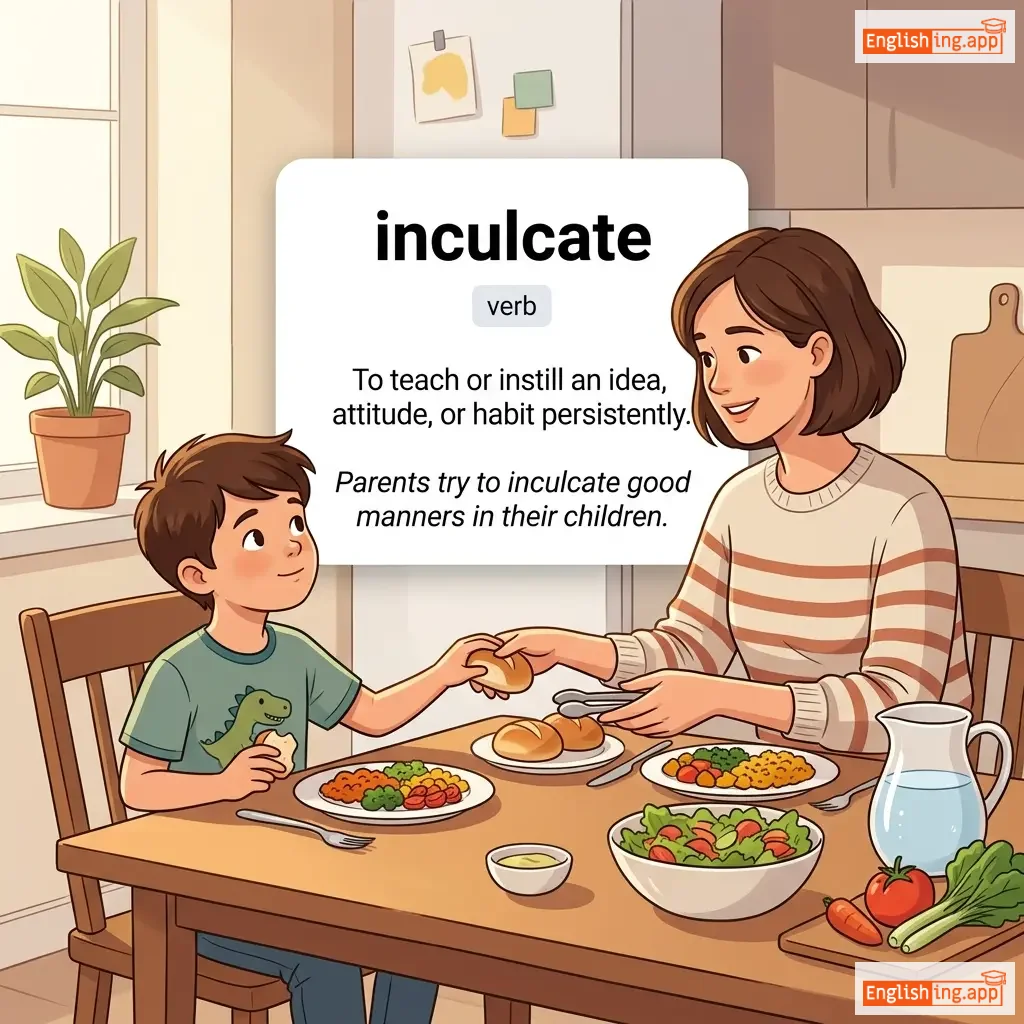
inculcate definition card — visual illustration of the meaning
verb
/ˈɪŋkʌlkeɪt/
inculcar (inculcar)

To teach or instill an idea, attitude, or habit persistently.

"Parents try to inculcate good manners in their children."

"Los padres intentan inculcar buenos modales en sus hijos." (Los padres intentan inculcar buenos modales en sus hijos.)
verb
/ˈɪŋkʌlpeɪt/
inculpar (inculpar)

To blame or accuse someone of wrongdoing.

"The evidence seemed to inculpate the suspect in the crime."

"La evidencia parecía inculpar al sospechoso en el crimen." (La evidencia parecía inculpar al sospechoso en el crimen.)
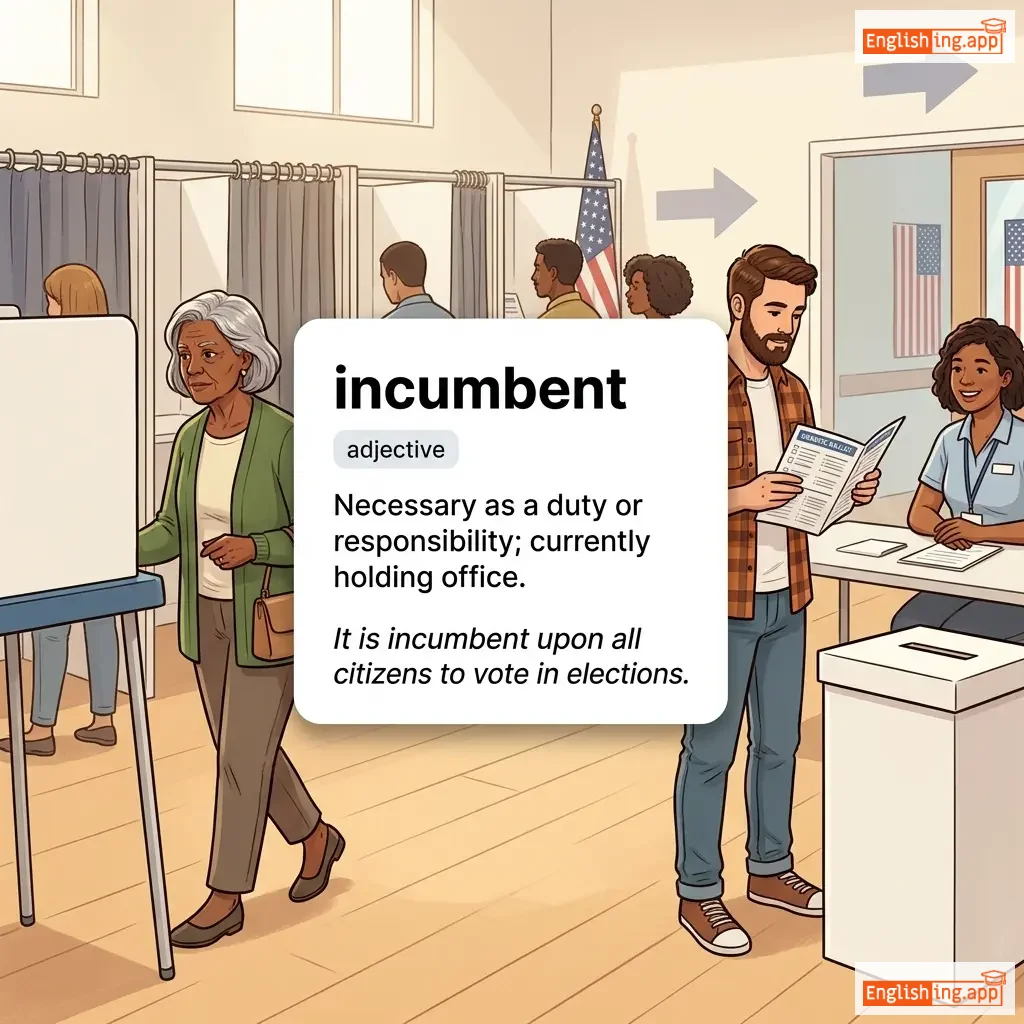
incumbent definition card — visual illustration of the meaning
adjective
/ɪnˈkʌmbənt/
incumbente (incumbente)

Necessary as a duty or responsibility; currently holding office.

"It is incumbent upon all citizens to vote in elections."

"Es incumbente para todos los ciudadanos votar en las elecciones." (Es incumbente para todos los ciudadanos votar en las elecciones.)
verb
/ɪnˈkɜːr/
incurrir (incurrir)

To bring upon oneself something undesirable, usually as a result of actions.

"He incurred a fine for parking in the wrong place."

"Él incurrió en una multa por aparcar en el lugar equivocado." (Él incurrió en una multa por aparcar en el lugar equivocado.)
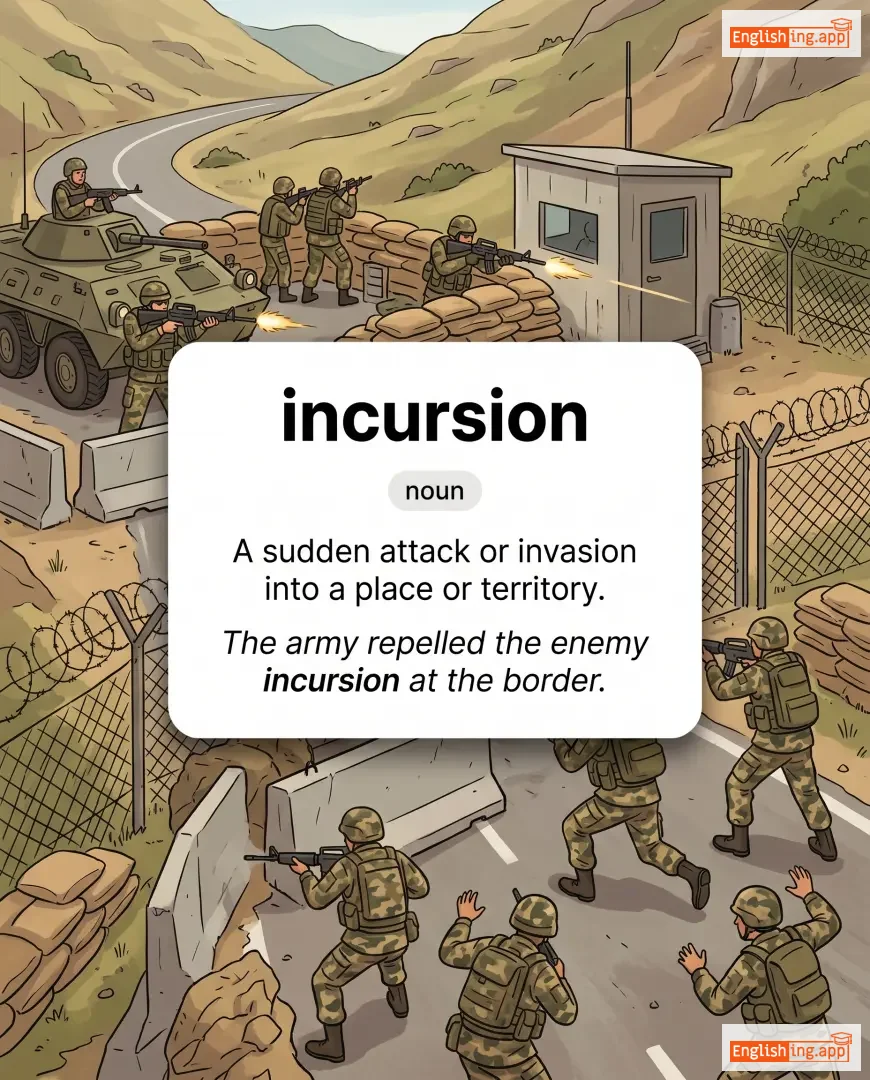
incursion definition card — visual illustration of the meaning
noun
/ɪnˈkɜːrʒən/
incursión (incursion)

A sudden attack or invasion into a place or territory.

"The army repelled the enemy incursion at the border."

"El ejército repelió la incursión enemiga en la frontera." (El ejercito repelió la incursión enemiga en la frontera.)
adjective
/ɪnˈdɛtɪd/
agradecido (agradecido)

Owing gratitude or money to someone; obligated.

"I am deeply indebted to my teacher for her guidance."

"Estoy profundamente agradecido con mi profesora por su orientación." (Estoy profundamente agradecido con mi profesora por su orientación.)
adjective
/ɪnˈdiːsənt/
indecente (indecente)

not conforming to accepted standards of behavior or morality; improper or offensive

"He was warned for making an indecent remark during the meeting."

"Fue advertido por hacer un comentario indecente." (Fue advertido por hacer un comentario indecente)
noun
/ˌɪndɪˈsɪʒən/
indecisión (indecision)

The inability to make a decision quickly or confidently.

"Her indecision caused a delay in the project."

"Su indecisión causó un retraso en el proyecto." (Su indecision causó un retraso en el proyecto.)
adjective
/ˌɪndɪˈsaɪsɪv/
indeciso (indeciso)

Unable to make decisions quickly or firmly.

"He is too indecisive to be a good leader."

"Él es demasiado indeciso para ser un buen líder." (Él es demasiado indeciso para ser un buen líder.)
adjective
/ɪnˈdɛkərəs/
indecoroso (indecoroso)

Not in keeping with good taste and propriety; improper.

"His indecorous behavior shocked the audience."

"Su comportamiento indecoroso sorprendió a la audiencia." (Su comportamiento indecoroso sorprendió a la audiencia.)
adverb
/ɪnˈdiːd/
en efecto (en efecto)

used to emphasize or confirm a statement

"It was a long journey indeed."

"Fue un largo viaje, de hecho." (Fue un largo viaje, de hecho.)
adjective
/ˌɪndɪˈfætɪɡəbl̩/
inagotable (inagotable)

persisting tirelessly; incapable of being fatigued

"Her indefatigable spirit kept the team motivated during the long project."

"Su espíritu inagotable mantuvo al equipo motivado durante el largo proyecto." (Su espiritu inagotable mantuvo al equipo motivado durante el largo proyecto.)
adjective
/ˌɪndɪˈfɛnsəbl̩/
indefendible (indefendible)

not able to be protected or justified

"The minister’s remarks were considered indefensible by the public."

"Los comentarios del ministro fueron considerados indefendibles por el público." (Los comentarios del ministro fueron considerados indefendibles por el público.)
adjective
/ɪnˈdefɪnət/
indefinido (indefinido)

not clearly defined; uncertain; vague; unlimited in time

"The meeting has been postponed for an indefinite period."

"La reunión se ha pospuesto por un período indefinido." (La reunion se ha pospuesto por un periodo indefinido.)
adverb
/ɪnˈdɛfɪnətli/
indefinidamente (indefinidamente)

for an unlimited or unspecified period of time

"The project has been postponed indefinitely."

"El proyecto ha sido pospuesto indefinidamente." (El proyecto ha sido pospuesto indefinidamente.)
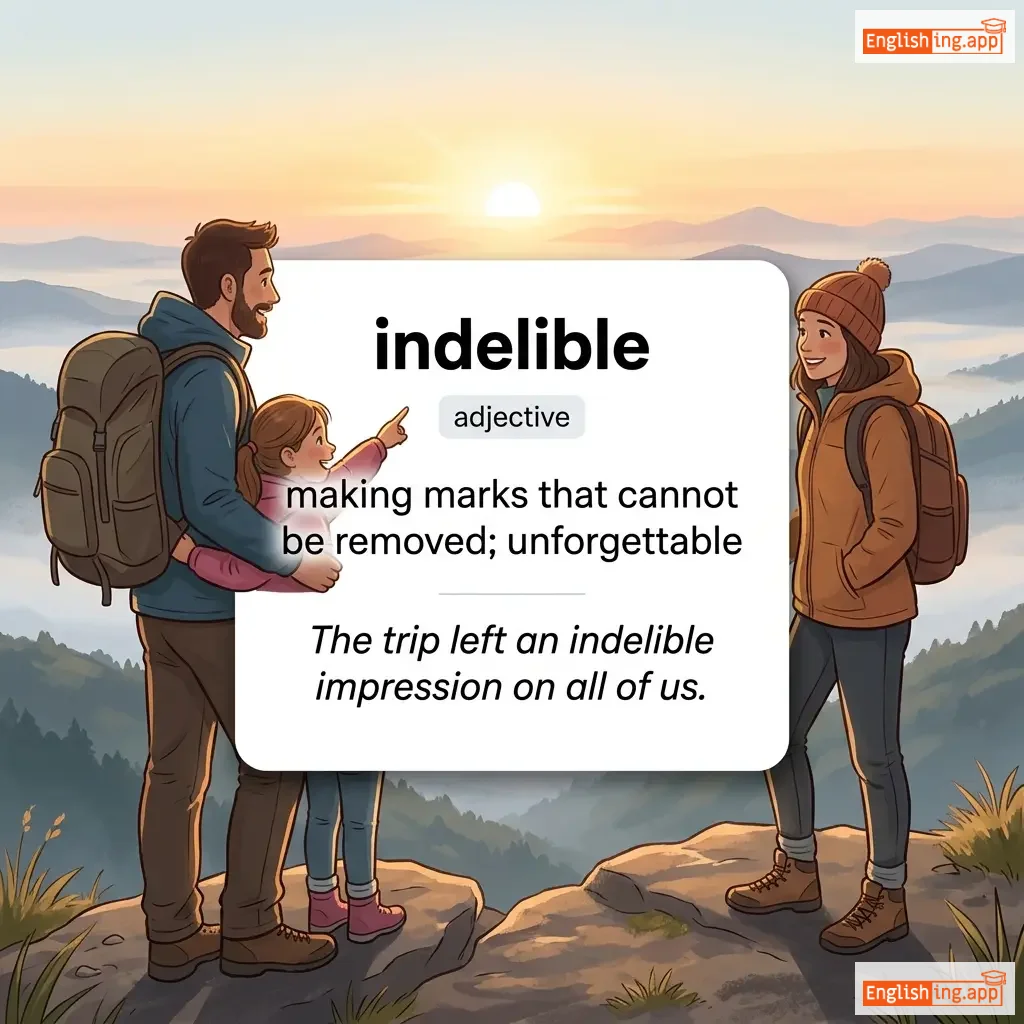
indelible definition card — visual illustration of the meaning
adjective
/ɪnˈdɛlɪbl̩/
inolvidable (inolvidable)

making marks that cannot be removed; unforgettable

"The trip left an indelible impression on all of us."

"El viaje dejó una impresión inolvidable en todos nosotros." (El viaje dejó una impresión inolvidable en todos nosotros.)
verb
/ɪnˈdɛmnɪfaɪ/
indemnizar (indemnizar)

to compensate someone for harm or loss; to secure against future damage or cost

"The insurance company agreed to indemnify the client for the damages."

"La compañía de seguros acordó indemnizar al cliente por los daños." (La compania de seguros acordó indemnizar al cliente por los daños.)
noun
/ɪnˈdɛmnɪti/
indemnización / protección (indemnizacion / proteccion)

Security or protection against financial loss or damage; compensation for loss or damage.

"The insurance policy provides indemnity against fire damage."

"La póliza de seguro proporciona indemnización contra daños por incendio." (La poliza de seguro proporciona indemnizacion contra danos por incendio.)
noun
/ˌɪndɛnˈteɪʃən/
sangría (sangria)

A space left at the beginning of a line of text; a notch or deep recess on a surface.

"The teacher asked the students to use proper indentation in their essays."

"El profesor pidió a los estudiantes que usaran una sangría adecuada en sus ensayos." (El profesor pidió a los estudiantes que usaran una sangría adecuada en sus ensayos.)
noun
/ɪnˈdɛntʃər/
contrato de servidumbre (contrato de servidumbre)

A formal legal agreement, contract, or document, often relating to work or service.

"In the 18th century, many workers came under indenture to work overseas."

"En el siglo XVIII, muchos trabajadores estuvieron bajo un contrato de servidumbre para trabajar en el extranjero." (En el siglo XVIII, muchos trabajadores estuvieron bajo un contrato de servidumbre para trabajar en el extranjero.)
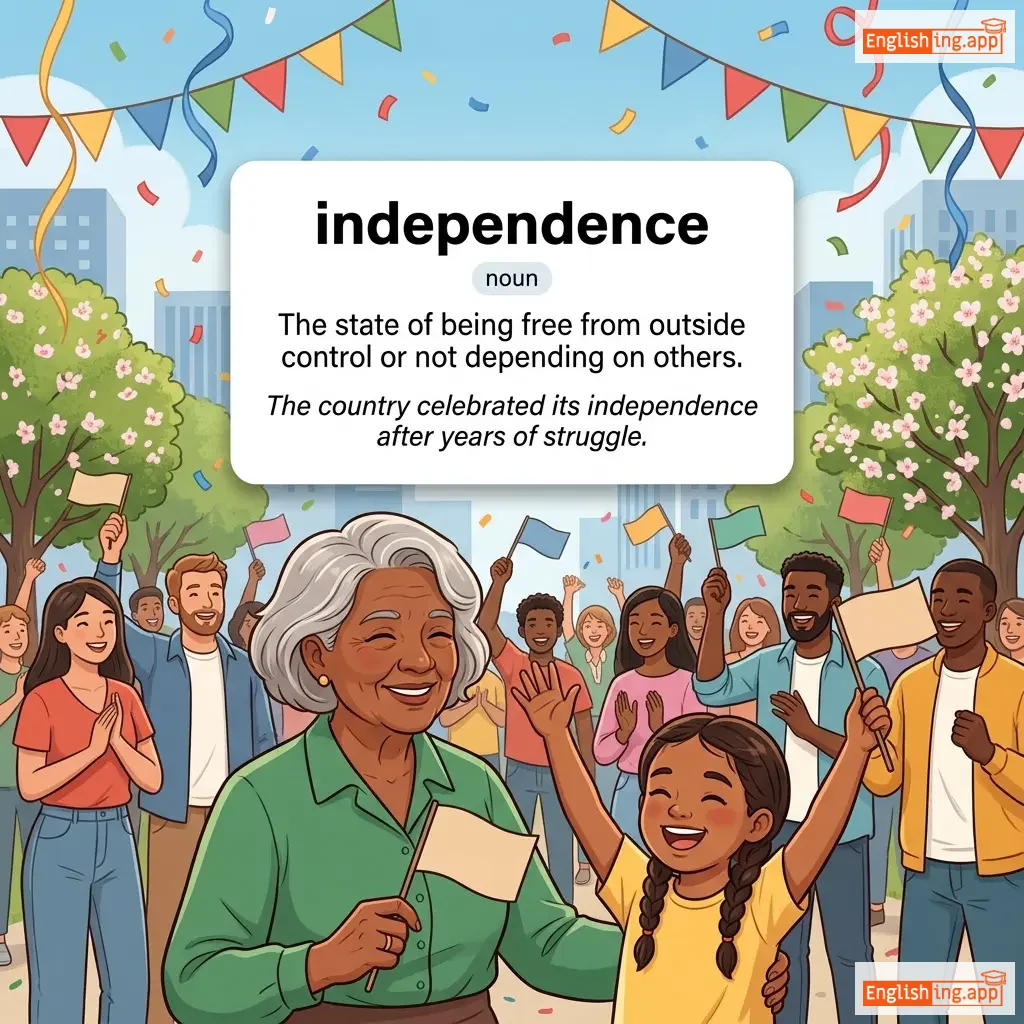
independence definition card — visual illustration of the meaning
noun
/ˌɪndɪˈpɛndəns/
independencia (independencia)

The state of being free from outside control or not depending on others.

"The country celebrated its independence after years of struggle."

"El país celebró su independencia después de años de lucha." (El pais celebro su independencia despues de anos de lucha.)
independent definition card — visual illustration of the meaning
adjective
/ˌɪn.dɪˈpen.dənt/
independiente (independiente)

Free from outside control; not depending on others.

"She is an independent woman who runs her own business."

"Ella es una mujer independiente que maneja su propio negocio." (Ella es una mujer independiente que maneja su propio negocio.)
adjective
/ˌɪndɪˈskraɪbəbl/
indescriptible (indescriptible)

Too unusual, extreme, or great to be adequately described in words.

"The beauty of the sunset was indescribable."

"La belleza del atardecer era indescriptible." (La belleza del atardecer era indescriptible.)
adjective
/ˌɪndɪˈstrʌktəbl/
indestructible (indestructible)

Impossible to destroy or break.

"The superhero's shield was said to be indestructible."

"Se dijo que el escudo del superhéroe era indestructible." (Se dijo que el escudo del superhéroe era indestructible.)
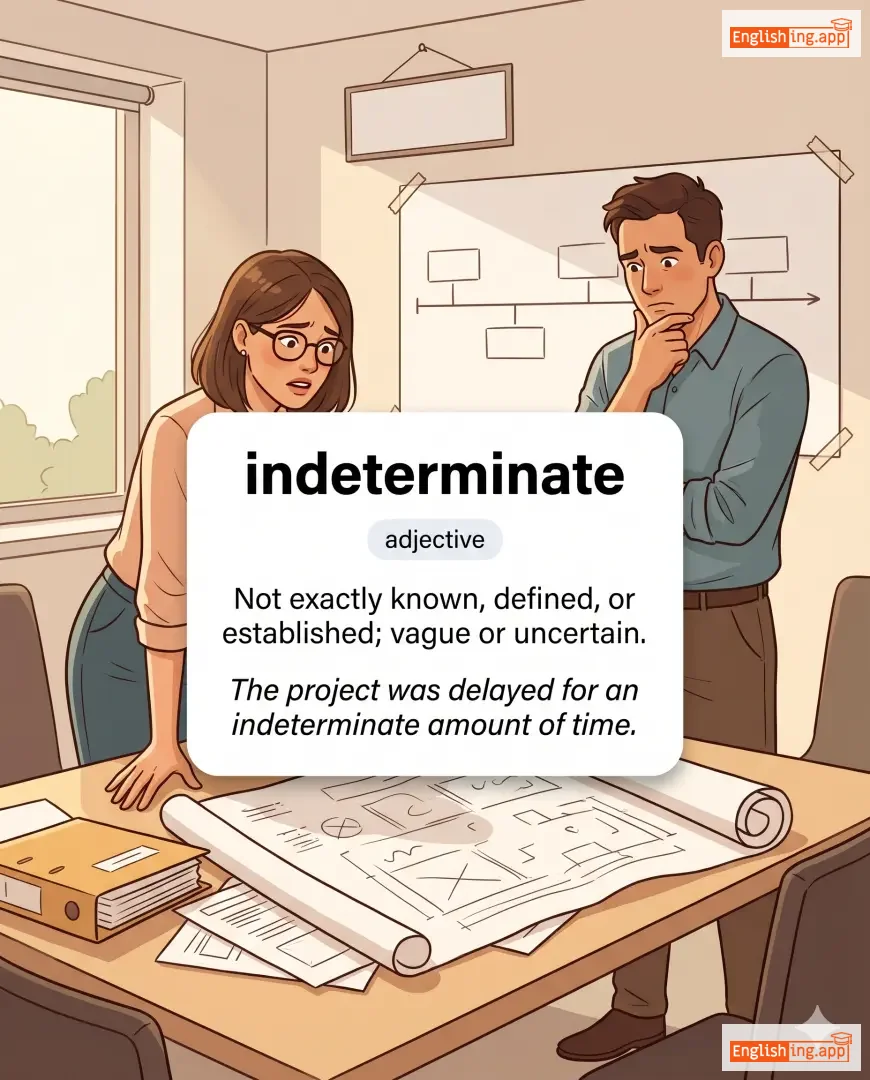
indeterminate definition card — visual illustration of the meaning
adjective
/ˌɪndɪˈtɜːrmənət/
indeterminado (indeterminado)

Not exactly known, defined, or established; vague or uncertain.

"The project was delayed for an indeterminate amount of time."

"El proyecto se retrasó por un tiempo indeterminado." (El proyecto se retrasó por un tiempo indeterminado.)
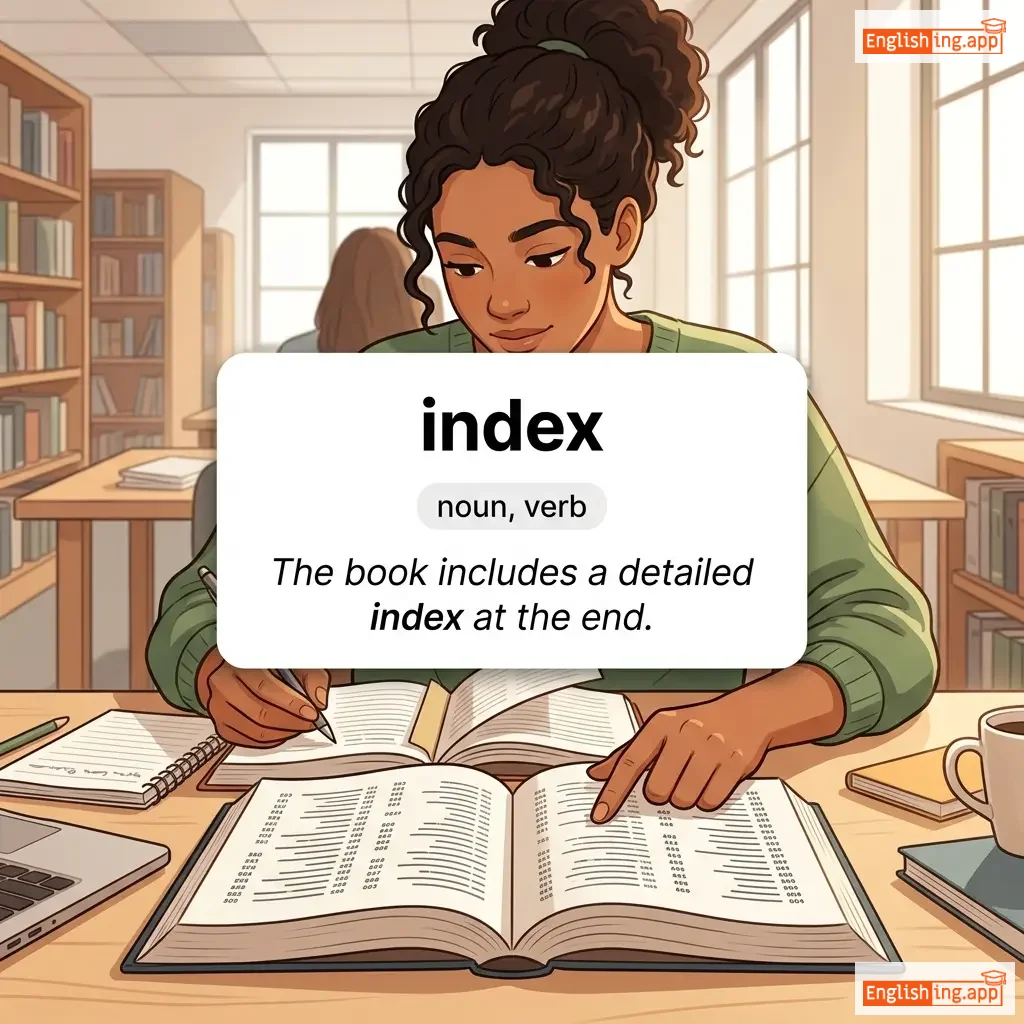
index definition card — visual illustration of the meaning
noun, verb
/ˈɪndeks/
índice (indice)

A list of items arranged in order, or to arrange data systematically for reference.

"The book includes a detailed index at the end."

"El libro incluye un índice detallado al final." (El libro incluye un índice detallado al final.)
adjective/noun
/ˈɪndiən/
indio (indio)

Relating to India, its people, or their culture.

"She loves Indian food, especially biryani."

"A ella le encanta la comida india, especialmente el biryani." (A ella le encanta la comida india, especialmente el biryani.)
noun
/ˈɪndɪkənt/
indicador (indicador)

Something that indicates or points to a fact or condition.

"High fever is often an indicant of infection."

"La fiebre alta a menudo es un indicador de infección." (La fiebre alta a menudo es un indicador de infección.)
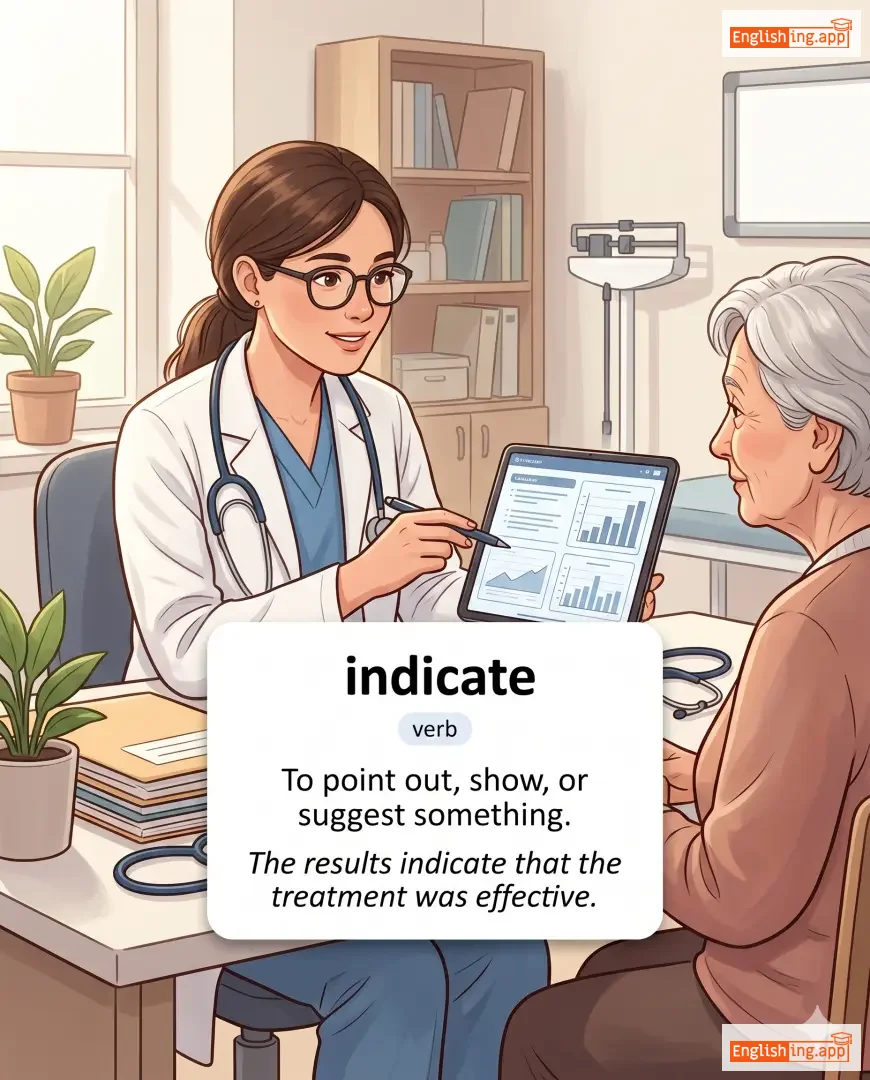
indicate definition card — visual illustration of the meaning
verb
/ˈɪndɪˌkeɪt/
indicar (indicar)

To point out, show, or suggest something.

"The results indicate that the treatment was effective."

"Los resultados indican que el tratamiento fue efectivo." (Los resultados indican que el tratamiento fue efectivo.)
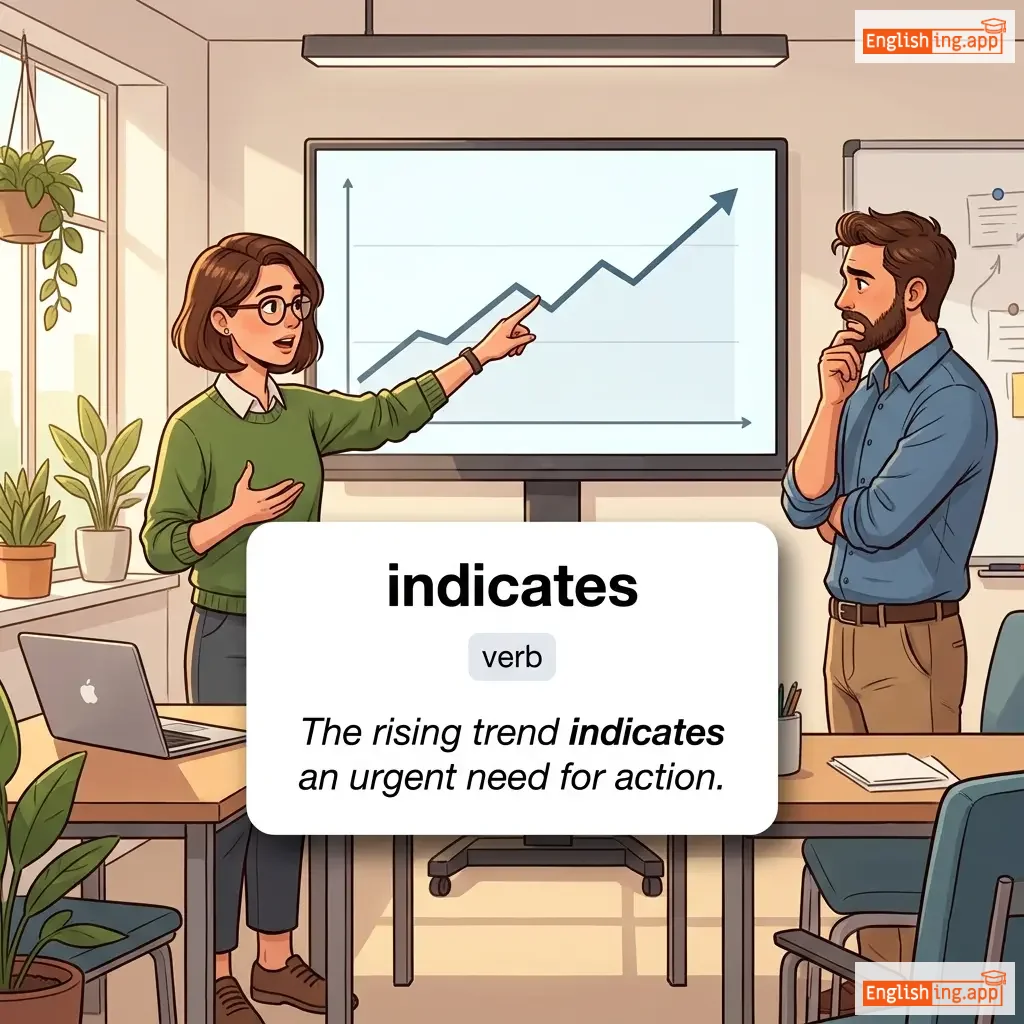
indicates definition card — visual illustration of the meaning
verb
ˈɪndɪkeɪts
indica (indika)

Point out; show; be a sign or symptom of; suggest as a desirable or necessary course of action.

"The rising trend indicates an urgent need for action."

"La tendencia creciente indica una necesidad urgente de acción." (La tendencia creciente indica una necesidad urgente de acción.)