Vocabularios

Descubra, aprenda y domine el vocabulario en inglés

adjective
/ɪnˈædɪkwət/
inadecuado (inadecuado)

Not sufficient or good enough.

"The funding was inadequate to complete the project."

"El financiamiento era inadecuado para completar el proyecto." (El financiamiento era inadecuado para completar el proyecto.)
adjective
/ˌɪnədˈmɪsəbl̩/
inadmisible (inadmisible)

Not allowed, especially as evidence in a court of law.

"The judge ruled the evidence inadmissible."

"El juez dictaminó que la evidencia era inadmisible." (El juez dictaminó que la evidencia era inadmisible.)
noun
/ˌɪnədˈvɜːrtəns/
descuido (descuido)

Failure to pay attention; carelessness.

"The error happened through sheer inadvertence."

"El error ocurrió por pura inadvertencia." (El error ocurrio por pura inadvertencia.)
adjective
/ˌɪnədˈvɜːrtənt/
inadvertido, no intencionado (inadvertido, no intencionado)

Not resulting from or achieved through deliberate planning; unintentional.

"Her inadvertent mistake caused a delay in the project."

"Su error inadvertido causó un retraso en el proyecto." (Su error inadvertido causó un retraso en el proyecto.)
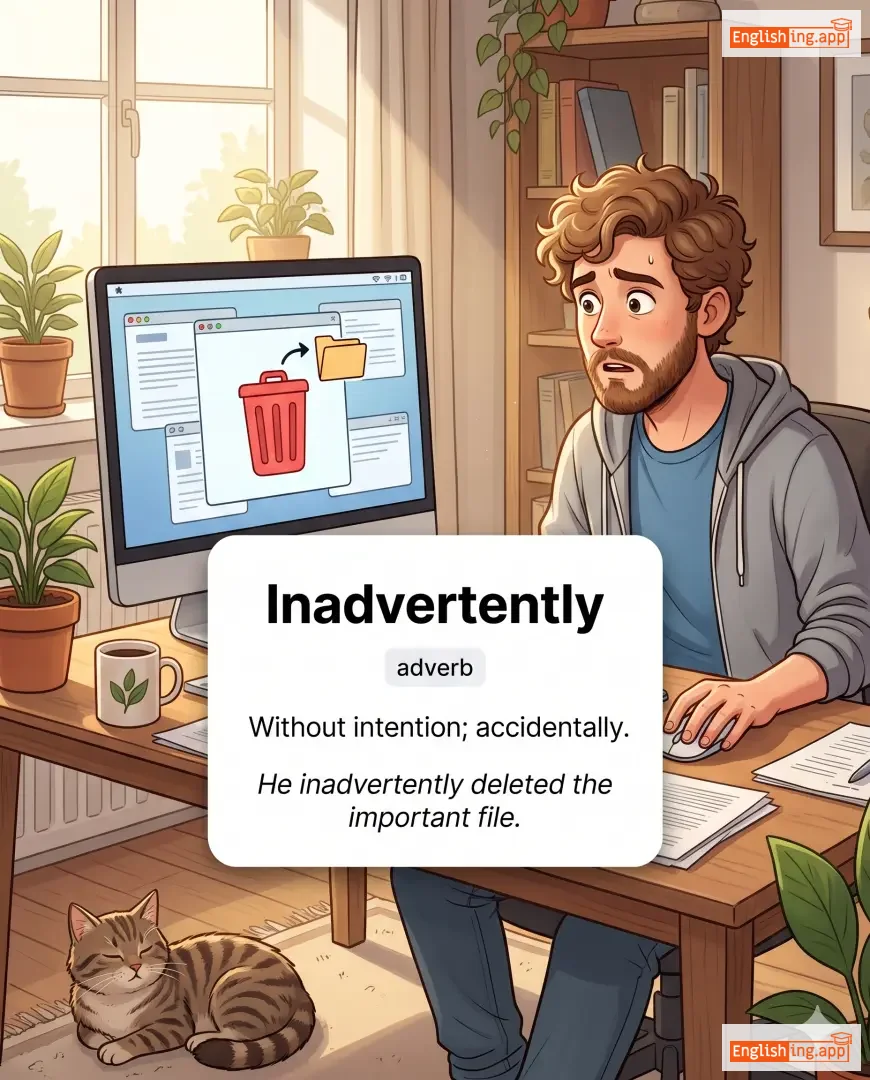
Inadvertently definition card — visual illustration of the meaning
adverb
/ˌɪnədˈvɜːrtəntli/
accidentalmente (accidentalmente)

Without intention; accidentally.

"He inadvertently deleted the important file."

"Él borró accidentalmente el archivo importante." (Él borró accidentalmente el archivo importante.)
adjective
/ˌɪnədˈvaɪzəbl/
desaconsejable (desaconsejable)

Not recommended; likely to have undesirable consequences.

"It is inadvisable to drive in such heavy rain."

"No es recomendable conducir bajo tal lluvia intensa." (No es recomendable conducir bajo tal lluvia intensa.)
adjective
/ɪnˈeɪliənəbl/
inalienable (inalienable)

Unable to be taken away or transferred; absolute and permanent.

"Freedom of speech is an inalienable right."

"La libertad de expresión es un derecho inalienable." (La libertad de expresion es un derecho inalienable.)
noun
/ˌɪnəməˈrɑːtə/
amante (amante)

A woman with whom someone is in love; a female lover.

"He wrote a poem dedicated to his inamorata."

"Escribió un poema dedicado a su enamorada." (Escribio un poema dedicado a su enamorada.)
adjective
/ɪˈneɪn/
insensato, tonto (insensato, tonto)

lacking sense, meaning, or significance; silly or pointless

"The movie was criticized for its inane dialogue."

"La película fue criticada por sus diálogos insensatos." (La pelicula fue criticada por sus dialogos insensatos.)
adjective
/ɪˈnænɪmət/
objeto inanimado (objeto inanimado)

not alive, especially not in the manner of animals and humans; lifeless

"The museum was full of inanimate objects from ancient times."

"El museo estaba lleno de objetos inanimados de tiempos antiguos." (El museo estaba lleno de objetos inanimados de tiempos antiguos.)
noun
/ɪˈnænɪti/
tonterías, necedades (tonterias, necedades)

a nonsensical remark or action; silliness; emptiness

"The speech was full of inanities that bored the audience."

"El discurso estaba lleno de tonterías que aburrían a la audiencia." (El discurso estaba lleno de tonterías que aburrían a la audiencia.)
adjective
/ˌɪnæprɪˈhɛnsəbl/
incomprensible (incomprensible)

not understandable; incomprehensible

"The concept was so abstract that it seemed inapprehensible to most students."

"El concepto era tan abstracto que parecía incomprensible para la mayoría de los estudiantes." (El concepto era tan abstracto que parecía incomprensible para la mayoría de los estudiantes.)
adjective
/ˌɪnəˈproʊpriət/
inapropiado (inapropriado)

not suitable or proper in the circumstances

"It was inappropriate to talk loudly in the library."

"Era inapropiado hablar en voz alta en la biblioteca." (Era inapropiado hablar en voz alta en la biblioteca.)
adjective
/ɪnˈæpt/
inapropiado (inapropiado)

not suitable or appropriate in the circumstances

"His inapt choice of words offended many people."

"Su elección inapropiada de palabras ofendió a muchas personas." (Su eleccion inapropiada de palabras ofendió a muchas personas.)
adjective
/ˌɪnɑːrˈtɪkjʊlət/
inarticulado (inarticulado)

Unable to express oneself clearly or effectively in speech or writing.

"She became inarticulate with emotion during the speech."

"Ella se volvió inarticulada con emoción durante el discurso." (Ella se volvió inarticulada con emoción durante el discurso.)
adverb
/ˌɪnəzˈmʌtʃ/
en la medida en que (en la medida en que)

To the extent that; considering that.

"Inasmuch as you are their teacher, you should guide them carefully."

"En la medida en que eres su maestro, deberías guiarlos cuidadosamente." (En la medida en que eres su maestro, deberías guiarlos cuidadosamente.)
conjunction
/ˌɪnəzˈmʌtʃ æz/
ya que (ya que)

Because; since.

"He cannot attend, inasmuch as he is unwell."

"Él no puede asistir, ya que está enfermo." (Él no puede asistir, ya que está enfermo.)
adjective
/ˌɪnəˈtɛntɪv/
inattento (inattento)

not paying attention; lacking focus or concentration

"The inattentive student missed several important instructions."

"El estudiante inattento perdió varias instrucciones importantes." (El estudiante inattento perdio varias instrucciones importantes)
adjective
/ɪnˈɔːdəbl/
ininteligible (ininteligible)

Unable to be heard.

"Her voice was almost inaudible over the noise."

"Su voz era casi ininteligible sobre el ruido." (Su voz era casi ininteligible sobre el ruido.)
adjective
/ɪˈnɔːɡjərəl/
inaugural (inaugural)

marking the beginning of something; first; opening

"The president delivered his inaugural speech."

"El presidente dio su discurso inaugural." (El presidente dio su discurso inaugural.)
verb
/ɪˈnɔːɡjʊreɪt/
inaugurar (inaugurar)

To formally begin or introduce something, especially with a ceremony.

"The mayor will inaugurate the new bridge tomorrow."

"El alcalde inaugurará el nuevo puente mañana." (El alcalde inaugurará el nuevo puente mañana.)
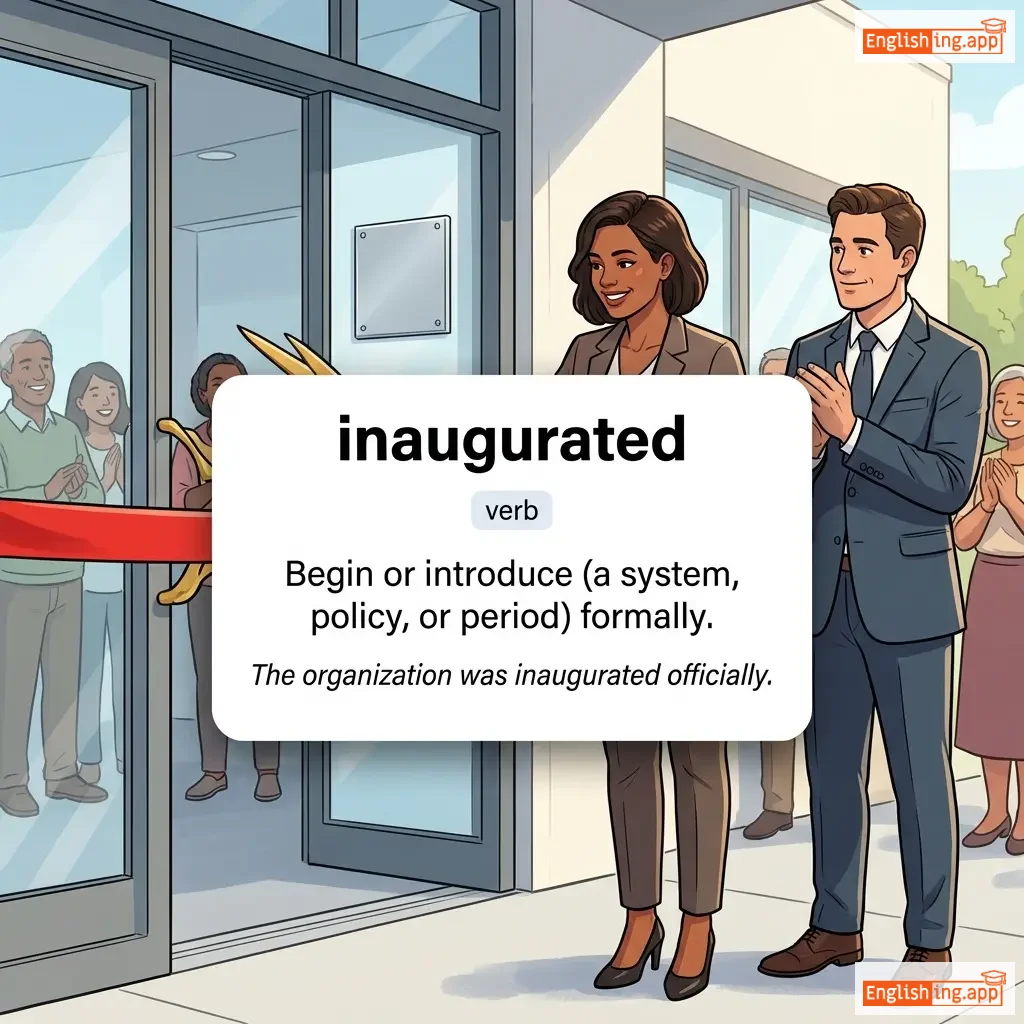
inaugurated definition card — visual illustration of the meaning
verb
ɪˈnɔː.ɡjə.reɪ.tɪd
inaugurado (inaugurado)

Begin or introduce (a system, policy, or period) formally.

"The organization was inaugurated officially."

"La organización fue inaugurada oficialmente." (La organizacion fue inaugurada oficialmente.)
adjective
/ˌɪnɔːˈspɪʃəs/
desafortunado (desafortunado)

Not conducive to success; unpromising or unlucky.

"The event began under inauspicious circumstances."

"El evento comenzó bajo circunstancias desfavorables." (El evento comenzo bajo circunstancias desfavorables.)
adjective
/ˈɪnˌbɔːrn/
innato (inborn)

existing from birth; innate

"She has an inborn talent for music."

"Ella tiene un talento innato para la musica." (Ella tiene un talento innato para la musica.)
adjective
/ˈɪnˌbrɛd/
innato (innato)

existing naturally in a person or animal; also related to reproduction within a limited community

"He has an inbred sense of loyalty."

"Él tiene un sentido innato de lealtad." (El tiene un sentido innato de lealtad.)
noun
/ˌɪnkænˈdɛsəns/
incandescencia (incandescencia)

the emission of light from a hot object; brilliance

"The incandescence of the candle filled the dark room."

"La incandescencia de la vela llenó la habitación oscura." (La incandescencia de la vela lleno la habitacion oscura.)
adjective
/ˌɪnkænˈdɛsənt/
incandescente (incandescente)

emitting light as a result of being heated; extremely bright or passionate

"The incandescent lamp lit up the entire hall."

"La lámpara incandescente iluminó todo el salón." (La lámpara incandescente iluminó todo el salón.)
noun
/ˌɪnkænˈteɪʃən/
encantación (encantacion)

a series of words used as a magic spell or charm

"The wizard chanted an incantation to summon the spirits."

"El mago recitó una encantación para invocar los espíritus." (El mago recito una encantacion para invocar los espiritus.)
noun
/ˌɪnˌkeɪpəˈbɪləti/
incapacidad (incapacidad)

lack of ability or power to do something; inability or incompetence

"His incapability to manage the team led to serious problems."

"Su incapacidad para gestionar el equipo provocó problemas graves." (su incapacidad para gestionar el equipo provoco problemas graves)
adjective
/ɪnˈkeɪpəbəl/
incapaz (incapaz)

lacking the ability, skill, or capacity to do something

"He is incapable of understanding complex instructions."

"Es incapaz de entender instrucciones complejas." (Es incapaz de entender instrucciones complejas)
verb
/ˌɪnkəˈpæsɪteɪt/
incapacitar (incapacitar)

to deprive someone or something of the ability or strength to function

"The severe injury incapacitated the player for the rest of the season."

"La grave lesión incapacitó al jugador para el resto de la temporada." (La grave lesion incapacito al jugador para el resto de la temporada.)
noun
/ˌɪnkəˈpæsəti/
incapacidad (incapacidad)

the lack of ability, power, or fitness to do something

"His mental incapacity prevented him from making important decisions."

"Su incapacidad mental le impidió tomar decisiones importantes." (Su incapacidad mental le impidió tomar decisiones importantes.)
verb
/ɪnˈkɑːrsəreɪt/
encarcelar (encarcelar)

to imprison or confine someone

"The authorities incarcerated the criminal after the trial."

"Las autoridades encarcelaron al criminal después del juicio." (Las autoridades encarcelaron al criminal después del juicio.)
noun
/ɪnˌkɑːsəˈreɪʃən/
encarcelamiento (encarcelamiento)

the state of being imprisoned or confined

"The criminal faced years of incarceration for his crimes."

"El criminal enfrentó años de encarcelamiento por sus crímenes." (El criminal enfrento anos de encarcelamiento por sus crimenes.)
adjective/noun
/ɪnˈkɑːrnədiːn/
rojo intenso (rojo intenso)

a bright crimson or pinkish-red color

"The sky turned incarnadine at sunset."

"El cielo se tornó rojo intenso al atardecer." (El cielo se tornó rojo intenso al atardecer.)
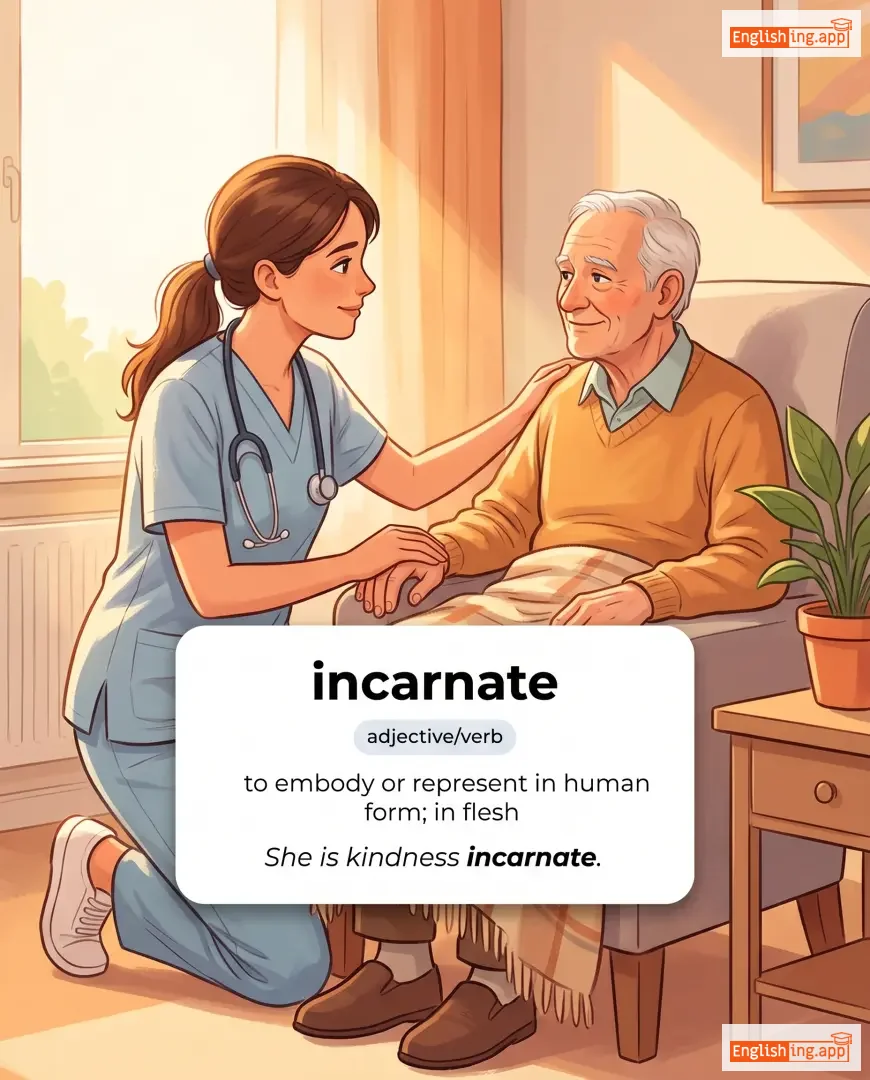
incarnate definition card — visual illustration of the meaning
adjective/verb
/ɪnˈkɑːrneɪt/
encarnado (encarnado)

to embody or represent in human form; in flesh

"She is kindness incarnate."

"Ella es la bondad encarnada." (Ella es la bondad encarnada.)
noun
/ˌɪnkɑːrˈneɪʃən/
encarnación (encarnacion)

the embodiment of a deity, spirit, or quality in a physical form

"The monk was considered the incarnation of compassion."

"El monje fue considerado la encarnación de la compasión." (El monje fue considerado la encarnacion de la compasion.)
adjective
/ɪnˈsɛndiˌɛri/
incendiario / provocador (incendiario / provocador)

designed to cause fires or stir up conflict

"The politician’s incendiary remarks angered the crowd."

"Las declaraciones incendiarias del político enfurecieron a la multitud." (Las declaraciones incendiarias del politico enfurecieron a la multitud.)
noun/verb
/ˈɪnsɛns/
incienso / enfurecer (incienso / enfurecer)

a substance burned for its sweet smell (noun); to make very angry (verb)

"The smell of incense filled the temple, but his rude words incensed her."

"El olor del incienso llenó el templo, pero sus palabras groseras la enfurecieron." (El olor del incienso llenó el templo, pero sus palabras groseras la enfurecieron.)
noun
/ɪnˈsɛntɪv/
incentivo (incentivo)

a thing that motivates or encourages someone to do something

"The company offers bonuses as an incentive to increase productivity."

"La empresa ofrece bonificaciones como incentivo para aumentar la productividad." (La empresa ofrece bonificaciones como incentivo para aumentar la productividad.)
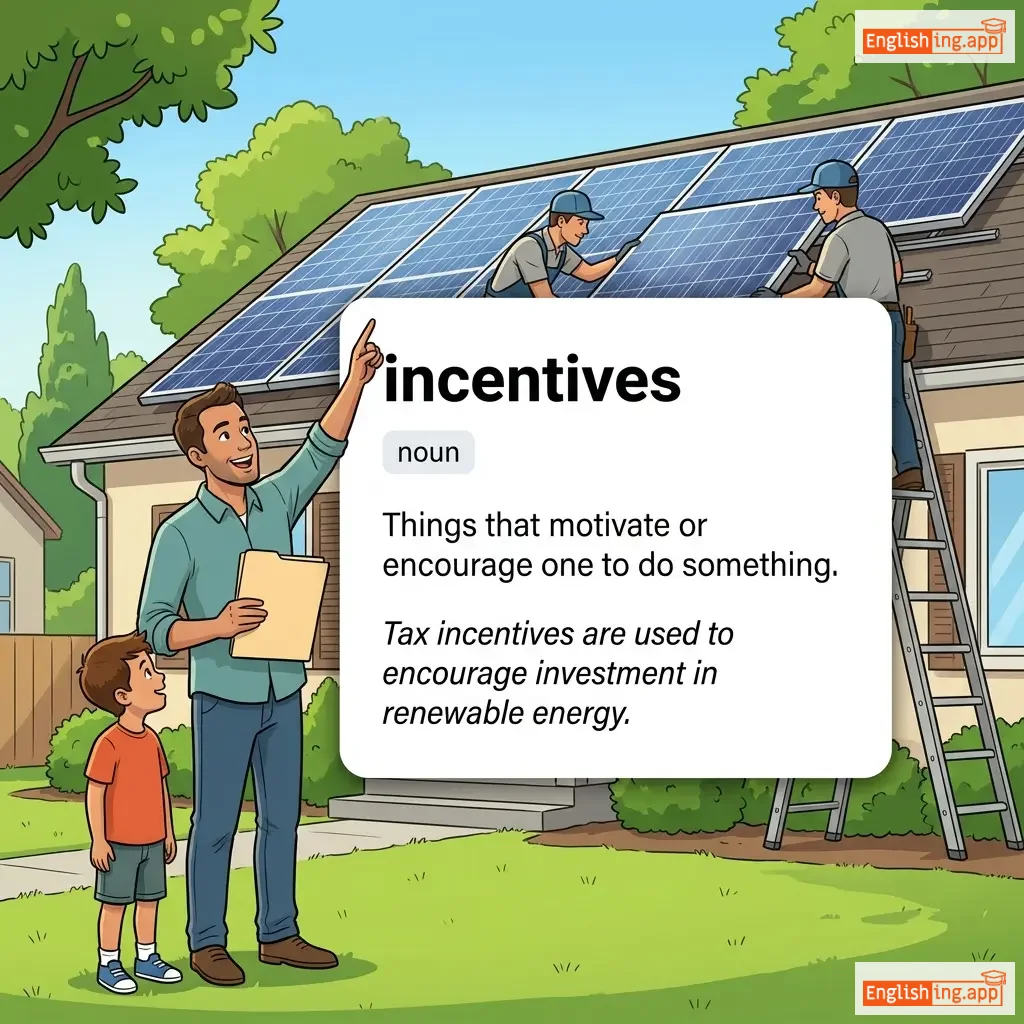
incentives definition card — visual illustration of the meaning
noun
ɪnˈsɛntɪvz
incentivos (incentivos)

Things that motivate or encourage one to do something.

"Tax incentives are used to encourage investment in renewable energy."

"Se utilizan incentivos fiscales para fomentar la inversión en energía renovable." (Se utilizan incentivos fiscales para fomentar la inversión en energía renovable.)
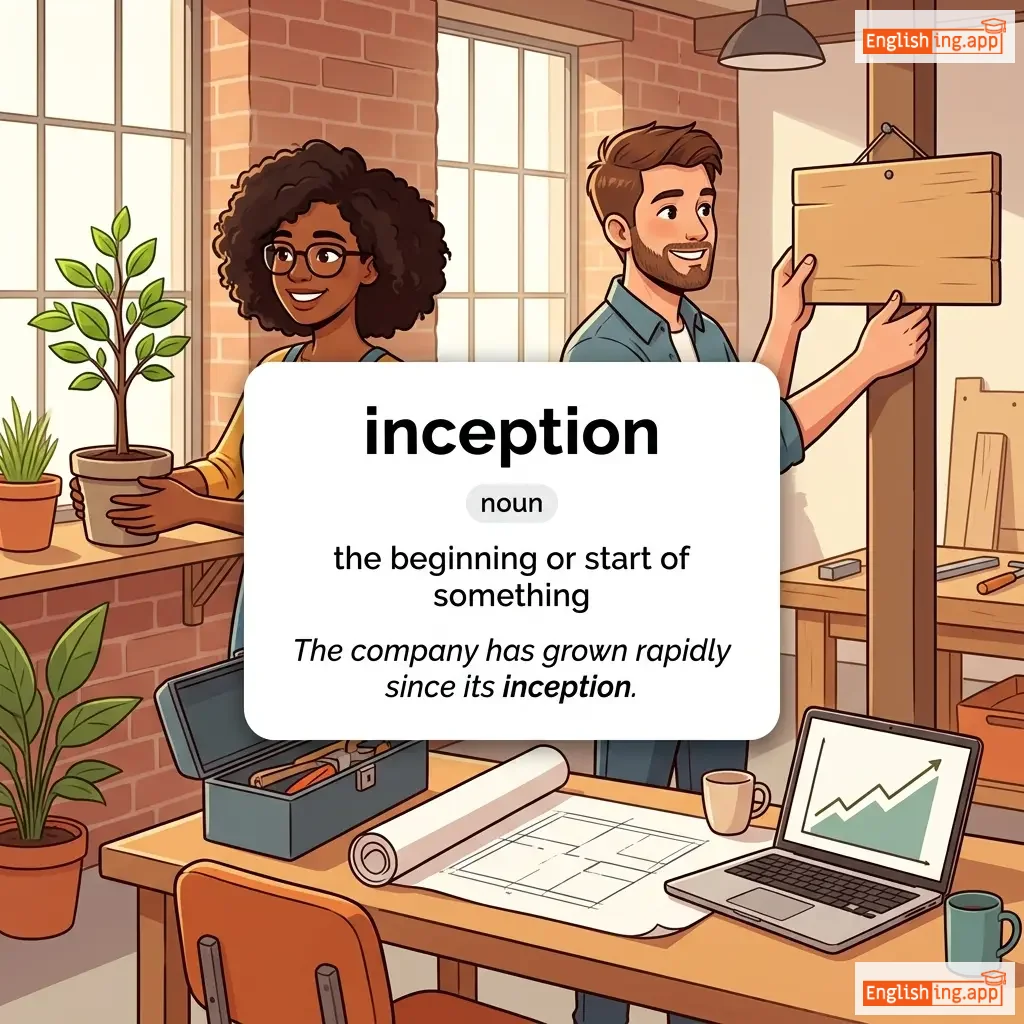
inception definition card — visual illustration of the meaning
noun
/ɪnˈsɛpʃən/
inicio (inicio)

the beginning or start of something

"The company has grown rapidly since its inception."

"La empresa ha crecido rápidamente desde su inicio." (La empresa ha crecido rápidamente desde su inicio.)
adjective
/ɪnˈsɛptɪv/
inicial (inicial)

Relating to or marking the beginning or initial stage of something.

"The inceptive phase of the project was marked by enthusiastic planning."

"La fase inicial del proyecto fue marcada por una planificación entusiasta." (La fase inicial del proyecto fue marcada por una planificación entusiasta.)
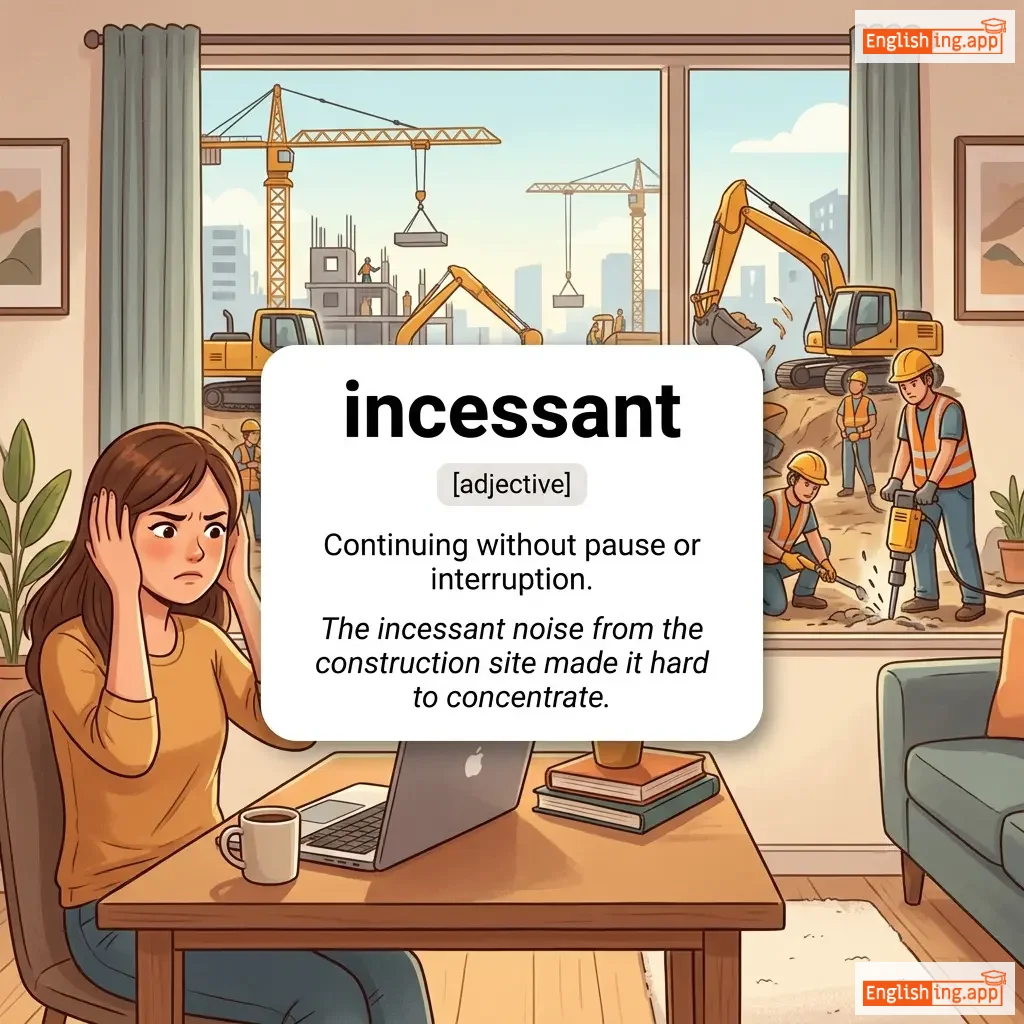
incessant definition card — visual illustration of the meaning
adjective
/ɪnˈsɛsənt/
incesante (incesante)

Continuing without pause or interruption.

"The incessant noise from the construction site made it hard to concentrate."

"El ruido incesante del sitio de construcción hizo difícil concentrarse." (El ruido incesante del sitio de construccion hizo dificil concentrarse.)
noun, verb
/ɪntʃ/
pulgada / moverse lentamente (pulgada / moverse lentamente)

A unit of length equal to 2.54 centimeters; or to move slowly and carefully in small amounts.

"She inched closer to the edge of the stage."

"Ella se acercó lentamente al borde del escenario." (Ella se acerco lentamente al borde del escenario.)
adverb
/ˈɪntʃmiːl/
poco a poco (poco a poco)

Gradually, little by little.

"The old castle fell inchmeal into ruin."

"El viejo castillo cayó poco a poco en ruinas." (El viejo castillo cayó poco a poco en ruinas.)
inchoate definition card — visual illustration of the meaning
adjective
/ɪnˈkoʊ.ɪt/ or /ɪnˈkoʊ.eɪt/
incompleto (incompleto)

Just begun and not fully formed; rudimentary.

"His inchoate ideas needed more research to be developed."

"Sus ideas incompletas necesitaban más investigación para ser desarrolladas." (Sus ideas incompletas necesitaban más investigación para ser desarrolladas.)
adjective
/ɪnˈkoʊətɪv/
incipiente (incipiente)

relating to the beginning of something; in an initial stage

"The poet used inchoative expressions to depict the dawn of creation."

"El poeta utilizó expresiones incipientes para describir el amanecer de la creación." (El poeta utilizó expresiones incipientes para describir el amanecer de la creación.)
noun
/ˈɪnsɪdəns/
incidencia (incidencia)

the occurrence, rate, or frequency of something

"The incidence of road accidents has decreased this year."

"La incidencia de accidentes de tráfico ha disminuido este año." (La incidencia de accidentes de tráfico ha disminuido este año.)
noun
/ˈɪnsɪdənt/
incidente (incidente)

an event or occurrence, often unpleasant or unusual

"The police quickly responded to the incident in the park."

"La policía respondió rápidamente al incidente en el parque." (La policía respondió rápidamente al incidente en el parque.)