वोकैबुलरीज

इंग्लिश वोकैबुलरी डिस्कवर, लर्न और मास्टर करें

adjective
/ɪnˈædɪkwət/
अपर्याप्त (aparyapt)

Not sufficient or good enough.

"The funding was inadequate to complete the project."

"परियोजना को पूरा करने के लिए वित्त अपर्याप्त था।" (Pariyojna ko pura karne ke liye vitt aparyapt tha.)
adjective
/ˌɪnədˈmɪsəbl̩/
अस्वीकृत (asweekrit)

Not allowed, especially as evidence in a court of law.

"The judge ruled the evidence inadmissible."

"न्यायाधीश ने प्रमाण को अस्वीकार कर दिया।" (Nyayadhish ne pramaan ko asweekrit kar diya.)
noun
/ˌɪnədˈvɜːrtəns/
असावधानी (asavdhani)

Failure to pay attention; carelessness.

"The error happened through sheer inadvertence."

"त्रुटि शुद्ध असावधानी के कारण हुई।" (Truti shuddh asavdhani ke karan hui.)
adjective
/ˌɪnədˈvɜːrtənt/
अनायास, अनिच्छिक (anayas, anichchhik)

Not resulting from or achieved through deliberate planning; unintentional.

"Her inadvertent mistake caused a delay in the project."

"उसकी अनचाही गलती ने परियोजना में देरी कर दी।" (uski anchaahi galti ne pariyojana mein deri kar di.)
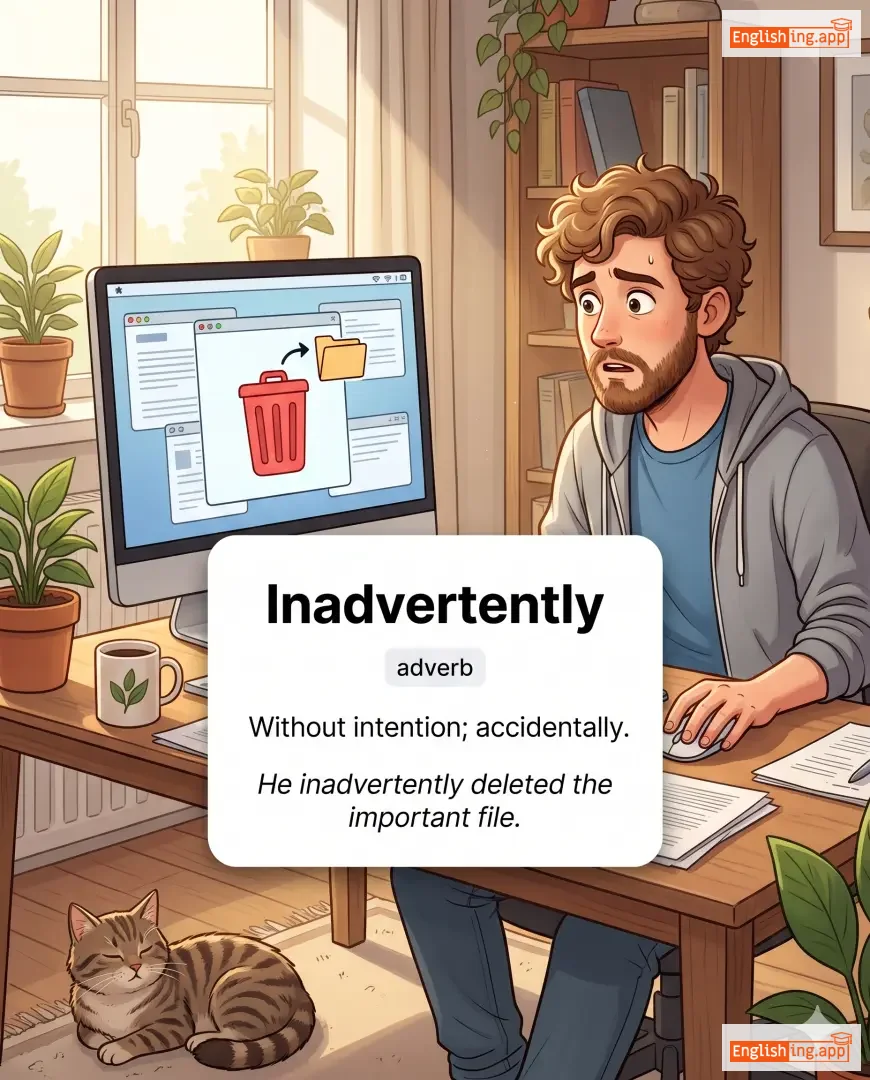
Inadvertently definition card — visual illustration of the meaning
adverb
/ˌɪnədˈvɜːrtəntli/
अचानक (achanak)

Without intention; accidentally.

"He inadvertently deleted the important file."

"उसने अनजाने में महत्वपूर्ण फ़ाइल हटा दी।" (Usne anjaane mein mahatvapurn file hata di.)
adjective
/ˌɪnədˈvaɪzəbl/
असुझावित (asujhavit)

Not recommended; likely to have undesirable consequences.

"It is inadvisable to drive in such heavy rain."

"ऐसी भारी बारिश में गाड़ी चलाना असुझावित है।" (aisi bhari baarish mein gaadi chalana asujhavit hai.)
adjective
/ɪnˈeɪliənəbl/
अपरिवर्तनीय (aparivartaniya)

Unable to be taken away or transferred; absolute and permanent.

"Freedom of speech is an inalienable right."

"व्यक्ति की स्वतंत्रता एक अपरिवर्तनीय अधिकार है।" (vyakti ki svatantrata ek aparivartaniya adhikar hai)
noun
/ˌɪnəməˈrɑːtə/
प्रेमिका (inamorata)

A woman with whom someone is in love; a female lover.

"He wrote a poem dedicated to his inamorata."

"उसने अपनी प्रेमिका के लिए एक कविता लिखी।" (Usne apni premika ke liye ek kavita likhi)
adjective
/ɪˈneɪn/
बेवकूफी, निरर्थक (bewakoofi, nirarthak)

lacking sense, meaning, or significance; silly or pointless

"The movie was criticized for its inane dialogue."

"फिल्म को इसके बेवकूफी संवादों के लिए आलोचना की गई थी।" (Film ko iske bewakoofi samvadon ke liye alochana ki gayi thi.)
adjective
/ɪˈnænɪmət/
निर्जीव वस्तु (nirjeev vastu)

not alive, especially not in the manner of animals and humans; lifeless

"The museum was full of inanimate objects from ancient times."

"संग्रहालय प्राचीन समय की निर्जीव वस्तुओं से भरा हुआ था।" (Sangrahalay prachin samay ki nirjeev vastuo se bhara hua tha.)
noun
/ɪˈnænɪti/
बकवास, मूर्खता (bakwas, murkhata)

a nonsensical remark or action; silliness; emptiness

"The speech was full of inanities that bored the audience."

"भाषण बकवास से भरा हुआ था जिसने दर्शकों को ऊब दिया।" (Bhashan bakwas se bhara hua tha jisne darshako ko ub diya.)
adjective
/ˌɪnæprɪˈhɛnsəbl/
अवोध्य (avodhya)

not understandable; incomprehensible

"The concept was so abstract that it seemed inapprehensible to most students."

"विचार इतना अमूर्त था कि यह अधिकांश छात्रों के लिए अवोध्य लग रहा था।" (Vichar itna amurt tha ki yah adhikansh chhatron ke liye avodhya lag raha tha.)
adjective
/ˌɪnəˈproʊpriət/
अप्रासंगिक (apropriyat)

not suitable or proper in the circumstances

"It was inappropriate to talk loudly in the library."

"पुस्तकालय में जोर से बात करना अप्रासंगिक था।" (Pustakalay mein jor se baat karna aprasangik tha.)
adjective
/ɪnˈæpt/
अयोग्य (ayogya)

not suitable or appropriate in the circumstances

"His inapt choice of words offended many people."

"उसका अयोग्य शब्द चयन कई लोगों को आहत कर गया।" (Uska ayogya shabd chayan kai logon ko aahat kar gaya.)
adjective
/ˌɪnɑːrˈtɪkjʊlət/
अस्पष्ट (aspasht)

Unable to express oneself clearly or effectively in speech or writing.

"She became inarticulate with emotion during the speech."

"वह भाषण के दौरान भावना के साथ अस्पष्ट हो गई।" (Vah bhashan ke dauran bhavana ke saath aspasht ho gayi.)
adverb
/ˌɪnəzˈmʌtʃ/
जबकि (jabki)

To the extent that; considering that.

"Inasmuch as you are their teacher, you should guide them carefully."

"जबकि आप उनके शिक्षक हैं, आपको उन्हें सावधानी से मार्गदर्शन करना चाहिए।" (Jabki aap unke shikshak hain, aapko unhein saavdhani se maargdarshan karna chahiye.)
conjunction
/ˌɪnəzˈmʌtʃ æz/
क्योंकि (kyonki)

Because; since.

"He cannot attend, inasmuch as he is unwell."

"वह उपस्थित नहीं हो सकता, क्योंकि वह अस्वस्थ है।" (Vah upasthit nahi ho sakta, kyonki vah aswasth hai.)
adjective
/ˌɪnəˈtɛntɪv/
असावधान (asaavdhan)

not paying attention; lacking focus or concentration

"The inattentive student missed several important instructions."

"असावधान छात्र ने कई महत्वपूर्ण निर्देश छोड़ दिए।" (asaavdhan chhatra ne kai mahatvapurn nirdesh chhod diye)
adjective
/ɪnˈɔːdəbl/
अश्रव्य (ashrya)

Unable to be heard.

"Her voice was almost inaudible over the noise."

"ध्वनि के ऊपर उसकी आवाज़ लगभग अश्रव्य थी।" (Dhvani ke upar uski aawaz lagbhag ashrya thi.)
adjective
/ɪˈnɔːɡjərəl/
उद्घाटन (udghatan)

marking the beginning of something; first; opening

"The president delivered his inaugural speech."

"राष्ट्रपति ने अपनी उद्घाटन स्पीच दी।" (Rashtrapati ne apni udghatan speech dee.)
verb
/ɪˈnɔːɡjʊreɪt/
उद्घाटन करना (udghatan karna)

To formally begin or introduce something, especially with a ceremony.

"The mayor will inaugurate the new bridge tomorrow."

"महापौर कल नए पुल का उद्घाटन करेंगे।" (Mahapaur kal naye pul ka udghatan karenge.)
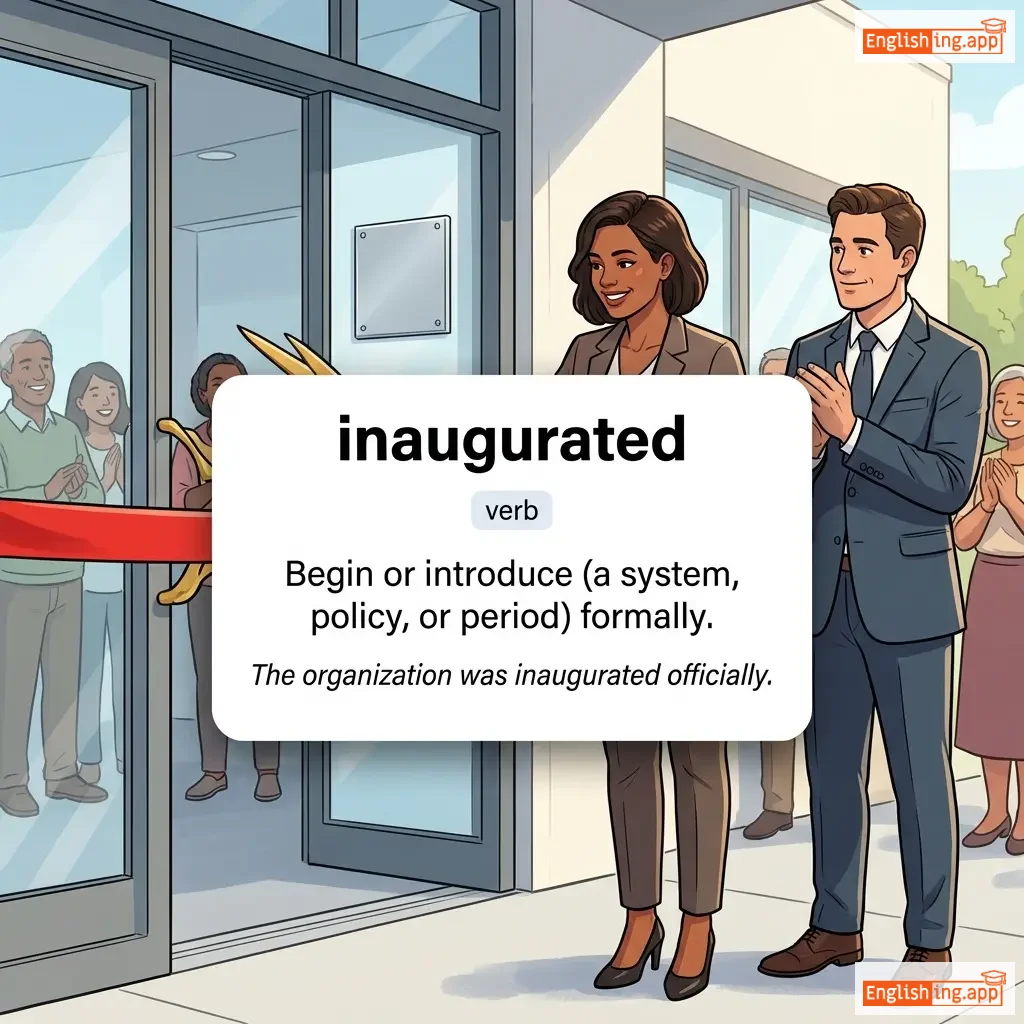
inaugurated definition card — visual illustration of the meaning
verb
ɪˈnɔː.ɡjə.reɪ.tɪd
उद्घाटन किया (udghatan kiya)

Begin or introduce (a system, policy, or period) formally.

"The organization was inaugurated officially."

"संगठन को औपचारिक रूप से उद्घाटन किया गया था।" (Sangathan ko aupcharik roop se udghatan kiya gaya tha.)
adjective
/ˌɪnɔːˈspɪʃəs/
अशुभ (ashubh)

Not conducive to success; unpromising or unlucky.

"The event began under inauspicious circumstances."

"कार्यक्रम अशुभ परिस्थितियों में शुरू हुआ था।" (karyakram asubh paristhitiyon mein shuru hua tha.)
adjective
/ˈɪnˌbɔːrn/
जन्मजात (inborn)

existing from birth; innate

"She has an inborn talent for music."

"उसमें संगीत के लिए जन्मजात प्रतिभा है।" (usmein sangeet ke liye janmjaat pratibha hai)
adjective
/ˈɪnˌbrɛd/
आंतरिक उत्पत्ति (antarik utpatti)

existing naturally in a person or animal; also related to reproduction within a limited community

"He has an inbred sense of loyalty."

"उसमें एक आंतरिक निष्ठा की भावना है।" (Usmein ek antarik nishtha ki bhavna hai.)
noun
/ˌɪnkænˈdɛsəns/
दीप्तिमानता (deeptimanta)

the emission of light from a hot object; brilliance

"The incandescence of the candle filled the dark room."

"मोमबत्ती की दीप्तिमानता ने अंधेरे कमरे को भर दिया।" (Mombatti ki deeptimanta ne andhere kamre ko bhar diya.)
adjective
/ˌɪnkænˈdɛsənt/
दीप्तिमान (deeptimaan)

emitting light as a result of being heated; extremely bright or passionate

"The incandescent lamp lit up the entire hall."

"इन्कैन्डेन्सेन्ट बल्ब ने पूरे हॉल को रोशन कर दिया।" (Incandescent bulb ne poore hall ko roshan kar diya.)
noun
/ˌɪnkænˈteɪʃən/
मंत्रणा (mantrana)

a series of words used as a magic spell or charm

"The wizard chanted an incantation to summon the spirits."

"जादूगर ने आत्माओं को बुलाने के लिए एक मंत्रणा का उच्चारण किया।" (Jadugar ne atmaon ko bulaane ke liye ek mantrana ka uchcharan kiya.)
noun
/ˌɪnˌkeɪpəˈbɪləti/
असमर्थता (asamarthata)

lack of ability or power to do something; inability or incompetence

"His incapability to manage the team led to serious problems."

"टीम को संभालने में उसकी असमर्थता ने गंभीर समस्याएँ पैदा कीं।" (team ko sambhalne mein uski asamarthata ne gambhir samasyaen paida ki)
adjective
/ɪnˈkeɪpəbəl/
असमर्थ (asamarth)

lacking the ability, skill, or capacity to do something

"He is incapable of understanding complex instructions."

"वह जटिल निर्देश समझने में असमर्थ है।" (vah jatil nirdesh samajhne mein asamarth hai)
verb
/ˌɪnkəˈpæsɪteɪt/
अक्षमता उत्पन्न करना (akshamata utpann karna)

to deprive someone or something of the ability or strength to function

"The severe injury incapacitated the player for the rest of the season."

"गंभीर चोट ने खिलाड़ी को सीजन के बाकी समय के लिए अक्षम बना दिया।" (Gambhir chot ne khiladi ko season ke baaki samay ke liye aksham bana diya.)
noun
/ˌɪnkəˈpæsəti/
अक्षमता (akshamata)

the lack of ability, power, or fitness to do something

"His mental incapacity prevented him from making important decisions."

"उसकी मानसिक अक्षमता ने उसे महत्वपूर्ण निर्णय लेने से रोक दिया।" (Uski maansik akshamata ne use mahatvapurn nirnay lene se rok diya.)
verb
/ɪnˈkɑːrsəreɪt/
कैद करना (kaid karna)

to imprison or confine someone

"The authorities incarcerated the criminal after the trial."

"प्राधिकरण ने परीक्षण के बाद अपराधी को कैद कर लिया।" (Pradhikaran ne parikshan ke baad apradhi ko kaid kar liya.)
noun
/ɪnˌkɑːsəˈreɪʃən/
कारावास (kaaravaas)

the state of being imprisoned or confined

"The criminal faced years of incarceration for his crimes."

"अपराधी को उसकी अपराधों के लिए वर्षों तक कारावास का सामना करना पड़ा।" (Aparaadhi ko uski apraadhon ke liye varsho tak kaaravaas ka samna karna pada.)
adjective/noun
/ɪnˈkɑːrnədiːn/
गहरा लाल (gahara lal)

a bright crimson or pinkish-red color

"The sky turned incarnadine at sunset."

"सूर्यास्त के समय आकाश गहरे लाल रंग में बदल गया।" (Suryast ke samay aakash gahre lal rang mein badal gaya.)
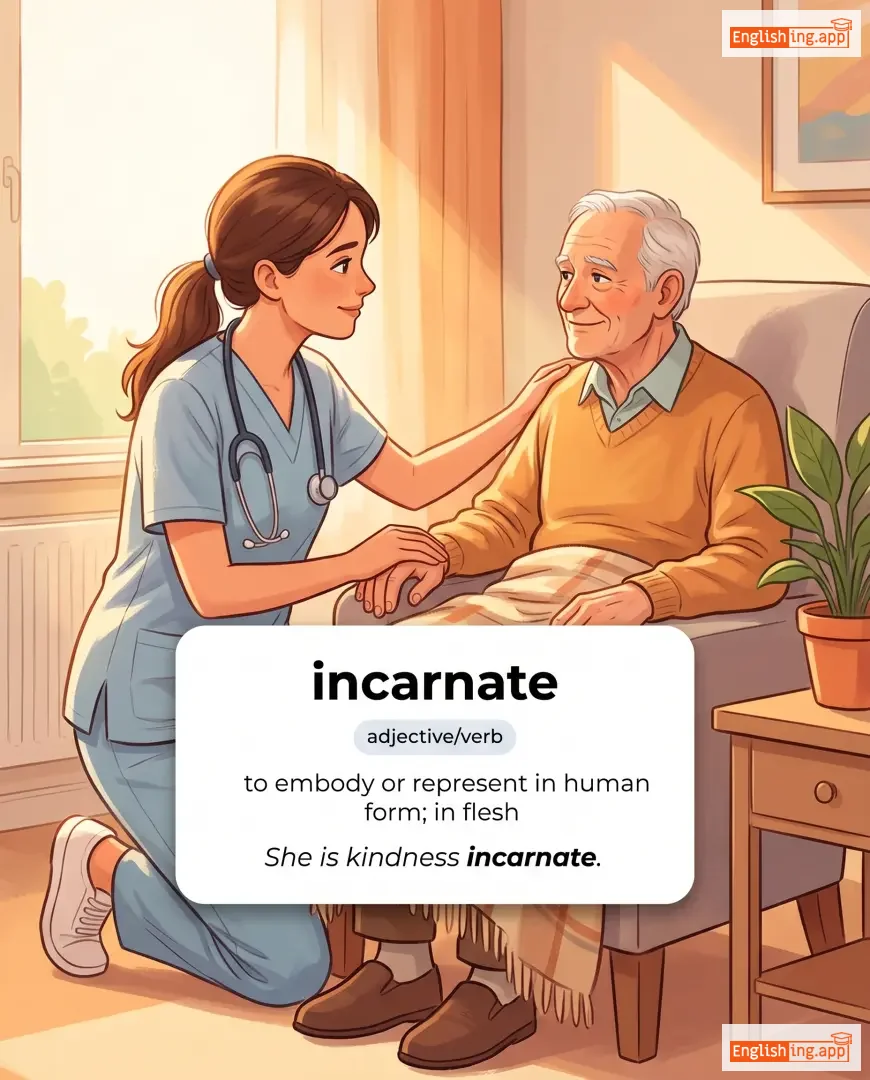
incarnate definition card — visual illustration of the meaning
adjective/verb
/ɪnˈkɑːrneɪt/
अवतार (avatar)

to embody or represent in human form; in flesh

"She is kindness incarnate."

"वह दया का अवतार है।" (Vah daya ka avatar hai.)
noun
/ˌɪnkɑːrˈneɪʃən/
अवतार (avataar)

the embodiment of a deity, spirit, or quality in a physical form

"The monk was considered the incarnation of compassion."

"भिक्षु को करुणा का अवतार माना गया था।" (Bhikshu ko karuna ka avataar maana gaya tha.)
adjective
/ɪnˈsɛndiˌɛri/
आग लगाने वाला / उकसाने वाला (aag lagane wala / uksane wala)

designed to cause fires or stir up conflict

"The politician’s incendiary remarks angered the crowd."

"राजनीतिक नेता की उकसाने वाली टिप्पणियों ने भीड़ को नाराज कर दिया।" (Rajnaitik neta ki uksane wali tippaniyon ne bheed ko naaraaz kar diya.)
noun/verb
/ˈɪnsɛns/
अगरबत्ती / गुस्से में करना (agarbatti / gusse mein karna)

a substance burned for its sweet smell (noun); to make very angry (verb)

"The smell of incense filled the temple, but his rude words incensed her."

"अगरबत्ती की खुशबू मंदिर में फैल गई, लेकिन उसके अपमानजनक शब्दों ने उसे गुस्से में भर दिया।" (Agarbatti ki khushboo mandir mein phail gayi, lekin uske apmanjanak shabdon ne use gusse mein bhar diya.)
noun
/ɪnˈsɛntɪv/
प्रेरणा (prerana)

a thing that motivates or encourages someone to do something

"The company offers bonuses as an incentive to increase productivity."

"कंपनी उत्पादकता बढ़ाने के लिए बोनस को प्रेरणा के रूप में देती है।" (Kampani utpadakta badhane ke liye bonus ko prerna ke roop mein deti hai.)
incentives definition card — visual illustration of the meaning
noun
ɪnˈsɛntɪvz
प्रेरणा, प्रोत्साहन (prerna, protsahan)

Things that motivate or encourage one to do something.

"Tax incentives are used to encourage investment in renewable energy."

"कर प्रोत्साहन का उपयोग नवीकरणीय ऊर्जा में निवेश को प्रोत्साहित करने के लिए किया जाता है।" (Kar protsahan ka upyog navikaranīya urja mein niyojan ko protsahit karne ke liye kiya jata hai.)
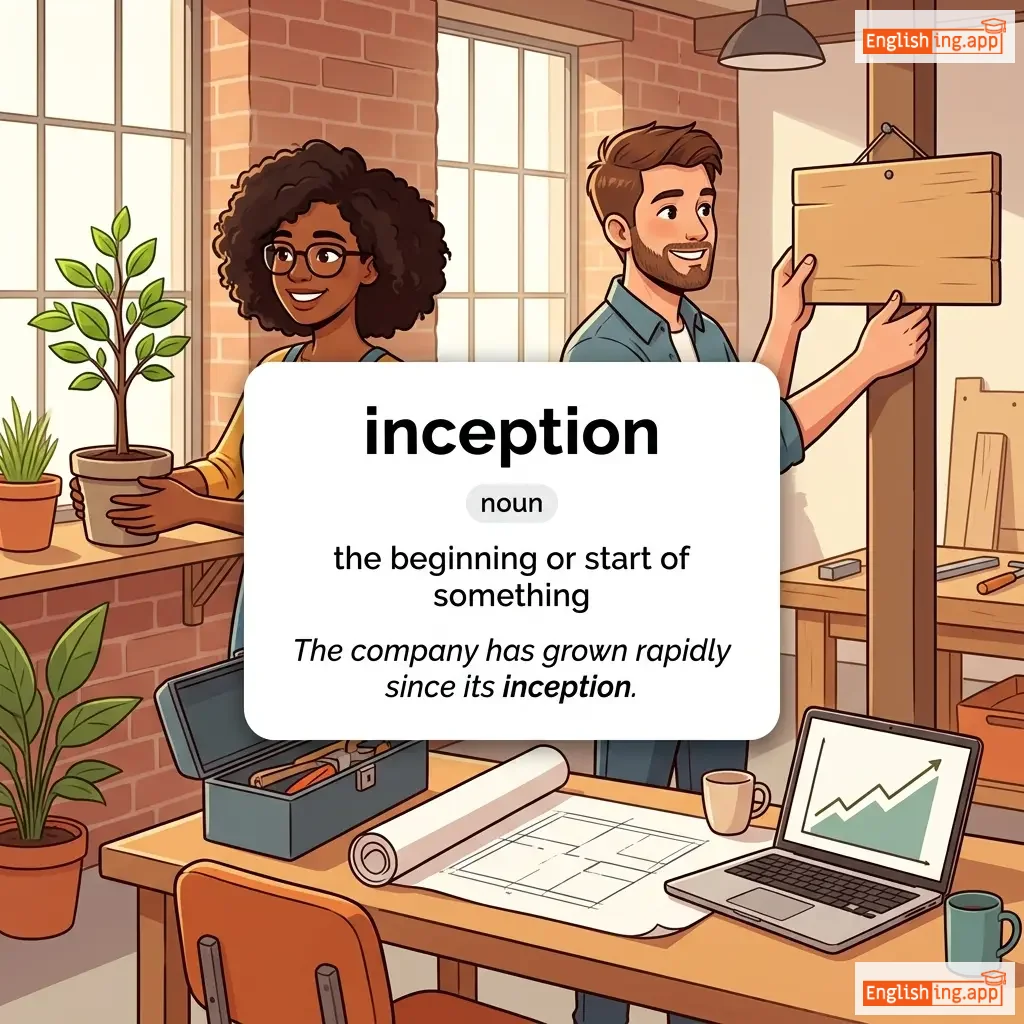
inception definition card — visual illustration of the meaning
noun
/ɪnˈsɛpʃən/
प्रारंभ (prarambh)

the beginning or start of something

"The company has grown rapidly since its inception."

"कंपनी ने अपनी शुरुआत के बाद तेजी से विकास किया।" (Company ne apni shuruaat ke baad tezi se vikas kiya.)
adjective
/ɪnˈsɛptɪv/
प्रारंभिक (prarambhik)

Relating to or marking the beginning or initial stage of something.

"The inceptive phase of the project was marked by enthusiastic planning."

"प्रोजेक्ट के प्रारंभिक चरण को उत्साही योजना से चिह्नित किया गया था।" (Project ke prarambhik charan ko utsaahi yojana se chihnit kiya gaya tha.)
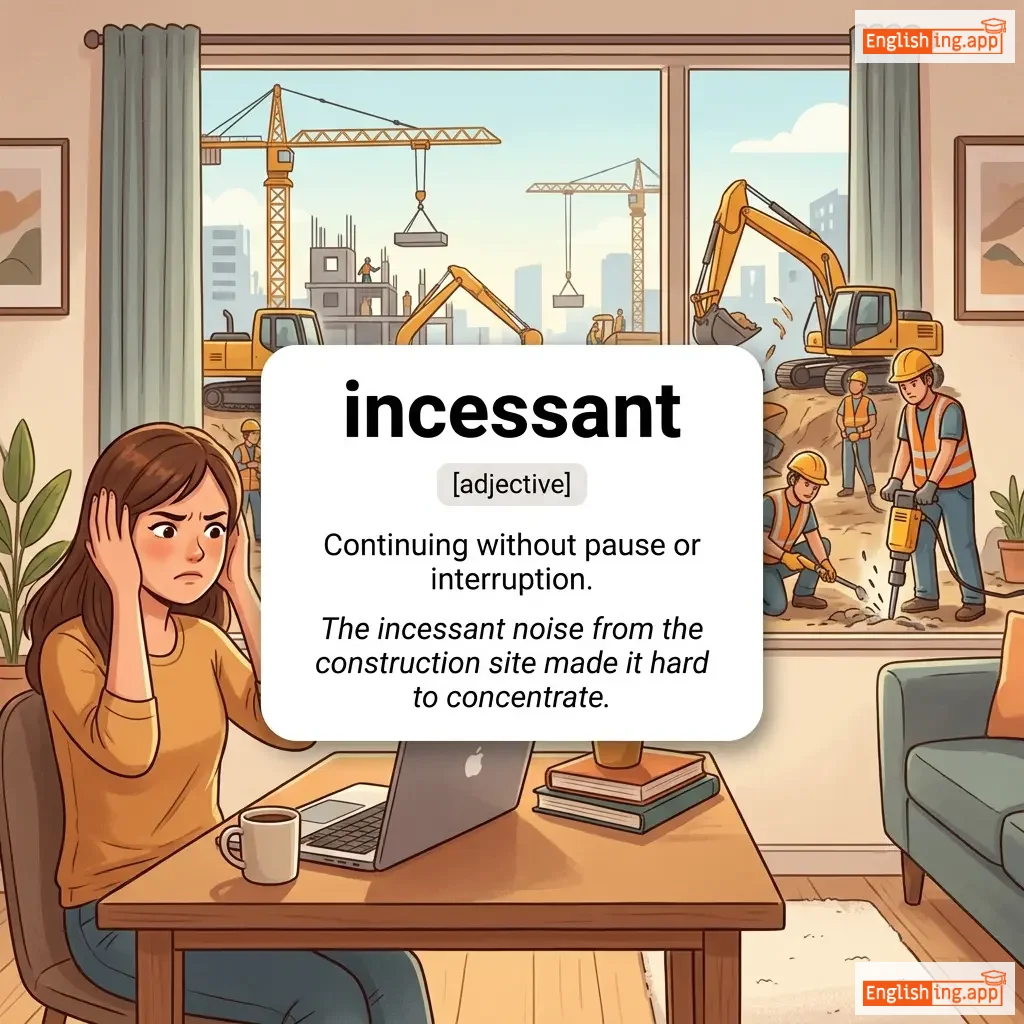
incessant definition card — visual illustration of the meaning
adjective
/ɪnˈsɛsənt/
निरंतर (nirantar)

Continuing without pause or interruption.

"The incessant noise from the construction site made it hard to concentrate."

"कंस्ट्रक्शन साइट से निरंतर शोर ने ध्यान केंद्रित करना मुश्किल बना दिया।" (Construction site se nirantar shor ne dhyan kendrit karna mushkil bana diya.)
noun, verb
/ɪntʃ/
इंच / धीरे-धीरे बढ़ना (inch / dheere dheere badhna)

A unit of length equal to 2.54 centimeters; or to move slowly and carefully in small amounts.

"She inched closer to the edge of the stage."

"वह स्टेज के किनारे के पास धीरे-धीरे बढ़ी।" (Wah stage ke kinare ke paas dheere dheere badhi.)
adverb
/ˈɪntʃmiːl/
धीरे धीरे (dheere dheere)

Gradually, little by little.

"The old castle fell inchmeal into ruin."

"पुराना किला धीरे धीरे नष्ट हो गया था।" (Purana kila dheere dheere nasht ho gaya tha.)
inchoate definition card — visual illustration of the meaning
adjective
/ɪnˈkoʊ.ɪt/ or /ɪnˈkoʊ.eɪt/
अपूर्ण (apurn)

Just begun and not fully formed; rudimentary.

"His inchoate ideas needed more research to be developed."

"उसके अपूर्ण विचारों को विकसित करने के लिए और अधिक शोध की आवश्यकता थी।" (Uske apurn vicharon ko viksit karne ke liye aur adhik shodh ki avashyakta thi.)
adjective
/ɪnˈkoʊətɪv/
प्रारंभिक (prarambhik)

relating to the beginning of something; in an initial stage

"The poet used inchoative expressions to depict the dawn of creation."

"कवि ने सृजन की शुरुआत को चित्रित करने के लिए प्रारंभिक अभिव्यक्तियाँ का उपयोग किया।" (Kavi ne srijan ki shuruat ko chitrait karne ke liye prarambhik abhipraya ka upyog kiya.)
noun
/ˈɪnsɪdəns/
घटनाक्रम (ghatanakram)

the occurrence, rate, or frequency of something

"The incidence of road accidents has decreased this year."

"इस साल सड़क दुर्घटनाओं की घटना में कमी आई है।" (Is saal sadak durghatanayon ki ghatna mein kami aayi hai.)
noun
/ˈɪnsɪdənt/
घटना (ghatna)

an event or occurrence, often unpleasant or unusual

"The police quickly responded to the incident in the park."

"पुलिस ने पार्क में घटना पर जल्दी प्रतिक्रिया दी।" (Police ne park mein ghatna par jaldi pratikriya di.)