वोकैबुलरीज

इंग्लिश वोकैबुलरी डिस्कवर, लर्न और मास्टर करें

verb
/ɪmˈpɜːrsəneɪt/
नकल करना (nakal karna)

to pretend to be another person in order to entertain or deceive

"He was arrested for trying to impersonate a police officer."

"वह पुलिस अधिकारी की नकल करने के लिए गिरफ्तार हो गया था।" (Vah police adhikari ki nakal karne ke liye giraftaar ho gaya tha.)
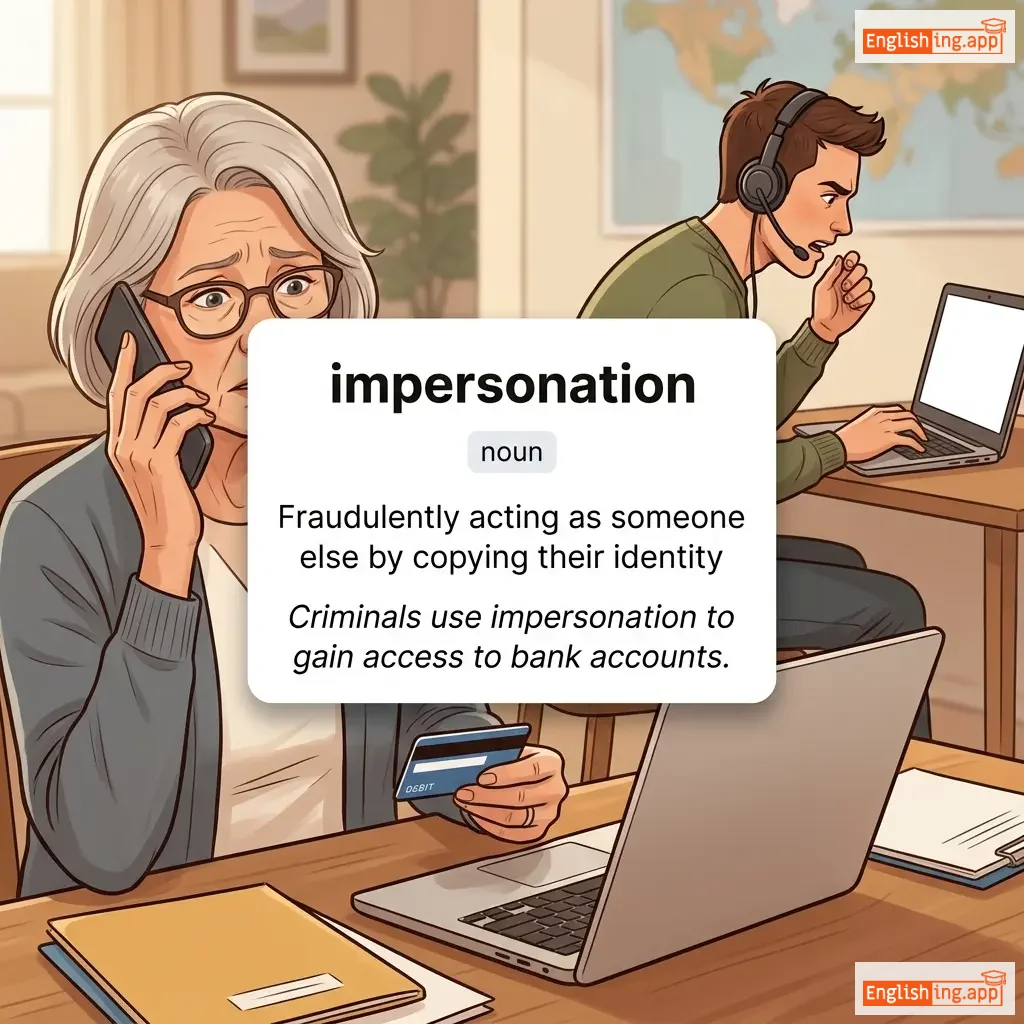
impersonation definition card — visual illustration of the meaning
noun
/ɪmˌpɜː.səˈneɪ.ʃən/
धोखाधड़ी से किसी और के रूप में अभिनय करना (dhokhadhadi se kisi aur ke roop mein abhinay karna)

Fraudulently acting as someone else by copying their identity

"Criminals use impersonation to gain access to bank accounts."

"अपराधी बैंक खातों तक पहुँच प्राप्त करने के लिए impersonation का उपयोग करते हैं।" (Aparadhi bank khaton tak pahunch prapt karne ke liye impersonation ka upyog karte hain.)
adjective
/ɪmˌpɜːrˈsweɪdəbl/
अप्रेर्य (apreya)

not able to be convinced or persuaded

"She remained impersuadable despite all our arguments."

"हमारे सभी तर्कों के बावजूद वह अप्रेर्य बनी रही।" (Hamare sabhi tarkon ke bawajood vah apreya bani rahi.)
noun
/ɪmˈpɜːrtɪnəns/
अवहेलना (avhelna)

lack of respect; rudeness

"The teacher was shocked by the student's impertinence."

"टीचर छात्र की अवहेलना से हैरान थे।" (Teacher chhatra ki avhelna se hairan the.)
adjective
/ɪmˈpɜːrtɪnənt/
अवज्ञाकारी (avjñākārī)

rude and showing a lack of respect

"It was impertinent of him to question the manager's decision."

"प्रबंधक के निर्णय पर सवाल उठाना उसकी अवज्ञा थी।" (Prabandhak ke nirṇay par sawāl uṭhānā uski avjñā thī.)
noun
/ɪmˌpɜːrtərbəˈbɪləti/
अविचलता (avichalta)

The quality of being calm and not easily disturbed or upset.

"Her imperturbability during the crisis impressed everyone."

"संकट के दौरान उसकी अविचलता ने सभी को प्रभावित किया।" (Sankat ke dauran uski avichalta ne sabhi ko prabhavit kiya.)
imperturbable definition card — visual illustration of the meaning
adjective
/ɪmˈpɜːrtərbəbəl/
अडिग (adig)

Unable to be upset or excited; calm.

"He remained imperturbable even when faced with tough questions."

"वह कठिन सवालों का सामना करने के बावजूद भी शांत बना रहा।" (Vah kathin sawalon ka samna karne ke baawajood bhi shaant bana raha.)
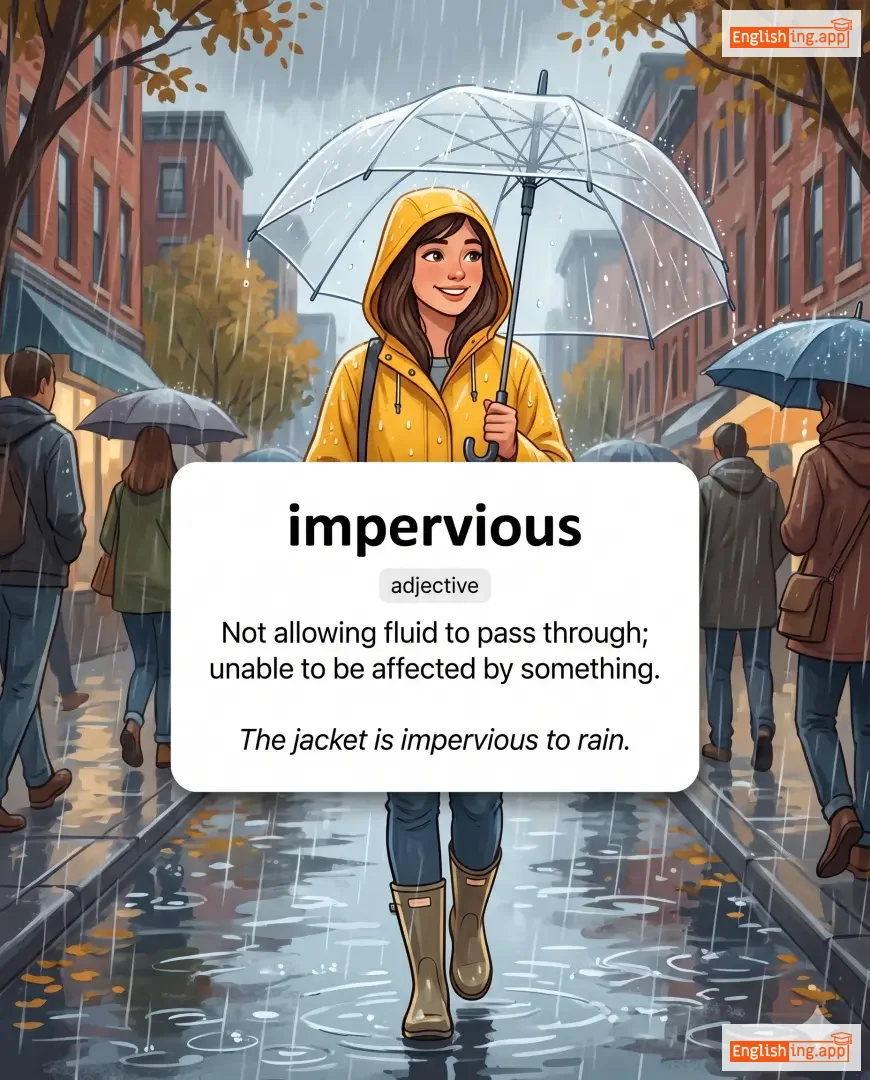
impervious definition card — visual illustration of the meaning
adjective
/ɪmˈpɜːrviəs/
अभेद्य (abhedya)

Not allowing fluid to pass through; unable to be affected by something.

"The jacket is impervious to rain."

"जैकट बारिश से अभेद्य है।" (Jacket baarish se abhedya hai.)
noun
/ˌɪmpəˈtjuːəsəti/
आकस्मिकता (aaksmikta)

The quality of being rash or impulsive.

"His impetuosity often got him into trouble."

"उसकी आकस्मिकता अक्सर उसे मुसीबत में डाल देती थी।" (Uski aaksmikta aksar use musibat mein daal deti thi.)
impetuous definition card — visual illustration of the meaning
adjective
/ɪmˈpetʃuəs/
आक्रामक (akramak)

Acting or done quickly without thought or care; impulsive.

"She made an impetuous decision to quit her job."

"उसने अपनी नौकरी छोड़ने का आक्रामक निर्णय लिया।" (Usne apni naukri chhodne ka akramak nirnay liya.)
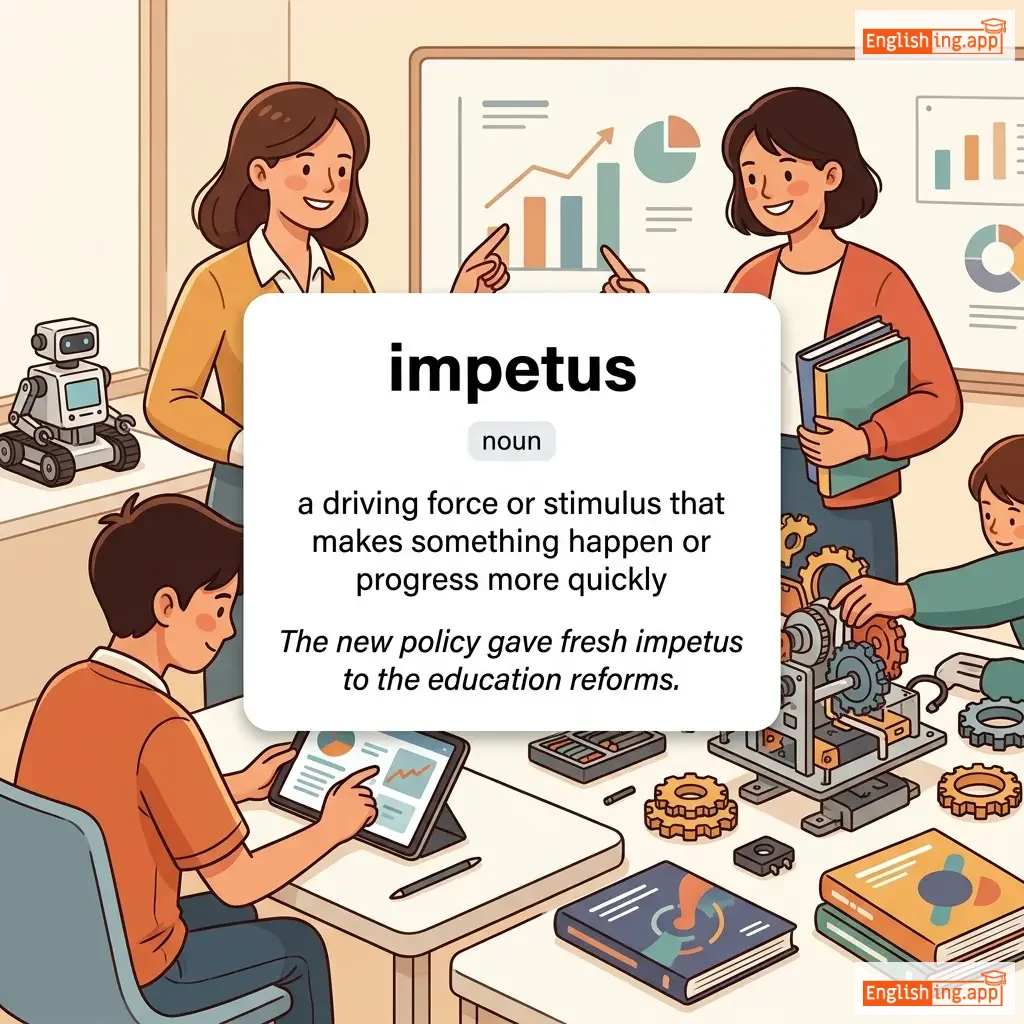
impetus definition card — visual illustration of the meaning
noun
/ˈɪmpɪtəs/
प्रेरणा (prerna)

a driving force or stimulus that makes something happen or progress more quickly

"The new policy gave fresh impetus to the education reforms."

"नई नीति ने शिक्षा सुधारों को ताजगी दी।" (Nayi neeti ne shiksha sudharon ko tajgi di.)
noun
/ɪmˈpaɪəti/
अधर्मिता (adharmita)

lack of respect for religion or sacred things

"The priest condemned the impiety of neglecting the temple rituals."

"पुरोहित ने मंदिर की अनुष्ठान की उपेक्षा करने की अधर्मिता की निंदा की।" (Purohit ne mandir ki anushthan ki apeksha karne ki adharmita ki ninda ki.)
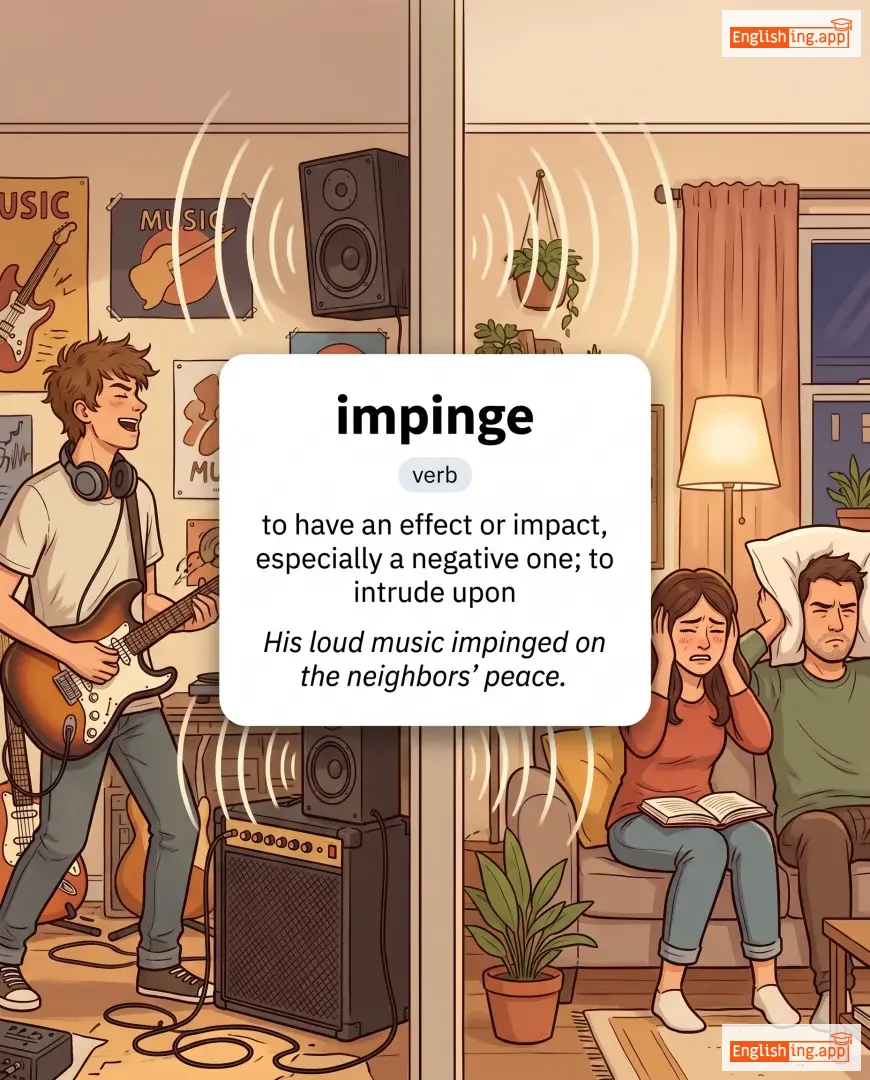
impinge definition card — visual illustration of the meaning
verb
/ɪmˈpɪndʒ/
प्रभाव डालना (prabhav dalna)

to have an effect or impact, especially a negative one; to intrude upon

"His loud music impinged on the neighbors’ peace."

"उसकी तेज़ म्यूज़िक पड़ोसियों की शांति पर प्रभाव डाल रही थी।" (Uski tez music padosiyon ki shanti par prabhav dal rahi thi.)
adjective
/ˈɪmpɪəs/
पापी (papi)

showing a lack of respect for God or religion

"It was considered impious to joke about sacred traditions."

"पवित्र परंपराओं के बारे में मजाक करना पापी माना जाता था।" (Pavitra paramparāon ke baare mein mazaak karna paapi mānā jātā thā.)
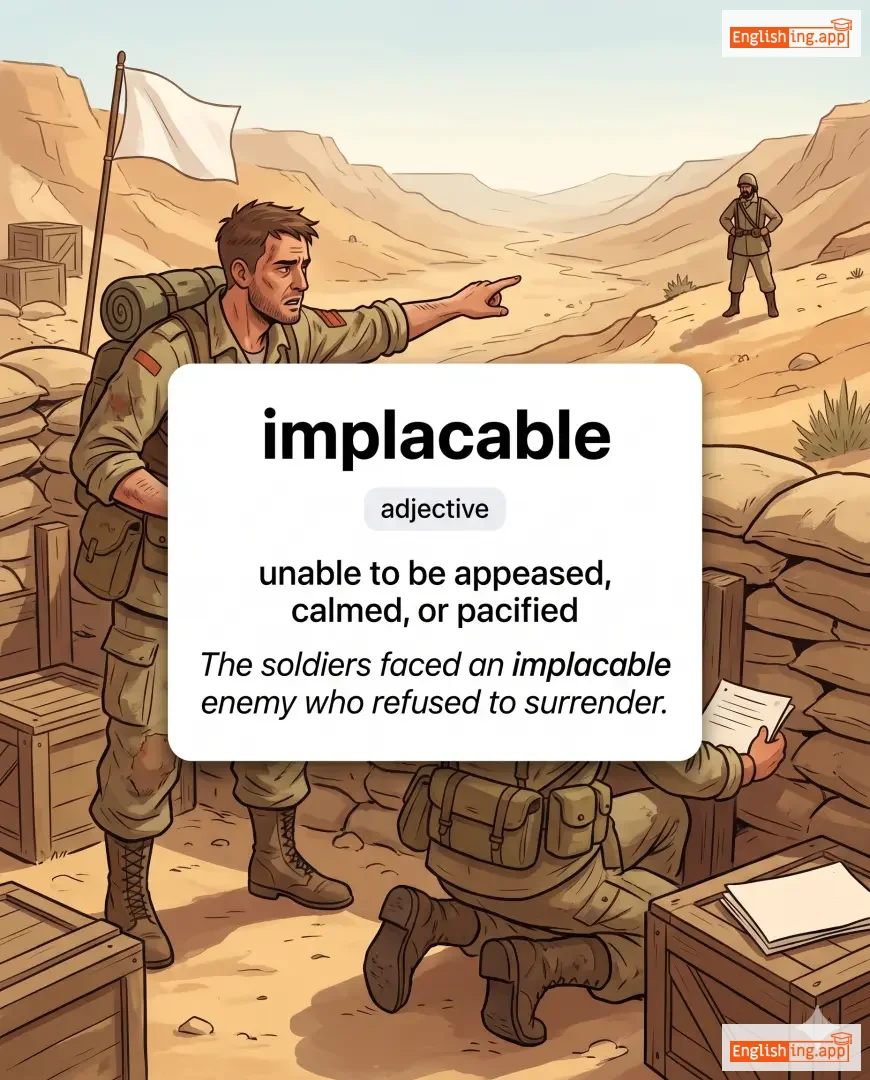
implacable definition card — visual illustration of the meaning
adjective
/ɪmˈplækəbl/
अडिग (adig)

unable to be appeased, calmed, or pacified

"The soldiers faced an implacable enemy who refused to surrender."

"सैनिकों को एक अडिग दुश्मन का सामना करना पड़ा जो समर्पण करने से इंकार कर दिया।" (Sainiko ko ek adig dushman ka samna karna pada jo samarpan karne se inkaar kar diya.)
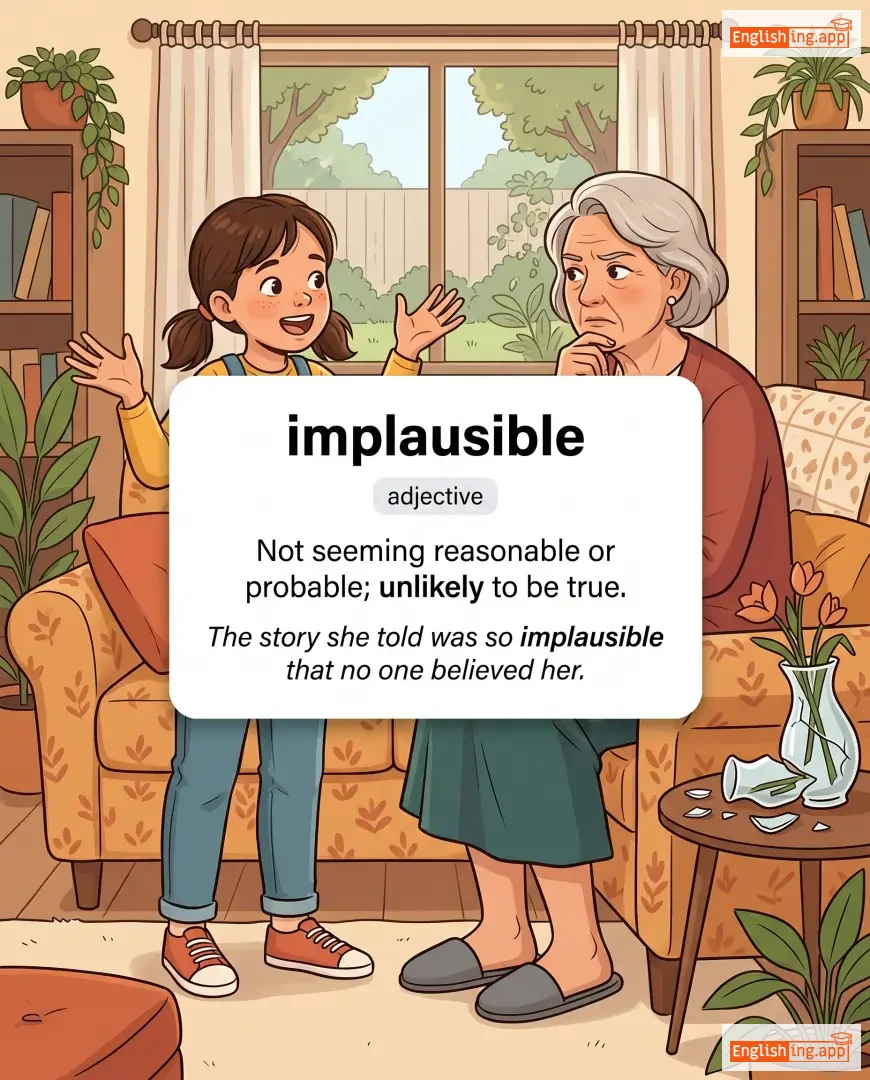
implausible definition card — visual illustration of the meaning
adjective
/ɪmˈplɔːzəbl/
अविश्वसनीय (avishwasniya)

Not seeming reasonable or probable; unlikely to be true.

"The story she told was so implausible that no one believed her."

"वह कहानी जो उसने बताई थी, इतनी अविश्वसनीय थी कि कोई भी विश्वास नहीं करता था।" (Wah kahani jo usne batayi thi, itni avishwasniya thi ki koi bhi vishwas nahi karta tha.)
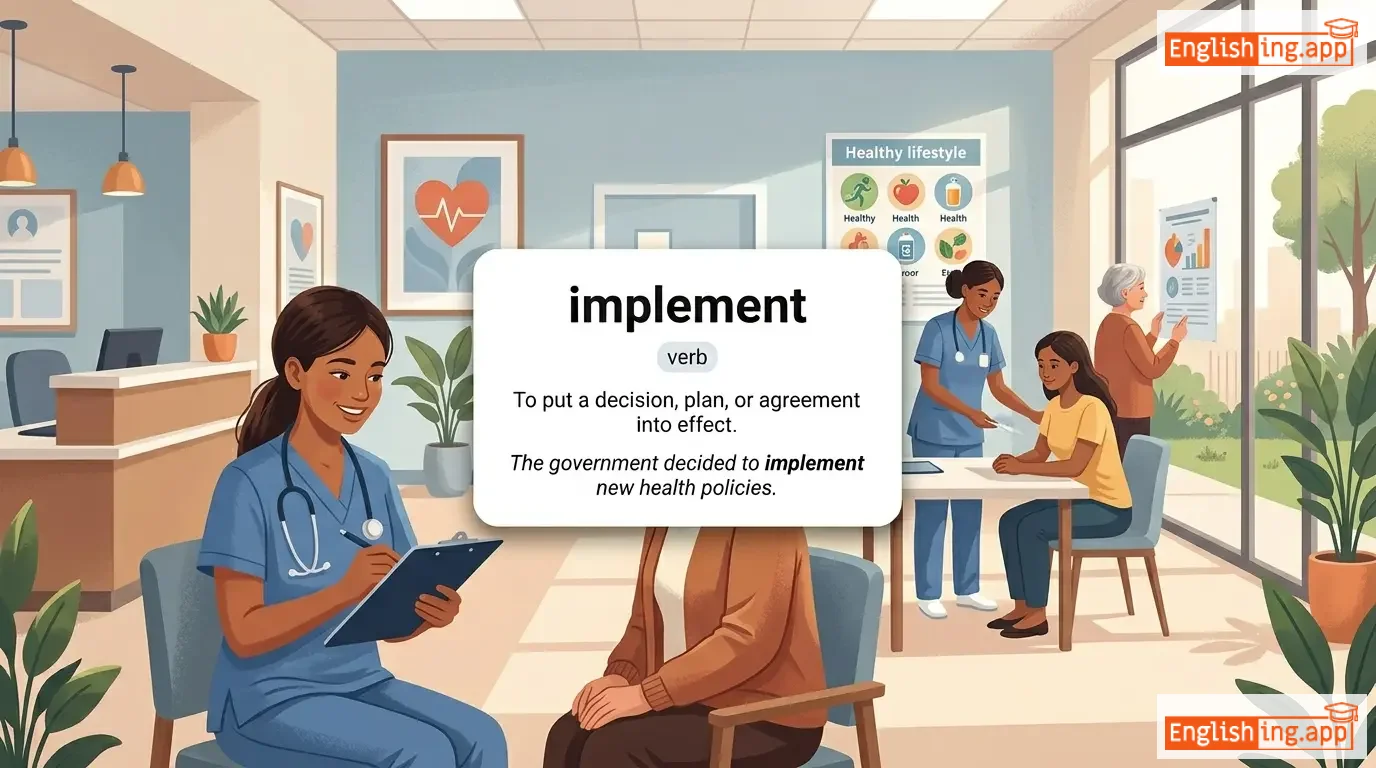
implement definition card — visual illustration of the meaning
verb
/ˈɪmplɪˌmɛnt/
लागू करना (laagu karna)

To put a decision, plan, or agreement into effect.

"The government decided to implement new health policies."

"सरकार ने नए स्वास्थ्य नीतियों को लागू करने का निर्णय लिया।" (Sarkar ne naye swasthya neetiyon ko laagu karne ka nirnay liya.)
implementation definition card — visual illustration of the meaning
noun
/ˌɪmplɪmenˈteɪʃən/
अमल (amal)

the process of putting a plan, decision, or idea into effect

"The successful implementation of the new policy improved efficiency."

"नई नीति का सफल अमल दक्षता में सुधार लाया।" (Nayi niti ka safal amal dakshata mein sudhar laya.)
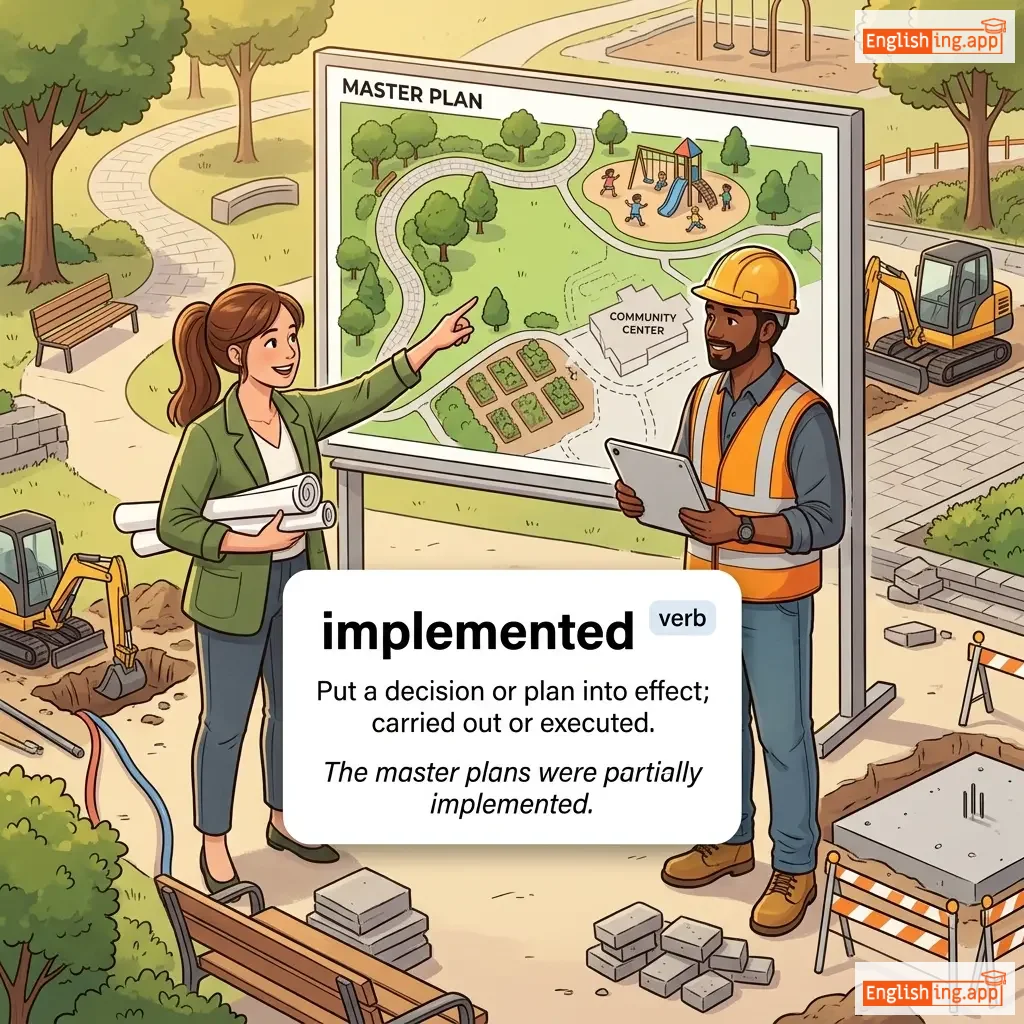
implemented definition card — visual illustration of the meaning
verb
ˈɪmplɪmentɪd
अमल में लाया गया (amal mein laya gaya)

Put a decision or plan into effect; carried out or executed.

"The master plans were partially implemented."

"मास्टर योजनाओं को आंशिक रूप से लागू किया गया।" (Master yojnaon ko angshik roop se lagu kiya gaya.)
adjective
/ɪmˈplaɪəbl/
सुझाया जा सकने योग्य (sujhaya ja sakne yogya)

Capable of being implied or suggested.

"The meaning of the statement is not directly clear but is impliable from the context."

"वह कथन का अर्थ सीधे तौर पर स्पष्ट नहीं है, लेकिन संदर्भ से सुझाया जा सकता है।" (Vah kathan ka arth sidhe taur par spashth nahi hai, lekin sandarbh se sujhaya ja sakta hai.)
verb
/ˈɪmplɪˌkeɪt/
शामिल करना (shamil karna)

To show someone’s involvement in a crime or wrongdoing.

"The evidence implicated several officials in the scandal."

"साक्ष्य ने कई अधिकारियों को घोटाले में शामिल किया।" (Sākṣya ne kai adhikārīyon ko ghoṭāle mein śāmil kiyā.)
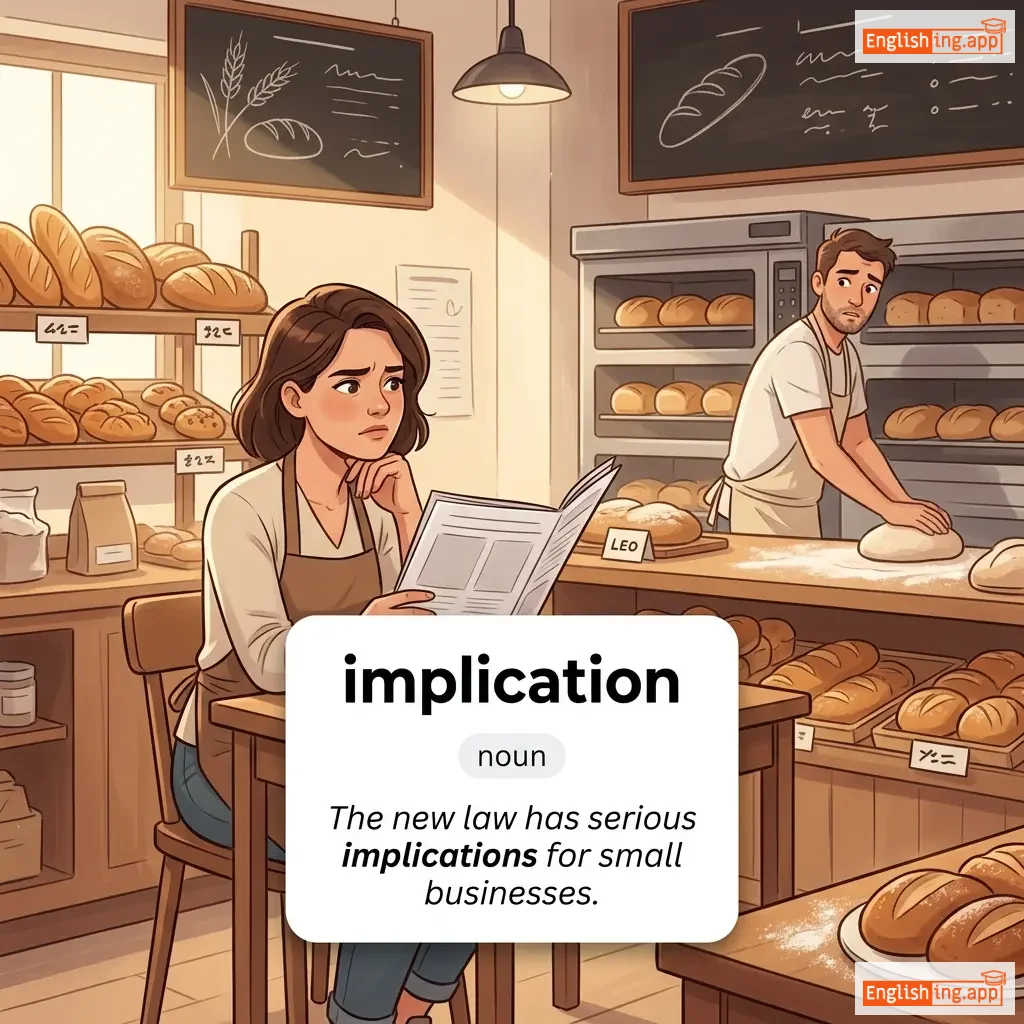
implication definition card — visual illustration of the meaning
noun
/ˌɪmplɪˈkeɪʃən/
संकेत, प्रभाव (sanket, prabhav)

A possible effect or result of an action or decision; something suggested without being stated directly.

"The new law has serious implications for small businesses."

"नया कानून छोटे व्यवसायों के लिए गंभीर प्रभाव डालता है।" (Naya kanoon chhote vyavasayon ke liye gambhir prabhav daalta hai.)
implicit definition card — visual illustration of the meaning
adjective
/ɪmˈplɪsɪt/
अस्पष्ट (aspasht)

Suggested or understood without being directly stated.

"Her trust in him was implicit."

"उसका विश्वास उसके प्रति अस्पष्ट था।" (uska vishwas uske prati aspasht tha.)
implode definition card — visual illustration of the meaning
verb
/ɪmˈploʊd/
भीतर ढहना (bheetar dhaana)

To collapse or burst inward violently.

"The old building imploded during the demolition."

"पुरानी इमारत ने विध्वंस के दौरान भीतर ढह गया।" (puraani imaarat ne vidhwans ke dauraan bheetar dhaa gaya.)
verb
/ɪmˈplɔːr/
वीरित करना (veerit karna)

To beg someone earnestly or desperately to do something.

"She implored him to stay with her."

"उसने उससे उसके साथ रहने की तड़पकर प्रार्थना की।" (usne usse uske saath rehne ki tadapkar prarthna ki.)
verb
/ɪmˈplaɪ/
संकेत करना (sanket karna)

To suggest something without directly stating it.

"Her tone seemed to imply that she was upset."

"उसकी आवाज़ से ऐसा लगा कि वह परेशान थी।" (uski awaaz se aisa laga ki vah pareshan thi.)
adjective
/ˌɪmpəˈlaɪt/
अशिष्ट (ashisht)

Not showing good manners; rude.

"It is impolite to interrupt someone while they are speaking."

"किसी को बोलते समय बीच में टोकना अशिष्ट है।" (Kisi ko bolte samay beech mein tokna ashisht hai.)
adverb
/ɪmˈpɒlɪtli/
अशिष्ट रूप से (ashisht rup se)

in a rude or discourteous manner; without showing respect or proper manners

"He spoke impolitely to the waiter despite the polite service."

"विनम्र सेवा के बावजूद उसने वेटर से अशिष्ट रूप से बात की।" (vinamra seva ke bavjood usne waiter se ashisht rup se baat ki)
noun
/ɪmˈpɒlɪtnəs/
अशिष्टता (ashishtata)

lack of good manners or courtesy; rude behavior

"His impoliteness towards the guests shocked everyone."

"मेहमानों के प्रति उसकी अशिष्टता ने सभी को चौंका दिया।" (mehmaanon ke prati uski ashishtata ne sabhi ko chaunka diya)
adjective
/ɪmˈpɑːlɪtɪk/
अविचारपूर्ण (avicharpurn)

Unwise or imprudent; not showing good judgment.

"It would be impolitic to criticize them openly."

"उन्हें खुलेआम आलोचना करना अविचारपूर्ण होगा।" (Unhe khule aam aalochana karna avicharpurn hoga.)
adjective
/ɪmˈpɒndərəbl̩/
अपरिमेय (apariyemey)

Something difficult or impossible to estimate, assess, or understand

"The outcome of the election depends on many imponderable factors."

"चुनाव के परिणाम कई अपरिमेय कारकों पर निर्भर करते हैं।" (Chunav ke parinaam kai apariyemey kaarkon par nirbhar karte hain.)
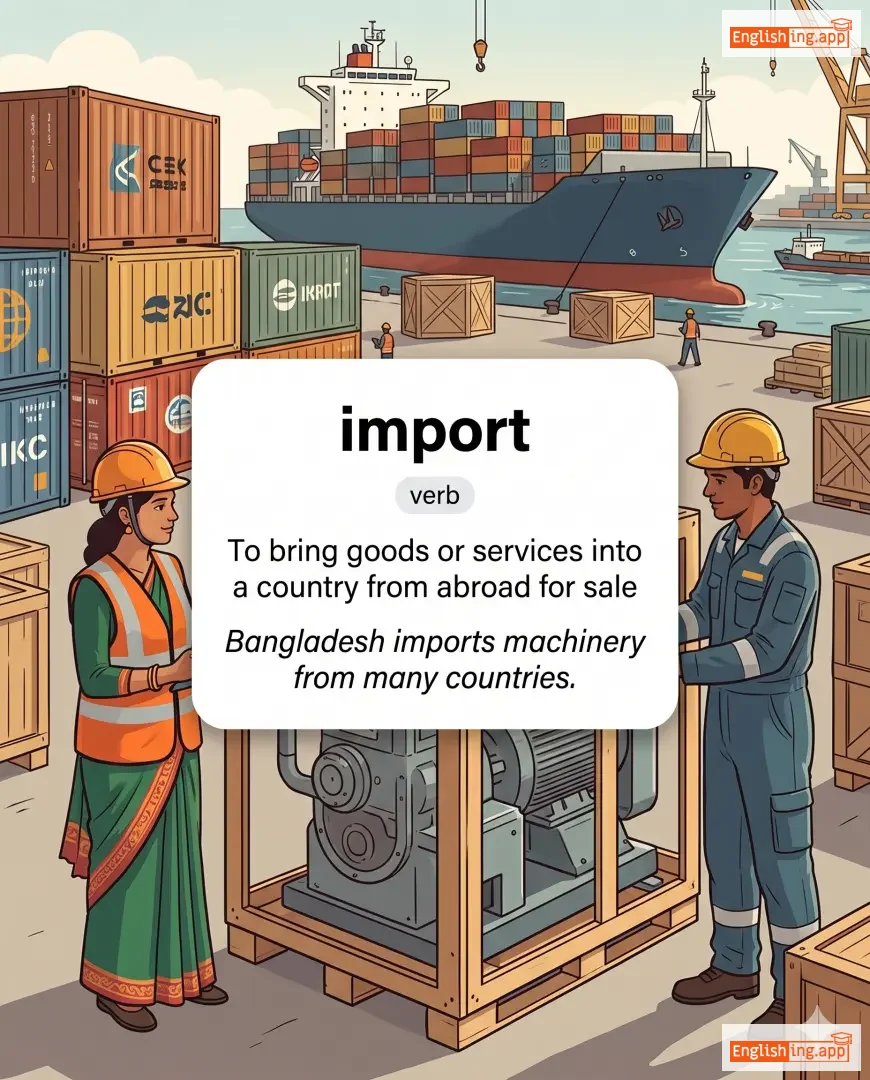
import definition card — visual illustration of the meaning
verb
/ˈɪmpɔːrt/
आयात (aayat)

To bring goods or services into a country from abroad for sale

"Bangladesh imports machinery from many countries."

"बांगलादेश कई देशों से मशीनरी आयात करता है।" (Bangladesh kai deshon se mashinery aayat karta hai.)
importance definition card — visual illustration of the meaning
noun
/ɪmˈpɔːrtəns/
महत्व (mahatva)

the state or fact of being of great significance or value

"She stressed the importance of honesty in all relationships."

"उसने सभी रिश्तों में ईमानदारी के महत्व पर जोर दिया।" (Usne sabhi rishthon mein imandari ke mahatva par zor diya.)
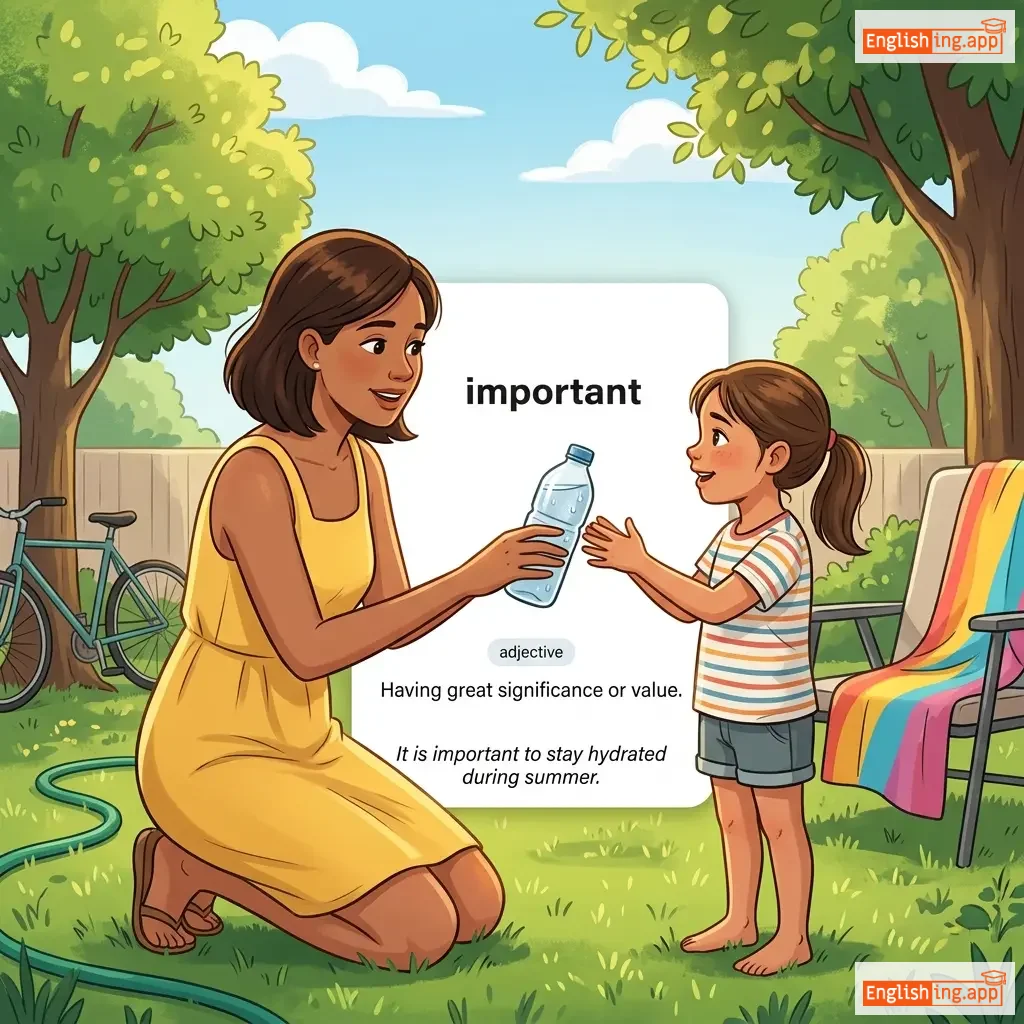
important definition card — visual illustration of the meaning
adjective
/ɪmˈpɔːrtənt/
महत्वपूर्ण (mahatvapurn)

Having great significance or value.

"It is important to stay hydrated during summer."

"गर्मियों में हाइड्रेटेड रहना महत्वपूर्ण है।" (Garmiyon mein hydrated rehna mahatvapurn hai.)
adverb
/ɪmˈpɔːtəntli/
महत्वपूर्ण तरीके से (mahatvapurn tareeke se)

in a way that is of great significance or value

"Importantly, the report highlights the need for immediate action."

"महत्वपूर्ण तरीके से, रिपोर्ट ने तत्काल कार्रवाई की आवश्यकता को उजागर किया।" (Mahatvapurn tareeke se, report ne tatkal karyawahi ki avashyakta ko ujagar kiya.)
noun
/ˌɪmpɔːrˈteɪʃən/
आयात (aayat)

The act of bringing goods or services into a country from abroad

"The importation of luxury goods is strictly regulated."

"लक्ज़री सामान की आयात सख्ती से नियंत्रित है।" (Lazari samaan ki aayat sakhti se niyantrit hai.)
adjective
/ɪmˈpɔːrtʃənət/
अत्यधिक अनुरोध करने वाला (atyadhik anurodh karne wala)

Persistent to the point of annoyance or intrusion

"The importunate salesman kept calling despite repeated refusals."

"अत्यधिक अनुरोध करने वाला विक्रेता बार-बार अस्वीकृत होने के बावजूद फोन करता रहा।" (Atyadhik anurodh karne wala vikreta baar-baar asweekrit hone ke bawajood phone karta raha.)
verb
/ˌɪmpɔːrˈtuːn/
जोर देकर निवेदन करना (jor dekar nivedan karna)

To ask someone persistently or pressingly for something

"The child importuned his mother for a new toy."

"बच्चे ने अपनी माँ से एक नया खिलौना लेने के लिए बार-बार निवेदन किया।" (Bacche ne apni maan se ek naya khilona lene ke liye baar-baar nivedan kiya.)
verb
/ˌɪmpɔːrˈtuːnd/
बार-बार विनती करना (baar-baar vinti karna)

asked someone persistently and pressingly for something

"She importuned her boss for a raise until he finally gave in."

"वह अपने बॉस से तनख्वाह बढ़ाने के लिए बार-बार विनती करती रही, जब तक कि उसने अंततः हां नहीं कह दिया।" (Vah apne boss se tankhwaah badhane ke liye baar-baar vinti karti rahi, jab tak ki usne antatah haan nahi keh diya.)
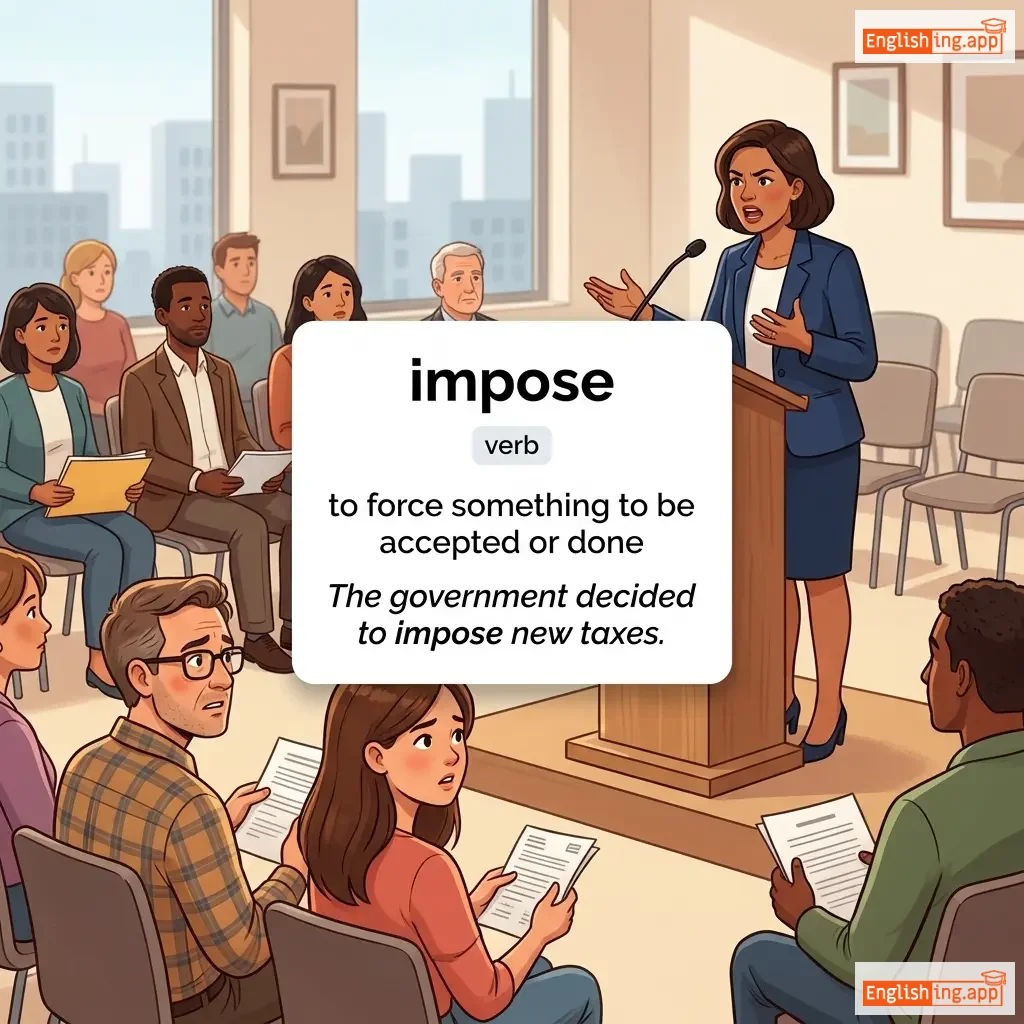
impose definition card — visual illustration of the meaning
verb
/ɪmˈpoʊz/
लागू करना (lagoo karna)

to force something to be accepted or done

"The government decided to impose new taxes."

"सरकार ने नए कर लागू करने का निर्णय लिया।" (Sarkar ne naye kar lagoo karne ka nirnay liya.)
verb
/ɪmˈpoʊzd/
लादना (ladna)

forced something to be accepted or put in place

"The government imposed new regulations on the industry."

"सरकार ने उद्योग पर नई नियमों को लागू किया।" (Sarkar ne udhyog par nai niyamon ko lagu kiya.)
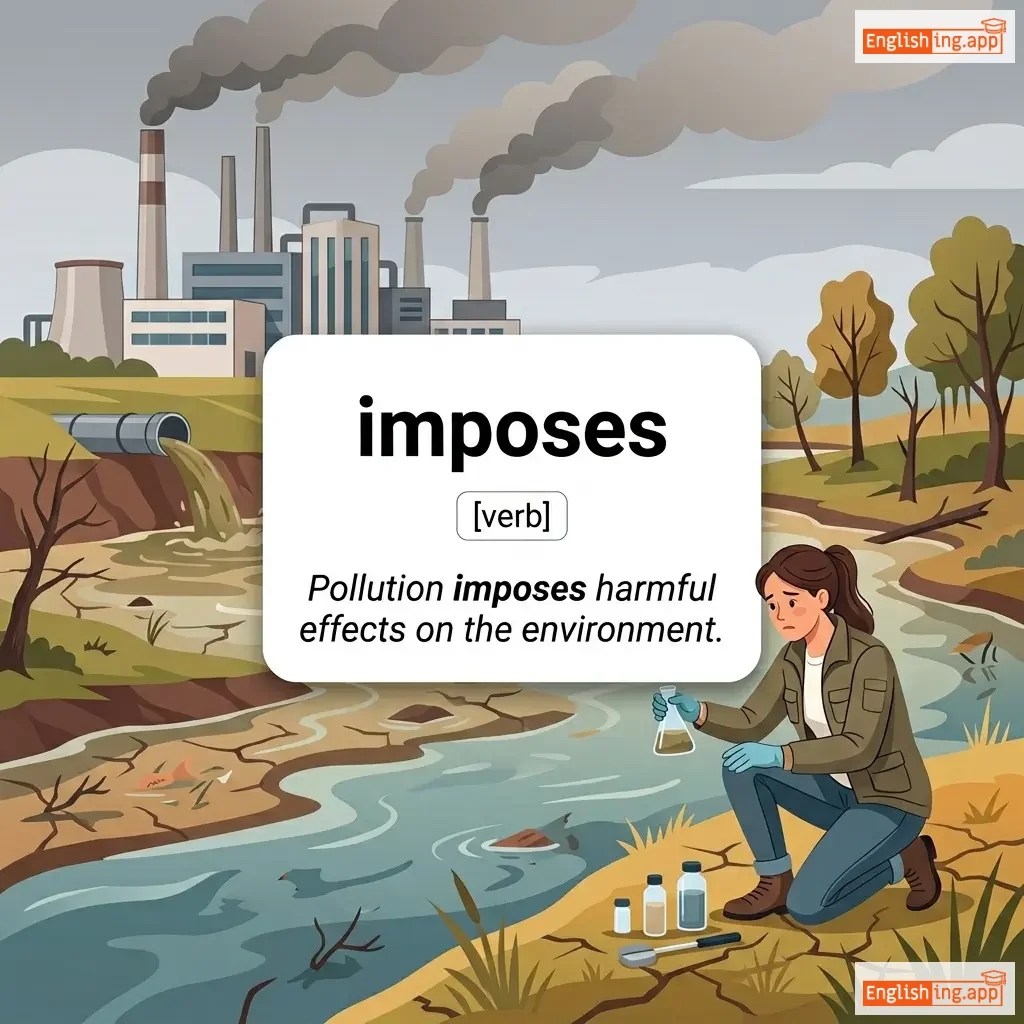
imposes definition card — visual illustration of the meaning
verb
ɪmˈpoʊz
लागू करना (laagu karna)

To establish or apply by authority; to force something unwelcome or unfamiliar to be accepted or put in place.

"Pollution imposes harmful effects on the environment."

"प्रदूषण पर्यावरण पर हानिकारक प्रभाव डालता है।" (Pradushan paryavaran par haanikarak prabhaav daalta hai.)
adjective
/ɪmˈpoʊzɪŋ/
भव्य और प्रभावशाली (bhavya aur prabhavshali)

having an appearance that is grand, impressive, or commanding

"The castle is an imposing structure overlooking the valley."

"महल एक भव्य और प्रभावशाली संरचना है जो घाटी को देख रही है।" (mahal ek bhavya aur prabhavshali sanrachna hai jo ghaati ko dekh rahi hai.)
noun
/ˌɪmpəˈzɪʃən/
लादना (laadna)

the act of forcing something on someone; an unwelcome demand or burden

"The new tax was seen as an unfair imposition on the poor."

"नई कर को गरीबों पर एक अनुचित लादना माना गया था।" (Nayi kar ko gareebon par ek anuchit laadna maana gaya tha.)
noun
/ɪmˌpɒsəˈbɪlɪti/
असंभवता (asambhavata)

the state or fact of being impossible; something that cannot be done or achieved

"Finishing the project in one day was an impossibility."

"एक दिन में परियोजना को पूरा करना असंभवता थी।" (ek din mein pariyojana ko poora karna asambhavata thi)
adjective
/ɪmˈpɑːsəbl/
असंभव (asambhav)

not able to occur, exist, or be done

"It is impossible to finish this work in one day."

"यह काम एक दिन में पूरा करना असंभव है।" (Yeh kaam ek din mein poora karna asambhav hai.)
noun
/ɪmˈpɑːstər/
धोखेबाज़, छलकर्ता (dhokhebaaz, chhalakarta)

a person who pretends to be someone else in order to deceive others

"The man turned out to be an impostor posing as a doctor."

"वह आदमी डॉक्टर के रूप में धोखेबाज़ निकला।" (Woh aadmi doctor ke roop mein dhokhebaaz nikla.)
noun
/ɪmˈpɒstʃər/
धोखाधड़ी (dhokhadhadi)

The act of pretending to be someone else in order to deceive others; deception or fraud.

"The imposture was discovered when the man failed to answer basic questions about his supposed identity."

"धोखाधड़ी का पता तब चला जब आदमी अपनी कथित पहचान के बारे में बुनियादी सवालों का उत्तर नहीं दे सका।" (Dhokhadhadi ka pata tab chala jab aadmi apni kathit pehchaan ke baare mein buniyaadi sawaalon ka uttar nahi de saka.)
adjective
/ˈɪmpətənt/
असहाय (asahay)

Lacking power, ability, or strength to take effective action.

"The citizens felt impotent against the corrupt system."

"नागरिकों को भ्रष्ट सिस्टम के खिलाफ असहाय महसूस हुआ।" (Nagrikon ko bhrasht system ke khilaf asahay mahsus hua.)
verb
/ɪmˈpɒvərɪʃ/
गरीब बनाना (gareeb banana)

To make someone poor or reduce the quality or richness of something.

"The long war impoverished the entire nation."

"लंबे युद्ध ने सम्पूर्ण राष्ट्र को गरीब बना दिया।" (Lambe yudh ne sampoorn rashtr ko gareeb bana diya.)