語彙集

英単語辞書 | 単語の意味、定義、例文

verb
/ɪmˈpɜːrsəneɪt/
偽る (itsuwaru)

to pretend to be another person in order to entertain or deceive

"He was arrested for trying to impersonate a police officer."
"彼は警察官を装おうとしたため逮捕されました。" (Kare wa keisatsukan wo yosou to shita tame taiho saremashita.)
impersonation definition card — visual illustration of the meaning
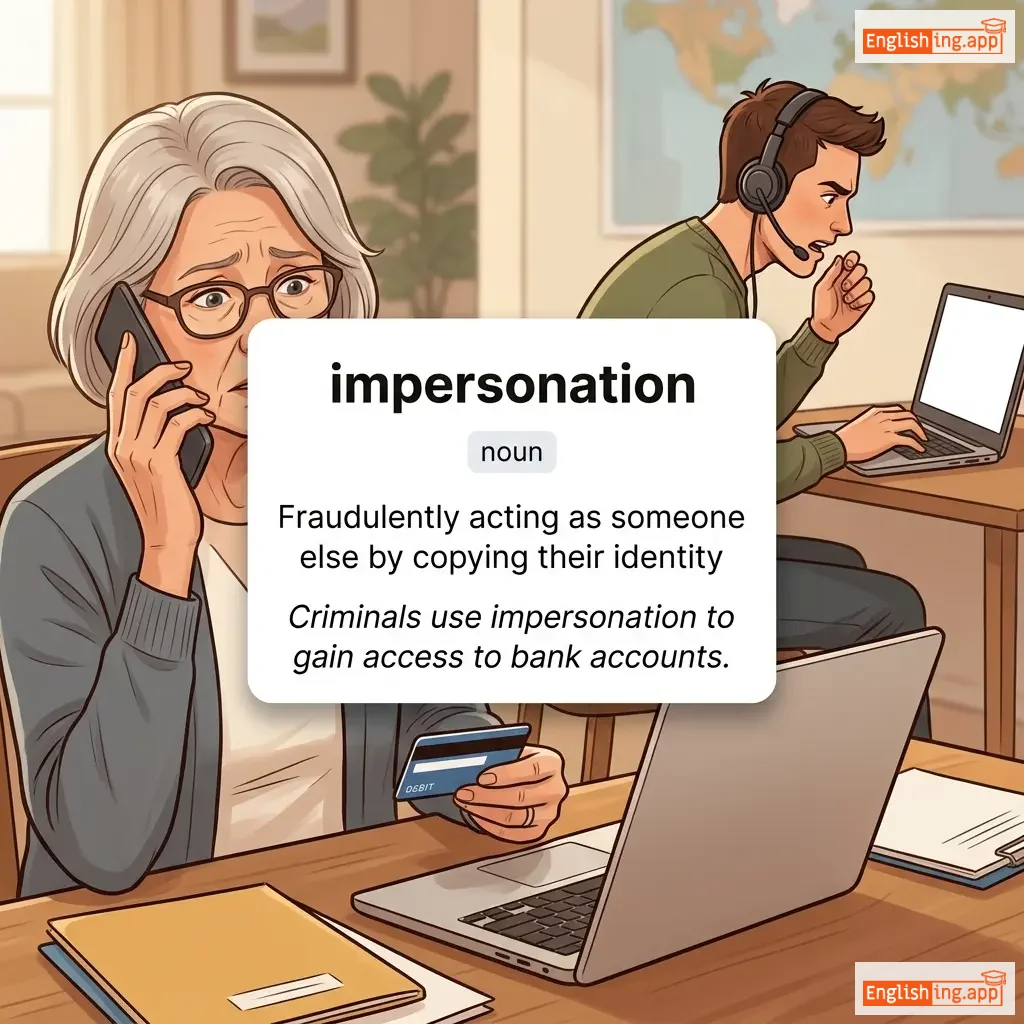
noun
/ɪmˌpɜː.səˈneɪ.ʃən/
なりすまし (narisumashi)

Fraudulently acting as someone else by copying their identity

"Criminals use impersonation to gain access to bank accounts."

"犯罪者は銀行口座にアクセスするためになりすましを使用します。" (Hanzaisha wa ginkō kōza ni akusesu suru tame ni narisumashi o shiyō shimasu.)
adjective
/ɪmˌpɜːrˈsweɪdəbl/
説得できない (settoku dekinai)

not able to be convinced or persuaded

"She remained impersuadable despite all our arguments."

"彼女はすべての議論にもかかわらず説得できなかった。" (Kanojo wa subete no giron ni mo kakawarazu settoku dekinakatta.)
noun
/ɪmˈpɜːrtɪnəns/
無礼 (burei)

lack of respect; rudeness

"The teacher was shocked by the student's impertinence."

"教師は生徒の無礼さに驚いた。" (Kyoushi wa seito no burei sa ni odoroita.)
adjective
/ɪmˈpɜːrtɪnənt/
無礼な (burei na)

rude and showing a lack of respect

"It was impertinent of him to question the manager's decision."

"マネージャーの決定に疑問を呈するのは無礼でした。" (Manējā no kettei ni gimon o tei suru no wa burei deshita.)
noun
/ɪmˌpɜːrtərbəˈbɪləti/
不動心 (fudoushin)

The quality of being calm and not easily disturbed or upset.

"Her imperturbability during the crisis impressed everyone."

"危機の際に彼女の不動心は皆に印象を与えました。" (Kiki no sai ni kanojo no fudoushin wa mina ni inshou o ataemashita.)
imperturbable definition card — visual illustration of the meaning
adjective
/ɪmˈpɜːrtərbəbəl/
冷静 (reisei)

Unable to be upset or excited; calm.

"He remained imperturbable even when faced with tough questions."
"彼は難しい質問に直面しても冷静さを保ち続けました。" (Kare wa muzukashī shitsumon ni chokumen shite mo reiseisa o tamotsu tsudzukemashita.)
impervious definition card — visual illustration of the meaning
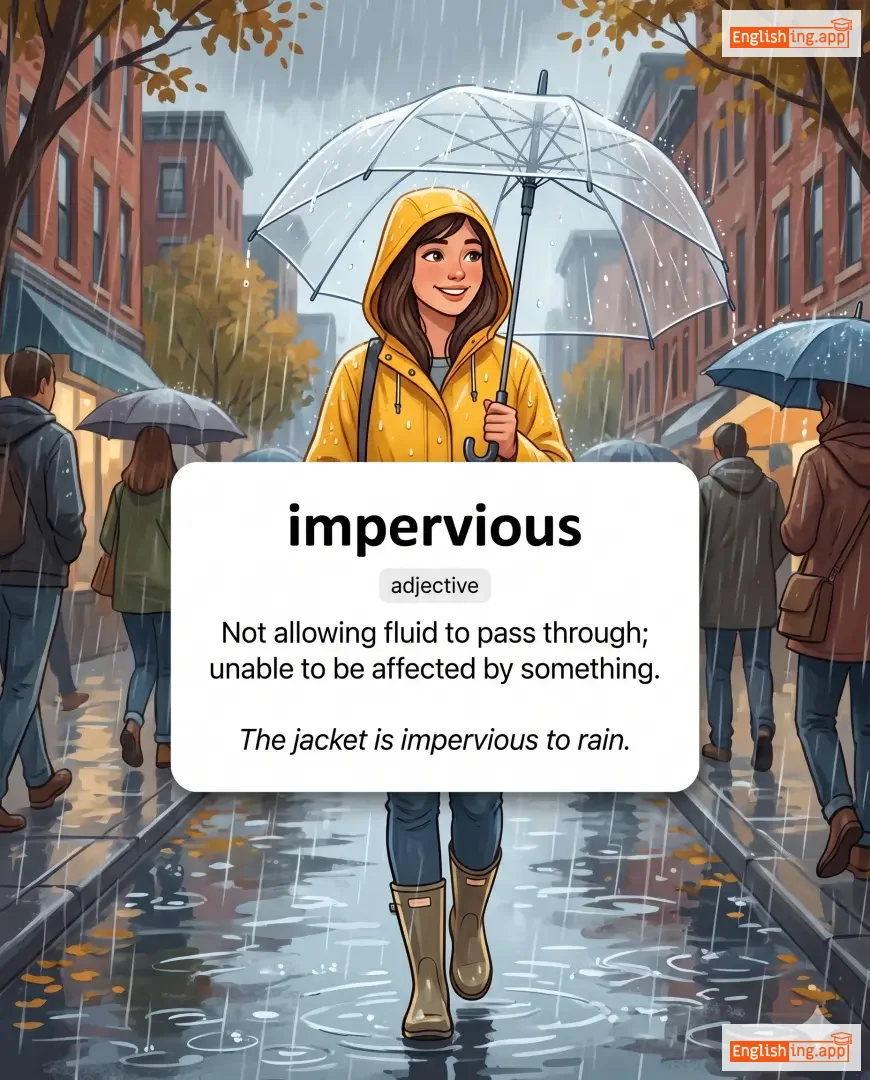
adjective
/ɪmˈpɜːrviəs/
透過しない (toukashinai)

Not allowing fluid to pass through; unable to be affected by something.

"The jacket is impervious to rain."

"ジャケットは雨に透過しません。" (Jaketto wa ame ni toukashinai desu.)
noun
/ˌɪmpəˈtjuːəsəti/
衝動性 (shoudousei)

The quality of being rash or impulsive.

"His impetuosity often got him into trouble."
"彼の衝動性はしばしば彼を問題に巻き込んだ。" (Kare no shoudousei wa shibashiba kare o mondai ni makikonda.)
impetuous definition card — visual illustration of the meaning
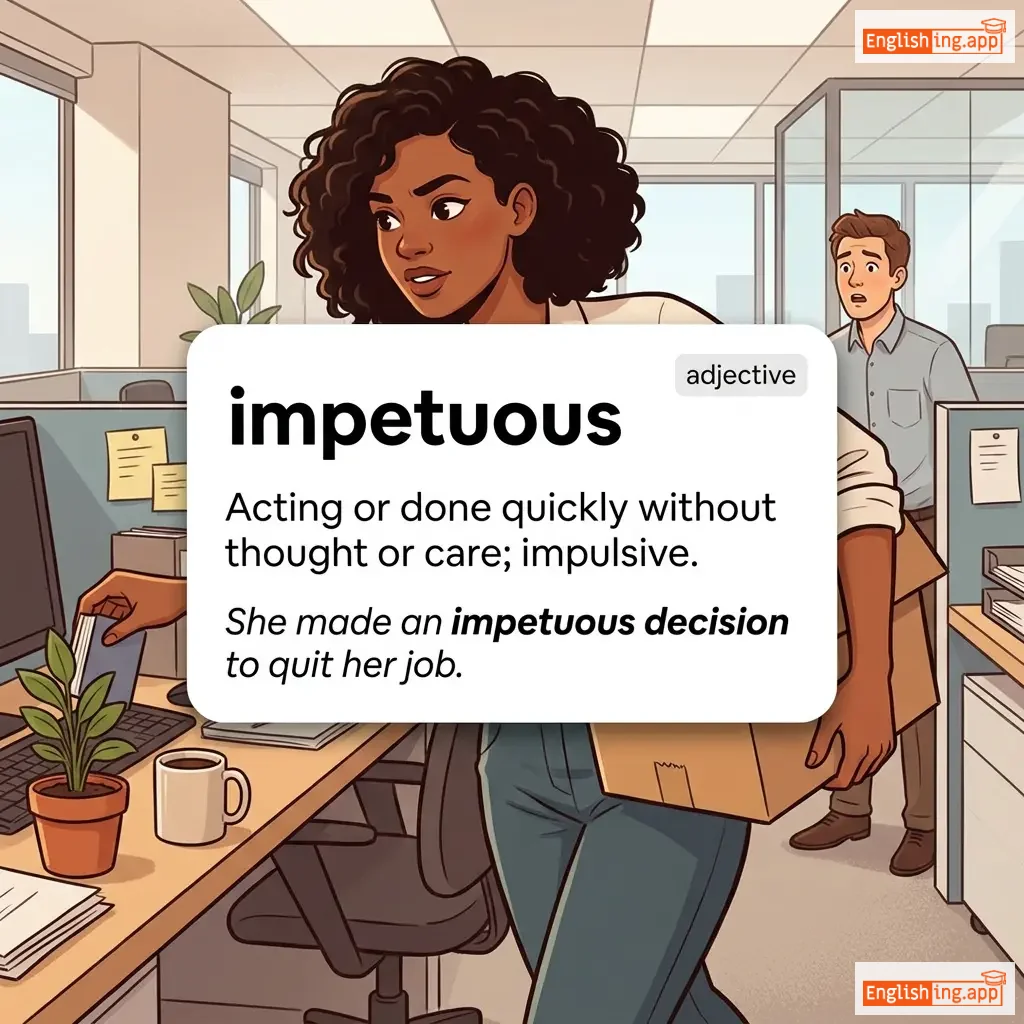
adjective
/ɪmˈpetʃuəs/
衝動的 (shōdōteki)

Acting or done quickly without thought or care; impulsive.

"She made an impetuous decision to quit her job."
"彼女は衝動的に仕事を辞める決断をしました。" (Kanojo wa shōdōteki ni shigoto o yameru ketsudan o shimashita.)
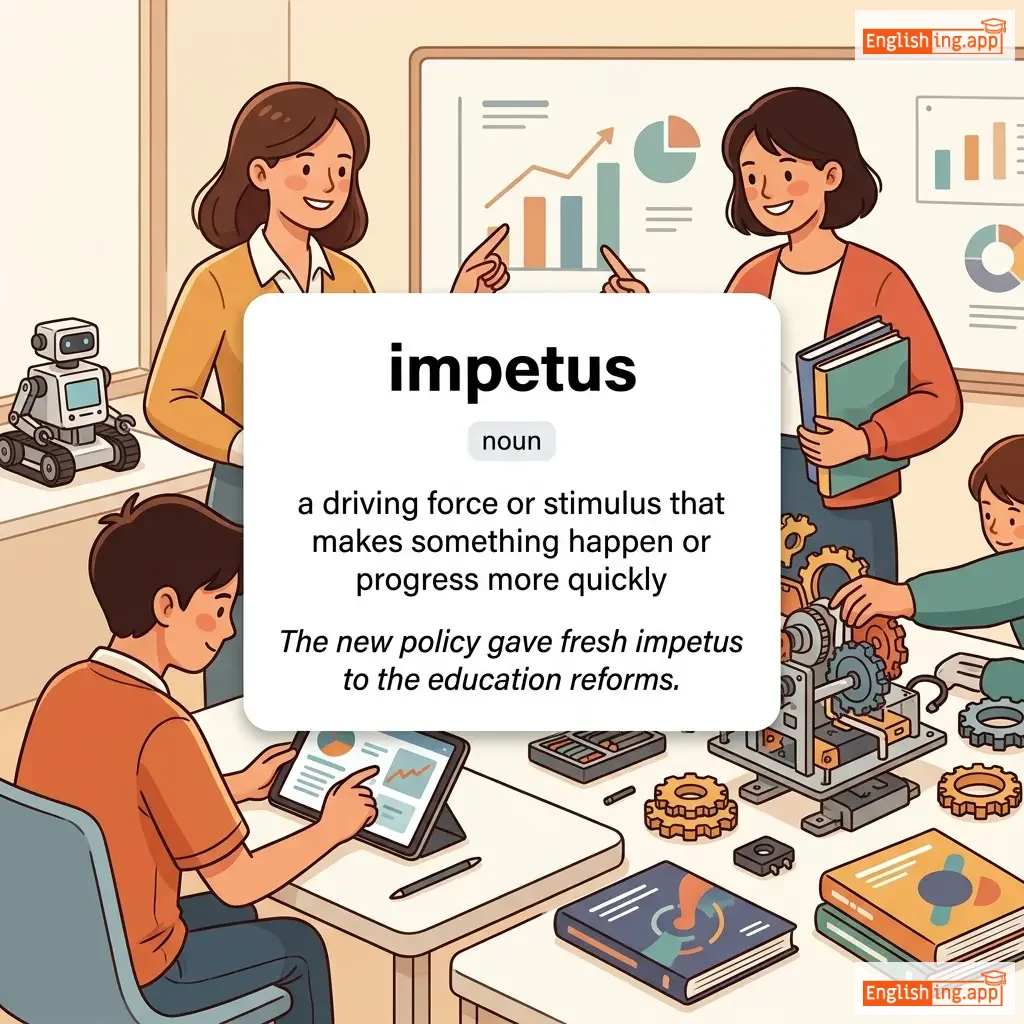
impetus definition card — visual illustration of the meaning
noun
/ˈɪmpɪtəs/
推進力 (suishinryoku)

a driving force or stimulus that makes something happen or progress more quickly

"The new policy gave fresh impetus to the education reforms."

"新しい政策は教育改革に新たな推進力を与えました。" (Atarashī seisaku wa kyōiku kaizen ni aratana suishinryoku o ataemashita.)
noun
/ɪmˈpaɪəti/
不敬 (fukei)

lack of respect for religion or sacred things

"The priest condemned the impiety of neglecting the temple rituals."

"司祭は寺院の儀式を無視する不敬を非難した。" (Shisai wa jiin no gishiki o mushi suru fukei o hinan shita.)
impinge definition card — visual illustration of the meaning
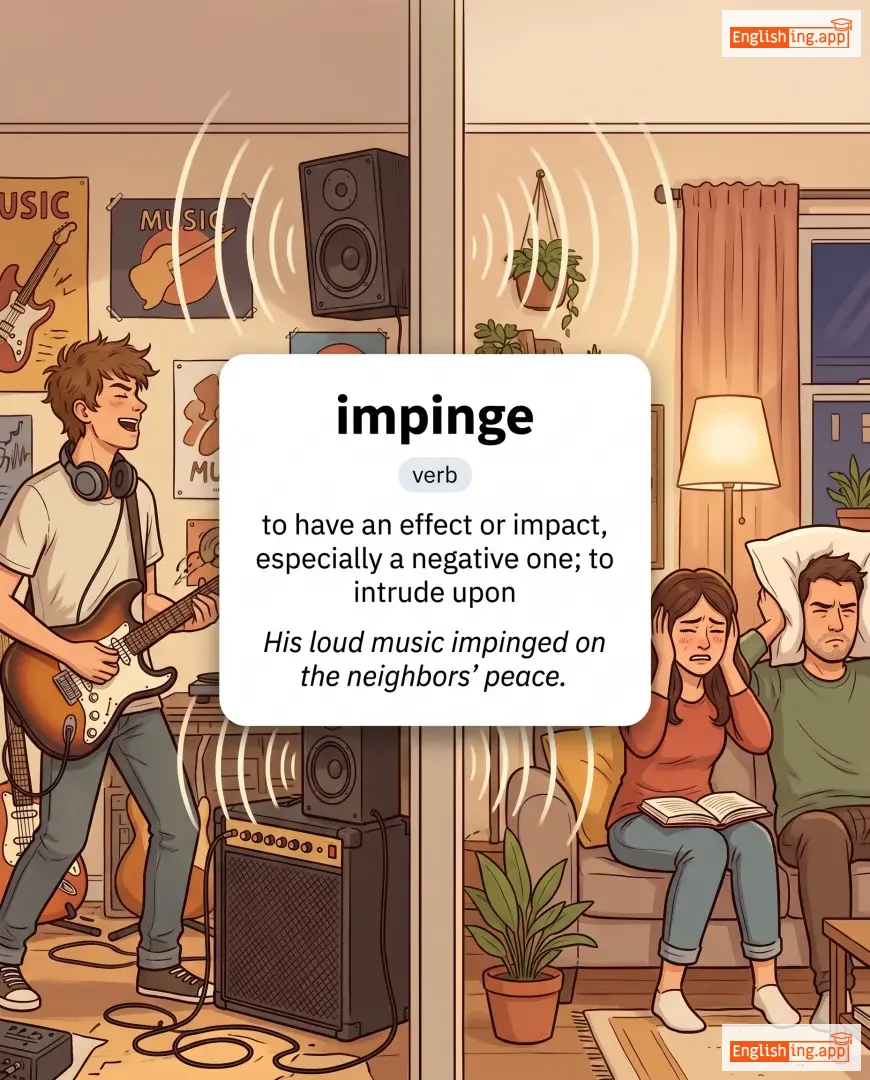
verb
/ɪmˈpɪndʒ/

to have an effect or impact, especially a negative one; to intrude upon

"His loud music impinged on the neighbors’ peace."

adjective
/ˈɪmpɪəs/
不敬な (fukei na)

showing a lack of respect for God or religion

"It was considered impious to joke about sacred traditions."
"聖なる伝統を馬鹿にすることは不敬だと考えられていた。" (Seinaru dentō o baka ni suru koto wa fukei da to kangaerarete ita.)
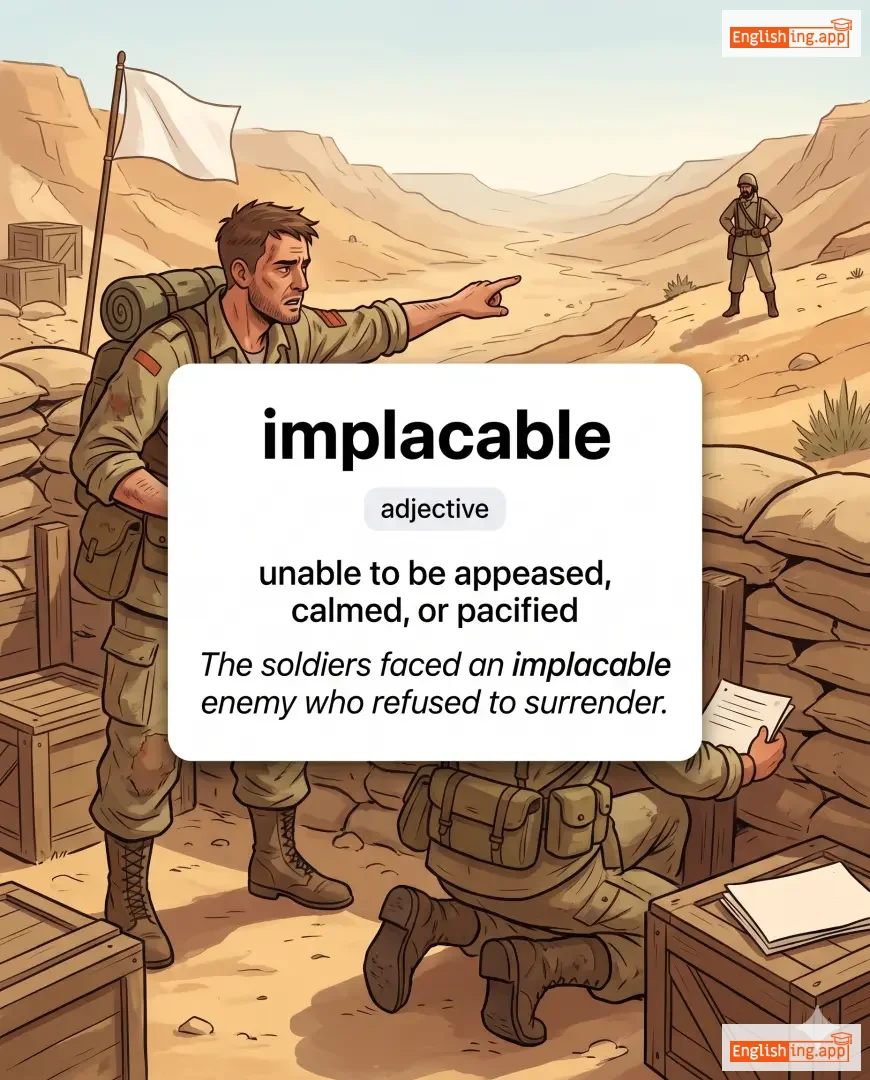
implacable definition card — visual illustration of the meaning
adjective
/ɪmˈplækəbl/
容赦しない (yousha shinai)

unable to be appeased, calmed, or pacified

"The soldiers faced an implacable enemy who refused to surrender."
"兵士たちは降伏を拒否した容赦しない敵に直面した。" (Heishitachi wa kyoufuku o kyohi shita yousha shinai teki ni chokumen shita.)
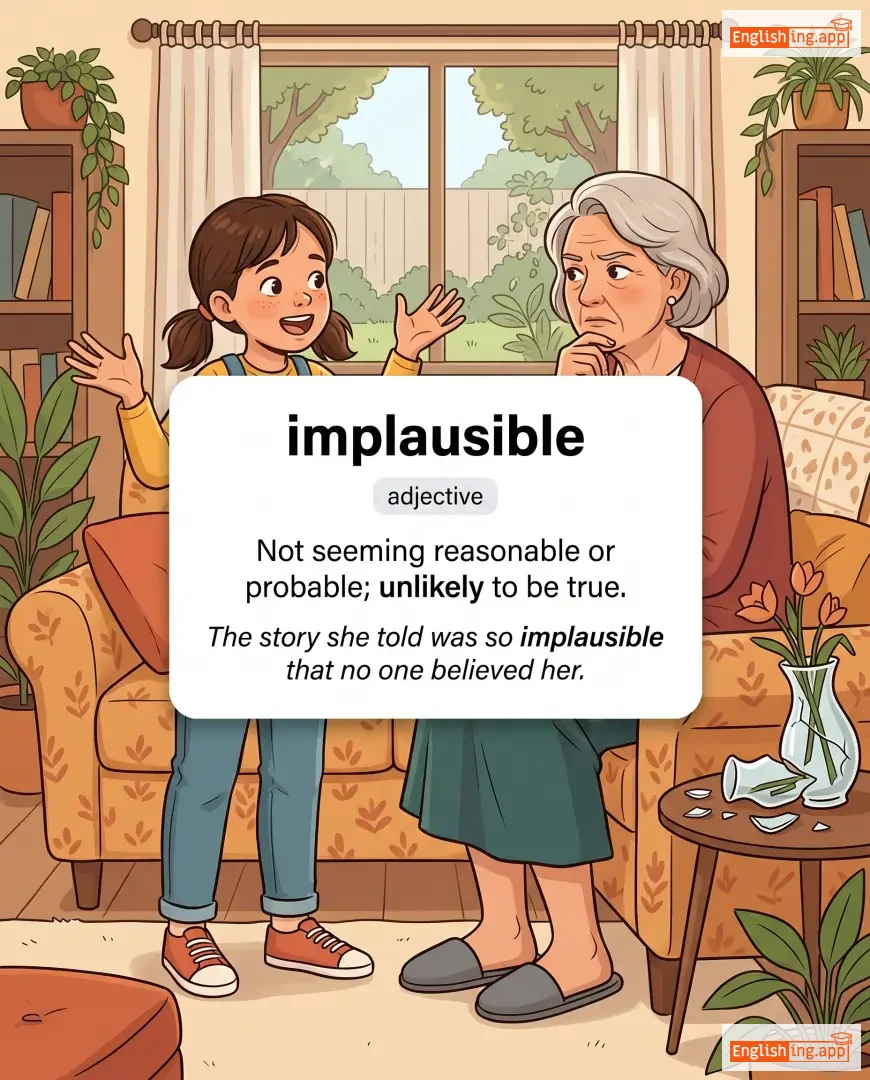
implausible definition card — visual illustration of the meaning
adjective
/ɪmˈplɔːzəbl/
信じがたい (shinjigatai)

Not seeming reasonable or probable; unlikely to be true.

"The story she told was so implausible that no one believed her."
"彼女が話した話はあまりにも信じられないほどで、誰も彼女を信じなかった。" (Kanojo ga hanashita hanashi wa amari ni mo shinjirarenai hodo de, dare mo kanojo o shinjinakatta.)
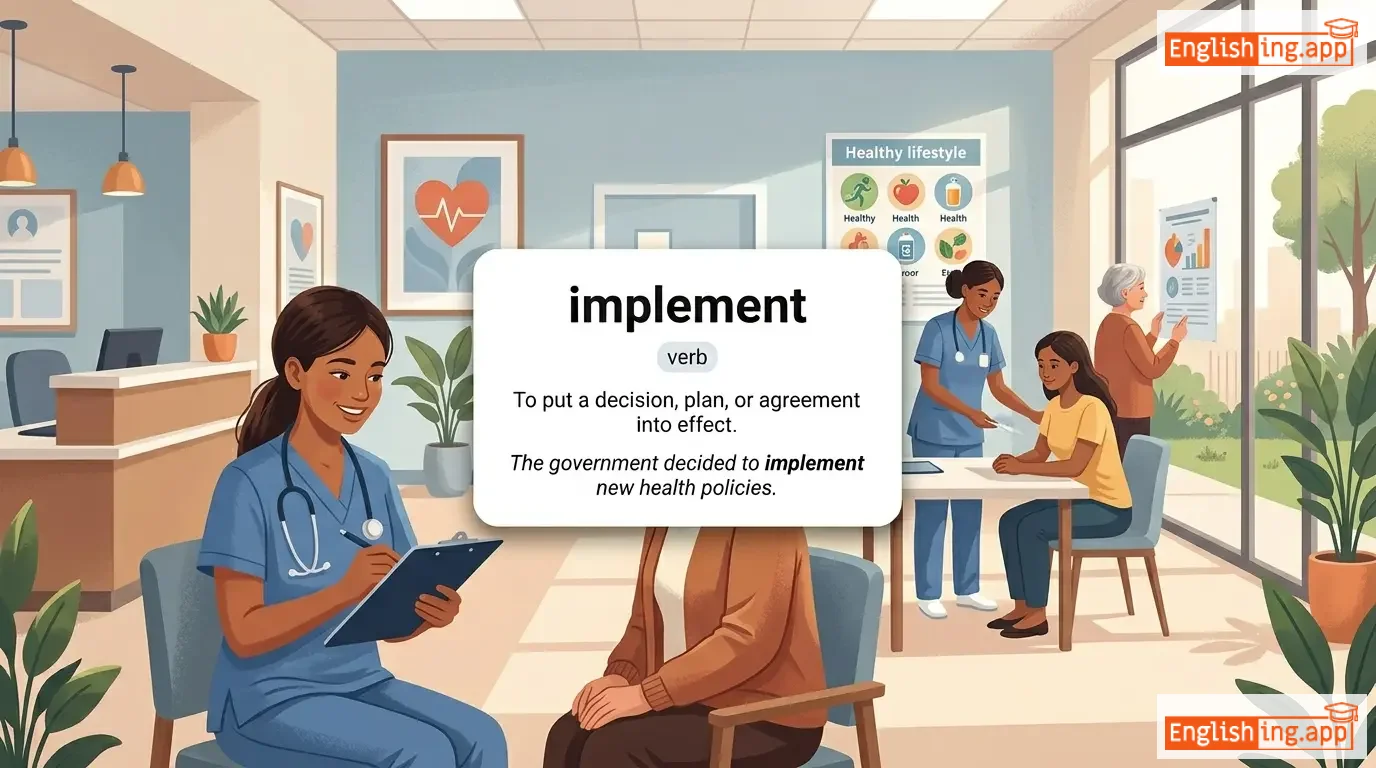
implement definition card — visual illustration of the meaning
verb
/ˈɪmplɪˌmɛnt/
実施する (jisshi suru)

To put a decision, plan, or agreement into effect.

"The government decided to implement new health policies."
"政府は新しい健康政策を実施することに決定しました。" (Seifu wa atarashii kenko seisaku wo jisshi suru koto ni kettei shimashita.)
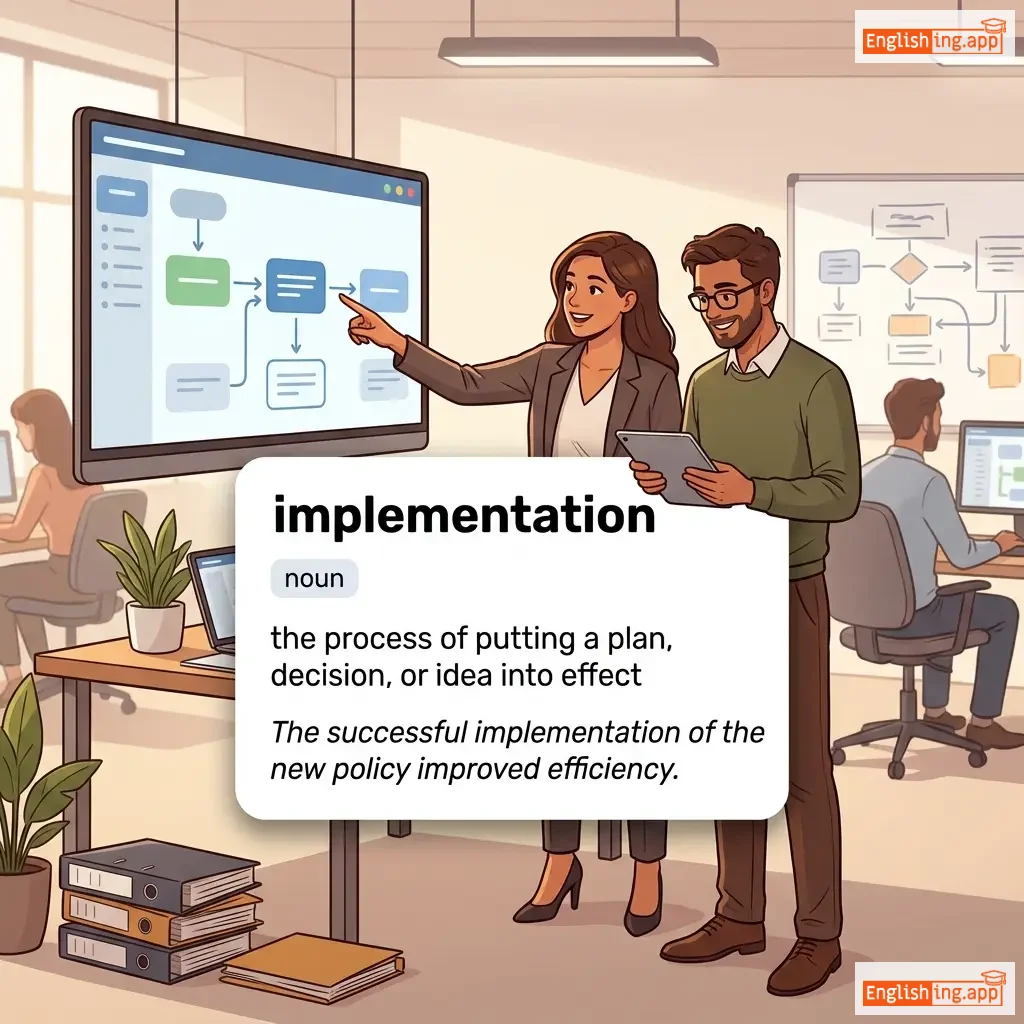
implementation definition card — visual illustration of the meaning
noun
/ˌɪmplɪmenˈteɪʃən/
実施 (jisshi)

the process of putting a plan, decision, or idea into effect

"The successful implementation of the new policy improved efficiency."
"新しい方針の実施が効率を向上させました。" (Atarashii houshin no jisshi ga kōritsu o kōjō sasenomashita.)
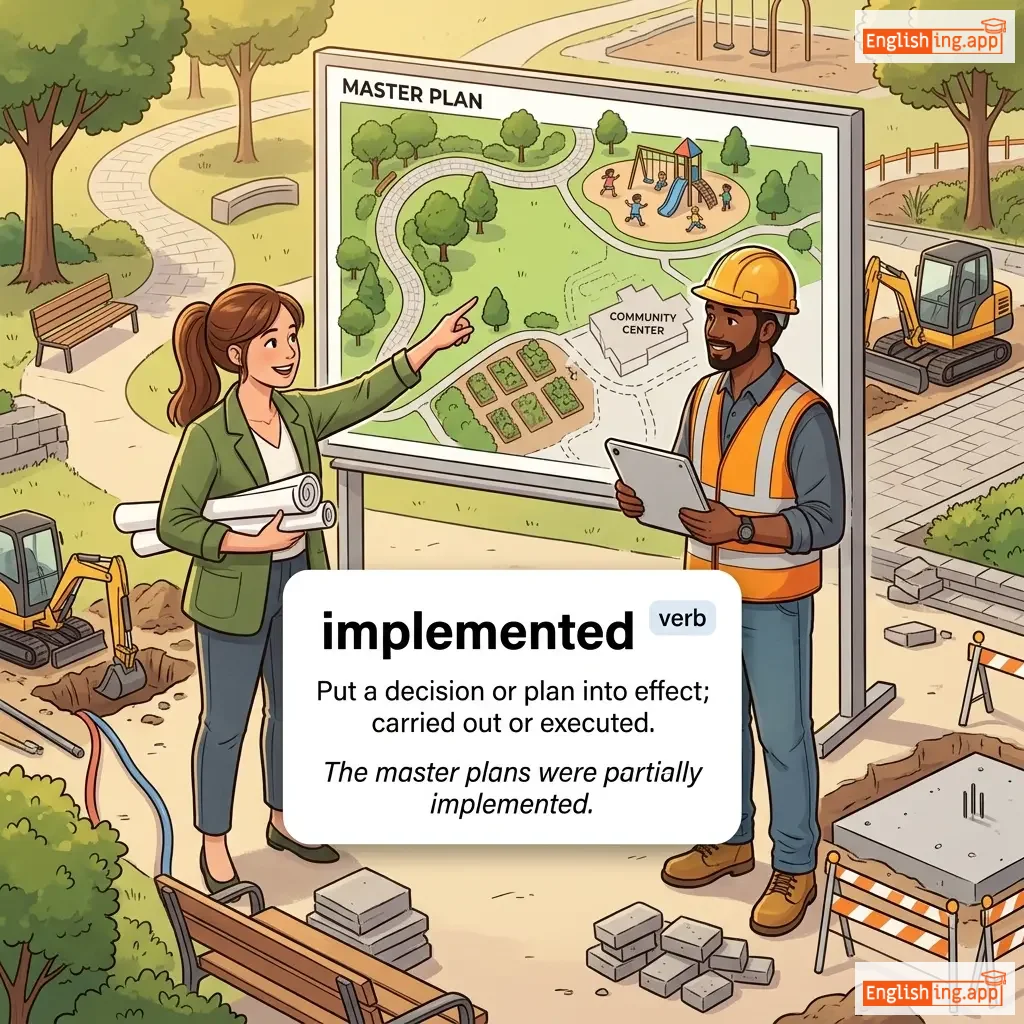
implemented definition card — visual illustration of the meaning
verb
ˈɪmplɪmentɪd
実施された (jisshi sareta)

Put a decision or plan into effect; carried out or executed.

"The master plans were partially implemented."

"マスタープランは部分的に実施されました。" (Masutā puran wa bubun-teki ni jisshi saremashita.)
adjective
/ɪmˈplaɪəbl/
暗示可能な (anshikano)

Capable of being implied or suggested.

"The meaning of the statement is not directly clear but is impliable from the context."

"その声明の意味は直接的には明確ではないが、文脈から推測可能である。" (Sono seimei no imi wa chokusetsuteki ni wa meikaku de wa nai ga, bunmyaku kara suisoku kanou de aru.)
verb
/ˈɪmplɪˌkeɪt/
関与する (kan'yo suru)

To show someone’s involvement in a crime or wrongdoing.

"The evidence implicated several officials in the scandal."
"証拠はスキャンダルに関与した何人かの職員を示した。" (Shōko wa sukyandaru ni kan'yo shita nannin ka no shokuin o shimeshita.)
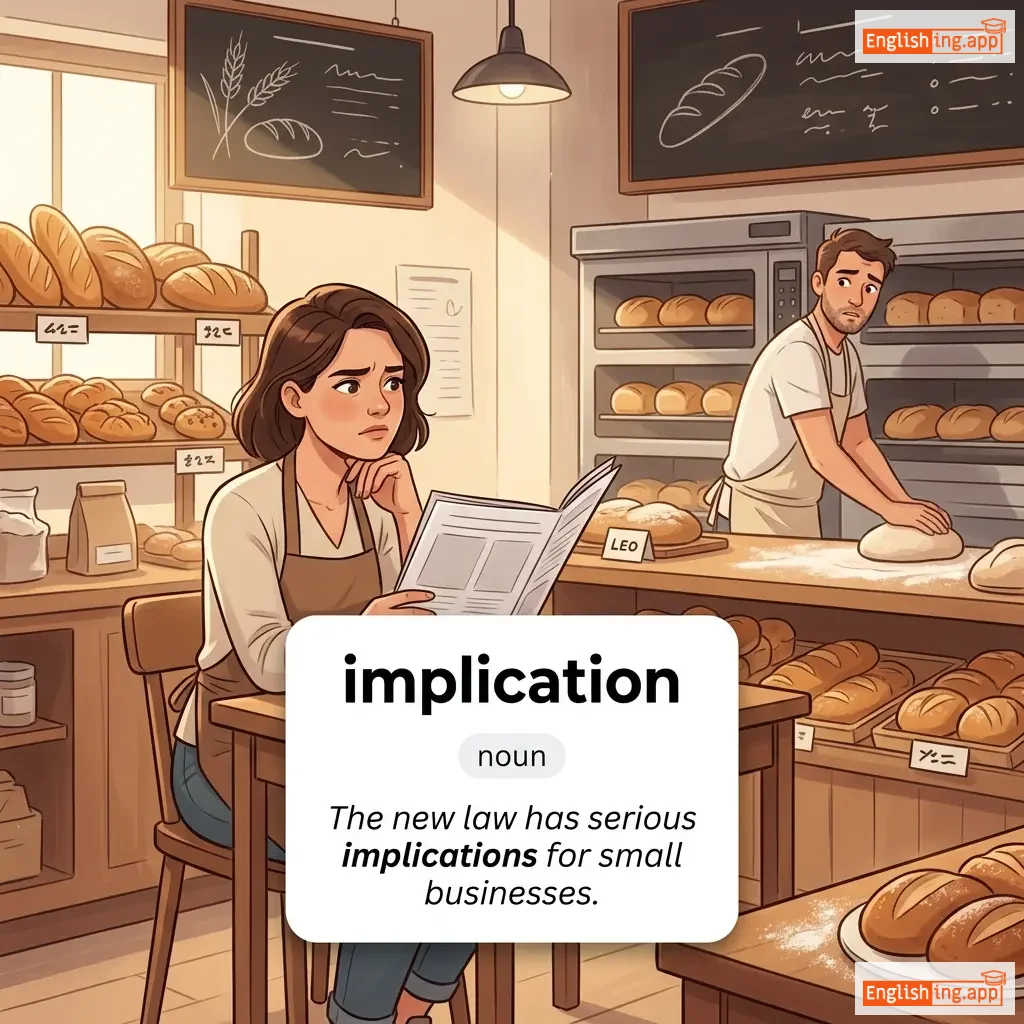
implication definition card — visual illustration of the meaning
noun
/ˌɪmplɪˈkeɪʃən/
含意, 影響 (gani, eikyō)

A possible effect or result of an action or decision; something suggested without being stated directly.

"The new law has serious implications for small businesses."
"新しい法律は小規模企業に重大な影響を及ぼしています。" (Atarashī hōritsu wa shōkibo kigyō ni jūdaina eikyō o oyoboshiteimasu.)
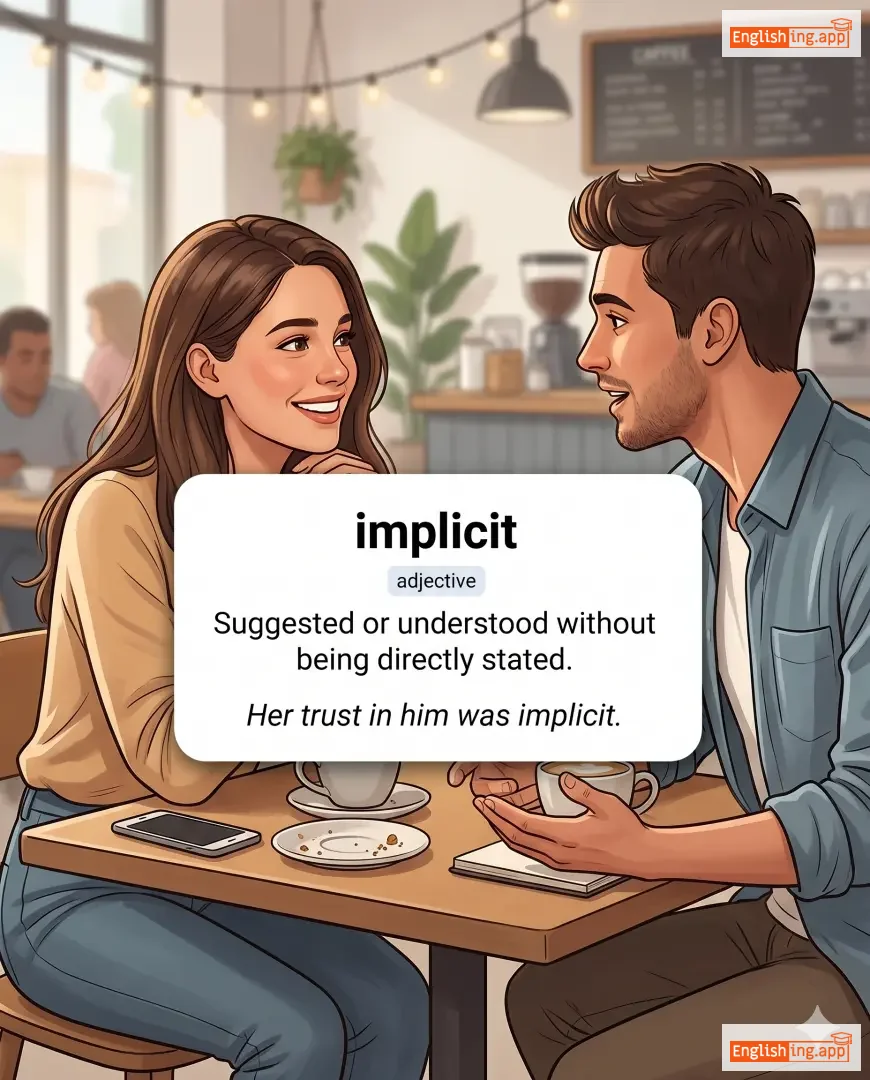
implicit definition card — visual illustration of the meaning
adjective
/ɪmˈplɪsɪt/
暗黙の (anmoku no)

Suggested or understood without being directly stated.

"Her trust in him was implicit."
"彼女の彼に対する信頼は暗黙のものでした。" (kanojo no kare ni taisuru shinrai wa anmoku no mono deshita)
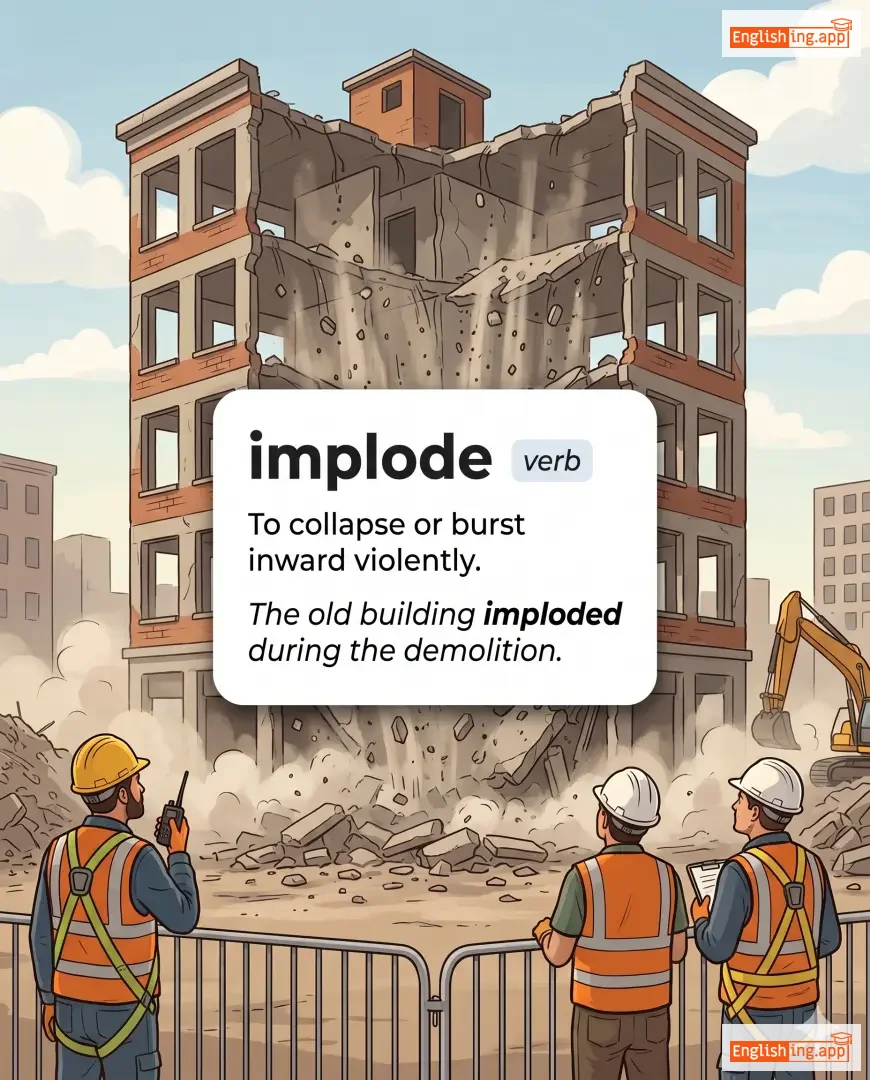
implode definition card — visual illustration of the meaning
verb
/ɪmˈploʊd/
内爆 (naibaku)

To collapse or burst inward violently.

"The old building imploded during the demolition."

"古い建物は解体中に内向きに崩壊しました。" (Furui tatemono wa kaitai chuu ni uchimuki ni houkai shimashita.)
verb
/ɪmˈplɔːr/

To beg someone earnestly or desperately to do something.

"She implored him to stay with her."

verb
/ɪmˈplaɪ/
暗示する (anshi suru)

To suggest something without directly stating it.

"Her tone seemed to imply that she was upset."

"彼女の口調は、彼女が怒っていることを示唆しているようでした。" (Kanojo no kuchou wa, kanojo ga okotte iru koto o shisa shite iru you deshita.)
adjective
/ˌɪmpəˈlaɪt/
無礼 (burei)

Not showing good manners; rude.

"It is impolite to interrupt someone while they are speaking."

"誰かが話しているときに邪魔をするのは失礼です。" (Dareka ga hanashite iru toki ni jama o suru no wa shitsurei desu.)
adverb
/ɪmˈpɒlɪtli/
無礼に (burei ni)

in a rude or discourteous manner; without showing respect or proper manners

"He spoke impolitely to the waiter despite the polite service."

"丁寧なサービスにもかかわらず、彼は無礼にウェイターに話した。" (teinei na saabisu ni mo kakawarazu kare wa burei ni weitaa ni hanashita)
noun
/ɪmˈpɒlɪtnəs/
無礼さ (bureisa)

lack of good manners or courtesy; rude behavior

"His impoliteness towards the guests shocked everyone."

"彼の客に対する無礼さは皆を驚かせた。" (kare no kyaku ni taisuru bureisa wa mina o odorokaseta)
adjective
/ɪmˈpɑːlɪtɪk/
無礼な (burenna)

Unwise or imprudent; not showing good judgment.

"It would be impolitic to criticize them openly."

"彼らを公然と批判するのは無礼だろう。" (Karera o kouzen to hihan suru no wa burena darou.)
adjective
/ɪmˈpɒndərəbl̩/
計り知れない (hakarishirenai)

Something difficult or impossible to estimate, assess, or understand

"The outcome of the election depends on many imponderable factors."
"選挙の結果は、多くの計り知れない要因に依存しています。" (Senkyou no kekka wa, ooku no hakarishirenai youin ni izon shiteimasu.)
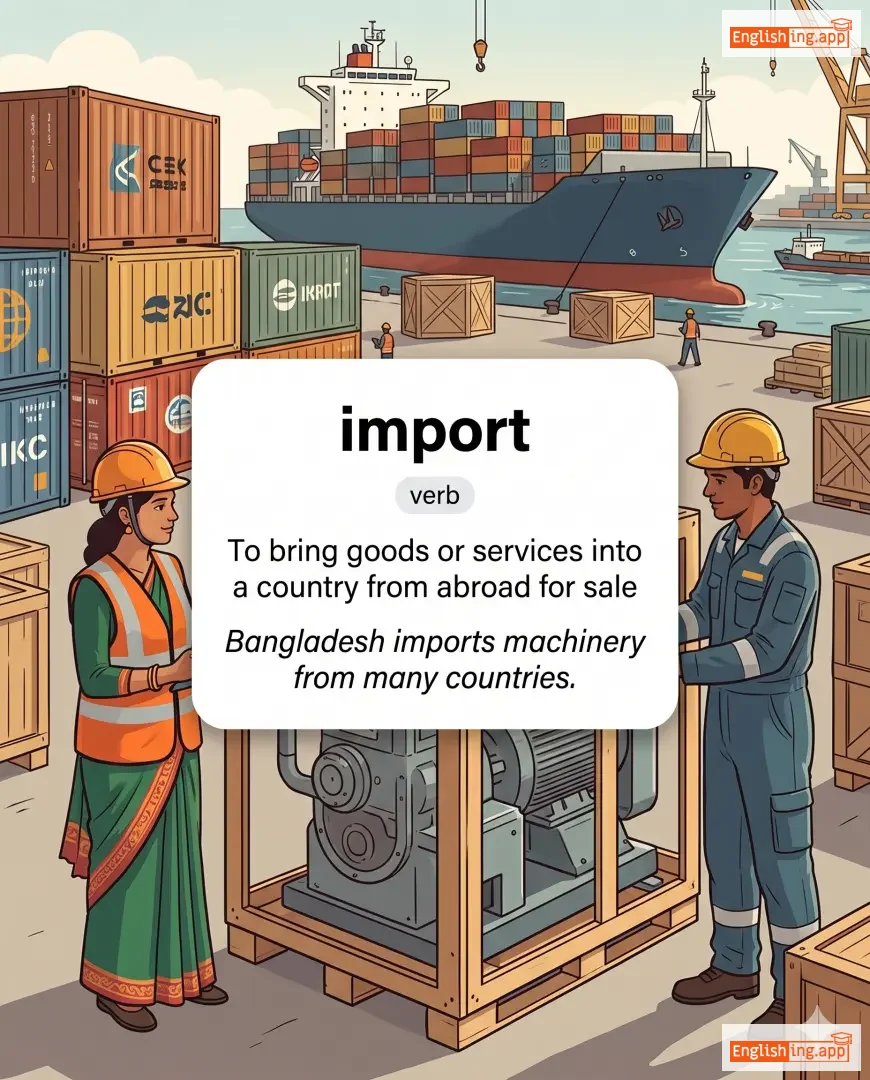
import definition card — visual illustration of the meaning
verb
/ˈɪmpɔːrt/
輸入 (yunyuu)

To bring goods or services into a country from abroad for sale

"Bangladesh imports machinery from many countries."
"バングラデシュは多くの国から機械をインポートしています。" (Banguradeshu wa ooku no kuni kara kikai wo inpo-to shiteimasu.)
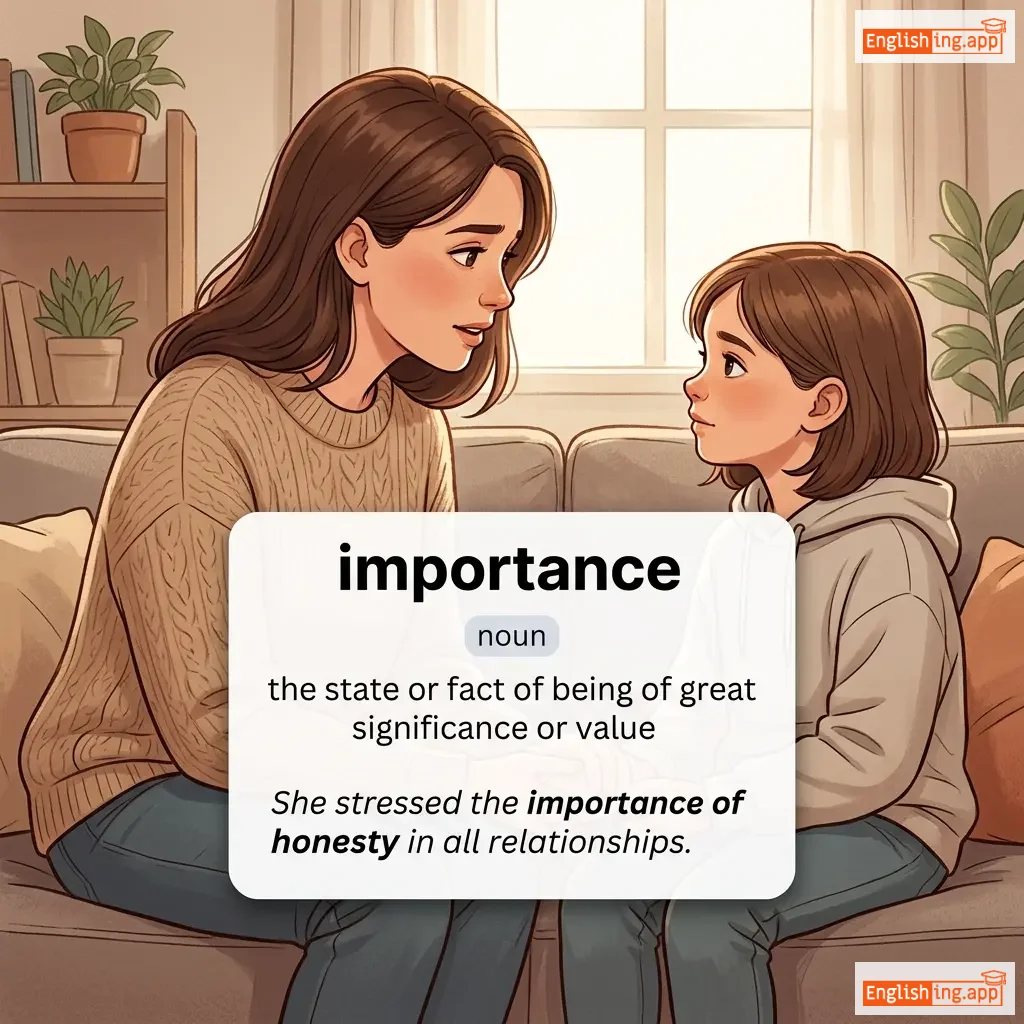
importance definition card — visual illustration of the meaning
noun
/ɪmˈpɔːrtəns/
重要性 (jūyō-sei)

the state or fact of being of great significance or value

"She stressed the importance of honesty in all relationships."
"彼女はすべての関係における誠実の重要性を強調しました。" (Kanojo wa subete no kankei ni okeru seijitsu no jūyō-sei o kyōchō shimashita.)
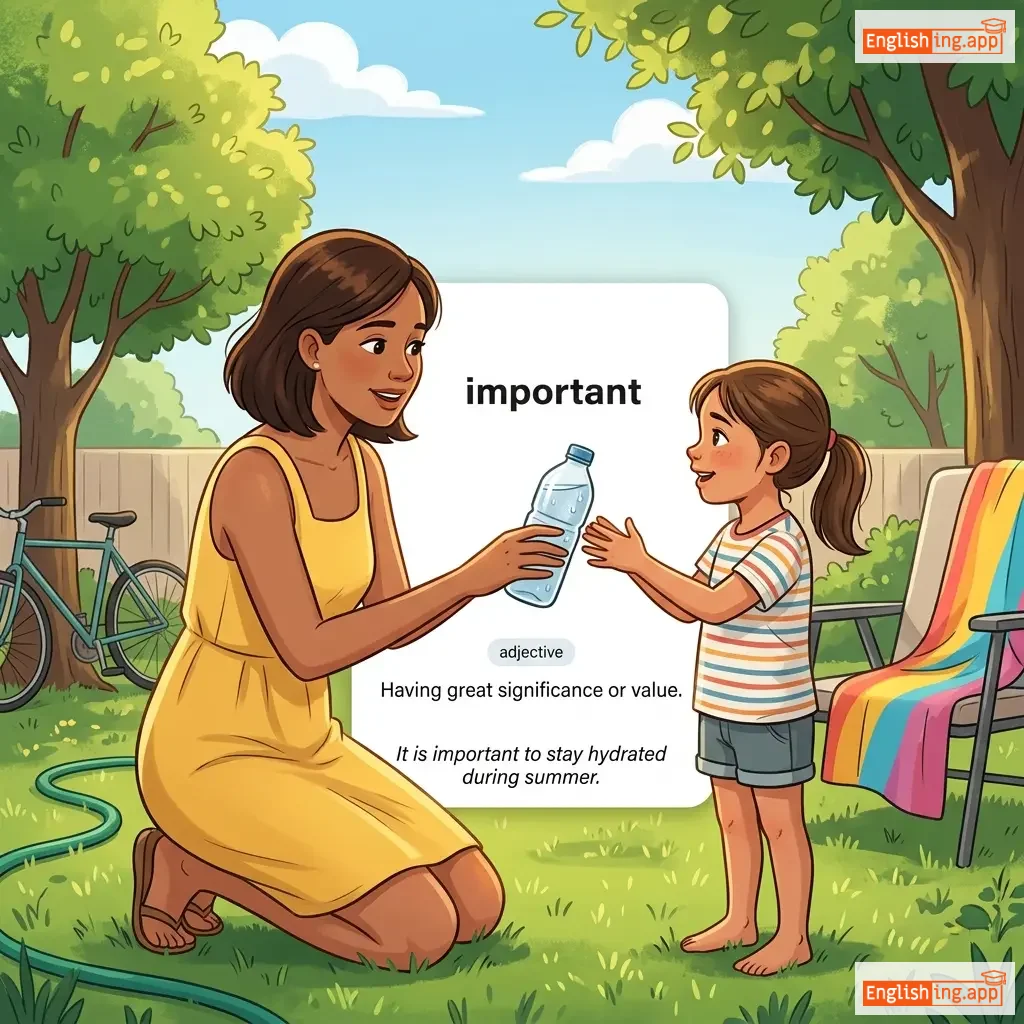
important definition card — visual illustration of the meaning
adjective
/ɪmˈpɔːrtənt/
重要 (jūyō)

Having great significance or value.

"It is important to stay hydrated during summer."

"夏の間は水分補給が重要です。" (Natsu no aida wa suibun hokyū ga jūyō desu.)
adverb
/ɪmˈpɔːtəntli/
重要な方法で (jūyōna hōhō de)

in a way that is of great significance or value

"Importantly, the report highlights the need for immediate action."

"重要な方法で、報告書は即時の行動の必要性を強調しました。" (Jūyōna hōhō de, hōkokusho wa sokujitsu no kōdō no hitsuyō-sei o kyōchō shimashita.)
noun
/ˌɪmpɔːrˈteɪʃən/
輸入 (yunyuu)

The act of bringing goods or services into a country from abroad

"The importation of luxury goods is strictly regulated."

"高級品の輸入は厳しく規制されています。" (Koukyuuhin no yunyuu wa kibishiku kisei sareteimasu.)
adjective
/ɪmˈpɔːrtʃənət/
しつこい (shitsukoi)

Persistent to the point of annoyance or intrusion

"The importunate salesman kept calling despite repeated refusals."

"しつこい販売員は、繰り返し拒否されても電話をかけ続けました。" (Shitsukoi hanbaiin wa, kurikaeshi kyohi saretemo denwa o kake tsudzukemashita.)
verb
/ˌɪmpɔːrˈtuːn/
しつこく頼む (shitsukoku tanomu)

To ask someone persistently or pressingly for something

"The child importuned his mother for a new toy."

"その子供は新しいおもちゃを欲しがって母親にしつこく頼んだ。" (Sono kodomo wa atarashī omocha o hoshigatte hahaoya ni shitsukoku tanonda.)
verb
/ˌɪmpɔːrˈtuːnd/
しつこく頼む (shitsukoku tanomu)

asked someone persistently and pressingly for something

"She importuned her boss for a raise until he finally gave in."
"彼女は昇給を求めて上司にしつこく頼んだ、彼がとうとう折れたまで。" (Kanojo wa shōkyū o motomete jōshi ni shitsukoku tanonda, kare ga tōtō oretamade.)
impose definition card — visual illustration of the meaning
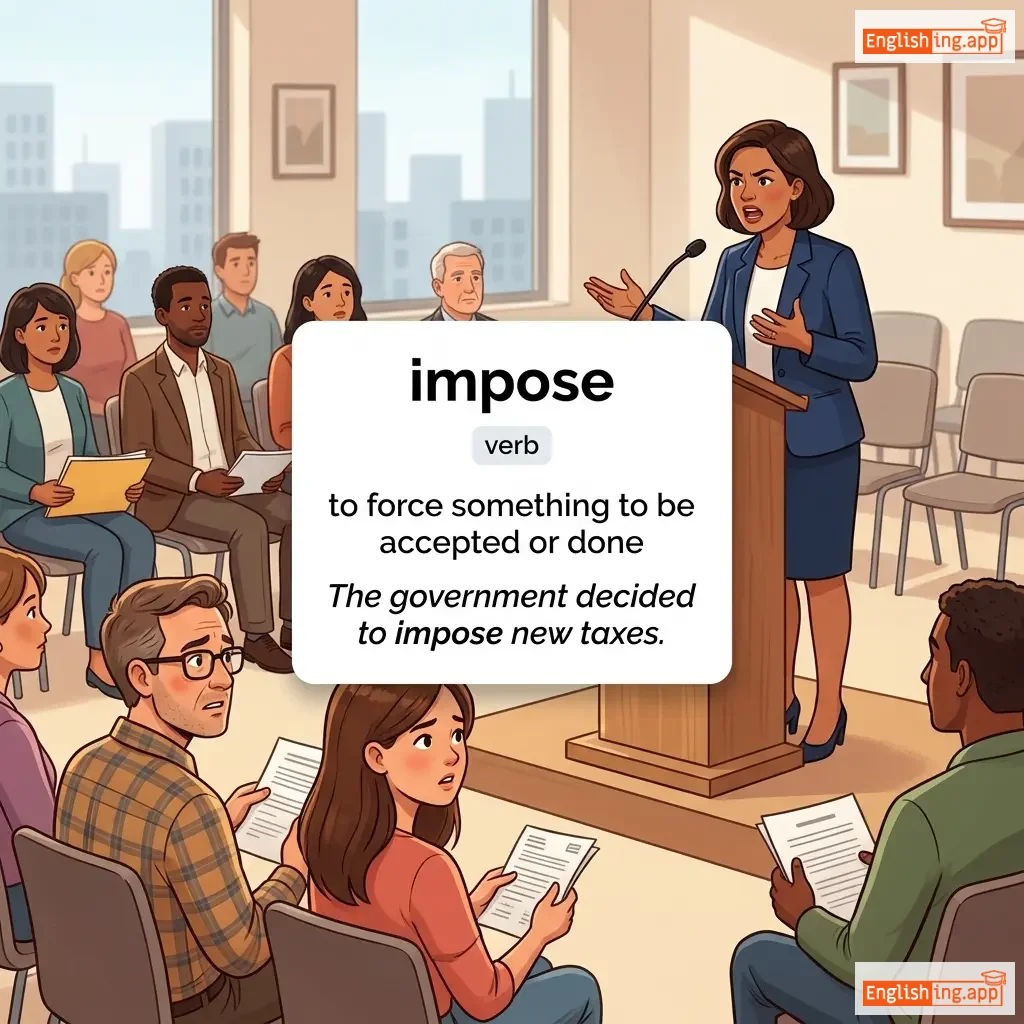
verb
/ɪmˈpoʊz/
課す (kasu)

to force something to be accepted or done

"The government decided to impose new taxes."

"政府は新しい税金を課すことを決定した。" (Seifu wa atarashī zeikin o kasu koto o kettei shita.)
verb
/ɪmˈpoʊzd/
課す (kasu)

forced something to be accepted or put in place

"The government imposed new regulations on the industry."
"政府は産業に新しい規制を課した。" (Seifu wa sangyō ni atarashī kisē o kasa shita.)
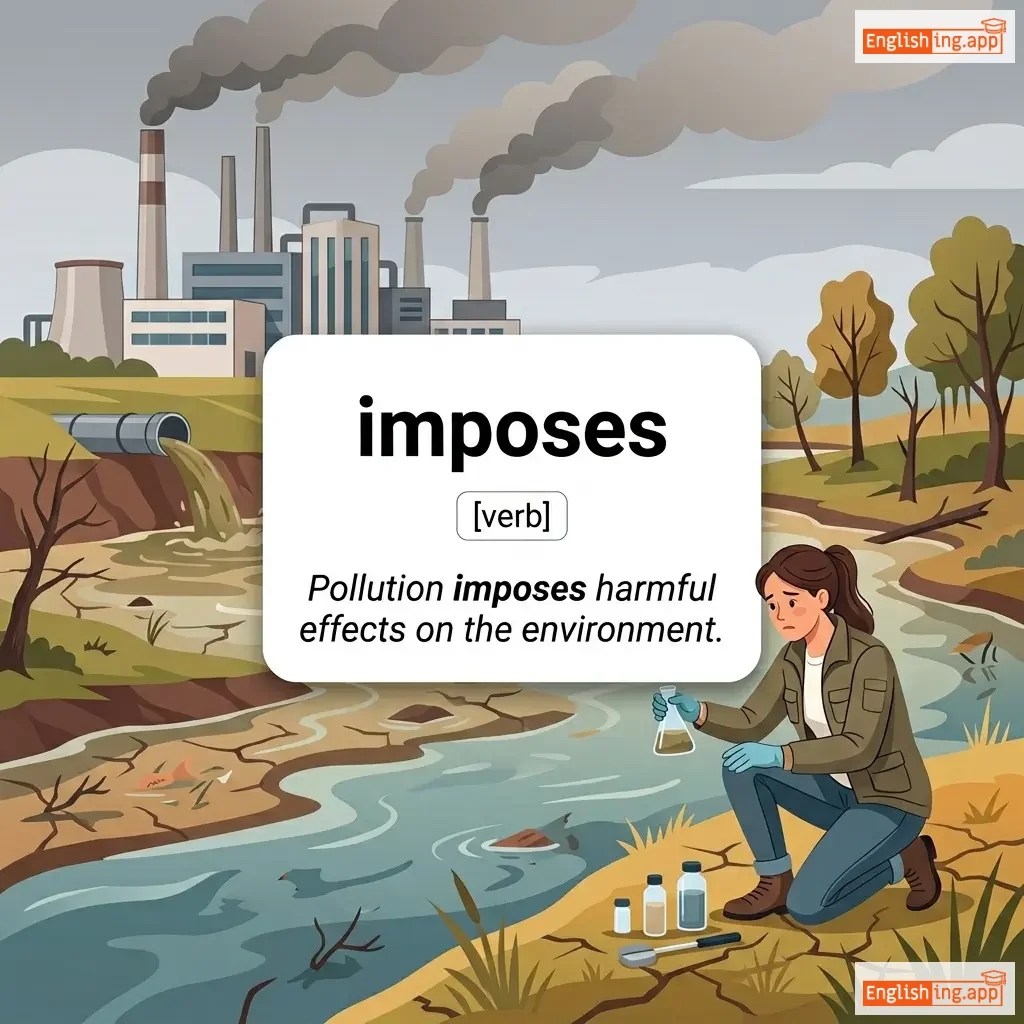
imposes definition card — visual illustration of the meaning
verb
ɪmˈpoʊz
課す (kasu)

To establish or apply by authority; to force something unwelcome or unfamiliar to be accepted or put in place.

"Pollution imposes harmful effects on the environment."

"汚染は環境に有害な影響を課します。" (Oseng wa kankyou ni yuugai na eikyou o kasemasu.)
adjective
/ɪmˈpoʊzɪŋ/
威圧的な (iatsuteki na)

having an appearance that is grand, impressive, or commanding

"The castle is an imposing structure overlooking the valley."

"その城は谷を見下ろす威圧的な構造です。" (Sono shiro wa tani o miorosu iatsuteki na kōzō desu.)
noun
/ˌɪmpəˈzɪʃən/
押し付け (oshitsuke)

the act of forcing something on someone; an unwelcome demand or burden

"The new tax was seen as an unfair imposition on the poor."

"新しい税金は貧しい人々への不公平な押し付けと見なされました。" (Atarashī zeikin wa mazushī hitobito e no fukōhei na oshitsuke to minasa remashita.)
noun
/ɪmˌpɒsəˈbɪlɪti/
不可能性 (fukanousei)

the state or fact of being impossible; something that cannot be done or achieved

"Finishing the project in one day was an impossibility."

"一日でそのプロジェクトを終えるのは不可能だった。" (ichinichi de sono purojekuto wo oeru no wa fukanou datta)
adjective
/ɪmˈpɑːsəbl/
不可能 (fukanou)

not able to occur, exist, or be done

"It is impossible to finish this work in one day."

"この仕事を1日で終わらせるのは不可能です。" (Kono shigoto wo ichinichi de owaraseru no wa fukanou desu.)
noun
/ɪmˈpɑːstər/
詐欺師, 偽者 (sagishi, nise-mono)

a person who pretends to be someone else in order to deceive others

"The man turned out to be an impostor posing as a doctor."

"その男は医者を装った詐欺師だった。" (Sono otoko wa isha o yosotta sagishi datta.)
noun
/ɪmˈpɒstʃər/
偽り (itsuwari)

The act of pretending to be someone else in order to deceive others; deception or fraud.

"The imposture was discovered when the man failed to answer basic questions about his supposed identity."

"偽りは、男が自分の仮の身分についての基本的な質問に答えられなかったときに発覚しました。" (Itsuwari wa, otoko ga jibun no kari no mibun ni tsuite no kihonteki na shitsumon ni kotaerarenakatta toki ni hakkaku shimashita.)
adjective
/ˈɪmpətənt/
無力 (muryoku)

Lacking power, ability, or strength to take effective action.

"The citizens felt impotent against the corrupt system."

"市民は腐敗したシステムに対して無力だと感じた。" (Shimin wa fuhai shita shisutemu ni taishite muryoku da to kanjita.)
verb
/ɪmˈpɒvərɪʃ/
貧困にする (hinkon ni suru)

To make someone poor or reduce the quality or richness of something.

"The long war impoverished the entire nation."

"長い戦争が国全体を貧困にした。" (Nagai sensō ga kuni zentai o hinkon ni shita.)