語彙集

英単語辞書 | 単語の意味、定義、例文

adjective
/ˌɪnsɪˈdɛntəl/
付随的 (fuzui-teki)

happening as a minor part or in connection with something else

"Incidental expenses like snacks and tips were included in the bill."

"スナックやチップのような付随的な費用は請求書に含まれていました。" (Sunakku ya chippu no yōna fuzui-teki na hiyō wa seikyū-sho ni fukumarete imashita.)
adverb
/ˌɪnsɪˈdɛntəli/
ちなみに (chinami ni)

by the way; used to introduce a remark not directly related to the main subject

"Incidentally, did you know that she studied in Paris?"

"ちなみに、彼女がパリで勉強していたことを知っていましたか?" (Chinami ni, kanojo ga Pari de benkyou shite ita koto wo shitte imashita ka?)
verb
/ɪnˈsɪnəˌreɪt/
焼却する (shōkyaku suru)

to burn something completely until it is reduced to ashes

"The city decided to incinerate the medical waste for safety."

"その都市は安全のために医療廃棄物を焼却することを決定しました。" (Sono toshi wa anzen no tame ni iryō haikimono o shōkyaku suru koto o kettei shimashita.)
noun
/ɪnˈsɪpiəns/
始まり (hajimari)

the beginning or initial stage of something

"The project was still in its incipience when funding was approved."

"資金提供が承認された時、プロジェクトはまだその始まりの段階にありました。" (Shikin teikyō ga shōnin sareta toki, purojekuto wa mada sono hajimari no dankai ni arimashita.)
adjective
/ɪnˈsɪpiənt/
初期の (shoki no)

in an initial stage; beginning to develop

"The incipient storm made the sky turn dark and heavy."
"初期の嵐が空を暗く重くさせた。" (Shoki no arashi ga sora o kuraku omoku saseta.)
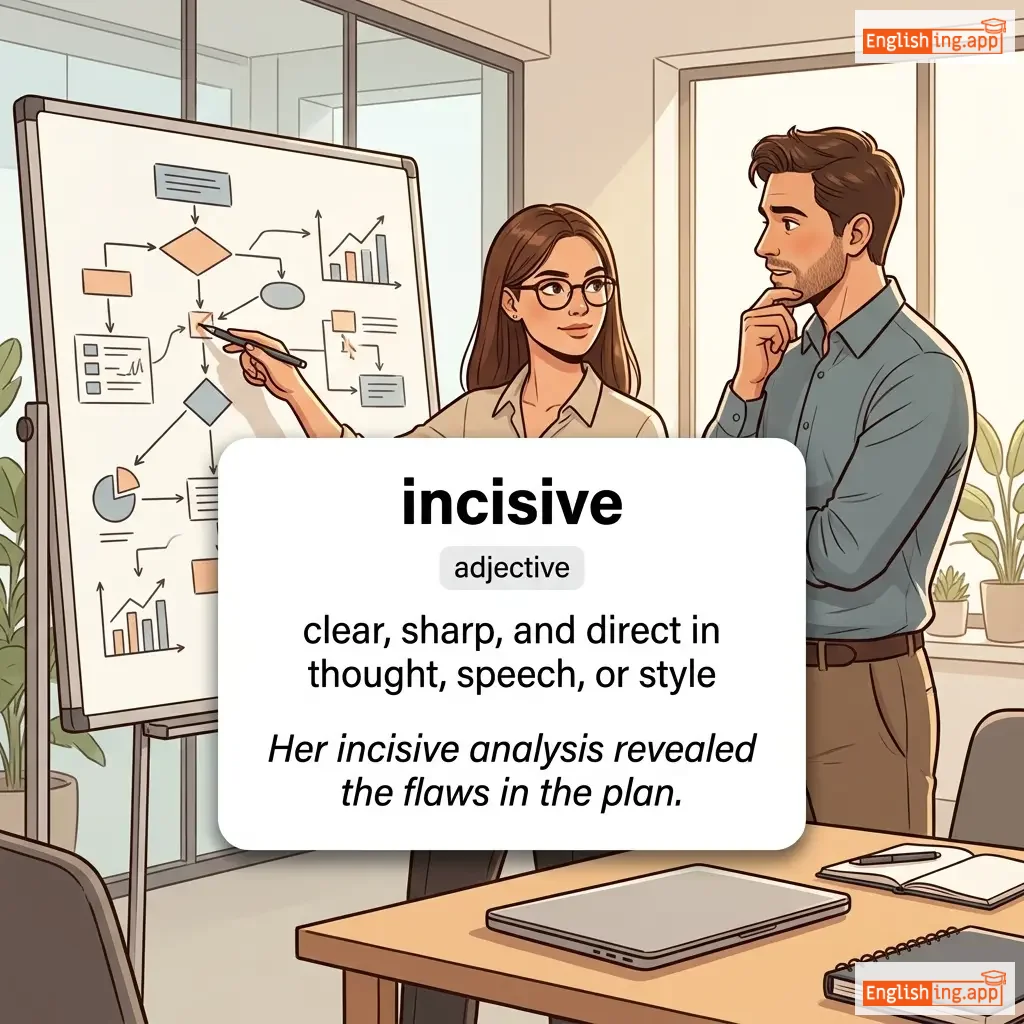
incisive definition card — visual illustration of the meaning
adjective
/ɪnˈsaɪsɪv/
鋭い (surudoi)

clear, sharp, and direct in thought, speech, or style

"Her incisive analysis revealed the flaws in the plan."

"彼女の鋭い分析は計画の欠陥を明らかにした。" (Kanojo no surudoi bunseki wa keikaku no kekkan o akiraka ni shita.)
noun
/ɪnˈsaɪzər/
切歯 (kesshi)

a narrow-edged tooth at the front of the mouth, adapted for cutting

"The dentist noted that his upper left incisor was chipped."
"歯科医は彼の上の左側の切歯が欠けていることに気づきました。" (Shikai wa kare no ue no hidarigawa no kesshi ga kakete iru koto ni kizukimashita.)
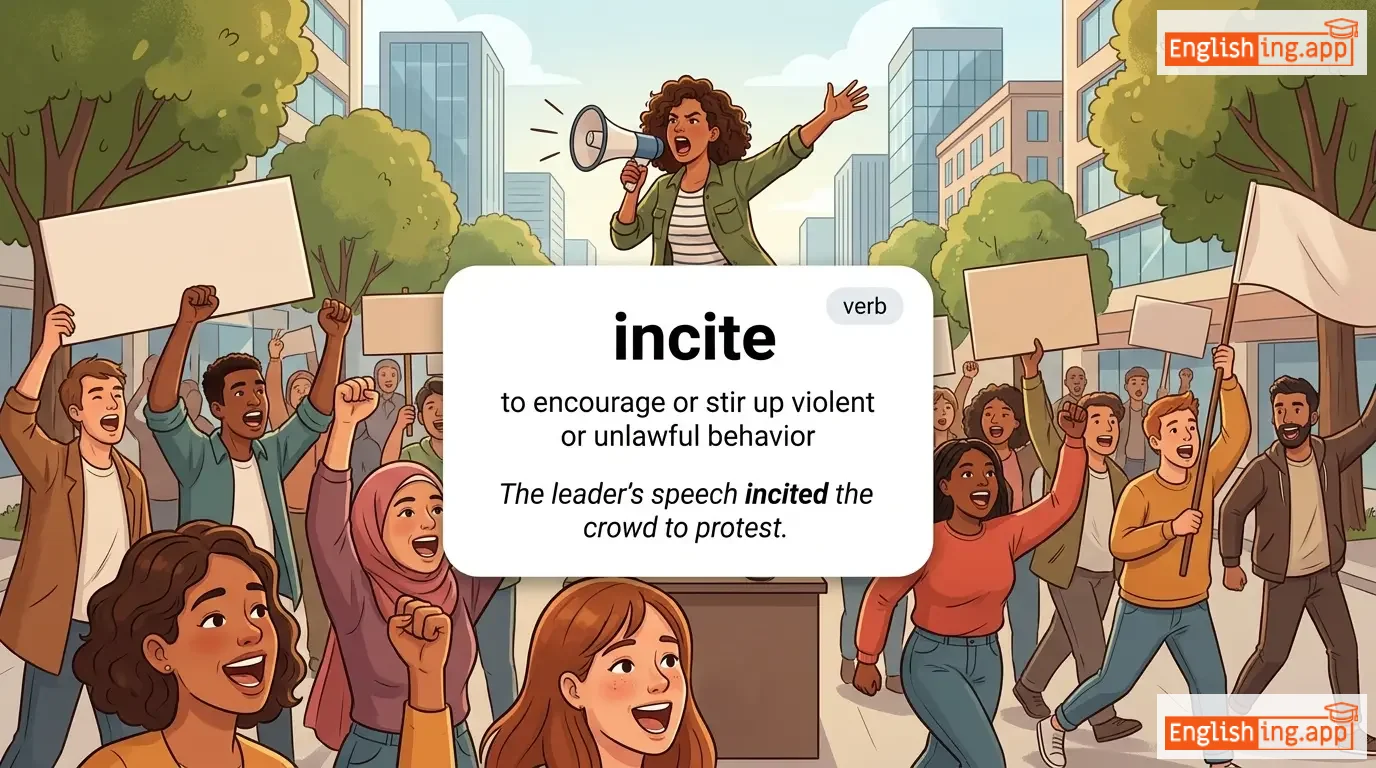
incite definition card — visual illustration of the meaning
verb
/ɪnˈsaɪt/
扇動する (sendou suru)

to encourage or stir up violent or unlawful behavior

"The leader's speech incited the crowd to protest."

"リーダーのスピーチは群衆を抗議へと駆り立てました。" (Riidaa no supiichi wa gunshuu o kougi e to karitate mashita.)
noun
/ɪnˈsaɪtmənt/
扇動 (sendou)

the action of provoking unlawful or violent behavior

"He was arrested for incitement to riot."

"彼は暴動を扇動した罪で逮捕された。" (Kare wa boudou o sendou shita tsumi de taiho sareta.)
adjective
/ɪnˈklɛmɛnt/
悪天候 (akutenkou)

unpleasantly cold, wet, or stormy (usually weather)

"The match was canceled due to inclement weather."

"試合は悪天候のためキャンセルされました。" (Shiai wa akutenkou no tame kyanseru saremashita.)
noun
/ˌɪnklɪˈneɪʃən/
傾向 (keikou)

A natural tendency or urge to act or feel in a particular way.

"She has an inclination towards helping others."

"彼女は他の人を助ける傾向があります。" (Kanojo wa hoka no hito o tasukeru keikō ga arimasu.)
verb
/ɪnˈklaɪn/
傾く (katamuku)

to feel willing or favorably disposed toward something; to bend or tilt

"She is inclined to agree with the proposal."

"彼女は提案に賛成する傾向があります。" (Kanojo wa teian ni sansei suru katamuki ga arimasu.)
adjective
/ɪnˈklaɪnd/
傾向がある (keikou ga aru)

having a tendency or disposition toward something

"He is inclined to help those in need."

"彼は困っている人々を助ける傾向がある。" (Kare wa komatteiru hitobito wo tasukeru keikou ga aru.)
include definition card — visual illustration of the meaning
verb
/ɪnˈkluːd/
含める (kumeru)

to make something part of a whole or group

"The package includes free breakfast."

"パッケージには無料の朝食が含まれています。" (Pakkēji ni wa muryō no chōshoku ga fukuma reteimasu.)
preposition
/ɪnˈkluːdɪŋ/
含む (fukumu)

used to show that someone or something is part of a larger group

"Many people attended the event, including students and teachers."

"多くの人々がイベントに参加しました、学生や教師を含む。" (Ōku no hitobito ga ibento ni sanka shimashita, gakusei ya kyōshi o fukumu.)
noun
/ɪnˈkluːʒən/
インクルージョン (inkurūjon)

the action or state of including or being included within a group or structure

"Diversity and inclusion are key values in modern workplaces."
"多様性とインクルージョンは現代の職場における重要な価値観です。" (Tayōsei to inkurūjon wa gendai no shokuba ni okeru jūyōna kachikan desu.)
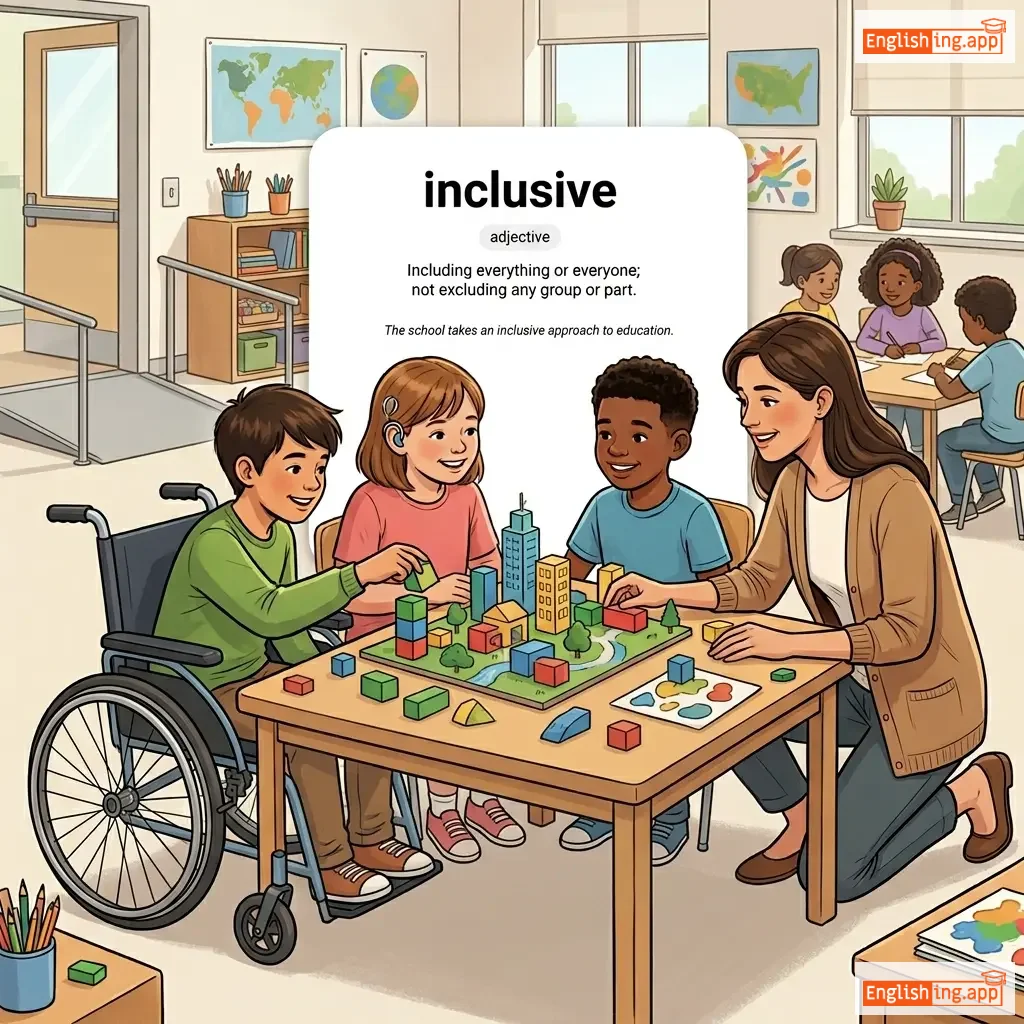
inclusive definition card — visual illustration of the meaning
adjective
/ɪnˈkluːsɪv/
インクルーシブ (inkurushibu)

Including everything or everyone; not excluding any group or part.

"The school takes an inclusive approach to education."

"学校はインクルーシブなアプローチを教育に取り入れています。" (Gakkō wa inkurushibu na apurōchi wo kyōiku ni toriireteimasu.)
adjective
/ˌɪnkoʊˈɜːrsəbl̩/
強制できない (kyousei dekinai)

Not capable of being forced, compelled, or restrained.

"Her incoercible spirit inspired others to fight for justice."

"彼女の強制できない精神は他の人々に正義のために戦うようにインスパイアした。" (Kanojo no kyousei dekinai seishin wa hoka no hitobito ni seigi no tame ni tatakau you ni insupaia shita.)
adjective
/ɪnˈkɑːdʒɪtənt/
無思慮な (musiryona)

Lacking thought; inconsiderate or thoughtless.

"It was incogitant of him to make such a rude comment."

"彼がそんな失礼なコメントをするのは無思慮なことでした。" (Kare ga sonna shitsurei na komento o suru no wa musiryona koto deshita.)
adverb, adjective
/ˌɪnkɑːɡˈniːtoʊ/
インコグニート (inkongīnīto)

In disguise or with one's identity concealed.

"The celebrity traveled incognito to avoid the paparazzi."

"有名人はパパラッチを避けるためにインコグニートで旅行した。" (Yūmeijin wa paparatchi o sakeru tame ni inkongīnīto de ryokō shita.)
noun
/ˌɪnkoʊˈhɪrəns/
不整合 (fuseigou)

The quality of being unclear, confused, or lacking logical connection.

"His speech was full of incoherence and difficult to follow."

"彼のスピーチは不整合で、理解するのが難しかった。" (Kare no supīchi wa fuseigō de, rikai suru no ga muzukashikatta.)
adjective
/ˌɪnkəʊˈhɪərənt/
一貫性のない (ikkansē no nai)

Not clear or easy to understand; lacking logical connection.

"His explanation was so incoherent that nobody could follow it."

"彼の説明はあまりにも一貫性がなく、誰もそれを追うことができませんでした。" (Kare no setsumei wa amarini mo ikkansē ga naku, dare mo sore o ou koto ga dekimasen deshita.)
adjective
/ˌɪnkəmˈbʌstəbl/
不燃 (funen)

Not capable of catching fire or burning.

"This material is incombustible and safe for construction."
"この材料は燃えません、安全に建設に使用できます。" (Kono zairyō wa moemasu, anzen ni kensetsu ni shiyō dekimasu.)
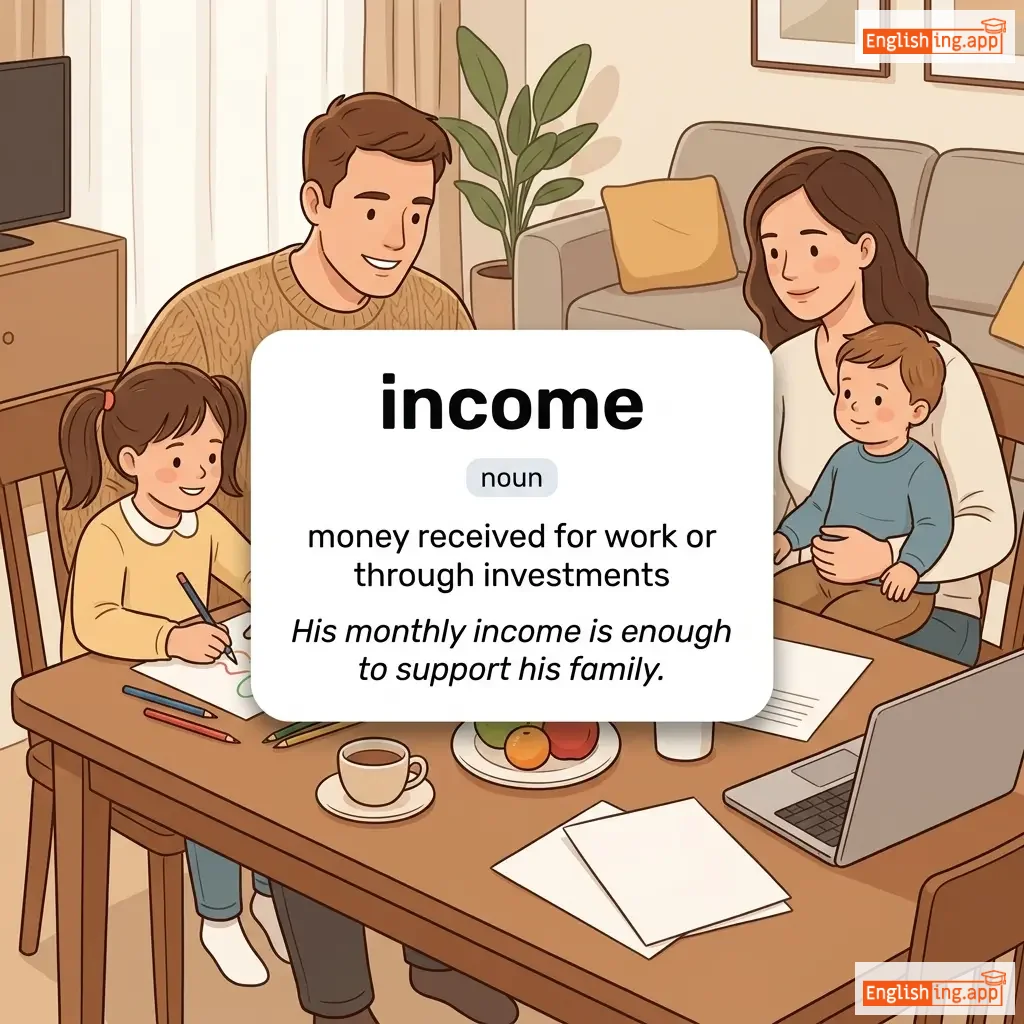
income definition card — visual illustration of the meaning
noun
/ˈɪnkʌm/
収入 (shūnyū)

money received for work or through investments

"His monthly income is enough to support his family."

"彼の月収は家族を支えるのに十分です。" (Kare no gekkyū wa kazoku o sasaeru no ni jūbun desu.)
adjective
/ˌɪnkəˈməʊdiəs/
不快な (fukai na)

Uncomfortably small, cramped, or inconvenient.

"We had to stay in an incommodious room during the trip."

"旅行中に不快な部屋に泊まらなければなりませんでした。" (Ryokō-chū ni fukai na heya ni tomarana kereba narimasen deshita.)
adjective
/ɪnˈkɒmp(ə)rəbl/
比類のない (hirui no nai)

Without an equal in quality or excellence; matchless.

"The view from the mountain was incomparable."

"山からの景色は比類のないものでした。" (Yama kara no keshiki wa hirui no nai mono deshita.)
noun
/ˌɪnkəmˌpætəˈbɪlɪti/
非互換性 (hi gokan sei)

the state of being unable to exist or work together harmoniously; lack of compatibility

"The project failed because of incompatibility between the two software systems."

"2つのソフトウェアシステムの非互換性のため、そのプロジェクトは失敗した。" (futatsu no sofutouea shisutemu no hi gokan sei no tame sono purojekuto wa shippai shita)
adjective
/ˌɪnkəmˈpætəbl/
互換性がない (gokan-sei ga nai)

Not able to exist or work together without conflict.

"Their personalities were completely incompatible."

"彼らの性格は完全に互換性がなかった。" (Karera no seikaku wa kanzen ni gokan-sei ga nakatta.)
noun
/ɪnˈkɒmpɪtəns/
無能 (munou)

Lack of ability, skill, or effectiveness in doing something.

"The project failed due to the manager’s incompetence."

"プロジェクトはマネージャーの無能のため失敗しました。" (Purojekuto wa manējā no munou no tame shippai shimashita.)
adjective
/ɪnˈkɒmpɪtənt/

Lacking the necessary ability or skills to do something successfully.

"He was fired because he was incompetent at his job."

adjective
/ˌɪnkəmˈpliːt/
不完全 (fukanzen)

Not finished, lacking some parts or not whole.

"Her report was incomplete and needed further details."

"彼女の報告は不完全で、詳細が必要でした。" (Kanojo no hōkoku wa fukanzen de, shōsai ga hitsuyō deshita.)
noun
/ˌɪnkəmˈpliːtnəs/
不完全さ (fukanzen sa)

the state of not being complete or whole; lack of necessary parts or fullness

"The incompleteness of the report caused delays in the project."

"レポートの不完全さがプロジェクトの遅れを引き起こした。" (repooto no fukanzen sa ga purojekuto no okure o hikiokoshita)
adjective
/ˌɪnkɒmprɪˈhɛnsəbl/
理解不能 (rikai funou)

Impossible or very difficult to understand.

"The professor’s lecture was so fast it became incomprehensible."

"教授の講義は速すぎて理解不能になった。" (Kyoushu no kougi wa hayasugite rikai funou ni natta.)
adjective
/ˌɪnkəmˈprɛsəbl/
圧縮不可能 (asshuku fukanou)

Not able to be pressed or squeezed into a smaller space.

"Liquids are generally considered incompressible."

"液体は通常、圧縮不可能と見なされます。" (Ekita wa tsūjō, asshuku fukanō to minasarerumasu.)
adjective
/ˌɪnkənˈsiːvəbl̩/
想像できない (souzou dekinai)

Impossible to imagine or believe; beyond comprehension.

"It seemed inconceivable that she could finish the marathon after such little training."

"彼女があれほどのトレーニングでマラソンを完走できるとは想像できなかった。" (Kanojo ga arehodo no toreiningu de marason o kansou dekiru to wa souzou dekinakatta.)
adjective
/ˌɪnkənˈkluːsɪv/
結論が出ていない (ketsuron ga dete inai)

Not leading to a definite result or decision.

"The investigation remained inconclusive due to a lack of evidence."

"証拠の不足により、調査は結論が出ていないままでした。" (Shouko no fusoku ni yori, chousa wa ketsuron ga dete inai mama deshita.)
adjective
/ɪnˈkɒŋɡruənt/
不一致な (fuicchi na)

Not in harmony or keeping with the surroundings or other aspects.

"His casual outfit looked incongruent at the formal dinner."
"彼のカジュアルな服装は正式なディナーで不一致に見えた。" (Kare no kajuaru na fukusō wa seishiki na dinā de fuicchi ni mieta.)
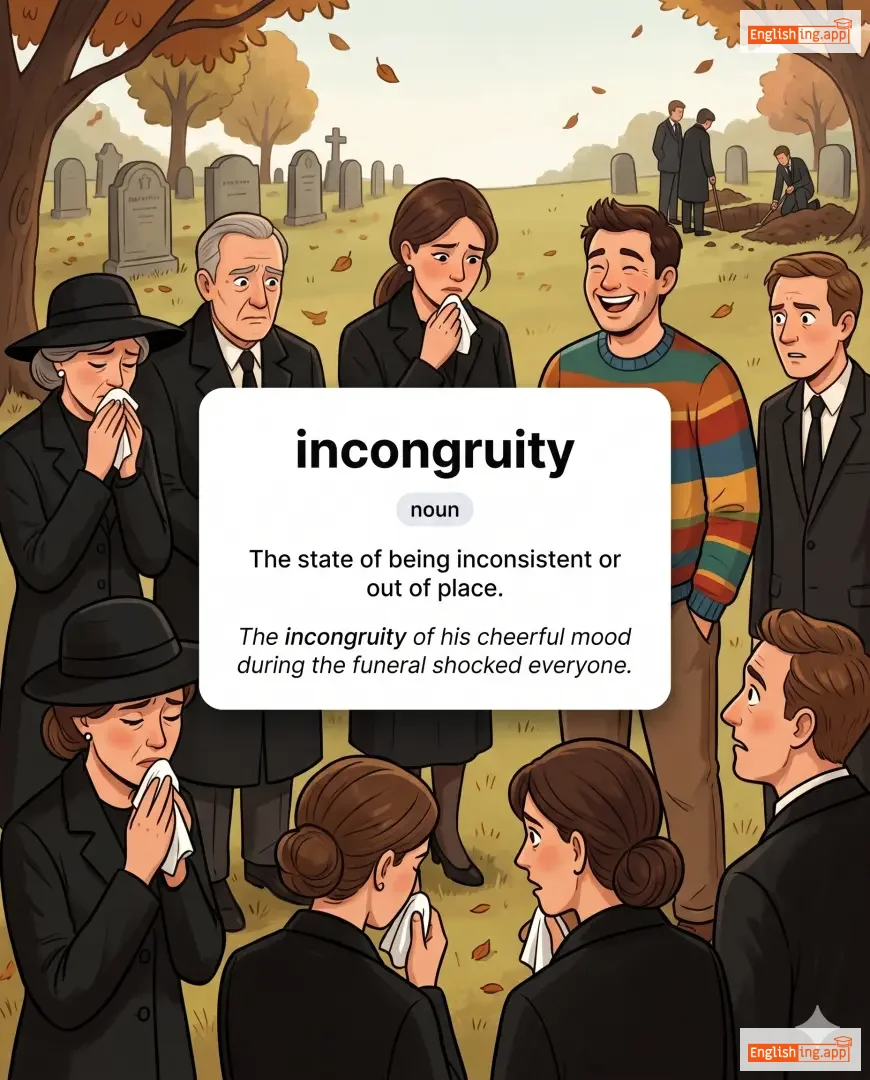
incongruity definition card — visual illustration of the meaning
noun
/ˌɪnkənˈɡruːəti/
不一致 (fu ichi)

The state of being inconsistent or out of place.

"The incongruity of his cheerful mood during the funeral shocked everyone."

"葬式の最中に彼の陽気な気分の不一致は、皆を驚かせました。" (Sōshiki no saichū ni kare no yōki na kibun no fu ichi wa, mina o odorokasemashita.)
adjective
/ɪnˈkɒŋɡruəs/
不調和 (fuchouwa)

Not fitting in with or suitable for the surroundings.

"His jokes were incongruous during the serious meeting."
"彼の冗談は真面目な会議では不調和だった。" (Kare no joudan wa majime na kaigi de wa fuchouwa datta.)
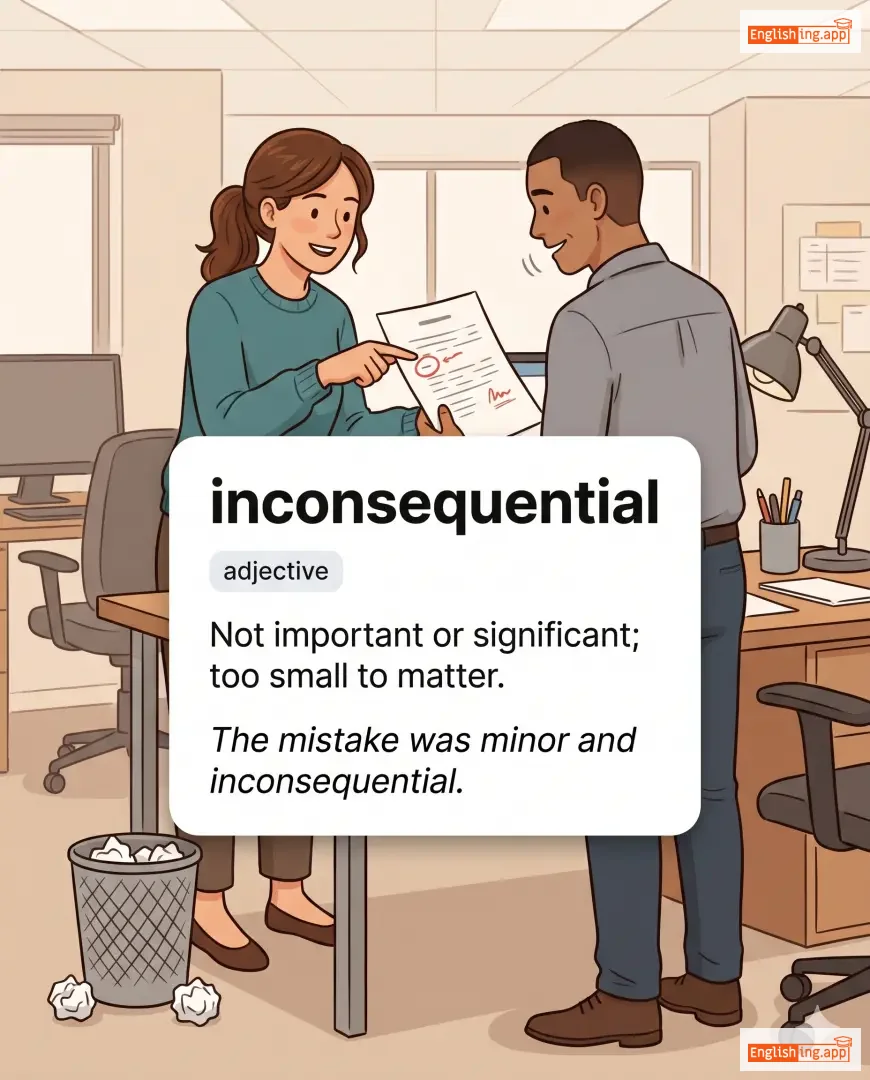
inconsequential definition card — visual illustration of the meaning
adjective
/ˌɪnˌkɒnsɪˈkwɛnʃəl/
重要でない (jūyō denai)

Not important or significant; too small to matter.

"The mistake was minor and inconsequential."

"その間違いは小さく、重要ではありませんでした。" (Sono machigai wa chiisaku, jūyō de wa arimasen deshita.)
adjective
/ˌɪnkənˈsɪdərəbl/
取るに足らない (toru ni taranai)

Too small or unimportant to be worth considering.

"The donation was not inconsiderable, though smaller than expected."

"寄付は取るに足らなかったが、予想よりも小さかった。" (Kifu wa toru ni taranakatta ga, yosō yori mo chiisakatta.)
adjective
/ˌɪnkənˈsɪdərət/
思いやりがない (omoiyari ga nai)

Thoughtless; showing a lack of concern for others.

"It was inconsiderate of him to play loud music late at night."

"夜遅くに大きな音で音楽を流すことは、思いやりがない行動でした。" (Yoru osoku ni ookina ondo de ongaku wo nagasu koto wa, omoiyari ga nai kodo deshita.)
noun
/ˌɪnkənˈsɪstənsi/
不一致 (fuitchi)

The quality of being contradictory, irregular, or not staying the same.

"There is an inconsistency between his words and actions."

"彼の言葉と行動には不一致があります。" (Kare no kotoba to kōdō ni wa fuitchi ga arimasu.)
adjective
/ˌɪnkənˈsɪstənt/
一貫性がない (ikkansē ga nai)

Not staying the same throughout; lacking harmony or regularity.

"His answers were inconsistent and confusing."

"彼の答えは一貫性がなく、混乱を招いた。" (Kare no kotae wa ikkansē ga naku, konran o manekita.)
noun
/ɪnˈkɒnstənsi/
不安定さ (fuantesa)

The quality of changing frequently or being unreliable.

"The inconstancy of the weather makes planning difficult."

"天候の不安定さが計画を難しくします。" (Tenkou no fuantesa ga keikaku o muzukashiku shimasu.)
adjective
/ɪnˈkɒnstənt/
不安定な (fuanteina)

frequently changing; not consistent or dependable

"His inconstant moods made it difficult to work with him."

"彼の不安定な気分は彼と仕事をするのを難しくした。" (Kare no fuantei na kibun wa kare to shigoto o suru no o muzukashiku shita.)
adjective
/ɪnˈkɒntɪnənt/
失禁 (shitsukin)

lacking control over urination or defecation; lacking self-restraint

"The patient was incontinent after surgery."

"手術後、患者は失禁していた。" (Shujutsu go, kanja wa shitsukin shite ita.)
adjective
/ˌɪnkɒntrəˈvɜːtəbl/
論争の余地がない (ronsou no yochi ga nai)

impossible to deny or dispute; unquestionable

"The evidence was incontrovertible and proved his innocence."

"その証拠は論争の余地がなく、彼の無罪を証明しました。" (Sono shouko wa ronsou no yochi ga naku, kare no muzai o shoumei shimashita.)
noun, verb
/ˌɪnkənˈviːniəns/
不便 (fuben)

trouble or difficulty caused to someone; to cause trouble or difficulty to someone

"We apologize for any inconvenience caused by the delay."

"遅延によって生じた不便についてお詫びします。" (chien ni yotte shoujita fuben ni tsuite owabi shimasu)
adjective
/ˌɪnkənˈviːniənt/
不便な (fuben na)

causing trouble, difficulties, or discomfort

"It was inconvenient for her to travel during the storm."

"嵐の中で旅行するのは彼女にとって不便だった。" (Arashi no naka de ryokou suru no wa kanojo ni totte fuben datta.)