語彙集

英単語辞書 | 単語の意味、定義、例文

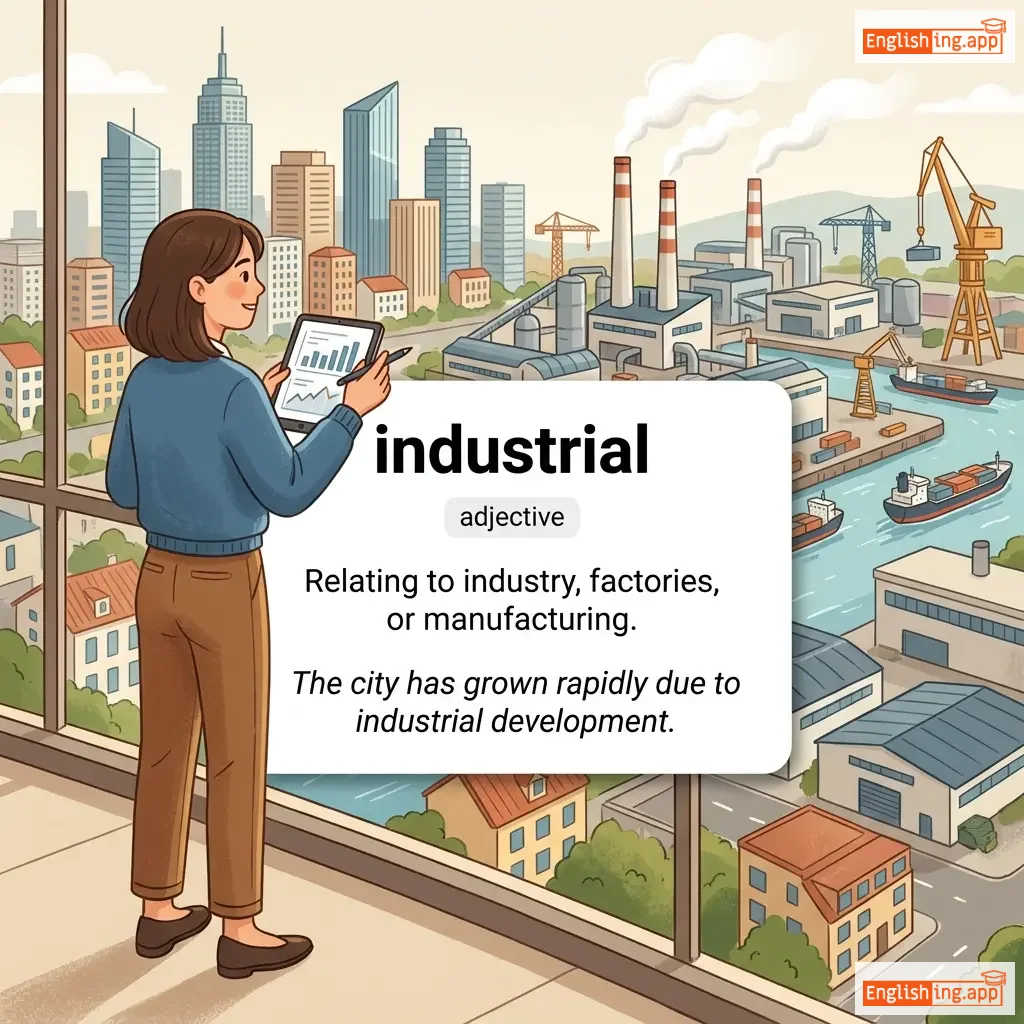
industrial definition card — visual illustration of the meaning
adjective
/ɪnˈdʌstriəl/
産業の (sangyo no)

Relating to industry, factories, or manufacturing.

"The city has grown rapidly due to industrial development."
"その都市は産業の発展により急速に成長しました。" (Sono toshi wa sangyo no haten ni yori kyusoku ni seichou shimashita.)
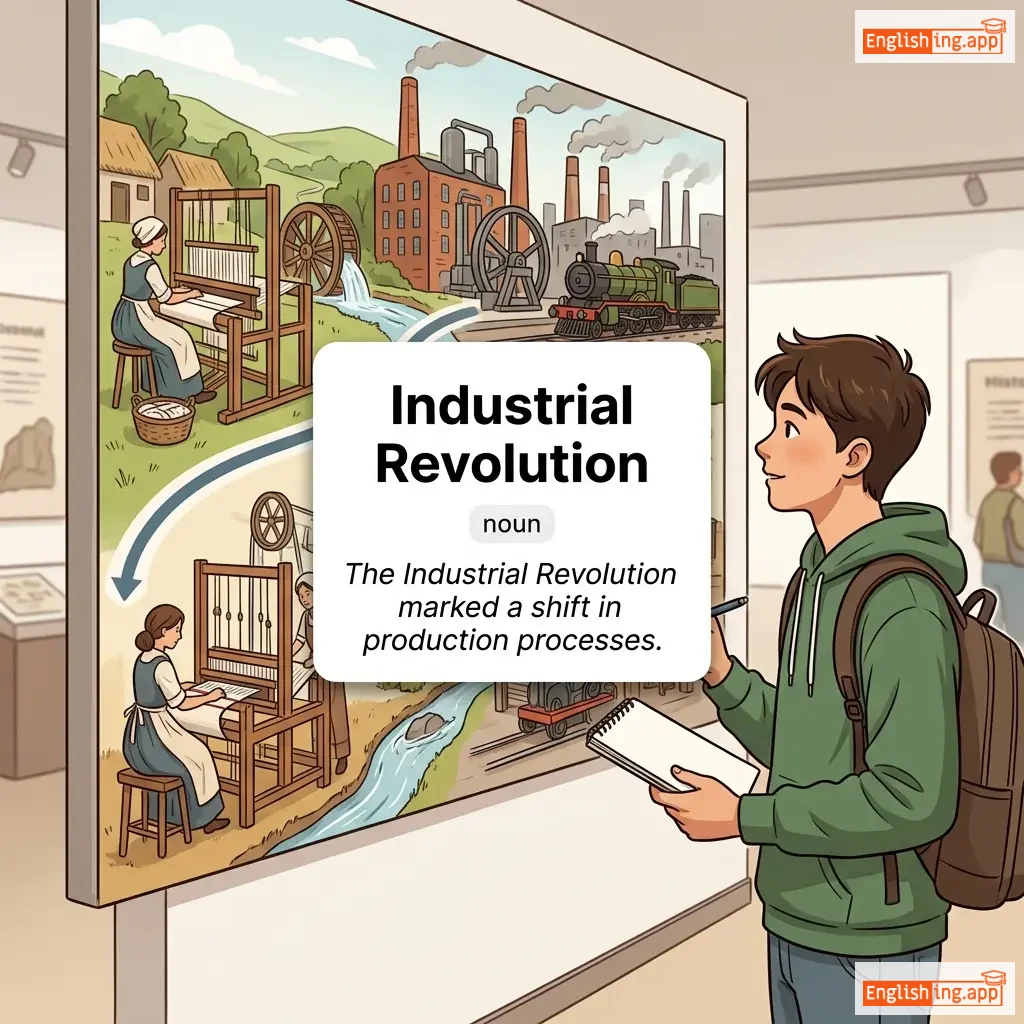
Industrial Revolution definition card — visual illustration of the meaning
noun
/ɪnˈdʌstriəl ˌrɛvəˈluːʃən/
産業革命 (Sangyō kakumei)

The rapid development of industry that occurred in Britain in the late 18th and 19th centuries, brought about by the introduction of machinery and characterized by the use of steam power and the growth of factories.

"The Industrial Revolution marked a shift in production processes."
"産業革命は生産プロセスにおける変化を示しました。" (Sangyō kakumei wa seisan purosesu ni okeru henka o shimeshita.)
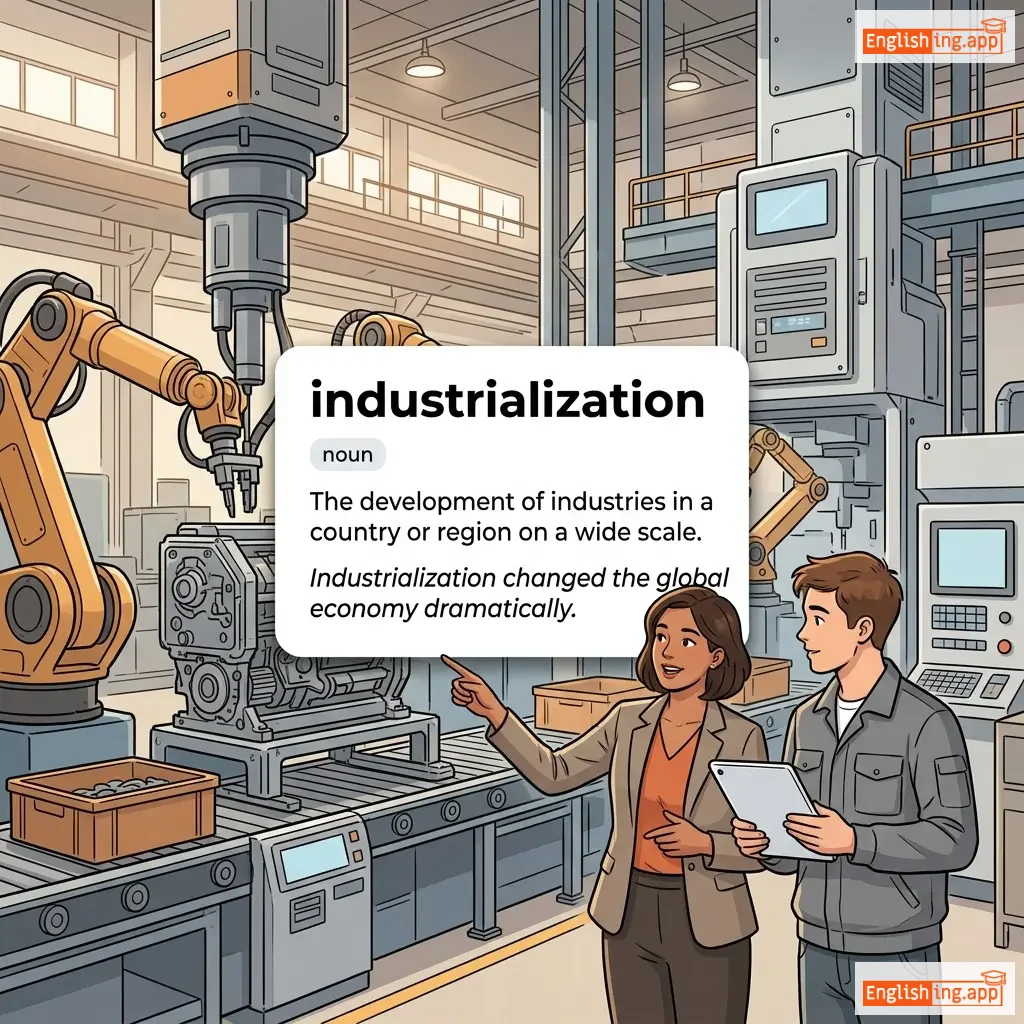
industrialization definition card — visual illustration of the meaning
noun
ɪnˌdʌstrɪəlaɪˈzeɪʃən
産業化 (sangyoka)

The development of industries in a country or region on a wide scale.

"Industrialization changed the global economy dramatically."

"産業化は世界経済を劇的に変えました。" (Sangyōka wa sekai keizai o gekiteki ni kaemashita.)
adjective
/ɪnˈdʌstriəs/
勤勉な (kinben na)

Hardworking and diligent in one's duties.

"She is an industrious student who always completes her assignments on time."

"彼女は常に期限通りに課題を終わらせる勤勉な学生です。" (Kanojo wa tsuneni kigen dōri ni kadai o owaraseru kinben na gakusei desu.)
noun
/ɪnˈdʌstriəsnəs/
勤勉 (kinben)

The quality of being hardworking and diligent.

"His industriousness earned him a promotion at work."

"彼の勤勉さは、仕事で昇進をもたらしました。" (Kare no kinbensa wa, shigoto de shōshin o motarashimashita.)
industry definition card — visual illustration of the meaning
noun
/ˈɪndəstri/
産業 (sangyo)

The production of goods or services within an economy.

"The textile industry employs thousands of workers in the region."

"繊維産業はその地域で何千人もの労働者を雇用しています。" (Sen'i sangyo wa sono chiiki de nanzen-nin mo no rodosha o koyou shiteimasu.)
verb
/ɪˈniː.bri.eɪt/

to intoxicate; to make someone drunk

"The strong wine was enough to inebriate even the most experienced drinker."

adjective
/ɪˈniː.bri.eɪ.tɪd/
酔っ払った (yopparatta)

under the influence of alcohol; drunk

"He stumbled into the room completely inebriated."

"彼は完全に酔っ払って部屋に入ってきた。" (Kare wa kanzen ni yopparatte heya ni haittekita.)
noun
/ˌɪn.ɪˈbraɪ.ə.ti/
酩酊 (meitei)

the state of being drunk or intoxicated

"His frequent inebriety led to the loss of his job."

"彼の頻繁な酩酊は仕事を失う原因となった。" (Kare no hinpan na meitei wa shigoto wo ushinau gen'in to natta.)
🚫🍽️

Inedible

adjective
/ɪˈnɛd.ə.bəl/

not fit to be eaten

"The spoiled food was inedible."

ineffable definition card — visual illustration of the meaning
adjective
/ɪˈnɛf.ə.bəl/
言葉では表現できない (kotoba de wa hyougen dekinai)

too great, extreme, or beautiful to be expressed in words

"The beauty of the sunset was ineffable."
"夕焼けの美しさは言葉では表現できなかった。" (Yūyake no utsukushisa wa kotoba de wa hyougen dekinakatta.)
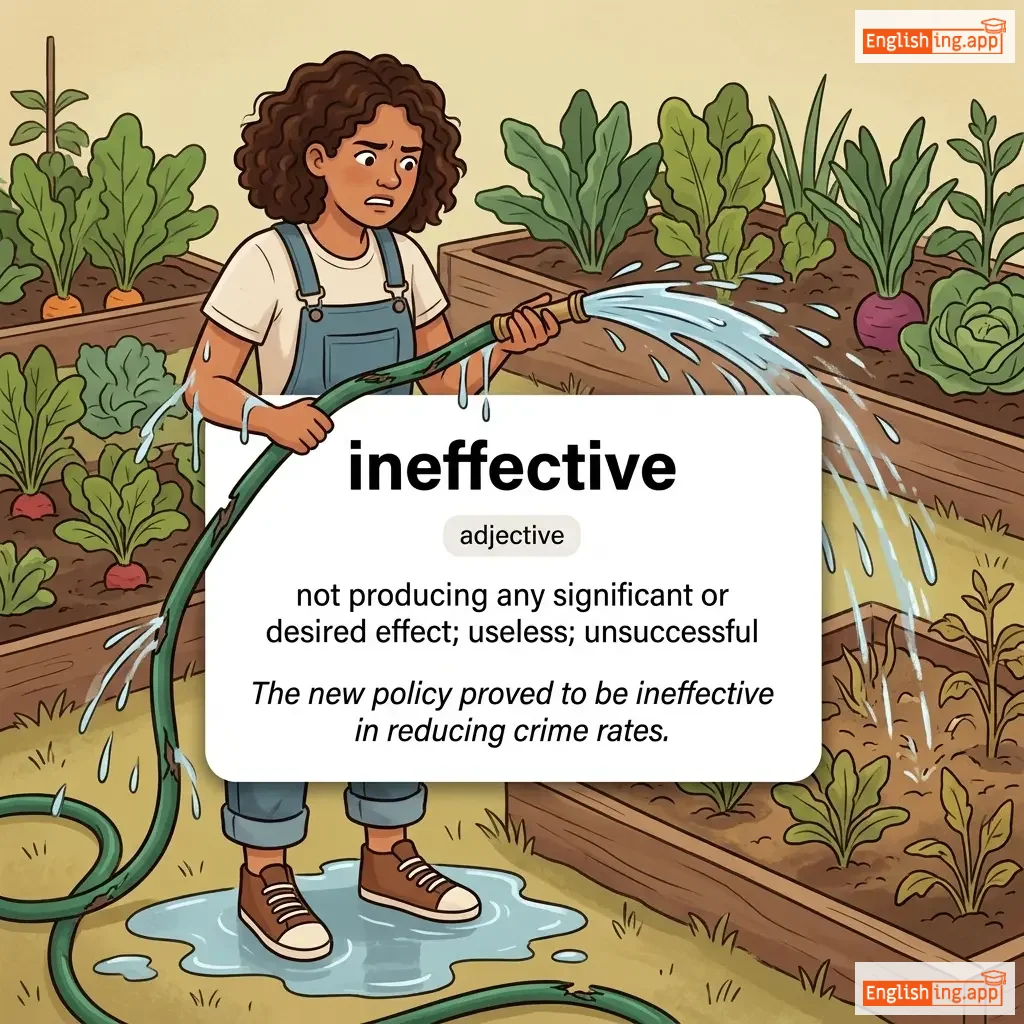
ineffective definition card — visual illustration of the meaning
adjective
/ˌɪnɪˈfɛktɪv/
効果がない; 無駄な; 失敗した (kouka ga nai; muda na; shippai shita)

not producing any significant or desired effect; useless; unsuccessful

"The new policy proved to be ineffective in reducing crime rates."

"新しい政策は犯罪率の削減には効果がないことが証明された。" (atarashii seisaku wa hanzairitsu no sakugen ni wa kouka ga nai koto ga shoumei sareta.)
adjective
/ˌɪn.ɪˈfɛk.tʃu.əl/
効果がない (kouka ga nai)

Not producing any or the desired effect; lacking the ability or qualities to achieve a purpose.

"The manager’s ineffectual leadership caused the team to lose motivation."

"マネージャーの効果がないリーダーシップは、チームがモチベーションを失う原因となった。" (Manejā no kouka ga nai rīdāshippu wa, chīmu ga mochibēshon wo ushinau gen'in to natta.)
inefficacious definition card — visual illustration of the meaning
adjective
ˌɪn.ɪ.fɪˈkeɪ.ʃəs
効果がない (kouka ga nai)

Not producing any or the desired effect; ineffective.

"The treatment was inefficacious in curing the disease."
"その治療法は病気の治癒に効果がありませんでした。" (Sono chiryouhou wa byouki no chiyu ni kouka ga arimasen deshita.)
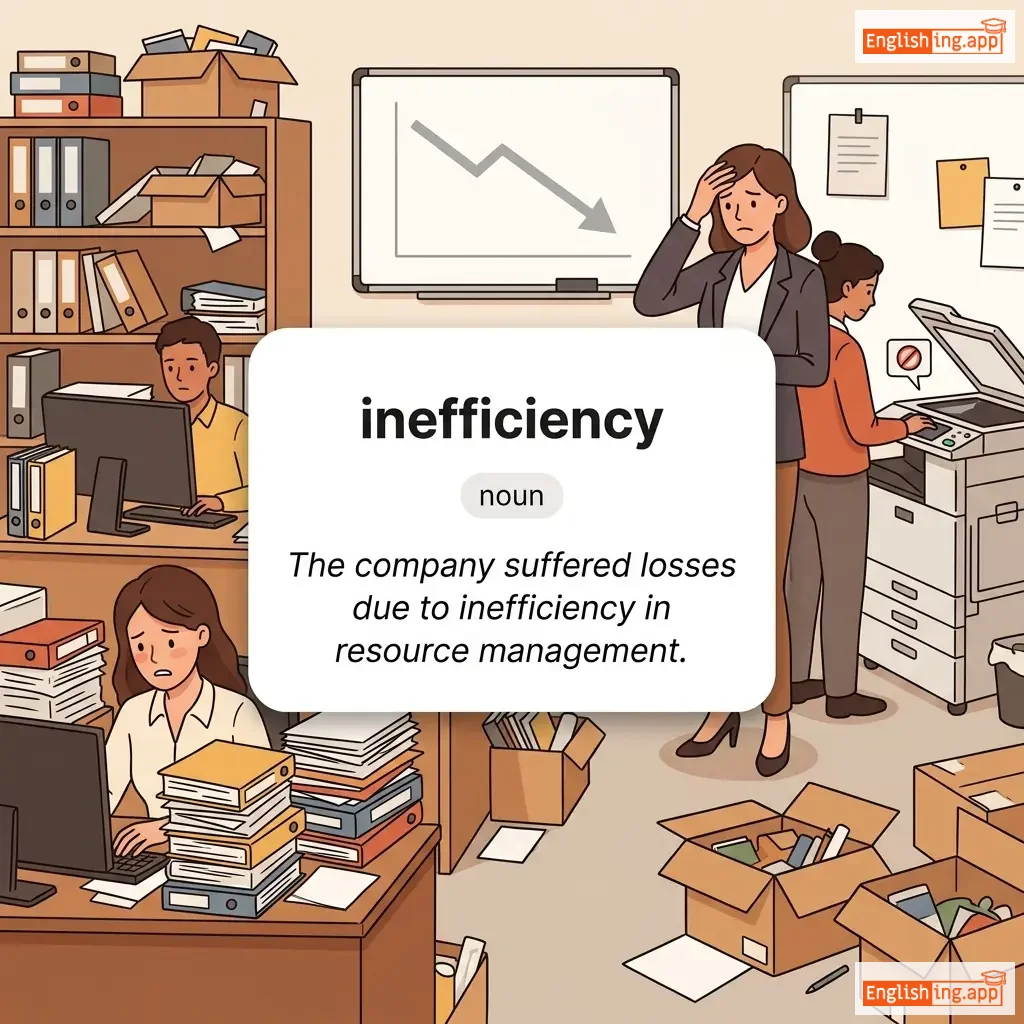
inefficiency definition card — visual illustration of the meaning
noun
/ˌɪn.ɪˈfɪʃ.ən.si/
非効率 (hikouritsu)

The state of not achieving maximum productivity; wastefulness or lack of competence.

"The company suffered losses due to inefficiency in resource management."

"会社は資源管理の非効率のために損失を被った。" (Kaisha wa shigen kanri no hikōritsu no tame ni sonshitsu o kōmotta.)
adjective
/ˌɪn.ɪˈfɪʃ.ənt/
非効率的 (hikouritsuteki)

Not achieving maximum productivity; wasting resources or effort.

"The machine is old and inefficient compared to modern equipment."

"その機械は古く、現代の機器と比較して非効率的です。" (Sono kikai wa furuku, gendai no kiki to hikaku shite hikouritsuteki desu.)
adjective
/ɪnˈɛl.ɪ.dʒə.bəl/
資格なし (shikaku nashi)

Not qualified or permitted to do something or to receive something.

"He was ineligible to apply for the scholarship because of his age."
"年齢のため、彼は奨学金に申し込む資格がなかった。" (Nenrei no tame, kare wa shougakukin ni moushikomu shikaku ga nakatta.)
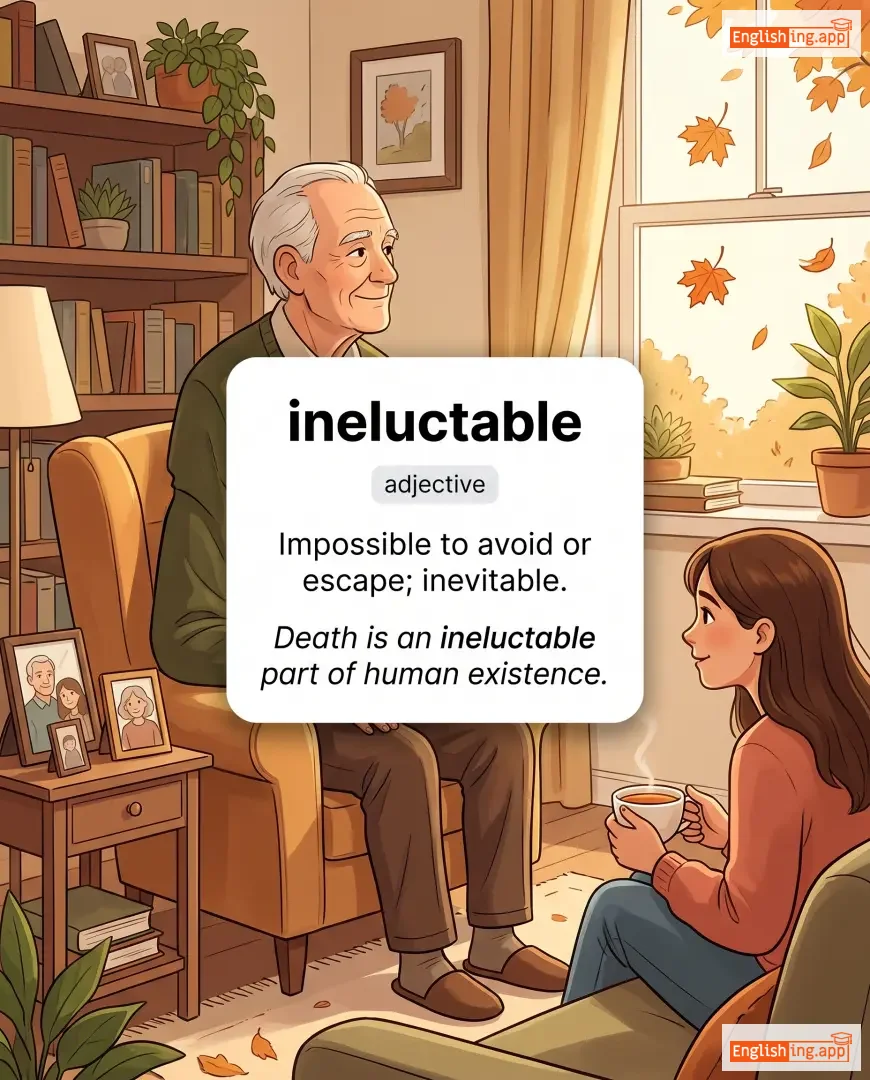
ineluctable definition card — visual illustration of the meaning
adjective
/ˌɪn.ɪˈlʌk.tə.bəl/

Impossible to avoid or escape; inevitable.

"Death is an ineluctable part of human existence."

adjective
/ɪˈnɛpt/
不器用 (bukiyou)

lacking skill or ability; clumsy or incompetent

"His inept handling of the situation made it worse."
"彼の不器用な状況の対処が状況を悪化させた。" (kare no bukiyou na jōkyō no taisho ga jōkyō o akka saseta.)
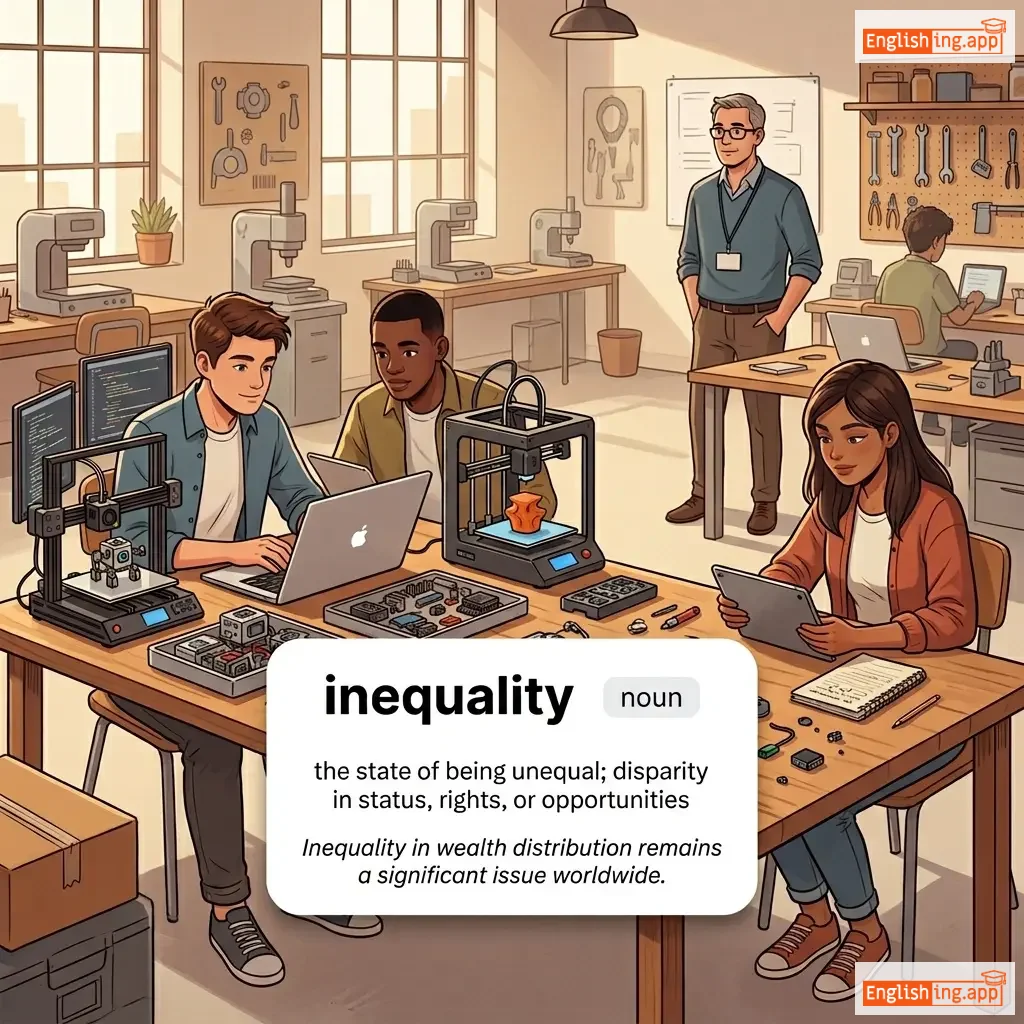
inequality definition card — visual illustration of the meaning
noun
/ˌɪnɪˈkwɒləti/
不平等 (fuheito)

the state of being unequal; disparity in status, rights, or opportunities

"Inequality in wealth distribution remains a significant issue worldwide."
"富の分配における不平等は、依然として世界的な重要な問題です。" (Tomi no bunpai ni okeru fuheito wa, izen toshite sekaiteki na juuyou na mondai desu.)
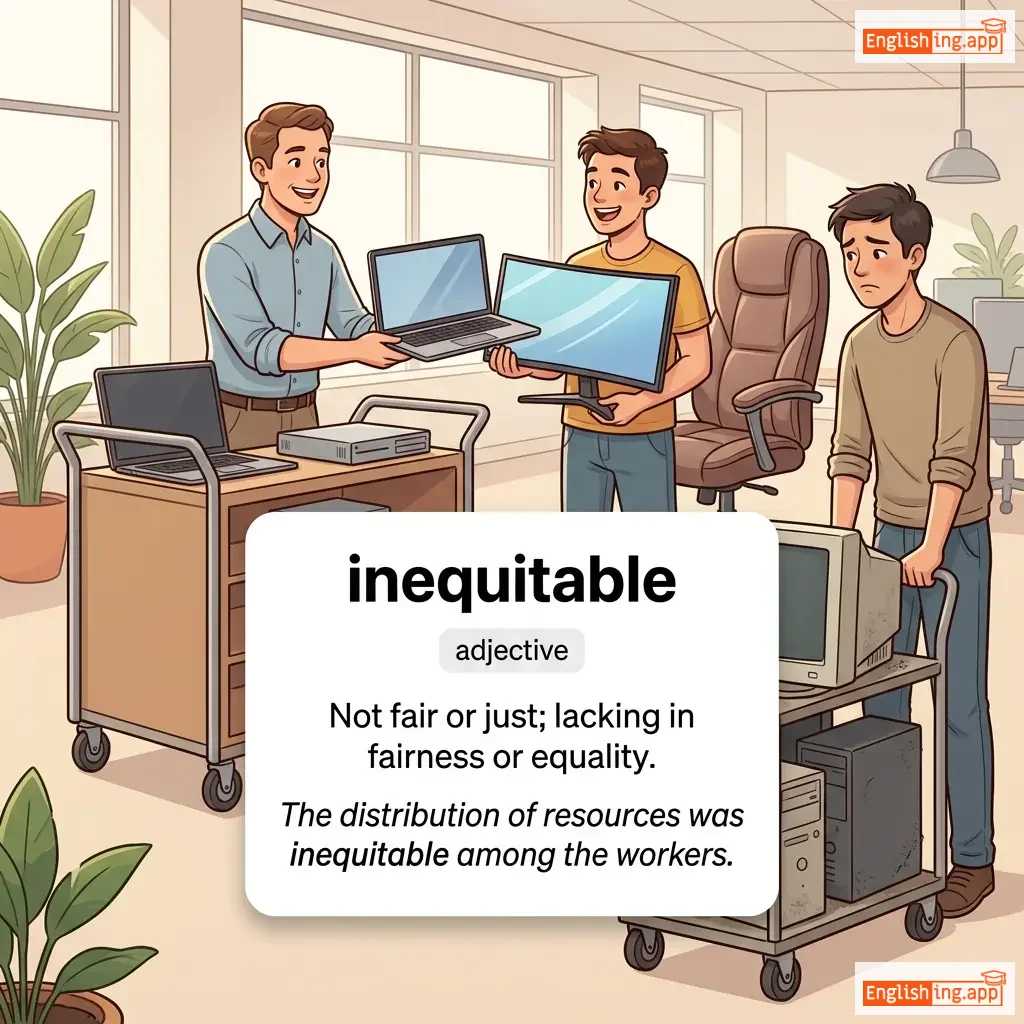
inequitable definition card — visual illustration of the meaning
adjective
/ɪnˈɛk.wɪ.tə.bəl/
不公平な (fukōhei na)

Not fair or just; lacking in fairness or equality.

"The distribution of resources was inequitable among the workers."
"リソースの分配は労働者の間で不平等でした。" (Risōsu no bunpai wa rōdōsha no aida de fubyōdō deshita.)
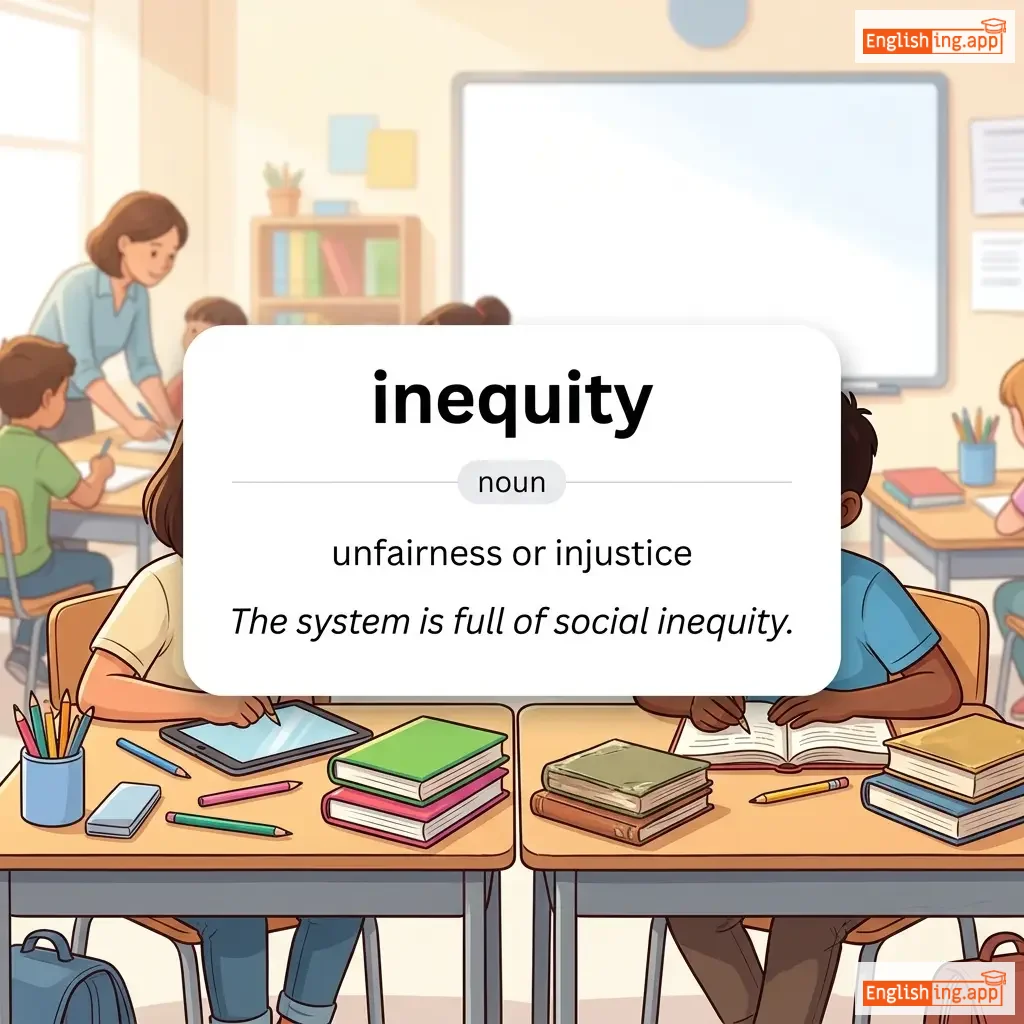
inequity definition card — visual illustration of the meaning
noun
/ɪnˈɛkwɪti/
不平等 (fubyoutou)

unfairness or injustice

"The system is full of social inequity."

"システムは社会的不平等で満ちています。" (shisutemu wa shakaiteki fubyoutou de michiteimasu.)
noun
/ɪnˈɛrənsi/
無謬性 (mubyū-sei)

the belief or quality of being free from error; absolute correctness

"Some religious groups strongly affirm the inerrancy of their sacred texts."
"いくつかの宗教団体は、自分たちの聖典の誤りのなさを強く主張しています。" (Ikutsuka no shūkyō dantai wa, jibun-tachi no seiten no ayamari no nasa o tsuyoku shuchō shiteimasu.)
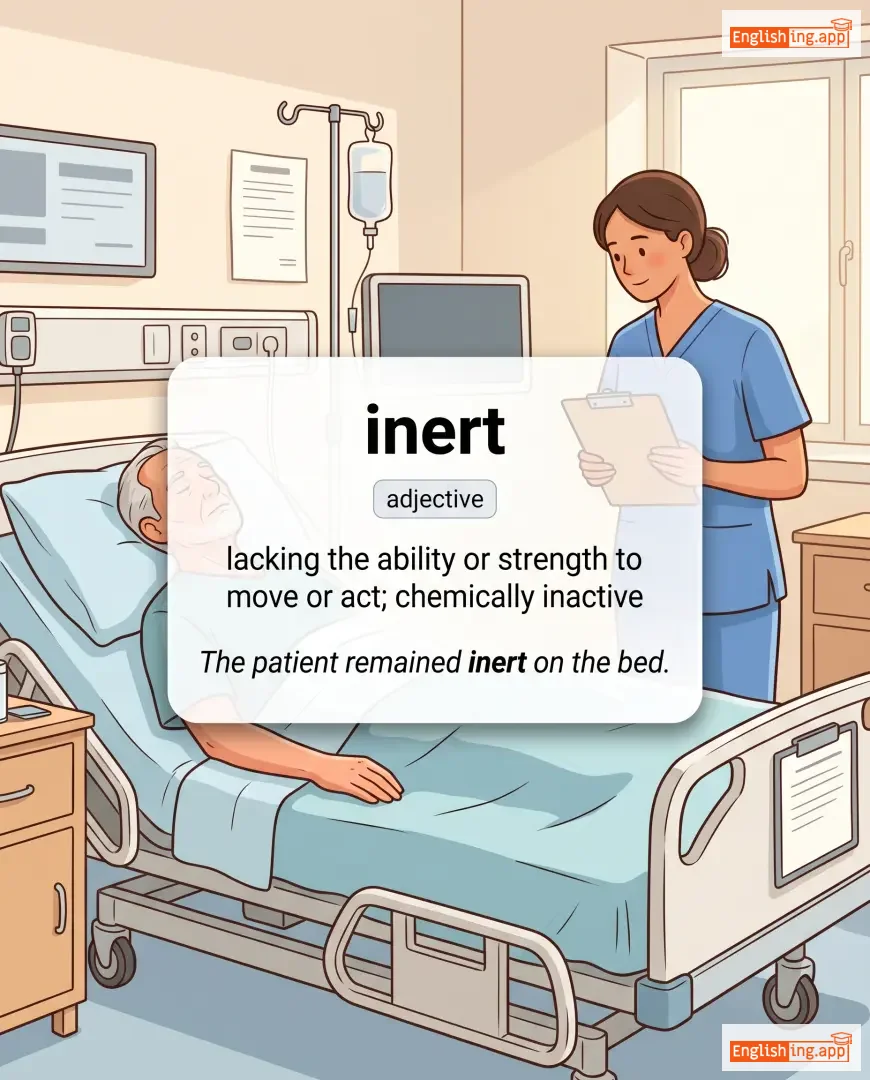
inert definition card — visual illustration of the meaning
adjective
/ɪˈnɜːrt/
不活性 (fukassei)

lacking the ability or strength to move or act; chemically inactive

"The patient remained inert on the bed."

"患者はベッドで動かずにじっとしていました。" (kanja wa beddo de ugokazu ni jitto shite imashita.)
⚖️

Inertia

noun
/ɪˈnɜːrʃə/

A tendency to remain unchanged or continue in the same state of motion unless acted upon.

"The project failed due to the inertia of outdated systems."

adjective
/ˌɪnɪˈsɛnʃəl/
本質的でない (honshitsuteki de nai)

not necessary or important; not essential

"The report removes all inessential details to stay focused."

"その報告書は焦点を保つために本質的でない詳細を削除している。" (sono houkokusho wa shouten o tamotsu tame ni honshitsuteki de nai shousai o sakujo shite iru)
adjective
/ɪnˈɛstɪməbl/
計り知れない (hakari shirenai)

Too great or valuable to be measured or estimated.

"Her contribution to the project was of inestimable value."
"プロジェクトへの彼女の貢献は計り知れない価値があった。" (Purojekuto e no kanojo no kouken wa hakari shirenai kachi ga atta.)
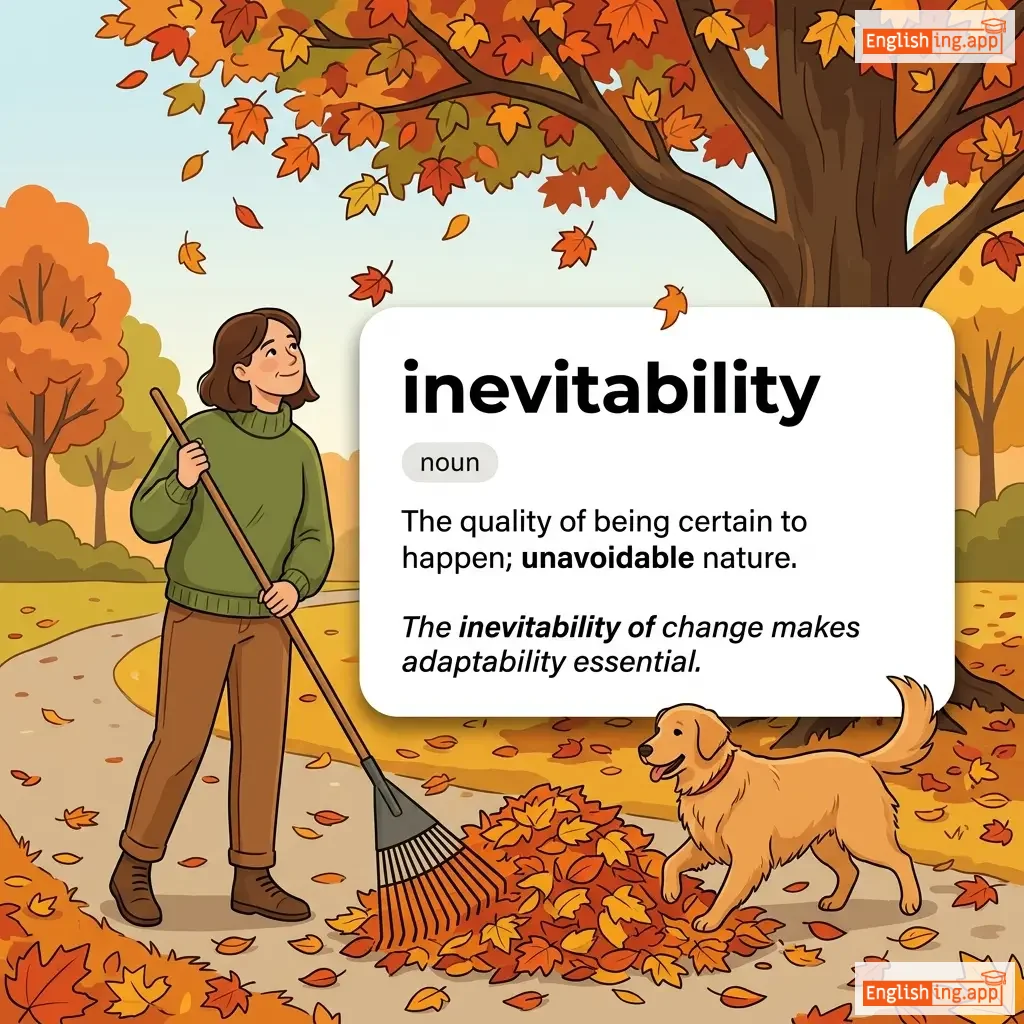
inevitability definition card — visual illustration of the meaning
noun
/ɪnˌɛvɪtəˈbɪləti/
避けられないこと (sakerarenai koto)

The quality of being certain to happen; unavoidable nature.

"The inevitability of change makes adaptability essential."
"変化の避けられないことが適応性を不可欠にします。" (Henka no sakerarenai koto ga tekiō-sei o fukaketsu ni shimasu.)
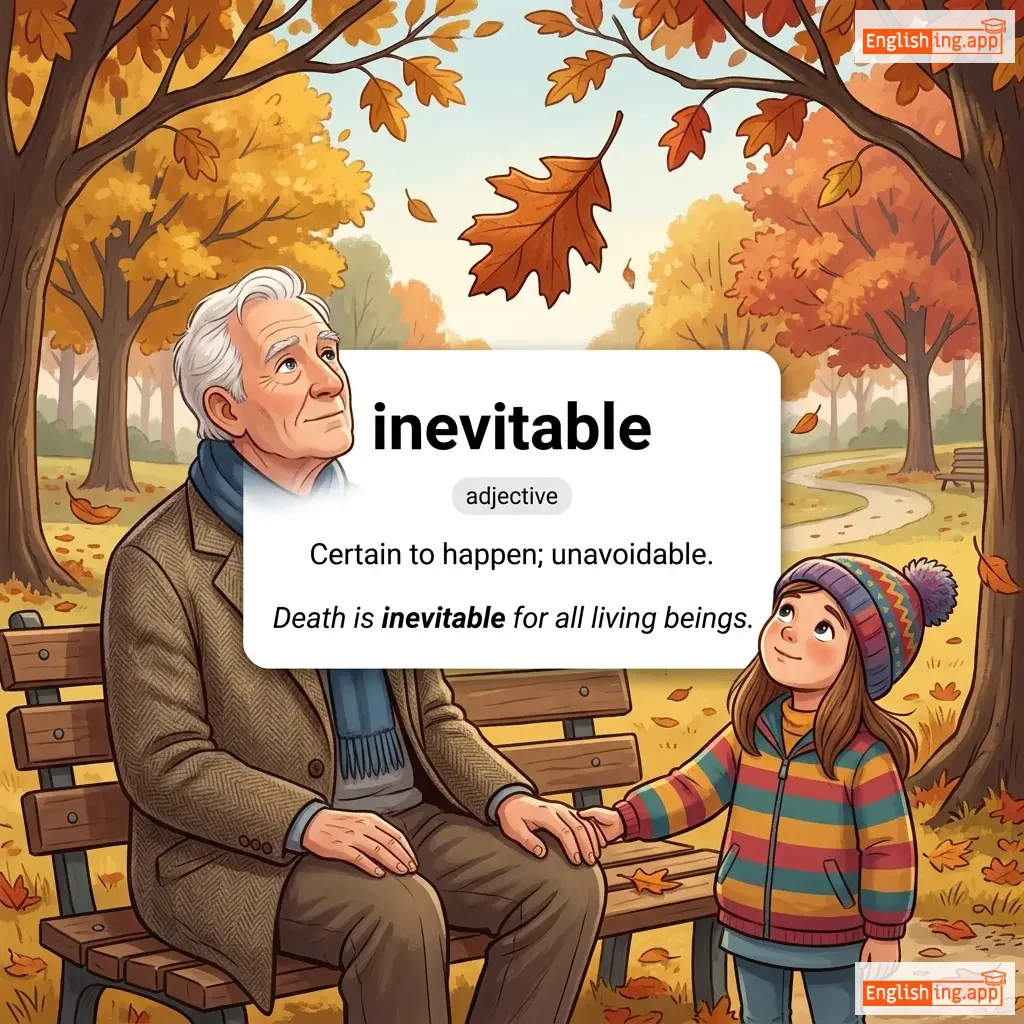
inevitable definition card — visual illustration of the meaning
adjective
/ɪnˈɛvɪtəbl/
避けられない (sakerarenai)

Certain to happen; unavoidable.

"Death is inevitable for all living beings."

"死はすべての生物にとって避けられない。" (shi wa subete no seibutsu ni totte sakerarenai.)
adverb
/ɪnˈɛvɪtəbli/
避けられない (sakerarenai)

in a way that cannot be avoided or prevented

"Inevitably, the team faced challenges during the project."

"避けられないことに、チームはプロジェクト中に挑戦に直面しました。" (Sakerarenai koto ni, chīmu wa purojekuto-chū ni chōsen ni chokumen shimashita.)
adjective
/ˌɪnɪkˈskjuːzəbl/
許しがたい (yurushigatai)

Too bad to be justified or overlooked; unforgivable.

"His rude behavior was inexcusable."
"彼の無礼な行動は許しがたいものでした。" (Kare no burei na kōdō wa yurushigatai mono deshita.)
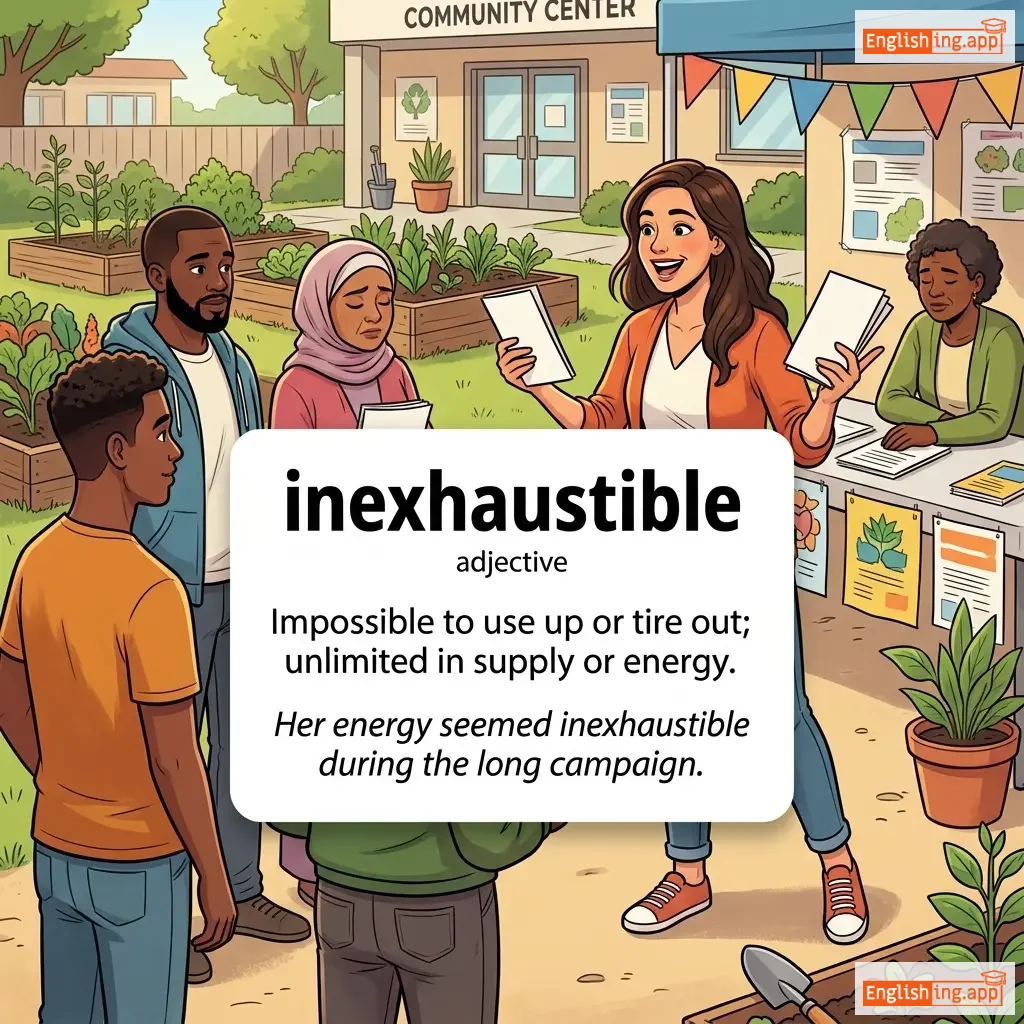
inexhaustible definition card — visual illustration of the meaning
adjective
/ˌɪnɪɡˈzɔːstəbl/
尽きることのない (tsukiru koto no nai)

Impossible to use up or tire out; unlimited in supply or energy.

"Her energy seemed inexhaustible during the long campaign."

"長いキャンペーン中、彼女のエネルギーは尽きることがないように思えた。" (Nagai kyanpēn-chū, kanojo no enerugī wa tsukiru koto ga nai yō ni moeteta.)
adjective
/ɪnˈɛksərəbl/
避けられない (sakerarenai)

Impossible to stop or prevent; relentless.

"The inexorable rise of technology is changing every aspect of life."

"テクノロジーの避けられない上昇は、生活のすべての側面を変えています。" (Tekunorojī no sakerarenai jōshō wa, seikatsu no subete no sokumen o kaeteimasu.)
noun (compound/erroneous entry)
/ɪnˈɛksərəbl ɑːrmi/
止められない軍隊 (tomerarenai guntai)

This appears to be a corrupted or concatenated form; interpreted as 'inexorable army' — an unstoppable or relentless force.

"The rebels feared the inexorable army approaching their stronghold."

"反乱軍は自分たちの砦に近づいてくる止められない軍隊を恐れていた。" (Hanran-gun wa jibuntachi no toride ni chikadzuite kuru tomerarenai guntai o osorete ita.)
adjective
/ˌɪnɪkˈspiːdiənt/
不適切 (futekisetsu)

Not advisable, suitable, or practical in the circumstances.

"It would be inexpedient to invest without proper research."

"適切な調査なしで投資することは不適切です。" (Tekisetsu na chousa nashi de toushi suru koto wa futekisetsu desu.)
adjective
/ˌɪnɪkˈspɛnsɪv/
安い (yasui)

Cheap; costing little money.

"They found an inexpensive restaurant near the station."

"彼らは駅の近くで安いレストランを見つけました。" (Karera wa eki no chikaku de yasui resutoran wo mitsukemashita.)
noun
/ˌɪnɪkˈspɪəriəns/
未経験 (mikeiken)

Lack of knowledge or skill in a particular activity or field.

"His inexperience in handling negotiations was evident."

"交渉における彼の未経験は明らかでした。" (Kōshō ni okeru kare no mikeiken wa akiraka deshita.)
adjective
/ˌɪnˈekspɜːrt/
未熟な (mijukuna)

not skilled or experienced; lacking expertise

"The inexpert handling of the machine caused several mistakes."

"機械の未熟な扱いがいくつかのミスを引き起こした。" (Kikai no mijukuna atsukai ga ikutsuka no misu o hikiokoshita)
adjective
/ˌɪnɪkˈsplɪkəbl/
説明できない (setsumei dekinai)

Impossible to explain or understand.

"The sudden disappearance of the file was inexplicable."

"ファイルの突然の消失は説明できなかった。" (Fairu no totsuzen no shoushitsu wa setsumei dekinakatta.)
adjective
/ˌɪnɪkˈsprɛsəbl/
言葉では表現できない (kotoba de wa hyougen dekinai)

Too strong or extreme to be expressed in words.

"She felt inexpressible joy at the news of her success."

"彼女は成功の知らせを聞いて言葉では表現できない喜びを感じた。" (Kanojo wa seikou no shirase wo kiite kotoba de wa hyougen dekinai yorokobi wo kanjita.)
adjective
/ˌɪnɪkˈstɛnsəbl/
伸縮不可 (shinshuku fuka)

Not capable of being stretched or extended.

"This rope is made of an inextensible material."

"このロープは伸縮不可の材料でできています。" (Kono roopu wa shinshuku fuka no zairyou de dekiteimasu.)
adjective
/ˌɪnɪkˈstrɪkəbl/
分けられない (wakerarenai)

Impossible to separate or escape from.

"The two friends shared an inextricable bond."

"二人の友達は分けられない絆を共有していた。" (Futari no tomodachi wa wakerarenai kizuna o kyōyū shite ita.)
adjective
/ɪnˈfæləbl̩/
間違いない (machigainai)

incapable of making mistakes or being wrong

"Her judgment seemed infallible in matters of finance."

"彼女の判断は財務問題において間違いないように見えた。" (Kanojo no handan wa zaimu mondai ni oite machigainai yō ni mieta.)
adjective
/ˈɪnfəməs/
悪名高い (akumei takai)

well known for some bad quality or deed

"The dictator was infamous for his cruelty."

"その独裁者はその残虐さで悪名高かった。" (Sono dokusaisha wa sono zankyaku-sa de akumei takakatta.)
noun
/ˈɪnfəmi/
幸福 (kōfuku)

the state of being well known for some bad quality or deed

"His name will live in infamy for the crimes he committed."

"彼女は賞を受け取ったとき、自分の幸福を隠すことができなかった。" (Kanojo wa shō o uketotta toki, jibun no kōfuku o kakusu koto ga dekinakatta.)
noun
/ˈɪnfənt/
乳児 (nyuuji)

A very young child or baby.

"The infant was sleeping peacefully in the cradle."

"乳児はゆりかごで静かに眠っていました。" (Nyuuji wa yurikago de shizukani netteimashita.)
adjective
/ˈɪnfəntaɪl/
幼稚な (yōchina)

characteristic of an infant; childish

"His infantile behavior embarrassed everyone at the meeting."
"彼の幼稚な行動は会議でみんなを困らせた。" (Kare no yōchi na kōdō wa kaigi de minna o komarase ta.)
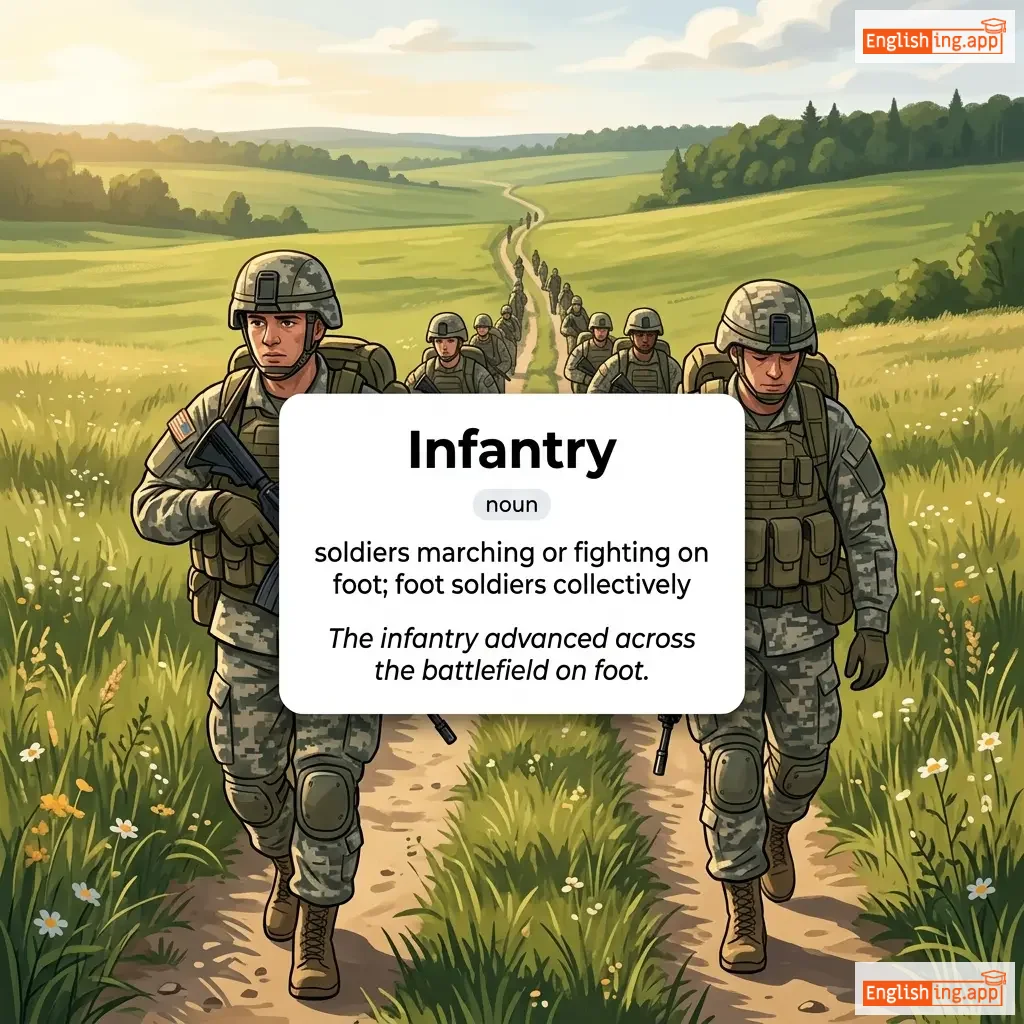
Infantry definition card — visual illustration of the meaning
noun
/ˈɪn.fən.tri/
歩兵 (hohei)

soldiers marching or fighting on foot; foot soldiers collectively

"The infantry advanced across the battlefield on foot."

"歩兵は戦場を徒歩で進んだ。" (hohei wa senjō o toho de susunda.)
verb
/ɪnˈfætʃueɪt/
夢中にさせる (muchuu ni saseru)

to inspire with an intense but short-lived passion or admiration

"He was infatuated with her beauty."
"彼は彼女の美しさに夢中でした。" (Kare wa kanojo no utsukushisa ni muchuu deshita.)
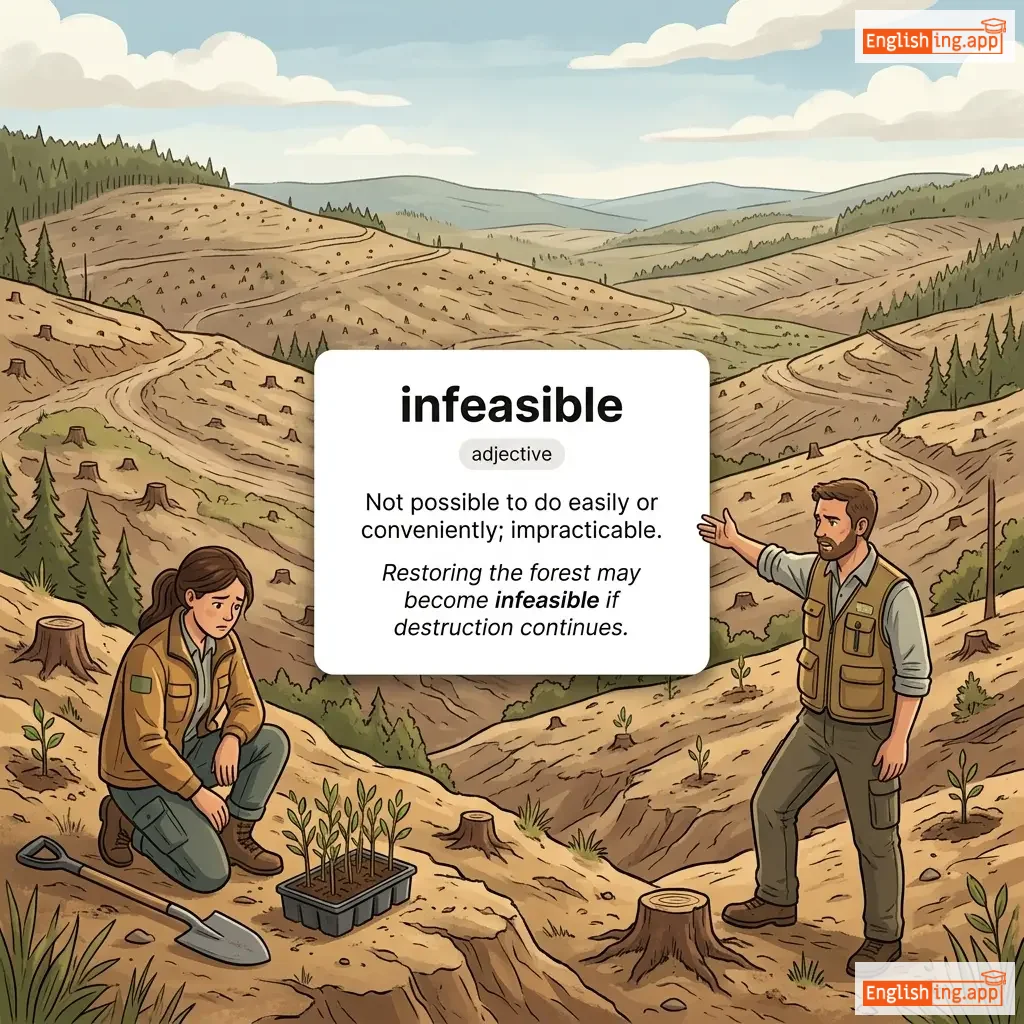
infeasible definition card — visual illustration of the meaning
adjective
ɪnˈfiː.zə.bəl
不可能 (fukanou)

Not possible to do easily or conveniently; impracticable.

"Restoring the forest may become infeasible if destruction continues."

"森林の回復は、破壊が続くと不可能になる可能性があります。" (Shinrin no kaifuku wa, hakai ga tsuzuku to fukanou ni naru kanousei ga arimasu.)