词汇表

英语词汇词典 | 单词含义、定义和示例

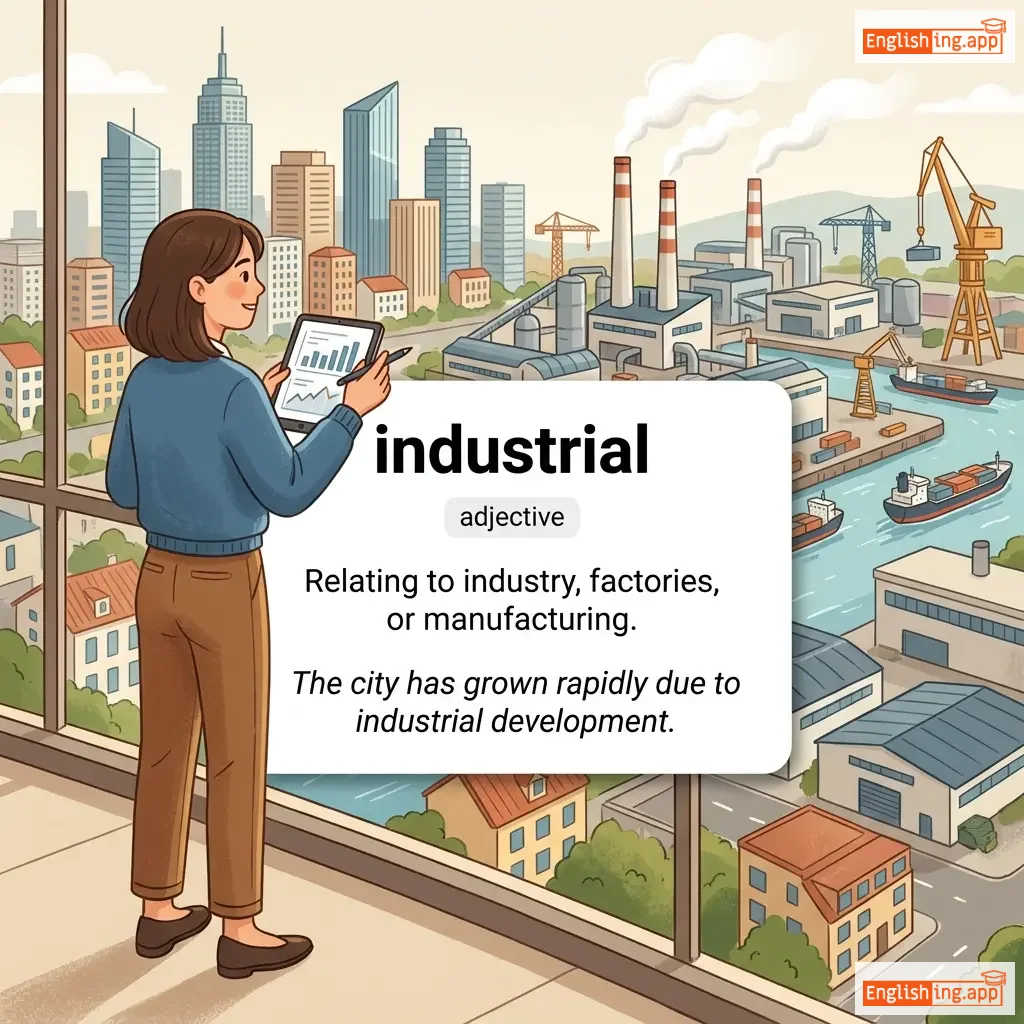
industrial definition card — visual illustration of the meaning
adjective
/ɪnˈdʌstriəl/
工业的 (gongye de)

Relating to industry, factories, or manufacturing.

"The city has grown rapidly due to industrial development."
"这座城市因工业发展而快速增长。" (Zhe zuo chengshi yin gongye fazhan er kuaisu zengzhang.)
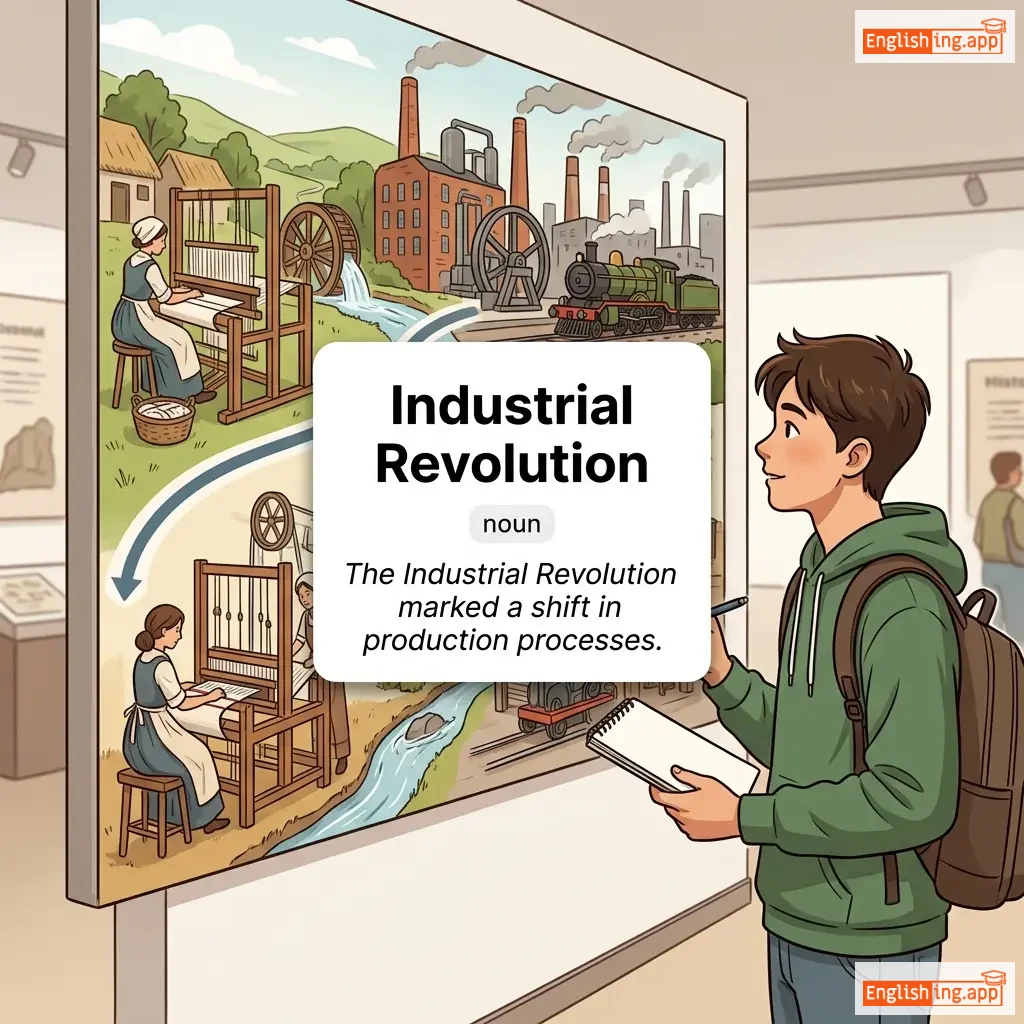
Industrial Revolution definition card — visual illustration of the meaning
noun
/ɪnˈdʌstriəl ˌrɛvəˈluːʃən/
工业革命 (gongye geming)

The rapid development of industry that occurred in Britain in the late 18th and 19th centuries, brought about by the introduction of machinery and characterized by the use of steam power and the growth of factories.

"The Industrial Revolution marked a shift in production processes."
"工业革命标志着生产过程的变革。" (Gongye geming biaozhizhe shengchan guocheng de biange.)
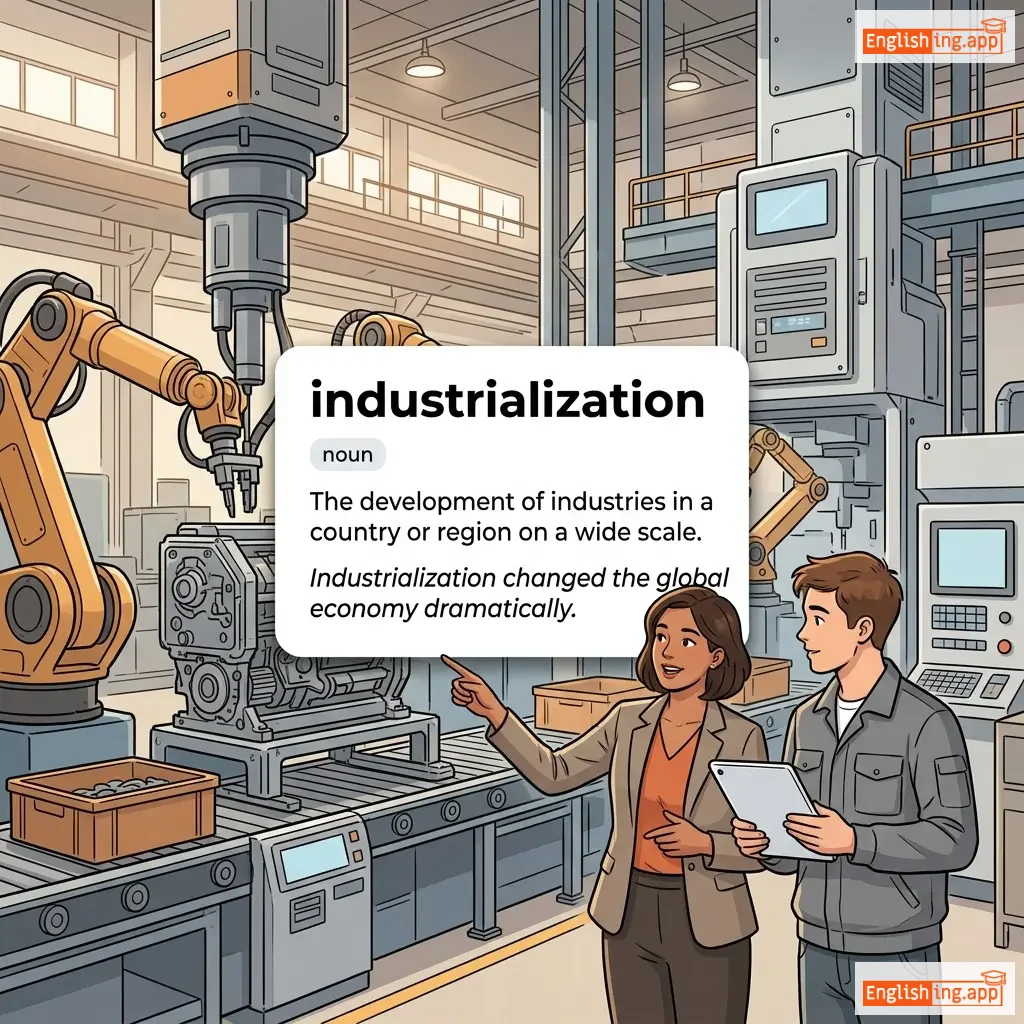
industrialization definition card — visual illustration of the meaning
noun
ɪnˌdʌstrɪəlaɪˈzeɪʃən
工业化 (gongyehua)

The development of industries in a country or region on a wide scale.

"Industrialization changed the global economy dramatically."

"工业化显著改变了全球经济。" (Gōngyèhuà xiǎnzhù gǎibiànle quánqiú jīngjì.)
adjective
/ɪnˈdʌstriəs/
勤奋的 (qínfèn de)

Hardworking and diligent in one's duties.

"She is an industrious student who always completes her assignments on time."

"她是一个勤奋的学生,总是按时完成她的作业。" (Tā shì yīgè qínfèn de xuéshēng, zǒng shì ànshí wánchéng tā de zuòyè.)
noun
/ɪnˈdʌstriəsnəs/
勤奋 (qinfen)

The quality of being hardworking and diligent.

"His industriousness earned him a promotion at work."

"他的勤奋为他在工作中赢得了晋升。" (Tā de qínfèn wèi tā zài gōngzuò zhōng yíngdéle jìnshēng.)
industry definition card — visual illustration of the meaning
noun
/ˈɪndəstri/
工业 (gongye)

The production of goods or services within an economy.

"The textile industry employs thousands of workers in the region."

"纺织工业在该地区雇用了成千上万的工人。" (Fangzhi gongye zai gai diqu guyongle chengqian shangwan de gongren.)
verb
/ɪˈniː.bri.eɪt/

to intoxicate; to make someone drunk

"The strong wine was enough to inebriate even the most experienced drinker."

adjective
/ɪˈniː.bri.eɪ.tɪd/
醉酒 (zuìjiǔ)

under the influence of alcohol; drunk

"He stumbled into the room completely inebriated."

"他完全醉了,踉跄地走进了房间。" (Tā wánquán zuì le, liàngqiāng de zǒu jìnle fángjiān.)
noun
/ˌɪn.ɪˈbraɪ.ə.ti/
醉酒 (zuìjiǔ)

the state of being drunk or intoxicated

"His frequent inebriety led to the loss of his job."

"他的频繁醉酒导致了他失去工作。" (Tā de pínfán zuìjiǔ dǎozhìle tā shīqù gōngzuò.)
🚫🍽️

Inedible

adjective
/ɪˈnɛd.ə.bəl/

not fit to be eaten

"The spoiled food was inedible."

ineffable definition card — visual illustration of the meaning
adjective
/ɪˈnɛf.ə.bəl/
难以言喻 (nán yǐ yán yù)

too great, extreme, or beautiful to be expressed in words

"The beauty of the sunset was ineffable."
"日落的美丽是难以言喻的。" (rì luò de měi lì shì nán yǐ yán yù de.)
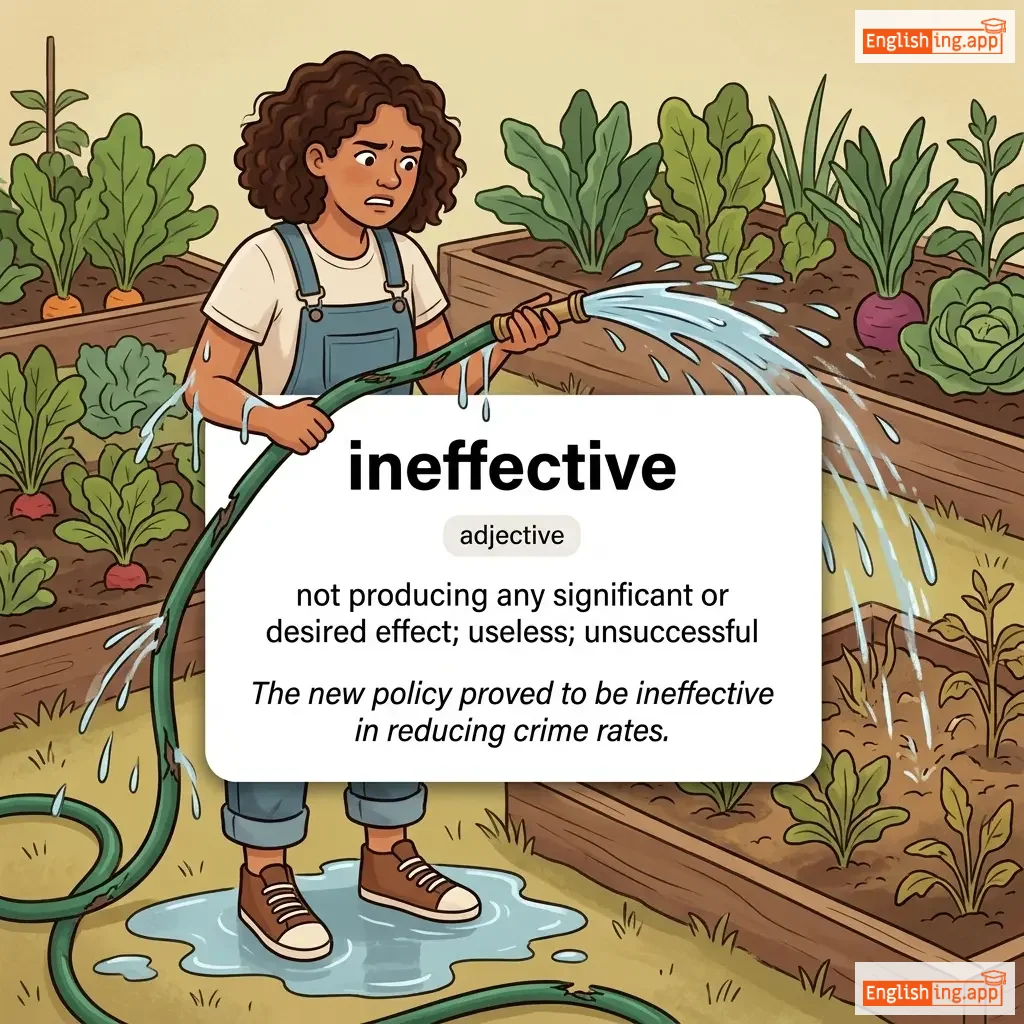
ineffective definition card — visual illustration of the meaning
adjective
/ˌɪnɪˈfɛktɪv/
无效的; 无用的; 失败的 (wúxiàode; wúyòngde; shībàide)

not producing any significant or desired effect; useless; unsuccessful

"The new policy proved to be ineffective in reducing crime rates."

"新的政策证明在减少犯罪率方面无效。" (xīn de zhèngcè zhèngmíng zài jiǎnshǎo fànzuì lǜ fāngmiàn wúxiào.)
adjective
/ˌɪn.ɪˈfɛk.tʃu.əl/
无效 (wuxiao)

Not producing any or the desired effect; lacking the ability or qualities to achieve a purpose.

"The manager’s ineffectual leadership caused the team to lose motivation."

"经理无效的领导导致团队失去了动力。" (Jingli wuxiao de lingdao daozhi tuandui shiqule dongli.)
inefficacious definition card — visual illustration of the meaning
adjective
ˌɪn.ɪ.fɪˈkeɪ.ʃəs
无效 (wuxiao)

Not producing any or the desired effect; ineffective.

"The treatment was inefficacious in curing the disease."
"该治疗对治愈疾病无效。" (Gai zhiliao dui zhiyu jibing wuxiao.)
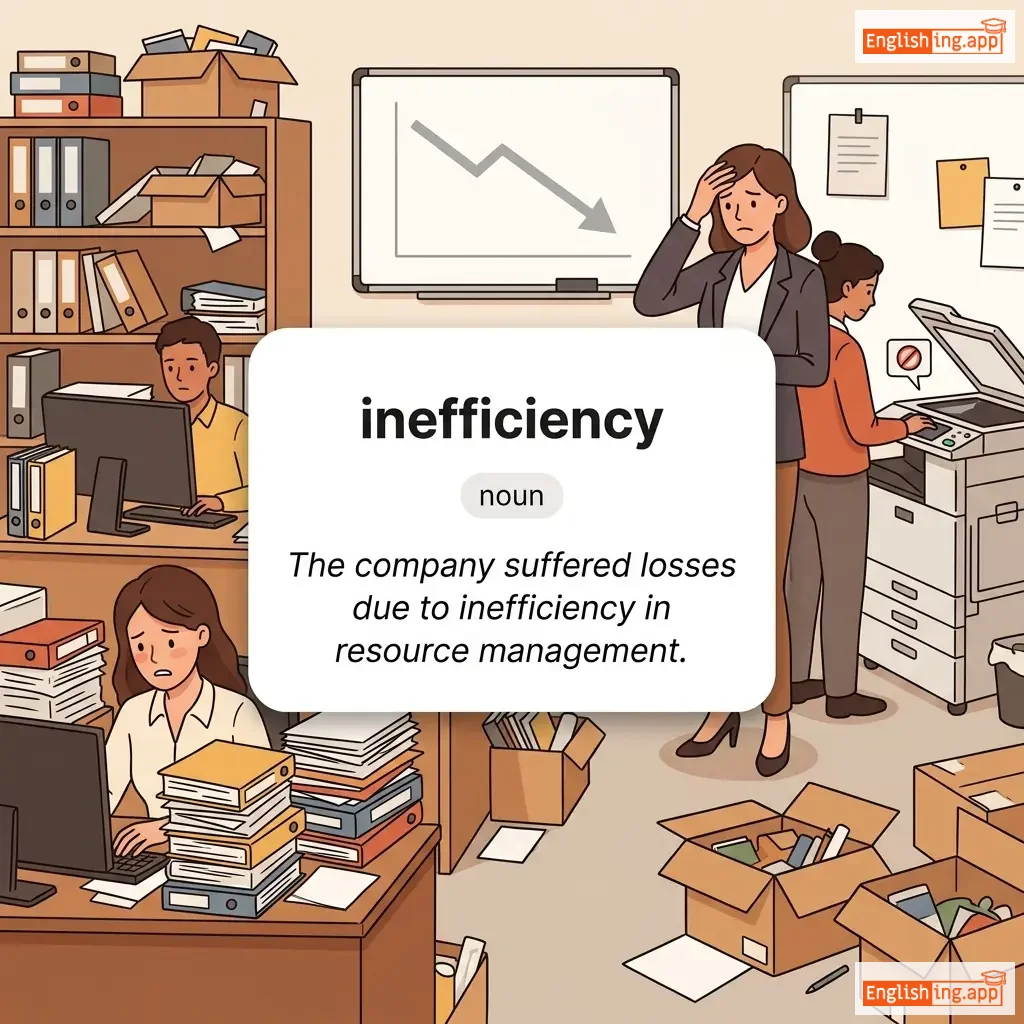
inefficiency definition card — visual illustration of the meaning
noun
/ˌɪn.ɪˈfɪʃ.ən.si/
低效 (dīxiào)

The state of not achieving maximum productivity; wastefulness or lack of competence.

"The company suffered losses due to inefficiency in resource management."

"由于资源管理中的低效,公司遭受了损失。" (Yóuyú zīyuán guǎnlǐ zhōng de dīxiào, gōngsī zāoshòu le sǔnshī.)
adjective
/ˌɪn.ɪˈfɪʃ.ənt/
低效 (dīxiào)

Not achieving maximum productivity; wasting resources or effort.

"The machine is old and inefficient compared to modern equipment."

"这台机器老旧且低效,相比于现代设备。" (Zhè tái jīqì lǎojiù qiě dīxiào, xiāngbǐ yú xiàndài shèbèi.)
adjective
/ɪnˈɛl.ɪ.dʒə.bəl/
不合格 (bu he ge)

Not qualified or permitted to do something or to receive something.

"He was ineligible to apply for the scholarship because of his age."

"由于年龄问题,他没有资格申请奖学金。" (Youyu nianling wenti, ta meiyou zige shenqing jiangxuejin.)
ineluctable definition card — visual illustration of the meaning
adjective
/ˌɪn.ɪˈlʌk.tə.bəl/

Impossible to avoid or escape; inevitable.

"Death is an ineluctable part of human existence."

adjective
/ɪˈnɛpt/
无能 (wú néng)

lacking skill or ability; clumsy or incompetent

"His inept handling of the situation made it worse."
"他无能的处理使情况变得更糟。" (tā wú néng de chǔ lǐ shǐ qíng kuàng biàn dé gèng zāo.)
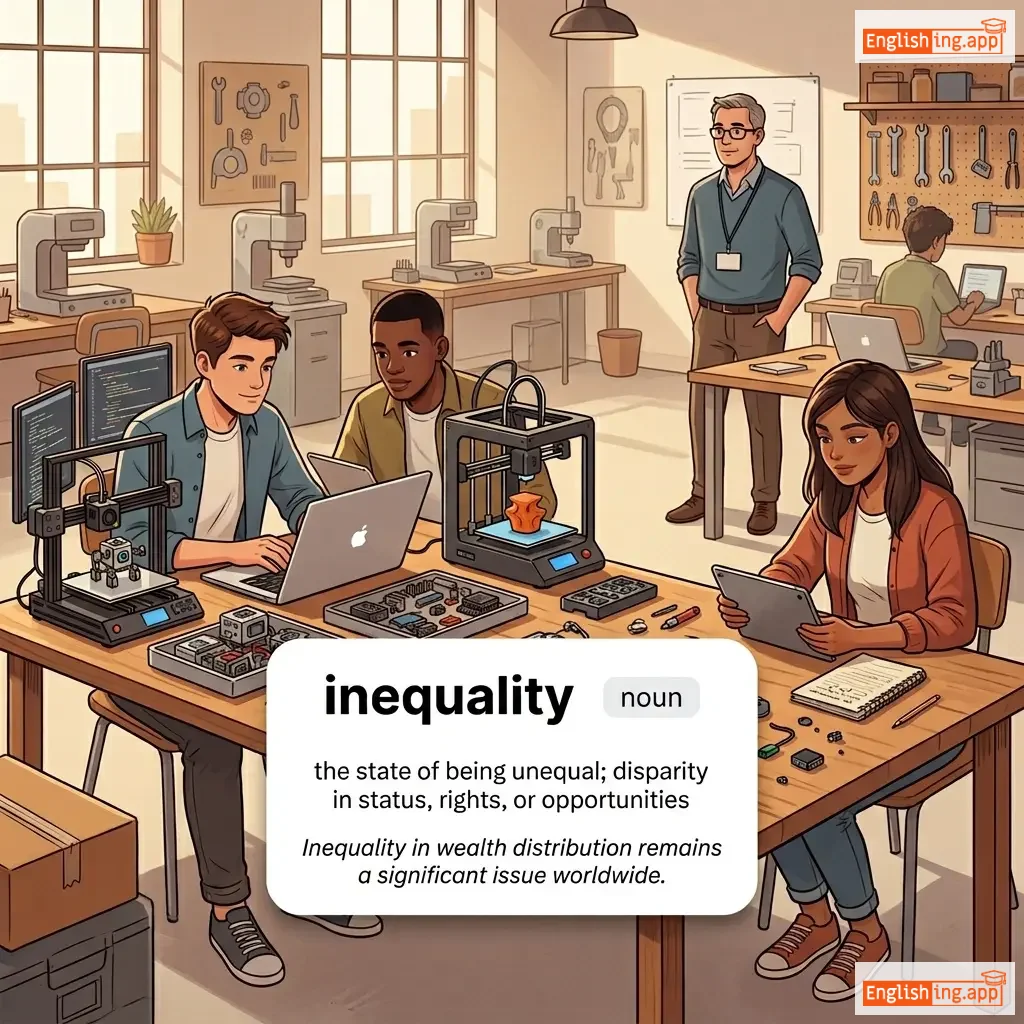
inequality definition card — visual illustration of the meaning
noun
/ˌɪnɪˈkwɒləti/
不平等 (bupingdeng)

the state of being unequal; disparity in status, rights, or opportunities

"Inequality in wealth distribution remains a significant issue worldwide."
"财富分配中的不平等依然是一个全球性的重大问题。" (Caiwu fenpei zhong de bupingdeng yiran shi yige quanqiuxing de zhongda wenti.)
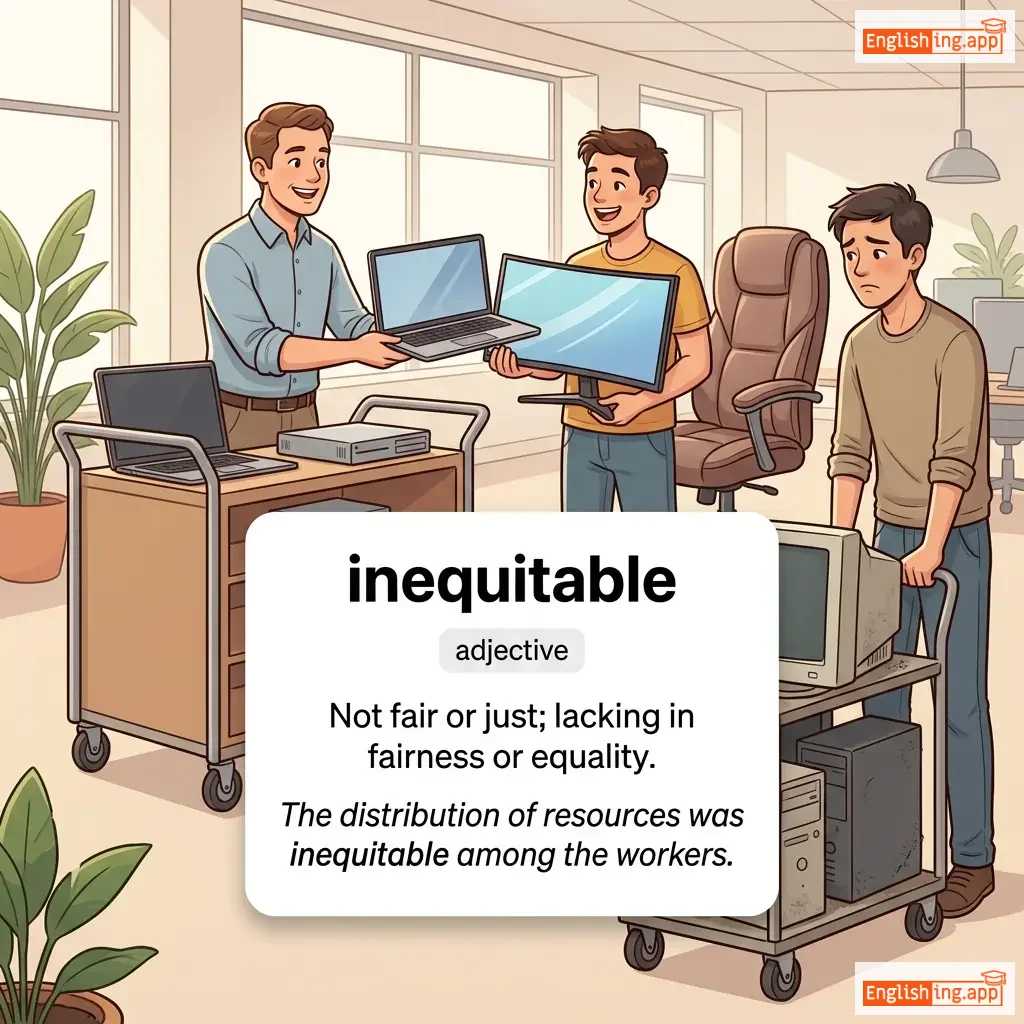
inequitable definition card — visual illustration of the meaning
adjective
/ɪnˈɛk.wɪ.tə.bəl/
不公平 (bù gōngpíng)

Not fair or just; lacking in fairness or equality.

"The distribution of resources was inequitable among the workers."
"资源的分配在工人之间是不公平的。" (Zīyuán de fēnpèi zài gōngrén zhījiān shì bù gōngpíng de.)
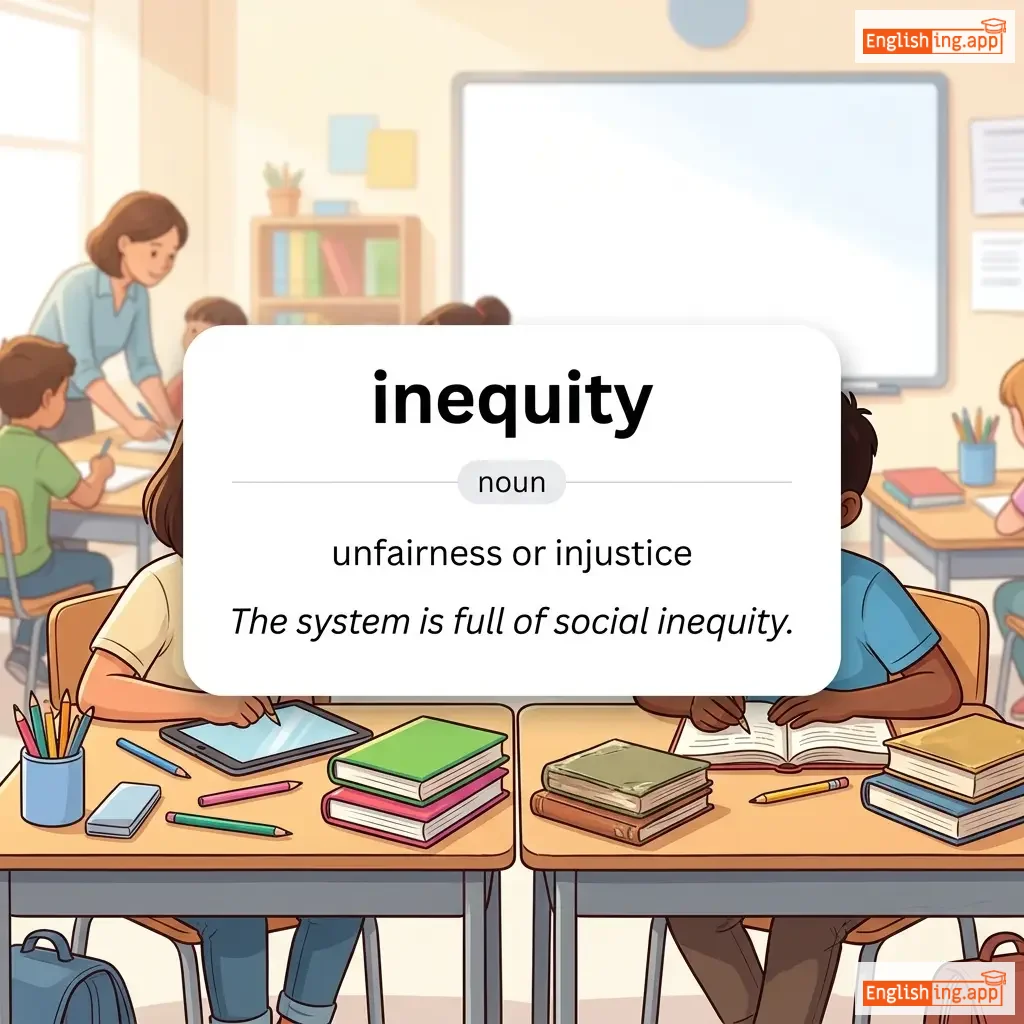
inequity definition card — visual illustration of the meaning
noun
/ɪnˈɛkwɪti/
不公正 (bugongzheng)

unfairness or injustice

"The system is full of social inequity."

"这个系统充满了社会不公正。" (zhège xìtǒng chōngmǎnle shèhuì bù gōngzhèng.)
noun
/ɪnˈɛrənsi/
无误性 (wú wù xìng)

the belief or quality of being free from error; absolute correctness

"Some religious groups strongly affirm the inerrancy of their sacred texts."
"一些宗教团体强烈坚持他们圣经的无误性。" (Yīxiē zōngjiào tuántǐ qiángliè jiānchí tāmen shèngjīng de wú wù xìng.)
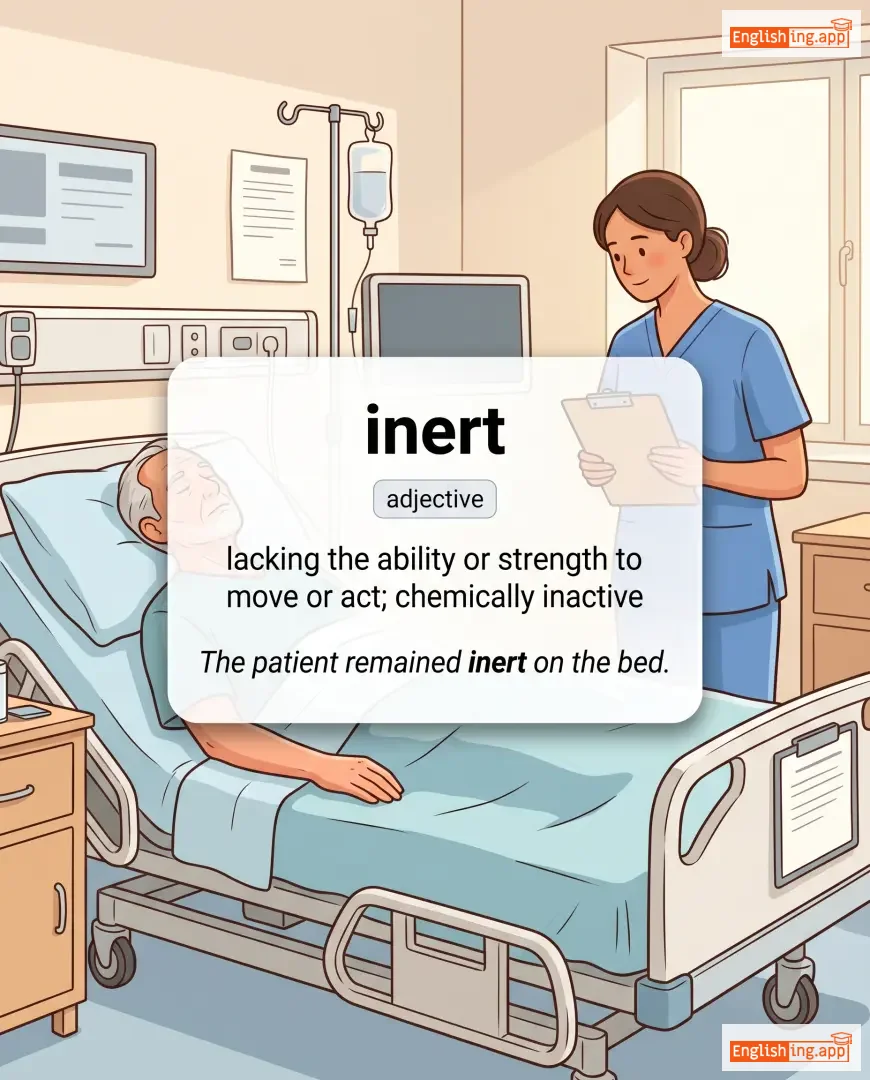
inert definition card — visual illustration of the meaning
adjective
/ɪˈnɜːrt/
惰性 (duoxing)

lacking the ability or strength to move or act; chemically inactive

"The patient remained inert on the bed."

"病人躺在床上保持不动。" (bingren tang zai chuang shang baochi budong.)
⚖️

Inertia

noun
/ɪˈnɜːrʃə/

A tendency to remain unchanged or continue in the same state of motion unless acted upon.

"The project failed due to the inertia of outdated systems."

adjective
/ˌɪnɪˈsɛnʃəl/
非必要的 (fei biyao de)

not necessary or important; not essential

"The report removes all inessential details to stay focused."

"报告删除了所有非必要的细节以保持重点。" (baogao shanchule suoyou fei biyao de xijie yi baochi zhongdian)
adjective
/ɪnˈɛstɪməbl/
无法估量的 (wúfǎ gūliàng de)

Too great or valuable to be measured or estimated.

"Her contribution to the project was of inestimable value."
"她对项目的贡献具有无法估量的价值。" (Tā duì xiàngmù de gòngxiàn jùyǒu wúfǎ gūliàng de jiàzhí.)
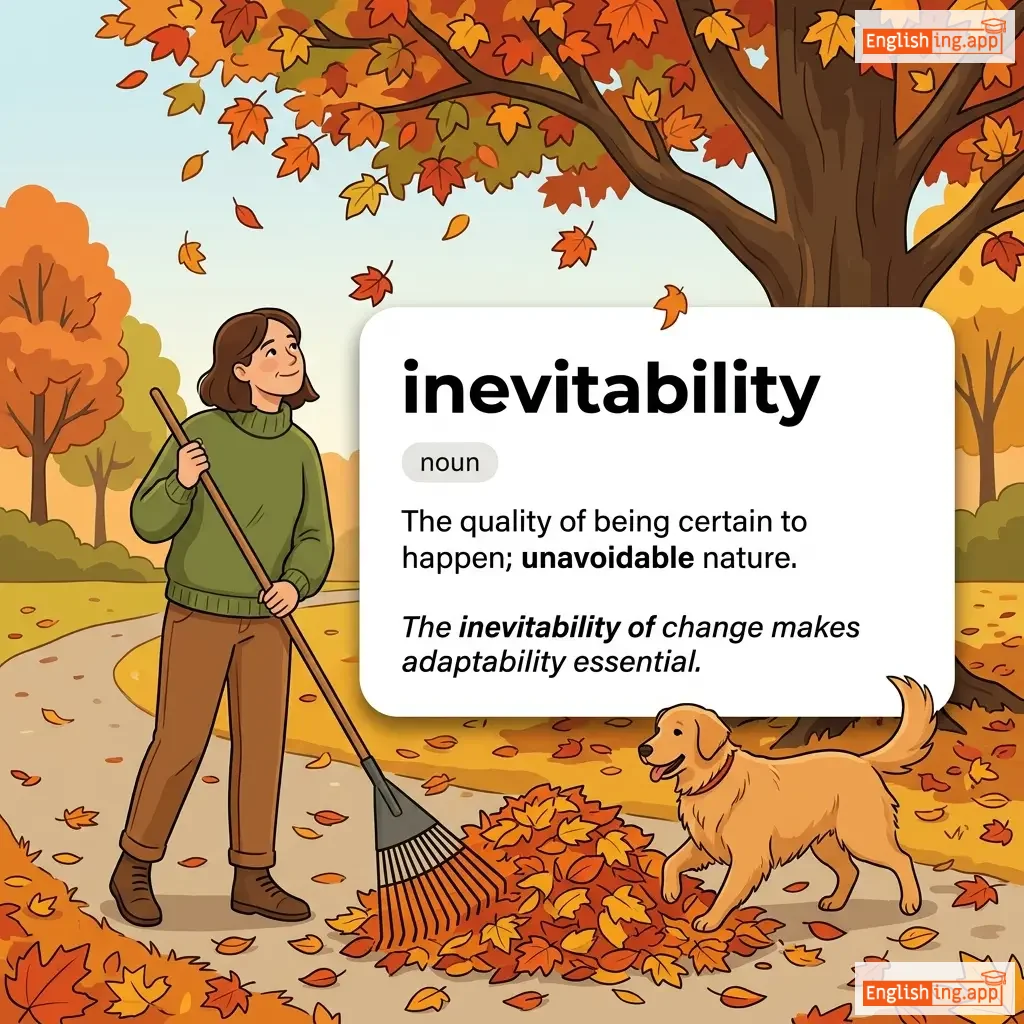
inevitability definition card — visual illustration of the meaning
noun
/ɪnˌɛvɪtəˈbɪləti/
必然性 (biransheng)

The quality of being certain to happen; unavoidable nature.

"The inevitability of change makes adaptability essential."
"变化的必然性使得适应性变得至关重要。" (Biànhuà de bìránxìng shǐdé shìyìngxìng biàn dé zhìguān zhòngyào.)
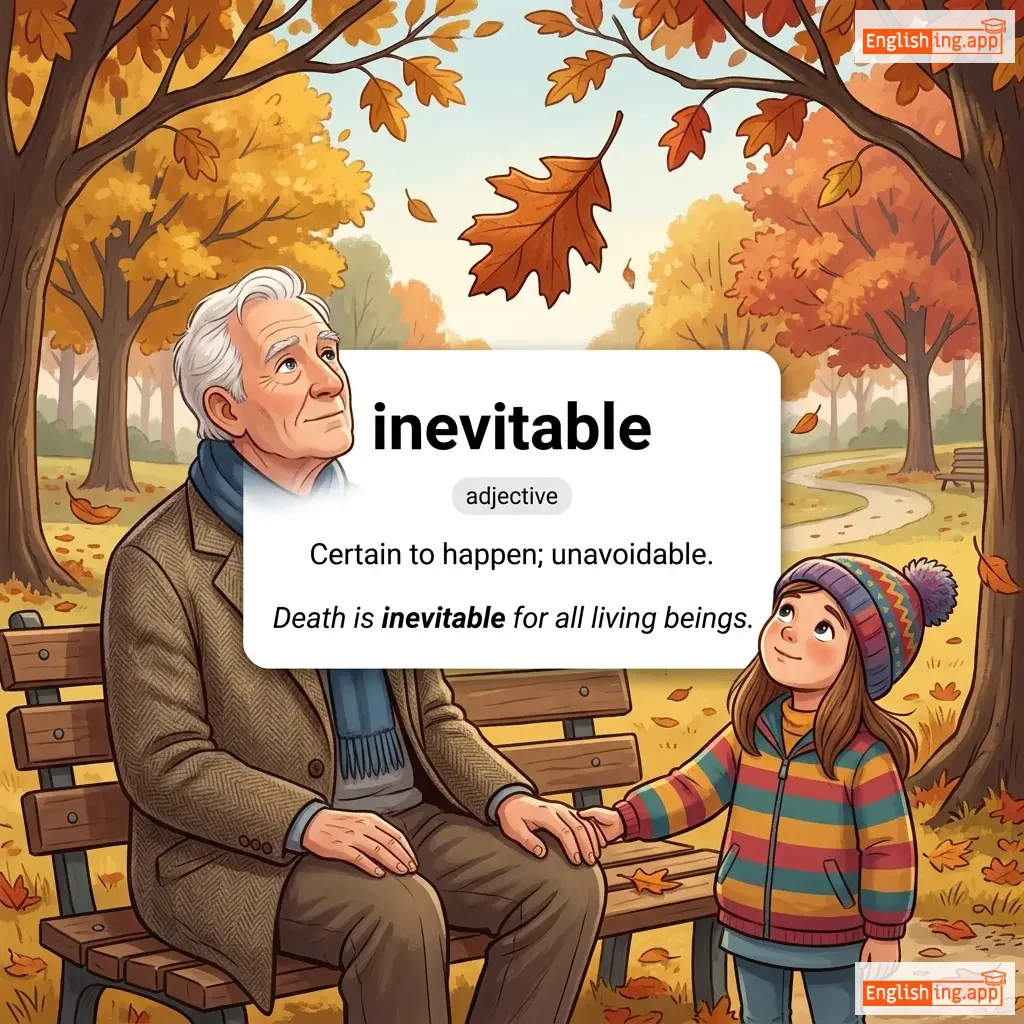
inevitable definition card — visual illustration of the meaning
adjective
/ɪnˈɛvɪtəbl/
不可避免 (bù kě bì miǎn)

Certain to happen; unavoidable.

"Death is inevitable for all living beings."

"死亡对于所有生物来说是不可避免的。" (sǐwáng duì yú suǒyǒu shēngwù lái shuō shì bù kě bì miǎn de.)
adverb
/ɪnˈɛvɪtəbli/
不可避免地 (bùkě bìmiǎn de)

in a way that cannot be avoided or prevented

"Inevitably, the team faced challenges during the project."

"不可避免地,团队在项目过程中遇到了挑战。" (Bùkě bìmiǎn de, tuánduì zài xiàngmù guòchéng zhōng yù dào le tiǎozhàn.)
adjective
/ˌɪnɪkˈskjuːzəbl/
不可原谅的 (bù kě yuán liàng de)

Too bad to be justified or overlooked; unforgivable.

"His rude behavior was inexcusable."
"他的粗鲁行为是不可原谅的。" (Tā de cūlǔ xíngwéi shì bù kě yuán liàng de.)
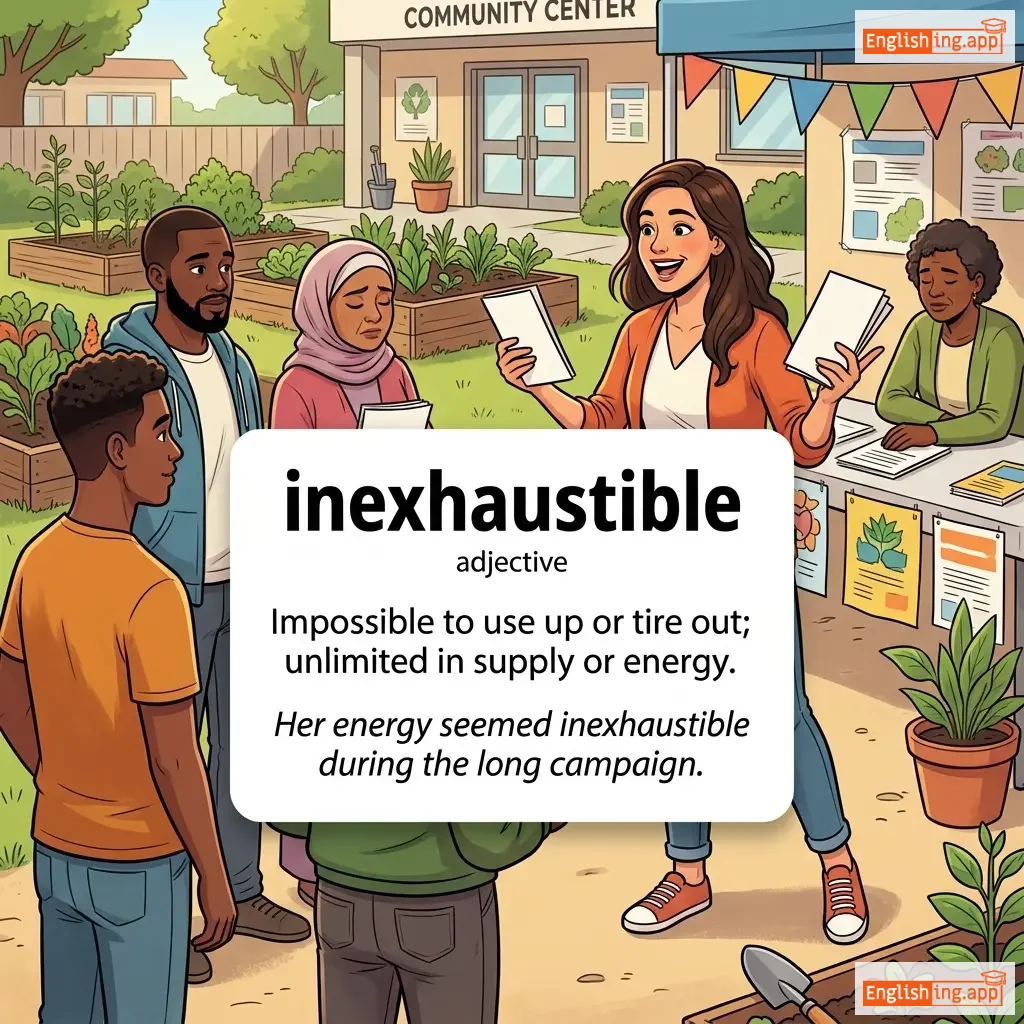
inexhaustible definition card — visual illustration of the meaning
adjective
/ˌɪnɪɡˈzɔːstəbl/
取之不尽 (qu zhi bu jin)

Impossible to use up or tire out; unlimited in supply or energy.

"Her energy seemed inexhaustible during the long campaign."

"她的精力在长时间的运动中似乎取之不尽。" (Ta de jingli zai chang shijian de yundong zhong shifu qu zhi bu jin.)
adjective
/ɪnˈɛksərəbl/
不可阻挡 (bùkě zǔdǎng)

Impossible to stop or prevent; relentless.

"The inexorable rise of technology is changing every aspect of life."

"技术的不可阻挡的崛起正在改变生活的方方面面。" (Jìshù de bùkě zǔdǎng de juéqǐ zhèngzài gǎibiàn shēnghuó de fāngfāngmiànmiàn.)
noun (compound/erroneous entry)
/ɪnˈɛksərəbl ɑːrmi/
无法阻挡的军队 (wúfǎ zǔdǎng de jūnduì)

This appears to be a corrupted or concatenated form; interpreted as 'inexorable army' — an unstoppable or relentless force.

"The rebels feared the inexorable army approaching their stronghold."

"叛军害怕即将接近他们堡垒的无法阻挡的军队。" (Pànjūn hàipà jíjiāng jiējìn tāmen bǎolěi de wúfǎ zǔdǎng de jūnduì.)
adjective
/ˌɪnɪkˈspiːdiənt/
不合适 (bù hé shì)

Not advisable, suitable, or practical in the circumstances.

"It would be inexpedient to invest without proper research."

"在没有适当研究的情况下进行投资是不合适的。" (Zài méiyǒu shìdàng yánjiū de qíngkuàng xià jìnxíng tóuzī shì bù hé shì de.)
adjective
/ˌɪnɪkˈspɛnsɪv/
便宜 (pianyi)

Cheap; costing little money.

"They found an inexpensive restaurant near the station."

"他们在车站附近找到了一个便宜的餐馆。" (Tamen zai chezhanshen fujin zhaodao le yige pianyi de canguan.)
noun
/ˌɪnɪkˈspɪəriəns/
缺乏经验 (quēfá jīngyàn)

Lack of knowledge or skill in a particular activity or field.

"His inexperience in handling negotiations was evident."

"他在谈判中的缺乏经验显而易见。" (Tā zài tánpàn zhōng de quēfá jīngyàn xiǎn'ér yìjiàn.)
adjective
/ˌɪnˈekspɜːrt/
不熟练的 (bu shulian de)

not skilled or experienced; lacking expertise

"The inexpert handling of the machine caused several mistakes."

"对机器的不熟练操作导致了多次错误。" (Dui jiqi de bu shulian caozuo daozhile duoci cuowu)
adjective
/ˌɪnɪkˈsplɪkəbl/
无法解释 (wúfǎ jiěshì)

Impossible to explain or understand.

"The sudden disappearance of the file was inexplicable."

"文件的突然消失是无法解释的。" (Wénjiàn de túrán xiāoshī shì wúfǎ jiěshì de.)
adjective
/ˌɪnɪkˈsprɛsəbl/
难以言喻 (nanyi yanyu)

Too strong or extreme to be expressed in words.

"She felt inexpressible joy at the news of her success."

"她得知自己成功的消息时感到难以言喻的喜悦。" (Ta de zhi ziji chenggong de xiaoxi shi gandao nanyi yanyu de xiyue.)
adjective
/ˌɪnɪkˈstɛnsəbl/
不可伸展的 (bù kě shēn zhǎn de)

Not capable of being stretched or extended.

"This rope is made of an inextensible material."

"这根绳子是由不可伸展的材料制成的。" (Zhè gēn shéng zi shì yóu bù kě shēn zhǎn de cáiliào zhì chéng de.)
adjective
/ˌɪnɪkˈstrɪkəbl/
无法分开 (wúfǎ fēnkāi)

Impossible to separate or escape from.

"The two friends shared an inextricable bond."

"这两个朋友共享了一个无法分开的联系。" (Zhè liǎng gè péngyǒu gòngxiǎngle yīgè wúfǎ fēnkāi de liánxì.)
adjective
/ɪnˈfæləbl̩/
无懈可击 (wú xiè kě jī)

incapable of making mistakes or being wrong

"Her judgment seemed infallible in matters of finance."

"她的判断在财务问题上似乎无懈可击。" (Tā de pànduàn zài cáiwù wèntí shàng shìhū wúxiè kě jī.)
adjective
/ˈɪnfəməs/
臭名昭著 (chòumíng zhāozhù)

well known for some bad quality or deed

"The dictator was infamous for his cruelty."

"这位独裁者因其残忍而臭名昭著。" (Zhè wèi dúcáizhě yīn qí cánrěn ér chòumíng zhāozhù.)
noun
/ˈɪnfəmi/
幸福 (xìngfú)

the state of being well known for some bad quality or deed

"His name will live in infamy for the crimes he committed."

"她在收到奖项时无法掩饰她的幸福。" (Tā zài shōudào jiǎngxiàng shí wúfǎ yǎnshì tā de xìngfú.)
noun
/ˈɪnfənt/
婴儿 (ying'er)

A very young child or baby.

"The infant was sleeping peacefully in the cradle."

"婴儿在摇篮中安静地睡着。" (Ying'er zai yaolan zhong anjing de shuizhao.)
adjective
/ˈɪnfəntaɪl/
婴儿式 (yīng ér shì)

characteristic of an infant; childish

"His infantile behavior embarrassed everyone at the meeting."

"他那种婴儿式的行为让会议上的每个人都感到尴尬。" (Tā nà zhǒng yīng ér shì de xíngwéi ràng huìyì shàng de měi gèrén dōu gǎndào gāngà.)
Infantry definition card — visual illustration of the meaning
noun
/ˈɪn.fən.tri/
步兵 (bù bīng)

soldiers marching or fighting on foot; foot soldiers collectively

"The infantry advanced across the battlefield on foot."

"步兵在战场上走路前进。" (bù bīng zài zhànchǎng shàng zǒulù qiánjìn.)
verb
/ɪnˈfætʃueɪt/
迷恋 (mí liàn)

to inspire with an intense but short-lived passion or admiration

"He was infatuated with her beauty."
"他被她的美貌迷住了。" (Tā bèi tā de měimào mí zhùle.)
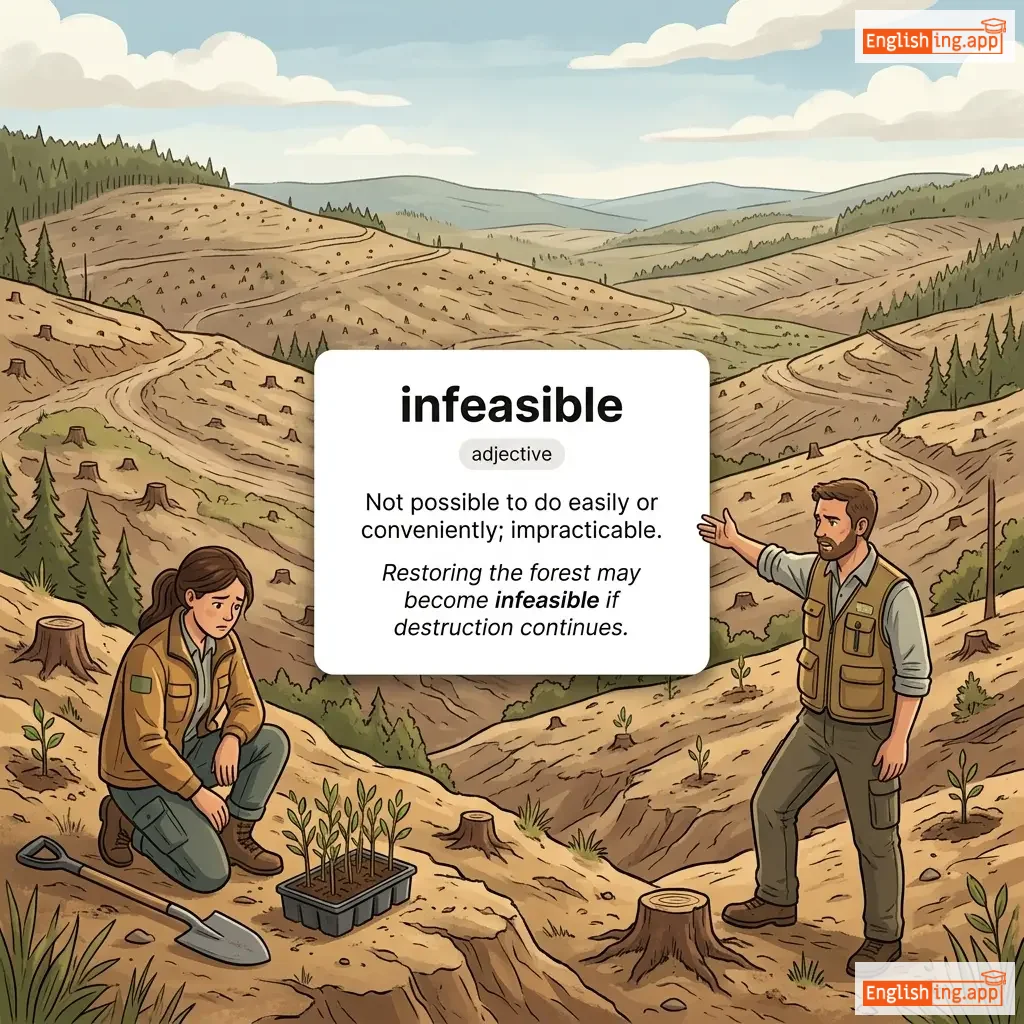
infeasible definition card — visual illustration of the meaning
adjective
ɪnˈfiː.zə.bəl
不可行 (bù kě xíng)

Not possible to do easily or conveniently; impracticable.

"Restoring the forest may become infeasible if destruction continues."

"如果破坏继续下去,恢复森林可能变得不可行。" (Rúguǒ pòhuài jìxù xiàqù, huīfù sēnlín kěnéng biàn dé bù kěxíng.)