Словари

Словарь английского языка | Значения слов, определения и примеры

industrial definition card — visual illustration of the meaning
adjective
/ɪnˈdʌstriəl/
промышленный (promyshlennyy)

Relating to industry, factories, or manufacturing.

"The city has grown rapidly due to industrial development."

"Город быстро развивался благодаря промышленному развитию." (Gorod bystro razvivalsya blagodarya promyshlennomu razvitiyu.)
Industrial Revolution definition card — visual illustration of the meaning
noun
/ɪnˈdʌstriəl ˌrɛvəˈluːʃən/
Индустриальная революция (Industrial'naya revolyutsiya)

The rapid development of industry that occurred in Britain in the late 18th and 19th centuries, brought about by the introduction of machinery and characterized by the use of steam power and the growth of factories.

"The Industrial Revolution marked a shift in production processes."
"Индустриальная революция ознаменовала собой изменение производственных процессов." (Industrial'naya revolyutsiya oznamenovala soboy izmeneniye proizvodstvennykh protsessov.)
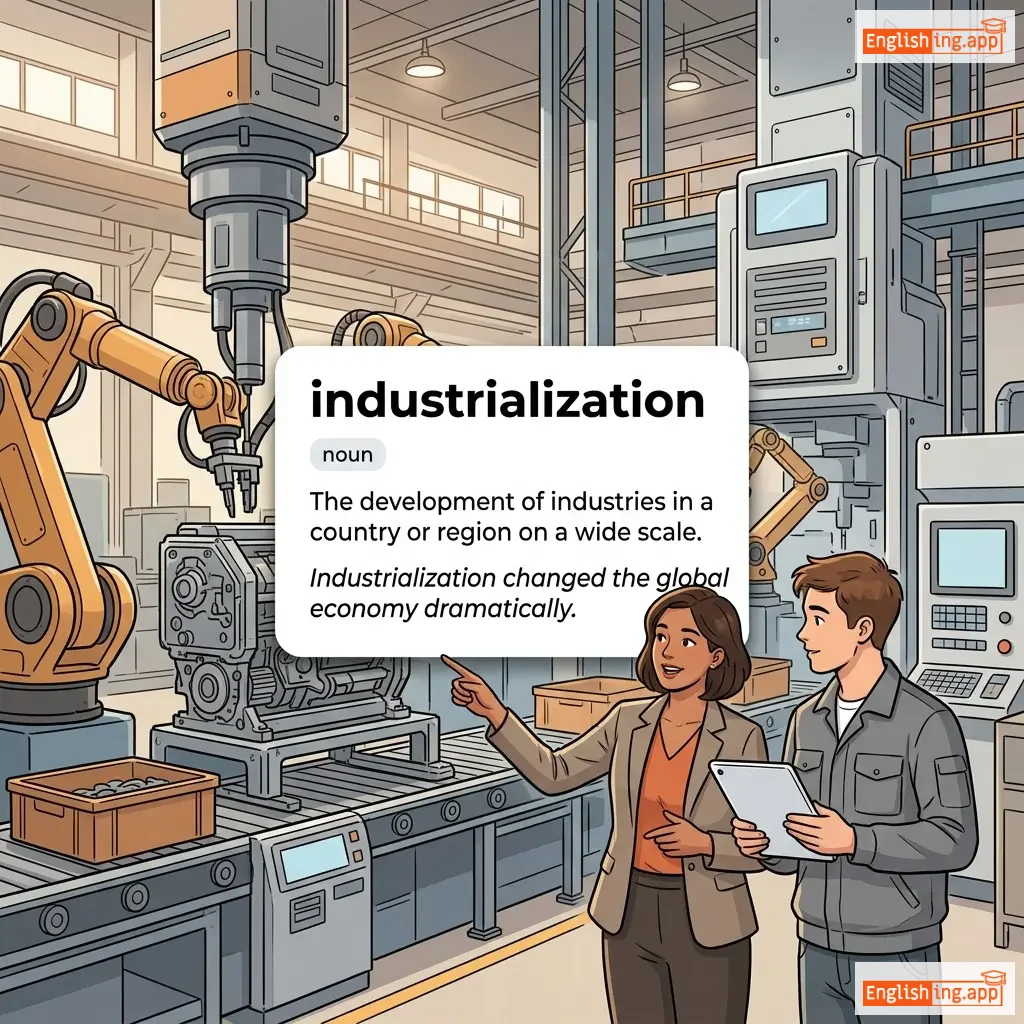
industrialization definition card — visual illustration of the meaning
noun
ɪnˌdʌstrɪəlaɪˈzeɪʃən
индустриализация (industrializatsiya)

The development of industries in a country or region on a wide scale.

"Industrialization changed the global economy dramatically."

"Индустриализация кардинально изменила мировую экономику." (Industrializatsiya kardinal'no izmenila mirovuyu ekonomiku.)
adjective
/ɪnˈdʌstriəs/
трудолюбивый (trudolyubivy)

Hardworking and diligent in one's duties.

"She is an industrious student who always completes her assignments on time."

"Она трудолюбивый студент, который всегда выполняет свои задания вовремя." (Ona trudolyubivyj student, kotoryj vsegda vypolnyaet svoi zadaniya vovremya.)
noun
/ɪnˈdʌstriəsnəs/
трудолюбие (trudolyubie)

The quality of being hardworking and diligent.

"His industriousness earned him a promotion at work."

"Его трудолюбие принесло ему повышение на работе." (Ego trudolyubie prineslo yemu povyshenie na rabote.)
industry definition card — visual illustration of the meaning
noun
/ˈɪndəstri/
промышленность (promyshlennost)

The production of goods or services within an economy.

"The textile industry employs thousands of workers in the region."

"Текстильная промышленность нанимает тысячи рабочих в регионе." (Tekstil'naya promyshlennost' nanimayet tysyachi rabochikh v regione.)
verb
/ɪˈniː.bri.eɪt/

to intoxicate; to make someone drunk

"The strong wine was enough to inebriate even the most experienced drinker."

adjective
/ɪˈniː.bri.eɪ.tɪd/
пьяный (p'yanyy)

under the influence of alcohol; drunk

"He stumbled into the room completely inebriated."

"Он вошел в комнату, полностью пьяный." (On voshel v komnatu, polnost'yu p'yanyy.)
noun
/ˌɪn.ɪˈbraɪ.ə.ti/
опьянение (opyanenie)

the state of being drunk or intoxicated

"His frequent inebriety led to the loss of his job."

"Его частое опьянение привело к потере работы." (Ego chasteye op'yanyeniye privelo k potere raboty.)
adjective
/ɪˈnɛd.ə.bəl/
несъедобный (nesyedobny)

not fit to be eaten

"The spoiled food was inedible."

"Испорченная еда была несъедобна." (Isporchennaya yeda byla nesyedobna.)
ineffable definition card — visual illustration of the meaning
adjective
/ɪˈnɛf.ə.bəl/
невыразимый (nevyrazimyy)

too great, extreme, or beautiful to be expressed in words

"The beauty of the sunset was ineffable."
"Красота заката была невыразимой." (Krasota zakata byla nevyrazimoy.)
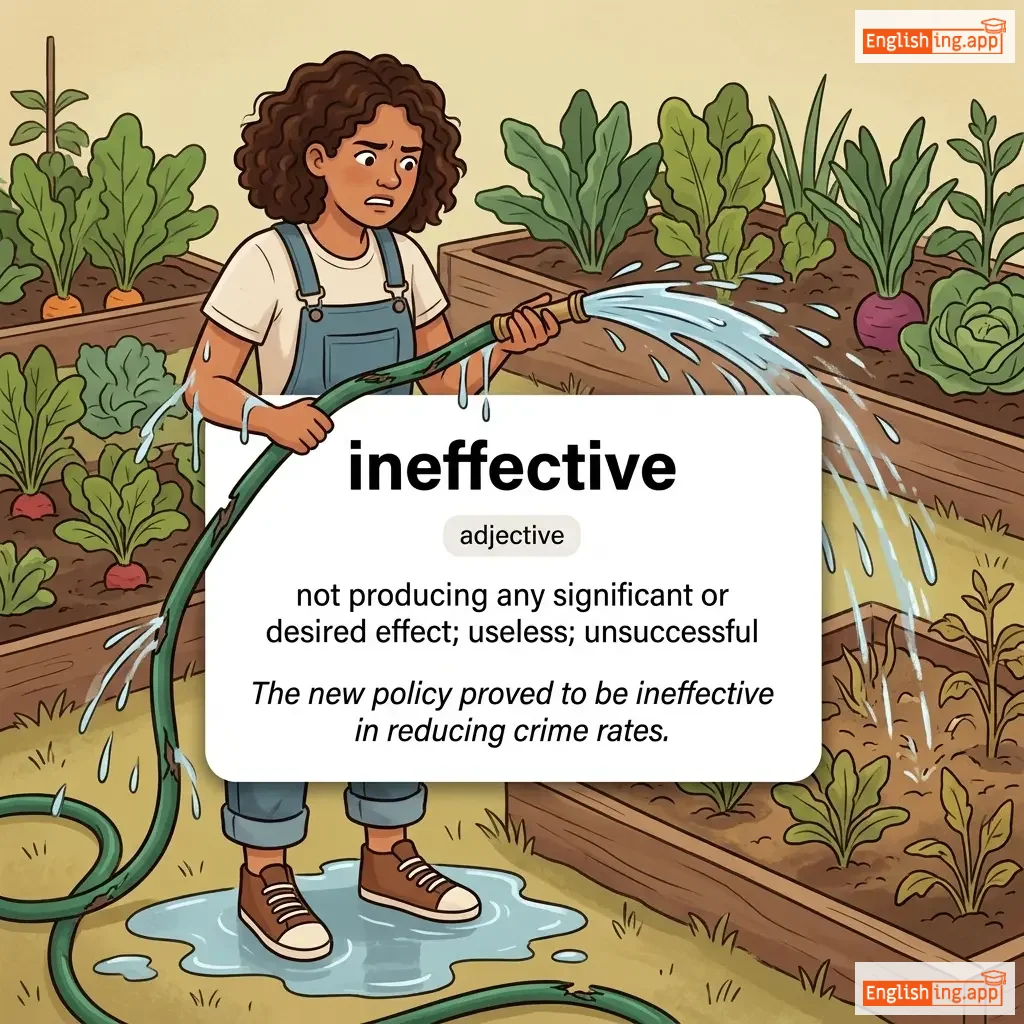
ineffective definition card — visual illustration of the meaning
adjective
/ˌɪnɪˈfɛktɪv/
неэффективный; бесполезный; неудачный (neeffektivnyy; bespoleznyy; neudachnyy)

not producing any significant or desired effect; useless; unsuccessful

"The new policy proved to be ineffective in reducing crime rates."

"Новая политика оказалась неэффективной в снижении уровня преступности." (Novaya politika okazalas' neeffektivnoy v snizhenii urovnya prestupnosti.)
adjective
/ˌɪn.ɪˈfɛk.tʃu.əl/
неэффективный (neeffektivnyy)

Not producing any or the desired effect; lacking the ability or qualities to achieve a purpose.

"The manager’s ineffectual leadership caused the team to lose motivation."

"Неэффективное руководство менеджера привело к тому, что команда потеряла мотивацию." (Neeffektivnoe rukovodstvo menedzhara privelo k tomu, chto komanda poteryala motivatsiyu.)
inefficacious definition card — visual illustration of the meaning
adjective
ˌɪn.ɪ.fɪˈkeɪ.ʃəs
неэффективный (neeffektivny)

Not producing any or the desired effect; ineffective.

"The treatment was inefficacious in curing the disease."
"Лечение было неэффективным при лечении болезни." (Lechenie bylo neeffektivnym pri lechenii bolezni.)
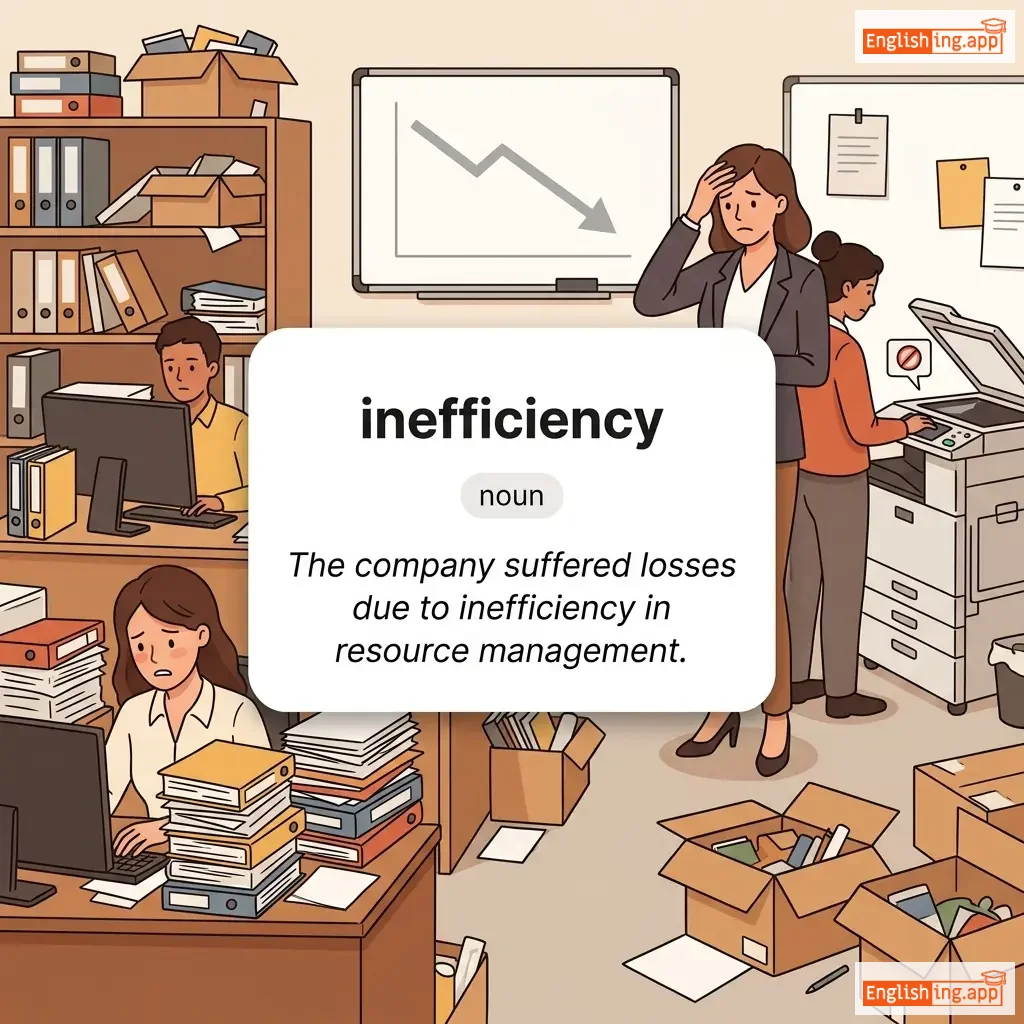
inefficiency definition card — visual illustration of the meaning
noun
/ˌɪn.ɪˈfɪʃ.ən.si/
неэффективность (neeffektivnost)

The state of not achieving maximum productivity; wastefulness or lack of competence.

"The company suffered losses due to inefficiency in resource management."

"Компания понесла убытки из-за неэффективности в управлении ресурсами." (Kompaniya ponesla ubytki iz-za neeffektivnosti v upravlenii resursami.)
adjective
/ˌɪn.ɪˈfɪʃ.ənt/
неэффективный (neeffektivnyy)

Not achieving maximum productivity; wasting resources or effort.

"The machine is old and inefficient compared to modern equipment."

"Машина старая и неэффективная по сравнению с современным оборудованием." (Mashina staraya i neeffektivnaya po sravneniyu s sovremennym oborudovaniyem.)
adjective
/ɪnˈɛl.ɪ.dʒə.bəl/
неквалифицированный (nekvalifitsirovanny)

Not qualified or permitted to do something or to receive something.

"He was ineligible to apply for the scholarship because of his age."

"Он не мог подать заявку на стипендию из-за своего возраста." (On ne mog podat' zayavku na stipendiyu iz-za svoego vozrasta.)
ineluctable definition card — visual illustration of the meaning
adjective
/ˌɪn.ɪˈlʌk.tə.bəl/
неизбежный (ineluktabl)

Impossible to avoid or escape; inevitable.

"Death is an ineluctable part of human existence."

"Смерть — неизбежная часть человеческого существования." (Smert neizbezhnaia chast chelovecheskogo sushestvovaniya)
adjective
/ɪˈnɛpt/
неспособный (nesposobny)

lacking skill or ability; clumsy or incompetent

"His inept handling of the situation made it worse."

"Его неспособное обращение с ситуацией только усугубило её." (Ego nesposobnoe obrashchenie s situatsiyey tol'ko usugubilo yeyo.)
inequality definition card — visual illustration of the meaning
noun
/ˌɪnɪˈkwɒləti/
неравенство (neravenstvo)

the state of being unequal; disparity in status, rights, or opportunities

"Inequality in wealth distribution remains a significant issue worldwide."
"Неравенство в распределении богатства остается важной проблемой на мировом уровне." (Neravenstvo v raspredelenii bogatstva ostaetsya vazhnoi problemoi na mirovom urovne.)
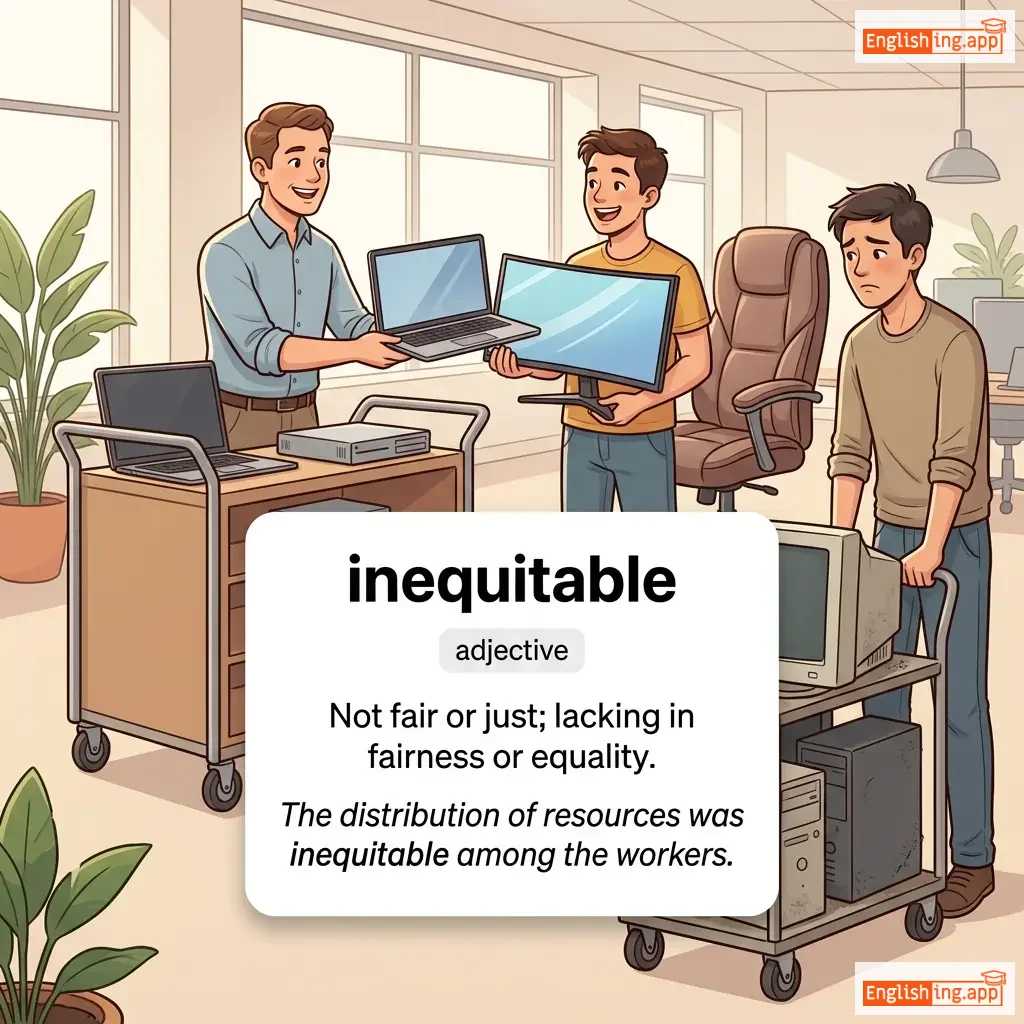
inequitable definition card — visual illustration of the meaning
adjective
/ɪnˈɛk.wɪ.tə.bəl/
несправедливый (nespravedlivyy)

Not fair or just; lacking in fairness or equality.

"The distribution of resources was inequitable among the workers."
"Распределение ресурсов было несправедливым среди рабочих." (Raspredelenie resursov bylo nespravedlivym sredi rabochikh.)
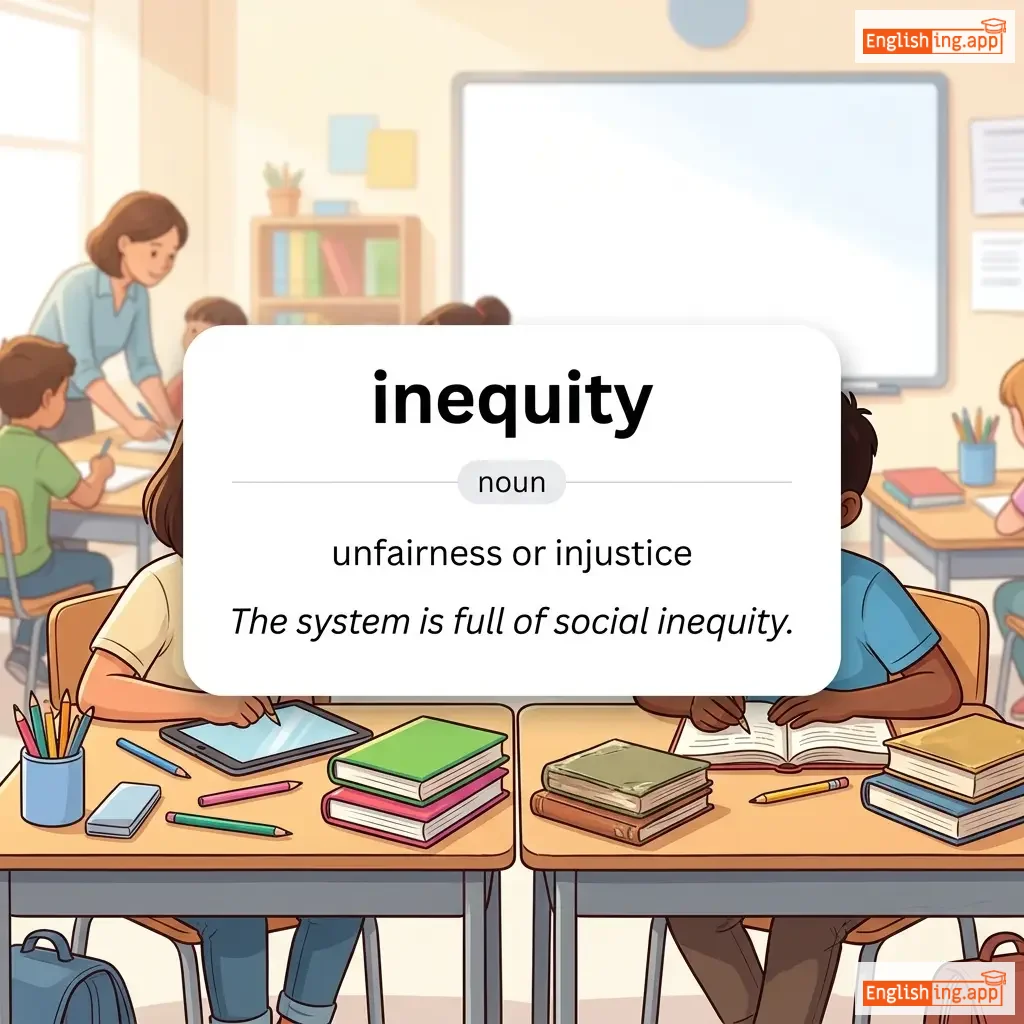
inequity definition card — visual illustration of the meaning
noun
/ɪnˈɛkwɪti/
несправедливость (nespravedlivost)

unfairness or injustice

"The system is full of social inequity."

"Система полна социальной несправедливости." (Sistema polna sotsial'noy nespravedlivosti.)
noun
/ɪnˈɛrənsi/
непогрешимость (nepogreshimost)

the belief or quality of being free from error; absolute correctness

"Some religious groups strongly affirm the inerrancy of their sacred texts."
"Некоторые религиозные группы твердо утверждают безошибочность своих священных текстов." (Nekotorye religioznye grupy tverdo utverzhdayut bezoshibochnost' svoikh sviashchennykh tekstov.)
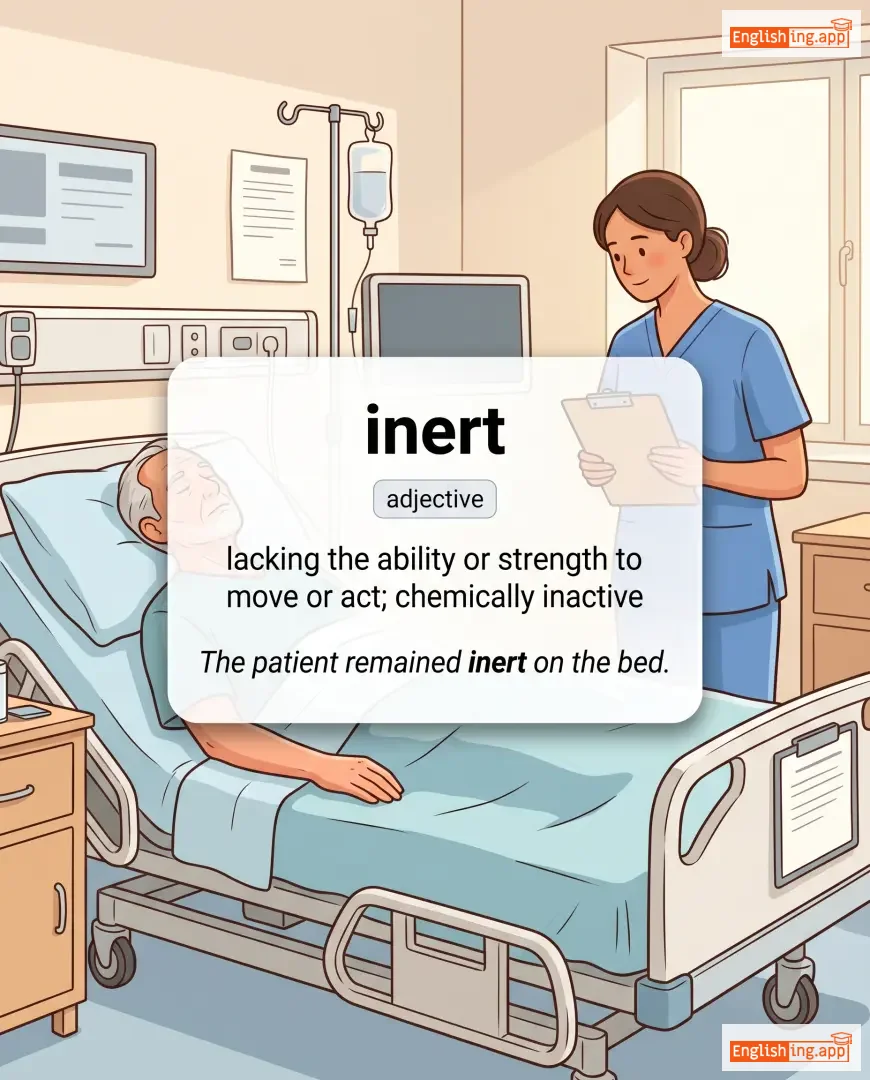
inert definition card — visual illustration of the meaning
adjective
/ɪˈnɜːrt/
инертный (inertny)

lacking the ability or strength to move or act; chemically inactive

"The patient remained inert on the bed."

"Пациент оставался инертным на кровати." (Patsiyent ostavalsya inertnym na krovati.)
noun
/ɪˈnɜːrʃə/
инерция (inertsiya)

A tendency to remain unchanged or continue in the same state of motion unless acted upon.

"The project failed due to the inertia of outdated systems."

"Проект провалился из-за инерции устаревших систем." (Proyekt provalilsya iz-za inertsiya ustarevshikh sistem.)
adjective
/ˌɪnɪˈsɛnʃəl/
несущественный (nesushchestvennyy)

not necessary or important; not essential

"The report removes all inessential details to stay focused."

"Отчёт убирает все несущественные детали, чтобы сохранить фокус." (otchot ubiraet vse nesushchestvennye detali chtoby sokhranit fokus)
adjective
/ɪnˈɛstɪməbl/
неоценимый (neotsenimy)

Too great or valuable to be measured or estimated.

"Her contribution to the project was of inestimable value."

"Её вклад в проект был неоценимым." (Eё vklad v proyekt byl neotsenimym.)
inevitability definition card — visual illustration of the meaning
noun
/ɪnˌɛvɪtəˈbɪləti/
неизбежность (neizbezhnosť)

The quality of being certain to happen; unavoidable nature.

"The inevitability of change makes adaptability essential."
"Неизбежность изменений делает адаптируемость необходимой." (Neizbezhnost' izmenenii delaet adaptiruemost' neobkhodimoi.)
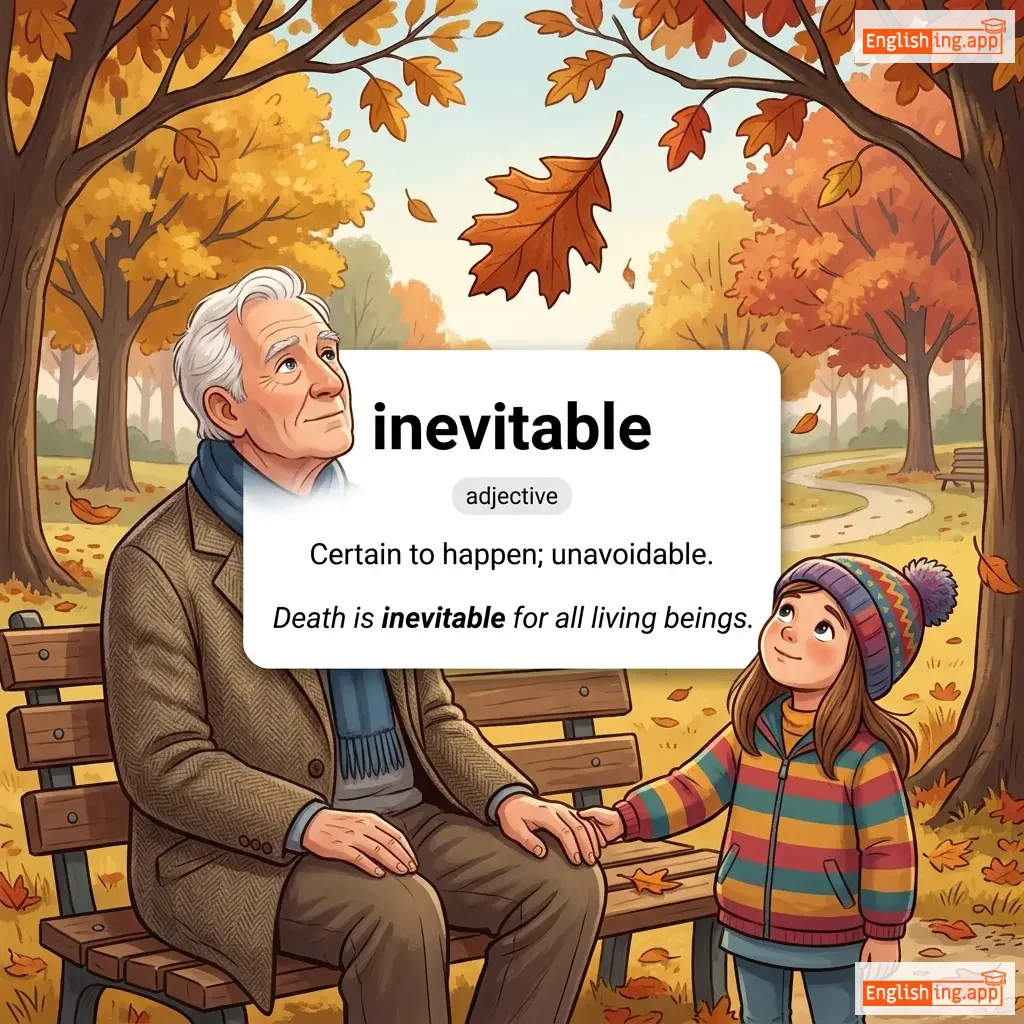
inevitable definition card — visual illustration of the meaning
adjective
/ɪnˈɛvɪtəbl/
неизбежный (neyizbezhnyy)

Certain to happen; unavoidable.

"Death is inevitable for all living beings."

"Смерть неизбежна для всех живых существ." (Smert' neyizbezhna dlya vsekh zhivykh sushchestv.)
adverb
/ɪnˈɛvɪtəbli/
неизбежно (neyizbezhno)

in a way that cannot be avoided or prevented

"Inevitably, the team faced challenges during the project."

"Неизбежно команда столкнулась с проблемами в ходе проекта." (Neyizbezhno komanda stolknulas' s problemami v khode proyekta.)
adjective
/ˌɪnɪkˈskjuːzəbl/
неоправданный (neopravdannyy)

Too bad to be justified or overlooked; unforgivable.

"His rude behavior was inexcusable."

"Его грубое поведение было неоспоримо." (Ego gruboye povedeniye bylo neosporimo.)
inexhaustible definition card — visual illustration of the meaning
adjective
/ˌɪnɪɡˈzɔːstəbl/
неистощимый (neistooshchimy)

Impossible to use up or tire out; unlimited in supply or energy.

"Her energy seemed inexhaustible during the long campaign."

"Её энергия казалась неистощимой во время длительной кампании." (Eyo energiya kazalas' neistooshchimoy vo vremya dlitelnoy kampanii.)
adjective
/ɪnˈɛksərəbl/
неумолимый (neumolimy)

Impossible to stop or prevent; relentless.

"The inexorable rise of technology is changing every aspect of life."

"Неумолимый рост технологий меняет каждый аспект жизни." (Neumolimy rost tekhnologiy menyayet kazhdyy aspekt zhizni.)
noun (compound/erroneous entry)
/ɪnˈɛksərəbl ɑːrmi/
непреодолимая армия (nepreodolimaya armiya)

This appears to be a corrupted or concatenated form; interpreted as 'inexorable army' — an unstoppable or relentless force.

"The rebels feared the inexorable army approaching their stronghold."

"Повстанцы боялись непреодолимой армии, приближавшейся к их крепости." (Povstantsy boyalis' nepreodolimoy armii, priblizhavsheysya k ikh kreposti.)
adjective
/ˌɪnɪkˈspiːdiənt/
нецелесообразный (notselesoobraznyy)

Not advisable, suitable, or practical in the circumstances.

"It would be inexpedient to invest without proper research."

"Инвестировать без должного исследования будет нецелесообразно." (Investirovat' bez dolzhnoho issledovaniya budet netselesoobrazno.)
adjective
/ˌɪnɪkˈspɛnsɪv/
дешевый (deshevyy)

Cheap; costing little money.

"They found an inexpensive restaurant near the station."

"Они нашли дешевый ресторан рядом со станцией." (Oni nashli deshevyy restoran ryadom so stantsiyey.)
noun
/ˌɪnɪkˈspɪəriəns/
неопытность (neopytnost)

Lack of knowledge or skill in a particular activity or field.

"His inexperience in handling negotiations was evident."

"Его неопытность в ведении переговоров была очевидна." (Yego neopytnost' v vederii peregovorov byla ochevidna.)
adjective
/ˌɪnˈekspɜːrt/
неопытный (neopytnyy)

not skilled or experienced; lacking expertise

"The inexpert handling of the machine caused several mistakes."

"Неопытное обращение с машиной привело к нескольким ошибкам." (Neopytnoye obrashcheniye s mashinoy privelo k neskolkim oshibkam)
adjective
/ˌɪnɪkˈsplɪkəbl/
необъяснимый (neobyasnimy)

Impossible to explain or understand.

"The sudden disappearance of the file was inexplicable."

"Внезапное исчезновение файла было необъяснимым." (Vnezapnoe ischeznoveniye fayla bylo neobyasnimym.)
adjective
/ˌɪnɪkˈsprɛsəbl/
невыразимый (nevyrazimyy)

Too strong or extreme to be expressed in words.

"She felt inexpressible joy at the news of her success."

"Она почувствовала невыразимую радость, услышав о своем успехе." (Ona pochuvstvovala nevyrazimuyu radost', uslyshav o svoem uspekhe.)
adjective
/ˌɪnɪkˈstɛnsəbl/
нерастяжимый (nerastyazhimy)

Not capable of being stretched or extended.

"This rope is made of an inextensible material."

"Эта веревка сделана из нерастяжимого материала." (Eta verëvka sdelana iz nerastyazhimo materiala.)
adjective
/ˌɪnɪkˈstrɪkəbl/
неразделимый (nerazdelimy)

Impossible to separate or escape from.

"The two friends shared an inextricable bond."

"Два друга поделились неразделимой связью." (Dva druga podelilis' nerazdelimoy svyazyu.)
adjective
/ɪnˈfæləbl̩/
непогрешимый (nepogrreshimy)

incapable of making mistakes or being wrong

"Her judgment seemed infallible in matters of finance."

"Ее суждения казались непогрешимыми в финансовых вопросах." (Eyo suzhdeniya kazalis' nepogrreshimymi v finansovykh voprosakh.)
adjective
/ˈɪnfəməs/
печально известный (pechal'no izvestnyy)

well known for some bad quality or deed

"The dictator was infamous for his cruelty."

"Диктатор был печально известен своей жестокостью." (Diktator byl pechal'no izvesten svoey zhestokost'yu.)
noun
/ˈɪnfəmi/
счастье (schastye)

the state of being well known for some bad quality or deed

"His name will live in infamy for the crimes he committed."

"Она не могла скрыть своего счастья, когда получила награду." (Ona ne mogla skryt' svoego schast'ya, kogda poluchila nagradu.)
noun
/ˈɪnfənt/
младенец (mladenets)

A very young child or baby.

"The infant was sleeping peacefully in the cradle."

"Младенец мирно спал в колыбели." (Mladenets mirno spal v kolybeli.)
adjective
/ˈɪnfəntaɪl/
инфантильный (infantil'nyy)

characteristic of an infant; childish

"His infantile behavior embarrassed everyone at the meeting."

"Его инфантильное поведение смутило всех на собрании." (Ego infantil'noe povedenie smutilo vsekh na sobravanii.)
Infantry definition card — visual illustration of the meaning
noun
/ˈɪn.fən.tri/
пехота (pekhotа)

soldiers marching or fighting on foot; foot soldiers collectively

"The infantry advanced across the battlefield on foot."

"Пехота продвинулась по полю битвы пешком." (Pekhota prodvinulas po polyu bitvy peshkom.)
verb
/ɪnˈfætʃueɪt/
влюблять (vlyublyat)

to inspire with an intense but short-lived passion or admiration

"He was infatuated with her beauty."

"Он был очарован ее красотой." (On byl ocharovan yeye krasotoy.)
infeasible definition card — visual illustration of the meaning
adjective
ɪnˈfiː.zə.bəl
невыполнимый (nevypolnimyy)

Not possible to do easily or conveniently; impracticable.

"Restoring the forest may become infeasible if destruction continues."

"Восстановление леса может стать невозможным, если разрушение продолжится." (Vosstanovlenie lesa mozhet stat' nevyponimym, yesli razrushenie prodolzhitsya.)