Словари

Словарь английского языка | Значения слов, определения и примеры

adjective
/ˌɪnsɪˈdɛntəl/
инцидентальный (intsidentalnyy)

happening as a minor part or in connection with something else

"Incidental expenses like snacks and tips were included in the bill."

"Инцидентальные расходы, такие как закуски и чаевые, были включены в счет." (Intsidental'nye raskhody, takiye kak zakuski i chaivyye, byli vklyucheny v schet.)
adverb
/ˌɪnsɪˈdɛntəli/
кстати (kstati)

by the way; used to introduce a remark not directly related to the main subject

"Incidentally, did you know that she studied in Paris?"

"Кстати, ты знал, что она училась в Париже?" (Kstati, ty znal, chto ona uchilas' v Parizhe?)
verb
/ɪnˈsɪnəˌreɪt/
сжигать (szhigat')

to burn something completely until it is reduced to ashes

"The city decided to incinerate the medical waste for safety."

"Город решил сжигать медицинские отходы для безопасности." (Gorod reshil szhigat' meditsinskie otkhody dlya bezopasnosti.)
noun
/ɪnˈsɪpiəns/
начало (nachalo)

the beginning or initial stage of something

"The project was still in its incipience when funding was approved."

"Проект все еще был на своей начальной стадии, когда было одобрено финансирование." (Proyekt vse eshche byl na svoey nachal'noy stadii, kogda bylo odobreno finansirovanie.)
adjective
/ɪnˈsɪpiənt/
начальный (nachal'nyy)

in an initial stage; beginning to develop

"The incipient storm made the sky turn dark and heavy."

"Начальная буря заставила небо потемнеть и стать тяжелым." (Nachal'naya burya zastavila nebo potemyet' i stat' tyazhelym.)
incisive definition card — visual illustration of the meaning
adjective
/ɪnˈsaɪsɪv/
резкий (rezkiy)

clear, sharp, and direct in thought, speech, or style

"Her incisive analysis revealed the flaws in the plan."

"Её резкий анализ выявил недостатки плана." (Yeyo rezkiy analiz vyyavil nedostatki plana.)
noun
/ɪnˈsaɪzər/
резец (rezyets)

a narrow-edged tooth at the front of the mouth, adapted for cutting

"The dentist noted that his upper left incisor was chipped."
"Стоматолог отметил, что его верхний левый резец был сколот." (Stomatolog otmetil, chto yego verkhniy levyy rezyets byl skolot.)
incite definition card — visual illustration of the meaning
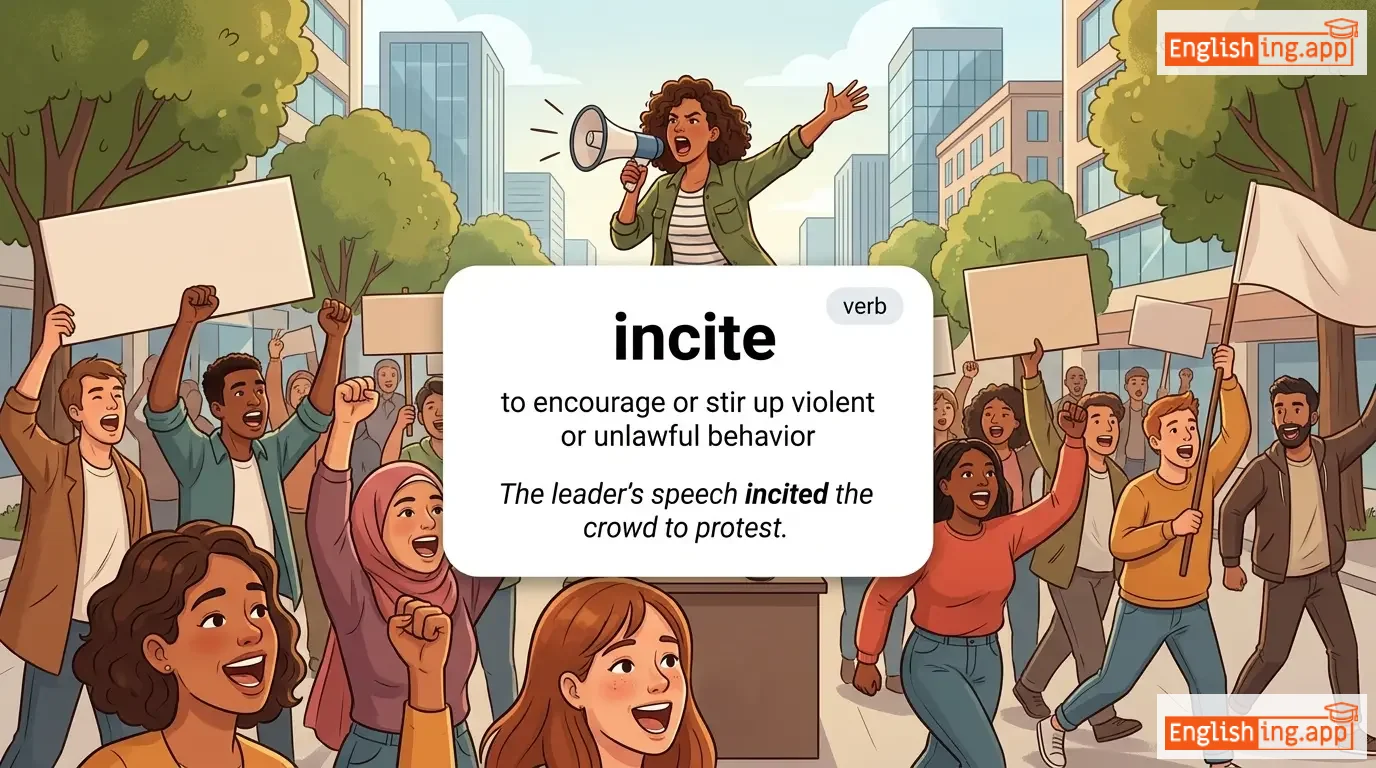
verb
/ɪnˈsaɪt/
подстрекать (podstrekat)

to encourage or stir up violent or unlawful behavior

"The leader's speech incited the crowd to protest."

"Речь лидера подстрекала толпу к протесту." (Rech' lidera podstrekkala tolpu k protestu.)
noun
/ɪnˈsaɪtmənt/
подстрекательство (podstrekatel'stvo)

the action of provoking unlawful or violent behavior

"He was arrested for incitement to riot."

"Он был арестован за подстрекательство к бунту." (On byl arestovan za podstrekatel'stvo k buntu.)
adjective
/ɪnˈklɛmɛnt/
неблагоприятная погода (neblagopriyatnaya pogoda)

unpleasantly cold, wet, or stormy (usually weather)

"The match was canceled due to inclement weather."

"Матч был отменен из-за плохой погоды." (Match byl otmenyon iz-za plokhoy pogody.)
noun
/ˌɪnklɪˈneɪʃən/
склонность (sklonnost)

A natural tendency or urge to act or feel in a particular way.

"She has an inclination towards helping others."

"У неё есть склонность помогать другим." (U nee est' sklonnost' pomogat' drugym.)
verb
/ɪnˈklaɪn/
склоняться (sklonjat'sja)

to feel willing or favorably disposed toward something; to bend or tilt

"She is inclined to agree with the proposal."

"Она склонна согласиться с предложением." (Ona sklonná soglasit'sja s predlozheniem.)
adjective
/ɪnˈklaɪnd/
склонен (sklonen)

having a tendency or disposition toward something

"He is inclined to help those in need."

"Он склонен помогать нуждающимся." (On sklonen pomogat' nuzhdayushchimsya.)
include definition card — visual illustration of the meaning
verb
/ɪnˈkluːd/
включать (vklyuchat')

to make something part of a whole or group

"The package includes free breakfast."

"Пакет включает бесплатный завтрак." (Paket vklyuchayet besplatnyy zavtrak.)
preposition
/ɪnˈkluːdɪŋ/
включая (vkluchaya)

used to show that someone or something is part of a larger group

"Many people attended the event, including students and teachers."

"Многие люди посетили мероприятие, включая студентов и преподавателей." (Mnogie lyudi posetili meropriyatie, vklyuchaya studentov i prepodavateley.)
noun
/ɪnˈkluːʒən/
инклюзия (inklyuziya)

the action or state of including or being included within a group or structure

"Diversity and inclusion are key values in modern workplaces."
"Разнообразие и инклюзия являются ключевыми ценностями на современных рабочих местах." (Raznoobraziye i inklyuziya yavyayutsya klyuchevymi tsennostyami na sovremennykh rabochikh mestakh.)
inclusive definition card — visual illustration of the meaning
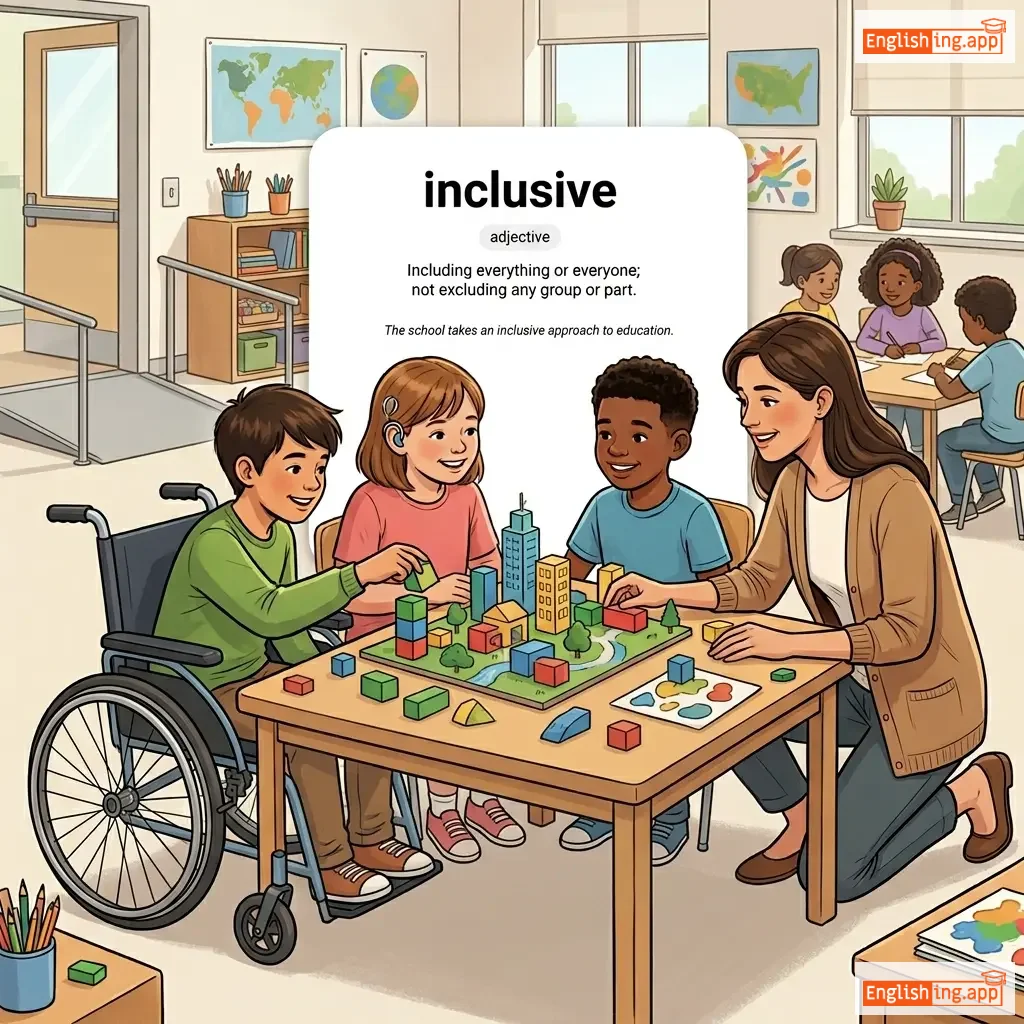
adjective
/ɪnˈkluːsɪv/
инклюзивный (inklyuzivnyy)

Including everything or everyone; not excluding any group or part.

"The school takes an inclusive approach to education."

"Школа применяет инклюзивный подход к образованию." (Shkola primenyaet inklyuzivnyy podkhod k obrazovaniyu.)
adjective
/ˌɪnkoʊˈɜːrsəbl̩/
непокорный (nepokornyy)

Not capable of being forced, compelled, or restrained.

"Her incoercible spirit inspired others to fight for justice."

"Её непокорный дух вдохновил других бороться за справедливость." (Yeyo nepokornyy dukh vdokhnovil drugikh borot'sya za spravedlivost'.)
adjective
/ɪnˈkɑːdʒɪtənt/
беспечный (bespechnyy)

Lacking thought; inconsiderate or thoughtless.

"It was incogitant of him to make such a rude comment."

"Это было инкожитантно с его стороны сделать такой грубый комментарий." (Eto bylo inkogitantno s yego storony sdelat' takoy grubyy kommentariy.)
adverb, adjective
/ˌɪnkɑːɡˈniːtoʊ/
инкогнито (inkognito)

In disguise or with one's identity concealed.

"The celebrity traveled incognito to avoid the paparazzi."

"Знаменитость путешествовала инкогнито, чтобы избежать папарацци." (Znamenitost' puteshestvovala inkognito, chtoby izbezhat' paparazzi.)
noun
/ˌɪnkoʊˈhɪrəns/
несоответствие (nesootvetstvie)

The quality of being unclear, confused, or lacking logical connection.

"His speech was full of incoherence and difficult to follow."

"Его речь была полна несоответствий и было трудно следовать." (Ego rech' byla polna nesootvetstviy i bylo trudno sleduyushchikh.)
adjective
/ˌɪnkəʊˈhɪərənt/
непоследовательный (neposledovatelnyy)

Not clear or easy to understand; lacking logical connection.

"His explanation was so incoherent that nobody could follow it."

"Его объяснение было настолько непоследовательным, что никто не мог его понять." (Ego obyasnenie bylo nastol'ko neposledovatel'nym, chto nikto ne mog ego ponyat'.)
adjective
/ˌɪnkəmˈbʌstəbl/
негорючий (negoryuchiy)

Not capable of catching fire or burning.

"This material is incombustible and safe for construction."

"Этот материал не воспламеняется и безопасен для строительства." (Etot material ne vosplamenyayetsya i bezopasen dlya stroitel'stva.)
income definition card — visual illustration of the meaning
noun
/ˈɪnkʌm/
доход (dokhod)

money received for work or through investments

"His monthly income is enough to support his family."

"Его ежемесячный доход достаточен, чтобы поддерживать его семью." (Ego ezhemesyachnyy dokhod dostatochen, chtoby podderzhivat' ego sem'yu.)
adjective
/ˌɪnkəˈməʊdiəs/
неудобный (neudobny)

Uncomfortably small, cramped, or inconvenient.

"We had to stay in an incommodious room during the trip."

"Нам пришлось остаться в неудобной комнате во время поездки." (Nam prishlos' ostatsya v neudobnoj komnate vo vremya poezdki.)
adjective
/ɪnˈkɒmp(ə)rəbl/
несравненный (nesravnennyi)

Without an equal in quality or excellence; matchless.

"The view from the mountain was incomparable."

"Вид с горы был несравненно красив." (Vid s gory byl nesravnenno krasiv.)
noun
/ˌɪnkəmˌpætəˈbɪlɪti/
несовместимость (nesovmestimost)

the state of being unable to exist or work together harmoniously; lack of compatibility

"The project failed because of incompatibility between the two software systems."

"Проект провалился из-за несовместимости двух программных систем." (Proekt provalilsya iz za nesovmestimosti dvukh programmnykh sistem)
adjective
/ˌɪnkəmˈpætəbl/
несовместимый (nesovmestimyy)

Not able to exist or work together without conflict.

"Their personalities were completely incompatible."

"Их личности были совершенно несовместимы." (Ikh lichnosti byli sovershenno nesovmestimyy.)
noun
/ɪnˈkɒmpɪtəns/
некомпетентность (nekompetentnost')

Lack of ability, skill, or effectiveness in doing something.

"The project failed due to the manager’s incompetence."

"Проект потерпел неудачу из-за некомпетентности менеджера." (Proyekt poterpel neudachu iz-za nekompetentnosti menedzhera.)
adjective
/ɪnˈkɒmpɪtənt/

Lacking the necessary ability or skills to do something successfully.

"He was fired because he was incompetent at his job."

adjective
/ˌɪnkəmˈpliːt/
незавершённый (nezavershyonny)

Not finished, lacking some parts or not whole.

"Her report was incomplete and needed further details."

"Её отчёт был неполным, и требовались дополнительные детали." (Eyo otchet byl nepolnym, i trebovalis' dopolnitel'nye detali.)
noun
/ˌɪnkəmˈpliːtnəs/
неполнота (nepolnota)

the state of not being complete or whole; lack of necessary parts or fullness

"The incompleteness of the report caused delays in the project."

"Неполнота отчёта вызвала задержки в проекте." (Nepolnota otchyota vyzvala zaderzhki v proekte)
adjective
/ˌɪnkɒmprɪˈhɛnsəbl/
непонятный (neponyatny)

Impossible or very difficult to understand.

"The professor’s lecture was so fast it became incomprehensible."

"Лекция профессора была настолько быстра, что она стала неразборчивой." (Lektsiya professor'a byla nastol'ko bystra, chto ona stala nerazborchivoy.)
adjective
/ˌɪnkəmˈprɛsəbl/
несжимаемый (neszhimayemiy)

Not able to be pressed or squeezed into a smaller space.

"Liquids are generally considered incompressible."

"Жидкости обычно считаются несжимаемыми." (Zhidkosti obychno schitayutsya neszhimayemymi.)
adjective
/ˌɪnkənˈsiːvəbl̩/
невообразимый (nevoobrazimyi)

Impossible to imagine or believe; beyond comprehension.

"It seemed inconceivable that she could finish the marathon after such little training."

"Это казалось невообразимым, что она сможет закончить марафон после такого малого тренинга." (Eto kazalos' nevoobrazimym, chto ona smozhet zakonchit' marafon posle takogo malogo treninga.)
adjective
/ˌɪnkənˈkluːsɪv/
неопределённый (neopredelyonny)

Not leading to a definite result or decision.

"The investigation remained inconclusive due to a lack of evidence."

"Расследование осталось неопределённым из-за нехватки доказательств." (Rassledovanie ostalos' neopredelyonnym iz-za nekhvatki dokazatel'stv.)
adjective
/ɪnˈkɒŋɡruənt/
несоответствующий (nesootvetstvuyushchiy)

Not in harmony or keeping with the surroundings or other aspects.

"His casual outfit looked incongruent at the formal dinner."
"Его повседневная одежда выглядела несоответствующей на официальном ужине." (Ego povsednevnaia odezhda vyhlyadila nesootvetstvuiushchei na ofitsial'nom uzhine.)
incongruity definition card — visual illustration of the meaning
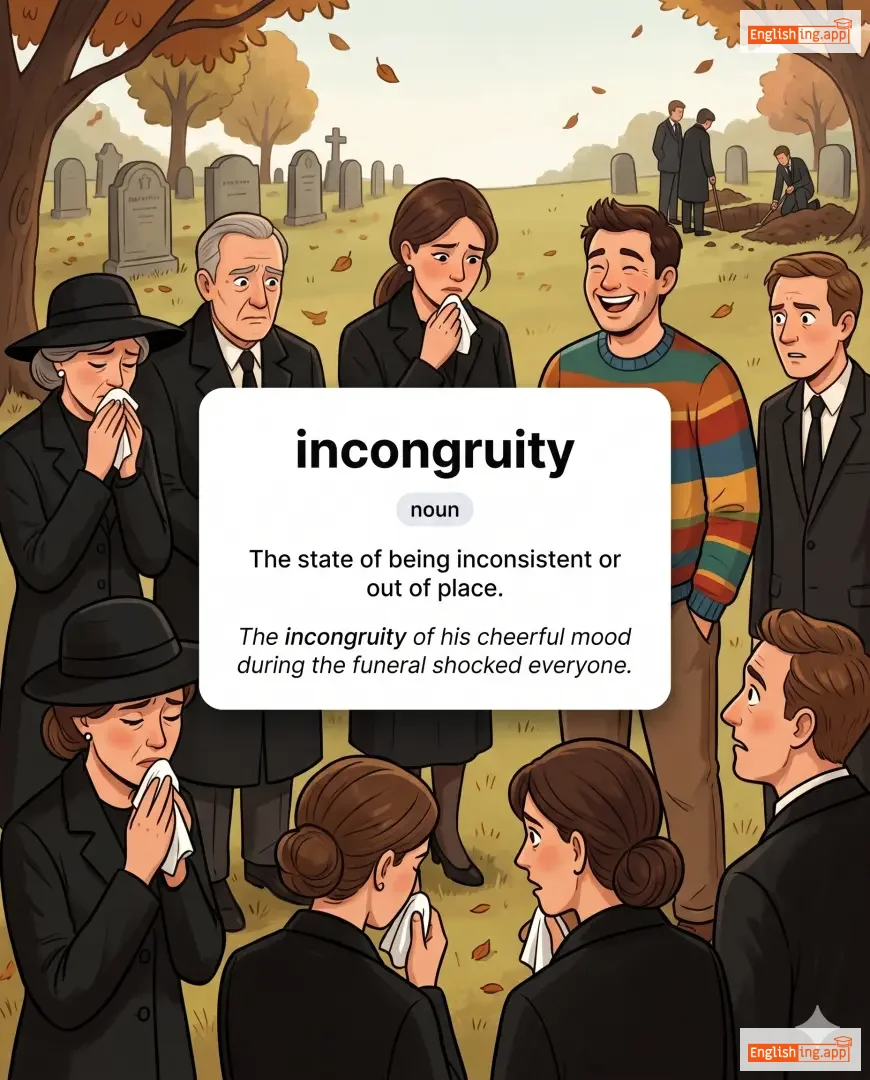
noun
/ˌɪnkənˈɡruːəti/
неконсистентность (nekonsistennost')

The state of being inconsistent or out of place.

"The incongruity of his cheerful mood during the funeral shocked everyone."

"Неконсистентность его веселого настроения во время похорон потрясла всех." (Nekonsistennost' ego vesyologo nastroeniya vo vremya pokhoron potryasla vsekh.)
adjective
/ɪnˈkɒŋɡruəs/
несоответствующий (nesootvetstvuyushchiy)

Not fitting in with or suitable for the surroundings.

"His jokes were incongruous during the serious meeting."
"Его шутки были несоответствующими во время серьезной встречи." (Yego shutki byli nesootvetstvuyushchimi vo vremya seryoznoy vstrechi.)
inconsequential definition card — visual illustration of the meaning
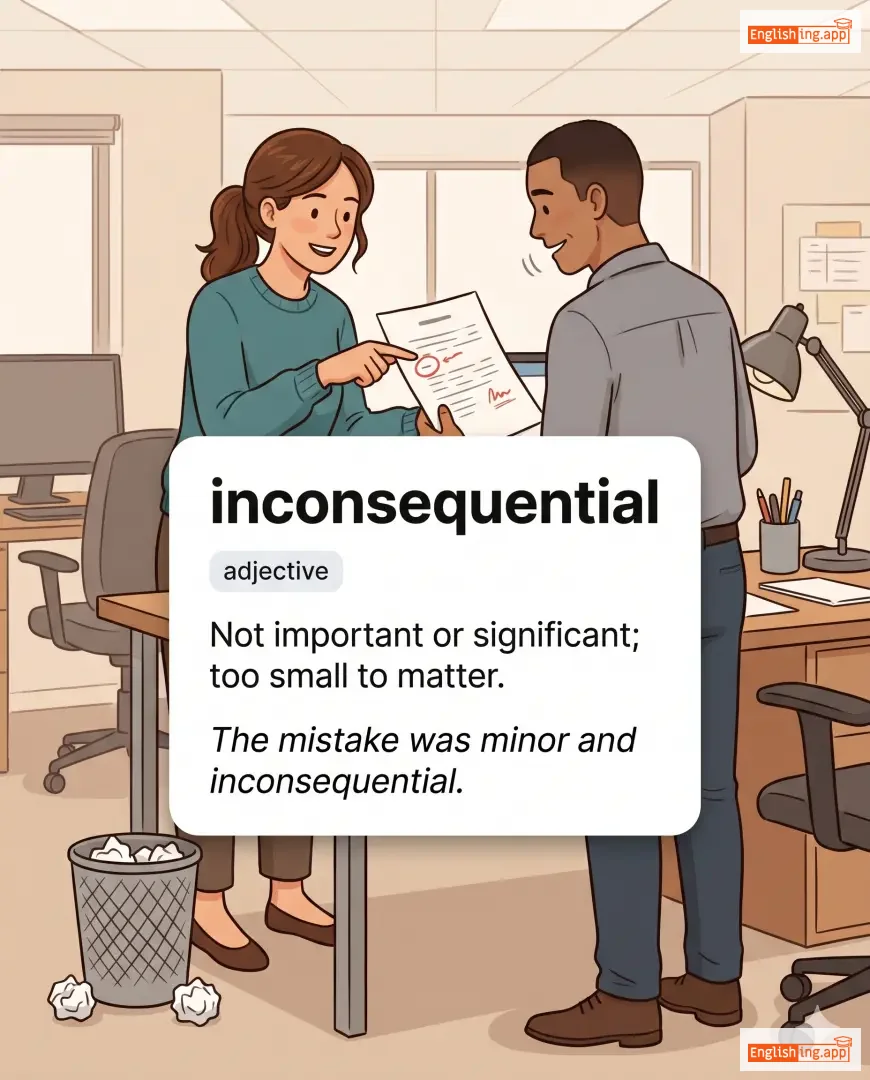
adjective
/ˌɪnˌkɒnsɪˈkwɛnʃəl/
незначительный (neznachitel'nyy)

Not important or significant; too small to matter.

"The mistake was minor and inconsequential."

"Ошибка была незначительной и несущественной." (Oshibka byla neznačitel'noj i nesushhestvennoj.)
adjective
/ˌɪnkənˈsɪdərəbl/
незначительный (neznachitel'nyy)

Too small or unimportant to be worth considering.

"The donation was not inconsiderable, though smaller than expected."

"Пожертвование было незначительным, хотя и меньше, чем ожидалось." (Pozhertvovanie bylo neznačitel'nym, hotya i men'she, chem ozhidalos'.)
adjective
/ˌɪnkənˈsɪdərət/
бесчувственный (beshchuvstvenny)

Thoughtless; showing a lack of concern for others.

"It was inconsiderate of him to play loud music late at night."

"Он был бесчувственным, когда играл громкую музыку поздно ночью." (On byl besschuvstvennym, kogda igral gromkuyu muzyku pozdno noch'yu.)
noun
/ˌɪnkənˈsɪstənsi/
несоответствие (nesootvetstvie)

The quality of being contradictory, irregular, or not staying the same.

"There is an inconsistency between his words and actions."

"Существует несоответствие между его словами и действиями." (Sushchestvuet nesootvetstvie mezhdu ego slovami i deystviyami.)
adjective
/ˌɪnkənˈsɪstənt/
непоследовательный (neposledovatel'nyy)

Not staying the same throughout; lacking harmony or regularity.

"His answers were inconsistent and confusing."

"Его ответы были непоследовательными и запутанными." (Ego otvety byli neposledovatel'nymi i zaputannymi.)
noun
/ɪnˈkɒnstənsi/
непостоянство (nepostoyanstvo)

The quality of changing frequently or being unreliable.

"The inconstancy of the weather makes planning difficult."

"Непостоянство погоды затрудняет планирование." (Nepostoyanstvo pogody zatrudnyaet planirovanie.)
adjective
/ɪnˈkɒnstənt/
непостоянный (nepostoyannyy)

frequently changing; not consistent or dependable

"His inconstant moods made it difficult to work with him."

"Его непостоянное настроение затрудняло работу с ним." (Yego nepostoyannoe nastroenie zatrudnyalo rabotu s nim.)
adjective
/ɪnˈkɒntɪnənt/
неконтролируемый (nekontroliruemyy)

lacking control over urination or defecation; lacking self-restraint

"The patient was incontinent after surgery."

"Пациент был неконтролируемым после операции." (Patsient byl nekontroliruemym posle operatsii.)
adjective
/ˌɪnkɒntrəˈvɜːtəbl/
неопровержимый (neopoverzhimy)

impossible to deny or dispute; unquestionable

"The evidence was incontrovertible and proved his innocence."

"Доказательства были неопровержимы и доказали его невиновность." (Dokazatel'stva byli neopoverzhimy i dokazali ego nevinovnost'.)
noun, verb
/ˌɪnkənˈviːniəns/
неудобство (neudobstvo)

trouble or difficulty caused to someone; to cause trouble or difficulty to someone

"We apologize for any inconvenience caused by the delay."

"Мы приносим извинения за любые неудобства, вызванные задержкой." (My prinosim izvineniya za lyubye neudobstva vyzvannye zaderzhkoy)
adjective
/ˌɪnkənˈviːniənt/
неудобный (neudobny)

causing trouble, difficulties, or discomfort

"It was inconvenient for her to travel during the storm."

"Ей было неудобно путешествовать во время шторма." (Eyi bylo neudobno puteshestvovat' vo vremya shtorma.)