词汇表

英语词汇词典 | 单词含义、定义和示例

verb
/ɪnˈfɛkt/
传染 (chuánrǎn)

To contaminate with a disease-causing organism.

"The virus can infect healthy people quickly."

"病毒可以迅速传染健康的人。" (Bìngdú kěyǐ xùnsù chuánrǎn jiànkāng de rén.)
noun
/ɪnˈfɛkʃən/
感染 (gǎnrǎn)

The process of becoming infected with harmful microorganisms such as bacteria or viruses.

"The doctor prescribed antibiotics to treat the infection."

"医生开了抗生素来治疗感染。" (Yisheng kai le kangshengsu lai zhiliao ganran.)
adjective
/ɪnˈfekʃəs/
传染性的; 有感染力的 (chuanranxing de; you ganranli de)

capable of causing infection or disease; spreading easily from one person to another; able to spread feelings or attitudes such as enthusiasm

"Her infectious laughter made everyone in the room smile."

"她富有感染力的笑声让大家都笑了。" (ta fu you ganranli de xiaosheng rang dajia dou xiao le)
adjective
/ˌɪnfəˈlɪsɪtəs/
不合适的 (bu he shi de)

not suitable or well chosen; awkward or unfortunate

"His infelicitous remark ruined the atmosphere of the meeting."
"他不合适的评论破坏了会议的氛围。" (Ta bu he shi de ping lun po huai le hui yi de fen wei.)
🤔

infer

verb
/ɪnˈfɜːr/

to conclude or deduce something from evidence and reasoning rather than from explicit statements

"From his silence, I inferred that he was not happy with the decision."

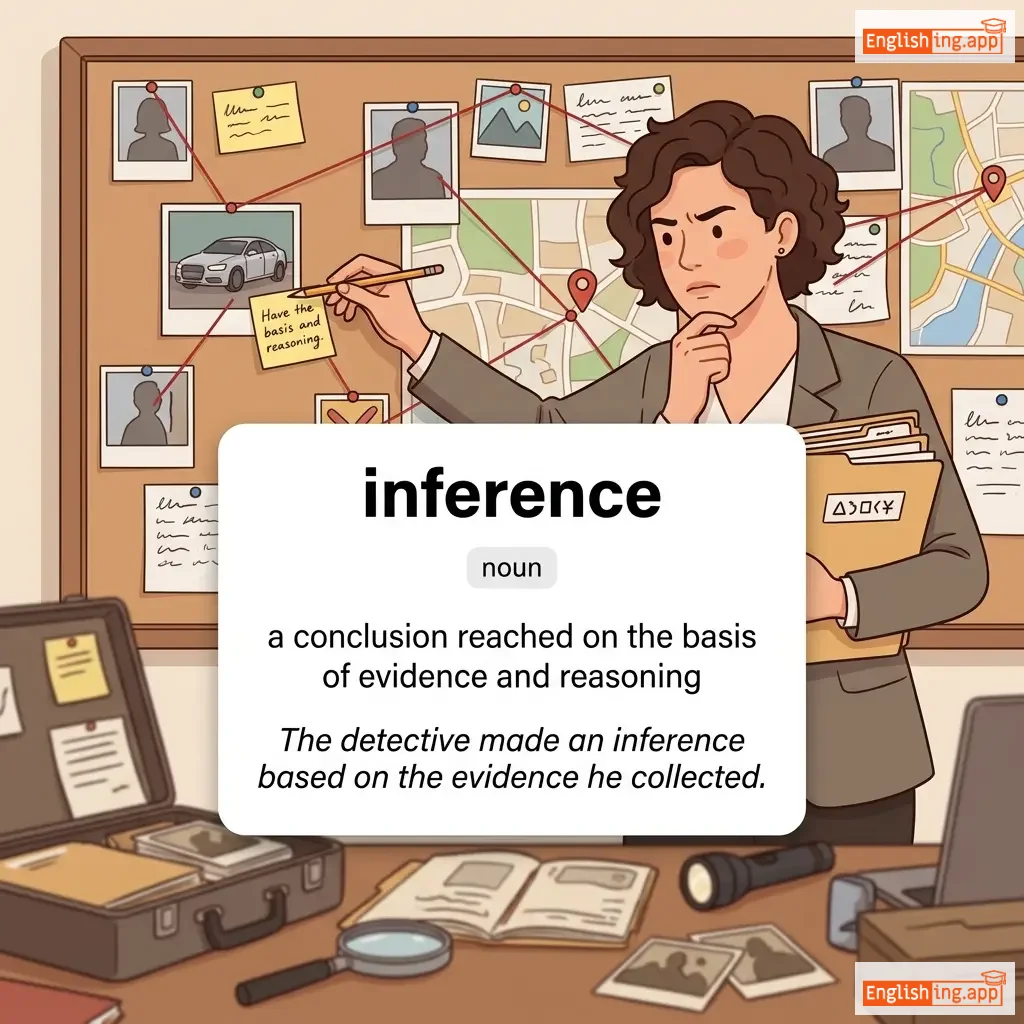
inference definition card — visual illustration of the meaning
noun
/ˈɪnfərəns/
推论 (tuilun)

a conclusion reached on the basis of evidence and reasoning

"The detective made an inference based on the evidence he collected."

"侦探根据他收集的证据做出了推论。" (zhēntàn gēnjù tā shōují de zhèngjù zuò chū le tuīlùn.)
adjective
/ɪnˈfɪə.ri.ər/
低级的 (diji de)

Of lower quality, rank, or status.

"This material is inferior to the one we used before."

"这种材料比我们之前用的差。" (Zhe zhong cailiao bi women zhiqian yong de cha.)
adjective
/ɪnˈfɜːrnəl/
地狱的 (dì yù de)

relating to hell; extremely troublesome or annoying

"The workers complained about the infernal noise from the construction site."

"工人们抱怨施工现场的地狱般噪音。" (Gōngrénmen bàoyuàn shīgōng xiànchǎng de dì yù bān zàoyīn.)
noun
/ɪnˈfɜːrnoʊ/
火灾 (huǒzāi)

a large, intense fire that is dangerously out of control

"The building turned into an inferno within minutes."

"这座建筑在几分钟内变成了火灾。" (Zhè zuò jiànzhú zài jǐ fēnzhōng nèi biàn chéngle huǒzāi.)
verb
/ɪnˈfɛst/
感染 (gǎn rǎn)

to overrun in large numbers, especially so as to cause damage or discomfort

"The old house was infested with rats."
"老房子被老鼠感染。" (Lǎo fángzi bèi lǎoshǔ gǎn rǎn.)
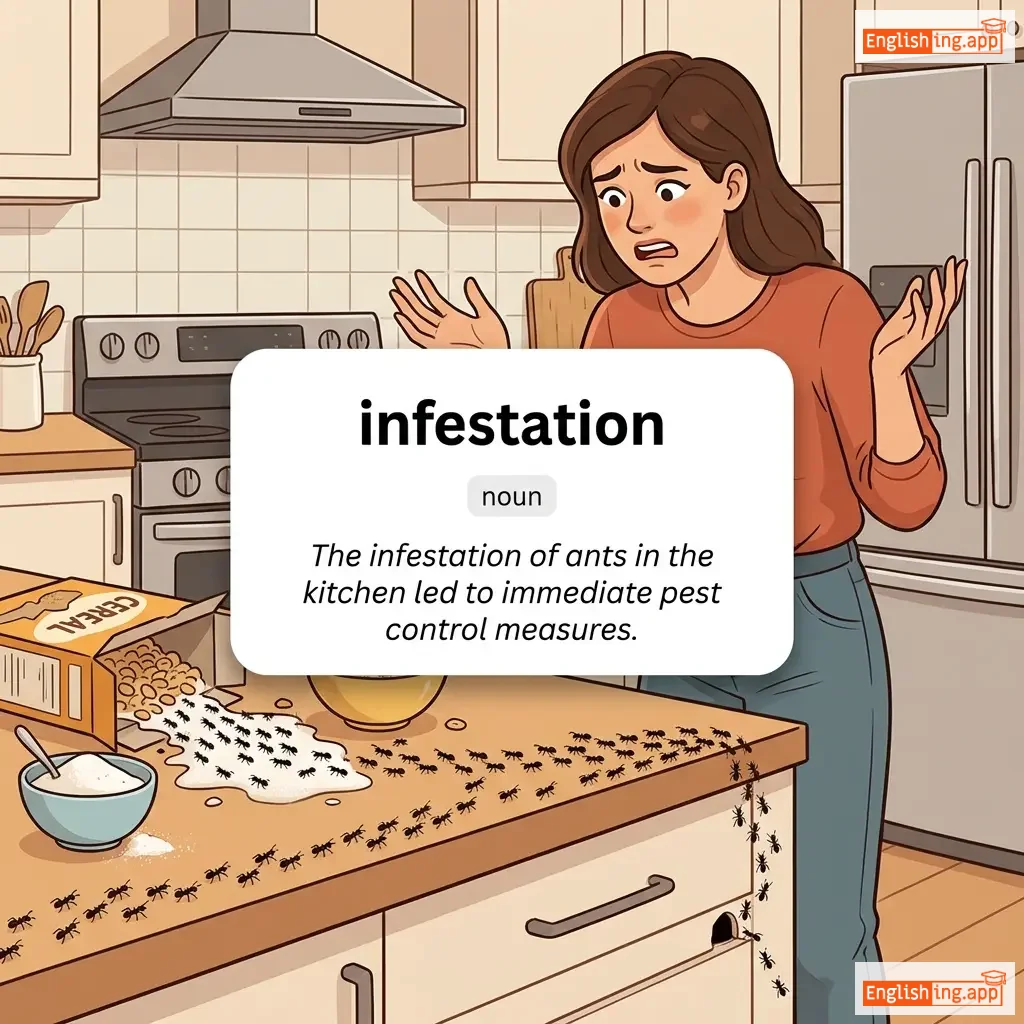
infestation definition card — visual illustration of the meaning
noun
ˌɪnfɛsˈteɪʃən
侵扰, 在某个地方出现异常大量的昆虫或动物 (qinrao, zai mou ge difang chuxian yichang daliao de kunchong huo dongwu)

The presence of an unusually large number of insects or animals in a place, causing damage or disease.

"The infestation of ants in the kitchen led to immediate pest control measures."

"厨房里蚂蚁的侵扰导致了立即采取害虫控制措施。" (Chufang li mayi de qinrao daozhi le liji caitiao haichong kongzhi cuoshi.)
noun
/ˈɪnfɪdɛl/
不信教者 (bù xìn jiào zhě)

a person who does not believe in a particular religion or faith

"In medieval times, people often called non-Christians infidels."

"在中世纪,人们常常称非基督徒为不信教者。" (Zài zhōng shìjì, rénmen chángcháng chēng fēi jīdū tú wéi bù xìn jiào zhě.)
noun
/ˌɪnfɪˈdɛləti/
不忠 (bù zhōng)

the act of being unfaithful to a spouse or partner

"Their marriage ended due to his infidelity."

"他们的婚姻因他的不忠而结束。" (Tāmen de hūnyīn yīn tā de bù zhōng ér jiéshù.)
verb
/ˈɪnfɪltreɪt/
渗透 (shèntòu)

to secretly enter or gain access to a place or group

"The spies managed to infiltrate the enemy base."
"间谍们设法渗透敌人基地。" (Jiàndiémén shèfǎ shèntòu dírén jīdì.)
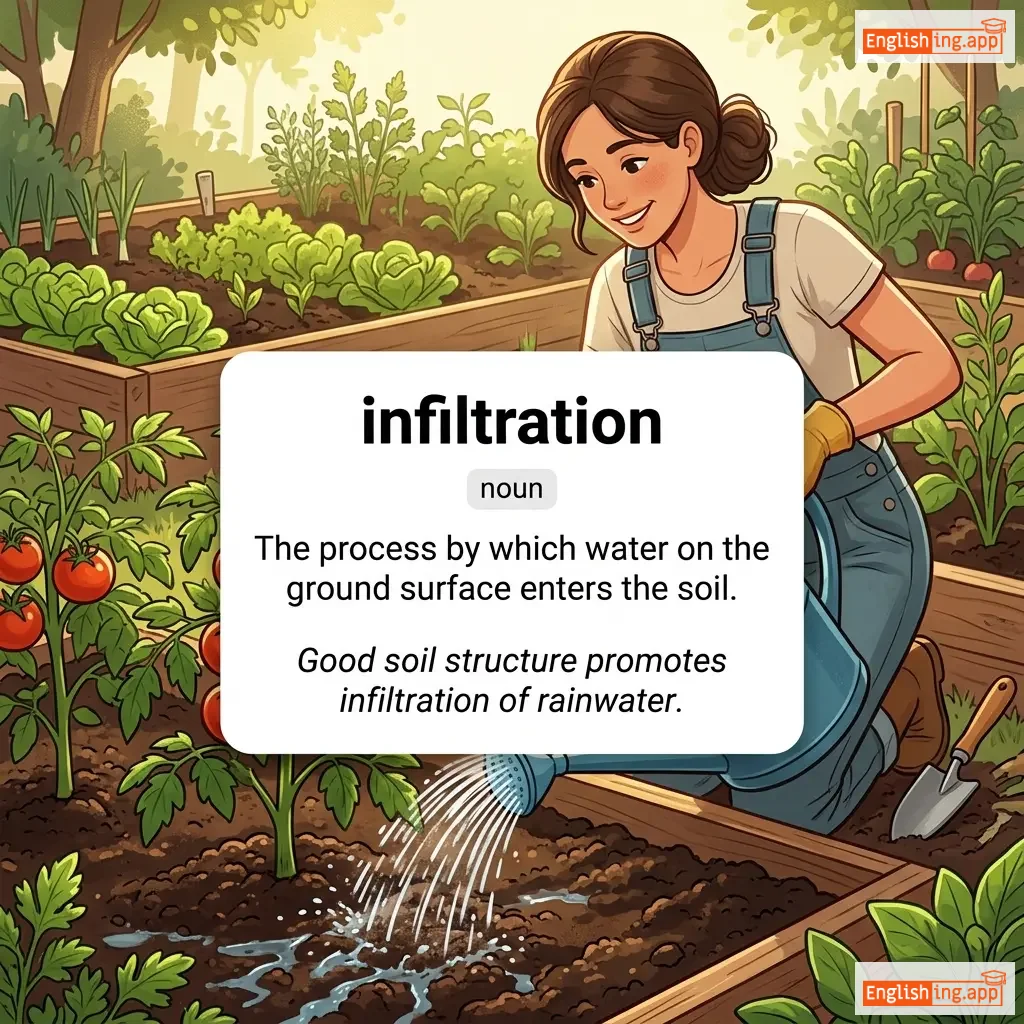
infiltration definition card — visual illustration of the meaning
noun
/ˌɪn.fɪlˈtreɪ.ʃən/
入渗 (infiltration)

The process by which water on the ground surface enters the soil.

"Good soil structure promotes infiltration of rainwater."

"良好的土壤结构促进雨水渗透到土壤中。" (liang hao de turang jiegou cujin yushui shentou dao turang zhong)
adjective
/ˈɪnfɪnɪt/
无限 (wúxiàn)

limitless or endless in space, extent, or number

"The universe is often described as infinite."

"宇宙常被描述为无限的。" (Yǔzhòu cháng bèi miáoshù wéi wúxiàn de.)
adjective
/ˌɪnfɪnɪˈtɛsɪməl/
微不足道 (wēi bù zú dào)

Extremely small in size or amount; so tiny as to be almost negligible.

"The error was so infinitesimal that it didn’t affect the results."

"这个错误如此微不足道,以至于没有影响结果。" (Zhège cuòwù rúcǐ wēi bù zú dào, yǐ zhì yú méiyǒu yǐngxiǎng jiéguǒ.)
noun
/ɪnˈfɪnɪti/
无限 (wuxian)

A concept describing something without any limit or end.

"The universe seems to stretch into infinity."

"宇宙似乎无限延伸。" (yǔzhòu shìhū wúxiàn yánshēn.)
adjective
/ɪnˈfɜːm/
虚弱 (xūruò)

Weak, especially due to old age or illness.

"The infirm old man needed assistance to walk."

"那位虚弱的老人需要帮助才能走路。" (Nà wèi xūruò de lǎorén xūyào bāngzhù cáinéng zǒulù.)
adjective
/ˌhæpi ɡoʊ ˈlʌki/
无忧无虑的,轻松的,无忧的 (wú yōu wú lǜ de, qīngsōng de, wú yōu de)

cheerfully unconcerned about the future; carefree

"She has a happy-go-lucky attitude and never worries about tomorrow."
"她有着无忧无虑的态度,从不担心明天。" (Tā yǒuzhe wú yōu wú lǜ de tàidù, cóng bù dānxīn míngtiān.)
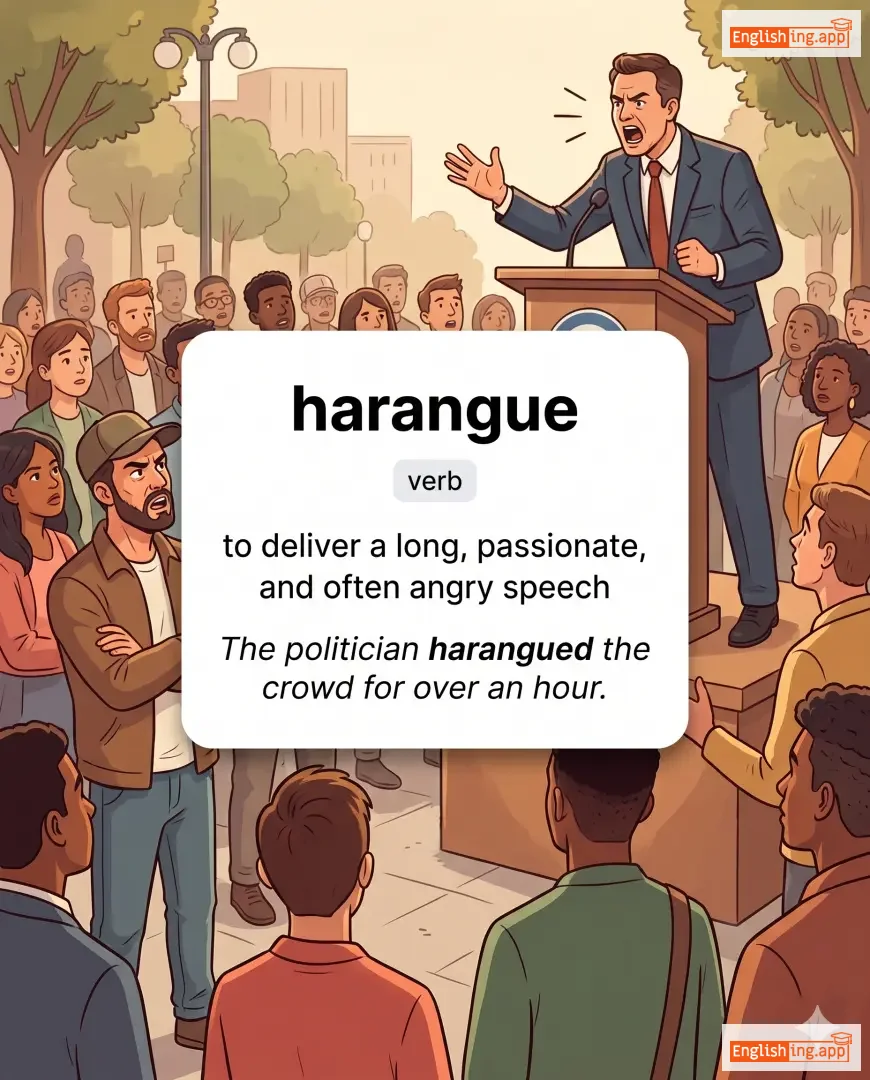
harangue definition card — visual illustration of the meaning
verb
/həˈræŋ/
进行冗长而愤怒的演讲 (jìnxíng rǒngcháng ér fènnù de yǎnjiǎng)

to deliver a long, passionate, and often angry speech

"The politician harangued the crowd for over an hour."

"政治家对人群进行了超过一小时的演讲。" (Zhèngzhìjiā duì rénqún jìnxíngle chāoguò yī gè xiǎoshí de yǎnjiǎng.)
verb
/həˈræs/

to annoy or trouble someone repeatedly in an aggressive or persistent way

"The journalist claimed she was being harassed online."

noun
/həˈræsmənt/
骚扰 (saorao)

aggressive pressure or intimidation; unwanted and repeated behavior causing discomfort

"The company has a strict policy against workplace harassment."

"公司对职场骚扰有严格的政策。" (Gōngsī duì zhíchǎng sāorǎo yǒu yángé de zhèngcè.)
noun
/ˈhɑːrbɪndʒər/
先兆 (xiānzhào)

a person or thing that announces or signals the approach of another

"The sudden drop in temperature was a harbinger of winter."
"温度的突然下降是冬天的先兆。" (Wēndù de túrán xiàjiàng shì dōngtiān de xiānzhào.)
noun, verb
/ˈhɑːrbər/

noun: a place on the coast where ships may find shelter; verb: to keep (a thought or feeling, often negative) in one's mind

"He continued to harbor resentment towards his former boss."

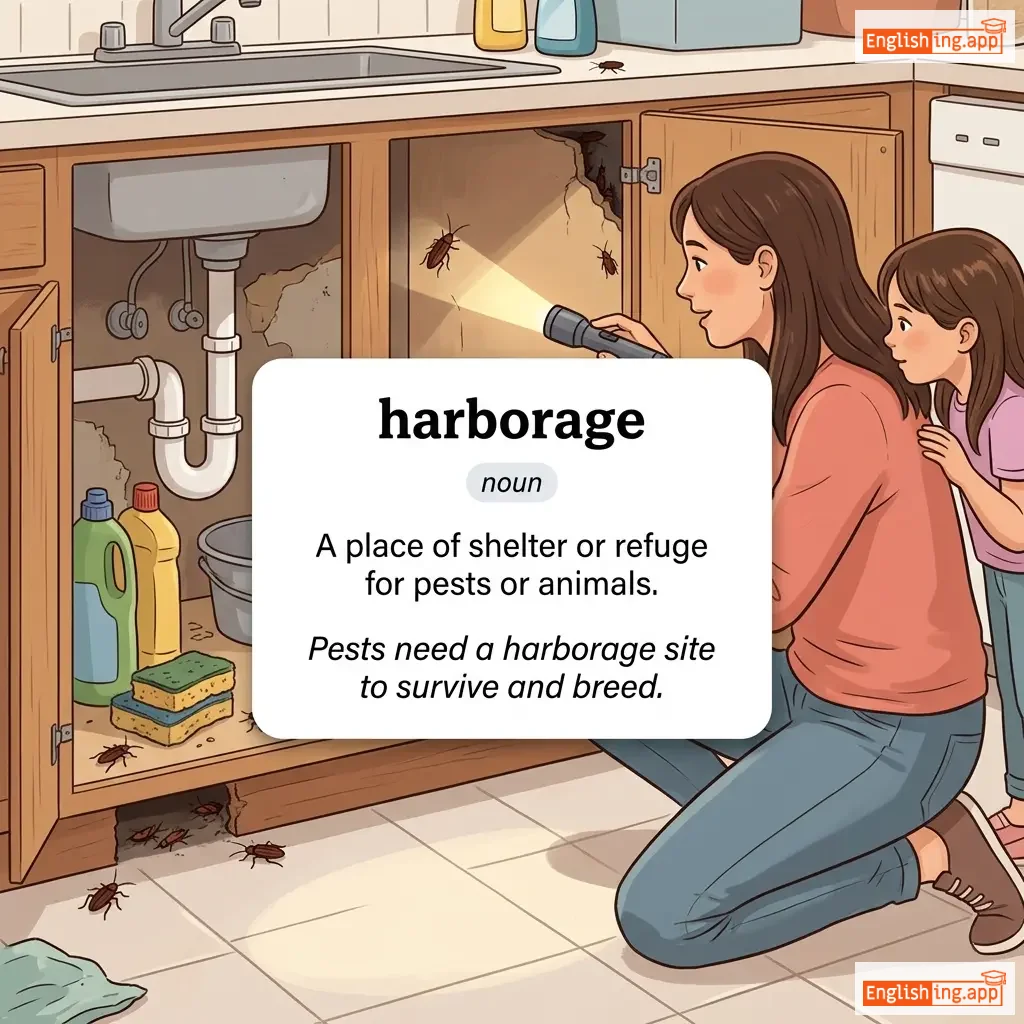
harborage definition card — visual illustration of the meaning
noun
ˈhɑːrbərɪdʒ
藏身处 (cángshēn chù)

A place of shelter or refuge for pests or animals.

"Pests need a harborage site to survive and breed."

"害虫需要一个藏身处来生存和繁殖。" (hàichóng xūyào yīgè cángshēn chù lái shēngcún hé fánzhí.)
noun
/ˈhɑːr.bər/
港口 (gangkou)

a place on the coast where vessels may find shelter; a place of safety or refuge

"The fishing boats returned safely to the harbour before the storm hit the coastline."

"渔船在风暴袭击海岸之前安全地回到了港口。" (Yúchuán zài fēngbào xíjī hǎi'àn zhīqián ānquán de huídào le gǎngkǒu.)
adjective
/hɑːrd/
困难 (kunnan)

solid, firm, or difficult to do or endure

"The exam was very hard for most students."

"对大多数学生来说,考试非常困难。" (Dui dashu xuesheng laishuo, kao shi feichang kunnan.)
adjective
/ˌhɑːrdˈbɪtn̩/
坚韧且经验丰富 (jiān rèn qiě jīng yàn fēng fù)

tough and experienced, not easily affected by emotions or hardship

"The hard-bitten detective showed no sign of surprise at the crime scene."

"那个经验丰富的侦探在犯罪现场毫无惊讶之情。" (Na ge jing yan feng fu de zhen tan zai fan zui xian chang hao wu jing ya zhi qing.)
adjective
/ˌhɑːrdˈhɑːrtɪd/
冷酷无情 (lěngkù wúqíng)

showing no kindness or sympathy; cruel

"The landlord was hard-hearted and refused to help the poor family."

"房东是个冷酷无情的人,拒绝帮助贫困家庭。" (Fángdōng shì gè lěngkù wúqíng de rén, jùjué bāngzhù pínkùn jiātíng.)
noun
/ˈhɑːdɪhʊd/
勇气,胆量 (yǒngqì, dǎnliàng)

Courage, boldness, or daring behavior; also physical robustness.

"The mountaineer's hardihood impressed the entire team."

"登山者的硬气打动了整个团队。" (Dēngshān zhě de yìngqì dǎdòngle zhěnggè tuánduì.)
adverb
/ˈhɑːrdli/
几乎不 (jīhū bù)

almost not; scarcely

"She could hardly believe her eyes."

"她几乎不敢相信自己的眼睛。" (Tā jīhū bù gǎn xiāngxìn zìjǐ de yǎnjīng.)
noun
/ˈhɑːrd.ʃɪp/
困境,痛苦 (kùnjìng, tòngkǔ)

severe suffering or privation; difficulty or distress

"Despite facing many hardships during the war, the family remained united and hopeful."

"尽管在战争期间经历了许多困难,家庭依然保持团结和希望。" (Jǐnguǎn zài zhànzhēng qījiān jīnglì le xǔduō kùnnán, jiātíng yīrán bǎochí tuánjié hé xīwàng.)
noun
/ˈhɑːrdˌwɛr/
硬件 (yingjiane)

the physical parts of a computer or electronic system, such as the monitor, keyboard, and processor

"The company upgraded its computer hardware to improve performance."

"公司升级了计算机硬件以提高性能。" (gongsi shengji le jisuanji yingjiane yi tigao xingneng.)
adjective
/ˈhɑːrdi/
坚韧,强健 (jianren, qiangjian)

Strong, robust, and capable of enduring difficult conditions.

"Hardy plants can survive the harsh winter."
"坚韧的植物能在严寒的冬季生存。" (Jianren de zhiwu neng zai yankan de dongji shengcun.)
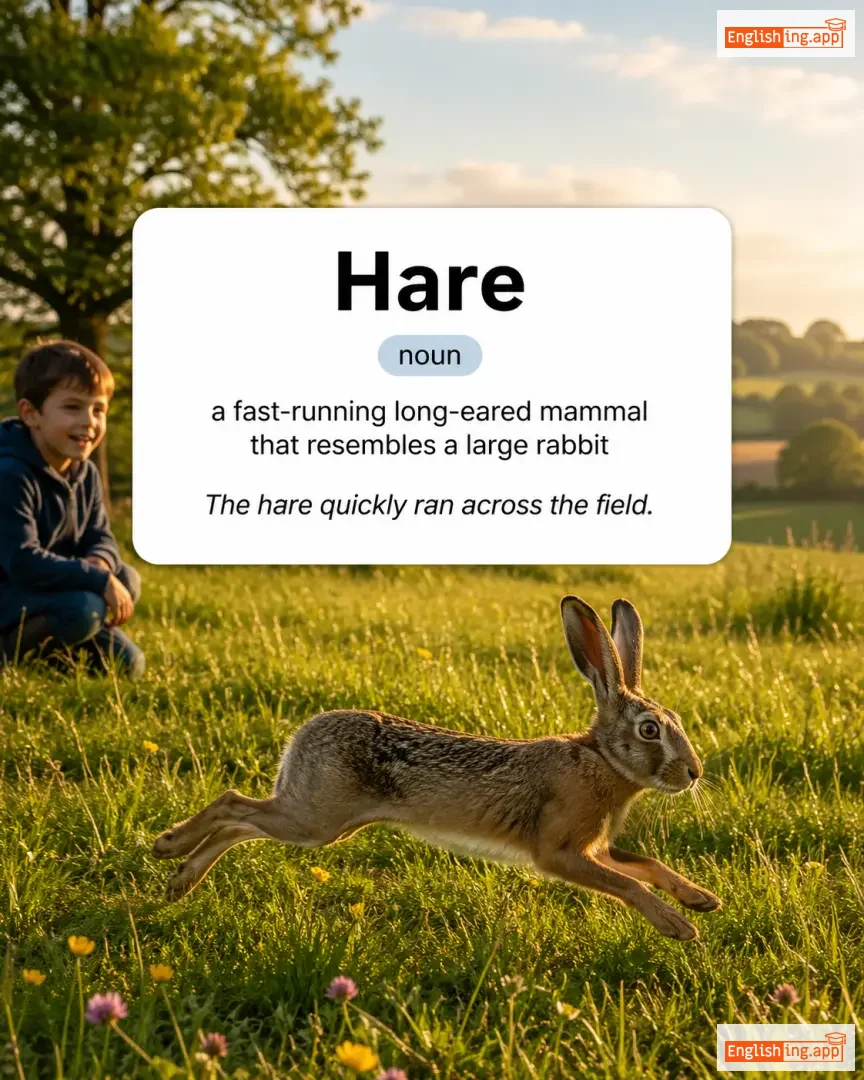
Hare definition card — visual illustration of the meaning
noun
/heə(r)/
野兔 (yětù)

a fast-running long-eared mammal that resembles a large rabbit

"The hare quickly ran across the field."

"这只野兔快速地跑过田野。" (Zhè zhī yětù kuàisù de pǎo guò tiányě)
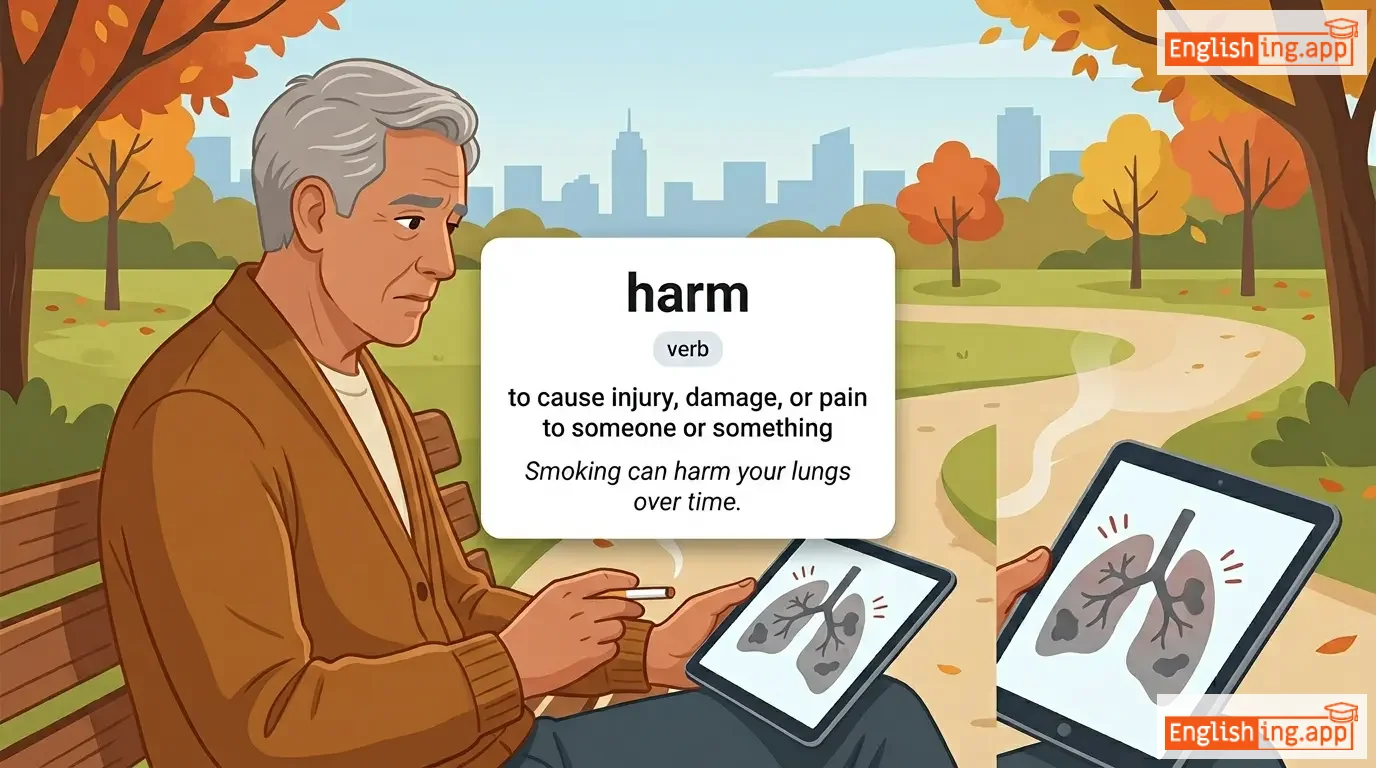
harm definition card — visual illustration of the meaning
verb
/hɑːrm/
伤害 (shanghai)

to cause injury, damage, or pain to someone or something

"Smoking can harm your lungs over time."

"吸烟会随着时间对你的肺部造成伤害。" (Xiyan hui suizhe shijian dui nide feibu zaocheng shanghai.)
adjective
/ˈhɑːrmfəl/
有害的 (yǒuhài de)

causing or likely to cause harm; damaging

"Smoking is harmful to your health."

"吸烟对健康有害。" (Xīyān duì jiànkāng yǒuhài.)
adjective
/ˈhɑːrmləs/
无害的; 无辜的; 安全的 (wúhài de; wúgū de; ānquán de)

not able or likely to cause harm; innocent; safe

"The snake looks dangerous but it's actually harmless."
"蛇看起来很危险,但它实际上是无害的。" (Shé kàn qǐlái hěn wēixiǎn, dàn tā shíjì shang shì wúhài de.)
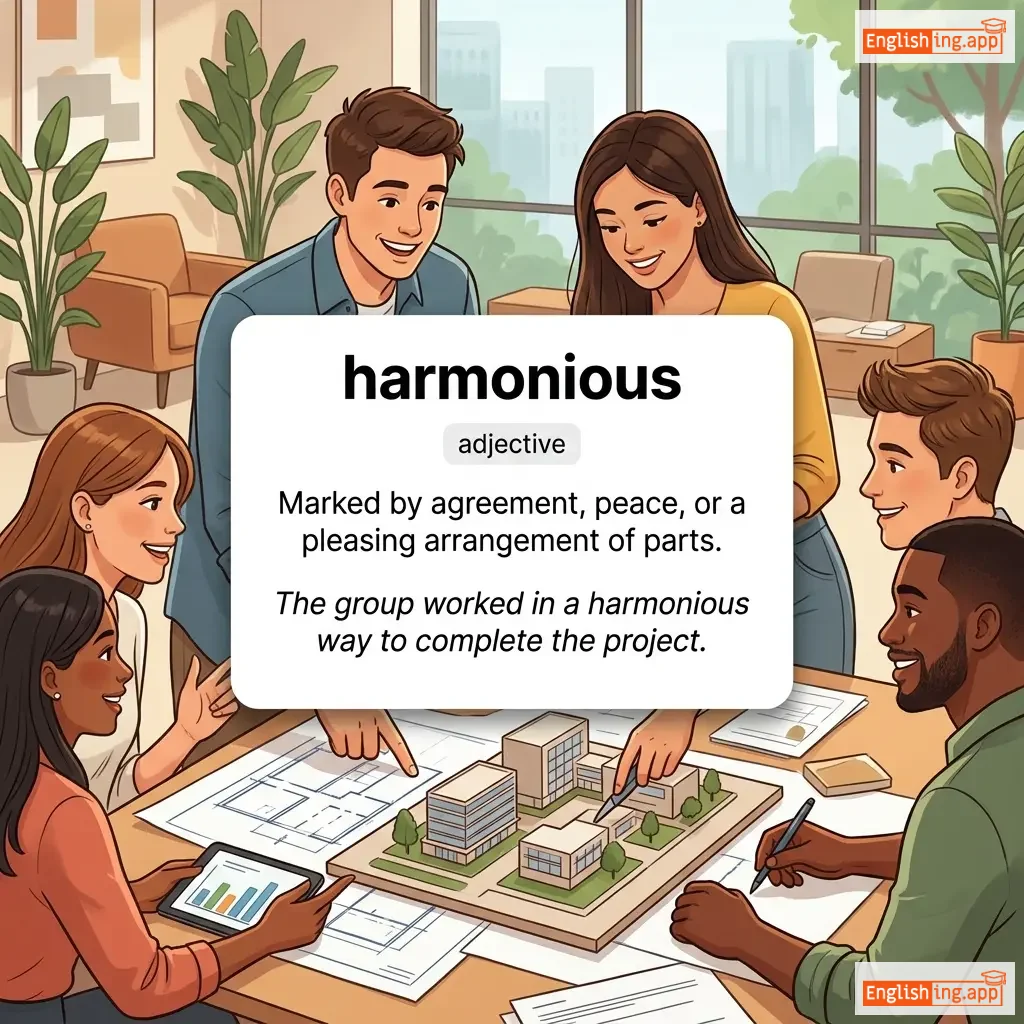
harmonious definition card — visual illustration of the meaning
adjective
/hɑːrˈmoʊniəs/
和谐的, 和谐 (hexie de, hexie)

Marked by agreement, peace, or a pleasing arrangement of parts.

"The group worked in a harmonious way to complete the project."
"小组以和谐的方式工作,以完成项目。" (Xiaozu yi hexie de fangshi gongzuo, yi wancheng xiangmu.)
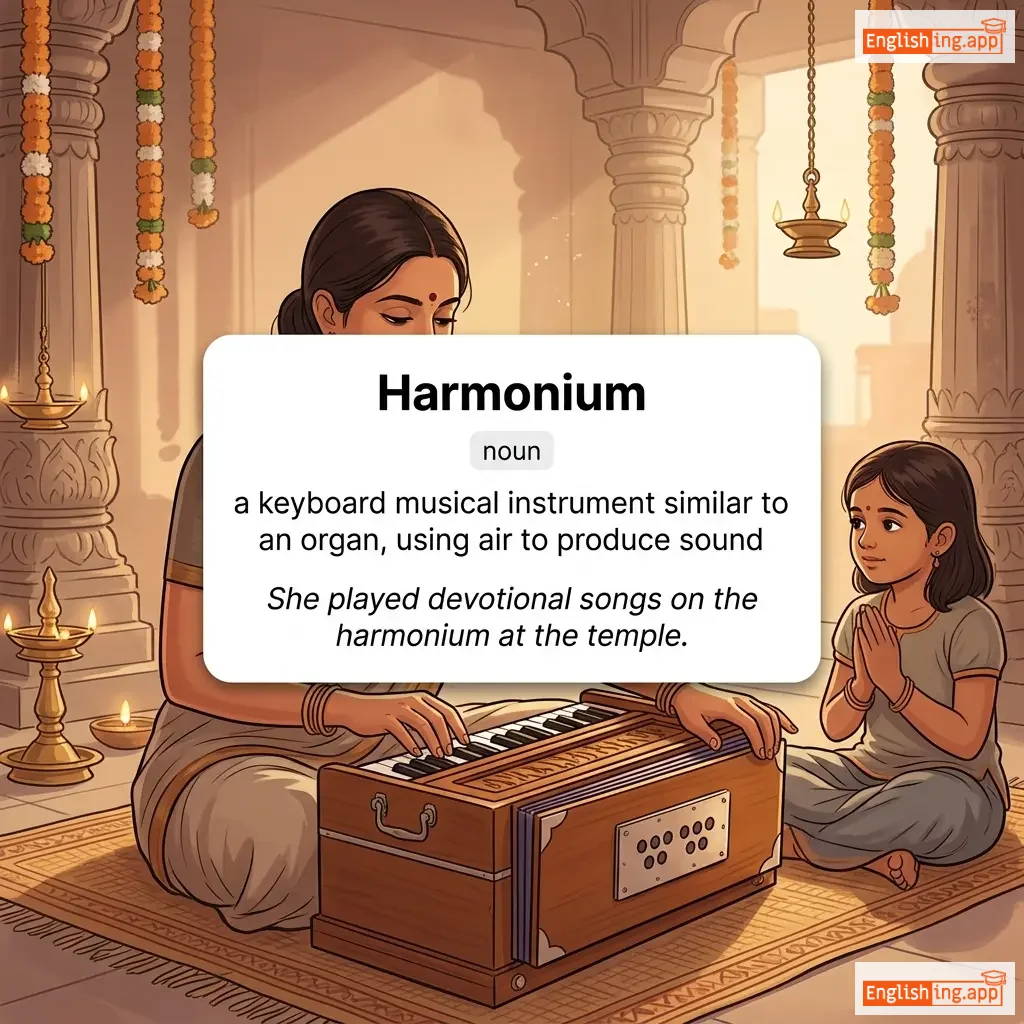
Harmonium definition card — visual illustration of the meaning
noun
/hɑrˈmoʊniəm/
风琴 (harmonium)

a keyboard musical instrument similar to an organ, using air to produce sound

"She played devotional songs on the harmonium at the temple."

"她在寺庙用风琴演奏虔诚的颂歌。" (ta zai si miao yong fengqin yan zou qian cheng de song ge)
harmonization definition card — visual illustration of the meaning
noun
/ˌhɑːmənaɪˈzeɪʃən/
协调,调和 (xie tiao, tiao he)

The process of making things compatible or consistent with one another.

"The harmonization of different policies ensures consistent results."
"不同政策的协调确保了一致的结果。" (Bu tong zheng ce de xie tiao que bao le yi zhi de jie guo.)
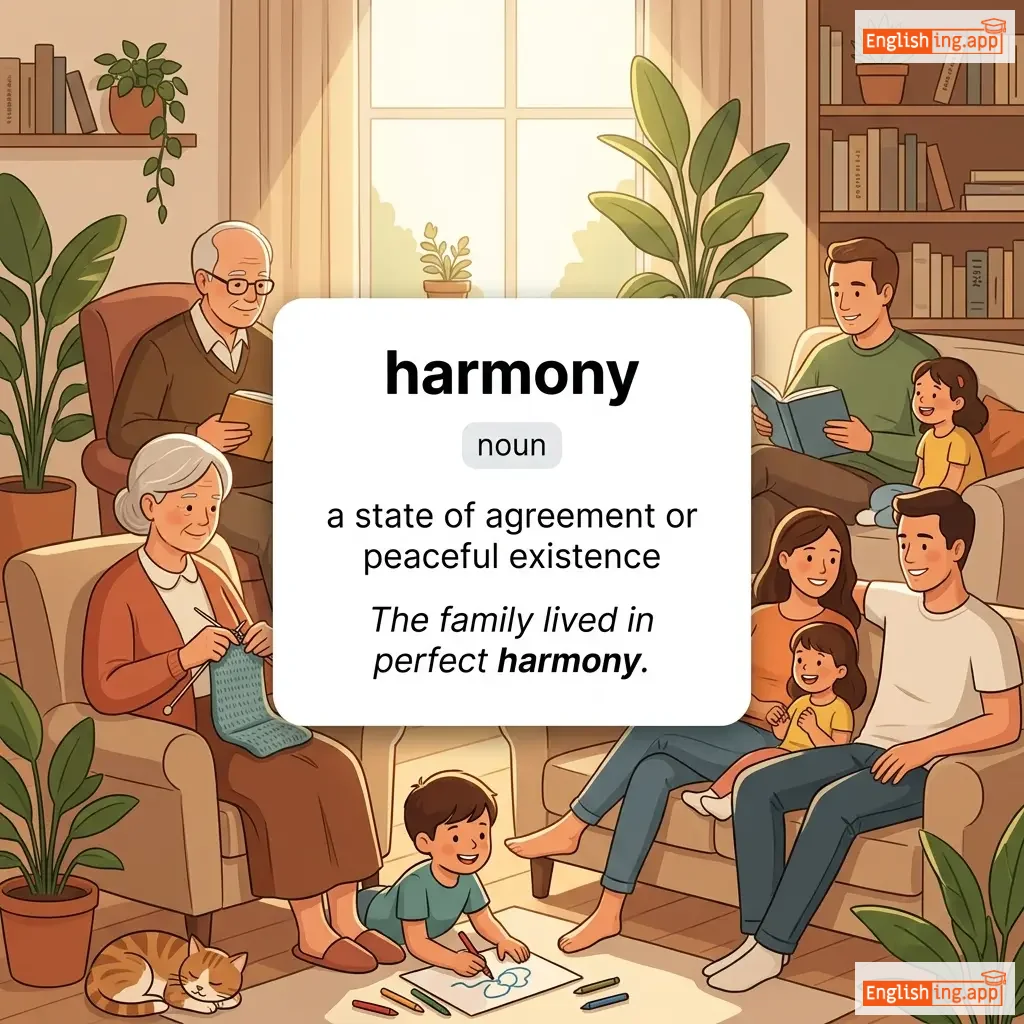
harmony definition card — visual illustration of the meaning
noun
/ˈhɑːrməni/
和谐 (hexie)

a state of agreement or peaceful existence

"The family lived in perfect harmony."

"这个家庭生活在完全和谐中。" (Zhège jiātíng shēnghuó zài wánquán héxié zhōng.)
verb
/ˈhɑːrnɪs/

To control and make use of natural resources, especially energy.

"Scientists are working to harness solar power effectively."

Harp definition card — visual illustration of the meaning
verb
/hɑːrp/
反复抱怨,唠叨 (fǎn fù bào yuàn, lāo dāo)

To dwell on or complain about something persistently.

"He kept harping on the same mistake over and over."

"他一直在反复抱怨同一个错误。" (Tā yī zhí zài fǎn fù bào yuàn tóng yī gè cuò wù.)
verb
/ˈhɑːrpɪŋ/
不断抱怨 (bùduàn bàoyuàn)

continuously talking or complaining about something in a tiresome way

"She kept harping on about the mistakes I made."

"她不断抱怨我做的错事。" (Tā bùduàn bàoyuàn wǒ zuò de cuòshì.)
adjective
/ˈhæriːd/
感到压力或忙碌 (gǎndào yālì huò mánglù)

feeling strained or stressed due to being overworked or constantly bothered

"The harried teacher struggled to calm the noisy classroom."

"感到压力的老师努力让嘈杂的教室安静下来。" (Gǎndào yālì de lǎoshī nǔlì ràng cáozá de jiàoshì ānjìng xiàlái.)
verb
/ˈhæroʊ/
折磨 / 耙 (zhemo / ba)

to cause distress or torment; also to break up and smooth soil with a farm tool

"The tragic news harrowed the entire family."
"悲惨的消息让全家人都痛苦不堪。" (Beican de xiaoxi rang quanjia ren dou tongku bikan.)
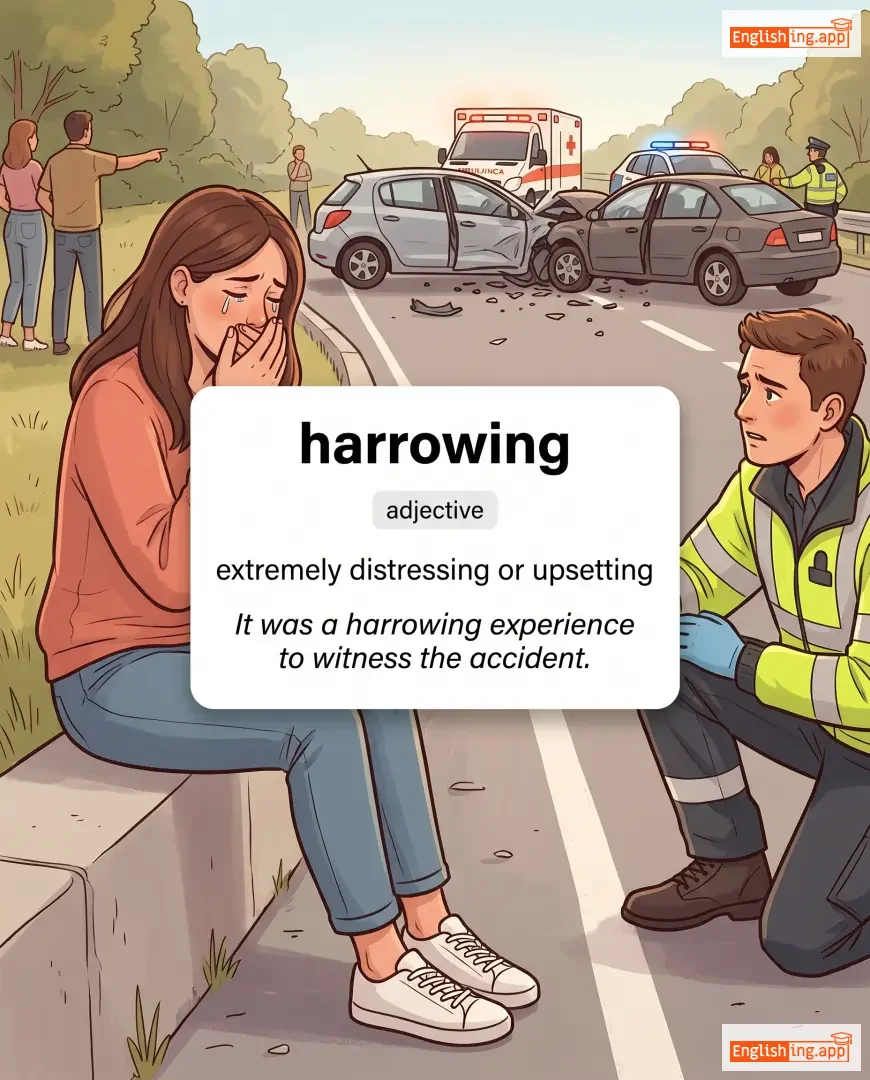
harrowing definition card — visual illustration of the meaning
adjective
/ˈhær.oʊ.ɪŋ/
令人痛苦的和可怕的 (lìng rén tòngkǔ de hé kěpà de)

extremely distressing or upsetting

"It was a harrowing experience to witness the accident."

"目睹事故是一次令人痛苦的经历。" (Mùdǔ shìgù shì yīcì lìng rén tòngkǔ de jīnglì.)
verb
/ˈhæri/
骚扰, 追扰 (saorao, zhuirao)

to constantly attack, harass, or annoy

"The army harried the enemy with sudden raids."

"军队通过突袭不断攻击敌人。" (Jundui tongguo tuxi buduan gongji diren.)