वोकैबुलरीज

इंग्लिश वोकैबुलरी डिस्कवर, लर्न और मास्टर करें

verb
/ɪnˈfɛkt/
संक्रमित करना (sankramit karna)

To contaminate with a disease-causing organism.

"The virus can infect healthy people quickly."

"वायरस स्वस्थ लोगों को जल्दी संक्रमित कर सकता है।" (Virus swasth logon ko jaldi sankramit kar sakta hai.)
noun
/ɪnˈfɛkʃən/
संक्रमण (sankraman)

The process of becoming infected with harmful microorganisms such as bacteria or viruses.

"The doctor prescribed antibiotics to treat the infection."

"डॉक्टर ने संक्रमण का इलाज करने के लिए एंटीबायोटिक्स लिखे।" (Doktor ne sankraman ka ilaaj karne ke liye antibiotics likhe.)
adjective
/ɪnˈfekʃəs/
संक्रामक (sankramak)

capable of causing infection or disease; spreading easily from one person to another; able to spread feelings or attitudes such as enthusiasm

"Her infectious laughter made everyone in the room smile."

"उसकी संक्रामक हँसी ने सबको हँसा दिया।" (uski sankramak hansi ne sabko hansa diya)
adjective
/ˌɪnfəˈlɪsɪtəs/
अवांछनीय (avanchaniya)

not suitable or well chosen; awkward or unfortunate

"His infelicitous remark ruined the atmosphere of the meeting."

"उसकी अवांछनीय टिप्पणी ने बैठक के माहौल को खराब कर दिया।" (Uski avanchaniya tippani ne baithak ke maahol ko kharaab kar diya.)
verb
/ɪnˈfɜːr/
अनुमान करना (anumaan karna)

to conclude or deduce something from evidence and reasoning rather than from explicit statements

"From his silence, I inferred that he was not happy with the decision."

"उसकी चुप्पी से, मैंने अनुमान लगाया कि वह निर्णय से खुश नहीं था।" (uski chuppi se, maine anumaan lagaya ki wah nirnaya se khush nahin tha.)
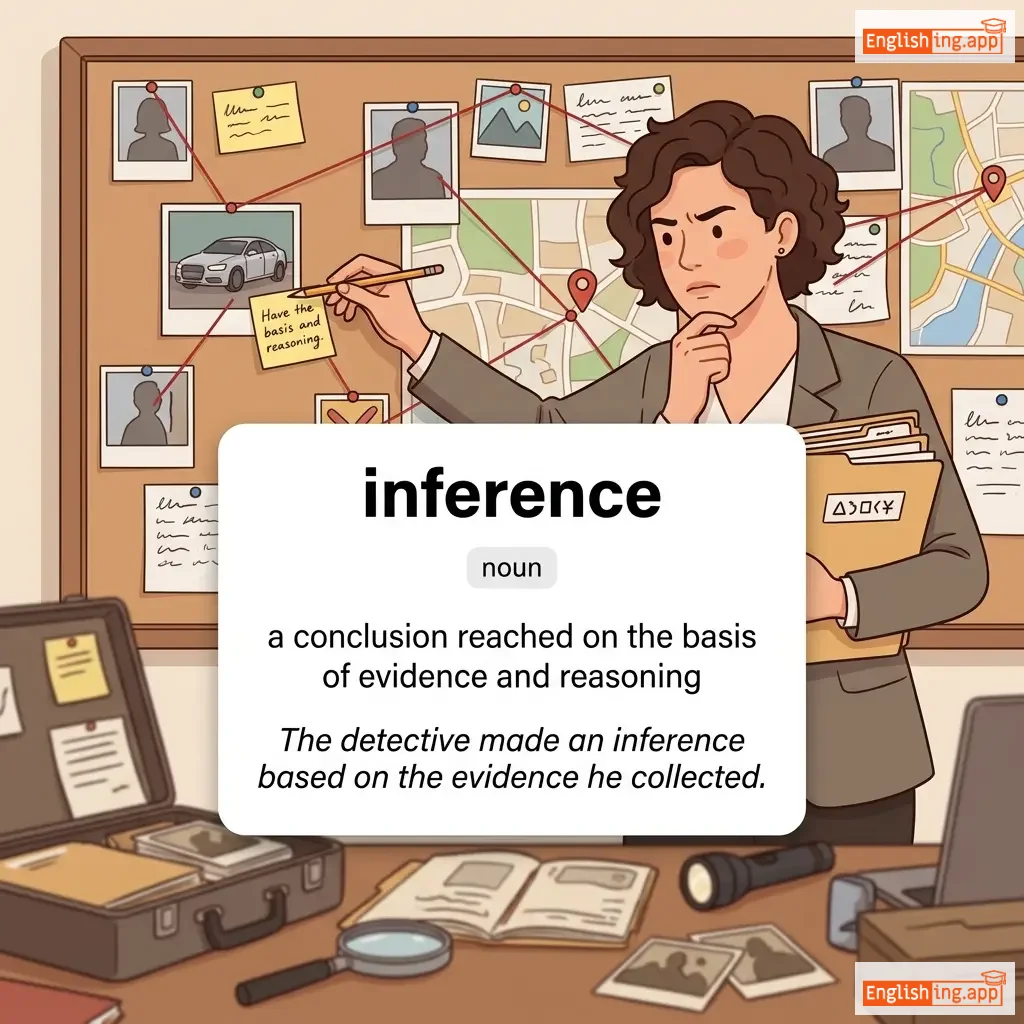
inference definition card — visual illustration of the meaning
noun
/ˈɪnfərəns/
अनुमान (anumaan)

a conclusion reached on the basis of evidence and reasoning

"The detective made an inference based on the evidence he collected."

"जासूस ने जो साक्ष्य इकट्ठा किया था, उसके आधार पर एक अनुमान लगाया।" (jaasoos ne jo saakshya ikattha kiya tha, uske aadhaar par ek anumaan lagaya.)
adjective
/ɪnˈfɪə.ri.ər/
निचला (nichla)

Of lower quality, rank, or status.

"This material is inferior to the one we used before."

"यह सामग्री पहले इस्तेमाल किए गए से निचली है।" (Yeh samagri pehle istemal kiye gaye se nichli hai.)
adjective
/ɪnˈfɜːrnəl/
नरक संबंधी (narak sambandhi)

relating to hell; extremely troublesome or annoying

"The workers complained about the infernal noise from the construction site."

"कर्मचारियों ने निर्माण स्थल से होने वाली नर्क जैसी आवाज़ों के बारे में शिकायत की।" (karmachariyon ne nirman sthal se hone wali nark jaisi aawazon ke baare mein shikayat ki.)
noun
/ɪnˈfɜːrnoʊ/
अग्निकांड (agnikand)

a large, intense fire that is dangerously out of control

"The building turned into an inferno within minutes."

"भवन कुछ ही मिनटों में एक अग्निकांड में बदल गया।" (bhavan kuch hi minaton mein ek agnikand mein badal gaya.)
verb
/ɪnˈfɛst/
प्रकोपित करना (prakopit karna)

to overrun in large numbers, especially so as to cause damage or discomfort

"The old house was infested with rats."

"पुराना घर चूहों से प्रकोपित था।" (Purana ghar chuhon se prakopit tha.)
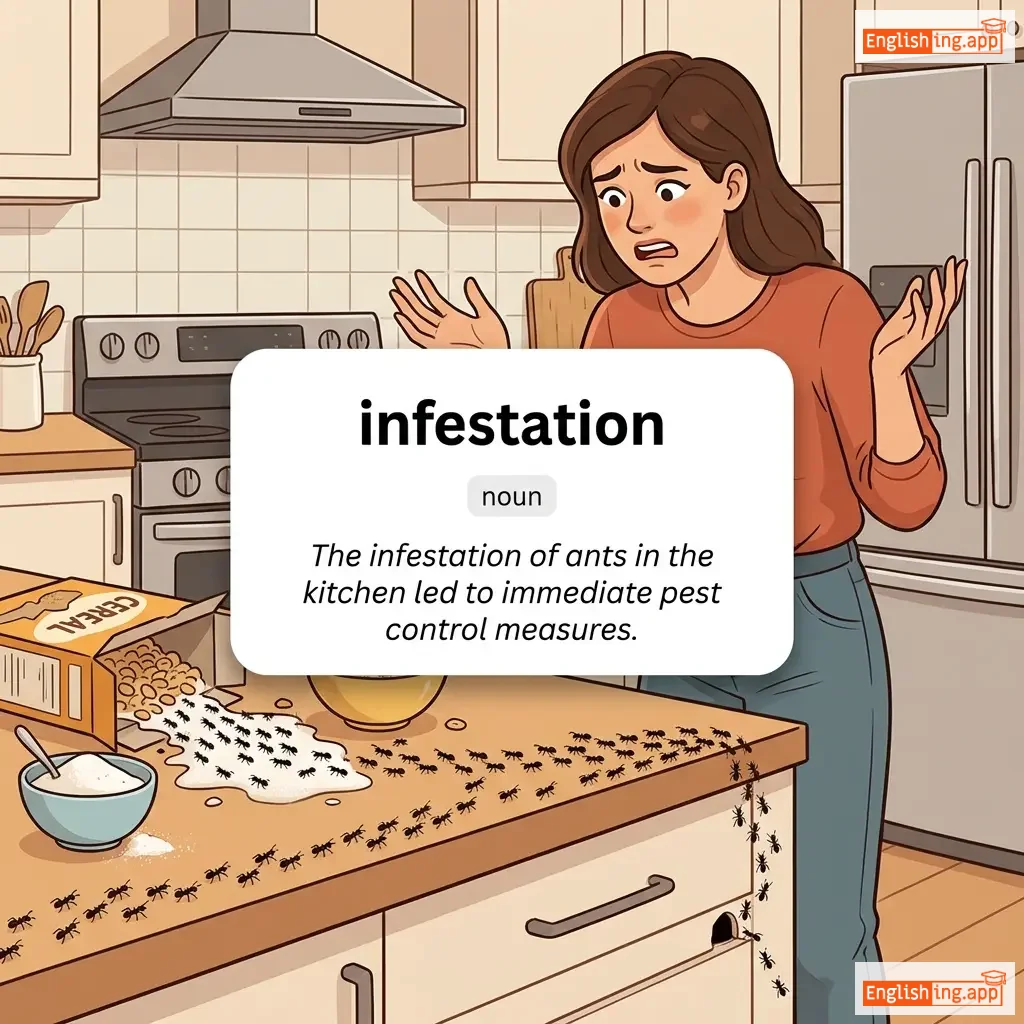
infestation definition card — visual illustration of the meaning
noun
ˌɪnfɛsˈteɪʃən
संक्रमण, कीड़ों या जानवरों की अत्यधिक संख्या का होना (sankraman, kidon ya janwaron ki atyadhik sankhya ka hona)

The presence of an unusually large number of insects or animals in a place, causing damage or disease.

"The infestation of ants in the kitchen led to immediate pest control measures."

"रसोई में चींटियों का संक्रमण तुरंत कीट नियंत्रण उपायों की ओर ले गया।" (Rasoi mein cheentiyon ka sankraman turant keet niyantran upayon ki or le gaya.)
noun
/ˈɪnfɪdɛl/
अविश्वासी (avishwasi)

a person who does not believe in a particular religion or faith

"In medieval times, people often called non-Christians infidels."

"मध्यकाल में लोग अक्सर गैर-ईसाईयों को अविश्वासी कहते थे।" (Madhyakal mein log aksar gair-eesaiyon ko avishwasi kahte the.)
noun
/ˌɪnfɪˈdɛləti/
विश्वासघात (vishwasghat)

the act of being unfaithful to a spouse or partner

"Their marriage ended due to his infidelity."

"उनकी शादी उसकी विश्वासघात के कारण खत्म हो गई।" (Unki shaadi uski vishwasghat ke karan khatam ho gayi.)
verb
/ˈɪnfɪltreɪt/
गुप्त रूप से प्रवेश करना (gupt roop se pravesh karna)

to secretly enter or gain access to a place or group

"The spies managed to infiltrate the enemy base."

"जासूसों ने शत्रु बेस में घुसने में सफलता प्राप्त की।" (Jasooson ne shatrun base mein ghusne mein safalta prapt ki.)
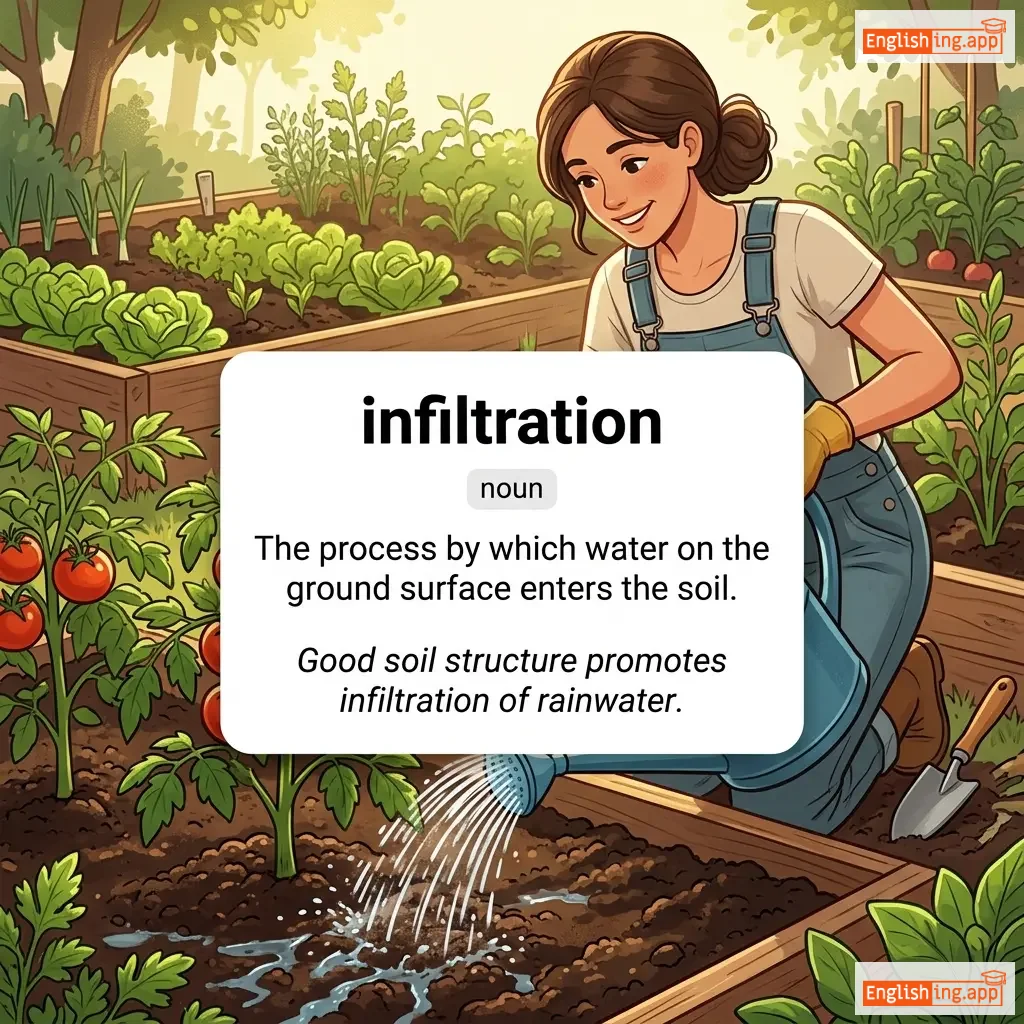
infiltration definition card — visual illustration of the meaning
noun
/ˌɪn.fɪlˈtreɪ.ʃən/
जल प्रवेश (infiltration)

The process by which water on the ground surface enters the soil.

"Good soil structure promotes infiltration of rainwater."

"अच्छी मिट्टी की संरचना वर्षा जल को मिट्टी में प्रवेश करने में सहायता करती है।" (acchi mitti ki sanrachna varsha jal ko mitti me pravesh karne me sahayata karti hai.)
adjective
/ˈɪnfɪnɪt/
अनंत (anant)

limitless or endless in space, extent, or number

"The universe is often described as infinite."

"ब्रह्मांड को अक्सर अनंत के रूप में वर्णित किया जाता है।" (Brahmand ko aksar anant ke roop mein varnit kiya jata hai.)
adjective
/ˌɪnfɪnɪˈtɛsɪməl/
अति सूक्ष्म (ati suksm)

Extremely small in size or amount; so tiny as to be almost negligible.

"The error was so infinitesimal that it didn’t affect the results."

"त्रुटि इतनी सूक्ष्म थी कि उसने परिणामों पर कोई असर नहीं डाला।" (truti itni suksm thi ki usne parinamon par koi asar nahi dala.)
noun
/ɪnˈfɪnɪti/
अनंत (anant)

A concept describing something without any limit or end.

"The universe seems to stretch into infinity."

"ब्रह्मांड अनंतता में फैला हुआ प्रतीत होता है।" (brahmand anantta mein phaila hua prateet hota hai.)
adjective
/ɪnˈfɜːm/
कमजोर (kamjor)

Weak, especially due to old age or illness.

"The infirm old man needed assistance to walk."

"वृद्ध आदमी को चलने के लिए सहायता की आवश्यकता थी।" (Vriddh aadmi ko chalne ke liye sahayata ki avashyakta thi.)
adjective
/ˌhæpi ɡoʊ ˈlʌki/
चिंतामुक्त, निराश्रित, carefree (chintamukt, niraashrit, carefree)

cheerfully unconcerned about the future; carefree

"She has a happy-go-lucky attitude and never worries about tomorrow."

"वह एक हैपी-गो-लकी रवैया रखती है और कभी भी कल के बारे में नहीं सोचती।" (Wah ek happy-go-lucky ravayya rakhti hai aur kabhi bhi kal ke baare mein nahi sochti.)
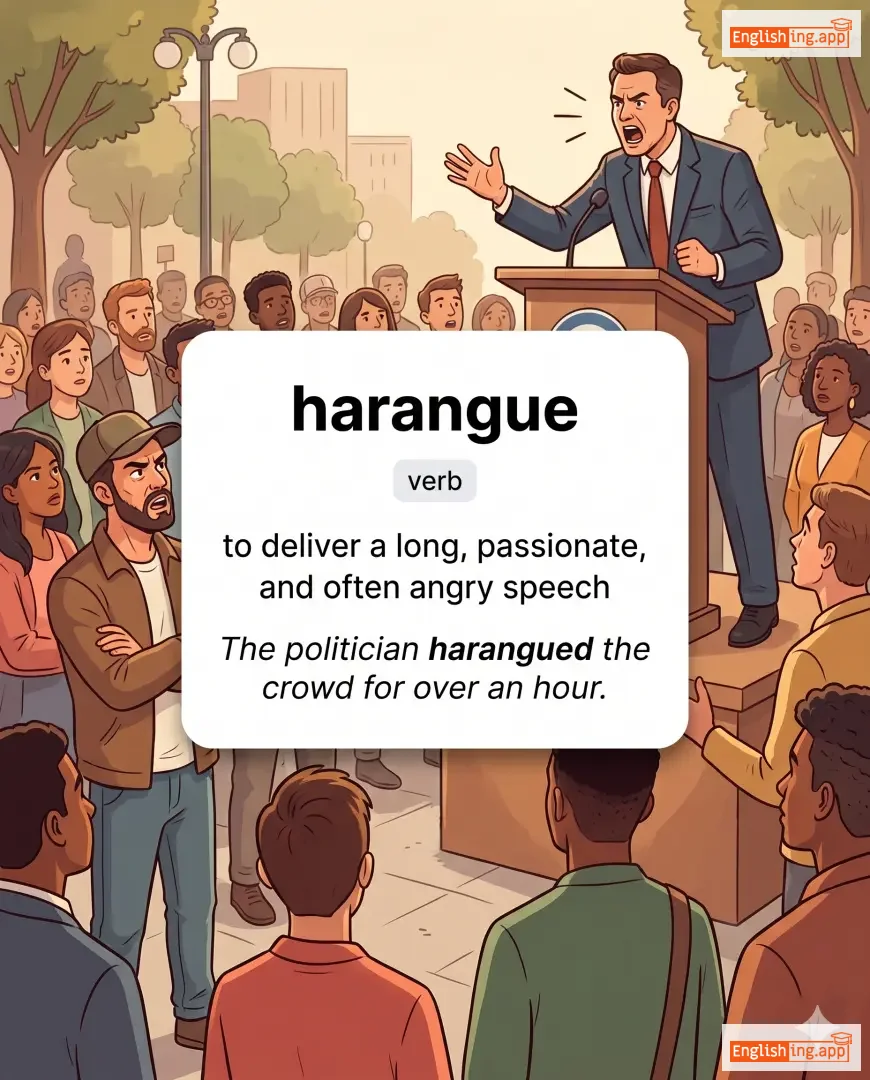
harangue definition card — visual illustration of the meaning
verb
/həˈræŋ/
लंबा और गुस्से में भरा भाषण देना (lamba aur gusse mein bhara bhashan dena)

to deliver a long, passionate, and often angry speech

"The politician harangued the crowd for over an hour."

"राजनेता ने भीड़ को एक घंटे से अधिक समय तक भाषण दिया।" (Rajneeta ne bheed ko ek ghante se adhik samay tak bhashan diya.)
verb
/həˈræs/
उत्पीड़न करना (utpidan karna)

to annoy or trouble someone repeatedly in an aggressive or persistent way

"The journalist claimed she was being harassed online."

"पत्रकार ने दावा किया कि उसे ऑनलाइन उत्पीड़न किया जा रहा था।" (Patrakar ne daawa kiya ki use online utpidan kiya ja raha tha.)
noun
/həˈræsmənt/
उत्पीड़न (utpeerdan)

aggressive pressure or intimidation; unwanted and repeated behavior causing discomfort

"The company has a strict policy against workplace harassment."

"कंपनी के पास कार्यस्थल पर उत्पीड़न के खिलाफ सख्त नीति है।" (Kampani ke paas karyasthal par utpeerdan ke khilaf sakht neeti hai.)
noun
/ˈhɑːrbɪndʒər/
सूचक (soochak)

a person or thing that announces or signals the approach of another

"The sudden drop in temperature was a harbinger of winter."

"टेम्प्रेचर में अचानक गिरावट सर्दियों के हारबिंजर की तरह थी।" (Temperature mein achanak girawat sardiyon ke harbinger ki tarah thi.)
noun, verb
/ˈhɑːrbər/
बंदरगाह / शरण देना (bandargah / sharan dena)

noun: a place on the coast where ships may find shelter; verb: to keep (a thought or feeling, often negative) in one's mind

"He continued to harbor resentment towards his former boss."

"वह अपने पूर्व बॉस के प्रति नफरत को अपने मन में पाले रहा।" (Wah apne poorv boss ke prati nafrat ko apne man mein paale raha.)
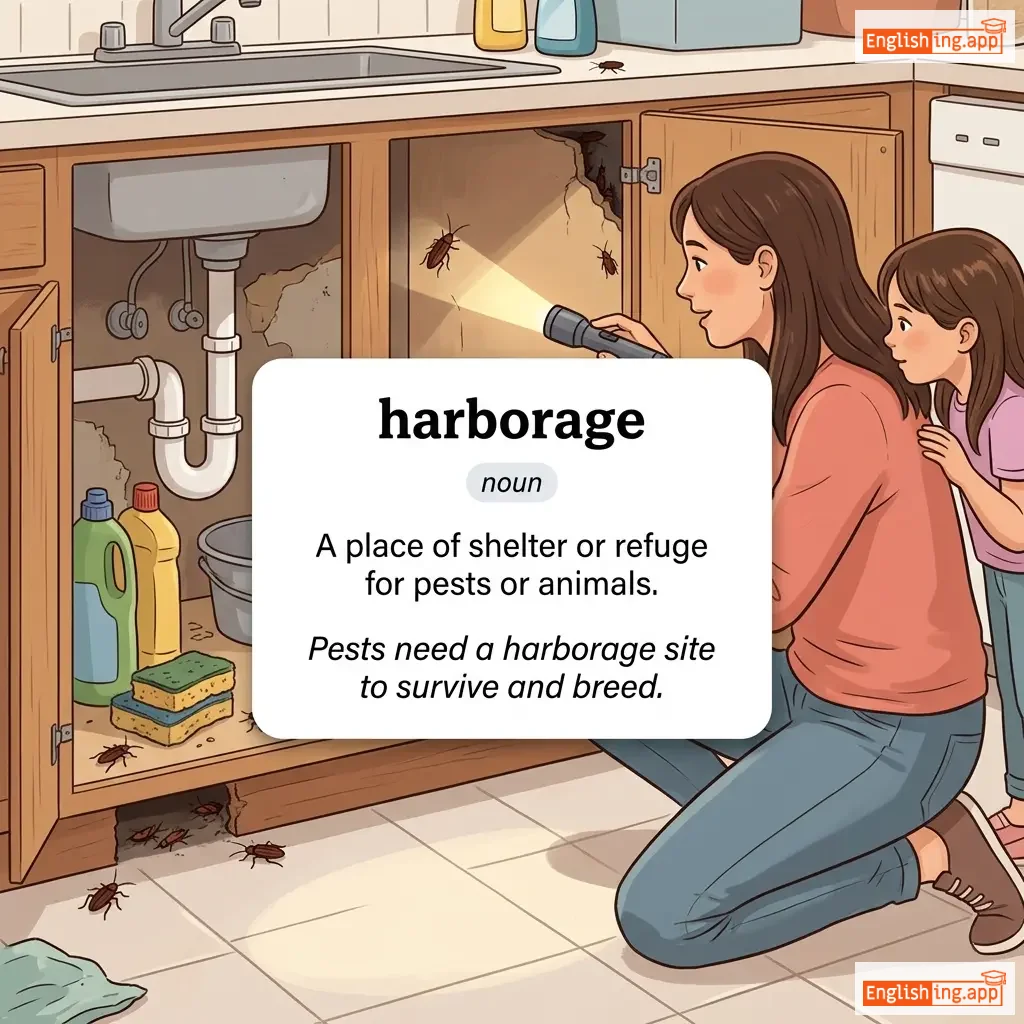
harborage definition card — visual illustration of the meaning
noun
ˈhɑːrbərɪdʒ
आश्रय स्थल (aashray sthal)

A place of shelter or refuge for pests or animals.

"Pests need a harborage site to survive and breed."

"कीटों को जीवित रहने और प्रजनन करने के लिए एक आश्रय स्थल की आवश्यकता होती है।" (Keeton ko jeevit rehne aur prajnan karne ke liye ek aashray sthal ki avashyakta hoti hai.)
noun
/ˈhɑːr.bər/
बंदरगाह (bandargah)

a place on the coast where vessels may find shelter; a place of safety or refuge

"The fishing boats returned safely to the harbour before the storm hit the coastline."

"मछली पकड़ने वाली नौकाएँ तूफान से पहले सुरक्षित रूप से बंदरगाह लौट आईं।" (machhli pakadne wali naukaen toofan se pehle surakshit roop se bandargah laut aayi.)
adjective
/hɑːrd/
कठिन (kathin)

solid, firm, or difficult to do or endure

"The exam was very hard for most students."

"परीक्षा अधिकांश छात्रों के लिए बहुत कठिन थी।" (Pariksha adhikansh chhatron ke liye bahut kathin thi.)
adjective
/ˌhɑːrdˈbɪtn̩/
कठोर और अनुभवी (kathor aur anubhavi)

tough and experienced, not easily affected by emotions or hardship

"The hard-bitten detective showed no sign of surprise at the crime scene."

"कठोर और अनुभवी जासूस ने अपराध स्थल पर कोई हैरानी नहीं दिखाई।" (Kathor aur anubhavi jasoos ne apradh sthal par koi hairani nahi dikhai.)
adjective
/ˌhɑːrdˈhɑːrtɪd/
निर्दयी (nirdai)

showing no kindness or sympathy; cruel

"The landlord was hard-hearted and refused to help the poor family."

"मालिक निर्दयी थे और गरीब परिवार की मदद करने से मना कर दिया।" (Malik nirdai the aur gareeb parivar ki madad karne se mana kar diya.)
noun
/ˈhɑːdɪhʊd/
साहस, दुस्साहस (sahas, dusahas)

Courage, boldness, or daring behavior; also physical robustness.

"The mountaineer's hardihood impressed the entire team."

"माउंटेनियर का हार्डिहूड पूरे टीम को प्रभावित कर गया।" (Mountaineer ka hardihood pure team ko prabhavit kar gaya.)
adverb
/ˈhɑːrdli/
लगभग नहीं (lagbhag nahi)

almost not; scarcely

"She could hardly believe her eyes."

"वह अपनी आँखों पर विश्वास hardly कर पा रही थी।" (Woh apni aankhon par vishwas hardly kar pa rahi thi.)
noun
/ˈhɑːrd.ʃɪp/
कठिनाई, कठिन समय (kathinai, kathin samay)

severe suffering or privation; difficulty or distress

"Despite facing many hardships during the war, the family remained united and hopeful."

"युद्ध के दौरान कई कठिनाइयों का सामना करने के बावजूद, परिवार एकजुट और आशावादी बना रहा।" (yuddh ke dauran kai kathinaaiyon ka saamna karne ke bawajood, parivaar ekjut aur aashaavadi bana raha.)
noun
/ˈhɑːrdˌwɛr/
हार्डवेयर (hardware)

the physical parts of a computer or electronic system, such as the monitor, keyboard, and processor

"The company upgraded its computer hardware to improve performance."

"कंपनी ने प्रदर्शन सुधारने के लिए अपने कंप्यूटर हार्डवेयर को अपग्रेड किया।" (Company ne pradarshan sudharne ke liye apne computer hardware ko upgrade kiya.)
adjective
/ˈhɑːrdi/
मजबूत, सहनशील (mazboot, sahansheel)

Strong, robust, and capable of enduring difficult conditions.

"Hardy plants can survive the harsh winter."

"मजबूत पौधे कठोर सर्दी में भी जीवित रह सकते हैं।" (Mazboot paudhe kathor sardi mein bhi jeevit rah sakte hain.)
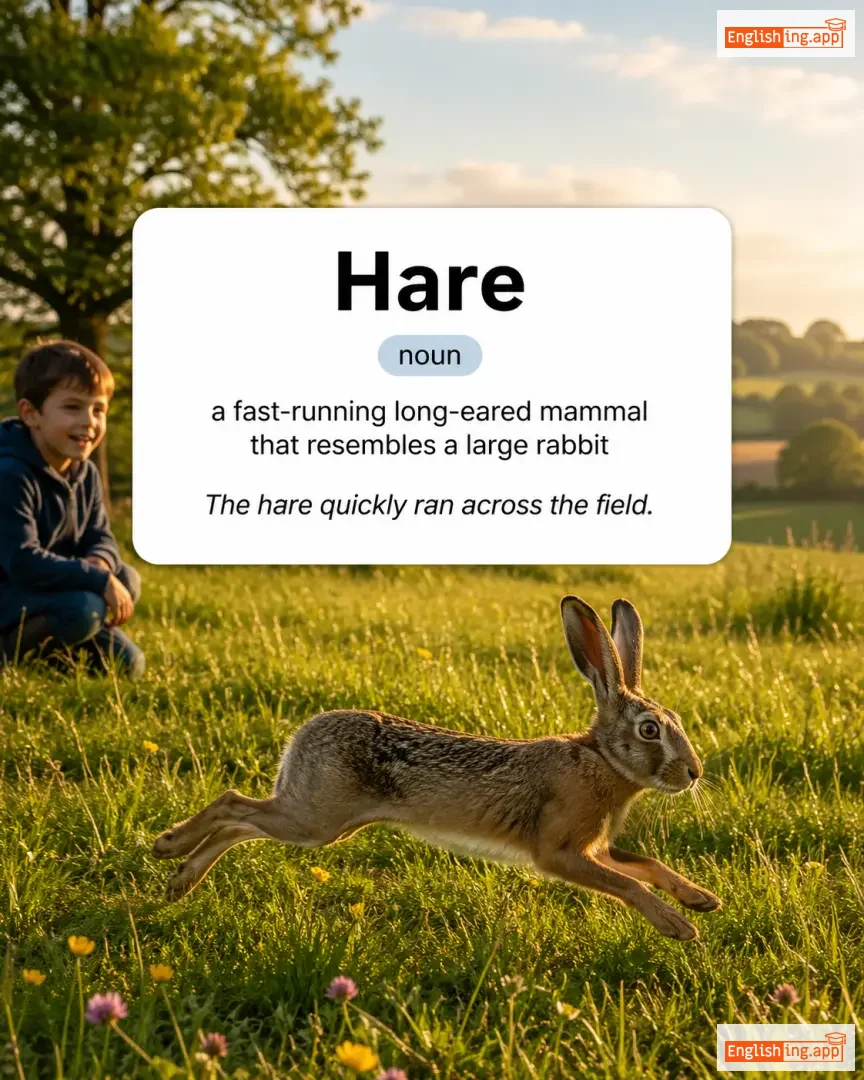
Hare definition card — visual illustration of the meaning
noun
/heə(r)/
सांबेर (saamber)

a fast-running long-eared mammal that resembles a large rabbit

"The hare quickly ran across the field."

"सांबेर जल्दी से खेत के पार दौड़ गया।" (saamber jaldi se khet ke paar daud gaya)
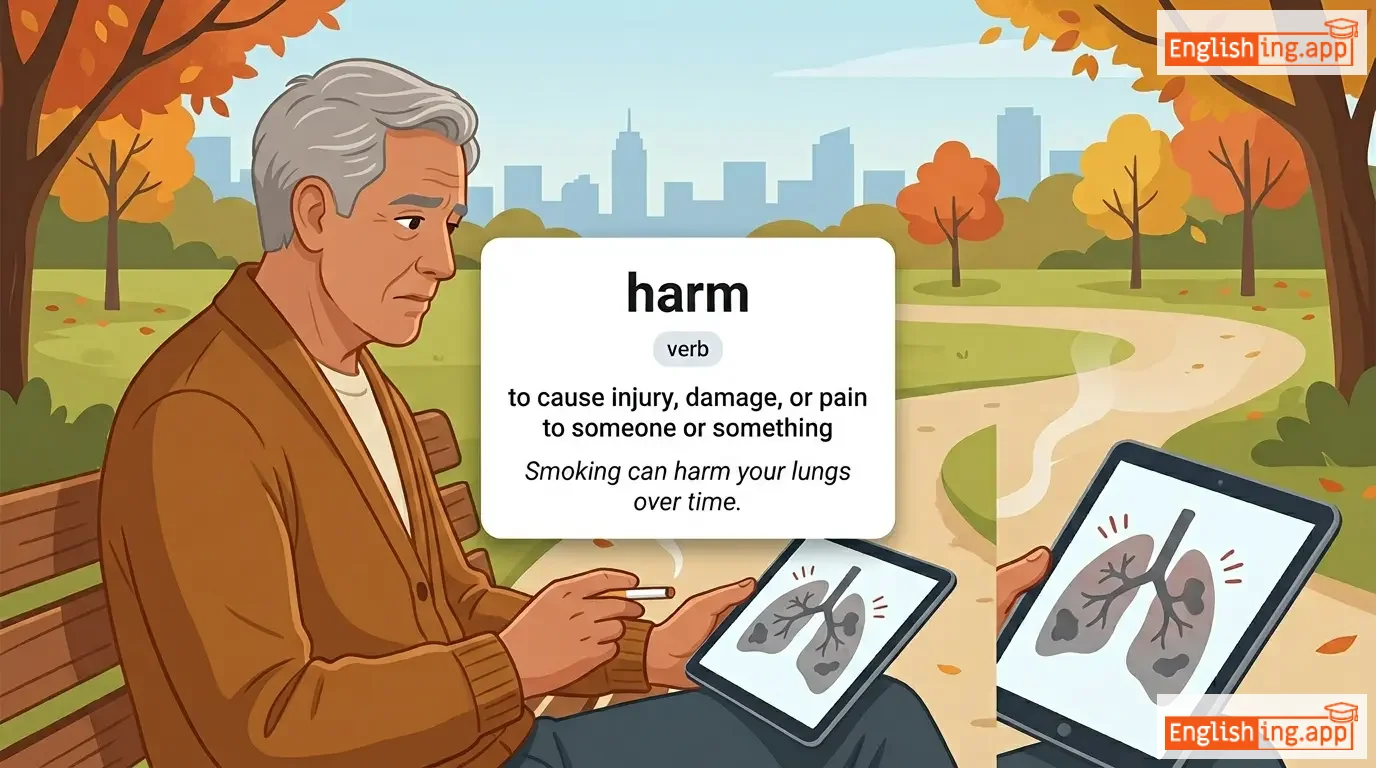
harm definition card — visual illustration of the meaning
verb
/hɑːrm/
नुकसान करना (nuksan karna)

to cause injury, damage, or pain to someone or something

"Smoking can harm your lungs over time."

"धूम्रपान समय के साथ आपके फेफड़ों को नुकसान पहुँचा सकता है।" (Dhoomrapan samay ke sath aapke phephdo ko nuksan pahucha sakta hai.)
adjective
/ˈhɑːrmfəl/
हानिकारक (hānīkārak)

causing or likely to cause harm; damaging

"Smoking is harmful to your health."

"धूम्रपान आपके स्वास्थ्य के लिए हानिकारक है।" (dhūmrāpān āpke svāsthya ke liye hānīkārak hai.)
adjective
/ˈhɑːrmləs/
निरापद; निर्दोष; सुरक्षित (nirāpad; nirdoṣ; surakṣit)

not able or likely to cause harm; innocent; safe

"The snake looks dangerous but it's actually harmless."

"सांप खतरनाक लगता है लेकिन यह वास्तव में निरापद है।" (sāmp khataranāk lagatā hai lekin yah vāstav mein nirāpad hai.)
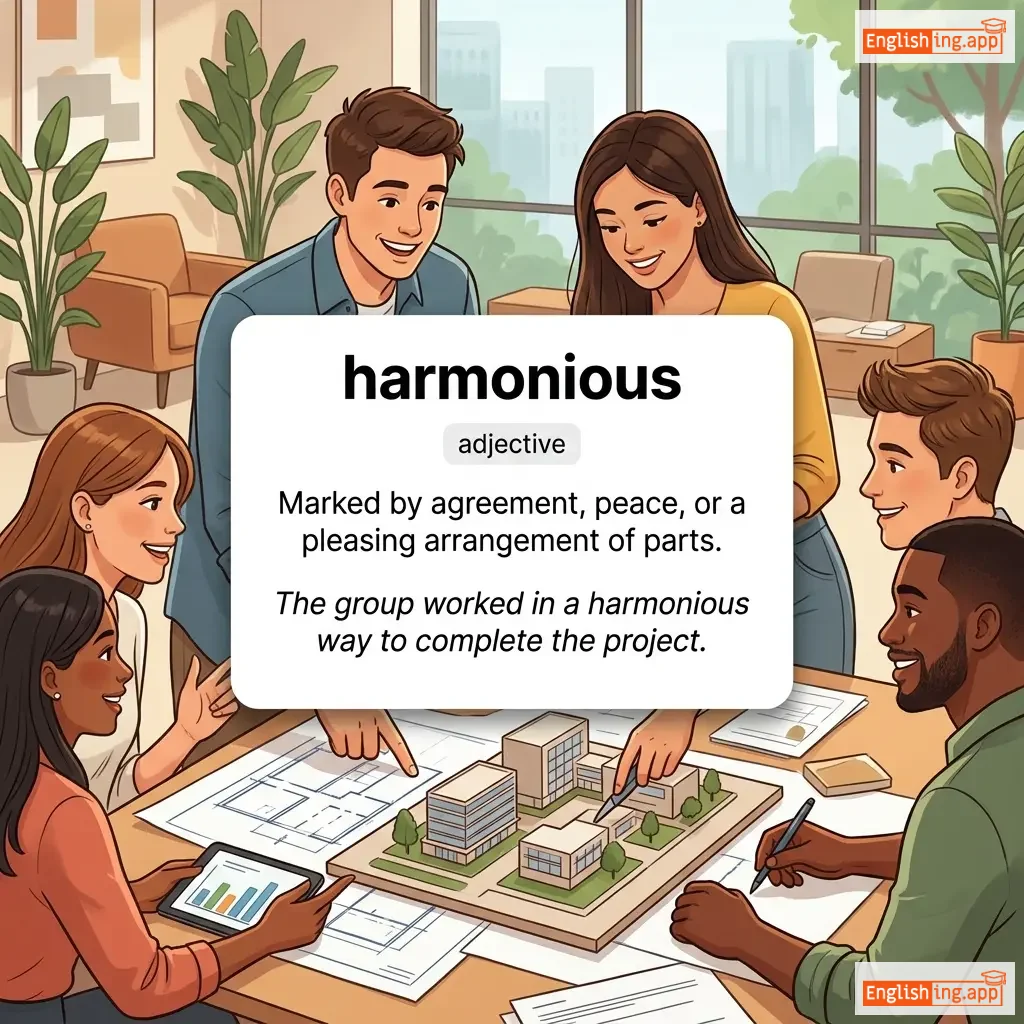
harmonious definition card — visual illustration of the meaning
adjective
/hɑːrˈmoʊniəs/
सुरेल, सामंजस्यपूर्ण (surel, samanjasyapurn)

Marked by agreement, peace, or a pleasing arrangement of parts.

"The group worked in a harmonious way to complete the project."

"समूह ने परियोजना को पूरा करने के लिए सामंजस्यपूर्ण तरीके से काम किया।" (samooh ne pariyojna ko poora karne ke liye samanjasyapurn tareeke se kaam kiya.)
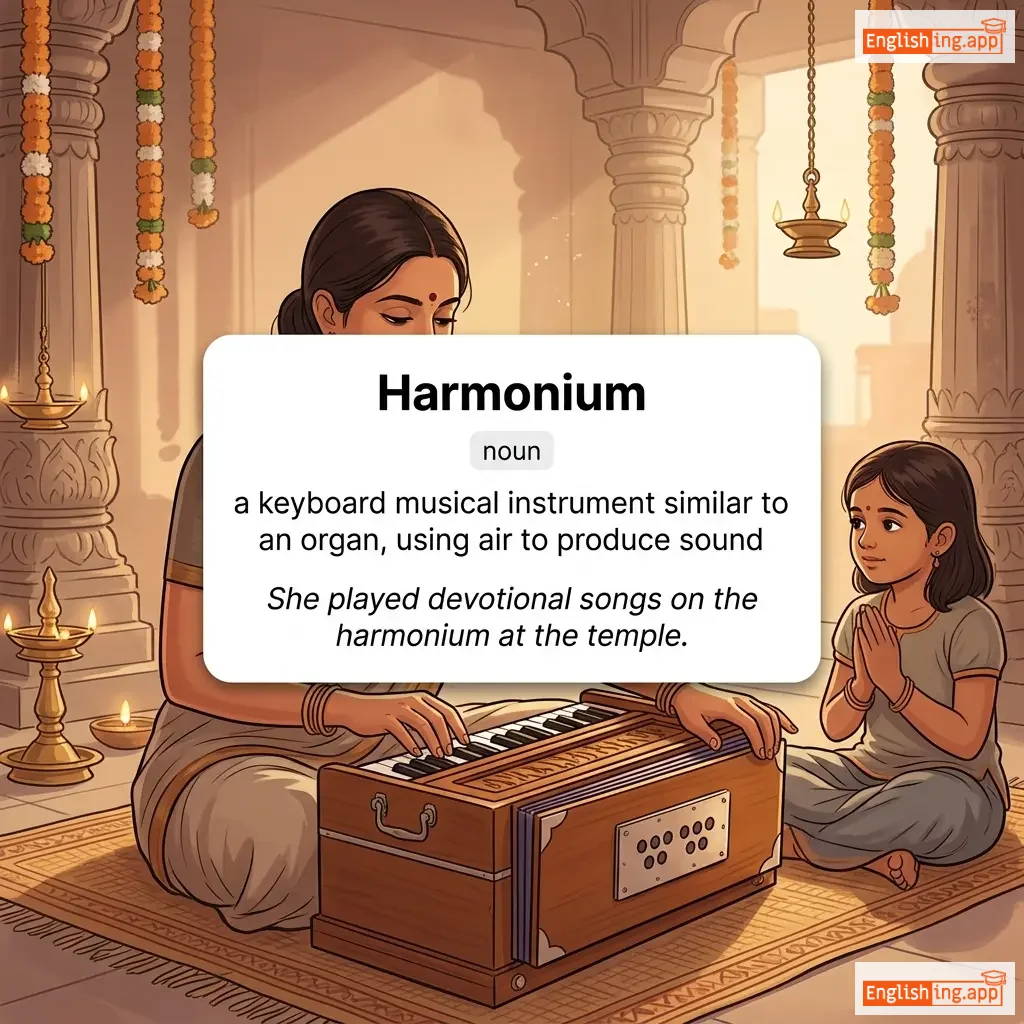
Harmonium definition card — visual illustration of the meaning
noun
/hɑrˈmoʊniəm/
हार्मोनियम (harmonium)

a keyboard musical instrument similar to an organ, using air to produce sound

"She played devotional songs on the harmonium at the temple."

"उसने मंदिर में हार्मोनियम पर भक्ति गीत बजाए." (Usne mandir mein harmonium par bhakti geet bajaye.)
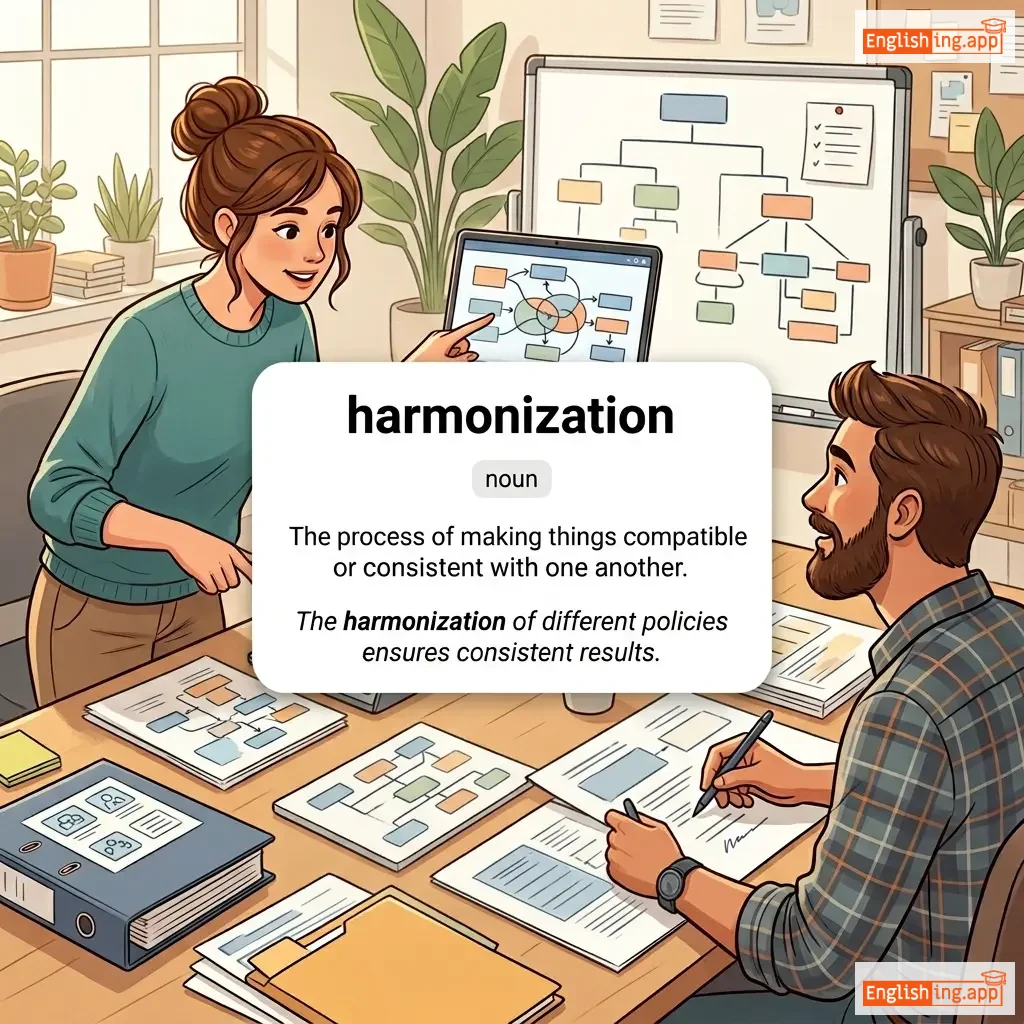
harmonization definition card — visual illustration of the meaning
noun
/ˌhɑːmənaɪˈzeɪʃən/
मेलजोल, समायोजन (meljol, samaayojan)

The process of making things compatible or consistent with one another.

"The harmonization of different policies ensures consistent results."

"विभिन्न नीतियों का मेलजोल सुसंगत परिणाम सुनिश्चित करता है।" (Vibhinn neetiyon ka meljol susangat parinaam nishchit karta hai.)
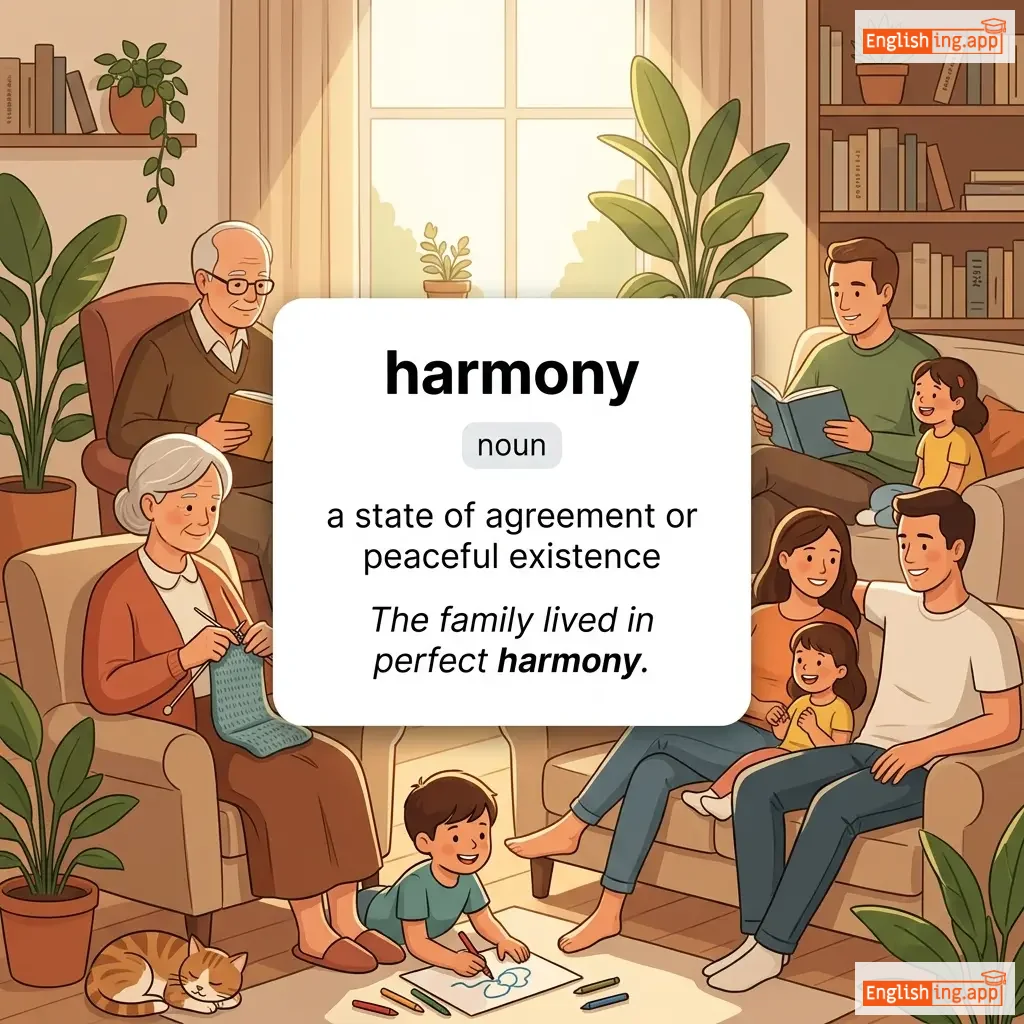
harmony definition card — visual illustration of the meaning
noun
/ˈhɑːrməni/
सामंजस्य (samajhya)

a state of agreement or peaceful existence

"The family lived in perfect harmony."

"परिवार ने पूरी सामंजस्य में जीवन बिताया।" (Parivaar ne poori samajhya mein jeevan bitaaya.)
verb
/ˈhɑːrnɪs/
नियंत्रण में लाना, उपयोग में लाना (niyantran mein lana, upyog mein lana)

To control and make use of natural resources, especially energy.

"Scientists are working to harness solar power effectively."

"वैज्ञानिकों ने सौर ऊर्जा को प्रभावी ढंग से Harness करने के लिए काम किया है।" (Vigyanikon ne saur urja ko prabhavi dhang se harness karne ke liye kaam kiya hai.)
Harp definition card — visual illustration of the meaning
verb
/hɑːrp/
बार-बार बोलना, शिकायत करना (baar-baar bolna, shikayat karna)

To dwell on or complain about something persistently.

"He kept harping on the same mistake over and over."

"वह एक ही गलती पर बार-बार शिकायत कर रहा था।" (vah ek hi galti par baar-baar shikayat kar raha tha.)
verb
/ˈhɑːrpɪŋ/
लगातार शिकायत करना (lagatar shikayat karna)

continuously talking or complaining about something in a tiresome way

"She kept harping on about the mistakes I made."

"वह मेरे द्वारा की गई गलतियों के बारे में बार-बार शिकायत करती रही।" (Woh mere dwara ki gayi galtiyon ke baare mein baar-baar shikayat karti rahi.)
adjective
/ˈhæriːd/
अत्यधिक व्यस्त या चिंतित (atyadhik vyast ya chintit)

feeling strained or stressed due to being overworked or constantly bothered

"The harried teacher struggled to calm the noisy classroom."

"अत्यधिक व्यस्त शिक्षक ने शोर-शराबे से भरी कक्षा को शांत करने के लिए संघर्ष किया।" (Atyadhik vyast shikshak ne shor-sharabe se bhari kaksha ko shaant karne ke liye sangharsh kiya.)
verb
/ˈhæroʊ/
कष्ट देना / ज़मीन हल करना (kasht dena / zameen hal karna)

to cause distress or torment; also to break up and smooth soil with a farm tool

"The tragic news harrowed the entire family."

"दुखद समाचार ने पूरे परिवार को दुखी कर दिया।" (Dukhad samachar ne poore parivar ko dukhi kar diya.)
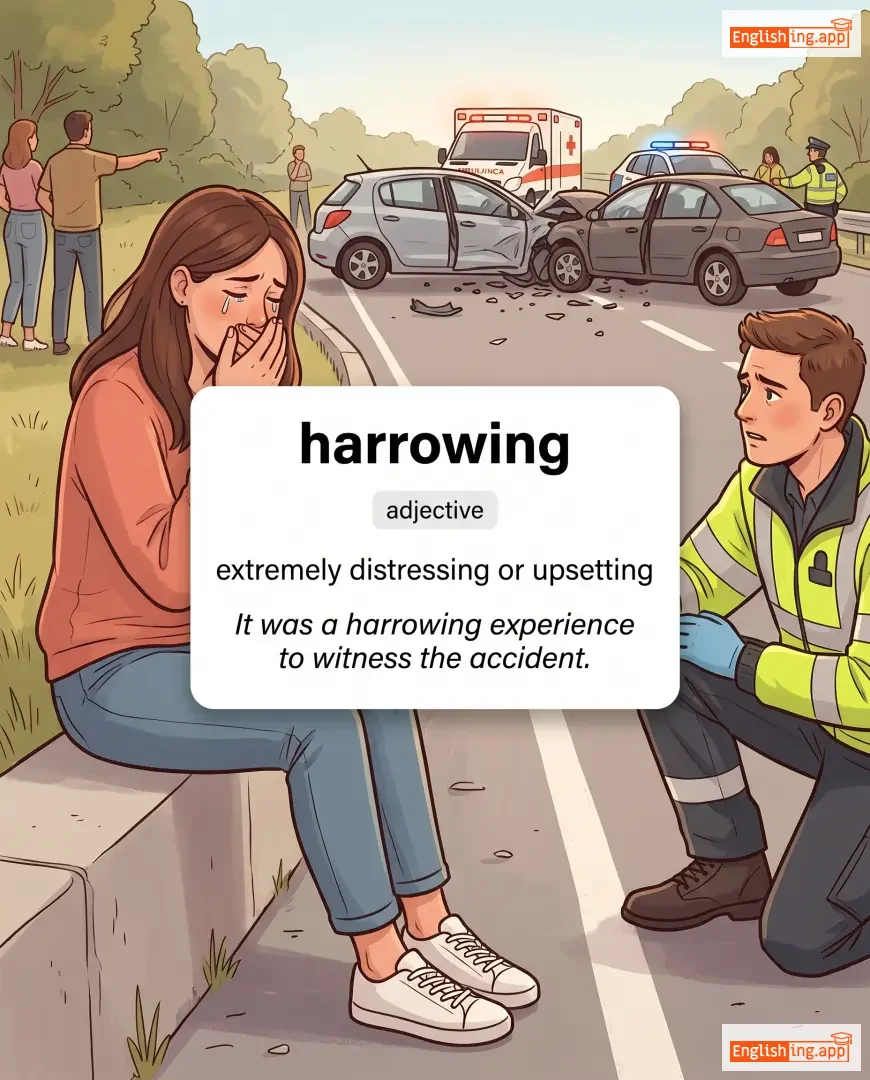
harrowing definition card — visual illustration of the meaning
adjective
/ˈhær.oʊ.ɪŋ/
भयावह और पीड़ादायक (bhayavah aur peedadayak)

extremely distressing or upsetting

"It was a harrowing experience to witness the accident."

"यह दुर्घटना देखना एक भयावह अनुभव था।" (Yeh durghatna dekhna ek bhayavah anubhav tha.)
verb
/ˈhæri/
हमला करना, तंग करना (hamla karna, tang karna)

to constantly attack, harass, or annoy

"The army harried the enemy with sudden raids."

"फौज ने अचानक हमले किए और दुश्मन को तंग किया।" (Fauj ne achanak hamle kiye aur dushman ko tang kiya.)