词汇表

英语词汇词典 | 单词含义、定义和示例

noun
/ˌɪndɪˈkeɪʃən/
指示 (zhǐshì)

A sign, piece of information, or signal that suggests something.

"Dark clouds are an indication of an approaching storm."

"乌云是即将到来的暴风雨的指示。" (Wūyún shì jíjiāng dào lái de bàofēngyǔ de zhǐshì)
adjective, noun
/ɪnˈdɪkətɪv/
指示性 (zhǐshìxìng)

Serving as a sign or expression of something; in grammar, a mood used to make factual statements.

"His tone was indicative of his frustration."
"他的语气表明了他的沮丧。" (Tā de yǔqì biǎomíngle tā de jǔsàng.)
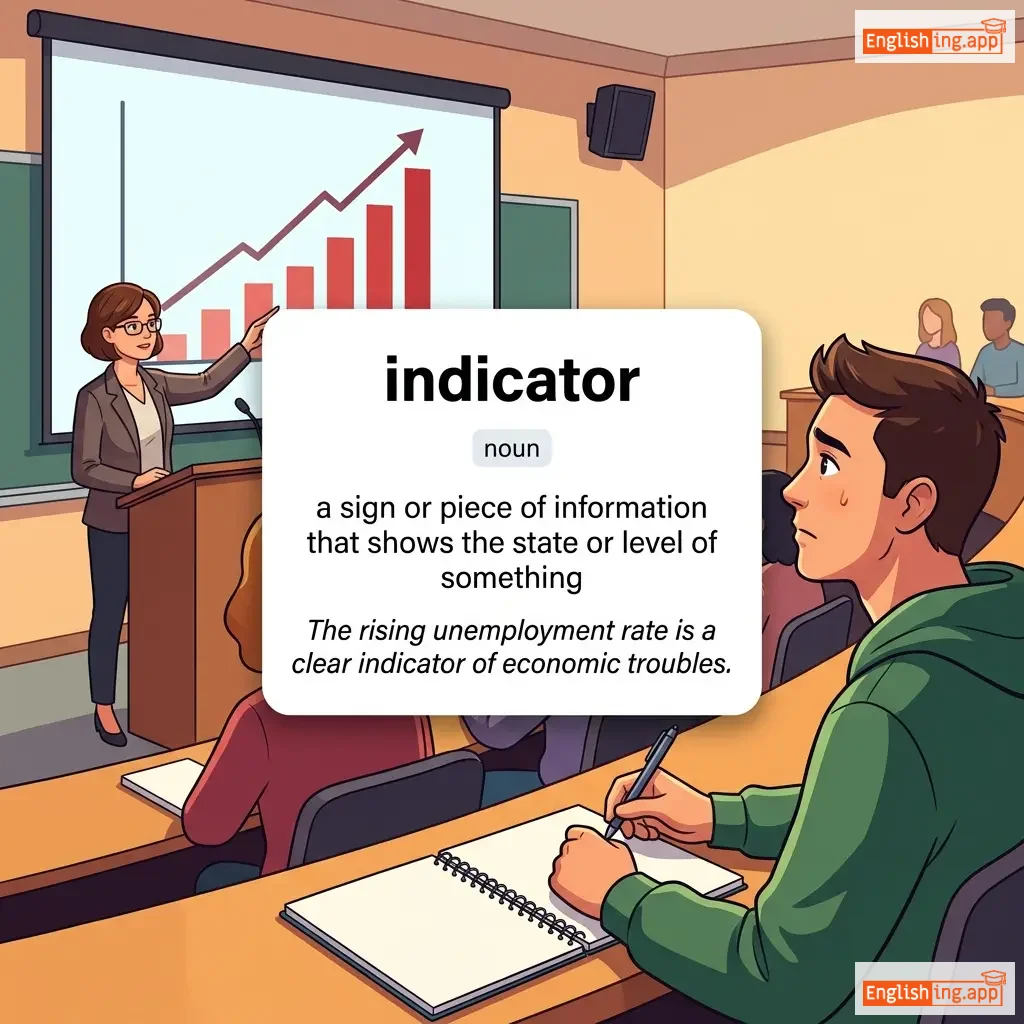
indicator definition card — visual illustration of the meaning
noun
/ˈɪndɪˌkeɪtər/
指标 (zhǐbiāo)

a sign or piece of information that shows the state or level of something

"The rising unemployment rate is a clear indicator of economic troubles."

"失业率上升是经济问题的明显指标。" (Shīyè lǜ shàngshēng shì jīngjì wèntí de míngxiǎn zhǐbiāo.)
noun (plural)
/ˈɪndɪˌsiːz/
指数 (zhishu)

plural form of index; statistical measures or reference points used for comparison

"Stock market indices fell sharply after the announcement."

"公告后,股市指数急剧下跌。" (Gonggao hou, gushi zhishu ji ju xiadie.)
verb
/ɪnˈdaɪt/
起诉 (qǐsù)

to formally accuse someone of committing a serious crime

"The grand jury decided to indict the politician for corruption."

"大陪审团决定控告该政治家腐败。" (Dà péishěn tuán juédìng kònggào gāi zhèngzhìjiā fǔbài.)
noun
/ɪnˈdaɪtmənt/
起诉书 (qǐsù shū)

a formal charge or accusation of a serious crime

"The indictment accused the company of multiple violations."

"起诉书指控公司存在多项违规行为。" (Qǐsù shū zhǐkòng gōngsī cúnzài duō xiàng wéiguī xíngwéi.)
noun
/ɪnˈdɪfərəns/
冷漠 (lengmo)

lack of interest, concern, or sympathy

"He showed complete indifference to the suffering around him."

"他对周围的痛苦表现出完全的冷漠。" (Ta dui zhouwei de tongku biaoxian chu wanquan de lengmo.)
adjective
/ɪnˈdɪf.ər.ənt/
冷漠 (lengmo)

having no particular interest or concern; not caring one way or another

"She was indifferent to the outcome of the match."
"她对比赛的结果漠不关心。" (Ta dui bisai de jieguo mo bu guanxin.)
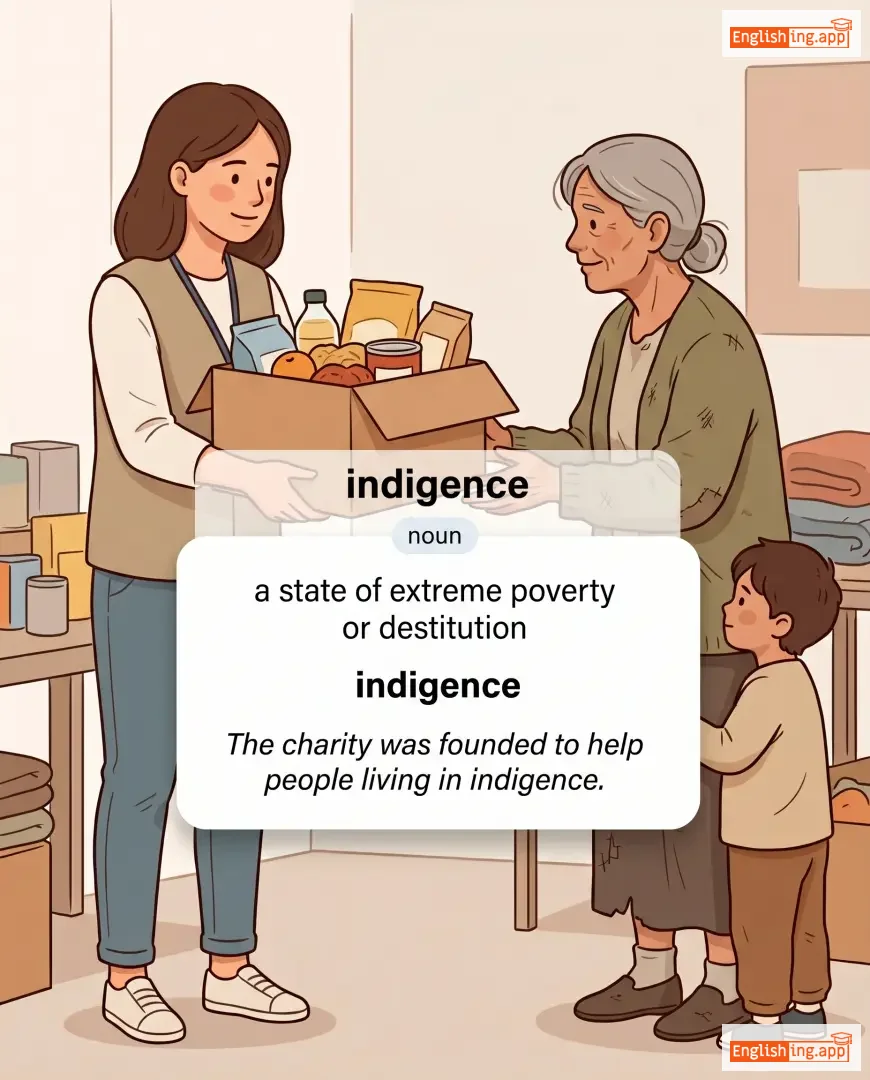
indigence definition card — visual illustration of the meaning
noun
/ˈɪn.dɪ.dʒəns/
贫困 (pínkùn)

a state of extreme poverty or destitution

"The charity was founded to help people living in indigence."
"这个慈善组织成立是为了帮助生活在贫困中的人们。" (Zhège cìshàn zǔzhī chénglì shì wèile bāngzhù shēnghuó zài pínkùn zhōng de rénmen.)
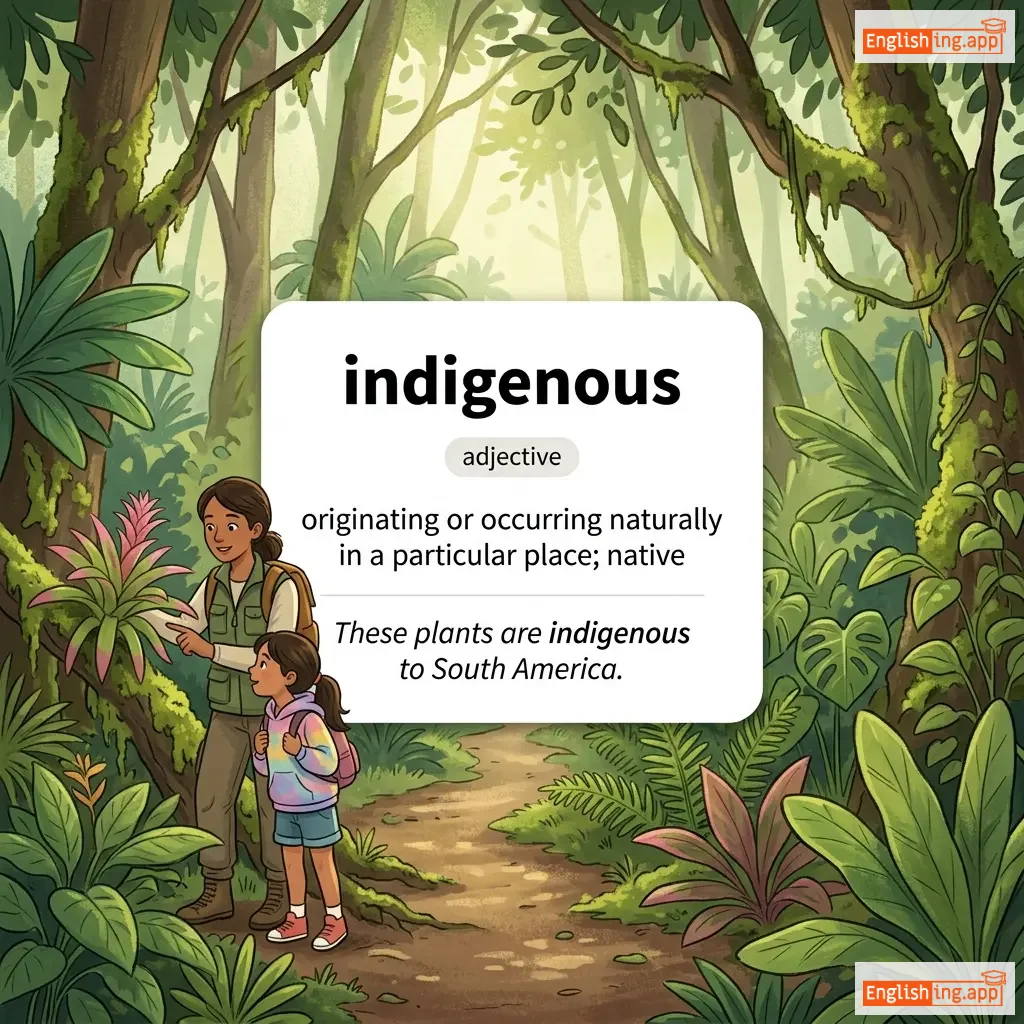
indigenous definition card — visual illustration of the meaning
adjective
/ɪnˈdɪdʒ.ə.nəs/
本土的 (bêntǔ de)

originating or occurring naturally in a particular place; native

"These plants are indigenous to South America."

"这些植物是南美的本土植物。" (Zhèxiē zhíwù shì nánměi de běntǔ zhíwù.)
Indigenous Traditions definition card — visual illustration of the meaning
noun
ɪnˈdɪdʒɪnəs trəˈdɪʃənz
原住民传统 (yuán zhùmín chuántǒng)

Cultural practices, beliefs, and customs that have been passed down through generations among native peoples.

"Indigenous traditions in the Chittagong Hill Tracts are unique."

"吉大港山区的原住民传统独特。" (Jídàgǎng shānqū de yuán zhùmín chuántǒng dútè.)
adjective
/ˈɪn.dɪ.dʒənt/
贫困 (pínkùn)

lacking the necessities of life due to poverty; very poor

"The hospital offers free care to indigent patients."

"医院为贫困患者提供免费护理。" (Yīyuàn wèi pínkùn huànzhě tígōng miǎnfèi hùlǐ.)
adjective
/ˌɪn.daɪˈdʒes.tə.bəl/
难以消化 (nán yǐ xiāo huà)

difficult or impossible to digest; hard to accept or understand

"The report was so long and detailed that it became almost indigestible."

"报告如此长且详细,以至于几乎变得难以消化。" (Baogao ruci chang qie xiangxi, yi zhi yu jihu biande nán yǐ xiāo huà.)
noun
/ˌɪndɪˈdʒɛstʃən/

Discomfort or pain in the stomach associated with difficulty in digesting food.

"He avoided spicy food because it often gave him indigestion."

adjective
/ɪnˈdɪɡnənt/
愤怒 (fèn nù)

Feeling or showing anger at something considered unfair or unjust.

"She was indignant when accused of cheating."

"她在被指控作弊时感到愤怒。" (Tā zài bèi zhǐkòng zuòbì shí gǎndào fènnù.)
noun
/ˌɪndɪɡˈneɪʃən/
愤慨 (fènkǎi)

Strong displeasure or anger caused by something unjust, offensive, or insulting.

"Public indignation grew after the unfair verdict."

"在不公正的裁决之后,公众的愤慨情绪上升。" (Zài bù gōngzhèng de cáijué zhīhòu, gōngzhòng de fènkǎi qíngxù shàngshēng.)
noun
/ɪnˈdɪɡnɪti/
屈辱 (qūrǔ)

Treatment or circumstances that cause one to feel shame or humiliation.

"He suffered the indignity of being ignored in the meeting."
"他忍受了在会议上被忽视的屈辱。" (Tā rěnshòu le zài huìyì shàng bèi hūshì de qūrǔ.)
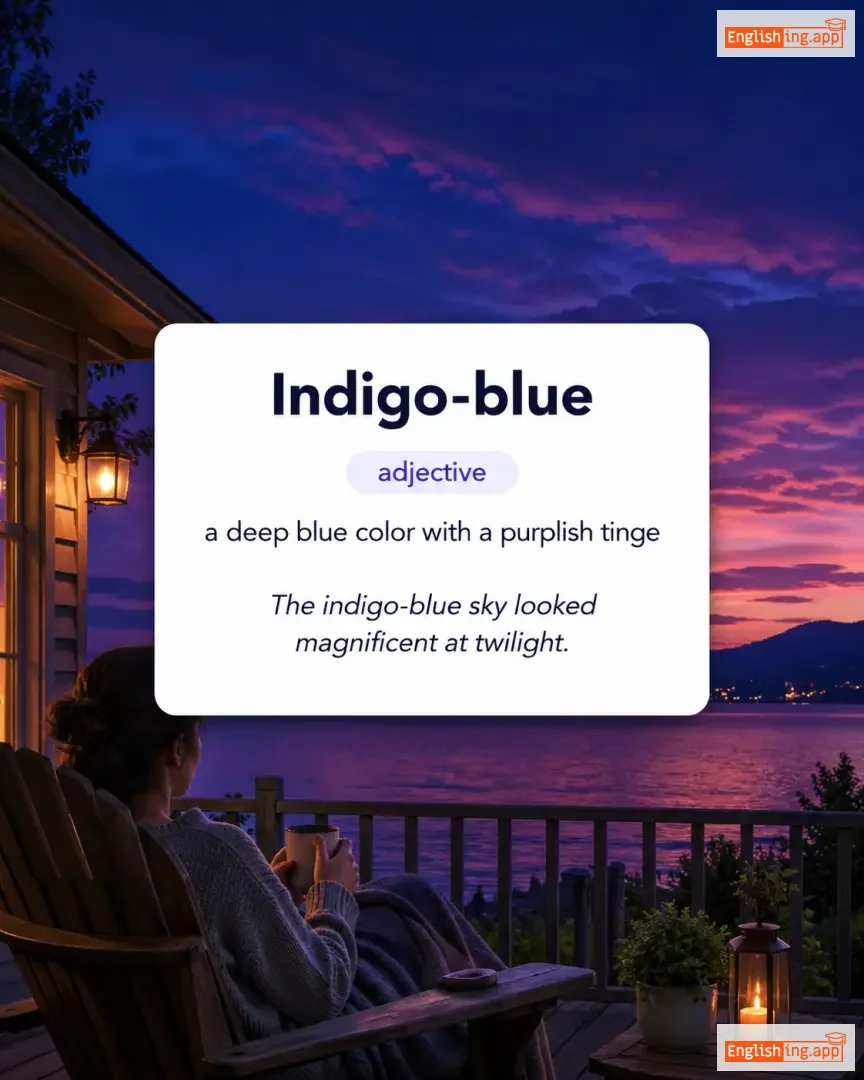
Indigo-blue definition card — visual illustration of the meaning
adjective
/ˈɪndɪɡoʊ bluː/
靛蓝 (dianlan)

a deep blue color with a purplish tinge

"The indigo-blue sky looked magnificent at twilight."

"在暮光中,靛蓝色的天空看起来壮丽。" (Zài mùguāng zhōng, diàn lán sè de tiānkōng kàn qǐlái zhuànglì.)
adverb
/ˌɪndəˈrɛktli/
间接地 (jianjie de)

in a way that is not direct; through an intermediate means or influence

"The policy affected small businesses indirectly."

"该政策间接地影响了小企业。" (gai zhengce jianjie de yingxiang le xiao qiye)
adjective
/ˌɪndɪˈsɜːrnəbl/
难以察觉的 (nanyi chaju de)

Impossible or difficult to see, notice, or distinguish.

"The difference between the two shades was almost indiscernible."

"这两种色调之间的差异几乎难以察觉。" (Zhe liang zhong se tiao zhi jian de chayi ji hu nanyi chaju.)
noun
/ˌɪnˈdɪsəplɪn/
缺乏纪律 (quefa jilu)

lack of discipline or self-control; failure to obey rules or maintain order

"Indiscipline among the students disrupted the learning environment."

"学生的缺乏纪律破坏了学习环境。" (Xuesheng de quefa jilu pohuaile xuexi huanjing)
adjective
/ˌɪndɪˈskriːt/
不谨慎 (bu jinshen)

Not careful in what one says or does, likely to reveal secrets or offend.

"It was indiscreet of him to mention the plan in public."

"他在公众场合提到计划是不谨慎的。" (Ta zai gongzhong changhe tidao jihua shi bu jinshen de.)
adjective
/ˌɪndɪˈskrɪmɪnət/
不加区分的 (bù jiā qū fēn de)

Done without careful judgment; random or haphazard.

"The indiscriminate use of pesticides harms the environment."

"滥用杀虫剂对环境造成了伤害。" (Lànyòng shāchóngjì duì huánjìng zàochéngle shānghài.)
adverb
/ˌɪn.dɪˈskrɪm.ɪ.nət.li/
无差别地 (wú chābié de)

without making careful distinctions; randomly; without discrimination

"The company fired employees indiscriminately without considering their performance."

"公司无差别地解雇了员工,没考虑他们的表现。" (Gōngsī wú chābié de jiěgùle yuángōng, méi kǎolǜ tāmen de biǎoxiàn.)
indispensable definition card — visual illustration of the meaning
adjective
/ˌɪndɪˈspɛnsəbl/
不可或缺 (bù kě huò quē)

Absolutely necessary; essential.

"Water is indispensable for human survival."
"水是人类生存不可或缺的。" (Shuǐ shì rén lèi shēng cún bù kě huò quē de.)
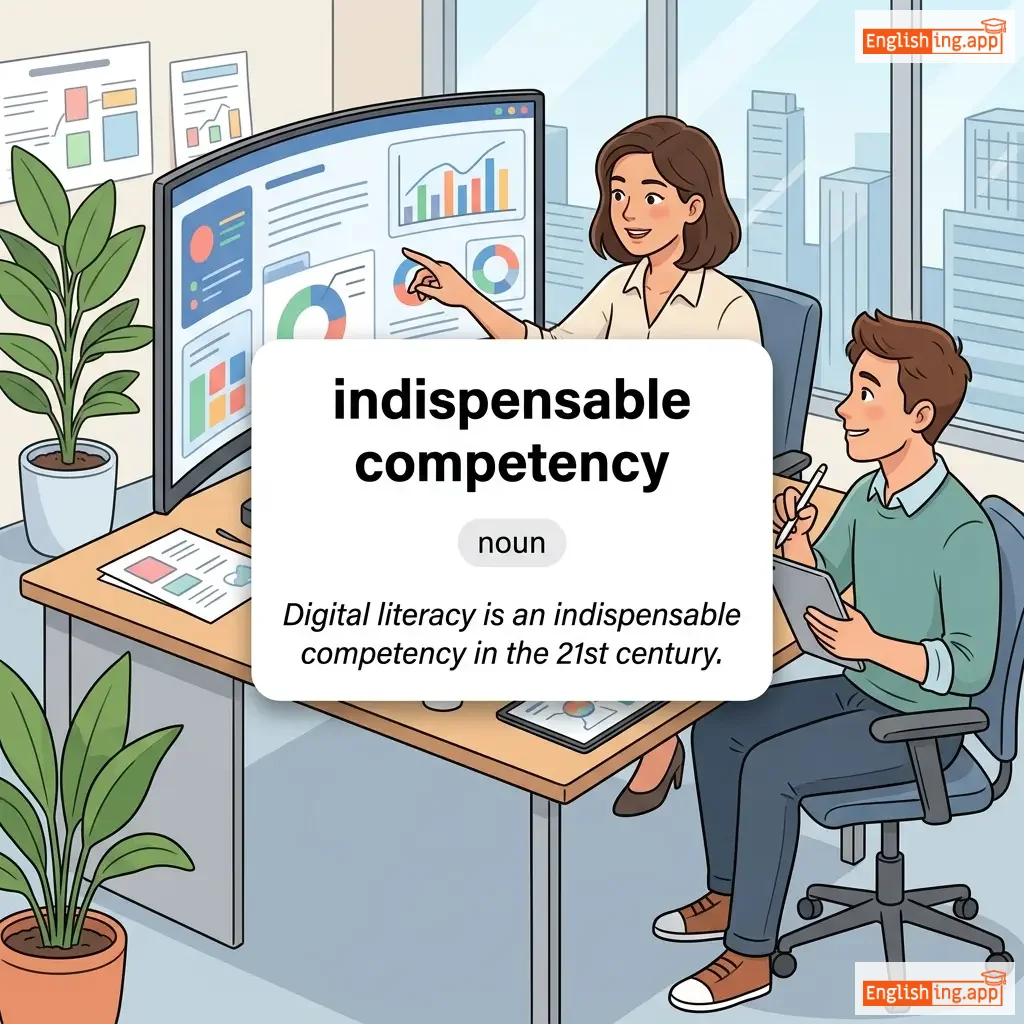
indispensable competency definition card — visual illustration of the meaning
noun
ˌɪndɪˈspensəbl̩ ˈkɒmpɪtənsi
不可或缺的能力 (bùkě huòquē de nénglì)

Essential skill or ability that cannot be done without; a crucial capability that is absolutely necessary.

"Digital literacy is an indispensable competency in the 21st century."

"数字素养是21世纪不可或缺的能力。" (Shùzì sùyǎng shì 21 shìjì bùkě huòquē de nénglì.)
indispensable support definition card — visual illustration of the meaning
noun
ˌɪndɪˈspensəbl səˈpɔːrt
不可或缺的支持 (bù kě huò quē de zhīchí)

Essential assistance that cannot be done without; absolutely necessary help.

"Volunteers provide indispensable support to communities."

"志愿者为社区提供不可或缺的支持。" (Zhìyuànzhě wèi shèqū tígōng bù kě huò quē de zhīchí.)
adjective
/ˌɪndɪˈspjuːtəbl/
不可辩驳的 (bù kě biàn bó de)

Impossible to doubt or question; certain.

"It is an indisputable fact that the earth orbits the sun."

"地球围绕太阳转动是一个不可辩驳的事实。" (Dìqiú wéirào tàiyáng zhuǎndòng shì yīgè bù kě biàn bó de shìshí.)
adjective
/ˌɪndɪˈsɒljʊbl/
不可分割的 (Bù kě fēngē de)

Unable to be destroyed, broken, or dissolved.

"Marriage was once considered an indissoluble bond."

"婚姻曾被视为不可分割的纽带。" (Hūnyīn céng bèi shì wéi bù kě fēngē de niǔdài.)
adjective
/ˌɪndɪˈstɪŋkt/
模糊的 (móhú de)

Not clear or sharply defined; vague or blurred.

"The sound of voices was indistinct in the distance."

"远处的声音是模糊的。" (Yuǎnchù de shēngyīn shì móhú de.)
verb
/ɪnˈdaɪt/
创作 (chuangzuo)

To write or compose (literary or formal works).

"The poet indited a heartfelt sonnet."

"诗人创作了一首真挚的十四行诗。" (Shiren chuangzuo le yishou zhenzhi de shishixing shi.)
adjective
/ˌɪndɪˈvɜːrtɪbəl/

Not able to be turned aside or diverted.

"The judge's indivertible attention was on the case."

noun/adjective
/ˌɪndɪˈvɪdʒuəl/
个体 (gètǐ)

A single human being as distinct from a group; relating to one person.

"Each individual has the right to freedom of speech."

"每个个体都有言论自由的权利。" (Měi gè gètǐ dōu yǒu yánlùn zìyóu de quánlì.)
adjective
/ˌɪndɪˈvɪzəbl/

Not able to be divided or separated.

"The country's unity was indivisible despite differences."

verb
/ɪnˈdɒktrɪˌneɪt/
灌输 (guànshū)

To teach someone to fully accept a set of beliefs or ideas without question.

"The regime tried to indoctrinate the youth with propaganda."

"该政权试图通过宣传对年轻人进行洗脑。" (Gāi zhèngquán shìtú tōngguò xuānchuán duì niánqīng rén jìnxíng xǐnǎo.)
noun
/ˈɪndələns/
懒惰 (lǎn duò)

Avoidance of activity or exertion; laziness.

"His indolence kept him from finishing the project on time."

"他的懒惰使他无法按时完成项目。" (tā de lǎn duò shǐ tā wúfǎ àn shí wánchéng xiàngmù.)
indolent definition card — visual illustration of the meaning
adjective
/ˈɪndələnt/
懒惰 (landuo)

Wanting to avoid activity or exertion; lazy.

"The indolent cat slept in the sun all afternoon."

"懒惰的猫整天躺在阳光下睡觉。" (Landuo de mao zheng tian tang zai yangguang xia shuijiao.)
indomitable definition card — visual illustration of the meaning
adjective
/ɪnˈdɒmɪtəbl/
不可征服的 (bù kě zhēng fú de)

Impossible to subdue or defeat.

"She had an indomitable spirit that inspired everyone."

"她有一种不可征服的精神,激励了每个人。" (Tā yǒu yī zhǒng bù kě zhēng fú de jīngshén, jīlìle měi gèrén.)
adjective
/ˈɪn.dɔːr/
室内的 (shi nei de)

situated, occurring, or used inside a building

"Indoor plants can improve air quality at home."

"室内植物可以改善家里的空气质量。" (shi nei zhi wu ke yi gai shan jia li de kong qi zhi liang)
adverb
/ˌɪnˈdɔːrz/
在室内 (zai shinei)

inside a building; within an enclosed space

"Because of the rain, everyone stayed indoors."

"因为下雨,大家都待在室内。" (yinwei xiayu, dajia dou dai zai shinei)
adjective
/ɪnˈdjuːbɪtəbl/
无可置疑 (wú kě zhì yí)

Impossible to doubt; unquestionable.

"It is indubitable that hard work leads to success."

"毫无疑问,努力工作会带来成功。" (Háo wú yíwèn, nǔlì gōngzuò huì dàilái chénggōng.)
adverb
/ɪnˈdjuːbɪtəbli/
无疑 (wú yí)

Without a doubt; certainly.

"She is indubitably the best candidate for the job."

"她无疑是这份工作的最佳候选人。" (Tā wú yí shì zhè fèn gōngzuò de zuì jiā hòuxuǎn rén.)
verb
/ɪnˈdjuːs/
引起 (yǐnqǐ)

to cause or persuade someone to do something; to bring about a result

"The doctor induced sleep with a mild sedative."

"医生用轻度镇静剂引起了睡眠。" (Yīshēng yòng qīngdù zhènjìng jì yǐnqǐle shuìmián.)
noun
/ɪnˈdjuːsmənt/
诱因 (yòuyīn)

something that persuades or encourages someone to do something

"The company offered a bonus as an inducement to employees."

"公司提供了奖金作为员工的诱因。" (Gōngsī tígōngle jiǎngjīn zuòwéi yuángōng de yòuyīn.)
verb
/ɪnˈdʌkt/

to formally admit someone into a position, organization, or office

"She was inducted into the university's honor society."

adjective
/ɪnˈdʌktɪv/
归纳的 (guī nà de)

characterized by the inference of general laws from particular instances; reasoning from specific cases to general principles

"The scientist used inductive reasoning to form a hypothesis."

"科学家使用归纳推理来形成假设。" (Ke xue jia shi yong gui na tui li lai xing cheng jia she.)
verb
/ɪnˈdʌldʒ/
纵容 (zong rong)

to allow oneself to enjoy something enjoyable, often excessively

"He indulged in a piece of chocolate cake after dinner."

"他在晚餐后沉浸在一块巧克力蛋糕中。" (Ta zai wancan hou chenjin zai yi kuai qiaokeli dangao zhong.)
indulgence definition card — visual illustration of the meaning
noun
/ɪnˈdʌldʒəns/
享乐 (xiǎnglè)

The act of allowing oneself or others to enjoy pleasure, often excessively.

"Her favorite indulgence is eating chocolate late at night."

"她最喜欢的享乐是晚上吃巧克力。" (Tā zuì xǐhuān de xiǎnglè shì wǎnshàng chī qiǎokèlì.)
adjective
/ɪnˈdʌldʒənt/
宽容的 (kuanrong de)

Having a tendency to be overly generous or lenient with someone.

"The indulgent mother allowed her child to stay up late."

"宽容的母亲让孩子晚点才睡。" (kuanrong de mǔqīn ràng háizi wǎn diǎn cái shuì.)
verb
/ˈɪndjʊˌreɪt/
使坚硬 (shǐ jiānyìng)

To harden or make something physically or emotionally tough.

"Years of hardship indurated his spirit."

"多年的艰辛使他的精神变得坚韧。" (duō nián de jiānxīn shǐ tā de jīngshén biàn dé jiānrèn.)