词汇表

英语词汇词典 | 单词含义、定义和示例

adjective
/ɪnˈædɪkwət/
不充分 (bù chōngfèn)

Not sufficient or good enough.

"The funding was inadequate to complete the project."

"资金不足以完成项目。" (Zījīn bù zúgòu yǐ wánchéng xiàngmù.)
adjective
/ˌɪnədˈmɪsəbl̩/
不可接受 (bukexiadu)

Not allowed, especially as evidence in a court of law.

"The judge ruled the evidence inadmissible."

"法官宣布证据不可接受。" (Faguang xuangbu zhengju bukexiadu.)
noun
/ˌɪnədˈvɜːrtəns/
疏忽 (shūhū)

Failure to pay attention; carelessness.

"The error happened through sheer inadvertence."

"错误是由于完全的疏忽发生的。" (Cuòwù shì yóuyú wánquán de shūhū fāshēng de.)
adjective
/ˌɪnədˈvɜːrtənt/
无意的, 非故意的 (wuyi de, fei guyi de)

Not resulting from or achieved through deliberate planning; unintentional.

"Her inadvertent mistake caused a delay in the project."

"她的无意错误导致了项目的延迟。" (Tā de wúyì cuòwù dǎozhì le xiàngmù de yánchí.)
Inadvertently definition card — visual illustration of the meaning
adverb
/ˌɪnədˈvɜːrtəntli/
不小心 (buxiaoxin)

Without intention; accidentally.

"He inadvertently deleted the important file."

"他不小心删除了重要的文件。" (Ta bu xiaoxin shanchule zhongyao de wenjian.)
adjective
/ˌɪnədˈvaɪzəbl/
不建议 (bù jiànyì)

Not recommended; likely to have undesirable consequences.

"It is inadvisable to drive in such heavy rain."

"在这种大雨中开车是不建议的。" (Zài zhè zhǒng dàyǔ zhōng kāichē shì bù jiànyì de.)
adjective
/ɪnˈeɪliənəbl/
不可转让 (bùkě zhuǎnràng)

Unable to be taken away or transferred; absolute and permanent.

"Freedom of speech is an inalienable right."

"言论自由是一项不可转让的权利。" (Yánlùn zìyóu shì yī xiàng bùkě zhuǎnràng de quánlì.)
noun
/ˌɪnəməˈrɑːtə/

A woman with whom someone is in love; a female lover.

"He wrote a poem dedicated to his inamorata."

adjective
/ɪˈneɪn/
无意义的, 傻的 (wú yìyì de, shǎ de)

lacking sense, meaning, or significance; silly or pointless

"The movie was criticized for its inane dialogue."

"这部电影因其无意义的对话而受到批评。" (Zhè bù diànyǐng yīn qí wú yìyì de duìhuà ér shòudào pīpíng.)
adjective
/ɪˈnænɪmət/
无生命的物体 (wú shēngmìng de wùtǐ)

not alive, especially not in the manner of animals and humans; lifeless

"The museum was full of inanimate objects from ancient times."

"博物馆里充满了来自古代的无生命物体。" (Bówùguǎn lǐ chōngmǎnle láizì gǔdài de wú shēngmìng wùtǐ.)
noun
/ɪˈnænɪti/
荒谬, 愚蠢 (huangmiu, yuchun)

a nonsensical remark or action; silliness; emptiness

"The speech was full of inanities that bored the audience."

"演讲充满了让观众感到无聊的荒谬言论。" (Yǎnjiǎng chōngmǎnle ràng guānzhòng gǎndào wúliáo de huāngmiù yánlùn.)
adjective
/ˌɪnæprɪˈhɛnsəbl/
难以理解 (nán yǐ lǐ jiě)

not understandable; incomprehensible

"The concept was so abstract that it seemed inapprehensible to most students."

"这个概念如此抽象,以至于它对大多数学生来说是不可理解的。" (Zhège gàiniàn rúcǐ chōuxiàng, yǐ zhìyú tā duì dàduōshù xuéshēng lái shuō shì bùkě lǐjiě de.)
adjective
/ˌɪnəˈproʊpriət/
不适当 (bushidang)

not suitable or proper in the circumstances

"It was inappropriate to talk loudly in the library."

"在图书馆大声说话是不适当的。" (Zai tushuguan dasheng shuohua shi bushidang de.)
adjective
/ɪnˈæpt/
不合适的 (bù hé shì de)

not suitable or appropriate in the circumstances

"His inapt choice of words offended many people."

"他不合适的用词冒犯了许多人。" (Tā bù hé shì de yòngcí màofànle xǔduō rén.)
adjective
/ˌɪnɑːrˈtɪkjʊlət/
含糊不清 (hán hú bù qīng)

Unable to express oneself clearly or effectively in speech or writing.

"She became inarticulate with emotion during the speech."

"她在演讲中因为情绪而变得含糊不清。" (Tā zài yǎn jiǎng zhōng yīn wèi qíng xù ér biàn dé hán hú bù qīng.)
adverb
/ˌɪnəzˈmʌtʃ/
鉴于 (jian yu)

To the extent that; considering that.

"Inasmuch as you are their teacher, you should guide them carefully."

"鉴于你是他们的老师,你应该小心地指导他们。" (Jian yu ni shi tamen de laoshi, ni yinggai xiaoxin de zhidao tamen.)
conjunction
/ˌɪnəzˈmʌtʃ æz/
因为 (yinwei)

Because; since.

"He cannot attend, inasmuch as he is unwell."

"他不能参加,因为他生病了。" (Tā bù néng cānjiā, yīnwèi tā shēngbìng le.)
adjective
/ˌɪnəˈtɛntɪv/
不专心的 (bu zhuanxin de)

not paying attention; lacking focus or concentration

"The inattentive student missed several important instructions."

"那个不专心的学生错过了几条重要指示。" (nage bu zhuanxin de xuesheng cuoguo le ji tiao zhongyao zhishi)
adjective
/ɪnˈɔːdəbl/
听不见的 (ting bu jian de)

Unable to be heard.

"Her voice was almost inaudible over the noise."

"她的声音几乎在噪音中听不见。" (Ta de shengyin jihu zai zaoyin zhong ting bu jian.)
adjective
/ɪˈnɔːɡjərəl/
开幕 (kaimu)

marking the beginning of something; first; opening

"The president delivered his inaugural speech."

"总统发表了他的开幕演讲。" (Zongtong fabiao le tade kaimu yanjiang.)
verb
/ɪˈnɔːɡjʊreɪt/

To formally begin or introduce something, especially with a ceremony.

"The mayor will inaugurate the new bridge tomorrow."
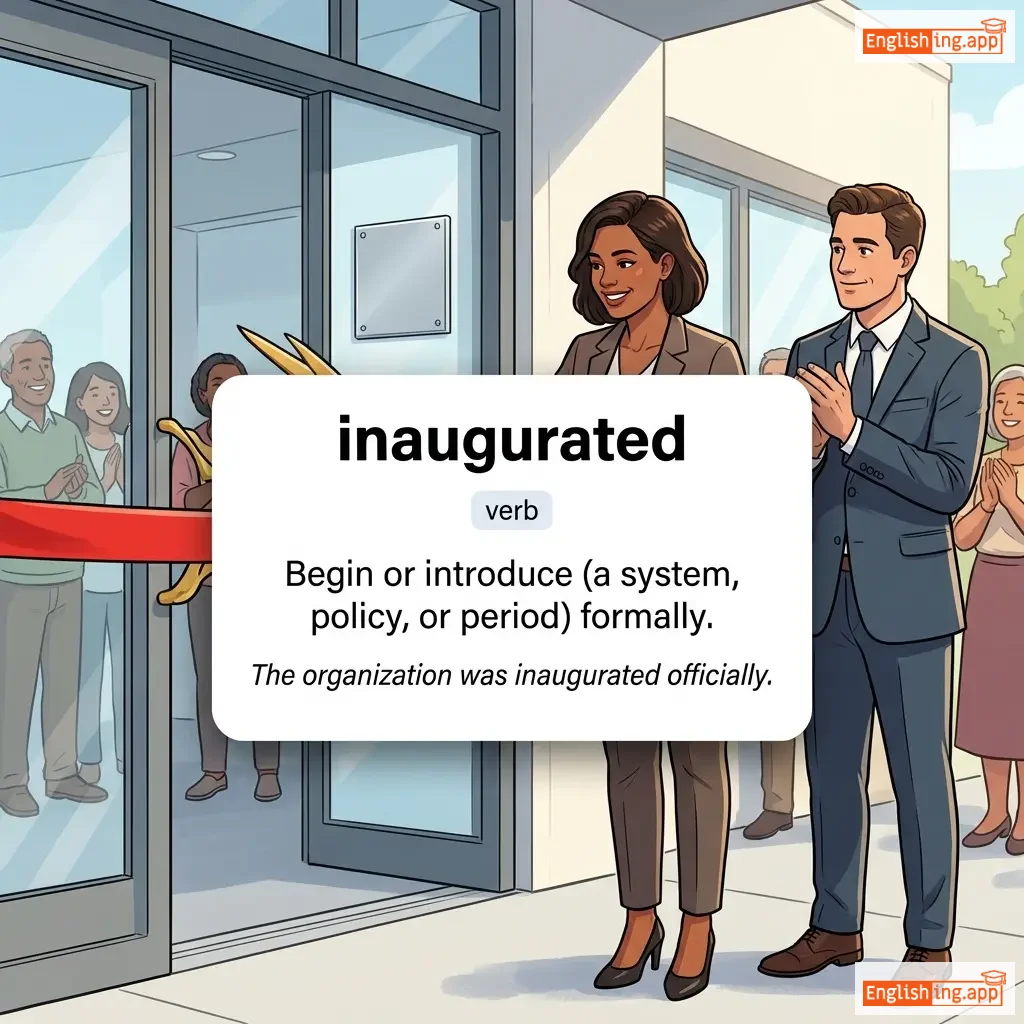
inaugurated definition card — visual illustration of the meaning
verb
ɪˈnɔː.ɡjə.reɪ.tɪd
开幕 (kāimù)

Begin or introduce (a system, policy, or period) formally.

"The organization was inaugurated officially."

"该组织已正式开幕。" (Gāi zǔzhī yǐ zhèngshì kāimù.)
adjective
/ˌɪnɔːˈspɪʃəs/
不吉利 (bù jí lì)

Not conducive to success; unpromising or unlucky.

"The event began under inauspicious circumstances."

"该事件在不利的情况下开始。" (Gāi shìjiàn zài bù lì de qíngkuàng xià kāishǐ.)
adjective
/ˈɪnˌbɔːrn/

existing from birth; innate

"She has an inborn talent for music."

adjective
/ˈɪnˌbrɛd/
天生的 (tiānshēng de)

existing naturally in a person or animal; also related to reproduction within a limited community

"He has an inbred sense of loyalty."

"他有天生的忠诚感。" (Tā yǒu tiānshēng de zhōngchéng gǎn.)
noun
/ˌɪnkænˈdɛsəns/
白炽光 (baichi guang)

the emission of light from a hot object; brilliance

"The incandescence of the candle filled the dark room."

"蜡烛的白炽光填满了黑暗的房间。" (Làzhú de báichì guāng tiánmǎnle hēi'àn de fángjiān.)
adjective
/ˌɪnkænˈdɛsənt/
白炽的 (baichi de)

emitting light as a result of being heated; extremely bright or passionate

"The incandescent lamp lit up the entire hall."

"白炽灯照亮了整个大厅。" (Baichi deng zhaoliang le zhengge dating.)
noun
/ˌɪnkænˈteɪʃən/
咒语 (zhòuyǔ)

a series of words used as a magic spell or charm

"The wizard chanted an incantation to summon the spirits."

"巫师念了一段咒语来召唤灵魂。" (Wūshī niànle yī duàn zhòuyǔ lái zhàohuàn línghún.)
noun
/ˌɪnˌkeɪpəˈbɪləti/
无能力 (wu nengli)

lack of ability or power to do something; inability or incompetence

"His incapability to manage the team led to serious problems."

"他管理团队的无能力导致了严重的问题。" (ta guanli tuandui de wu nengli daozhile yanzhong de wenti)
adjective
/ɪnˈkeɪpəbəl/
无能的 (wu neng de)

lacking the ability, skill, or capacity to do something

"He is incapable of understanding complex instructions."

"他无法理解复杂的指令。" (ta wu fa li jie fu za de zhi ling)
verb
/ˌɪnkəˈpæsɪteɪt/
使无法运作 (shi wu fa yun zuo)

to deprive someone or something of the ability or strength to function

"The severe injury incapacitated the player for the rest of the season."

"重伤使球员在赛季剩余的时间内无法参赛。" (Zhong shang shi qiu yuan zai sai ji sheng yu de shi jian nei wu fa can sai.)
noun
/ˌɪnkəˈpæsəti/
无能 (wú néng)

the lack of ability, power, or fitness to do something

"His mental incapacity prevented him from making important decisions."

"他的心理无能使他无法做出重要决策。" (Tā de xīnlǐ wú néng shǐ tā wú fǎ zuò chū zhòng yào jué cè.)
verb
/ɪnˈkɑːrsəreɪt/
监禁 (jianjin)

to imprison or confine someone

"The authorities incarcerated the criminal after the trial."

"当局在审判后将罪犯监禁。" (Dangju zai shenpan hou jiang zuifan jianjin.)
noun
/ɪnˌkɑːsəˈreɪʃən/
监禁 (jianjin)

the state of being imprisoned or confined

"The criminal faced years of incarceration for his crimes."

"罪犯因其罪行被监禁多年。" (Zuifan yin qi zuixing bei jianjin duonian.)
adjective/noun
/ɪnˈkɑːrnədiːn/
深红色 (shen hong se)

a bright crimson or pinkish-red color

"The sky turned incarnadine at sunset."

"夕阳下天空变成了深红色。" (Xiyangxia tiānkōng biàn chéngle shēn hóng sè.)
incarnate definition card — visual illustration of the meaning
adjective/verb
/ɪnˈkɑːrneɪt/
化身 (huàshēn)

to embody or represent in human form; in flesh

"She is kindness incarnate."

"她是善良的化身。" (Tā shì shànliáng de huàshēn.)
noun
/ˌɪnkɑːrˈneɪʃən/
化身 (huàshēn)

the embodiment of a deity, spirit, or quality in a physical form

"The monk was considered the incarnation of compassion."

"这位僧侣被认为是慈悲的化身。" (Zhè wèi sēnglǚ bèi rènwéi shì cíbēi de huàshēn.)
adjective
/ɪnˈsɛndiˌɛri/
煽动性的 / 挑衅的 (shāndòng xìng de / tiǎoxìn de)

designed to cause fires or stir up conflict

"The politician’s incendiary remarks angered the crowd."

"政治家的挑衅性言论激怒了人群。" (Zhèngzhìjiā de tiǎoxìn xìng yánlùn jī nù le rénqún.)
noun/verb
/ˈɪnsɛns/
香火 / 激怒 (xiang huo / ji nu)

a substance burned for its sweet smell (noun); to make very angry (verb)

"The smell of incense filled the temple, but his rude words incensed her."

"香火的气味充满了寺庙,但他粗鲁的话让她非常生气。" (Xiang huo de qi wei chong man le si miao, dan ta cu lu de hua rang ta fei chang sheng qi.)
noun
/ɪnˈsɛntɪv/
激励 (jili)

a thing that motivates or encourages someone to do something

"The company offers bonuses as an incentive to increase productivity."

"公司提供奖金作为激励,促进生产力提高。" (Gōngsī tígōng jiǎngjīn zuòwéi jīlì, cùjìn shēngchǎnlì tígāo.)
incentives definition card — visual illustration of the meaning
noun
ɪnˈsɛntɪvz
激励 (jīlì)

Things that motivate or encourage one to do something.

"Tax incentives are used to encourage investment in renewable energy."
"税收激励用于鼓励对可再生能源的投资。" (Shuìshōu jīlì yòng yú gǔlì duì kě zàishēng néngyuán de tóuzī.)
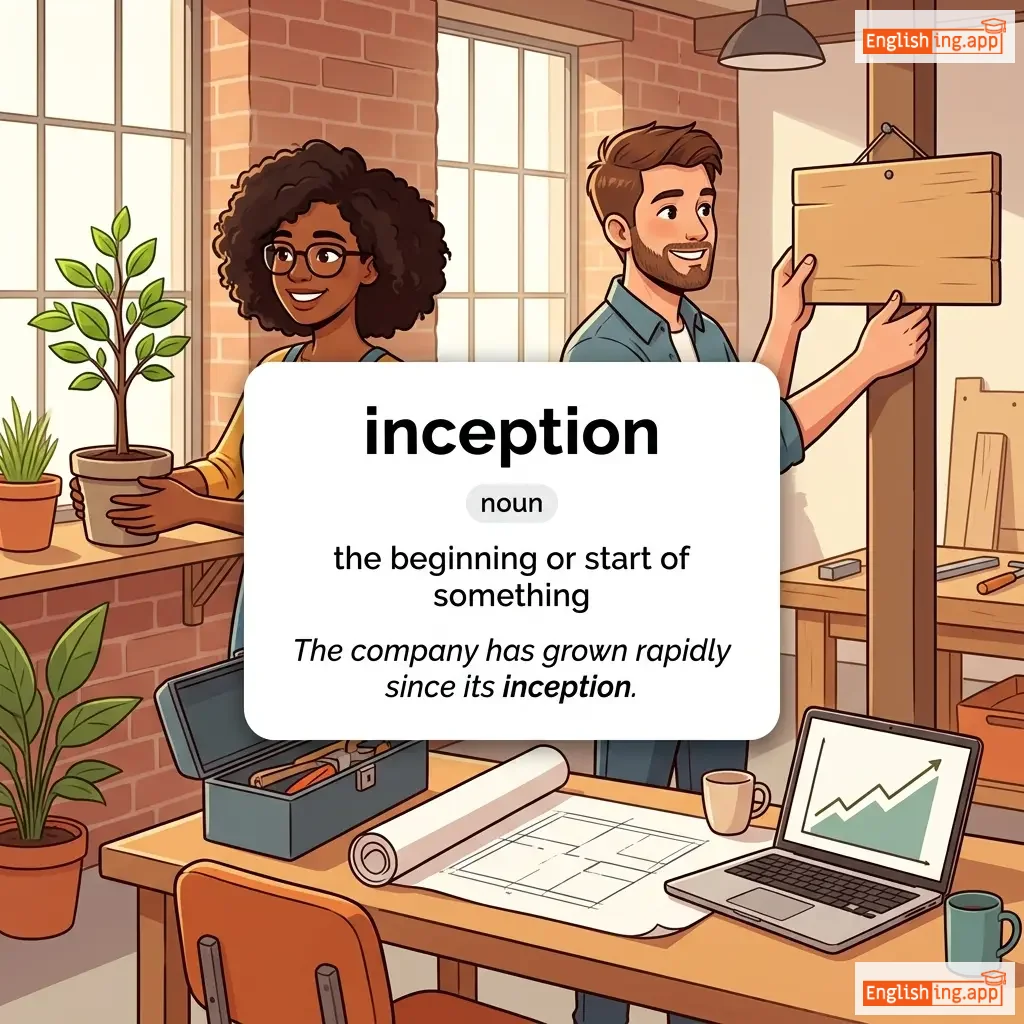
inception definition card — visual illustration of the meaning
noun
/ɪnˈsɛpʃən/
开始 (kaishi)

the beginning or start of something

"The company has grown rapidly since its inception."

"公司自创立以来发展迅速。" (Gongsi zi chuangli yilai fazhan xunsu.)
adjective
/ɪnˈsɛptɪv/
初始 (chushi)

Relating to or marking the beginning or initial stage of something.

"The inceptive phase of the project was marked by enthusiastic planning."
"项目的初始阶段是通过充满热情的规划来标志的。" (Xiangmu de chushi jieduan shi tongguo chongman reqing de guihua lai biaozhi de.)
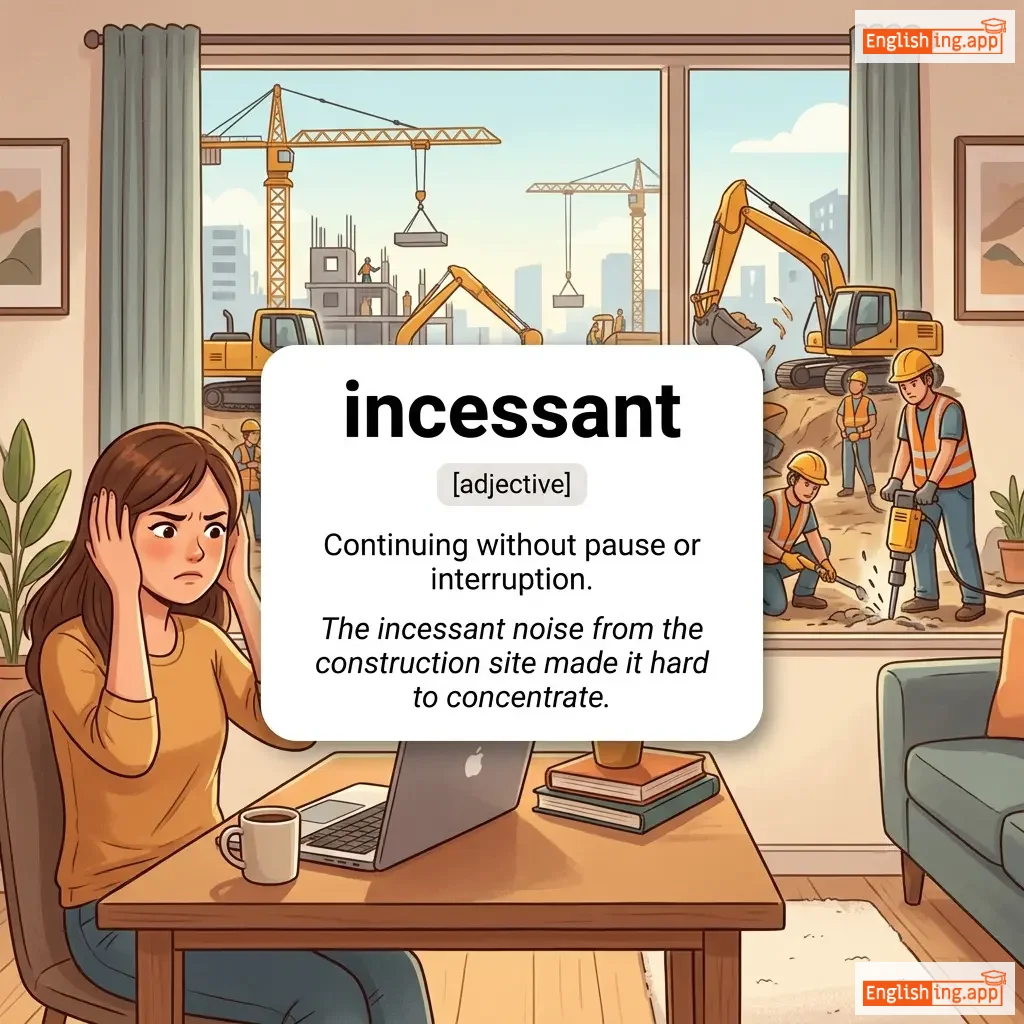
incessant definition card — visual illustration of the meaning
adjective
/ɪnˈsɛsənt/
不断 (bùduàn)

Continuing without pause or interruption.

"The incessant noise from the construction site made it hard to concentrate."

"建筑工地不断的噪音让人很难集中注意力。" (Jiànzhú gōngdì bùduàn de zàoyīn ràng rén hěn nán jízhōng zhùyìlì.)
noun, verb
/ɪntʃ/
英寸 / 缓慢移动 (yingcun / huanman yidong)

A unit of length equal to 2.54 centimeters; or to move slowly and carefully in small amounts.

"She inched closer to the edge of the stage."

"她慢慢靠近舞台的边缘。" (Ta manman kaojin wutai de bianyuan.)
adverb
/ˈɪntʃmiːl/
逐渐 (zhújiàn)

Gradually, little by little.

"The old castle fell inchmeal into ruin."

"那座古老的城堡逐渐变成废墟。" (Nà zuò gǔlǎo de chéngbǎo zhújiàn biàn chéng fèixū.)
inchoate definition card — visual illustration of the meaning
adjective
/ɪnˈkoʊ.ɪt/ or /ɪnˈkoʊ.eɪt/
未完成的 (wei wancheng de)

Just begun and not fully formed; rudimentary.

"His inchoate ideas needed more research to be developed."

"他的未完成的想法需要更多的研究才能发展。" (Tā de wèi wánchéng de xiǎngfǎ xūyào gèng duō de yánjiū cáinéng fāzhǎn.)
adjective
/ɪnˈkoʊətɪv/
初步的 (chubude)

relating to the beginning of something; in an initial stage

"The poet used inchoative expressions to depict the dawn of creation."

"诗人使用了初步的表达方式来描绘创世之初。" (Shiren shiyongle chubude de biaodafangshi lai miaohui chuangshi zhi chu.)
noun
/ˈɪnsɪdəns/
事件发生率 (shìjiàn fāshēng lǜ)

the occurrence, rate, or frequency of something

"The incidence of road accidents has decreased this year."

"今年道路事故的发生率有所下降。" (Jīnnián dàolù shìgù de fāshēng lǜ yǒu suǒ xiàjiàng.)
noun
/ˈɪnsɪdənt/
事件 (shìjiàn)

an event or occurrence, often unpleasant or unusual

"The police quickly responded to the incident in the park."

"警方迅速回应了公园内的事件。" (jǐngfāng xùnsù huíyīngle gōngyuán nèi de shìjiàn.)