词汇表

英语词汇词典 | 单词含义、定义和示例

noun
/ˌɪməˈrælɪti/
不道德 (bu daode)

the quality of being immoral; behavior that violates accepted moral standards

"The community condemned the immorality of the corrupt officials."

"社会谴责了腐败官员的不道德行为。" (Shehui qianze le fubai guanyuan de bu daode xingwei)
adjective; noun
/ɪˈmɔːrtl/
不朽的 (buxiu de)

living forever; never dying; lasting forever in fame or memory

"Legends often describe heroes as immortal beings who never die."

"传说中英雄是不朽的存在。" (chuanshuo zhong yingxiong shi buxiu de cunzai)
noun
/ˌɪmɔːrˈtæləti/
不朽 (buxiu)

the state of living forever; eternal life or lasting fame beyond death

"Many ancient cultures believed that heroes could achieve immortality through great deeds."

"许多古代文化相信英雄可以通过伟大的事迹获得不朽。" (xuduo gudai wenhua xiangxin yingxiong keyi tongguo weida de shiji huode buxiu)
verb
/ɪˈmɔːrtəlaɪz/
永生 (yǒngshēng)

to preserve the memory of someone or something forever

"The statue was built to immortalize the hero’s sacrifice."

"这座雕像是为了让英雄的牺牲永生化。" (Zhè zuò diāoxiàng shì wèile ràng yīngxióng de xīshēng yǒngshēnghuà.)
immovable definition card — visual illustration of the meaning
adjective
/ɪˈmuːvəbl/
不可移动 (bù kě yí dòng)

impossible to move or change

"The rock was too heavy and immovable."

"那块岩石太重,无法移动。" (Nà kuài yánshí tài zhòng, wúfǎ yí dòng.)
adjective
/ɪˈmjuːn/
免疫的 (mianyi de)

protected from disease or from the effects of something

"Children who are vaccinated are immune to many diseases."

"接种疫苗的孩子对许多疾病免疫。" (Jiezhong yimiao de haizi dui xuduo jibing mianyi.)
immunity definition card — visual illustration of the meaning
noun
/ɪˈmjuːnɪti/
免疫力 (miǎnyì lì)

The state of being protected against disease or harmful influences.

"Vaccination provides immunity against certain infections."

"疫苗接种提供对某些感染的免疫力。" (Yìmiáo jiēzhòng tígōng duì mǒuxiē gǎnrǎn de miǎnyì lì.)
verb
/ɪˈmjʊər/
囚禁 (qiújìn)

to confine or enclose someone against their will

"The prisoner was immured in a dark cell."
"囚犯被禁闭在一个黑暗的牢房里。" (Qiúfàn bèi jìnbì zài yīgè hēi'àn de láofáng lǐ.)
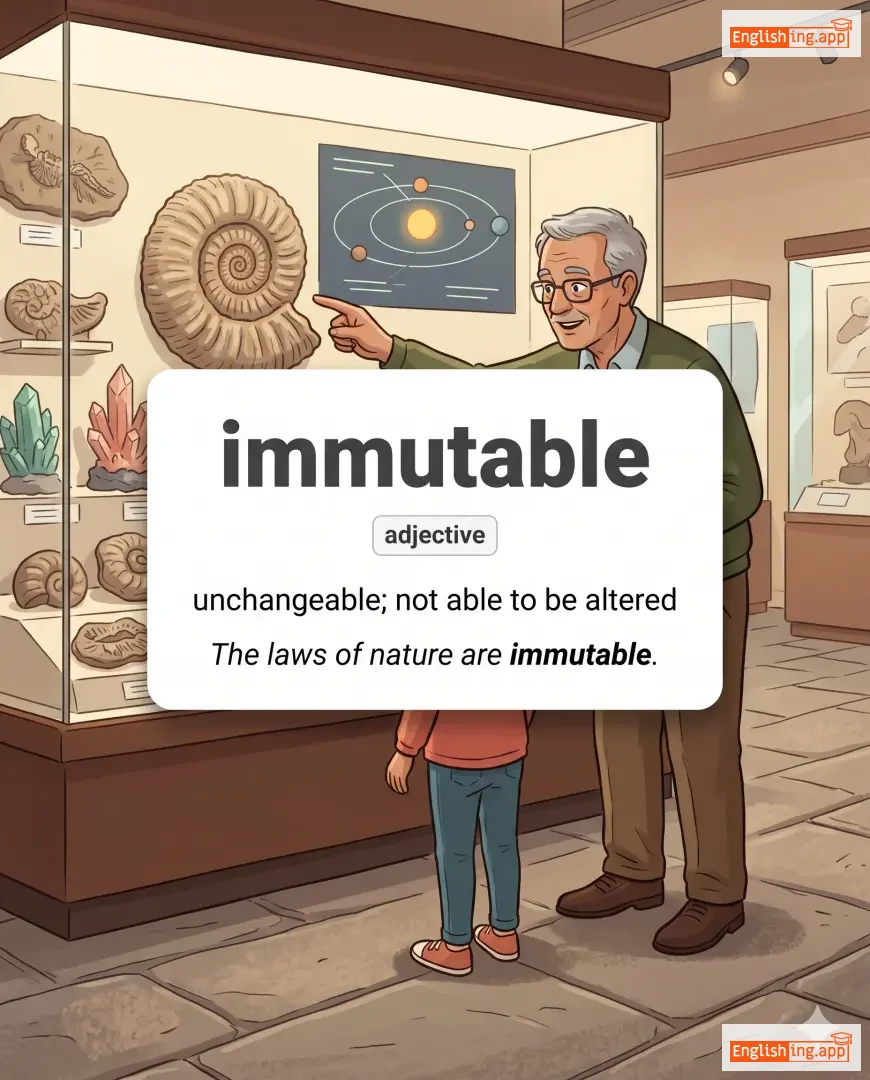
immutable definition card — visual illustration of the meaning
adjective
/ɪˈmjuːtəbl/
不可改变的 (bùkě gǎibiàn de)

unchangeable; not able to be altered

"The laws of nature are immutable."
"大自然的规律是不可改变的。" (Dà zìrán de guīlǜ shì bùkě gǎibiàn de.)
noun
/ɪmp/
小顽皮精灵 (xiao wanpi jingling)

a small mischievous devil or sprite; a playful troublemaker

"The child was acting like a little imp, hiding his toys everywhere."

"那个孩子像一个小顽皮精灵,四处藏玩具。" (Na ge haizi xiang yi ge xiao wanpi jingling, sichu cang wanju.)
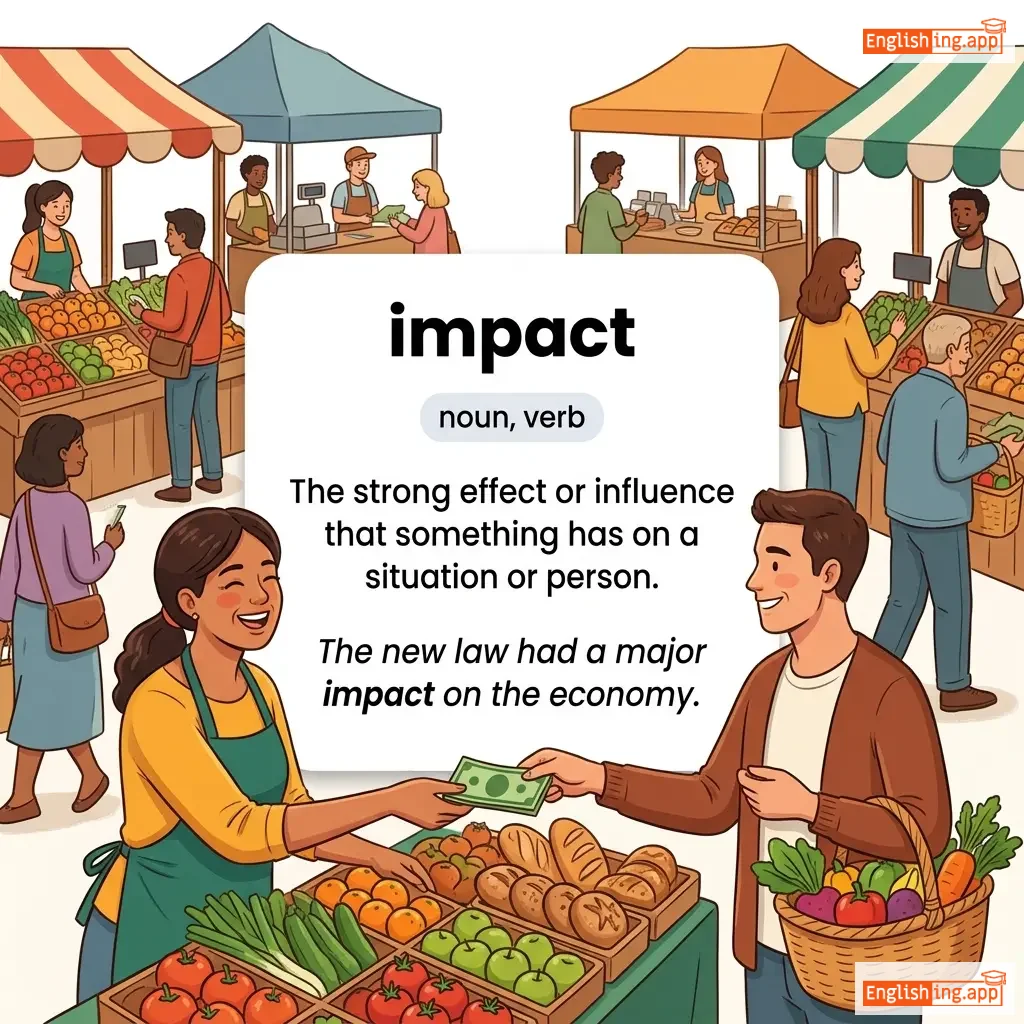
impact definition card — visual illustration of the meaning
noun, verb
/ˈɪmpækt/
影响 (yingxiang)

The strong effect or influence that something has on a situation or person.

"The new law had a major impact on the economy."

"新法律对经济产生了重大影响。" (Xin falu dui jingji chansheng le zhongda yingxiang.)
impactful definition card — visual illustration of the meaning
adjective
/ˈɪmpæktfʊl/
有影响力的 (you yingxiangli de)

Having a major impact or effect; powerful and forceful.

"Her impactful speech moved the audience to take action."
"她有影响力的演讲促使观众采取行动。" (Tā yǒu yǐngxiǎnglì de yǎnjiǎng cùshǐ guānzhòng cǎiqǔ xíngdòng.)
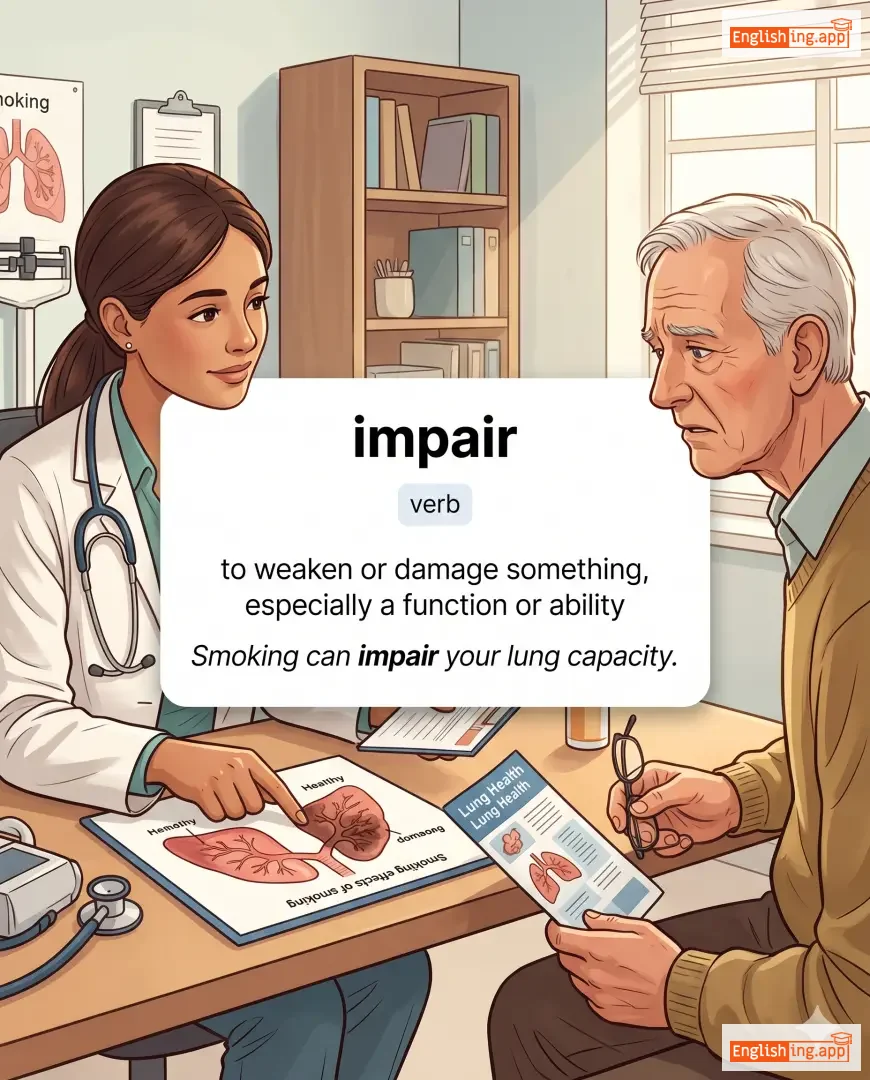
impair definition card — visual illustration of the meaning
verb
/ɪmˈpɛər/
损害 (sunhai)

to weaken or damage something, especially a function or ability

"Smoking can impair your lung capacity."
"吸烟可能会损害您的肺部容量。" (Xiyan keneng hui sunhai ninde feibu rongliang.)
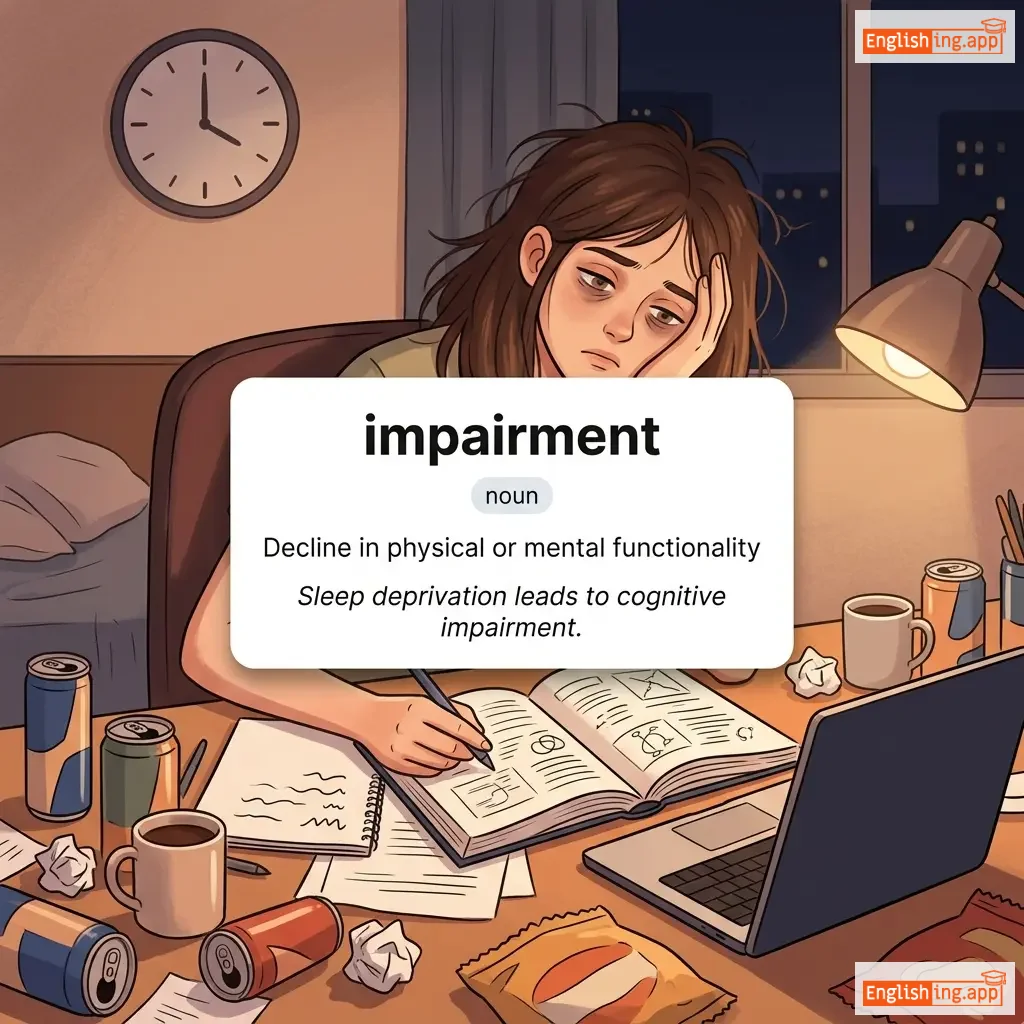
impairment definition card — visual illustration of the meaning
noun
ɪmˈpɛərmənt
损伤 (sǔnshāng)

Decline in physical or mental functionality

"Sleep deprivation leads to cognitive impairment."

"睡眠不足会导致认知损伤。" (Shuìmián bùzú huì dǎozhì rènzhī sǔnshāng.)
verb
/ɪmˈpeɪl/
刺穿 (cìchuān)

to pierce or fix something with a sharp object

"The knight was impaled by the enemy’s spear."

"骑士被敌人的长矛刺穿。" (Qíshì bèi dírén de chángmáo cìchuān.)
adjective
/ɪmˈpælpəbəl/
难以触及的 (nanyi chuji de)

unable to be felt by touch; difficult to grasp or understand

"There was an impalpable sense of fear in the room."

"房间里有一种难以触及的恐惧感。" (Fangjian li you yizhong nanyi chuji de kongju gan.)
verb
/ɪmˈpɑːrt/
传授 (chuánshòu)

to make information known; to bestow or communicate

"The teacher imparted valuable knowledge to her students."

"老师将宝贵的知识传授给她的学生。" (Lǎoshī jiāng bǎoguì de zhīshì chuánshòu gěi tā de xuéshēng.)
adjective
/ɪmˈpɑːrʃəl/
公正 (gongzheng)

Treating all rivals or disputants equally; fair and just.

"The judge remained impartial throughout the trial."

"法官在整个审判过程中保持了公正。" (Fǎguān zài zhěnggè shěnpàn guòchéng zhōng bǎochíle gōngzhèng.)
adjective
/ɪmˈpæsəbəl/
无法通行 (wúfǎ tōngxíng)

Impossible to travel along or over.

"The road became impassable after the heavy snowfall."

"这条路在大雪过后变得无法通行。" (Zhè tiáo lù zài dà xuě guò hòu biàn dé wúfǎ tōngxíng.)
impasse definition card — visual illustration of the meaning
noun
/ˈɪmpæs/
僵局 (jiangju)

A situation in which no progress is possible; a deadlock.

"Negotiations reached an impasse after both sides refused to compromise."

"谈判在双方拒绝妥协后陷入了僵局。" (Tanpan zai shuāngfāng jùjué tuǒxié hòu xiànrù le jiāngjú.)
adjective
/ɪmˈpæsɪbəl/
不可忍受的 (bukener shou de)

Incapable of suffering or feeling pain (used mainly in theological or philosophical contexts).

"Some philosophers argue that God is impassible and cannot experience human emotions."

"一些哲学家认为上帝是不可忍受的,无法体验人类的情感。" (Yixie zhexuejia renwei Shangdi shi bukener shou de, wufa tijian renlei de qinggan.)
adjective
/ɪmˈpæʃənd/
充满激情的 (chōngmǎn jīqíng de)

Filled with or showing great emotion.

"She gave an impassioned speech about human rights."
"她发表了关于人权的充满激情的演讲。" (Tā fābiǎole guānyú rénquán de chōngmǎn jīqíng de yǎnjiǎng.)
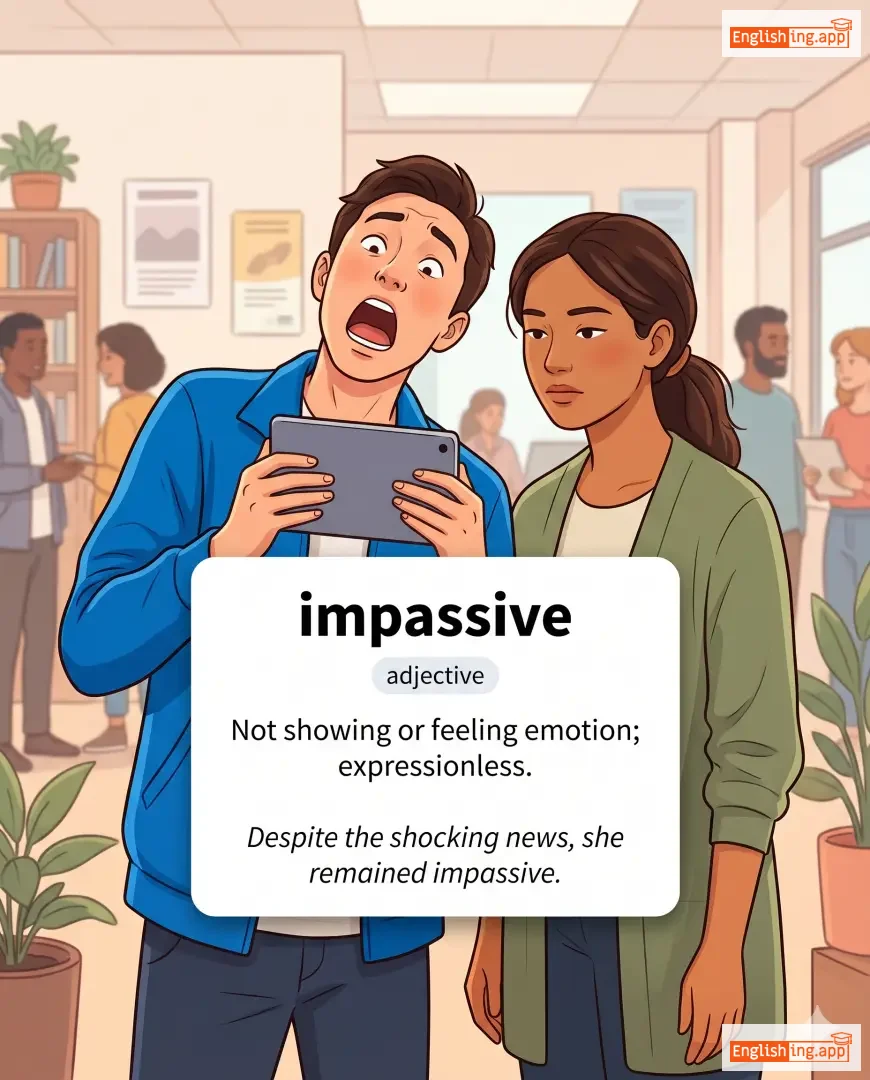
impassive definition card — visual illustration of the meaning
adjective
/ɪmˈpæsɪv/
冷漠 (lěngmò)

Not showing or feeling emotion; expressionless.

"Despite the shocking news, she remained impassive."

"尽管有令人震惊的消息,她依然无动于衷。" (Jǐnguǎn yǒu lìngrén zhènjīng de xiāoxī, tā yīrán wúdòng yú zhōng.)
noun
/ɪmˈpeɪʃəns/
不耐烦 (bunai fan)

The state of being quickly irritated or unable to wait calmly.

"His impatience grew as the meeting dragged on."

"随着会议的拖延,他的不耐烦愈加明显。" (Sui zhe huiyi de tuoyan, ta de bunai fan yujia mingxian.)
adjective
/ɪmˈpeɪʃənt/
不耐烦 (bù nài fán)

Not able to wait calmly; restless and eager for something to happen.

"She grew impatient while waiting in the long queue."

"她在长队中等得不耐烦。" (tā zài cháng duì zhōng děng dé bù nài fán.)
adverb
/ɪmˈpeɪʃəntli/
不耐烦地 (bu naifan de)

in a manner showing annoyance or restlessness due to delay or waiting

"She tapped her fingers impatiently while waiting for the reply."

"她在等回复时不耐烦地敲着手指。" (ta zai deng huifu shi bu naifan de qiaozhe shouzhi)
⚖️

impeach

verb
/ɪmˈpiːtʃ/

To charge a public official with misconduct while in office.

"The parliament voted to impeach the president."

impeccable definition card — visual illustration of the meaning
adjective
/ɪmˈpɛkəbl̩/
无懈可击 (wuxiekewuji)

Perfect; without flaws or faults.

"She delivered an impeccable performance on stage."
"她在舞台上的表现无懈可击。" (Ta zai wutai shang de biaoxian wuxiekewuji.)
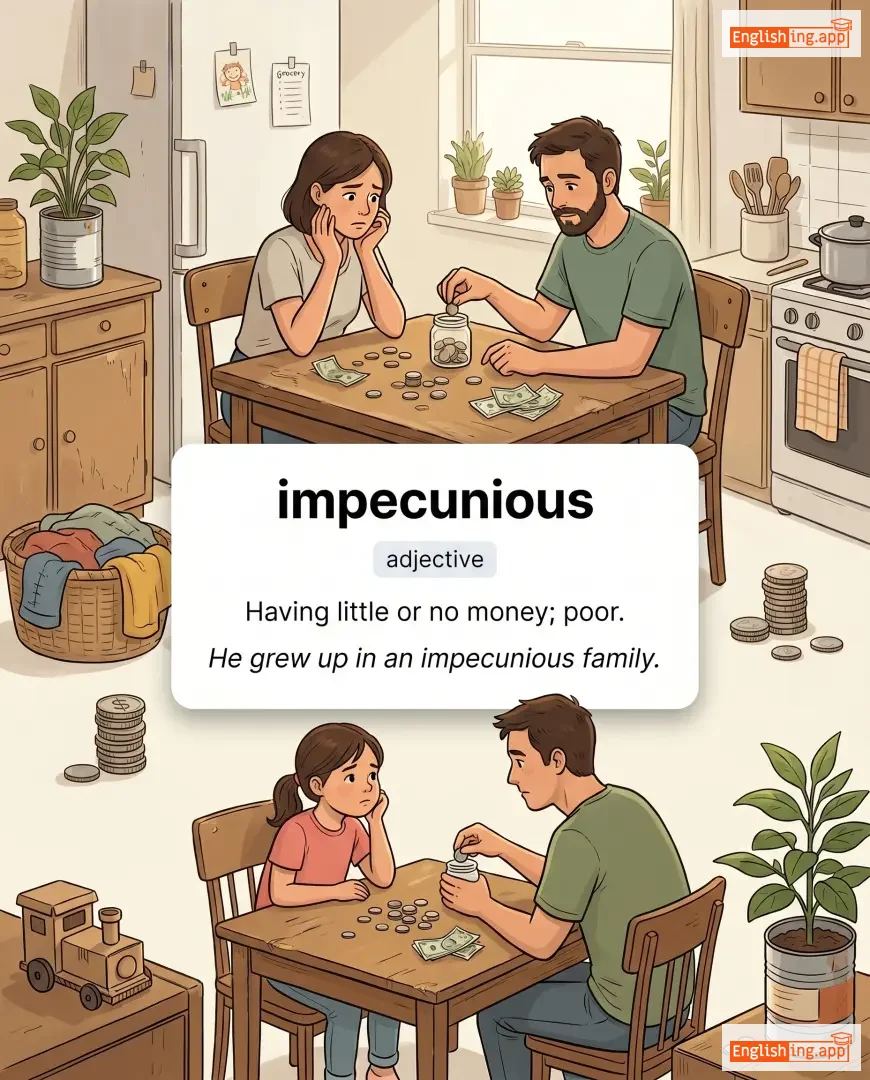
impecunious definition card — visual illustration of the meaning
adjective
/ˌɪmpɪˈkjuːniəs/
贫穷 (pinqiong)

Having little or no money; poor.

"He grew up in an impecunious family."
"他在一个贫穷的家庭中长大。" (Ta zai yi ge pinqiong de jiating zhong zhangda.)
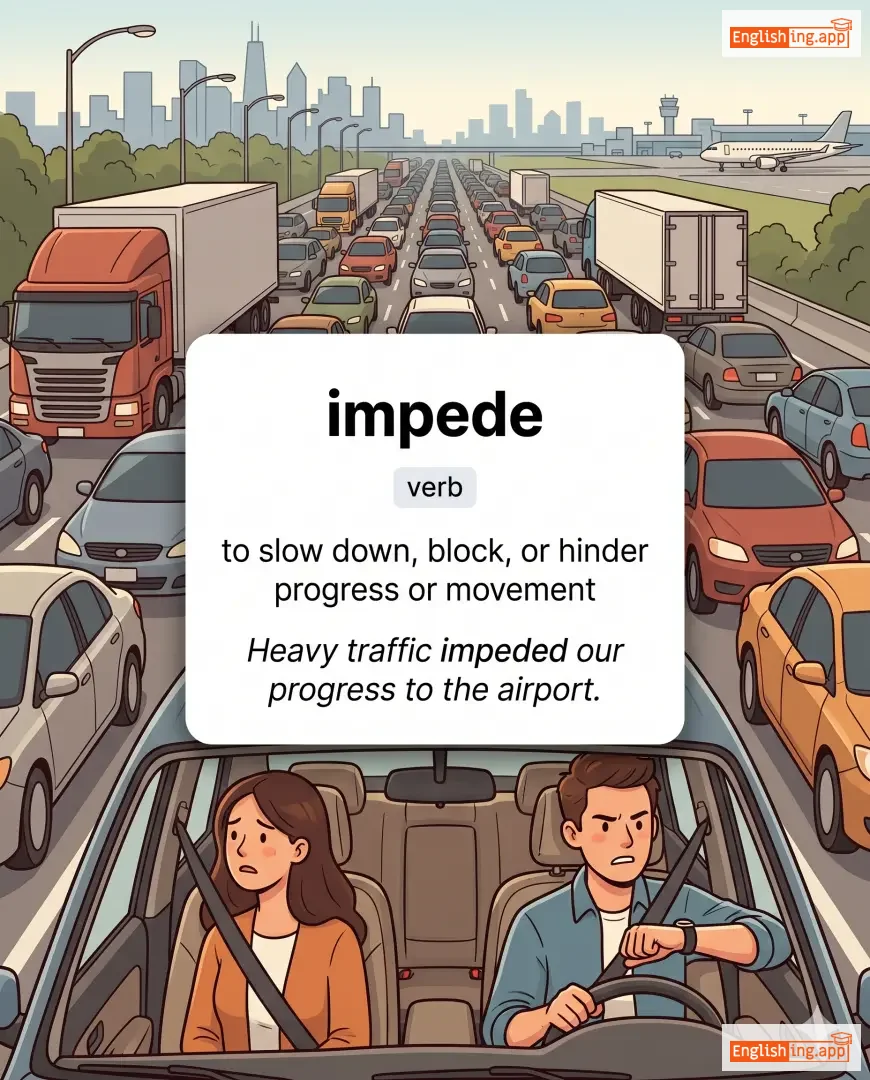
impede definition card — visual illustration of the meaning
verb
/ɪmˈpiːd/
阻碍 (zuhai)

to slow down, block, or hinder progress or movement

"Heavy traffic impeded our progress to the airport."
"繁忙的交通妨碍了我们前往机场的进展。" (Fanmang de jiaotong fangai le women qianwang jihang de jinzhan.)
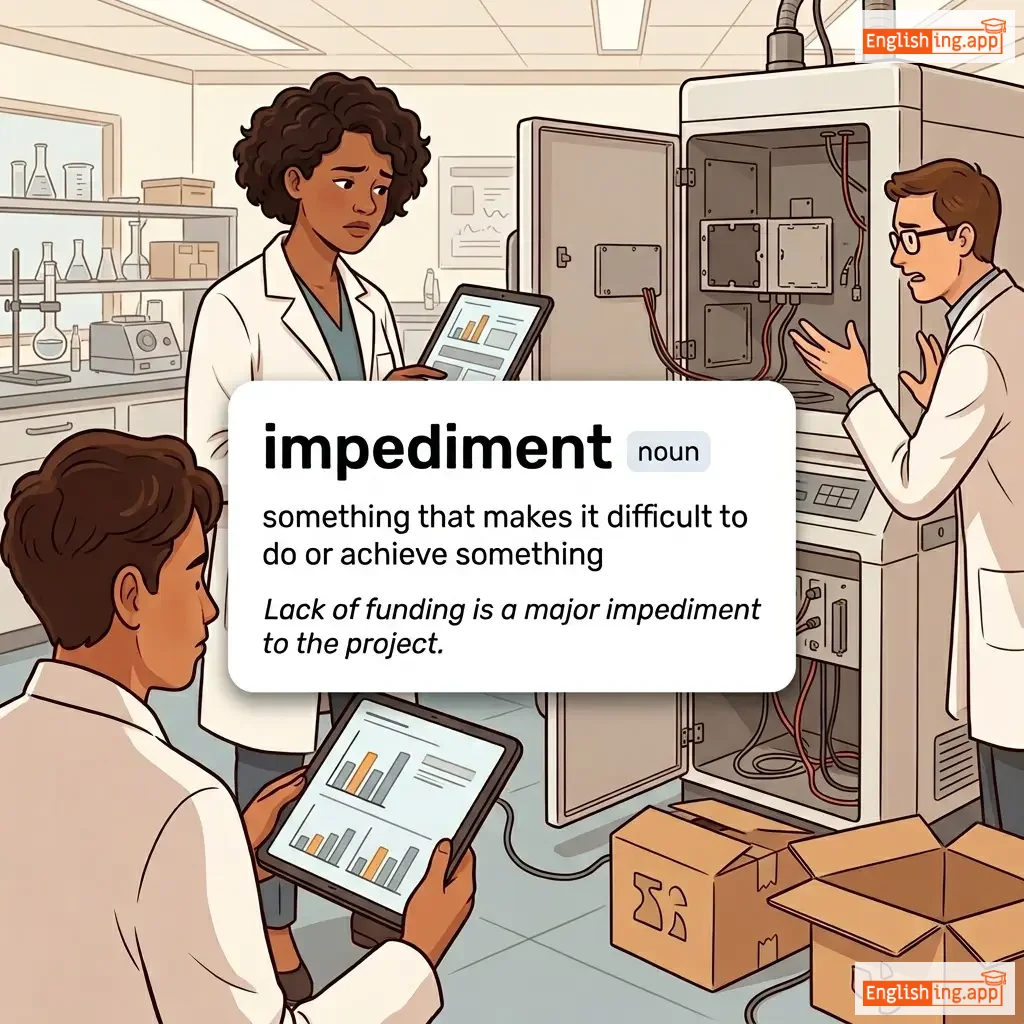
impediment definition card — visual illustration of the meaning
noun
/ɪmˈpɛdɪmənt/

something that makes it difficult to do or achieve something

"Lack of funding is a major impediment to the project."
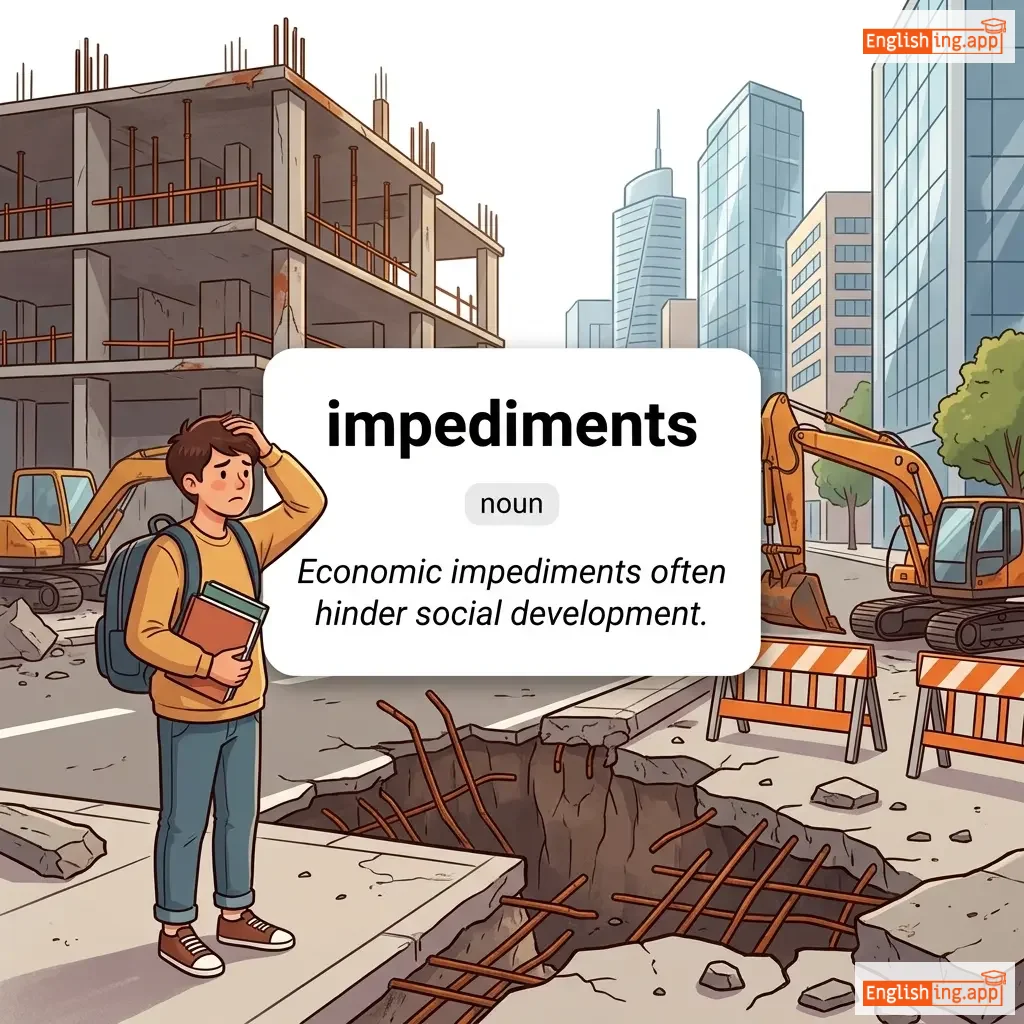
impediments definition card — visual illustration of the meaning
noun
/ɪmˈpɛdɪmənt/
障碍 (zhàng'ài)

A hindrance or obstruction in doing something; things that prevent progress or achievement.

"Economic impediments often hinder social development."

"经济障碍常常阻碍社会发展。" (Jīngjì zhàng'ài chángcháng zǔ'ài shèhuì fāzhǎn.)
➡️

impel

verb
/ɪmˈpɛl/

to drive, force, or urge someone to do something

"Her curiosity impelled her to open the mysterious box."

verb
/ɪmˈpɛnd/
临近 (linjin)

to be about to happen; to loom threateningly

"Dark clouds suggested that a storm was impeding."

"乌云暗示着暴风雨即将来临。" (Wu yun anshi zhe baofengyu jiang jiali。)
adjective
/ɪmˈpɛndɪŋ/
即将来临 (ji jiang lai lin)

about to happen soon, usually something unpleasant or threatening

"The villagers were worried about the impending flood."

"村民们为即将来临的洪水感到担忧。" (Cunminmen wei ji jiang lai lin de hongshui gandao danyou.)
adjective
/ɪmˈpɛn.ɪ.trə.bəl/

Impossible to pass through or enter; impossible to understand.

"The dense forest was nearly impenetrable."

adjective
/ɪmˈpɛn.ɪ.tənt/
不悔 (bù huǐ)

Not feeling regret or shame about one's actions.

"The criminal remained impenitent after the trial."
"犯罪者在审判后依然不悔。" (Fànzuì zhě zài shěnpàn hòu yīrán bù huǐ.)
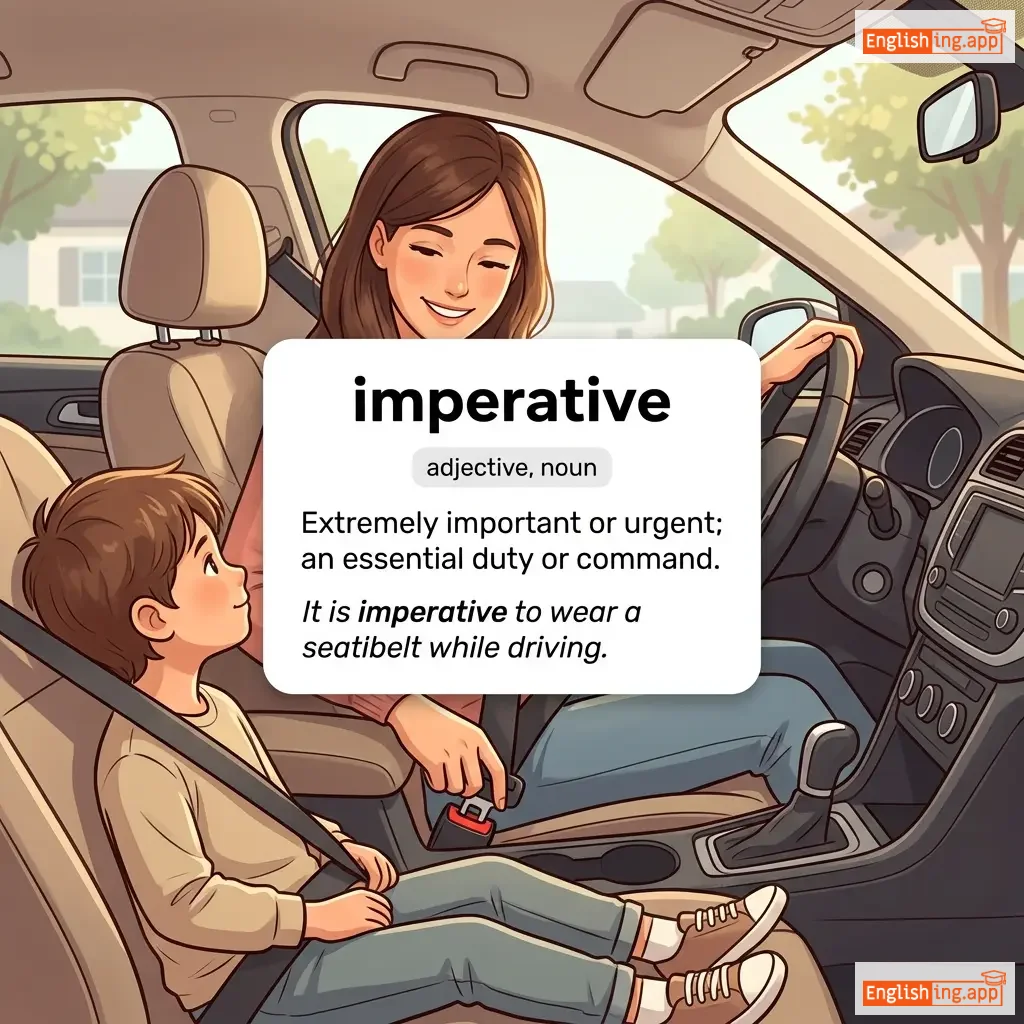
imperative definition card — visual illustration of the meaning
adjective, noun
/ɪmˈpɛr.ə.tɪv/
命令的 (mingling de)

Extremely important or urgent; an essential duty or command.

"It is imperative to wear a seatbelt while driving."

"在开车时系安全带是命令性的。" (Zài kāichē shí xì ānquán dài shì mìnglìng xìng de.)
imperceptible definition card — visual illustration of the meaning
adjective
/ˌɪm.pəˈsɛp.tə.bəl/
难以察觉 (nán yǐ chá jué)

So slight, gradual, or subtle as to be not easily noticed or perceived.

"The change in his voice was almost imperceptible."

"他的声音变化几乎是不可察觉的。" (Tā de shēngyīn biànhuà jīhū shì bù kě chájué de.)
adjective
/ɪmˈpɜːrfɪkt/
不完美 (bù wánměi)

Not perfect; having faults or flaws.

"The painting was beautiful despite being imperfect."

"这幅画很美,尽管它不完美。" (Zhè fú huà hěn měi, jǐnguǎn tā bù wánměi.)
adjective
/ˌɪm.pəˈfɛk.tə.bəl/
不可完美 (bù kě wán měi)

Incapable of being made perfect or complete.

"Some human qualities are considered imperfectible."

"某些人类特质被认为是不可完美的。" (Mǒu xiē rénlèi tèzhì bèi rènwéi shì bù kě wán měi de.)
noun
/ˌɪmpərˈfɛkʃən/
不完美 (bu wanmei)

a flaw, defect, or weakness; the state of being imperfect

"She accepted her imperfection as part of being human."

"她接受了自己的不完美,作为人性的一部分。" (ta jieshou le ziji de bu wanmei zuowei renxing de yi bufen)
adjective
/ɪmˈpɪəriəl/
帝国的 (dìguó de)

Relating to an empire or emperor; having supreme authority.

"The imperial palace was a symbol of the emperor's power."

"帝国宫殿是皇帝权力的象征。" (Dìguó gōngdiàn shì huángdì quánlì de xiàngzhēng.)
verb
/ɪmˈpɛrɪl/
使处于危险中 (shǐ chùyú wēixiǎn zhōng)

To put in danger or at risk.

"Reckless driving can imperil the lives of others."

"鲁莽驾驶可能会危及他人的生命。" (Lǔmǎng jiàshǐ kěnéng huì wēijí tārén de shēngmìng.)
adjective
/ɪmˈpɪəriəs/
专横 (zhuānhèng)

Arrogantly domineering or overbearing.

"Her imperious tone made it hard for others to argue."

"她那种专横的语气让其他人很难反驳。" (Tā nà zhǒng zhuānhèng de yǔqì ràng qítā rén hěn nán fǎnbó.)
adjective
/ɪmˈperɪʃəbəl/
永恒的; 不朽的; 不会腐烂的 (yǒnghéng de; bùxiǔ de; bù huì fǔlàn de)

not subject to decay; lasting forever; eternal

"The imperishable beauty of classical art continues to inspire generations."
"经典艺术的永恒美丽继续激励着一代又一代。" (Jīngdiǎn yìshù de yǒnghéng měilì jìxù jīlì zhe yī dài yòu yī dài.)
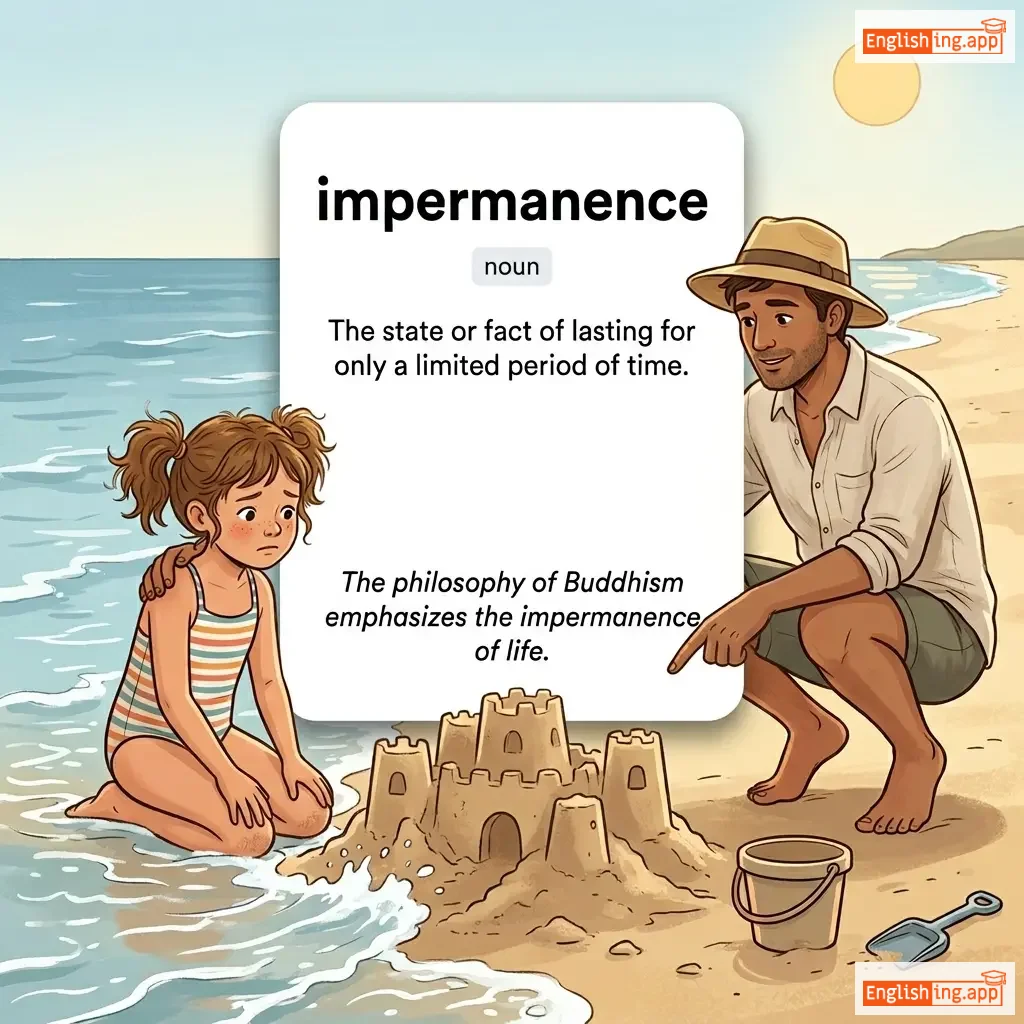
impermanence definition card — visual illustration of the meaning
noun
/ɪmˈpɜː.mə.nəns/
无常 (wúcháng)

The state or fact of lasting for only a limited period of time.

"The philosophy of Buddhism emphasizes the impermanence of life."
"佛教哲学强调生命的无常性。" (Fójiào zhéhé jiāng tiáo shēngmìng de wúchángxìng.)
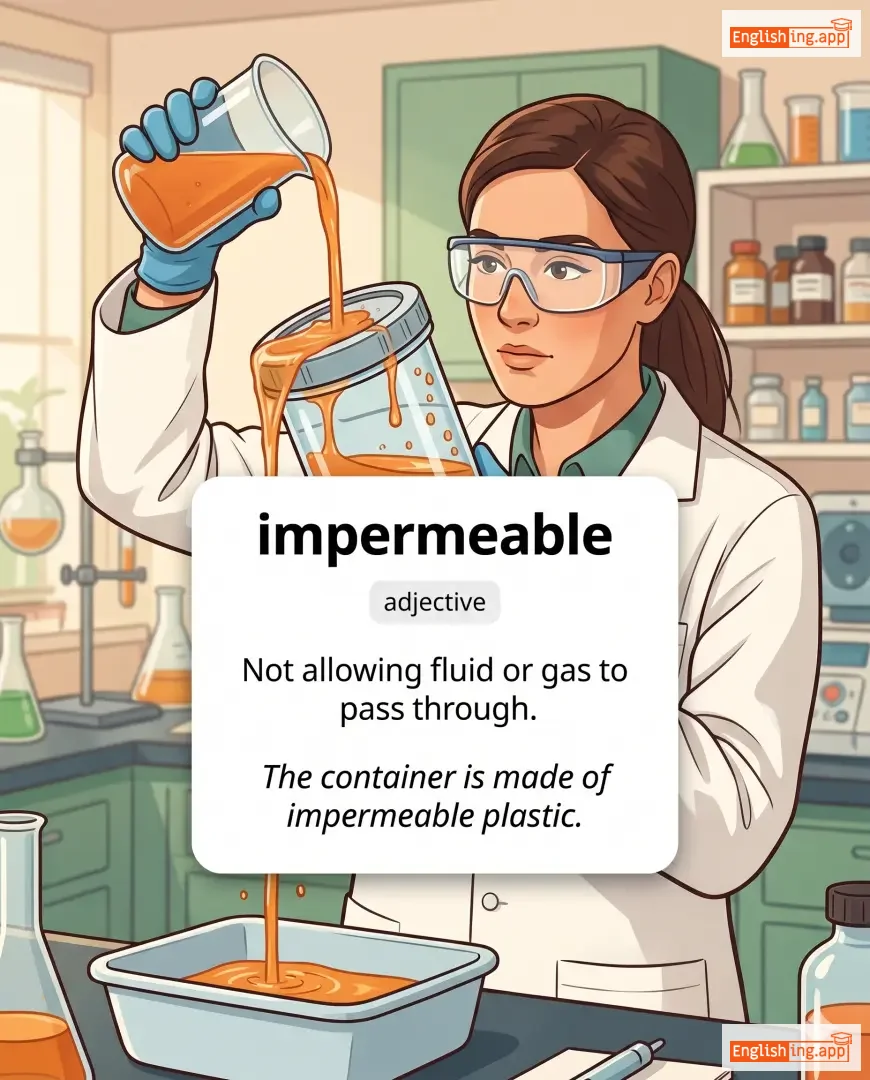
impermeable definition card — visual illustration of the meaning
adjective
/ɪmˈpɜːmiəbl/
不透水的 (bu tou shui de)

Not allowing fluid or gas to pass through.

"The container is made of impermeable plastic."

"这个容器是由不透水的塑料制成的。" (Zhe ge rongqi shi you bu tou shui de su liao zhi cheng de.)
adjective
/ˌɪmpəˈmɪsəbl/
不允许的 (bu yunxu de)

Not permitted or allowed.

"Such behavior is impermissible in the workplace."

"这种行为在工作场所是不允许的。" (Zhe zhong xingwei zai gongzuo changsuo shi bu yunxu de.)
adjective
/ɪmˈpɜːrsənl/
非个人化 (fei gerenhua)

not influenced by, showing, or involving personal feelings; lacking human warmth or emotion

"The letter was written in a very impersonal style."

"信件是以非常非个人化的风格写的。" (Xinjian shi yi feichang fei gerenhua de fengge xiede.)