词汇表

英语词汇词典 | 单词含义、定义和示例

verb
/ɪmˈpɜːrsəneɪt/
假扮 (jiaban)

to pretend to be another person in order to entertain or deceive

"He was arrested for trying to impersonate a police officer."

"他因尝试冒充一名警察而被逮捕。" (Ta yin changshi maochong yi ming jingcha er bei daibu.)
impersonation definition card — visual illustration of the meaning
noun
/ɪmˌpɜː.səˈneɪ.ʃən/
冒充他人身份 (mao chong ta ren shen fen)

Fraudulently acting as someone else by copying their identity

"Criminals use impersonation to gain access to bank accounts."

"犯罪分子利用冒充他人身份来访问银行账户。" (Fanzu fenzi liyong mao chong ta ren shen fen lai fang wen yin hang zhang hu.)
adjective
/ɪmˌpɜːrˈsweɪdəbl/
难以说服 (nán yǐ shuō fú)

not able to be convinced or persuaded

"She remained impersuadable despite all our arguments."

"尽管我们的所有论点,她仍然难以说服。" (Jǐnguǎn wǒmen de suǒyǒu lùndiǎn, tā réngrán nán yǐ shuō fú.)
noun
/ɪmˈpɜːrtɪnəns/
无礼 (wuli)

lack of respect; rudeness

"The teacher was shocked by the student's impertinence."

"老师对学生的无礼感到震惊。" (Lǎoshī duì xuéshēng de wúlǐ gǎndào zhènjīng.)
adjective
/ɪmˈpɜːrtɪnənt/
无礼的 (wúlǐ de)

rude and showing a lack of respect

"It was impertinent of him to question the manager's decision."

"他质疑经理的决定是无礼的。" (Tā zhíyí jīnglǐ de juédìng shì wúlǐ de.)
noun
/ɪmˌpɜːrtərbəˈbɪləti/
安定性 (andingxing)

The quality of being calm and not easily disturbed or upset.

"Her imperturbability during the crisis impressed everyone."

"她在危机中的安定性给所有人留下了深刻的印象。" (Ta zai weiji zhong de andingxing gei suoyouren liuxiala shenke de yinxiang.)
imperturbable definition card — visual illustration of the meaning
adjective
/ɪmˈpɜːrtərbəbəl/
泰然自若 (tairan ziruo)

Unable to be upset or excited; calm.

"He remained imperturbable even when faced with tough questions."
"他在面对难题时依然保持冷静。" (Tā zài miànduì nántí shí yīrán bǎochí lěngjìng.)
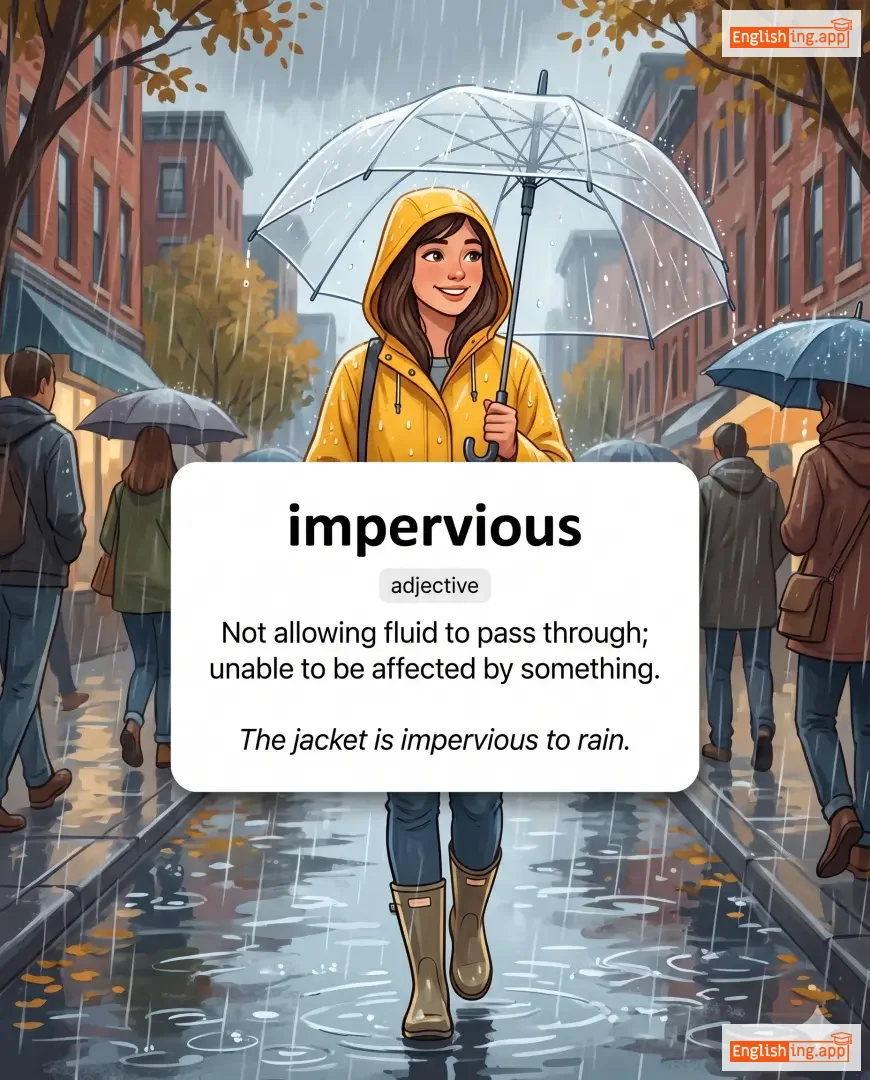
impervious definition card — visual illustration of the meaning
adjective
/ɪmˈpɜːrviəs/
不透水的 (butoushui de)

Not allowing fluid to pass through; unable to be affected by something.

"The jacket is impervious to rain."

"这件夹克不透水。" (Zhe jian jiake butoushui.)
noun
/ˌɪmpəˈtjuːəsəti/
冲动性 (chongdongxing)

The quality of being rash or impulsive.

"His impetuosity often got him into trouble."

"他的冲动性常常让他陷入麻烦。" (Tā de chōngdòngxìng chángcháng ràng tā xiànrù máfan.)
impetuous definition card — visual illustration of the meaning
adjective
/ɪmˈpetʃuəs/
冲动的 (chōngdòng de)

Acting or done quickly without thought or care; impulsive.

"She made an impetuous decision to quit her job."
"她做出了一个冲动的决定辞去她的工作。" (Tā zuò chūle yī gè chōngdòng de juédìng cíqù tā de gōngzuò.)
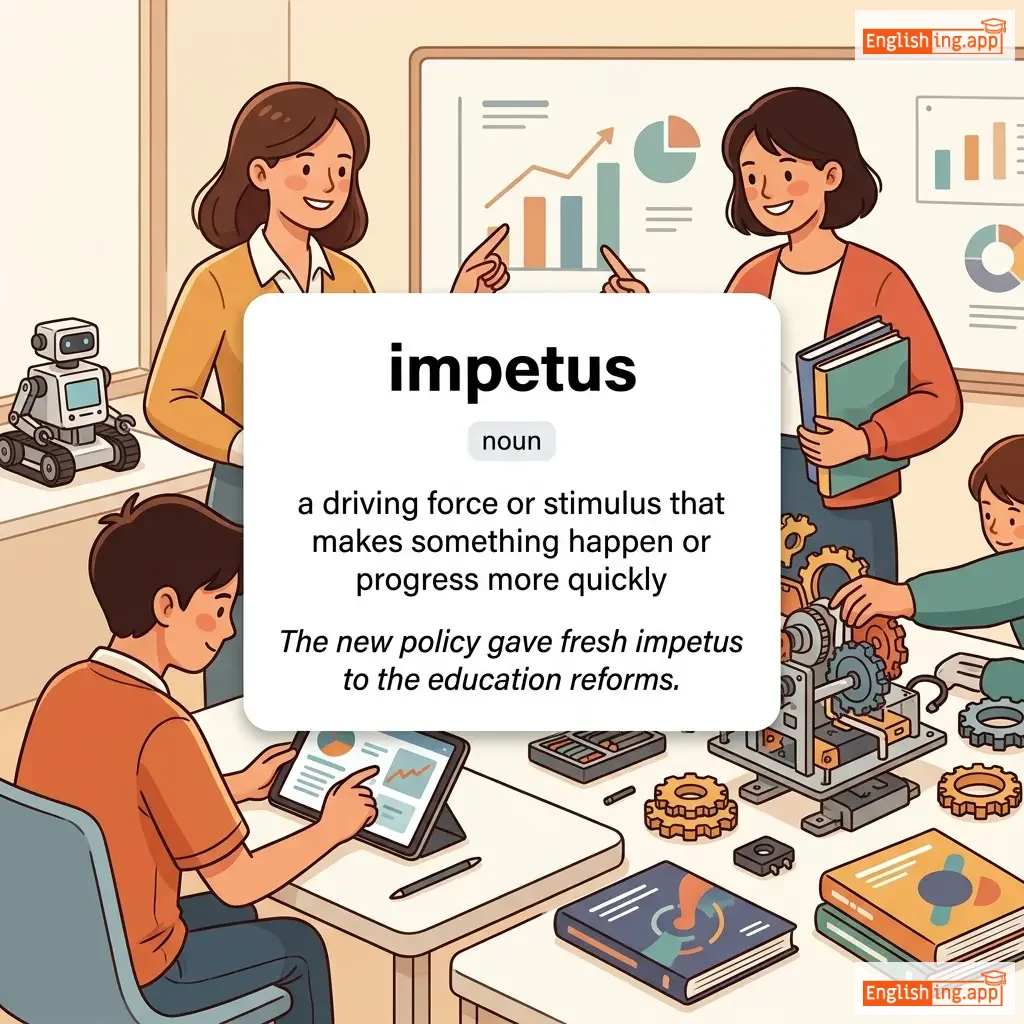
impetus definition card — visual illustration of the meaning
noun
/ˈɪmpɪtəs/
推动力 (tuidongli)

a driving force or stimulus that makes something happen or progress more quickly

"The new policy gave fresh impetus to the education reforms."

"新政策为教育改革注入了新的推动力。" (Xin zhengce wei jiaoyu gaige zhurule xin de tuidongli.)
noun
/ɪmˈpaɪəti/
不敬 (bù jìng)

lack of respect for religion or sacred things

"The priest condemned the impiety of neglecting the temple rituals."

"牧师谴责了忽视寺庙仪式的不敬。" (Mùshī qiǎnzéle hūshì sìmiào yíshì de bù jìng.)
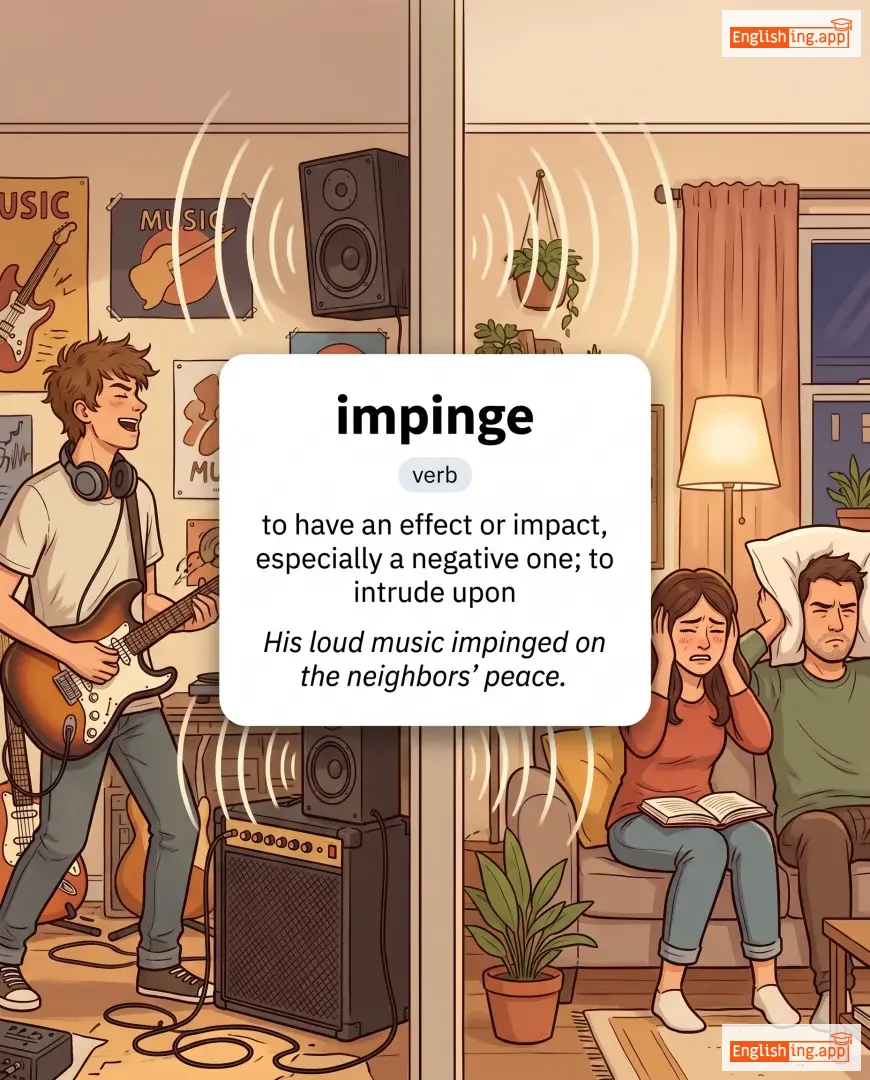
impinge definition card — visual illustration of the meaning
verb
/ɪmˈpɪndʒ/

to have an effect or impact, especially a negative one; to intrude upon

"His loud music impinged on the neighbors’ peace."

adjective
/ˈɪmpɪəs/
亵渎的 (xièdú de)

showing a lack of respect for God or religion

"It was considered impious to joke about sacred traditions."
"开玩笑神圣的传统被认为是亵渎的。" (Kāi wánxiào shèngshèng de chuántǒng bèi rènwéi shì xièdú de.)
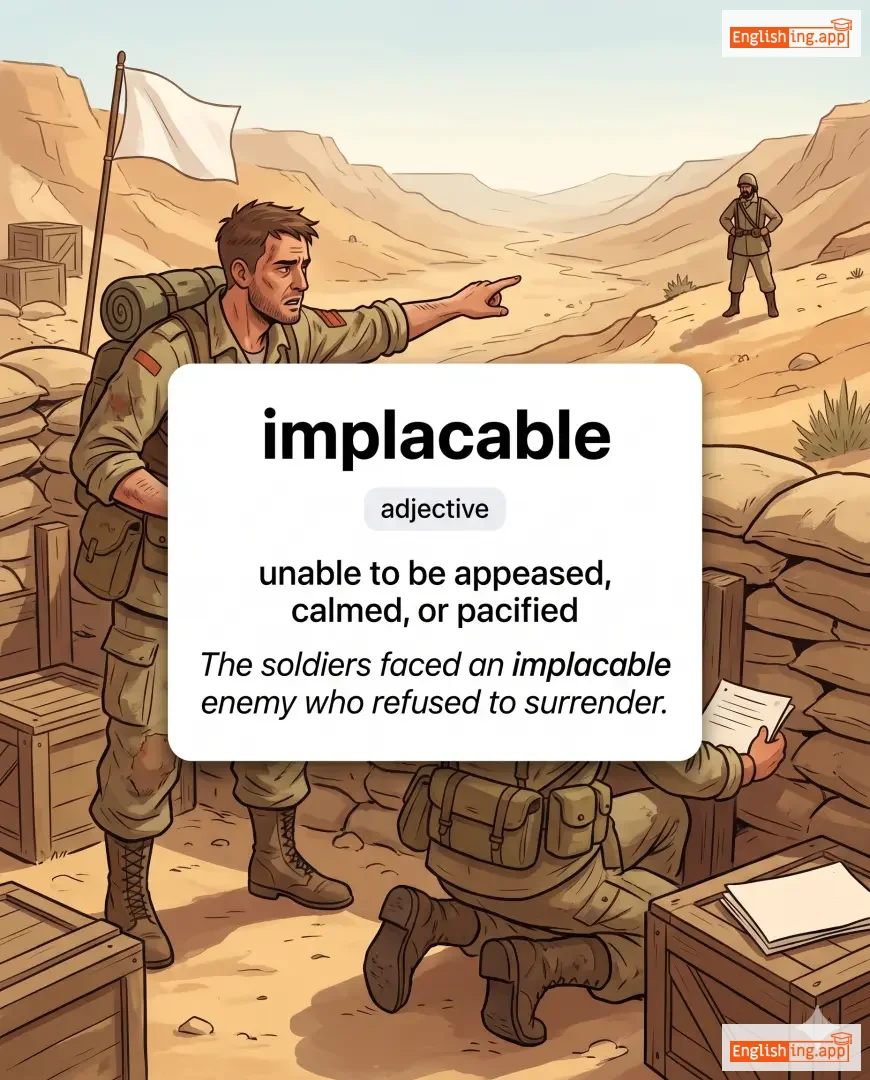
implacable definition card — visual illustration of the meaning
adjective
/ɪmˈplækəbl/
不可调和 (bukediaohuo)

unable to be appeased, calmed, or pacified

"The soldiers faced an implacable enemy who refused to surrender."

"士兵们面对着一个不可调和的敌人,他拒绝投降。" (Shibingmen miandui zhege bukediaohuo de diren, ta jujue touxiang.)
implausible definition card — visual illustration of the meaning
adjective
/ɪmˈplɔːzəbl/
不可信 (bù kě xìn)

Not seeming reasonable or probable; unlikely to be true.

"The story she told was so implausible that no one believed her."
"她讲的故事太不可信,以至于没有人相信她。" (Tā jiǎng de gùshì tài bù kěxìn, yǐzhì méiyǒu rén xiāngxìn tā.)
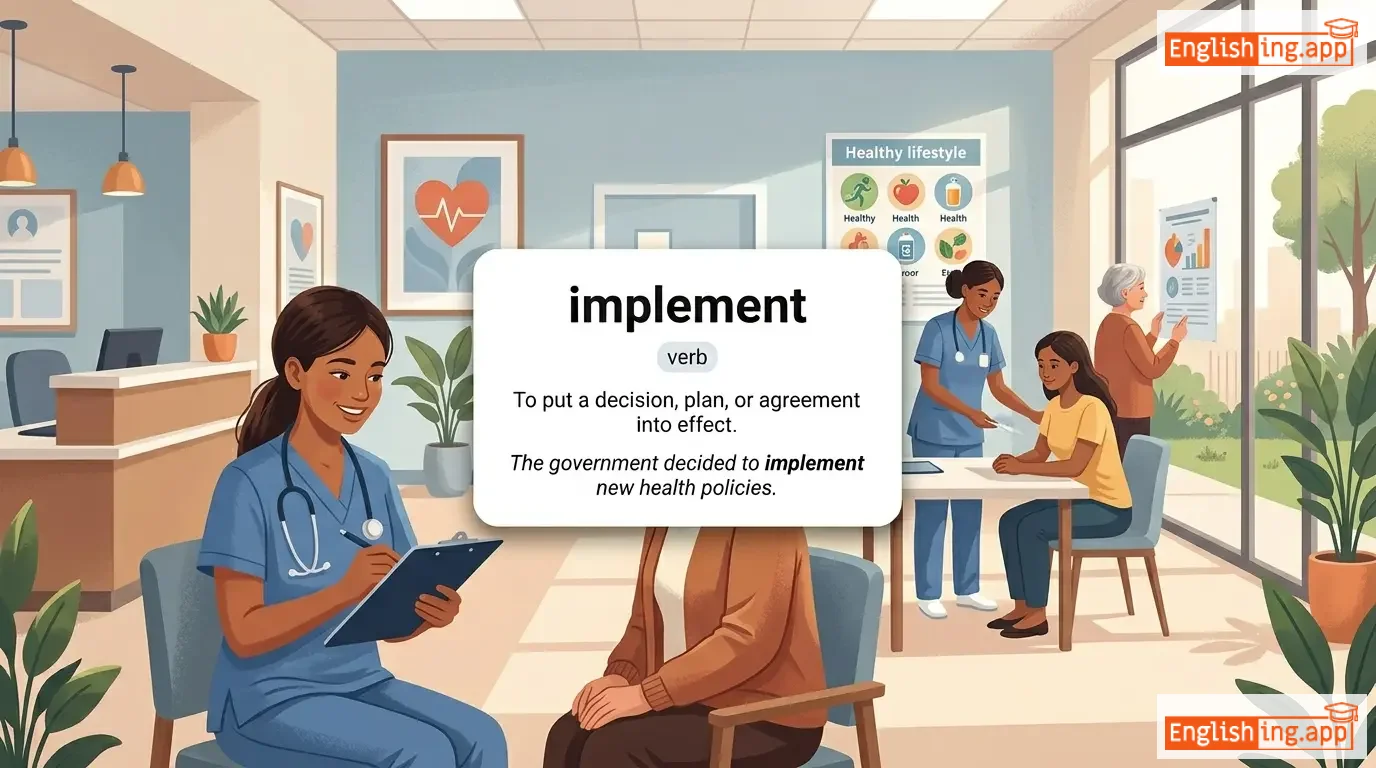
implement definition card — visual illustration of the meaning
verb
/ˈɪmplɪˌmɛnt/
实施 (shishi)

To put a decision, plan, or agreement into effect.

"The government decided to implement new health policies."
"政府决定实施新的健康政策。" (Zhengfu jueding shishi xinde jiankang zhengce.)
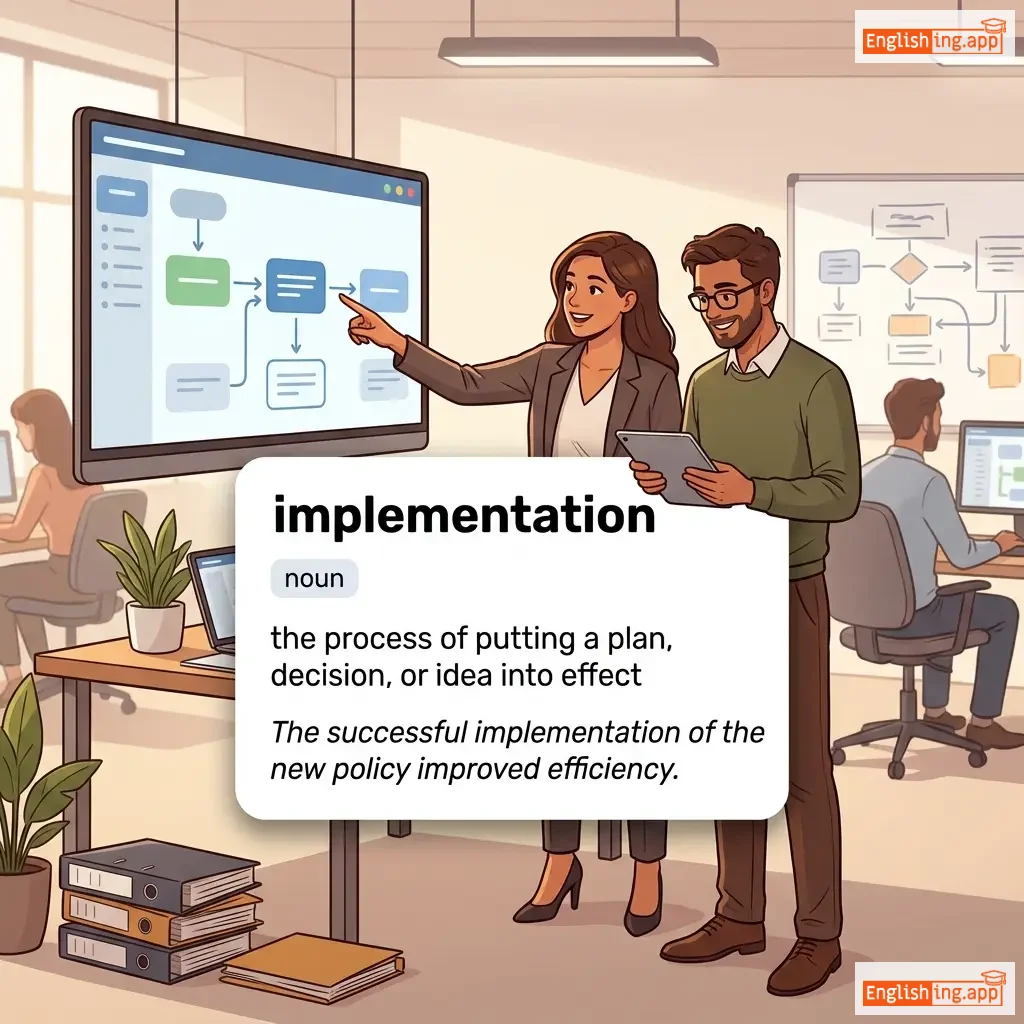
implementation definition card — visual illustration of the meaning
noun
/ˌɪmplɪmenˈteɪʃən/
实施 (shíshī)

the process of putting a plan, decision, or idea into effect

"The successful implementation of the new policy improved efficiency."
"新政策的成功实施提高了效率。" (Xin zhengce de chenggong shishi tigao le xiaolv.)
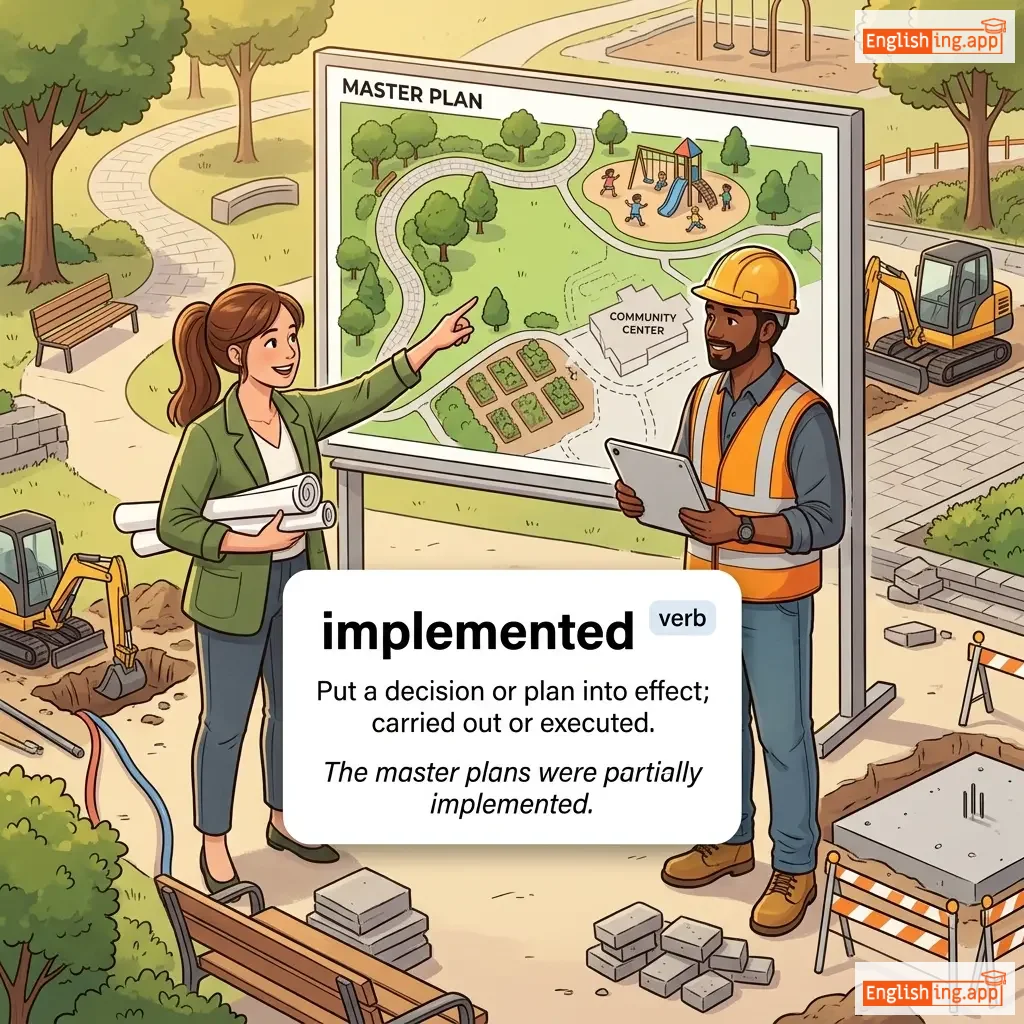
implemented definition card — visual illustration of the meaning
verb
ˈɪmplɪmentɪd
实施 (shíshī)

Put a decision or plan into effect; carried out or executed.

"The master plans were partially implemented."

"主要计划已部分实施。" (Zhǔyào jìhuà yǐ bùfèn shíshī.)
adjective
/ɪmˈplaɪəbl/
可暗示的 (ke anshi de)

Capable of being implied or suggested.

"The meaning of the statement is not directly clear but is impliable from the context."

"声明的意思并不直接明确,但可以从上下文中推断。" (Shengming de yisi bing bu zhijie mingque, dan keyi cong shangxiawen zhong tuicai.)
verb
/ˈɪmplɪˌkeɪt/
牵涉 (qiānshè)

To show someone’s involvement in a crime or wrongdoing.

"The evidence implicated several officials in the scandal."
"证据揭示了几名官员在丑闻中的牵涉。" (Zhèngjù jiēshì le jǐ míng guānyuán zài chǒuwén zhōng de qiānshè.)
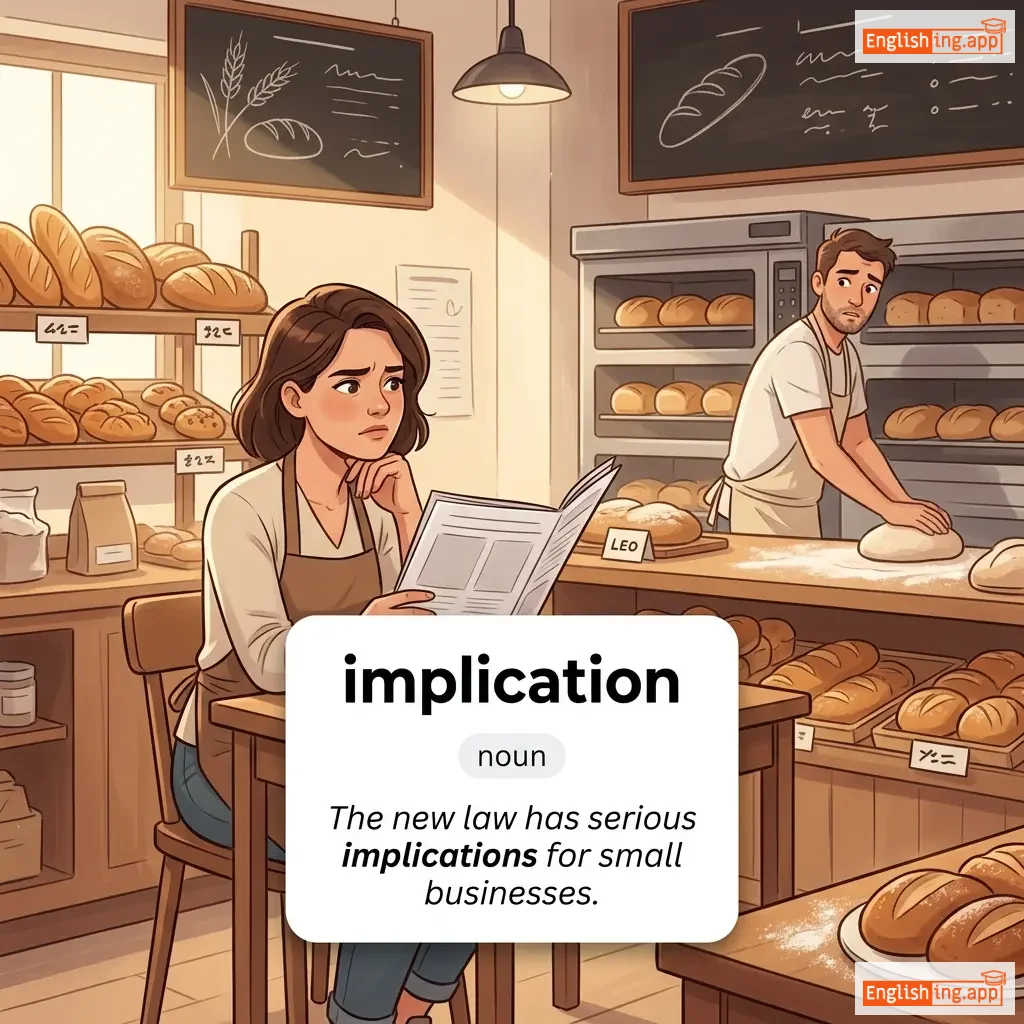
implication definition card — visual illustration of the meaning
noun
/ˌɪmplɪˈkeɪʃən/
暗示, 影响 (ànshì, yǐngxiǎng)

A possible effect or result of an action or decision; something suggested without being stated directly.

"The new law has serious implications for small businesses."

"新法律对小企业有严重影响。" (Xīn fǎlǜ duì xiǎo qǐyè yǒu yánzhòng yǐngxiǎng.)
implicit definition card — visual illustration of the meaning
adjective
/ɪmˈplɪsɪt/
隐性 (yinxing)

Suggested or understood without being directly stated.

"Her trust in him was implicit."
"她对他的信任是隐性的。" (tā duì tā de xìnrèn shì yǐnxìng de)
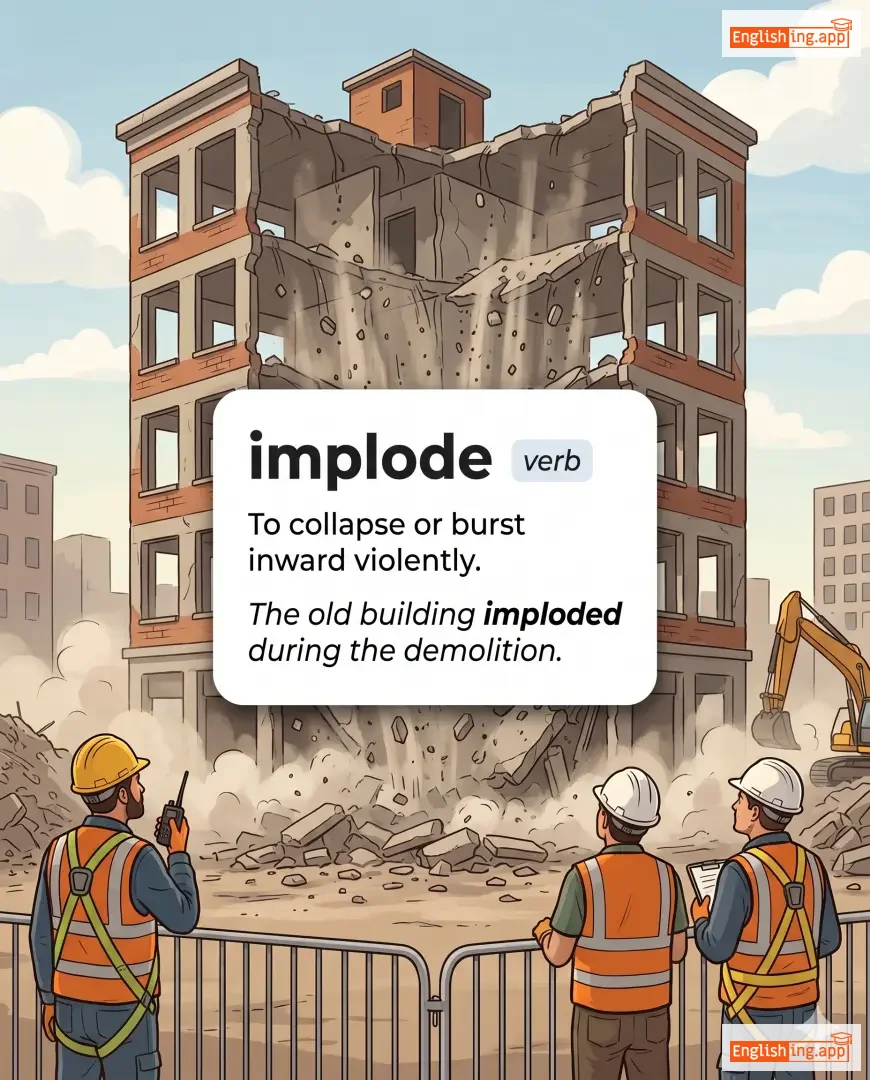
implode definition card — visual illustration of the meaning
verb
/ɪmˈploʊd/
内爆 (neibao)

To collapse or burst inward violently.

"The old building imploded during the demolition."

"老建筑在拆除时发生了内爆。" (lao jianzhu zai chaichu shi fasheng le neibao.)
verb
/ɪmˈplɔːr/

To beg someone earnestly or desperately to do something.

"She implored him to stay with her."

verb
/ɪmˈplaɪ/
暗示 (ànshì)

To suggest something without directly stating it.

"Her tone seemed to imply that she was upset."

"她的语气似乎暗示她很不高兴。" (Tā de yǔqì shìhū ànshì tā hěn bù gāoxìng.)
adjective
/ˌɪmpəˈlaɪt/
不礼貌 (bu limao)

Not showing good manners; rude.

"It is impolite to interrupt someone while they are speaking."

"打断别人说话是不礼貌的。" (Da duan bie ren shuo hua shi bu limao de.)
adverb
/ɪmˈpɒlɪtli/
不礼貌地 (bu limao de)

in a rude or discourteous manner; without showing respect or proper manners

"He spoke impolitely to the waiter despite the polite service."

"尽管服务很好,他还是不礼貌地对服务员说话。" (jinguang fuwu hen hao ta haishi bu limao de dui fuwuyuan shuohua)
noun
/ɪmˈpɒlɪtnəs/
不礼貌 (bu limao)

lack of good manners or courtesy; rude behavior

"His impoliteness towards the guests shocked everyone."

"他对客人的不礼貌让所有人都感到震惊。" (ta dui keren de bu limao rang suoyou ren dou gandao zhenjing)
adjective
/ɪmˈpɑːlɪtɪk/
不明智的 (bumingzhide)

Unwise or imprudent; not showing good judgment.

"It would be impolitic to criticize them openly."

"公开批评他们是不明智的。" (Gongkai pīpíng tāmen shì bù míngzhì de.)
adjective
/ɪmˈpɒndərəbl̩/
无法估量 (wufagu liang)

Something difficult or impossible to estimate, assess, or understand

"The outcome of the election depends on many imponderable factors."
"选举结果取决于许多无法估量的因素。" (Xuanju jieguo qujue yu xu duo wufagu liang de yinsu.)
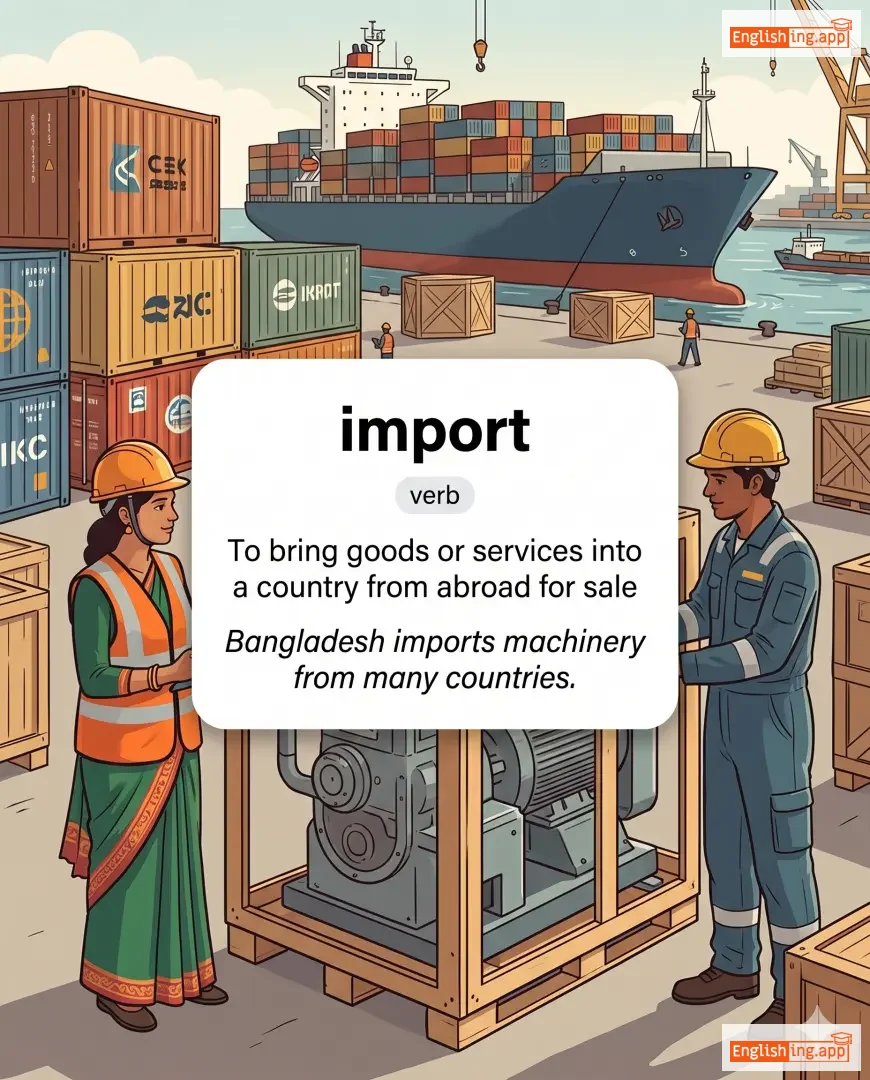
import definition card — visual illustration of the meaning
verb
/ˈɪmpɔːrt/
进口 (jin kou)

To bring goods or services into a country from abroad for sale

"Bangladesh imports machinery from many countries."

"孟加拉国从许多国家进口机械。" (Meng jia la guo cong xu duo guo jia jin kou ji xie.)
importance definition card — visual illustration of the meaning
noun
/ɪmˈpɔːrtəns/
重要性 (zhòng yào xìng)

the state or fact of being of great significance or value

"She stressed the importance of honesty in all relationships."

"她强调了诚实在所有关系中的重要性。" (Tā qiángdiàole chéngshí zài suǒyǒu guānxì zhōng de zhòngyàoxìng.)
important definition card — visual illustration of the meaning
adjective
/ɪmˈpɔːrtənt/
重要 (zhòng yào)

Having great significance or value.

"It is important to stay hydrated during summer."

"夏季保持水分非常重要。" (Xiàjì bǎochí shuǐfèn fēicháng zhòngyào.)
adverb
/ɪmˈpɔːtəntli/
重要地 (zhòngyàode)

in a way that is of great significance or value

"Importantly, the report highlights the need for immediate action."

"重要地,报告突出了立即采取行动的必要性。" (Zhòngyàode, bàogào túchūle lìjí cǎiqǔ xíngdòng de bìyào xìng.)
noun
/ˌɪmpɔːrˈteɪʃən/
进口 (jinkou)

The act of bringing goods or services into a country from abroad

"The importation of luxury goods is strictly regulated."

"奢侈品的进口受到严格监管。" (Shechipin de jinkou shoudao yanjiao jianguan.)
adjective
/ɪmˈpɔːrtʃənət/
缠人的 (chan ren de)

Persistent to the point of annoyance or intrusion

"The importunate salesman kept calling despite repeated refusals."

"那个缠人的推销员在反复拒绝后仍然继续打电话。" (Nàgè chán rén de tuīxiāo yuán zài fǎnfù jùjué hòu réngrán jìxù dǎ diànhuà.)
verb
/ˌɪmpɔːrˈtuːn/
反复请求 (fǎn fù qǐng qiú)

To ask someone persistently or pressingly for something

"The child importuned his mother for a new toy."

"孩子反复请求母亲给他买一个新玩具。" (Háizi fǎnfù qǐngqiú mǔqīn gěi tā mǎi yīgè xīn wánjù.)
verb
/ˌɪmpɔːrˈtuːnd/
不停地请求 (bù tíng dì qǐng qiú)

asked someone persistently and pressingly for something

"She importuned her boss for a raise until he finally gave in."
"她不停地请求老板加薪,直到他最终答应。" (Tā bù tíng dì qǐng qiú lǎo bǎn jiā xīn, zhídào tā zuì zhōng dā yìng.)
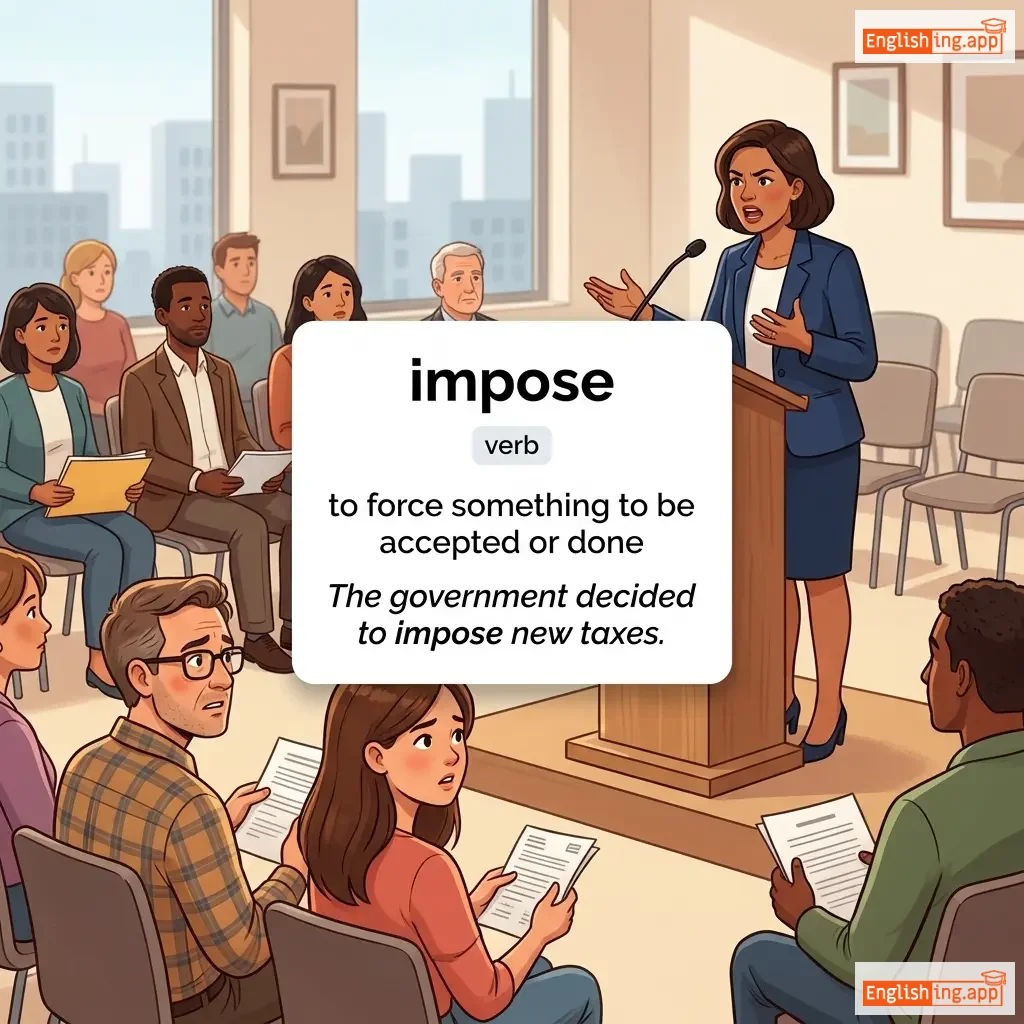
impose definition card — visual illustration of the meaning
verb
/ɪmˈpoʊz/
强加 (qiángjiā)

to force something to be accepted or done

"The government decided to impose new taxes."

"政府决定征收新的税收。" (Zhèngfǔ juédìng zhēngshōu xīn de shuìshōu.)
verb
/ɪmˈpoʊzd/
强加 (qiángjiā)

forced something to be accepted or put in place

"The government imposed new regulations on the industry."
"政府对该行业实施了新规章。" (Zhèngfǔ duì gāi hángyè shíshī le xīn guīzhāng.)
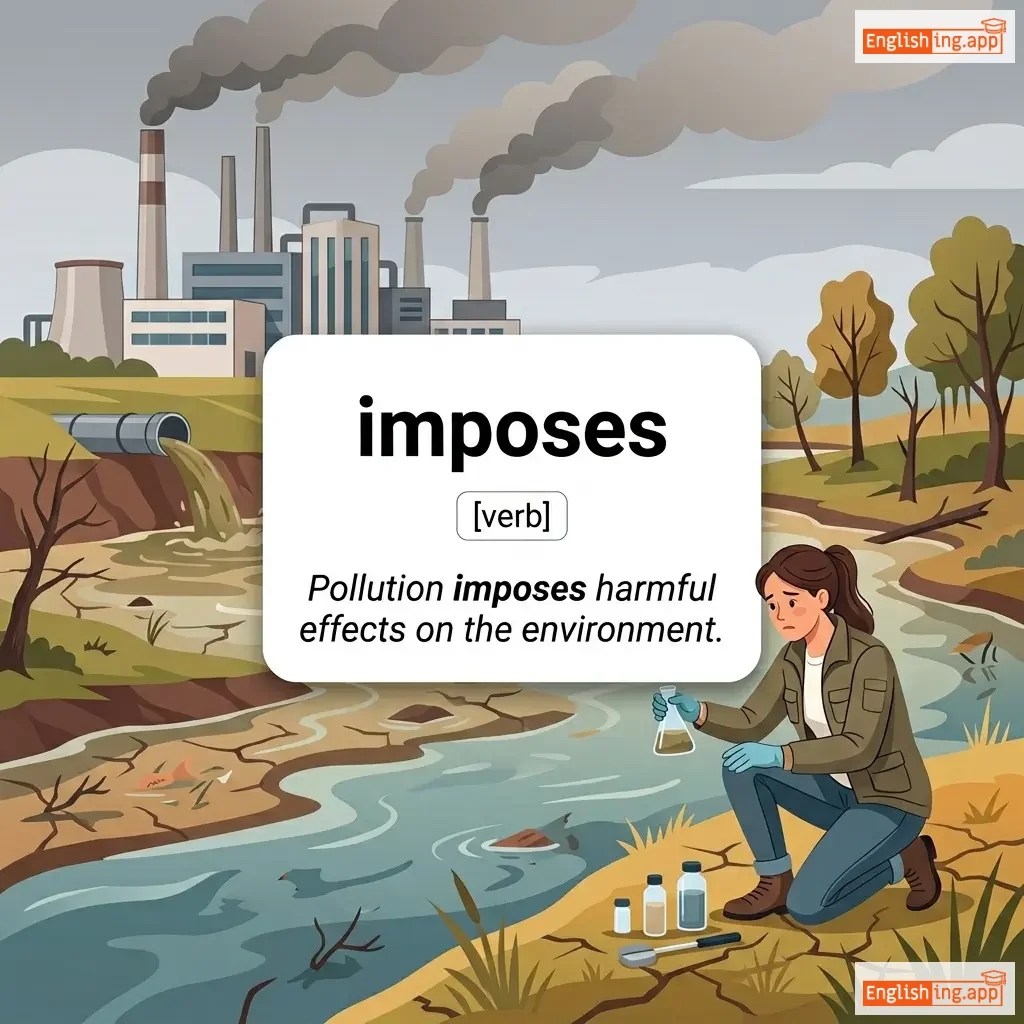
imposes definition card — visual illustration of the meaning
verb
ɪmˈpoʊz
强加 (qiángjiā)

To establish or apply by authority; to force something unwelcome or unfamiliar to be accepted or put in place.

"Pollution imposes harmful effects on the environment."

"污染对环境施加了有害的影响。" (Wūrǎn duì huánjìng shījiā le yǒuhài de yǐngxiǎng.)
adjective
/ɪmˈpoʊzɪŋ/
壮观的 (zhuangguan de)

having an appearance that is grand, impressive, or commanding

"The castle is an imposing structure overlooking the valley."

"这座城堡是一座壮观的建筑,俯瞰着山谷。" (Zhè zuò chéngbǎo shì yī zuò zhuàngguān de jiànzhú, fǔkànzhe shāngǔ.)
noun
/ˌɪmpəˈzɪʃən/
强加 (qiángjiā)

the act of forcing something on someone; an unwelcome demand or burden

"The new tax was seen as an unfair imposition on the poor."

"新的税收被视为对穷人的不公正强加。" (Xīn de shuìshuō bèi shì wéi duì qióngrén de bù gōngzhèng qiángjiā.)
noun
/ɪmˌpɒsəˈbɪlɪti/
不可能性 (bu keneng xing)

the state or fact of being impossible; something that cannot be done or achieved

"Finishing the project in one day was an impossibility."

"在一天内完成这个项目是不可能的。" (zai yi tian nei wancheng zhege xiangmu shi bu keneng de)
adjective
/ɪmˈpɑːsəbl/
不可能 (bù kěnéng)

not able to occur, exist, or be done

"It is impossible to finish this work in one day."

"一天之内完成这项工作是不可能的。" (Yītiān zhī nèi wánchéng zhè xiàng gōngzuò shì bù kěnéng de.)
noun
/ɪmˈpɑːstər/
冒充者, 欺诈者 (màochōng zhě, qīzhà zhě)

a person who pretends to be someone else in order to deceive others

"The man turned out to be an impostor posing as a doctor."

"那个人竟然是一个冒充医生的骗子。" (Nà gè rén jìngrán shì yí gè màochōng yīshēng de piànzi.)
noun
/ɪmˈpɒstʃər/
冒充 (mao chong)

The act of pretending to be someone else in order to deceive others; deception or fraud.

"The imposture was discovered when the man failed to answer basic questions about his supposed identity."

"冒充被发现是因为那个人无法回答关于他假定身份的基本问题。" (Maochong bei faxian shi yinwei na ge ren wufa huidao guanyu ta jiading shenfen de jiben wenti.)
adjective
/ˈɪmpətənt/
无能 (wuneng)

Lacking power, ability, or strength to take effective action.

"The citizens felt impotent against the corrupt system."

"公民在腐败的系统面前感到无能为力。" (Gongmin zai fubai de xitong mianqian gandao wuneng weili.)
verb
/ɪmˈpɒvərɪʃ/
使贫穷 (shǐ pínqióng)

To make someone poor or reduce the quality or richness of something.

"The long war impoverished the entire nation."

"漫长的战争使整个国家贫困。" (Màncháng de zhànzhēng shǐ zhěnggè guójiā pínqióng.)