Vocabularios

Descubra, aprenda y domine el vocabulario en inglés

verb
/ɪmˈpɜːrsəneɪt/
fingir ser alguien (fingir ser alguien)

to pretend to be another person in order to entertain or deceive

"He was arrested for trying to impersonate a police officer."

"Fue arrestado por intentar hacerse pasar por un oficial de policía." (Fue arrestado por intentar hacerse pasar por un oficial de policía.)
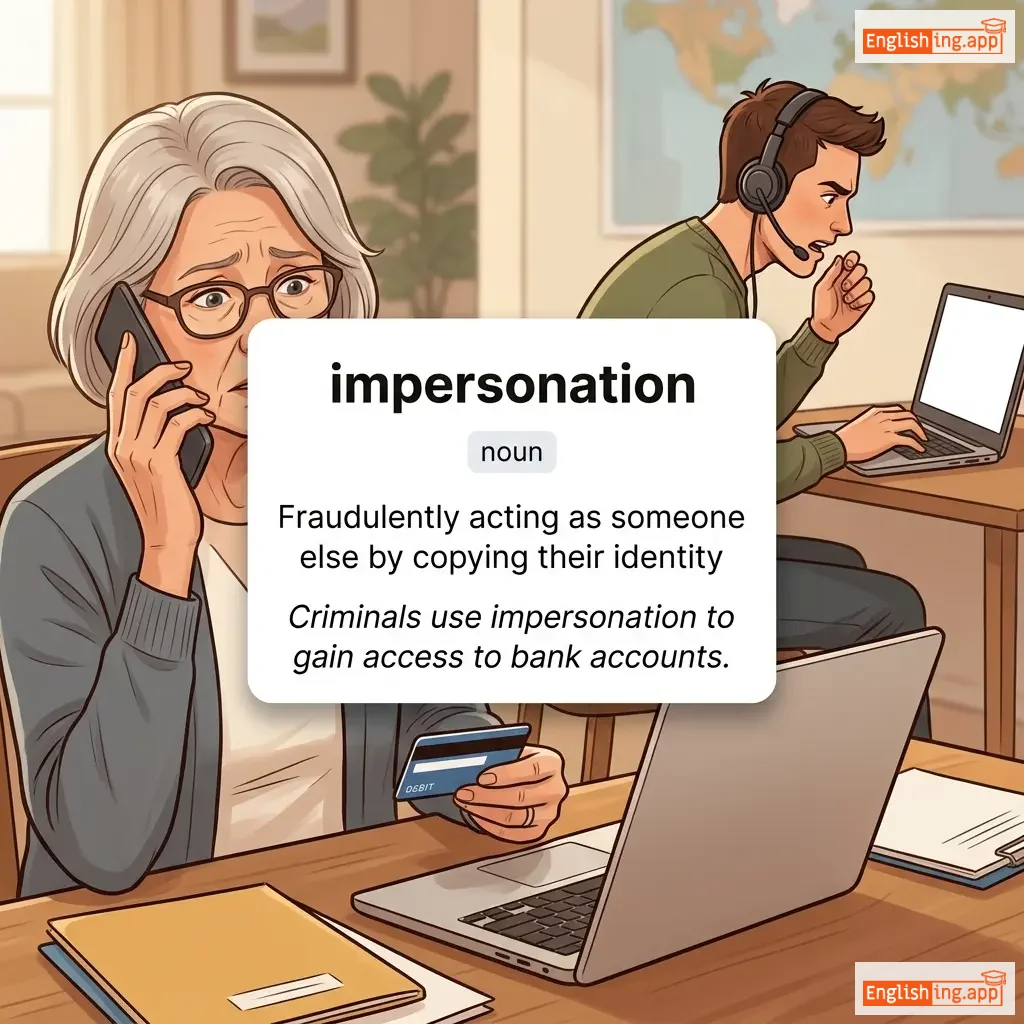
impersonation definition card — visual illustration of the meaning
noun
/ɪmˌpɜː.səˈneɪ.ʃən/
suplantación de identidad (suplantacion de identidad)

Fraudulently acting as someone else by copying their identity

"Criminals use impersonation to gain access to bank accounts."

"Los criminales usan suplantación de identidad para acceder a cuentas bancarias." (Los criminales usan suplantacion de identidad para acceder a cuentas bancarias.)
adjective
/ɪmˌpɜːrˈsweɪdəbl/
inconvencible (inconvencible)

not able to be convinced or persuaded

"She remained impersuadable despite all our arguments."

"Ella permaneció inconvencible a pesar de todos nuestros argumentos." (Ella permaneció inconvencible a pesar de todos nuestros argumentos.)
noun
/ɪmˈpɜːrtɪnəns/
impertinencia (impertinencia)

lack of respect; rudeness

"The teacher was shocked by the student's impertinence."

"El maestro se sorprendió por la impertinencia del estudiante." (El maestro se sorprendió por la impertinencia del estudiante.)
adjective
/ɪmˈpɜːrtɪnənt/
impertinente (impertinente)

rude and showing a lack of respect

"It was impertinent of him to question the manager's decision."

"Fue impertinente de su parte cuestionar la decisión del gerente." (Fue impertinente de su parte cuestionar la decisión del gerente.)
noun
/ɪmˌpɜːrtərbəˈbɪləti/
imperturbabilidad (imperturbabilidad)

The quality of being calm and not easily disturbed or upset.

"Her imperturbability during the crisis impressed everyone."

"Su imperturbabilidad durante la crisis impresionó a todos." (Su imperturbabilidad durante la crisis impresionó a todos.)
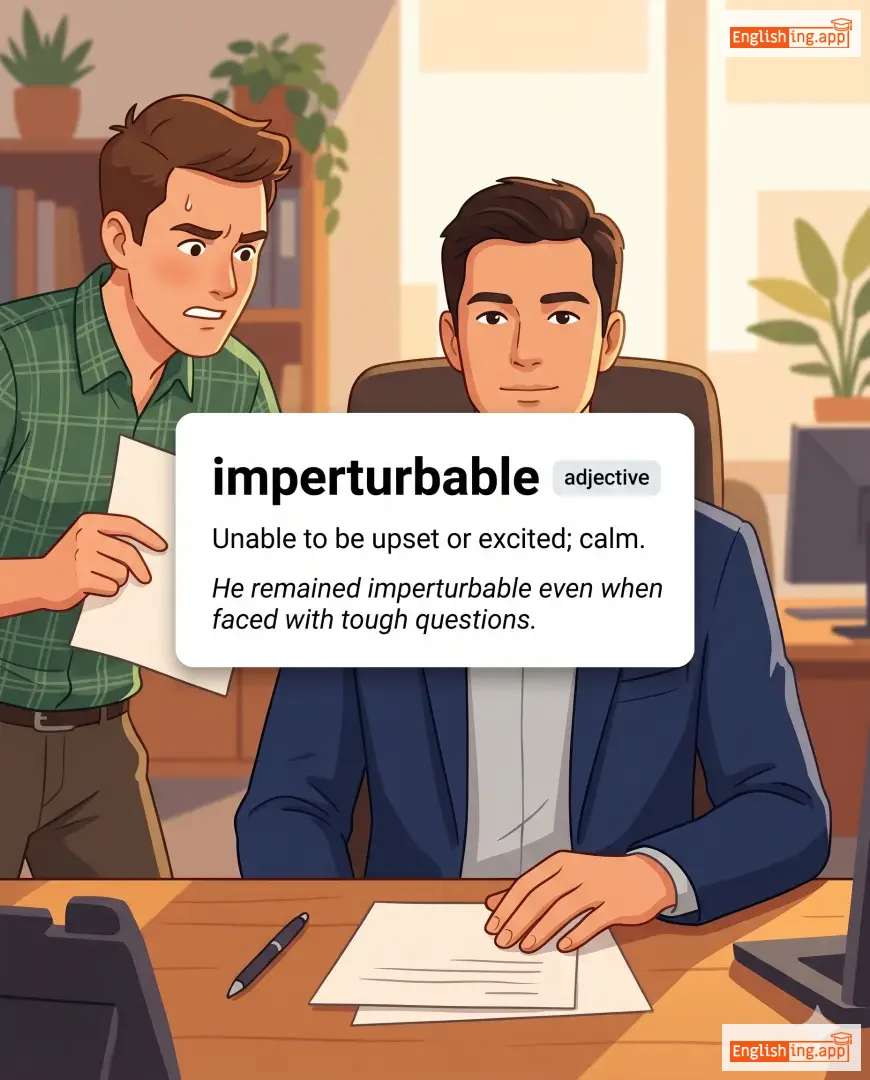
imperturbable definition card — visual illustration of the meaning
adjective
/ɪmˈpɜːrtərbəbəl/
imperturbable (imperturbable)

Unable to be upset or excited; calm.

"He remained imperturbable even when faced with tough questions."

"Él permaneció imperturbable incluso cuando se enfrentó a preguntas difíciles." (El permaneció imperturbable incluso cuando se enfrentó a preguntas difíciles.)
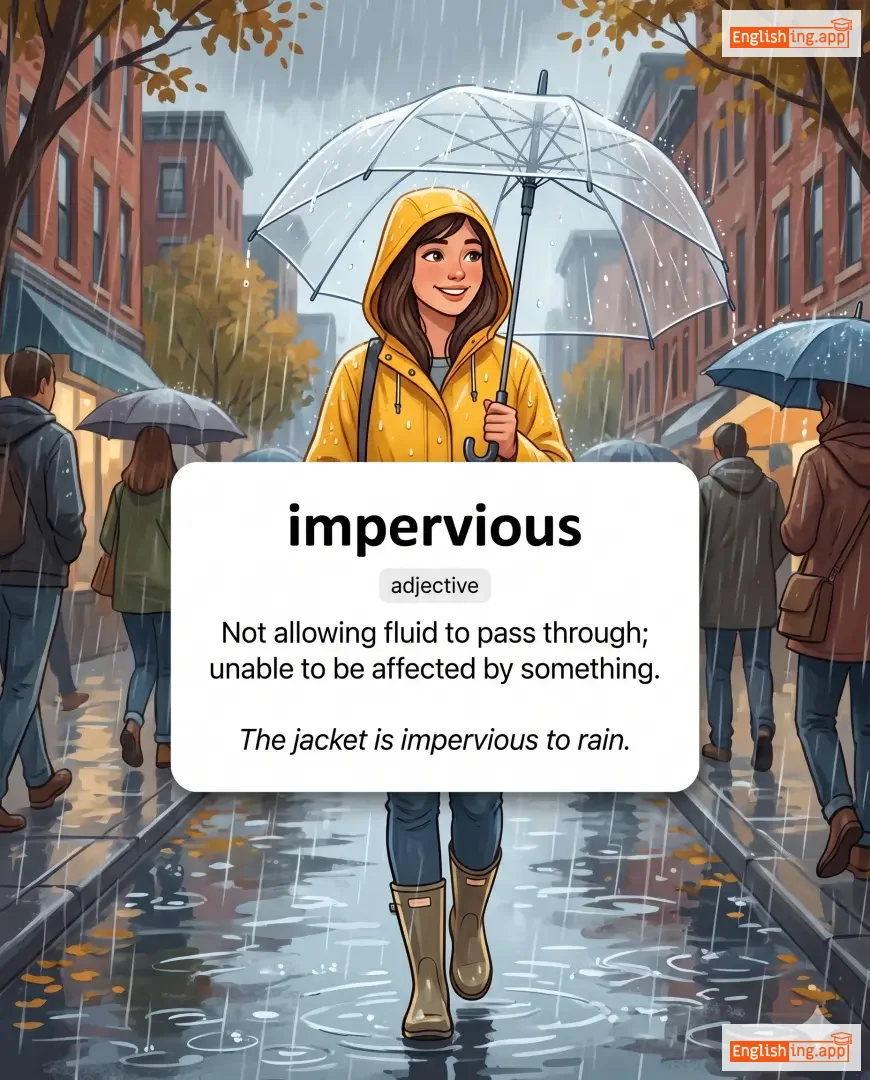
impervious definition card — visual illustration of the meaning
adjective
/ɪmˈpɜːrviəs/
impermeable (impermeable)

Not allowing fluid to pass through; unable to be affected by something.

"The jacket is impervious to rain."

"La chaqueta es impermeable a la lluvia." (La chaqueta es impermeable a la lluvia.)
noun
/ˌɪmpəˈtjuːəsəti/
impetuosidad (impetuosidad)

The quality of being rash or impulsive.

"His impetuosity often got him into trouble."

"Su impetuosidad a menudo lo metía en problemas." (Su impetuosidad a menudo lo metía en problemas.)
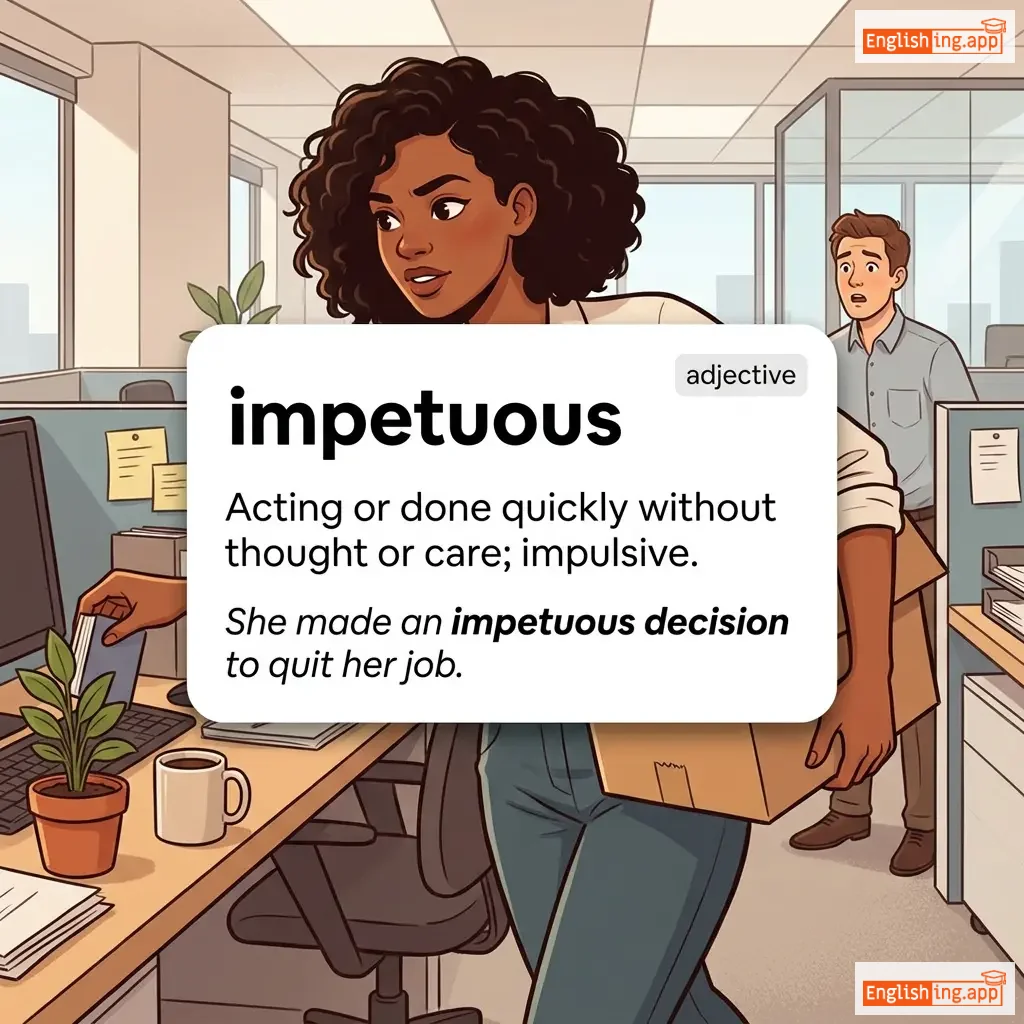
impetuous definition card — visual illustration of the meaning
adjective
/ɪmˈpetʃuəs/
impetuoso (impetuoso)

Acting or done quickly without thought or care; impulsive.

"She made an impetuous decision to quit her job."

"Ella tomó una decisión impetuosa de dejar su trabajo." (Ella tomo una decision impetuosa de dejar su trabajo.)
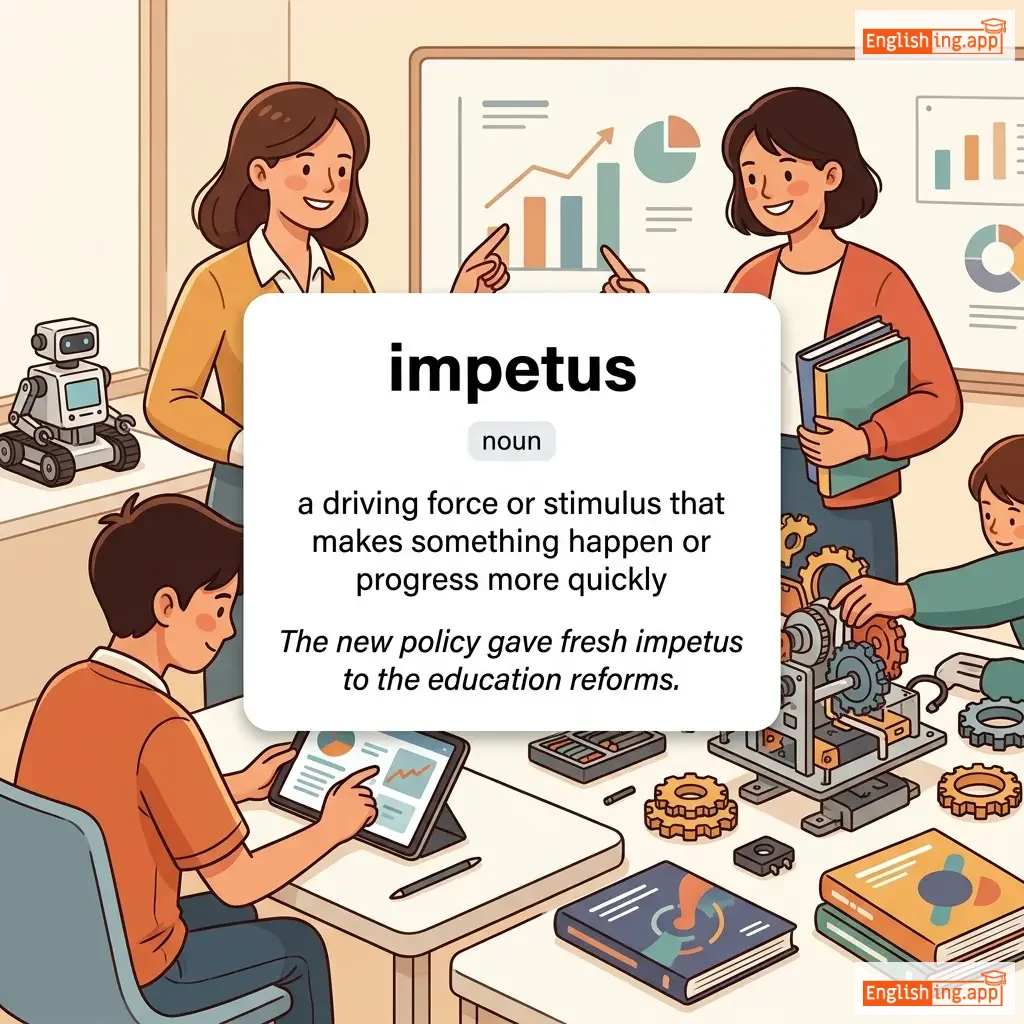
impetus definition card — visual illustration of the meaning
noun
/ˈɪmpɪtəs/
impulso (impulso)

a driving force or stimulus that makes something happen or progress more quickly

"The new policy gave fresh impetus to the education reforms."

"La nueva política dio un nuevo impulso a las reformas educativas." (La nueva politica dio un nuevo impulso a las reformas educativas.)
noun
/ɪmˈpaɪəti/
impiedad (impiedad)

lack of respect for religion or sacred things

"The priest condemned the impiety of neglecting the temple rituals."

"El sacerdote condenó la impiedad de descuidar los rituales del templo." (El sacerdote condenó la impiedad de descuidar los rituales del templo.)
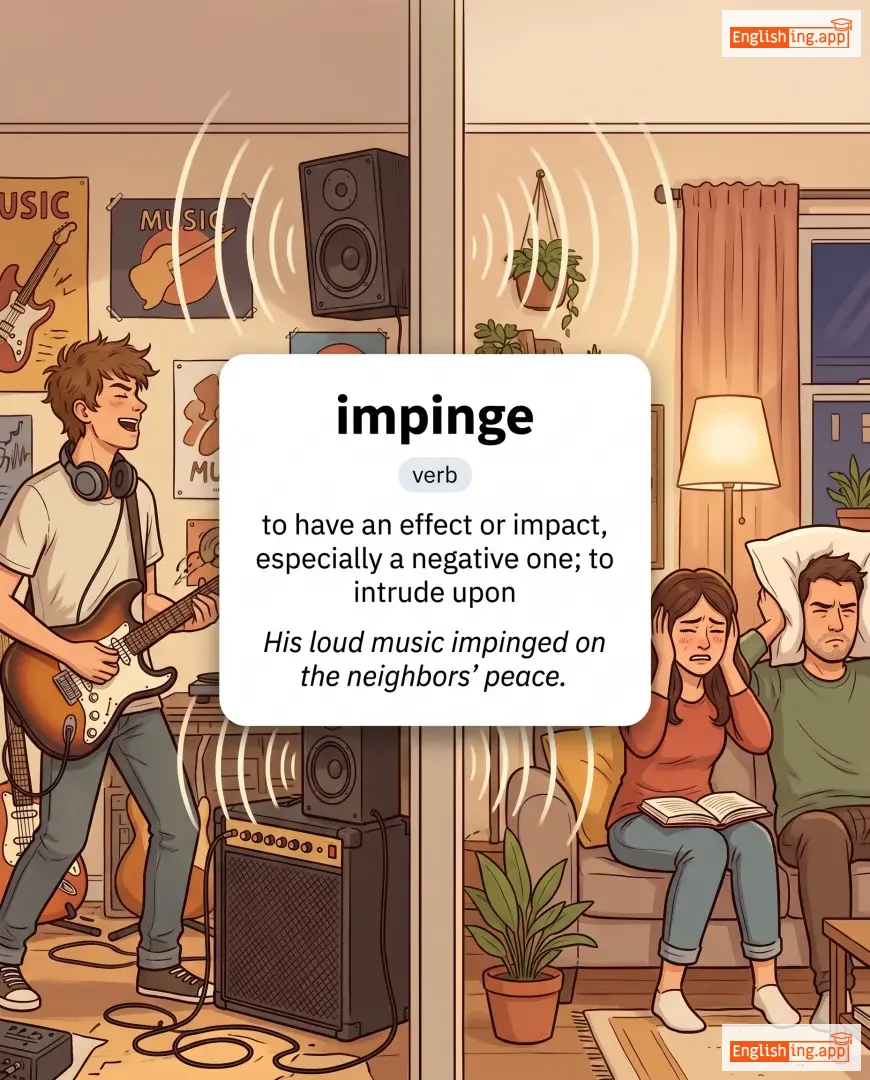
impinge definition card — visual illustration of the meaning
verb
/ɪmˈpɪndʒ/
afectar (afectar)

to have an effect or impact, especially a negative one; to intrude upon

"His loud music impinged on the neighbors’ peace."

"Su música alta afectó la paz de los vecinos." (Su musica alta afecto la paz de los vecinos.)
adjective
/ˈɪmpɪəs/
impío (impio)

showing a lack of respect for God or religion

"It was considered impious to joke about sacred traditions."

"Se consideraba impío hacer chistes sobre tradiciones sagradas." (Se consideraba impio hacer chistes sobre tradiciones sagradas.)
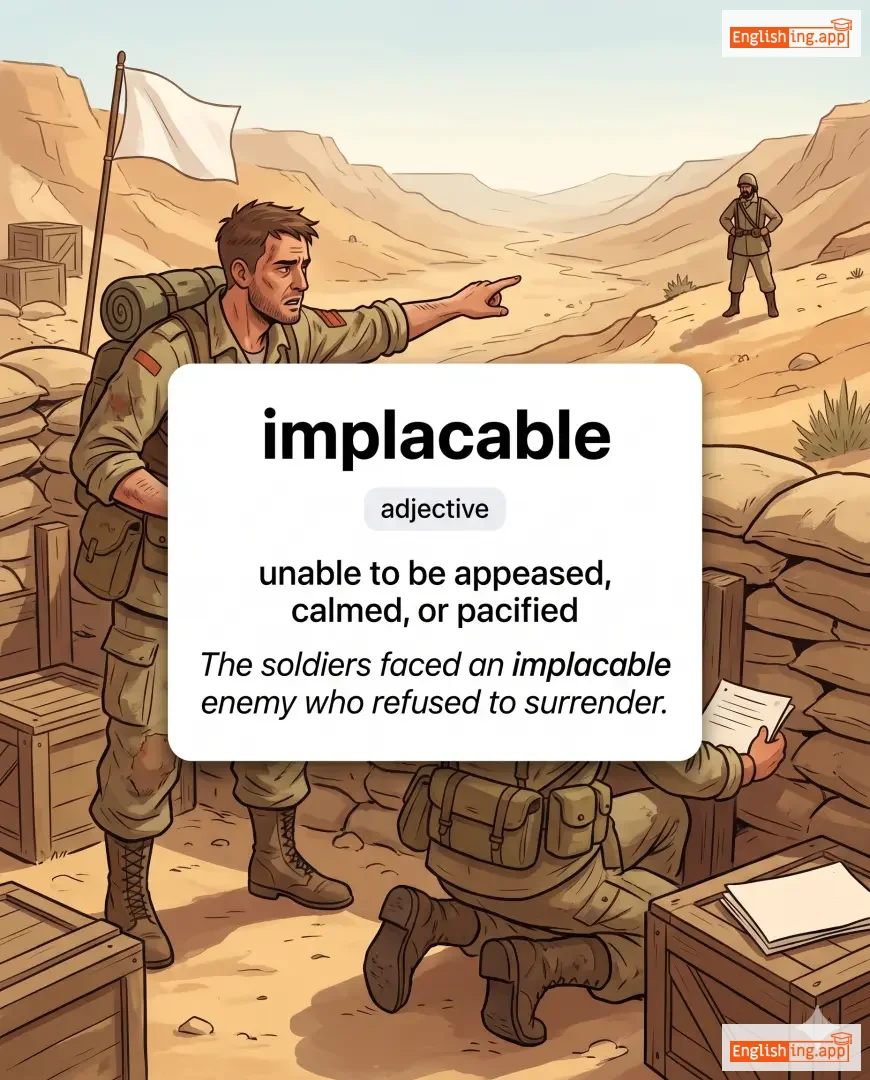
implacable definition card — visual illustration of the meaning
adjective
/ɪmˈplækəbl/
implacable (implacable)

unable to be appeased, calmed, or pacified

"The soldiers faced an implacable enemy who refused to surrender."

"Los soldados se enfrentaron a un enemigo implacable que se negó a rendirse." (Los soldados se enfrentaron a un enemigo implacable que se negó a rendirse.)
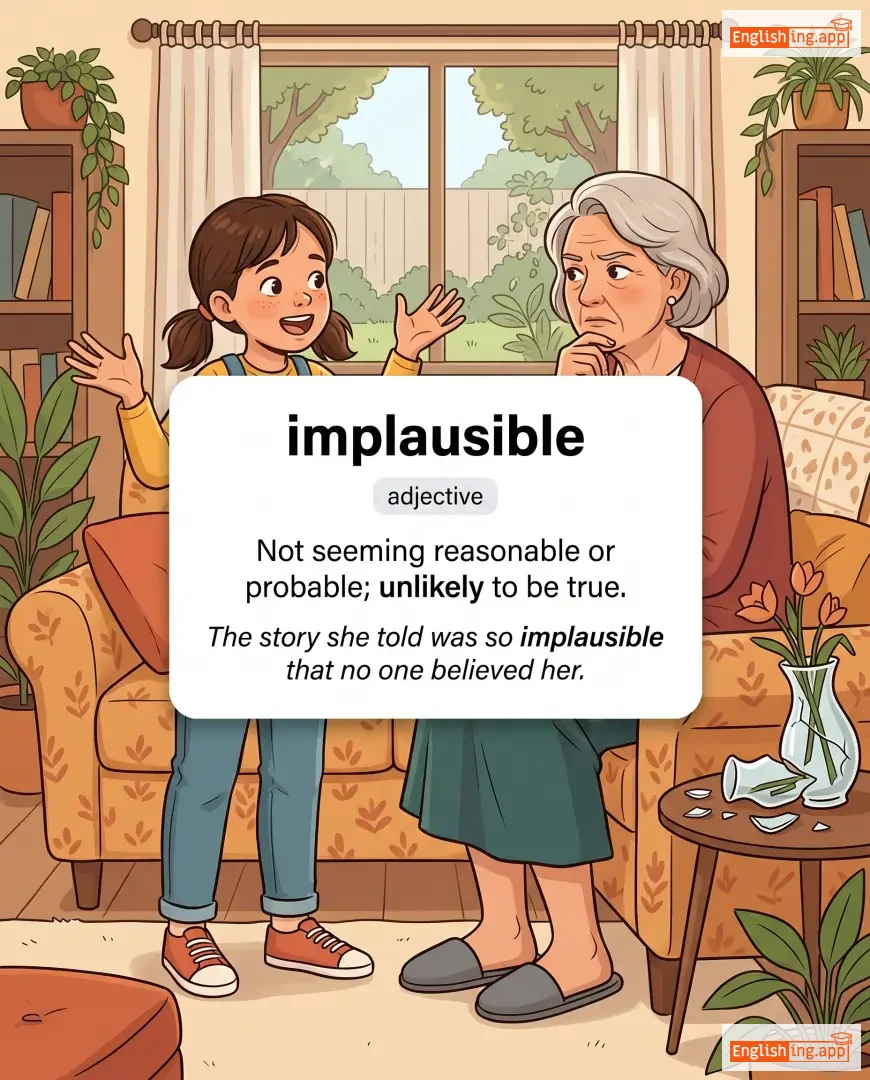
implausible definition card — visual illustration of the meaning
adjective
/ɪmˈplɔːzəbl/
implausible (implausible)

Not seeming reasonable or probable; unlikely to be true.

"The story she told was so implausible that no one believed her."

"La historia que ella contó era tan implausible que nadie le creyó." (La historia que ella contó era tan implausible que nadie le creyó.)
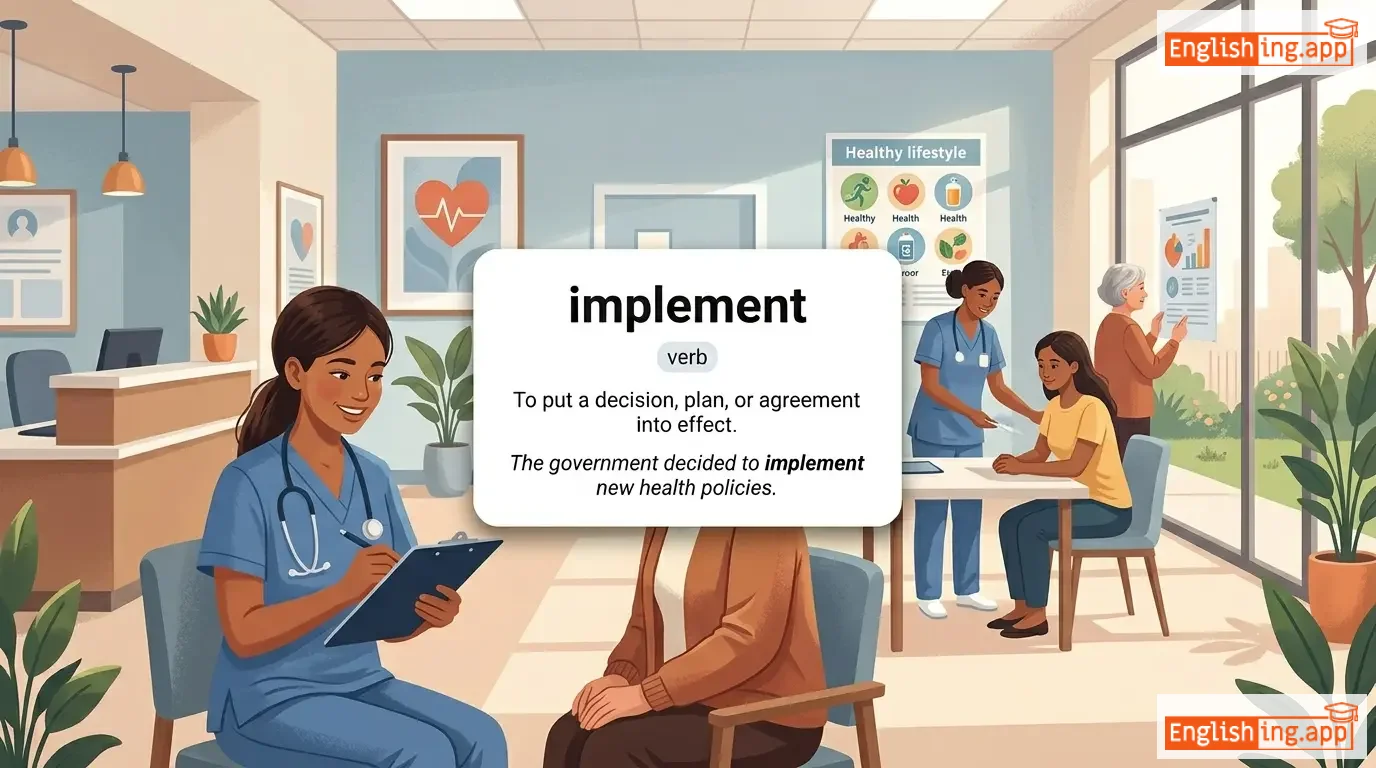
implement definition card — visual illustration of the meaning
verb
/ˈɪmplɪˌmɛnt/
implementar (implementar)

To put a decision, plan, or agreement into effect.

"The government decided to implement new health policies."

"El gobierno decidió implementar nuevas políticas de salud." (El gobierno decidió implementar nuevas políticas de salud.)
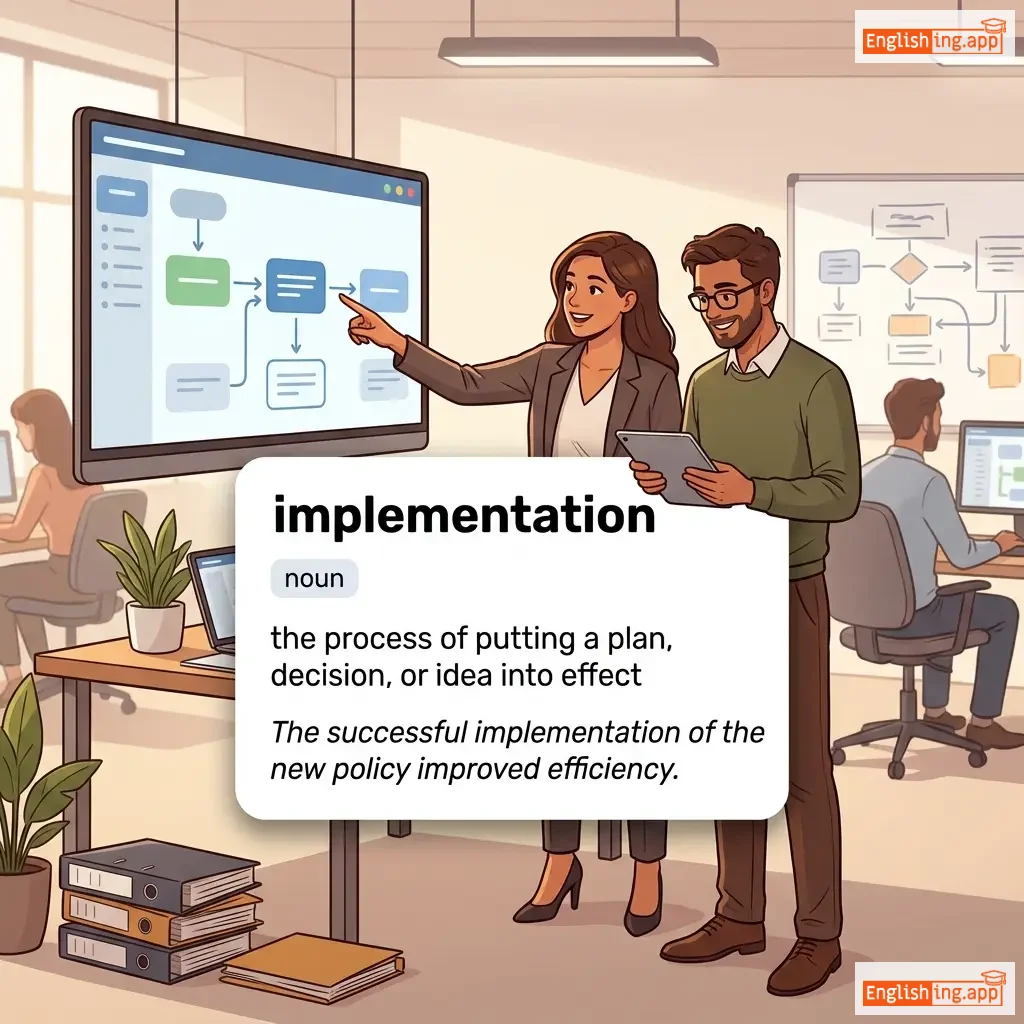
implementation definition card — visual illustration of the meaning
noun
/ˌɪmplɪmenˈteɪʃən/
implementación (implementacion)

the process of putting a plan, decision, or idea into effect

"The successful implementation of the new policy improved efficiency."

"La implementación exitosa de la nueva política mejoró la eficiencia." (La implementacion exitosa de la nueva politica mejoro la eficiencia.)
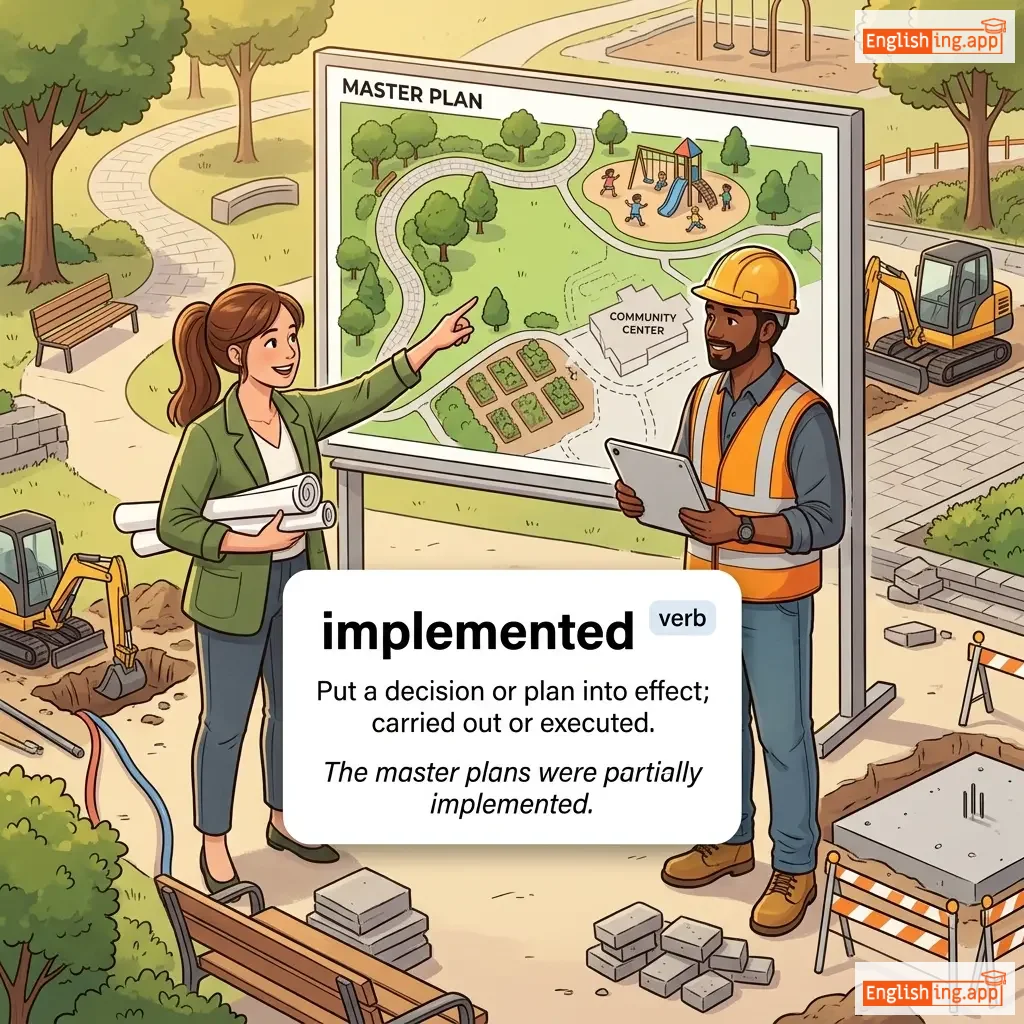
implemented definition card — visual illustration of the meaning
verb
ˈɪmplɪmentɪd
implementado (implementado)

Put a decision or plan into effect; carried out or executed.

"The master plans were partially implemented."

"Los planes maestros fueron implementados parcialmente." (Los planes maestros fueron implementados parcialmente.)
adjective
/ɪmˈplaɪəbl/
implícito (implicit)

Capable of being implied or suggested.

"The meaning of the statement is not directly clear but is impliable from the context."

"El significado de la declaración no es directamente claro, pero es implicable por el contexto." (El significado de la declaración no es directamente claro, pero es implicable por el contexto.)
verb
/ˈɪmplɪˌkeɪt/
implicar (implicar)

To show someone’s involvement in a crime or wrongdoing.

"The evidence implicated several officials in the scandal."

"La evidencia implicó a varios funcionarios en el escándalo." (La evidencia implicó a varios funcionarios en el escándalo.)
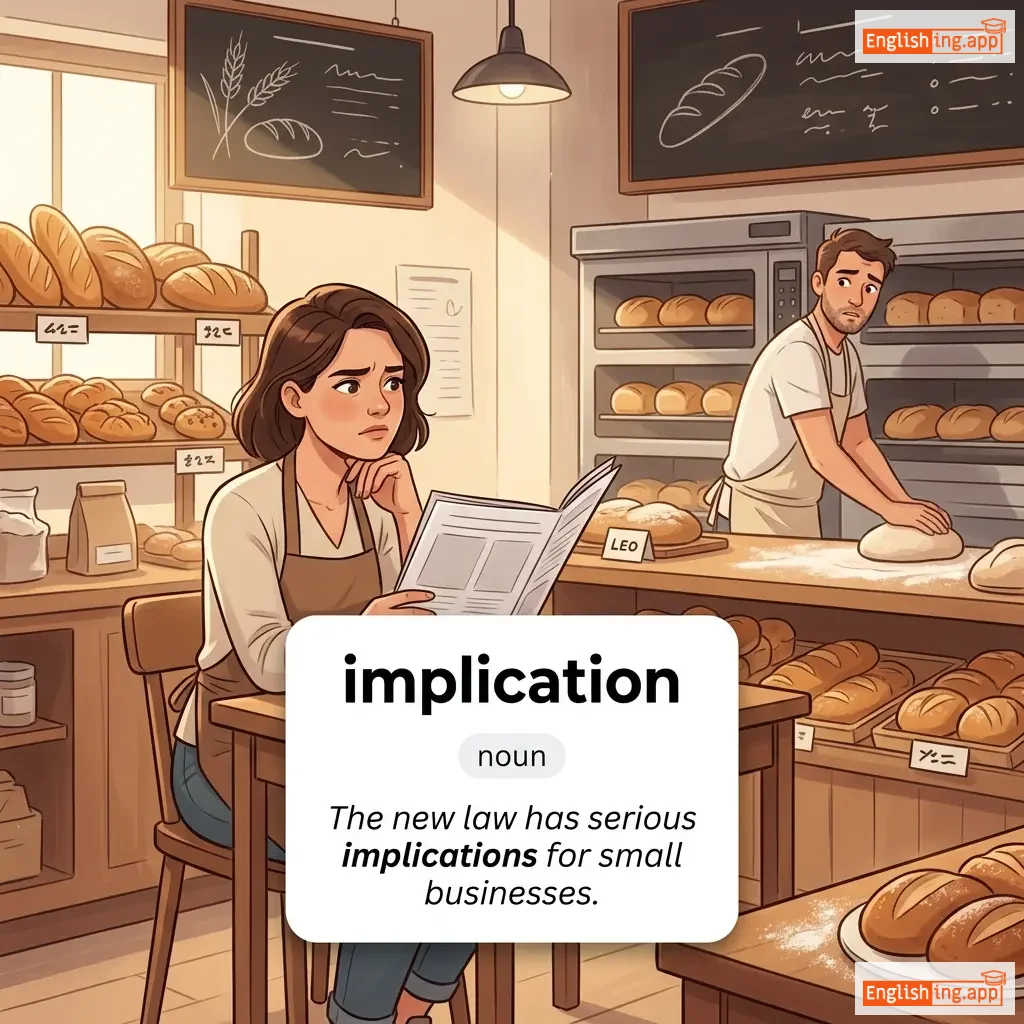
implication definition card — visual illustration of the meaning
noun
/ˌɪmplɪˈkeɪʃən/
implicación, efecto (implicacion, efecto)

A possible effect or result of an action or decision; something suggested without being stated directly.

"The new law has serious implications for small businesses."

"La nueva ley tiene serias implicaciones para los pequeños negocios." (La nueva ley tiene serias implicaciones para los pequenos negocios.)
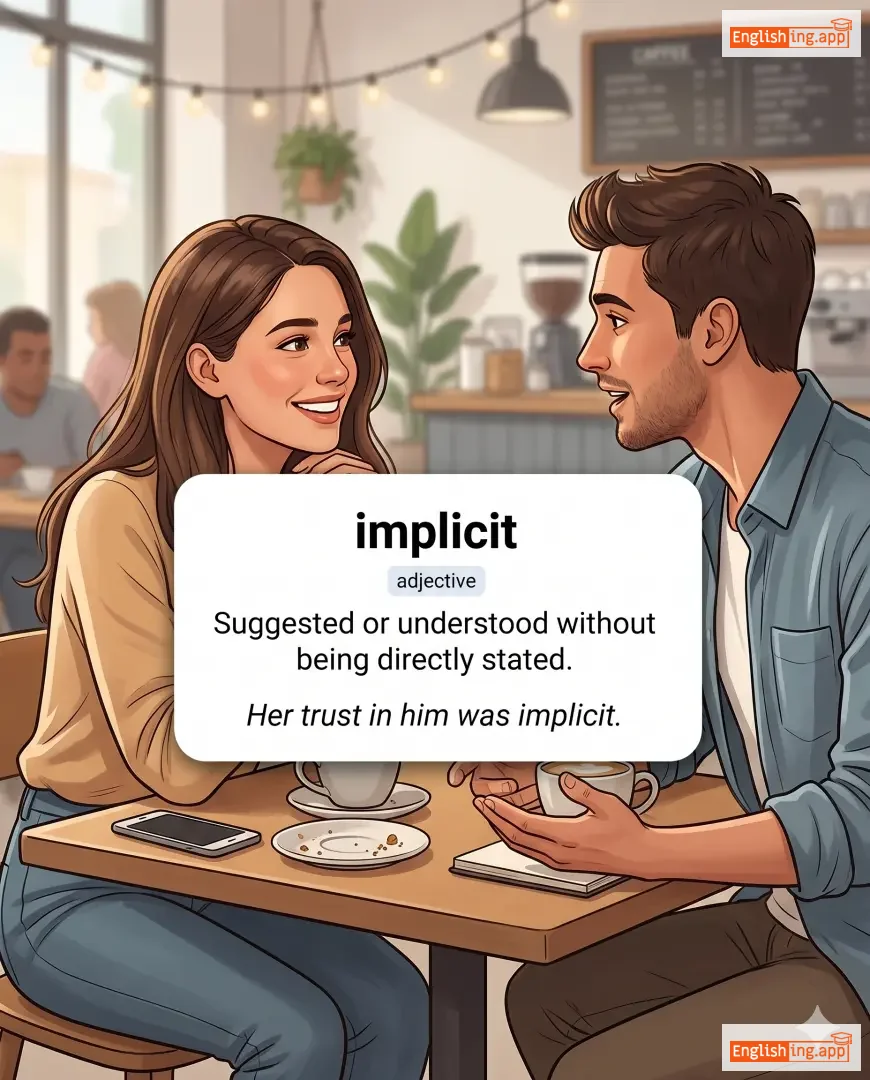
implicit definition card — visual illustration of the meaning
adjective
/ɪmˈplɪsɪt/
implícito (implicito)

Suggested or understood without being directly stated.

"Her trust in him was implicit."

"Su confianza en él era implícita." (su confianza en él era implícita)
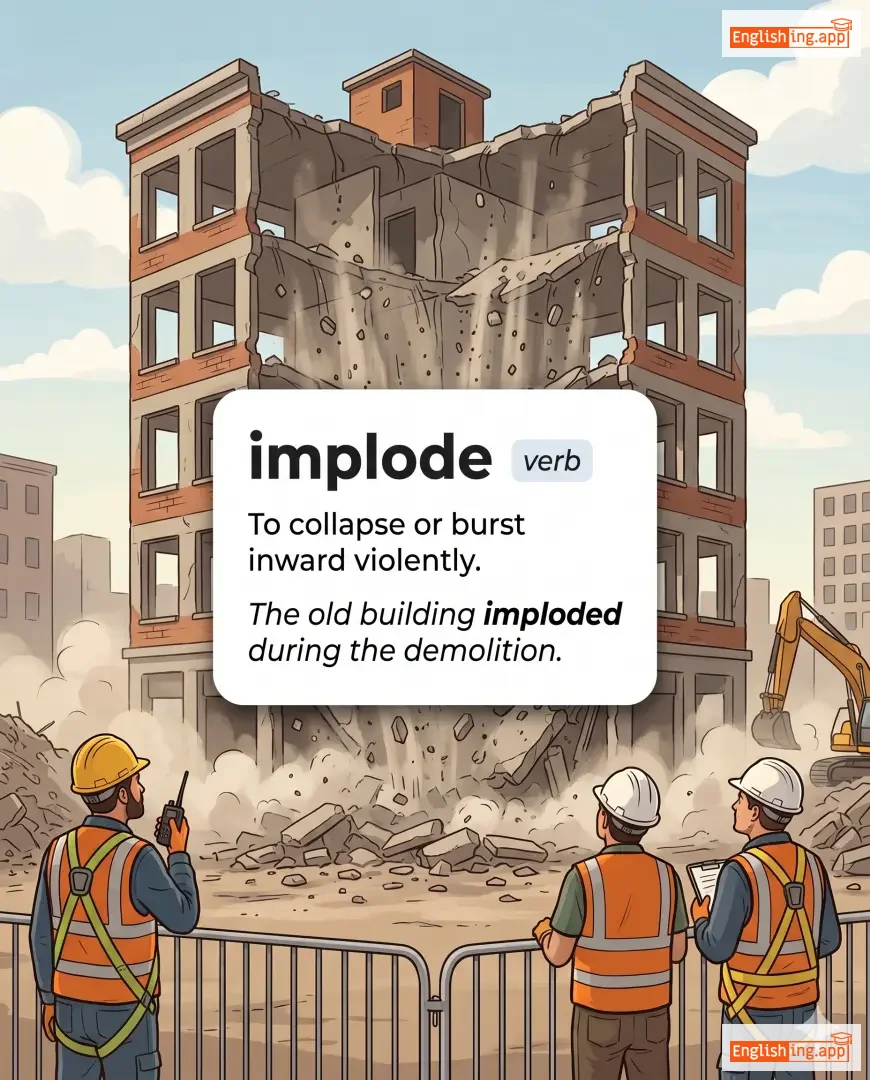
implode definition card — visual illustration of the meaning
verb
/ɪmˈploʊd/
implosionar (implosionar)

To collapse or burst inward violently.

"The old building imploded during the demolition."

"El viejo edificio implosionó durante la demolición." (El viejo edificio implosionó durante la demolición.)
verb
/ɪmˈplɔːr/
implorar (implorar)

To beg someone earnestly or desperately to do something.

"She implored him to stay with her."

"Ella le imploró que se quedara con ella." (Ella le imploró que se quedara con ella.)
verb
/ɪmˈplaɪ/
implicar (implicar)

To suggest something without directly stating it.

"Her tone seemed to imply that she was upset."

"Su tono parecía implicar que estaba molesta." (Su tono parecía implicar que estaba molesta.)
adjective
/ˌɪmpəˈlaɪt/
grosero (grosero)

Not showing good manners; rude.

"It is impolite to interrupt someone while they are speaking."

"Es grosero interrumpir a alguien mientras está hablando." (Es grosero interrumpir a alguien mientras está hablando.)
adverb
/ɪmˈpɒlɪtli/
de manera grosera (de manera grosera)

in a rude or discourteous manner; without showing respect or proper manners

"He spoke impolitely to the waiter despite the polite service."

"Habló de manera grosera con el camarero a pesar del buen servicio." (Hablo de manera grosera con el camarero a pesar del buen servicio)
noun
/ɪmˈpɒlɪtnəs/
descortesía (descortesia)

lack of good manners or courtesy; rude behavior

"His impoliteness towards the guests shocked everyone."

"Su descortesía hacia los invitados sorprendió a todos." (su descortesia hacia los invitados sorprendio a todos)
adjective
/ɪmˈpɑːlɪtɪk/
imprudente (imprudente)

Unwise or imprudent; not showing good judgment.

"It would be impolitic to criticize them openly."

"Sería imprudente criticarlos abiertamente." (Sería imprudente criticarlos abiertamente.)
adjective
/ɪmˈpɒndərəbl̩/
imponderable (imponderable)

Something difficult or impossible to estimate, assess, or understand

"The outcome of the election depends on many imponderable factors."

"El resultado de las elecciones depende de muchos factores imponderables." (El resultado de las elecciones depende de muchos factores imponderables.)
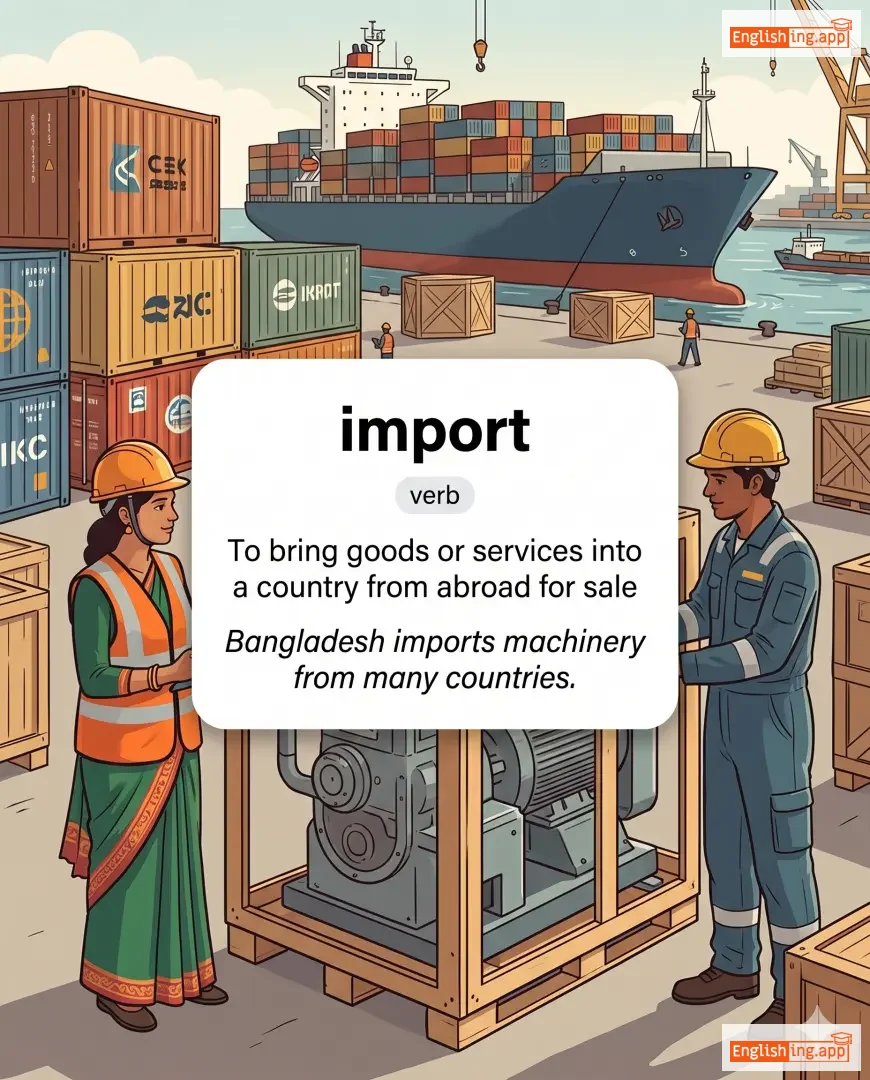
import definition card — visual illustration of the meaning
verb
/ˈɪmpɔːrt/
importar (importar)

To bring goods or services into a country from abroad for sale

"Bangladesh imports machinery from many countries."

"Bangladesh importa maquinaria de muchos países." (Bangladesh importa maquinaria de muchos paises.)
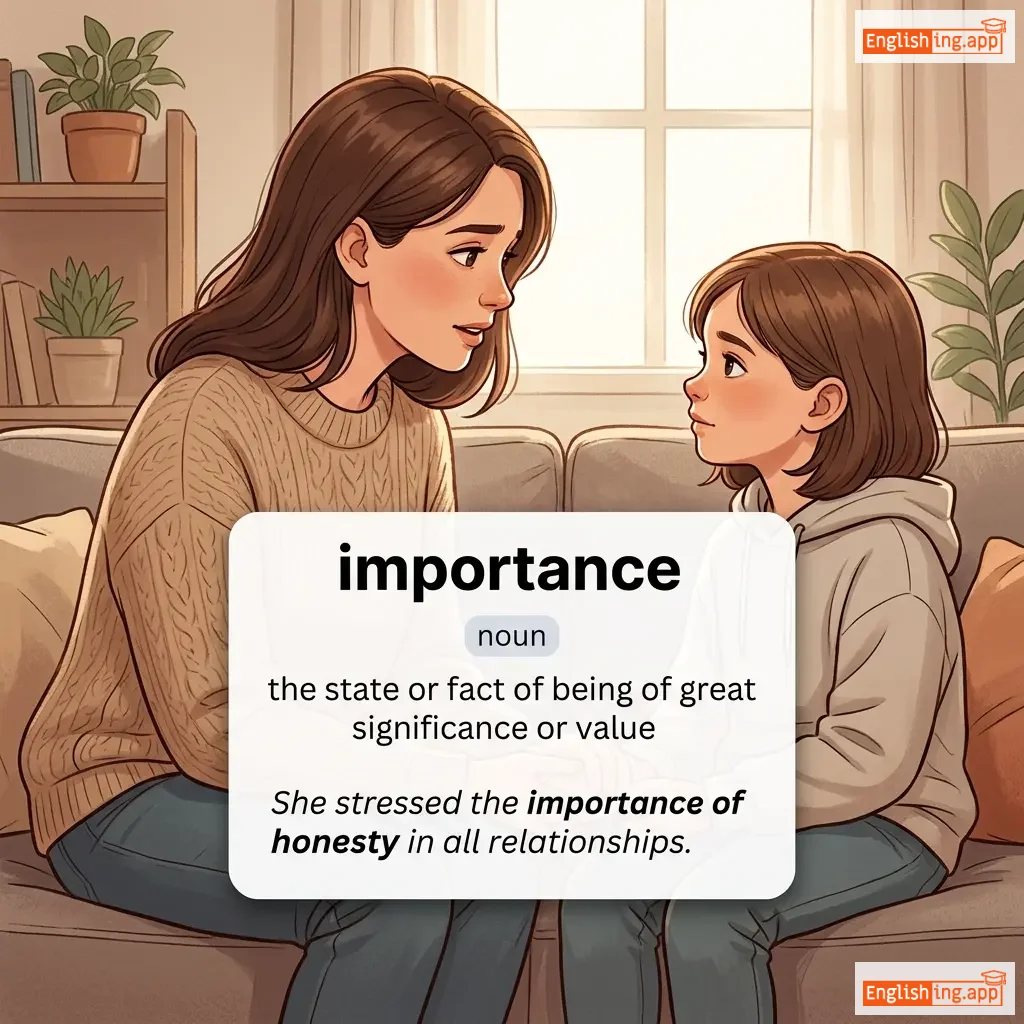
importance definition card — visual illustration of the meaning
noun
/ɪmˈpɔːrtəns/
importancia (importancia)

the state or fact of being of great significance or value

"She stressed the importance of honesty in all relationships."

"Ella enfatizó la importancia de la honestidad en todas las relaciones." (Ella enfatizó la importancia de la honestidad en todas las relaciones.)
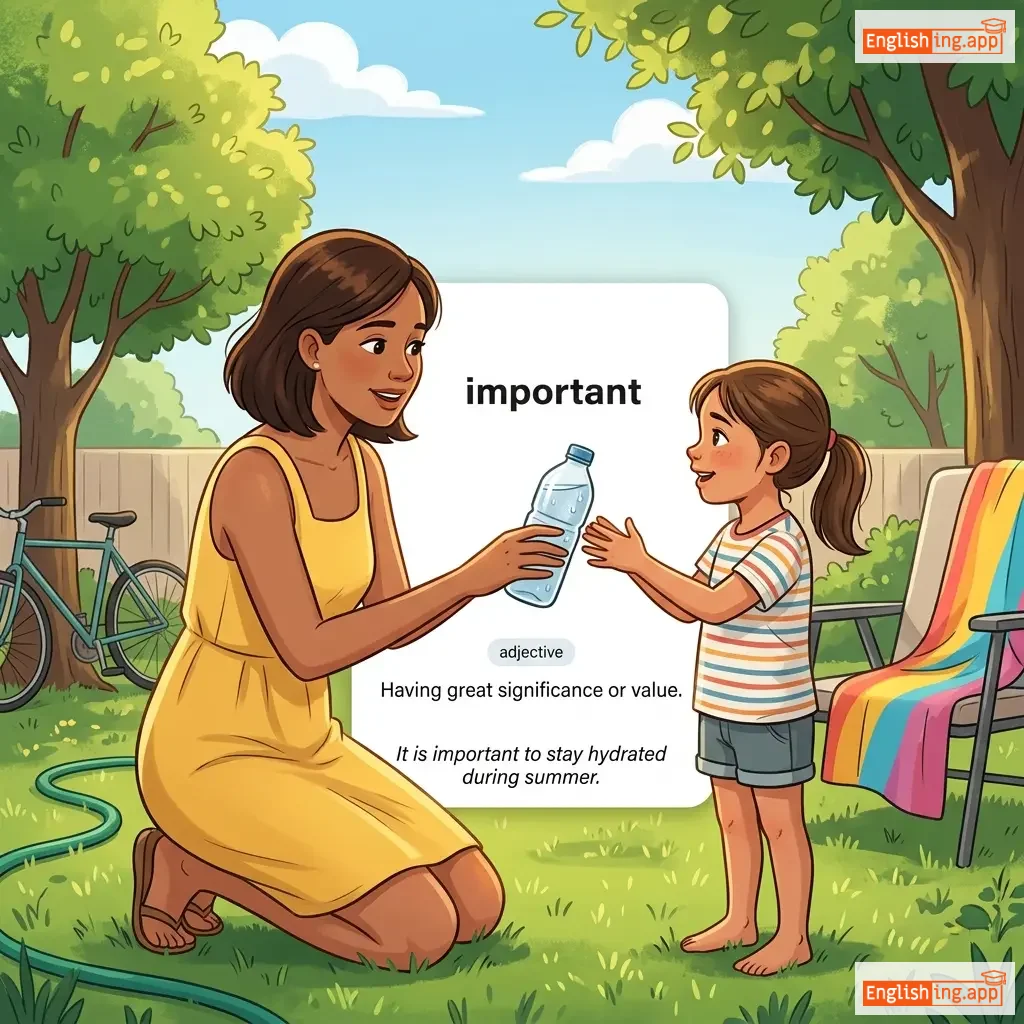
important definition card — visual illustration of the meaning
adjective
/ɪmˈpɔːrtənt/
importante (importante)

Having great significance or value.

"It is important to stay hydrated during summer."

"Es importante mantenerse hidratado durante el verano." (Es importante mantenerse hidratado durante el verano.)
adverb
/ɪmˈpɔːtəntli/
de manera importante (de manera importante)

in a way that is of great significance or value

"Importantly, the report highlights the need for immediate action."

"De manera importante, el informe resalta la necesidad de acción inmediata." (De manera importante, el informe resalta la necesidad de acción inmediata.)
noun
/ˌɪmpɔːrˈteɪʃən/
importación (importacion)

The act of bringing goods or services into a country from abroad

"The importation of luxury goods is strictly regulated."

"La importación de productos de lujo está estrictamente regulada." (La importacion de productos de lujo esta estrictamente regulada.)
adjective
/ɪmˈpɔːrtʃənət/
importuno (importuno)

Persistent to the point of annoyance or intrusion

"The importunate salesman kept calling despite repeated refusals."

"El vendedor importuno siguió llamando a pesar de las repetidas negativas." (El vendedor importuno siguió llamando a pesar de las repetidas negativas.)
verb
/ˌɪmpɔːrˈtuːn/
pedir insistentemente (pedir insistentemente)

To ask someone persistently or pressingly for something

"The child importuned his mother for a new toy."

"El niño importunó a su madre para que le comprara un juguete nuevo." (El niño importunó a su madre para que le comprara un juguete nuevo.)
verb
/ˌɪmpɔːrˈtuːnd/
insistir persistentemente (insistir persistentemente)

asked someone persistently and pressingly for something

"She importuned her boss for a raise until he finally gave in."

"Ella insistió persistentemente a su jefe por un aumento hasta que finalmente accedió." (Ella insistió persistentemente a su jefe por un aumento hasta que finalmente accedió.)
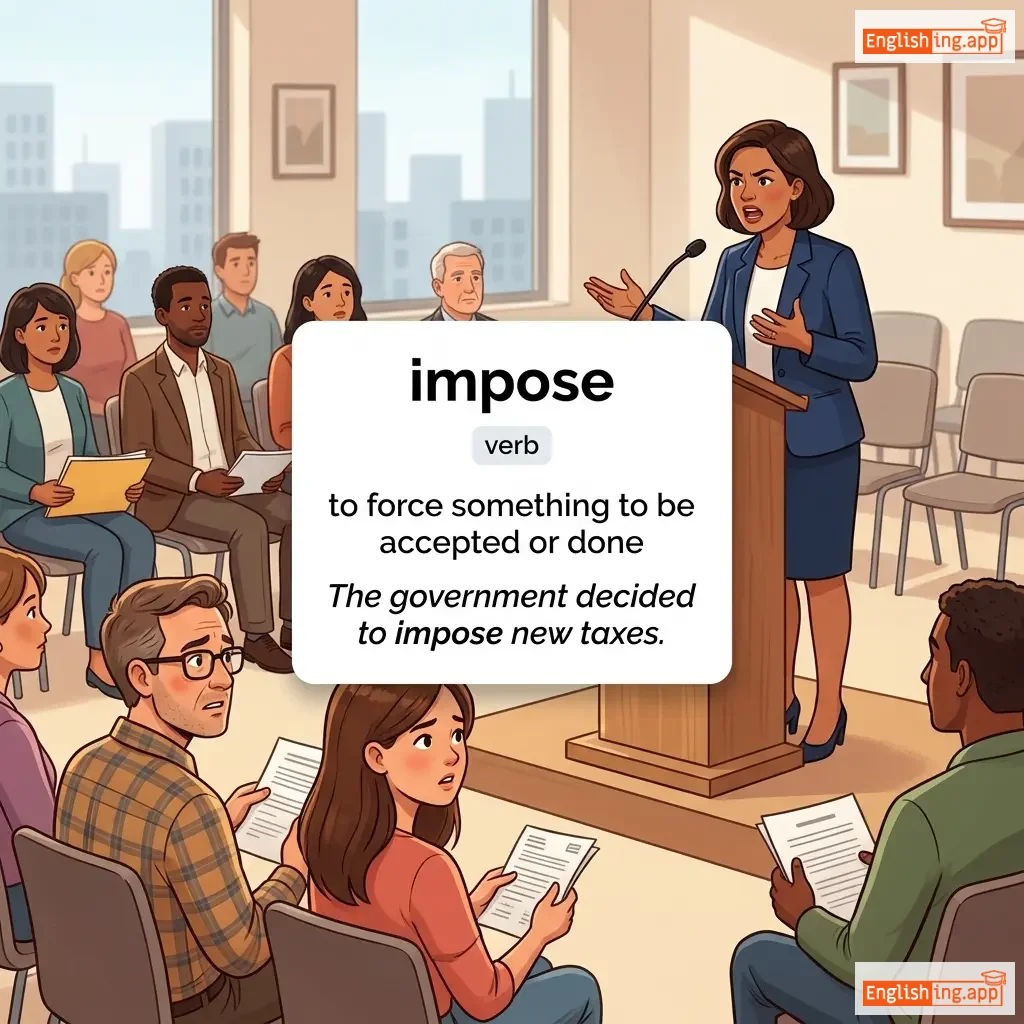
impose definition card — visual illustration of the meaning
verb
/ɪmˈpoʊz/
imponer (imponer)

to force something to be accepted or done

"The government decided to impose new taxes."

"El gobierno decidió imponer nuevos impuestos." (El gobierno decidió imponer nuevos impuestos.)
verb
/ɪmˈpoʊzd/
impuesto (impuesto)

forced something to be accepted or put in place

"The government imposed new regulations on the industry."

"El gobierno impuso nuevas regulaciones sobre la industria." (El gobierno impuso nuevas regulaciones sobre la industria.)
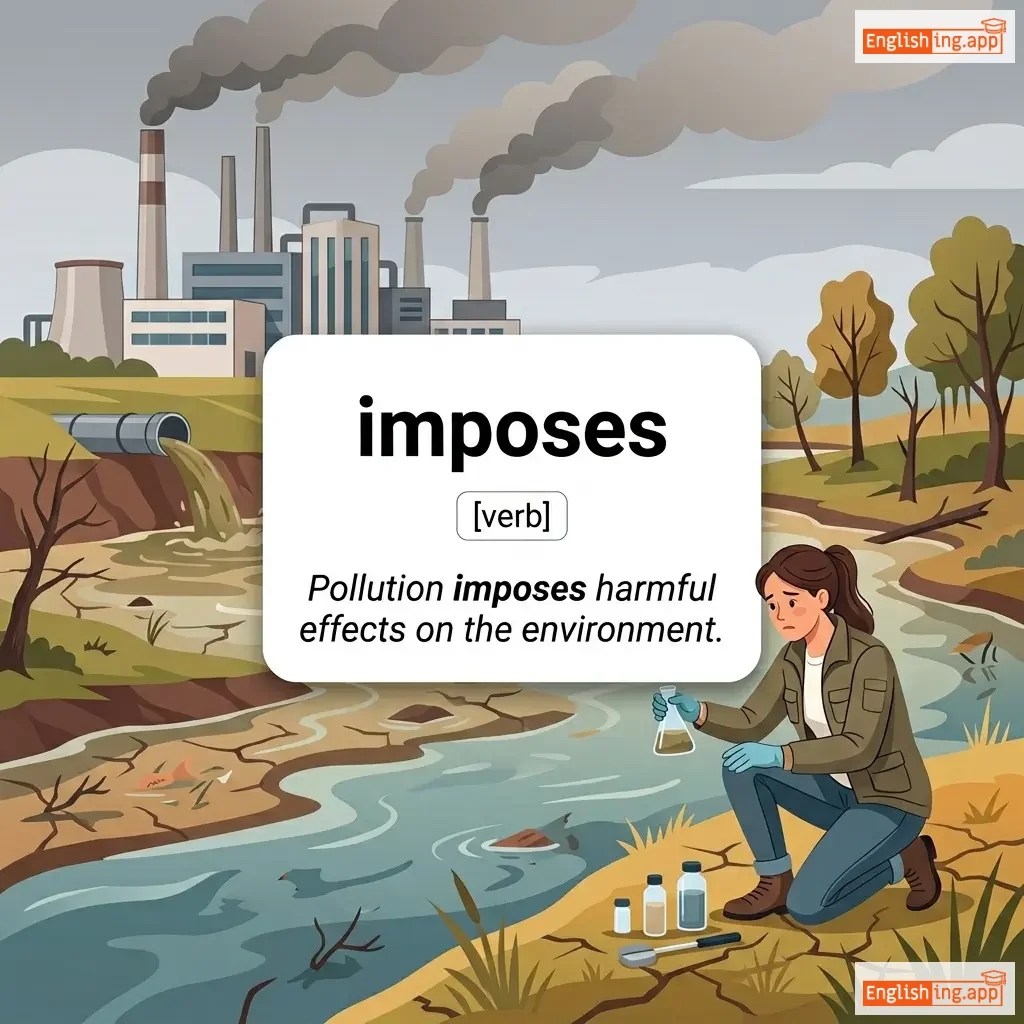
imposes definition card — visual illustration of the meaning
verb
ɪmˈpoʊz
imponer (imponer)

To establish or apply by authority; to force something unwelcome or unfamiliar to be accepted or put in place.

"Pollution imposes harmful effects on the environment."

"La contaminación impone efectos perjudiciales en el medio ambiente." (La contaminacion impone efectos perjudiciales en el medio ambiente.)
adjective
/ɪmˈpoʊzɪŋ/
imponente (imponente)

having an appearance that is grand, impressive, or commanding

"The castle is an imposing structure overlooking the valley."

"El castillo es una estructura imponente que domina el valle." (El castillo es una estructura imponente que domina el valle.)
noun
/ˌɪmpəˈzɪʃən/
imposición (imposicion)

the act of forcing something on someone; an unwelcome demand or burden

"The new tax was seen as an unfair imposition on the poor."

"El nuevo impuesto fue visto como una imposición injusta sobre los pobres." (El nuevo impuesto fue visto como una imposición injusta sobre los pobres.)
noun
/ɪmˌpɒsəˈbɪlɪti/
imposibilidad (imposibilidad)

the state or fact of being impossible; something that cannot be done or achieved

"Finishing the project in one day was an impossibility."

"Terminar el proyecto en un día fue una imposibilidad." (terminar el proyecto en un dia fue una imposibilidad)
adjective
/ɪmˈpɑːsəbl/
imposible (imposible)

not able to occur, exist, or be done

"It is impossible to finish this work in one day."

"Es imposible terminar este trabajo en un día." (Es imposible terminar este trabajo en un día.)
noun
/ɪmˈpɑːstər/
impostor, fraude (impostor, fraude)

a person who pretends to be someone else in order to deceive others

"The man turned out to be an impostor posing as a doctor."

"El hombre resultó ser un impostor que se hacía pasar por doctor." (El hombre resultó ser un impostor que se hacía pasar por doctor.)
noun
/ɪmˈpɒstʃər/
falsificación (falsificacion)

The act of pretending to be someone else in order to deceive others; deception or fraud.

"The imposture was discovered when the man failed to answer basic questions about his supposed identity."

"La falsificación fue descubierta cuando el hombre no pudo responder a preguntas básicas sobre su supuesta identidad." (La falsificacion fue descubierta cuando el hombre no pudo responder a preguntas basicas sobre su supuesta identidad.)
adjective
/ˈɪmpətənt/
impotente (impotente)

Lacking power, ability, or strength to take effective action.

"The citizens felt impotent against the corrupt system."

"Los ciudadanos se sintieron impotentes contra el sistema corrupto." (Los ciudadanos se sintieron impotentes contra el sistema corrupto.)
verb
/ɪmˈpɒvərɪʃ/
empobrecer (empobrecer)

To make someone poor or reduce the quality or richness of something.

"The long war impoverished the entire nation."

"La larga guerra empobreció a toda la nación." (La larga guerra empobreció a toda la nación.)