词汇表

英语词汇词典 | 单词含义、定义和示例

adjective
/ɪmˈpræktɪkəbl/
不切实际 (bu qie shi ji)

Not capable of being carried out or put into practice.

"The plan seemed impracticable due to limited resources."

"由于资源有限,计划显得不切实际。" (Yu yuansuo youxian, jihua xiande bu qie shiji.)
verb
/ˈɪmprɪkeɪt/
诅咒 (zǔ zhòu)

To utter a curse or invoke evil upon someone.

"The old woman imprecated her enemies with dark words."
"老女人用黑暗的词语诅咒她的敌人。" (Lǎo nǚrén yòng hēi'àn de cíyǔ zǔzhòu tā de dírén.)
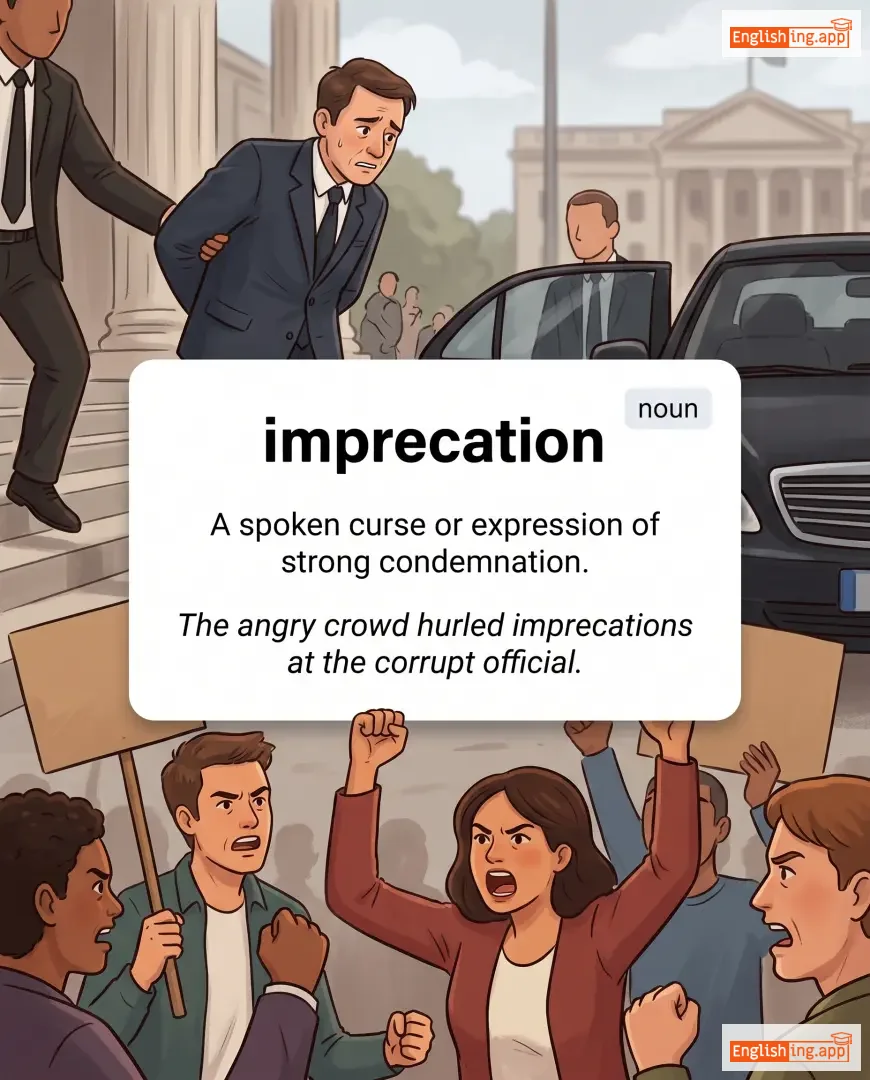
imprecation definition card — visual illustration of the meaning
noun
/ˌɪmprɪˈkeɪʃən/
诅咒 (zuzhou)

A spoken curse or expression of strong condemnation.

"The angry crowd hurled imprecations at the corrupt official."

"愤怒的人群向腐败的官员投掷了诅咒。" (Fen nu de renqun xiang fubai de guan yuan tou zhi le zuzhuo.)
adjective
/ˌɪmprɪˈsaɪs/
不准确 (buzhunque)

Not exact or accurate; vague.

"His explanation was too imprecise to be helpful."

"他的解释不够准确,无法提供帮助。" (Tā de jiěshì bù gòu zhǔnquè, wúfǎ tígōng bāngzhù.)
adjective
/ɪmˈprɛɡnəbl̩/
固若金汤 (gù ruò jīn tāng)

Unable to be captured, broken into, or defeated.

"The fortress was considered impregnable by the enemy."

"敌人认为这个堡垒固若金汤。" (Dírén rènwéi zhège bǎolěi gù ruò jīn tāng.)
verb
/ˈɪmprɛɡneɪt/
使怀孕 / 浸透 (shǐ huáiyùn / jìntòu)

To make pregnant; to fill or saturate with something.

"The scientist used a method to impregnate the material with resin."

"科学家使用一种方法将材料用树脂进行浸透。" (Kēxuéjiā shǐyòng yī zhǒng fāngfǎ jiāng cáiliào yòng shùzhī jìnxíng jìntòu.)
noun
/ˌɪmprəˈsɑːrioʊ/
主办人 (zhǔbànrén)

A person who organizes or finances concerts, plays, or operas.

"The impresario arranged a series of concerts for the rising star."

"这位印普雷萨里奥为崭露头角的明星安排了一系列的音乐会。" (Zhè wèi yìn pǔ léi sà lǐ ào wéi zhǎn lù tóu jiǎo de míngxīng ānpái le yī xìliè de yīnyuè huì.)
verb
/ɪmˈprɛs/
打动 (dǎdòng)

to cause someone to feel admiration or respect

"Her speech managed to impress the audience."

"她的演讲成功地打动了观众。" (Tā de yǎnjiǎng chénggōng de dǎdòngle guānzhòng.)
noun
/ɪmˈprɛʃən/
印象, 概念 (yinxiang, gainian)

an idea, feeling, or opinion about something or someone

"The book gave me a good first impression."

"这本书给我留下了很好的第一印象。" (Zhe ben shu gei wo liuxia le hen hao de di yi yinxiang.)
adjective
/ɪmˈprɛsɪv/
令人印象深刻的,值得敬佩的 (lìng rén yìn xiàng shēn kè de, zhí dé jìng pèi de)

causing admiration or respect; remarkable

"The building is an impressive example of modern architecture."

"这座建筑是现代建筑的一个令人印象深刻的例子。" (Zhè zuò jiànzhú shì xiàndài jiànzhú de yīgè lìng rén yìnxiàng shēn kè de lìzi.)
noun
/ˌɪmprɪˈmɑːtər/
批准书 (pīzhǔnshū)

An official license or approval, especially to publish a book.

"The book was released with the official imprimatur of the church."
"这本书以教会的正式批准书发布。" (Zhè běn shū yǐ jiàohuì de zhèngshì pīzhǔnshū fābù.)
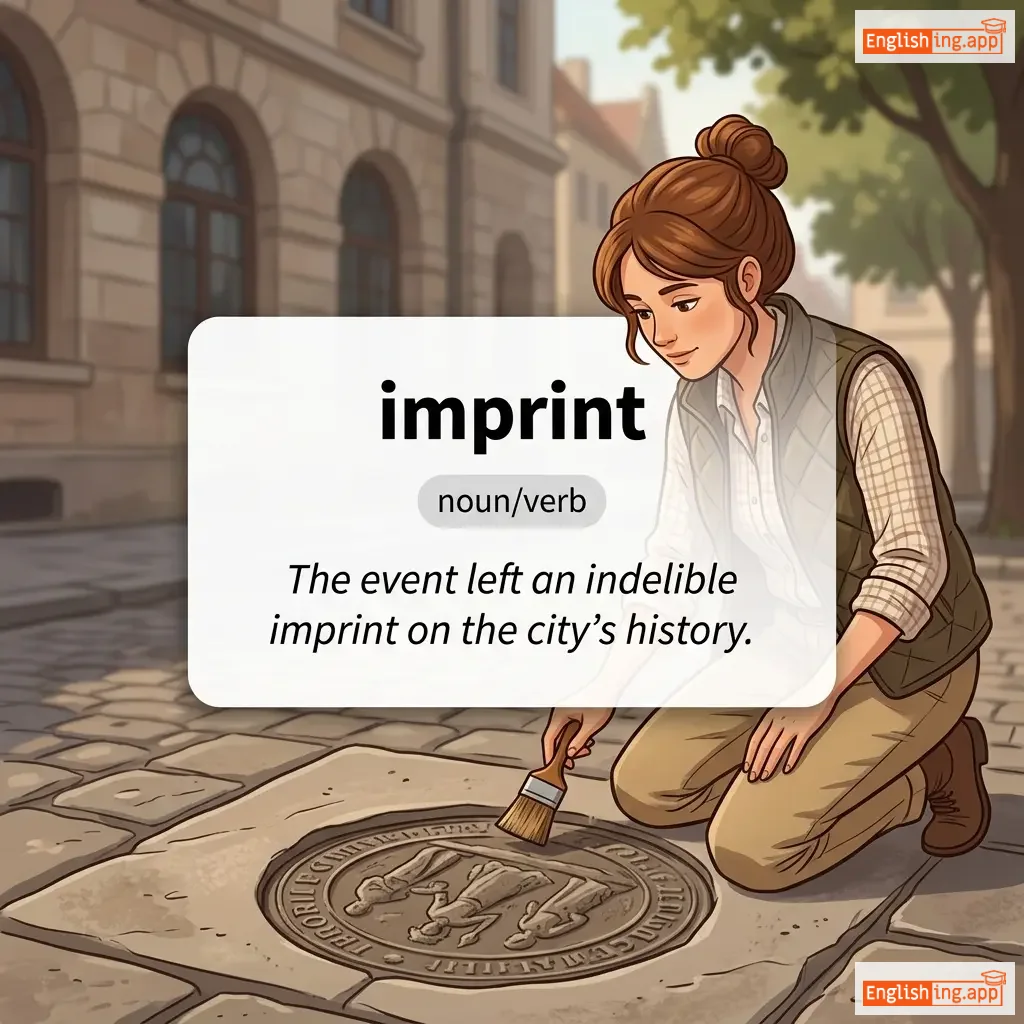
imprint definition card — visual illustration of the meaning
noun/verb
/ˈɪmprɪnt/
印记 (imprint)

A mark or impression made by pressure; to establish or fix firmly in someone's mind.

"The event left an indelible imprint on the city's history."
"这一事件在这座城市的历史上留下了不可磨灭的印记。" (zhe yi shi jian zai zhe zuo cheng shi de li shi shang liu xia le bu ke mo mie de yin ji)
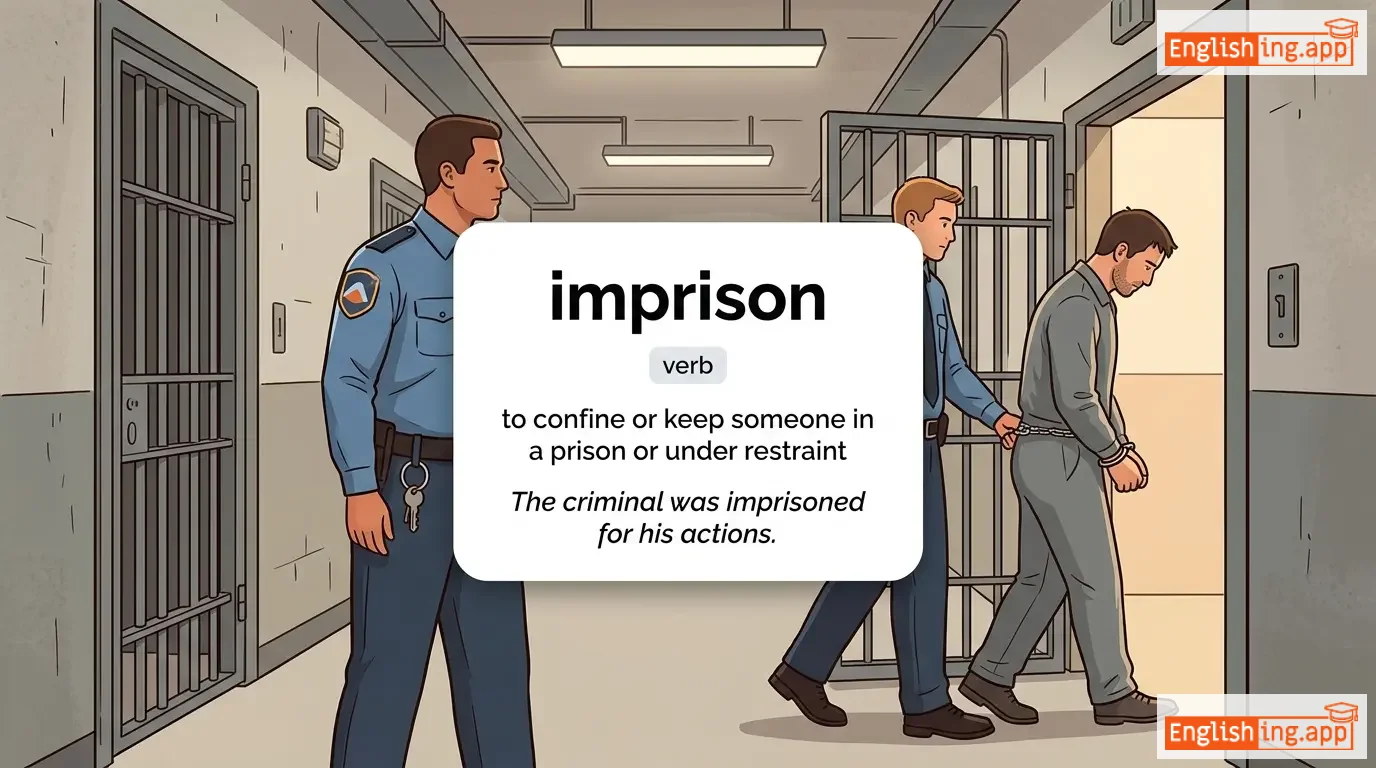
imprison definition card — visual illustration of the meaning
verb
/ɪmˈprɪzən/
监禁 (jianjin)

to confine or keep someone in a prison or under restraint

"The criminal was imprisoned for his actions."

"罪犯因其行为被监禁。" (Zuifan yin qi xingwei bei jianjin.)
noun
/ɪmˈprɪzənmənt/
监禁 (jianjin)

the act of putting someone in prison; the state of being confined as punishment

"He faced imprisonment for violating the court order."

"他因违反法院命令而面临监禁。" (Ta yin weifan fayuan mingling er mianlin jianjin)
noun
/ɪmˌprɒb.əˈbɪl.ə.ti/
不可能性 (bù kěnéng xìng)

the quality or state of being improbable; unlikely to be true or to happen

"The improbability of winning the lottery twice didn't stop her from buying tickets."

"两次赢得彩票的可能性几乎为零,但她仍然买了票。" (liǎng cì yíngdé cǎipiào de kěnéng xìng jīhū wéi líng, dàn tā réngrán mǎi le piào.)
adjective
/ɪmˈprɒbəbl/
不太可能的 (butaikanengde)

Not likely to be true or to happen.

"It seems improbable that he will arrive on time."
"看起来他准时到达的可能性很小。" (Kàn qǐlái tā zhǔnshí dào dá de kěnéng xìng hěn xiǎo.)
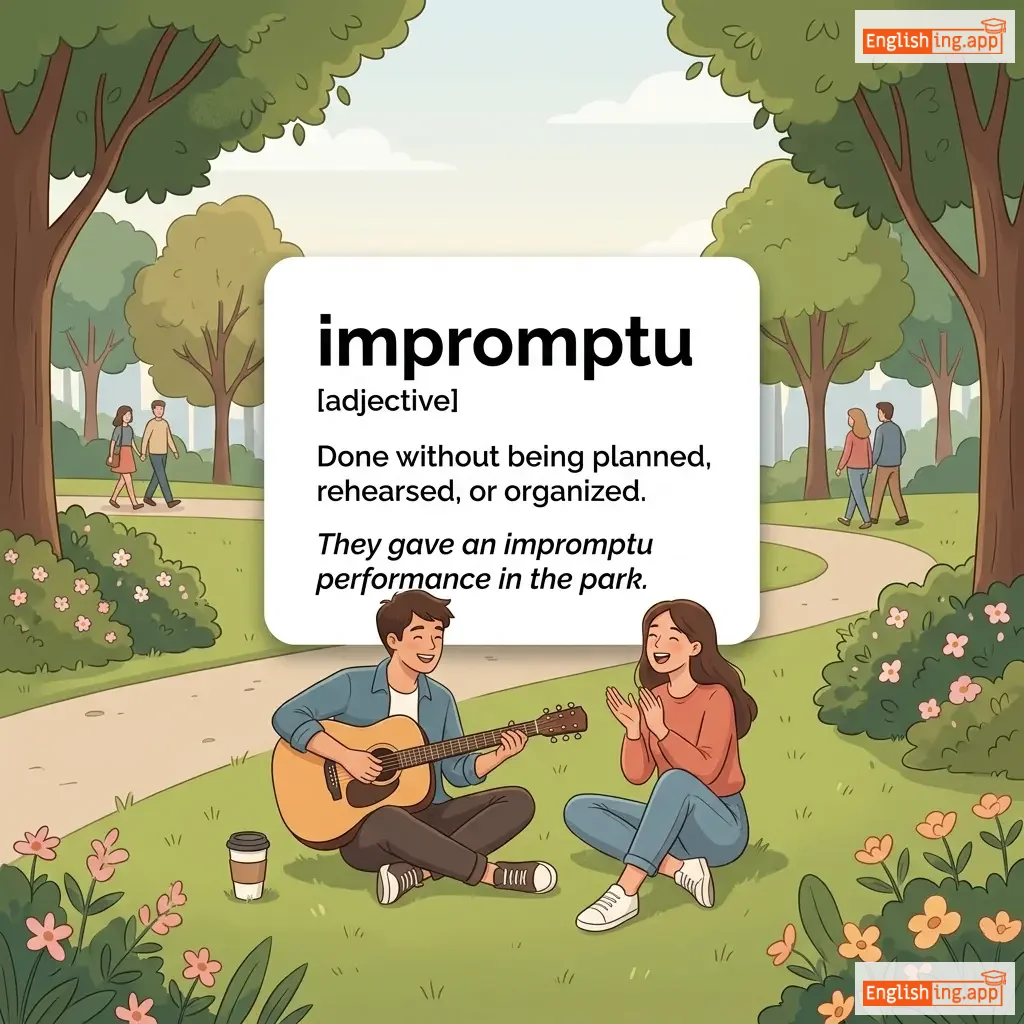
impromptu definition card — visual illustration of the meaning
adjective
/ɪmˈprɒmptjuː/
即兴 (jixing)

Done without being planned, rehearsed, or organized.

"They gave an impromptu performance in the park."

"他们在公园里进行了即兴表演。" (Tamen zai gongyuan li jinxing le jixing biaoyan.)
adjective
/ɪmˈprɒpər/
不适当 (bù shìdàng)

Not suitable or appropriate; against accepted standards.

"It is improper to talk loudly in the library."

"在图书馆大声讲话是不合适的。" (Zài túshūguǎn dàshēng jiǎnghuà shì bù shìdàng de.)
noun
/ˌɪmprəˈpraɪəti/
不当行为 (budang xingwei)

Failure to observe standards of honesty or modesty; improper behavior.

"The politician was accused of financial impropriety."
"该政治家被指控涉及财务不当行为。" (Gai zhengzhijia bei zhi kong sheji caiwu budang xingwei.)
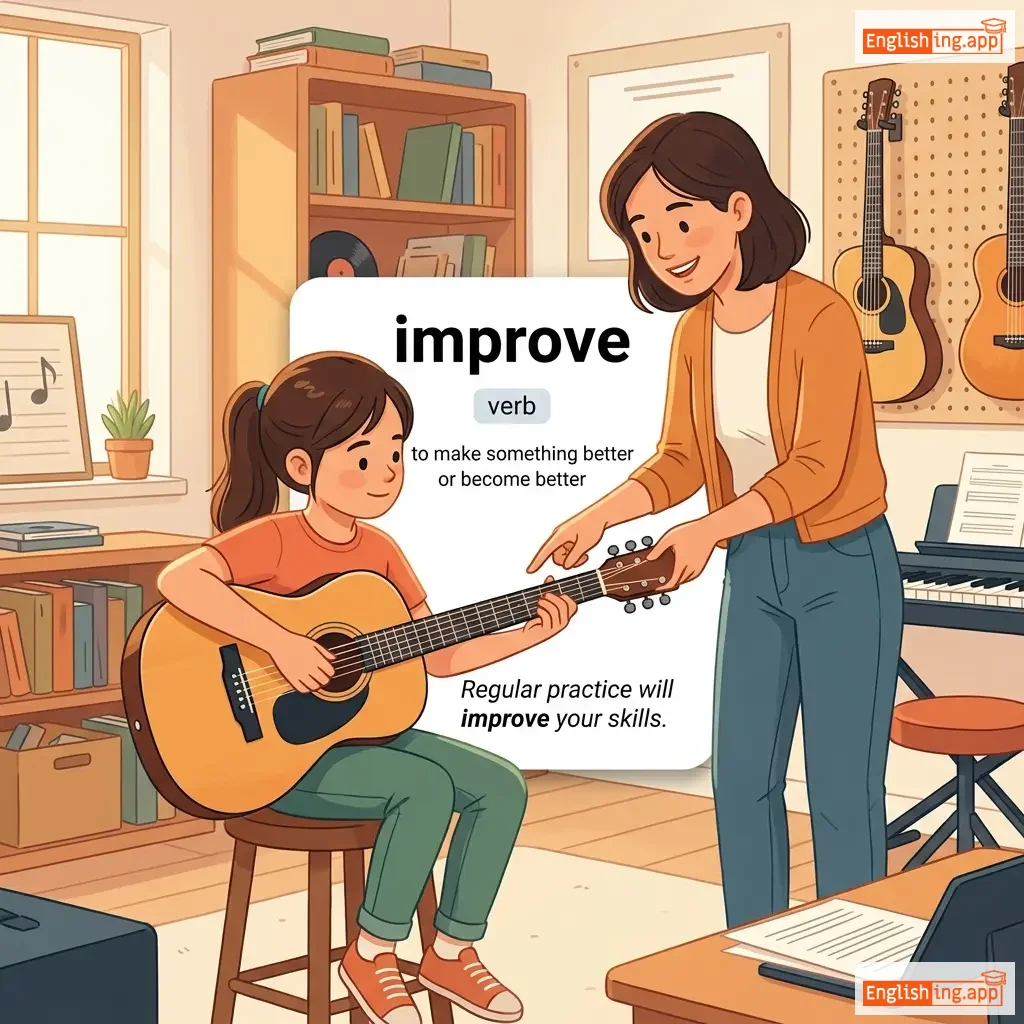
improve definition card — visual illustration of the meaning
verb
/ɪmˈpruːv/
改善 (gǎishàn)

to make something better or become better

"Regular practice will improve your skills."
"定期的练习将改善你的技能。" (dìngqī de liànxí jiāng gǎishàn nǐ de jìnéng.)
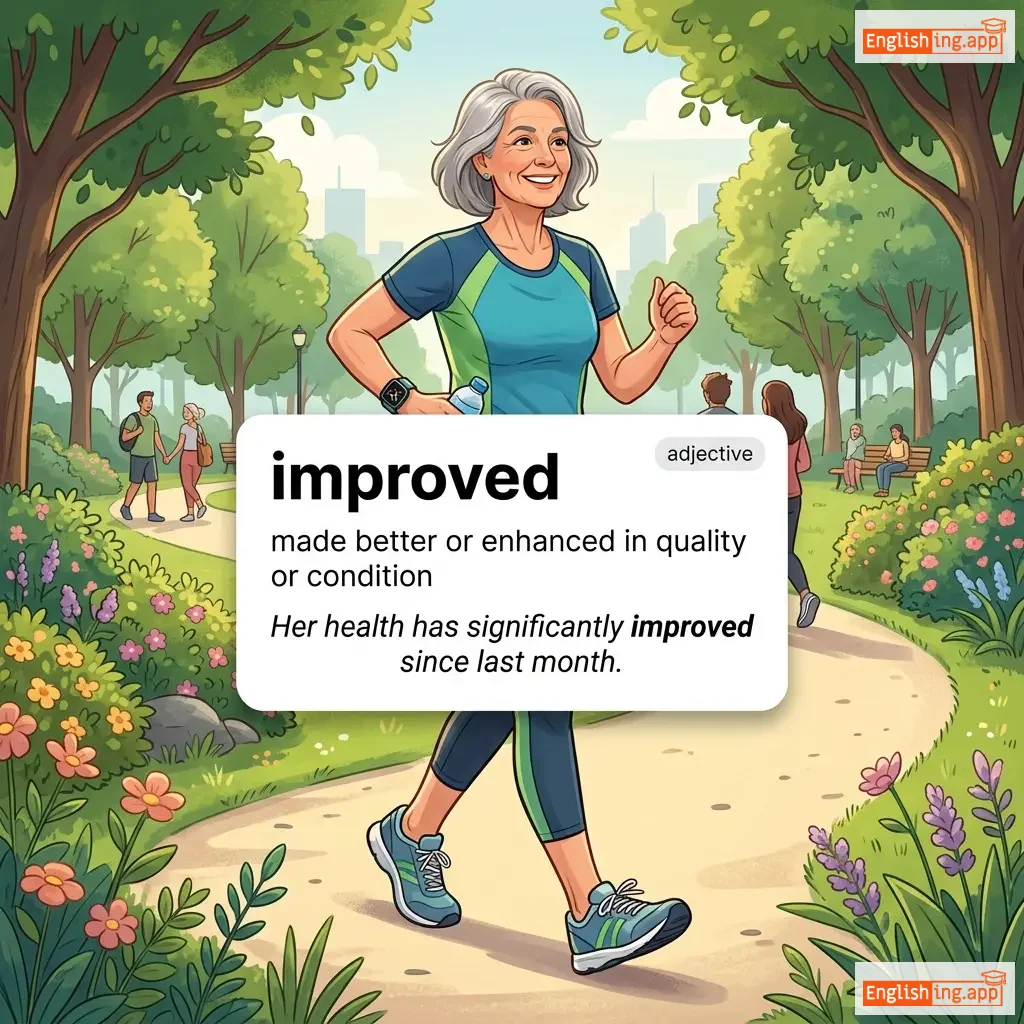
improved definition card — visual illustration of the meaning
adjective
/ɪmˈpruːvd/
改进的 (gǎijìn de)

made better or enhanced in quality or condition

"Her health has significantly improved since last month."

"她的健康自上个月以来显著改善。" (Tā de jiànkāng zì shàng gè yuè yǐlái xiǎnzhù gǎishàn.)
noun
/ɪmˈpruːvmənt/
改善 (gǎishàn)

the act of making something better

"There has been a significant improvement in his health."
"他的健康有了显著改善。" (tā de jiànkāng yǒu le xiǎnzhù gǎishàn.)
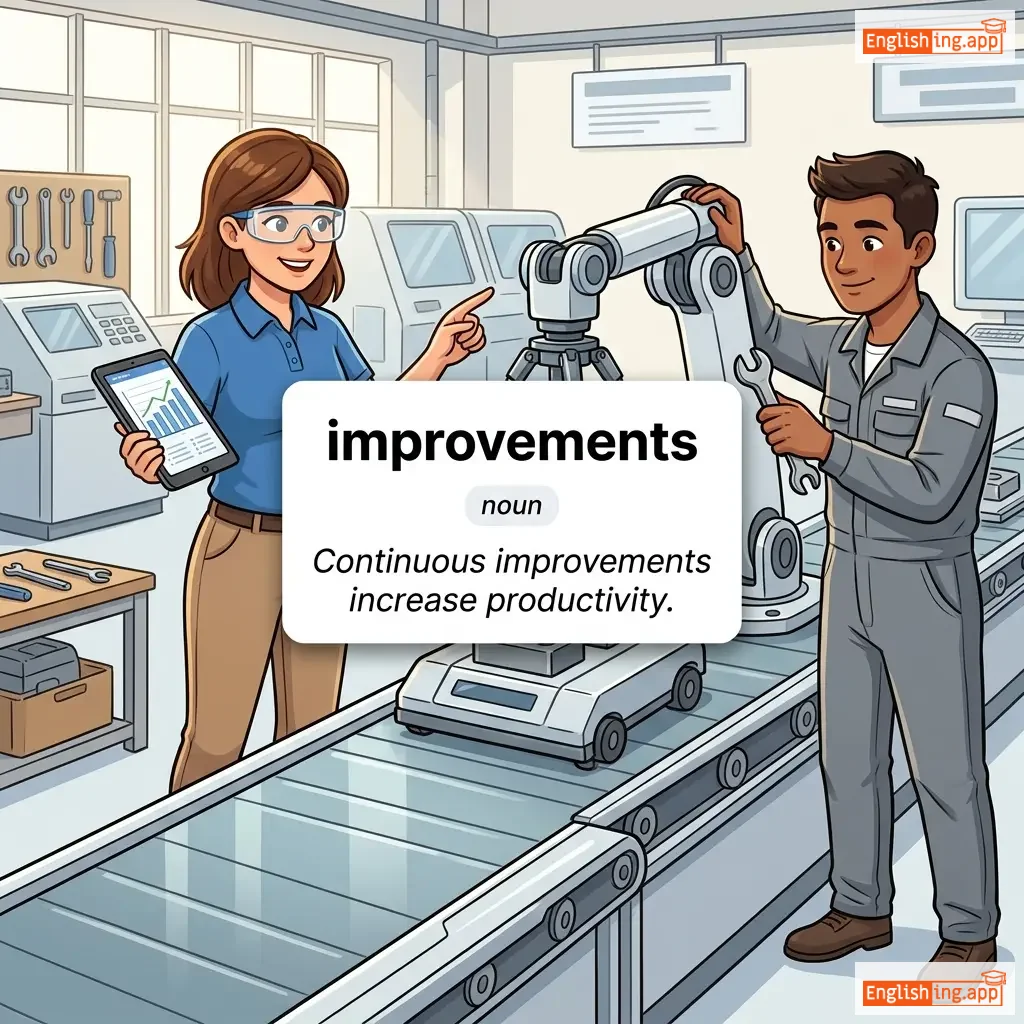
improvements definition card — visual illustration of the meaning
noun
ɪmˈpruːv.mənts
改善 (gaishan)

The action of making or becoming better; an instance of something becoming or being made better.

"Continuous improvements increase productivity."

"持续的改善提高了生产力。" (Chíxù de gǎishàn tígāo le shēngchǎnlì.)
noun
/ɪmˈprɑːvɪdəns/
缺乏远见 (que fa yuan jian)

Lack of foresight or care for future needs.

"His improvidence led to financial difficulties."

"他的缺乏远见导致了财务困难。" (ta de que fa yuan jian dao zhi le cai wu kun nan.)
adjective
/ɪmˈprɒvɪdənt/
缺乏远见 (quēfá yuǎnjiàn)

Not having or showing foresight; spending wastefully or without thought for the future.

"His improvident habits left him with no savings."

"他缺乏远见的习惯让他没有积蓄。" (Tā quēfá yuǎnjiàn de xíguàn ràng tā méiyǒu jīxù.)
verb
/ˈɪmprəvaɪz/

To create or perform something spontaneously without preparation.

"The actor had to improvise his lines when he forgot the script."

noun
/ɪmˈpruːdəns/
轻率 (qīng shuài)

Lack of caution or good judgment.

"His imprudence in investing all his money in one stock was disastrous."

"他将所有的钱都投资在一只股票上的轻率行为是灾难性的。" (Ta1 jiang1 suo3 you3 de qian2 dou1 tou2 zi4 zai4 yi1 zhi1 gu3 piao4 shang4 de qing1 shuai4 xing2 wei2 shi4 zai1 nan4 xing4 de.)
adjective
/ɪmˈpruːdənt/
鲁莽 (lumang)

Not showing care for the consequences of an action.

"It was imprudent to drive in such stormy weather."

"在如此暴风雨的天气下开车是鲁莽的。" (Zai ru ci baofengyu de tianqi xia kaiche shi lumang de.)
noun
/ˈɪmpjʊdəns/
无礼 (wulǐ)

Rude and disrespectful behavior.

"The student's impudence shocked the entire class."

"学生的无礼行为让全班震惊。" (Xuéshēng de wúlǐ xíngwéi ràng quán bān zhènjīng.)
adjective
/ˈɪmpjəd(ə)nt/
无礼的,厚颜无耻的 (wú lǐ de, hòu yán wú chǐ de)

not showing due respect for another person; rude

"The impudent child talked back to the teacher."

"那个无礼的孩子顶撞老师。" (Nàgè wúlǐ de háizi dǐngzhuàng lǎoshī.)
⚔️

impugn

verb
/ɪmˈpjuːn/

to dispute the truth, validity, or honesty of a statement or motive

"The lawyer tried to impugn the credibility of the witness."

noun
/ɪmˈpjuːɪsəns/
无能, 无力 (wúnéng, wúlì)

inability to take effective action; helplessness

"The government’s impuissance in the face of crisis frustrated the people."

"政府在危机面前的无能让人民感到沮丧。" (Zhèngfǔ zài wēijī miànqián de wúnéng ràng rénmín gǎndào jǔsàng.)
noun
/ˈɪmpʌls/
冲动 (chōngdòng)

a sudden strong desire or urge to act without thinking

"He bought the watch on impulse without planning to."

"他毫无计划地冲动买下了这只手表。" (Tā háo wú jìhuà de chōngdòng mǎi xià le zhè zhī shǒubiǎo.)
noun
/ɪmˈpʌlʃən/

a strong urge or drive to act; the act of impelling

"His impulsion to travel made him leave his job suddenly."

adjective
/ɪmˈpʌlsɪv/
冲动的, 直觉的 (chongdong de, zhi jue de)

acting suddenly without careful thought

"She made an impulsive decision to buy the car."
"她做出了一个冲动的决定,买了车。" (Ta zuo chu le yi ge chongdong de jueding, mai le che.)
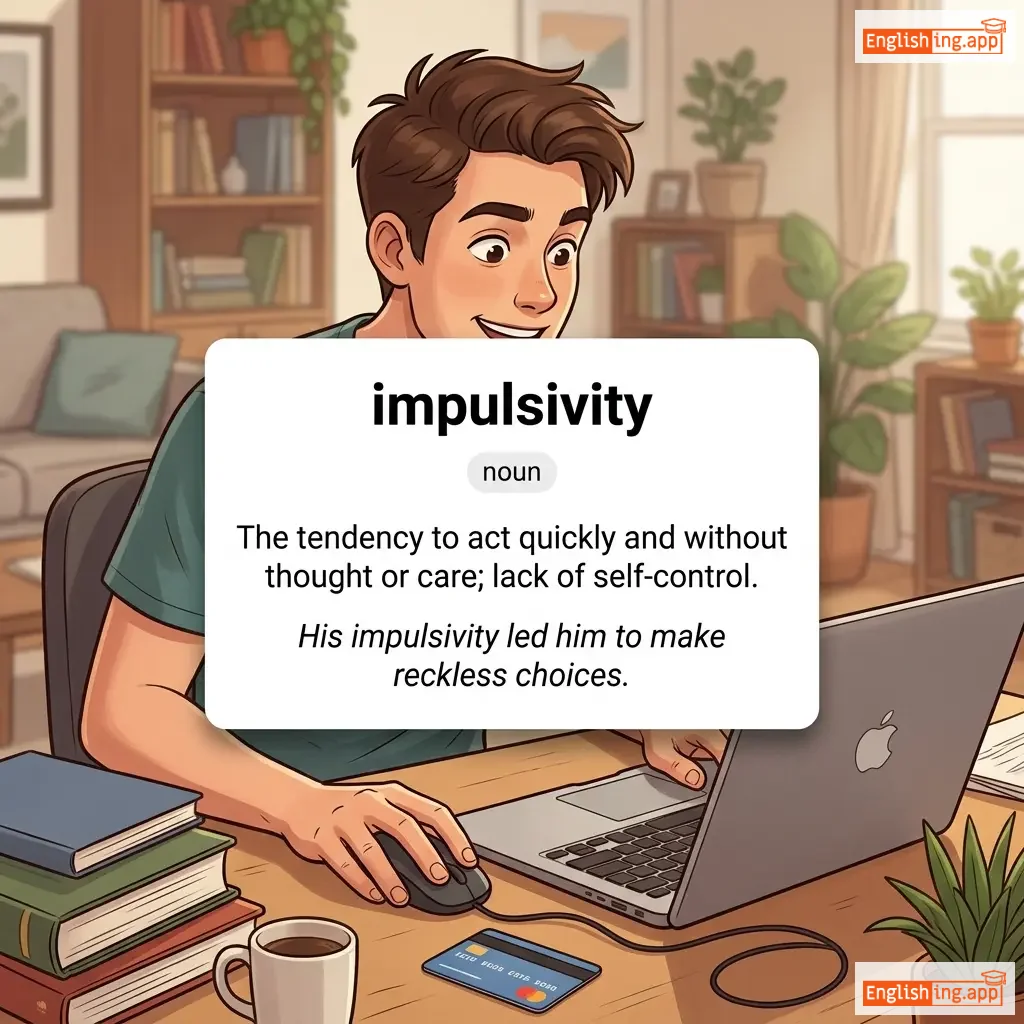
impulsivity definition card — visual illustration of the meaning
noun
ˌɪm.pʌlˈsɪv.ɪ.ti
冲动性 (chōngdòngxìng)

The tendency to act quickly and without thought or care; lack of self-control.

"His impulsivity led him to make reckless choices."

"他的冲动性让他做出了鲁莽的决定。" (Tā de chōngdòngxìng ràng tā zuò chūle lǔmáng de juédìng.)
🛡️

impunity

noun
/ɪmˈpjuːnɪti/

freedom from punishment or harmful consequences for an action

"The dictator ruled with impunity, ignoring international laws."

adjective
/ɪmˈpjʊər/
不纯 (bùchún)

not clean or free from contamination; morally corrupt

"The water was impure and unsafe to drink."

"水是混浊的,不能安全饮用。" (Shuǐ shì hùnzhuó de, bùnéng ānquán yǐn yòng.)
noun
/ɪmˈpjʊərəti/
杂质 (zazhi)

the state of being unclean or contaminated; a substance that makes something impure

"The scientist removed every impurity from the water sample."

"科学家去除了水样中的所有杂质。" (kexuejia quchu le shuiyang zhong de suoyou zazhi)
noun
/ˌɪmpjuˈteɪʃən/
指控 (zhikong)

an accusation or attribution of blame

"The politician denied the imputation of corruption."

"政治家否认了腐败的指控。" (Zhengzhijia founianle fubai de zhikong.)
verb
/ɪmˈpjuːt/
归因于 (guī yīn yú)

to attribute a fault or responsibility to someone

"They imputed the company's success to good leadership."

"他们将公司的成功归功于出色的领导力。" (Tāmen jiāng gōngsī de chénggōng guī gōng yú chū sè de lǐngdǎo lì.)
preposition
/ɪn/
(zai)

expressing the situation of being enclosed or surrounded by something

"She is in the kitchen preparing dinner."

"她在厨房准备晚餐。" (Ta zai chufang zhunbei wancan.)
preposition
/ɪn ˈfrʌnt əv/
在……前面 (zai qianmian)

positioned before or ahead of something; facing or located at the forward side of a person or object

"She stood in front of the building."

"她站在建筑物前面。" (Ta zhan zai jianzhu wu qianmian)
noun
/ˌɪnəˈbɪləti/
无能 (wune)

the state of being unable to do something

"His inability to make decisions affected his career."

"他无法做决定,这影响了他的职业生涯。" (Ta wu fa zuo jueding, zhe yingxiang le ta de zhiye shengya.)
adjective
/ˌɪnækˈsɛsəbl/
无法接近 (wúfǎ jiējìn)

unable to be reached, entered, or understood

"The remote village is almost inaccessible during the rainy season."

"这个偏远的村庄在雨季几乎是无法接近的。" (Zhège piānyuǎn de cūnzhuāng zài yǔjì jīhū shì wúfǎ jiējìn de.)
noun
/ɪnˈækjʊrəsi/
不准确 (bu zhun que)

lack of accuracy or precision; an incorrect or wrong detail

"The report contained several factual inaccuracies."

"这份报告包含了一些不准确之处。" (zhe fen baogao baohan le yixie bu zhunque zhichu)
adjective
/ɪnˈækjʊrət/
不准确的 (bu zhunque de)

Not correct, precise, or exact; containing errors.

"The report was full of inaccurate data."

"报告充满了不准确的数据。" (Baogao chongman le bu zhunque de shuju.)
adjective
/ɪnˈæktɪv/
不活跃 (bù huó yuè)

Not engaging in activity; not active.

"The account has been inactive for six months."

"账户已经有六个月没有活跃。" (Zhànghù yǐjīng yǒu liù gè yuè méiyǒu huóyuè.)
noun
/ˌɪnækˈtɪvɪti/
不活动 (bu huodong)

the state of not being active physically or mentally; lack of action

"Prolonged inactivity can negatively affect both physical and mental health."

"长期不活动会对身体和心理健康产生负面影响。" (changqi bu huodong hui dui shenti he xinli jiankang chan sheng fumian yingxiang)
noun
/ɪnˈædɪkwəsi/
不足 (buzu)

lack of sufficient ability, quality, or strength; a feeling of not being good enough

"She struggled with feelings of inadequacy at work despite her strong qualifications."

"尽管资历很强,她在工作中仍感到不足。" (Jinguan zili hen qiang, ta zai gongzuo zhong reng gandao buzu)