वोकैबुलरीज

इंग्लिश वोकैबुलरी डिस्कवर, लर्न और मास्टर करें

adjective
/ɪmˈpræktɪkəbl/
अव्यवहारिक (avyavaharik)

Not capable of being carried out or put into practice.

"The plan seemed impracticable due to limited resources."

"संसाधनों की कमी के कारण योजना अव्यवहारिक प्रतीत हो रही थी।" (Sansadhanon ki kami ke karan yojna avyavaharik prateet ho rahi thi.)
verb
/ˈɪmprɪkeɪt/
शाप देना (shaap dena)

To utter a curse or invoke evil upon someone.

"The old woman imprecated her enemies with dark words."

"वृद्ध महिला ने अपने दुश्मनों को काले शब्दों से शाप दिया।" (Vruddh mahila ne apne dushmanon ko kaale shabdon se shaap diya.)
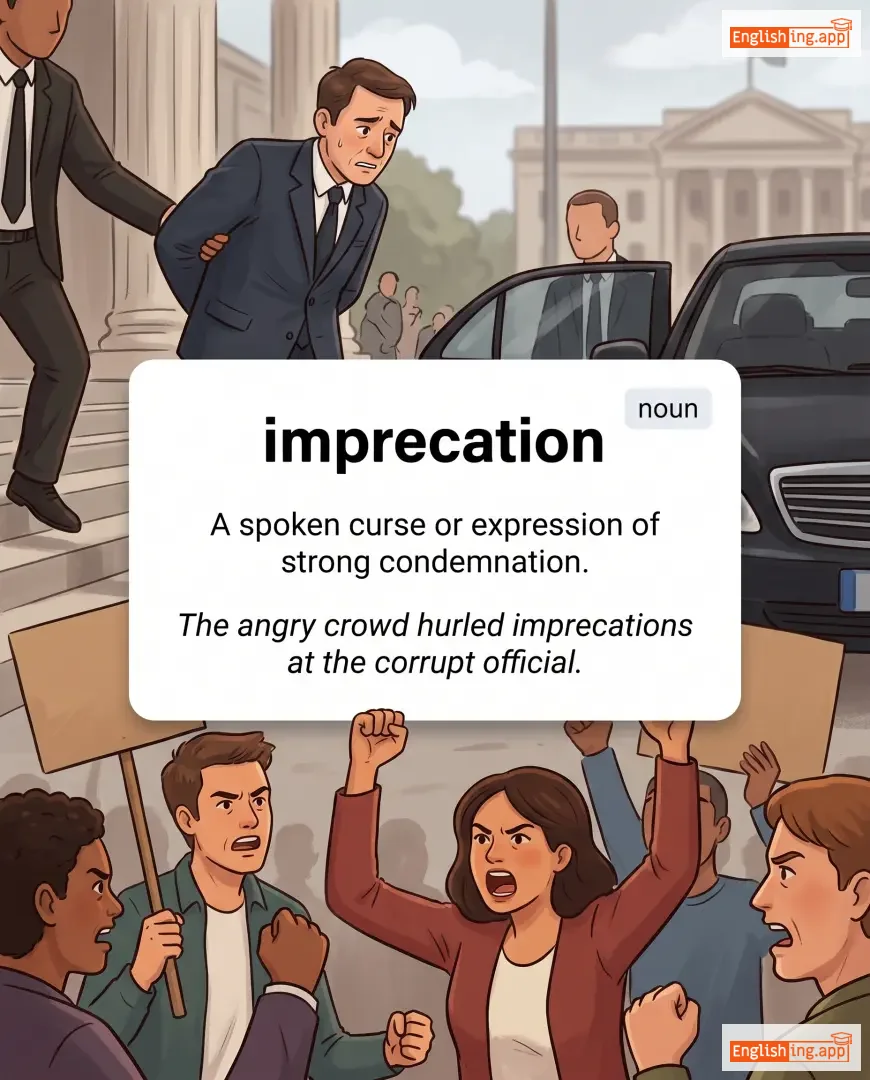
imprecation definition card — visual illustration of the meaning
noun
/ˌɪmprɪˈkeɪʃən/
शाप (shaap)

A spoken curse or expression of strong condemnation.

"The angry crowd hurled imprecations at the corrupt official."

"गुस्साए हुए जनसमूह ने भ्रष्ट अधिकारी पर शाप फेंके।" (Gussaye hue jansamuh ne bhrasht adhikari par shaap pheanke.)
adjective
/ˌɪmprɪˈsaɪs/
अस्पष्ट (aspasht)

Not exact or accurate; vague.

"His explanation was too imprecise to be helpful."

"उसकी व्याख्या इतनी अस्पष्ट थी कि वह मददगार नहीं थी।" (Uski vyakhya itni aspasht thi ki vah madadgar nahin thi.)
adjective
/ɪmˈprɛɡnəbl̩/
अजेय (ajey)

Unable to be captured, broken into, or defeated.

"The fortress was considered impregnable by the enemy."

"किले को दुश्मन ने अजेय समझा था।" (Kile ko dushman ne ajey samjha tha.)
verb
/ˈɪmprɛɡneɪt/
गर्भवती करना / सिक्त करना (garbhvati karna / sikt karna)

To make pregnant; to fill or saturate with something.

"The scientist used a method to impregnate the material with resin."

"विज्ञानी ने रेजिन के साथ सामग्री को इम्प्रेगनेट करने के लिए एक विधि का उपयोग किया।" (Vigyani ne rejin ke saath samagri ko impregnet karne ke liye ek vidhi ka upyog kiya.)
noun
/ˌɪmprəˈsɑːrioʊ/
आयोजक (aayojak)

A person who organizes or finances concerts, plays, or operas.

"The impresario arranged a series of concerts for the rising star."

"इम्प्रेसारियो ने उभरते हुए सितारे के लिए एक श्रृंखला का आयोजन किया।" (Impresario ne ubharta hua sitare ke liye ek shrankhla ka aayojan kiya.)
verb
/ɪmˈprɛs/
प्रभावित करना (prabhavit karna)

to cause someone to feel admiration or respect

"Her speech managed to impress the audience."

"उसकी भाषण ने दर्शकों पर प्रभाव डाला।" (uski bhashan ne darshako par prabhav dala.)
noun
/ɪmˈprɛʃən/
छाप, अवधारणा (chhap, avadharana)

an idea, feeling, or opinion about something or someone

"The book gave me a good first impression."

"किताब ने मुझे एक अच्छा पहला छाप दी।" (kitaab ne mujhe ek accha pehla chhap dee.)
adjective
/ɪmˈprɛsɪv/
प्रभावशाली, सराहनीय (prabhavshali, sarahniye)

causing admiration or respect; remarkable

"The building is an impressive example of modern architecture."

"यह भवन आधुनिक वास्तुकला का एक प्रभावशाली उदाहरण है।" (yah bhavan aadhunik vaastukala ka ek prabhavshali udaharan hai.)
noun
/ˌɪmprɪˈmɑːtər/
आधिकारिक स्वीकृति (aadhikaarik sweekriti)

An official license or approval, especially to publish a book.

"The book was released with the official imprimatur of the church."

"पुस्तक को चर्च की आधिकारिक स्वीकृति के साथ प्रकाशित किया गया था।" (Pustak ko church ki aadhikaarik sweekriti ke saath prakaashit kiya gaya tha.)
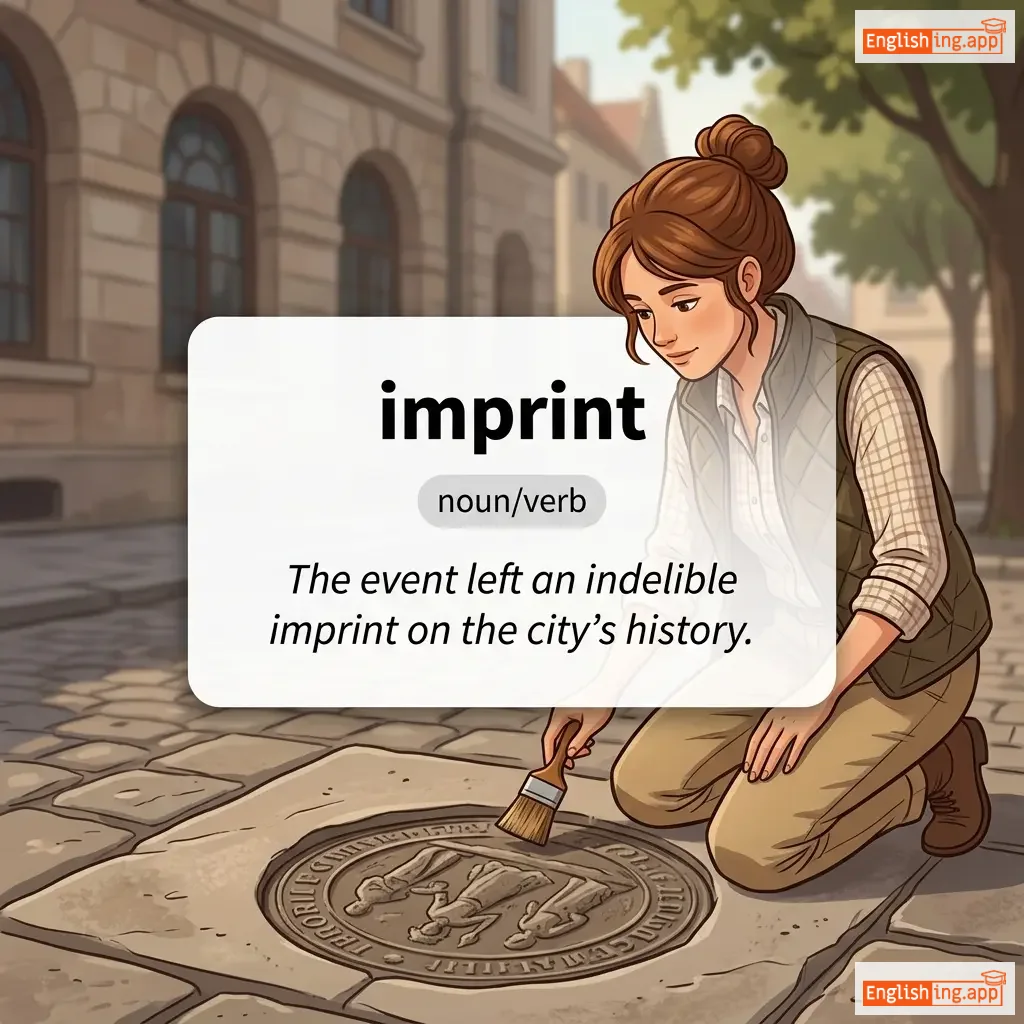
imprint definition card — visual illustration of the meaning
noun/verb
/ˈɪmprɪnt/
छाप (imprint)

A mark or impression made by pressure; to establish or fix firmly in someone's mind.

"The event left an indelible imprint on the city's history."

"घटना ने शहर के इतिहास पर एक अमिट छाप छोड़ दी।" (Ghatna ne shahar ke itihas par ek amit chaap chhod di)
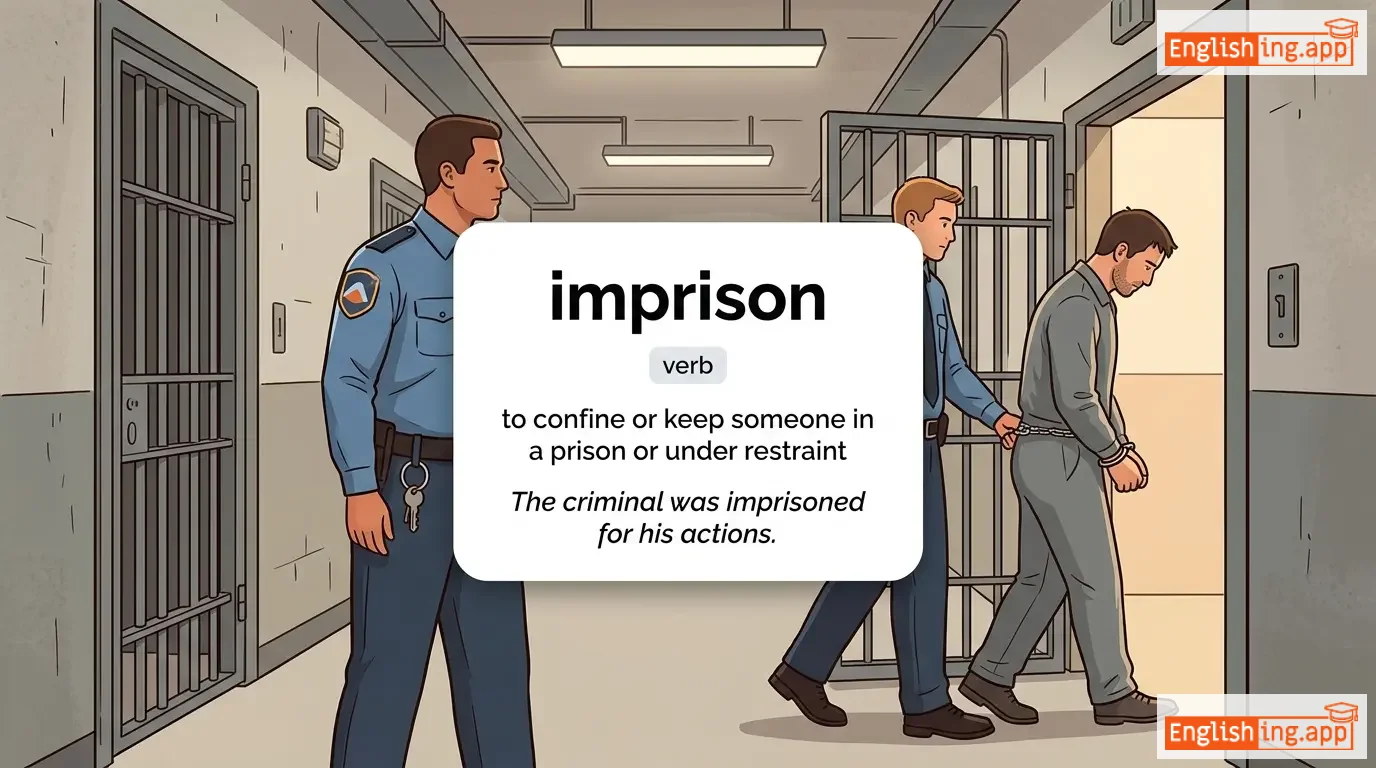
imprison definition card — visual illustration of the meaning
verb
/ɪmˈprɪzən/
क़ैद करना (qaid karna)

to confine or keep someone in a prison or under restraint

"The criminal was imprisoned for his actions."

"अपराधी को उसके कृत्यों के लिए क़ैद किया गया था।" (Aparadhi ko uske krityon ke liye qaid kiya gaya tha.)
noun
/ɪmˈprɪzənmənt/
कारावास (karavaas)

the act of putting someone in prison; the state of being confined as punishment

"He faced imprisonment for violating the court order."

"अदालत के आदेश का उल्लंघन करने पर उसे कारावास का सामना करना पड़ा।" (adalat ke aadesh ka ullanghan karne par use karavaas ka samna karna pada)
noun
/ɪmˌprɒb.əˈbɪl.ə.ti/
असंभावना (asambhavna)

the quality or state of being improbable; unlikely to be true or to happen

"The improbability of winning the lottery twice didn't stop her from buying tickets."

"लॉटरी दोबारा जीतने की असंभावना ने उसे टिकट खरीदने से नहीं रोका।" (lottery dobaara jeetne ki asambhavna ne use ticket kharidne se nahi roka.)
adjective
/ɪmˈprɒbəbl/
असंभाव्य (asanbhavya)

Not likely to be true or to happen.

"It seems improbable that he will arrive on time."

"यह असंभावना लगता है कि वह समय पर पहुंचेगा।" (Yeh asanbhavya lagta hai ki wah samay par pahunchega.)
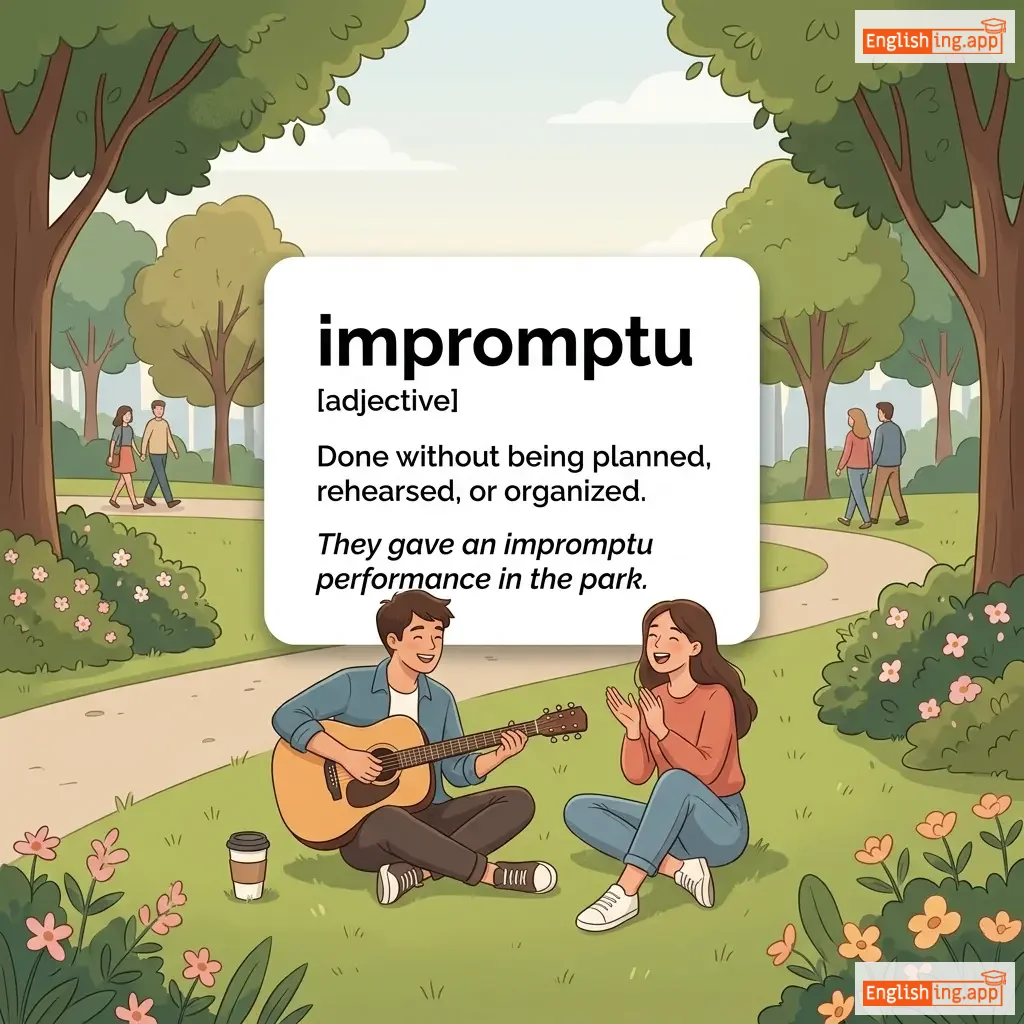
impromptu definition card — visual illustration of the meaning
adjective
/ɪmˈprɒmptjuː/
अचानक किया हुआ (achanak kiya hua)

Done without being planned, rehearsed, or organized.

"They gave an impromptu performance in the park."

"वे पार्क में एक अचानक प्रदर्शन देने गए।" (Ve park mein ek achanak pradarshan dene gaye.)
adjective
/ɪmˈprɒpər/
अनुचित (anuchit)

Not suitable or appropriate; against accepted standards.

"It is improper to talk loudly in the library."

"यह पुस्तकालय में जोर से बात करना अनुचित है।" (Yeh pustakalay mein zor se baat karna anuchit hai.)
noun
/ˌɪmprəˈpraɪəti/
अशिष्टता (ashishtata)

Failure to observe standards of honesty or modesty; improper behavior.

"The politician was accused of financial impropriety."

"राजनेता पर वित्तीय अशिष्टता का आरोप लगाया गया था।" (Rajneta par vittiya ashishtata ka aarop lagaya gaya tha.)
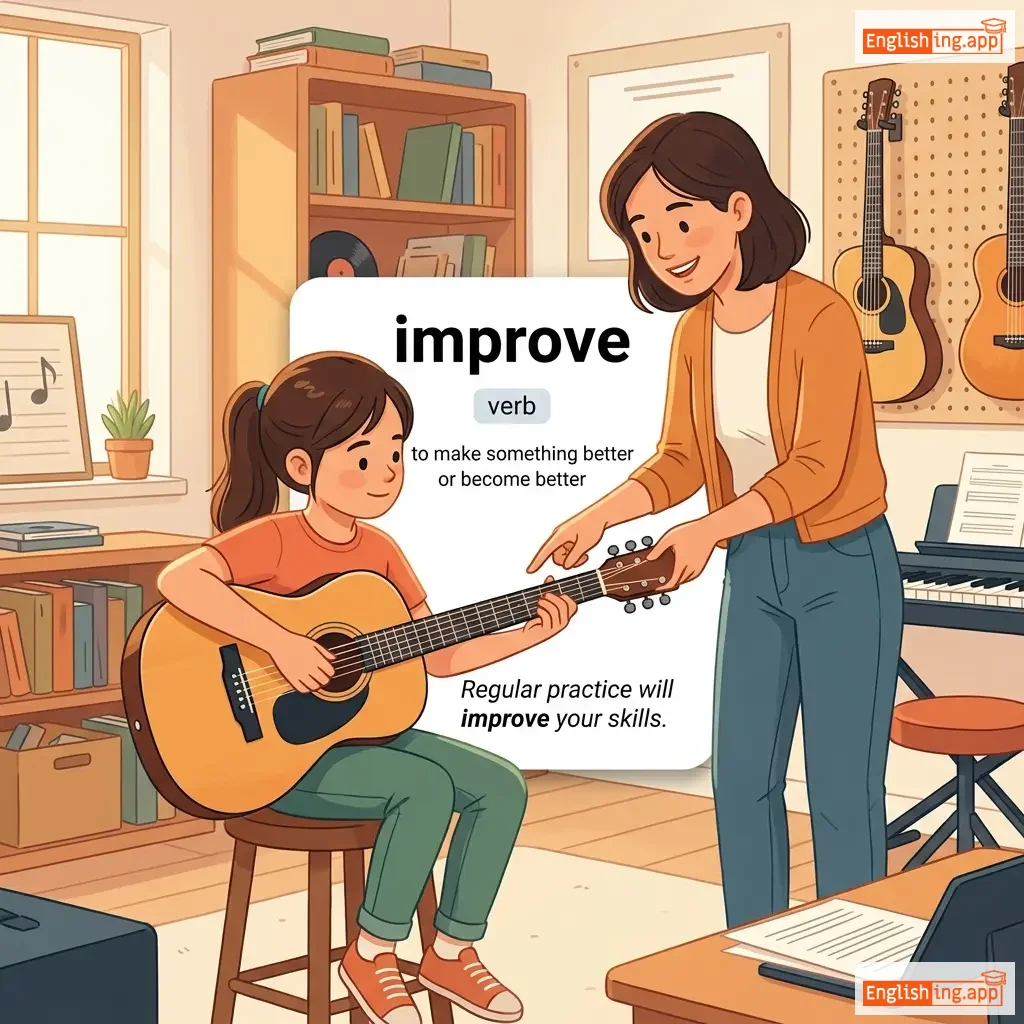
improve definition card — visual illustration of the meaning
verb
/ɪmˈpruːv/
सुधारना (sudharna)

to make something better or become better

"Regular practice will improve your skills."

"नियमित अभ्यास आपके कौशल को सुधार देगा।" (niyamit abhyas aapke kaushal ko sudhaar dega.)
improved definition card — visual illustration of the meaning
adjective
/ɪmˈpruːvd/
बेहतर (behtar)

made better or enhanced in quality or condition

"Her health has significantly improved since last month."

"उसकी सेहत पिछले महीने से काफी बेहतर हुई है।" (Uski sehat pichle mahine se kaafi behtar hui hai.)
noun
/ɪmˈpruːvmənt/
सुधार (sudhaar)

the act of making something better

"There has been a significant improvement in his health."

"उसकी सेहत में एक महत्वपूर्ण सुधार हुआ है।" (uski sehat mein ek mahatvapurn sudhaar hua hai.)
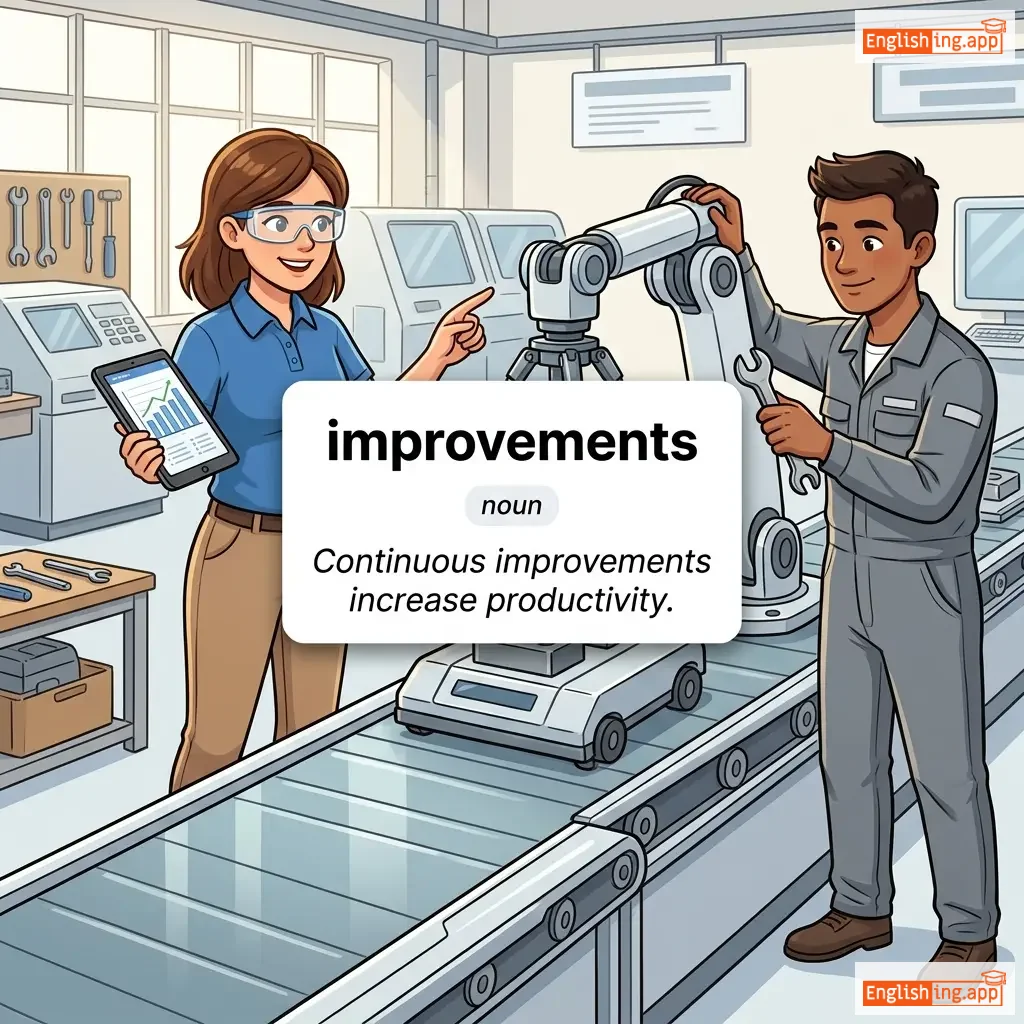
improvements definition card — visual illustration of the meaning
noun
ɪmˈpruːv.mənts
सुधार (sudhaar)

The action of making or becoming better; an instance of something becoming or being made better.

"Continuous improvements increase productivity."

"सतत सुधार उत्पादकता बढ़ाता है।" (Satat sudhaar utpaadakta badhaata hai.)
noun
/ɪmˈprɑːvɪdəns/
अविचारिता (avicharita)

Lack of foresight or care for future needs.

"His improvidence led to financial difficulties."

"उसकी अविचारिता ने उसे वित्तीय समस्याओं में डाल दिया।" (Uski avicharita ne use vittiya samasyaon mein daal diya.)
adjective
/ɪmˈprɒvɪdənt/
अज्ञानी (ajnyani)

Not having or showing foresight; spending wastefully or without thought for the future.

"His improvident habits left him with no savings."

"उसकी अज्ञानी आदतों ने उसे बिना बचत के छोड़ दिया।" (uski ajnyani aadaton ne use bina bachat ke chhod diya.)
verb
/ˈɪmprəvaɪz/
तत्काल निर्माण करना (tatkaal nirmaan karna)

To create or perform something spontaneously without preparation.

"The actor had to improvise his lines when he forgot the script."

"अभिनेता को स्क्रिप्ट भूल जाने पर अपनी लाइनें तत्काल बनाने पड़ीं।" (abhinetā ko skripṭ bhool jāne par apnī lainen tatkāl banāne paṛīṅ.)
noun
/ɪmˈpruːdəns/
अविवेक (avivek)

Lack of caution or good judgment.

"His imprudence in investing all his money in one stock was disastrous."

"उसका एक स्टॉक में अपना सारा पैसा निवेश करने का अविवेक विनाशकारी था।" (uska ek stock mein apna saara paisa nivesh karne ka avivek vinashkari tha.)
adjective
/ɪmˈpruːdənt/
अविचारपूर्ण (avicharpurn)

Not showing care for the consequences of an action.

"It was imprudent to drive in such stormy weather."

"ऐसी तूफानी मौसम में गाड़ी चलाना अविचारपूर्ण था।" (Aisi toofani mausam mein gaadi chalana avicharpurn tha.)
noun
/ˈɪmpjʊdəns/
अविनय (avinay)

Rude and disrespectful behavior.

"The student's impudence shocked the entire class."

"छात्र का अविनय पूरी कक्षा को चौंका दिया।" (chhatr ka avinay puri kaksha ko chonka diya.)
adjective
/ˈɪmpjəd(ə)nt/
अशिष्ट, घमंडी (ashisht, ghamandi)

not showing due respect for another person; rude

"The impudent child talked back to the teacher."

"अशिष्ट बच्चे ने शिक्षक से बदतमीजी की।" (Ashisht bachche ne shikshak se badtameezi ki.)
verb
/ɪmˈpjuːn/
सत्य, वैधता, या ईमानदारी को चुनौती देना (saty, vaidhata, ya imandari ko chunauti dena)

to dispute the truth, validity, or honesty of a statement or motive

"The lawyer tried to impugn the credibility of the witness."

"वकील ने गवाह की विश्वसनीयता को चुनौती देने की कोशिश की।" (vakil ne gawah ki vishwasniyata ko chunauti dene ki koshish ki.)
noun
/ɪmˈpjuːɪsəns/
असमर्थता, लाचारी (asamarthata, laachaari)

inability to take effective action; helplessness

"The government’s impuissance in the face of crisis frustrated the people."

"संकट के सामने सरकार की असमर्थता ने लोगों को हताश कर दिया।" (Sankat ke saamne sarkaar ki asamarthata ne logon ko hataash kar diya.)
noun
/ˈɪmpʌls/
आकस्मिक इच्छा (aaksmik iccha)

a sudden strong desire or urge to act without thinking

"He bought the watch on impulse without planning to."

"उसने बिना योजना बनाए घड़ी impulsively खरीदी।" (Usne bina yojana banaye ghadi impulsively khareedi.)
noun
/ɪmˈpʌlʃən/
आवेग (impulsion)

a strong urge or drive to act; the act of impelling

"His impulsion to travel made him leave his job suddenly."

"यात्रा के लिए उसकी प्रेरणा ने उसे अचानक अपनी नौकरी छोड़ने के लिए मजबूर कर दिया." (hij impalshan tu traiwal med him liv hij job sundli)
adjective
/ɪmˈpʌlsɪv/
अचानक, आवेगी (achanak, aavegi)

acting suddenly without careful thought

"She made an impulsive decision to buy the car."

"उसने कार खरीदने का अचानक निर्णय लिया।" (Usne car kharidne ka achanak nirnay liya.)
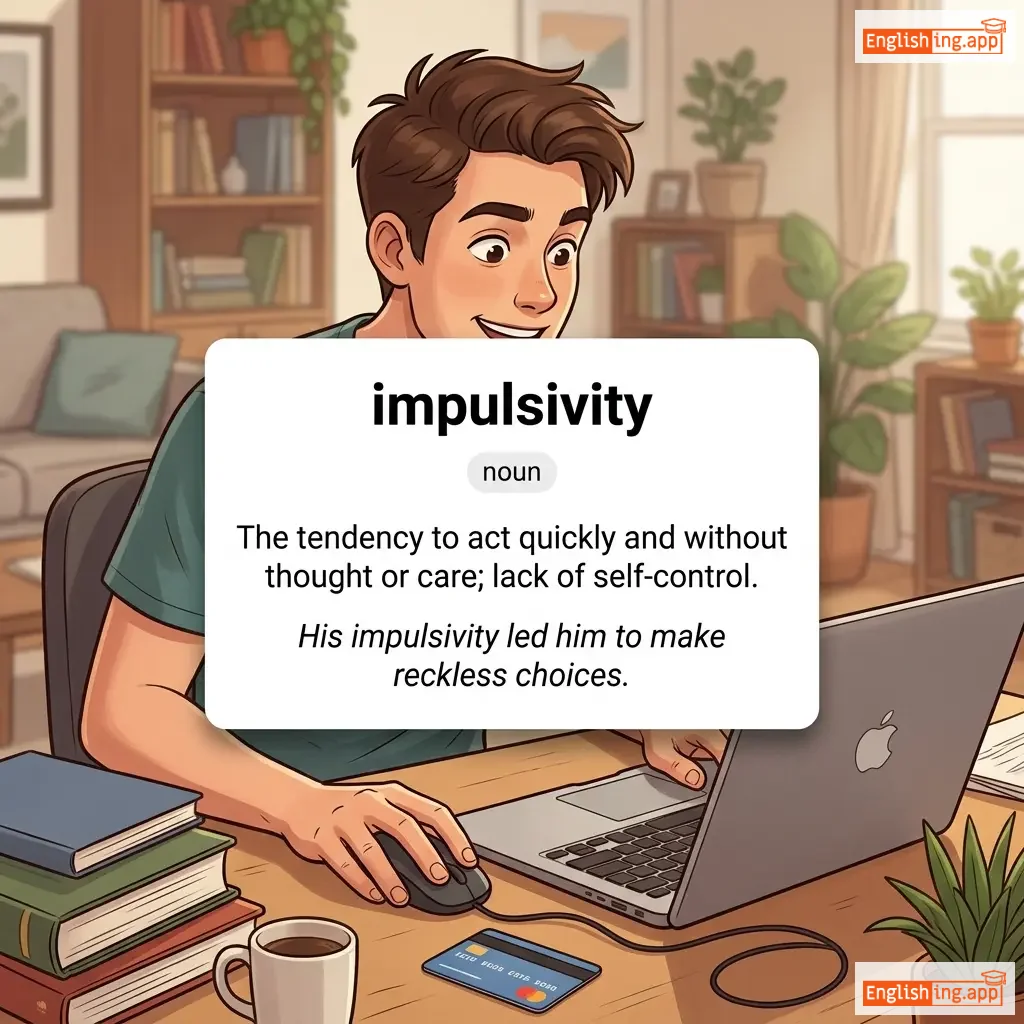
impulsivity definition card — visual illustration of the meaning
noun
ˌɪm.pʌlˈsɪv.ɪ.ti
आवेगपूर्णता (avegpoornata)

The tendency to act quickly and without thought or care; lack of self-control.

"His impulsivity led him to make reckless choices."

"उसकी आवेगपूर्णता ने उसे लापरवाह फैसले लेने की दिशा में अग्रसर किया।" (Uski avegpoornata ne use laparwah faisle lene ki disha mein agrasar kiya.)
noun
/ɪmˈpjuːnɪti/
दंडमुक्ति (dandmukti)

freedom from punishment or harmful consequences for an action

"The dictator ruled with impunity, ignoring international laws."

"तानाशाह ने दंडमुक्ति के साथ शासन किया, अंतर्राष्ट्रीय कानूनों की अवहेलना करते हुए।" (Taanashah ne dandmukti ke saath shasan kiya, antarraashtreey kanoonon ki avhelna karte huye.)
adjective
/ɪmˈpjʊər/
अशुद्ध (ashuddh)

not clean or free from contamination; morally corrupt

"The water was impure and unsafe to drink."

"पानी अशुद्ध था और पीने के लिए असुरक्षित था।" (Pani ashuddh tha aur peene ke liye asurakshit tha.)
noun
/ɪmˈpjʊərəti/
अशुद्धता (ashuddhata)

the state of being unclean or contaminated; a substance that makes something impure

"The scientist removed every impurity from the water sample."

"वैज्ञानिक ने पानी के नमूने से हर अशुद्धता हटा दी।" (vaigyanik ne pani ke namune se har ashuddhata hata di)
noun
/ˌɪmpjuˈteɪʃən/
आरोप (aarop)

an accusation or attribution of blame

"The politician denied the imputation of corruption."

"राजनेता ने भ्रष्टाचार के आरोप का खंडन किया।" (Raajneeta ne bhrashtachar ke aarop ka khandan kiya.)
verb
/ɪmˈpjuːt/
आरोप लगाना (aarop lagana)

to attribute a fault or responsibility to someone

"They imputed the company's success to good leadership."

"उन्होंने कंपनी की सफलता को अच्छे नेतृत्व के कारण जिम्मेदार ठहराया।" (Unhone company ki safalta ko achhe netritv ke karan jimmedar thahraya.)
preposition
/ɪn/
में (mein)

expressing the situation of being enclosed or surrounded by something

"She is in the kitchen preparing dinner."

"वह रसोई में रात का खाना तैयार कर रही है।" (Woh rasoi mein raat ka khana tayar kar rahi hai.)
preposition
/ɪn ˈfrʌnt əv/
के सामने (ke saamne)

positioned before or ahead of something; facing or located at the forward side of a person or object

"She stood in front of the building."

"वह इमारत के सामने खड़ी थी।" (vah imarat ke saamne khadi thi)
noun
/ˌɪnəˈbɪləti/
अक्षमता (akshamata)

the state of being unable to do something

"His inability to make decisions affected his career."

"उसकी निर्णय लेने की अक्षमता ने उसके करियर को प्रभावित किया।" (Uski nirnay lene ki akshamata ne uske career ko prabhavit kiya.)
adjective
/ˌɪnækˈsɛsəbl/
अगम्य (agmy)

unable to be reached, entered, or understood

"The remote village is almost inaccessible during the rainy season."

"दूरदराज़ गांव बारिश के मौसम में लगभग अगम्य हो जाता है।" (Doordaaraz gaon barish ke mausam mein lagbhag agmy ho jata hai.)
noun
/ɪnˈækjʊrəsi/
अशुद्धता (ashuddhata)

lack of accuracy or precision; an incorrect or wrong detail

"The report contained several factual inaccuracies."

"रिपोर्ट में कई तथ्यात्मक अशुद्धताएँ थीं।" (report mein kai tathyaatmak ashuddhataen thin)
adjective
/ɪnˈækjʊrət/
गलत (galat)

Not correct, precise, or exact; containing errors.

"The report was full of inaccurate data."

"रिपोर्ट गलत डेटा से भरी हुई थी।" (Report galat data se bhari hui thi.)
adjective
/ɪnˈæktɪv/
निष्क्रिय (nishkriya)

Not engaging in activity; not active.

"The account has been inactive for six months."

"खाता छह महीने से निष्क्रिय है।" (Khaata chhah mahine se nishkriya hai.)
noun
/ˌɪnækˈtɪvɪti/
निष्क्रियता (nishkriyata)

the state of not being active physically or mentally; lack of action

"Prolonged inactivity can negatively affect both physical and mental health."

"लंबे समय तक निष्क्रियता शारीरिक और मानसिक स्वास्थ्य को नुकसान पहुँचा सकती है।" (lambe samay tak nishkriyata sharirik aur mansik swasthya ko nuksan pahuncha sakti hai)
noun
/ɪnˈædɪkwəsi/
अपर्याप्तता (aparyaptata)

lack of sufficient ability, quality, or strength; a feeling of not being good enough

"She struggled with feelings of inadequacy at work despite her strong qualifications."

"मजबूत योग्यताओं के बावजूद उसे काम पर अपर्याप्तता की भावना होती थी।" (majboot yogyataon ke bavjood use kaam par aparyaptata ki bhavna hoti thi)