Vocabulaires

Découvrez, apprenez et maîtrisez le vocabulaire anglais

adjective
/ɪmˈpræktɪkəbl/
impraticable (impraticable)

Not capable of being carried out or put into practice.

"The plan seemed impracticable due to limited resources."

"Le plan semblait impraticable en raison des ressources limitées." (Le plan semblait impraticable en raison des ressources limitées.)
verb
/ˈɪmprɪkeɪt/
imprécation (imprecation)

To utter a curse or invoke evil upon someone.

"The old woman imprecated her enemies with dark words."

"La vieille femme a impréqué ses ennemis avec des mots sombres." (La vieille femme a impréqué ses ennemis avec des mots sombres.)
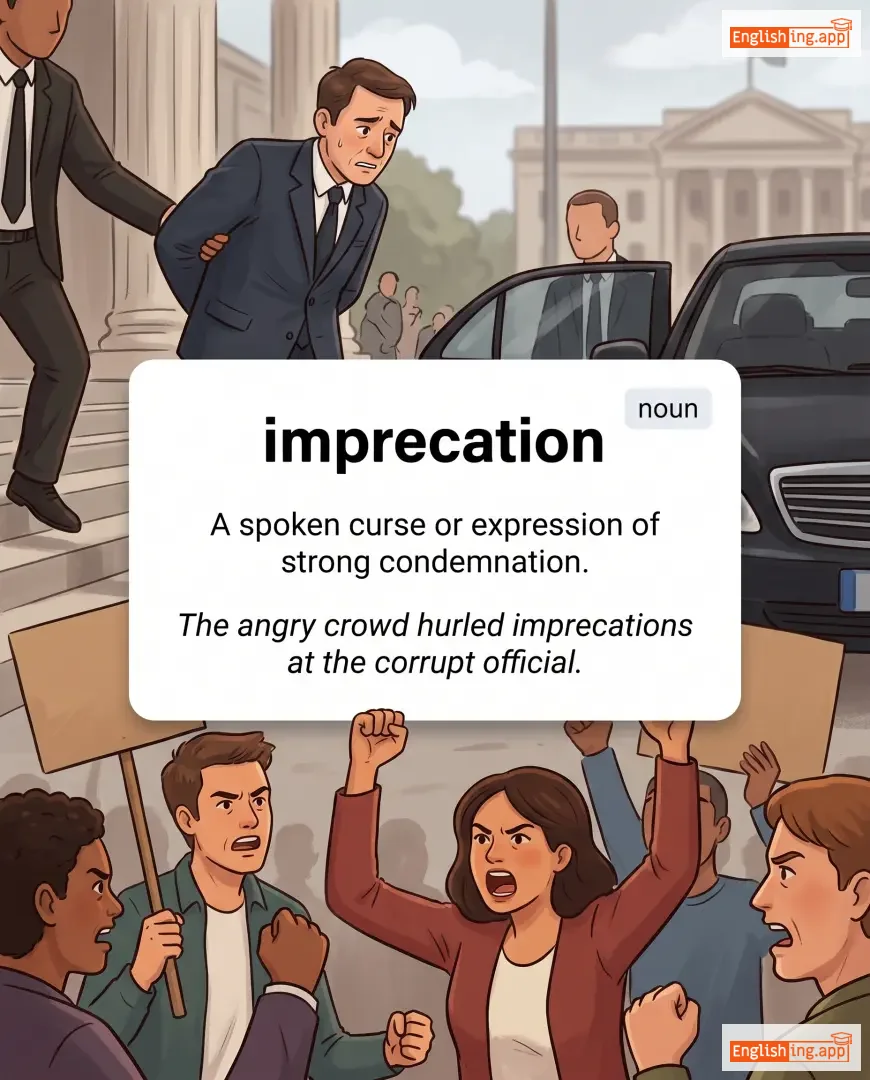
imprecation definition card — visual illustration of the meaning
noun
/ˌɪmprɪˈkeɪʃən/
malédiction (malediction)

A spoken curse or expression of strong condemnation.

"The angry crowd hurled imprecations at the corrupt official."

"La foule en colère a lancé des malédictions à l'officiel corrompu." (La foule en colere a lance des maledictions a l'officiel corrompu.)
adjective
/ˌɪmprɪˈsaɪs/
imprécis (impresis)

Not exact or accurate; vague.

"His explanation was too imprecise to be helpful."

"Son explication était trop imprécise pour être utile." (Son explication etait trop imprecise pour etre utile.)
adjective
/ɪmˈprɛɡnəbl̩/
imprenable (imprenable)

Unable to be captured, broken into, or defeated.

"The fortress was considered impregnable by the enemy."

"La forteresse était considérée comme imprenable par l'ennemi." (La forteresse était considérée comme imprenable par l'ennemi.)
verb
/ˈɪmprɛɡneɪt/
imprégner / rendre enceinte (imprégner / rendre enceinte)

To make pregnant; to fill or saturate with something.

"The scientist used a method to impregnate the material with resin."

"Le scientifique a utilisé une méthode pour imprégner le matériau de résine." (Le scientifique a utilisé une méthode pour imprégner le matériau de résine.)
noun
/ˌɪmprəˈsɑːrioʊ/
impresario (impresario)

A person who organizes or finances concerts, plays, or operas.

"The impresario arranged a series of concerts for the rising star."

"L'impresario a organisé une série de concerts pour la star montante." (L'impresario a organisé une série de concerts pour la star montante.)
verb
/ɪmˈprɛs/
impressionner (impressionner)

to cause someone to feel admiration or respect

"Her speech managed to impress the audience."

"Son discours a réussi à impressionner le public." (Son discours a réussi à impressionner le public.)
noun
/ɪmˈprɛʃən/
impression, concept (impression, concept)

an idea, feeling, or opinion about something or someone

"The book gave me a good first impression."

"Le livre m'a donné une bonne première impression." (Le livre m'a donne une bonne premiere impression.)
adjective
/ɪmˈprɛsɪv/
impressionnant, remarquable (impressionnant, remarquable)

causing admiration or respect; remarkable

"The building is an impressive example of modern architecture."

"Le bâtiment est un exemple impressionnant d'architecture moderne." (Le bâtiment est un exemple impressionnant d'architecture moderne.)
noun
/ˌɪmprɪˈmɑːtər/
imprimatur (imprimatur)

An official license or approval, especially to publish a book.

"The book was released with the official imprimatur of the church."

"Le livre a été publié avec l'imprimatur officiel de l'église." (Le livre a été publié avec l'imprimatur officiel de l'église.)
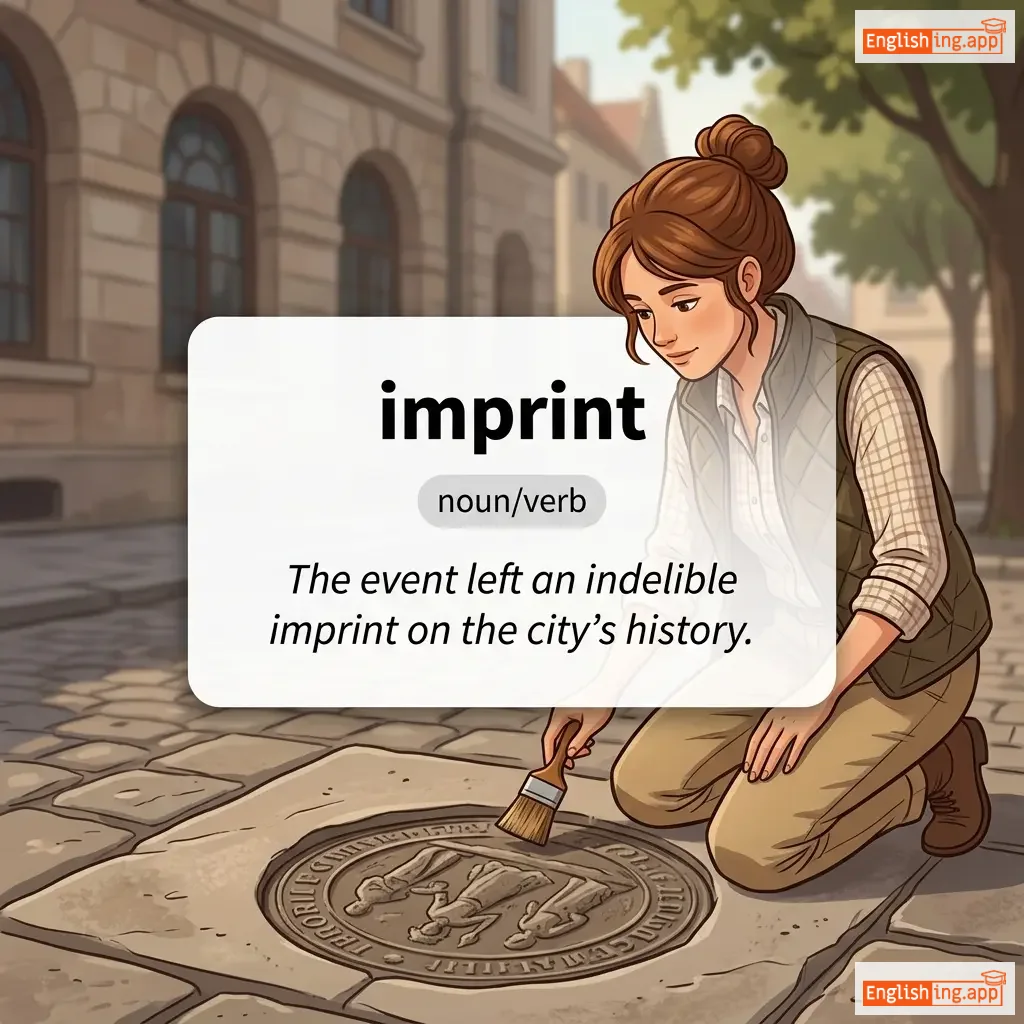
imprint definition card — visual illustration of the meaning
noun/verb
/ˈɪmprɪnt/
empreinte (imprint)

A mark or impression made by pressure; to establish or fix firmly in someone's mind.

"The event left an indelible imprint on the city's history."

"L'événement a laissé une empreinte indélébile dans l'histoire de la ville." (Levenement a laisse une empreinte indelebile dans lhistoire de la ville)
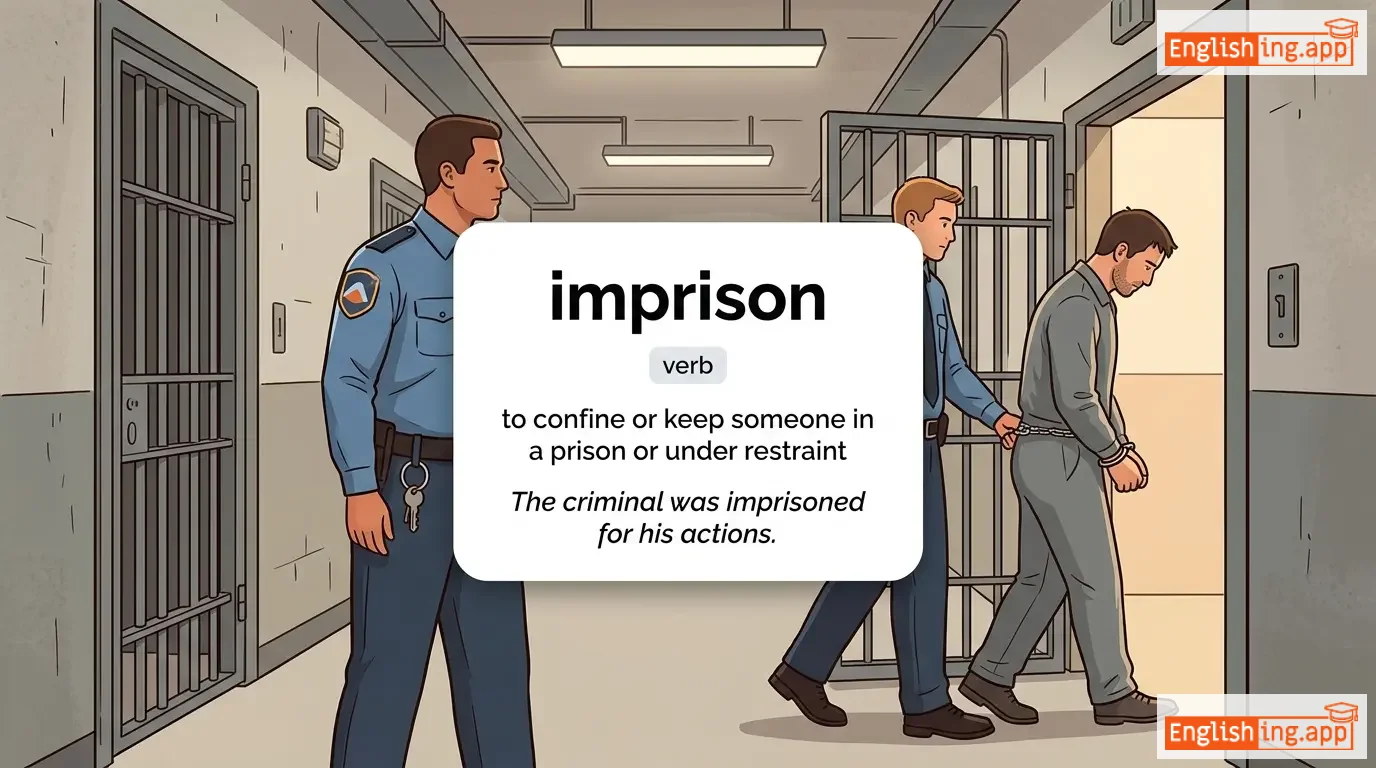
imprison definition card — visual illustration of the meaning
verb
/ɪmˈprɪzən/
emprisonner (emprisonner)

to confine or keep someone in a prison or under restraint

"The criminal was imprisoned for his actions."

"Le criminel a été emprisonné pour ses actions." (Le criminel a été emprisonné pour ses actions.)
noun
/ɪmˈprɪzənmənt/
emprisonnement (emprisonnement)

the act of putting someone in prison; the state of being confined as punishment

"He faced imprisonment for violating the court order."

"Il a fait face à l'emprisonnement pour avoir violé l'ordre du tribunal." (Il a fait face a l emprisonnement pour avoir viole l ordre du tribunal)
noun
/ɪmˌprɒb.əˈbɪl.ə.ti/
improbabilité (improbabilité)

the quality or state of being improbable; unlikely to be true or to happen

"The improbability of winning the lottery twice didn't stop her from buying tickets."

"L'improbabilité de gagner à la loterie deux fois ne l'a pas empêchée d'acheter des billets." (L'improbabilité de gagner à la loterie deux fois ne l'a pas empêchée d'acheter des billets.)
adjective
/ɪmˈprɒbəbl/
improbable (improbable)

Not likely to be true or to happen.

"It seems improbable that he will arrive on time."

"Il semble improbable qu'il arrive à l'heure." (Il semble improbable qu'il arrive à l'heure.)
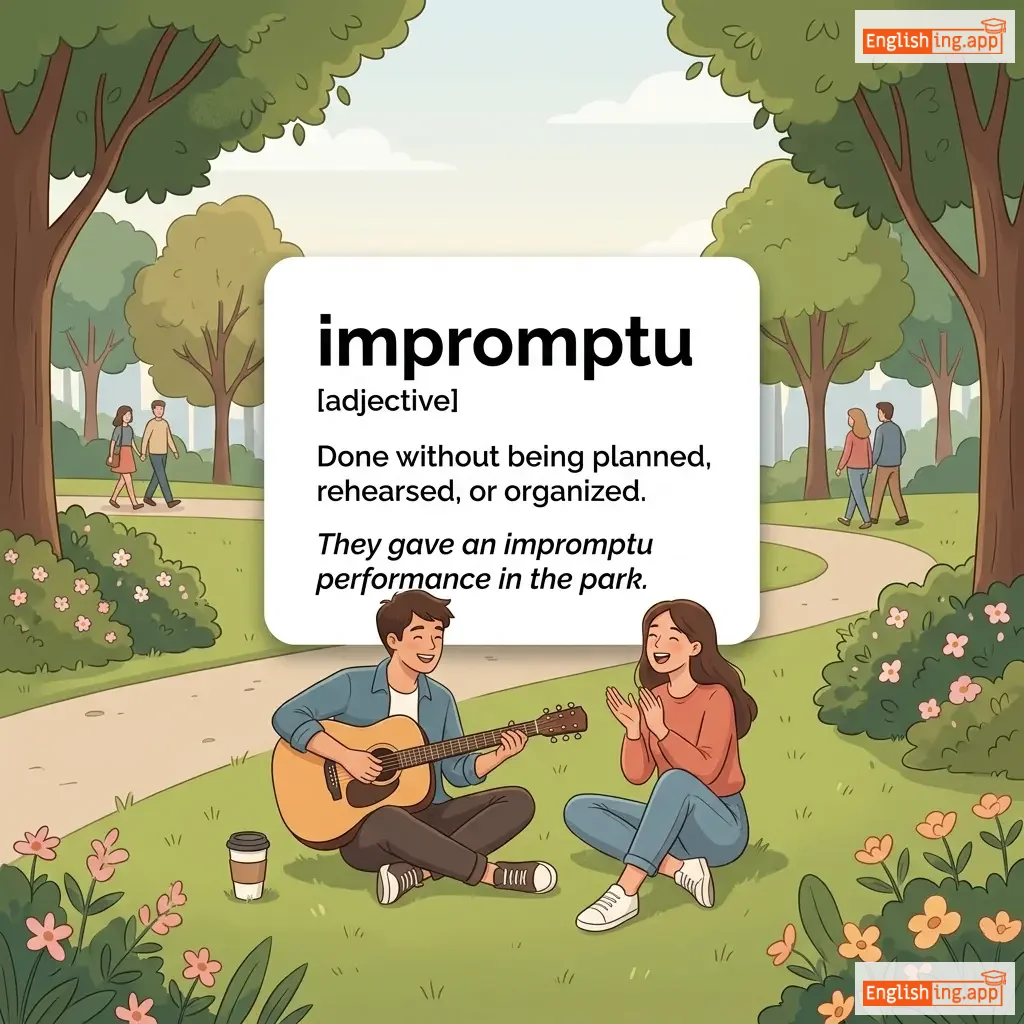
impromptu definition card — visual illustration of the meaning
adjective
/ɪmˈprɒmptjuː/
improvisé (improvize)

Done without being planned, rehearsed, or organized.

"They gave an impromptu performance in the park."

"Ils ont donné une performance improvisée dans le parc." (Ils ont donne une performance improvisee dans le parc.)
adjective
/ɪmˈprɒpər/
impropre (impropre)

Not suitable or appropriate; against accepted standards.

"It is improper to talk loudly in the library."

"Il est impropre de parler fort à la bibliothèque." (Il est impropre de parler fort à la bibliothèque.)
noun
/ˌɪmprəˈpraɪəti/
impropriété (impropriete)

Failure to observe standards of honesty or modesty; improper behavior.

"The politician was accused of financial impropriety."

"Le politicien a été accusé d'impropriété financière." (Le politicien a ete accuse d'impropriete financiere.)
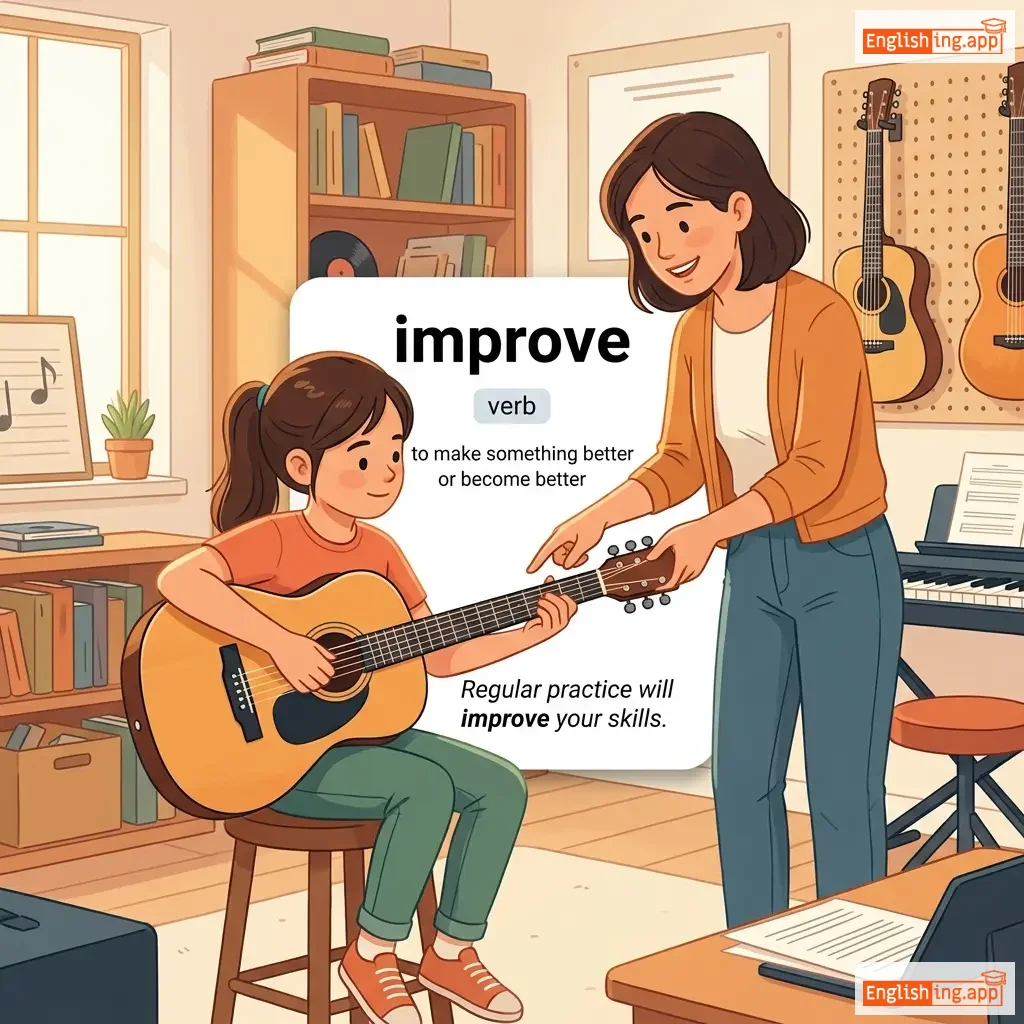
improve definition card — visual illustration of the meaning
verb
/ɪmˈpruːv/
améliorer (améliorer)

to make something better or become better

"Regular practice will improve your skills."

"la pratique régulière améliorera vos compétences." (la pratique régulière améliorera vos compétences.)
improved definition card — visual illustration of the meaning
adjective
/ɪmˈpruːvd/
amélioré (ameliore)

made better or enhanced in quality or condition

"Her health has significantly improved since last month."

"Sa santé s'est considérablement améliorée depuis le mois dernier." (Sa sante s'est considerablement amelioree depuis le mois dernier.)
noun
/ɪmˈpruːvmənt/
amélioration (amelioration)

the act of making something better

"There has been a significant improvement in his health."

"Il y a eu une amélioration significative de sa santé." (Il y a eu une amélioration significative de sa santé.)
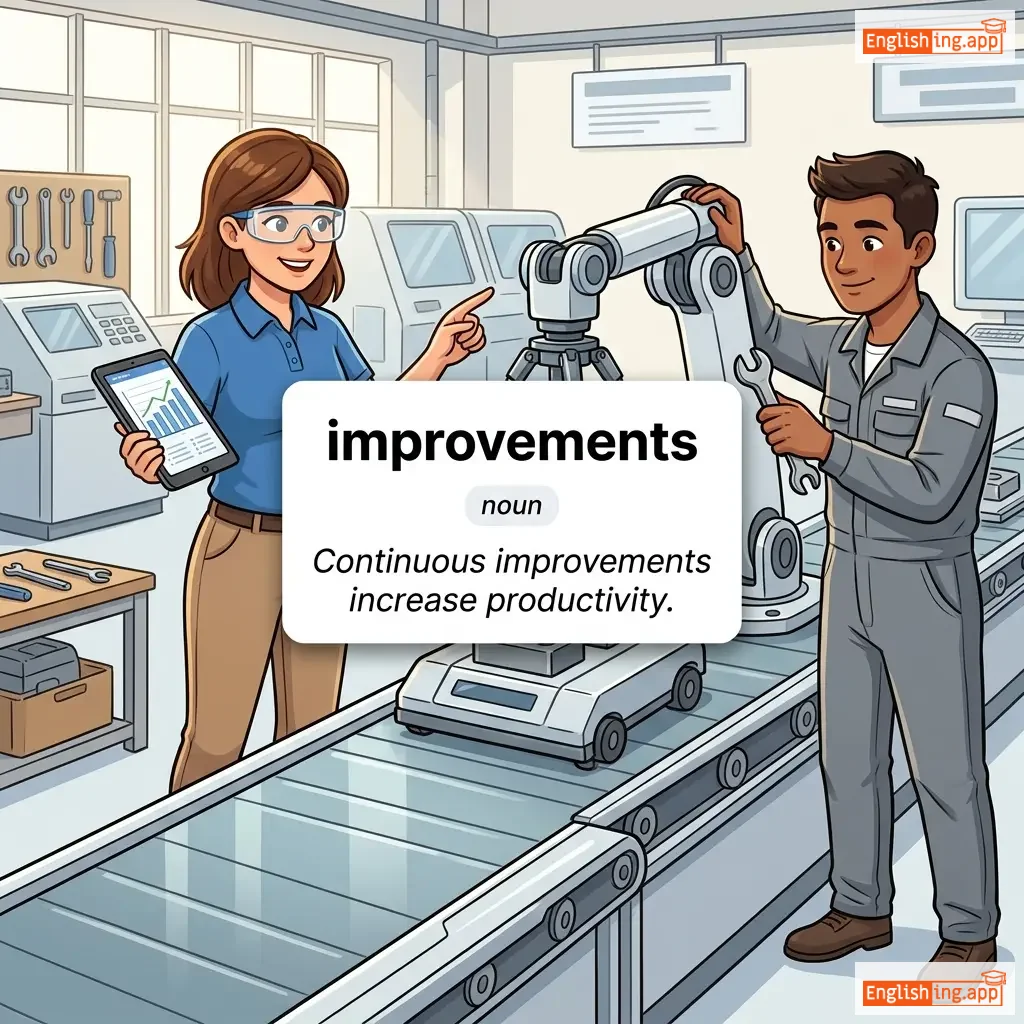
improvements definition card — visual illustration of the meaning
noun
ɪmˈpruːv.mənts
améliorations (ameliorations)

The action of making or becoming better; an instance of something becoming or being made better.

"Continuous improvements increase productivity."

"Les améliorations continues augmentent la productivité." (Les ameliorations continues augmentent la productivite.)
noun
/ɪmˈprɑːvɪdəns/
imprévoyance (imprevoyance)

Lack of foresight or care for future needs.

"His improvidence led to financial difficulties."

"Son imprévoyance l'a conduit à des difficultés financières." (Son imprévoyance l'a conduit à des difficultés financières.)
adjective
/ɪmˈprɒvɪdənt/
imprudent (imprudent)

Not having or showing foresight; spending wastefully or without thought for the future.

"His improvident habits left him with no savings."

"Ses habitudes imprudentes l'ont laissé sans économies." (Ses habitudes imprudentes l'ont laissé sans économies.)
verb
/ˈɪmprəvaɪz/
improviser (improviser)

To create or perform something spontaneously without preparation.

"The actor had to improvise his lines when he forgot the script."

"L'acteur a dû improviser ses répliques lorsqu'il a oublié le script." (L'acteur a dû improviser ses répliques lorsqu'il a oublié le script.)
noun
/ɪmˈpruːdəns/
imprudence (imprudence)

Lack of caution or good judgment.

"His imprudence in investing all his money in one stock was disastrous."

"Son imprudence en investissant tout son argent dans une seule action a été désastreuse." (Son imprudence en investissant tout son argent dans une seule action a ete desastreuse.)
adjective
/ɪmˈpruːdənt/
imprudent (imprudent)

Not showing care for the consequences of an action.

"It was imprudent to drive in such stormy weather."

"C'était imprudent de conduire par un temps aussi orageux." (C'etait imprudent de conduire par un temps aussi orageux.)
noun
/ˈɪmpjʊdəns/
impudence (impudence)

Rude and disrespectful behavior.

"The student's impudence shocked the entire class."

"L'impudence de l'étudiant a choqué toute la classe." (L'impudence de l'étudiant a choqué toute la classe.)
adjective
/ˈɪmpjəd(ə)nt/
imprudent, insolent (imprudent, insolent)

not showing due respect for another person; rude

"The impudent child talked back to the teacher."

"L'enfant impudent a répondu au professeur." (L'enfant impudent a répondu au professeur.)
verb
/ɪmˈpjuːn/
contester la vérité, la validité ou l'honnêteté d'une déclaration ou d'un motif (contester la verite, la validite ou l'honnetete d'une declaration ou d'un motif)

to dispute the truth, validity, or honesty of a statement or motive

"The lawyer tried to impugn the credibility of the witness."

"L'avocat a essayé de contester la crédibilité du témoin." (L'avocat a essaié de contester la crédibilité du témoin.)
noun
/ɪmˈpjuːɪsəns/
impuissance (impwisans)

inability to take effective action; helplessness

"The government’s impuissance in the face of crisis frustrated the people."

"L’impuissance du gouvernement face à la crise a frustré la population." (L’impuissance du gouvernement face à la crise a frustre la population.)
noun
/ˈɪmpʌls/
impulsion (impulsion)

a sudden strong desire or urge to act without thinking

"He bought the watch on impulse without planning to."

"Il a acheté la montre sur un coup de tête sans planifier." (Il a acheté la montre sur un coup de tête sans planifier.)
noun
/ɪmˈpʌlʃən/
impulsion (impulsion)

a strong urge or drive to act; the act of impelling

"His impulsion to travel made him leave his job suddenly."

"Son impulsion de voyager l'a poussé à quitter son travail soudainement." (Son impulsion de voyager l a pousse a quitter son travail soudainement.)
adjective
/ɪmˈpʌlsɪv/
impulsif, spontané (impulsif, spontané)

acting suddenly without careful thought

"She made an impulsive decision to buy the car."

"Elle a pris une décision impulsive d'acheter la voiture." (Elle a pris une décision impulsive d'acheter la voiture.)
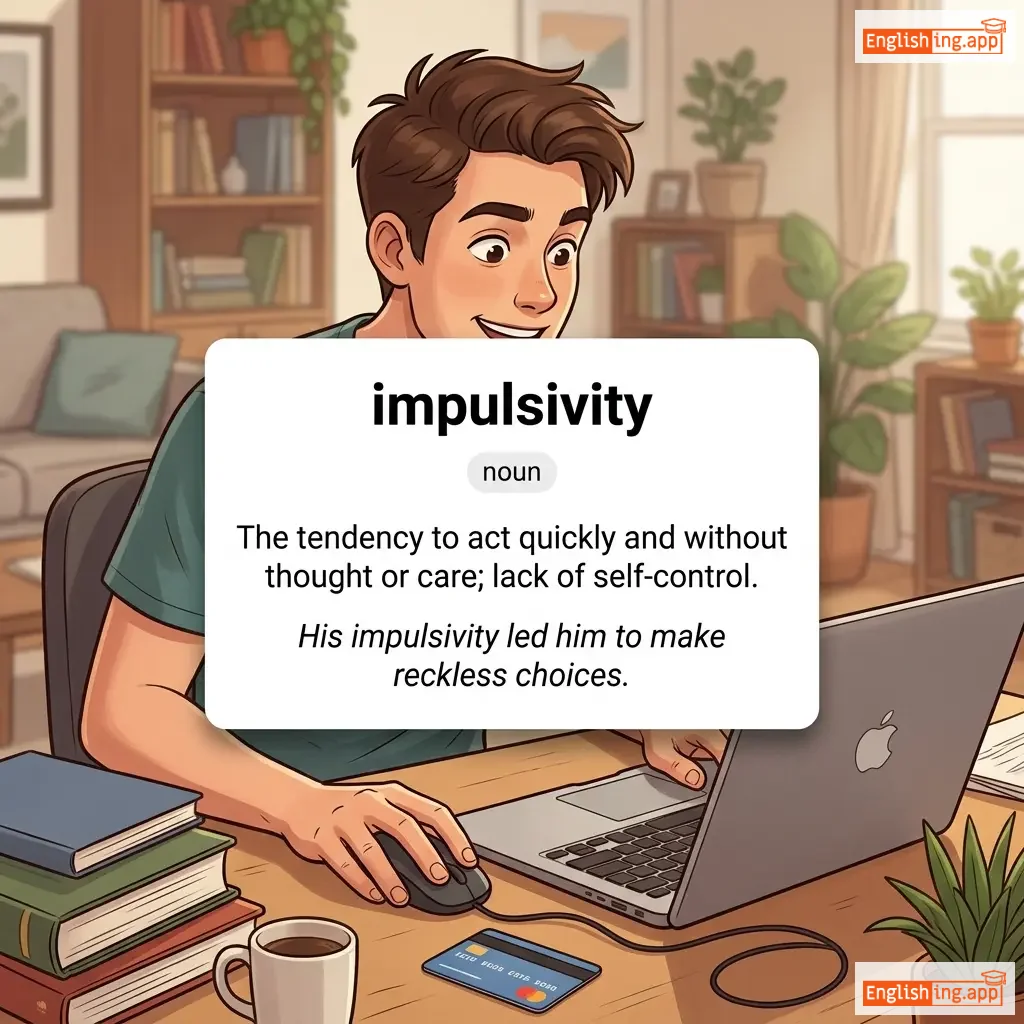
impulsivity definition card — visual illustration of the meaning
noun
ˌɪm.pʌlˈsɪv.ɪ.ti
impulsivité (impulsivite)

The tendency to act quickly and without thought or care; lack of self-control.

"His impulsivity led him to make reckless choices."

"Son impulsivité l'a conduit à prendre des décisions imprudentes." (Son impulsivité l'a conduit à prendre des décisions imprudentes.)
noun
/ɪmˈpjuːnɪti/
impunité (impunite)

freedom from punishment or harmful consequences for an action

"The dictator ruled with impunity, ignoring international laws."

"Le dictateur a régné en toute impunité, ignorant les lois internationales." (Le dictateur a régné en toute impunité, ignorant les lois internationales.)
adjective
/ɪmˈpjʊər/
impur (impur)

not clean or free from contamination; morally corrupt

"The water was impure and unsafe to drink."

"L'eau était impure et dangereuse à boire." (L'eau était impure et dangereuse à boire.)
noun
/ɪmˈpjʊərəti/
impureté (impurete)

the state of being unclean or contaminated; a substance that makes something impure

"The scientist removed every impurity from the water sample."

"Le scientifique a éliminé chaque impureté de l’échantillon d’eau." (le scientifique a elimine chaque impurete de lechantillon deau)
noun
/ˌɪmpjuˈteɪʃən/
imputation (imputation)

an accusation or attribution of blame

"The politician denied the imputation of corruption."

"Le politicien a nié l'imputation de corruption." (Le politicien a nie l'imputation de corruption.)
verb
/ɪmˈpjuːt/
imputer (imputer)

to attribute a fault or responsibility to someone

"They imputed the company's success to good leadership."

"Ils ont imputé le succès de l'entreprise à un bon leadership." (Ils ont imputé le succès de l'entreprise à un bon leadership.)
preposition
/ɪn/
dans (dan)

expressing the situation of being enclosed or surrounded by something

"She is in the kitchen preparing dinner."

"Elle est dans la cuisine en train de préparer le dîner." (Elle est dans la cuisine en train de préparer le dîner.)
preposition
/ɪn ˈfrʌnt əv/
devant (devant)

positioned before or ahead of something; facing or located at the forward side of a person or object

"She stood in front of the building."

"Elle se tenait devant le bâtiment." (Elle se tenait devant le batiment)
noun
/ˌɪnəˈbɪləti/
incapacité (incapacite)

the state of being unable to do something

"His inability to make decisions affected his career."

"Son incapacité à prendre des décisions a affecté sa carrière." (Son incapacite a prendre des decisions a affecte sa carriere.)
adjective
/ˌɪnækˈsɛsəbl/
inaccessible (inaccessible)

unable to be reached, entered, or understood

"The remote village is almost inaccessible during the rainy season."

"Le village éloigné est presque inaccessible pendant la saison des pluies." (Le village eloigné est presque inaccessible pendant la saison des pluies.)
noun
/ɪnˈækjʊrəsi/
inexactitude (inexactitude)

lack of accuracy or precision; an incorrect or wrong detail

"The report contained several factual inaccuracies."

"Le rapport contenait plusieurs inexactitudes." (le rapport contenait plusieurs inexactitudes)
adjective
/ɪnˈækjʊrət/
incorrect (incorrect)

Not correct, precise, or exact; containing errors.

"The report was full of inaccurate data."

"Le rapport était plein de données incorrectes." (Le rapport était plein de données incorrectes.)
adjective
/ɪnˈæktɪv/
inactif (inactif)

Not engaging in activity; not active.

"The account has been inactive for six months."

"Le compte est inactif depuis six mois." (Le compte est inactif depuis six mois.)
noun
/ˌɪnækˈtɪvɪti/
inactivité (inactivite)

the state of not being active physically or mentally; lack of action

"Prolonged inactivity can negatively affect both physical and mental health."

"Une inactivité prolongée peut nuire à la santé physique et mentale." (une inactivite prolongee peut nuire a la sante physique et mentale)
noun
/ɪnˈædɪkwəsi/
insuffisance (insuffisance)

lack of sufficient ability, quality, or strength; a feeling of not being good enough

"She struggled with feelings of inadequacy at work despite her strong qualifications."

"Elle luttait contre un sentiment d’insuffisance au travail malgré ses solides qualifications." (Elle luttait contre un sentiment dinsuffisance au travail malgre ses solides qualifications)