Vocabulaires

Découvrez, apprenez et maîtrisez le vocabulaire anglais

verb
/ɪnˈvɛnt/
inventer (inventer)

to create or design something that has not existed before

"Thomas Edison invented the electric bulb."

"Thomas Edison a inventé l'ampoule électrique." (Thomas Edison a invente l'ampoule electrique.)
invention definition card — visual illustration of the meaning
noun
/ɪnˈvɛnʃən/
invention (invention)

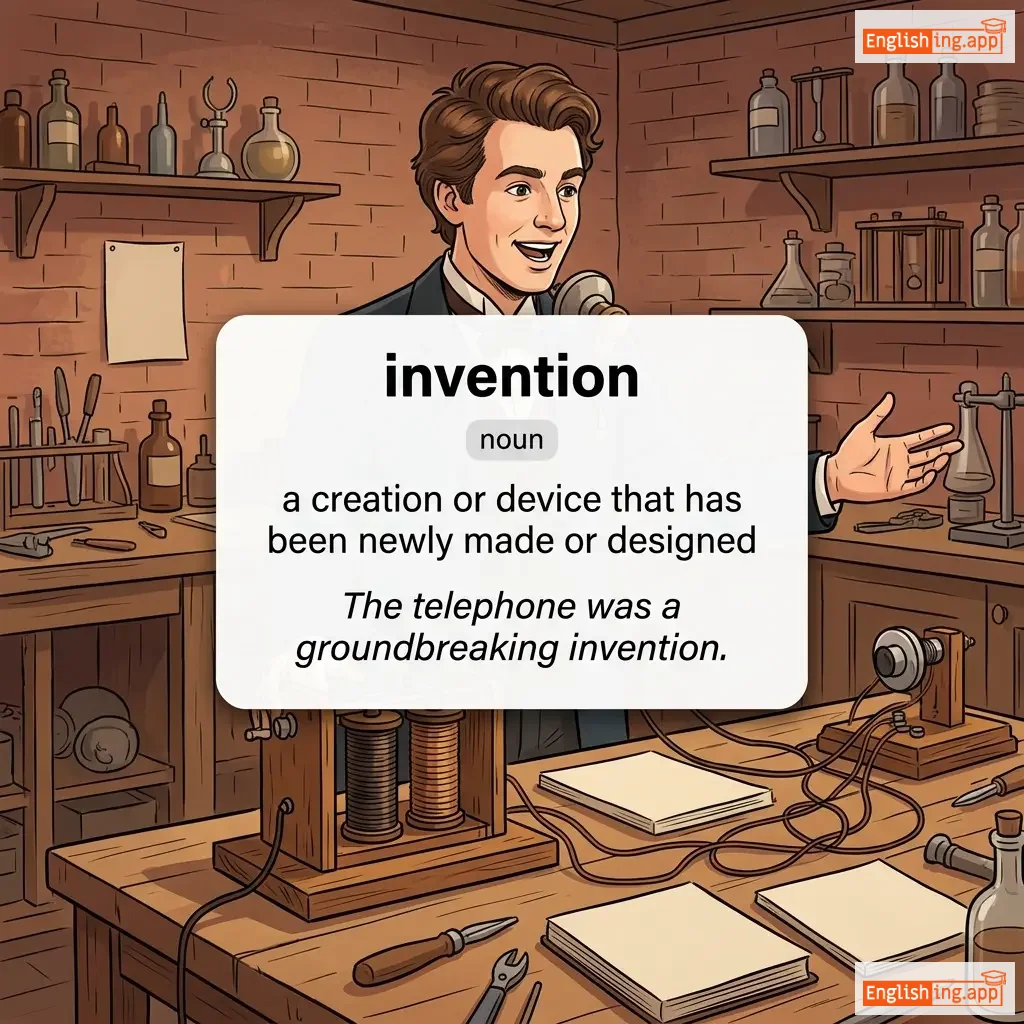
a creation or device that has been newly made or designed

"The telephone was a groundbreaking invention."

"Le téléphone était une invention révolutionnaire." (Le telephone etait une invention revolutionnaire.)
adjective
/ɪnˈvɛntɪv/
inventif (inventif)

Having the ability to create or design new things or to think originally.

"The inventor was known for his inventive solutions to everyday problems."

"L'inventeur était connu pour ses solutions inventives aux problèmes quotidiens." (L'inventeur était connu pour ses solutions inventives aux problèmes quotidiens.)
noun
/ɪnˈventər/
inventeur (inventeur)

a person who creates or designs something new, especially a device, method, or process

"The inventor patented her new medical device."

"L’inventeur a breveté son nouveau dispositif médical." (L inventeur a brevete son nouveau dispositif medical)
noun
/ˈɪnvənˌtɔːri/
inventaire (inventaire)

A complete list of items, such as goods in stock or property.

"The shopkeeper checked the inventory before opening the store."

"Le commerçant a vérifié l'inventaire avant d'ouvrir le magasin." (Le commerçant a vérifié l'inventaire avant d'ouvrir le magasin.)
adjective
/ˌɪnˈvɜːrs/
inverse (inverse)

Opposite in position, direction, order, or effect.

"There is an inverse relationship between price and demand."

"Il existe une relation inverse entre le prix et la demande." (Il existe une relation inverse entre le prix et la demande.)
adverb
/ɪnˈvɜːrs.li/
inversement; de manière opposée (inversement; de maniere opposee)

in a way that is opposite or contrary; in reverse order or manner

"The price of goods is inversely related to their availability in the market."

"Le prix des biens est inversement lié à leur disponibilité sur le marché." (Le prix des biens est inversement lie a leur disponibilite sur le marche.)
noun
/ɪnˈvɜːrʒən/
inversion (inversion)

A reversal of the normal order, position, or relationship.

"In poetry, inversion is often used to create emphasis."

"Dans la poésie, l'inversion est souvent utilisée pour créer de l'emphase." (Dans la poesie, l'inversion est souvent utilisee pour creer de l'emphase.)
verb
/ɪnˈvɜːrt/
inverser (inverser)

To turn something upside down or in the opposite position, order, or direction.

"He inverted the glass to let the water drain out."

"Il a inversé le verre pour laisser l'eau s'écouler." (Il a inversé le verre pour laisser l'eau s'écouler.)
invest definition card — visual illustration of the meaning
verb
/ɪnˈvɛst/
investir (investir)

to put money, time, or effort into something with the expectation of achieving a benefit

"He decided to invest in real estate to secure his future."

"Il a décidé d'investir dans l'immobilier pour sécuriser son avenir." (Il a décidé d'investir dans l'immobilier pour sécuriser son avenir.)
verb
/ɪnˈvɛs.tɪ.ɡeɪt/
enquêter (enquêter)

to carry out a systematic inquiry to discover facts or information

"The police will investigate the incident thoroughly."

"La police enquêtera sur l'incident de manière approfondie." (La police enquêtera sur l'incident de manière approfondie.)
noun
/ɪnˌvɛs.tɪˈɡeɪ.ʃən/
enquête (enquete)

the process of inquiring into or examining something carefully to find the truth

"The investigation revealed new evidence about the fraud."

"L'enquête a révélé de nouvelles preuves sur la fraude." (L'enquete a revele de nouvelles preuves sur la fraude.)
noun
/ɪnˈvɛstɪˌɡeɪtər/
bonheur (bonheur)

a person who carries out a formal inquiry or investigation

"The investigator gathered evidence from the crime scene."

"Elle n'a pas pu cacher son bonheur lorsqu'elle a reçu le prix." (Elle n'a pas pu cacher son bonheur lorsqu'elle a reçu le prix.)
investing definition card — visual illustration of the meaning
verb
ɪnˈvɛst.ɪŋ
investir (investir)

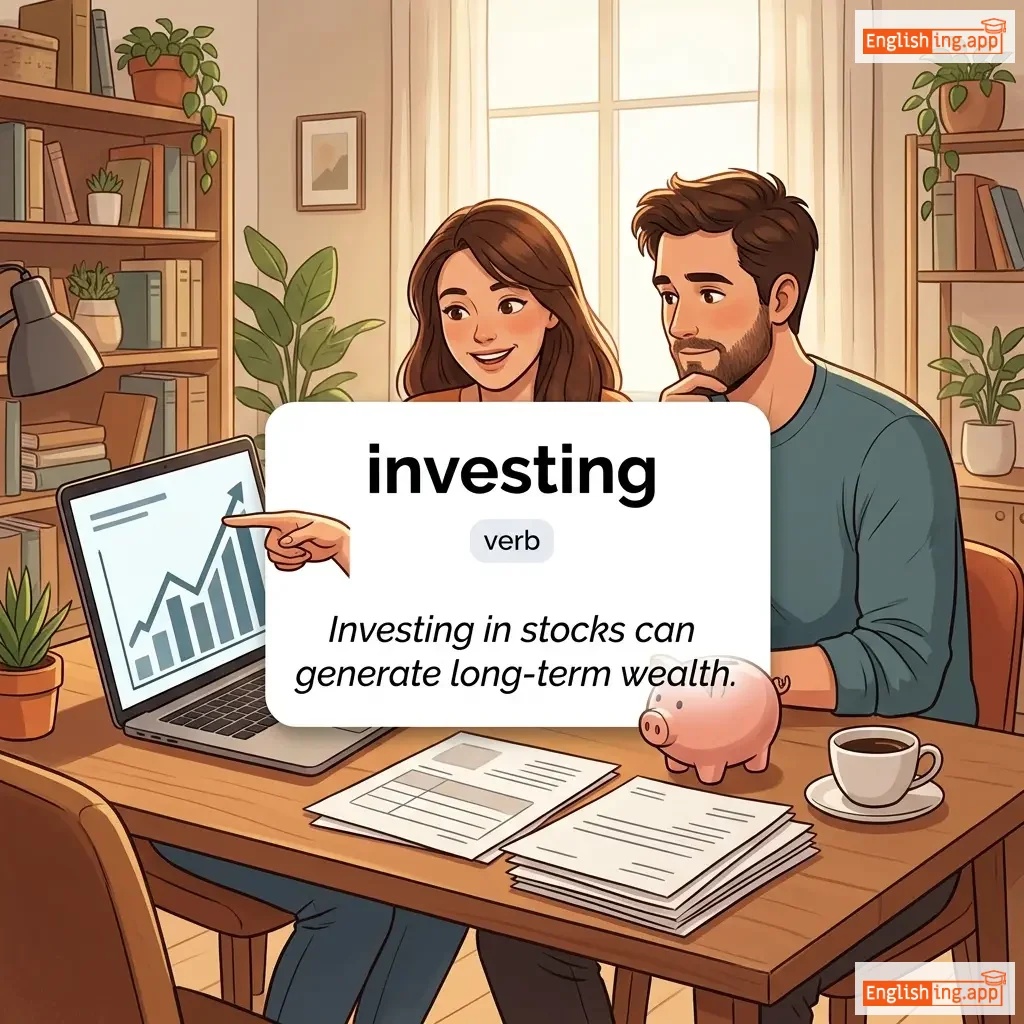
The act of putting money into financial schemes, shares, property, or a commercial venture with the expectation of achieving a profit.

"Investing in stocks can generate long-term wealth."

"Investir dans des actions peut générer de la richesse à long terme." (Investir dans des actions peut générer de la richesse à long terme.)
noun
/ɪnˈvɛstɪtʃər/
cérémonie d'investiture (ceremonie d'investiture)

the formal ceremony of conferring authority, rank, or office

"The king held an investiture ceremony for the new knight."

"Le roi a organisé une cérémonie d'investiture pour le nouveau chevalier." (Le roi a organise une ceremonie d'investiture pour le nouveau chevalier.)
investment definition card — visual illustration of the meaning
noun
/ɪnˈvɛst.mənt/
investissement (investissement)

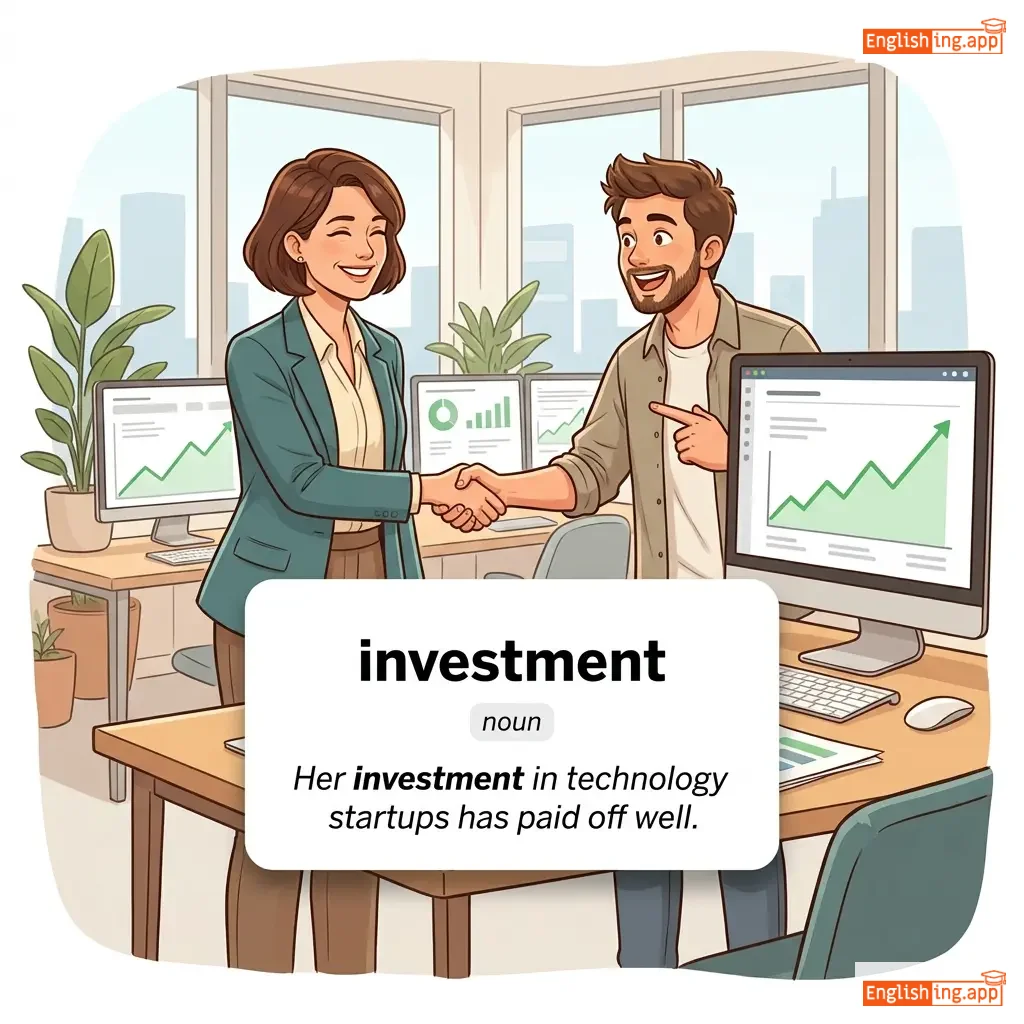
the action or process of putting money, time, or resources into something for future benefit

"Her investment in technology startups has paid off well."

"Son investissement dans les startups technologiques a bien payé." (Son investissement dans les startups technologiques a bien payé.)
noun
/ɪnˈvɛstər/
investisseur (investisseur)

a person or organization that puts money into financial schemes, property, or business ventures with the expectation of achieving a profit

"The investor funded the startup with a large sum of money."

"L'investisseur a financé la startup avec une grande somme d'argent." (L'investisseur a financé la startup avec une grande somme d'argent.)
inveterate definition card — visual illustration of the meaning
adjective
/ɪnˈvɛtərət/
invétéré (invétére)

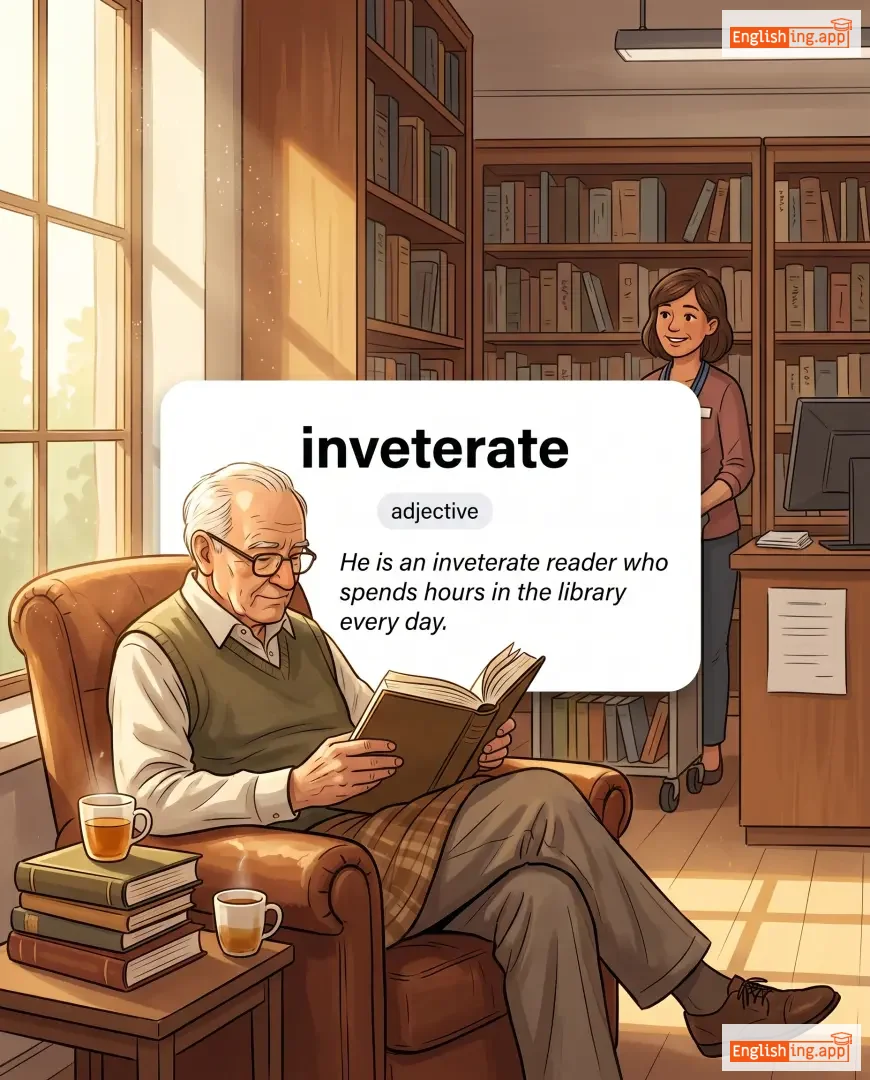
having a long-established habit, activity, or interest that is unlikely to change

"He is an inveterate reader who spends hours in the library every day."

"Il est un lecteur invétéré qui passe des heures à la bibliothèque chaque jour." (Il est un lecteur invetere qui passe des heures a la bibliotheque chaque jour.)
verb
/ɪmˈbruː/
tacher (tacher)

To stain, especially with blood.

"His hands were imbrued with blood after the battle."

"Ses mains étaient tachetées de sang après la bataille." (Ses mains étaient tachetées de sang après la bataille.)
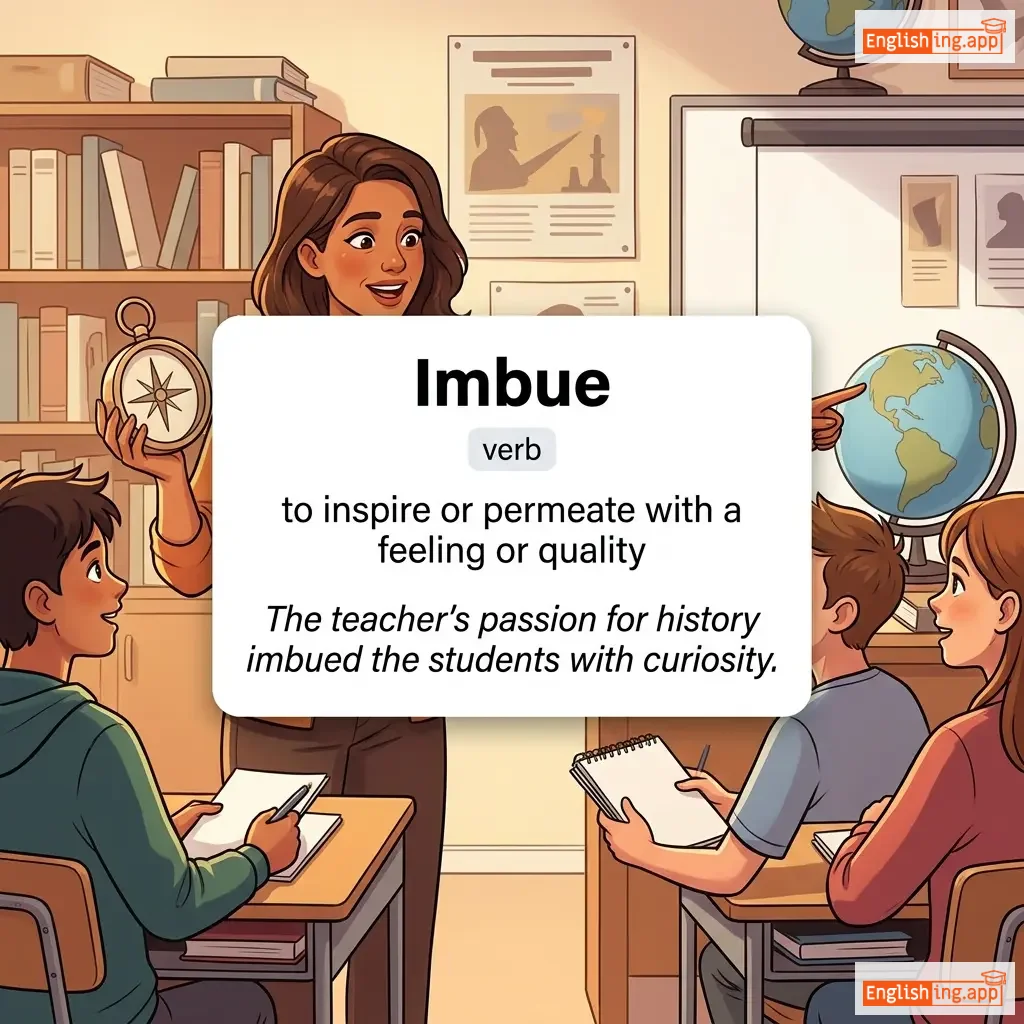
Imbue definition card — visual illustration of the meaning
verb
/ɪmˈbjuː/
imbiber (imbiber)

to inspire or permeate with a feeling or quality

"The teacher's passion for history imbued the students with curiosity."

"La passion de l'enseignant pour l'histoire a imprégné les élèves de curiosité." (La passion de l'enseignant pour l'histoire a impregne les eleves de curiosite.)
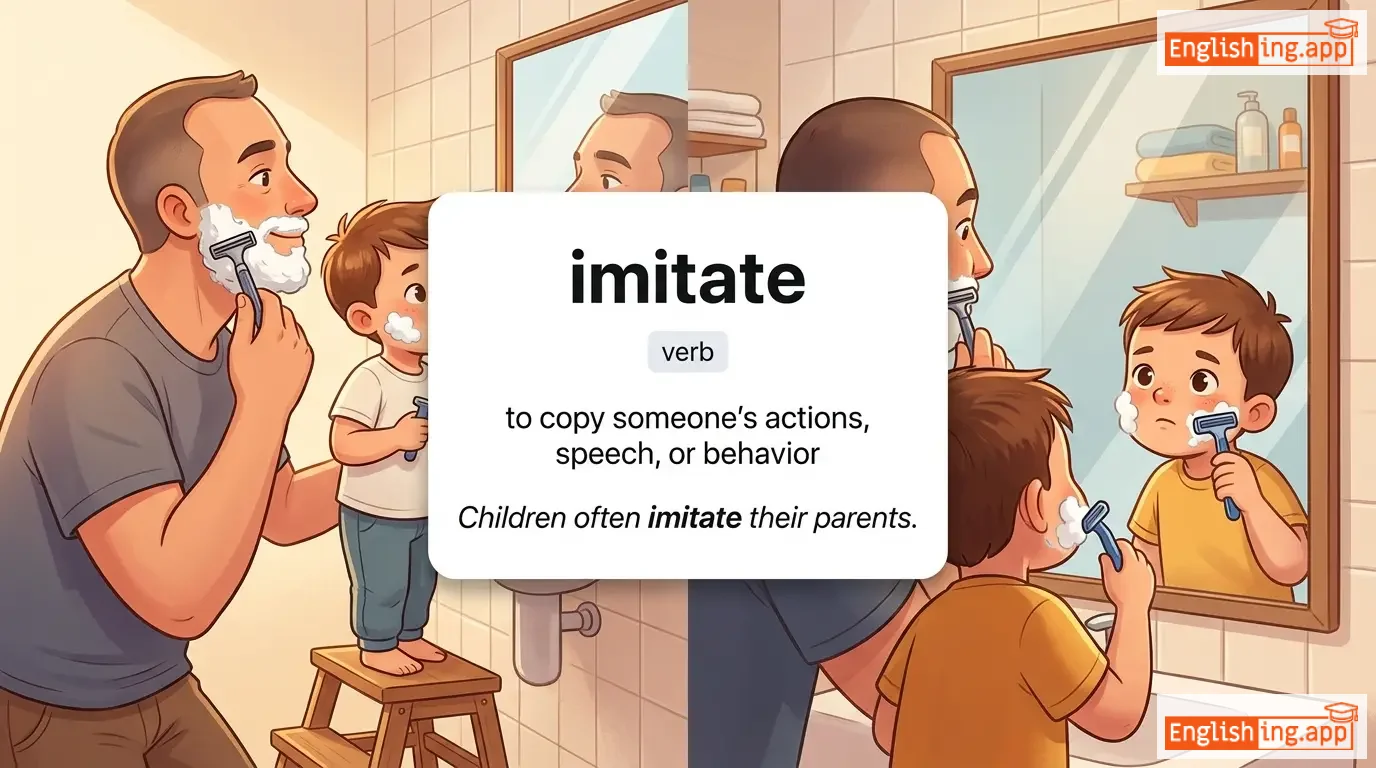
imitate definition card — visual illustration of the meaning
verb
/ˈɪmɪteɪt/
imiter (imiter)

to copy someone's actions, speech, or behavior

"Children often imitate their parents."

"Les enfants imitent souvent leurs parents." (Les enfants imitent souvent leurs parents.)
noun
/ˌɪmɪˈteɪʃən/
imitation (imitation)

the act of copying or mimicking someone or something

"Children learn many skills through imitation."

"Les enfants apprennent de nombreuses compétences par imitation." (Les enfants apprennent de nombreuses compétences par imitation.)
noun
/ˈɪmɪˌteɪtər/
imitateur (imitateur)

a person who copies the behavior, style, or actions of others

"He became famous as an imitator of popular singers."

"Il est devenu célèbre en tant qu'imitateur de chanteurs populaires." (Il est devenu célèbre en tant qu'imitateur de chanteurs populaires.)
adjective
/ɪˈmækjələt/
immaculé (immacule)

perfectly clean, neat, or free from flaws

"Her room was immaculate, with everything in its place."

"Sa chambre était immaculée, tout était à sa place." (Sa chambre était immaculée, tout était à sa place.)
adjective
/ˈɪmənənt/
immanent (immanent)

existing or operating within; inherent

"He believed that moral values are immanent in human nature."

"Il croyait que les valeurs morales sont immanentes dans la nature humaine." (Il croyait ke les valeurs morales sont immanentes dans la nature humaine.)
adjective
/ˌɪməˈtɪəriəl/
immatériel (immatériel)

Not important or relevant; lacking physical substance.

"The judge ruled that the argument was immaterial to the case."

"Le juge a statué que l'argument était immatériel pour l'affaire." (Le juge a statué que l'argument était immatériel pour l'affaire.)
adjective
/ˌɪməˈtjʊər/
immature (immature)

Not fully developed; childish or lacking maturity.

"His immature behavior annoyed everyone at the meeting."

"Son comportement immature agacait tout le monde lors de la réunion." (Son comportement immature agacait tout le monde lors de la réunion.)
noun
/ˌɪməˈtjʊərəti/
immaturité (immaturite)

the state of not being fully developed emotionally, mentally, or physically; lack of maturity

"His immaturity made it difficult for him to handle responsibility."

"Son immaturité a rendu la gestion des responsabilités difficile." (son immaturite a rendu la gestion des responsabilites difficile)
adjective
/ɪˈmɛʒərəbl/
incommensurable (incommensurable)

Too great or extreme to be measured.

"Her kindness brought him immeasurable happiness."

"Sa gentillesse lui a donné un bonheur immeasurable." (Sa gentillesse lui a donné un bonheur immeasurable.)
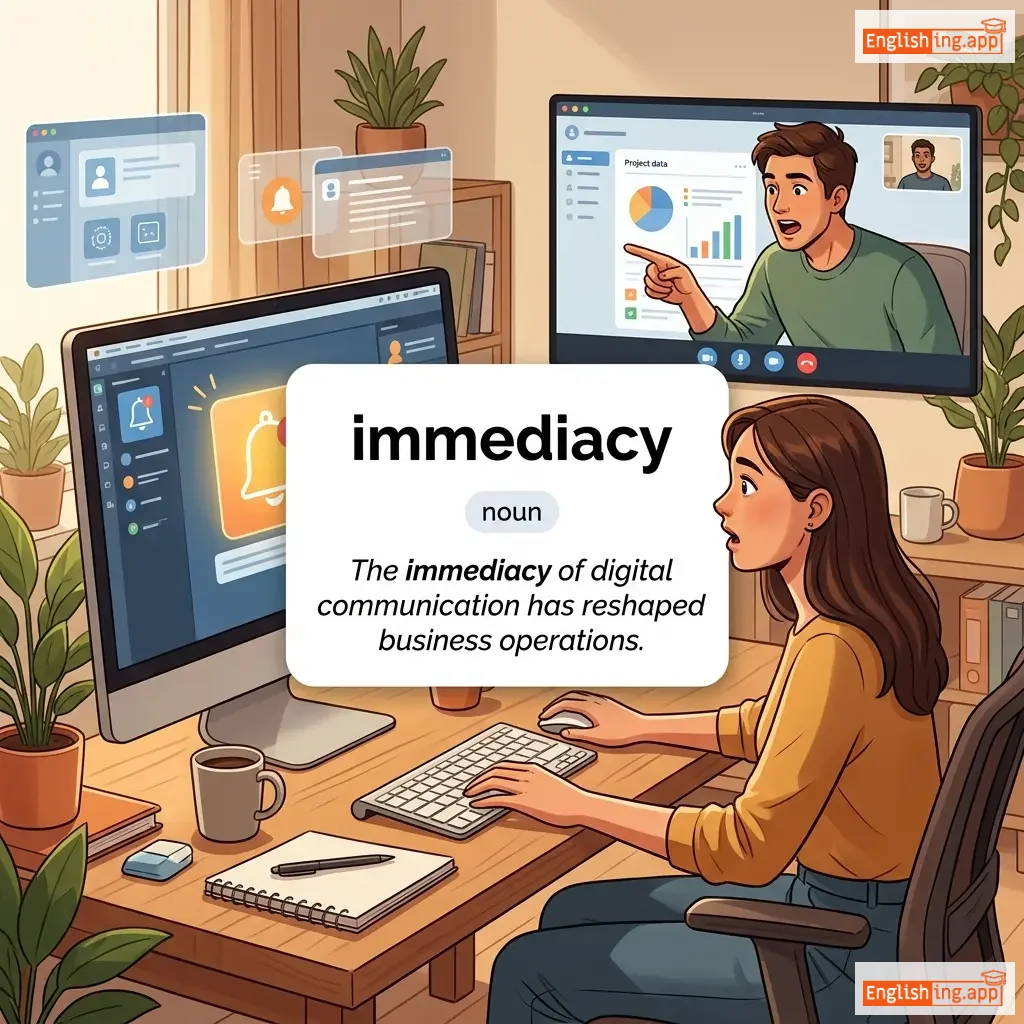
immediacy definition card — visual illustration of the meaning
noun
/ɪˈmiːdiəsi/
immédiateté, urgence (immediatete, urgence)

The quality of bringing one into direct and instant involvement with something, giving rise to a sense of urgency or excitement.

"The immediacy of digital communication has reshaped business operations."

"L'immédiateté de la communication numérique a transformé les opérations commerciales." (L'immediatete de la communication numerique a transforme les operations commerciales.)
adjective
/ɪˈmiːdiət/
immédiat (immediat)

happening or done without delay

"The doctor gave her immediate attention."

"Le médecin lui a donné une attention immédiate." (Le medecin lui a donne une attention immediate.)
adverb
/ɪˈmiːdiətli/
immédiatement (immediatement)

at once; without delay

"She responded immediately to the emergency call."

"Elle a répondu immédiatement à l'appel d'urgence." (Elle a répondu immédiatement à l'appel d'urgence.)
adjective
/ˌɪməˈmɔːriəl/
immémorial (immemorial)

Extending back beyond memory or record; ancient.

"The tradition has been followed since time immemorial."

"La tradition est suivie depuis des temps immémoriaux." (La tradition est suivie depuis des temps immemoriaux.)
adjective
/ɪˈmɛns/
immense (immense)

Extremely large or great in size, amount, or degree.

"The project required an immense amount of effort."

"Le projet a nécessité une quantité immense d'efforts." (Le projet a necessite une quantite immense d'efforts.)
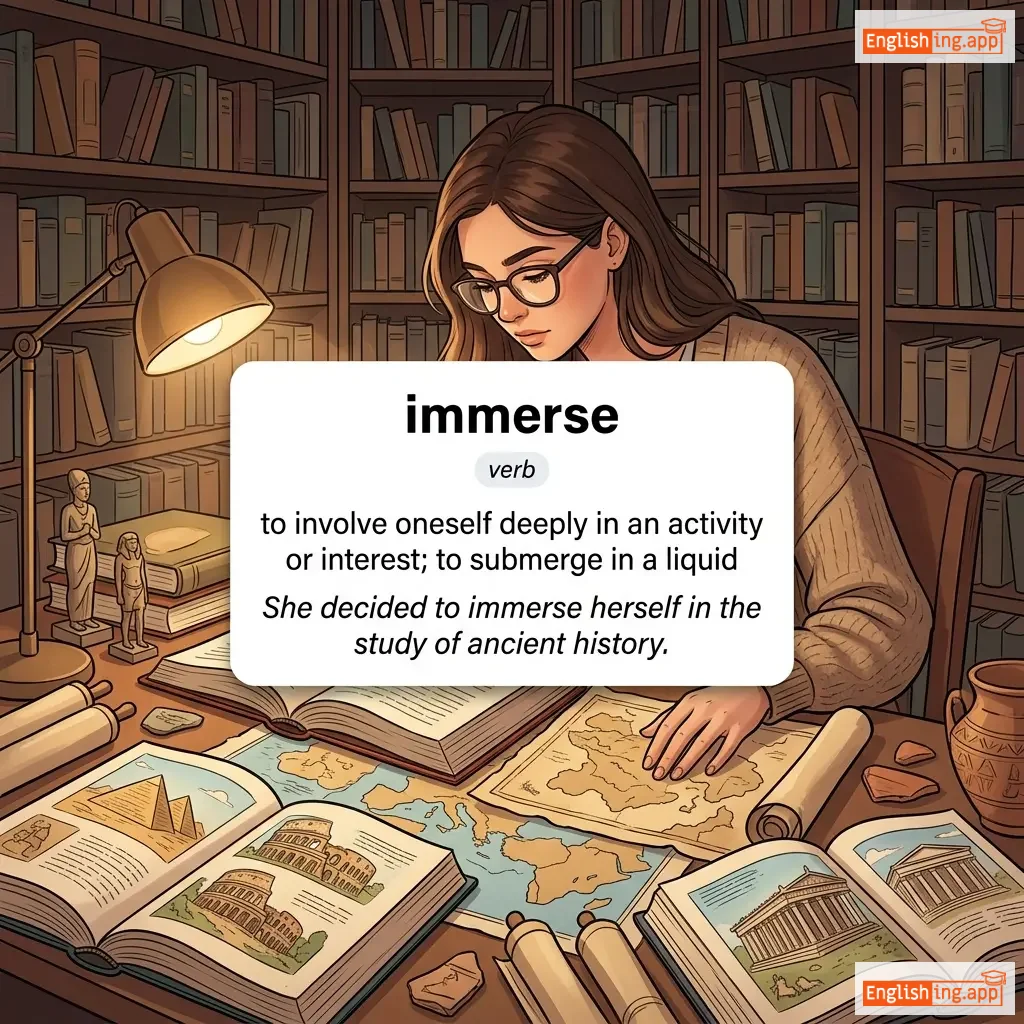
immerse definition card — visual illustration of the meaning
verb
/ɪˈmɜːrs/
immerger, s'engager profondément (immerger, s'engager profondement)

to involve oneself deeply in an activity or interest; to submerge in a liquid

"She decided to immerse herself in the study of ancient history."

"Elle a décidé de s'immerger dans l'étude de l'histoire ancienne." (Elle a decide de s'immerger dans l'etude de l'histoire ancienne.)
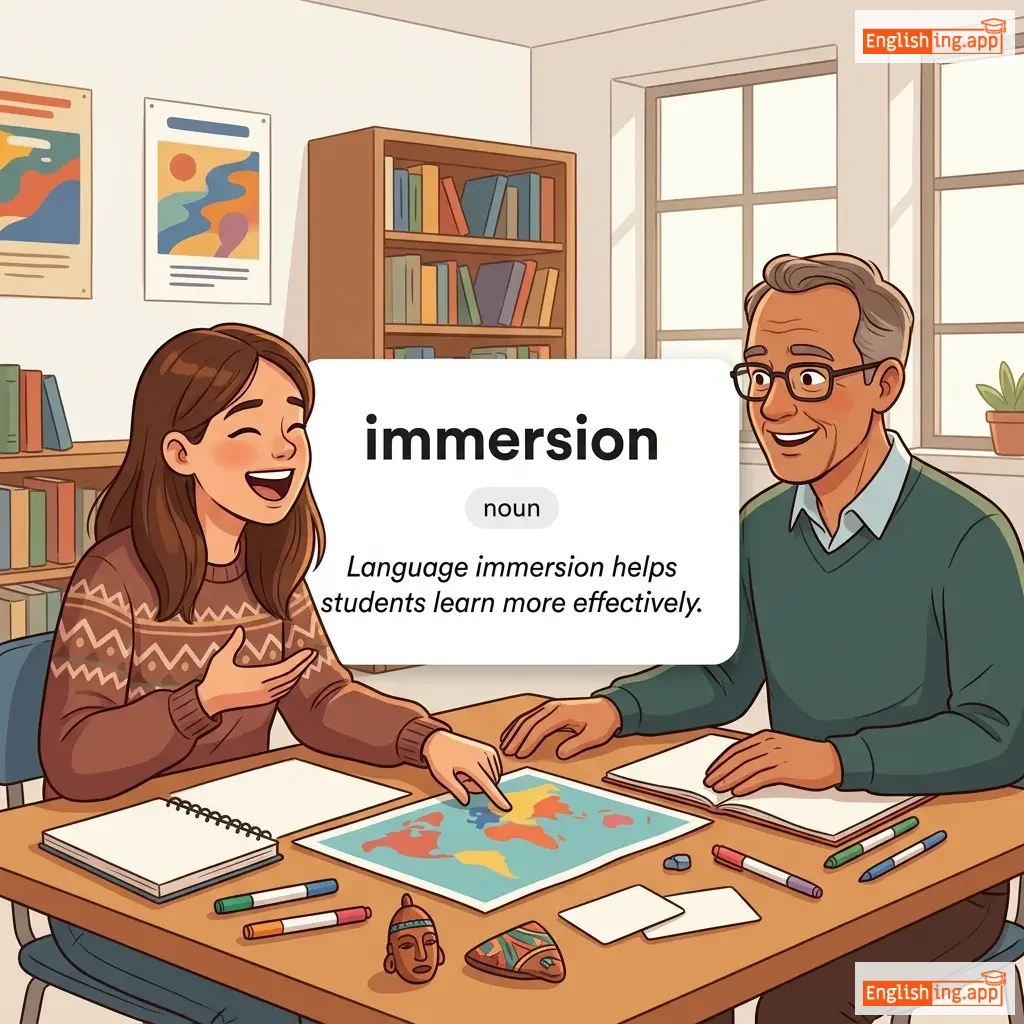
immersion definition card — visual illustration of the meaning
noun
/ɪˈmɜːrʒən/
immersion (immersion)

the act of deeply involving oneself in something; the state of being completely surrounded by liquid

"Language immersion helps students learn more effectively."

"L'immersion linguistique aide les étudiants à apprendre plus efficacement." (L'immersion linguistique aide les étudiants à apprendre plus efficacement.)
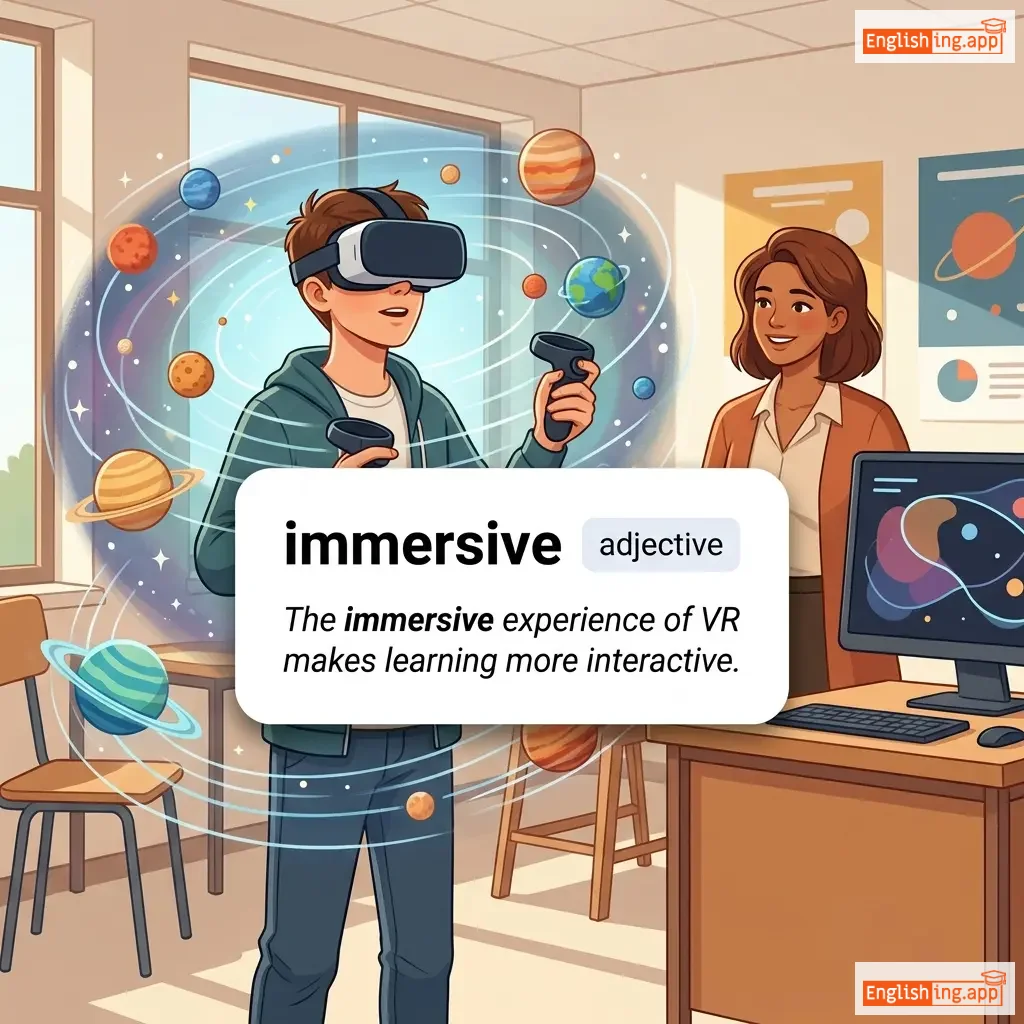
immersive definition card — visual illustration of the meaning
adjective
ɪˈmɜː.sɪv
immersif (immersif)

Providing, involving, or characterized by deep absorption or immersion in something.

"The immersive experience of VR makes learning more interactive."

"L'expérience immersive de la réalité virtuelle rend l'apprentissage plus interactif." (L'expérience immersive de la réalité virtuelle rend l'apprentissage plus interactif.)
noun
/ˈɪmɪɡrənt/
immigrant (immigrant)

a person who comes to live permanently in a foreign country

"The city has welcomed many new immigrants this year."

"La ville a accueilli de nombreux nouveaux immigrants cette année." (La ville a accueilli de nombreux nouveaux immigrants cette année.)
verb
/ˈɪmɪɡreɪt/
immigrer (immigrer)

to come to live permanently in a foreign country

"He immigrated to Canada five years ago."

"Il a immigré au Canada il y a cinq ans." (Il a immigré au Canada il y a cinq ans.)
noun
/ˌɪmɪˈɡreɪʃən/
immigration (immigration)

the action of coming to live permanently in a foreign country

"Immigration policies vary from country to country."

"Les politiques d'immigration varient d'un pays à l'autre." (Les politiques d'immigration varient d'un pays à l'autre.)
noun
/ˈɪmɪnəns/
imminence, état de proximité (imminence, etat de proximite)

the state of being about to happen

"The imminence of the storm forced people to take shelter."

"L'imminence de la tempête a forcé les gens à chercher un abri." (L'imminence de la tempête a forcé les gens à chercher un abri.)
adjective
/ˈɪmɪnənt/
imminent (imminent)

About to happen; likely to occur very soon.

"Dark clouds signaled that a storm was imminent."

"Les nuages sombres ont signalé qu'une tempête était imminente." (Les nuages sombres ont signalé qu'une tempête était imminente.)
adjective
/ɪˈmɪsəbl/
immiscible (immiscible)

Describes liquids that do not mix together.

"Oil and water are immiscible liquids."

"L'huile et l'eau sont des liquides immiscibles." (L'huile et l'eau sont des liquides immiscibles.)
adjective
/ɪˈmoʊbəl/
immobile (immobile)

unable to move or be moved

"After the accident, he was immobile for weeks."

"Après l'accident, il est resté immobile pendant des semaines." (Apres l'accident, il est reste immobile pendant des semaines.)
noun
/ˌɪməʊˈbɪləti/
immobilité (immobilite)

The state of being unable to move.

"After the accident, she suffered from immobility in her legs."

"Après l'accident, elle a souffert d'immobilité dans ses jambes." (Apres l'accident, elle a souffert d'immobilite dans ses jambes.)
adjective
/ɪˈmɒdərət/
immodéré (immodere)

excessive; beyond reasonable limits

"He has an immoderate love for sweets."

"Il a un amour immodéré pour les bonbons." (Il a un amour immodéré pour les bonbons.)
adjective
/ɪˈmɒdɪst/
prétentieux / indécent (pretentieuse / indecent)

lacking humility or decency; excessively proud or improper

"His immodest remarks offended the audience."

"Ses remarques prétentieuses ont offensé le public." (Ses remarques prétentieuses ont offensé le public.)
noun
/ɪˈmɒdəsti/
immodestie (immodestie)

lack of modesty or decency; behavior or attitude that is overly bold or improper

"The article was criticized for its tone of immodesty."

"L’article a été critiqué pour son ton d’immodestie." (L article a ete critique pour son ton d immodestie)
verb
/ˈɪməleɪt/
immoler (immoler)

To kill or sacrifice, especially by burning.

"The protesters threatened to immolate themselves in front of the building."

"Les manifestants ont menacé de s'immoler devant le bâtiment." (Les manifestants ont menacé de s'immoler devant le bâtiment.)
adjective
/ɪˈmɒrəl/
immoral (immoral)

Not conforming to accepted standards of morality; unethical or wicked.

"He was fired for his immoral behavior."

"Il a été renvoyé pour son comportement immoral." (Il a ete renvoye pour son comportement immoral.)