ভোকাবুলারিসমূহ

ইংরেজি শব্দের বাংলা অর্থ | English to Bangla Word Meaning Dictionary

verb
/ɪnˈvɛnt/
আবিষ্কার করা (abishkar kora)

to create or design something that has not existed before

"Thomas Edison invented the electric bulb."

"থমাস এডিসন বৈদ্যুতিক বাল্ব আবিষ্কার করেছিলেন।" (Thomas Edison boiddutik balb abishkar korechhilen.)
invention definition card — visual illustration of the meaning
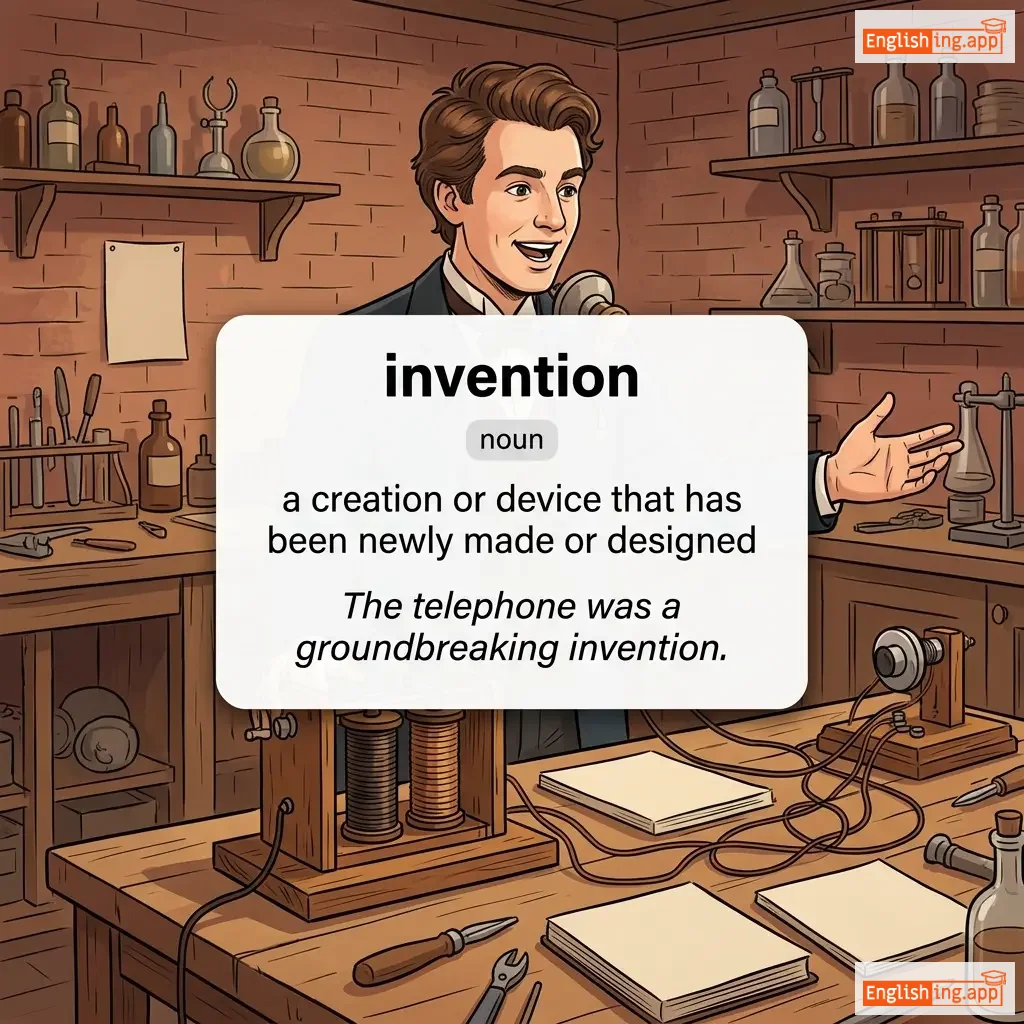
noun
/ɪnˈvɛnʃən/
আবিষ্কার (abishkar)

a creation or device that has been newly made or designed

"The telephone was a groundbreaking invention."

"টেলিফোন একটি যুগান্তকারী আবিষ্কার ছিল।" (Telephone ekti jugantokari abishkar chhilo.)
adjective
/ɪnˈvɛntɪv/
সৃজনশীল (srijonshil)

Having the ability to create or design new things or to think originally.

"The inventor was known for his inventive solutions to everyday problems."

"উদ্ভাবক তার দৈনন্দিন সমস্যার জন্য সৃজনশীল সমাধানের জন্য পরিচিত ছিলেন।" (Udbhabok tar dainondin somossar jonno srijonshil somadhaner jonno porichito chilen.)
noun
/ɪnˈventər/
আবিষ্কারক (abishkark)

a person who creates or designs something new, especially a device, method, or process

"The inventor patented her new medical device."

"আবিষ্কারক তার নতুন চিকিৎসা যন্ত্রের পেটেন্ট নিয়েছেন।" (abishkark tar notun chikitsa jontrer patent niyechen)
noun
/ˈɪnvənˌtɔːri/
তালিকা (talika)

A complete list of items, such as goods in stock or property.

"The shopkeeper checked the inventory before opening the store."

"দোকানদার দোকান খোলার আগে তালিকা পরীক্ষা করেছিলেন।" (Dokandar dokan kholar age talika porikkha korechilen.)
adjective
/ˌɪnˈvɜːrs/
বিপরীত (biporit)

Opposite in position, direction, order, or effect.

"There is an inverse relationship between price and demand."

"দাম এবং চাহিদার মধ্যে একটি বিপরীত সম্পর্ক রয়েছে।" (Dam ebong chahidar modhye ekti biporit somporko royeche.)
adverb
/ɪnˈvɜːrs.li/
বিপরীতভাবে; উল্টোদিকে; (biporeetobhabe)

in a way that is opposite or contrary; in reverse order or manner

"The price of goods is inversely related to their availability in the market."

"পণ্যের দাম বাজারে তাদের প্রাপ্যতার সাথে বিপরীতভাবে সম্পর্কিত।" (ponyer dam bajare tader praptottar shathe biporeetobhabe shomporikto.)
noun
/ɪnˈvɜːrʒən/
উল্টানো (ultano)

A reversal of the normal order, position, or relationship.

"In poetry, inversion is often used to create emphasis."

"কবিতায়, গুরুত্ব তৈরি করতে প্রায়ই উল্টানো ব্যবহার করা হয়।" (Kobitay, gurutto toiri korte prayoi ultano byabohar kora hoy.)
verb
/ɪnˈvɜːrt/
উল্টানো (ultano)

To turn something upside down or in the opposite position, order, or direction.

"He inverted the glass to let the water drain out."

"সে পানি বের করার জন্য গ্লাস উল্টে দিল।" (Se pani ber korar jonno glass ulte dilo.)
invest definition card — visual illustration of the meaning
verb
/ɪnˈvɛst/
বিনিয়োগ করা (biniyog kora)

to put money, time, or effort into something with the expectation of achieving a benefit

"He decided to invest in real estate to secure his future."

"তিনি তার ভবিষ্যৎ সুরক্ষার জন্য রিয়েল এস্টেটে বিনিয়োগ করার সিদ্ধান্ত নিয়েছিলেন।" (Tini tar bhobishyot surakkhar jonno real estate e biniyog korar siddhanto niechilen.)
verb
/ɪnˈvɛs.tɪ.ɡeɪt/
তদন্ত করা (tadonto kora)

to carry out a systematic inquiry to discover facts or information

"The police will investigate the incident thoroughly."

"পুলিশ ঘটনাটি সম্পূর্ণভাবে তদন্ত করবে।" (Police ghotonati sompurno vabe tadonto korbe.)
noun
/ɪnˌvɛs.tɪˈɡeɪ.ʃən/
তদন্ত (tadonto)

the process of inquiring into or examining something carefully to find the truth

"The investigation revealed new evidence about the fraud."

"তদন্তে প্রতারণা সম্পর্কে নতুন প্রমাণ প্রকাশ পেয়েছে।" (Tadonte protorona somporke notun proman prokash peyechhe.)
noun
/ɪnˈvɛstɪˌɡeɪtər/
তদন্তকারী (tondontokari)

a person who carries out a formal inquiry or investigation

"The investigator gathered evidence from the crime scene."

"তদন্তকারী অপরাধস্থল থেকে প্রমাণ সংগ্রহ করল।" (tondontokari oprodhosthol theke proman songroho korlo.)
investing definition card — visual illustration of the meaning
verb
ɪnˈvɛst.ɪŋ
বিনিয়োগ (biniyog)

The act of putting money into financial schemes, shares, property, or a commercial venture with the expectation of achieving a profit.

"Investing in stocks can generate long-term wealth."

"শেয়ারে বিনিয়োগ দীর্ঘমেয়াদী সম্পদ সৃষ্টি করতে পারে।" (Sheyare biniyog dirgho-meyadi shompod shrishti korte pare.)
noun
/ɪnˈvɛstɪtʃər/
পদবী প্রদান অনুষ্ঠান (podobi prodan onusthan)

the formal ceremony of conferring authority, rank, or office

"The king held an investiture ceremony for the new knight."

"রাজা নতুন নাইটের জন্য একটি পদবী প্রদান অনুষ্ঠান আয়োজন করলেন।" (raja notun naiter jonno ekti podobi prodan onusthan ayojon korlen.)
investment definition card — visual illustration of the meaning
noun
/ɪnˈvɛst.mənt/
বিনিয়োগ (biniyog)

the action or process of putting money, time, or resources into something for future benefit

"Her investment in technology startups has paid off well."

"প্রযুক্তি স্টার্টআপে তার বিনিয়োগ ভালো ফল দিয়েছে।" (Projukti startup e tar biniyog bhalo fol diyechhe.)
noun
/ɪnˈvɛstər/
বিনিয়োগকারী (biniyogkari)

a person or organization that puts money into financial schemes, property, or business ventures with the expectation of achieving a profit

"The investor funded the startup with a large sum of money."

"বিনিয়োগকারী স্টার্টআপে একটি বড় অঙ্কের টাকা বিনিয়োগ করলেন।" (biniyogkari startup e ekti boro onker taka biniyog korlen.)
inveterate definition card — visual illustration of the meaning
adjective
/ɪnˈvɛtərət/
অভ্যাসগত (obhashgato)

having a long-established habit, activity, or interest that is unlikely to change

"He is an inveterate reader who spends hours in the library every day."

"সে একজন অভ্যাসগত পাঠক, প্রতিদিন ঘন্টার পর ঘন্টা লাইব্রেরিতে কাটায়।" (se ekjon obhashgato pathok, protidin ghontar por ghonta library te katay.)
verb
/ɪmˈbruː/
রঞ্জিত করা (ronjito kora)

To stain, especially with blood.

"His hands were imbrued with blood after the battle."

"যুদ্ধের পর তার হাত রক্তে রঞ্জিত ছিল।" (Judher por tar hat rokte ronjito chilo.)
Imbue definition card — visual illustration of the meaning
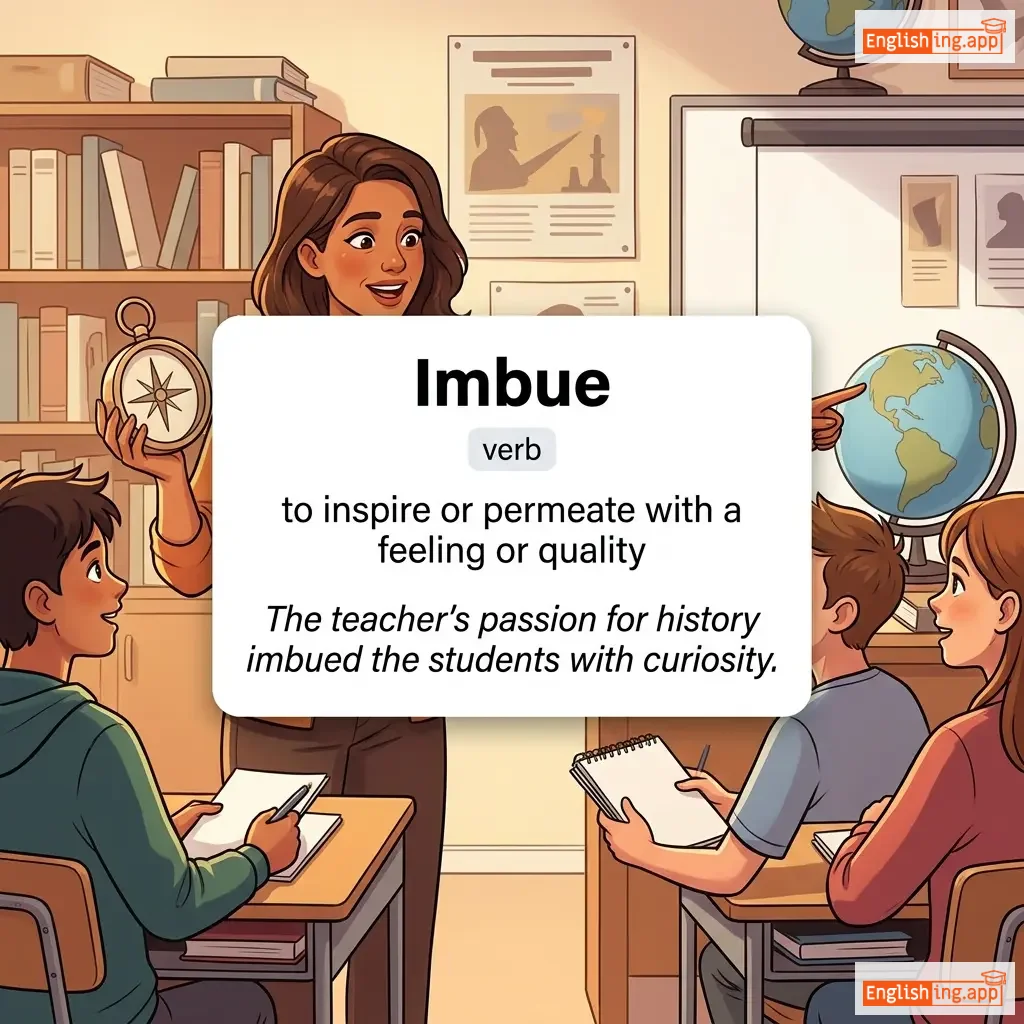
verb
/ɪmˈbjuː/
আত্মস্থ করা (atmostho kora)

to inspire or permeate with a feeling or quality

"The teacher's passion for history imbued the students with curiosity."

"শিক্ষকের ইতিহাসের প্রতি আগ্রহ ছাত্রদের কৌতূহলে পূর্ণ করেছিল।" (Shikkhoker itihasher proti agroho chatroder koutuhole purno korechilo.)
imitate definition card — visual illustration of the meaning
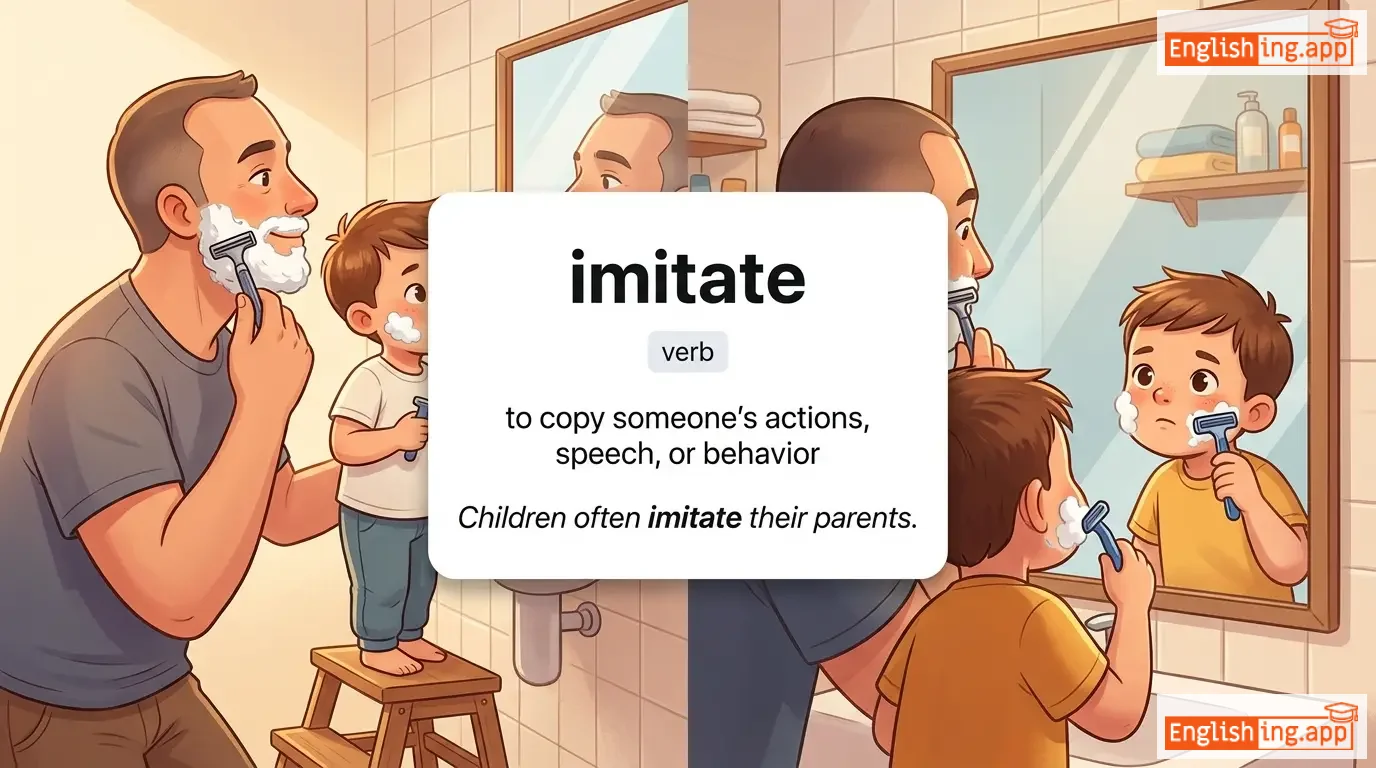
verb
/ˈɪmɪteɪt/
অনুকরণ করা (onukoron kora)

to copy someone's actions, speech, or behavior

"Children often imitate their parents."

"শিশুরা প্রায়শই তাদের বাবা-মাকে অনুকরণ করে।" (Shishura prayoshoi tader baba-make onukoron kore.)
noun
/ˌɪmɪˈteɪʃən/
অনুকরণ (onukoron)

the act of copying or mimicking someone or something

"Children learn many skills through imitation."

"শিশুরা অনেক দক্ষতা অনুকরণের মাধ্যমে শেখে।" (Shishura onek dokkhota onukoroner maddhome shekhe.)
noun
/ˈɪmɪˌteɪtər/
অনুকারী (onukari)

a person who copies the behavior, style, or actions of others

"He became famous as an imitator of popular singers."

"তিনি জনপ্রিয় গায়কদের অনুকারী হিসেবে বিখ্যাত হয়েছিলেন।" (Tini jonopriyo gayoker onukari hisebe bikhyato hoyechilen.)
adjective
/ɪˈmækjələt/
নির্মল (nirmol)

perfectly clean, neat, or free from flaws

"Her room was immaculate, with everything in its place."

"তার ঘর ছিল নির্মল, সবকিছু নিজের জায়গায় ছিল।" (Tar ghor chilo nirmol, sobkichu nijer jaygay chilo.)
adjective
/ˈɪmənənt/
অন্তর্নিহিত (ontornihito)

existing or operating within; inherent

"He believed that moral values are immanent in human nature."

"সে বিশ্বাস করত যে নৈতিক মূল্যবোধ মানুষের প্রকৃতির অন্তর্নিহিত।" (Se bishash korto je noitik mulyobodh manusher prokritir ontornihito.)
adjective
/ˌɪməˈtɪəriəl/
অপ্রাসঙ্গিক (oprasongik)

Not important or relevant; lacking physical substance.

"The judge ruled that the argument was immaterial to the case."

"বিচারক রায় দিয়েছিলেন যে যুক্তিটি মামলার জন্য অপ্রাসঙ্গিক।" (Bicharak ray diyechilen je juktiti mamlar jonno oprasongik.)
adjective
/ˌɪməˈtjʊər/
অপরিণত (oporinoto)

Not fully developed; childish or lacking maturity.

"His immature behavior annoyed everyone at the meeting."

"তার অপরিণত আচরণ মিটিংয়ে সবাইকে বিরক্ত করেছিল।" (Tar oporinoto acharon mitinge shobaike birokt korechilo.)
noun
/ˌɪməˈtjʊərəti/
অপরিপক্বতা (oporipokkota)

the state of not being fully developed emotionally, mentally, or physically; lack of maturity

"His immaturity made it difficult for him to handle responsibility."

"তার অপরিপক্বতা তাকে দায়িত্ব সামলাতে অসুবিধায় ফেলেছিল।" (tar oporipokkota take dayitto shamalate osubidhay felechilo)
adjective
/ɪˈmɛʒərəbl/
অপরিমেয় (oporimeyo)

Too great or extreme to be measured.

"Her kindness brought him immeasurable happiness."

"তার দয়ালুতা তাকে অপরিমেয় সুখ এনে দিয়েছিল।" (Tar doyaluta take oporimeyo sukh ene diyechilo.)
immediacy definition card — visual illustration of the meaning
noun
/ɪˈmiːdiəsi/
তাৎক্ষণিকতা, দ্রুততা, অবিলম্বিত অবস্থা (tatkhonikota, druttota, obilombito obostha)

The quality of bringing one into direct and instant involvement with something, giving rise to a sense of urgency or excitement.

"The immediacy of digital communication has reshaped business operations."

"ডিজিটাল যোগাযোগের ইমিডিয়াসি ব্যবসার কার্যপ্রণালী বদলে দিয়েছে।" (Digital jogajoger immediacy byabshar karjopronali bodle diyeche.)
adjective
/ɪˈmiːdiət/
তাৎক্ষণিক (tatkhanik)

happening or done without delay

"The doctor gave her immediate attention."

"ডাক্তার তাকে তাৎক্ষণিক মনোযোগ দিয়েছিলেন।" (Daktar take tatkhanik monojog diyechilen.)
adverb
/ɪˈmiːdiətli/
অবিলম্বে (obilombe)

at once; without delay

"She responded immediately to the emergency call."

"সে জরুরি কলের উত্তর অবিলম্বে দিয়েছিল।" (Se joruri koler uttar obilombe diyechilo.)
adjective
/ˌɪməˈmɔːriəl/
প্রাচীনকালীন (prachinkalin)

Extending back beyond memory or record; ancient.

"The tradition has been followed since time immemorial."

"প্রথাটি প্রাচীনকাল থেকে অনুসরণ করা হয়ে আসছে।" (Prothati prachinkal theke onushoron kora hoye asche.)
adjective
/ɪˈmɛns/
অসীম (osim)

Extremely large or great in size, amount, or degree.

"The project required an immense amount of effort."

"প্রকল্পটির জন্য অসীম পরিমাণ পরিশ্রমের প্রয়োজন ছিল।" (Prokolpoter jonno osim poriman porishromer proyojon chilo.)
immerse definition card — visual illustration of the meaning
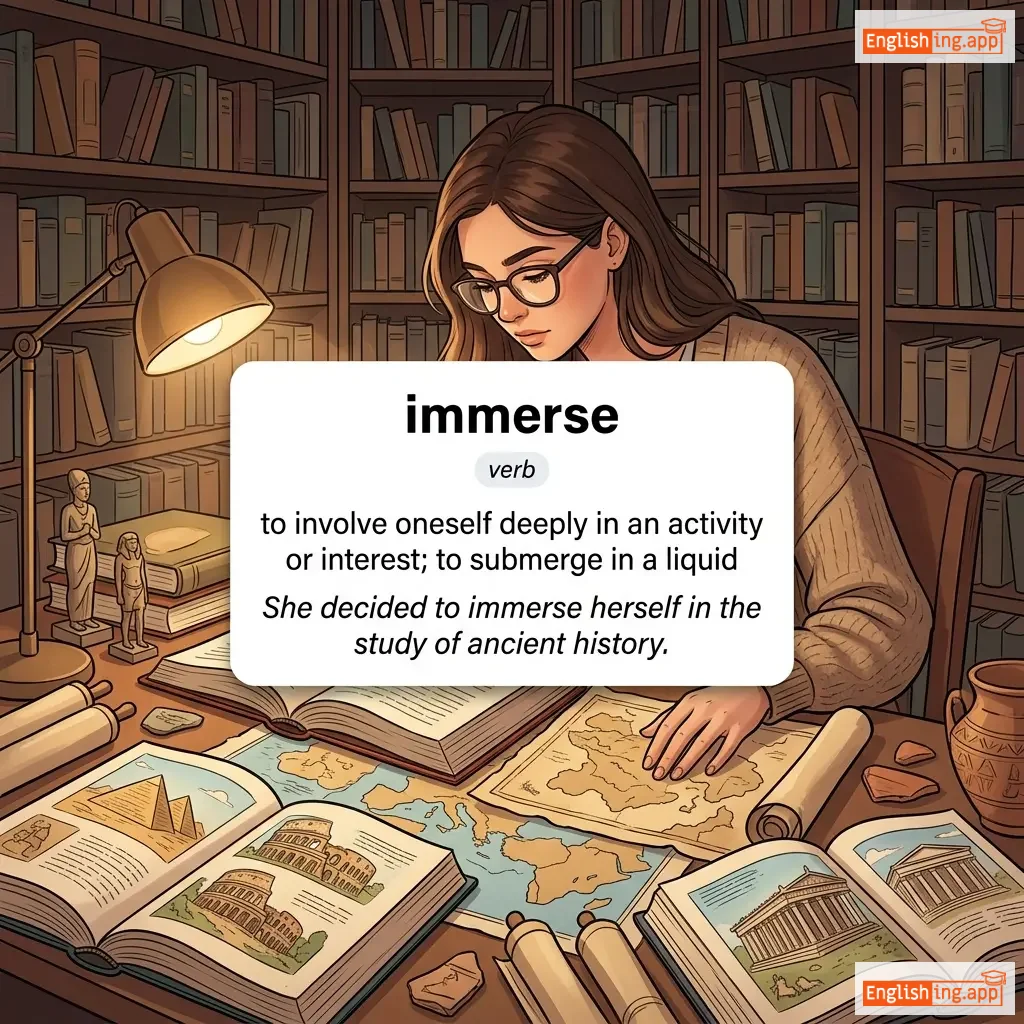
verb
/ɪˈmɜːrs/
ডুবানো, গভীরভাবে নিমগ্ন হওয়া (dubano, gobhirbhabe nimogno howa)

to involve oneself deeply in an activity or interest; to submerge in a liquid

"She decided to immerse herself in the study of ancient history."

"সে প্রাচীন ইতিহাসের অধ্যয়নে নিজেকে নিমগ্ন করার সিদ্ধান্ত নিল।" (Se prachin itihasher oddhyoyone nijeke nimogno korar siddhanto nilo.)
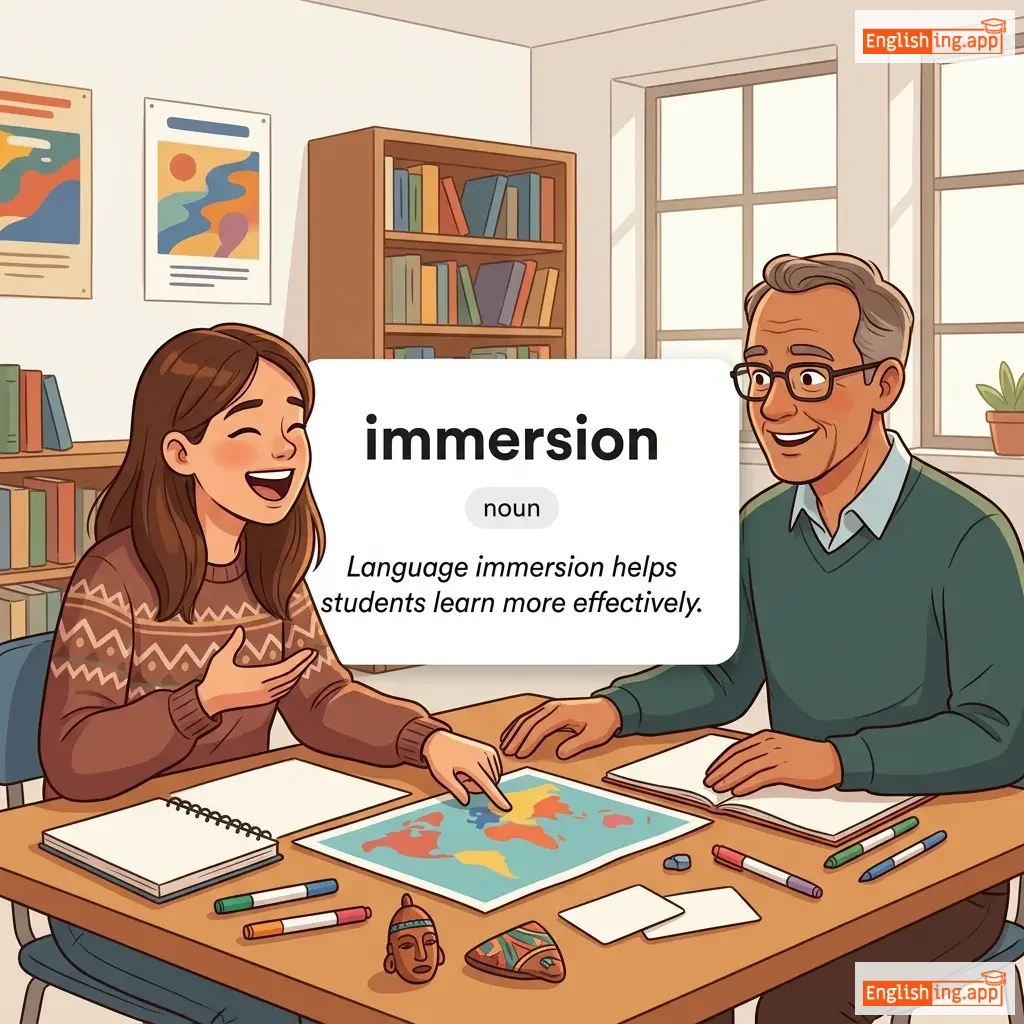
immersion definition card — visual illustration of the meaning
noun
/ɪˈmɜːrʒən/
নিমজ্জন, সম্পূর্ণ নিমগ্ন হওয়া (nimojjon, sompurno nimogno howa)

the act of deeply involving oneself in something; the state of being completely surrounded by liquid

"Language immersion helps students learn more effectively."

"ভাষা নিমজ্জন শিক্ষার্থীদের আরও কার্যকরভাবে শেখাতে সাহায্য করে।" (Bhasha nimojjon shikkharthider aro karyokorbvabe shekhate sahajyo kore.)
immersive definition card — visual illustration of the meaning
adjective
ɪˈmɜː.sɪv
সম্পূর্ণভাবে মনোযোগ আকর্ষণকারী, গভীরভাবে জড়ানো (shompurnobhabe monojog akorshonkari, gobhirbhabe jrano)

Providing, involving, or characterized by deep absorption or immersion in something.

"The immersive experience of VR makes learning more interactive."

"ইমারসিভ অভিজ্ঞতা লার্নিংকে আরও ইন্টারঅ্যাক্টিভ করে তোলে।" (Immersive obhiggota learning-ke aro interactive kore tole.)
noun
/ˈɪmɪɡrənt/
অভিবাসী (ovibashi)

a person who comes to live permanently in a foreign country

"The city has welcomed many new immigrants this year."

"এই বছর শহরটি অনেক নতুন অভিবাসীকে স্বাগত জানিয়েছে।" (Ei bochor shohrti onek notun ovibashike swagot janieche.)
verb
/ˈɪmɪɡreɪt/
অভিবাসন করা (ovibashon kora)

to come to live permanently in a foreign country

"He immigrated to Canada five years ago."

"সে পাঁচ বছর আগে কানাডায় অভিবাসন করেছিল।" (Se pach bochor age Kanadaye ovibashon korechilo.)
noun
/ˌɪmɪˈɡreɪʃən/
অভিবাসন (ovibashon)

the action of coming to live permanently in a foreign country

"Immigration policies vary from country to country."

"অভিবাসন নীতি দেশভেদে ভিন্ন হয়।" (Ovibashon niti deshbhede bhinno hoy.)
noun
/ˈɪmɪnəns/
আসন্নতা, নিকটবর্তী অবস্থা (asannota, nikotborti obostha)

the state of being about to happen

"The imminence of the storm forced people to take shelter."

"ঝড়ের আসন্নতা মানুষকে আশ্রয় নিতে বাধ্য করেছিল।" (Jhorrer asannota manushke ashroy nite baddho korechilo.)
adjective
/ˈɪmɪnənt/
আসন্ন (asanno)

About to happen; likely to occur very soon.

"Dark clouds signaled that a storm was imminent."

"কালো মেঘ একটি আসন্ন ঝড়ের সংকেত দিচ্ছিল।" (Kalo megh ekti asanno jhorer sonket dichhilo.)
adjective
/ɪˈmɪsəbl/
অমিশ্রণীয় (omishroniyo)

Describes liquids that do not mix together.

"Oil and water are immiscible liquids."

"তেল এবং পানি অমিশ্রণীয় তরল।" (Tel ebong pani omishroniyo torol.)
adjective
/ɪˈmoʊbəl/
অচল (ochol)

unable to move or be moved

"After the accident, he was immobile for weeks."

"দুর্ঘটনার পরে, তিনি কয়েক সপ্তাহ ধরে অচল ছিলেন।" (Durghotnar pore, tini koyek soptaho dhore ochol chilen.)
noun
/ˌɪməʊˈbɪləti/
অচলতা (ocholota)

The state of being unable to move.

"After the accident, she suffered from immobility in her legs."

"দুর্ঘটনার পর তার পায়ে অচলতা দেখা দেয়।" (Durghotonar por tar peye ocholota dekha deya.)
adjective
/ɪˈmɒdərət/
অতিরিক্ত (otirikto)

excessive; beyond reasonable limits

"He has an immoderate love for sweets."

"তার মিষ্টির প্রতি অতিরিক্ত ভালোবাসা আছে।" (Tar mistir proti otirikto bhalobasha ache.)
adjective
/ɪˈmɒdɪst/
অহংকারী / অশালীন (ohongkari / oshaleen)

lacking humility or decency; excessively proud or improper

"His immodest remarks offended the audience."

"তার অহংকারী মন্তব্যগুলো শ্রোতাদের বিরক্ত করেছিল।" (Tar ohongkari mormontogulo shrotader birkotto korechilo.)
noun
/ɪˈmɒdəsti/
অশালীনতা (oshalinota)

lack of modesty or decency; behavior or attitude that is overly bold or improper

"The article was criticized for its tone of immodesty."

"নিবন্ধটি তার অশালীনতার সুরের জন্য সমালোচিত হয়েছিল।" (nibondhoti tar oshalinotar surer jonno shomalochito hoyechilo)
verb
/ˈɪməleɪt/
বলিদান/অগ্নিদাহ করা (bolidan/ognidah kora)

To kill or sacrifice, especially by burning.

"The protesters threatened to immolate themselves in front of the building."

"বিক্ষোভকারীরা ভবনের সামনে নিজেদের অগ্নিদাহ করার হুমকি দিয়েছিল।" (Bikkhovkarira bhoboner samne nijeder ognidah korar humki diyechhilo.)
adjective
/ɪˈmɒrəl/
অনৈতিক (onaitik)

Not conforming to accepted standards of morality; unethical or wicked.

"He was fired for his immoral behavior."

"অনৈতিক আচরণের জন্য তাকে চাকরি থেকে বরখাস্ত করা হয়েছিল।" (Onaitik acharoner jonno take chakri theke borkhasto kora hoyechhilo.)