語彙集

英単語辞書 | 単語の意味、定義、例文

noun
/ˌɪməˈrælɪti/
不道徳 (fudotoku)

the quality of being immoral; behavior that violates accepted moral standards

"The community condemned the immorality of the corrupt officials."

"地域社会は腐敗した役人の不道徳を非難した。" (Chiiki shakai wa fuhai shita yakunin no fudotoku o hinan shita)
adjective; noun
/ɪˈmɔːrtl/
不死の (fushi no)

living forever; never dying; lasting forever in fame or memory

"Legends often describe heroes as immortal beings who never die."

"伝説では英雄は不死の存在だとされる。" (densetsu dewa eiyuu wa fushi no sonzai da to sareru)
noun
/ˌɪmɔːrˈtæləti/
不死; 永遠の命 (fushi; eien no inochi)

the state of living forever; eternal life or lasting fame beyond death

"Many ancient cultures believed that heroes could achieve immortality through great deeds."

"多くの古代文化では、英雄が偉業によって不死を得られると信じられていた。" (ooku no kodai bunka dewa eiyuu ga igyou ni yotte fushi o erareru to shinjirarete ita)
verb
/ɪˈmɔːrtəlaɪz/
不朽の (fukyuu no)

to preserve the memory of someone or something forever

"The statue was built to immortalize the hero’s sacrifice."

"その像は、英雄の犠牲を永遠にするために建てられました。" (Sono zō wa, eiyū no gisei o eien ni suru tame ni tateraremashita.)
immovable definition card — visual illustration of the meaning
adjective
/ɪˈmuːvəbl/
動かせない (ugokasenai)

impossible to move or change

"The rock was too heavy and immovable."

"岩は非常に重く、動かすことができませんでした。" (Iwa wa hijou ni omoku, ugokasu koto ga dekimasen deshita.)
adjective
/ɪˈmjuːn/
免疫の (men'eki no)

protected from disease or from the effects of something

"Children who are vaccinated are immune to many diseases."
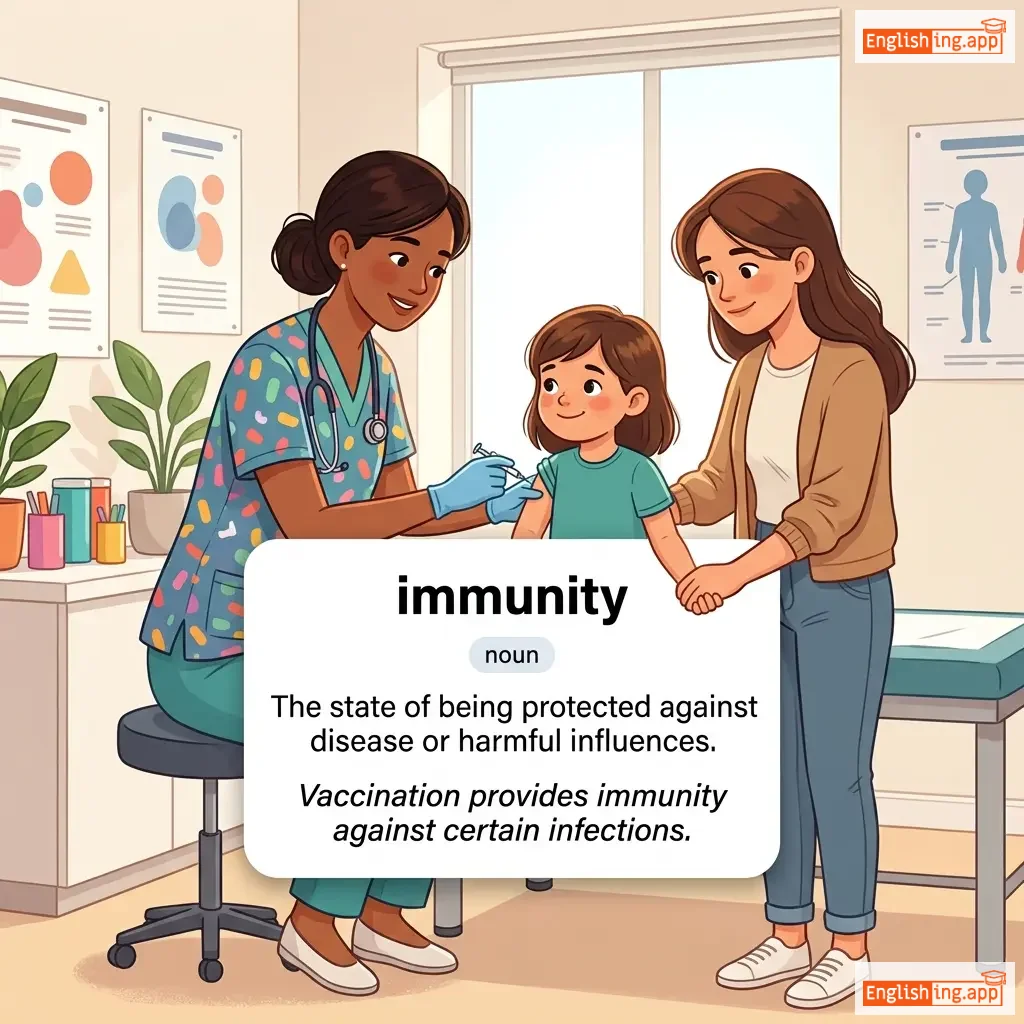
"予防接種を受けた子供たちは多くの病気に免疫があります。" (Yobou sesshu wo uketa kodomotachi wa ooku no byouki ni men'eki ga arimasu.)
immunity definition card — visual illustration of the meaning
noun
/ɪˈmjuːnɪti/
免疫 (men'eki)

The state of being protected against disease or harmful influences.

"Vaccination provides immunity against certain infections."

"ワクチン接種は特定の感染症に対する免疫を提供します。" (Wakuchin sesshu wa tokutei no kansenshou ni taisuru men'eki wo teikyou shimasu.)
verb
/ɪˈmjʊər/
閉じ込める (tojikomeru)

to confine or enclose someone against their will

"The prisoner was immured in a dark cell."
"囚人は暗い監房に閉じ込められた。" (Shūjin wa kurai kanbō ni tojikomerareta.)
immutable definition card — visual illustration of the meaning
adjective
/ɪˈmjuːtəbl/
不変 (fuhen)

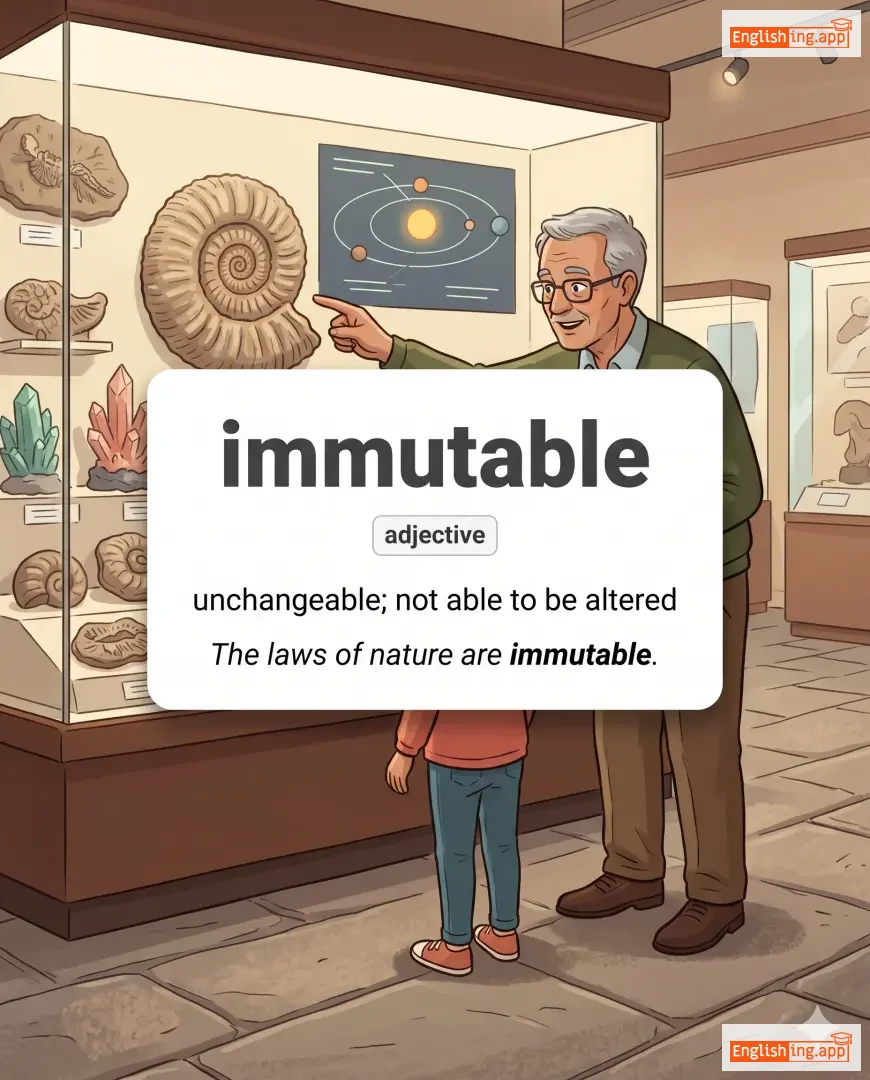
unchangeable; not able to be altered

"The laws of nature are immutable."

"自然の法則は不変です。" (Shizen no hōsoku wa fuhen desu.)
noun
/ɪmp/
小さないたずら好きな悪魔 (chiisana itazura suki na akuma)

a small mischievous devil or sprite; a playful troublemaker

"The child was acting like a little imp, hiding his toys everywhere."
"その子供は小さなインプのように振る舞い、どこにでもおもちゃを隠していました。" (Sono kodomo wa chiisana impu no you ni furumai, doko ni demo omocha wo kakushite imashita.)
impact definition card — visual illustration of the meaning
noun, verb
/ˈɪmpækt/
影響 (eikyou)

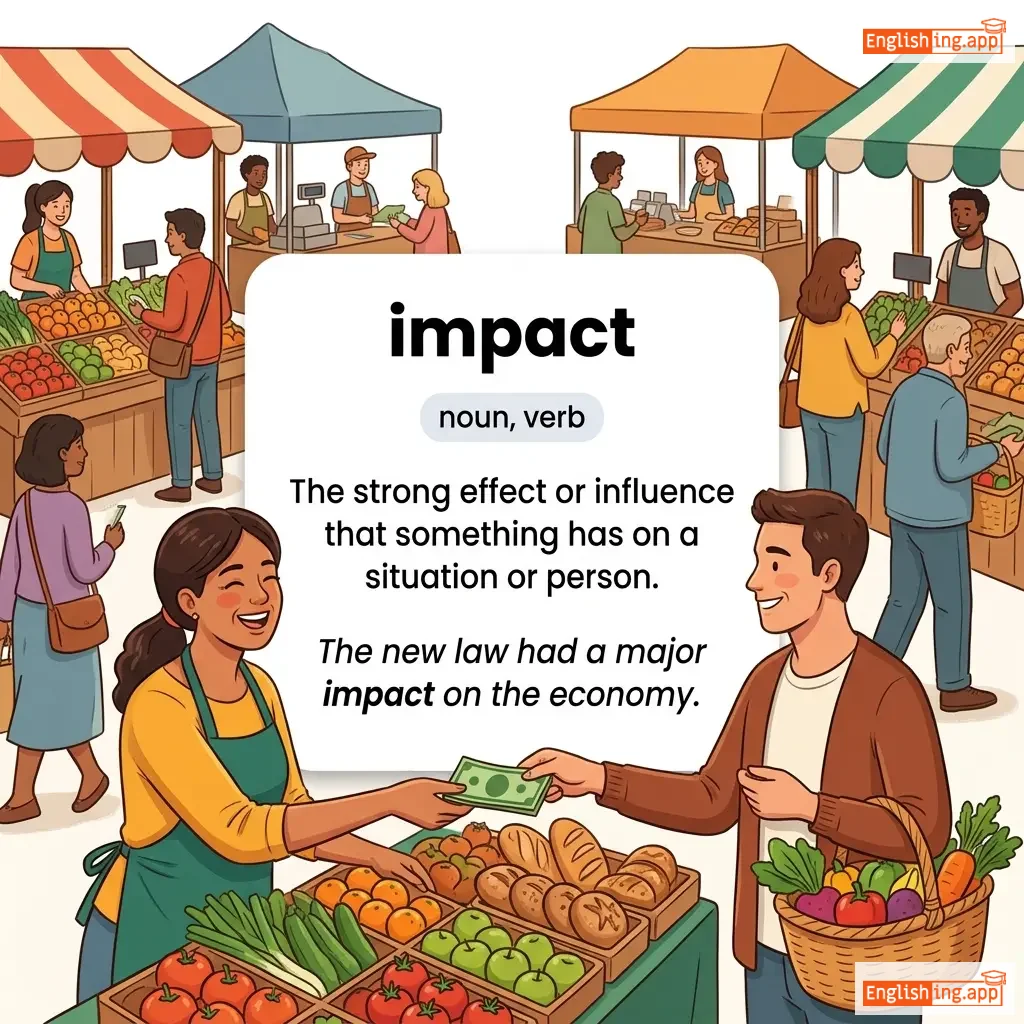
The strong effect or influence that something has on a situation or person.

"The new law had a major impact on the economy."
"新しい法律は経済に大きな影響を与えました。" (Atarashii houritsu wa keizai ni ookina eikyou wo ataemashita.)
impactful definition card — visual illustration of the meaning
adjective
/ˈɪmpæktfʊl/
インパクトがある (inpakuto ga aru)

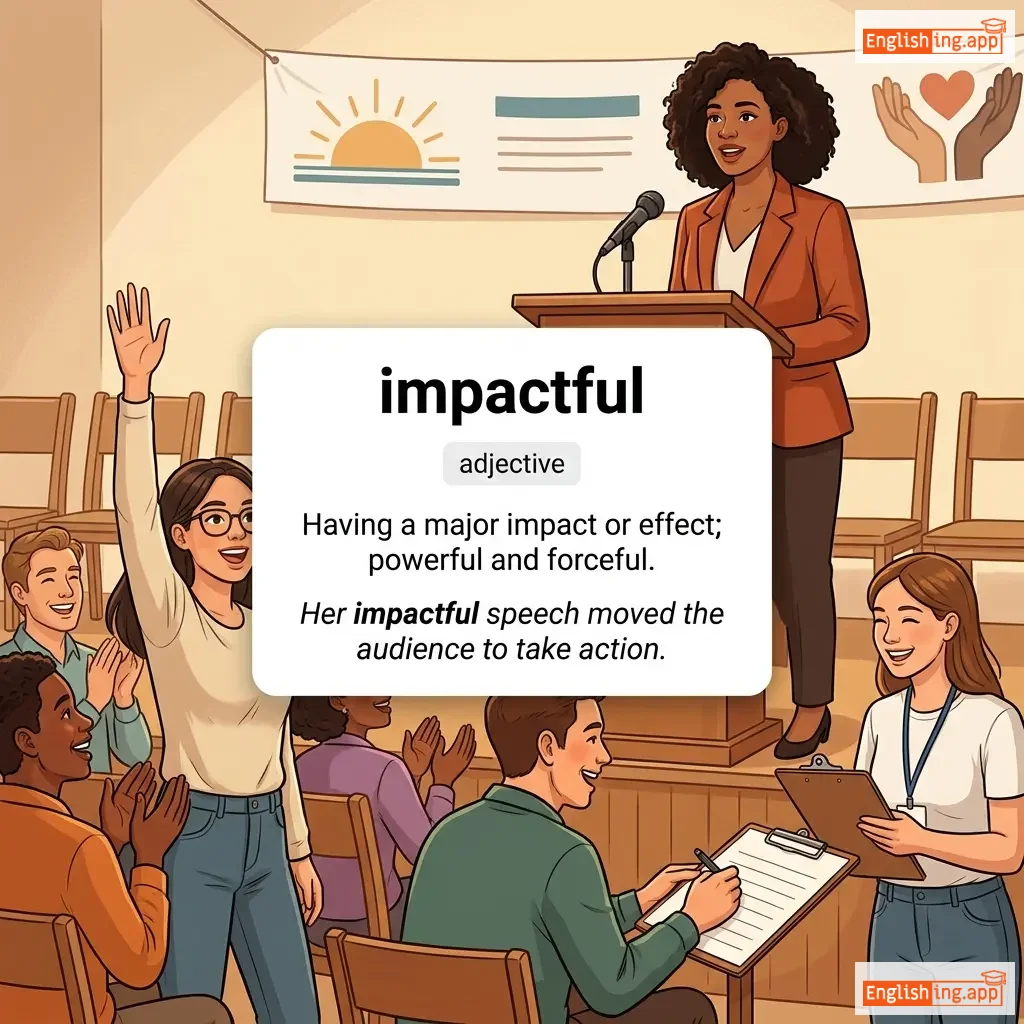
Having a major impact or effect; powerful and forceful.

"Her impactful speech moved the audience to take action."
"彼女のインパクトのあるスピーチは、聴衆を行動に駆り立てた。" (Kanojo no inpakuto no aru supīchi wa, chōshū o kōdō ni karitate ta.)
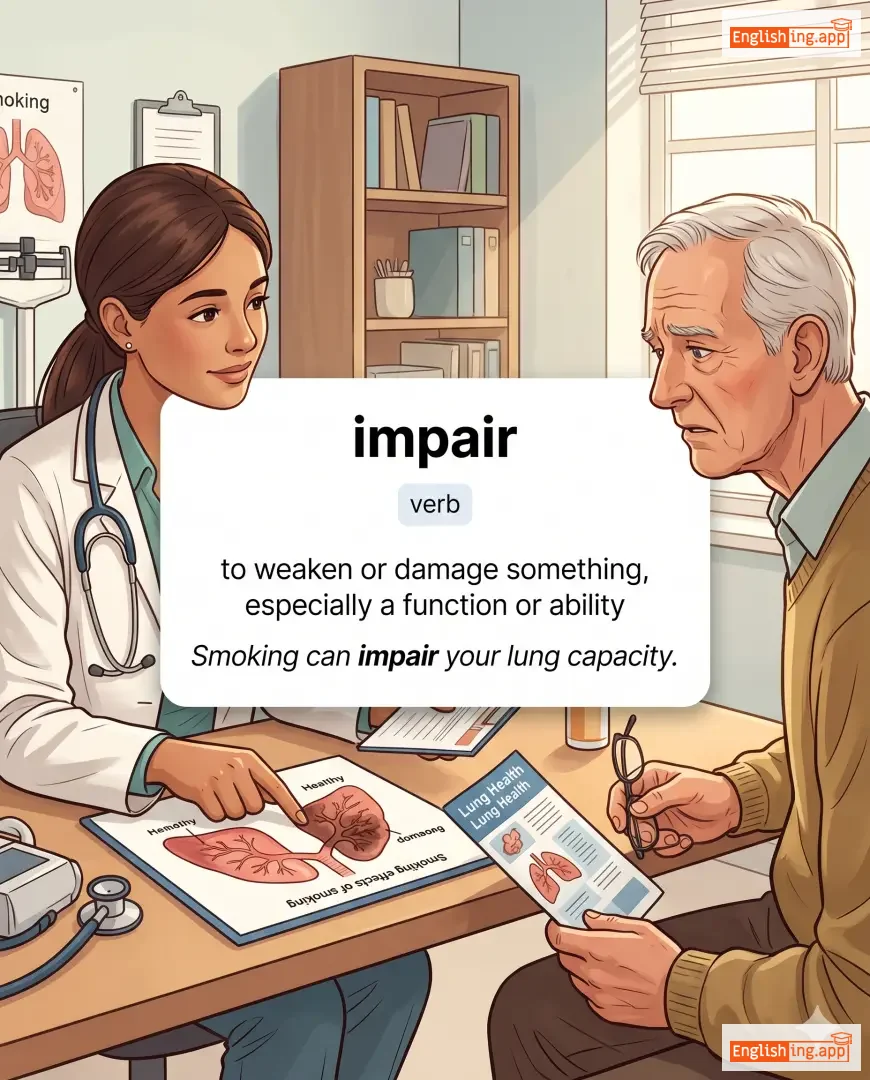
impair definition card — visual illustration of the meaning
verb
/ɪmˈpɛər/
損なう (sonnau)

to weaken or damage something, especially a function or ability

"Smoking can impair your lung capacity."
"喫煙は肺活量を害する可能性があります。" (Kitsuen wa haikatsuryou wo gaishirukanoosei ga arimasu.)
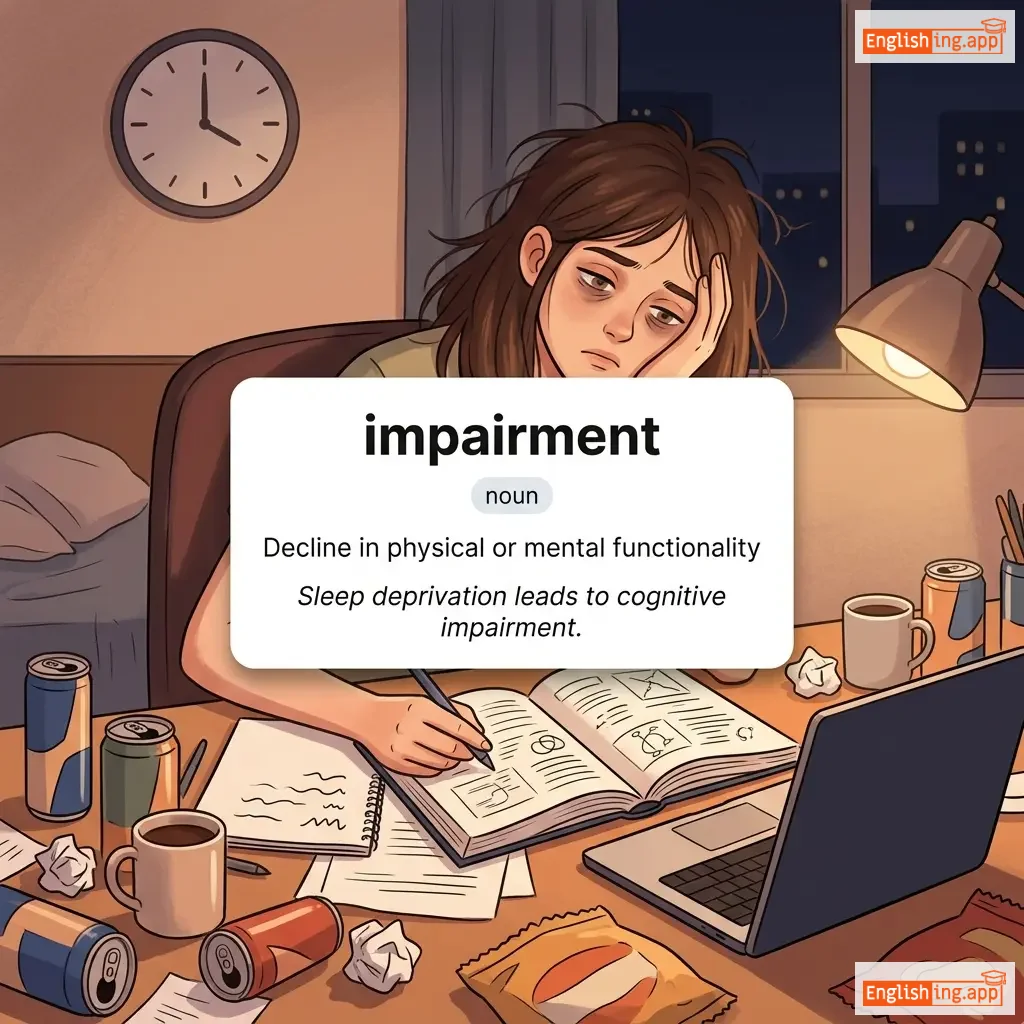
impairment definition card — visual illustration of the meaning
noun
ɪmˈpɛərmənt
障害 (shōgai)

Decline in physical or mental functionality

"Sleep deprivation leads to cognitive impairment."

"睡眠不足は認知障害を引き起こす。" (Suimin busoku wa ninchi shōgai o hikiokosu.)
verb
/ɪmˈpeɪl/
突き刺す (tsukisasu)

to pierce or fix something with a sharp object

"The knight was impaled by the enemy’s spear."

"騎士は敵の槍で突き刺さった。" (Kishi wa teki no yari de tsukisatta.)
adjective
/ɪmˈpælpəbəl/
触れない (furenai)

unable to be felt by touch; difficult to grasp or understand

"There was an impalpable sense of fear in the room."

"部屋には触れない恐怖感があった。" (Heya ni wa furenai kyoufukan ga atta.)
verb
/ɪmˈpɑːrt/
伝える (tsutaeru)

to make information known; to bestow or communicate

"The teacher imparted valuable knowledge to her students."

"教師は生徒に貴重な知識を授けました。" (Kyōshi wa seito ni kichōna chishiki o sazukemashita.)
adjective
/ɪmˈpɑːrʃəl/
公平 (kouhei)

Treating all rivals or disputants equally; fair and just.

"The judge remained impartial throughout the trial."

"裁判官は裁判の間、公平を保ちました。" (Saibankan wa saiban no aida, kōhei o tamochimashita.)
adjective
/ɪmˈpæsəbəl/
通行不可能 (tsuukou fukanou)

Impossible to travel along or over.

"The road became impassable after the heavy snowfall."
"大雪の後、道は通行不可能になりました。" (Ooyuki no ato, michi wa tsuukou fukanou ni narimashita.)
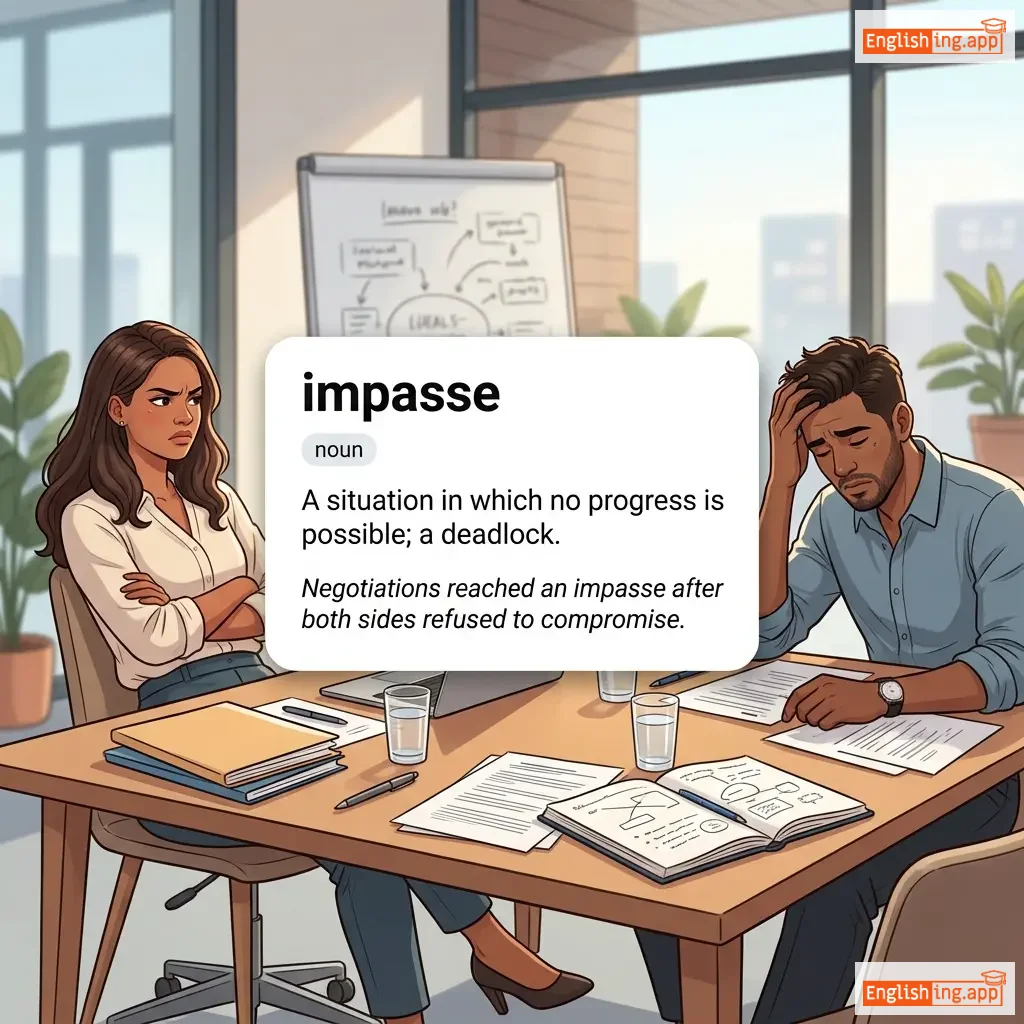
impasse definition card — visual illustration of the meaning
noun
/ˈɪmpæs/
行き詰まり (ikidzumari)

A situation in which no progress is possible; a deadlock.

"Negotiations reached an impasse after both sides refused to compromise."

"両サイドが妥協を拒否したため、交渉は行き詰まりました。" (Ryō saido ga dakyo o kyohi shita tame, kōshō wa ikidzumari mashita.)
adjective
/ɪmˈpæsɪbəl/
無痛性 (mutsuusei)

Incapable of suffering or feeling pain (used mainly in theological or philosophical contexts).

"Some philosophers argue that God is impassible and cannot experience human emotions."

"一部の哲学者は、神は無痛性であり、人間の感情を感じることはできないと主張しています。" (Ichi bu no tetsugakusha wa, kami wa mutsuusei de ari, ningen no kanjou o kanjiru koto wa dekinai to shuchou shiteimasu.)
adjective
/ɪmˈpæʃənd/
情熱的な (jōnetsuteki na)

Filled with or showing great emotion.

"She gave an impassioned speech about human rights."
"彼女は人権について情熱的なスピーチを行いました。" (Kanojo wa jinken ni tsuite jōnetsuteki na supīchi o okonai mashita.)
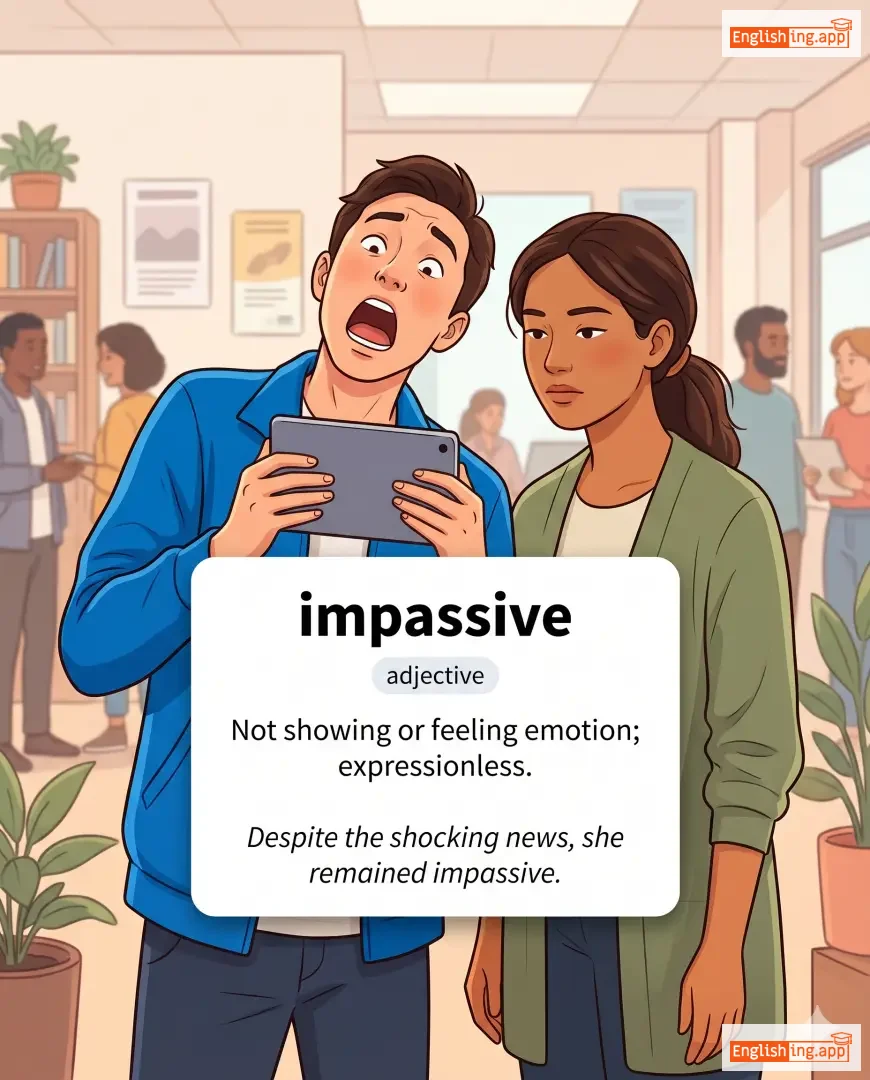
impassive definition card — visual illustration of the meaning
adjective
/ɪmˈpæsɪv/
無表情 (muhyōjō)

Not showing or feeling emotion; expressionless.

"Despite the shocking news, she remained impassive."

"衝撃的なニュースにもかかわらず、彼女は無表情のままでした。" (Shōgeki-teki na nyūsu ni mo kakawarazu, kanojo wa muhyōjō no mamadashita.)
noun
/ɪmˈpeɪʃəns/
忍耐力不足 (nintairyoku fusoku)

The state of being quickly irritated or unable to wait calmly.

"His impatience grew as the meeting dragged on."

"会議が長引くにつれて、彼の忍耐力不足が増しました。" (Kaigi ga nagabiku ni tsurete, kare no nintairyoku fusoku ga mashimashita.)
adjective
/ɪmˈpeɪʃənt/
イライラ (iraira)

Not able to wait calmly; restless and eager for something to happen.

"She grew impatient while waiting in the long queue."

"彼女は長い列で待っている間にイライラしてきた。" (Kanojo wa nagai retsu de matteru aida ni iraira shite kita.)
adverb
/ɪmˈpeɪʃəntli/
いらいらして (iraira shite)

in a manner showing annoyance or restlessness due to delay or waiting

"She tapped her fingers impatiently while waiting for the reply."

"彼女は返事を待ちながらいらいらして指を叩いていた。" (kanojo wa henji o machinagara iraira shite yubi o tataite ita)
⚖️

impeach

verb
/ɪmˈpiːtʃ/

To charge a public official with misconduct while in office.

"The parliament voted to impeach the president."

impeccable definition card — visual illustration of the meaning
adjective
/ɪmˈpɛkəbl̩/
完璧 (kanpeki)

Perfect; without flaws or faults.

"She delivered an impeccable performance on stage."
"彼女はステージで完璧なパフォーマンスを披露しました。" (Kanojo wa suteeji de kanpeki na pafomansu o hiroshimashita.)
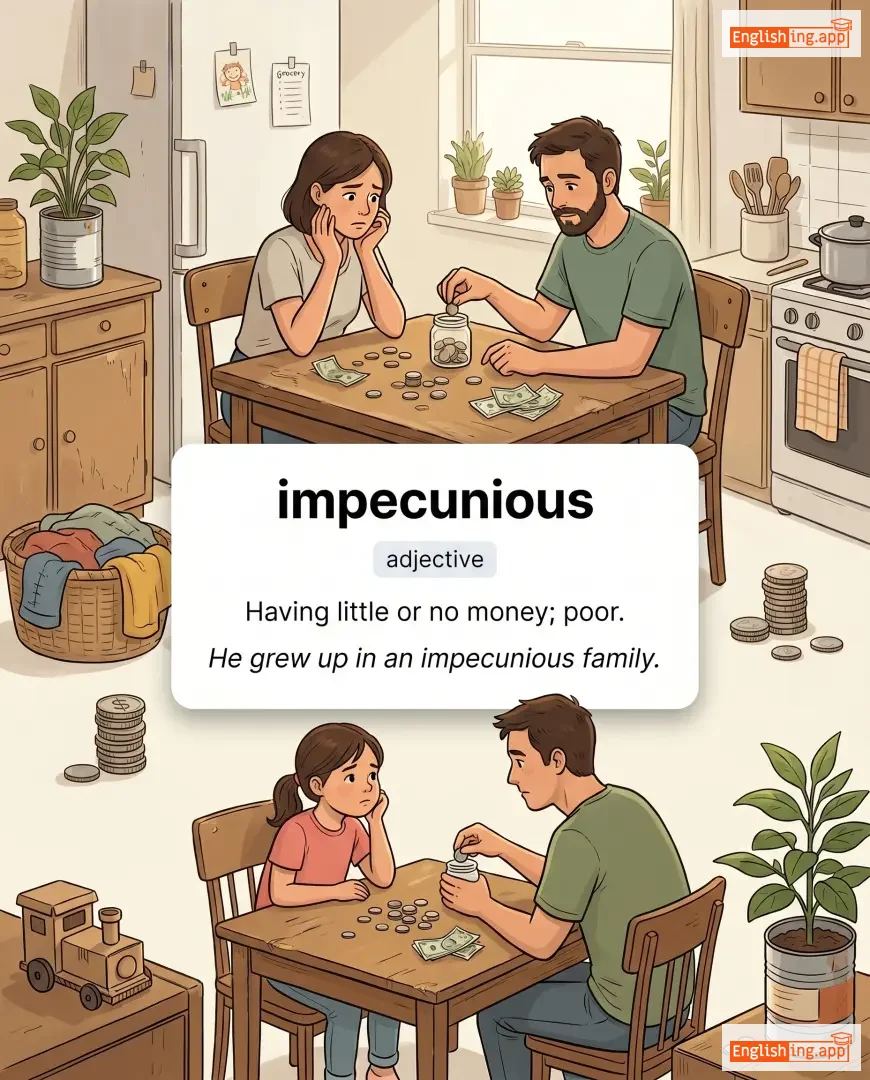
impecunious definition card — visual illustration of the meaning
adjective
/ˌɪmpɪˈkjuːniəs/
貧乏 (binbou)

Having little or no money; poor.

"He grew up in an impecunious family."
"彼は貧乏な家族で育ちました。" (Kare wa binbou na kazoku de sodachimashita.)
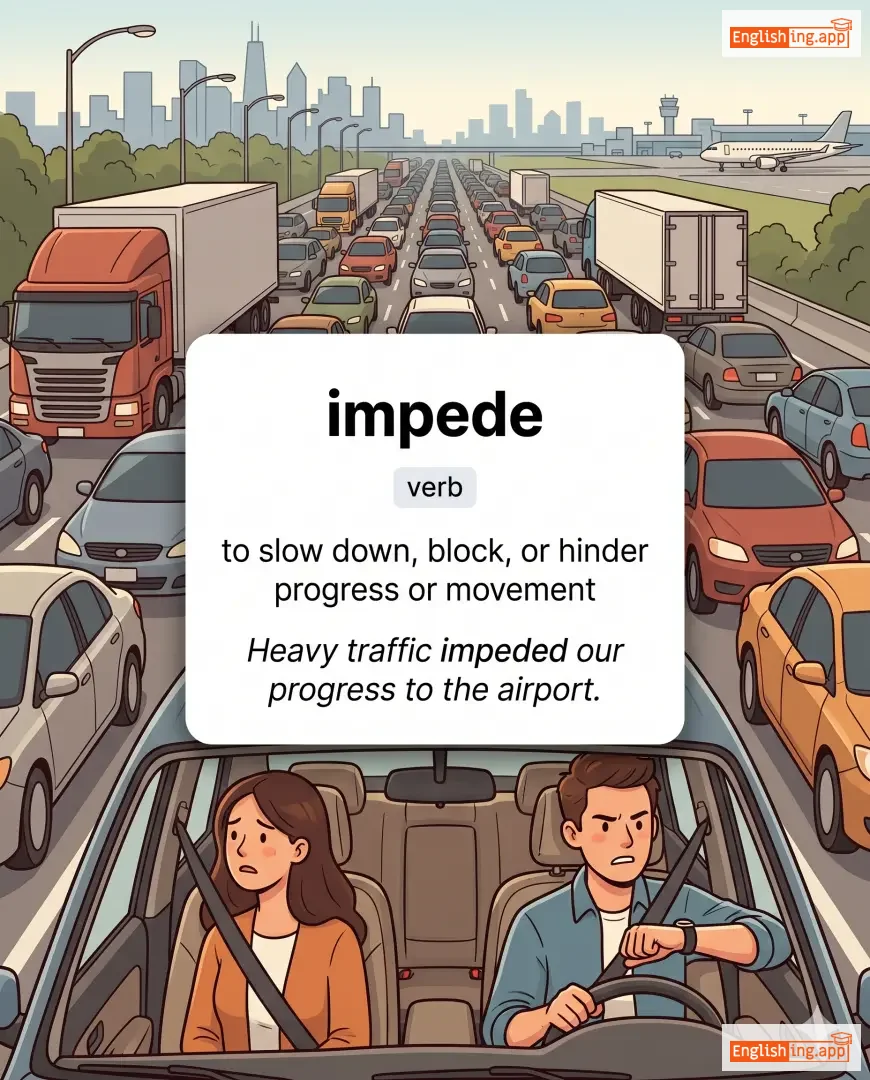
impede definition card — visual illustration of the meaning
verb
/ɪmˈpiːd/
妨げる (samatajeru)

to slow down, block, or hinder progress or movement

"Heavy traffic impeded our progress to the airport."
"交通渋滞が空港への進行を妨げました。" (Koutsuu juutai ga kuukou e no shinkou o samatagemashita.)
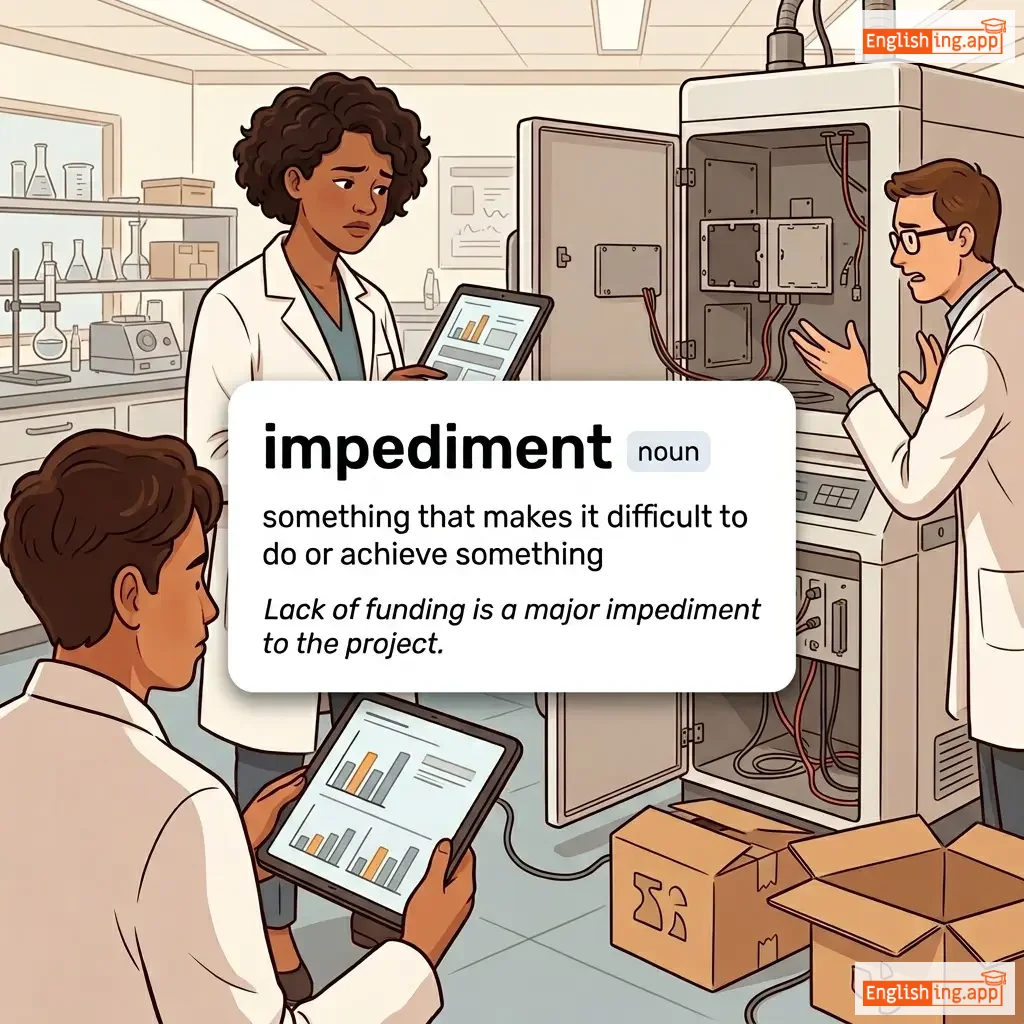
impediment definition card — visual illustration of the meaning
noun
/ɪmˈpɛdɪmənt/

something that makes it difficult to do or achieve something

"Lack of funding is a major impediment to the project."
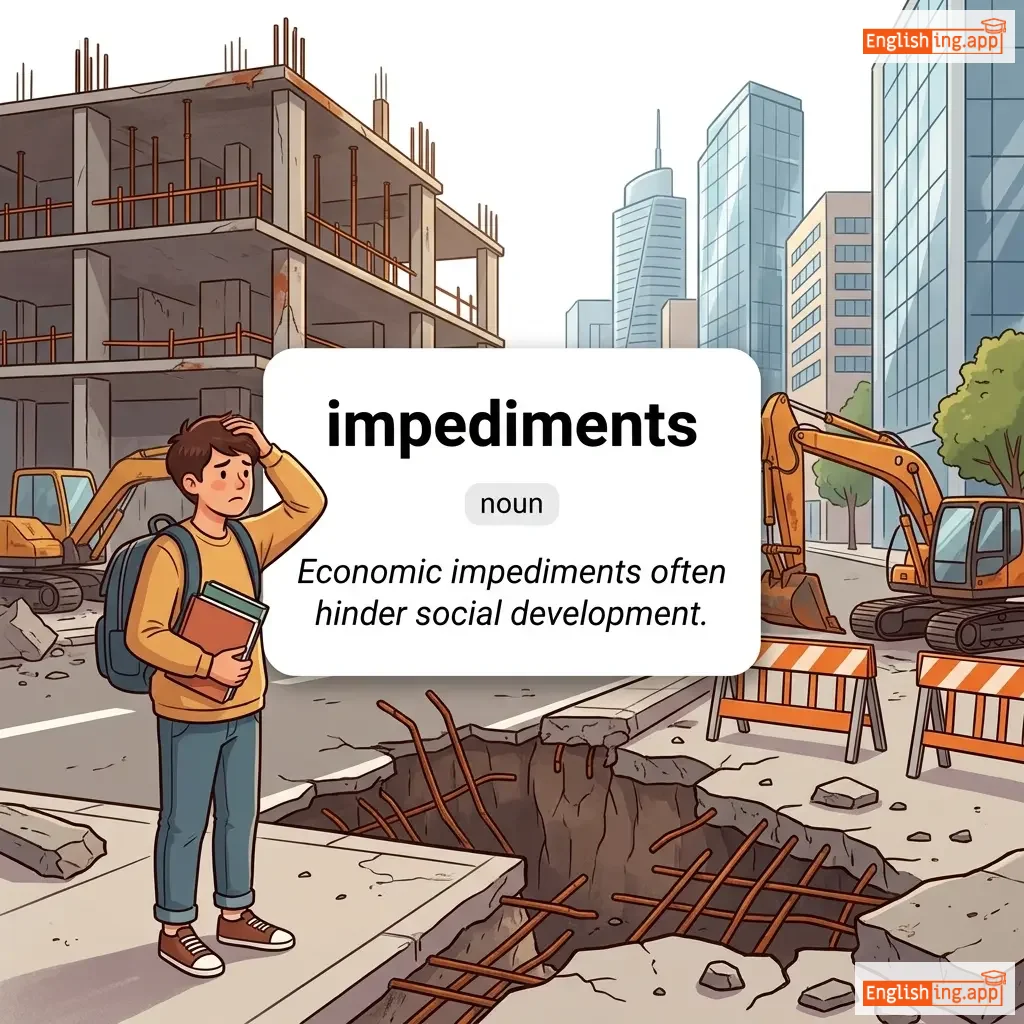
impediments definition card — visual illustration of the meaning
noun
/ɪmˈpɛdɪmənt/
障害 (shōgai)

A hindrance or obstruction in doing something; things that prevent progress or achievement.

"Economic impediments often hinder social development."

"経済的な障害はしばしば社会的発展を妨げる。" (Keizaiteki na shōgai wa shibashiba shakaiteki hatten o samatageru.)
➡️

impel

verb
/ɪmˈpɛl/

to drive, force, or urge someone to do something

"Her curiosity impelled her to open the mysterious box."

verb
/ɪmˈpɛnd/
迫る (semaru)

to be about to happen; to loom threateningly

"Dark clouds suggested that a storm was impeding."

"暗い雲が嵐が迫っていることを示唆していた。" (Kurai kumo ga arashi ga sematte iru koto wo shisa shite ita.)
adjective
/ɪmˈpɛndɪŋ/
差し迫った (tashisometta)

about to happen soon, usually something unpleasant or threatening

"The villagers were worried about the impending flood."

"村人たちは差し迫った洪水を心配していた。" (Murabito-tachi wa tashisometta kōzui o shinpai shite ita.)
adjective
/ɪmˈpɛn.ɪ.trə.bəl/

Impossible to pass through or enter; impossible to understand.

"The dense forest was nearly impenetrable."

adjective
/ɪmˈpɛn.ɪ.tənt/
後悔しない (koukaishinai)

Not feeling regret or shame about one's actions.

"The criminal remained impenitent after the trial."
"犯人は裁判後も後悔しないままでした。" (Hannin wa saiban go mo koukaishinai mama deshita.)
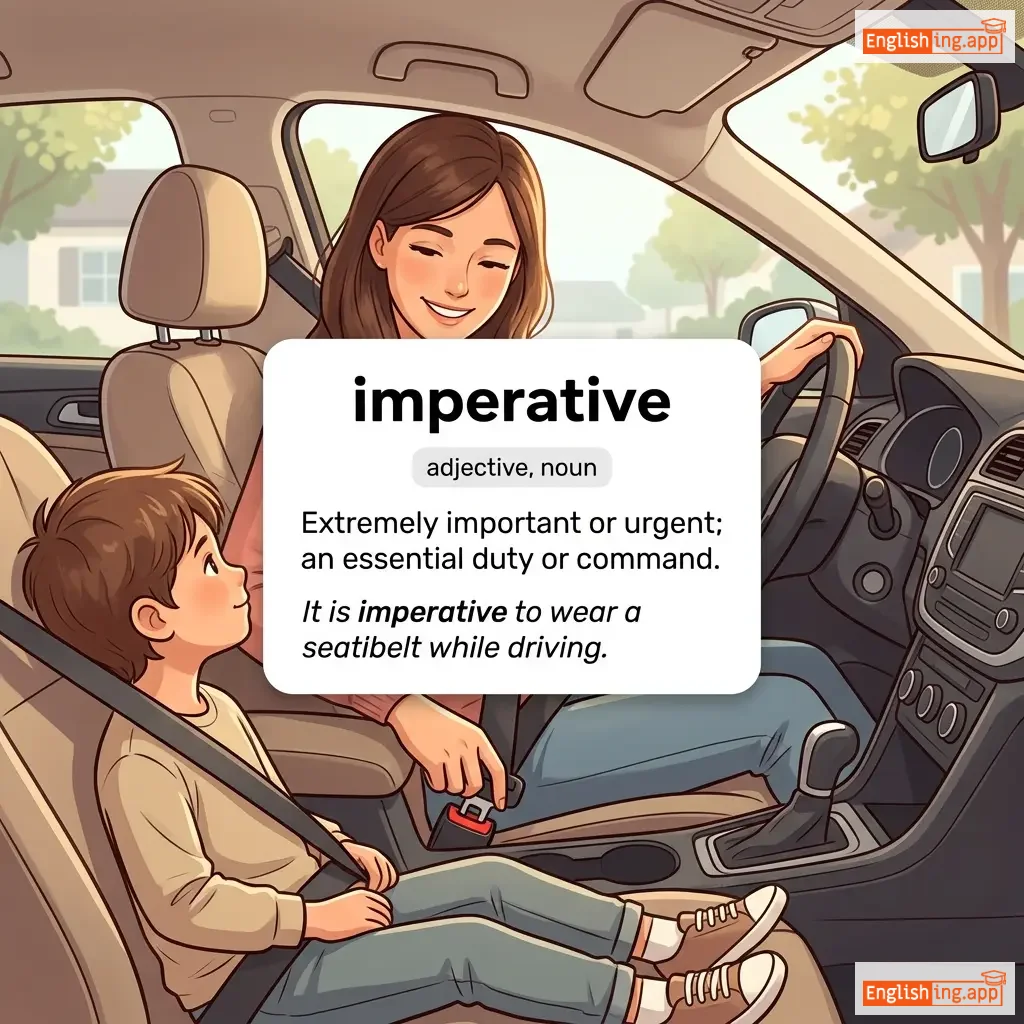
imperative definition card — visual illustration of the meaning
adjective, noun
/ɪmˈpɛr.ə.tɪv/
必須 (hissu)

Extremely important or urgent; an essential duty or command.

"It is imperative to wear a seatbelt while driving."
"運転中はシートベルトを着用することが必須です。" (Untenchū wa shīto beruto o chakuyō suru koto ga hissu desu.)
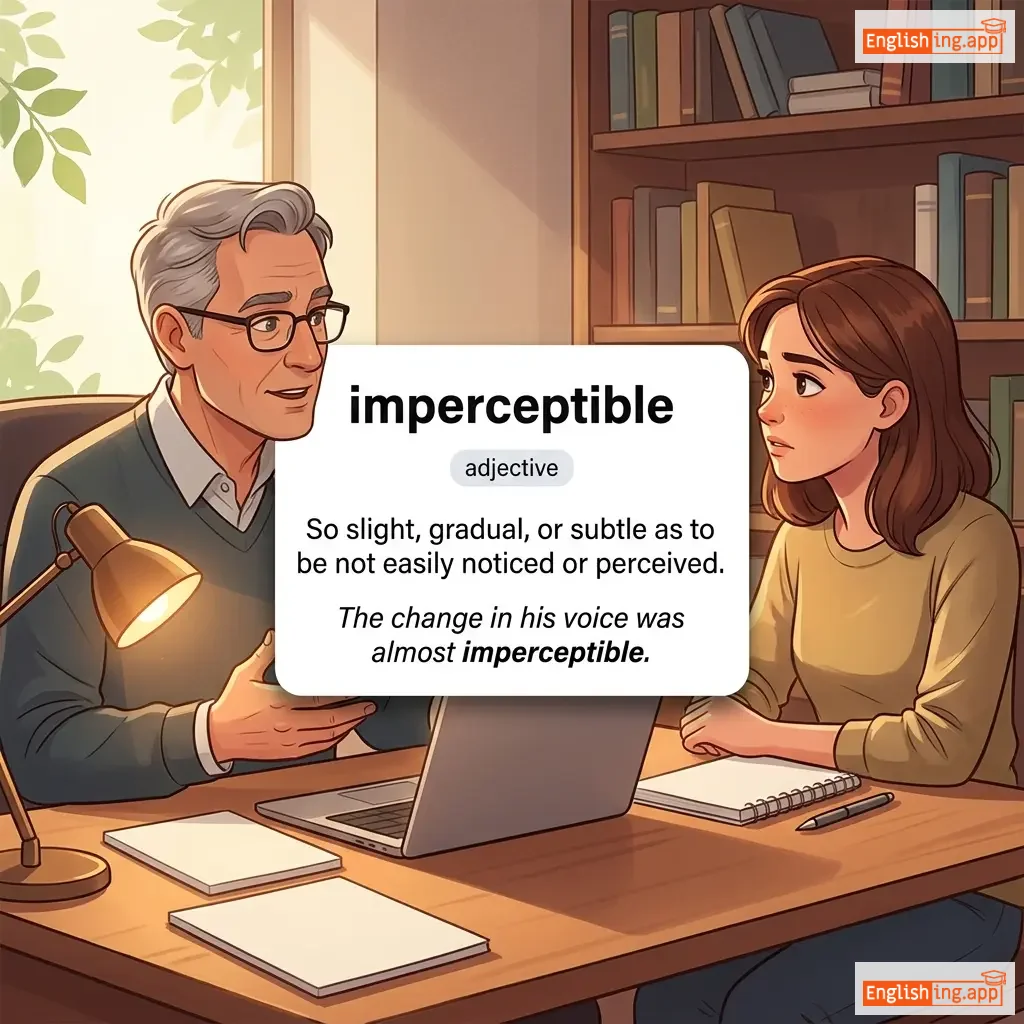
imperceptible definition card — visual illustration of the meaning
adjective
/ˌɪm.pəˈsɛp.tə.bəl/
知覚できない (chikaku dekinai)

So slight, gradual, or subtle as to be not easily noticed or perceived.

"The change in his voice was almost imperceptible."

"彼の声の変化はほとんど知覚できませんでした。" (Kare no koe no henka wa hotondo chikaku dekimasen deshita.)
adjective
/ɪmˈpɜːrfɪkt/
不完全 (fukanzen)

Not perfect; having faults or flaws.

"The painting was beautiful despite being imperfect."

"その絵は美しかったが、完璧ではなかった。" (Sono e wa utsukushikatta ga, kanpeki dewa nakatta.)
adjective
/ˌɪm.pəˈfɛk.tə.bəl/
インパーフェクティブル (inpāfekutiburu)

Incapable of being made perfect or complete.

"Some human qualities are considered imperfectible."

"いくつかの人間の資質は、完璧にはならないと見なされます。" (Ikutsuka no ningen no shishitsu wa, kanpeki ni wa naranai to minasaremasu.)
noun
/ˌɪmpərˈfɛkʃən/
不完全 (fukanzen)

a flaw, defect, or weakness; the state of being imperfect

"She accepted her imperfection as part of being human."

"彼女は人間であることの一部として自分の不完全さを受け入れた。" (kanojo wa ningen de aru koto no ichibu to shite jibun no fukanzensa o ukeireta)
adjective
/ɪmˈpɪəriəl/
帝国の (teikoku no)

Relating to an empire or emperor; having supreme authority.

"The imperial palace was a symbol of the emperor's power."

"インペリアル宮殿は皇帝の力の象徴でした。" (Inperiaru kyūden wa kōtei no chikara no shōchō deshita.)
verb
/ɪmˈpɛrɪl/
危険にさらす (kiken ni sarasu)

To put in danger or at risk.

"Reckless driving can imperil the lives of others."

"無謀な運転は他人の命を危険にさらす可能性があります。" (Mubō na unten wa tanin no inochi o kiken ni sarasu kanōsei ga arimasu.)
adjective
/ɪmˈpɪəriəs/
横柄な (ouhei na)

Arrogantly domineering or overbearing.

"Her imperious tone made it hard for others to argue."

"彼女の横柄な口調は他の人々が議論するのを難しくしました。" (Kanojo no ouhei na kuchou wa hoka no hitobito ga giron suru no wo muzukashiku shimashita.)
adjective
/ɪmˈperɪʃəbəl/
不滅の; 永遠の; 朽ちない (fumetsu no; eien no; kuchinai)

not subject to decay; lasting forever; eternal

"The imperishable beauty of classical art continues to inspire generations."
"古典芸術の不滅の美しさは、世代を超えてインスピレーションを与え続けています。" (Koten geijutsu no fumetsu no utsukushisa wa, sedai o koete insupirēshon o ataetsuzuketeimasu.)
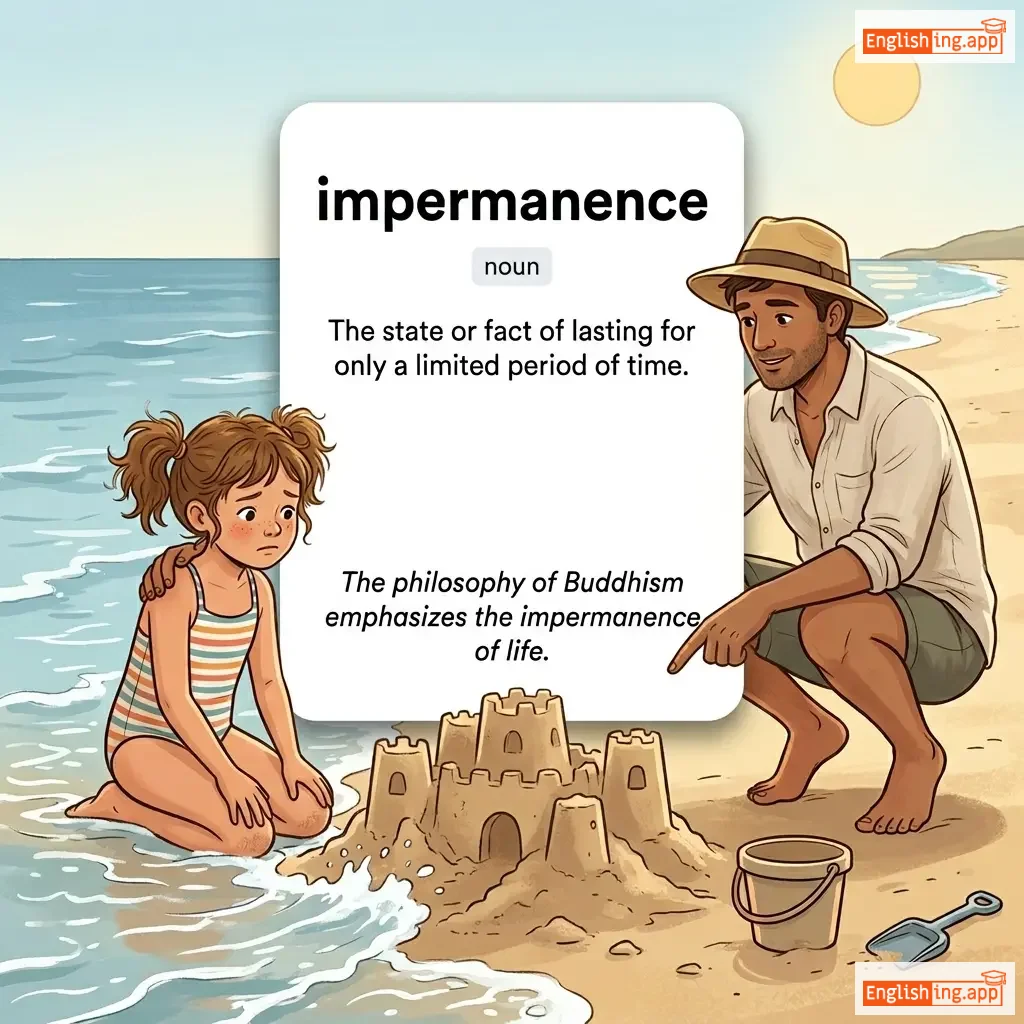
impermanence definition card — visual illustration of the meaning
noun
/ɪmˈpɜː.mə.nəns/
無常 (mujou)

The state or fact of lasting for only a limited period of time.

"The philosophy of Buddhism emphasizes the impermanence of life."
"仏教の哲学は、人生の無常性を強調します。" (Bukkyo no tetsugaku wa, jinsei no mujou-sei wo kyouchou shimasu.)
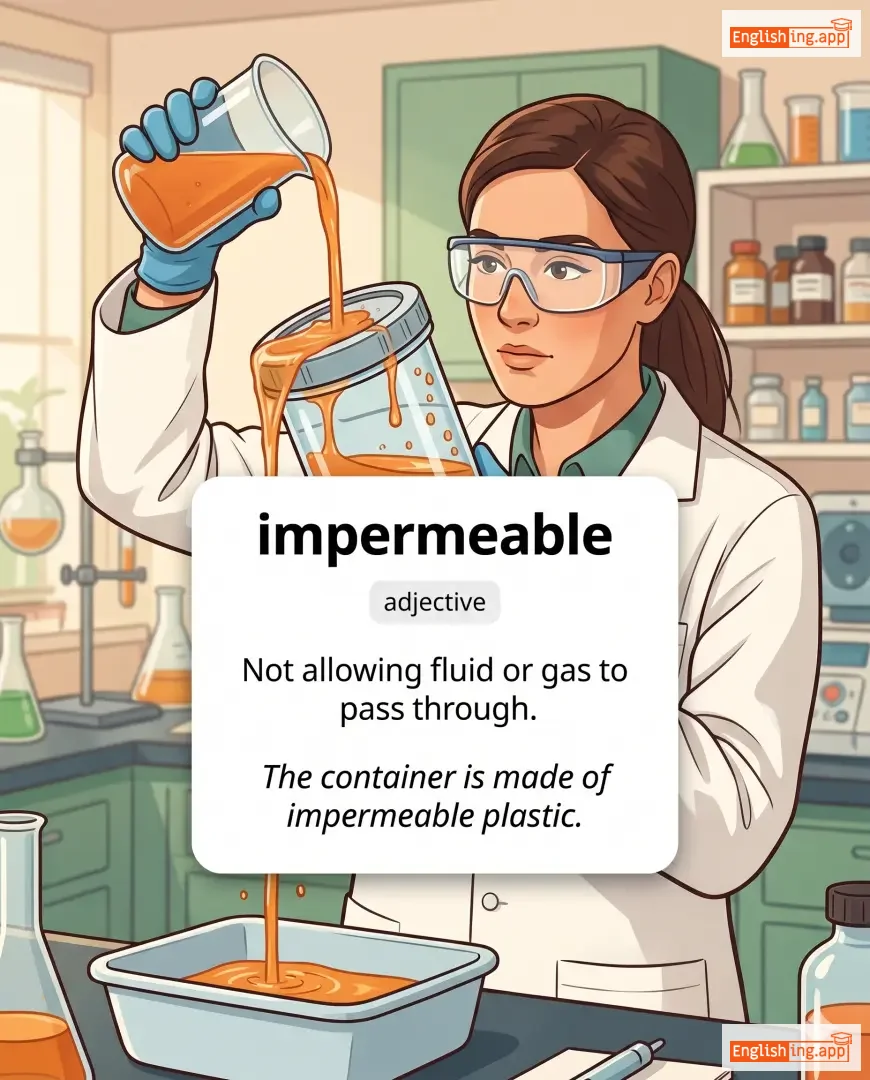
impermeable definition card — visual illustration of the meaning
adjective
/ɪmˈpɜːmiəbl/
不透水の (futōsui no)

Not allowing fluid or gas to pass through.

"The container is made of impermeable plastic."

"その容器は不透水のプラスチックでできています。" (Sono youki wa futōsui no purasuchikku de dekiteimasu.)
adjective
/ˌɪmpəˈmɪsəbl/
許可されていない (kyoka sareteinai)

Not permitted or allowed.

"Such behavior is impermissible in the workplace."

"そのような行動は職場では許可されていません。" (Sono you na koudou wa shokuba de wa kyoka sareteimasen.)
adjective
/ɪmˈpɜːrsənl/
無個性 (mukosei)

not influenced by, showing, or involving personal feelings; lacking human warmth or emotion

"The letter was written in a very impersonal style."

"その手紙は非常に無個性的なスタイルで書かれていました。" (Sono tegami wa hijou ni mukosei-teki na sutairu de kakareteimashita.)