語彙集

英単語辞書 | 単語の意味、定義、例文

adjective
/ɪnˈædɪkwət/
不十分 (fujūbun)

Not sufficient or good enough.

"The funding was inadequate to complete the project."

"プロジェクトを完成させるには資金が不十分でした。" (Purojekuto o kansei saseru ni wa shikin ga fujūbun deshita.)
adjective
/ˌɪnədˈmɪsəbl̩/
受け入れられない (ukeirarenai)

Not allowed, especially as evidence in a court of law.

"The judge ruled the evidence inadmissible."

"裁判官は証拠を受け入れられないと判断しました。" (Saibankan wa shouko o ukeirarenai to handan shimashita.)
noun
/ˌɪnədˈvɜːrtəns/
不注意 (fuchuui)

Failure to pay attention; carelessness.

"The error happened through sheer inadvertence."

"エラーは単なる不注意で発生しました。" (Erā wa tannaru fuchūi de hassei shimashita.)
adjective
/ˌɪnədˈvɜːrtənt/
意図しない, 不注意な (itoshinai, fuchuīna)

Not resulting from or achieved through deliberate planning; unintentional.

"Her inadvertent mistake caused a delay in the project."
"彼女の不注意なミスがプロジェクトの遅延を引き起こしました。" (Kanojo no fuchuīna misu ga purojekuto no chien o hikiokoshimashita.)
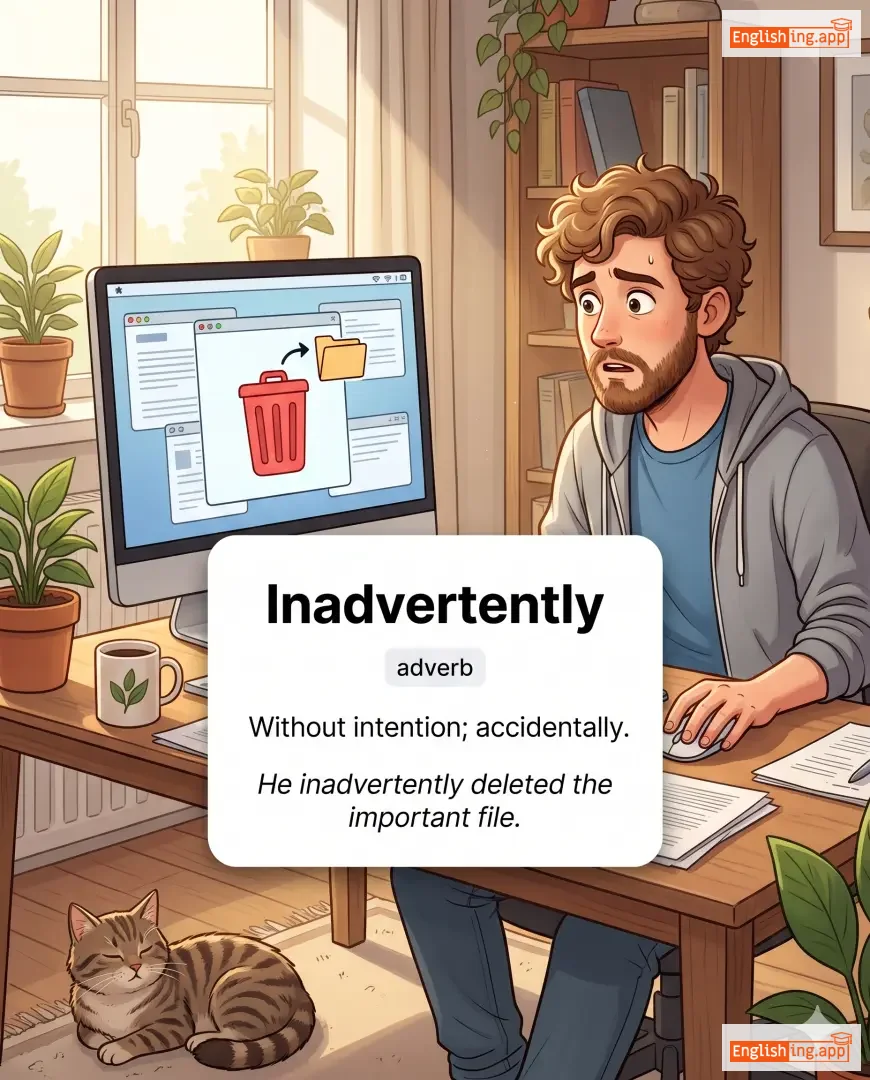
Inadvertently definition card — visual illustration of the meaning
adverb
/ˌɪnədˈvɜːrtəntli/
うっかり (ukkari)

Without intention; accidentally.

"He inadvertently deleted the important file."

"彼はうっかり重要なファイルを削除しました。" (Kare wa ukkari juuyou na fairu o sakujo shimashita.)
adjective
/ˌɪnədˈvaɪzəbl/
推奨されない (suishou sarenai)

Not recommended; likely to have undesirable consequences.

"It is inadvisable to drive in such heavy rain."

"このような大雨の中で運転するのは推奨されません。" (kono you na oame no naka de unten suru no wa suishou saremasen.)
adjective
/ɪnˈeɪliənəbl/
譲渡不可能 (jōto fukanō)

Unable to be taken away or transferred; absolute and permanent.

"Freedom of speech is an inalienable right."

"言論の自由は譲渡不可能な権利です。" (Genron no jiyū wa jōto fukanō na kenri desu.)
noun
/ˌɪnəməˈrɑːtə/

A woman with whom someone is in love; a female lover.

"He wrote a poem dedicated to his inamorata."

adjective
/ɪˈneɪn/
無意味な, 馬鹿な (muimi na, baka na)

lacking sense, meaning, or significance; silly or pointless

"The movie was criticized for its inane dialogue."

"その映画は無意味なセリフで批判された。" (Sono eiga wa muimi na serifu de hihan sareta.)
adjective
/ɪˈnænɪmət/
無生物 (museibutsu)

not alive, especially not in the manner of animals and humans; lifeless

"The museum was full of inanimate objects from ancient times."

"博物館には古代の無生物がいっぱいだった。" (Hakubutsukan ni wa kodai no museibutsu ga ippai datta.)
noun
/ɪˈnænɪti/
馬鹿げたこと, 空虚 (bakageta koto, kuushou)

a nonsensical remark or action; silliness; emptiness

"The speech was full of inanities that bored the audience."

"スピーチは聴衆を退屈させる馬鹿げたことだらけだった。" (Supīchi wa chōshū o taikutsu saseru bakageta koto darake datta.)
adjective
/ˌɪnæprɪˈhɛnsəbl/
理解不能 (rikai funou)

not understandable; incomprehensible

"The concept was so abstract that it seemed inapprehensible to most students."

"その概念は非常に抽象的で、ほとんどの学生には理解できないように思えた。" (Sono gainen wa hijō ni chūshō-teki de, hotondo no gakusei ni wa rikai dekinai yō ni moe-ta.)
adjective
/ˌɪnəˈproʊpriət/
不適切 (futekisetsu)

not suitable or proper in the circumstances

"It was inappropriate to talk loudly in the library."

"図書館で大声で話すのは不適切でした。" (Toshokan de oogoe de hanasu no wa futekisetsu deshita.)
adjective
/ɪnˈæpt/
不適切 (futekisetsu)

not suitable or appropriate in the circumstances

"His inapt choice of words offended many people."

"彼の不適切な言葉の選び方は多くの人々を傷つけました。" (Kare no futekisetsu na kotoba no erabikata wa ōku no hitobito o kizutsukemashita.)
adjective
/ˌɪnɑːrˈtɪkjʊlət/
言葉が不明瞭 (kotoba ga fumeiryo)

Unable to express oneself clearly or effectively in speech or writing.

"She became inarticulate with emotion during the speech."

"彼女はスピーチ中に感情で言葉が不明瞭になった。" (Kanojo wa supīchi-chū ni kanjō de kotoba ga fumeiryo ni natta.)
adverb
/ˌɪnəzˈmʌtʃ/
〜という点で (〜to iu ten de)

To the extent that; considering that.

"Inasmuch as you are their teacher, you should guide them carefully."

"あなたが彼らの教師である限り、彼らを慎重に指導するべきです。" (Anata ga karera no kyoushi de aru kagiri, karera o shinchou ni shidou suru beki desu.)
conjunction
/ˌɪnəzˈmʌtʃ æz/
なぜなら (nazenara)

Because; since.

"He cannot attend, inasmuch as he is unwell."

"彼は出席できません、なぜなら彼は病気だからです。" (Kare wa shusseki dekimasen, nazemara kare wa byouki dakara desu.)
adjective
/ˌɪnəˈtɛntɪv/
不注意な (fuchuui na)

not paying attention; lacking focus or concentration

"The inattentive student missed several important instructions."

"不注意な学生は重要な指示をいくつも逃した。" (fuchuui na gakusei wa juuyou na shiji o ikutsumo nogashita)
adjective
/ɪnˈɔːdəbl/
聞こえない (kikoenai)

Unable to be heard.

"Her voice was almost inaudible over the noise."

"その音の中で彼女の声はほとんど聞こえなかった。" (Sono oto no naka de kanojo no koe wa hotondo kikoenakatta.)
adjective
/ɪˈnɔːɡjərəl/
開幕 (kaimaku)

marking the beginning of something; first; opening

"The president delivered his inaugural speech."

"大統領は彼の開幕スピーチを行いました。" (Daitōryō wa kare no kaimaku supīchi o okonaimashita.)
verb
/ɪˈnɔːɡjʊreɪt/

To formally begin or introduce something, especially with a ceremony.

"The mayor will inaugurate the new bridge tomorrow."
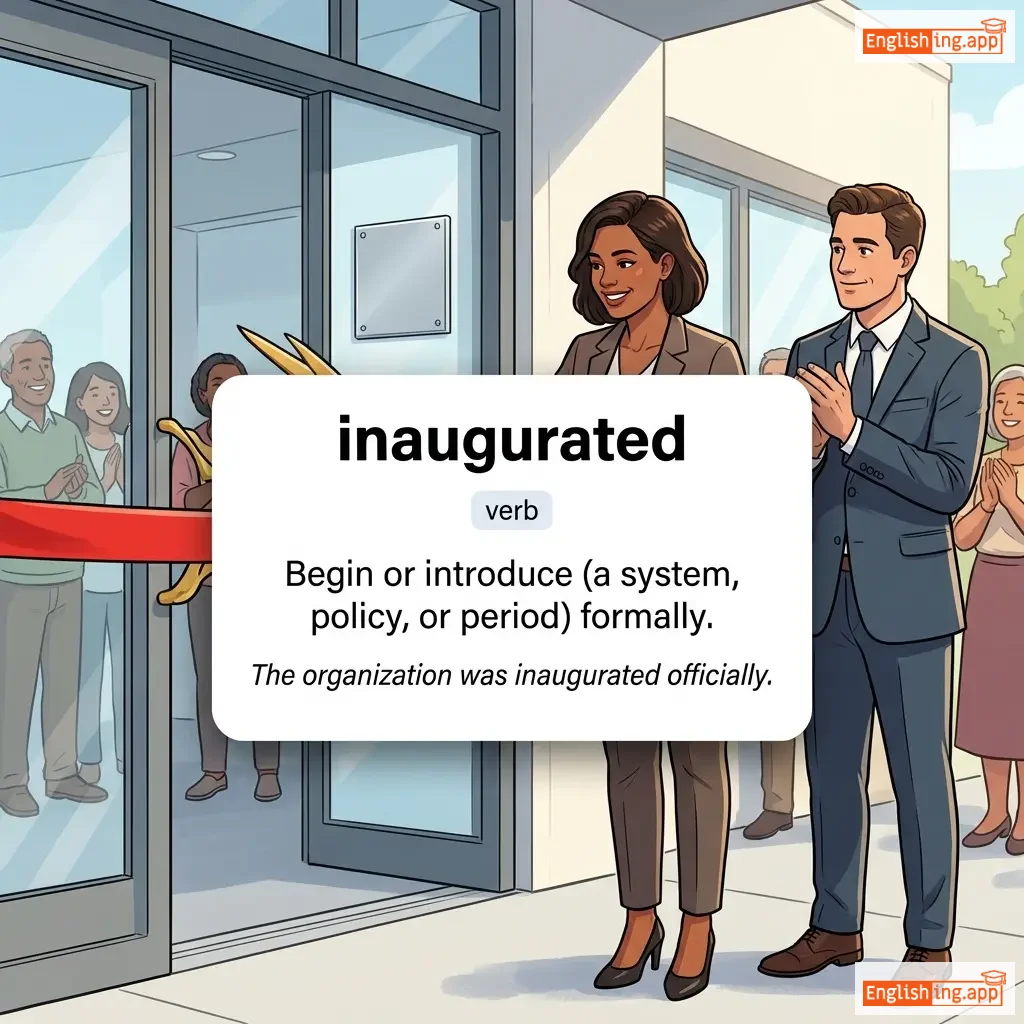
inaugurated definition card — visual illustration of the meaning
verb
ɪˈnɔː.ɡjə.reɪ.tɪd
開会 (kaikai)

Begin or introduce (a system, policy, or period) formally.

"The organization was inaugurated officially."

"その組織は正式に開会されました。" (Sono soshiki wa seishiki ni kaikai saremashita.)
adjective
/ˌɪnɔːˈspɪʃəs/
不吉 (fukitsu)

Not conducive to success; unpromising or unlucky.

"The event began under inauspicious circumstances."

"そのイベントは不運な状況で始まりました。" (Sono ibento wa fuun na joukyou de hajimarimashita.)
adjective
/ˈɪnˌbɔːrn/

existing from birth; innate

"She has an inborn talent for music."

adjective
/ˈɪnˌbrɛd/
生まれつき (umaretsuki)

existing naturally in a person or animal; also related to reproduction within a limited community

"He has an inbred sense of loyalty."

"彼には生まれつきの忠誠心があります。" (Kare ni wa umaretsuki no chūseishin ga arimasu.)
noun
/ˌɪnkænˈdɛsəns/
白熱光 (hakunetsu kō)

the emission of light from a hot object; brilliance

"The incandescence of the candle filled the dark room."

"ろうそくの白熱光が暗い部屋を満たしました。" (Rōsoku no hakunetsu kō ga kurai heya o mitashimashita.)
adjective
/ˌɪnkænˈdɛsənt/
白熱 (hakunetsu)

emitting light as a result of being heated; extremely bright or passionate

"The incandescent lamp lit up the entire hall."

"白熱灯はホール全体を照らしました。" (Hakunetsu tou wa hooru zentai wo terashimashita.)
noun
/ˌɪnkænˈteɪʃən/
呪文 (jumon)

a series of words used as a magic spell or charm

"The wizard chanted an incantation to summon the spirits."

"魔法使いは霊を呼び出すために呪文を唱えました。" (Mahōtsukai wa rei o yobidasu tame ni jumon o tonaemashita.)
noun
/ˌɪnˌkeɪpəˈbɪləti/
無能力 (munouryoku)

lack of ability or power to do something; inability or incompetence

"His incapability to manage the team led to serious problems."

"チームを管理する彼の無能力は深刻な問題を引き起こした。" (chiimu o kanri suru kare no munouryoku wa shinkoku na mondai o hikiokoshita)
adjective
/ɪnˈkeɪpəbəl/
無能力な (munouryoku na)

lacking the ability, skill, or capacity to do something

"He is incapable of understanding complex instructions."

"彼は複雑な指示を理解できない。" (kare wa fukuzatsu na shiji o rikai dekinai)
verb
/ˌɪnkəˈpæsɪteɪt/
無力化する (muryokuka suru)

to deprive someone or something of the ability or strength to function

"The severe injury incapacitated the player for the rest of the season."

"その重傷はプレーヤーをシーズンの残りの期間無力化させた。" (Sono juushou wa pureeaa o shiizun no nokori no kikann muryokuka saseta.)
noun
/ˌɪnkəˈpæsəti/
無能力 (munōryoku)

the lack of ability, power, or fitness to do something

"His mental incapacity prevented him from making important decisions."

"彼の精神的無能力は、重要な決定を下すのを妨げました。" (Kare no seishinteki munōryoku wa, jūyōna kettei o kudasu no o samatagemashita.)
verb
/ɪnˈkɑːrsəreɪt/
投獄する (tōgoku suru)

to imprison or confine someone

"The authorities incarcerated the criminal after the trial."

"当局は裁判後に犯罪者を投獄しました。" (Tōkyoku wa saiban go ni hanzai-sha o tōgoku shimashita.)
noun
/ɪnˌkɑːsəˈreɪʃən/
投獄 (tōgoku)

the state of being imprisoned or confined

"The criminal faced years of incarceration for his crimes."

"犯人はその犯罪のために長年の投獄を受けた。" (Hannin wa sono hanzai no tame ni naganen no tōgoku o uketa.)
adjective/noun
/ɪnˈkɑːrnədiːn/
深紅 (shinku)

a bright crimson or pinkish-red color

"The sky turned incarnadine at sunset."
"太陽が沈むと空は深紅色に変わった。" (Taiyō ga shizumu to sora wa shinku shoku ni kawatta.)
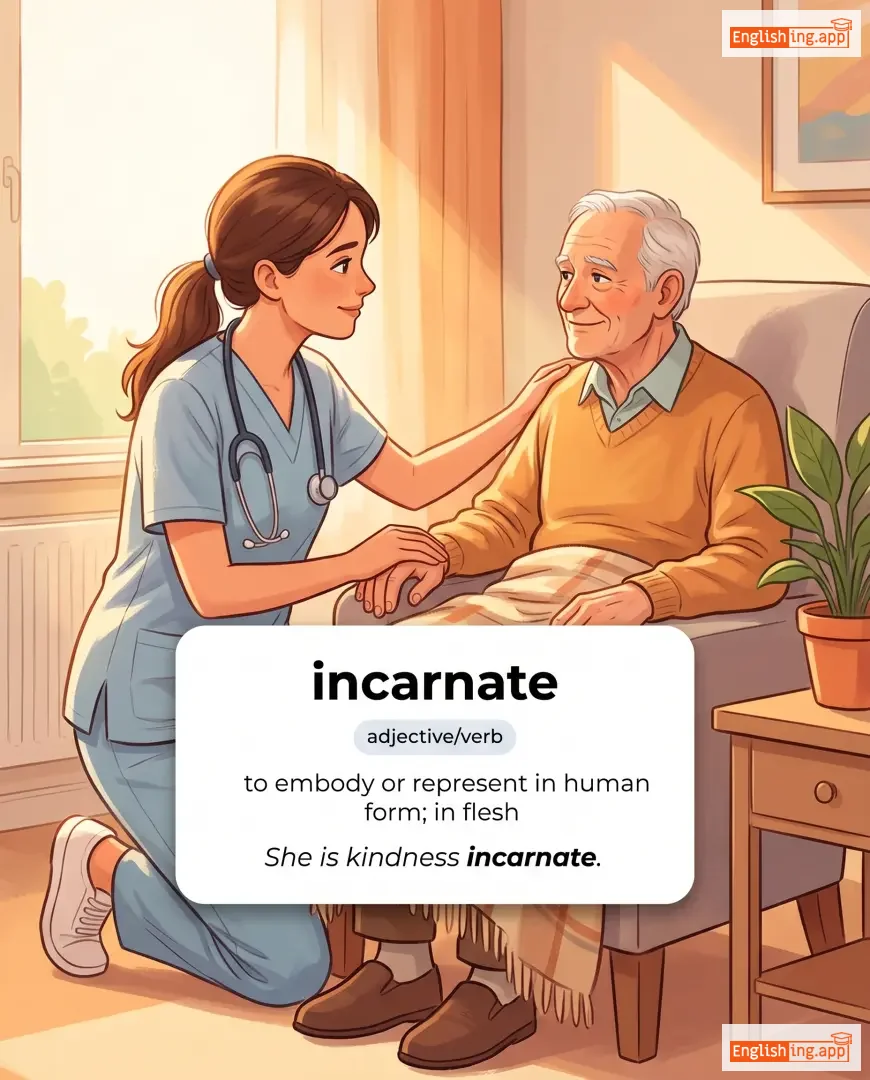
incarnate definition card — visual illustration of the meaning
adjective/verb
/ɪnˈkɑːrneɪt/
具現化 (gugenka)

to embody or represent in human form; in flesh

"She is kindness incarnate."

"彼女は親切さの具現化です。" (Kanojo wa shinsetsu sa no gugenka desu.)
noun
/ˌɪnkɑːrˈneɪʃən/
化身 (kashin)

the embodiment of a deity, spirit, or quality in a physical form

"The monk was considered the incarnation of compassion."

"その僧侶は慈悲の化身と見なされていた。" (Sono souryo wa jihi no kashin to minasarete ita.)
adjective
/ɪnˈsɛndiˌɛri/
扇動的な / 挑発的な (sendō-teki na / chōhatsu-teki na)

designed to cause fires or stir up conflict

"The politician’s incendiary remarks angered the crowd."

"政治家の挑発的な発言が群衆を怒らせた。" (Seijika no chōhatsu-teki na hatsugen ga gunshū wo okorase ta.)
noun/verb
/ˈɪnsɛns/
お香 / 激怒させる (oko / gekido saseru)

a substance burned for its sweet smell (noun); to make very angry (verb)

"The smell of incense filled the temple, but his rude words incensed her."

"お香の香りが寺院を満たしましたが、彼の失礼な言葉は彼女を激怒させました。" (Oko no kaori ga jiin wo mitashimashita ga, kare no shitsurei na kotoba wa kanojo wo gekido sasemashita.)
noun
/ɪnˈsɛntɪv/
インセンティブ (insentibu)

a thing that motivates or encourages someone to do something

"The company offers bonuses as an incentive to increase productivity."
"会社は生産性向上のためのインセンティブとしてボーナスを提供します。" (Kaisha wa seisansei kōjō no tame no insentibu toshite bōnasu o teikyō shimasu.)
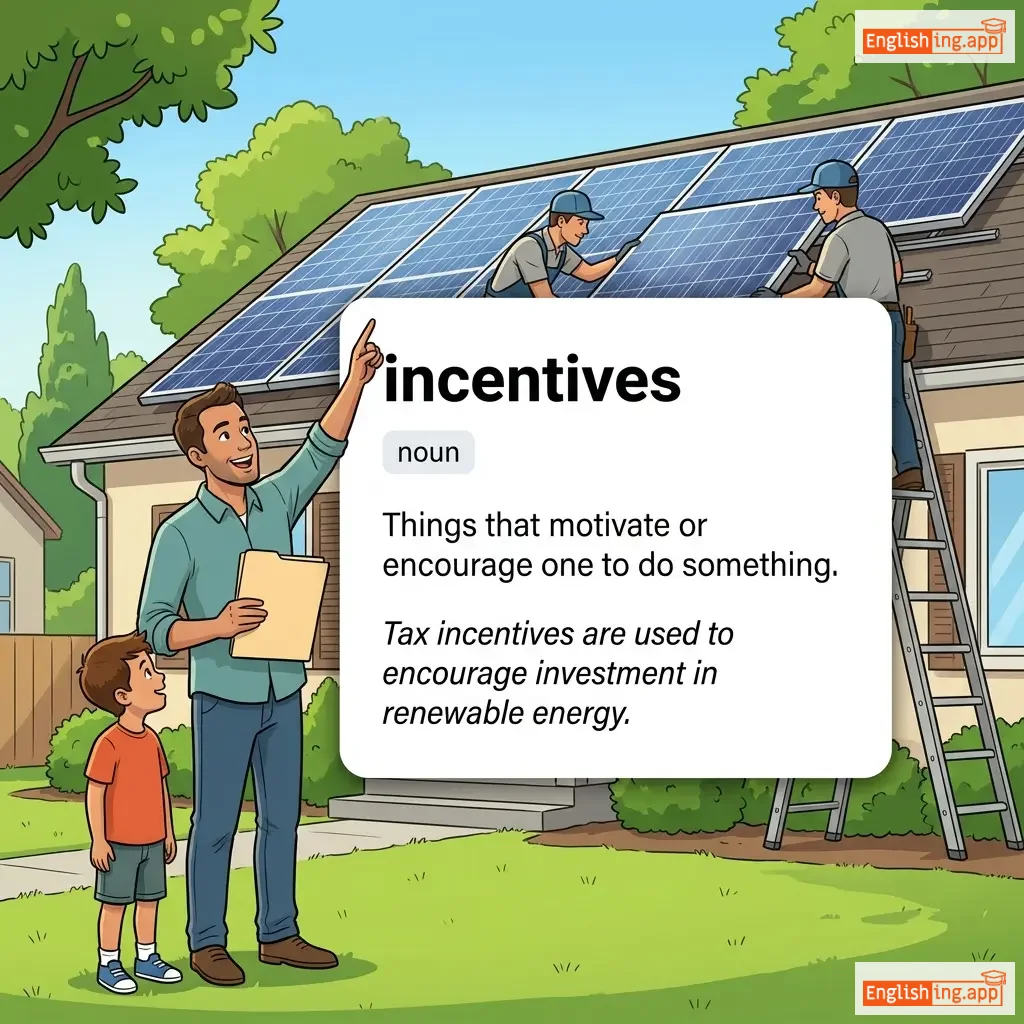
incentives definition card — visual illustration of the meaning
noun
ɪnˈsɛntɪvz
インセンティブ (insentibu)

Things that motivate or encourage one to do something.

"Tax incentives are used to encourage investment in renewable energy."
"税制上のインセンティブは再生可能エネルギーへの投資を促進するために使用されます。" (Zeiseijou no insentibu wa saisei kanō enerugī e no tōshi o sokushin suru tame ni shiyō saremasu.)
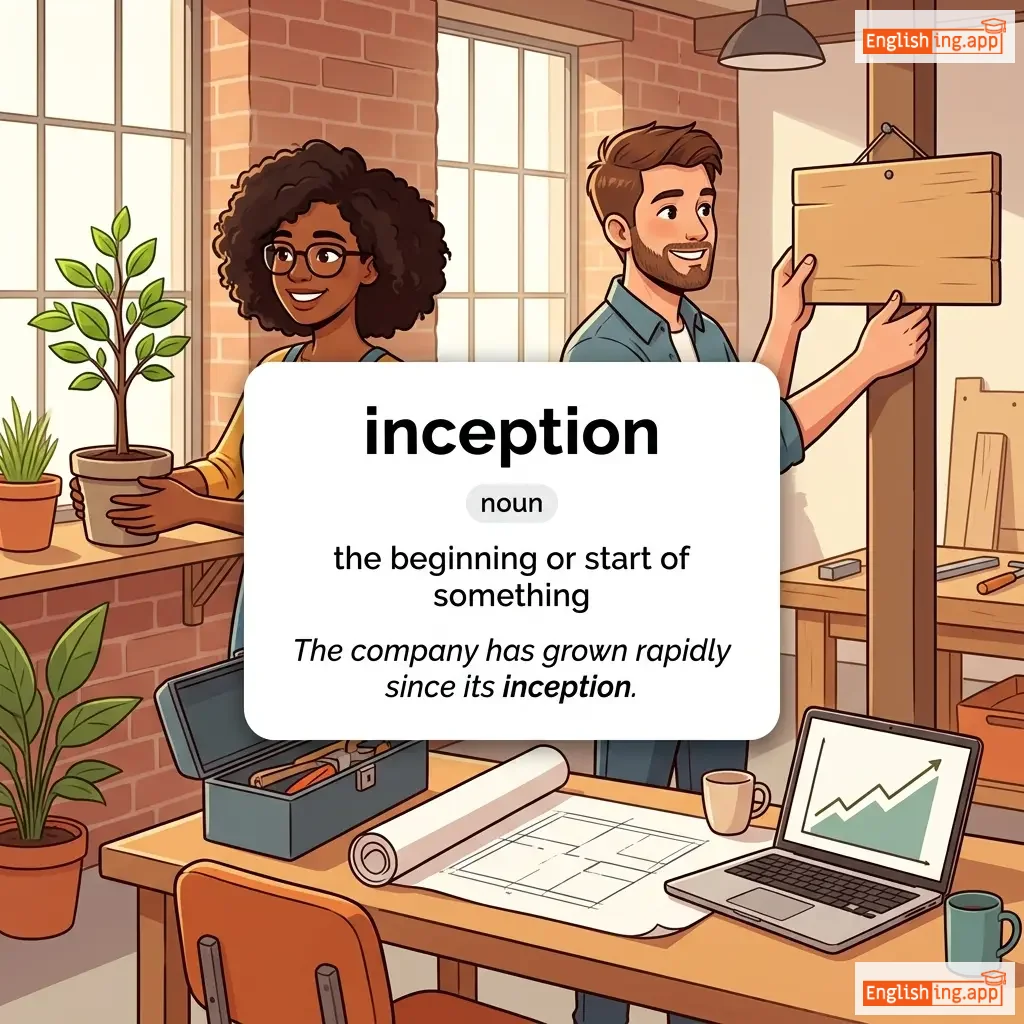
inception definition card — visual illustration of the meaning
noun
/ɪnˈsɛpʃən/
始まり (hajimari)

the beginning or start of something

"The company has grown rapidly since its inception."

"その企業は創業以来急速に成長しました。" (Sono kigyou wa sougyou irai kyūsoku ni seichou shimashita.)
adjective
/ɪnˈsɛptɪv/
初期の (shoki no)

Relating to or marking the beginning or initial stage of something.

"The inceptive phase of the project was marked by enthusiastic planning."
"プロジェクトの開始段階は熱心な計画で特徴づけられました。" (Purojekuto no kaishi dankai wa nesshin na keikaku de tokuchōzukeraremashita.)
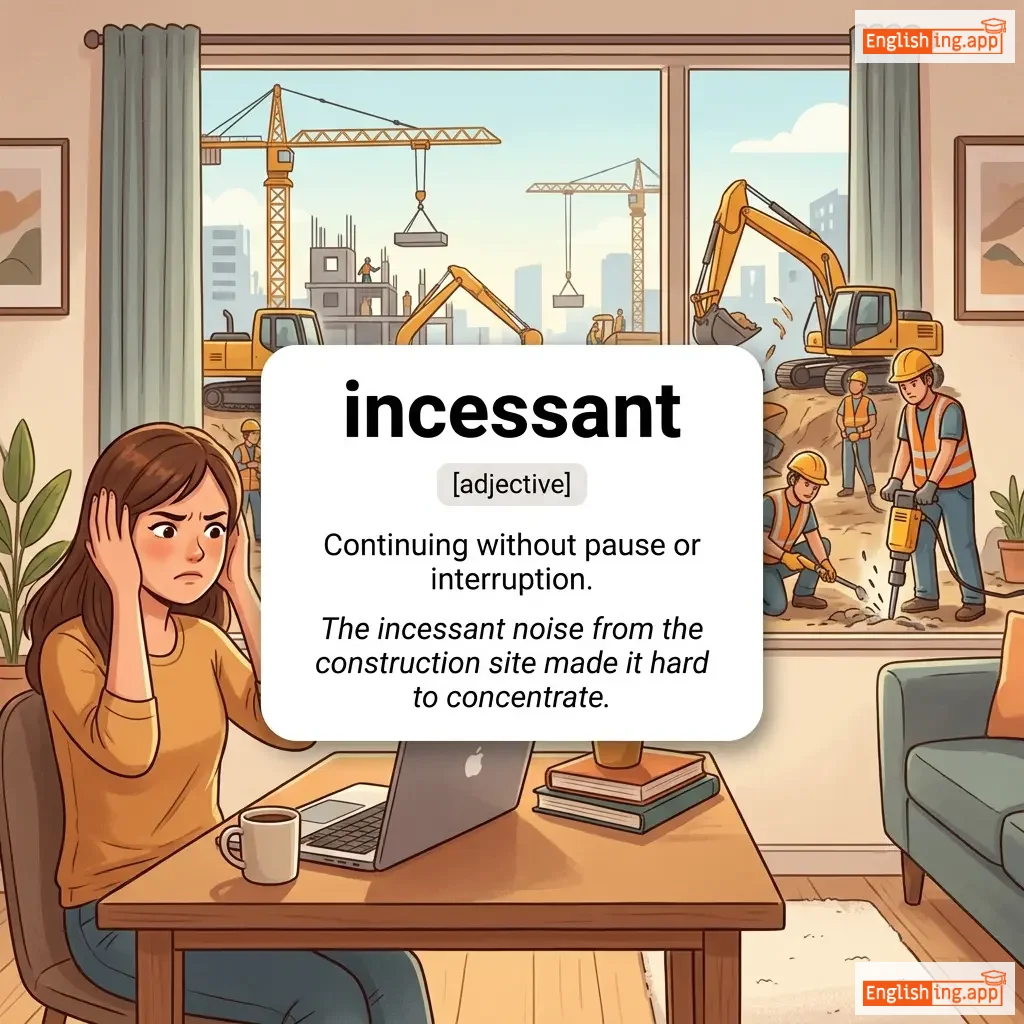
incessant definition card — visual illustration of the meaning
adjective
/ɪnˈsɛsənt/
絶え間ない (taemai)

Continuing without pause or interruption.

"The incessant noise from the construction site made it hard to concentrate."

"建設現場からの絶え間ない騒音は、集中するのを難しくさせました。" (Kensetsu genba kara no taemai na sōon wa, shūchū suru no o muzukashiku sasemashita.)
noun, verb
/ɪntʃ/
インチ / ゆっくり動く (inchi / yukkuri ugoku)

A unit of length equal to 2.54 centimeters; or to move slowly and carefully in small amounts.

"She inched closer to the edge of the stage."

"彼女はステージの端にゆっくり近づいた。" (Kanojo wa sutēji no hashi ni yukkuri chikaduita.)
adverb
/ˈɪntʃmiːl/
少しずつ (sukoshizutsu)

Gradually, little by little.

"The old castle fell inchmeal into ruin."

"その古い城は少しずつ廃墟になった。" (Sono furui shiro wa sukoshizutsu haikyo ni natta.)
inchoate definition card — visual illustration of the meaning
adjective
/ɪnˈkoʊ.ɪt/ or /ɪnˈkoʊ.eɪt/
未完成 (mikansei)

Just begun and not fully formed; rudimentary.

"His inchoate ideas needed more research to be developed."

"彼の未完成のアイデアは、さらに開発するためにもっと研究が必要だった。" (Kare no mikansei no aidea wa, sara ni kaihatsu suru tame ni motto kenkyuu ga hitsuyou datta.)
adjective
/ɪnˈkoʊətɪv/
初期の (shoki no)

relating to the beginning of something; in an initial stage

"The poet used inchoative expressions to depict the dawn of creation."

"詩人は創造の夜明けを描くために初期の表現を使いました。" (Shijin wa souzou no yoake wo kaku tame ni shoki no hyougen wo tsukaimashita.)
noun
/ˈɪnsɪdəns/
発生率 (hatsuseiritsu)

the occurrence, rate, or frequency of something

"The incidence of road accidents has decreased this year."

"今年の道路事故の発生率は減少しました。" (Kotoshi no dōro jiko no hasseiritsu wa genshō shimashita.)
noun
/ˈɪnsɪdənt/
インシデント (insidento)

an event or occurrence, often unpleasant or unusual

"The police quickly responded to the incident in the park."

"警察は公園でのインシデントに迅速に対応しました。" (Keisatsu wa kōen de no insidento ni jinsoku ni taiou shimashita.)