
語彙集

英単語辞書 | 単語の意味、定義、例文

incorporate definition card — visual illustration of the meaning
verb
/ɪnˈkɔːpəreɪt/
組み込む (kumikomu)

to include something as part of a whole; to form a legal corporation

"The teacher incorporated new technology into her lessons."

"先生は授業に新しい技術を取り入れました。" (Sensei wa jugyo ni atarashii gijutsu o toriiremashita.)
adjective
/ˌɪnkɔːrˈpɔːriəl/
無形 (mukei)

lacking a physical body; not composed of matter; intangible

"Ghosts are often described as incorporeal beings."

"ゴーストはしばしば無形の存在として描かれます。" (Gōsuto wa shibashiba mukei no sonzai toshite egakaremasu.)
adjective
/ɪnkəˈrɛkt/
間違い (machigai)

not correct or accurate

"The information you provided was incorrect."

"あなたが提供した情報は間違っていました。" (Anata ga teikyō shita jōhō wa machigatte imashita.)
adjective
/ɪnˈkɒrɪdʒəbəl/
訂正不可能な (teisei fukanō na)

incapable of being corrected, improved, or reformed

"He is an incorrigible optimist who never loses hope."

"彼は決して希望を失わない訂正不可能な楽観主義者です。" (Kare wa kesshite kibō o ushinawanai teisei fukanō na rakkan shugi-sha desu.)
increase definition card — visual illustration of the meaning
verb
/ɪnˈkriːs/
増加する (zōka suru)

to make something larger in size, number, or amount

"The company plans to increase its workforce next year."

"その会社は来年、労働力を増加させる予定です。" (Sono kaisha wa rainen, rōdōryoku o zōka saseru yotei desu.)
verb
/ɪnˈkriːst/
増加した (zōka shita)

became greater in size, amount, or degree

"The company's revenue increased last year."
"会社の収益は昨年増加しました。" (Kaisha no shūeki wa sakunen zōka shimashita.)
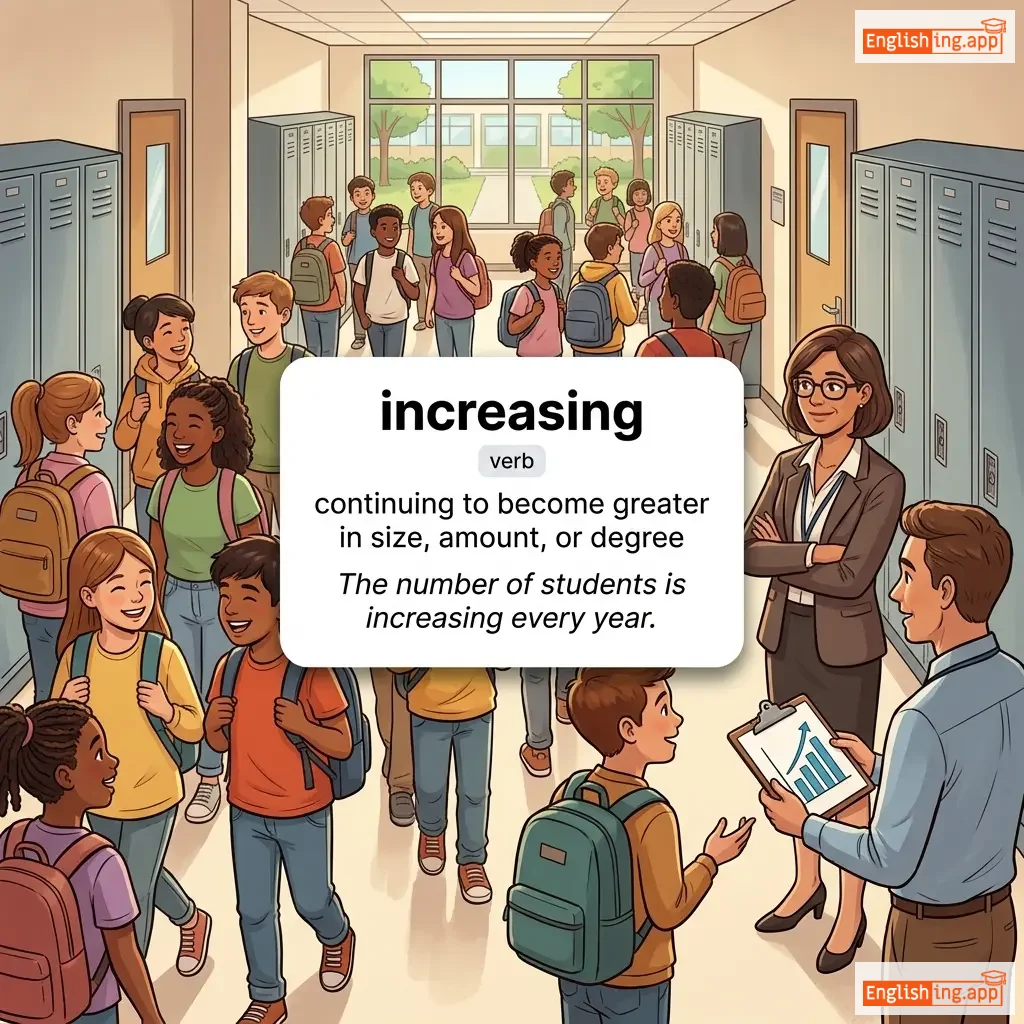
increasing definition card — visual illustration of the meaning
verb
/ɪnˈkriːsɪŋ/
増加 (zōka)

continuing to become greater in size, amount, or degree

"The number of students is increasing every year."

"学生の数は毎年増加しています。" (Gakusei no kazu wa mainen zōka shiteimasu.)
adverb
/ɪnˈkriːsɪŋli/
ますます (masumasu)

more and more over time

"People are increasingly concerned about climate change."

"人々は気候変動についてますます懸念しています。" (Hitobito wa kikō hendō ni tsuite masumasu shinpai shiteimasu.)
adjective
/ɪnˈkrɛdəbl/
信じられない (shinjirarenai)

so extraordinary that it is hard to believe; amazing

"The view from the mountain was incredible."

"山からの景色は信じられなかった。" (Yama kara no keshiki wa shinjirarenakatta.)
adverb
/ɪnˈkrɛdɪbli/
信じられないほど (shinjirarenai hodo)

to a great degree; extremely or unbelievably

"The view from the top of the mountain was incredibly beautiful."

"山頂からの景色は信じられないほど美しかった。" (Sanchō kara no keshiki wa shinjirarenai hodo utsukushikatta.)
noun
/ˌɪnkrɪˈdjuːləti/
不信 (fushin)

the state of being unwilling or unable to believe something

"She looked at him with incredulity after hearing the strange story."

"彼女はその奇妙な話を聞いた後、不信のまなざしで彼を見つめた。" (Kanojo wa sono kimyou na hanashi o kiita ato, fushin no manazashi de kare o mitsumeta.)
adjective
/ɪnˈkrɛdjələs/

unwilling or unable to believe something

"He gave her an incredulous look when she claimed she could fly."

noun
/ˈɪŋkrɪmənt/
増加 (zōka)

an increase or addition, especially one of a series on a fixed scale

"Employees received an annual salary increment."

"従業員は年次給与のインクリメントを受け取った。" (Jūgyōin wa nenji kyūyo no inkurimento o ukemotta.)
incremental definition card — visual illustration of the meaning
adjective
/ˌɪŋ.krɪˈmen.təl/
段階的 (dankai-teki)

Increasing gradually in small amounts or steps.

"The company made incremental improvements to the software."

"会社はソフトウェアに段階的な改善を行いました。" (Kaisha wa sofutowea ni dankai-teki na kaizen o okonaimashita.)
verb
/ɪnˈkrɪmɪˌneɪt/
有罪にする (yūzai ni suru)

to make someone appear guilty of a crime or wrongdoing

"The new evidence could incriminate the suspect in the robbery case."

"新しい証拠がロビー事件の容疑者を有罪にする可能性があります。" (Atarashī shōko ga robī jiken no yōgisha o yūzai ni suru kanōsei ga arimasu.)
noun
/ˌɪnkrʌˈsteɪʃən/
硬化層 (koukasou)

a crust or hard coating formed on the surface of something

"The old pipes were blocked due to heavy incrustation of minerals."

"古いパイプは鉱物の重い硬化層によって詰まっていました。" (Furui paipu wa koubutsu no omoi koukasou ni yotte tsumatteimashita.)
verb
/ˈɪnkjʊˌbeɪt/
孵化する (fukasu suru)

to keep eggs, cells, or organisms at the right conditions for development

"The hen will incubate the eggs until they hatch."

"そのニワトリは卵が孵化するまでインキュベートします。" (Sono niwatori wa tamago ga fuka suru made inkyubēto shimasu.)
noun
/ˌɪnkjʊˈbeɪʃən/
卵、細胞、または生物を適切な条件で発展させるプロセス (tamago, saibou, matawa seibutsu o tekisetsuna jouken de hatten saseru purosesu)

the process of keeping eggs, cells, or organisms in the right conditions for development

"The incubation of the eggs lasted for three weeks."

"卵のインキュベーションは三週間続きました。" (Tamago no inkubeeshon wa san shuukan tsuzukimashita.)
noun
/ˈɪnkjʊˌbeɪtər/
インキュベーター (inkyubetā)

a device or environment that provides suitable conditions for eggs, cells, or infants to develop

"The premature baby was placed in an incubator for care."

"未熟児はケアのためにインキュベーターに入れられました。" (Mijukushi wa kea no tame ni inkyubetā ni ireraremashita.)
noun
/ˈɪŋkjʊbəs/
悪夢のような重荷 (akumu no yō na omoni)

An oppressive or nightmarish burden; in folklore, an evil spirit that lies upon sleeping people.

"Debt became an incubus that weighed heavily on the family."

"借金は家族に重くのしかかる悪夢のような存在となった。" (Shakkin wa kazoku ni omoku noshikakaru akumu no yō na sonzai to natta.)
inculcate definition card — visual illustration of the meaning
verb
/ˈɪŋkʌlkeɪt/
教え込む (oshiekomu)

To teach or instill an idea, attitude, or habit persistently.

"Parents try to inculcate good manners in their children."

"親は子供たちに良いマナーを教え込もうとします。" (Oya wa kodomotachi ni yoi manā o oshiekomo to shimasu.)
verb
/ˈɪŋkʌlpeɪt/
非難する (hinan suru)

To blame or accuse someone of wrongdoing.

"The evidence seemed to inculpate the suspect in the crime."
"証拠は容疑者を犯行に巻き込んでいるように見えた。" (Shōko wa yōgisha o hankō ni makikonde iru yō ni mieta.)
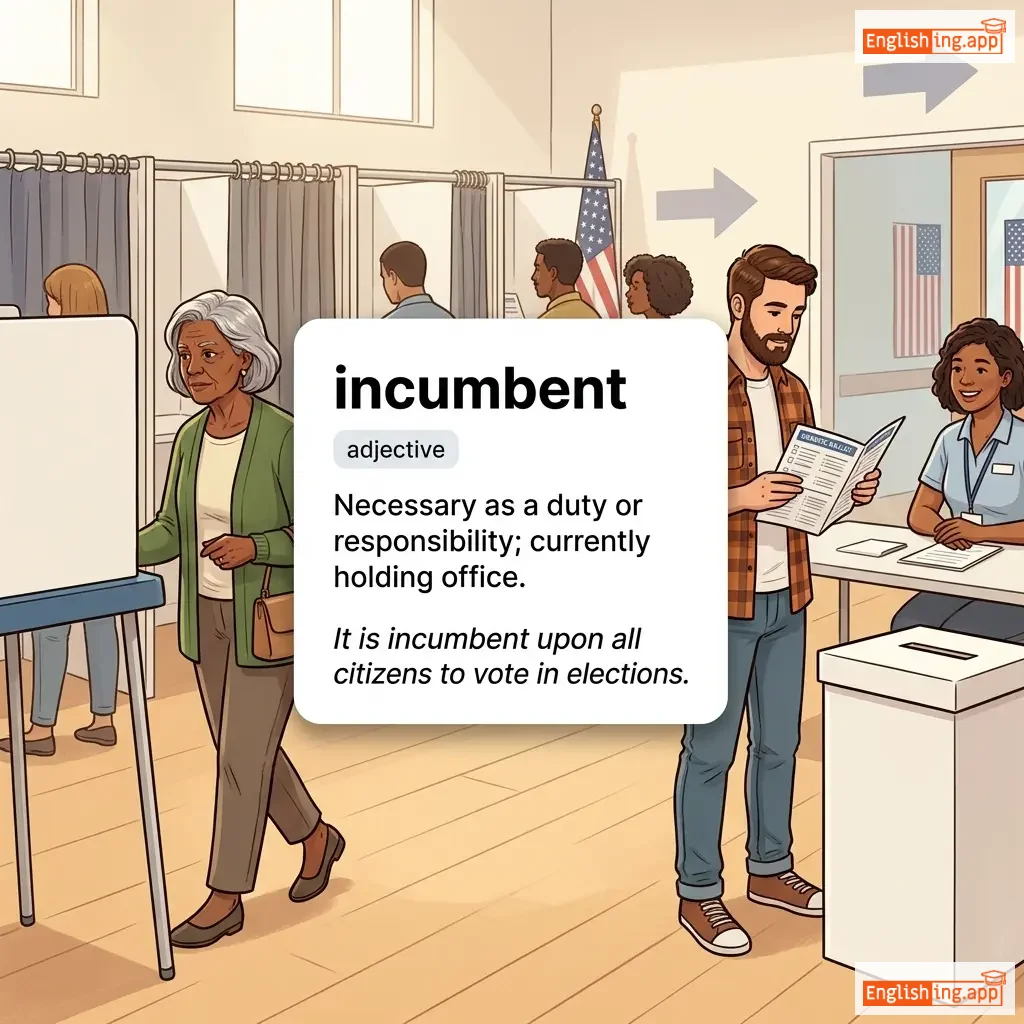
incumbent definition card — visual illustration of the meaning
adjective
/ɪnˈkʌmbənt/
現職の (genshoku no)

Necessary as a duty or responsibility; currently holding office.

"It is incumbent upon all citizens to vote in elections."

"すべての市民が選挙で投票する義務がある。" (Subete no shimin ga senkyo de tōhyō suru gimu ga aru.)
verb
/ɪnˈkɜːr/
負う (ōu)

To bring upon oneself something undesirable, usually as a result of actions.

"He incurred a fine for parking in the wrong place."
"彼は間違った場所に駐車して罰金を科せられた。" (Kare wa machigatta basho ni chūsha shite bakkin o kaserareta.)
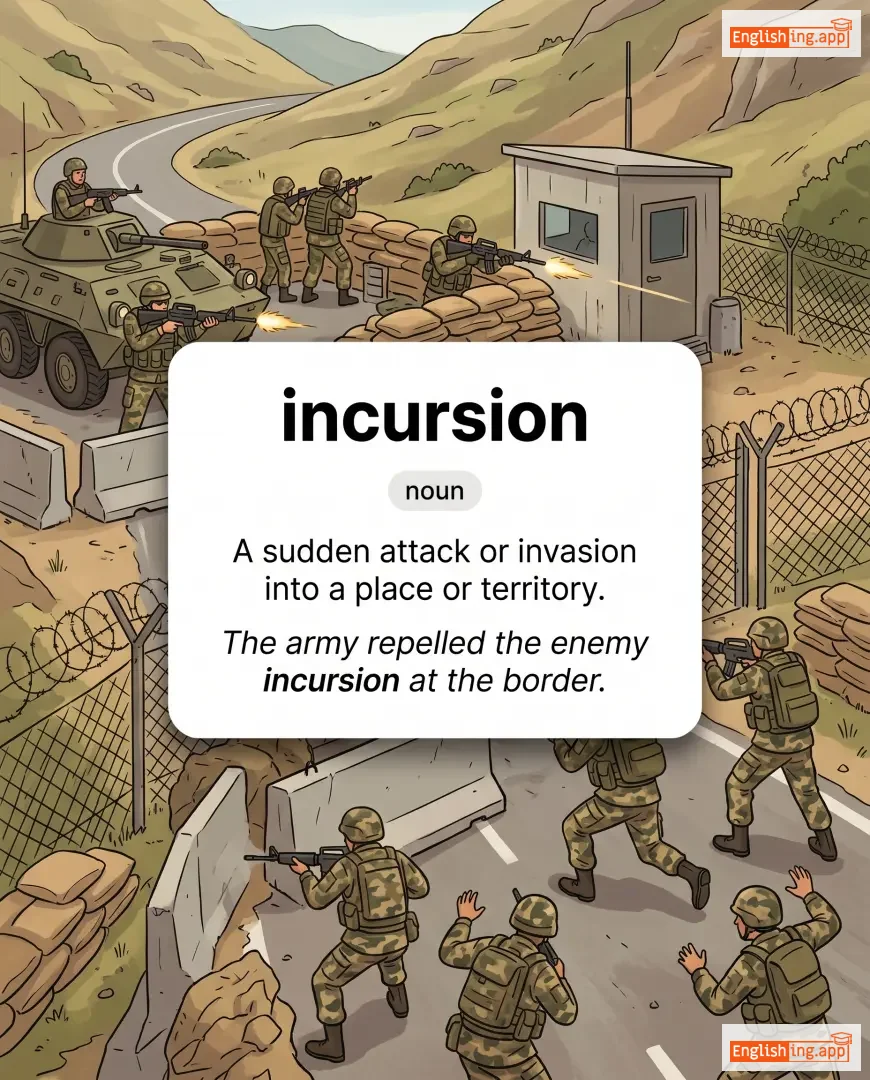
incursion definition card — visual illustration of the meaning
noun
/ɪnˈkɜːrʒən/
侵入 (shinnyuu)

A sudden attack or invasion into a place or territory.

"The army repelled the enemy incursion at the border."

"軍隊は国境で敵の侵入を撃退した。" (Guntai wa kokkyō de teki no shinnyū o gekitai shita.)
adjective
/ɪnˈdɛtɪd/
借金がある (shakkingaaru)

Owing gratitude or money to someone; obligated.

"I am deeply indebted to my teacher for her guidance."

"私は教師の指導に深く感謝しています。" (Watashi wa kyoushi no shidou ni fukaku kansha shiteimasu.)
adjective
/ɪnˈdiːsənt/
不品な (fuhin na)

not conforming to accepted standards of behavior or morality; improper or offensive

"He was warned for making an indecent remark during the meeting."

"彼は不品な発言で注意された。" (kare wa fuhin na hatsugen de chuui sareta)
noun
/ˌɪndɪˈsɪʒən/
優柔不断 (yūyūfudan)

The inability to make a decision quickly or confidently.

"Her indecision caused a delay in the project."

"彼女の優柔不断はプロジェクトの遅延を引き起こしました。" (Kanojo no yūyūfudan wa purojekuto no chien o hikiokoshimashita.)
adjective
/ˌɪndɪˈsaɪsɪv/
優柔不断 (yūyū budan)

Unable to make decisions quickly or firmly.

"He is too indecisive to be a good leader."

"彼は優柔不断すぎて、良いリーダーになれません。" (Kare wa yūyū budan sugite, yoi rīdā ni naremasen.)
adjective
/ɪnˈdɛkərəs/
不作法 (busahou)

Not in keeping with good taste and propriety; improper.

"His indecorous behavior shocked the audience."

"彼の不作法な振る舞いは観客を驚かせた。" (Kare no busahou na furumai wa kankyaku o odoro kaseta.)
adverb
/ɪnˈdiːd/
実際に (jissai ni)

used to emphasize or confirm a statement

"It was a long journey indeed."

"それは長い旅でした、実際。" (Sore wa nagai tabi deshita, jissai.)
adjective
/ˌɪndɪˈfætɪɡəbl̩/
疲れ知らず (tsukare shirazu)

persisting tirelessly; incapable of being fatigued

"Her indefatigable spirit kept the team motivated during the long project."

"彼女の疲れ知らずの精神が、長いプロジェクトを通してチームを励ましました。" (kanojo no tsukare shirazu no seishin ga, nagai purojekuto wo tooshite chiimu wo hagemashimashita.)
adjective
/ˌɪndɪˈfɛnsəbl̩/
弁護できない (bengo dekinai)

not able to be protected or justified

"The minister’s remarks were considered indefensible by the public."

"大臣の発言は公衆によって弁護できないとみなされました。" (Daijin no hatsugen wa kōshū ni yotte bengo dekinai to minasaremashita.)
adjective
/ɪnˈdefɪnət/
不確定な (fukakutei na)

not clearly defined; uncertain; vague; unlimited in time

"The meeting has been postponed for an indefinite period."

"会議は不確定な期間に延期されました。" (Kaigi wa fukakutei na kikan ni enkisaremashita.)
adverb
/ɪnˈdɛfɪnətli/
無期限で (mukigen de)

for an unlimited or unspecified period of time

"The project has been postponed indefinitely."
"プロジェクトは無期限で延期されました。" (Purojekuto wa mukigen de enki sare mashita.)
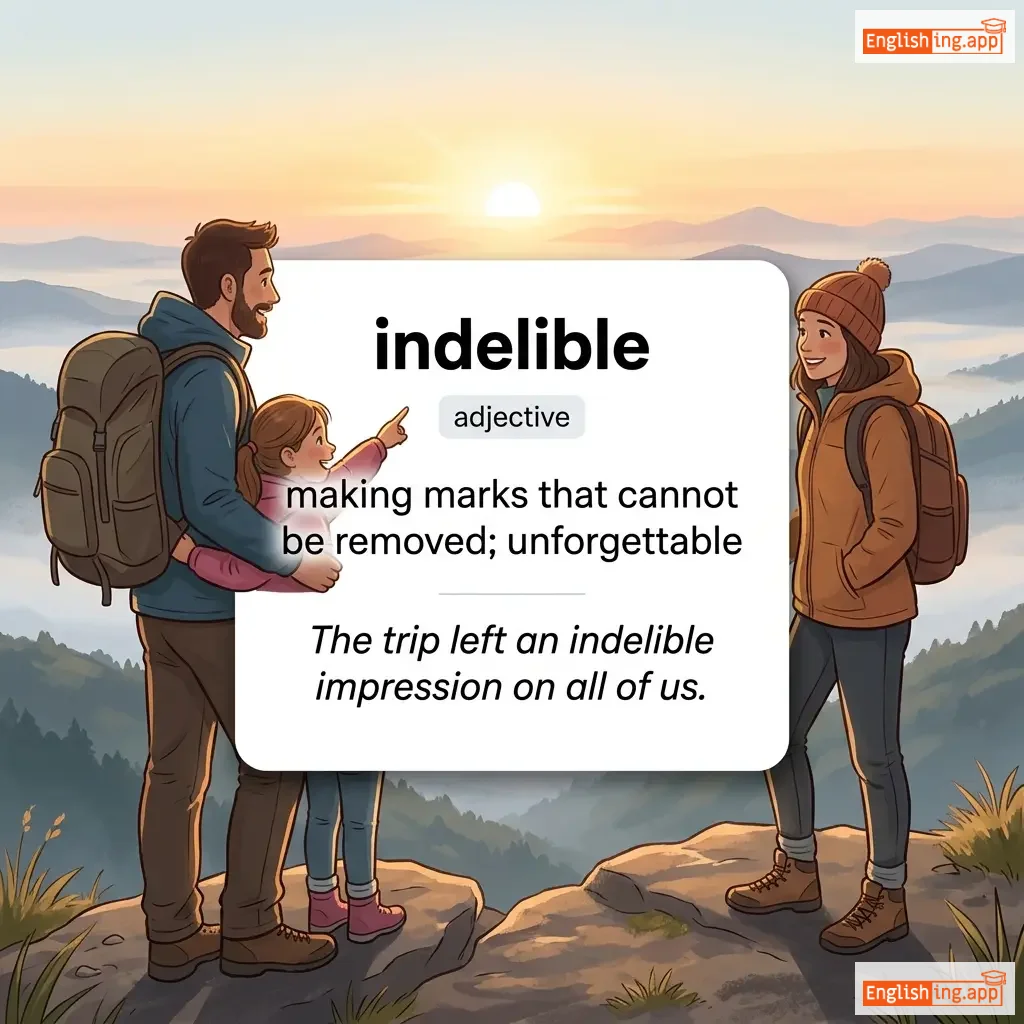
indelible definition card — visual illustration of the meaning
adjective
/ɪnˈdɛlɪbl̩/
消せない (kesenai)

making marks that cannot be removed; unforgettable

"The trip left an indelible impression on all of us."

"その旅行は私たち全員に消せない印象を残しました。" (Sono ryokō wa watashitachi zen'in ni kesenai inshō o nokoshimashita.)
verb
/ɪnˈdɛmnɪfaɪ/

to compensate someone for harm or loss; to secure against future damage or cost

"The insurance company agreed to indemnify the client for the damages."

noun
/ɪnˈdɛmnɪti/
補償 / 保護 (hosho / hogo)

Security or protection against financial loss or damage; compensation for loss or damage.

"The insurance policy provides indemnity against fire damage."

"保険ポリシーは火災による損害に対して補償を提供します。" (Hoken porishii wa kasai ni yoru songai ni taishite hosho o teikyō shimasu.)
noun
/ˌɪndɛnˈteɪʃən/
インデント (indent)

A space left at the beginning of a line of text; a notch or deep recess on a surface.

"The teacher asked the students to use proper indentation in their essays."
"先生は学生にエッセイで適切なインデントを使用するように頼みました。" (Sensei wa gakusei ni essei de tekisetsu na indent wo shiyou suru you ni tanomimashita.)
noun
/ɪnˈdɛntʃər/

A formal legal agreement, contract, or document, often relating to work or service.

"In the 18th century, many workers came under indenture to work overseas."

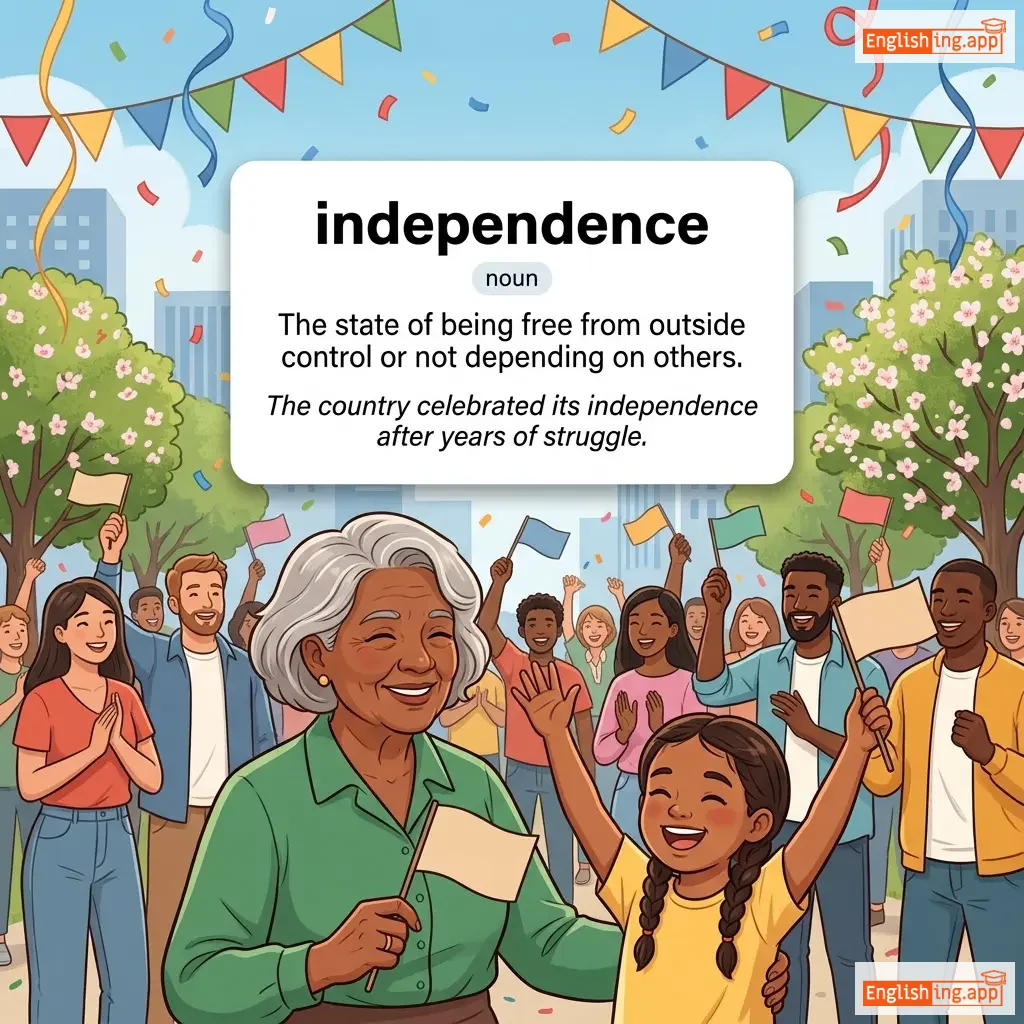
independence definition card — visual illustration of the meaning
noun
/ˌɪndɪˈpɛndəns/
独立 (dokuritsu)

The state of being free from outside control or not depending on others.

"The country celebrated its independence after years of struggle."

"その国は長年の闘争の後、独立を祝いました。" (Sono kuni wa naganen no tōsō no ato, dokuritsu o iwai mashita.)
independent definition card — visual illustration of the meaning
adjective
/ˌɪn.dɪˈpen.dənt/
独立 (dokuritsu)

Free from outside control; not depending on others.

"She is an independent woman who runs her own business."

"彼女は自分のビジネスを運営する独立した女性です。" (Kanojo wa jibun no bijinesu o un'ei suru dokuritsu shita josei desu.)
adjective
/ˌɪndɪˈskraɪbəbl/
言葉では表現できない (kotoba de wa hyōgen dekinai)

Too unusual, extreme, or great to be adequately described in words.

"The beauty of the sunset was indescribable."

"夕日の美しさは言葉では表現できないほどだった。" (Yūhi no utsukushisa wa kotoba de wa hyōgen dekinai hodo datta.)
adjective
/ˌɪndɪˈstrʌktəbl/
壊れない (kowarenai)

Impossible to destroy or break.

"The superhero's shield was said to be indestructible."
"スーパーヒーローの盾は壊れないと言われていました。" (Suupaa hīrō no tate wa kowarenai to iwarete imashita.)
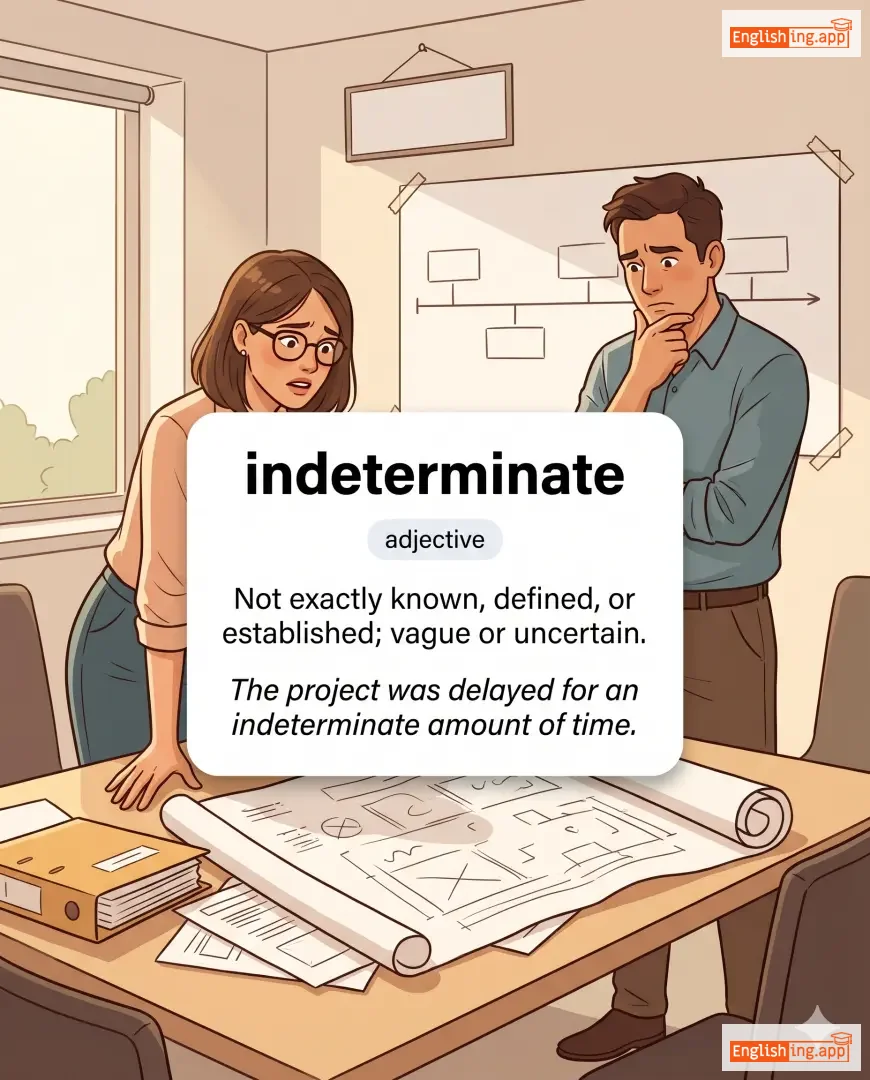
indeterminate definition card — visual illustration of the meaning
adjective
/ˌɪndɪˈtɜːrmənət/
不確定 (fukakutei)

Not exactly known, defined, or established; vague or uncertain.

"The project was delayed for an indeterminate amount of time."

"プロジェクトは不確定な期間に延期されました。" (Purojekuto wa fukakutei na kikan ni enki saremashita.)
index definition card — visual illustration of the meaning
noun, verb
/ˈɪndeks/
インデックス (indekkusu)

A list of items arranged in order, or to arrange data systematically for reference.

"The book includes a detailed index at the end."

"その本には最後に詳細なインデックスが含まれています。" (Sono hon ni wa saigo ni shōsai na indekkusu ga fukumareteimasu.)
adjective/noun
/ˈɪndiən/
インディアンの (Indian no)

Relating to India, its people, or their culture.

"She loves Indian food, especially biryani."

"彼女はインディアンの料理が好きで、特にビリヤニが好きです。" (Kanojo wa Indian no ryouri ga suki de, toku ni biriyani ga suki desu.)
noun
/ˈɪndɪkənt/
指標 (shihyō)

Something that indicates or points to a fact or condition.

"High fever is often an indicant of infection."
"高熱はしばしば感染の指標となります。" (Kōnetsu wa shibashiba kansen no shihyō to narimasu.)
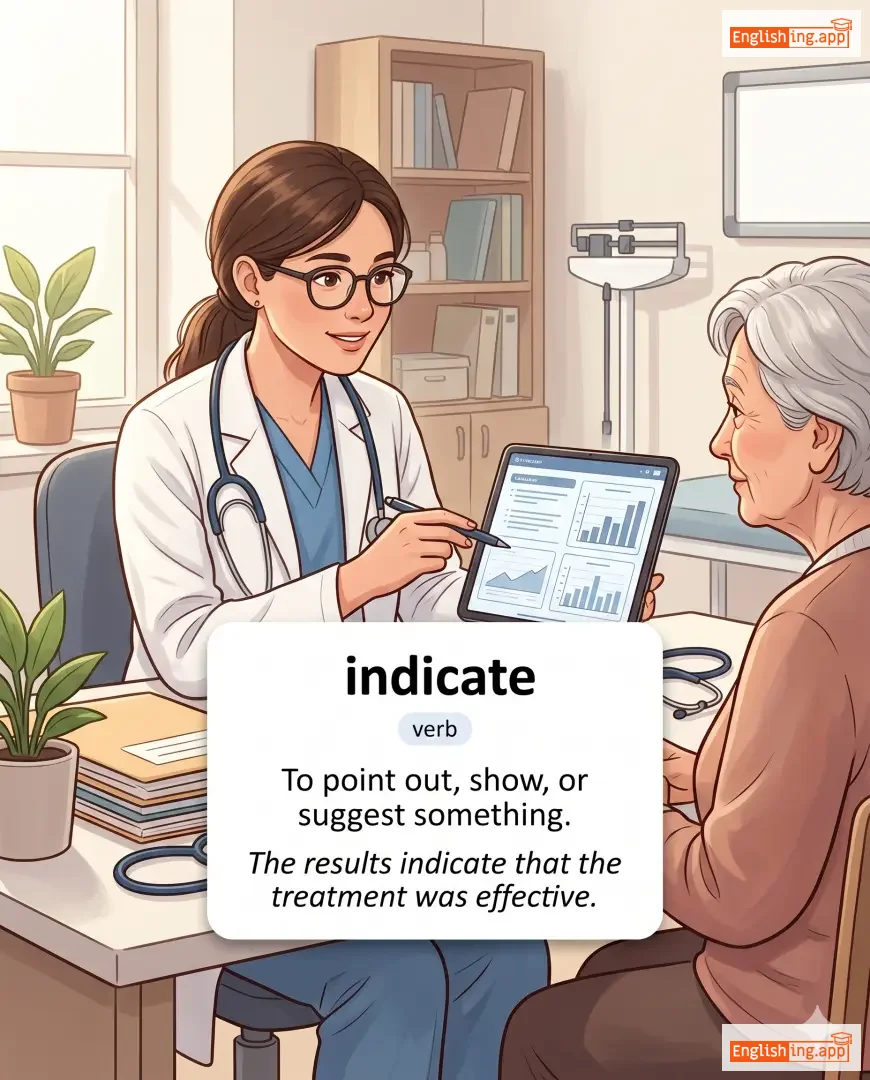
indicate definition card — visual illustration of the meaning
verb
/ˈɪndɪˌkeɪt/
示す (shimesu)

To point out, show, or suggest something.

"The results indicate that the treatment was effective."
"結果は治療が効果的であったことを示しています。" (Kekka wa chiryo ga kōkateki deatta koto o shimeshiteimasu.)
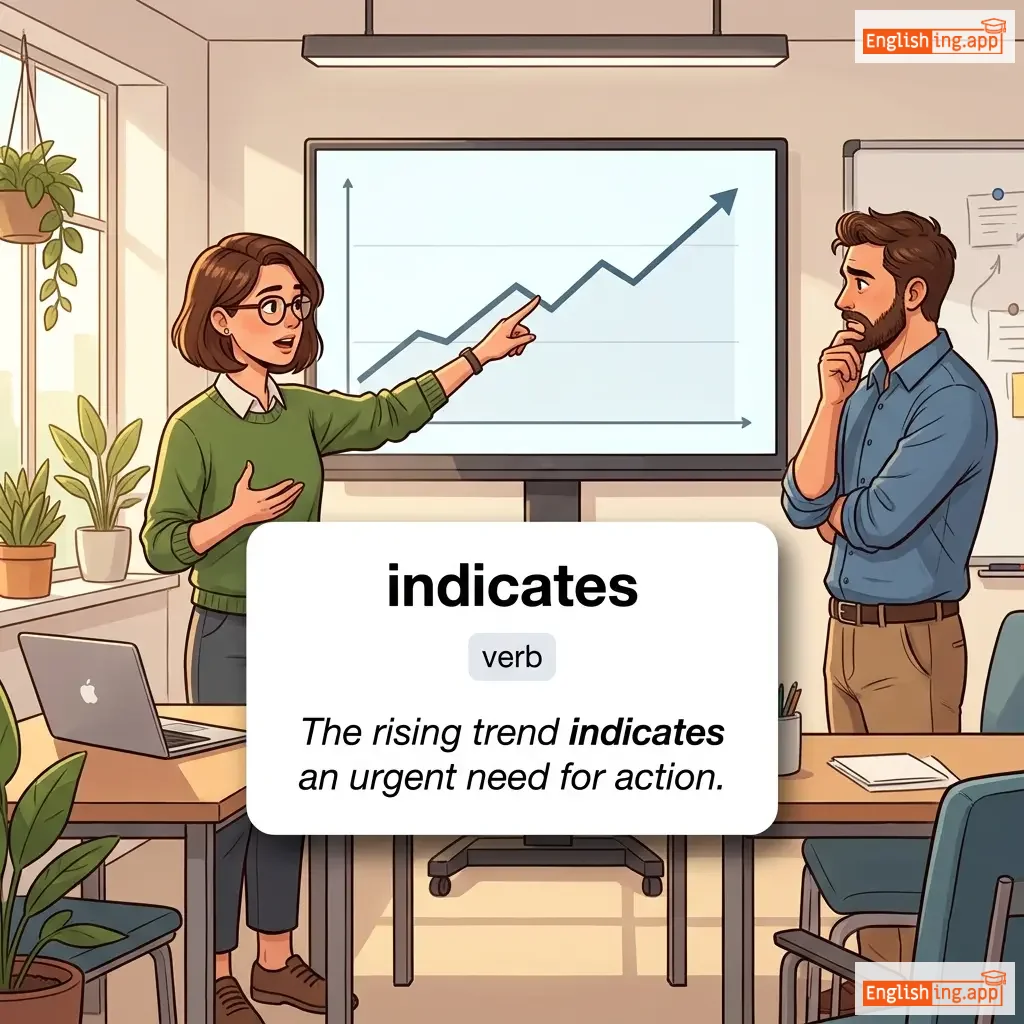
indicates definition card — visual illustration of the meaning
verb
ˈɪndɪkeɪts
示す (shimesu)

Point out; show; be a sign or symptom of; suggest as a desirable or necessary course of action.

"The rising trend indicates an urgent need for action."

"上昇している傾向は、行動が急務であることを示しています。" (Joushou shiteiru keikou wa, koudou ga kyuu mu de aru koto o shimeshiteimasu.)