Vocabularios

Descubra, aprenda y domine el vocabulario en inglés

noun
/ˌɪndɪˈkeɪʃən/
indicación (indicacion)

A sign, piece of information, or signal that suggests something.

"Dark clouds are an indication of an approaching storm."

"Las nubes oscuras son una indicación de una tormenta que se acerca." (Las nubes oscuras son una indicacion de una tormenta que se acerca)
adjective, noun
/ɪnˈdɪkətɪv/
indicativo (indicativo)

Serving as a sign or expression of something; in grammar, a mood used to make factual statements.

"His tone was indicative of his frustration."

"Su tono era indicativo de su frustración." (Su tono era indicativo de su frustración.)
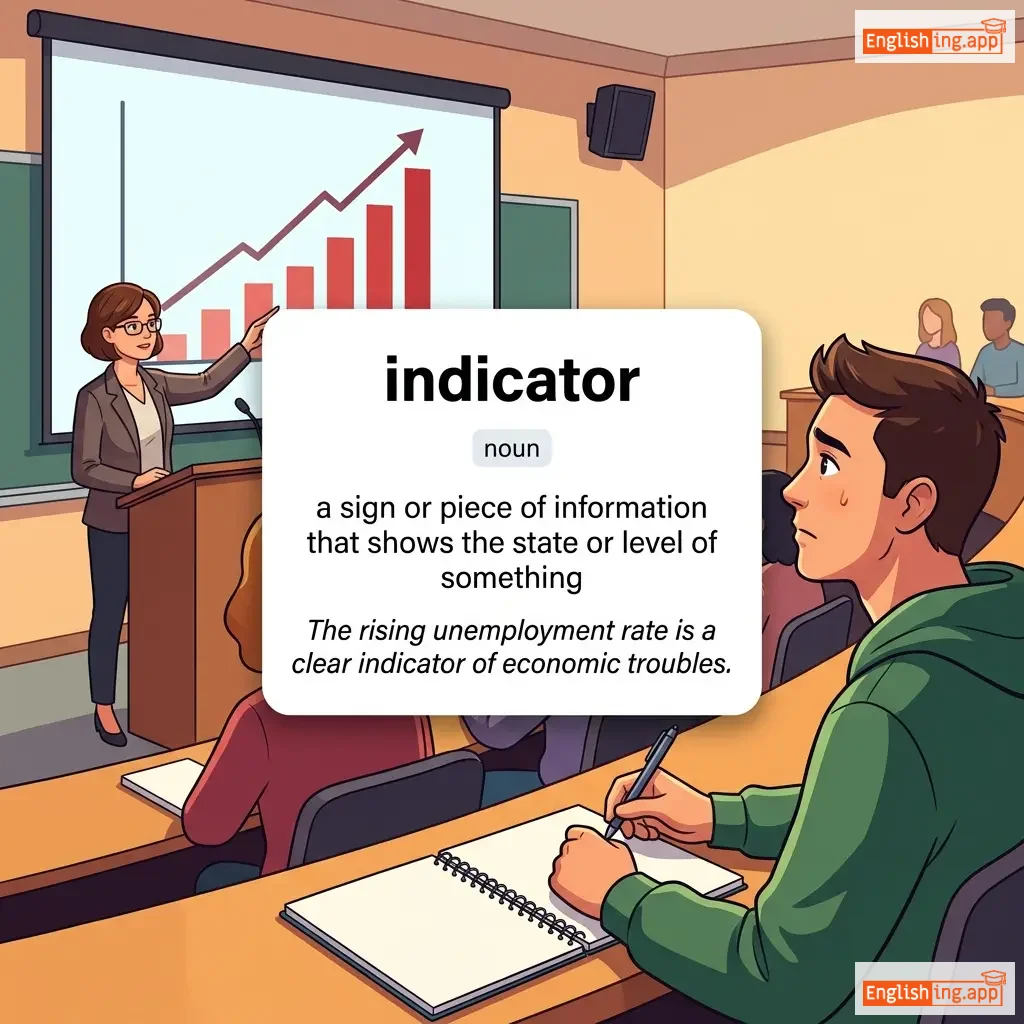
indicator definition card — visual illustration of the meaning
noun
/ˈɪndɪˌkeɪtər/
indicador (indicador)

a sign or piece of information that shows the state or level of something

"The rising unemployment rate is a clear indicator of economic troubles."

"La tasa creciente de desempleo es un claro indicador de problemas económicos." (La tasa creciente de desempleo es un claro indicador de problemas economicos.)
noun (plural)
/ˈɪndɪˌsiːz/
índices (indices)

plural form of index; statistical measures or reference points used for comparison

"Stock market indices fell sharply after the announcement."

"Los índices del mercado de valores cayeron drásticamente después del anuncio." (Los indices del mercado de valores cayeron drasticamente despues del anuncio.)
verb
/ɪnˈdaɪt/
acusar (acusar)

to formally accuse someone of committing a serious crime

"The grand jury decided to indict the politician for corruption."

"El gran jurado decidió acusar al político por corrupción." (El gran jurado decidió acusar al político por corrupción.)
noun
/ɪnˈdaɪtmənt/
acusación formal (acusacion formal)

a formal charge or accusation of a serious crime

"The indictment accused the company of multiple violations."

"La acusación formal acusó a la empresa de múltiples violaciones." (La acusacion formal acuso a la empresa de multiples violaciones.)
noun
/ɪnˈdɪfərəns/
indiferencia (indiferencia)

lack of interest, concern, or sympathy

"He showed complete indifference to the suffering around him."

"Él mostró completa indiferencia ante el sufrimiento a su alrededor." (El mostro completa indiferencia ante el sufrimiento a su alrededor.)
adjective
/ɪnˈdɪf.ər.ənt/
indiferente (indiferente)

having no particular interest or concern; not caring one way or another

"She was indifferent to the outcome of the match."

"Ella estaba indiferente al resultado del partido." (Ella estaba indiferente al resultado del partido.)
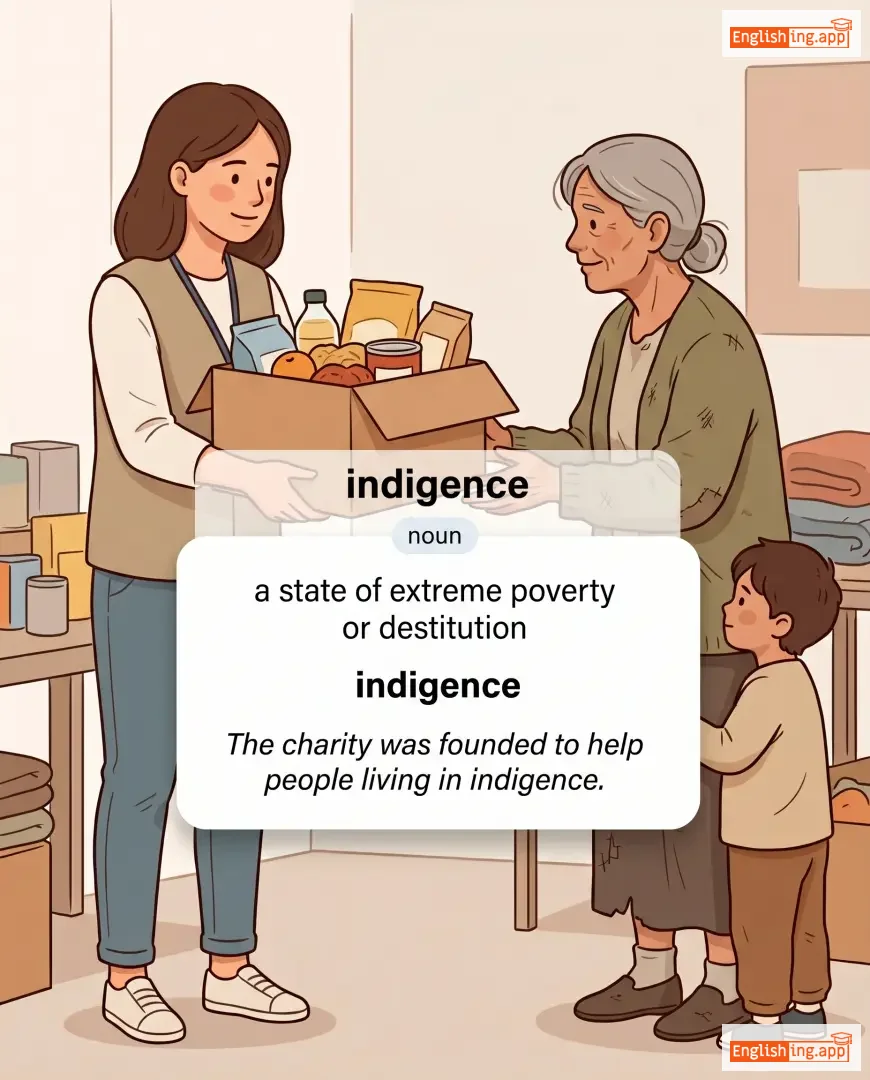
indigence definition card — visual illustration of the meaning
noun
/ˈɪn.dɪ.dʒəns/
indigencia (indigencia)

a state of extreme poverty or destitution

"The charity was founded to help people living in indigence."

"La caridad se fundó para ayudar a las personas que viven en indigencia." (La caridad se fundo para ayudar a las personas que viven en indigencia.)
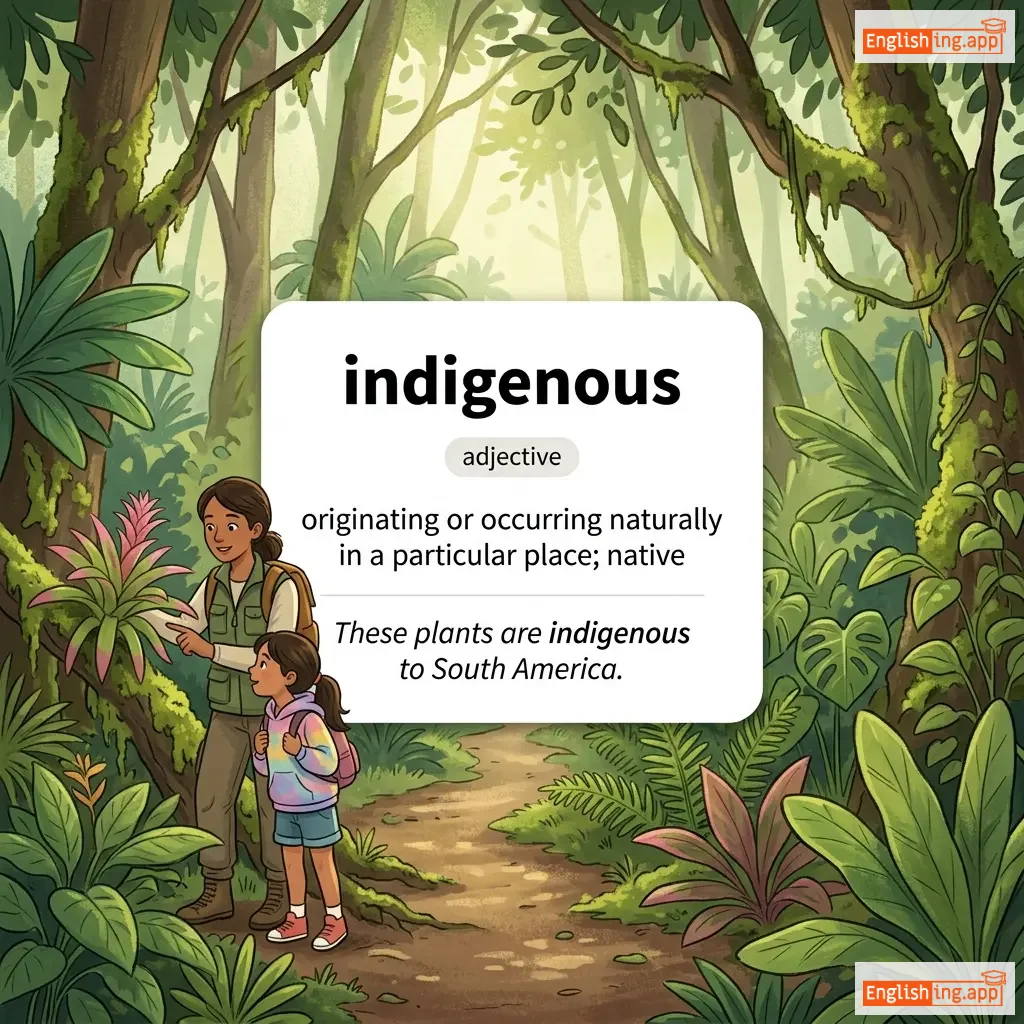
indigenous definition card — visual illustration of the meaning
adjective
/ɪnˈdɪdʒ.ə.nəs/
indígena (indigena)

originating or occurring naturally in a particular place; native

"These plants are indigenous to South America."

"Estas plantas son indígenas de América del Sur." (Estas plantas son indígenas de América del Sur.)
Indigenous Traditions definition card — visual illustration of the meaning
noun
ɪnˈdɪdʒɪnəs trəˈdɪʃənz
Tradiciones indígenas (tradiciones indígenas)

Cultural practices, beliefs, and customs that have been passed down through generations among native peoples.

"Indigenous traditions in the Chittagong Hill Tracts are unique."

"Las tradiciones indígenas en los Chittagong Hill Tracts son únicas." (Las tradiciones indígenas en los Chittagong Hill Tracts son únicas.)
adjective
/ˈɪn.dɪ.dʒənt/
indigente (indigente)

lacking the necessities of life due to poverty; very poor

"The hospital offers free care to indigent patients."

"El hospital ofrece atención gratuita a los pacientes indigentes." (El hospital ofrece atencion gratuita a los pacientes indigentes.)
adjective
/ˌɪn.daɪˈdʒes.tə.bəl/
indigesto (indigesto)

difficult or impossible to digest; hard to accept or understand

"The report was so long and detailed that it became almost indigestible."

"El informe era tan largo y detallado que se volvió casi indigesto." (El informe era tan largo y detallado que se volvio casi indigesto.)
noun
/ˌɪndɪˈdʒɛstʃən/
indigestión (indigestion)

Discomfort or pain in the stomach associated with difficulty in digesting food.

"He avoided spicy food because it often gave him indigestion."

"Él evitó la comida picante porque a menudo le provocaba indigestión." (El evito la comida picante porque a menudo le provoco indigestion.)
adjective
/ɪnˈdɪɡnənt/
indignado (indignado)

Feeling or showing anger at something considered unfair or unjust.

"She was indignant when accused of cheating."

"Ella estaba indignada cuando la acusaron de hacer trampa." (Ella estaba indignada cuando la acusaron de hacer trampa.)
noun
/ˌɪndɪɡˈneɪʃən/
indignación (indignacion)

Strong displeasure or anger caused by something unjust, offensive, or insulting.

"Public indignation grew after the unfair verdict."

"La indignación pública creció después del veredicto injusto." (La indignacion publica crecio despues del veredicto injusto.)
noun
/ɪnˈdɪɡnɪti/
indignidad (indignidad)

Treatment or circumstances that cause one to feel shame or humiliation.

"He suffered the indignity of being ignored in the meeting."

"Él sufrió la indignidad de ser ignorado en la reunión." (El sufrio la indignidad de ser ignorado en la reunion.)
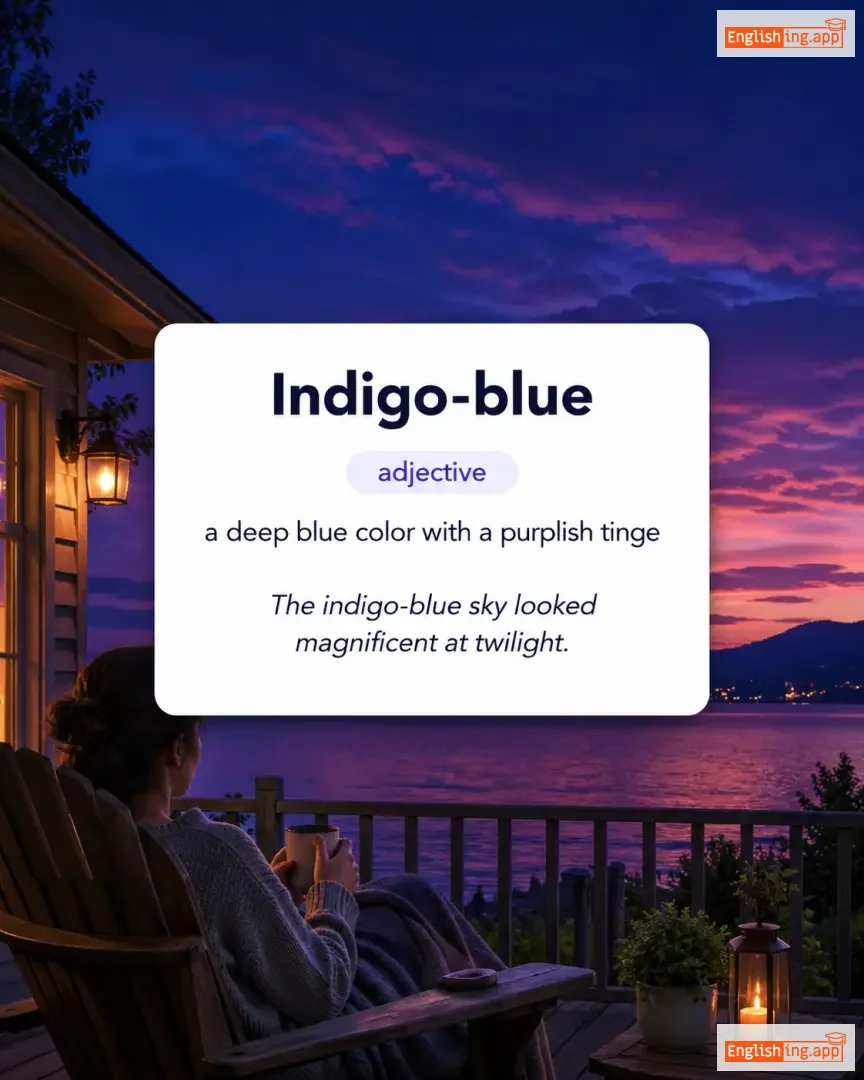
Indigo-blue definition card — visual illustration of the meaning
adjective
/ˈɪndɪɡoʊ bluː/
azul índigo (azul indigo)

a deep blue color with a purplish tinge

"The indigo-blue sky looked magnificent at twilight."

"El cielo azul índigo se veía magnífico al atardecer." (El cielo azul índigo se veía magnífico al atardecer.)
adverb
/ˌɪndəˈrɛktli/
indirectamente (indirectamente)

in a way that is not direct; through an intermediate means or influence

"The policy affected small businesses indirectly."

"La política afectó indirectamente a las pequeñas empresas." (la politica afecto indirectamente a las pequenas empresas)
adjective
/ˌɪndɪˈsɜːrnəbl/
indistinguible (indistinguible)

Impossible or difficult to see, notice, or distinguish.

"The difference between the two shades was almost indiscernible."

"La diferencia entre los dos tonos era casi indistinguible." (La diferencia entre los dos tonos era casi indistinguible.)
noun
/ˌɪnˈdɪsəplɪn/
indisciplina (indisciplina)

lack of discipline or self-control; failure to obey rules or maintain order

"Indiscipline among the students disrupted the learning environment."

"La indisciplina entre los estudiantes interrumpió el ambiente de aprendizaje." (La indisciplina entre los estudiantes interrumpio el ambiente de aprendizaje)
adjective
/ˌɪndɪˈskriːt/
imprudente (imprudente)

Not careful in what one says or does, likely to reveal secrets or offend.

"It was indiscreet of him to mention the plan in public."

"Fue imprudente de su parte mencionar el plan en público." (Fue imprudente de su parte mencionar el plan en público.)
adjective
/ˌɪndɪˈskrɪmɪnət/
indiscriminado (indiscriminado)

Done without careful judgment; random or haphazard.

"The indiscriminate use of pesticides harms the environment."

"El uso indiscriminado de pesticidas daña el medio ambiente." (El uso indiscriminado de pesticidas daña el medio ambiente.)
adverb
/ˌɪn.dɪˈskrɪm.ɪ.nət.li/
indiscriminadamente (indiscriminadamente)

without making careful distinctions; randomly; without discrimination

"The company fired employees indiscriminately without considering their performance."

"La empresa despidió a los empleados indiscriminadamente sin considerar su rendimiento." (La empresa despidió a los empleados indiscriminadamente sin considerar su rendimiento.)
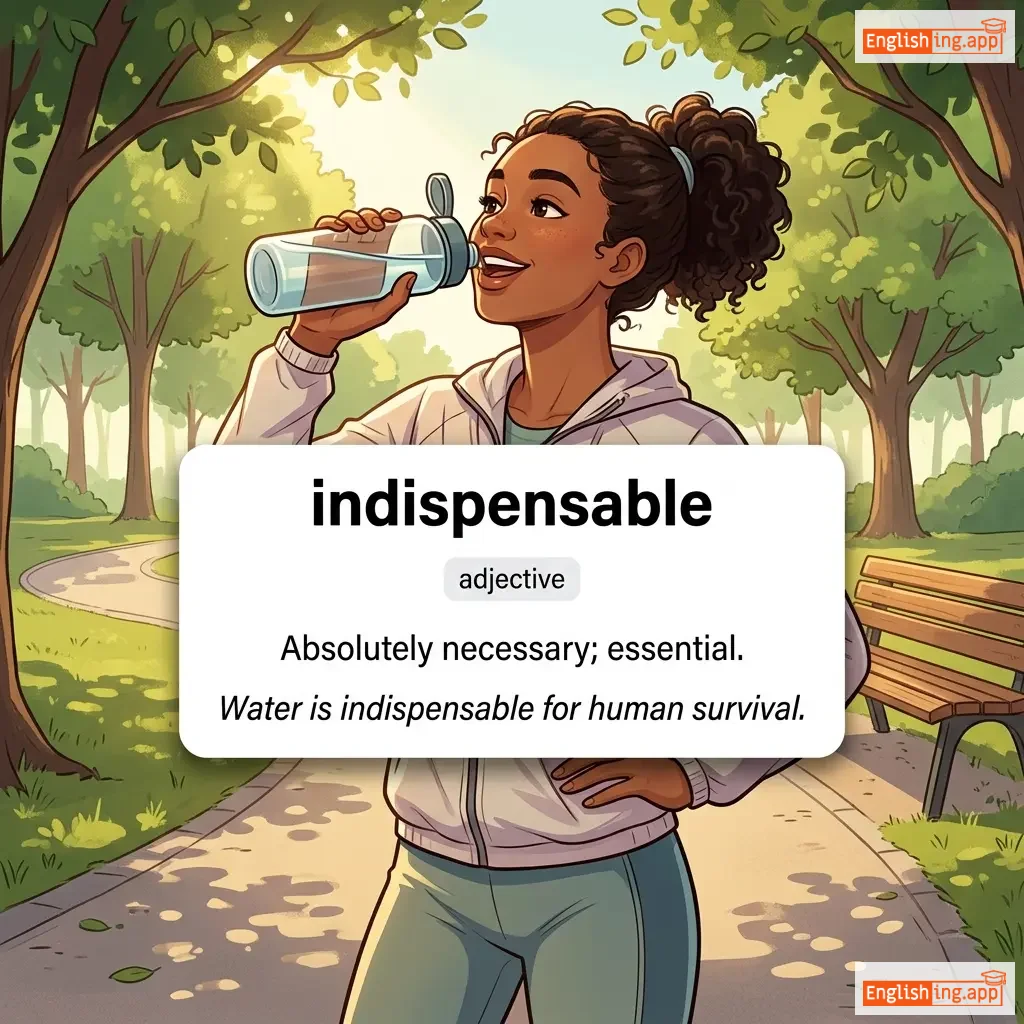
indispensable definition card — visual illustration of the meaning
adjective
/ˌɪndɪˈspɛnsəbl/
indispensable (indispensable)

Absolutely necessary; essential.

"Water is indispensable for human survival."

"El agua es indispensable para la supervivencia humana." (El agua es indispensable para la supervivencia humana.)
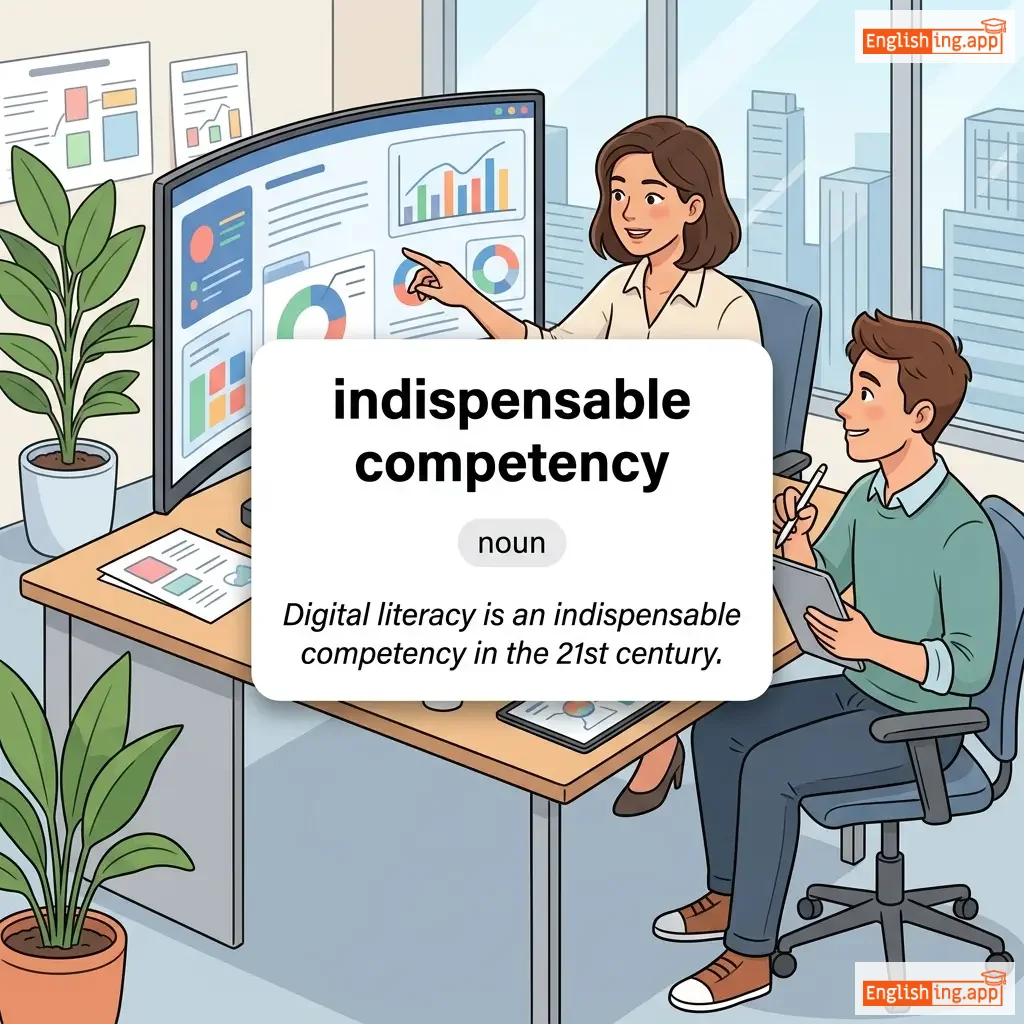
indispensable competency definition card — visual illustration of the meaning
noun
ˌɪndɪˈspensəbl̩ ˈkɒmpɪtənsi
competencia indispensable (competencia indispensable)

Essential skill or ability that cannot be done without; a crucial capability that is absolutely necessary.

"Digital literacy is an indispensable competency in the 21st century."

"La alfabetización digital es una competencia indispensable en el siglo XXI." (La alfabetización digital es una competencia indispensable en el siglo XXI.)
indispensable support definition card — visual illustration of the meaning
noun
ˌɪndɪˈspensəbl səˈpɔːrt
apoyo indispensable (apoyo indispensable)

Essential assistance that cannot be done without; absolutely necessary help.

"Volunteers provide indispensable support to communities."

"Los voluntarios proporcionan apoyo indispensable a las comunidades." (Los voluntarios proporcionan apoyo indispensable a las comunidades.)
adjective
/ˌɪndɪˈspjuːtəbl/
indiscutible (indiscutible)

Impossible to doubt or question; certain.

"It is an indisputable fact that the earth orbits the sun."

"Es un hecho indiscutible que la Tierra gira alrededor del Sol." (Es un hecho indiscutible que la Tierra gira alrededor del Sol.)
adjective
/ˌɪndɪˈsɒljʊbl/
Indisoluble (Indisoluble)

Unable to be destroyed, broken, or dissolved.

"Marriage was once considered an indissoluble bond."

"El matrimonio alguna vez fue considerado un vínculo indisoluble." (El matrimonio alguna vez fue considerado un vínculo indisoluble.)
adjective
/ˌɪndɪˈstɪŋkt/
indistinto (indistinto)

Not clear or sharply defined; vague or blurred.

"The sound of voices was indistinct in the distance."

"El sonido de las voces era indistinto a lo lejos." (El sonido de las voces era indistinto a lo lejos.)
verb
/ɪnˈdaɪt/
componer (componer)

To write or compose (literary or formal works).

"The poet indited a heartfelt sonnet."

"El poeta compuso un soneto sincero." (El poeta compuso un soneto sincero.)
adjective
/ˌɪndɪˈvɜːrtɪbəl/
no desviable (indivertible)

Not able to be turned aside or diverted.

"The judge's indivertible attention was on the case."

"La atención del juez no podía desviarse del caso." (La atencion del juez no podia desviarse del caso)
noun/adjective
/ˌɪndɪˈvɪdʒuəl/
individuo (individuo)

A single human being as distinct from a group; relating to one person.

"Each individual has the right to freedom of speech."

"Cada individuo tiene el derecho a la libertad de expresión." (Cada individuo tiene el derecho a la libertad de expresión.)
adjective
/ˌɪndɪˈvɪzəbl/
indivisible (indivisible)

Not able to be divided or separated.

"The country's unity was indivisible despite differences."

"La unidad del país era indivisible a pesar de las diferencias." (La unidad del pais era indivisible a pesar de las diferencias.)
verb
/ɪnˈdɒktrɪˌneɪt/
adoctrinar (adoctrinar)

To teach someone to fully accept a set of beliefs or ideas without question.

"The regime tried to indoctrinate the youth with propaganda."

"El régimen trató de adoctrinar a la juventud con propaganda." (El régimen trató de adoctrinar a la juventud con propaganda.)
noun
/ˈɪndələns/
indolencia (indolencia)

Avoidance of activity or exertion; laziness.

"His indolence kept him from finishing the project on time."

"Su indolencia le impidió terminar el proyecto a tiempo." (su indolencia le impidio terminar el proyecto a tiempo.)
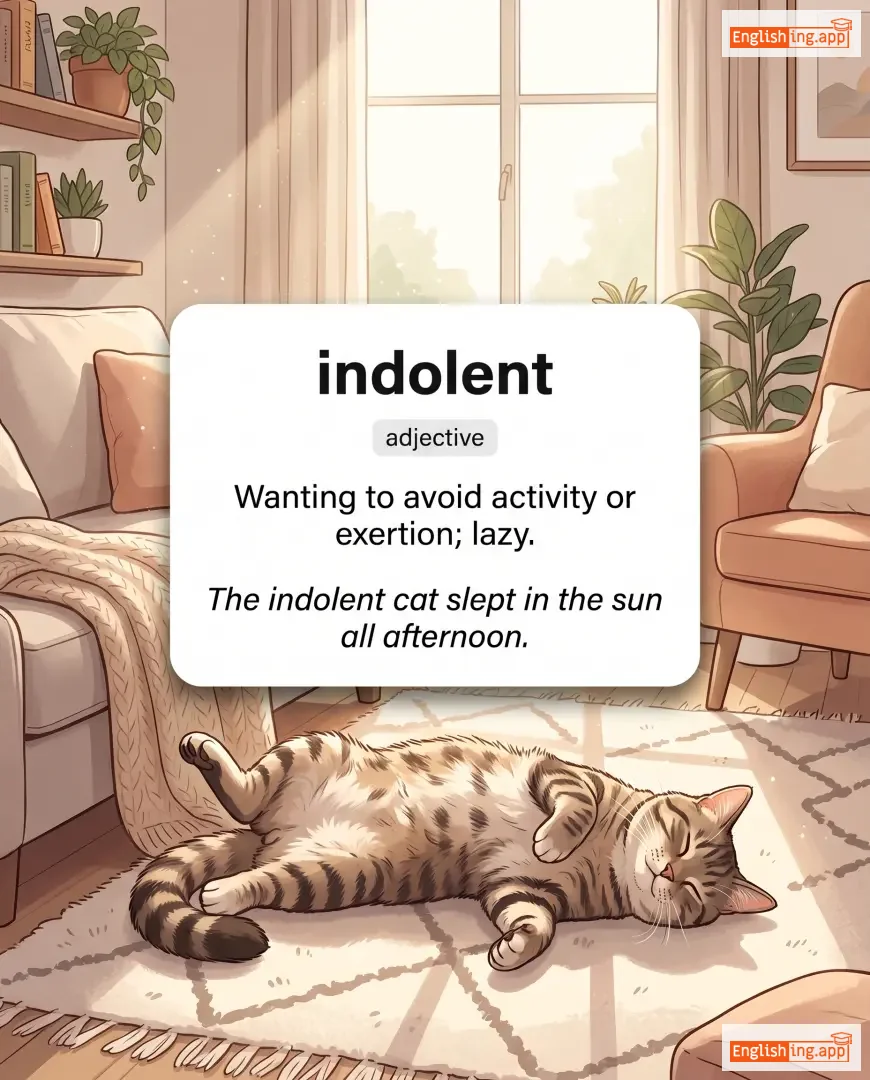
indolent definition card — visual illustration of the meaning
adjective
/ˈɪndələnt/
perezoso (perezoso)

Wanting to avoid activity or exertion; lazy.

"The indolent cat slept in the sun all afternoon."

"El gato perezoso durmió al sol toda la tarde." (El gato perezoso durmió al sol toda la tarde.)
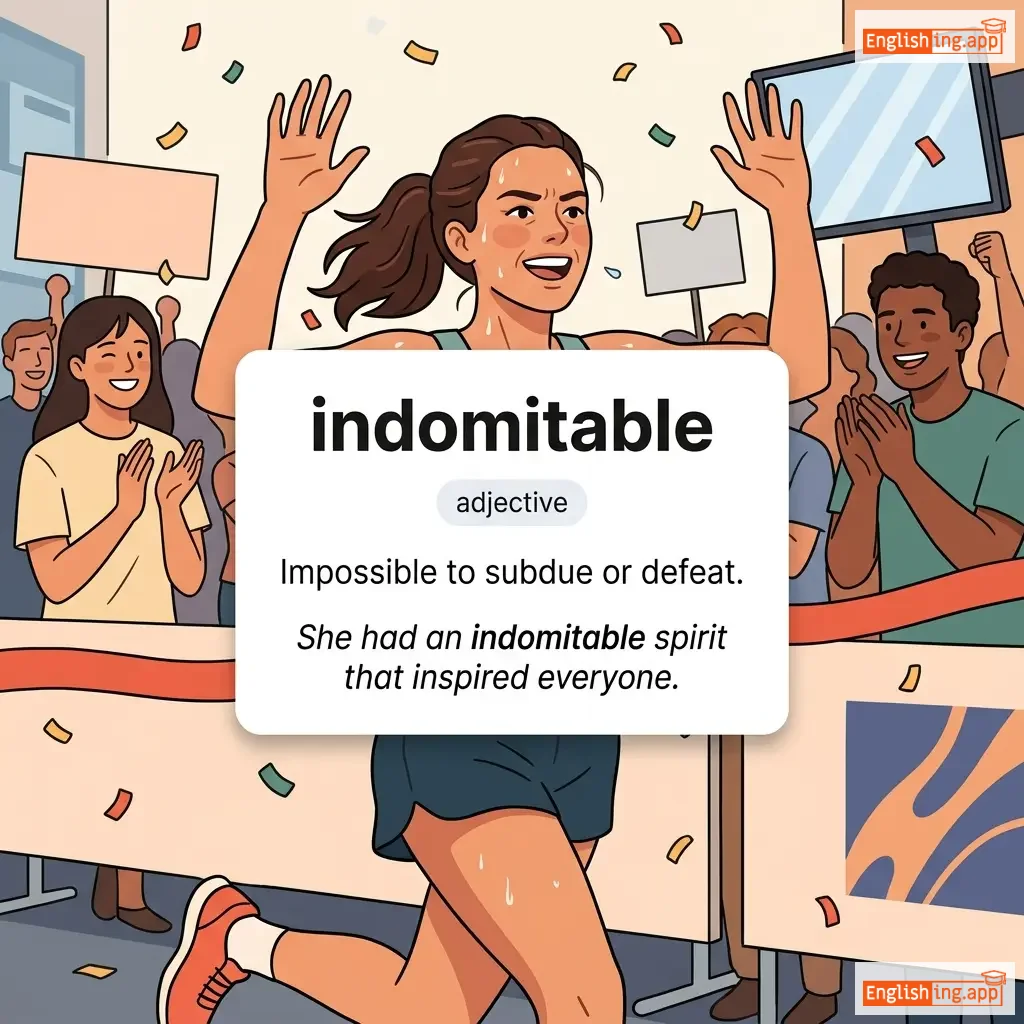
indomitable definition card — visual illustration of the meaning
adjective
/ɪnˈdɒmɪtəbl/
indomable (indomable)

Impossible to subdue or defeat.

"She had an indomitable spirit that inspired everyone."

"Ella tenía un espíritu indomable que inspiró a todos." (Ella tenía un espíritu indomable que inspiró a todos.)
adjective
/ˈɪn.dɔːr/
de interior (de interior)

situated, occurring, or used inside a building

"Indoor plants can improve air quality at home."

"Las plantas de interior pueden mejorar la calidad del aire en casa." (las plantas de interior pueden mejorar la calidad del aire en casa)
adverb
/ˌɪnˈdɔːrz/
en el interior (en el interior)

inside a building; within an enclosed space

"Because of the rain, everyone stayed indoors."

"Debido a la lluvia, todos se quedaron en el interior." (Debido a la lluvia, todos se quedaron en el interior)
adjective
/ɪnˈdjuːbɪtəbl/
indudable (indudable)

Impossible to doubt; unquestionable.

"It is indubitable that hard work leads to success."

"Es indudable que el trabajo duro lleva al éxito." (Es indudable que el trabajo duro lleva al éxito.)
adverb
/ɪnˈdjuːbɪtəbli/
indudablemente (indudablemente)

Without a doubt; certainly.

"She is indubitably the best candidate for the job."

"Ella es indudablemente la mejor candidata para el trabajo." (Ella es indudablemente la mejor candidata para el trabajo.)
verb
/ɪnˈdjuːs/
inducir (inducir)

to cause or persuade someone to do something; to bring about a result

"The doctor induced sleep with a mild sedative."

"El doctor indujo el sueño con un sedante suave." (El doctor indujo el sueño con un sedante suave.)
noun
/ɪnˈdjuːsmənt/
inducido (indusido)

something that persuades or encourages someone to do something

"The company offered a bonus as an inducement to employees."

"La empresa ofreció un bono como incentivo para los empleados." (La empresa ofreció un bono como incentivo para los empleados.)
verb
/ɪnˈdʌkt/
admitir formalmente a alguien en una posición, organización o cargo (admitir formalmente a alguien en una posicion, organizacion o cargo)

to formally admit someone into a position, organization, or office

"She was inducted into the university's honor society."

"Ella fue admitida en la sociedad de honor de la universidad." (Ella fue admitida en la sociedad de honor de la universidad.)
adjective
/ɪnˈdʌktɪv/
inductivo (induktivo)

characterized by the inference of general laws from particular instances; reasoning from specific cases to general principles

"The scientist used inductive reasoning to form a hypothesis."

"El científico usó razonamiento inductivo para formular una hipótesis." (El cientifico uso razonamiento inductivo para formular una hipotesis.)
verb
/ɪnˈdʌldʒ/
entregarse (entregarse)

to allow oneself to enjoy something enjoyable, often excessively

"He indulged in a piece of chocolate cake after dinner."

"Él se entregó a un trozo de pastel de chocolate después de la cena." (El se entregó a un trozo de pastel de chocolate después de la cena.)
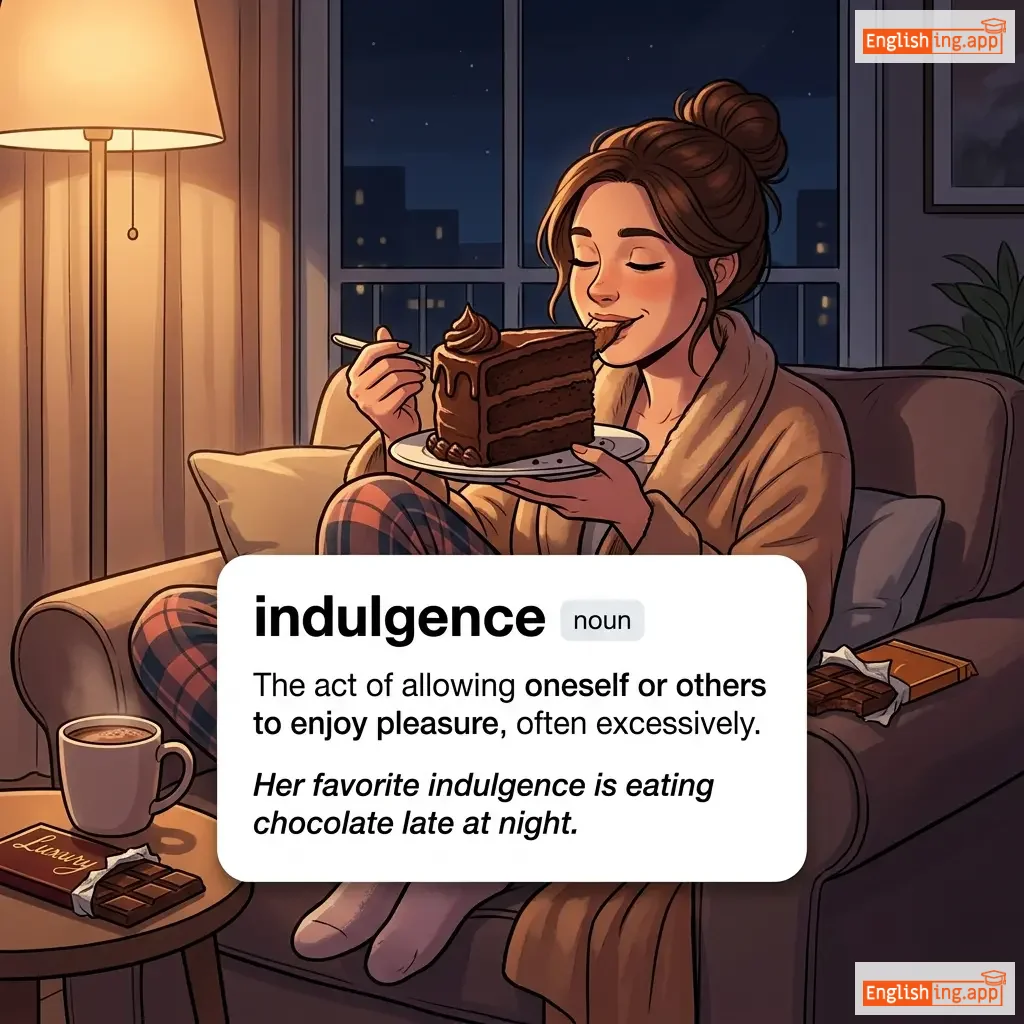
indulgence definition card — visual illustration of the meaning
noun
/ɪnˈdʌldʒəns/
indulgencia (indulgencia)

The act of allowing oneself or others to enjoy pleasure, often excessively.

"Her favorite indulgence is eating chocolate late at night."

"Su indulgencia favorita es comer chocolate tarde en la noche." (Su indulgencia favorita es comer chocolate tarde en la noche.)
adjective
/ɪnˈdʌldʒənt/
indulgente (indulgente)

Having a tendency to be overly generous or lenient with someone.

"The indulgent mother allowed her child to stay up late."

"La madre indulgente permitió que su hijo se quedara despierto hasta tarde." (La madre indulgente permitió que su hijo se quedara despierto hasta tarde.)
verb
/ˈɪndjʊˌreɪt/
endurecer (endurecer)

To harden or make something physically or emotionally tough.

"Years of hardship indurated his spirit."

"Años de dificultades induraron su espíritu." (Anos de dificultades induraron su espiritu.)