🏭Industrial Revolution (インダストリアル・レヴォリューション)

noun
/ɪnˈdʌstriəl ˌrɛvəˈluːʃən/
産業革命 (Sangyō kakumei)

意味

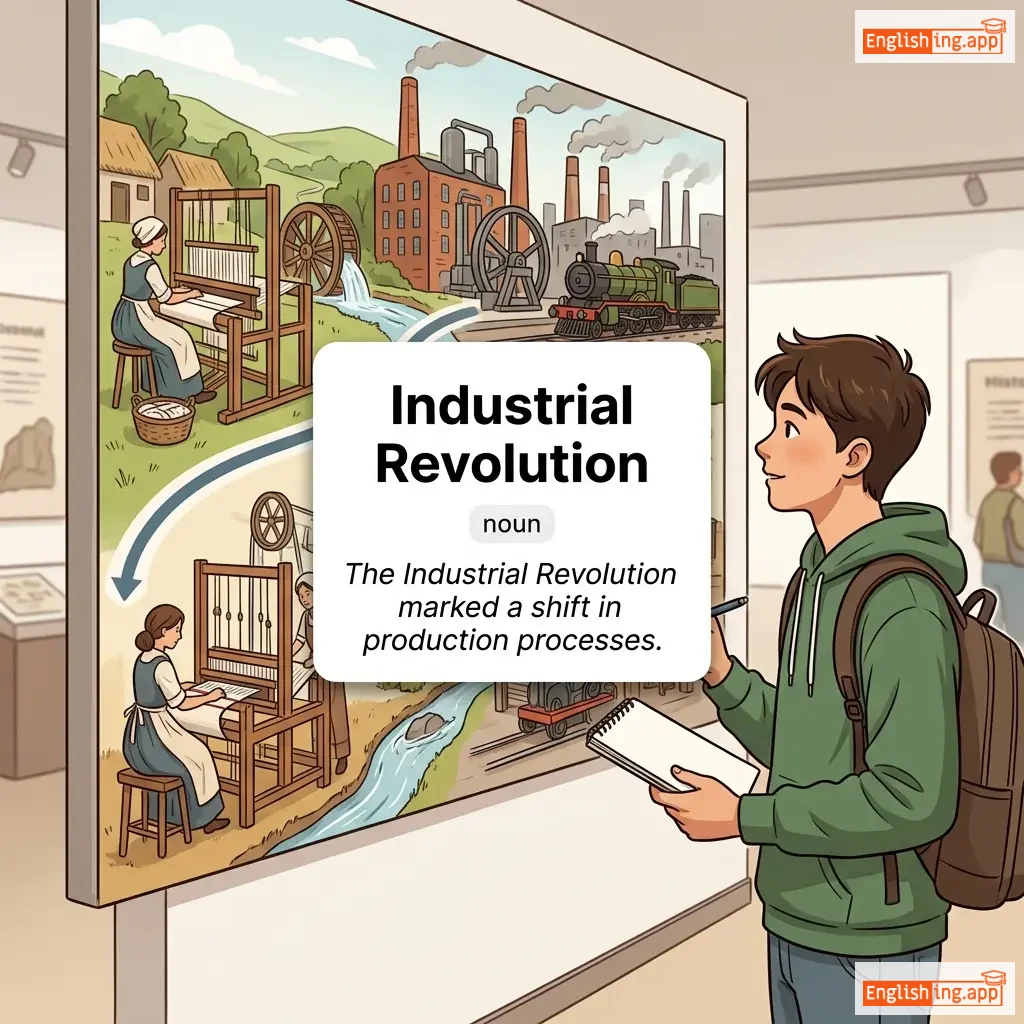
The rapid development of industry that occurred in Britain in the late 18th and 19th centuries, brought about by the introduction of machinery and characterized by the use of steam power and the growth of factories.
意味の翻訳
18世紀後半から19世紀にかけて、イギリスで起こった産業の急速な発展。これは機械の導入によって引き起こされ、蒸気機関の使用と工場の増加を特徴としていました。
18 seiki kōhan kara 19 seiki ni kakete, Igirisu de okotta sangyō no kyūsoku na hatten. Kore wa kikai no dōnyū ni yotte hikiokosare, jōki kikan no shiyō to kōjō no zōka o tokuchō to shite imashita.

例文

The Industrial Revolution marked a shift in production processes.

産業革命は生産プロセスにおける変化を示しました。
Sangyō kakumei wa seisan purosesu ni okeru henka o shimeshita.
同義語

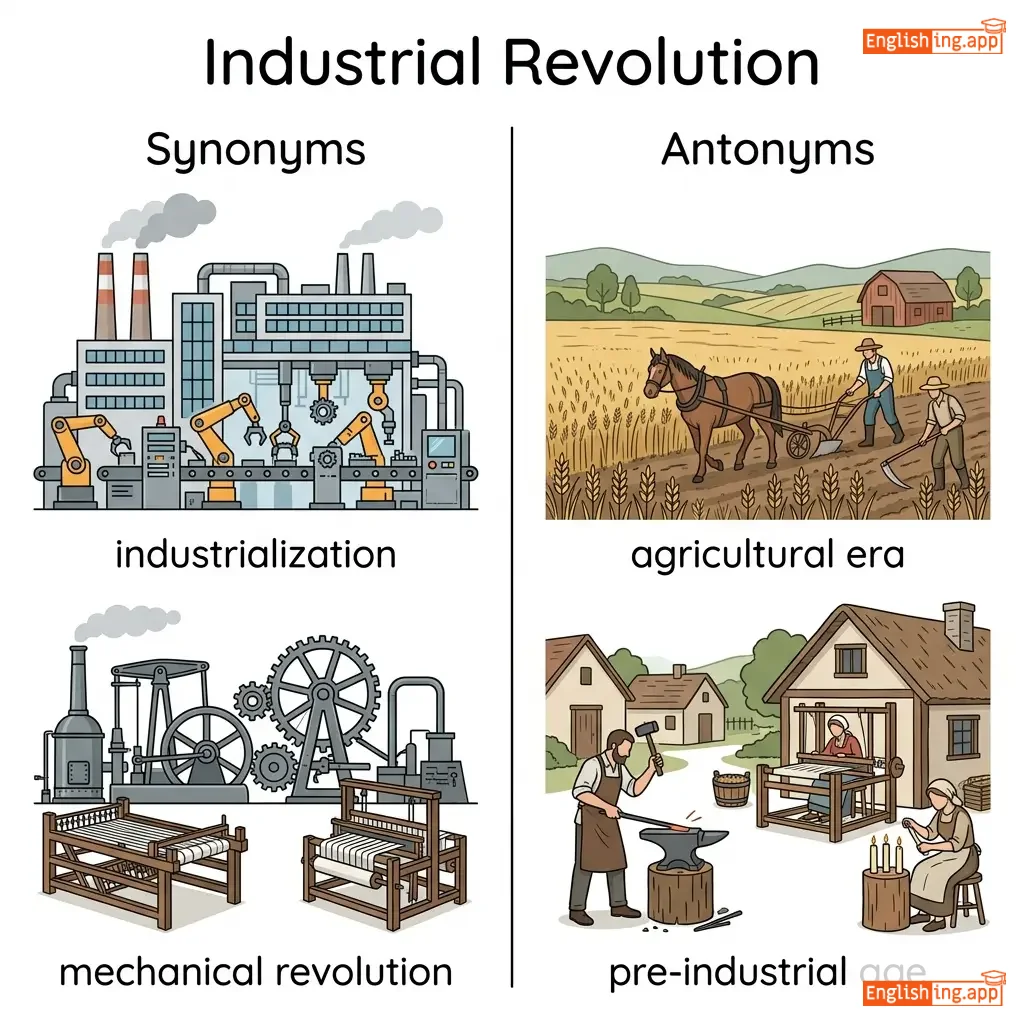
industrialization, mechanical revolution, factory system, manufacturing revolution, technological advancement, economic transformation

対義語

agricultural era, pre-industrial age, deindustrialization, traditional economy, manual production, craft economy

その他の例文

In the era of the fourth industrial revolution, we need to update both our skills and mindset.

第4次産業革命の時代において、私たちはスキルとマインドセットの両方を更新する必要があります。
Daiyonji sangyō kakumei no jidai ni oite, watashitachi wa sukiru to maindosetto no ryōhō o kōshin suru hitsuyō ga arimasu.

関連語彙

a room or building where people engage in work or creative activities
the small, hard part of a plant from which a new plant can grow
a wooden stick used for stirring and churning butter, milk, or other liquids
A small, thin, high-heeled shoe or a dagger with a slender blade.
the system of courts and judges that interprets and applies the law
an enemy or opponent

さらに探索