語彙集

英単語辞書 | 単語の意味、定義、例文

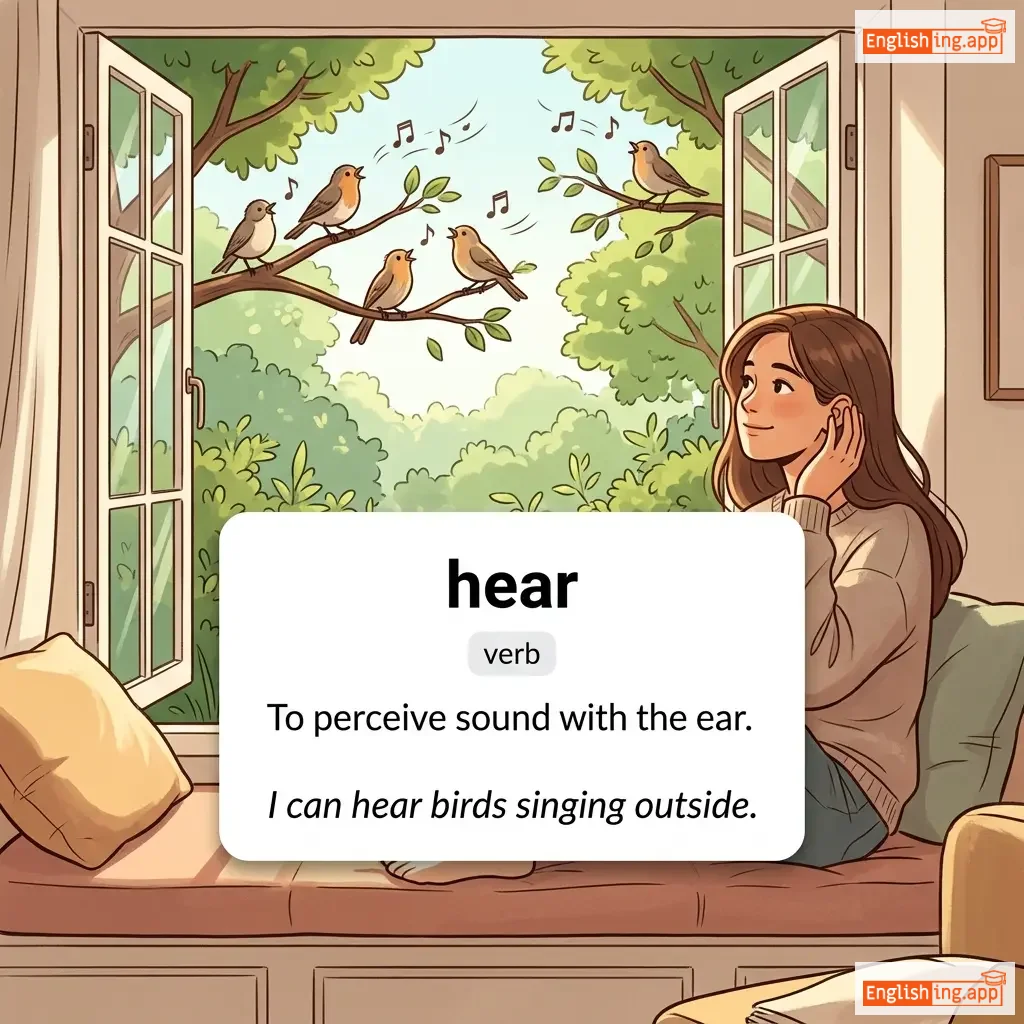
hear definition card — visual illustration of the meaning
verb
/hɪr/
聞く (kiku)

To perceive sound with the ear.

"I can hear birds singing outside."

"私は外で鳥が歌っているのを聞くことができます。" (Watashi wa soto de tori ga utatte iru no o kiku koto ga dekimasu.)
noun
/ˈhɪərɪŋ/
ヒアリング / 聴覚 (hīringu / chōkaku)

the ability to perceive sounds or an official meeting to listen to arguments or evidence

"The judge scheduled a hearing for next week."

"裁判官は来週のヒアリングを予定しています。" (Saibankan wa raishū no hīringu o yotei shiteimasu.)
verb
/ˈhɑːrkən/
注意深く聞く (chūibukaku kiku)

To listen attentively; to give heed.

"He would hearken to his mentor’s advice before making decisions."

"彼は意思決定を下す前に、メンターのアドバイスに耳を傾けた。" (Kare wa ishikettei o kudasu mae ni, mentā no adobaisu ni mimi o katamuketa.)
noun
/ˈhɪərseɪ/
(uwasa)

Information received from other people that cannot be substantiated; rumor.

"The decision was based on hearsay, not evidence."

"その決定は証拠ではなく、噂に基づいていました。" (Sono kettei wa shouko dewa naku, uwasa ni motozuite imashita.)
noun
/hɜːrs/
霊柩車; (reikyūsha)

a vehicle for conveying the coffin at a funeral; a funeral car

"The black hearse slowly made its way to the cemetery, followed by a procession of mourners."

"黒い霊柩車がゆっくりと墓地に向かい、その後ろに哀悼の列が続いていた。" (Kuroi reikyūsha ga yukkuri to bochi ni mukai, sono ushiro ni aitō no retsu ga tsudzuite ita.)
Heart definition card — visual illustration of the meaning
noun
/hɑːrt/
心臓 (shinzou)

the organ that pumps blood through the body; also the center of emotions

"Her heart was beating fast with excitement."

"彼女の心臓は興奮で速く鼓動していた。" (Kanojo no shinzou wa koufun de hayaku kodou shiteita.)
heartbeat definition card — visual illustration of the meaning
noun
/ˈhɑːt.biːt/
心拍 (shinpaku)

A pulsation of the heart, especially as perceptible to the touch or audible with a stethoscope.

"Rubbing the eyes helps normalize the heartbeat."

"目をこすることで心拍を正常に戻すのに役立ちます。" (Me wo kosuru koto de shinpaku wo seijou ni modosu no ni yakudachimasu.)
adjective
/ˈhɑːrtˌbreɪkɪŋ/
胸が痛むような; 心を打つ; 哀れな (mune ga itamu you na; kokoro o utsu; aware na)

causing overwhelming distress; very sad or disappointing

"The documentary showed heartbreaking scenes of children in poverty."

"ドキュメンタリーは貧困の中の子供たちの胸が痛むようなシーンを見せました。" (Dokyumentarī wa hinkon no naka no kodomotachi no mune ga itamu yō na shīn o misemashita.)
verb
/ˈhɑːrtən/
勇気づける (yūki dzukeru)

To give courage, confidence, or hope.

"The teacher’s encouragement heartened the students."

"先生の励ましは学生たちに勇気を与えた。" (Sensei no hagemashi wa gakusei-tachi ni yūki o ataeta.)
adverb
/ˈhɑr.tɪ.li/
心から; 熱心に (kokoro kara; nesshin ni)

in a sincere and enthusiastic manner; wholeheartedly

"She heartily welcomed her guests to the party."

"彼女は心からゲストをパーティーに迎えました。" (kanojo wa kokoro kara gesuto o pātii ni mukaemashita.)
adjective
/ˈhɑːrtˌrɛndɪŋ/
胸が張り裂けるような (mune ga harisakeru you na)

Causing great sadness or distress; very moving emotionally.

"The documentary showed heartrending scenes of war victims."

"ドキュメンタリーは戦争の犠牲者たちの胸が張り裂けるような場面を見せました。" (Dokyumentarī wa sensō no gisei-sha-tachi no mune ga harisakeru yō na bamen o misemashita.)
adjective
/ˈhɑːrti/
熱心で友好的; 豊富で栄養豊富 (nesshin de yūkōteki; hōfu de eiyō-yutaka)

enthusiastic and friendly; substantial and nourishing

"He gave us a hearty welcome when we arrived at his home."
"彼は私たちが家に到着したとき、熱心な歓迎をしてくれました。" (Kare wa watashitachi ga ie ni tōchaku shita toki, nesshin na kangei o shite kuremashita.)
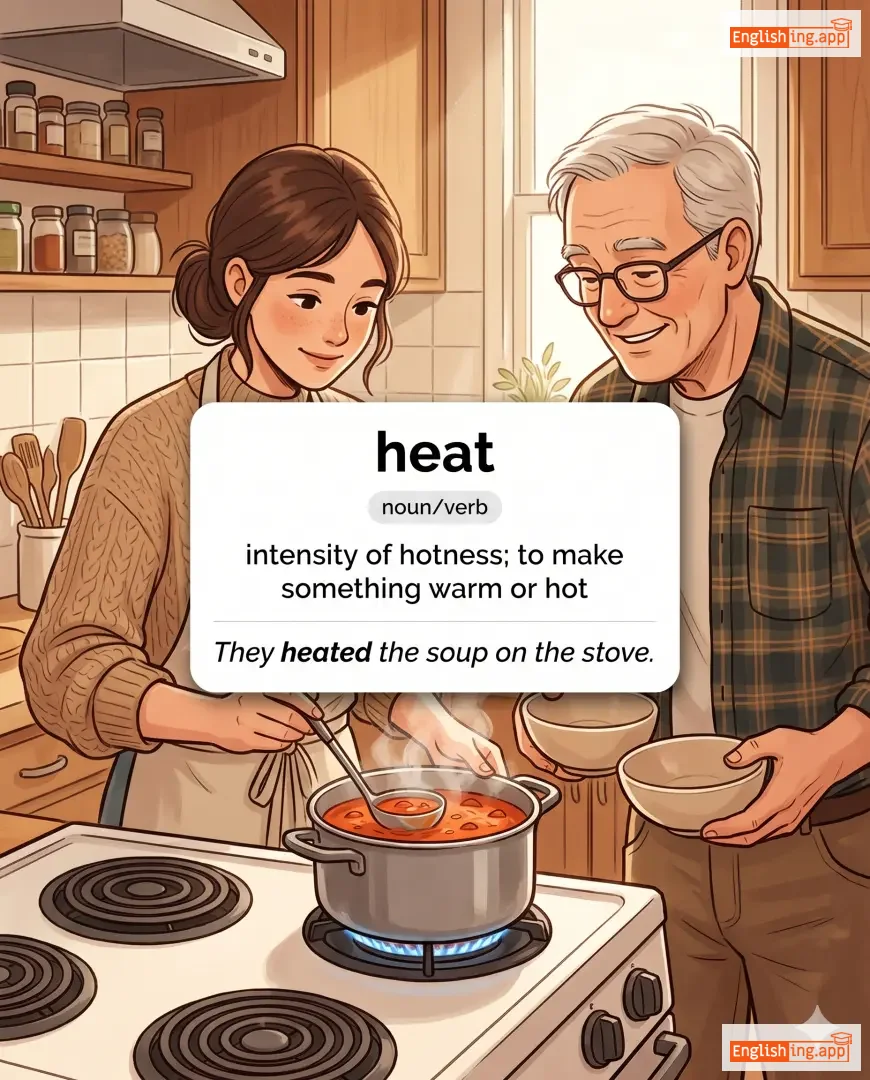
heat definition card — visual illustration of the meaning
noun/verb
/hiːt/
熱 / 暖める (netsu / atatameru)

intensity of hotness; to make something warm or hot

"They heated the soup on the stove."

"彼らはストーブでスープを温めた。" (Karera wa sutōbu de sūpu o atatameta.)
adjective
/ˈhiːðənɪʃ/
野蛮 (yaban)

Lacking culture or religion; barbaric or uncivilized.

"They considered the ancient tribe’s rituals heathenish."

"彼らは古代部族の儀式を未開だと考えた。" (Karera wa kodai buzoku no gishiki o mikai da to kangaeta.)
noun
/ˈhɛvən/
天国 (tengoku)

the place believed to be the home of God and the afterlife of the good; a state of extreme happiness

"They believe that good people go to heaven after death."

"彼らは良い人々が死後天国に行くと信じている。" (Karera wa yoi hitobito ga shigo tengoku ni iku to shinjite iru.)
adjective
/ˈhevənli/
天のような; 神聖な; 美味しい (ten no you na; shinsei na; oishii)

relating to heaven; extremely pleasant or beautiful

"The chocolate cake had a heavenly taste that melted in my mouth."

"チョコレートケーキは天のような味わいで、口の中で溶けました。" (chokorēto kēki wa ten no yō na ajiwai de, kuchi no naka de tokemashita.)
adverb
/ˈhɛvɪli/
重く / 大量に (omoku / tairyou ni)

to a great degree; with a lot of weight, intensity, or force

"It rained heavily all night."

"一晩中激しく雨が降った。" (Hitobanjuu hageshiku ame ga futta.)
adjective
/ˈhɛvi/
重い (omoi)

having great weight; difficult to lift or move

"The box was too heavy for her to carry alone."

"その箱は彼女が一人で運ぶには重すぎました。" (Sono hako wa kanojo ga hitori de hakobu ni wa omosugimashita.)
noun
/ˈhɛklər/
野次を飛ばす人 (yaji o tobasu hito)

A person who interrupts a speaker with rude or aggressive comments.

"The politician remained calm despite the heckler shouting from the crowd."

"政治家は群衆から叫んでいたヘクラーにもかかわらず冷静を保ちました。" (Seijika wa gunshū kara sakendeta hekurā ni mo kakawarazu reisei o tamochimashita.)
adjective
/ˈhek.tɪk/
忙しい; 熱狂的; 活動的な (isogashii; nekkyō-teki; katsudō-teki na)

very busy and full of activity; frantic; characterized by intense activity or excitement

"My schedule has been hectic lately with back-to-back meetings."

"最近、私のスケジュールは立て続けの会議で忙しくなっています。" (saikin, watashi no sukejūru wa tate tsudzuke no kaigi de isogashiku natteimasu.)
verb
/ˈhɛktər/
脅して話す (osorete hanasu)

To talk to someone in a bullying or intimidating way.

"The manager hectored the staff into working overtime."
"マネージャーはスタッフに残業をさせるために脅しました。" (Manējā wa sutaffu ni zangyō o saseru tame ni odoshimashita.)
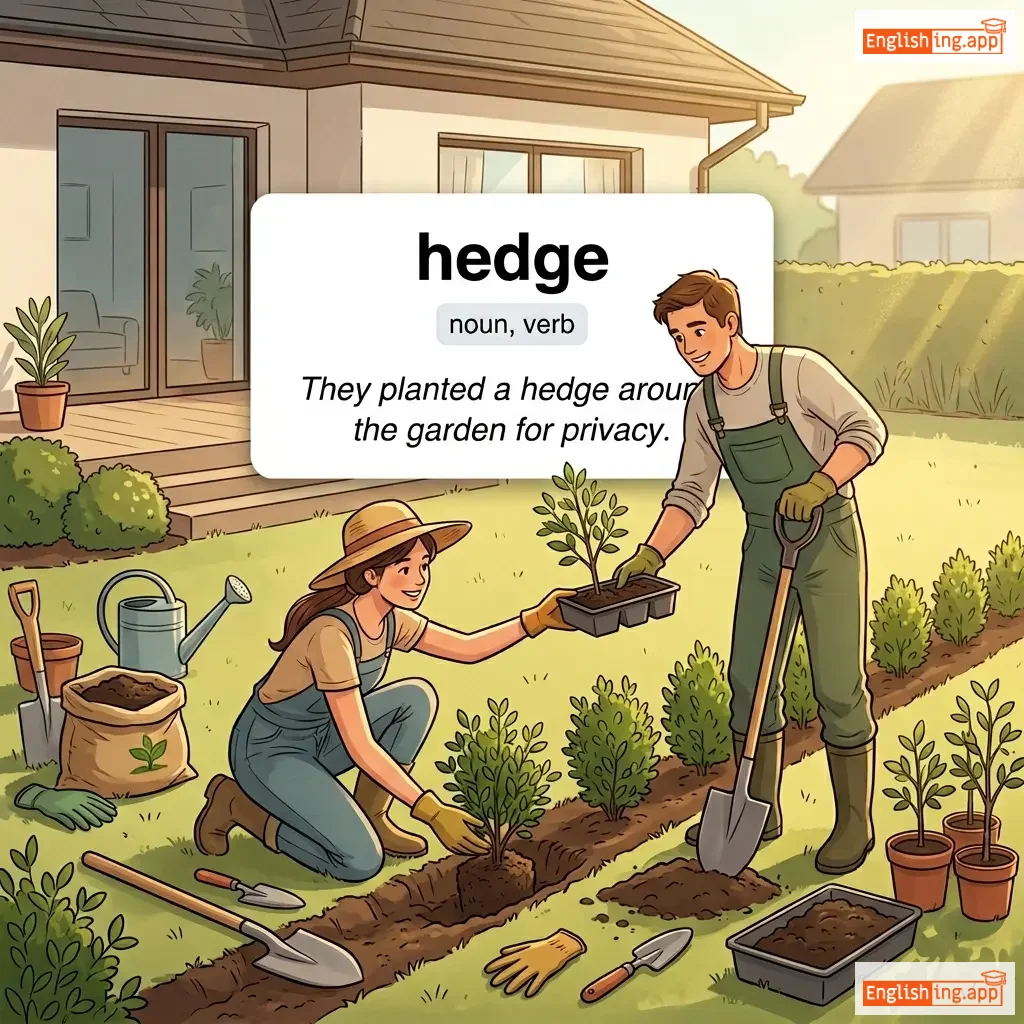
hedge definition card — visual illustration of the meaning
noun, verb
/hɛdʒ/
生け垣 (ikegaki)

A fence or boundary formed by closely planted shrubs; also, to limit or qualify a statement.

"They planted a hedge around the garden for privacy."
"プライバシーのために庭の周りに生け垣を植えました。" (Puraibashī no tame ni niwa no mawari ni ikegaki wo uemashita.)
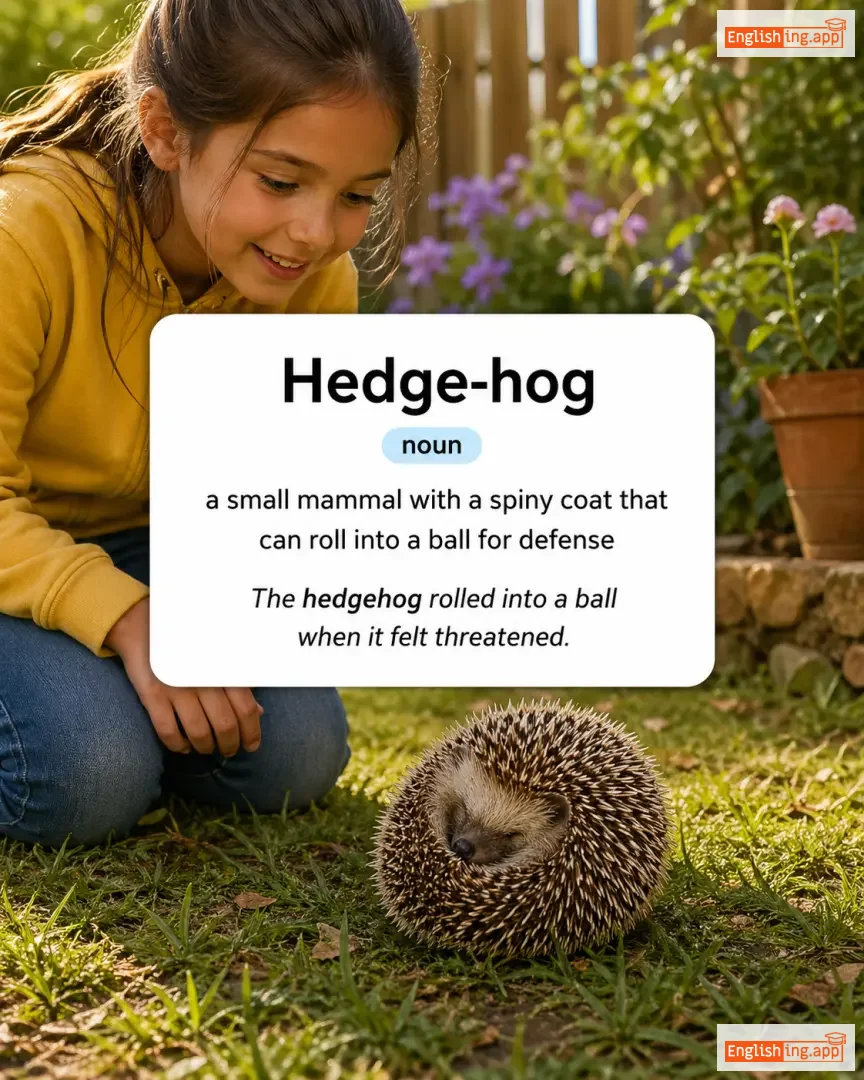
Hedge-hog definition card — visual illustration of the meaning
noun
/ˈhedʒhɒɡ/
ハリネズミ (harinezumi)

a small mammal with a spiny coat that can roll into a ball for defense

"The hedgehog rolled into a ball when it felt threatened."

"ハリネズミは脅威を感じるとボールのように丸くなります。" (Harinezumi wa kyōi o kanjiru to bōru no yō ni marukunarimasu.)
noun
/ˈhiːdəˌnɪzəm/
快楽主義 (kairakushugi)

The pursuit of pleasure and self-indulgence as the highest goal.

"The lifestyle of the rich is often criticized as pure hedonism."

"金持ちのライフスタイルはしばしば純粋な快楽主義として批判されます。" (Kanemochi no raifusutairu wa shibashiba junsuina kairakushugi to shite hihansaremasu.)
noun
/ˈhiːdənɪst/
快楽主義者 (kairakushugisha)

A person who believes that the pursuit of pleasure is the most important thing in life.

"She was called a hedonist because she always prioritized enjoyment over duty."

"彼女は常に義務よりも楽しみを優先していたため、快楽主義者と呼ばれました。" (Kanojo wa tsuneni gimu yori mo tanoshimi o yūsen shite ita tame, kairaku shugisha to yobaremashita.)
verb
/hiːd/
注意を払う (chuui wo harau)

to pay attention to; to take notice of

"You should heed the teacher's advice."

"あなたは先生のアドバイスに耳を傾けるべきです。" (Anata wa sensei no adobaisu ni mimi wo katamukeru beki desu.)
adjective
/ˈhiːdləs/
無頓着 (mutonchaku)

showing a reckless lack of care or attention

"He drove with heedless disregard for the rules."

"彼はルールを無視して運転した。" (Kare wa rūru o mushi shite unten shita.)
noun
/hiːl/
かかと (kakato)

the back part of the human foot below the ankle

"Her shoe was rubbing against her heel."

"彼女の靴は彼女のかかとにこすれていた。" (Kanojo no kutsu wa kanojo no kakato ni kosurete ita.)
noun
/hɪˈdʒɛməni/ or /ˈhɛdʒəmoʊni/
覇権 (haken)

leadership or dominance, especially by one state or group over others

"The empire maintained its hegemony over neighboring states."

"帝国は隣国に対してその覇権を維持した。" (Teikoku wa ringoku ni taishite sono haken o iji shita.)
🚶‍♂️

hegira (ヘジラ)

noun
/ˈhɛdʒɪrə/ or /hɪˈdʒaɪrə/
移住, 亡命 (ijuu, boumei)

a journey, especially when undertaken to escape from a dangerous or undesirable situation

"The refugees began their hegira across the desert."

"難民たちは砂漠を越えて移住を始めた。" (Nanmin-tachi wa sabaku o koete ijiu o hajimeta.)
noun
/ˈhɛfər/
雌牛 (mesu ushi)

a young cow that has not borne a calf

"The farmer raised a heifer for dairy production."

"農家は乳製品の生産のためにヘイファーを育てました。" (Nōka wa nyūseihin no seisan no tame ni heifā o sodatemashita.)
noun
/haɪt/
高さ (takasa)

the measurement of someone or something from base to top

"The height of the tower impressed the visitors."

"塔の高さは訪問者を感動させました。" (Tou no takasa wa houmonsha wo kandou sasemashita.)
verb
/ˈhaɪtən/
高める (takameru)

to make or become greater in intensity or degree

"The announcement served to heighten the excitement in the room."

"その発表は部屋の興奮を高めるために役立ちました。" (Sono happyō wa heya no kōfun o takameru tame ni yakudachimashita.)
adjective
/ˈheɪ.nəs/
凶悪 (kyōaku)

extremely wicked, deeply offensive, or shockingly evil

"The dictator was condemned for his heinous crimes against humanity."

"独裁者は人道に対する凶悪な犯罪で非難された。" (Dokusai-sha wa jindō ni taisuru kyōaku na hanzai de hinan sareta.)
noun
/er/
相続人 (souzokunin)

a person legally entitled to the property or rank of another on that person's death

"The young prince was the rightful heir to the throne and would become king someday."

"若い王子は王位の正当な相続人であり、いつか王になるでしょう。" (Wakai ouji wa oui no seitou na souzokunin de ari, itsuka ou ni narudeshou.)
noun
/ˈɛər.luːm/
遺産 (isan)

a valuable object that has belonged to a family for several generations

"The ring is a family heirloom passed down from her grandmother."

"その指輪は祖母から受け継がれた家族の遺産です。" (Sono yubiwa wa sobo kara uketsugareta kazoku no isan desu.)
noun
/ˈhɛlɪˌkɒptər/
ヘリコプター (herikoputā)

an aircraft with rotating blades that can take off and land vertically

"The helicopter landed safely on the hospital roof."

"ヘリコプターは病院の屋上に安全に着陸しました。" (Herikoputā wa byōin no okujō ni anzen ni chakuriku shimashita.)
noun
/hɛl/
地獄 (jigoku)

a place or state of great suffering and torment, often in religious belief

"He feared that his sins would send him to hell."

"彼は自分の罪が彼を地獄に送るのではないかと恐れていました。" (Kare wa jibun no tsumi ga kare o jigoku ni okuru no de wa nai ka to osorete imashita.)
interjection
/həˈloʊ/
ハロー (harō)

a greeting or expression used when meeting someone or starting a conversation

"She answered the phone with a cheerful hello."

"彼女は電話を取って、元気にハローと言った。" (Kanojo wa denwa o totte, genki ni harō to itta.)
Helm definition card — visual illustration of the meaning
noun
/hɛlm/
指導, 舵 (shido, kaita)

a position of leadership or the steering apparatus of a ship

"After years of service, she finally took the helm of the company."

"長年の奉仕の後、彼女はついに会社の指導を引き継ぎました。" (Naganen no houshi no ato, kanojo wa tsuini kaisha no shidou wo hikitsugimashita.)
noun
/ˈhɛl.mət/
ヘルメット (herumetto)

a hard protective hat worn to protect the head

"The rider put on his helmet before starting the motorcycle."

"ライダーはバイクを始める前にヘルメットをかぶった。" (Raidaa wa baiku wo hajimeru mae ni herumetto wo kabutta.)
noun
/ˈhelmz.mən/
舵手; キャプテン (dōshu; kyaputen)

a person who steers a ship or boat; the person at the helm of a vessel

"The experienced helmsman skillfully guided the yacht through the narrow channel during the storm."

"経験豊富な舵手は、嵐の中で狭い水路をヨットで巧みに導きました。" (Keiken hōfu na dōshu wa, arashi no naka de semai suiro o yotto de takumi ni michibikimashita.)
Help definition card — visual illustration of the meaning
verb
/hɛlp/
手伝う (tetsudau)

To make it easier for someone to do something by offering services or resources.

"She helped her friend with the homework."

"彼女は宿題を手伝った。" (Kanojo wa shukudai o tetsudatta.)
adjective
/ˈhɛlpfəl/
役に立つ (yaku ni tatsu)

giving help or being useful

"The guide was very helpful during our trip."

"旅行中、ガイドはとても役に立ちました。" (Ryokou-chuu, gaido wa totemo yaku ni tachimashita.)
adjective
/ˈhelp.ləs/
無力; 助けがない; 脆弱 (muryoku; tasuke ga nai; zeijaku)

unable to defend oneself or act without help; powerless; vulnerable

"The child felt helpless when lost in the crowded market."

"その子供は混雑した市場で迷子になったとき、無力だと感じた。" (Sono kodomo wa konzatsu shita ichiba de maigo ni natta toki, muryoku da to kanjita.)
noun/verb
/hɛm/
布の裾 (nuno no suso)

the edge of a piece of cloth that is folded and sewn; to fold and sew the edge of cloth

"She hemmed the dress to make it shorter."

"彼女はドレスを短くするためにヘムドしました。" (Kanojo wa doresu o mijikaku suru tame ni hemudo shimashita.)
hemophilia definition card — visual illustration of the meaning
noun
ˌhiː.məˈfɪl.i.ə
血友病 (ketsuyobyou)

A medical condition in which the ability of the blood to clot is severely reduced, causing the sufferer to bleed severely from even a slight injury.

"Hemophilia treatment benefits from genetic editing."

"血友病の治療は遺伝子編集から利益を得る。" (Ketsuyobyou no chiryou wa idenshi henshuu kara rieki o eru.)
noun/verb
/ˈhɛmərɪdʒ/
出血 (shukketsu)

A significant loss of blood from a ruptured blood vessel, or to lose blood heavily.

"The patient suffered a severe brain hemorrhage."

"患者は重度の脳出血に苦しんでいます。" (Kanja wa jūdona nō shukketsu ni kurushindeimasu.)
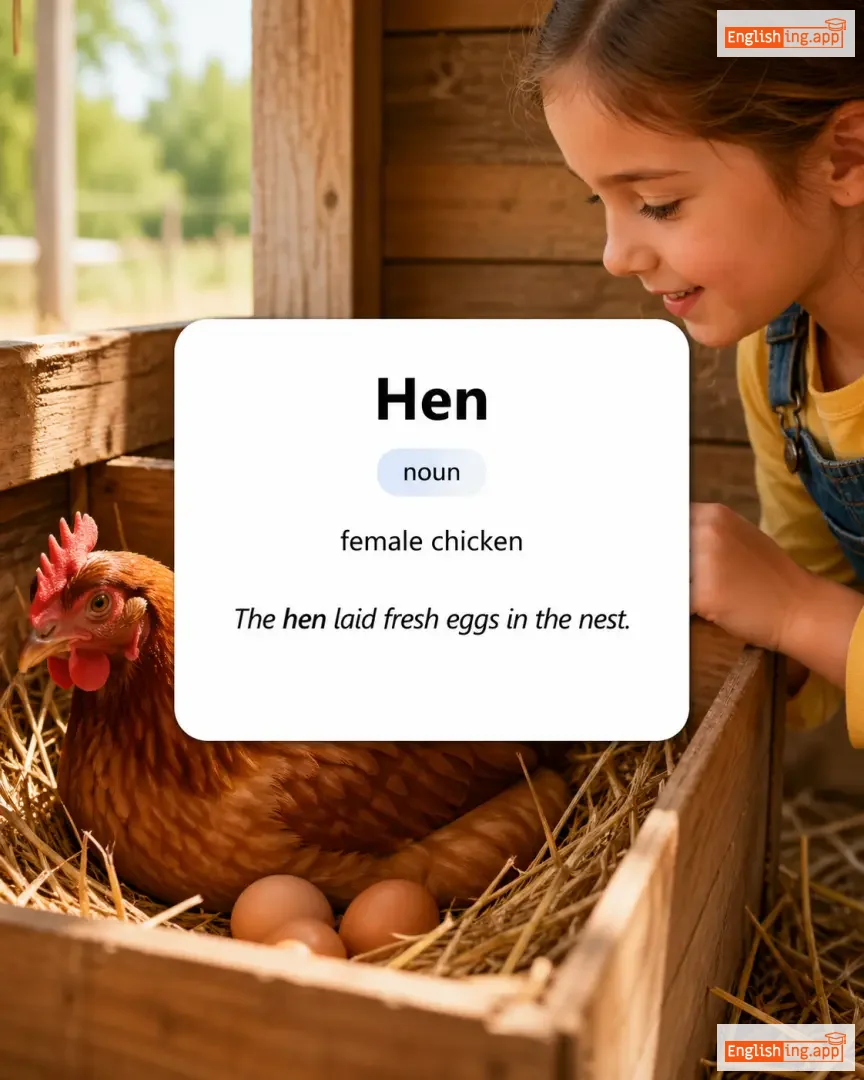
Hen definition card — visual illustration of the meaning
noun
/hɛn/
雌鶏 (mesu niwatori)

female chicken

"The hen laid fresh eggs in the nest."

"雌鶏は巣に新鮮な卵を産んだ。" (Mesu niwatori wa su ni shinsen na tamago o unda.)
adverb
/hɛns/
それゆえ (soreyue)

for this reason; as a result

"She was the best candidate, hence she was chosen for the job."

"彼女は最良の候補者であったため、仕事のために選ばれました。" (Kanojo wa sairyō no kōhosha de atta tame, shigoto no tame ni erabaremashita.)