語彙集

英単語辞書 | 単語の意味、定義、例文

noun
/broʊˈʃʊr/
パンフレット (panfuretto)

a small booklet or pamphlet containing information or advertising

"The travel agent gave us a brochure about the holiday package."

"旅行代理店は休暇パッケージについてのパンフレットをくれました。" (Ryokou dairiten wa kyuuka pakkēji ni tsuite no panfuretto o kuremashita.)
noun
/ˈbroʊɡən/
重い靴 (omoi kutsu)

A heavy, sturdy shoe, often made of leather.

"The farmer wore old brogans while working in the field."

"農夫は畑で働いている間、古いブローガンを履いていました。" (Nōfu wa hatake de hataraiteiru aida, furui burōgan o haite imashita.)
noun
/broʊɡ/
丈夫な靴; アクセント (joubu na kutsu; akusento)

A strong outdoor shoe; also a marked accent, especially Irish or Scottish.

"He bought a pair of stylish brogues for the wedding."

"彼は結婚式のためにおしゃれなブローグを買いました。" (Kare wa kekkonshiki no tame ni oshare na buroogu o kaimashita.)
verb
/brɔɪl/
グリルする (guriru suru)

To cook food by direct heat, usually under a grill or over a fire.

"She broiled the chicken until it was golden brown."

"彼女は鶏肉を金色に焼くまで焼いた。" (Kanojo wa toriniku wo kin'iro ni yaku made yaita.)
verb; adjective
/broʊk/
壊した;無一文 (kowashita; muichimon)

past tense of break; having no money or being financially poor

"I broke my phone last night and now I’m completely broke."

"昨夜スマホを壊してしまい、今は無一文です。" (sakuya sumaho o kowashite shimai ima wa muichimon desu)
adjective
/ˈbroʊkən/
壊れた (kowareta)

damaged or not working properly

"The chair is broken and needs repair."

"椅子は壊れていて、修理が必要です。" (Isu wa kowarete ite, shūri ga hitsuyō desu.)
noun
/ˈbroʊ.kər/
ブローカー (burōkā)

a person who buys and sells things for others as a middleman, especially in financial or property deals

"He works as a real estate broker in the city."

"彼は都市で不動産のブローカーとして働いています。" (Kare wa toshi de fudōsan no burōkā to shite hataraiteimasu.)
noun
/ˈbroʊkərɪdʒ/
仲介業者 (chūka gyōsha)

A firm that acts as an intermediary between buyers and sellers, often charging a fee.

"The real estate brokerage helped them find a new home."

"不動産仲介業者は彼らが新しい家を見つけるのを手伝った。" (Fudōsan chūka gyōsha wa karera ga atarashī ie o mitsukeru no o tetsudatta.)
noun
/ˈbroʊmaɪd/
ありきたりなアイデア (arikitarina aidea)

A trite or unoriginal idea or remark; also a chemical compound of bromine.

"His speech was full of old bromides about hard work."

"彼のスピーチは、努力についての古いありきたりなアイデアでいっぱいだった。" (Kare no supīchi wa, doryoku ni tsuite no furui arikitari na aidea de ippai datta.)
noun
/ˈbroʊmiːn/
ブロミン (bromin)

a dark red, dense, toxic liquid element used in making dyes, flame retardants, and medications

"Bromine is commonly used in water treatment chemicals."

"ブロミンは水処理化学薬品に一般的に使用されます。" (Bromin wa suichōri kagaku yakuhin ni ippanteki ni shiyō saremasu.)
noun
/brɒŋˈkaɪtɪs/
気管支炎 (kikanshien)

inflammation of the lining of the bronchial tubes, which carry air to and from the lungs

"The doctor diagnosed him with acute bronchitis."

"医者は彼に急性の気管支炎を診断しました。" (Isha wa kare ni kyūsei no kikanshien o shindan shimashita.)
noun
/ˈbrɒŋkəs/
気管支 (kikanshi)

either of the two main branches of the trachea that lead directly into the lungs

"The left bronchus carries air into the left lung."

"左気管支は左肺に空気を運びます。" (Hidari kikanshi wa hidari hai ni kūki o hakobimasu.)
noun
/brɑːnz/
(dou)

a metal made by combining copper and tin, often used for statues and medals

"The statue was made of solid bronze."

"その像は固い銅でできていました。" (Sono zou wa katai dou de dekiteimashita.)
noun
/broʊtʃ/

a decorative jewelry pin that is attached to clothing

"She wore a beautiful silver brooch on her jacket."

🐥

brood

verb
/bruːd/

to think deeply about something that makes one unhappy; also, a group of young birds hatched at the same time

"He sat alone, brooding over his failures."

noun/verb
/brʊk/
小川 / 容認する (ogawa / yōnin suru)

As a noun: a small natural stream; As a verb: to tolerate or endure something

"The village was built near a clear brook."

"その村は清らかな小川の近くに建てられました。" (Sono mura wa kiyorakana ogawa no chikaku ni tateraremashita.)
noun
/brum/
ほうき (houki)

a long-handled brush of bristles or twigs, used for sweeping

"She used an old broom to sweep the fallen leaves from the porch."

"彼女は古いほうきを使って、ポーチから落ちた葉を掃きました。" (Kanojo wa furui houki o tsukatte, pōchi kara ochita ha o hakimashita.)
noun
/ˈbrʌðər/
兄弟 (kyoudai)

a male sibling

"My brother is two years older than me."

"私の兄は私より2歳年上です。" (Watashi no ani wa watashi yori 2 sai toshiue desu.)
noun
/ˈbrʌðərhʊd/
兄弟愛 (kyoudai ai)

The relationship between brothers; an association of people with common interests

"The soldiers shared a strong sense of brotherhood."

"兵士たちは強い兄弟愛を共有していました。" (Heishitachi wa tsuyoi kyoudai ai wo kyoyu shiteimashita.)
noun
/braʊ/
(hitai)

the part of the face above the eyes; forehead

"She wiped the sweat from her brow."

"彼女は額の汗を拭った。" (Kanojo wa hitai no ase wo fukutta.)
verb
/ˈbraʊˌbiːt/
脅す / 強制する (odosu / kyousei suru)

To intimidate or bully someone into doing something

"The lawyer tried to browbeat the witness."

"弁護士は証人を脅しつけようとした。" (Bengoshi wa shounin o odoshi tsukeyou to shita.)
adjective
/braʊn/
茶色 (chairo)

of a color produced by mixing red, yellow, and black

"She wore a brown dress to the party."

"彼女はパーティーに茶色のドレスを着て行った。" (Kanojo wa pātī ni chairo no doresu o kite itta.)
adjective
/ˈbraʊn.ɪʃ/
茶色がかった (chairo gatta)

having a color somewhat like brown; tending toward brown

"The old paper had a brownish tint from age."

"古い紙は年齢のために茶色がかった色合いをしていた。" (Furui kami wa nenrei no tame ni chairo gatta iroai o shite ita)
verb
/braʊz/
ブラウズする (burausu suru)

To look at or skim through casually, especially online or in a store

"She likes to browse books in the library."
"彼女は図書館で本をブラウズするのが好きです。" (Kanojo wa toshokan de hon o burausu suru no ga suki desu.)
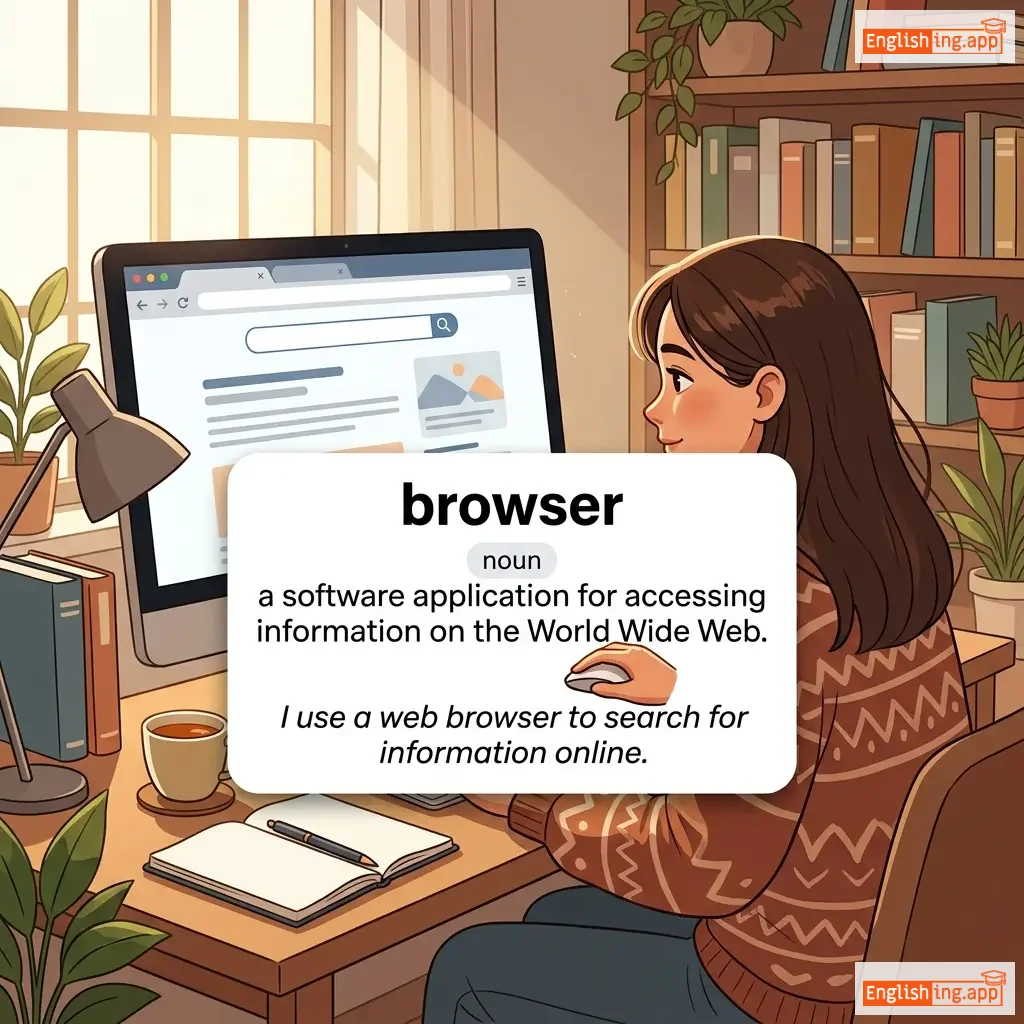
browser definition card — visual illustration of the meaning
noun
/ˈbraʊzər/
ブラウザー (buraūzā)

a software application for accessing information on the World Wide Web.

"I use a web browser to search for information online."

"私はオンラインで情報を検索するためにウェブブラウザーを使用します。" (Watashi wa onrain de jōhō o kensaku suru tame ni u~ebu buraūzā o shiyō shimasu.)
noun/verb
/bruːz/

As a noun: an injury appearing as a purple or blue mark on the skin; As a verb: to injure without breaking the skin

"He got a bruise on his arm after falling."

verb
/bruːt/
噂を広める (uwasa o hiromeru)

to spread a rumor or report widely

"The scandal was quickly bruited about the town."

"スキャンダルは町ですぐに広まりました。" (Sukyandaru wa machi de sugu ni hiromarimashita.)
noun
/brʌnt/
主な影響 (omona eikyo)

the worst part or main impact of something unpleasant

"The small town bore the brunt of the storm."

"小さな町は嵐の主な影響を受けました。" (Chiisana machi wa arashi no omona eikyo o ukemashita.)
🖌️

Brush

noun/verb
/brʌʃ/

A tool with bristles for cleaning, painting, or grooming; to clean, arrange, or apply with a brush.

"She used a brush to paint the fence."

adjective
/bruːsk/ or /brʌsk/
ぶっきらぼう (bukkirabou)

abrupt or blunt in manner or speech, often seen as rude

"His brusque reply ended the conversation."

"彼のぶっきらぼうな返事で会話が終わった。" (Kare no bukkirabou na henji de kaiwa ga owatta.)
adverb
/ˈbruːskli/ or /ˈbrʌskli/
無愛想に (buaisou ni)

in a blunt, abrupt, or rude manner

"She brusquely dismissed the suggestion."

"彼女は無愛想に提案を拒否しました。" (Kanojo wa buaisou ni teian o kyohi shimashita.)
adjective
/ˈbruː.təl/
残酷 (zankoku)

extremely cruel or harsh; violent and without feeling

"The dictator’s rule was marked by brutal violence."

"独裁者の統治は残酷な暴力によって特徴付けられていた。" (Dokusaisha no tōchi wa zankoku na bōryoku ni yotte tokuchōzukerareteita.)
noun
/bruːˈtæləti/
残虐さ (zangyakusa)

extreme cruelty or violence; savage or inhumane treatment

"The brutality of the attack shocked the entire community."

"その攻撃の残虐さは地域全体を震撼させた。" (Sono kougeki no zangyakusa wa chiiki zentai o shinkan saseta)
verb
/ˈbruːtəlaɪz/
残虐に扱う (zangyaku ni atsukau)

to treat someone with extreme violence or cruelty; to make something harsh or cruel

"The regime was accused of brutalizing innocent civilians."

"その政権は無実の民間人を残虐に扱ったとして非難された。" (sono seiken wa mujitsu no minkan jin o zangyaku ni atsukatta to shite hinan sareta)
adverb
/ˈbruːtəli/
残酷に (zankoku ni)

in a cruel, violent, or harsh manner; in a very direct and blunt way

"The prisoners were treated brutally by the guards."

"囚人たちは看守に残酷に扱われた。" (shuujintachi wa kanshu ni zankoku ni atsukawareta)
noun
/ˈbʌb.əl/
(awa)

a thin sphere of liquid enclosing air or gas; a temporary state of inflated value or excitement

"The children chased the bubbles in the air."

"子供たちは空中の泡を追いかけました。" (Kodomotachi wa kūchū no awa o oikakemashita.)
noun
/ˌbʌkəˈnɪər/
海賊 (kaizoku)

a pirate, especially one active in the Caribbean during the 17th and 18th centuries

"The buccaneer sailed across the Caribbean in search of treasure."
"その海賊はカリブ海を航海し、宝物を探していた。" (Sono kaizoku wa Karibu umi o koukai shi, takaramono o sagashite ita.)
🦌

buck

noun/verb
/bʌk/

A male deer; also to resist or oppose strongly.

"The horse began to buck wildly as the rider tried to hold on."

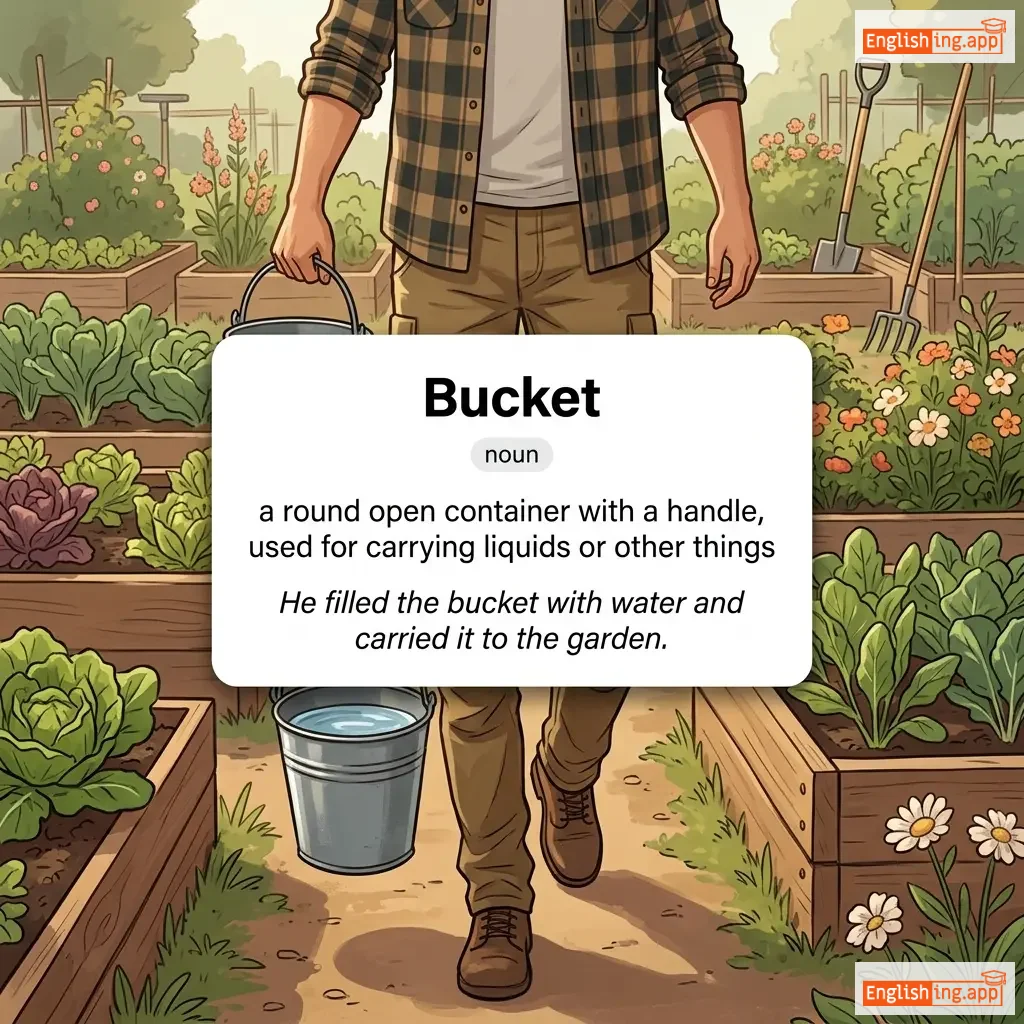
Bucket definition card — visual illustration of the meaning
noun
/ˈbʌkɪt/
バケツ (baketsu)

a round open container with a handle, used for carrying liquids or other things

"He filled the bucket with water and carried it to the garden."
"彼はバケツに水を入れて、庭に持って行きました。" (kare wa baketsu ni mizu o irete, niwa ni motte ikimashita.)
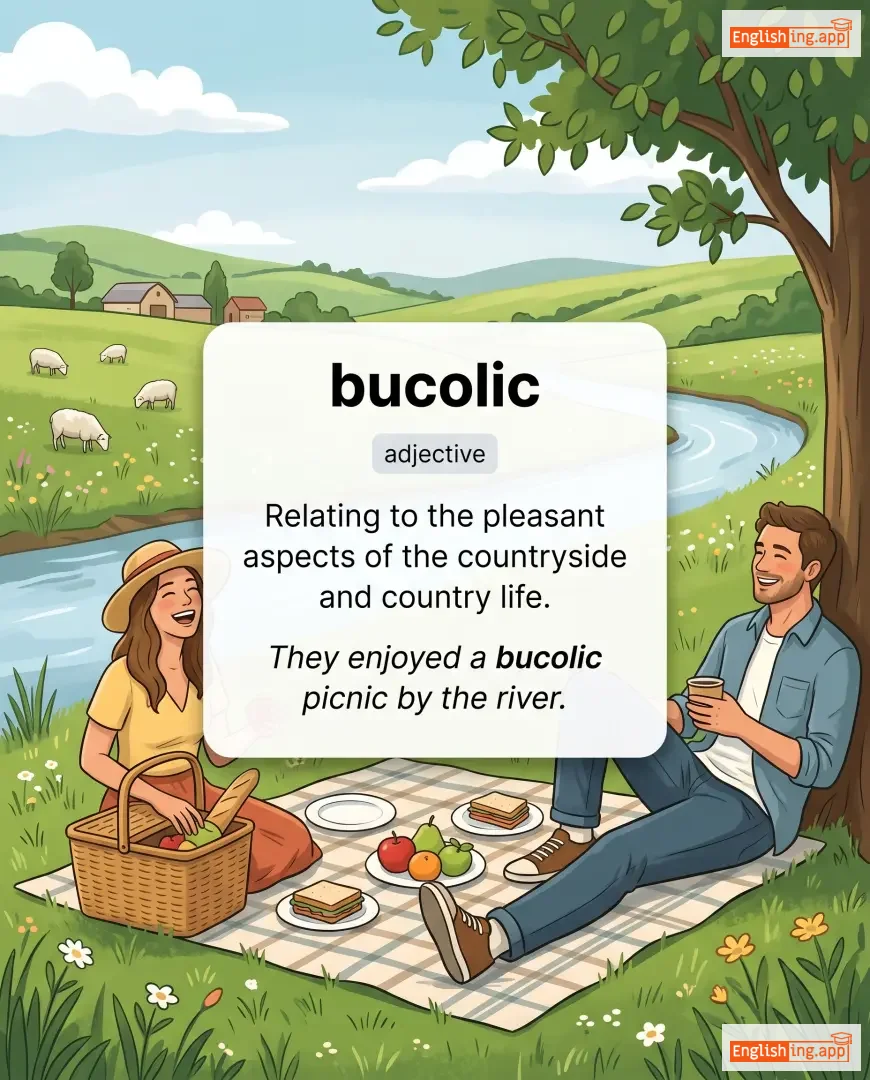
bucolic definition card — visual illustration of the meaning
adjective
/bjuːˈkɒlɪk/
田園 (den'en)

Relating to the pleasant aspects of the countryside and country life.

"They enjoyed a bucolic picnic by the river."

"彼らは川沿いで田園風のピクニックを楽しみました。" (Karera wa kawa-zoi de den'en-fū no pikunikku o tanoshimimashita.)
noun
/bʌd/
つぼみ (tsubomi)

An undeveloped or immature flower before it opens

"The rose bud will bloom into a beautiful flower in a few days."

"バラのつぼみは数日以内に美しい花に咲きます。" (Bara no tsubomi wa suūjitsu inai ni utsukushī hana ni sakimasu.)
noun
/ˈbʌdi/
友達 (tomodachi)

a close friend or companion, used informally

"He went to the movies with his best buddy."

"彼は一番の友達と映画を見に行った。" (Kare wa ichiban no tomodachi to eiga o mini itta.)
🚶

budge

verb
/bʌdʒ/

To move slightly; to change one’s opinion or position.

"Despite the pressure, he refused to budge from his decision."

noun/verb
/ˈbʌdʒɪt/
予算 (yosan)

An estimate of income and expenditure for a set period of time; to plan expenses and income.

"The family created a budget to manage their expenses."

"家族は支出を管理するために予算を作成しました。" (Kazoku wa shishutsu o kanri suru tame ni yosan o sakusei shimashita.)
noun/adjective/verb
/bʌf/
映画ファン / 磨く (eiga fan / migaku)

A fan or enthusiast; also to polish or shine something.

"He is a movie buff who watches films every weekend."

"彼は毎週末映画を観る映画ファンです。" (Kare wa maishuumatsu eiga wo miru eiga fan desu.)
noun
/ˈbʌf.ə.loʊ/
バッファロー (baffarō)

a large wild ox with heavy horns; American bison

"The buffalo grazed peacefully in the meadow."

"バッファローは草原で平和に草を食べていた。" (Baffarō wa sōgen de heiwa ni kusa o tabete ita.)
noun/verb
/ˈbʌfər/
バッファ / 衝撃吸収 (baffā / shōgeki kyūshū)

Something that lessens or absorbs the impact of a shock; to act as a protective barrier.

"The organization acts as a buffer between workers and management."

"その組織は労働者と経営陣の間のバッファとして機能します。" (Sono soshiki wa rōdōsha to keieijin no aida no baffā toshite kinō shimasu.)
🍽️

buffet

noun, verb
/bəˈfeɪ/ (noun), /ˈbʌfɪt/ (verb)

A meal where guests serve themselves from a variety of dishes arranged on a table; also means to strike repeatedly (as a verb).

"We enjoyed a large buffet at the wedding reception."

noun
/bəˈfuːn/
道化師 (doukishi)

A ridiculous but amusing person; a clown or jester.

"He acted like a buffoon at the party, making everyone laugh."

"彼はパーティーで道化師のように振る舞い、みんなを笑わせた。" (Kare wa paatii de doukeshi no you ni furumai, minna o warawase ta.)
noun
/bəˈfuːnəri/
ばかげた行動 (bakageta koudou)

Foolish or ridiculous behavior intended to amuse.

"His constant buffoonery irritated the serious audience."

"彼の絶え間ないばかげた行動は真剣な観客をイライラさせた。" (Kare no taemanai bakageta koudou wa shinken na kankyaku wo iraira saseta.)