語彙集

英単語辞書 | 単語の意味、定義、例文

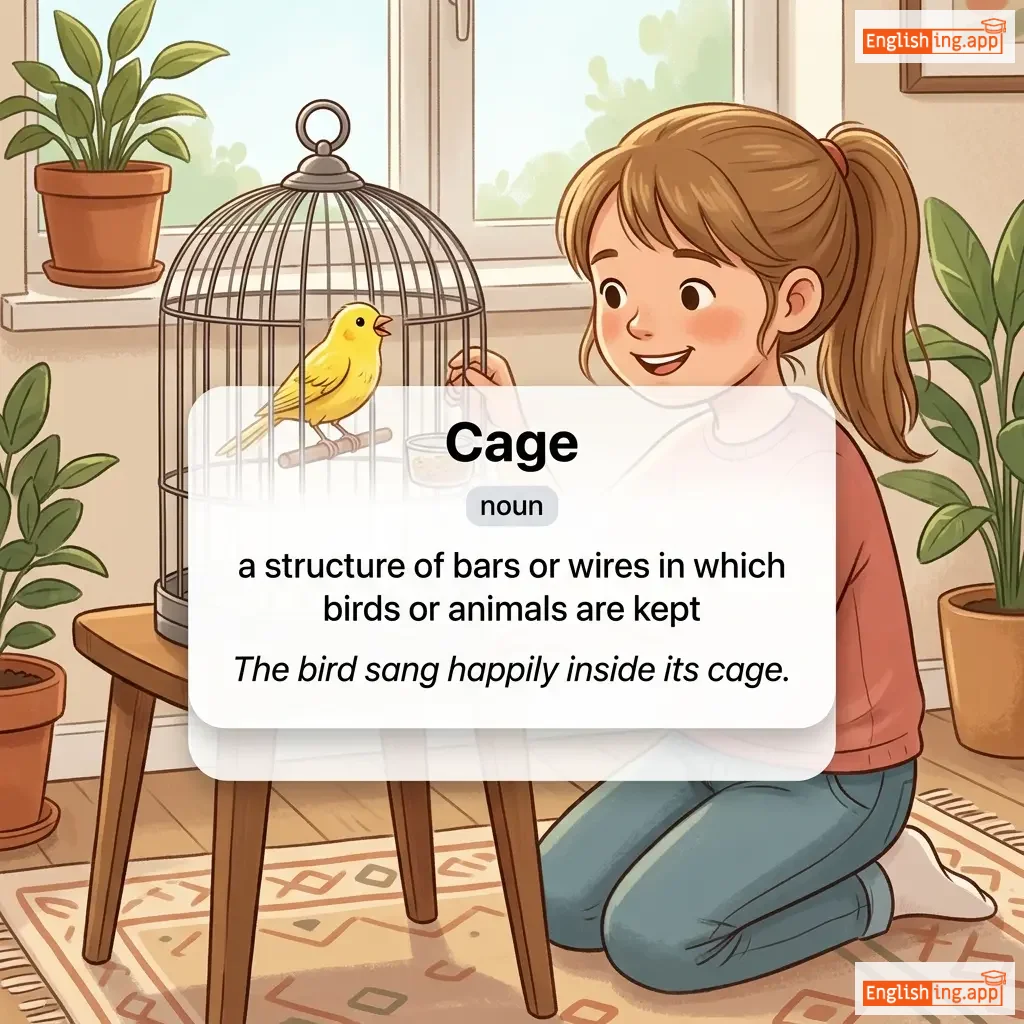
Cage definition card — visual illustration of the meaning
noun
/keɪdʒ/
(oru)

a structure of bars or wires in which birds or animals are kept

"The bird sang happily inside its cage."

"鳥はその檻の中で楽しそうに歌っていた。" (Tori wa sono oru no naka de tanoshisou ni utatte ita.)
noun
/ˈkeɪ.tɪf/
卑怯者 (keitif)

A contemptible or cowardly person.

"The knight despised the caitiff who betrayed his comrades."

"騎士は仲間を裏切った卑怯者を軽蔑していた。" (Kishi wa nakama o uragitta hikyou-sha o keibetsu shite ita.)
verb
/kəˈdʒoʊl/
おだてる (odateru)

To persuade someone to do something by flattery or gentle urging.

"She managed to cajole her friend into joining the trip."

"彼女は友達を旅行に参加させることに成功した。" (Kanojo wa tomodachi o ryokō ni sanka saseru koto ni seikō shita.)
noun
/kəˈdʒoʊləri/
お世辞 (oseji)

Flattering or coaxing talk intended to persuade someone.

"Through cajolery, he convinced his boss to grant him a raise."

"お世辞を使って、彼は上司を説得して昇給を勝ち取った。" (Oseji o tsukatte, kare wa joushi o settoku shite shoukyuu o kachishitta.)
noun
/keɪk/
ケーキ (keeki)

a sweet baked food made from flour, sugar, and other ingredients

"She baked a chocolate cake for her friend's birthday."

"彼女は友達の誕生日のためにチョコレートケーキを焼きました。" (Kanojo wa tomodachi no tanjōbi no tame ni chokorēto kēki o yakimashita.)
noun
/kəˈlæmɪti/
災難 (sainan)

An event causing great damage, distress, or disaster.

"The earthquake was a calamity that left thousands homeless."
"地震は数千人を家なしにした災難だった。" (Jishin wa sūsen'nin o ie nashi ni shita sainan datta.)
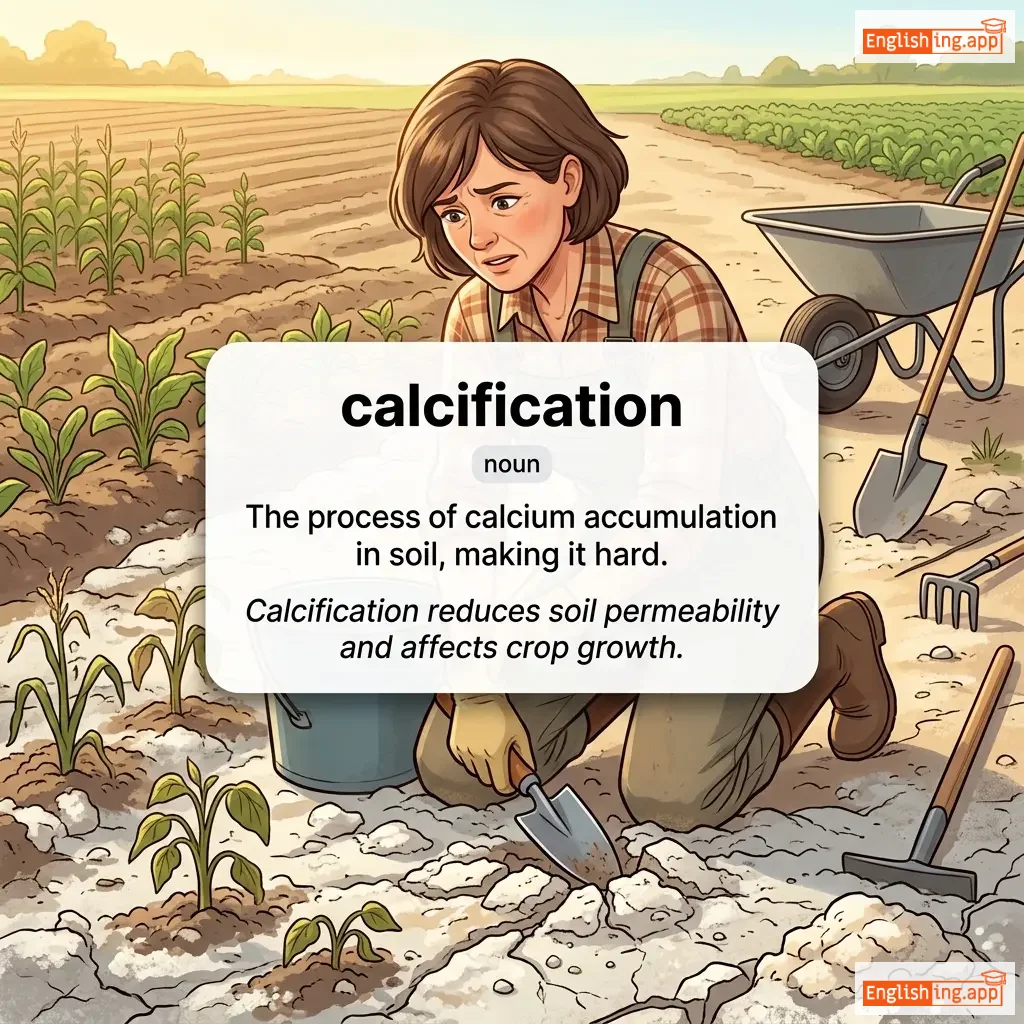
calcification definition card — visual illustration of the meaning
noun
/ˌkæl.sɪ.fɪˈkeɪ.ʃən/
カルシフィケーション (karushifikēshon)

The process of calcium accumulation in soil, making it hard.

"Calcification reduces soil permeability and affects crop growth."

"カルシフィケーションは土壌の透過性を減らし、作物の成長に影響を与えます。" (Karushifikēshon wa dojo no tōkasei o herashi, sakumotsu no seichō ni eikyō o atae masu.)
verb
/ˈkælsɪfaɪ/
カルシウム塩の沈着によって硬化する (karushiumu en no chinchaku ni yotte kōka suru)

To harden by deposition of calcium salts; to become rigid or inflexible.

"Over time, the tissue began to calcify and lose flexibility."

"時間が経つにつれて、組織はカルシファイして柔軟性を失いました。" (Jikan ga tatsu ni tsurete, soshiki wa karushifai shite jūnansē o ushinai mashita.)
adjective
/ˈkælkjʊləbl/
計算可能 (keisan kanou)

Capable of being calculated, estimated, or measured.

"The risk involved in the project is calculable."
"プロジェクトに関わるリスクは計算可能です。" (Purojekuto ni kakawaru risuku wa keisan kanou desu.)
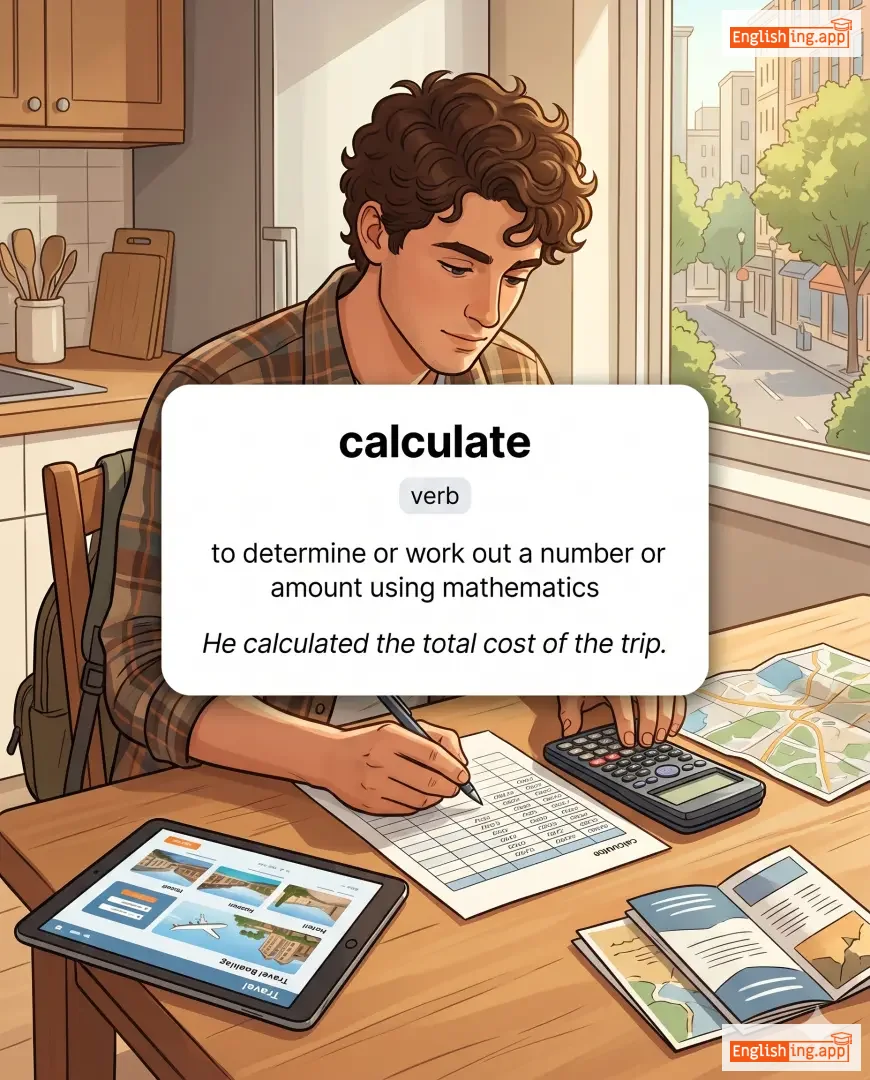
calculate definition card — visual illustration of the meaning
verb
/ˈkæl.kjʊ.leɪt/
計算する (keisan suru)

to determine or work out a number or amount using mathematics

"He calculated the total cost of the trip."

"彼は旅行の総費用を計算した。" (Kare wa ryokou no souhiyou o keisan shita.)
adjective
/ˈkælkjuleɪtɪd/
計算された (keisan sareta)

Done with full awareness of the consequences; deliberate or carefully planned.

"Her calculated move gave her an advantage over her competitors."

"彼女の計算された動きは競争相手に対して優位に立たせた。" (Kanojo no keisan sareta ugoki wa kyousou aite ni taishite yuuini tataseta.)
adjective
/ˈkælkjʊleɪtɪŋ/
計算高い (keisan takai)

acting in a scheming and ruthlessly determined way

"He had a cold and calculating approach to business."

"彼はビジネスに冷徹で計算高いアプローチを持っていた。" (Kare wa bijinesu ni reitetsu de keisan takai apurōchi o motte ita.)
noun
/ˌkælkjʊˈleɪʃən/
計算 (keisan)

the process of using numbers to find an amount or result

"His calculation of the total cost was accurate."

"彼の総コストの計算は正確でした。" (Kare no sou kosuto no keisan wa seikaku deshita.)
noun
/ˈkælkjʊleɪtər/
電卓 (dentaku)

an electronic or mechanical device used to perform mathematical calculations

"She used a calculator to solve the complex equation."

"彼女は複雑な方程式を解くために電卓を使った。" (kanojo wa fukuzatsu na houteishiki o toku tame ni dentaku o tsukatta)
noun
/ˈkælkjʊləs/
微積分 (bisekibun)

A branch of mathematics concerned with rates of change and accumulation; also a hard mineral deposit in the body such as on teeth.

"Calculus is essential for advanced studies in physics and engineering."

"微積分は物理学と工学の高度な研究に不可欠です。" (Bisekibun wa butsuri-gaku to kougaku no koudo na kenkyuu ni fukaketsu desu.)
noun
/ˈkɔːldrən/
大きな金属製の鍋 (ōkina kinzoku-sei no nabe)

A large metal pot used for boiling liquids or cooking over an open fire.

"The witch stirred her potion in a bubbling caldron."

"魔女は泡立つ鍋の中で魔法薬をかき混ぜていた。" (Majo wa awadatsu nabe no naka de mahōyaku o kakimazete ita.)
noun
/ˈkælɪndər/
カレンダー (karendā)

a system for organizing days, months, and years; a chart showing days of the year

"She marked her birthday on the calendar."

"彼女はカレンダーに誕生日をマークしました。" (Kanojo wa karendā ni tanjōbi o māku shimashita.)
noun
/kæf/
子牛 (kougyu)

a young cow or bull; young of various large mammals

"The calf stayed close to its mother."

"子牛は母親の近くにいました。" (Kougyu wa hahaoya no chikaku ni imashita.)
noun
/ˈkælɪbər/
カリバー (karibā)

The quality of someone's ability or character; the internal diameter of a gun barrel.

"The university attracts students of high caliber."
"その大学は高いカリバーの学生を引き付けます。" (Sono daigaku wa takai karibā no gakusei o hikitsukemasu.)
verb
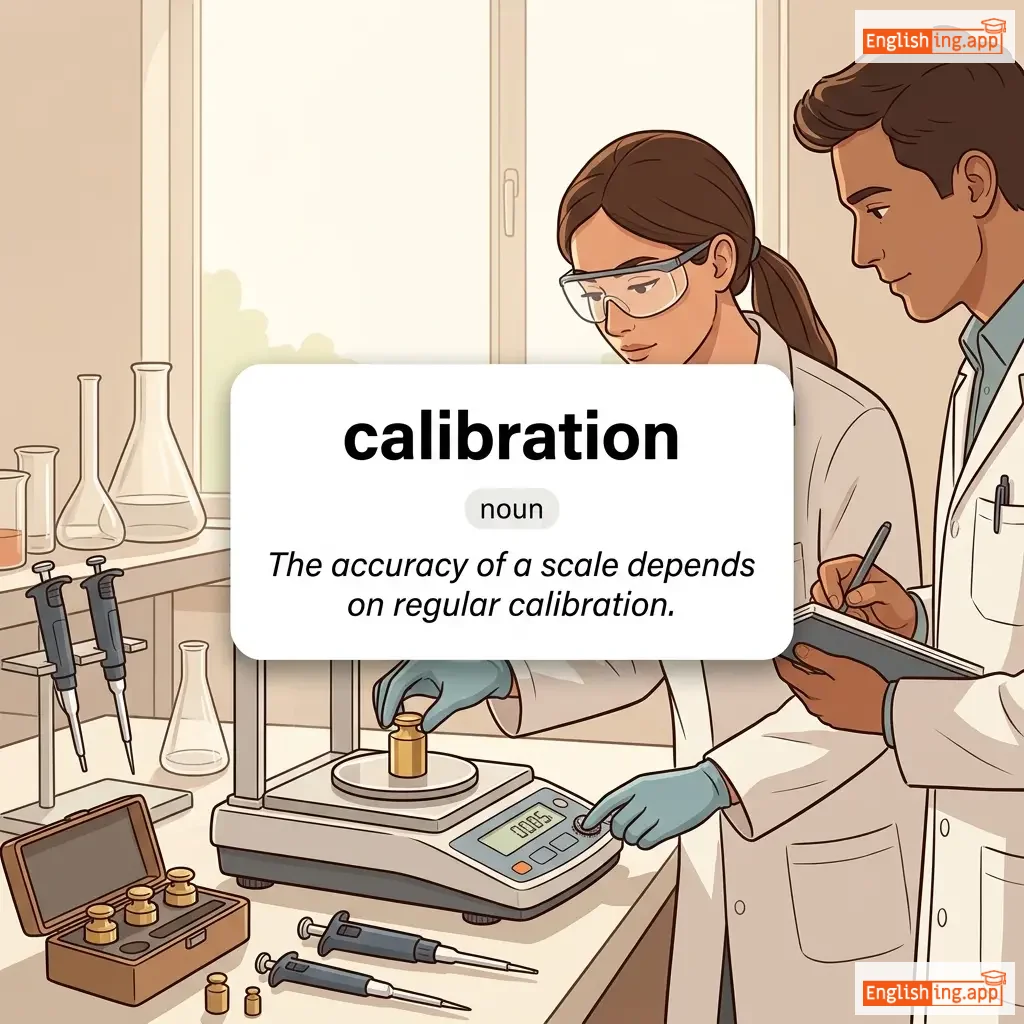
/ˈkælɪˌbreɪt/

To adjust or mark something so it can be used accurately; to standardize.

"The technician calibrated the machine before starting the experiment."

calibration definition card — visual illustration of the meaning
noun
ˌkæl.ɪˈbreɪ.ʃən
キャリブレーション (kyariburēshon)

The action or process of adjusting or determining the accuracy of measuring instruments.

"The accuracy of a scale depends on regular calibration."

"スケールの精度は定期的なキャリブレーションに依存します。" (Sukēru no seido wa teikiteki na kyariburēshon ni izon shimasu.)
noun
/ˌkælɪsˈθɛnɪks/
自重トレーニング (jichou toreeningu)

exercises that use body weight for strength and flexibility

"She practices calisthenics every morning in the park."

"彼女は毎朝公園でカリステニクスを練習しています。" (Kanojo wa maiasa kouen de karisutenikusu o renshuu shiteimasu.)
verb
/kɔːk/
ボートのひび割れを塞ぐ (bōto no hibiwake o fusagu)

To make a boat or ship watertight by filling seams or cracks.

"The workers calked the seams of the old boat to prevent leaks."

"作業員たちは古いボートの継ぎ目をコーキングして漏れを防いだ。" (Sagyouintachi wa furui bōto no tsugime o kōkingu shite more o fusaida.)
call definition card — visual illustration of the meaning
verb
/kɔːl/
電話をかける (denwa o kakeru)

to speak to someone on the phone or to shout to attract attention

"She called her mother to share the good news."

"彼女は良い知らせを共有するために母親に電話をかけた。" (Kanojo wa yoi shirase o kyōyū suru tame ni hahaoya ni denwa o kaketa.)
noun
/kəˈlɪɡrəfi/
美しく装飾的な手書きの芸術 (utsukushiku sōshokuteki na tegaki no geijutsu)

The art of beautiful and decorative handwriting.

"She took a course to improve her calligraphy skills."

"彼女はカリグラフィーの技術を向上させるためにコースを受講しました。" (Kanojo wa karigurafī no gijutsu o kōjōsaseru tame ni kōsu o jukō shimashita.)
noun
/kəˈlɒsəti/
硬い皮膚 (katai hifu)

A thickened or hardened area of skin; insensitivity or hardness of character.

"Years of manual labor left callosity on his hands."

"何年もの肉体労働が彼の手に硬い皮膚を残した。" (Nannen mo no nikutai roudou ga kare no te ni katai hifu wo nokoshita.)
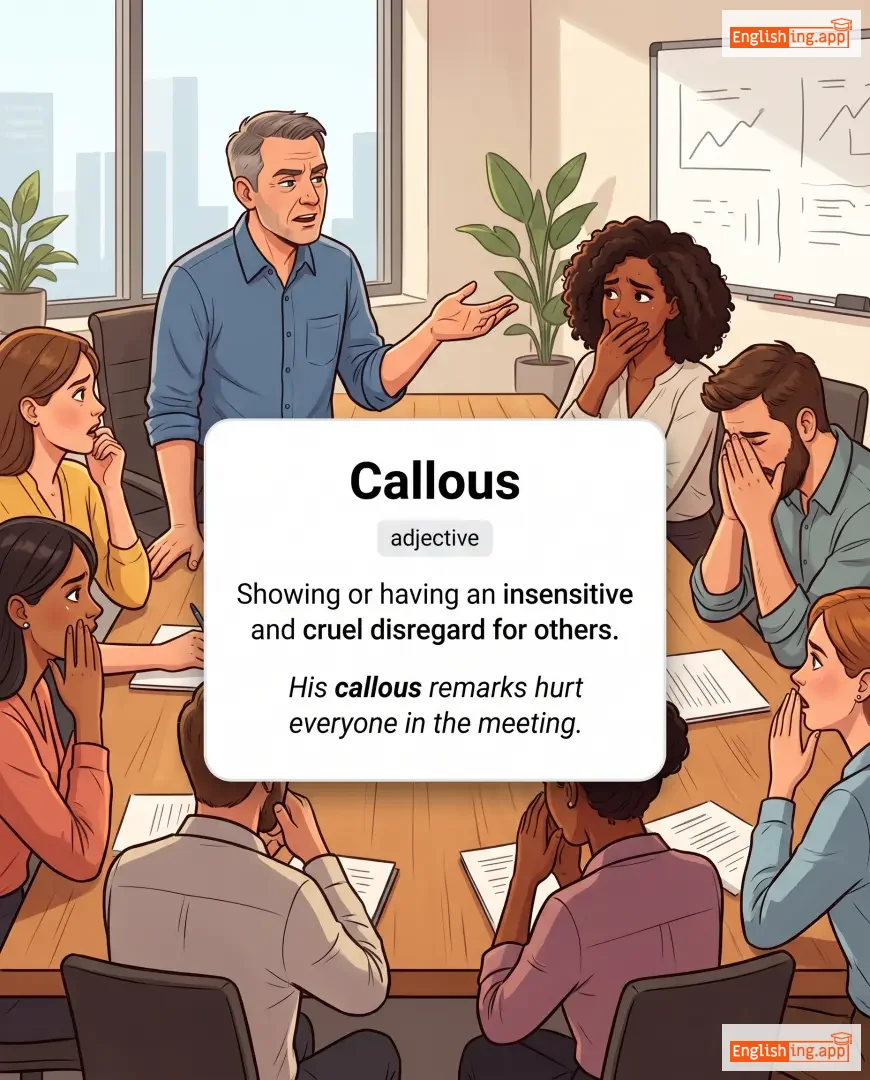
Callous definition card — visual illustration of the meaning
adjective
/ˈkæləs/

Showing or having an insensitive and cruel disregard for others.

"His callous remarks hurt everyone in the meeting."

adjective
/ˈkæloʊ/
未熟 (mijuku)

Inexperienced and immature.

"The callow intern made several mistakes on his first day."

"未熟なインターンは最初の日にいくつかの間違いをしました。" (Mijuku na intān wa saisho no hi ni ikutsuka no machigai o shimashita.)
noun
/ˈkæləs/
皮膚の硬化部分 (hifu no kōka bubun)

A thickened and hardened part of the skin or soft tissue, especially in an area subjected to friction.

"A callus formed on his palm from using tools every day."
"毎日道具を使うことで、彼の手のひらにカラスができました。" (Mainichi dōgu o tsukau koto de, kare no te no hira ni karasu ga dekimashita.)
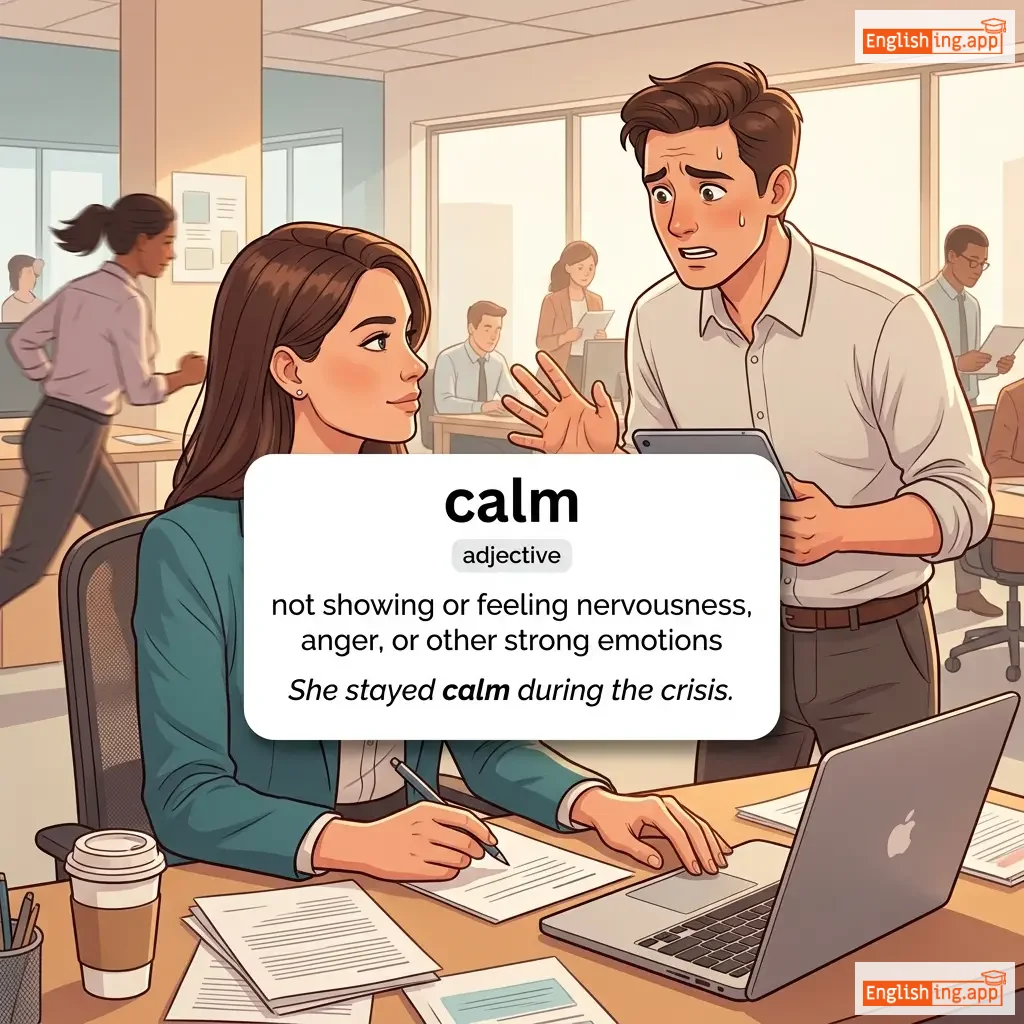
calm definition card — visual illustration of the meaning
adjective
/kɑːm/
落ち着いた (ochitsuita)

not showing or feeling nervousness, anger, or other strong emotions

"She stayed calm during the crisis."

"彼女は危機の間、落ち着いていた。" (Kanojo wa kiki no aida, ochitsuite ita.)
adverb
/ˈkɑːm.li/
落ち着いて (ochitsuite)

in a peaceful way without showing strong emotions; quietly and without excitement

"She spoke calmly despite being angry."

"彼女は怒っているにもかかわらず落ち着いて話しました。" (Kanojo wa okotte iru ni mo kakawarazu ochitsuite hanashimashita.)
noun
/ˈkæləri/
カロリー (karorī)

A unit of energy, often used to measure the energy content of food and drink.

"She checks the calorie count before eating any packaged food."

"彼女はパッケージ食品を食べる前にカロリー数をチェックします。" (Kanojo wa pakkēji shokuhin o taberu mae ni karorī-sū o chekku shimasu.)
adjective
/ˌkæləˈrɪfɪk/
カロリーの高い (karorī no takai)

Relating to the amount of energy contained in food or fuel.

"Chocolate is highly calorific, so it should be eaten in moderation."

"チョコレートは非常にカロリーが高いため、適量を食べるべきです。" (Chokorēto wa hijō ni karorī ga takai tame, tekiryō o taberu beki desu.)
verb
/kəˈlʌmnieɪt/
中傷する (chuushou suru)

To make false and damaging statements about someone; to slander.

"He was furious when he realized they had calumniated his reputation."
"彼は、彼らが彼の評判を中傷したことに気づいたとき、怒っていました。" (Kare wa, karera ga kare no hyouban o chuushou shita koto ni kizuita toki, okotte imashita.)
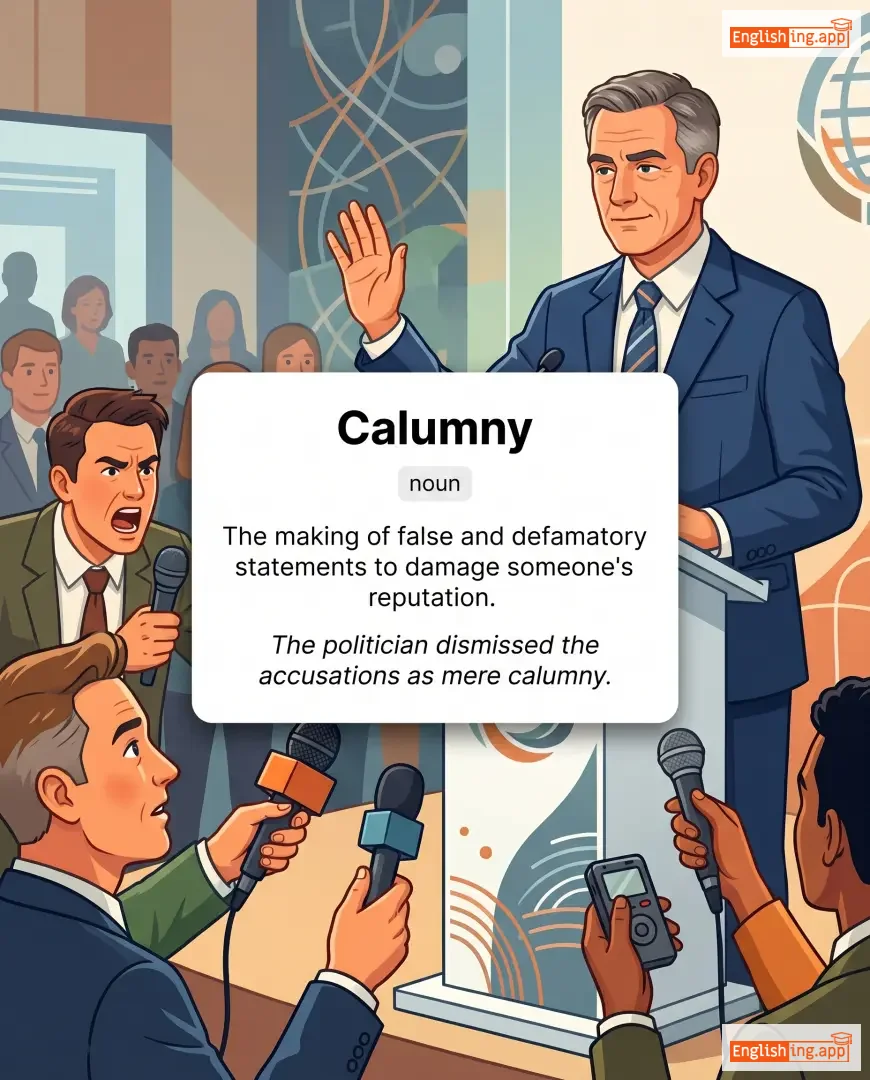
Calumny definition card — visual illustration of the meaning
noun
/ˈkæləmni/
中傷 (chuushou)

The making of false and defamatory statements to damage someone's reputation.

"The politician dismissed the accusations as mere calumny."

"政治家はその告発を単なる中傷だと一蹴した。" (Seijika wa sono kokuhatsu wo tannaru chuushou da to isshuu shita.)
✝️

calvary

noun
/ˈkælvəri/

A place or experience of intense suffering, originally the site of Jesus’s crucifixion.

"For many refugees, the journey across the desert was a calvary."

noun
/ˈkælvɪnɪzəm/
カルヴァン主義 (karuvan shugi)

A Protestant theological system based on John Calvin’s teachings, emphasizing predestination and the sovereignty of God.

"Calvinism played a major role in shaping Protestant theology."

"カルヴァン主義はプロテスタント神学の形成に重要な役割を果たした。" (Karuvan shugi wa Purotesutanto shingaku no keisei ni juuyou na yakuwari wo hatashita.)
verb
/ˈkælvɪnaɪz/
カルヴァン主義の原則を取り入れる (Karuvan shūgimu no gensoku o toriireru)

to imbue with the principles or doctrines of Calvinism

"The preacher sought to calvinize the community with strict teachings."
"伝道師は厳格な教義でコミュニティをカルヴァン主義化しようとした。" (Dendōshi wa genkaku na kyōgi de komyuniti o karuvan shūgimuka shiyō to shita.)
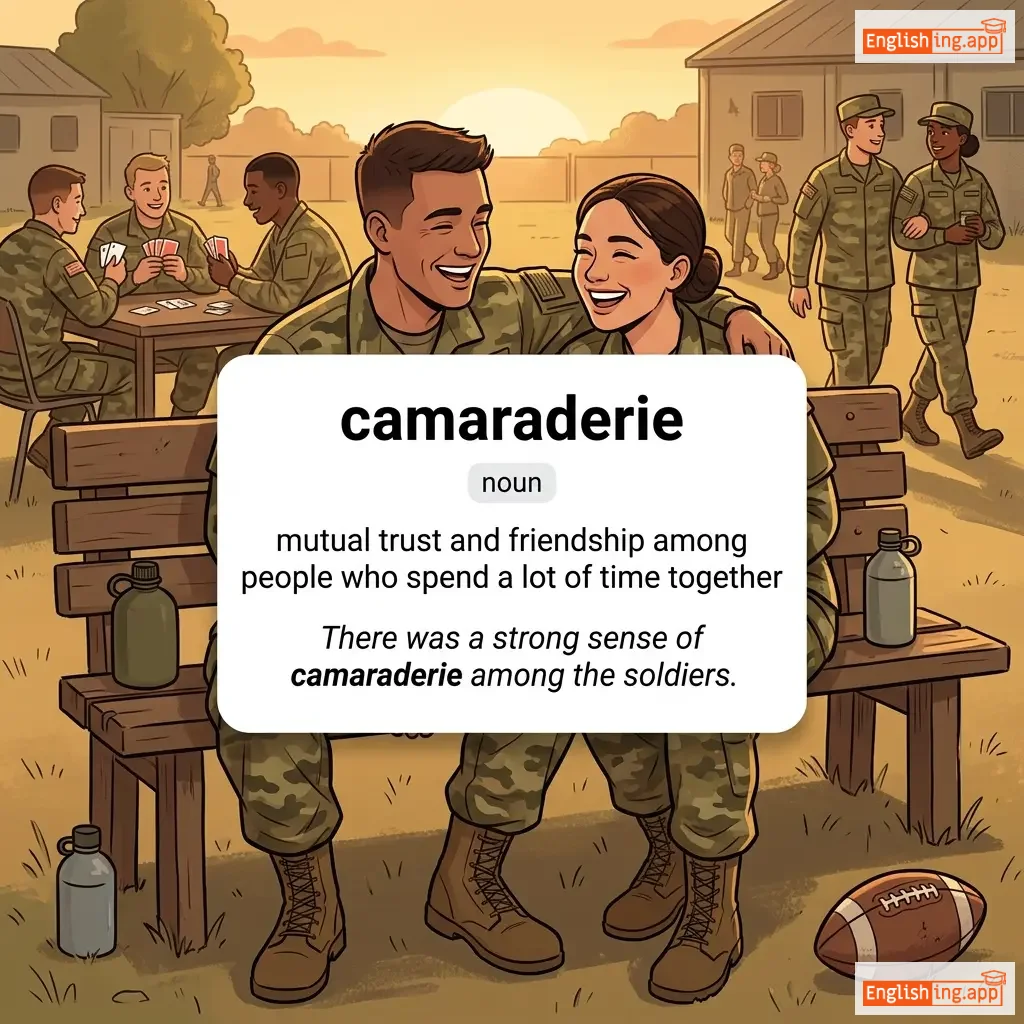
camaraderie definition card — visual illustration of the meaning
noun
/ˌkæməˈrɑːdəri/
仲間意識 (nakamaishiki)

mutual trust and friendship among people who spend a lot of time together

"There was a strong sense of camaraderie among the soldiers."

"兵士たちの間に強い仲間意識があった。" (Heishi-tachi no aida ni tsuyoi nakama ishiki ga atta.)
verb
/keɪm/
来た (kita)

past tense of 'come'

"She came to the party on time."

"彼女はパーティーに時間通りに来た。" (Kanojo wa pātī ni jikan dōri ni kita.)
noun
/ˈkæm.əl/
ラクダ (rakuda)

a large animal with one or two humps on its back that lives in hot dry places

"The camel walked slowly across the desert sand."

"ラクダは砂漠の砂をゆっくり歩きました。" (Rakuda wa sabaku no suna o yukkuri arukimashita.)
noun
/ˈkæmi.oʊ/
カメオ (cameo)

a small but significant role in a play, film, or show, often performed by a well-known person

"The actor made a surprise cameo in the movie."

"その俳優は映画でサプライズのカメオを果たした。" (Sono haiyuu wa eiga de sapuraizu no cameo wo hatashita.)
noun
/ˈkæm.rə/

a device used for taking photographs or recording videos

"She bought a new camera for her photography class."

noun
/ˈkæməˌflɑːʒ/
カモフラージュ (kamofurāju)

the act of hiding or disguising something by making it blend with its surroundings

"The soldiers used camouflage to hide from the enemy."

"兵士たちは敵から隠れるためにカモフラージュを使用しました。" (Heishitachi wa teki kara kakureru tame ni kamofurāju o shiyō shimashita.)
noun, verb
/kæmp/
キャンプ地 (kyampuchi)

a place where people stay temporarily in tents or cabins, often outdoors; to stay in such a place

"We decided to camp by the lake during the summer holiday."

"私たちは夏休みに湖の近くでキャンプすることに決めました。" (Watashitachi wa natsu yasumi ni mizuumi no chikaku de kyanpu suru koto ni kimemashita.)
Campaign definition card — visual illustration of the meaning
noun, verb
/kæmˈpeɪn/
キャンペーン (kyanpēn)

a planned series of activities to achieve a specific goal, especially in politics, marketing, or war

"The company launched a campaign to promote its new product."

"その会社は新しい製品を促進するためにキャンペーンを開始しました。" (Sono kaisha wa atarashī seihin o sokushin suru tame ni kyanpēn o kaishi shimashita.)
noun
/ˈkæm.fər/
カンフル (kanfuru)

a white crystalline substance with a strong aromatic smell, used in medicine and religious ceremonies

"The temple was filled with the fragrant smoke of burning camphor."
"寺院は燃えているカンフルの芳香煙で満たされていました。" (Jiin wa moete iru kanfuru no hōkō kemuri de mitasarete imashita.)
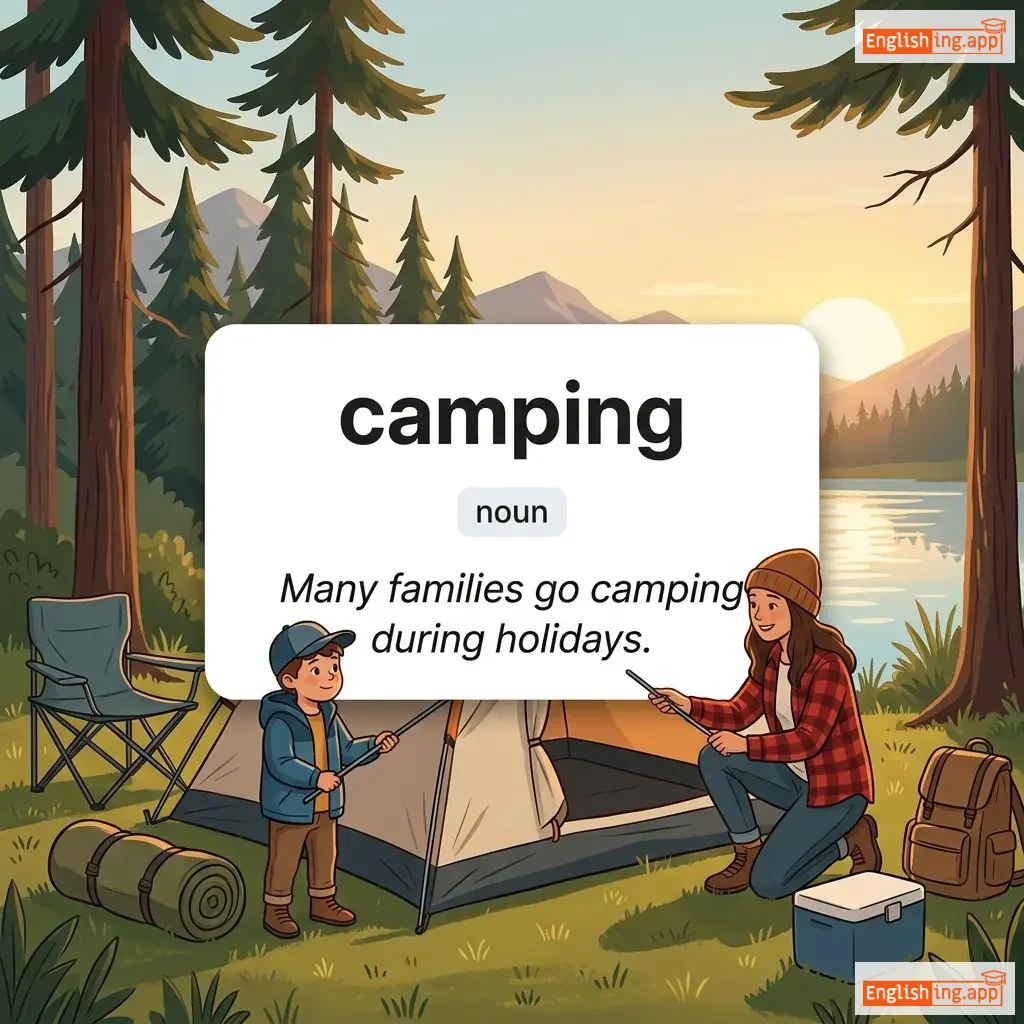
camping definition card — visual illustration of the meaning
noun
ˈkæm.pɪŋ
キャンプ (kyanpu)

Living outdoors temporarily, especially for recreation; staying in a tent or similar shelter.

"Many families go camping during holidays."
"多くの家族が休暇中にキャンプに行きます。" (Ōku no kazoku ga kyūka-chū ni kyanpu ni ikimasu.)
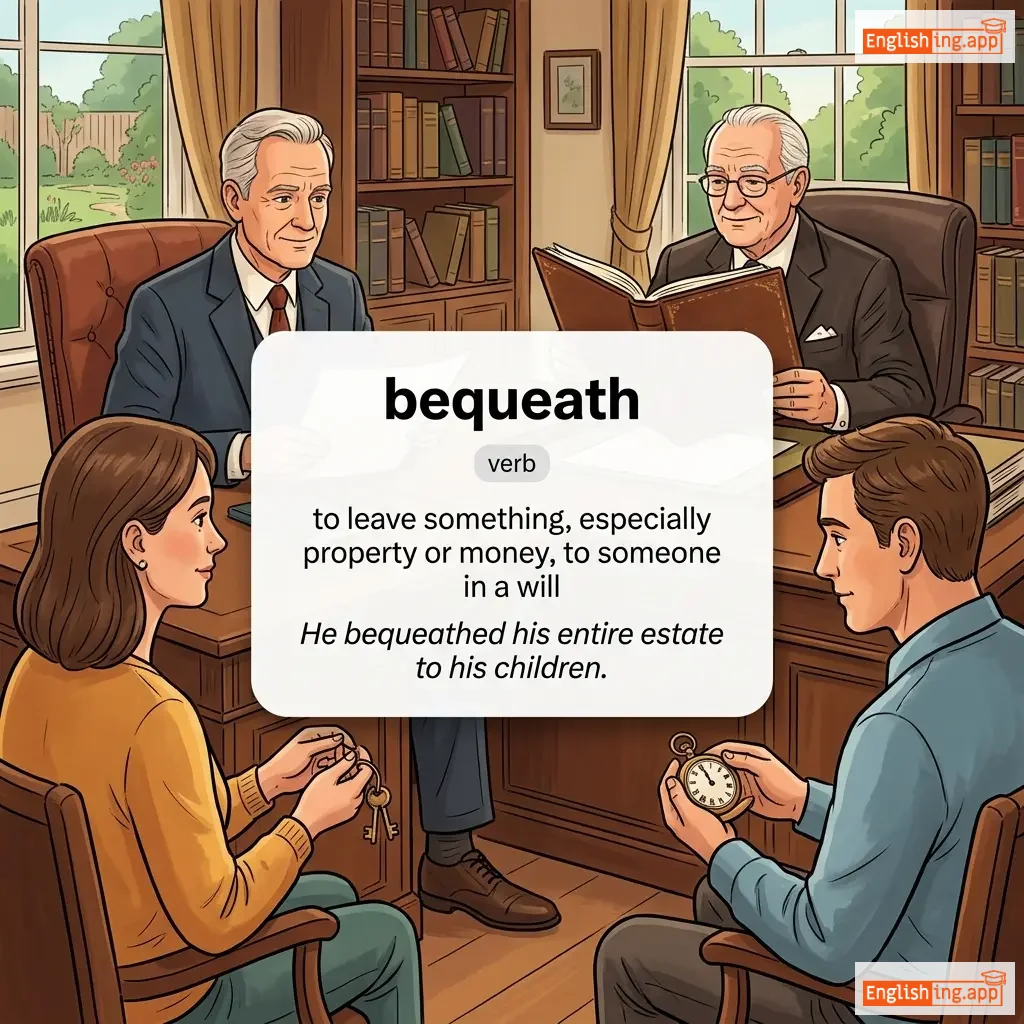
bequeath definition card — visual illustration of the meaning
verb
/bɪˈkwiːð/
遺贈する (izō suru)

to leave something, especially property or money, to someone in a will

"He bequeathed his entire estate to his children."

"彼はすべての財産を子供たちに遺贈した。" (Kare wa subete no zaisan o kodomotachi ni izō shita.)
verb
/bɪˈreɪt/
叱る (shikaru)

to scold or criticize angrily

"The teacher berated the student for being late."

"先生は遅刻した生徒を叱った。" (Sensei wa chikoku shita seito wo shikatta.)