词汇表

英语词汇词典 | 单词含义、定义和示例

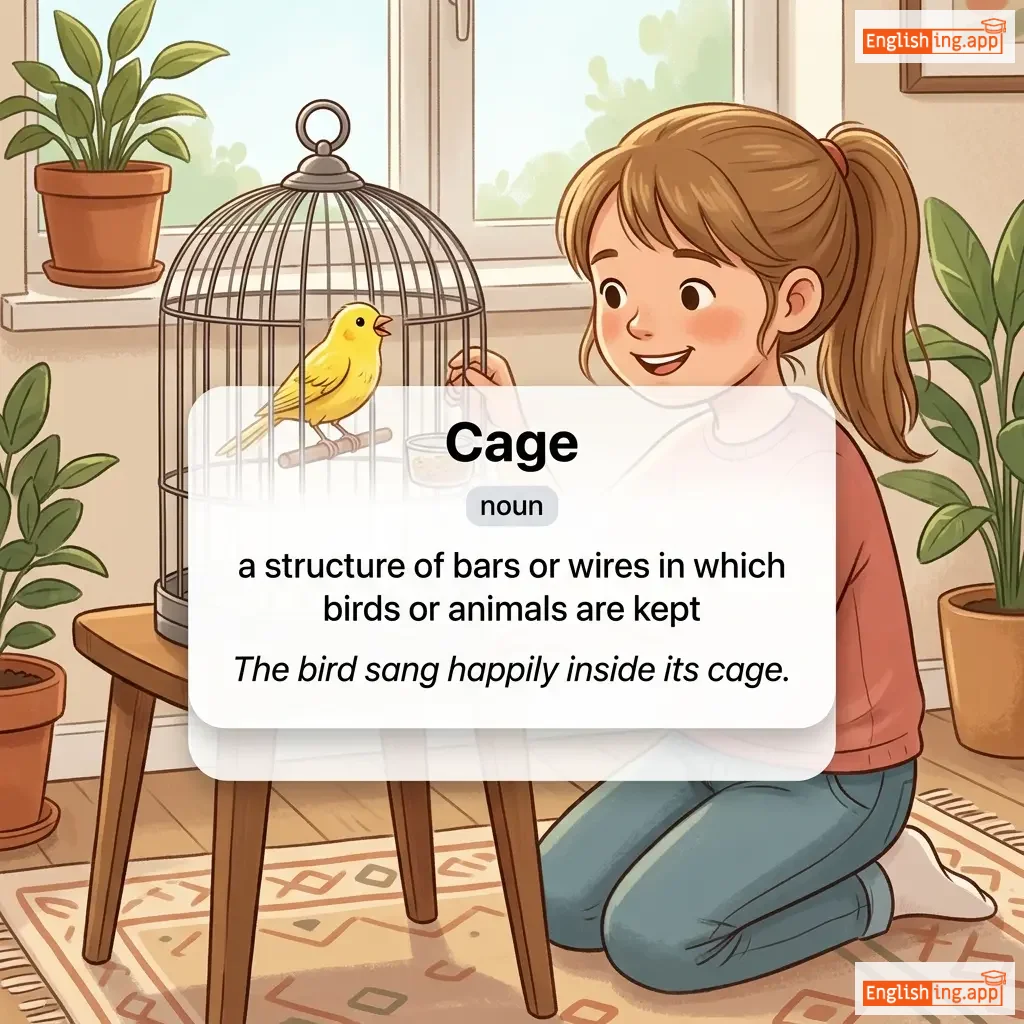
Cage definition card — visual illustration of the meaning
noun
/keɪdʒ/
笼子 (longzi)

a structure of bars or wires in which birds or animals are kept

"The bird sang happily inside its cage."

"鸟儿在它的笼子里快乐地歌唱。" (Niǎo er zài tā de lóngzi lǐ kuàilè de gēchàng.)
noun
/ˈkeɪ.tɪf/
懦夫 (nuofu)

A contemptible or cowardly person.

"The knight despised the caitiff who betrayed his comrades."

"骑士鄙视那个背叛同伴的懦夫。" (Qishi bishi nage beipan tongban de nuofu.)
verb
/kəˈdʒoʊl/
哄骗 (hōngpiàn)

To persuade someone to do something by flattery or gentle urging.

"She managed to cajole her friend into joining the trip."

"她成功地说服她的朋友加入这次旅行。" (Tā chénggōng de shuōfú tā de péngyǒu jiārù zhè cì lǚxíng.)
noun
/kəˈdʒoʊləri/
奉承 (fengcheng)

Flattering or coaxing talk intended to persuade someone.

"Through cajolery, he convinced his boss to grant him a raise."

"通过奉承,他说服了老板给他加薪。" (Tōngguò fèngchéng, tā shuōfúle lǎobǎn gěi tā jiāxīn.)
noun
/keɪk/
蛋糕 (dangao)

a sweet baked food made from flour, sugar, and other ingredients

"She baked a chocolate cake for her friend's birthday."

"她为朋友的生日烤了一个巧克力蛋糕。" (Ta wei pengyou de shengri kao le yige qiaokeli dangao.)
noun
/kəˈlæmɪti/
灾难 (zainan)

An event causing great damage, distress, or disaster.

"The earthquake was a calamity that left thousands homeless."
"地震是一场灾难,造成了成千上万的人无家可归。" (Dizhen shi yi chang zainan, zaoceng le chengqian shangwan de ren wujia kegui.)
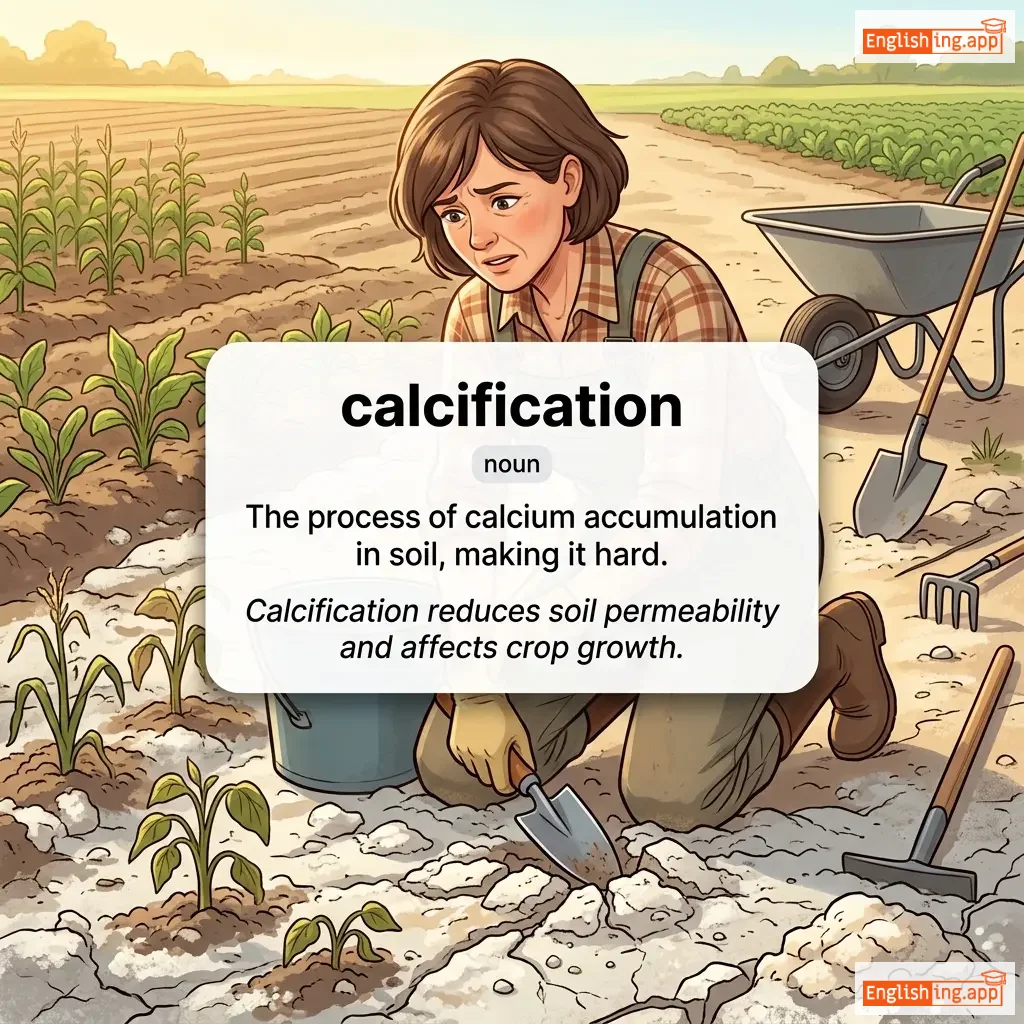
calcification definition card — visual illustration of the meaning
noun
/ˌkæl.sɪ.fɪˈkeɪ.ʃən/
钙化 (gaihua)

The process of calcium accumulation in soil, making it hard.

"Calcification reduces soil permeability and affects crop growth."

"钙化减少了土壤的渗透性,并影响作物的生长。" (Gaihua jiǎnshǎo le tǔrǎng de shèntòuxìng, bìng yǐngxiǎng zuòwù de shēngzhǎng.)
verb
/ˈkælsɪfaɪ/
通过钙盐沉积变硬 (tōngguò gài yán chénjī bìng yìng)

To harden by deposition of calcium salts; to become rigid or inflexible.

"Over time, the tissue began to calcify and lose flexibility."

"随着时间的推移,组织开始钙化并失去柔韧性。" (Suízhe shíjiān de tuīyí, zǔzhī kāishǐ gàihuà bìng shīqù róurènxìng.)
adjective
/ˈkælkjʊləbl/
可计算的 (ke ji suan de)

Capable of being calculated, estimated, or measured.

"The risk involved in the project is calculable."
"项目中的风险是可以计算的。" (Xiàngmù zhōng de fēngxiǎn shì kě jìsuàn de.)
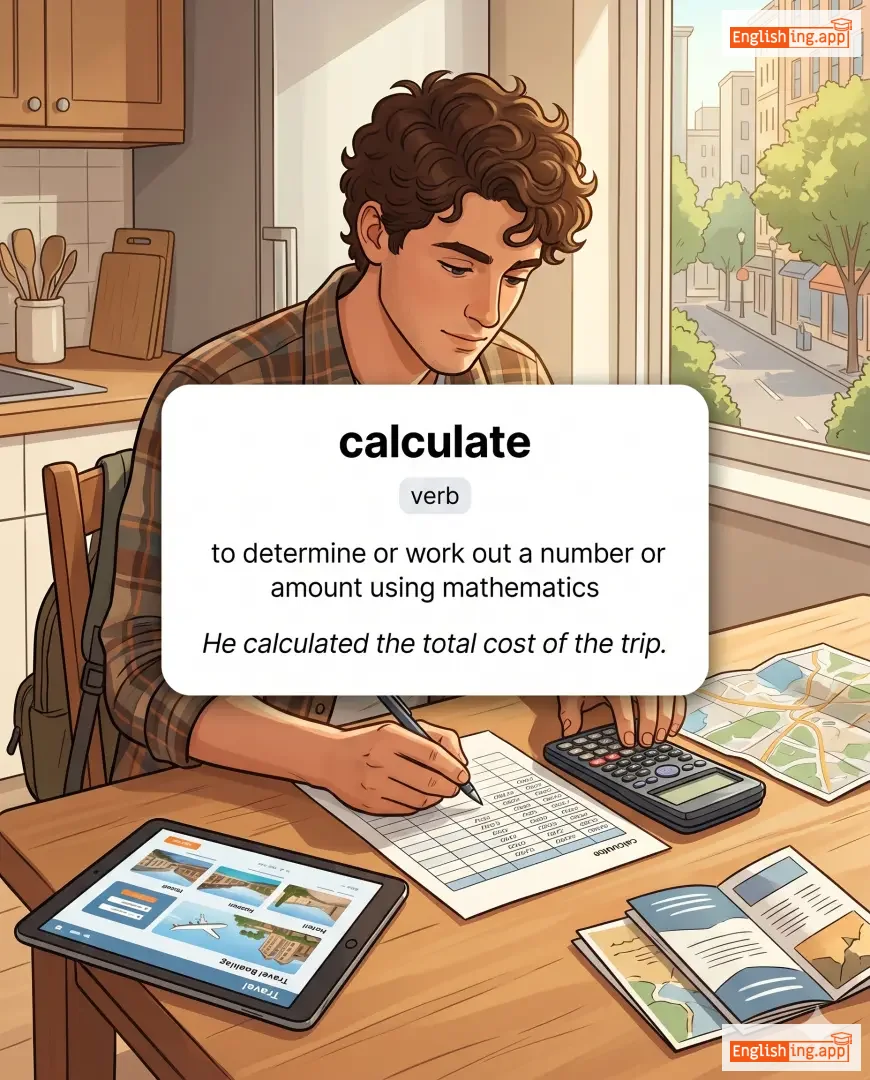
calculate definition card — visual illustration of the meaning
verb
/ˈkæl.kjʊ.leɪt/
计算 (jisuan)

to determine or work out a number or amount using mathematics

"He calculated the total cost of the trip."

"他计算了旅行的总费用。" (Ta jisuanle luxing de zong feiyong.)
adjective
/ˈkælkjuleɪtɪd/
精心计算的 (jingxin jisuan de)

Done with full awareness of the consequences; deliberate or carefully planned.

"Her calculated move gave her an advantage over her competitors."

"她的精心计算的举动使她在竞争对手中占据了优势。" (Ta de jingxin jisuan de juhdong shi ta zai jingzheng duishou zhong zhanju le youshi.)
adjective
/ˈkælkjʊleɪtɪŋ/
精明的 (jīngmíng de)

acting in a scheming and ruthlessly determined way

"He had a cold and calculating approach to business."

"他在商业上采取了冷酷而精明的态度。" (Tā zài shāngyè shàng cǎiqǔle lěngkù ér jīngmíng de tàidù.)
noun
/ˌkælkjʊˈleɪʃən/
计算 (jisuan)

the process of using numbers to find an amount or result

"His calculation of the total cost was accurate."

"他对总成本的计算是准确的。" (Ta dui zong chengben de jisuan shi zhunque de.)
noun
/ˈkælkjʊleɪtər/
计算器 (jisuanqi)

an electronic or mechanical device used to perform mathematical calculations

"She used a calculator to solve the complex equation."

"她用计算器解决了复杂的方程。" (ta yong jisuanqi jiejue le fuza de fangcheng)
noun
/ˈkælkjʊləs/
微积分 (weijifen)

A branch of mathematics concerned with rates of change and accumulation; also a hard mineral deposit in the body such as on teeth.

"Calculus is essential for advanced studies in physics and engineering."

"微积分是物理学和工程学高级研究的基础。" (Weijifen shi wulixue he gongchengxue gaoji yanjiu de jichu.)
noun
/ˈkɔːldrən/
大铁锅 (da tie guo)

A large metal pot used for boiling liquids or cooking over an open fire.

"The witch stirred her potion in a bubbling caldron."

"女巫在一个冒泡的锅里搅拌她的药水。" (Nǚwū zài yīgè mào pào de guō lǐ jiǎo bàn tā de yàoshuǐ.)
noun
/ˈkælɪndər/
日历 (rìlì)

a system for organizing days, months, and years; a chart showing days of the year

"She marked her birthday on the calendar."

"她在日历上标记了她的生日。" (Tā zài rìlì shàng biāojìle tā de shēngrì.)
noun
/kæf/
小牛 (xiao niu)

a young cow or bull; young of various large mammals

"The calf stayed close to its mother."

"小牛靠近它的母亲。" (xiao niu kaojin ta de muci)
noun
/ˈkælɪbər/
口径 (koujing)

The quality of someone's ability or character; the internal diameter of a gun barrel.

"The university attracts students of high caliber."
"这所大学吸引了高口径的学生。" (Zhe suo daxue xiyin le gao koujing de xuesheng.)
verb
/ˈkælɪˌbreɪt/

To adjust or mark something so it can be used accurately; to standardize.

"The technician calibrated the machine before starting the experiment."

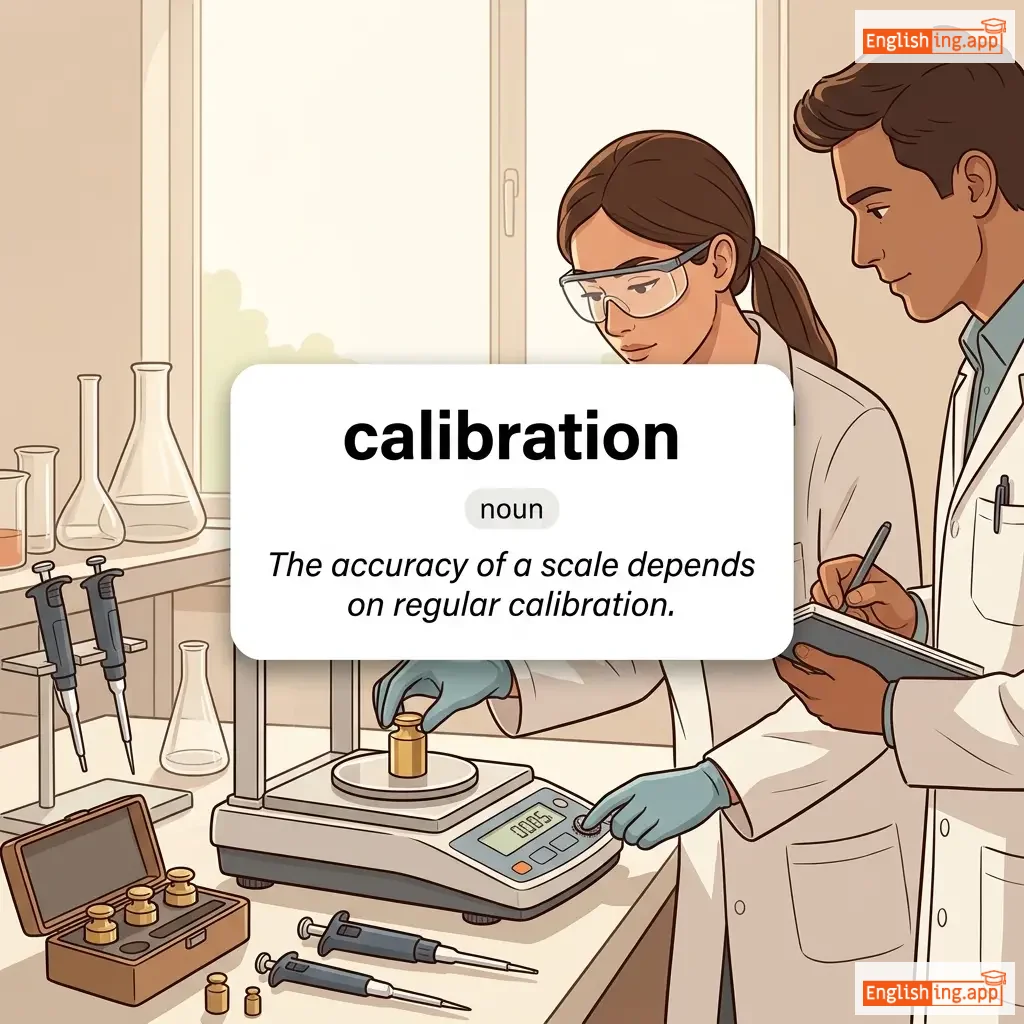
calibration definition card — visual illustration of the meaning
noun
ˌkæl.ɪˈbreɪ.ʃən
校准 (jiaozhun)

The action or process of adjusting or determining the accuracy of measuring instruments.

"The accuracy of a scale depends on regular calibration."

"秤的准确性取决于定期校准。" (Cheng de zhunquexing qujue yu dingqi jiaozhun.)
noun
/ˌkælɪsˈθɛnɪks/
体重训练 (tǐzhòng xùnliàn)

exercises that use body weight for strength and flexibility

"She practices calisthenics every morning in the park."

"她每天早晨在公园里做自体重训练。" (Tā měitiān zǎoshang zài gōngyuán lǐ zuò zìtǐ zhòngliàng xùnliàn.)
verb
/kɔːk/
堵塞船只的裂缝 (dǔsè chuánzhī de lièfèng)

To make a boat or ship watertight by filling seams or cracks.

"The workers calked the seams of the old boat to prevent leaks."

"工人们对旧船的缝隙进行了填塞,以防止泄漏。" (Gōngrénmen duì jiù chuán de fèngxì jìnxíngle tián sāi, yǐ fángzhǐ xièlòu.)
call definition card — visual illustration of the meaning
verb
/kɔːl/
打电话 (dǎ diànhuà)

to speak to someone on the phone or to shout to attract attention

"She called her mother to share the good news."

"她打电话给她的母亲分享好消息。" (Tā dǎ diànhuà gěi tā de mǔqīn fēnxiǎng hǎo xiāoxi.)
noun
/kəˈlɪɡrəfi/
美丽且装饰性的书写艺术 (měilì qiě zhuāngshìxìng de shūxiě yìshù)

The art of beautiful and decorative handwriting.

"She took a course to improve her calligraphy skills."

"她参加了一个课程来提高她的书法技能。" (Tā cānjiāle yīgè kèchéng lái tígāo tā de shūfǎ jìnéng.)
noun
/kəˈlɒsəti/
粗厚的皮肤 (cū hòu de pífū)

A thickened or hardened area of skin; insensitivity or hardness of character.

"Years of manual labor left callosity on his hands."

"多年的体力劳动使他的手上留下了厚皮。" (Duō nián de tǐlì láodòng shǐ tā de shǒu shàng liú xià le hòu pí.)
Callous definition card — visual illustration of the meaning
adjective
/ˈkæləs/

Showing or having an insensitive and cruel disregard for others.

"His callous remarks hurt everyone in the meeting."

adjective
/ˈkæloʊ/
不成熟 (buchengshu)

Inexperienced and immature.

"The callow intern made several mistakes on his first day."

"那个缺乏经验的实习生在第一天犯了几个错误。" (Nàgè quēfá jīngyàn de shíxíshēng zài dì yī tiān fànle jǐ gè cuòwù.)
noun
/ˈkæləs/
皮肤的硬化部分 (pífū de yìnghuà bùfen)

A thickened and hardened part of the skin or soft tissue, especially in an area subjected to friction.

"A callus formed on his palm from using tools every day."

"由于每天使用工具,他的手掌上长出了一个茧。" (Yóuyú měitiān shǐyòng gōngjù, tā de shǒuzhǎng shàng zhǎng chūle yīgè jiǎn.)
calm definition card — visual illustration of the meaning
adjective
/kɑːm/
平静 (pingjing)

not showing or feeling nervousness, anger, or other strong emotions

"She stayed calm during the crisis."

"她在危机中保持平静。" (Ta zai weiji zhong baochi pingjing.)
adverb
/ˈkɑːm.li/
平静地 (pingjing de)

in a peaceful way without showing strong emotions; quietly and without excitement

"She spoke calmly despite being angry."

"她在生气的情况下冷静地说话。" (Tā zài shēngqì de qíngkuàng xià lěngjìng de shuōhuà.)
noun
/ˈkæləri/
卡路里 (kaluli)

A unit of energy, often used to measure the energy content of food and drink.

"She checks the calorie count before eating any packaged food."

"她在吃任何包装食品之前会检查卡路里的含量。" (Tā zài chī rènhé bāozhuāng shípǐn zhīqián huì jiǎnchá kǎlùlǐ de hánliàng.)
adjective
/ˌkæləˈrɪfɪk/
高热量的 (gaoreliang de)

Relating to the amount of energy contained in food or fuel.

"Chocolate is highly calorific, so it should be eaten in moderation."

"巧克力热量很高,所以应该适量食用。" (Qiaokeli re liang hen gao, suoyi yinggai shiliang shiyong.)
verb
/kəˈlʌmnieɪt/
诽谤 (feibang)

To make false and damaging statements about someone; to slander.

"He was furious when he realized they had calumniated his reputation."
"当他意识到他们已经毁坏了他的名声时,他非常生气。" (Dang ta yishi dao tamen yijing huihuai le ta de mingcheng shi, ta feichang shengqi.)
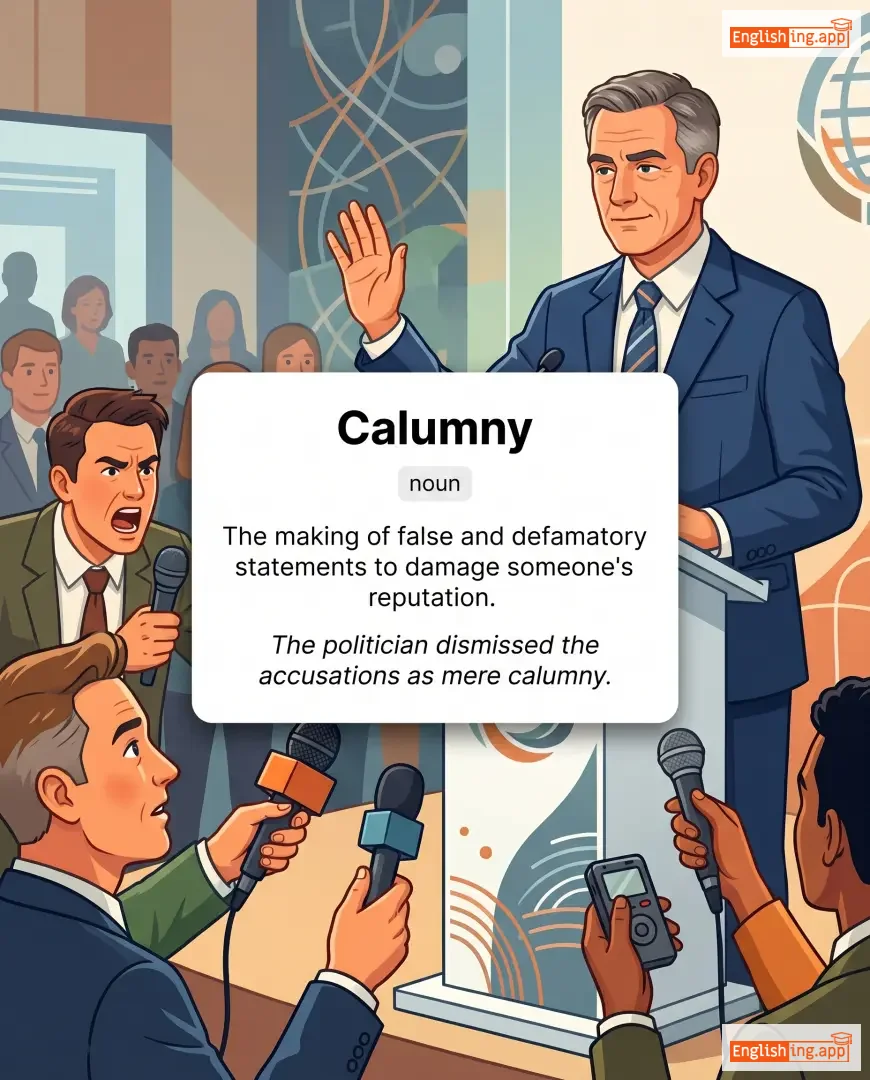
Calumny definition card — visual illustration of the meaning
noun
/ˈkæləmni/
诽谤 (feibang)

The making of false and defamatory statements to damage someone's reputation.

"The politician dismissed the accusations as mere calumny."

"那位政治家将这些指控视为单纯的诽谤。" (Na wei zhengzhi jia jiang zhe xie zhikong shi wei dan chun de feibang.)
✝️

calvary

noun
/ˈkælvəri/

A place or experience of intense suffering, originally the site of Jesus’s crucifixion.

"For many refugees, the journey across the desert was a calvary."

noun
/ˈkælvɪnɪzəm/
卡尔文主义 (kaerwen zhuyi)

A Protestant theological system based on John Calvin’s teachings, emphasizing predestination and the sovereignty of God.

"Calvinism played a major role in shaping Protestant theology."

"加尔文主义在塑造新教神学中发挥了重要作用。" (Jia'erwen zhuyi zai sushao xinjiao shenxue zhong fahuile zhongyao zuoyong.)
verb
/ˈkælvɪnaɪz/
用加尔文主义的原则使人信服 (Yòng jiā'ěrwén zhǔyì de yuánzé shǐ rén xìnfú)

to imbue with the principles or doctrines of Calvinism

"The preacher sought to calvinize the community with strict teachings."
"传教士试图通过严格的教义来将社区加尔文化。" (Chuánjiàoshì shìtú tōngguò yángé de jiàoyì lái jiāng shèqū jiā'ěrwén huà.)
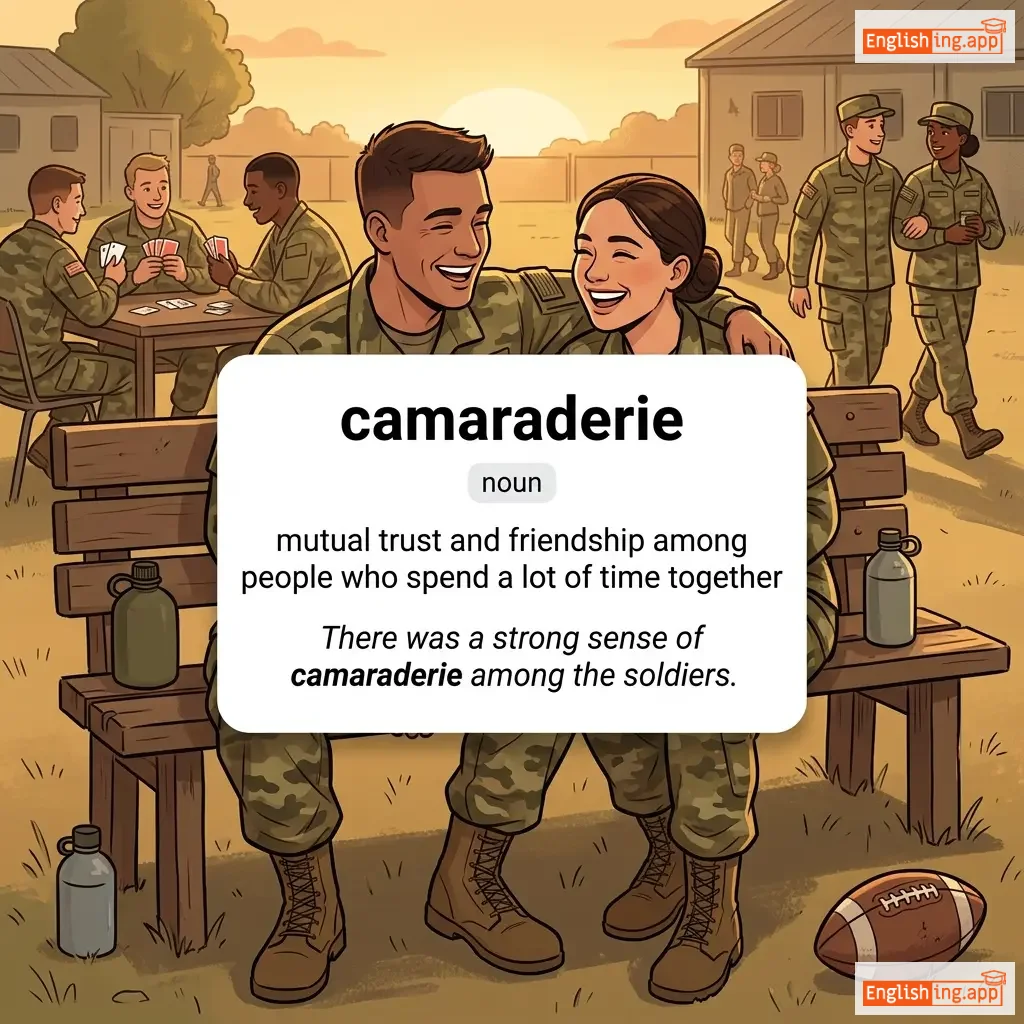
camaraderie definition card — visual illustration of the meaning
noun
/ˌkæməˈrɑːdəri/
友谊 (yǒuyì)

mutual trust and friendship among people who spend a lot of time together

"There was a strong sense of camaraderie among the soldiers."

"士兵之间有着强烈的友谊感。" (Shìbīng zhī jiān yǒuzhe qiángliè de yǒuyì gǎn.)
verb
/keɪm/
来了 (lái le)

past tense of 'come'

"She came to the party on time."

"她准时来到了聚会。" (Tā zhǔnshí lái dào le jùhuì.)
noun
/ˈkæm.əl/
骆驼 (luòtuó)

a large animal with one or two humps on its back that lives in hot dry places

"The camel walked slowly across the desert sand."

"骆驼慢慢地走过沙漠的沙子。" (Luòtuó màn man de zǒuguò shāmò de shāzi.)
noun
/ˈkæmi.oʊ/
客串 (kè chuàn)

a small but significant role in a play, film, or show, often performed by a well-known person

"The actor made a surprise cameo in the movie."

"那位演员在电影中出人意料地客串了。" (Na wei yanyuan zai dianying zhong churen yiliaode kechuanle.)
noun
/ˈkæm.rə/

a device used for taking photographs or recording videos

"She bought a new camera for her photography class."

noun
/ˈkæməˌflɑːʒ/
伪装 (weizhuang)

the act of hiding or disguising something by making it blend with its surroundings

"The soldiers used camouflage to hide from the enemy."

"士兵们使用伪装来躲避敌人。" (Shibingmen shiyong weizhuang lai duobi diren.)
noun, verb
/kæmp/
露营地 (luyingdi)

a place where people stay temporarily in tents or cabins, often outdoors; to stay in such a place

"We decided to camp by the lake during the summer holiday."

"我们决定在夏季假期时在湖边露营。" (Women jueding zai xiaji jiaqi shi zai hu bian luying.)
Campaign definition card — visual illustration of the meaning
noun, verb
/kæmˈpeɪn/
活动 (huodong)

a planned series of activities to achieve a specific goal, especially in politics, marketing, or war

"The company launched a campaign to promote its new product."

"公司启动了一项活动来推广其新产品。" (Gōngsī qǐdòngle yīxiàng huódòng lái tuīguǎng qí xīn chǎnpǐn.)
noun
/ˈkæm.fər/
樟脑 (zhāngnǎo)

a white crystalline substance with a strong aromatic smell, used in medicine and religious ceremonies

"The temple was filled with the fragrant smoke of burning camphor."
"寺庙里充满了燃烧的樟脑散发出的芳香烟雾。" (Sìmiào lǐ chōngmǎnle ránshāo de zhāngnǎo sànfā chū de fāngxiāng yānwù.)
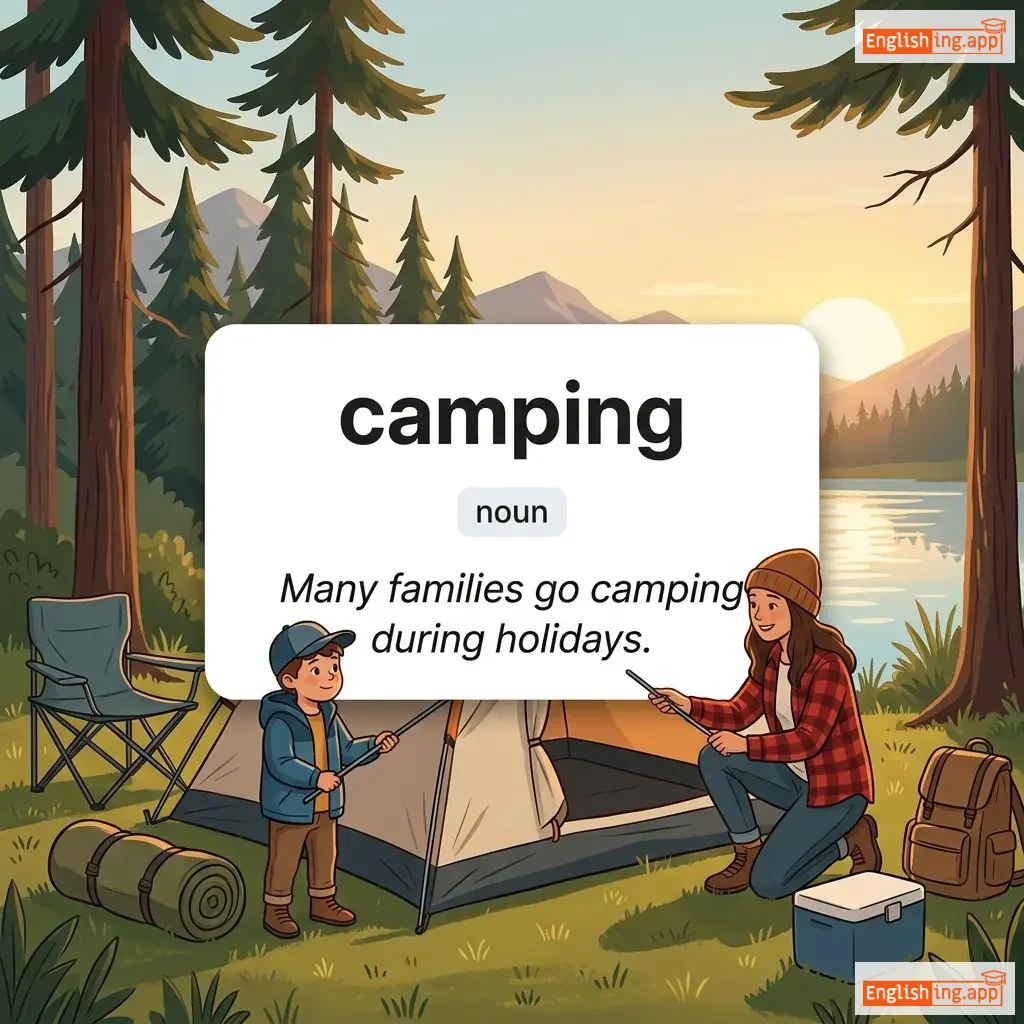
camping definition card — visual illustration of the meaning
noun
ˈkæm.pɪŋ
露营 (lù yíng)

Living outdoors temporarily, especially for recreation; staying in a tent or similar shelter.

"Many families go camping during holidays."
"许多家庭在假期去露营。" (Xǔduō jiātíng zài jiàqī qù lùyíng.)
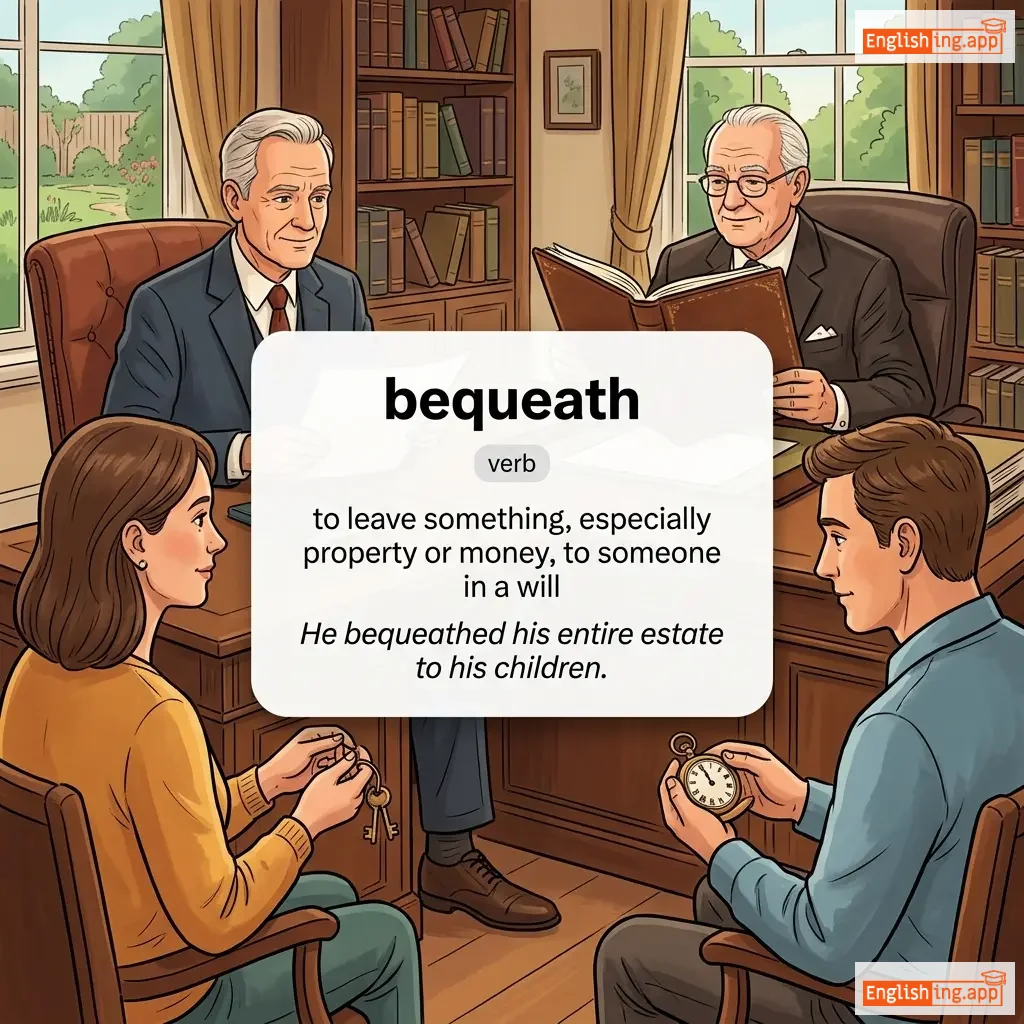
bequeath definition card — visual illustration of the meaning
verb
/bɪˈkwiːð/
遗赠 (yízèng)

to leave something, especially property or money, to someone in a will

"He bequeathed his entire estate to his children."

"他把自己的全部财产遗赠给了孩子们。" (Tā bǎ zìjǐ de quánbù cáichǎn yízèng gěi le háizimen.)
verb
/bɪˈreɪt/
训斥 (xùnchì)

to scold or criticize angrily

"The teacher berated the student for being late."

"老师因迟到而训斥了学生。" (Lǎoshī yīn chídào ér xùnchìle xuéshēng.)