词汇表

英语词汇词典 | 单词含义、定义和示例

verb
/bɪˈriːv/
失去亲人 (shīqù qīnrén)

to deprive someone of a loved one through death

"She was bereaved of her husband last year."

"她去年失去了她的丈夫。" (Tā qùnián shīqùle tā de zhàngfu.)
adjective
/bɪˈriːvd/
丧失亲人的人 (sàngshī qīnrén de rén)

suffering the loss of a loved one through death

"The bereaved mother wept silently at the funeral."

"那位丧失亲人的母亲在葬礼上默默哭泣。" (Nà wèi sàngshī qīnrén de mǔqīn zài zànglǐ shàng mòmò kūqì.)
noun
/bɪˈriːvmənt/

The state of having lost a loved one through death.

"She received many letters of sympathy during her time of bereavement."

adjective
/bɪˈrɛft/
失落的 (shīluò de)

Deprived of or lacking something, especially a nonmaterial asset.

"After the betrayal, he felt bereft of hope and trust."

"背叛后,他感到失落于希望和信任。" (Bèipàn hòu, tā gǎndào shīluò yú xīwàng hé xìnrèn.)
adjective
/bəˈzɜːrk/
疯狂 (fengkuang)

Out of control with anger or excitement; wild or frenzied.

"The fans went berserk when their team won the championship."

"当他们的队伍赢得了冠军时,粉丝们变得疯狂。" (Dāng tāmen de duìwǔ yíngdéle guànjūn shí, fěnsīmen biànde fēngkuáng.)
noun
/bɜːrθ/
卧铺 / 停泊位置 (wòpù / tíngbó wèizhì)

A place to sleep on a ship or train; a ship's allocated place at a dock.

"They reserved a lower berth on the overnight train."

"他们在夜间火车上预定了一个下铺。" (Tāmen zài yèjiān huǒchē shàng yùdìng le yīgè xià pù.)
verb
/bɪˈsiːtʃ/
恳求 (kěnqiú)

To ask someone urgently and fervently to do something; to beg.

"He beseeched the judge for mercy."

"他恳求法官宽恕。" (Tā kěnqiú fǎguān kuānshù.)
⚔️

beset

verb
/bɪˈsɛt/

to trouble, harass, or attack on all sides

"The village was beset by constant floods."

preposition
/bɪˈsaɪd/
在...旁边 (zai...pangbian)

next to or at the side of someone or something

"She sat beside her best friend during the ceremony."

"她在仪式期间坐在她最好的朋友旁边。" (Ta zai yishi qijian zuo zai ta zuihao de pengyou pangbian.)
adverb, preposition
/bɪˈsaɪdz/
此外 (ciwai)

in addition to; apart from

"Besides English, he also speaks French."

"除了英语,他还会说法语。" (Chule Yingyu, ta hai hui shuo Fayu.)
verb
/bɪˈsiːdʒ/
围困 (wéikùn)

to surround a place with armed forces to capture it; to overwhelm with requests or attention

"The city was besieged by enemy troops."

"城市被敌军包围了。" (Chéngshì bèi díjūn bāowéi le.)
verb
/bɪˈsmɪər/
弄脏 (nòngzāng)

to smear or cover with a sticky or dirty substance; to soil

"His clothes were besmeared with mud."

"他的衣服沾满了泥巴。" (Tā de yīfu zhān mǎnle níbā.)
verb
/bɪˈsmɜːrtʃ/
玷污 (diàn wū)

to damage someone's reputation; to make dirty or stained

"He tried to besmirch her good name with false rumors."

"他试图通过虚假的谣言玷污她的好名声。" (Tā shìtú tōngguò xūjiǎ de yáoyán diànwū tā de hǎo míngshēng.)
adjective
/bɪˈsɒtɪd/
沉迷的,痴迷的 (chenmi de, chimi de)

strongly infatuated or obsessed with someone or something

"He was completely besotted with her charm."

"他完全沉迷于她的魅力。" (Ta wanquan chenmi yu ta de meili.)
adjective
/bɛst/
最好 (zuì hǎo)

Of the highest quality, excellence, or standing.

"She is the best student in the class."

"她是班里最好的学生。" (Tā shì bān lǐ zuì hǎo de xuéshēng.)
best effort definition card — visual illustration of the meaning
phrase
bɛst ˈɛf.ərt
最大努力 (zui da nu li)

The maximum amount of effort or energy that someone can give.

"He gave his best effort to complete the task on time."

"他为了按时完成任务,付出了最大的努力。" (ta wei le an shi wan cheng ren wu fu chu le zui da nu li)
adjective
/ˈbiːstiəl/
兽性 (shòuxìng)

Relating to beasts; showing savagery, brutality, or lacking human sensibility.

"The prisoners were treated in a bestial manner."

"囚犯们以野兽般的方式被对待。" (Qiúfànmen yǐ yěshòu bān de fāngshì bèi duìdài.)
verb
/bɪˈstoʊ/
授予 (shòu yǔ)

To give or present something as a gift or honor.

"The king bestowed honors upon the brave soldiers."

"国王授予勇敢的士兵荣誉。" (Guówáng shòuyǔ yǒnggǎn de shìbīng róngyù.)
verb
/bɪˈstruː/
散布 (sanbu)

To scatter or cover something with objects or substances.

"The ground was bestrewn with autumn leaves."

"地面上撒满了秋天的叶子。" (Dìmiàn shàng sā mǎnle qiūtiān de yèzi.)
verb
/bɪˈstraɪd/
跨越 (kuà yuè)

To sit or stand astride something; to dominate over.

"The statue bestrides the city square."

"这座雕像横跨城市广场。" (Zhè zuò diāoxiàng héng kuà chéngshì guǎngchǎng.)
bet definition card — visual illustration of the meaning
verb, noun
/bɛt/
下注 (xià zhù)

to risk money or something valuable on the result of a future event

"He likes to bet on football matches."

"他喜欢在足球比赛中下注。" (Tā xǐhuān zài zúqiú bǐsài zhōng xià zhù.)
verb
/bɪˈteɪk/
前往;转而从事 (qianwang; zhuaner congshi)

to go or resort to a place or course of action, especially as a response; to apply oneself

"After dinner, she betook herself to her room to read."

"晚饭后,她去自己的房间读书。" (wanfan hou ta qu ziji de fangjian dushu)
noun
/ˌbeɪt ˈnwɑːr/
令人讨厌的事物 (lìng rén tǎo yàn de shì wù)

A person or thing that one particularly dislikes or fears.

"Grammar has always been his bete noire."

"语法一直是他的贝特诺尔。" (Yǔfǎ yīzhí shì tā de bèi tè nuò ěr.)
noun
/ˈbiː.təl nʌt/
槟榔 (bīng láng)

seed of the areca palm tree, often chewed as a stimulant

"Betel-nut is commonly chewed in many South Asian countries."

"槟榔在许多南亚国家是常见的咀嚼物。" (Bīng láng zài xǔduō nán yà guójiā shì chángjiàn de zhǔjué wù.)
verb
/bɪˈθɪŋk/
回想 (huíxiǎng)

to cause oneself to consider or remember something

"He bethought himself of the promise he had made."

"他想起了他曾做出的承诺。" (Tā xiǎngqǐle tā céng zuòchū de chéngnuò.)
verb
/bɪˈtaɪd/
发生 (fāshēng)

to happen or occur, usually of something that befalls someone

"Woe betide anyone who breaks the rules."

"打破规则的人会遭受后果。" (dǎpò guīzé de rén huì zāoshòu hòuguǒ.)
adverb
/bɪˈtaɪmz/
早早 (zaozhao)

early; in good time

"She rose betimes to finish her work."

"她早起以完成工作。" (Ta zao qi yi wancheng gongzuo.)
verb
/bɪˈtəʊkən/
预示 (yù shì)

to be a sign or indication of something

"Dark clouds betoken an approaching storm."

"乌云预示着即将到来的暴风雨。" (Wū yún yù shì zhe jí jiāng dào lái de bào fēng yǔ.)
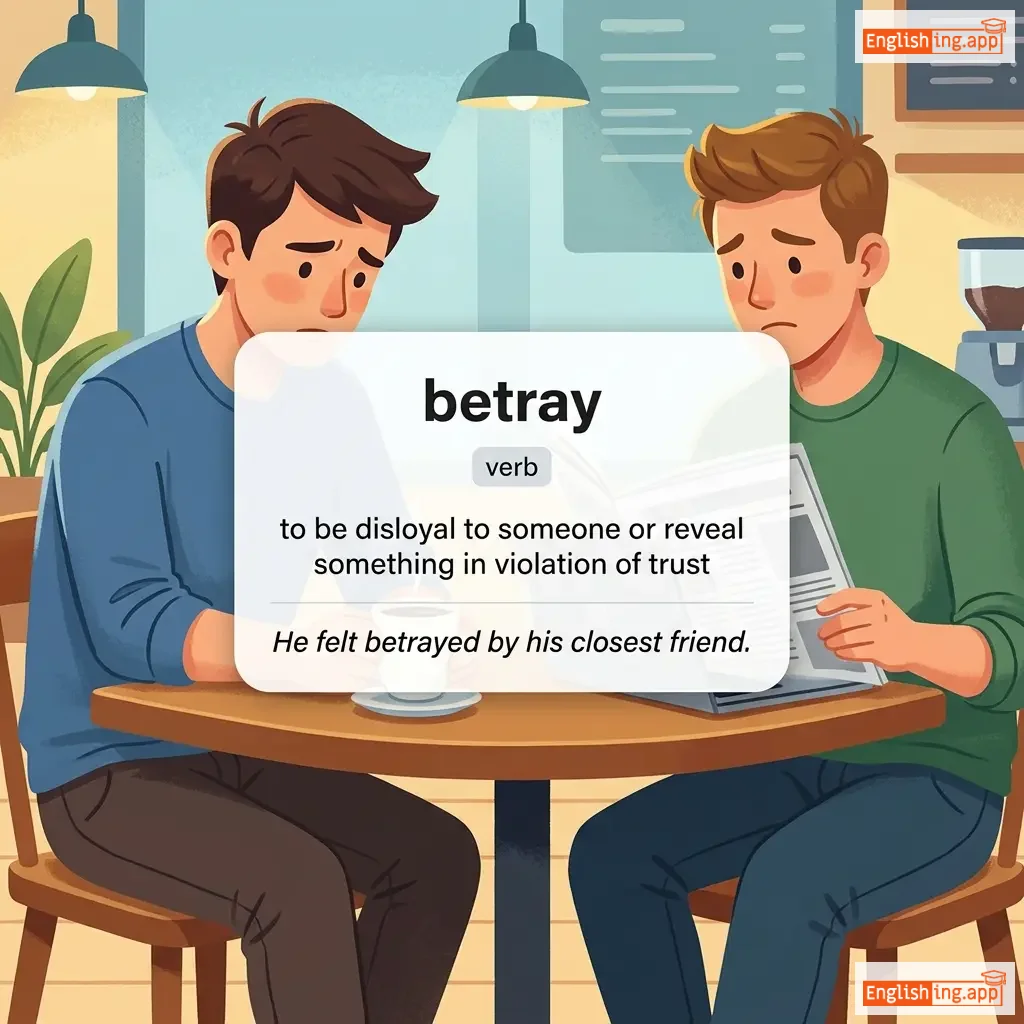
betray definition card — visual illustration of the meaning
🗡️

betray

verb
/bɪˈtreɪ/

to be disloyal to someone or reveal something in violation of trust

"He felt betrayed by his closest friend."

noun
/bɪˈtreɪəl/
背叛; 不忠 (bèipàn; bù zhōng)

the action of betraying one's country, group, or person; disloyalty

"His betrayal of their friendship hurt her deeply."

"他对他们友谊的背叛深深伤害了她。" (Tā duì tāmen yǒuyì de bèipàn shēnshēn shānghài le tā.)
noun
/bɪˈtreɪər/
背叛者; 不忠者 (bèipàn zhě, bù zhōng zhě)

a person who betrays someone or something; one who is disloyal

"The betrayer was exposed and faced severe consequences."

"背叛者被曝光并面临严重后果。" (Bèipàn zhě bèi pùguāng bìng miànlín yánzhòng hòuguǒ.)
verb
/bɪˈtroʊð/
订婚 (dìnghūn)

To formally promise to marry someone; to engage.

"He was betrothed to the princess at a young age."

"他在年轻时就与公主订婚了。" (Tā zài niánqīng shí jiù yǔ gōngzhǔ dìnghūn le.)
noun
/bɪˈtroʊðəl/
订婚 (ding hun)

The formal engagement to be married.

"Their betrothal was announced to the whole village."

"他们的订婚在整个村庄宣布。" (Tāmen de dìnghūn zài zhěnggè cūnzhuāng xuānbù.)
adjective, noun
/bɪˈtroʊðd/
订婚的 (dìnghūn de)

Engaged to be married; a person who is engaged.

"She introduced him as her betrothed."

"她把他介绍为她的未婚夫。" (Tā bǎ tā jièshào wèi tā de wèihūn fū.)
better definition card — visual illustration of the meaning
adjective, adverb, verb
/ˈbɛtər/

of a more excellent or effective type or quality; to surpass or improve

"He felt better after taking the medicine."

preposition, adverb
/bɪˈtwiːn/
之间 (zhījiān)

at, into, or across the space separating two objects or regions

"She sat between her two friends."

"她坐在两个朋友之间。" (Tā zuò zài liǎng gè péngyǒu zhījiān.)
noun, verb
/ˈbɛvəl/
斜面 (xiémiàn)

A sloping edge or surface; to cut or shape an edge at an angle.

"The carpenter beveled the edges of the table."

"木匠将桌子的边缘斜切。" (Mùjiàng jiāng zhuōzi de biānyuán xié qiē.)
noun
/ˈbɛvərɪdʒ/
饮料 (yinliao)

a drink, especially one other than water

"I ordered a cold beverage to cool down on a hot day."

"我点了一杯冷饮,在热天里降温。" (Wǒ diǎnle yī bēi lěng yǐnliào, zài rè tiān lǐ jiàngwēn.)
noun
/ˈbɛvi/
群体, 一群 (qunti, yi qun)

A large group of people or things of a particular kind.

"A bevy of swans floated on the lake."

"一群天鹅在湖面上漂浮。" (Yi qun tian'e zai humian shang piaofu.)
verb
/bɪˈweɪl/
哀叹 (aitan)

to express deep sorrow or regret over something; to mourn openly

"She bewailed the loss of her childhood home."

"她哀叹失去了童年的家。" (Ta aitan shiqule tongnian de jia)
verb
/bɪˈwɛər/
小心 (xiaoxin)

to be cautious or alert about a potential danger or problem

"Beware of the dog near the gate."

"小心门口附近的狗。" (Xiǎoxīn ménkǒu fùjìn de gǒu.)
verb
/bɪˈwɪldər/
使困惑 (shǐ kùnhuò)

to cause someone to be confused or puzzled

"The complex instructions bewildered the students."

"复杂的指令使学生感到困惑。" (Fùzá de zhǐlìng shǐ xuéshēng gǎndào kùnhuò.)
verb
/bɪˈwɪtʃ/
迷住 (mīzhù)

to enchant or fascinate someone as if by magic

"The dancer's performance bewitched the audience."

"舞蹈家的表演迷住了观众。" (Wǔdǎo jiā de biǎoyǎn mí zhù le guānzhòng.)
adjective
/bɪˈwɪtʃɪŋ/
迷人的 (mírén de)

charming, enchanting, or captivating in a magical or irresistible way

"She wore a bewitching smile that captivated everyone in the room."

"她带着迷人的微笑,吸引了房间里所有的人。" (Tā dàizhe mírén de wēixiào, xīyǐnle fángjiān lǐ suǒyǒu de rén.)
preposition, adverb
/bɪˈjɒnd/
超出 (chaochu)

at or to the further side of; more than

"The village lies beyond the river."
"这个村庄位于河的另一边。" (Zhe ge cunzhuang weiyu he de ling yi bian.)
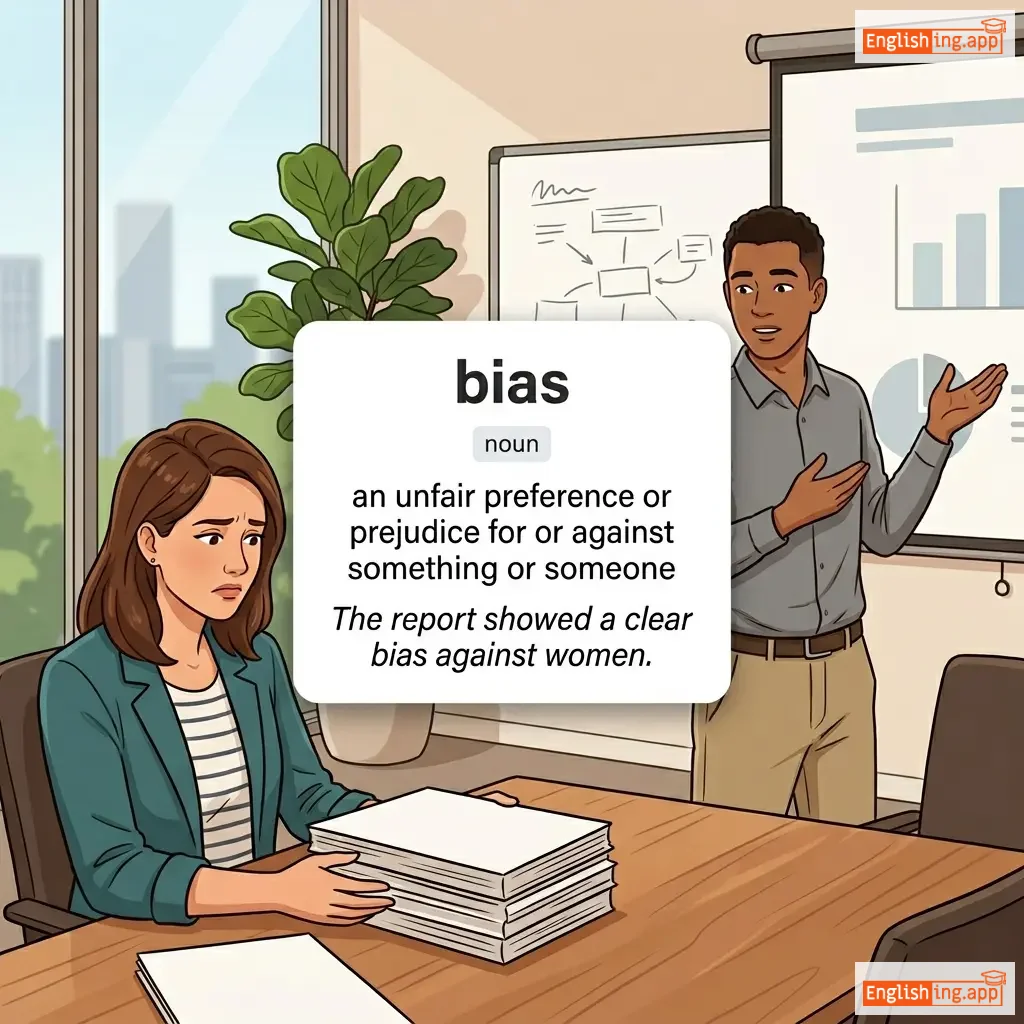
bias definition card — visual illustration of the meaning
noun
/ˈbaɪəs/
偏见 (pianjian)

an unfair preference or prejudice for or against something or someone

"The report showed a clear bias against women."

"报告显示了明显的性别偏见。" (Baogao xianshi le mingxian de xingbie pianjian.)
adjective
/ˈbaɪəst/
偏见的 (pianjian de)

having or showing an unfair tendency to favor one side or opinion

"The judge must not be biased in the case."

"法官在案件中不能有偏见。" (Fǎguān zài ànjiàn zhōng bùnéng yǒu piānjiàn.)
noun
/ˈbaɪbəl/
圣经 (shengjing)

the Christian scriptures consisting of the Old and New Testaments; also used for any authoritative book

"She reads the Bible every morning."

"她每天早晨读圣经。" (Tā měitiān zǎochén dú shèngjīng.)
noun
/ˌbɪbliˈɒɡrəfi/
参考书目 (cān kǎo shū mù)

a list of books, articles, or other sources used or referred to in scholarly work

"The report includes a detailed bibliography at the end."

"报告在最后包括了详细的参考书目。" (Bàogào zài zuìhòu bāokuòle xiángxì de cānkǎo shūmù.)
noun
/ˌbɪbliəʊˈmeɪniə/
书籍癖 (shūjí pǐ)

An extreme obsession with collecting or possessing books.

"His bibliomania led him to fill every room with books."

"他的书籍癖使他把每个房间都塞满了书。" (tā de shūjí pǐ shǐ tā bǎ měi gè fángjiān dōu sāi mǎn le shū.)