词汇表

英语词汇词典 | 单词含义、定义和示例

Business definition card — visual illustration of the meaning
noun
/ˈbɪznəs/
生意 (shēngyì)

the practice of making money by producing or buying and selling goods or services

"She started her own business last year."

"她去年开始了自己的生意。" (Tā qùnián kāishǐle zìjǐ de shēngyì.)
business finance definition card — visual illustration of the meaning
noun
ˈbɪz.nɪs ˈfaɪ.næns
商业财务 (shāngyè cáiwù)

The area of finance that deals with sources of funding and the capital structure of corporations.

"Effective business finance enhances profitability."

"有效的商业财务提高了盈利能力。" (Yǒuxiào de shāngyè cáiwù tígāo le yínglì nénglì.)
business success definition card — visual illustration of the meaning
noun
/bɪzˈnɛs sʌˈsɛs/
商业成功 (shāngyè chénggōng)

The achievement of desired outcomes in business operations, typically measured by profitability, growth, and sustainability.

"Innovation drives business success."

"创新推动商业成功。" (Chuàngxīn tuīdòng shāngyè chénggōng.)
noun
/ˈbɪznəsmæn/
商人 (shāngrén)

a person engaged in commercial or industrial business activities

"The businessman invested heavily in new technology."

"商人们在新技术上进行了大量投资。" (Shāngrén men zài xīn jìshù shàng jìnxíngle dàliàng tóuzī.)
noun
/ˈbɪznəsˌwʊmən/
女商人 (nv shang ren)

a woman who works in business, especially one who owns or manages a company

"The businesswoman expanded her company into international markets."

"这位女商人将她的公司扩展到国际市场。" (Zhe wei nv shang ren jiang ta de gongsi kuozhan dao guoji shichang)
noun
/ˈbʌskɪn/
厚底靴 (hòu dǐ xuē)

A type of thick-soled boot that reaches halfway to the knee; also associated with tragic drama in ancient times.

"The actor wore a buskin as part of his classical costume."

"那位演员穿着巴斯金鞋子作为他经典服装的一部分。" (Nà wèi yǎnyuán chuānzhuó bāsījīn xiézi zuòwéi tā jīngdiǎn fúzhuāng de yībùfen.)
💥

bust

noun/verb
/bʌst/

As a noun: A sculpture of a person's head, shoulders, and chest; As a verb: To break, smash, or arrest.

"The police busted the gang last night."

verb, noun
/ˈbʌsəl/
喧嚣, 忙碌 (xuanxiao, manglu)

to move in an energetic or noisy manner; busy activity in a place

"The marketplace bustled with vendors and customers."

"市场充满了小贩和顾客。" (Shichang chongman le xiaofan he guke.)
adjective
/ˈbʌsti/
胸部丰满的 (xiong bu feng man de)

having a large or full bust; describing a woman with a prominent chest

"The actress was often described as busty in fashion magazines."

"这位女演员在时尚杂志中常被形容为胸部丰满的。" (Zhe wei nv yanyuan zai shishang zazhi zhong chang bei xingrong wei xiong bu feng man de)
busy definition card — visual illustration of the meaning
adjective
/ˈbɪzi/
忙碌 (mánglù)

actively engaged in work or activity; occupied

"He is too busy to answer the phone."

"他太忙了,无法接电话。" (Tā tài máng le, wúfǎ jiē diànhuà.)
but definition card — visual illustration of the meaning
conjunction
/bʌt/
但是 (danshi)

used to introduce a phrase or clause contrasting with what has already been mentioned

"She wanted to go out, but it was raining heavily."

"她想出去,但外面下大雨。" (Ta xiang chuqu, danshi waimian xia dayu.)
noun
/ˈbʊt.ʃər/
屠夫 (túfū)

a person whose job is cutting up and selling meat in a shop

"The butcher recommended the best cut of beef for our dinner."

"屠夫推荐了我们晚餐的最佳牛肉切块。" (Túfū tuījiànle wǒmen wǎncān de zuìjiā niúròu qiē kuài.)
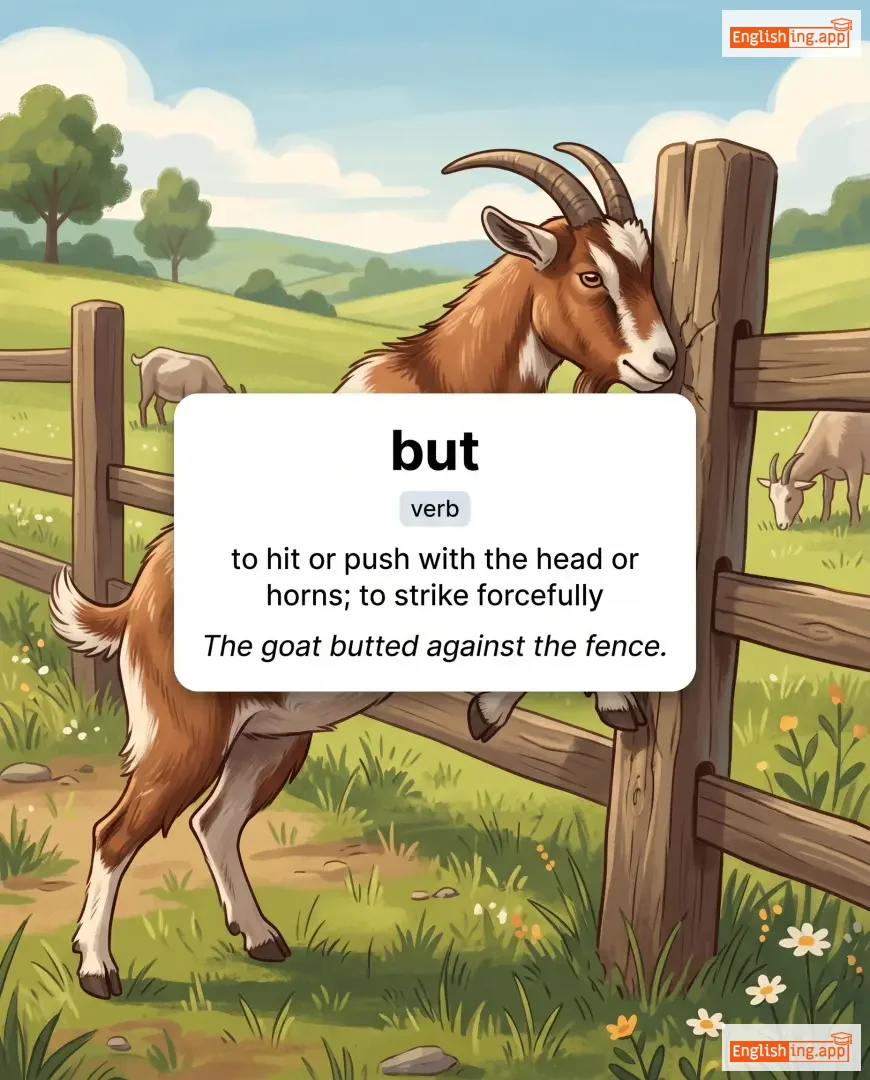
🐐

butt

noun, verb
/bʌt/

to hit or push with the head or horns; the end part of something, especially a cigarette

"The goat butted the fence with its horns."

noun
/bjuːt/
孤山 (gushan)

an isolated hill with steep sides and a flat top, common in arid regions

"The travelers could see a tall butte rising in the desert."

"旅行者们能看到沙漠中一座高耸的孤山。" (Lvxingzhe men neng kandao shamo zhong yi zuo gaosong de gushan.)
noun, verb
/ˈbʌtər/

a pale yellow edible fat made from cream; to spread butter on something

"She buttered a slice of bread before eating."

noun
/ˈbʌt.ər fɪʃ/
黄油鱼 (huang you yu)

a small, smooth-skinned marine fish

"The butter-fish is popular in Bengali cuisine."

"黄油鱼在孟加拉菜中很受欢迎。" (huang you yu zai meng jia la cai zhong hen shou huan ying)
noun
/ˈbʌt.ər.flaɪ/
蝴蝶 (hudie)

a flying insect with large colorful wings

"The beautiful butterfly landed on the flower."

"美丽的蝴蝶停在花朵上。" (Měilì de húdié tíng zài huāduǒ shàng.)
noun
/ˈbʌtərflaɪ/
蝴蝶 (hudie)

an insect with large, often brightly colored wings that flies during the day

"A beautiful butterfly landed on the flower."

"一只美丽的蝴蝶停在花上。" (Yī zhī měilì de húdié tíng zài huā shàng.)
noun
/ˈbʌt.ə.flaɪ piː/
蝴蝶豆 (húdié dòu)

a blue flowering plant with butterfly-shaped flowers, used to make herbal tea

"Butterfly pea flowers turn tea into a beautiful blue color."
"蝴蝶豆花将茶水染成美丽的蓝色。" (húdié dòu huā jiāng chá shuǐ rǎn chéng měilì de lán sè.)
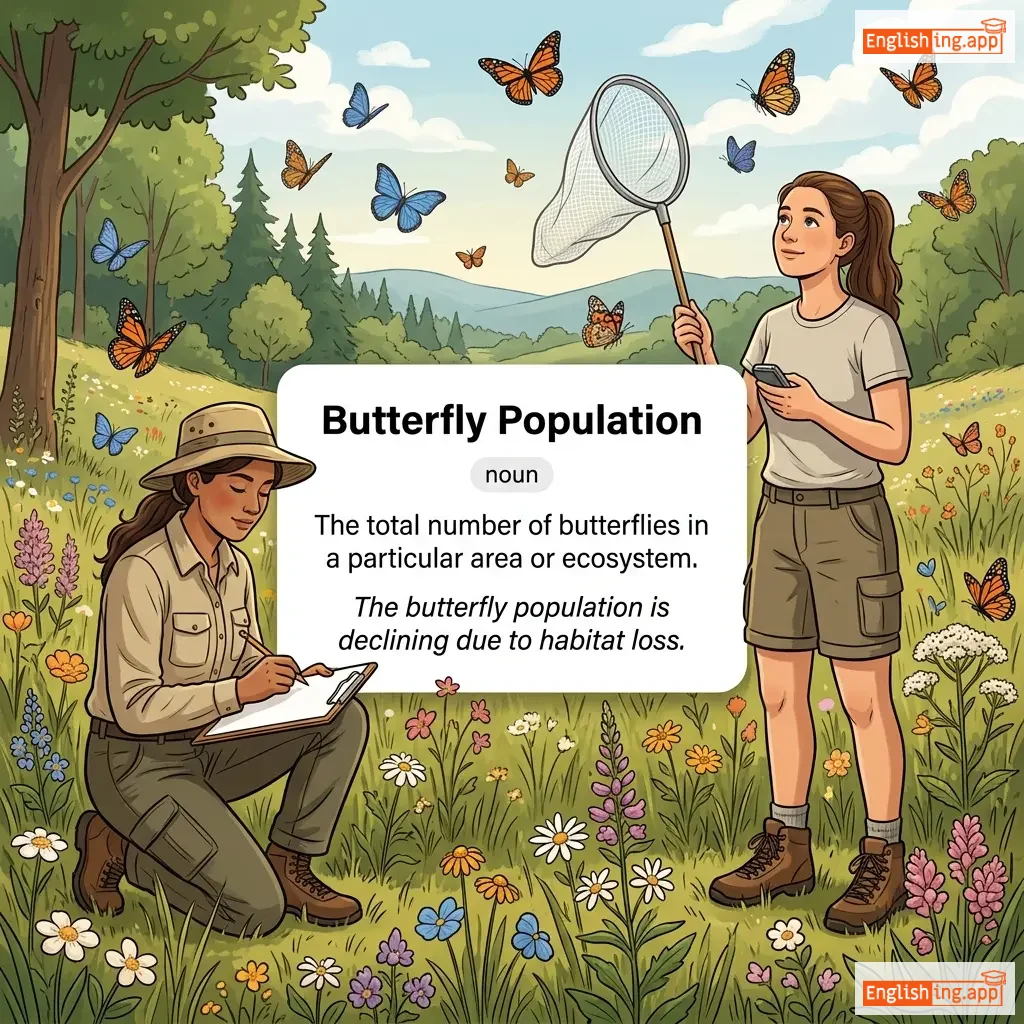
Butterfly Population definition card — visual illustration of the meaning
noun
ˈbʌtərflaɪ ˌpɒpjəˈleɪʃən
蝴蝶种群 (hudie zhongqun)

The total number of butterflies in a particular area or ecosystem.

"The butterfly population is declining due to habitat loss."
"由于栖息地丧失,蝴蝶种群正在减少。" (Youyu qixi di sangshi, hudie zhongqun zhengzai jianshao.)
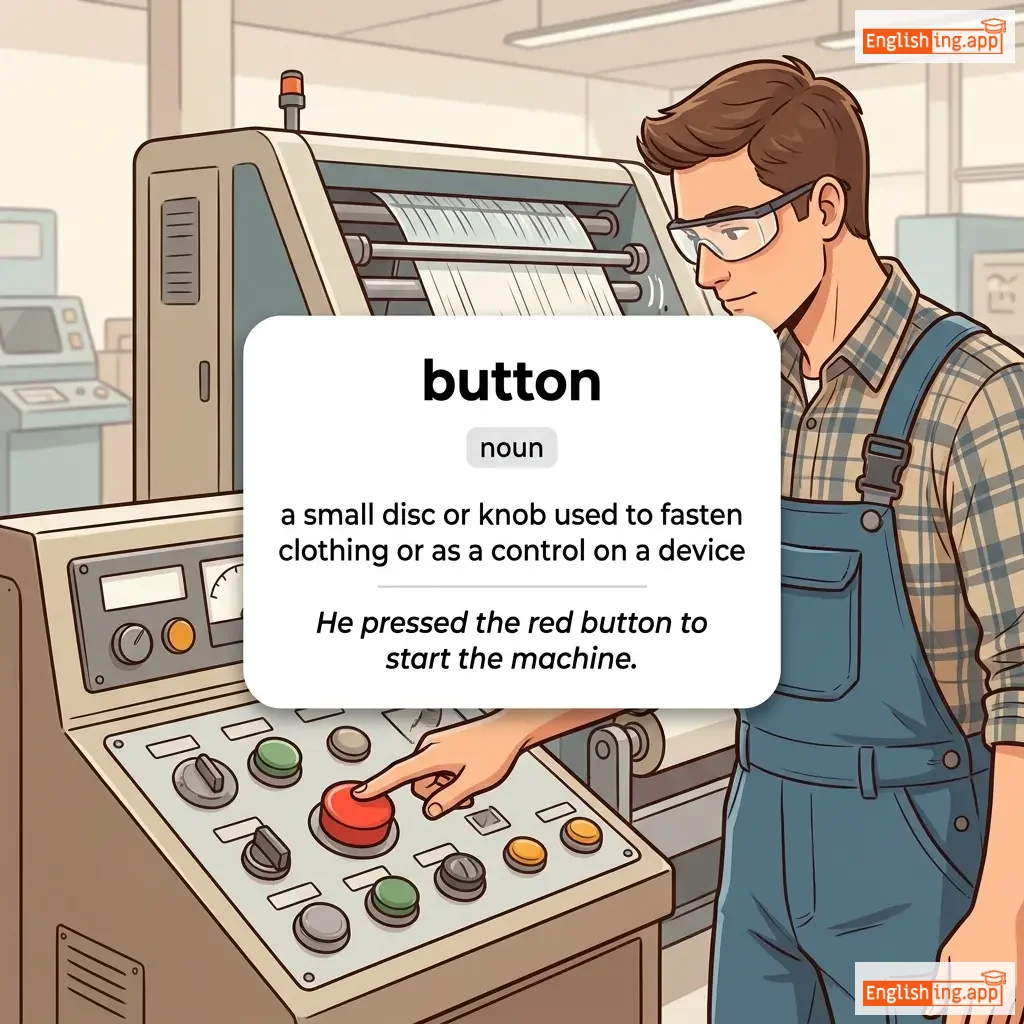
button definition card — visual illustration of the meaning
noun
/ˈbʌtən/
按钮 (anniu)

a small disc or knob used to fasten clothing or as a control on a device

"He pressed the red button to start the machine."
"他按下了红色按钮以启动机器。" (Tā àn xiàle hóngsè ànniǔ yǐ qǐdòng jīqì.)
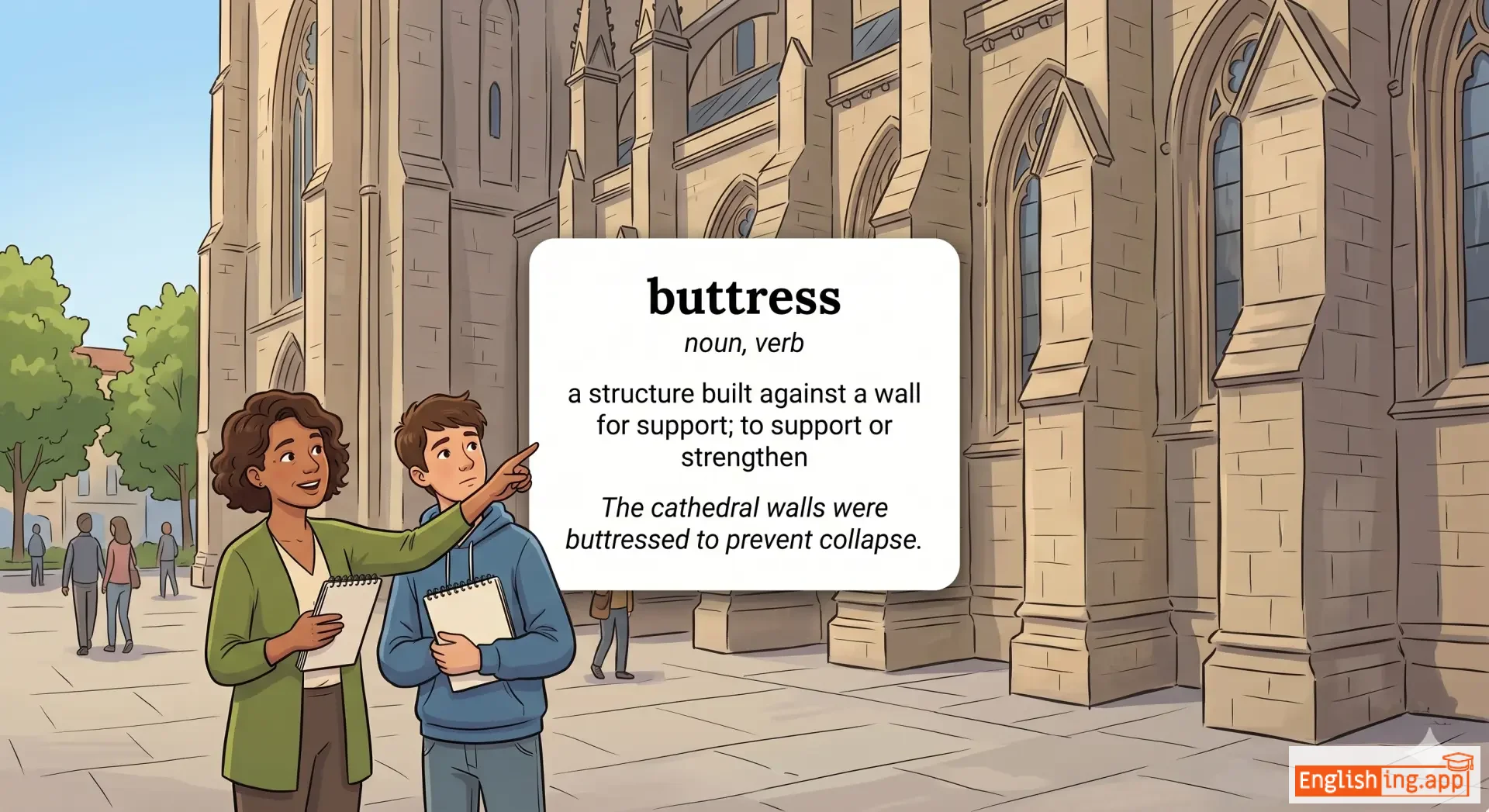
buttress definition card — visual illustration of the meaning
noun, verb
/ˈbʌtrəs/
扶壁,支撑 (fú bì, zhīchēng)

a structure built against a wall for support; to support or strengthen

"The cathedral walls were buttressed to prevent collapse."

"大教堂的墙壁被支撑以防止倒塌。" (Dà jiàotáng de qiángbì bèi zhīchēng yǐ fángzhǐ dǎotā.)
👩‍🦰

buxom (baksom)

adjective
/ˈbʌksəm/
丰满且迷人的女性 (fengman qie miren de nuxing)

Plump, with a full figure and often large-breasted, especially used to describe women.

"The actress was described as a cheerful and buxom woman."

"这位女演员被描述为一个快乐且丰满的女性。" (Zhe wei nüyǎnyuán bèi miáoshù wéi yīgè kuàilè qiě fengmǎn de nǚxìng.)
buy definition card — visual illustration of the meaning
verb
/baɪ/
(mai)

to acquire something in exchange for money

"She went to the market to buy fresh vegetables."

"她去市场买新鲜蔬菜。" (Ta qu shichang mai xinxian shucai.)
noun
/ˈbaɪər/
买家 (maijia)

a person who makes a purchase

"The buyer inspected the car before making payment."

"买家在付款之前检查了这辆车。" (Maijia zai fukuan zhīqián jiǎnchále zhè liàng chē.)
noun, verb
/bʌz/
嗡嗡声 (weng weng sheng)

to make a low continuous humming sound; a feeling of excitement or interest

"I could hear the phone buzz during the meeting."

"开会时我听到了手机的嗡嗡声。" (Kaihui shi wo tingdao le shouji de wengweng sheng)
preposition
/baɪ/
通过 (tongguo)

indicating the agent performing an action, or the means of achieving something

"The book was written by a famous author."

"这本书是通过一位著名的作者写的。" (Zhe ben shu shi tongguo yi wei zhuming de zuozhe xie de.)
noun
/ˈbaɪ.lɔː/
地方性法规 (dìfāngxìng fǎguī)

A rule made by a company, organization, or local authority to control the actions of its members.

"The city council passed a new by-law regulating street vendors."

"市议会通过了一项新的地方法规,规范街头小贩。" (Shì yìhuì tōngguòle yī xiàng xīn de dìfāng fǎguī, guīfàn jiētóu xiǎofàn.)
interjection
/baɪ/
再见 (zaijian)

used to say goodbye; a short and informal farewell

"I said bye to her before leaving."

"离开前我对她说了再见。" (likai qian wo dui ta shuo le zaijian)
noun/adjective
/ˈbaɪ.ɡɒn/
过去的 (guoqu de)

Something belonging to an earlier time; past and no longer existing.

"He often talks about the traditions of bygone days."

"他经常谈论过去时代的传统。" (Tā jīngcháng tánlùn guòqù shídài de chuántǒng.)
noun
/ˈbaɪ.laɪn/
作者姓名行 (zuòzhě xìngmíng háng)

A line in a newspaper or magazine article that names the writer.

"Her byline appeared on the front page of the newspaper."

"她的名字出现在报纸的头版。" (Tā de míngzì chūxiàn zài bàozhǐ de tóubǎn.)
adjective
/ˈbɪz.ən.taɪn/ or /ˈbaɪ.zənˌtiːn/
复杂 (fuza)

Extremely complicated and detailed; relating to the Byzantine Empire or its style.

"The new tax regulations are so byzantine that few understand them."

"新的税收规定非常复杂,很少有人能理解。" (Xinde shuishou guiding feichang fuzha, hen shao you ren neng lijie.)
noun
/kæb/
出租车 (chūzūchē)

a taxi or car for hire with a driver

"We took a cab to the airport."

"我们坐出租车去了机场。" (Wǒmen zuò chūzūchē qùle jīchǎng.)
🕵️‍♂️

Cabal (卡巴尔)

noun
/kəˈbæl/
阴谋集团 (yinmou jituan)

A secret group or faction engaged in plotting or intrigue.

"A small cabal was working behind the scenes to influence the election."

"一个小的阴谋集团正在幕后工作,试图影响选举。" (Yi ge xiao de yinmou jituan zhengzai muhoushi gongzuo, shitul yingxiang xuanshu.)
noun
/ˈkæbəˌlɪzəm/
卡巴利主义 (kabalizhuyi)

The doctrines, practices, or secretive dealings of a cabal.

"The historian wrote extensively about cabalism in the royal court."

"历史学家在王室宫廷中广泛写作关于卡巴利主义的内容。" (Lishixuejia zai wangshi gongting zhong guangfan xiezuo guanyu kabalizhuyi de neirong.)
noun
/ˈkæb.ɪdʒ/
卷心菜 (juǎn xīncài)

a round vegetable with thick green or purple leaves that can be eaten cooked or raw

"I need to buy some cabbage to make coleslaw for dinner."

"我需要买一些卷心菜来做晚餐的沙拉。" (Wǒ xū yào mǎi yīxiē juǎn xīncài lái zuò wǎn cān de shā lā.)
noun
/ˈkæbɪn/
小屋 (xiao wu)

a small shelter or house, often made of wood in a remote area

"They spent the weekend in a cozy cabin in the mountains."

"他们在山中的一个舒适小屋里度过了周末。" (Tamen zai shan zhong de yige shushi xiao wu li duoguo le zhoumo.)
noun
/ˈkæbənɪt/
内阁 / 橱柜 (nèi gé / chú guì)

A group of senior government ministers; or a cupboard with shelves or drawers.

"The prime minister reshuffled the cabinet last month."

"总理上个月重新调整了内阁。" (Zǒnglǐ shàng gè yuè chóngxīn tiáozhěngle nèi gé.)
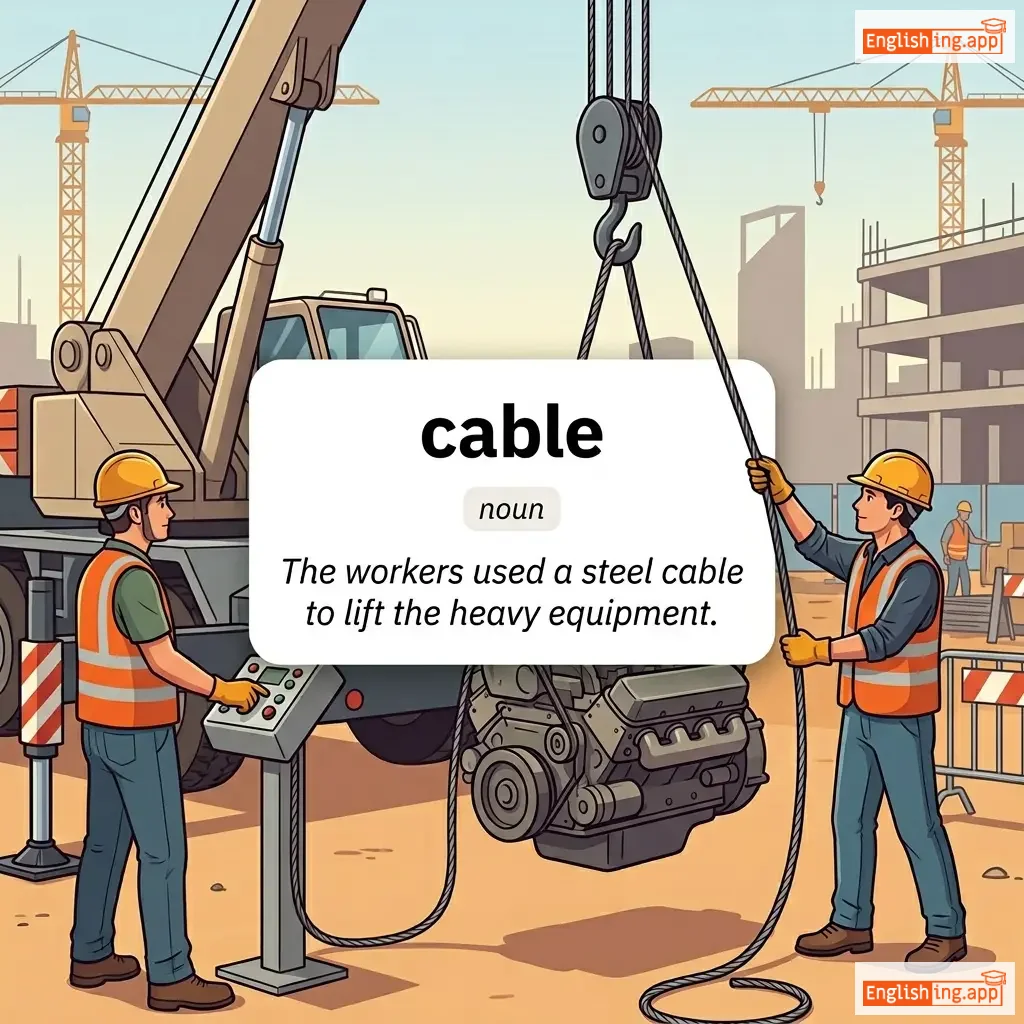
cable definition card — visual illustration of the meaning
📡

cable

noun
/ˈkeɪ.bəl/

a thick, strong rope made of metal wires or fibers; a system of wires used for transmitting signals or electricity

"The workers used a steel cable to lift the heavy equipment."

noun
/kæʃ/
缓存 (huancun)

A hidden storage of items or a high-speed memory in computing.

"The hikers found a cache of supplies hidden under the rocks."
"远足者在岩石下发现了一个隐藏的物资存储。" (Yuan zu zhe zai yan shi xia fa xian le yi ge yin cang de wu zi cun chu.)
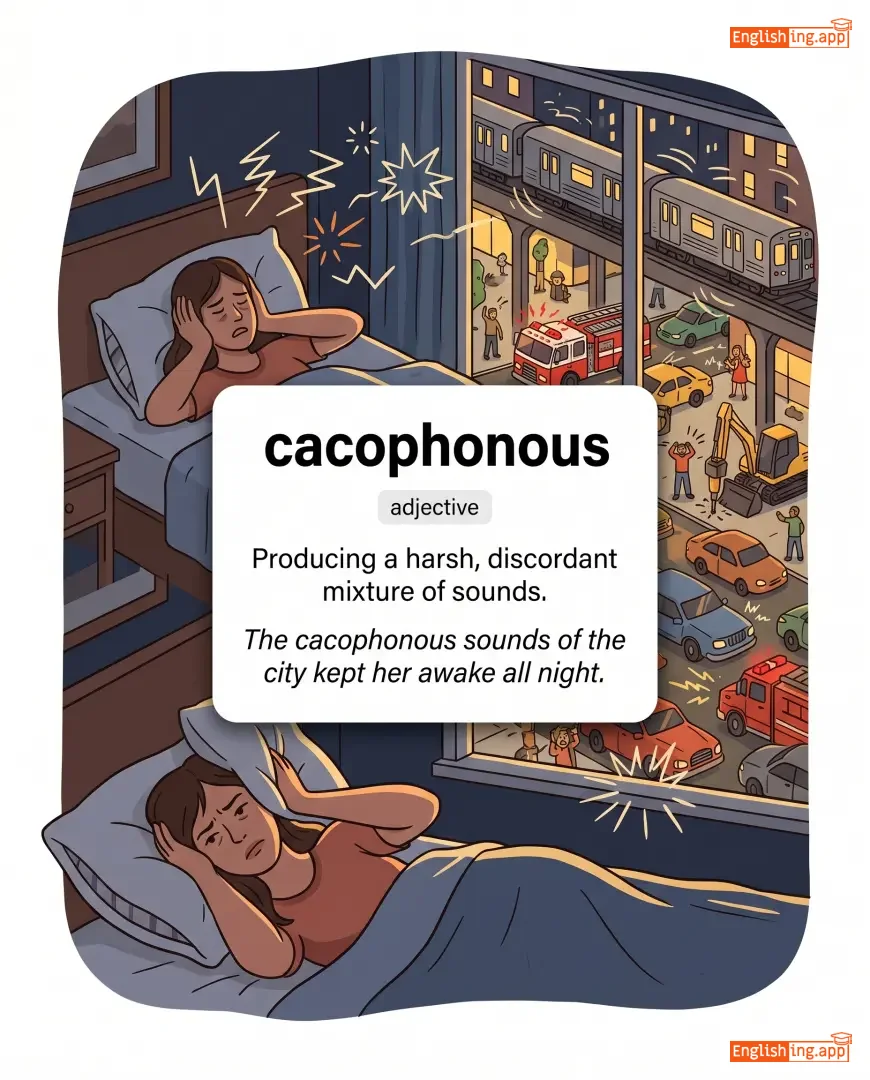
cacophonous definition card — visual illustration of the meaning
adjective
/kəˈkɒfənəs/
刺耳的声音 (cì ěr de shēng yīn)

Producing a harsh, discordant mixture of sounds.

"The cacophonous sounds of the city kept her awake all night."

"城市的刺耳声音让她整晚都无法入睡。" (Chéngshì de cì ěr shēngyīn ràng tā zhěng wǎn dōu wúfǎ rùshuì.)
noun
/kəˈkɒfəni/
刺耳的噪音 (cì ěr de zàoyīn)

A harsh, discordant mixture of sounds.

"The cacophony of horns made it impossible to concentrate."

"喇叭的刺耳声音使人无法集中注意力。" (Lǎbā de cì ěr shēngyīn shǐ rén wúfǎ jízhōng zhùyì lì.)
noun
/kæd/
坏蛋; 粗鲁 (huài dàn, cū lǔ)

a man who behaves dishonorably, especially toward women

"Everyone at the party avoided him because he was known to be a cad."

"派对上的每个人都避开了他,因为他以一个坏蛋著称。" (pài duì shàng de měi gè rén dōu bì kāi le tā, yīn wèi tā yǐ yí gè huài dàn zhù chēng.)
noun
/kəˈdævər/
尸体 (shīti)

A dead human body, especially one used for medical study.

"Medical students dissected the cadaver to learn about human anatomy."

"医学生解剖了尸体以了解人体解剖学。" (Yīxuéshēng jiěpōu le shīti yǐ liǎojiě réntǐ jiěpōu xué.)
adjective
/kəˈdævərəs/
尸体般的 (shītǐ bān de)

Resembling a corpse; very pale, thin, or bony.

"His cadaverous appearance shocked everyone at the party."

"他那尸体般的外貌让聚会中的每个人都感到震惊。" (Tā nà shītǐ bān de wàimào ràng jùhuì zhōng de měi gèrén dōu gǎndào zhènjīng.)
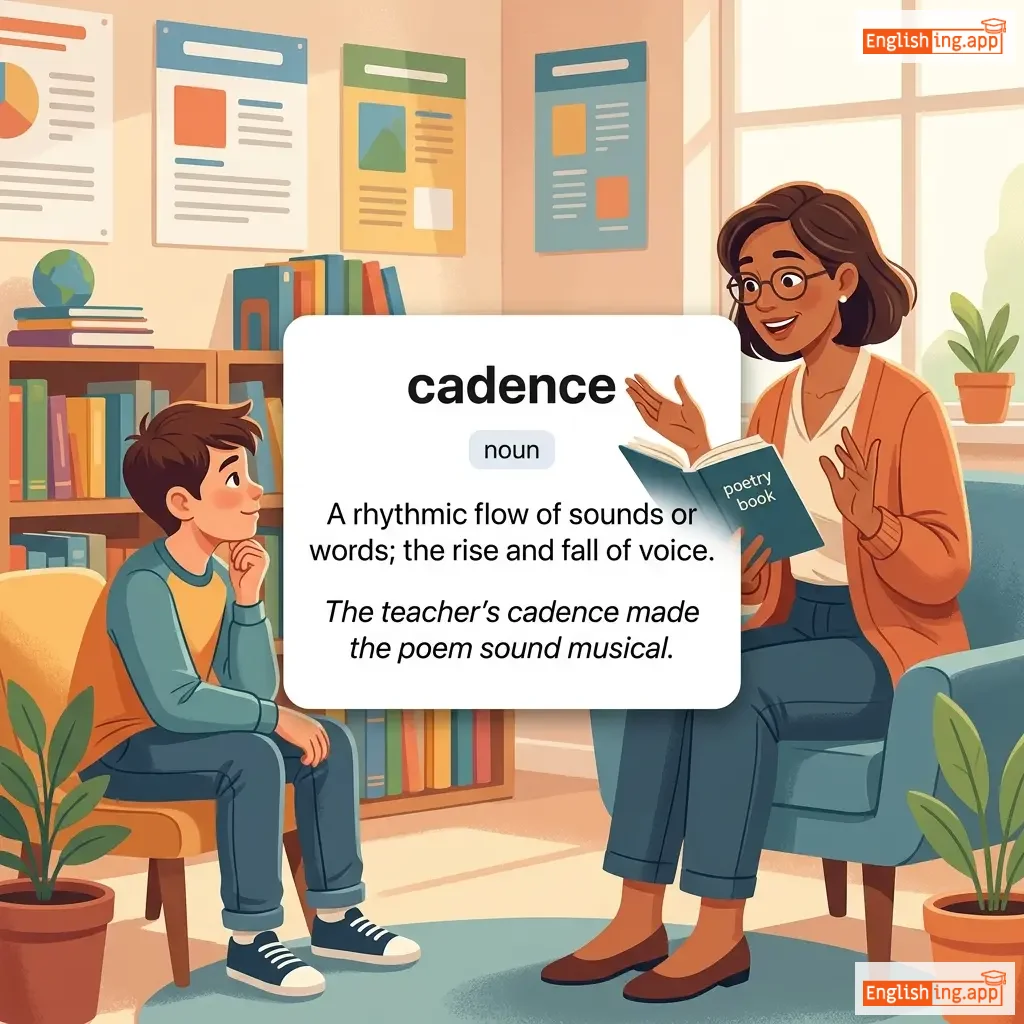
cadence definition card — visual illustration of the meaning
noun
/ˈkeɪdəns/

A rhythmic flow of sounds or words; the rise and fall of voice.

"The teacher's cadence made the poem sound musical."

noun
/kəˈdɛnzə/
精心准备的独奏段落 (jīngxīn zhǔnbèi de dúzòu duànluò)

An elaborate solo passage in a piece of music, usually near the end.

"The pianist performed a brilliant cadenza before the final movement."

"钢琴家在最后一个乐章之前演奏了一段精彩的卡登扎。" (Gāngqín jiā zài zuìhòu yīgè yuèzhāng zhīqián yǎnzòule yī duàn jīngcǎi de kǎdēngzhā.)
noun
/kəˈdɛt/
军校生 (junxiaosheng)

A young trainee in the armed forces, police, or other organization.

"The cadet marched proudly in the parade."

"军校生在游行中自豪地行进。" (Junxiaosheng zai youxing zhong zihao de xingjin.)
cadge definition card — visual illustration of the meaning
verb
/kædʒ/
乞讨 (kaiji)

To beg or obtain something, especially food or money, without paying for it.

"He tried to cadge a free meal from the restaurant."
"他试图从餐厅要一顿免费的饭。" (Tā shìtú cóng cāntīng yào yī dùn miǎnfèi de fàn.)
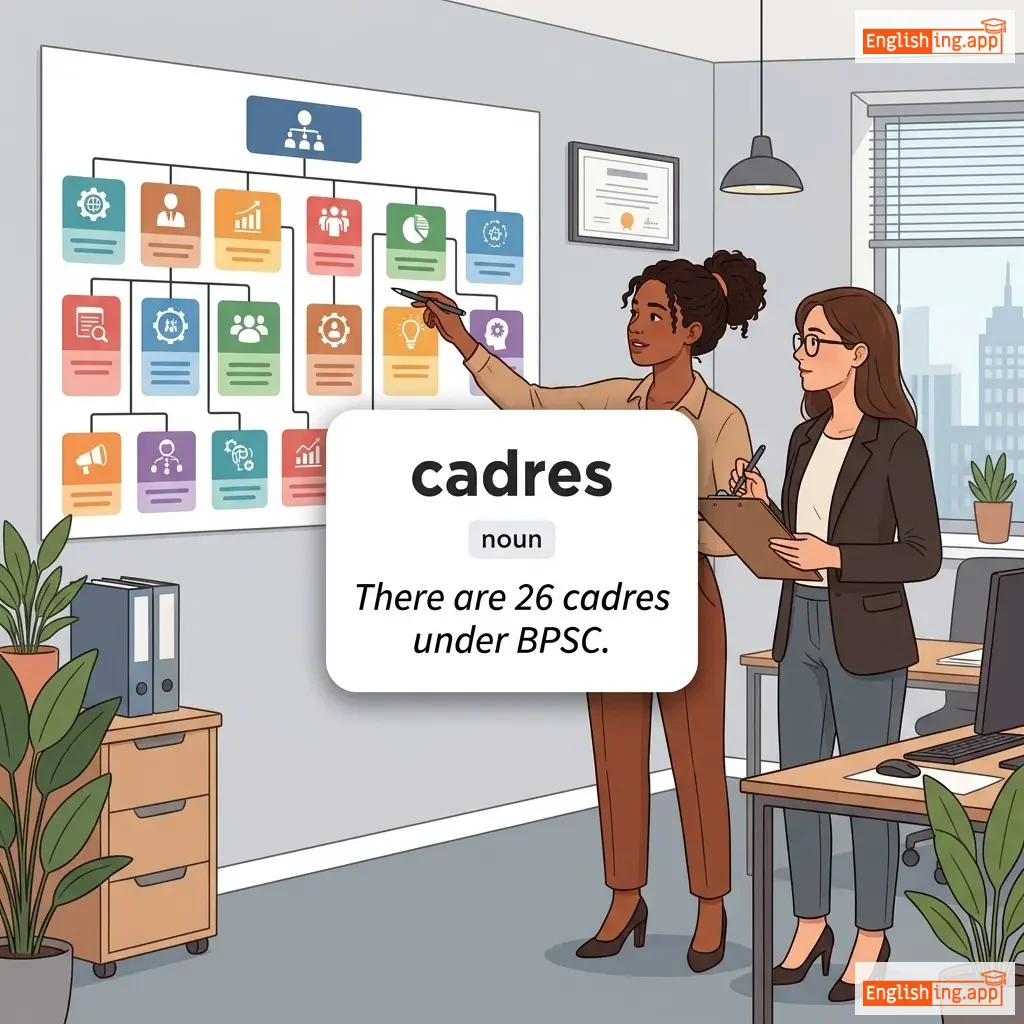
cadres definition card — visual illustration of the meaning
noun
ˈkɑː.dərz
干部 (gànbù)

A small group of people specially trained for a particular purpose or profession; a group of activists in a communist or other political organization.

"There are 26 cadres under BPSC."

"BPSC下有26个干部。" (BPSC xià yǒu 26 gè gànbù.)