वोकैबुलरीज

इंग्लिश वोकैबुलरी डिस्कवर, लर्न और मास्टर करें

Business definition card — visual illustration of the meaning
noun
/ˈbɪznəs/
व्यवसाय (vyavsay)

the practice of making money by producing or buying and selling goods or services

"She started her own business last year."

"उसने पिछले साल अपना खुद का व्यवसाय शुरू किया।" (Usne pichhle saal apna khud ka vyavsay shuru kiya.)
business finance definition card — visual illustration of the meaning
noun
ˈbɪz.nɪs ˈfaɪ.næns
व्यवसाय वित्त (vyavsay vitt)

The area of finance that deals with sources of funding and the capital structure of corporations.

"Effective business finance enhances profitability."

"सही बिजनेस फाइनेंस लाभप्रदता बढ़ाता है।" (Sahi business finance labhpradata badhata hai.)
business success definition card — visual illustration of the meaning
noun
/bɪzˈnɛs sʌˈsɛs/
व्यावासिक सफलता (vyavasik safalta)

The achievement of desired outcomes in business operations, typically measured by profitability, growth, and sustainability.

"Innovation drives business success."

"नवाचार व्यावासिक सफलता को प्रेरित करता है।" (Navaachaar vyavasik safalta ko prerit karta hai.)
noun
/ˈbɪznəsmæn/
व्यवसायी (vyavsayee)

a person engaged in commercial or industrial business activities

"The businessman invested heavily in new technology."

"व्यवसायी ने नई तकनीक में भारी निवेश किया।" (Vyavsayee ne nai takneek mein bhaari nivesh kiya.)
noun
/ˈbɪznəsˌwʊmən/
व्यवसायी महिला (vyavsayi mahila)

a woman who works in business, especially one who owns or manages a company

"The businesswoman expanded her company into international markets."

"उस व्यवसायी महिला ने अपनी कंपनी को अंतरराष्ट्रीय बाजारों में बढ़ाया।" (us vyavsayi mahila ne apni company ko antarrashtriya bajaron mein badhaya)
noun
/ˈbʌskɪn/
मोटा जूता (mota joota)

A type of thick-soled boot that reaches halfway to the knee; also associated with tragic drama in ancient times.

"The actor wore a buskin as part of his classical costume."

"एक्टर ने अपने क्लासिकल कॉस्टयूम का हिस्सा के रूप में एक बस्किन पहना।" (Ekṭar ne apne klassikal koseṭyum ka hissa ke roop mein ek buskin pehna.)
noun/verb
/bʌst/
प्रतिमा/टूटना (pratima/tutna)

As a noun: A sculpture of a person's head, shoulders, and chest; As a verb: To break, smash, or arrest.

"The police busted the gang last night."

"पुलिस ने कल रात गैंग को गिरफ्तार किया।" (Police ne kal raat gang ko giraftar kiya.)
verb, noun
/ˈbʌsəl/
कोलाहल, हड़बड़ी (kolahal, hadbadi)

to move in an energetic or noisy manner; busy activity in a place

"The marketplace bustled with vendors and customers."

"बाजार विक्रेताओं और ग्राहकों से भरा हुआ था।" (Bazaar vikretaon aur graahakon se bhara hua tha.)
adjective
/ˈbʌsti/
भरापूरा वक्ष वाला (bharapura vaksh wala)

having a large or full bust; describing a woman with a prominent chest

"The actress was often described as busty in fashion magazines."

"फैशन मैगज़ीनों में अभिनेत्री को अक्सर भरापूरा वक्ष वाला बताया गया।" (fashion magazineon mein abhinetri ko aksar bharapura vaksh wala bataya gaya)
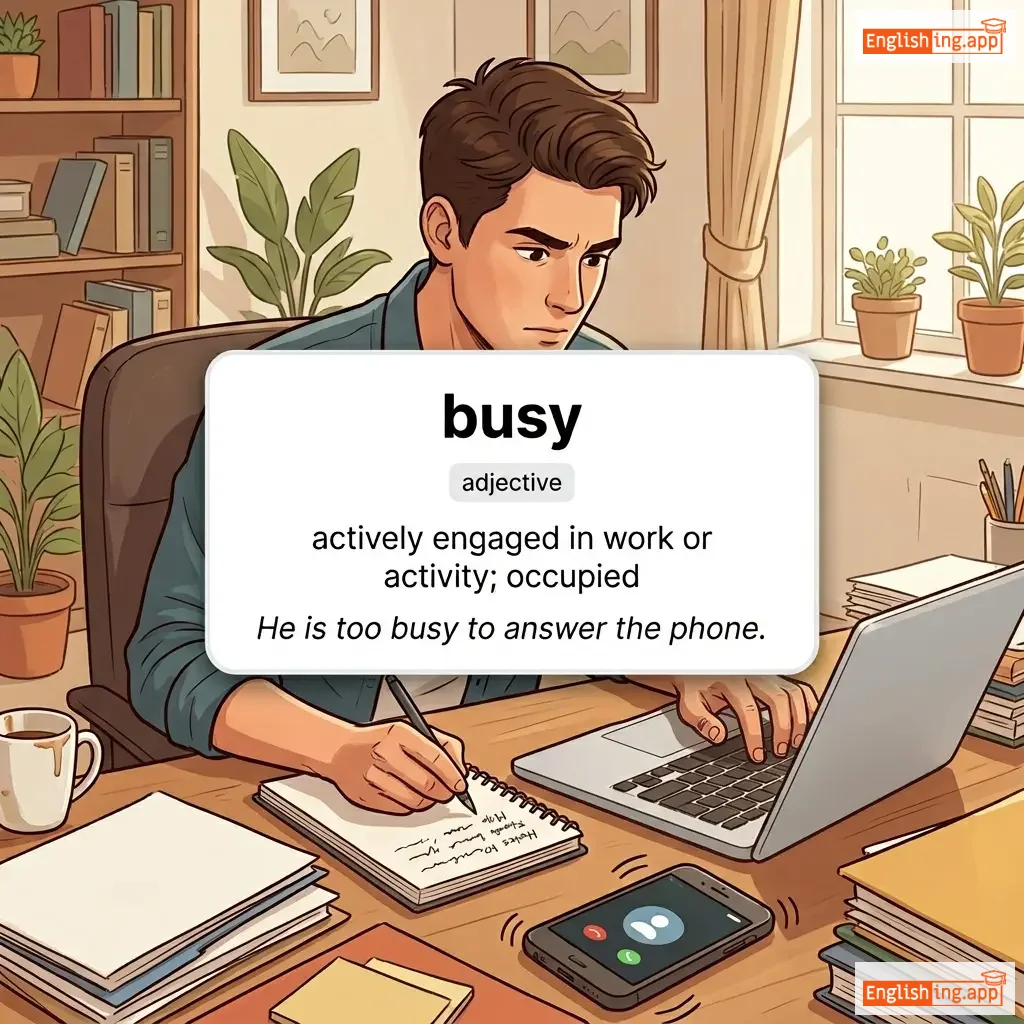
busy definition card — visual illustration of the meaning
adjective
/ˈbɪzi/
व्यस्त (vyast)

actively engaged in work or activity; occupied

"He is too busy to answer the phone."

"वह फोन उठाने के लिए बहुत व्यस्त है।" (vah phone uthane ke liye bahut vyast hai.)
but definition card — visual illustration of the meaning
conjunction
/bʌt/
लेकिन (lekin)

used to introduce a phrase or clause contrasting with what has already been mentioned

"She wanted to go out, but it was raining heavily."

"वह बाहर जाना चाहती थी, लेकिन बारिश तेज़ हो रही थी।" (Vah baahar jana chahti thi, lekin baarish tez ho rahi thi.)
noun
/ˈbʊt.ʃər/
बटलर (butler)

a person whose job is cutting up and selling meat in a shop

"The butcher recommended the best cut of beef for our dinner."

"बटलर ने हमारे खाने के लिए सबसे अच्छा गोमांस का टुकड़ा सुझाया।" (Butler ne hamare khane ke liye sabse accha gomans ka tukda sujhaaya.)
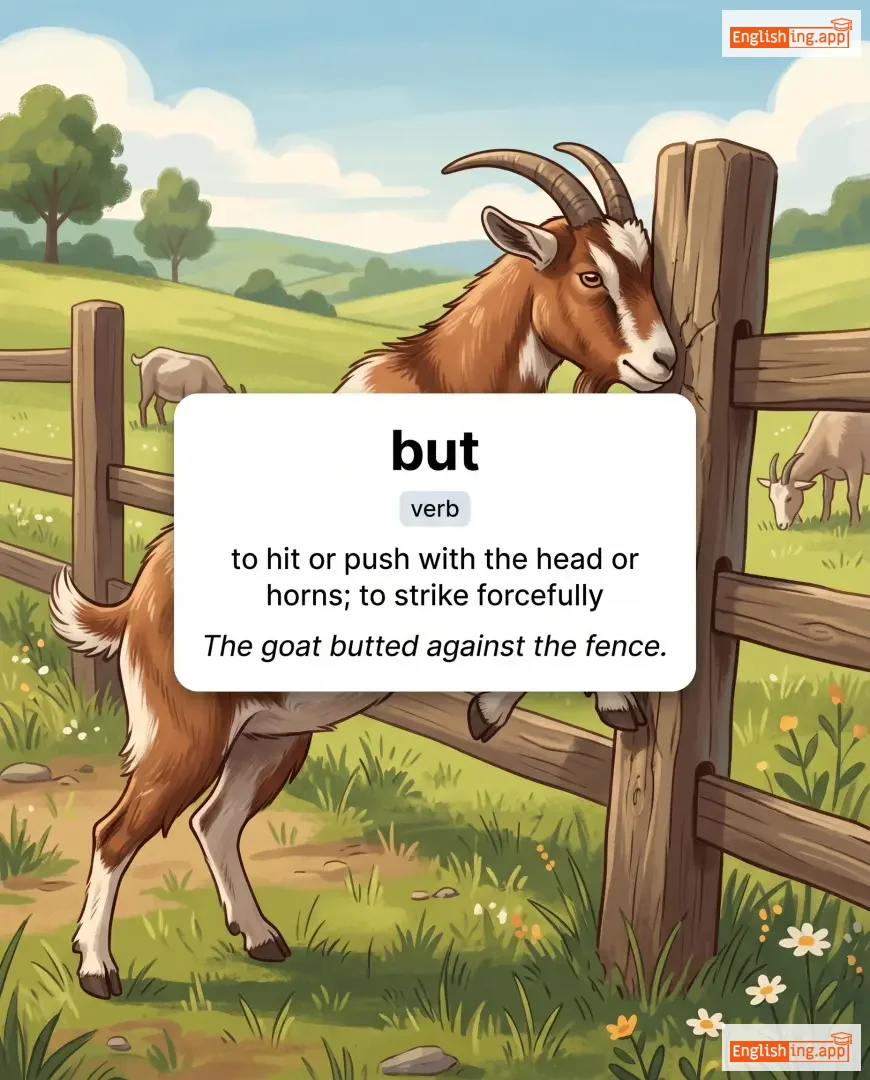
noun, verb
/bʌt/
सिर या सींग से ठेस लगाना, किसी चीज़ का आखिरी हिस्सा (sir ya seeng se thes lagana, kisi cheez ka aakhri hissa)

to hit or push with the head or horns; the end part of something, especially a cigarette

"The goat butted the fence with its horns."

"बकरा अपनी सींग से बाड़ को ठेस लगा रहा था।" (Bakra apni seeng se baad ko thes laga raha tha.)
noun
/bjuːt/
बट (but)

an isolated hill with steep sides and a flat top, common in arid regions

"The travelers could see a tall butte rising in the desert."

"यात्री मरुस्थल में एक लंबा बट उठते हुए देख सकते थे।" (Yaatri marusthal mein ek lamba but uthte hue dekh sakte the.)
noun, verb
/ˈbʌtər/
मक्खन (makhan)

a pale yellow edible fat made from cream; to spread butter on something

"She buttered a slice of bread before eating."

"वह खाने से पहले रोटी पर मक्खन लगा रही थी।" (vah khane se pehle roti par makhan laga rahi thi.)
noun
/ˈbʌt.ər fɪʃ/
पाबदा मछली (pabda machhli)

a small, smooth-skinned marine fish

"The butter-fish is popular in Bengali cuisine."

"पाबदा मछली बंगाली व्यंजनों में लोकप्रिय है।" (pabda machhli bangali vyanjanon me lokpriya hai)
noun
/ˈbʌt.ər.flaɪ/
तितली (titli)

a flying insect with large colorful wings

"The beautiful butterfly landed on the flower."

"सुंदर तितली फूल पर बैठी।" (sundar titli phool par baithi.)
noun
/ˈbʌtərflaɪ/
सुख (sukh)

an insect with large, often brightly colored wings that flies during the day

"A beautiful butterfly landed on the flower."

"जब उसने पुरस्कार प्राप्त किया, तो वह अपनी खुशी छुपा नहीं सकी।" (Jab usne puraskaar prapt kiya, to vah apni khushi chhupa nahin saki.)
noun
/ˈbʌt.ə.flaɪ piː/
तितली मटर (titli matar)

a blue flowering plant with butterfly-shaped flowers, used to make herbal tea

"Butterfly pea flowers turn tea into a beautiful blue color."

"तितली मटर के फूल चाय को एक सुंदर नीला रंग देते हैं।" (titli matar ke phool chai ko ek sundar neela rang dete hain)
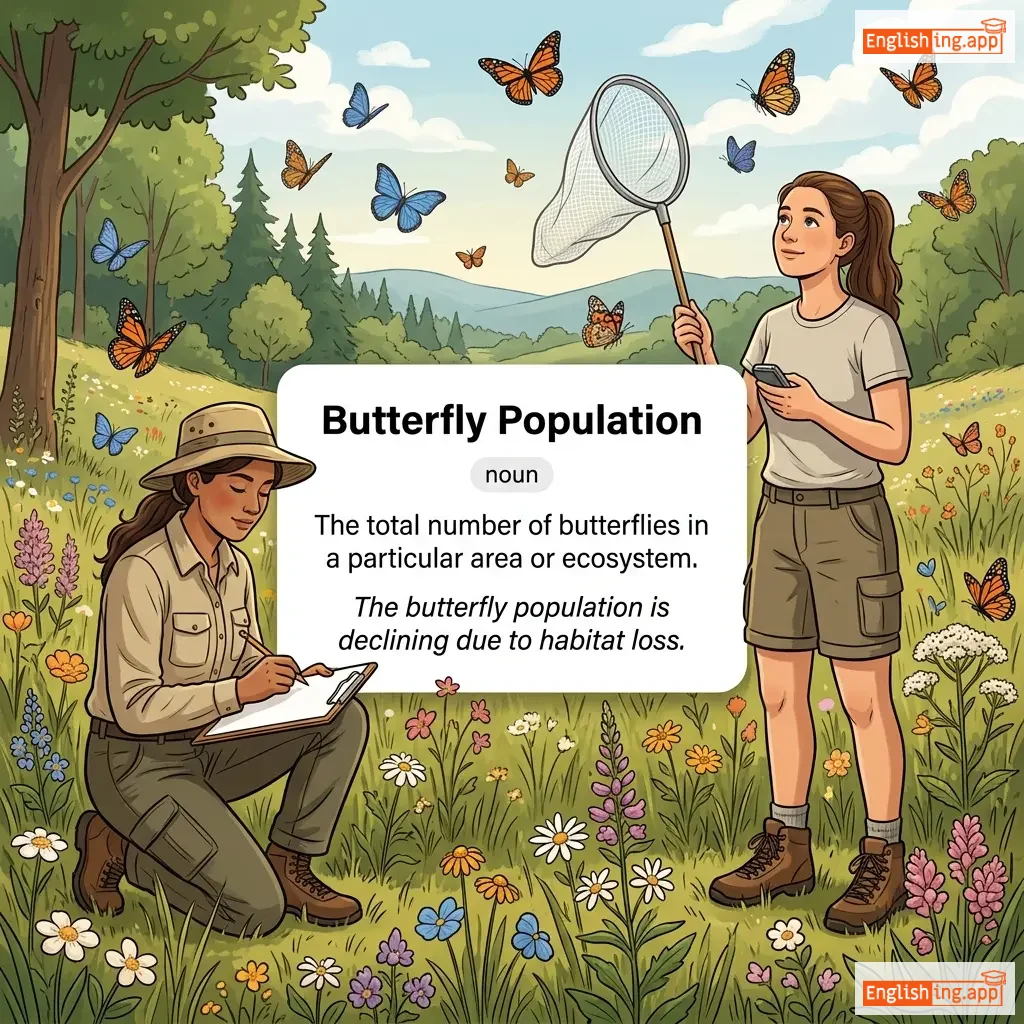
Butterfly Population definition card — visual illustration of the meaning
noun
ˈbʌtərflaɪ ˌpɒpjəˈleɪʃən
तितली जनसंख्या (titli jansankhya)

The total number of butterflies in a particular area or ecosystem.

"The butterfly population is declining due to habitat loss."

"तितली जनसंख्या आवास हानि के कारण घट रही है।" (Titli jansankhya aavaas haani ke kaaran ghat rahi hai.)
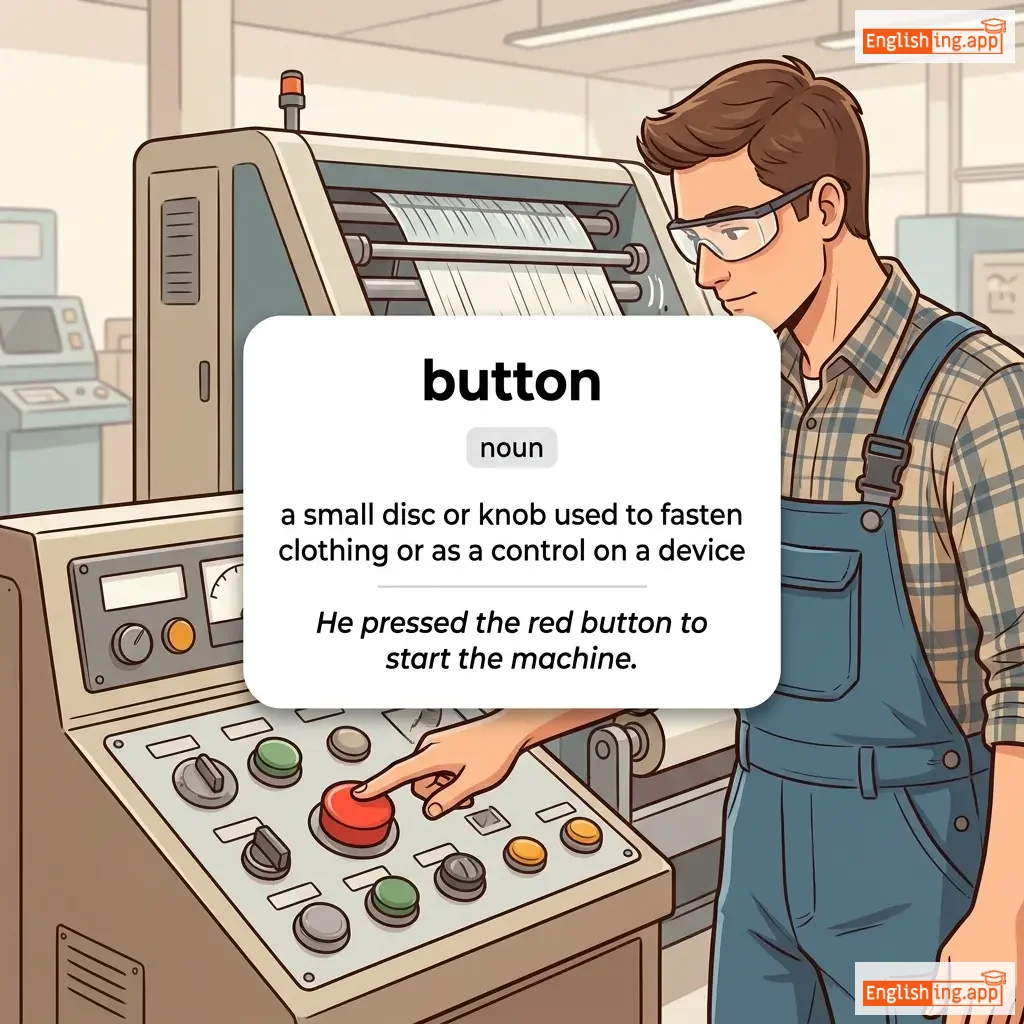
button definition card — visual illustration of the meaning
noun
/ˈbʌtən/
बटन (batan)

a small disc or knob used to fasten clothing or as a control on a device

"He pressed the red button to start the machine."

"उसने मशीन शुरू करने के लिए लाल बटन दबाया।" (Usne machine shuru karne ke liye lal button dabaya.)
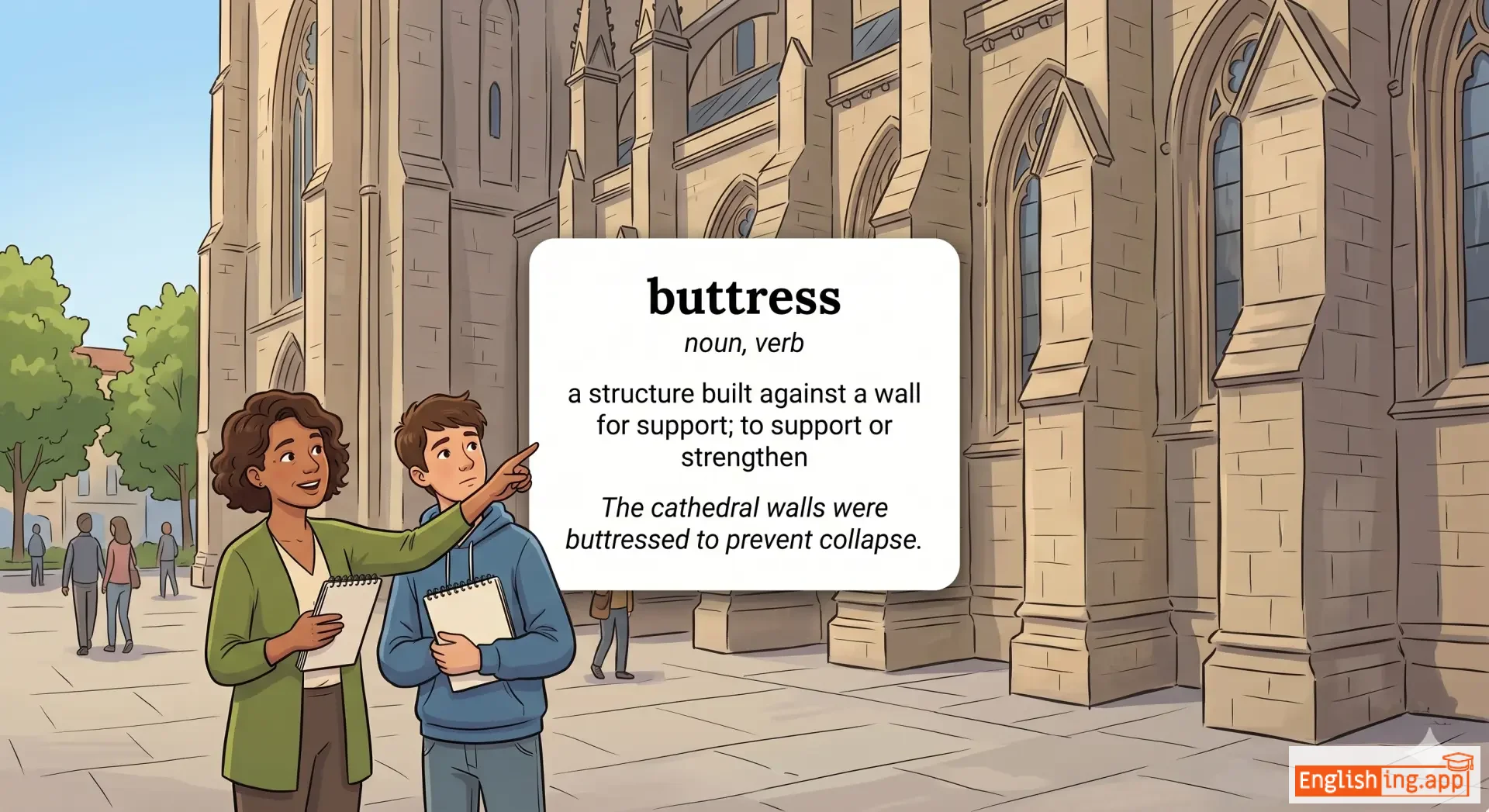
buttress definition card — visual illustration of the meaning
noun, verb
/ˈbʌtrəs/
समर्थन, सहारा (samarthan, sahara)

a structure built against a wall for support; to support or strengthen

"The cathedral walls were buttressed to prevent collapse."

"गिरजाघर की दीवारों को गिरने से रोकने के लिए बट्रेस्ड किया गया था।" (Girjahghar ki deewaron ko girne se rokne ke liye buttressed kiya gaya tha.)
adjective
/ˈbʌksəm/
सुंदर और मांसल महिला (sundar aur maansal mahila)

Plump, with a full figure and often large-breasted, especially used to describe women.

"The actress was described as a cheerful and buxom woman."

"अभिनेत्री को एक खुशमिजाज और सुंदर मांसल महिला के रूप में वर्णित किया गया था।" (Abhinetri ko ek khushmijaz aur sundar maansal mahila ke roop mein varnith kiya gaya tha.)
buy definition card — visual illustration of the meaning
verb
/baɪ/
खरीदना (khareedna)

to acquire something in exchange for money

"She went to the market to buy fresh vegetables."

"वह ताजे सब्ज़ी खरीदने के लिए बाज़ार गई।" (Wah taje sabzi kharidne ke liye bazar gayi.)
noun
/ˈbaɪər/
खरीददार (khareeddar)

a person who makes a purchase

"The buyer inspected the car before making payment."

"खरीददार ने भुगतान करने से पहले कार की जांच की।" (Khareeddar ne bhugtan karne se pehle car ki jaanch ki.)
noun, verb
/bʌz/
भनभनाहट (bhanbhanahat)

to make a low continuous humming sound; a feeling of excitement or interest

"I could hear the phone buzz during the meeting."

"मीटिंग के दौरान मुझे फोन की भनभनाहट सुनाई दी।" (meeting ke dauran mujhe phone ki bhanbhanahat sunai di)
preposition
/baɪ/
द्वारा (dwara)

indicating the agent performing an action, or the means of achieving something

"The book was written by a famous author."

"किताब एक प्रसिद्ध लेखक द्वारा लिखी गई थी।" (Kitaab ek prasiddh lekhak dwara likhi gayi thi.)
noun
/ˈbaɪ.lɔː/
स्थानिक नियम (sthanik niyam)

A rule made by a company, organization, or local authority to control the actions of its members.

"The city council passed a new by-law regulating street vendors."

"सिटी काउंसिल ने सड़क विक्रेताओं को नियंत्रित करने के लिए एक नया बाई-लॉ पास किया।" (City council ne sadak vikretayon ko niyantrit karne ke liye ek naya by-law pass kiya.)
interjection
/baɪ/
अलविदा (alvida)

used to say goodbye; a short and informal farewell

"I said bye to her before leaving."

"जाने से पहले मैंने उसे अलविदा कहा।" (jane se pahle maine use alvida kaha)
noun/adjective
/ˈbaɪ.ɡɒn/
बीता हुआ (beeta hua)

Something belonging to an earlier time; past and no longer existing.

"He often talks about the traditions of bygone days."

"वह अक्सर बीते दिनों की परंपराओं के बारे में बात करता है।" (Vah aksar beete dinon ki paramparao ke baare mein baat karta hai.)
noun
/ˈbaɪ.laɪn/
लेखक का नाम वाली पंक्ति (lekhak ka naam wali pankti)

A line in a newspaper or magazine article that names the writer.

"Her byline appeared on the front page of the newspaper."

"उसका नाम समाचार पत्र के पहले पृष्ठ पर दिखाई दिया था।" (Uska naam samachar patra ke pehle prishth par dikhai diya tha.)
adjective
/ˈbɪz.ən.taɪn/ or /ˈbaɪ.zənˌtiːn/
जटिल (jatil)

Extremely complicated and detailed; relating to the Byzantine Empire or its style.

"The new tax regulations are so byzantine that few understand them."

"नए कर नियम इतने जटिल हैं कि कुछ ही लोग उन्हें समझ पाते हैं।" (Naye kar niyam itne jatil hain ki kuch hi log unhein samajh paate hain.)
noun
/kæb/
टैक्सी (taxi)

a taxi or car for hire with a driver

"We took a cab to the airport."

"हमने हवाई अड्डे तक जाने के लिए एक टैक्सी ली।" (Hamne havaai addae tak jaane ke liye ek taxi li.)
🕵️‍♂️

Cabal (काबल)

noun
/kəˈbæl/
गोपनीय समूह (gopniya samuh)

A secret group or faction engaged in plotting or intrigue.

"A small cabal was working behind the scenes to influence the election."

"चुनाव को प्रभावित करने के लिए पर्दे के पीछे एक छोटा सा काबल काम कर रहा था।" (Chunav ko prabhavit karne ke liye parde ke peeche ek chhota sa cabal kaam kar raha tha.)
noun
/ˈkæbəˌlɪzəm/
गोपनीयतावाद (gopaniyatavad)

The doctrines, practices, or secretive dealings of a cabal.

"The historian wrote extensively about cabalism in the royal court."

"इतिहासकार ने शाही दरबार में गोपनीयतावाद पर विस्तार से लिखा।" (Itihaskar ne shahi darbar mein gopaniyatavad par vistaar se likha.)
noun
/ˈkæb.ɪdʒ/
पत्तागोभी (pattagobhi)

a round vegetable with thick green or purple leaves that can be eaten cooked or raw

"I need to buy some cabbage to make coleslaw for dinner."

"मुझे डिनर के लिए कोलस्लॉ बनाने के लिए कुछ पत्तागोभी खरीदनी होगी।" (mujhe dinner ke liye coleslaw banane ke liye kuch pattagobhi khareedni hogi.)
noun
/ˈkæbɪn/
कुटिया (kutiya)

a small shelter or house, often made of wood in a remote area

"They spent the weekend in a cozy cabin in the mountains."

"उन्होंने पहाड़ों में एक आरामदायक कुटिया में सप्ताहांत बिताया।" (Unhone pahaadon mein ek aaramdayak kutiya mein saptahant bitaya.)
noun
/ˈkæbənɪt/
मंत्रिमंडल / अलमारी (mantrimandal / almari)

A group of senior government ministers; or a cupboard with shelves or drawers.

"The prime minister reshuffled the cabinet last month."

"प्रधानमंत्री ने पिछले महीने मंत्रिमंडल को फिर से गठित किया।" (Pradhanmantri ne pichle mahine mantrimandal ko phir se gathit kiya.)
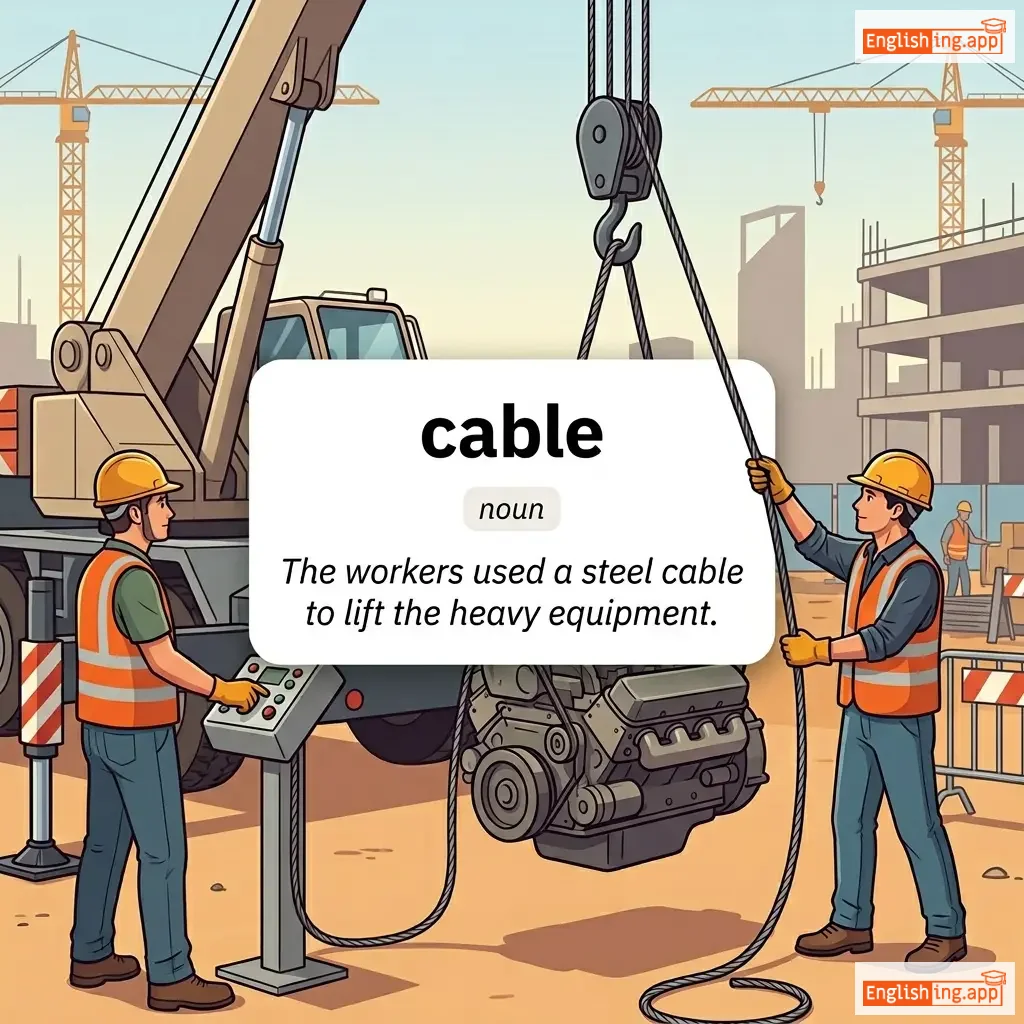
cable definition card — visual illustration of the meaning
noun
/ˈkeɪ.bəl/
केबल (kebal)

a thick, strong rope made of metal wires or fibers; a system of wires used for transmitting signals or electricity

"The workers used a steel cable to lift the heavy equipment."

"कर्मचारियों ने भारी उपकरण उठाने के लिए स्टील केबल का इस्तेमाल किया।" (Karmachariyon ne bhaari upkaran uthaan ke liye steel kebal ka upyog kiya.)
noun
/kæʃ/
कैश (kaish)

A hidden storage of items or a high-speed memory in computing.

"The hikers found a cache of supplies hidden under the rocks."

"हाइकर्स ने चट्टानों के नीचे छुपा हुआ आपूर्ति का भंडार पाया।" (Haikers ne chhatton ke neeche chhupa hua aapoorti ka bhandar paya.)
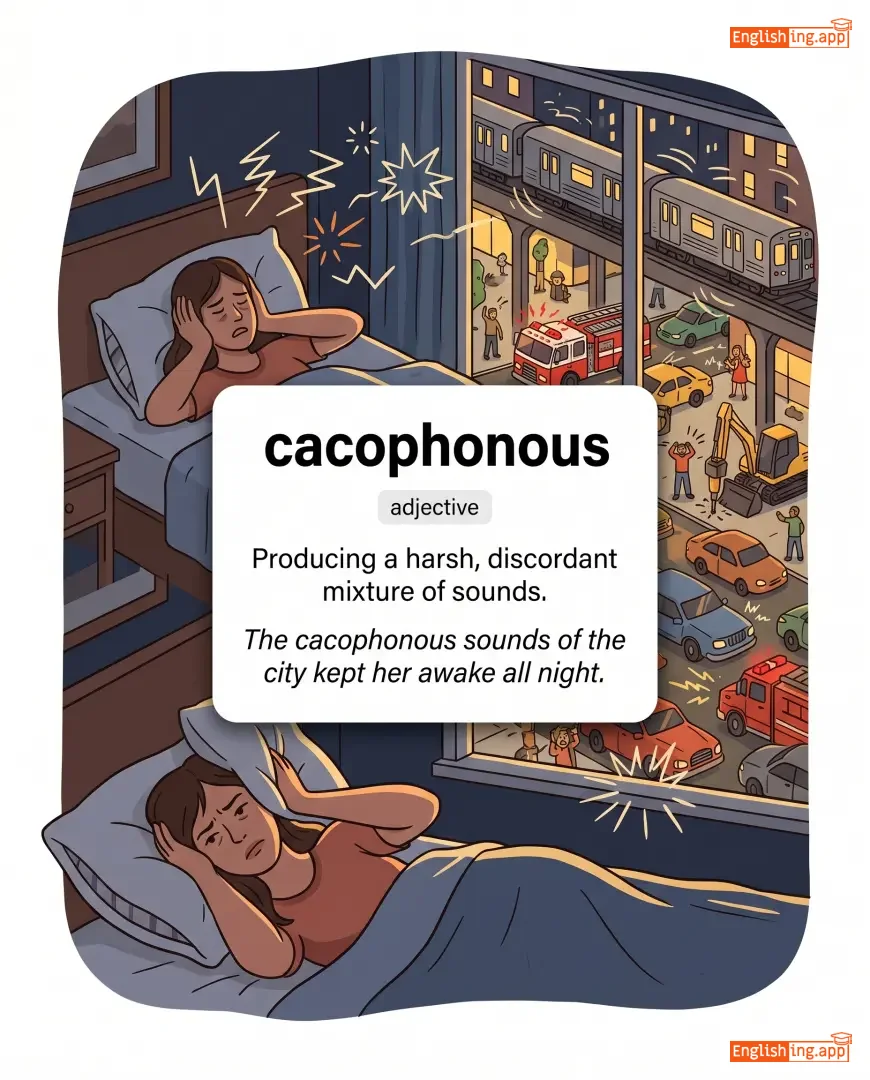
cacophonous definition card — visual illustration of the meaning
adjective
/kəˈkɒfənəs/
कर्कश / बेसुरे (karkash / besure)

Producing a harsh, discordant mixture of sounds.

"The cacophonous sounds of the city kept her awake all night."

"शहर की कर्कश ध्वनियाँ उसे सारी रात जगाए रखे थीं।" (Shehar ki karkash dhvaniyan use sari raat jagaaye rakhi thi.)
noun
/kəˈkɒfəni/
ध्वनि का शोर (dhvani ka shor)

A harsh, discordant mixture of sounds.

"The cacophony of horns made it impossible to concentrate."

"हार्नों का शोर एकाग्रता में बाधा डाल रहा था।" (Harnon ka shor ekagrata mein baadha daal raha tha.)
noun
/kæd/
नीच; अशिष्ट; (neech, ashisht)

a man who behaves dishonorably, especially toward women

"Everyone at the party avoided him because he was known to be a cad."

"पार्टी में सभी ने उसे इसलिए नजरअंदाज किया क्योंकि वह एक कैड के रूप में जाना जाता था।" (party mein sabhi ne use isliye nazarandaaz kiya kyonki vah ek cad ke roop mein jaana jaata tha.)
noun
/kəˈdævər/
लाश (laash)

A dead human body, especially one used for medical study.

"Medical students dissected the cadaver to learn about human anatomy."

"चिकित्सा छात्रों ने मानव शारीरिक रचना के बारे में जानने के लिए लाश का विच्छेदन किया।" (Chikitsa chatron ne manav sharirik rachna ke baare mein jaanne ke liye laash ka vichhedan kiya.)
adjective
/kəˈdævərəs/
मृत शरीर जैसा (mrut sharir jaisa)

Resembling a corpse; very pale, thin, or bony.

"His cadaverous appearance shocked everyone at the party."

"उसका मृत शरीर जैसा रूप पार्टी में सभी को चौंका दिया।" (Uska mrut sharir jaisa roop party mein sabhi ko chonka diya.)
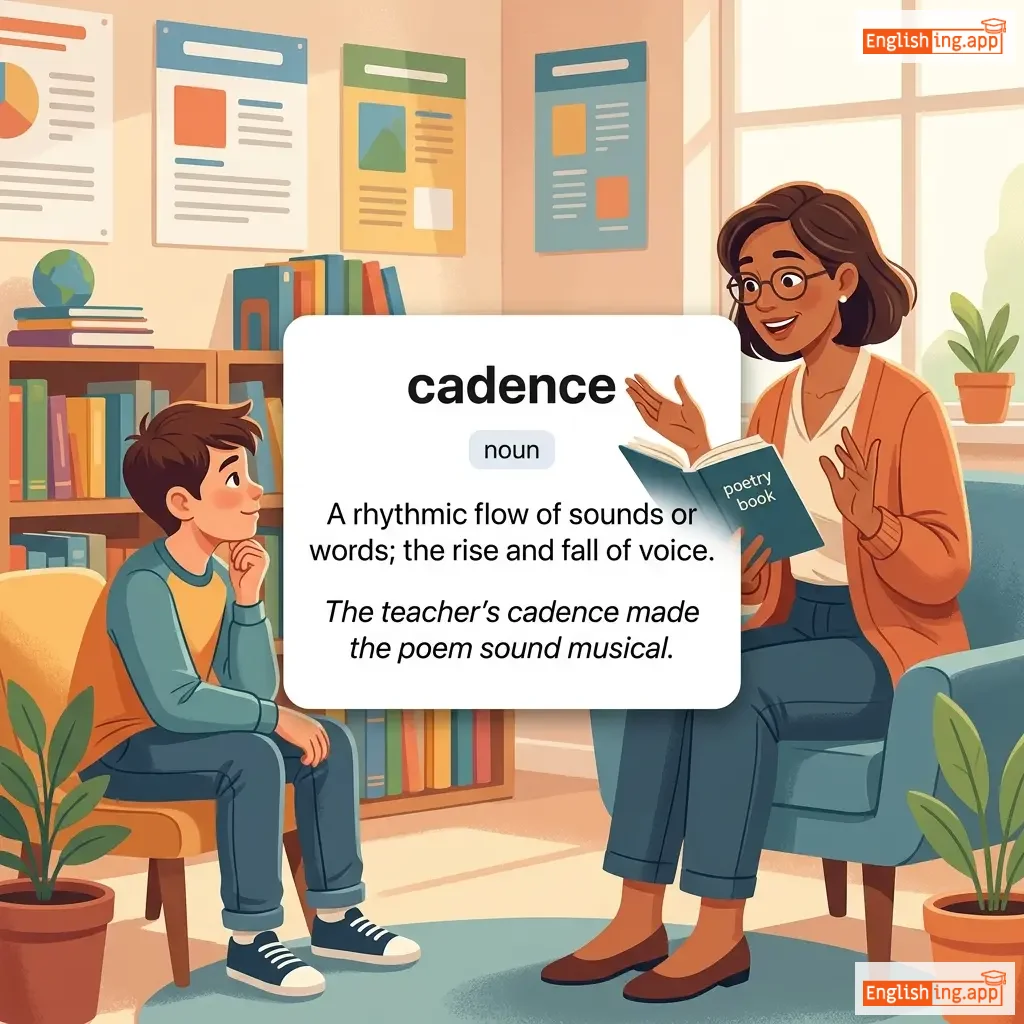
cadence definition card — visual illustration of the meaning
noun
/ˈkeɪdəns/
ताल (taal)

A rhythmic flow of sounds or words; the rise and fall of voice.

"The teacher's cadence made the poem sound musical."

"शिक्षक की ताल ने कविता को संगीत की तरह सुनाई दी।" (Shikshak ki taal ne kavita ko sangeet ki tarah sunai di.)
noun
/kəˈdɛnzə/
एक विस्तृत सोलो संगीत भाग (ek vistaarit solo sangeet bhaag)

An elaborate solo passage in a piece of music, usually near the end.

"The pianist performed a brilliant cadenza before the final movement."

"पियानोवादक ने अंतिम आंदोलन से पहले एक शानदार काडेन्ज़ा पेश किया।" (Piyanovadak ne antim aandolan se pehle ek shandaar kaadenza pesh kiya.)
noun
/kəˈdɛt/
कैडेट (kaidet)

A young trainee in the armed forces, police, or other organization.

"The cadet marched proudly in the parade."

"कैडेट ने परेड में गर्व से मार्च किया।" (Kaidet ne pared mein garv se march kiya.)
cadge definition card — visual illustration of the meaning
verb
/kædʒ/
भीख मांगना (kaij)

To beg or obtain something, especially food or money, without paying for it.

"He tried to cadge a free meal from the restaurant."

"उसने रेस्टोरेंट से एक फ्री भोजन मांगने की कोशिश की।" (Usne restaurant se ek free bhojan maangne ki koshish ki.)
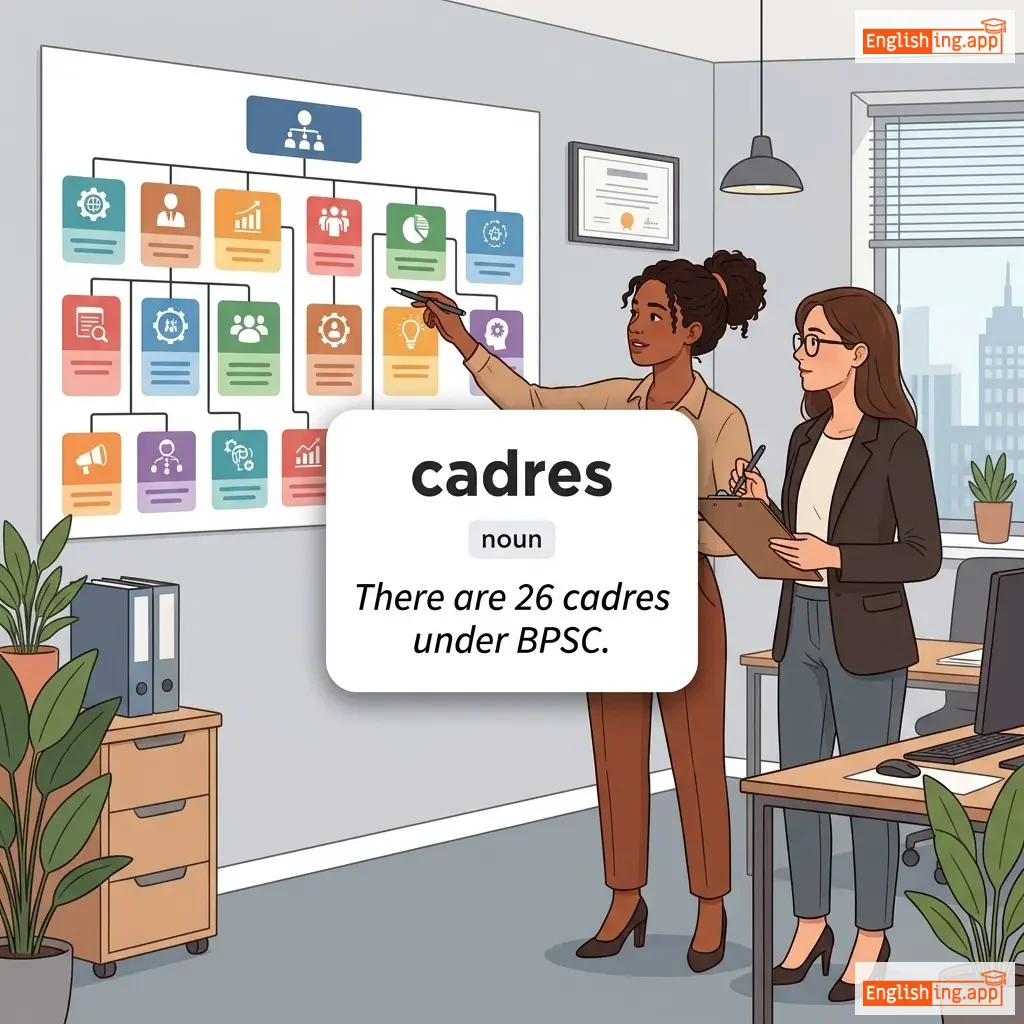
cadres definition card — visual illustration of the meaning
noun
ˈkɑː.dərz
कैडर (kader)

A small group of people specially trained for a particular purpose or profession; a group of activists in a communist or other political organization.

"There are 26 cadres under BPSC."

"वहां बीपीएससी के तहत 26 कैडर हैं।" (Wahan BPSC ke tahat 26 kader hain.)