Словари

Словарь английского языка | Значения слов, определения и примеры

Business definition card — visual illustration of the meaning
noun
/ˈbɪznəs/
бизнес (biznes)

the practice of making money by producing or buying and selling goods or services

"She started her own business last year."

"Она начала свой бизнес в прошлом году." (Ona nachala svoi biznes v proshlom godu.)
business finance definition card — visual illustration of the meaning
noun
ˈbɪz.nɪs ˈfaɪ.næns
финансовое управление бизнесом (finansovoe upravlenie biznesom)

The area of finance that deals with sources of funding and the capital structure of corporations.

"Effective business finance enhances profitability."

"Эффективное финансовое управление бизнесом увеличивает прибыльность." (Effektivnoe finansovoe upravlenie biznesom uvelichivaet pribylnost'.)
business success definition card — visual illustration of the meaning
noun
/bɪzˈnɛs sʌˈsɛs/
деловой успех (delovoy uspekh)

The achievement of desired outcomes in business operations, typically measured by profitability, growth, and sustainability.

"Innovation drives business success."

"Инновации способствуют деловому успеху." (Innovatsii sposobstvuyut delovomu uspekhu.)
noun
/ˈbɪznəsmæn/
бизнесмен (biznesmen)

a person engaged in commercial or industrial business activities

"The businessman invested heavily in new technology."

"Бизнесмен значительно инвестировал в новые технологии." (Biznesmen znachitel'no investiroval v novye tekhnologii.)
noun
/ˈbɪznəsˌwʊmən/
бизнесвумен (biznesvumen)

a woman who works in business, especially one who owns or manages a company

"The businesswoman expanded her company into international markets."

"Бизнесвумен расширила свою компанию на международные рынки." (Biznesvumen rasshirila svoyu kompaniyu na mezhdunarodnye rynki)
noun
/ˈbʌskɪn/
толстая обувь (tolstaya obuv')

A type of thick-soled boot that reaches halfway to the knee; also associated with tragic drama in ancient times.

"The actor wore a buskin as part of his classical costume."

"Актер носил баскин как часть своего классического костюма." (Akter nosil baskin kak chast' svoego klassicheskogo kostyuma.)
noun/verb
/bʌst/
бюст/ломать (byust/lomat)

As a noun: A sculpture of a person's head, shoulders, and chest; As a verb: To break, smash, or arrest.

"The police busted the gang last night."

"Полиция арестовала банду прошлой ночью." (Politsiya arestovala bandu proshloy noch'yu.)
verb, noun
/ˈbʌsəl/
суета, шум (sueta, shum)

to move in an energetic or noisy manner; busy activity in a place

"The marketplace bustled with vendors and customers."

"Рынок был полон продавцов и покупателей." (Rynok byl polon prodavtsov i pokupateley.)
adjective
/ˈbʌsti/
пышногрудая (pyshnogrudaya)

having a large or full bust; describing a woman with a prominent chest

"The actress was often described as busty in fashion magazines."

"Актрису часто описывали как пышногрудую в модных журналах." (Aktrisu chasto opisyvali kak pyshnogruduyu v modnykh zhurnalakh)
busy definition card — visual illustration of the meaning
adjective
/ˈbɪzi/
занят (zanyat)

actively engaged in work or activity; occupied

"He is too busy to answer the phone."
"Он слишком занят, чтобы ответить на телефон." (On slishkom zanyat, chtoby otvetit' na telefon.)
but definition card — visual illustration of the meaning
conjunction
/bʌt/
но (no)

used to introduce a phrase or clause contrasting with what has already been mentioned

"She wanted to go out, but it was raining heavily."

"Она хотела выйти, но шёл сильный дождь." (Ona khotela vyiti, no shol sil'nyy dozhd'.)
noun
/ˈbʊt.ʃər/
мясник (myasnik)

a person whose job is cutting up and selling meat in a shop

"The butcher recommended the best cut of beef for our dinner."

"Мясник порекомендовал лучший кусок говядины для нашего ужина." (Myasnik porekomendoval luchshiy kusok govyadiny dlya nashego uzhina.)
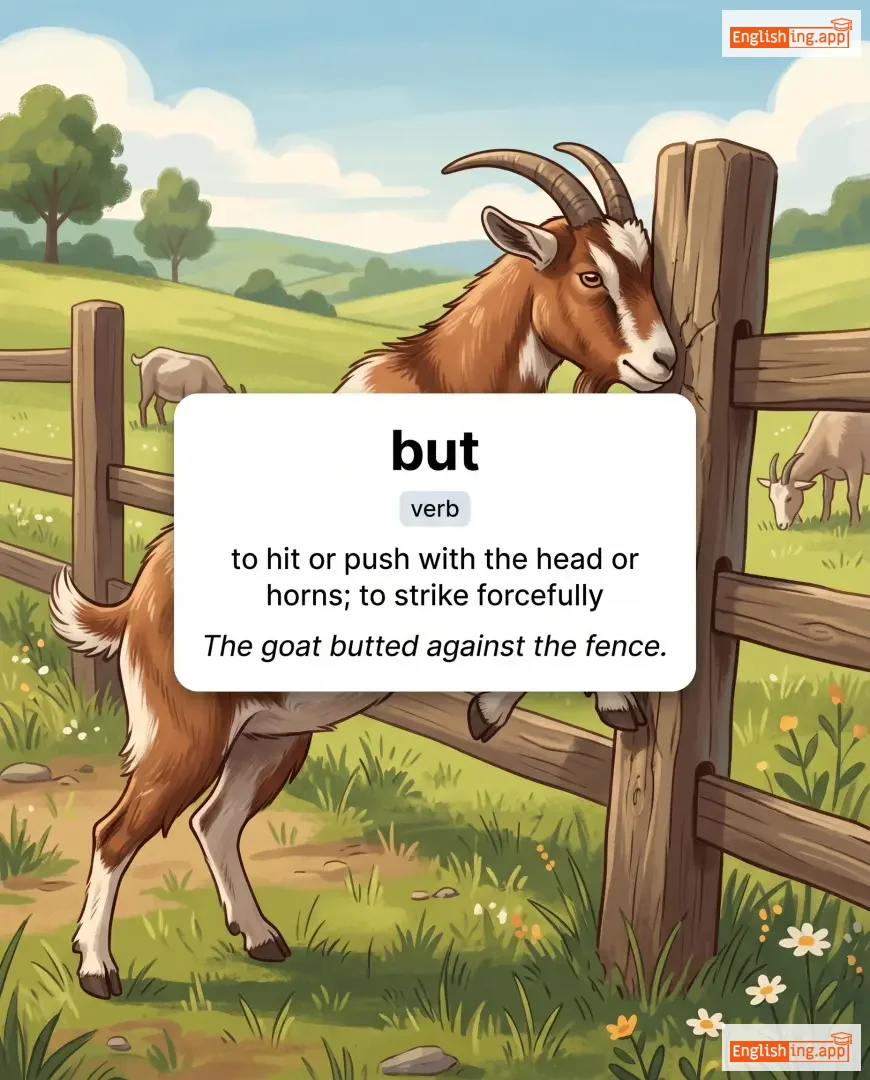
🐐

butt

noun, verb
/bʌt/

to hit or push with the head or horns; the end part of something, especially a cigarette

"The goat butted the fence with its horns."

noun
/bjuːt/
бют (byut)

an isolated hill with steep sides and a flat top, common in arid regions

"The travelers could see a tall butte rising in the desert."

"Путешественники могли увидеть высокий бют, поднимающийся в пустыне." (Puteshestvenniki mogli uvidet' vysokii byut, podnimayushchiesya v pustyne.)
noun, verb
/ˈbʌtər/
масло (maslo)

a pale yellow edible fat made from cream; to spread butter on something

"She buttered a slice of bread before eating."

"Она намазала ломтик хлеба перед тем, как есть." (Ona namazala lomtik khleba pered tem, kak yest'.)
noun
/ˈbʌt.ər fɪʃ/
масляная рыба (maslyanaya ryba)

a small, smooth-skinned marine fish

"The butter-fish is popular in Bengali cuisine."

"Масляная рыба популярна в бенгальской кухне." (Maslyanaya ryba populyarna v bengalskoy kukhne)
noun
/ˈbʌt.ər.flaɪ/
бабочка (babochka)

a flying insect with large colorful wings

"The beautiful butterfly landed on the flower."

"Прекрасная бабочка села на цветок." (Prekrasnaya babochka sela na tsvetok.)
noun
/ˈbʌtərflaɪ/
бабочка (babochka)

an insect with large, often brightly colored wings that flies during the day

"A beautiful butterfly landed on the flower."

"Прекрасная бабочка приземлилась на цветок." (Prekrasnaya babochka prizyemlilas' na tsvetok.)
noun
/ˈbʌt.ə.flaɪ piː/
бабочковый горошек (babochkovy goroshek)

a blue flowering plant with butterfly-shaped flowers, used to make herbal tea

"Butterfly pea flowers turn tea into a beautiful blue color."
"Цветы бабочкового горошка превращают чай в красивый синий цвет." (Tsvety babochkovogo goroshka prevrashchayut chay v krasivyy siniy tsvet.)
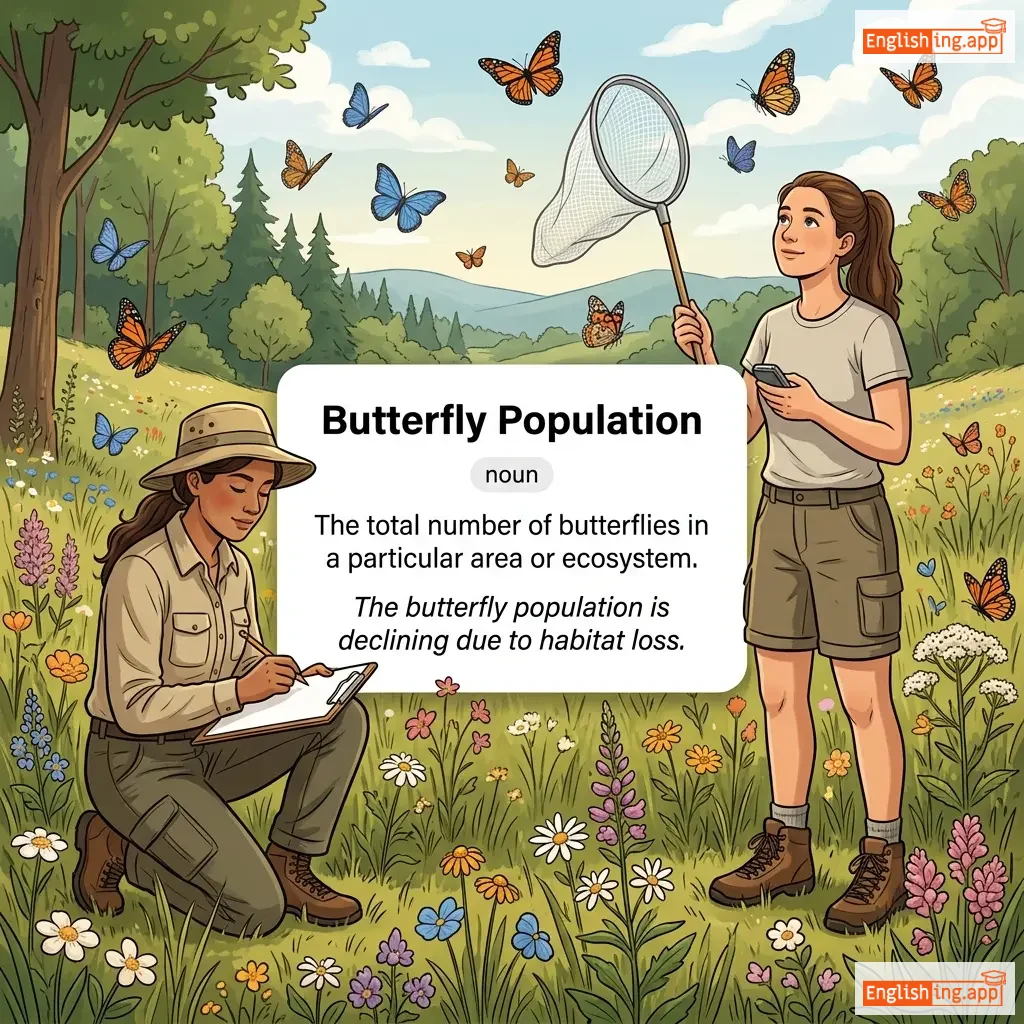
Butterfly Population definition card — visual illustration of the meaning
noun
ˈbʌtərflaɪ ˌpɒpjəˈleɪʃən
популяция бабочек (populyatsiya babochek)

The total number of butterflies in a particular area or ecosystem.

"The butterfly population is declining due to habitat loss."
"Популяция бабочек уменьшается из-за утраты среды обитания." (Populyatsiya babochek umenshaetsya iz-za utraty sredy obitaniya.)
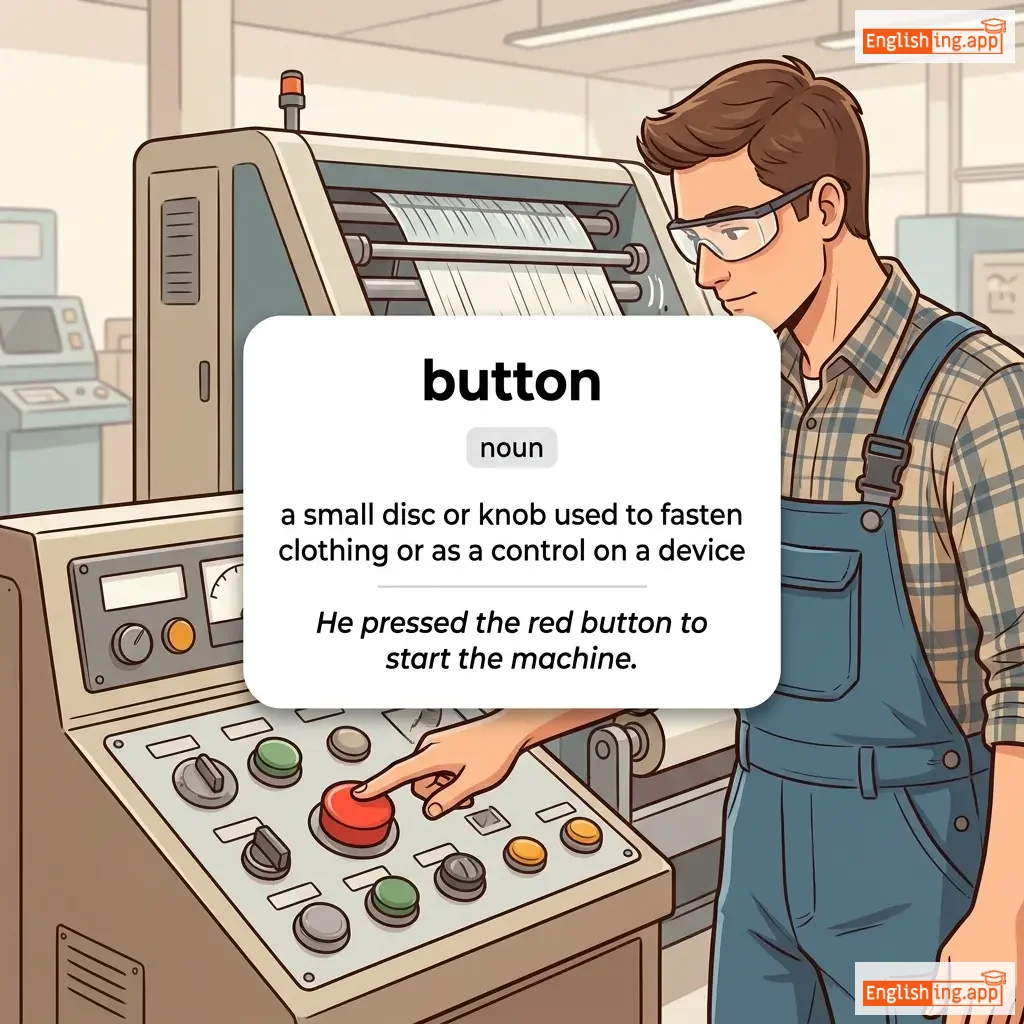
button definition card — visual illustration of the meaning
noun
/ˈbʌtən/
кнопка (knopka)

a small disc or knob used to fasten clothing or as a control on a device

"He pressed the red button to start the machine."
"Он нажал на красную кнопку, чтобы включить машину." (On nazhal na krasnuyu knopku, chtoby vklyuchit' mashinu.)
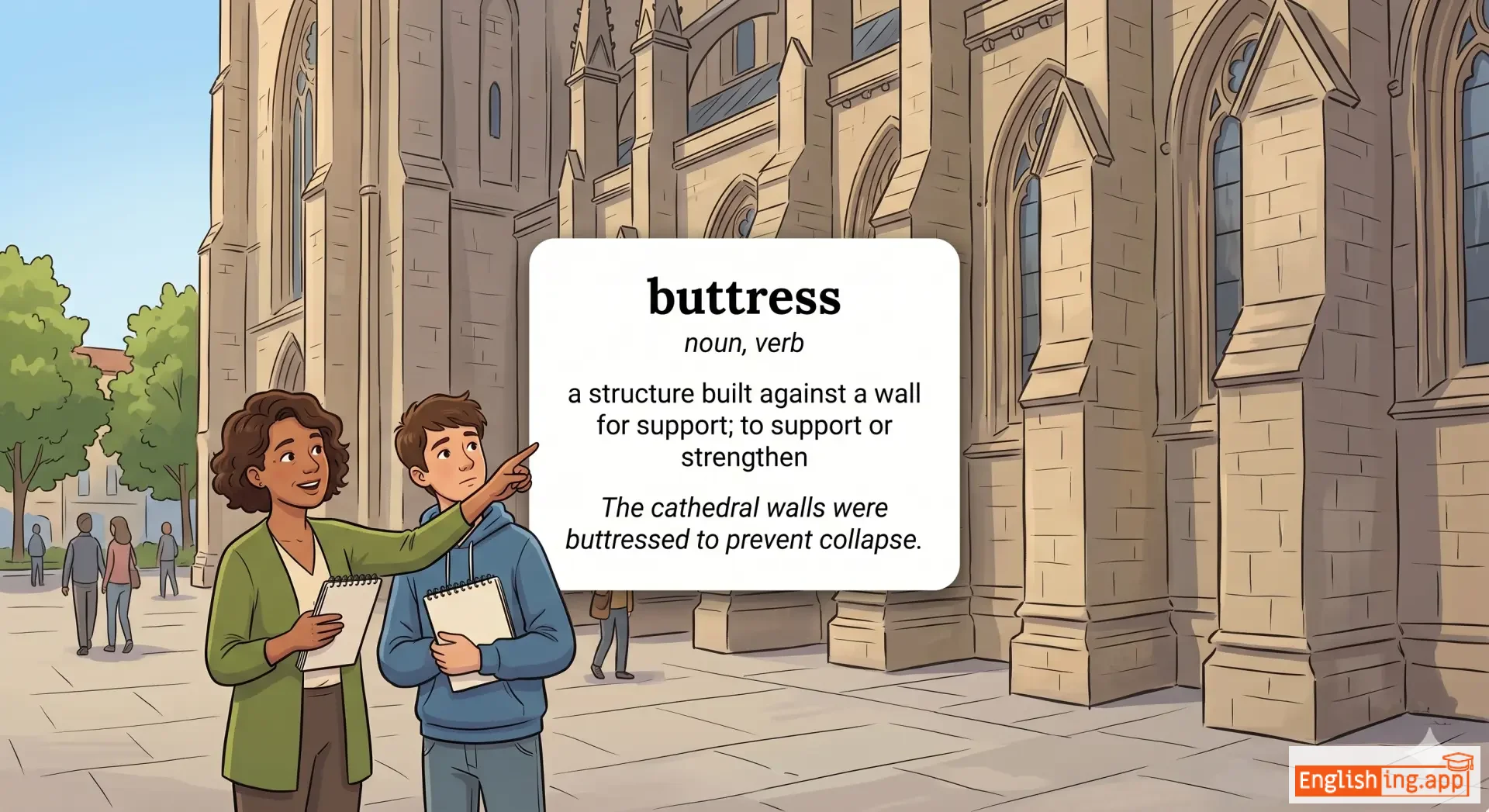
buttress definition card — visual illustration of the meaning
noun, verb
/ˈbʌtrəs/
опора, подпорка (opora, podporka)

a structure built against a wall for support; to support or strengthen

"The cathedral walls were buttressed to prevent collapse."

"Стены собора были укреплены, чтобы предотвратить обрушение." (Steny sobora byli ukrepleny, chtoby predotvratit' obrushenie.)
👩‍🦰

buxom (baksom)

adjective
/ˈbʌksəm/
пышная и привлекательная женщина (pyshnaya i privlekatelnaya zhenshchina)

Plump, with a full figure and often large-breasted, especially used to describe women.

"The actress was described as a cheerful and buxom woman."

"Актрису описали как жизнерадостную и пышную женщину." (Aktrisu opisali kak zhizneradostnuyu i pyshnuyu zhenshchinu.)
buy definition card — visual illustration of the meaning
verb
/baɪ/
покупать (pokupat)

to acquire something in exchange for money

"She went to the market to buy fresh vegetables."

"Она пошла на рынок, чтобы купить свежие овощи." (Ona poshla na rynok, chtoby kupit' svezhie ovoshchi.)
noun
/ˈbaɪər/
покупатель (pokupatel')

a person who makes a purchase

"The buyer inspected the car before making payment."

"Покупатель осмотрел машину перед оплатой." (Pokupatel' osmotrel mashinu pered oplatoy.)
noun, verb
/bʌz/
жужжание (zhuzhzhanie)

to make a low continuous humming sound; a feeling of excitement or interest

"I could hear the phone buzz during the meeting."

"Я слышал жужжание телефона во время встречи." (Ya slyshal zhuzhzhanie telefona vo vremya vstrechi)
➡️

by (baj)

preposition
/baɪ/
по (po)

indicating the agent performing an action, or the means of achieving something

"The book was written by a famous author."

"Книга была написана известным автором." (Kniga byla napisana izvestnym avtorom.)
noun
/ˈbaɪ.lɔː/
местный закон (mestnyy zakon)

A rule made by a company, organization, or local authority to control the actions of its members.

"The city council passed a new by-law regulating street vendors."

"Городской совет принял новый закон, регулирующий уличных торговцев." (Gorodskoy sovet prinyal novyy zakon, reguliruyushchiy ulichnykh torgovtsev.)
interjection
/baɪ/
пока (poka)

used to say goodbye; a short and informal farewell

"I said bye to her before leaving."

"Я сказал пока перед уходом." (ya skazal poka pered ukhodyom)
noun/adjective
/ˈbaɪ.ɡɒn/
прошлый (proshlyi)

Something belonging to an earlier time; past and no longer existing.

"He often talks about the traditions of bygone days."

"Он часто говорит о традициях ушедших дней." (On chasto govorit o traditsiyakh ushedshikh dney.)
noun
/ˈbaɪ.laɪn/
строка с именем автора (stroka s imenem avtora)

A line in a newspaper or magazine article that names the writer.

"Her byline appeared on the front page of the newspaper."

"Её строка появилась на первой странице газеты." (Eё stroka poyavilas' na pervoy stranitse gazety.)
adjective
/ˈbɪz.ən.taɪn/ or /ˈbaɪ.zənˌtiːn/
сложный (slozhnyy)

Extremely complicated and detailed; relating to the Byzantine Empire or its style.

"The new tax regulations are so byzantine that few understand them."

"Новые налоговые регламенты настолько сложны, что их понимают немногие." (Novye nalogovye reglamenty nastol'ko slozhny, chto ikh ponimayut nemnogie.)
noun
/kæb/
такси (taksi)

a taxi or car for hire with a driver

"We took a cab to the airport."

"Мы взяли такси до аэропорта." (My vzyali taksi do aeroporta.)
🕵️‍♂️

Cabal (кабал)

noun
/kəˈbæl/
кабала (kabala)

A secret group or faction engaged in plotting or intrigue.

"A small cabal was working behind the scenes to influence the election."

"Небольшая кабала работала за кулисами, чтобы повлиять на выборы." (Nebol'shaya kabala rabotala za kulisami, chtoby povliyat' na vybory.)
noun
/ˈkæbəˌlɪzəm/
кабализм (kabalizm)

The doctrines, practices, or secretive dealings of a cabal.

"The historian wrote extensively about cabalism in the royal court."

"Историк написал обширно о кабализме в королевском дворе." (Istorik napisal obshirno o kabalizme v korolevskom dvore.)
noun
/ˈkæb.ɪdʒ/
капуста (kapusta)

a round vegetable with thick green or purple leaves that can be eaten cooked or raw

"I need to buy some cabbage to make coleslaw for dinner."

"Мне нужно купить немного капусты для салата на ужин." (Mne nuzhno kupit' nemnogo kapusty dlya salata na uzhin.)
noun
/ˈkæbɪn/
кабина (kabina)

a small shelter or house, often made of wood in a remote area

"They spent the weekend in a cozy cabin in the mountains."

"Они провели выходные в уютной кабине в горах." (Oni proveli vykhodnye v uyutnoi kabine v gorakh.)
noun
/ˈkæbənɪt/
кабинет / шкаф (kabinet / shkaf)

A group of senior government ministers; or a cupboard with shelves or drawers.

"The prime minister reshuffled the cabinet last month."
"Премьер-министр изменил состав кабинета в прошлом месяце." (Prem'er-ministr izmenil sostav kabinet v proshlom mesyatse.)
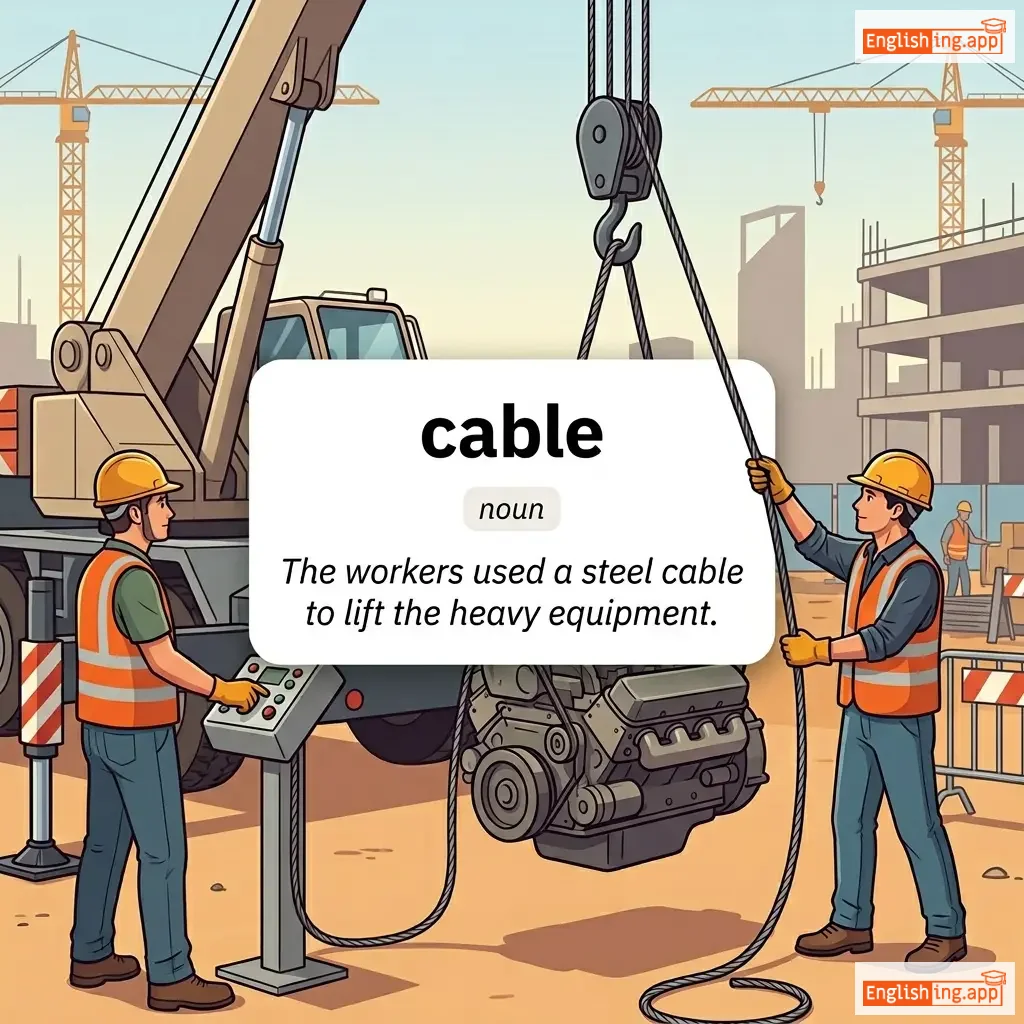
cable definition card — visual illustration of the meaning
📡

cable

noun
/ˈkeɪ.bəl/

a thick, strong rope made of metal wires or fibers; a system of wires used for transmitting signals or electricity

"The workers used a steel cable to lift the heavy equipment."

noun
/kæʃ/
кеш (kesh)

A hidden storage of items or a high-speed memory in computing.

"The hikers found a cache of supplies hidden under the rocks."
"Путешественники нашли скрытый склад припасов под камнями." (Puteshestvenniki nashli skrytyy sklad pripasov pod kamnyami.)
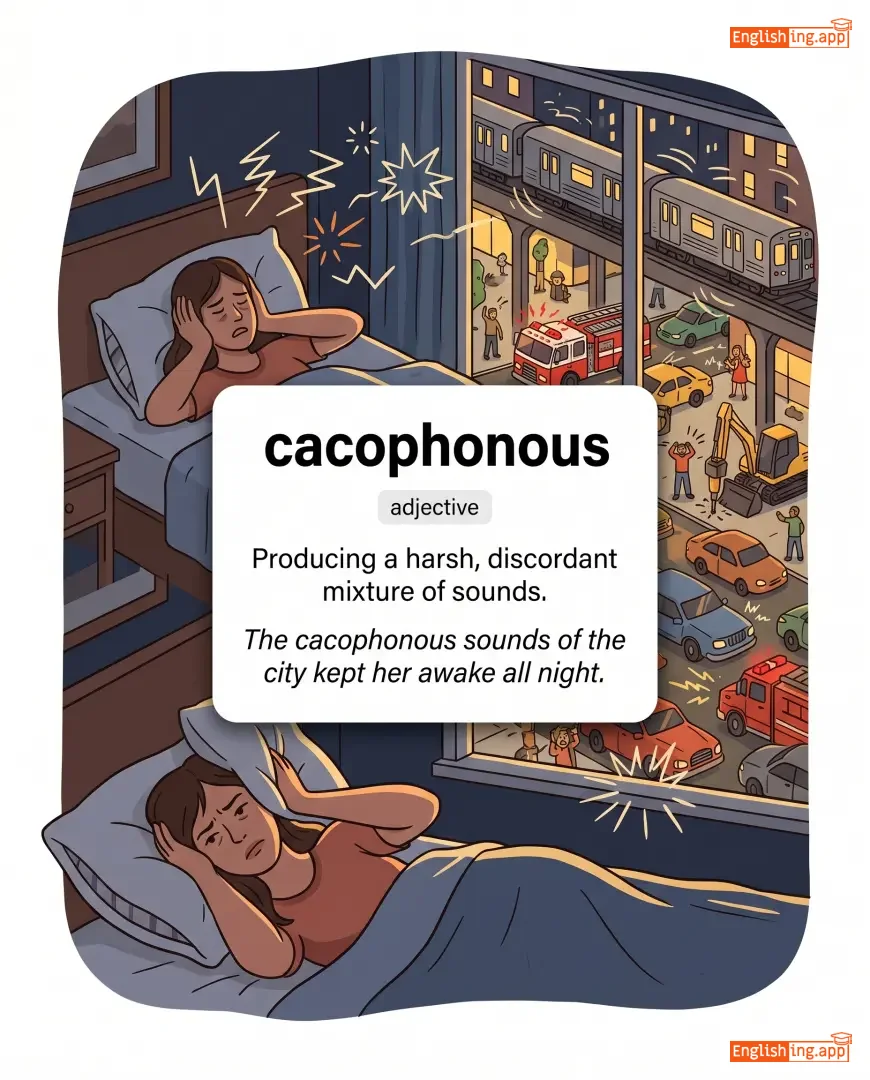
cacophonous definition card — visual illustration of the meaning
adjective
/kəˈkɒfənəs/
какофония (kakofoniya)

Producing a harsh, discordant mixture of sounds.

"The cacophonous sounds of the city kept her awake all night."

"Какофония звуков города не давала ей уснуть всю ночь." (Kakofoniya zvukov goroda ne davala yey usnut' vsyu noch'.)
noun
/kəˈkɒfəni/
какофония (kakofoniya)

A harsh, discordant mixture of sounds.

"The cacophony of horns made it impossible to concentrate."

"Какофония сигналов сделала невозможным сосредоточиться." (Kakofoniya signalov sdelala nevozmozhnym sosredotochit'sya.)
noun
/kæd/
подлец; грубый (podlets, grubyy)

a man who behaves dishonorably, especially toward women

"Everyone at the party avoided him because he was known to be a cad."

"Все на вечеринке избегали его, потому что он был известен как подлец." (Vse na vecherinke izbegali ego, potomu chto on byl izvesten kak podlets.)
noun
/kəˈdævər/
труп (trup)

A dead human body, especially one used for medical study.

"Medical students dissected the cadaver to learn about human anatomy."

"Медицинские студенты рассекли труп, чтобы изучить анатомию человека." (Meditsinskije studenty rassekli trup, chtoby izuchit' anatomiyu cheloveka.)
adjective
/kəˈdævərəs/
трупный (trupny)

Resembling a corpse; very pale, thin, or bony.

"His cadaverous appearance shocked everyone at the party."
"Его трупный вид шокировал всех на вечеринке." (Yego trupny vid shokiroval vsekh na vecherinke.)
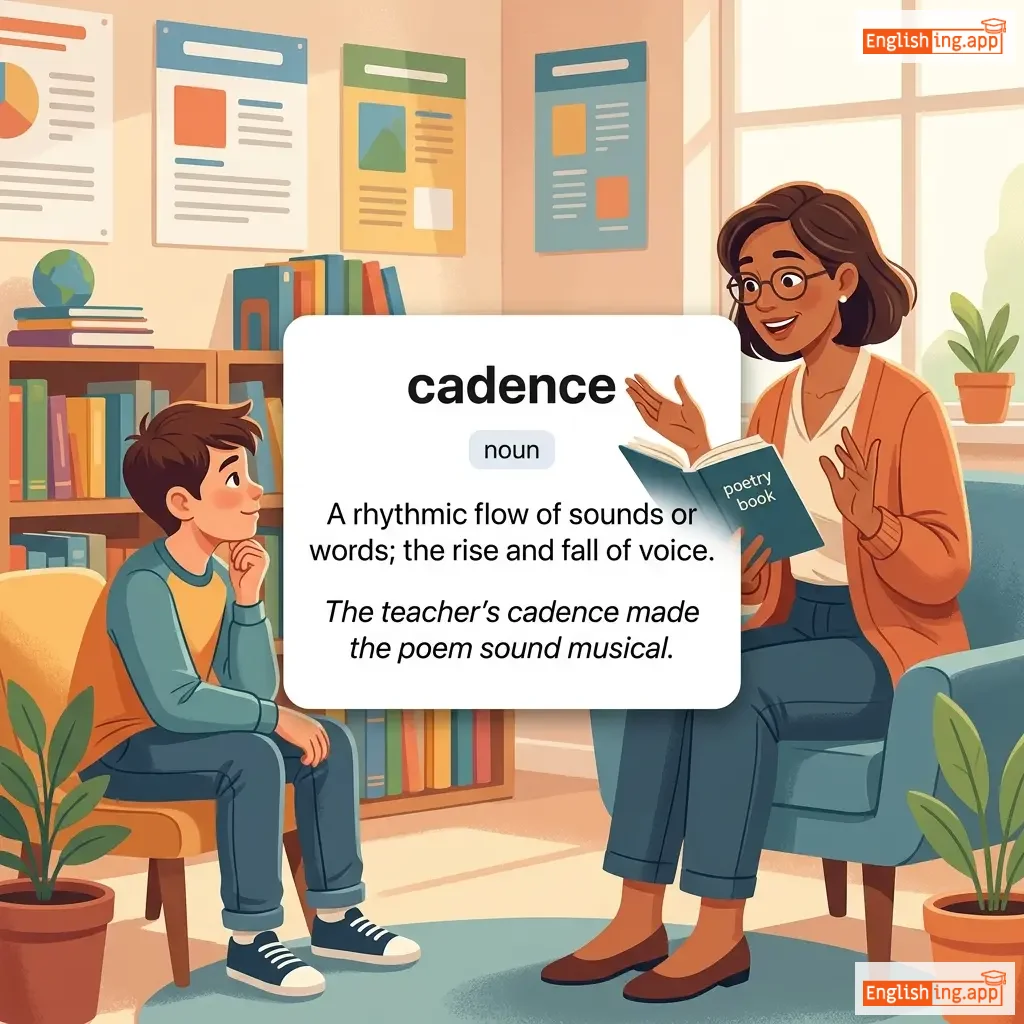
cadence definition card — visual illustration of the meaning
noun
/ˈkeɪdəns/

A rhythmic flow of sounds or words; the rise and fall of voice.

"The teacher's cadence made the poem sound musical."

noun
/kəˈdɛnzə/
разработанное сольное пассаже (razrabotannoye sol'noye passazhe)

An elaborate solo passage in a piece of music, usually near the end.

"The pianist performed a brilliant cadenza before the final movement."

"Пианист исполнил блестящую каденцу перед финальным движением." (Pianist ispolnil blestyashchuyu kadentsu pered final'nym dvizhением.)
noun
/kəˈdɛt/
кадет (kadet)

A young trainee in the armed forces, police, or other organization.

"The cadet marched proudly in the parade."

"Кадет гордо маршировал на параде." (Kadet gordo marshiroval na parade.)
cadge definition card — visual illustration of the meaning
verb
/kædʒ/
попрошайничать (kadzh)

To beg or obtain something, especially food or money, without paying for it.

"He tried to cadge a free meal from the restaurant."
"Он попытался попросить бесплатную еду в ресторане." (On popytalsya poprosit' besplatnuyu edu v restorane.)
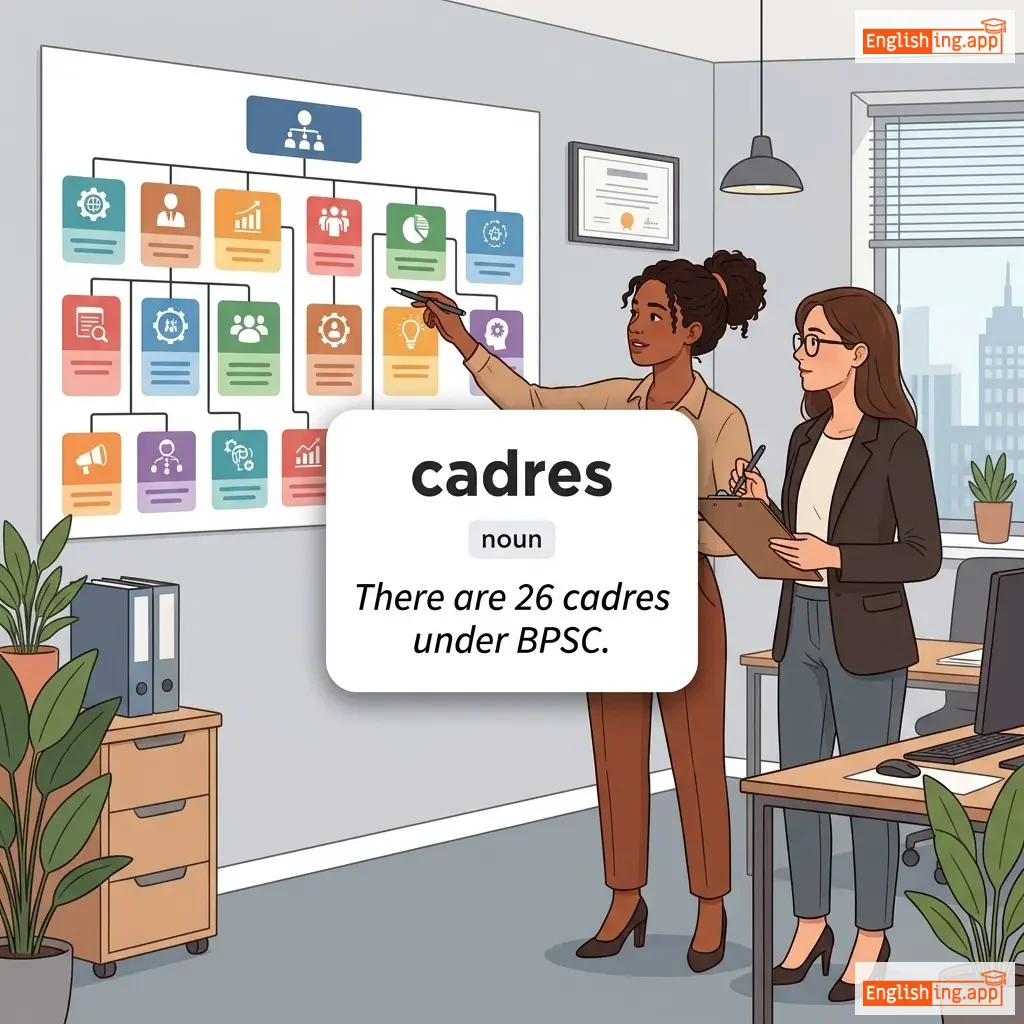
cadres definition card — visual illustration of the meaning
noun
ˈkɑː.dərz
кадры (kadry)

A small group of people specially trained for a particular purpose or profession; a group of activists in a communist or other political organization.

"There are 26 cadres under BPSC."

"Есть 26 кадров под BPSC." (Yest' 26 kadrov pod BPSC.)