Vocabularios

Descubra, aprenda y domine el vocabulario en inglés

Business definition card — visual illustration of the meaning
noun
/ˈbɪznəs/
negocio (negocio)

the practice of making money by producing or buying and selling goods or services

"She started her own business last year."

"Ella comenzó su propio negocio el año pasado." (Ella comenzó su propio negocio el año pasado.)
business finance definition card — visual illustration of the meaning
noun
ˈbɪz.nɪs ˈfaɪ.næns
finanzas empresariales (finanzas empresariales)

The area of finance that deals with sources of funding and the capital structure of corporations.

"Effective business finance enhances profitability."

"Una buena financiación empresarial mejora la rentabilidad." (Una buena financiacion empresarial mejora la rentabilidad.)
business success definition card — visual illustration of the meaning
noun
/bɪzˈnɛs sʌˈsɛs/
éxito empresarial (exito empresarial)

The achievement of desired outcomes in business operations, typically measured by profitability, growth, and sustainability.

"Innovation drives business success."

"La innovación impulsa el éxito empresarial." (La innovacion impulsa el exito empresarial.)
noun
/ˈbɪznəsmæn/
empresario (empresario)

a person engaged in commercial or industrial business activities

"The businessman invested heavily in new technology."

"El empresario invirtió fuertemente en nuevas tecnologías." (El empresario invirtió fuertemente en nuevas tecnologías.)
noun
/ˈbɪznəsˌwʊmən/
empresaria (empresaria)

a woman who works in business, especially one who owns or manages a company

"The businesswoman expanded her company into international markets."

"La empresaria expandió su empresa a mercados internacionales." (La empresaria expandio su empresa a mercados internacionales)
noun
/ˈbʌskɪn/
bota gruesa (bota gruesa)

A type of thick-soled boot that reaches halfway to the knee; also associated with tragic drama in ancient times.

"The actor wore a buskin as part of his classical costume."

"El actor llevaba un buskin como parte de su traje clásico." (El aktor llevaba un buskin komo parte de su traje klasiko.)
noun/verb
/bʌst/
busto/romper (busto/romper)

As a noun: A sculpture of a person's head, shoulders, and chest; As a verb: To break, smash, or arrest.

"The police busted the gang last night."

"La policía arrestó a la banda anoche." (La policía arrestó a la banda anoche.)
verb, noun
/ˈbʌsəl/
bullicio, ajetreo (bullicio, ajetreo)

to move in an energetic or noisy manner; busy activity in a place

"The marketplace bustled with vendors and customers."

"El mercado estaba lleno de vendedores y clientes." (El mercado estaba lleno de vendedores y clientes.)
adjective
/ˈbʌsti/
de busto grande (de busto grande)

having a large or full bust; describing a woman with a prominent chest

"The actress was often described as busty in fashion magazines."

"La actriz era descrita a menudo como de busto grande en las revistas de moda." (La actriz era descrita a menudo como de busto grande en las revistas de moda)
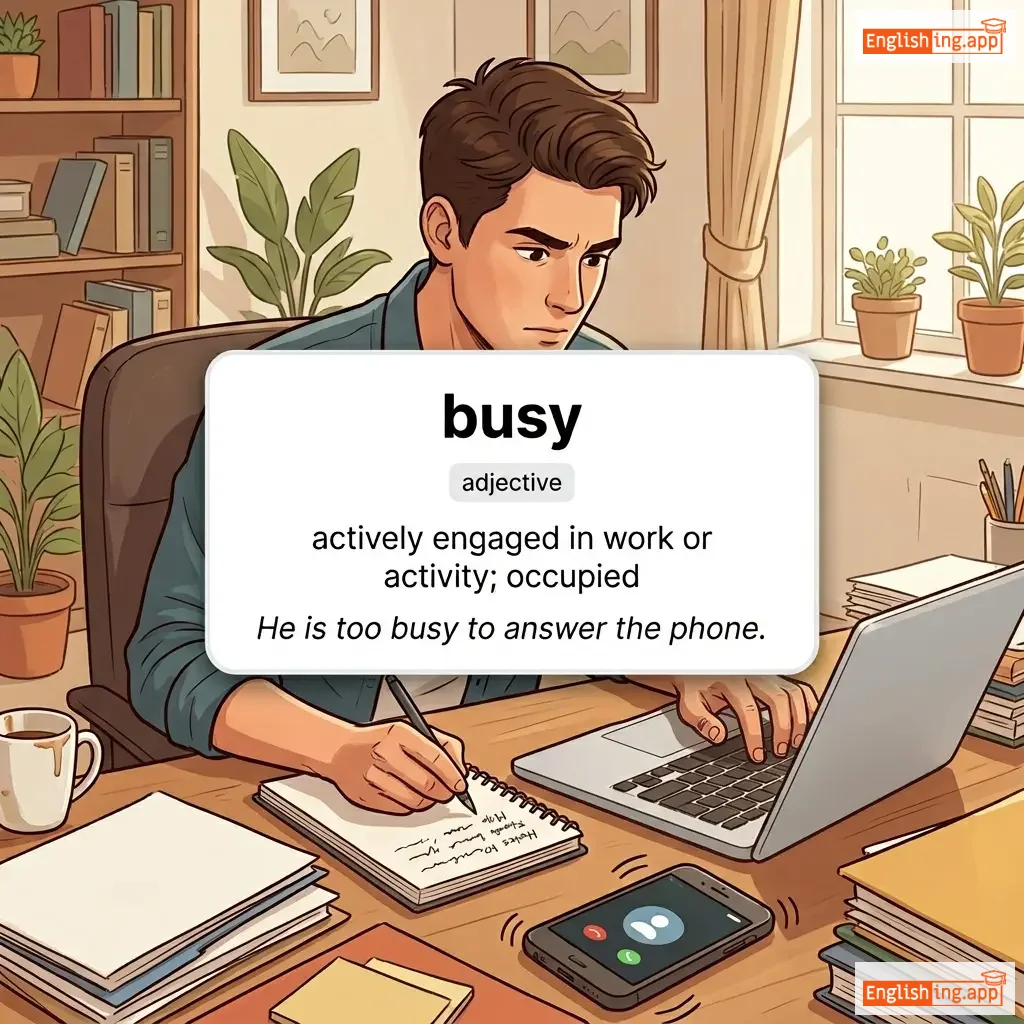
busy definition card — visual illustration of the meaning
adjective
/ˈbɪzi/
ocupado (ocupado)

actively engaged in work or activity; occupied

"He is too busy to answer the phone."

"Está demasiado ocupado para contestar el teléfono." (Está demasiado ocupado para contestar el teléfono.)
but definition card — visual illustration of the meaning
conjunction
/bʌt/
pero (pero)

used to introduce a phrase or clause contrasting with what has already been mentioned

"She wanted to go out, but it was raining heavily."

"Ella quería salir, pero estaba lloviendo mucho." (Ella queria salir, pero estaba lloviendo mucho.)
noun
/ˈbʊt.ʃər/
carnicero (carnicero)

a person whose job is cutting up and selling meat in a shop

"The butcher recommended the best cut of beef for our dinner."

"El carnicero recomendó el mejor corte de carne de res para nuestra cena." (El carnicero recomendó el mejor corte de carne de res para nuestra cena.)
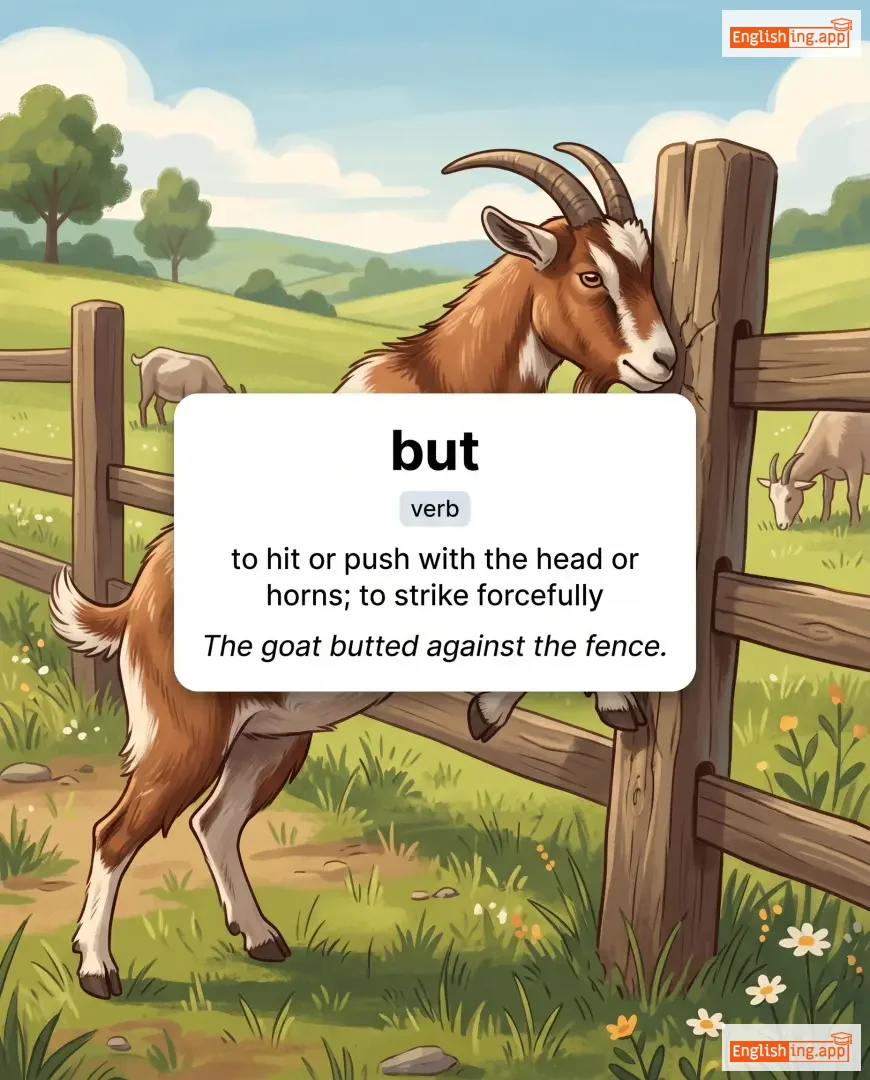
noun, verb
/bʌt/
dar con la cabeza, el trasero de algo (dar con la cabeza, el trasero de algo)

to hit or push with the head or horns; the end part of something, especially a cigarette

"The goat butted the fence with its horns."

"El cabrón dio un golpe a la cerca con sus cuernos." (El cabrón dio un golpe a la cerca con sus cuernos.)
noun
/bjuːt/
butte (butte)

an isolated hill with steep sides and a flat top, common in arid regions

"The travelers could see a tall butte rising in the desert."

"Los viajeros pudieron ver un butte alto elevándose en el desierto." (Los viajeros pudieron ver un butte alto elevándose en el desierto.)
noun, verb
/ˈbʌtər/
mantequilla (mantequilla)

a pale yellow edible fat made from cream; to spread butter on something

"She buttered a slice of bread before eating."

"Ella untó una rebanada de pan antes de comer." (Ella untó una rebanada de pan antes de comer.)
noun
/ˈbʌt.ər fɪʃ/
pez mantequilla (pez mantequilla)

a small, smooth-skinned marine fish

"The butter-fish is popular in Bengali cuisine."

"El pez mantequilla es popular en la cocina bengalí." (El pez mantequilla es popular en la cocina bengali)
noun
/ˈbʌt.ər.flaɪ/
mariposa (mariposa)

a flying insect with large colorful wings

"The beautiful butterfly landed on the flower."

"La hermosa mariposa se posó sobre la flor." (La hermosa mariposa se posó sobre la flor.)
noun
/ˈbʌtərflaɪ/
mariposa (mariposa)

an insect with large, often brightly colored wings that flies during the day

"A beautiful butterfly landed on the flower."

"Una hermosa mariposa aterrizó en la flor." (Una hermosa mariposa aterrizó en la flor.)
noun
/ˈbʌt.ə.flaɪ piː/
guisante mariposa (guisante mariposa)

a blue flowering plant with butterfly-shaped flowers, used to make herbal tea

"Butterfly pea flowers turn tea into a beautiful blue color."

"Las flores de guisante mariposa convierten el té en un hermoso color azul." (Las flores de guisante mariposa convierten el té en un hermoso color azul.)
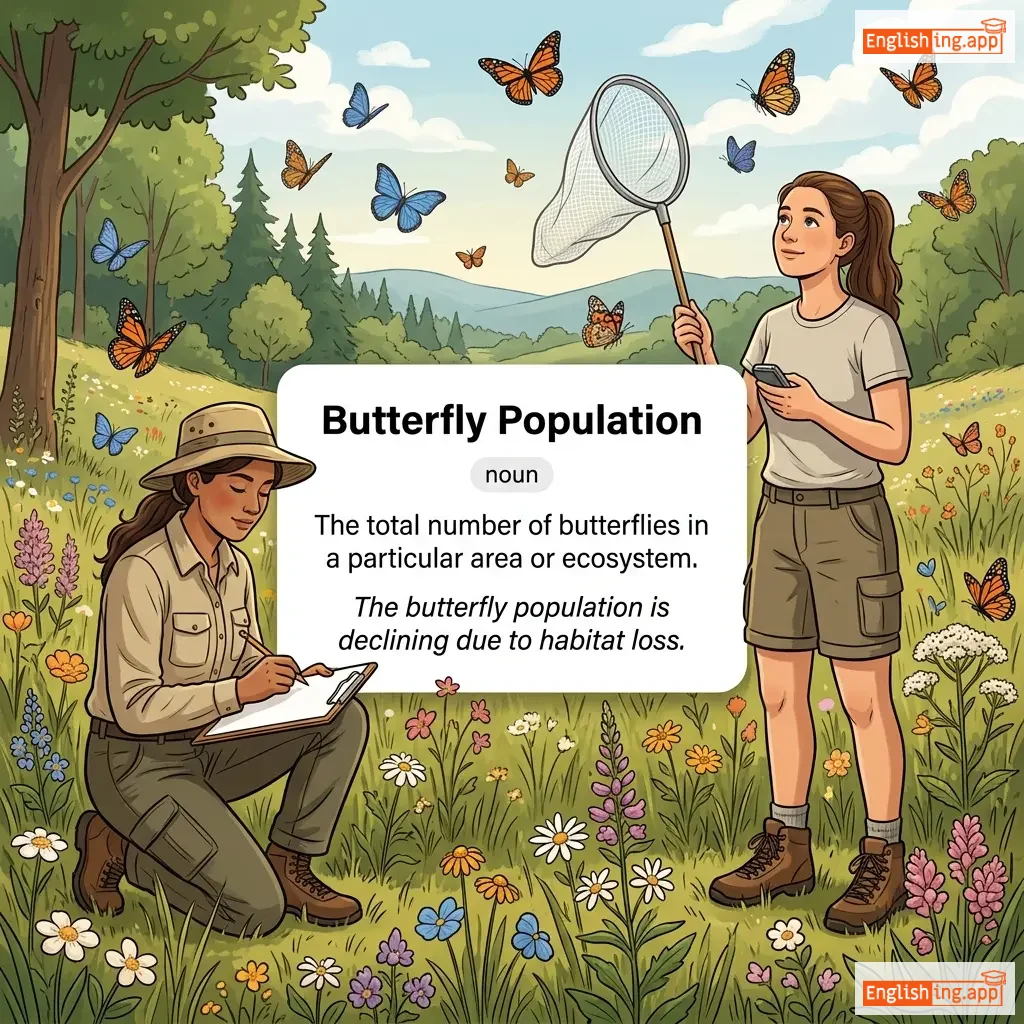
Butterfly Population definition card — visual illustration of the meaning
noun
ˈbʌtərflaɪ ˌpɒpjəˈleɪʃən
población de mariposas (poblacion de mariposas)

The total number of butterflies in a particular area or ecosystem.

"The butterfly population is declining due to habitat loss."

"La población de mariposas está disminuyendo debido a la pérdida de hábitat." (La poblacion de mariposas esta disminuyendo debido a la perdida de habitat.)
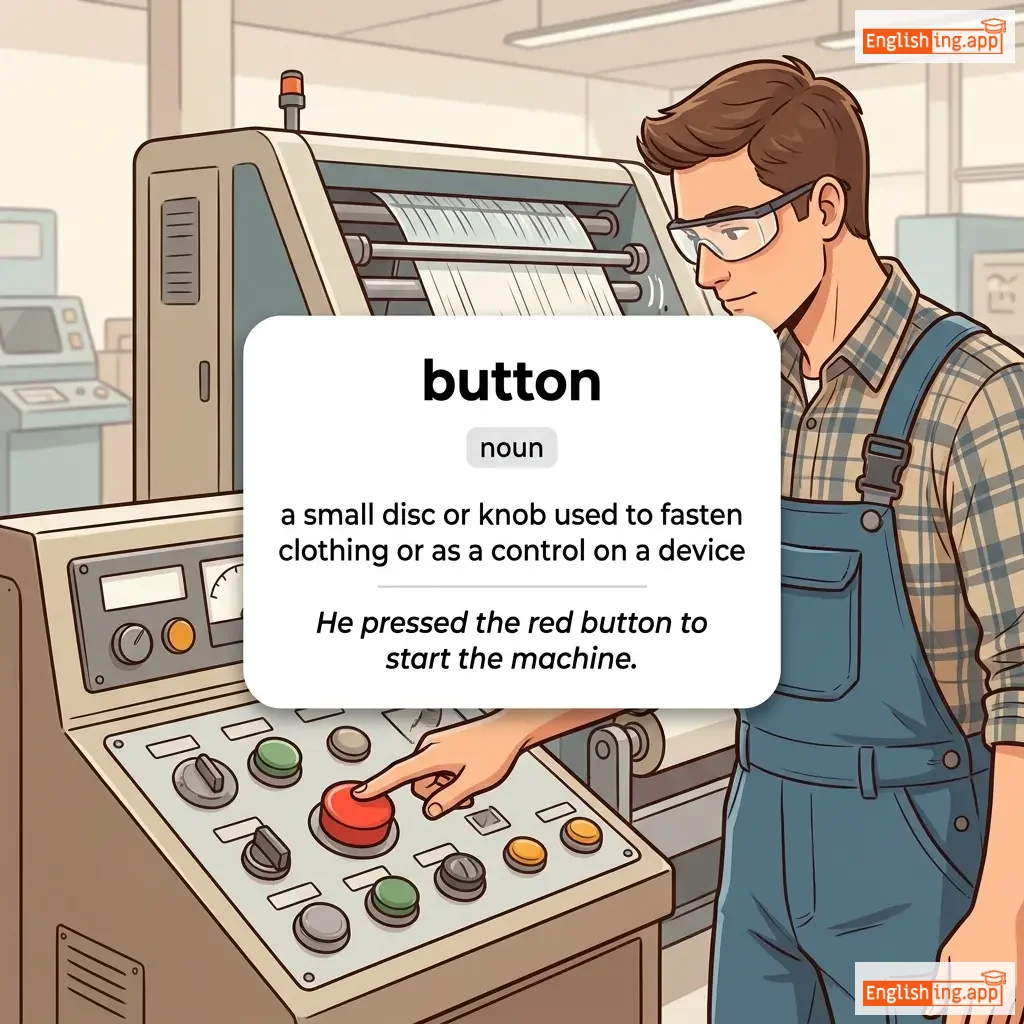
button definition card — visual illustration of the meaning
noun
/ˈbʌtən/
botón (boton)

a small disc or knob used to fasten clothing or as a control on a device

"He pressed the red button to start the machine."

"Presionó el botón rojo para encender la máquina." (Presionó el botón rojo para encender la máquina.)
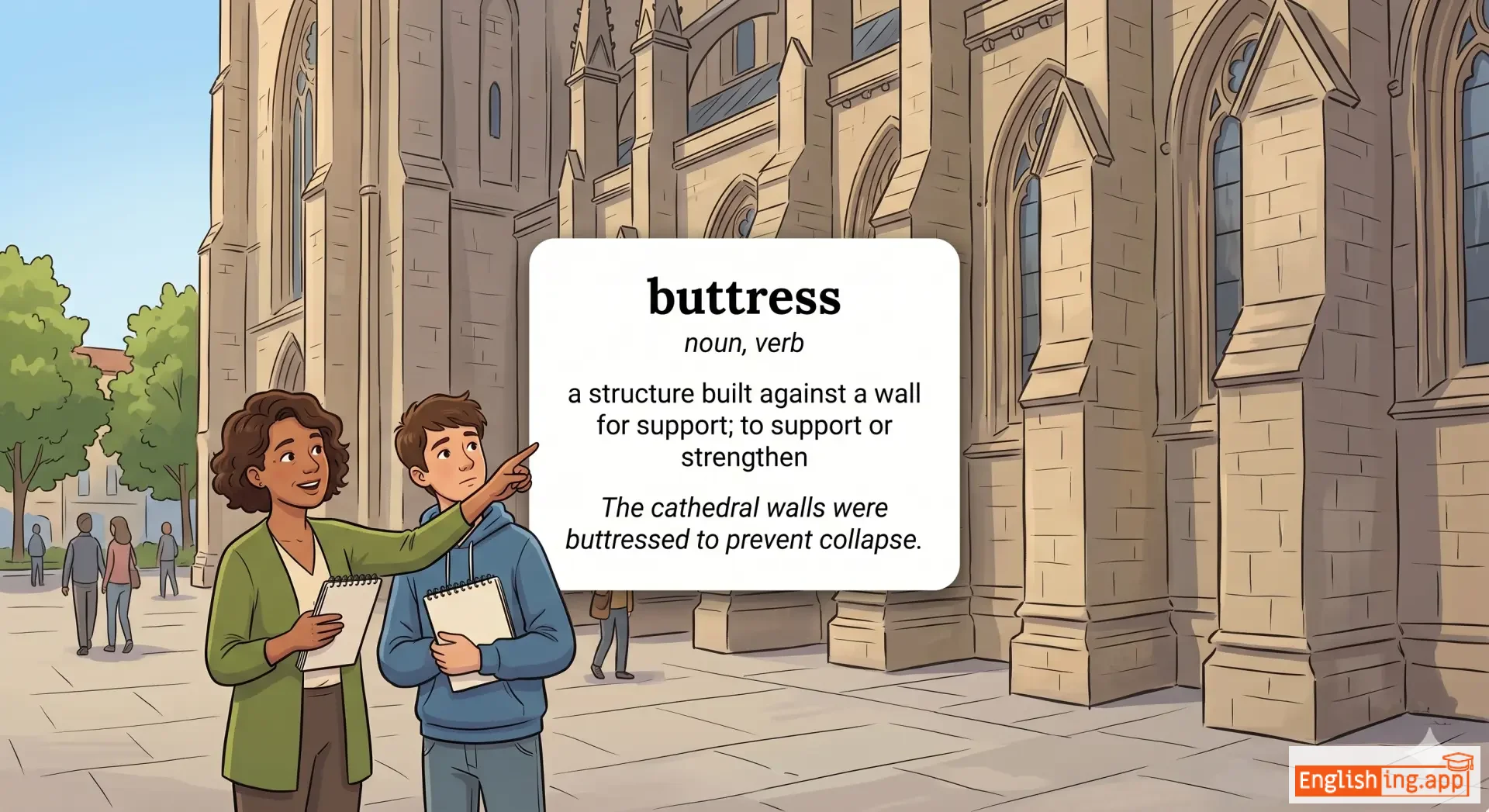
buttress definition card — visual illustration of the meaning
noun, verb
/ˈbʌtrəs/
contrafuerte, soporte (contrafuerte, soporte)

a structure built against a wall for support; to support or strengthen

"The cathedral walls were buttressed to prevent collapse."

"Las paredes de la catedral fueron apoyadas para evitar el colapso." (Las paredes de la catedral fueron apoyadas para evitar el colapso.)
👩‍🦰

buxom (baksom)

adjective
/ˈbʌksəm/
mujer hermosa y corpulenta (mujer hermosa y corpulenta)

Plump, with a full figure and often large-breasted, especially used to describe women.

"The actress was described as a cheerful and buxom woman."

"La actriz fue descrita como una mujer alegre y corpulenta." (La actriz fue descrita como una mujer alegre y corpulenta.)
buy definition card — visual illustration of the meaning
verb
/baɪ/
comprar (comprar)

to acquire something in exchange for money

"She went to the market to buy fresh vegetables."

"Ella fue al mercado a comprar vegetales frescos." (Ella fue al mercado a comprar vegetales frescos.)
noun
/ˈbaɪər/
comprador (comprador)

a person who makes a purchase

"The buyer inspected the car before making payment."

"El comprador inspeccionó el coche antes de realizar el pago." (El comprador inspeccionó el coche antes de realizar el pago.)
noun, verb
/bʌz/
zumbido (zumbido)

to make a low continuous humming sound; a feeling of excitement or interest

"I could hear the phone buzz during the meeting."

"Pude oír el zumbido del teléfono durante la reunión." (Pude oir el zumbido del telefono durante la reunion)
➡️

by (bai)

preposition
/baɪ/
por (por)

indicating the agent performing an action, or the means of achieving something

"The book was written by a famous author."

"El libro fue escrito por un autor famoso." (El libro fue escrito por un autor famoso.)
noun
/ˈbaɪ.lɔː/
reglamento (reglamento)

A rule made by a company, organization, or local authority to control the actions of its members.

"The city council passed a new by-law regulating street vendors."

"El consejo de la ciudad aprobó una nueva ordenanza para regular a los vendedores ambulantes." (El consejo de la ciudad aprobó una nueva ordenanza para regular a los vendedores ambulantes.)
interjection
/baɪ/
adiós (adios)

used to say goodbye; a short and informal farewell

"I said bye to her before leaving."

"Le dije adiós antes de irme." (le dije adios antes de irme)
noun/adjective
/ˈbaɪ.ɡɒn/
pasado (pasado)

Something belonging to an earlier time; past and no longer existing.

"He often talks about the traditions of bygone days."

"Él a menudo habla sobre las tradiciones de los días pasados." (El a menudo habla sobre las tradiciones de los días pasados.)
noun
/ˈbaɪ.laɪn/
línea del nombre del escritor (linea del nombre del escritor)

A line in a newspaper or magazine article that names the writer.

"Her byline appeared on the front page of the newspaper."

"Su línea apareció en la primera página del periódico." (Su lina aparecio en la primera pagina del periodico.)
adjective
/ˈbɪz.ən.taɪn/ or /ˈbaɪ.zənˌtiːn/
complejo (complejo)

Extremely complicated and detailed; relating to the Byzantine Empire or its style.

"The new tax regulations are so byzantine that few understand them."

"Las nuevas regulaciones fiscales son tan complejas que pocos las entienden." (Las nuevas regulaciones fiscales son tan complejas que pocos las entienden.)
noun
/kæb/
taxi (taxi)

a taxi or car for hire with a driver

"We took a cab to the airport."

"Tomamos un taxi al aeropuerto." (Tomamos un taxi al aeropuerto.)
🕵️‍♂️

Cabal (cabal)

noun
/kəˈbæl/
cabal (cabal)

A secret group or faction engaged in plotting or intrigue.

"A small cabal was working behind the scenes to influence the election."

"Un pequeño cabal estaba trabajando entre bastidores para influir en las elecciones." (Un pequeño cabal estaba trabajando entre bastidores para influir en las elecciones.)
noun
/ˈkæbəˌlɪzəm/
cabalismo (cabalismo)

The doctrines, practices, or secretive dealings of a cabal.

"The historian wrote extensively about cabalism in the royal court."

"El historiador escribió extensamente sobre el cabalismo en la corte real." (El historiador escribio extensamente sobre el cabalismo en la corte real.)
noun
/ˈkæb.ɪdʒ/
repollo (repollo)

a round vegetable with thick green or purple leaves that can be eaten cooked or raw

"I need to buy some cabbage to make coleslaw for dinner."

"Necesito comprar algo de repollo para hacer ensalada de col para la cena." (Necesito comprar algo de repollo para hacer ensalada de col para la cena.)
noun
/ˈkæbɪn/
cabaña (cabana)

a small shelter or house, often made of wood in a remote area

"They spent the weekend in a cozy cabin in the mountains."

"Pasaron el fin de semana en una acogedora cabaña en las montañas." (Pasaron el fin de semana en una acogedora cabana en las montanas.)
noun
/ˈkæbənɪt/
gabinete / armario (gabinete / armario)

A group of senior government ministers; or a cupboard with shelves or drawers.

"The prime minister reshuffled the cabinet last month."

"El primer ministro reorganizó el gabinete el mes pasado." (El primer ministro reorganizó el gabinete el mes pasado.)
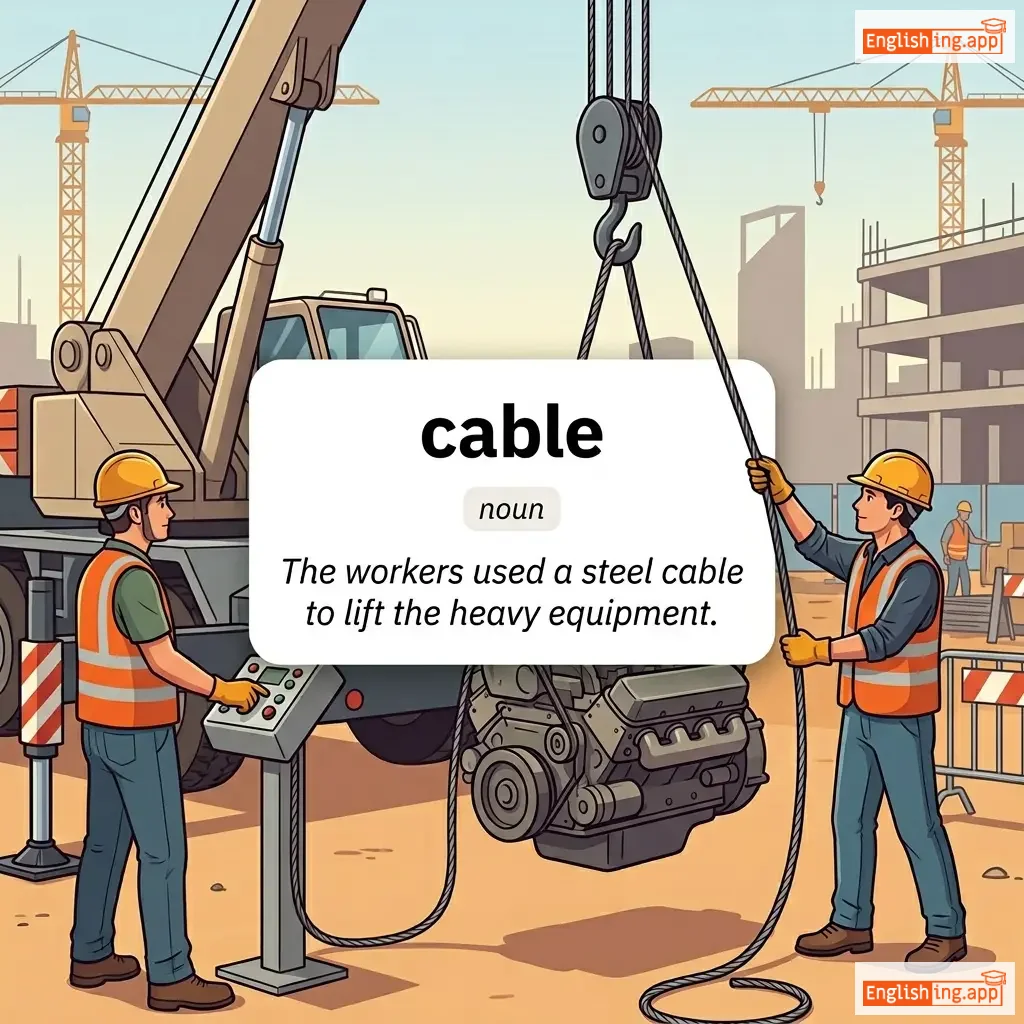
cable definition card — visual illustration of the meaning
noun
/ˈkeɪ.bəl/
cable (kable)

a thick, strong rope made of metal wires or fibers; a system of wires used for transmitting signals or electricity

"The workers used a steel cable to lift the heavy equipment."

"Los trabajadores utilizaron un cable de acero para levantar el equipo pesado." (Los trabajadores utilizaron un cable de acero para levantar el equipo pesado)
noun
/kæʃ/
caché (cache)

A hidden storage of items or a high-speed memory in computing.

"The hikers found a cache of supplies hidden under the rocks."

"Los excursionistas encontraron un almacén de suministros ocultos bajo las rocas." (Los excursionistas encontraron un almacén de suministros ocultos bajo las rocas.)
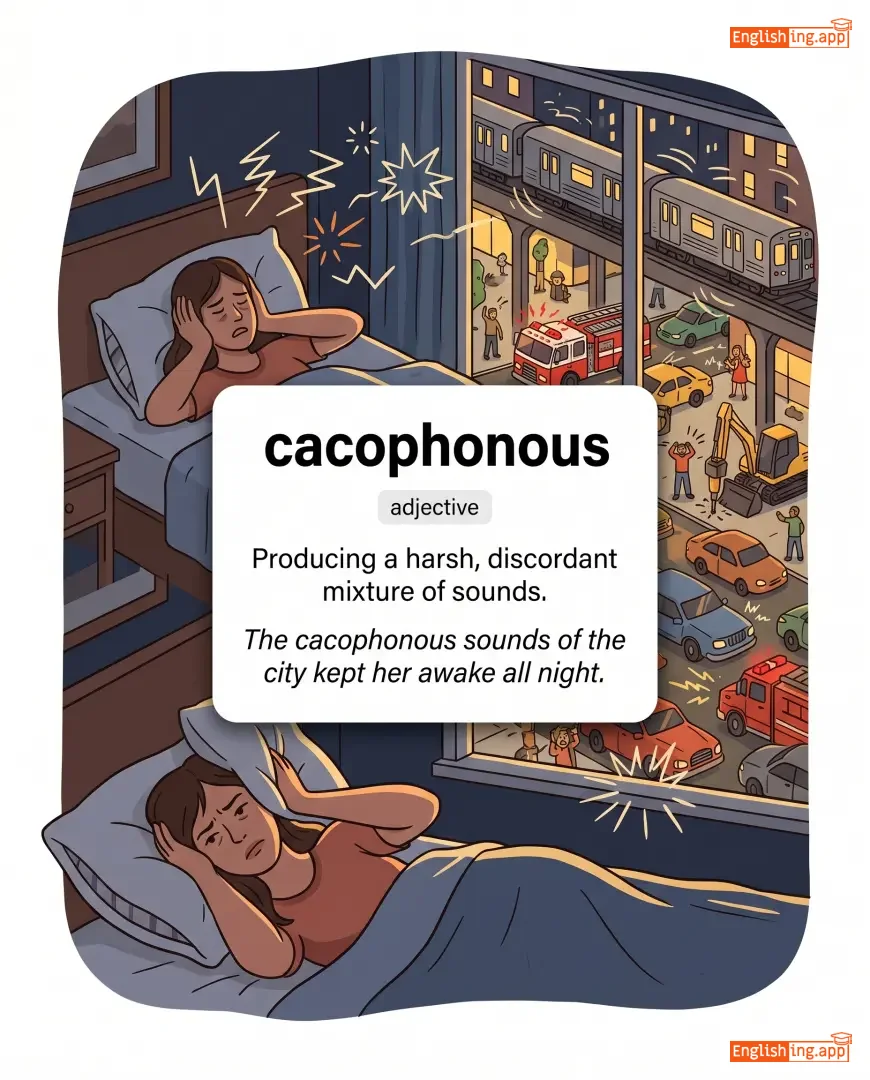
cacophonous definition card — visual illustration of the meaning
adjective
/kəˈkɒfənəs/
cacofonía (cacofonia)

Producing a harsh, discordant mixture of sounds.

"The cacophonous sounds of the city kept her awake all night."

"Los ruidos cacofónicos de la ciudad la mantenían despierta toda la noche." (Los ruidos cacofónicos de la ciudad la mantenían despierta toda la noche.)
noun
/kəˈkɒfəni/
ruido discordante (ruido discordante)

A harsh, discordant mixture of sounds.

"The cacophony of horns made it impossible to concentrate."

"El ruido discordante de las bocinas hacía imposible concentrarse." (El ruido discordante de las bocinas hacía imposible concentrarse.)
noun
/kæd/
canalla; grosero (canalla, grosero)

a man who behaves dishonorably, especially toward women

"Everyone at the party avoided him because he was known to be a cad."

"Todos en la fiesta lo evitaron porque se sabía que era un canalla." (Todos en la fiesta lo evitaron porque se sabía que era un canalla.)
noun
/kəˈdævər/
cadáver (cadaver)

A dead human body, especially one used for medical study.

"Medical students dissected the cadaver to learn about human anatomy."

"Los estudiantes de medicina diseccionaron el cadáver para aprender sobre la anatomía humana." (Los estudiantes de medicina diseccionaron el cadáver para aprender sobre la anatomía humana.)
adjective
/kəˈdævərəs/
cadavérico (cadaverico)

Resembling a corpse; very pale, thin, or bony.

"His cadaverous appearance shocked everyone at the party."

"Su apariencia cadavérica sorprendió a todos en la fiesta." (Su apariencia cadaverica sorprendio a todos en la fiesta.)
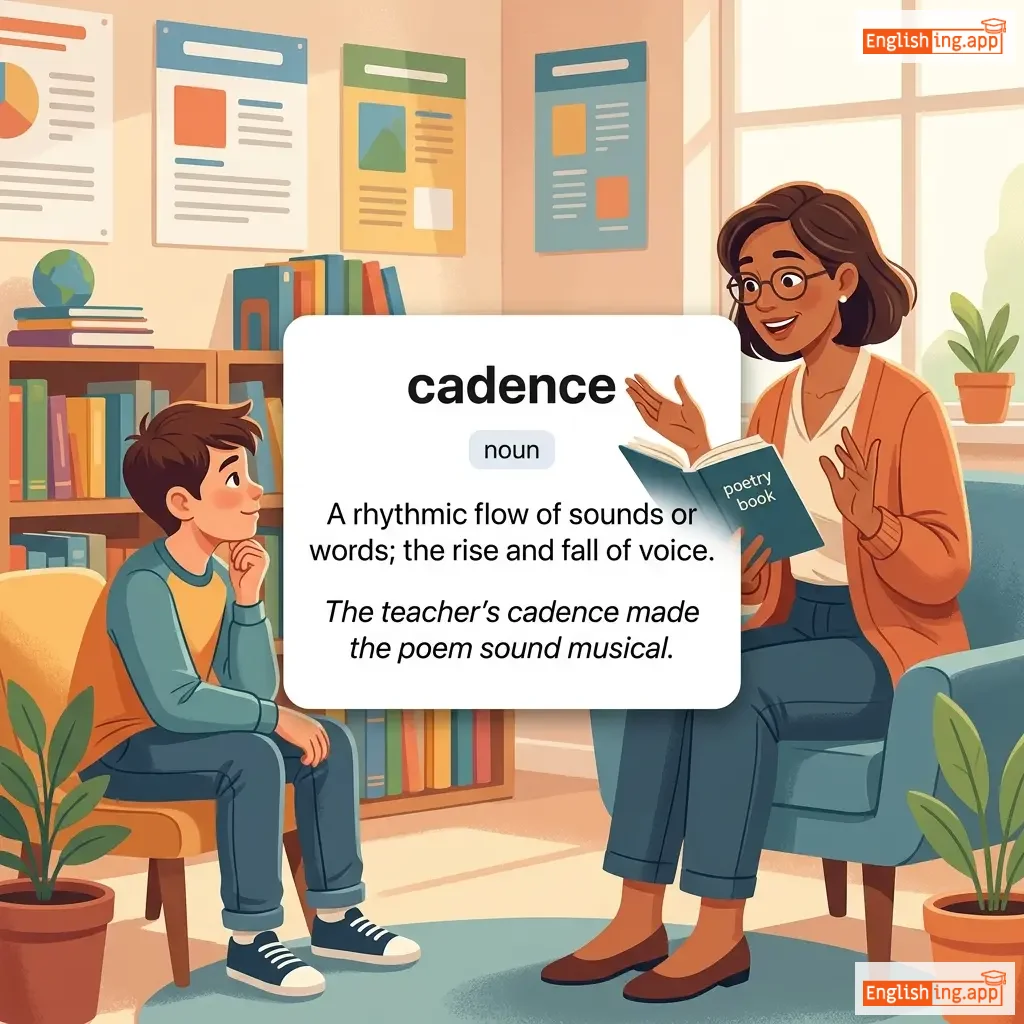
cadence definition card — visual illustration of the meaning
noun
/ˈkeɪdəns/
cadencia (kadensia)

A rhythmic flow of sounds or words; the rise and fall of voice.

"The teacher's cadence made the poem sound musical."

"La cadencia del profesor hizo que el poema sonara musical." (La kadensia del profesor hizo ke el poema sonara musical)
noun
/kəˈdɛnzə/
un pasaje solista elaborado (un pasaje solista elaborado)

An elaborate solo passage in a piece of music, usually near the end.

"The pianist performed a brilliant cadenza before the final movement."

"El pianista realizó una brillante cadenza antes del movimiento final." (El pianista realizó una brillante cadenza antes del movimiento final.)
noun
/kəˈdɛt/
cadete (cadete)

A young trainee in the armed forces, police, or other organization.

"The cadet marched proudly in the parade."

"El cadete marchó orgullosamente en el desfile." (El cadete marchó orgullosamente en el desfile.)
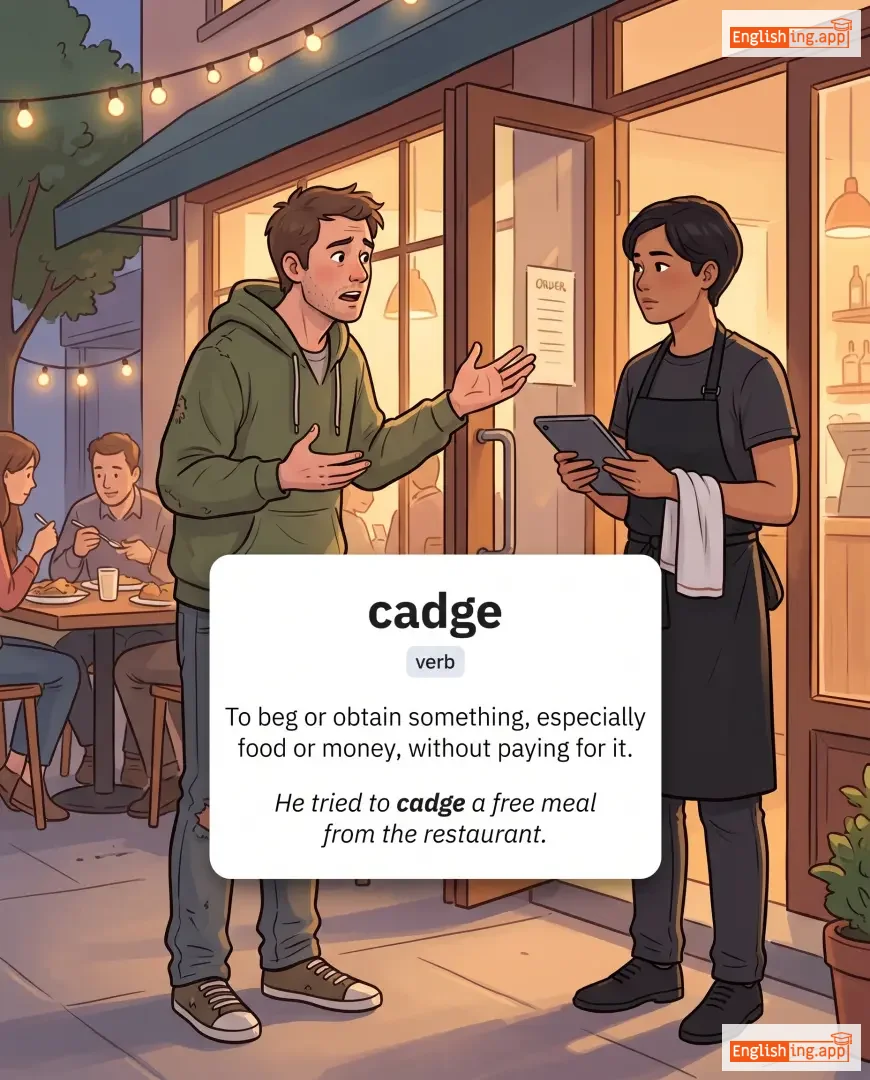
cadge definition card — visual illustration of the meaning
verb
/kædʒ/
pedir (kaj)

To beg or obtain something, especially food or money, without paying for it.

"He tried to cadge a free meal from the restaurant."

"Él intentó pedir una comida gratis en el restaurante." (El intento pedir una comida gratis en el restaurante.)
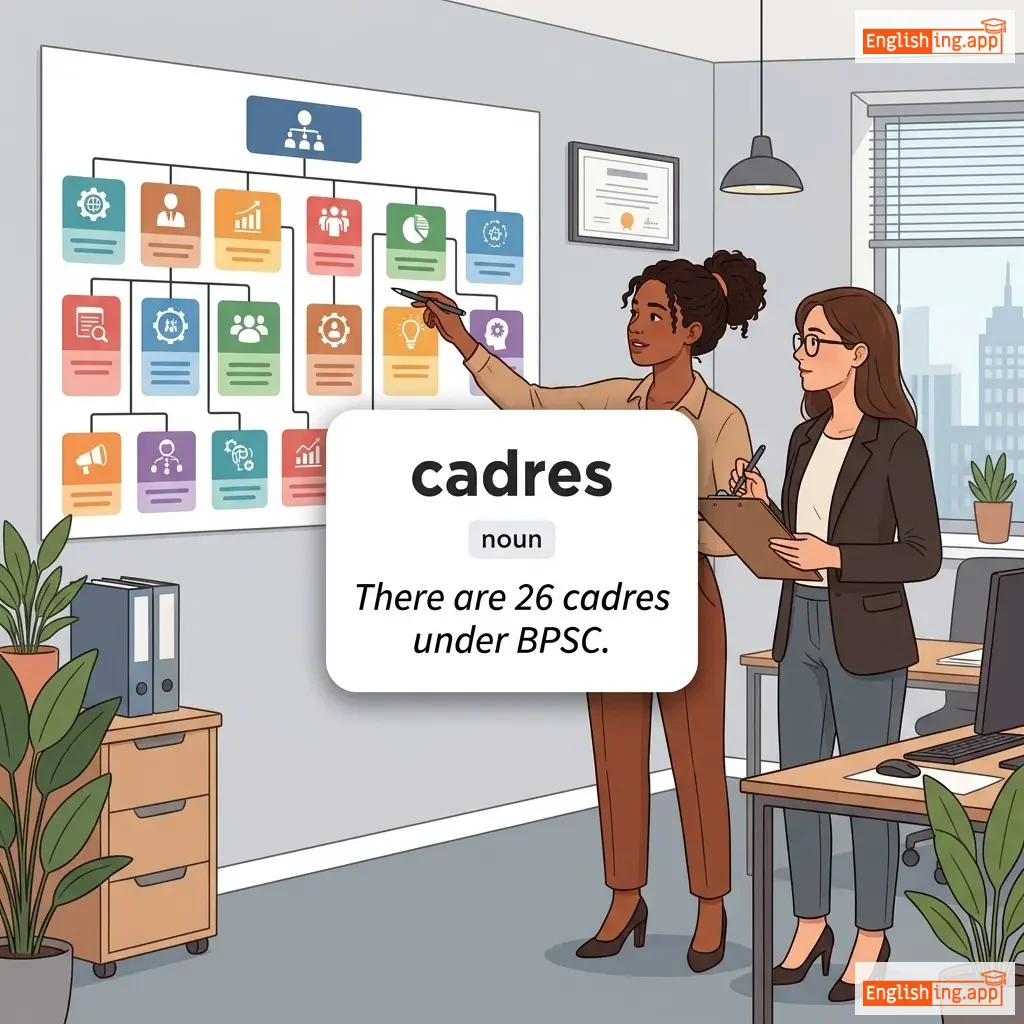
cadres definition card — visual illustration of the meaning
noun
ˈkɑː.dərz
cuadros (kwah-drohs)

A small group of people specially trained for a particular purpose or profession; a group of activists in a communist or other political organization.

"There are 26 cadres under BPSC."

"Hay 26 cuadros bajo BPSC." (Ay 26 kwah-drohs bah-hoo BPSC.)