Vocabularios

Descubra, aprenda y domine el vocabulario en inglés

noun
/bʌɡ/
insecto (insecto)

a small insect; informally, a flaw or error in a system or program

"There’s a bug in the code that causes the app to crash."

"Hay un error en el código que hace que la aplicación se bloquee." (Hay un error en el código que hace que la aplicación se bloquee.)
noun
/ˈbʌɡəˌbuː/
fantasma / temor (fantasma / temor)

An object of fear or worry; an imagined cause of anxiety.

"The threat of inflation became a political bugaboo."

"La amenaza de la inflación se convirtió en un bugaboo político." (La amenaza de la inflación se convirtió en un bugaboo político.)
noun
/ˈbjuːɡəl/
trombón sin válvulas (trombon sin valvulas)

a brass musical instrument similar to a trumpet but without valves, used especially for military calls

"The soldier played the bugle to signal the start of the ceremony."

"El soldado tocó el trombón sin válvulas para señalar el comienzo de la ceremonia" (El soldado toco el trombon sin valvulas para senalar el comienzo de la ceremonia)
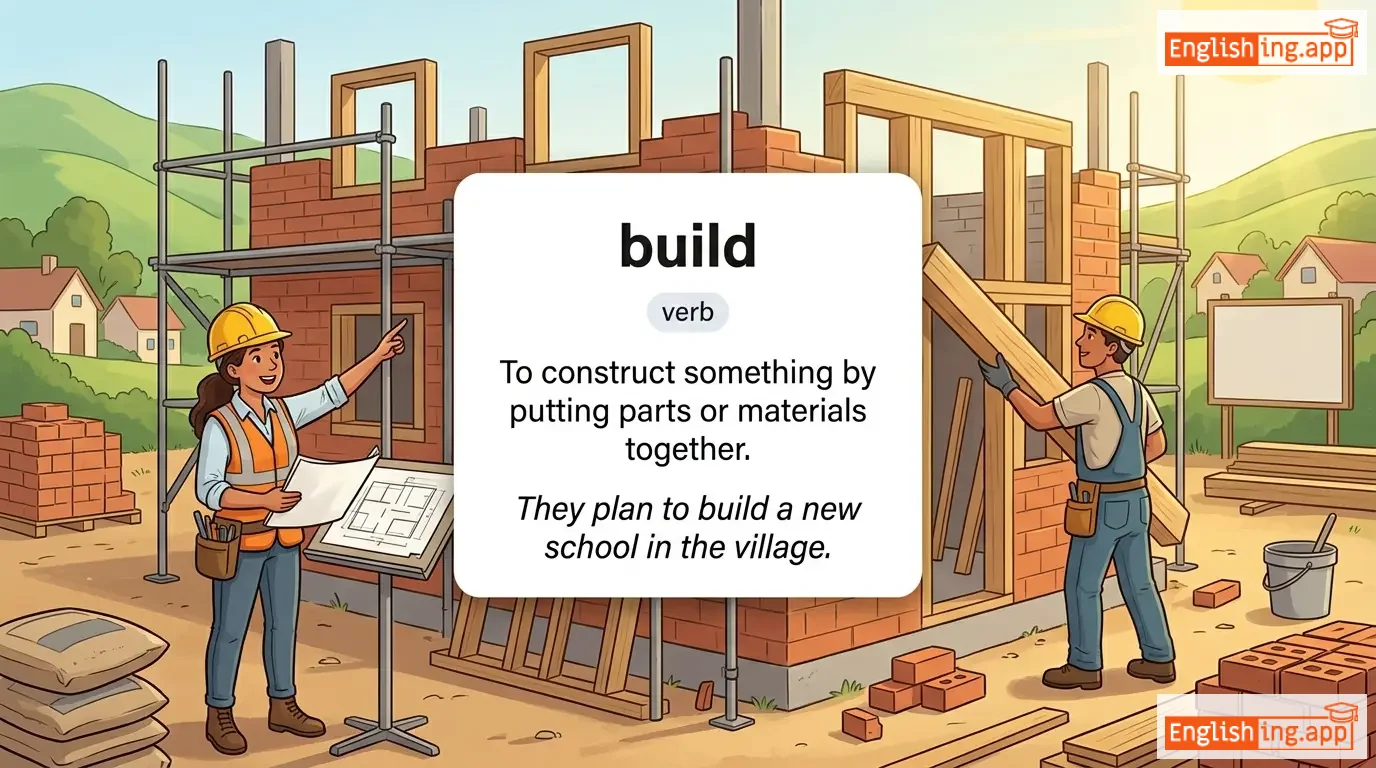
build definition card — visual illustration of the meaning
verb
/bɪld/
construir (construir)

To construct something by putting parts or materials together.

"They plan to build a new school in the village."

"Ellos planean construir una nueva escuela en el pueblo." (Ellos planean construir una nueva escuela en el pueblo.)
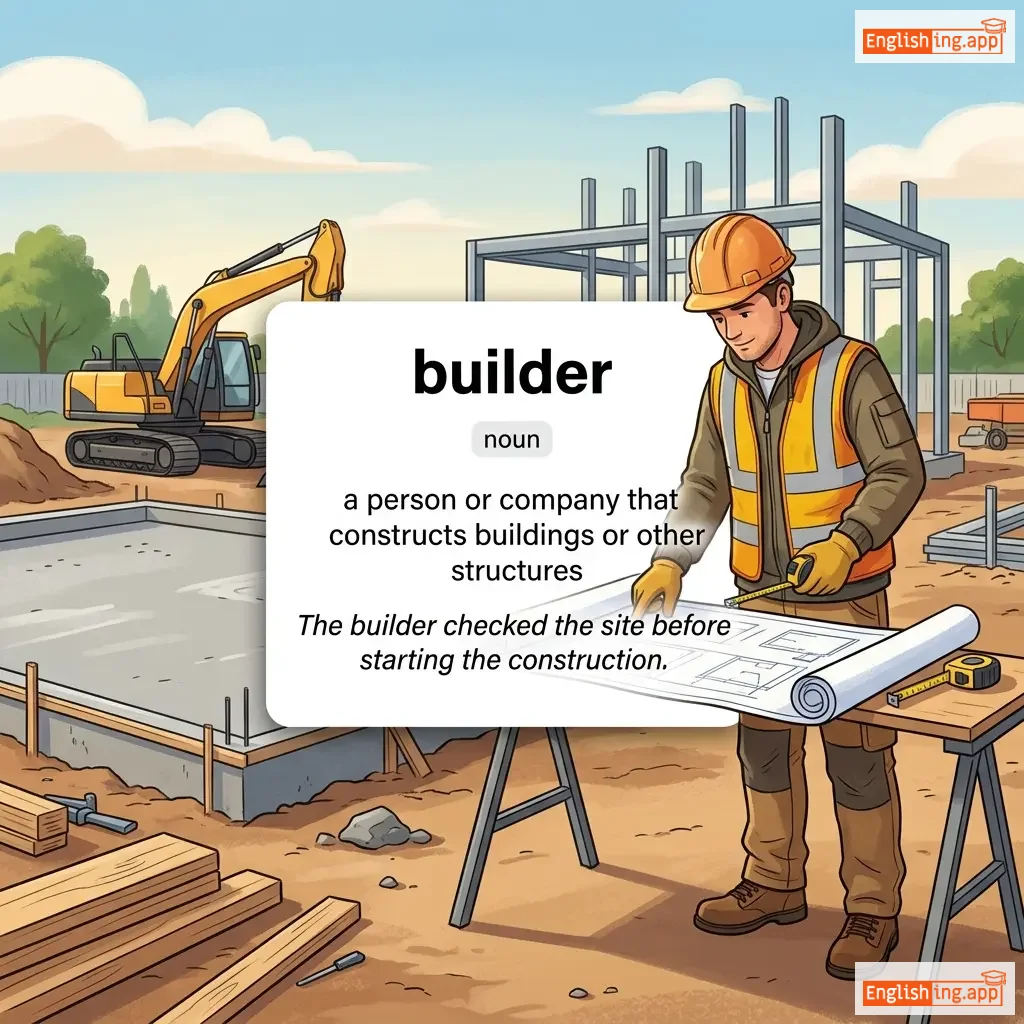
builder definition card — visual illustration of the meaning
noun
/ˈbɪldər/
constructor (constructor)

a person or company that constructs buildings or other structures

"The builder checked the site before starting the construction."

"El constructor revisó el sitio antes de comenzar la construcción." (El constructor revisó el sitio antes de comenzar la construcción.)
noun
/ˈbɪldɪŋ/
edificio (edificio)

A structure with a roof and walls, such as a house, school, or office.

"The old building was renovated into a museum."

"El viejo edificio fue renovado y convertido en un museo." (El viejo edificio fue renovado y convertido en un museo.)
noun
/bʌlb/
bombilla (bombilla)

a rounded glass part of an electric lamp that produces light when lit; also an underground storage organ in some plants

"The light bulb burned out, so she replaced it with a new one."

"La bombilla se quemó, así que la reemplazó con una nueva." (La bombilla se quemo, asi que la reemplazo con una nueva.)
adjective
/ˈbʌlbəs/
abultado / redondeado (abultado / redondeado)

Bulging, round, or swollen in shape; resembling a bulb.

"The frog had a bulbous nose and big eyes."

"La rana tenía una nariz abultada y ojos grandes." (La rana tenía una nariz abultada y ojos grandes.)
noun, verb
/bʌldʒ/
hinchazón / abultamiento (hinchazon / abultamiento)

A swelling or protruding part; to swell outward or protrude.

"The bag began to bulge with too many books inside."

"La bolsa comenzó a hincharse con demasiados libros adentro." (La bolsa comenzo a hincharse con demasiados libros adentro.)
noun, verb
/bʌlk/
gran volumen / masa (gran volumen / masa)

The mass or large size of something; to gain mass or volume.

"He bought rice in bulk to save money."

"Él compró arroz a granel para ahorrar dinero." (El compro arroz a granel para ahorrar dinero.)
noun
/bʊl/
toro (toro)

a male animal of the cattle family; sometimes refers to a strong or aggressive man

"The bull charged across the field towards the red flag."

"El toro corrió por el campo hacia la bandera roja." (El toro corrió por el campo hacia la bandera roja.)
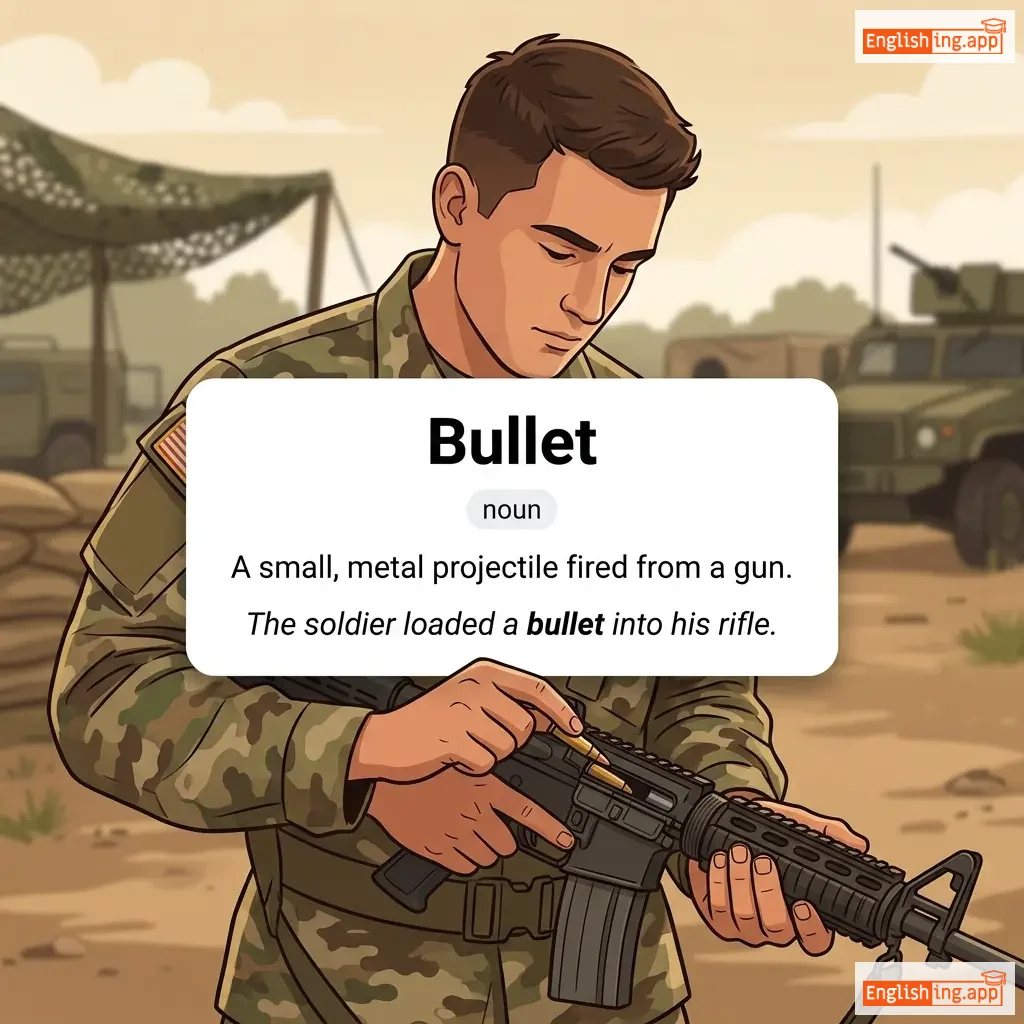
Bullet definition card — visual illustration of the meaning
noun
/ˈbʊlɪt/
bala (bala)

A small, metal projectile fired from a gun.

"The soldier loaded a bullet into his rifle."

"El soldado cargó una bala en su rifle." (El soldado cargo una bala en su rifle.)
noun
/ˈbʊljən/
oro o plata en bruto (oro o plata en bruto)

Gold or silver in bulk before being coined or made into jewelry.

"The bank stores gold bullion in its vaults."

"El banco guarda oro en bruto en sus bóvedas." (El banco guarda oro en bruto en sus bóvedas.)
noun
/ˈbʊlək/
buey (buey)

A young bull, especially a castrated one, raised for work or meat.

"The farmer used a bullock to plow the field."

"El agricultor usó un buey para arar el campo." (El agricultor usó un buey para arar el campo.)
noun, verb
/ˈbʊli/
matón / acosador (maton / acosador)

A person who habitually seeks to harm or intimidate those weaker; to intimidate or mistreat someone weaker.

"The teacher stopped the older boy from trying to bully his classmates."

"La maestra detuvo al niño mayor de intentar intimidar a sus compañeros de clase." (La maestra detuvo al nino mayor de intentar intimidar a sus companeros de clase.)
noun
/ˈbʊlrʌʃ/
junco (junco)

A tall plant with long leaves that grows in or near water, also known as a cattail.

"The pond was surrounded by tall bulrushes swaying in the wind."

"El estanque estaba rodeado de altos juncos balanceándose en el viento." (El estanque estaba rodeado de altos juncos balanceándose en el viento)
noun
/ˈbʊlwərk/
murallas defensivas (murallas defensivas)

A strong wall or defensive structure; something that provides protection or support.

"The fortress walls served as a bulwark against enemy attacks."

"Las murallas del fuerte sirvieron como una muralla defensiva contra los ataques enemigos." (Las murallas del fuerte sirvieron como una muralla defensiva contra los ataques enemigos.)
noun
/bʌm/
trasero (trasero)

informal term for the buttocks; also a homeless or lazy person

"He sat on his bum all day doing nothing."

"Estuvo sentado en su trasero todo el día sin hacer nada." (Estuvo sentado en su trasero todo el dia sin hacer nada.)
adjective
/ˈbʌmblɪŋ/
torpe (torpe)

Acting in a clumsy, awkward, or confused way.

"The bumbling waiter spilled the drinks on the table."

"El camarero torpe derramó las bebidas sobre la mesa." (El camarero torpe derramó las bebidas sobre la mesa.)
verb
/bʌmp/
golpe (golpe)

To hit something or someone by accident; to knock against something.

"He accidentally bumped into the door."

"Él accidentalmente chocó con la puerta." (Él accidentalmente chocó con la puerta.)
noun/adjective
/ˈbʌmpər/
parachoques (parachoques)

A protective bar at the front or back of a vehicle; also used to describe something unusually large or successful.

"The farmer celebrated a bumper harvest this year."

"El agricultor celebró una cosecha récord este año." (El agricultor celebró una cosecha récord este año.)
adjective
/ˈbʌmpʃəs/
presumido (presumido)

Arrogantly self-assertive or conceited.

"The bumptious student interrupted the teacher several times."

"El estudiante presumido interrumpió al profesor varias veces." (El estudiante presumido interrumpió al profesor varias veces.)
adjective
/ˈbʌmpi/
irregular; lleno de baches (bumpy)

having an uneven surface; rough; jolting

"The bumpy road made the car ride very uncomfortable."

"La carretera bumpy hizo que el viaje en coche fuera muy incómodo." (La carretera bumpy hizo que el viaje en coche fuera muy incómodo.)
noun
/bʌn/
panecillo (panecillo)

a small round bread roll, often sweet

"I bought fresh buns from the bakery this morning."

"Compré panes frescos de la panadería esta mañana." (Compre panes frescos de la panaderia esta manana.)
noun
/bʌntʃ/
ramos (ramos)

a group of things that are fastened, held, or growing together

"She gave me a bunch of flowers for my birthday."

"Ella me dio un ramo de flores para mi cumpleaños." (Ella me dio un ramo de flores para mi cumpleaños.)
noun
/ˈbʌn.dəl/
paquete; bulto (paquete, bulto)

a collection of things or quantity of material tied or wrapped up together

"The mailman delivered a bundle of letters to our house."

"El cartero entregó un paquete de cartas a nuestra casa." (El cartero entregó un paquete de cartas a nuestra casa.)
verb
/ˈbʌŋɡəl/
estropear (estropear)

To carry out a task clumsily or incompetently.

"He bungled the presentation and confused the audience."

"Él estropeó la presentación y confundió a la audiencia." (El estropeó la presentación y confundió a la audiencia.)
noun, verb
/ˈbʌŋkər/
búnker (bunker)

a reinforced underground shelter; to place or store something in a protected place

"They hid in a bunker during the air raid."

"Se escondieron en un búnker durante el ataque aéreo." (se escondieron en un bunker durante el ataque aereo)
noun/verb
/ˈbɔɪ/ or /ˈbuːi/
boya, mantener a flote (boya, mantener a flote)

A floating marker on water; to keep something afloat or encourage someone.

"The news buoyed their spirits after the loss."

"La noticia elevó su espíritu después de la pérdida." (La noticia elevó su espíritu después de la pérdida.)
noun
/ˈbɔɪənsi/ or /ˈbuːjənsi/
flotabilidad, alegría (flotabilidad, alegria)

The ability to float in a liquid; cheerfulness and optimism.

"Her natural buoyancy lifted the mood of the group."

"Su flotabilidad natural levantó el ánimo del grupo." (Su flotabilidad natural levanto el animo del grupo.)
adjective
/ˈbɔɪənt/ or /ˈbuːjənt/
flotante, animado (flotante, animado)

Able to float easily; cheerful and optimistic.

"She remained buoyant despite the difficulties."

"Ella permaneció animada a pesar de las dificultades." (Ella permaneció animada a pesar de las dificultades.)
noun
/ˈbɜːrdn/
carga (carga)

a heavy load, especially one that is difficult to carry

"The financial burden was too heavy for him to bear."

"La carga financiera era demasiado pesada para él." (La carga financiera era demasiado pesada para él.)
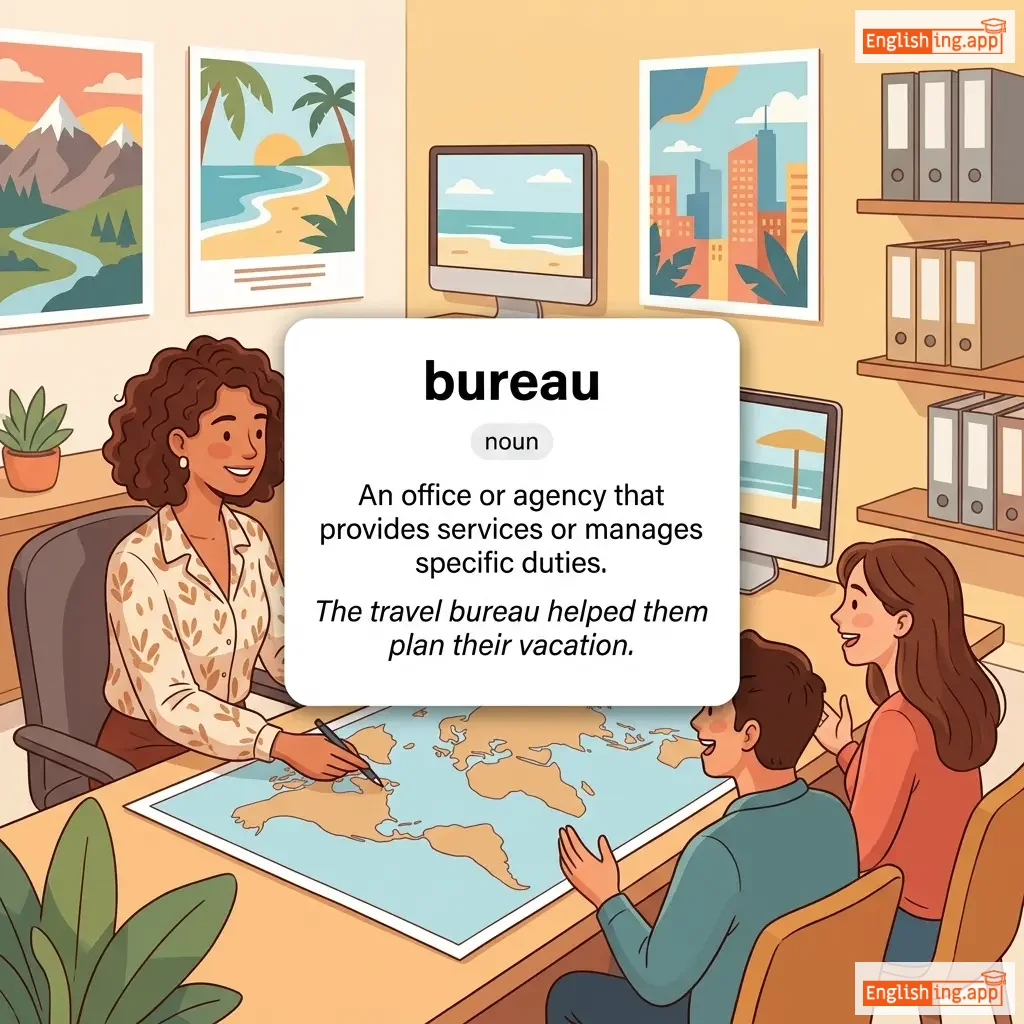
bureau definition card — visual illustration of the meaning
noun
/ˈbjʊəroʊ/
oficina/agencia (oficina/agencia)

An office or agency that provides services or manages specific duties.

"The travel bureau helped them plan their vacation."

"El buró de viajes los ayudó a planear sus vacaciones." (El buro de viajes los ayudo a planear sus vacaciones.)
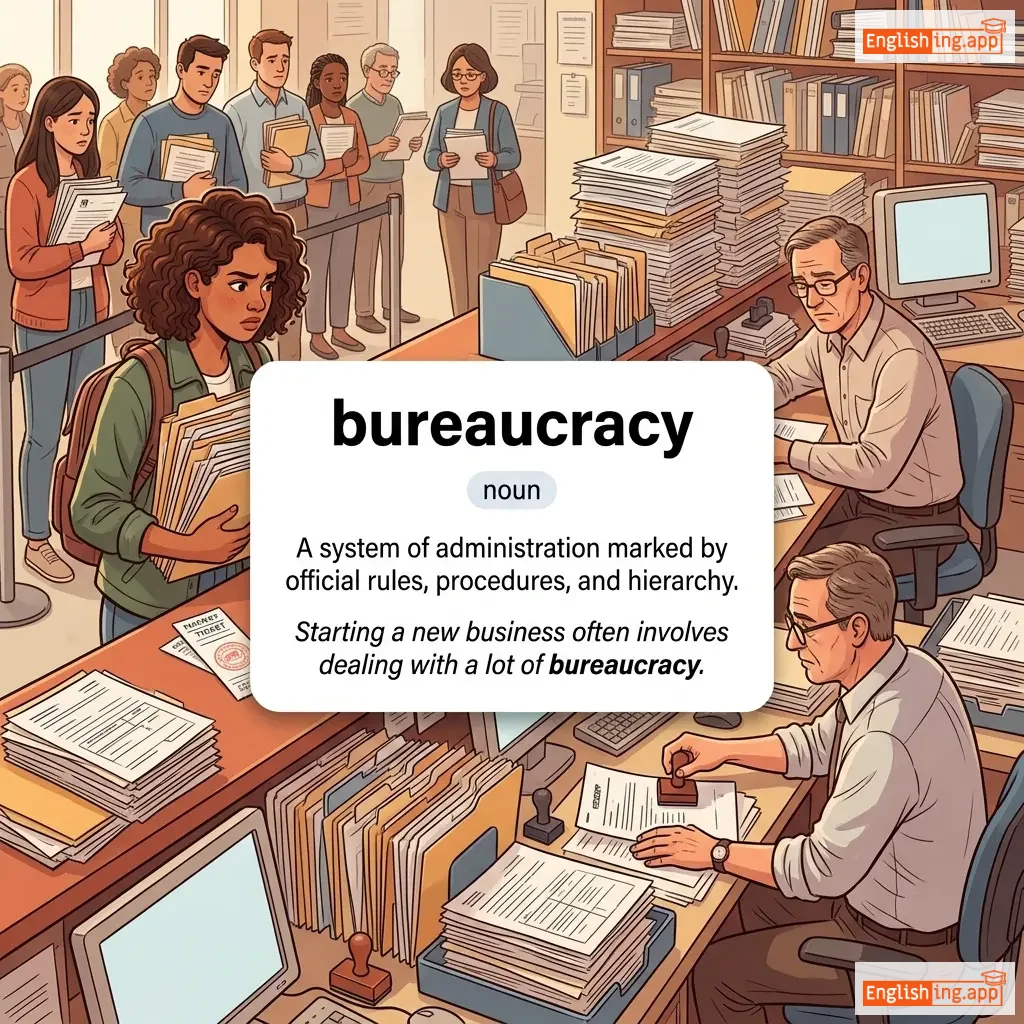
bureaucracy definition card — visual illustration of the meaning
noun
/bjʊˈrɒkrəsi/
burocracia (burokrasia)

A system of administration marked by official rules, procedures, and hierarchy.

"Starting a new business often involves dealing with a lot of bureaucracy."

"Comenzar un nuevo negocio a menudo implica lidiar con mucha burocracia." (Comenzar un nuevo negocio a menudo implica lidiar con mucha burocracia.)
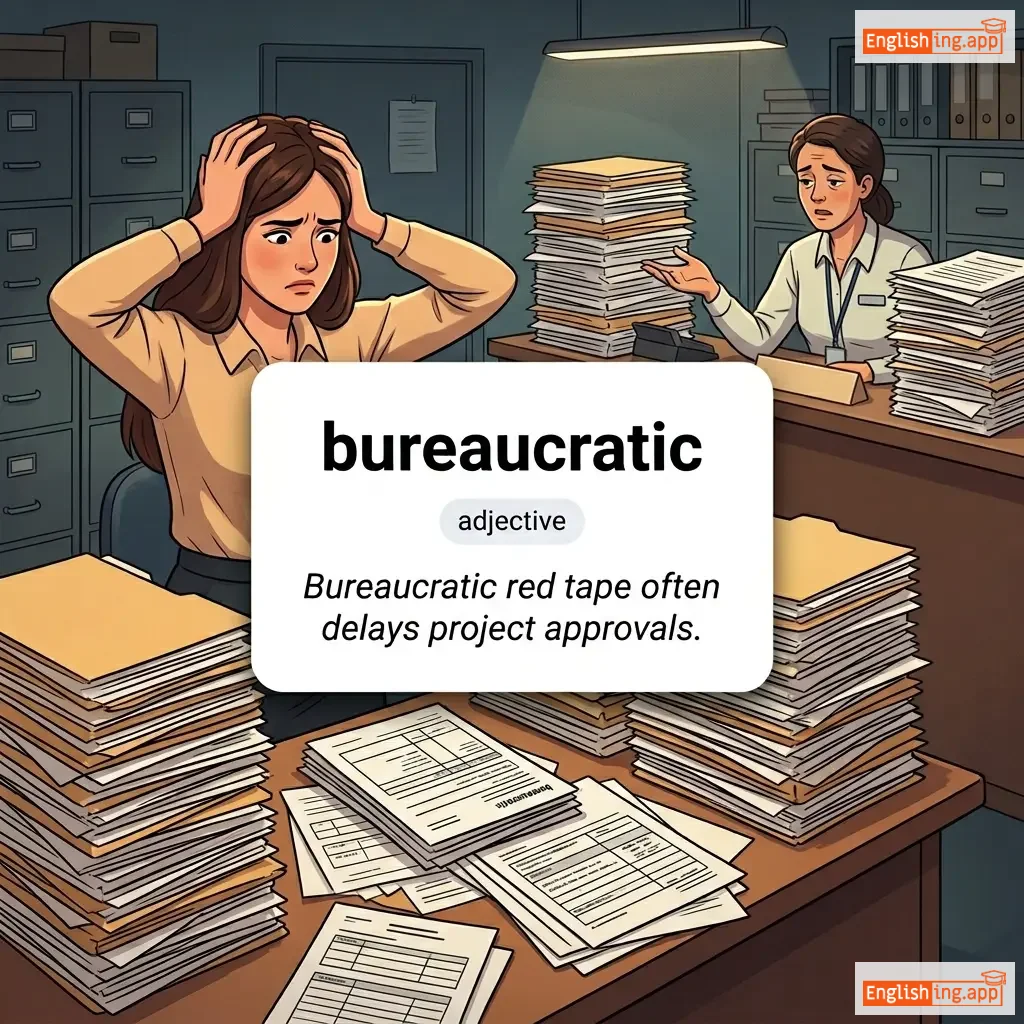
bureaucratic definition card — visual illustration of the meaning
adjective
ˌbjʊə.rəˈkræt.ɪk
burocrático (burocratico)

Involving or characterized by complex rules and procedures that can delay the achievement of goals.

"Bureaucratic red tape often delays project approvals."

"La burocracia a menudo retrasa la aprobación de proyectos." (la burocracia a menudo retrasa la aprobacion de proyectos.)
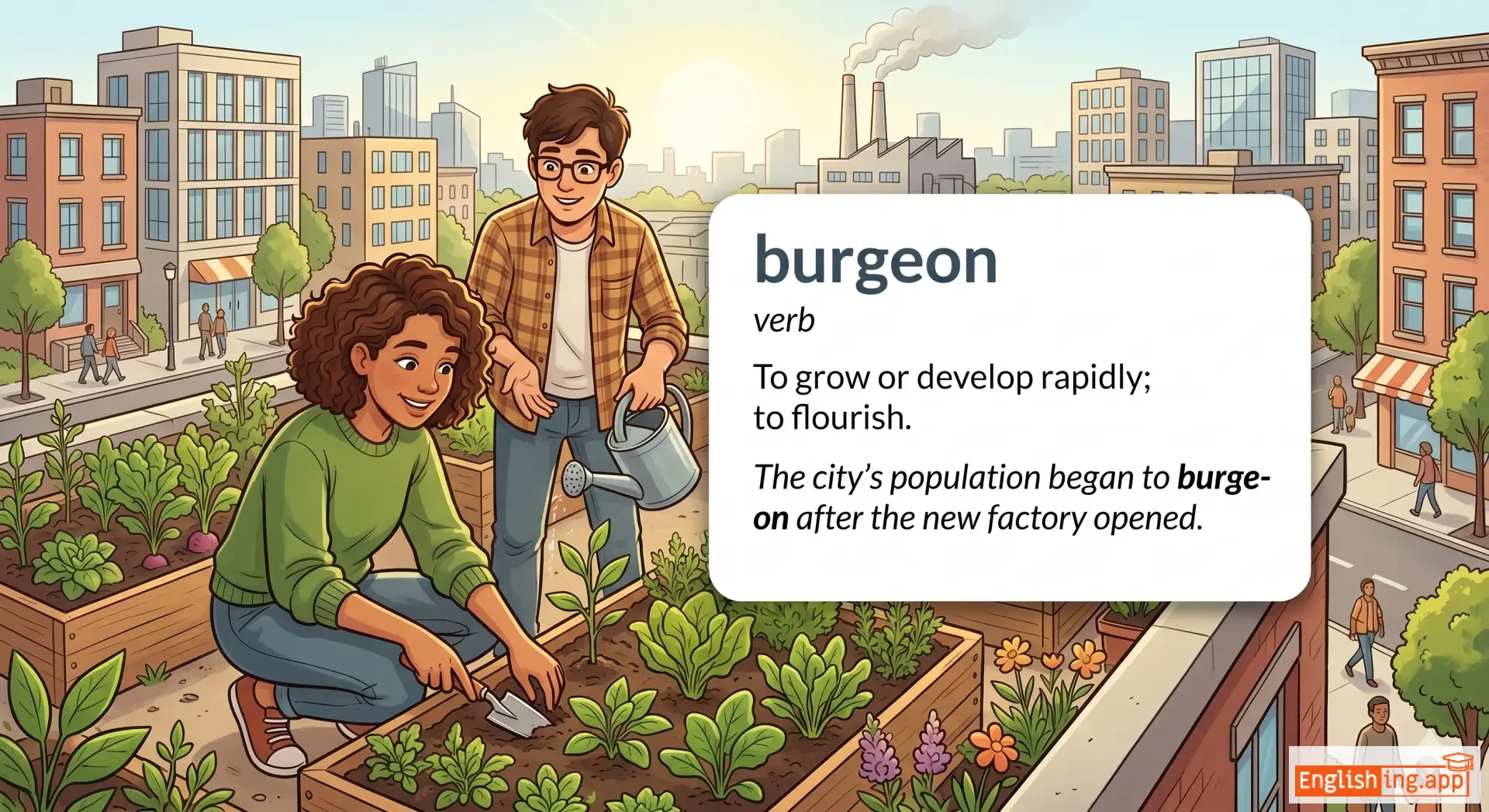
burgeon definition card — visual illustration of the meaning
verb
/ˈbɜːrdʒən/
crecer rápidamente (crecer rapidamente)

To grow or develop rapidly; to flourish.

"The city's population began to burgeon after the new factory opened."

"La población de la ciudad comenzó a crecer rápidamente después de la apertura de la nueva fábrica." (La poblacion de la ciudad comenzo a crecer rapidamente despues de la apertura de la nueva fabrica.)
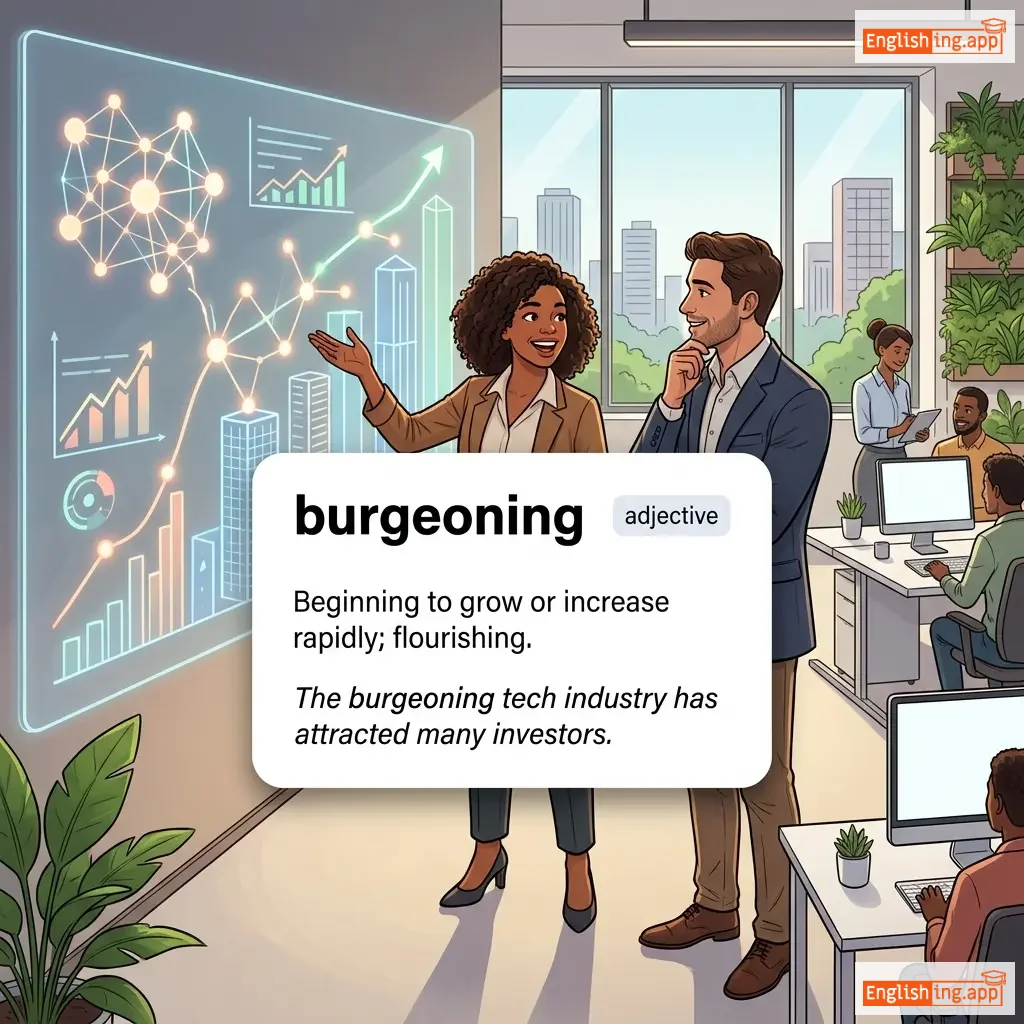
burgeoning definition card — visual illustration of the meaning
adjective
ˈbɜːdʒənɪŋ
en expansión (en expansiyon)

Beginning to grow or increase rapidly; flourishing.

"The burgeoning tech industry has attracted many investors."

"La industria tecnológica en expansión ha atraído a muchos inversores." (La industria tecnologica en expansion ha atraido a muchos inversores.)
🧑‍🤝‍🧑

burgess (bérdʒes)

noun
/ˈbɜːrdʒɪs/
ciudadano de la ciudad (ciudadano de la ciudad)

A citizen of a town or borough with full rights of citizenship.

"In medieval times, a burgess had the right to vote and hold property."

"En la Edad Media, un burgues tenía derecho a votar y a poseer propiedad." (En la Edad Media, un burgues tenía derecho a votar y a poseer propiedad.)
noun
/ˈbɜːrɡər/
burguesía (burguesia)

A citizen of a town, typically a member of the wealthy middle class.

"The burgher was respected as a prosperous merchant in the city."

"El burgués fue respetado como un próspero comerciante en la ciudad." (El burgués fue respetado como un próspero comerciante en la ciudad.)
noun
/ˈbɛriəl/
entierro (entierro)

the act of placing a dead body into the ground.

"The burial ceremony took place in the afternoon."

"La ceremonia del entierro tuvo lugar por la tarde." (La ceremonia del entierro tuvo lugar por la tarde.)
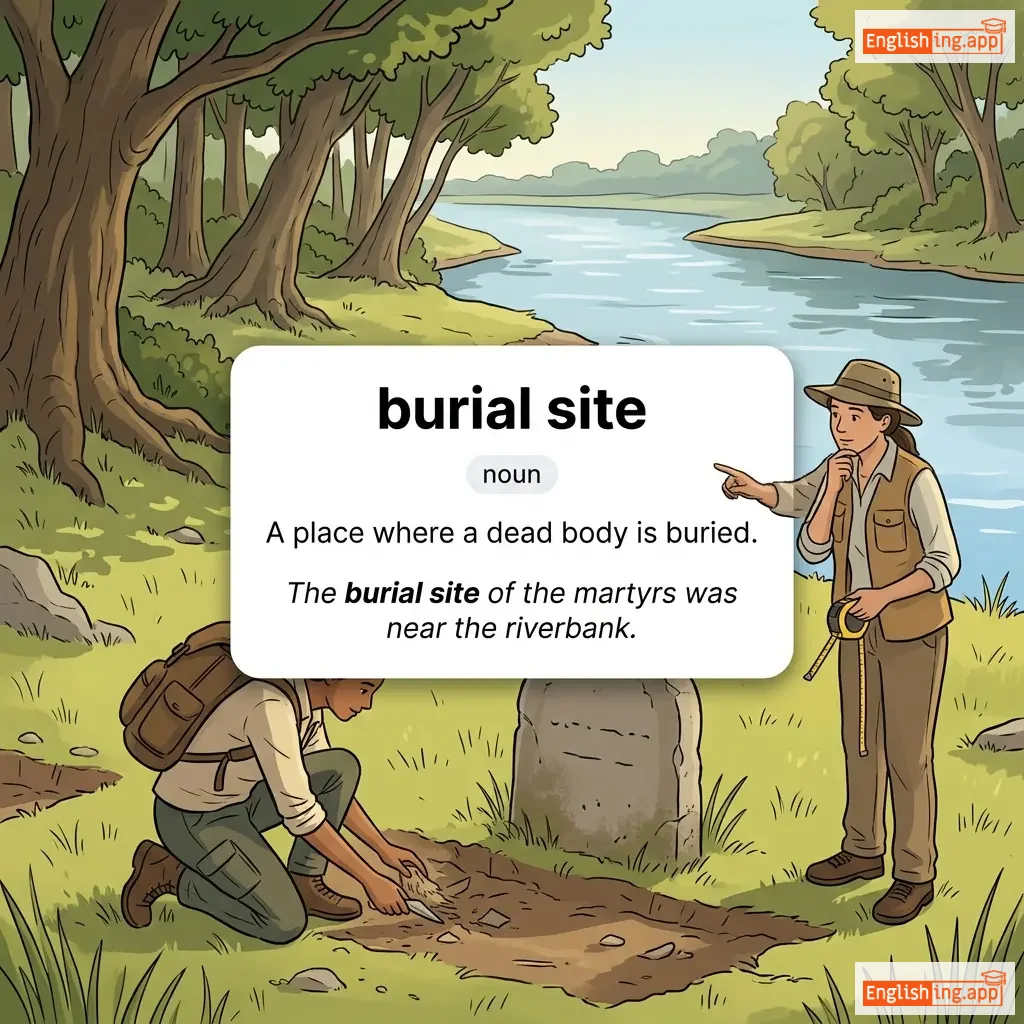
burial site definition card — visual illustration of the meaning
noun
ˈbɛriəl saɪt
sitio de entierro (sitio de entierro)

A place where a dead body is buried.

"The burial site of the martyrs was near the riverbank."

"El sitio de entierro de los mártires estaba cerca de la ribera." (El sitio de entierro de los mártires estaba cerca de la ribera.)
noun
/bɜːrˈlɛsk/
burlesque (burlesque)

A humorous and exaggerated imitation of a serious work; a type of theatrical entertainment involving comedy and parody.

"The play was a clever burlesque of traditional opera."

"La obra fue una ingeniosa burla de la ópera tradicional." (La obra fue una ingeniosa burla de la opera tradicional.)
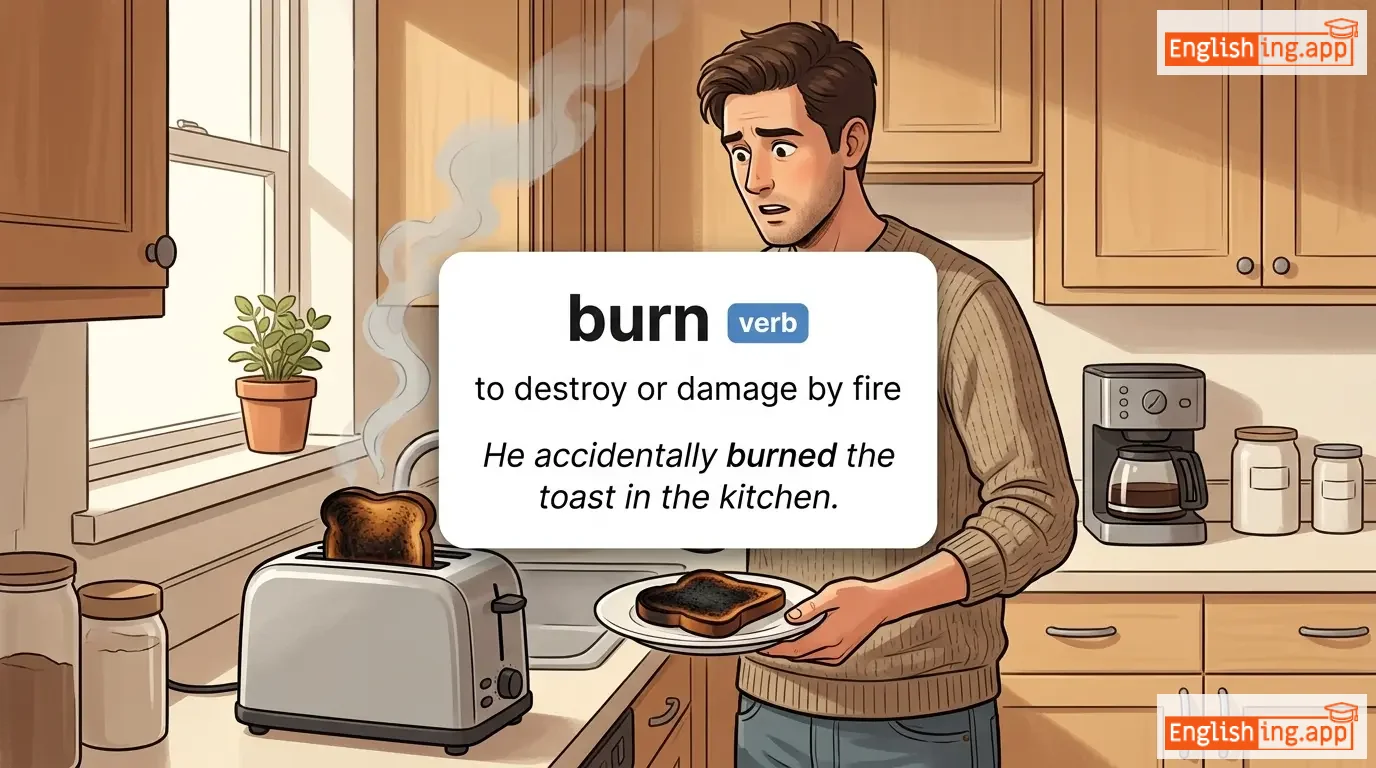
burn definition card — visual illustration of the meaning
verb
/bɜːrn/
quemar (quemar)

to destroy or damage by fire

"He accidentally burned the toast in the kitchen."

"Él accidentalmente quemó la tostada en la cocina." (El accidentalmente quemo la tostada en la cocina.)
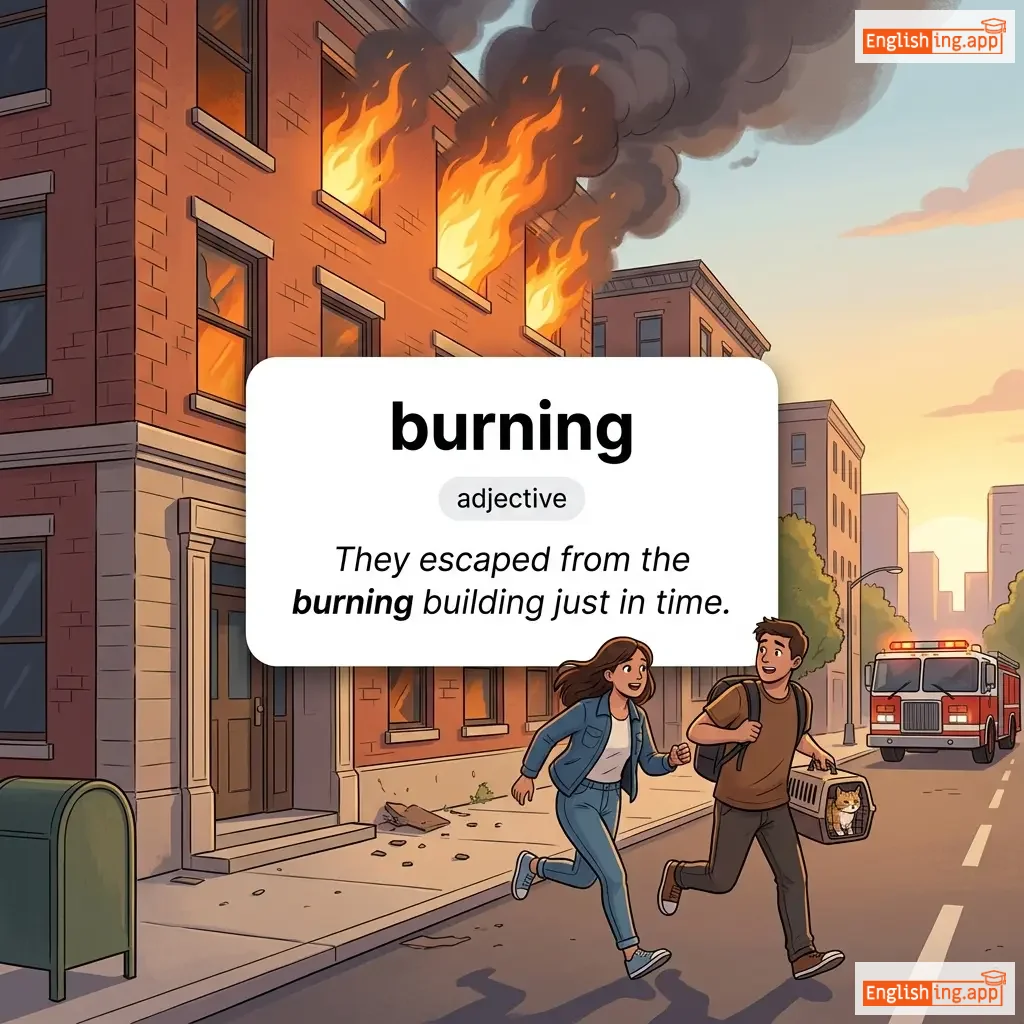
burning definition card — visual illustration of the meaning
adjective
/ˈbɜːnɪŋ/
ardiendo (ardiendo)

producing flames or intense heat; also used metaphorically for intense emotions or urgency

"They escaped from the burning building just in time."

"Escaparon del edificio en llamas justo a tiempo." (Escaparon del edificio en llamas justo a tiempo.)
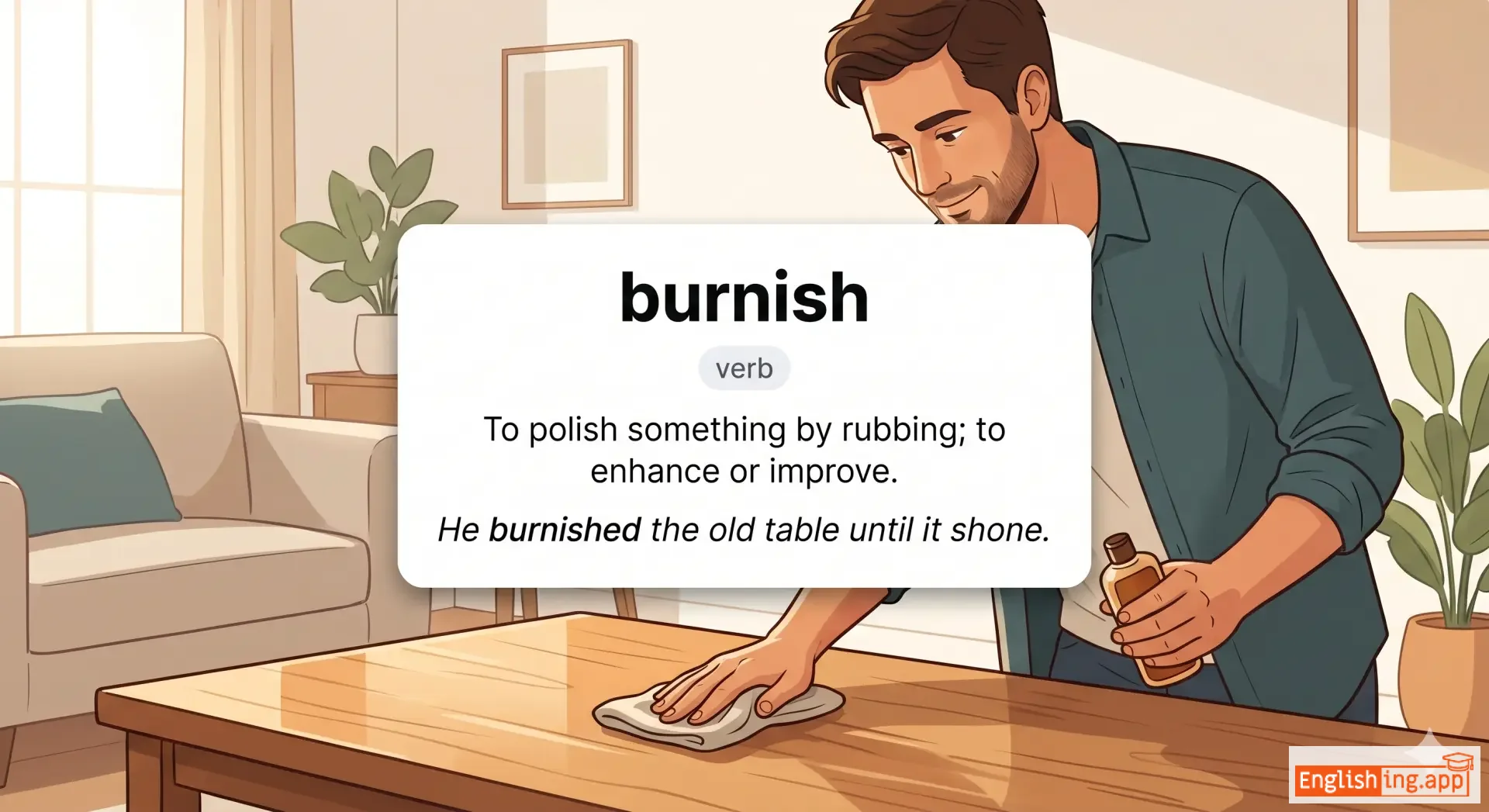
burnish definition card — visual illustration of the meaning
verb
/ˈbɜːrnɪʃ/
pulir (pulir)

To polish something by rubbing; to enhance or improve.

"He burnished the old table until it shone."

"Él pulió la vieja mesa hasta que brilló." (Él pulió la vieja mesa hasta que brilló.)
noun
/ˈbɜːrsər/
tesorero (tesorero)

An official in a school or college responsible for financial affairs.

"The bursar approved the budget for the new library."

"El tesorero aprobó el presupuesto para la nueva biblioteca." (El tesorero aprobó el presupuesto para la nueva biblioteca.)
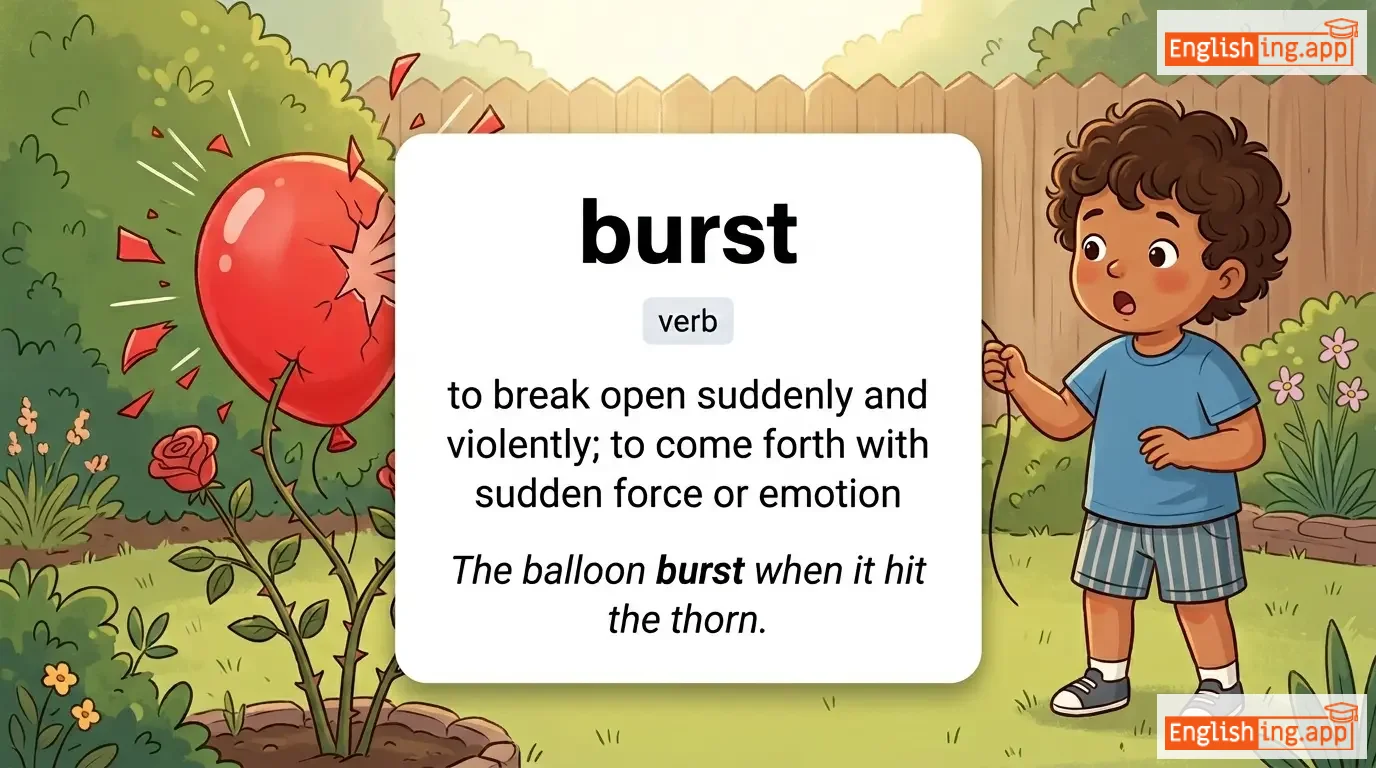
burst definition card — visual illustration of the meaning
verb
/bɜːst/
estallar (estallar)

to break open suddenly and violently; to come forth with sudden force or emotion

"The balloon burst when it hit the thorn."

"El globo estalló cuando golpeó la espina." (El globo estalló cuando golpeó la espina.)
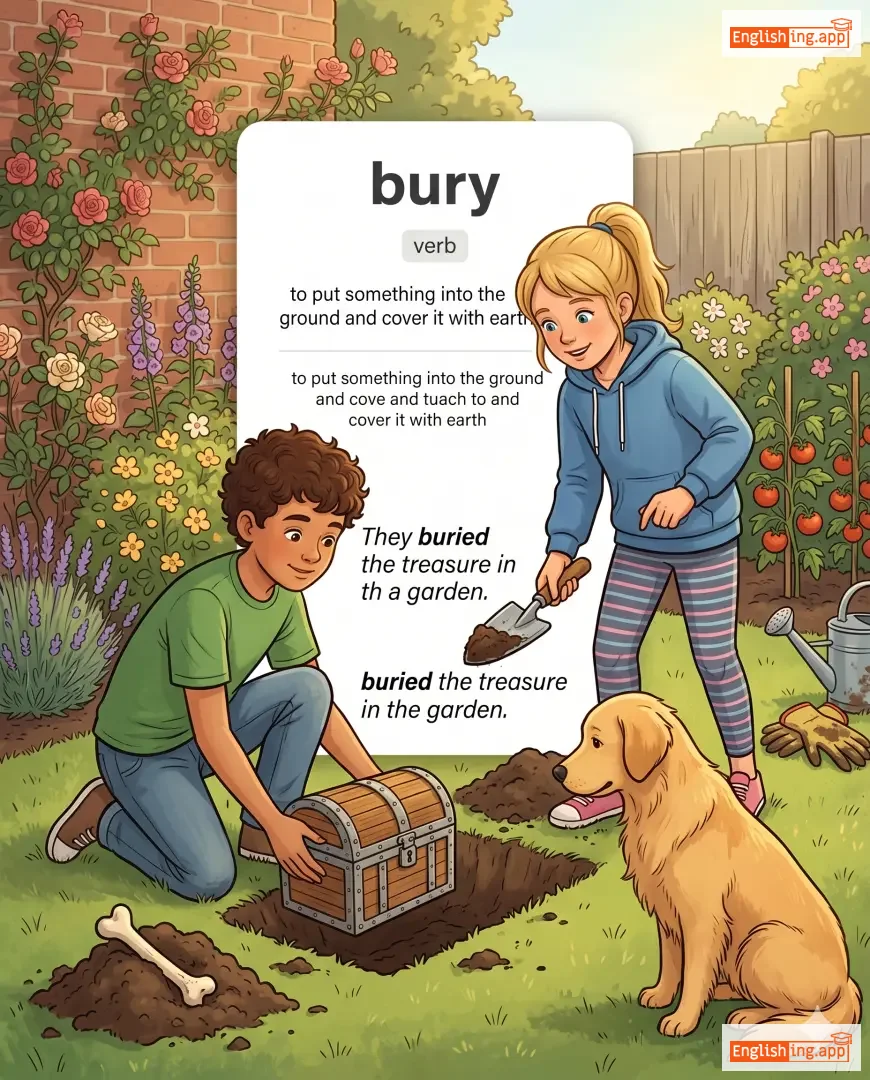
bury definition card — visual illustration of the meaning
verb
/ˈberi/
enterrar (enterrar)

to put something into the ground and cover it with earth

"They buried the treasure in the garden."

"Ellos enterraron el tesoro en el jardín." (Ellos enterraron el tesoro en el jardín.)
noun
/bʌs/
autobús (autobus)

a large motor vehicle carrying passengers by road

"We waited for the bus at the station."

"Esperamos el autobús en la estación." (Esperamos el autobus en la estacion.)
noun
/bʊʃ/
arbusto (arbusto)

a plant with many small branches growing close to the ground; a shrub

"A rabbit was hiding under the bush."

"Un conejo se escondía bajo el arbusto." (Un conejo se escondía bajo el arbusto.)