Vocabularios

Descubra, aprenda y domine el vocabulario en inglés

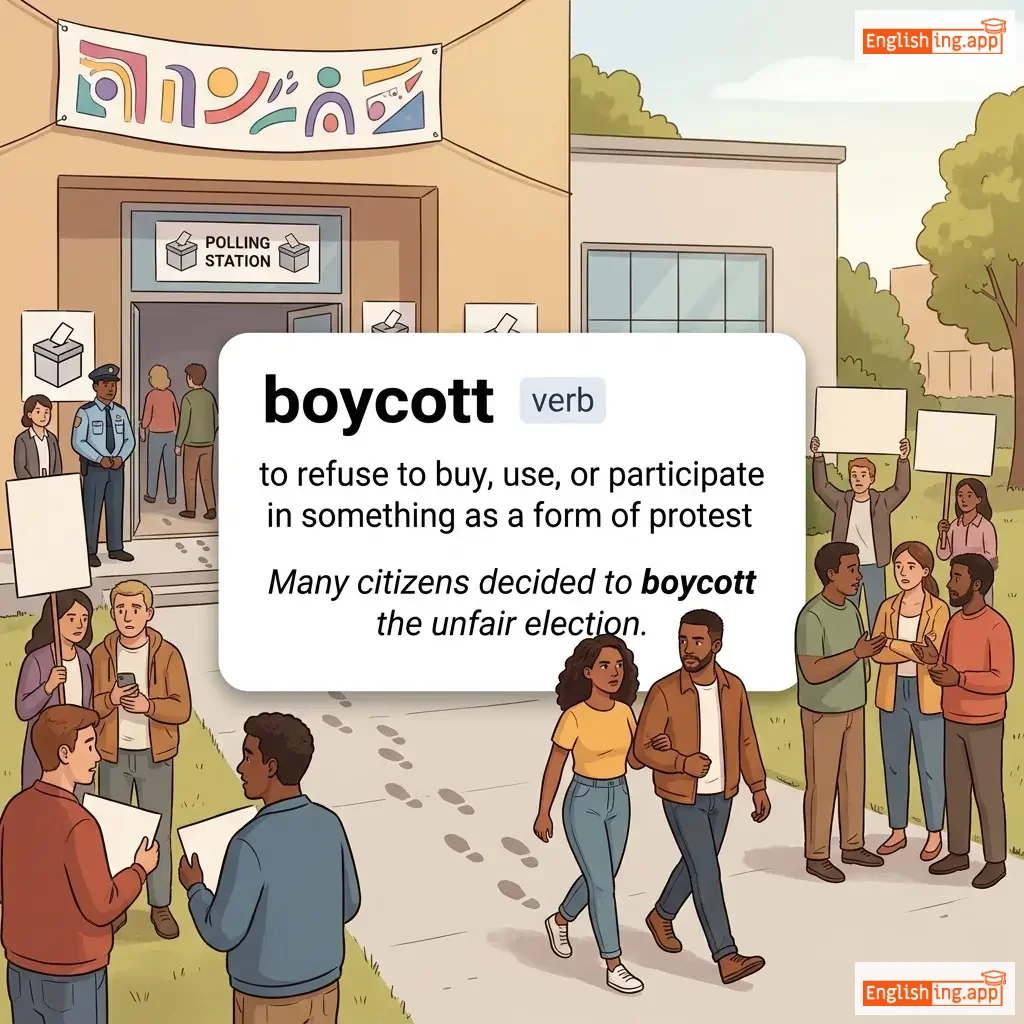
boycott definition card — visual illustration of the meaning
verb
/ˈbɔɪkɒt/
boicotear (boicotear)

to refuse to buy, use, or participate in something as a form of protest

"Many citizens decided to boycott the unfair election."

"Muchos ciudadanos decidieron boicotear la injusta elección." (Muchos ciudadanos decidieron boicotear la injusta elección.)
👨‍❤️‍👩

boyfriend

noun
/ˈbɔɪˌfrɛnd/

a man or boy that someone is having a romantic or close relationship with

"She introduced her boyfriend to her parents."

noun
/brɑː/
sujetador (sujetador)

a woman's undergarment worn to support and cover the breasts

"She bought a comfortable bra for everyday wear."

"Compró un sujetador cómodo para uso diario." (compro un sujetador comodo para uso diario)
noun; verb
/breɪs/
soporte; prepararse (soporte; prepararse)

a device that supports or strengthens something; to prepare mentally or physically for something difficult

"She braced herself for the strong wind."

"Ella se preparó para el viento fuerte." (ella se preparo para el viento fuerte)
noun
/ˈbreɪs.lət/
pulsera (pulsera)

an ornamental band worn around the wrist

"She received a gold bracelet as a birthday gift."

"Ella recibió una pulsera de oro como regalo de cumpleaños." (Ella recibió una pulsera de oro como regalo de cumpleaños.)
adjective
/ˈbreɪsɪŋ/
refrescante (refrescante)

Invigorating, refreshing, or providing strength and energy.

"The hikers enjoyed the bracing mountain air."

"Los excursionistas disfrutaron del aire refrescante de la montaña." (Los excursionistas disfrutaron del aire refrescante de la montaña.)
noun/verb
/ˈbrækɪt/
soporte metálico (soporte metalico)

A support attached to a wall for holding something; also, to group things together.

"The shelf was held up by a strong metal bracket."

"La estantería estaba sujeta por un fuerte soporte metálico." (La estanteria estaba sujeta por un fuerte soporte metalico.)
adjective
/ˈbrækɪʃ/
salobre (salobre)

Slightly salty, often describing water that is a mix of fresh and seawater.

"The river estuary contained brackish water."

"El estuario del río contenía agua salobre." (El estuario del río contenía agua salobre.)
noun
/breɪ/
ladera (ladera)

A hillside or slope, especially in Scotland.

"They climbed up the grassy brae to see the sunset."

"Subieron por la ladera de hierba para ver la puesta de sol." (Subieron por la ladera de hierba para ver la puesta de sol.)
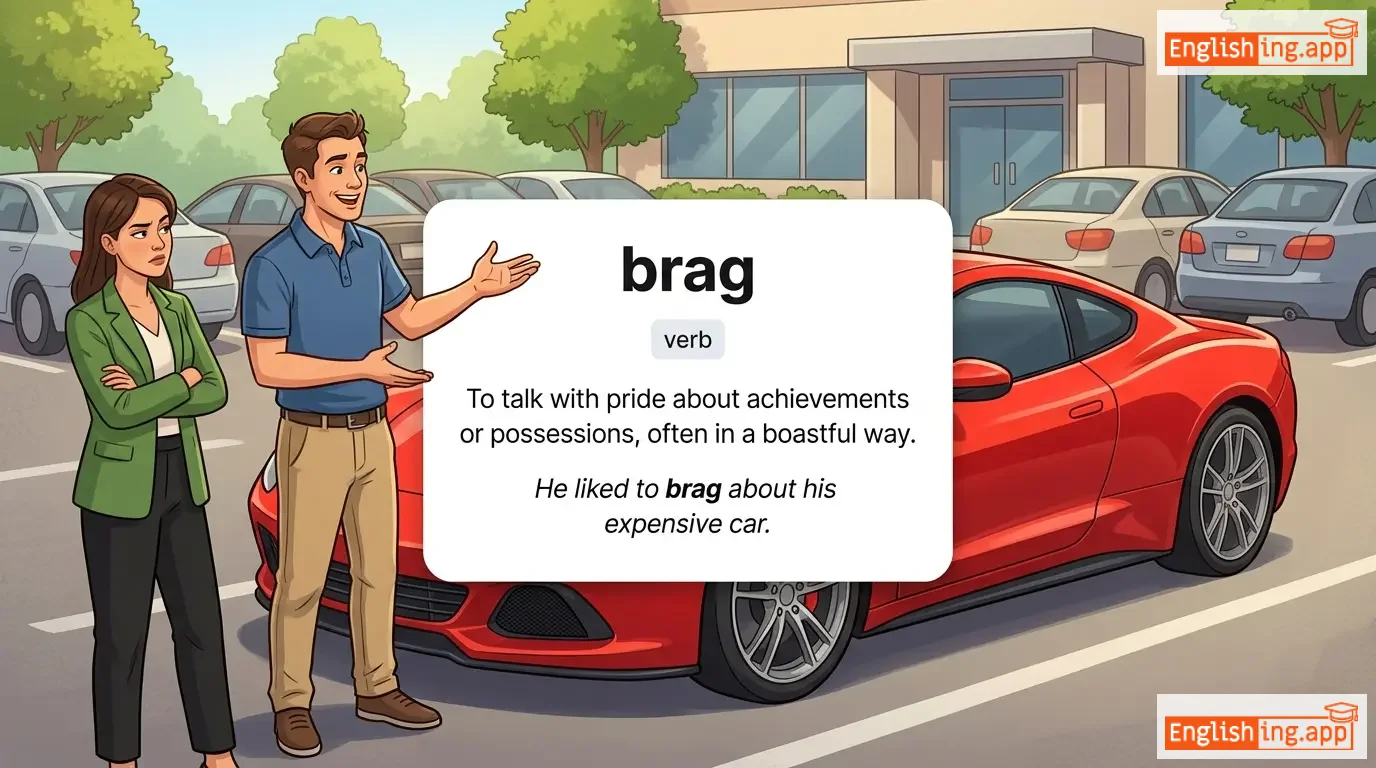
brag definition card — visual illustration of the meaning
verb
/bræɡ/
presumir (presumir)

To talk with pride about achievements or possessions, often in a boastful way.

"He liked to brag about his expensive car."

"A él le gustaba presumir de su coche caro." (A él le gustaba presumir de su coche caro.)
noun
/ˌbræɡəˈdoʊʃioʊ/
comportamiento arrogante (comportamiento arrogante)

boastful or arrogant behavior; empty boasting

"His endless braggadocio annoyed everyone at the party."

"Su interminable comportamiento arrogante molestó a todos en la fiesta." (Su interminable comportamiento arrogante molestó a todos en la fiesta.)
noun
/ˈbræɡərt/
fanfarrón (fanfarron)

a person who boasts about achievements or possessions

"No one liked him because he was such a braggart."

"Nadie lo quería porque era un fanfarrón." (Nadie lo queria porque era un fanfarron.)
verb
/breɪd/
trenza (trenza)

to weave together strands of hair or material

"She braided her hair before going to school."

"Ella trenzó su cabello antes de ir a la escuela." (Ella trenzó su cabello antes de ir a la escuela.)
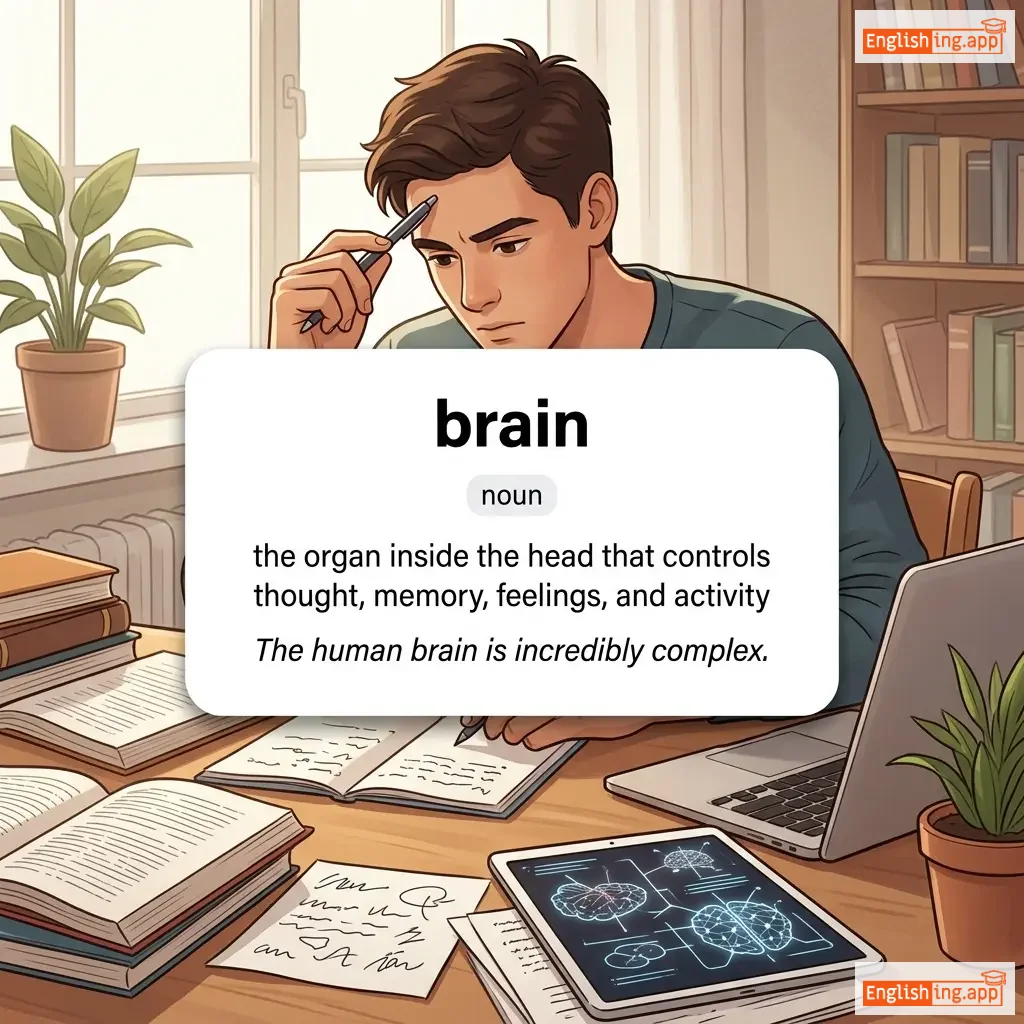
brain definition card — visual illustration of the meaning
noun
/breɪn/
cerebro (cerebro)

the organ inside the head that controls thought, memory, feelings, and activity

"The human brain is incredibly complex."

"El cerebro humano es increíblemente complejo." (El cerebro humano es increiblemente complejo.)
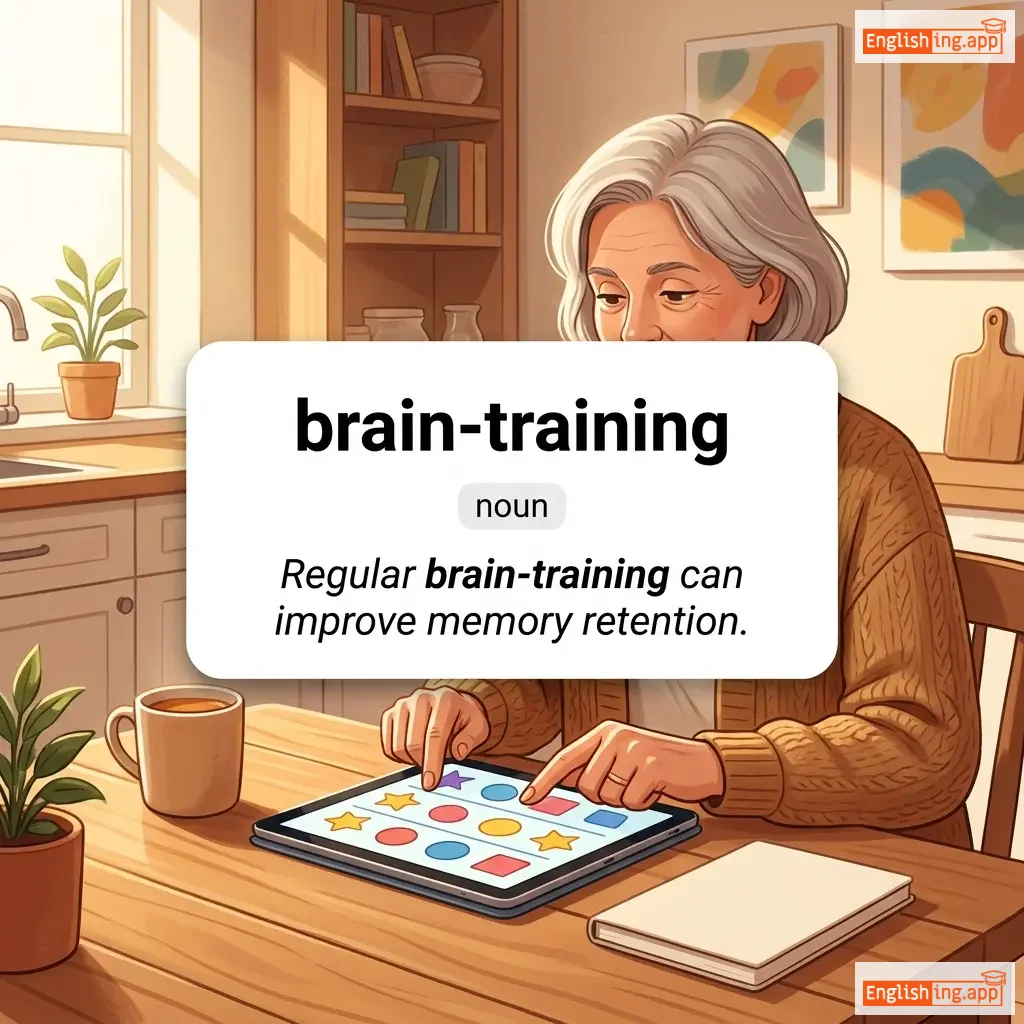
brain-training definition card — visual illustration of the meaning
noun
breɪn ˈtreɪ.nɪŋ
entrenamiento cerebral (entrenamiento cerebral)

Mental exercises designed to improve cognitive functions, memory retention, and overall brain performance.

"Regular brain-training can improve memory retention."

"El entrenamiento cerebral regular puede mejorar la retención de la memoria." (El entrenamiento cerebral regular puede mejorar la retencion de la memoria.)
verb, noun
/ˈbreɪnˌwɒʃ/
lavar el cerebro (lavar el cerebro)

to manipulate someone into adopting certain beliefs by repeated pressure or propaganda; the act or process of such manipulation

"The group tried to brainwash new members with constant propaganda."

"El grupo intentó lavar el cerebro a los nuevos miembros." (El grupo intento lavar el cerebro a los nuevos miembros)
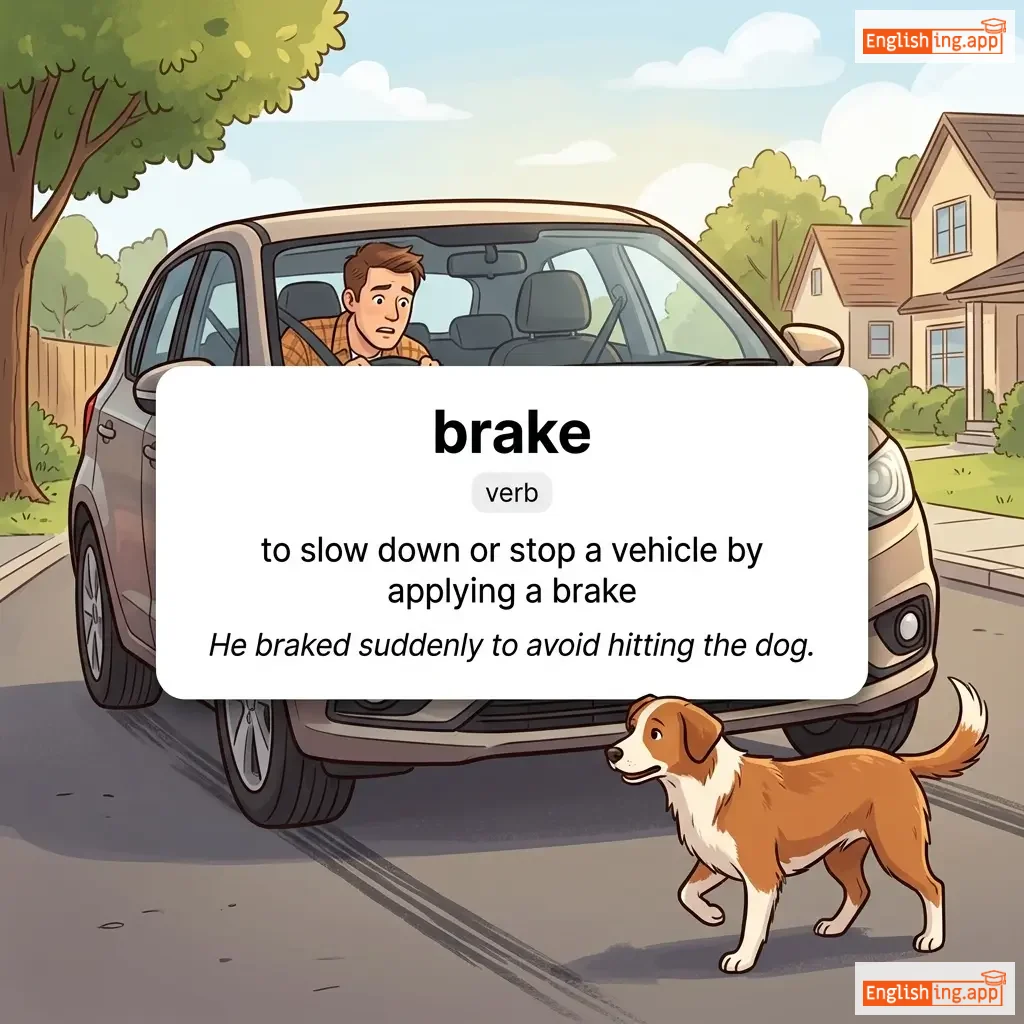
brake definition card — visual illustration of the meaning
verb
/breɪk/
frenar (frenar)

to slow down or stop a vehicle by applying a brake

"He braked suddenly to avoid hitting the dog."

"Él frenó repentinamente para evitar golpear al perro." (El freno repentinamente para evitar golpear al perro.)
noun, verb
/bræntʃ/
sucursal (sucursal)

A part of a tree that grows out from the trunk; a division of an organization or subject.

"The company opened a new branch in Dhaka."

"La compañía abrió una nueva sucursal en Dhaka." (La compania abrio una nueva sucursal en Dhaka.)
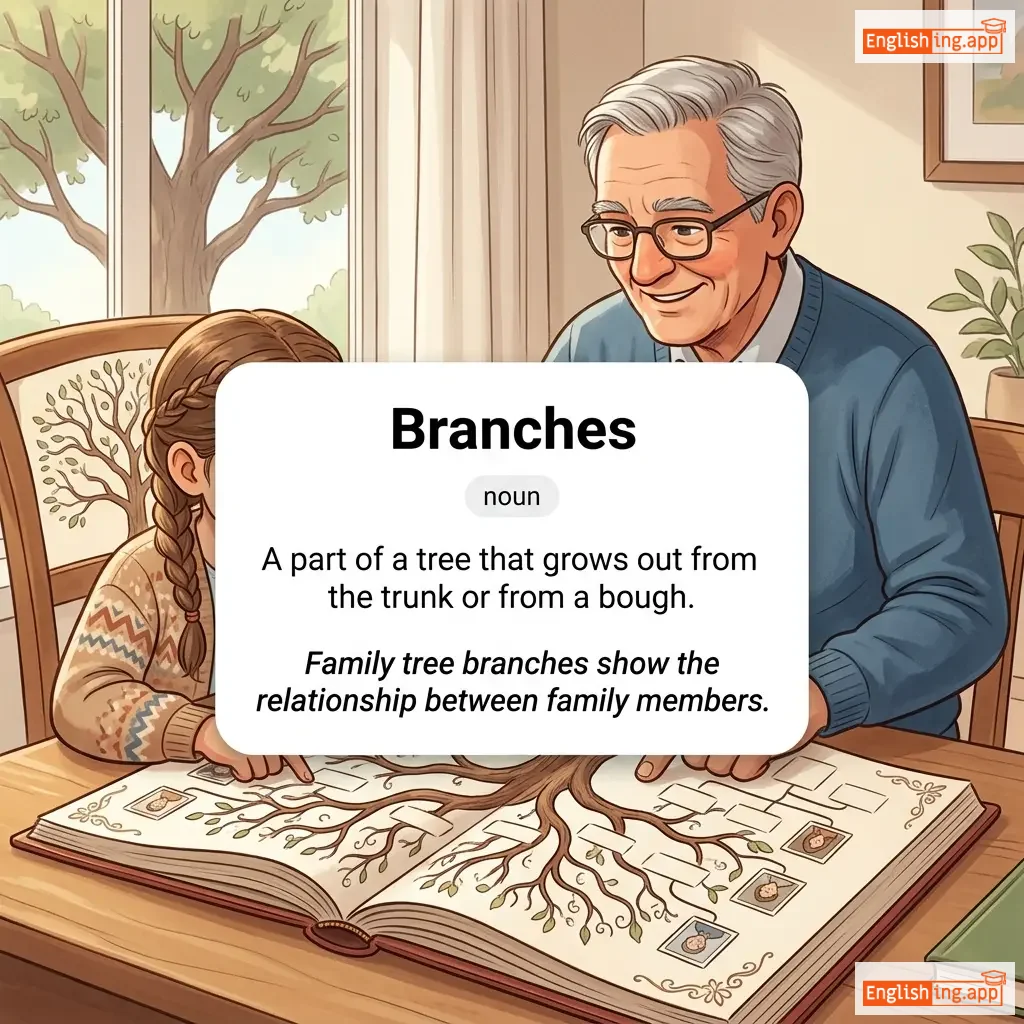
Branches definition card — visual illustration of the meaning
noun
ˈbræntʃɪz
ramas (ramas)

A part of a tree that grows out from the trunk or from a bough.

"Family tree branches show the relationship between family members."

"Las ramas del árbol genealógico muestran la relación entre los miembros de la familia." (Las ramas del arbol genealogico muestran la relacion entre los miembros de la familia.)
noun
/brænd/
marca (marca)

a type of product manufactured by a company under a particular name

"Nike is a popular brand of sportswear."

"Nike es una marca popular de ropa deportiva." (Nike es una marca popular de ropa deportiva.)
branding definition card — visual illustration of the meaning
noun
/ˈbræn.dɪŋ/
Marca (marca)

The process involved in creating a unique name and image for a product in the consumers' mind, mainly through advertising campaigns with a consistent theme.

"Strong branding helps build customer trust."

"El branding fuerte ayuda a construir la confianza del cliente." (El branding fuerte ayuda a construir la confianza del cliente.)
verb
/ˈbrændɪʃ/
agitar (agitar)

to wave or flourish something, especially a weapon, in a threatening or showy way

"He brandished a sword to scare off the intruders."

"Él brandió una espada para asustar a los intrusos." (Él brandió una espada para asustar a los intrusos.)
adjective
/bræʃ/
atrevido (atrevido)

self-assertive in a rude, noisy, or overconfident way

"His brash comments offended many people at the meeting."

"Sus comentarios atrevidos ofendieron a muchas personas en la reunión." (Sus comentarios atrevidos ofendieron a muchas personas en la reunion.)
noun
/brəˈzɪər/
sujetador (sujetador)

a woman's undergarment designed to support the breasts

"She bought a comfortable brassiere for daily wear."

"Ella compró un sujetador cómodo para usar a diario." (Ella compro un sujetador comodo para usar a diario)
adjective
/ˈbræsi/
estridente (estridente)

loud and showy in a way that lacks good taste; resembling brass in color or sound

"She wore a brassy necklace that caught everyone’s attention."

"Ella llevaba un collar estridente que atraía la atención de todos." (Ella llevaba un collar estridente que atraía la atención de todos.)
adjective
/ˈbrætɪʃ/
malcriado (malcriado)

acting like a spoiled child; behaving in an annoying, self-centered way

"The brattish boy threw a tantrum when he didn’t get his toy."

"El niño malcriado hizo un berrinche cuando no consiguió su juguete." (El niño malcriado hizo un berrinche cuando no consiguió su juguete.)
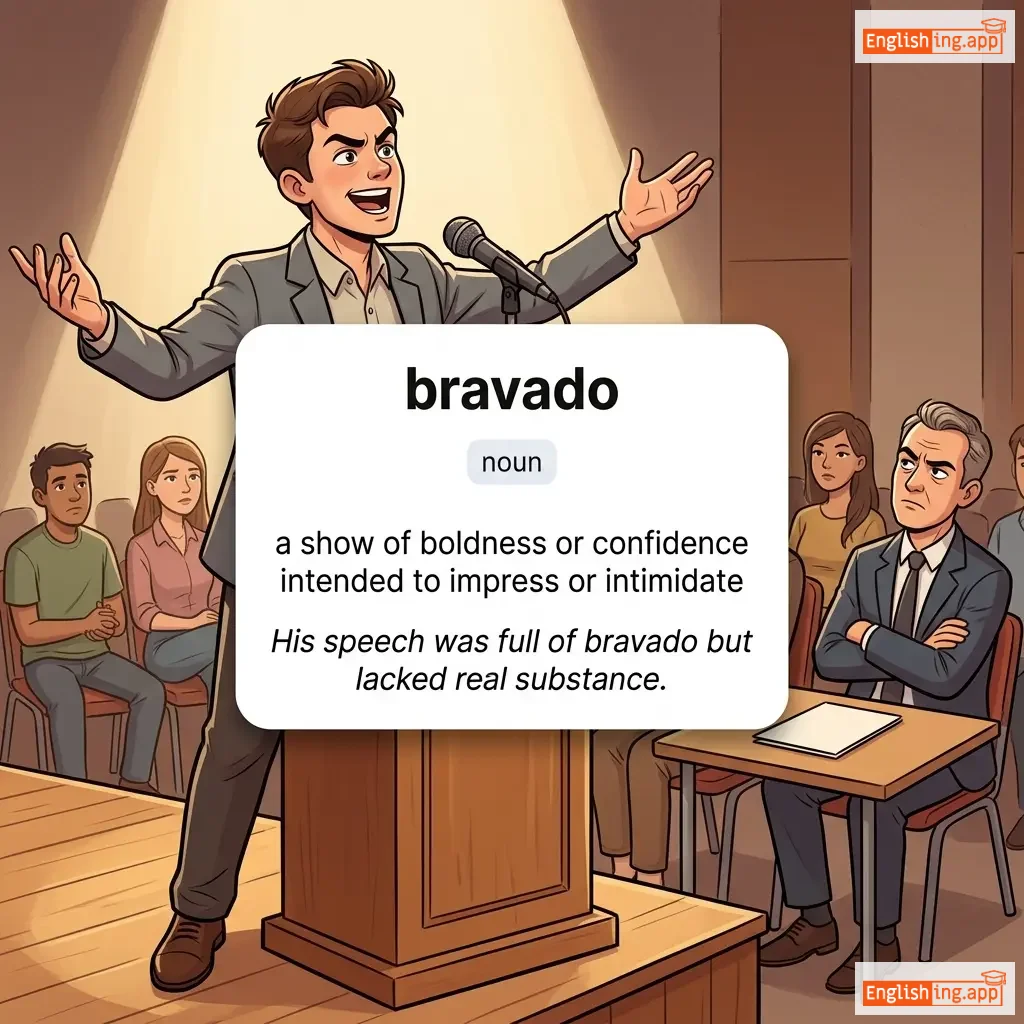
bravado definition card — visual illustration of the meaning
noun
/brəˈvɑːdoʊ/
vanidad (vanidad)

a show of boldness or confidence intended to impress or intimidate

"His speech was full of bravado but lacked real substance."

"Su discurso estaba lleno de bravado, pero carecía de contenido real." (Su discurso estaba lleno de bravado, pero carecía de contenido real.)
adjective
/breɪv/
valiente (valiente)

showing courage in the face of danger or difficulty

"The brave firefighter rushed into the burning building."

"El valiente bombero corrió hacia el edificio en llamas." (El valiente bombero corrió hacia el edificio en llamas.)
adverb
/ˈbreɪv.li/
valientemente (valientemente)

in a way that shows courage and determination

"The firefighter bravely entered the burning building."

"El bombero entró valientemente en el edificio en llamas." (El bombero entró valientemente en el edificio en llamas.)
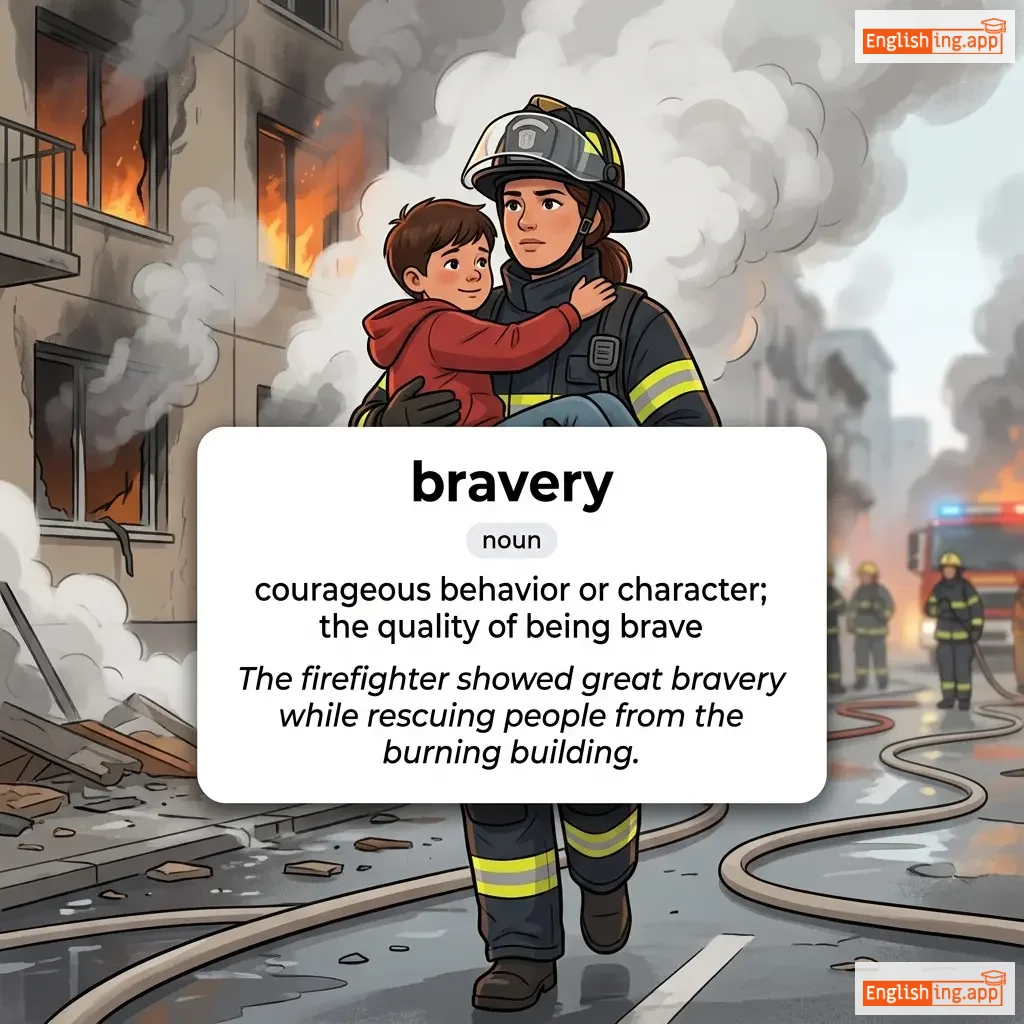
bravery definition card — visual illustration of the meaning
noun
/ˈbreɪ.vər.i/
valentía (valentia)

courageous behavior or character; the quality of being brave

"The firefighter showed great bravery while rescuing people from the burning building."

"El bombero mostró gran valentía al rescatar a las personas del edificio en llamas." (El bombero mostro gran valentia al rescatar a las personas del edificio en llamas.)
interjection
/ˈbrɑː.voʊ/
bravo (bravo)

used to express approval, admiration, or praise

"The audience shouted 'Bravo!' after the stunning performance."

"La audiencia gritó '¡Bravo!' después de la impresionante actuación." (La audiencia grito '¡Bravo!' despues de la impresionante actuacion.)
noun
/brəˈvjʊrə/
bravura (bravura)

a display of great skill and brilliance, especially in music or performance

"The pianist delivered a bravura performance that left the audience spellbound."

"El pianista ofreció una interpretación de gran virtuosismo que dejó al público hechizado." (El pianista ofrecio una interpretacion de gran virtuosismo que dejo al publico hechizado)
noun
/brɔːl/
pelea (pelea)

a noisy fight in a public place

"A brawl broke out outside the bar late at night."

"Una pelea estalló afuera del bar tarde en la noche." (Una pelea estalló afuera del bar tarde en la noche.)
noun
/brɔːn/
fuerza física (fuerza fisica)

physical strength in contrast to intelligence

"He used his brawn to lift the heavy box."

"Usó su fuerza física para levantar la caja pesada." (Uso su fuerza fisica para levantar la caja pesada.)
adjective
/ˈbrɔːni/
musculoso (musculoso)

Physically strong and muscular.

"The brawny man lifted the heavy box with ease."

"El hombre musculoso levantó la caja pesada con facilidad." (El hombre musculoso levantó la caja pesada con facilidad.)
verb
/breɪ/
rebuzno (rebuzno)

To make a loud, harsh sound like a donkey.

"The donkey began to bray loudly in the field."

"El burro comenzó a rebuznar fuerte en el campo." (El burro comenzó a rebuznar fuerte en el campo.)
verb
/breɪz/
soldar (soldar)

To join two pieces of metal by heating and melting a filler metal into the joint.

"The mechanic brazed the broken pipe to fix the leak."

"El mecánico soldó la tubería rota para arreglar la fuga." (El mecanico soldo la tuberia rota para arreglar la fuga.)
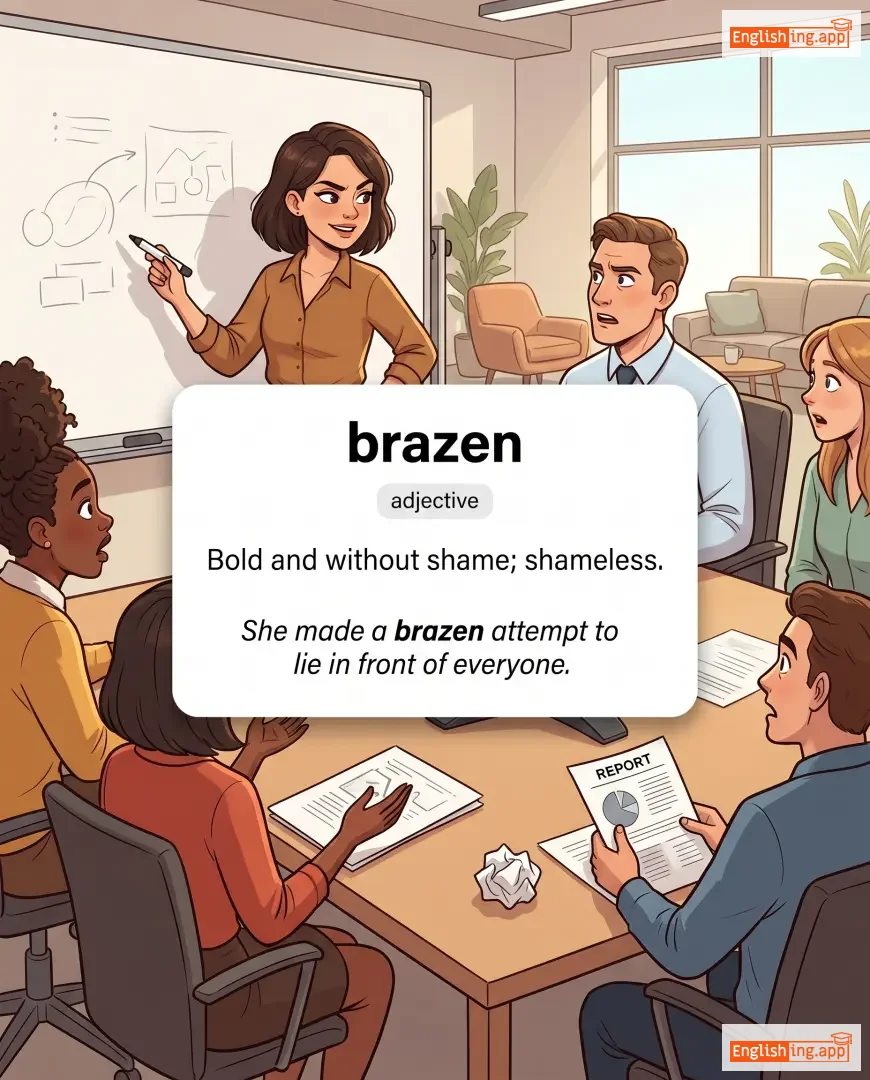
brazen definition card — visual illustration of the meaning
adjective
/ˈbreɪzən/
descarado (deskarado)

Bold and without shame; shameless.

"She made a brazen attempt to lie in front of everyone."

"Ella hizo un intento descarado de mentir frente a todos." (Ella hizo un intento descarado de mentir frente a todos.)
noun
/ˈbreɪziər/
brasero (brasero)

A container for holding burning coal or charcoal, used for heating or cooking.

"The street vendor cooked chestnuts on a brazier."

"El vendedor de la calle cocinó castañas en un brasero." (El vendedor de la calle cocinó castañas en un brasero.)
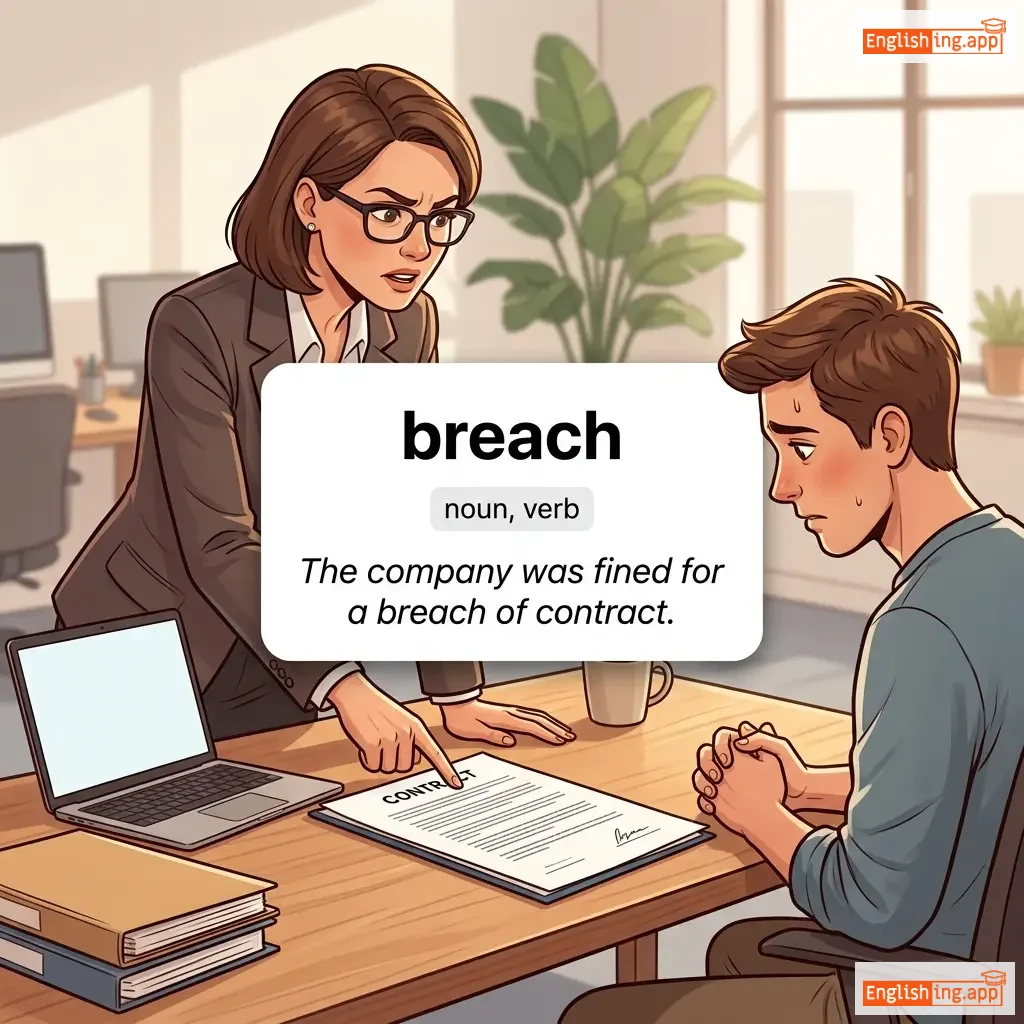
breach definition card — visual illustration of the meaning
noun, verb
/briːtʃ/
violación (violacion)

An act of breaking or failing to observe a law, agreement, or code of conduct; to break through.

"The company was fined for a breach of contract."

"La empresa fue multada por una violación del contrato." (La compania fue multada por una violacion del contrato.)
noun
/brɛd/
pan (pan)

A type of food made from flour, water, and yeast, mixed and baked.

"She bought a loaf of bread from the bakery."

"Ella compró una hogaza de pan en la panadería." (Ella compro una hogaza de pan en la panaderia)
noun
/brɛdθ/
anchura (anchura)

The distance or measurement from side to side; width; a wide range.

"The breadth of his knowledge impressed everyone."

"La anchura de su conocimiento impresionó a todos." (La anchura de su conocimiento impresionó a todos.)
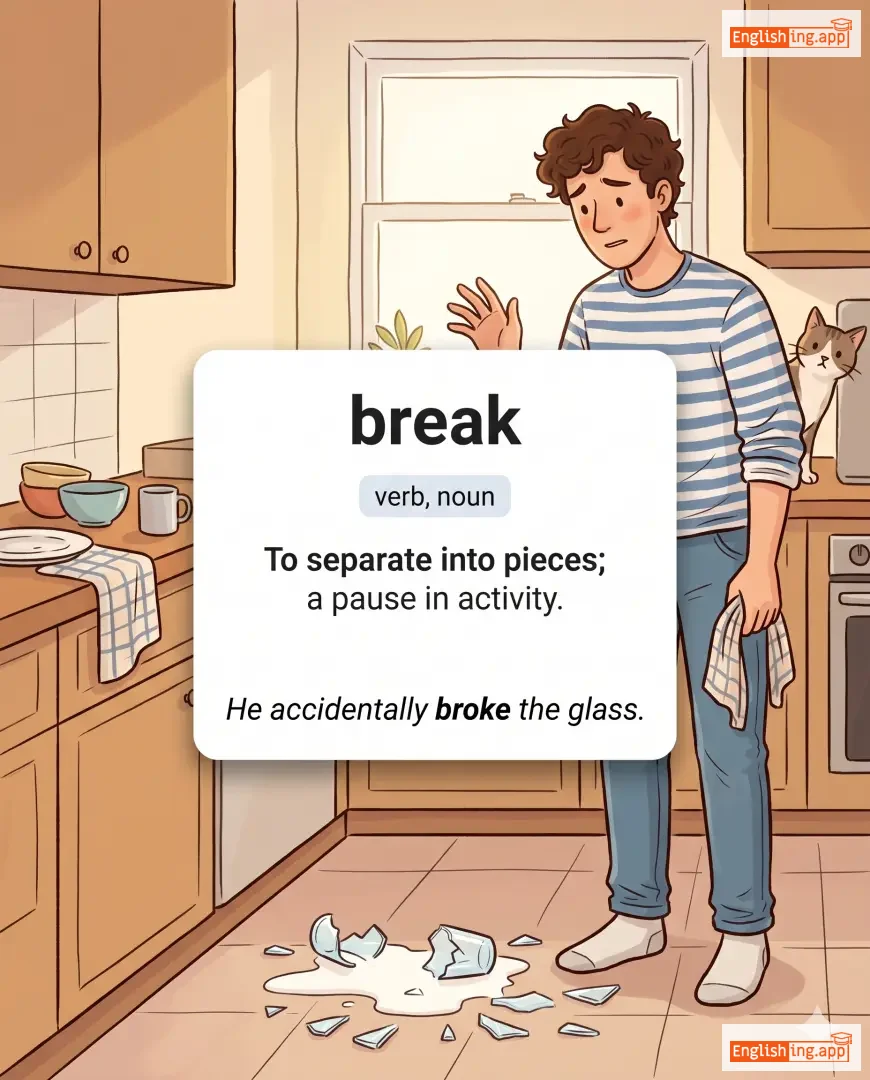
break definition card — visual illustration of the meaning
verb, noun
/breɪk/
romper / descanso (romper / descanso)

To separate into pieces; a pause in activity.

"He accidentally broke the glass."

"Accidentalmente rompió el vaso." (Accidentalmente rompió el vaso.)
noun
/ˈbrɛkdaʊn/
avería (averia)

a failure or collapse of a system or machinery

"The car had a breakdown on the highway."

"El coche tuvo una avería en la carretera." (El coche tuvo una averia en la carretera.)
noun
/ˈbreɪkər/
disyuntor (algo que rompe, una ola grande que se rompe cerca de la orilla, o un dispositivo que interrumpe un circuito eléctrico) (disyuntor)

A person or thing that breaks something; a large sea wave that breaks into foam near the shore; a device that interrupts an electric circuit.

"The breaker tripped during the storm, cutting off electricity."

"El disyuntor se disparó durante la tormenta, cortando la electricidad." (El disyuntor se disparó durante la tormenta, cortando la electricidad.)
noun
/ˈbrɛkfəst/
desayuno (desayuno)

The first meal of the day, usually eaten in the morning.

"We had eggs and toast for breakfast."

"Tomamos huevos y tostadas para el desayuno." (Tomamos huevos y tostadas para el desayuno.)
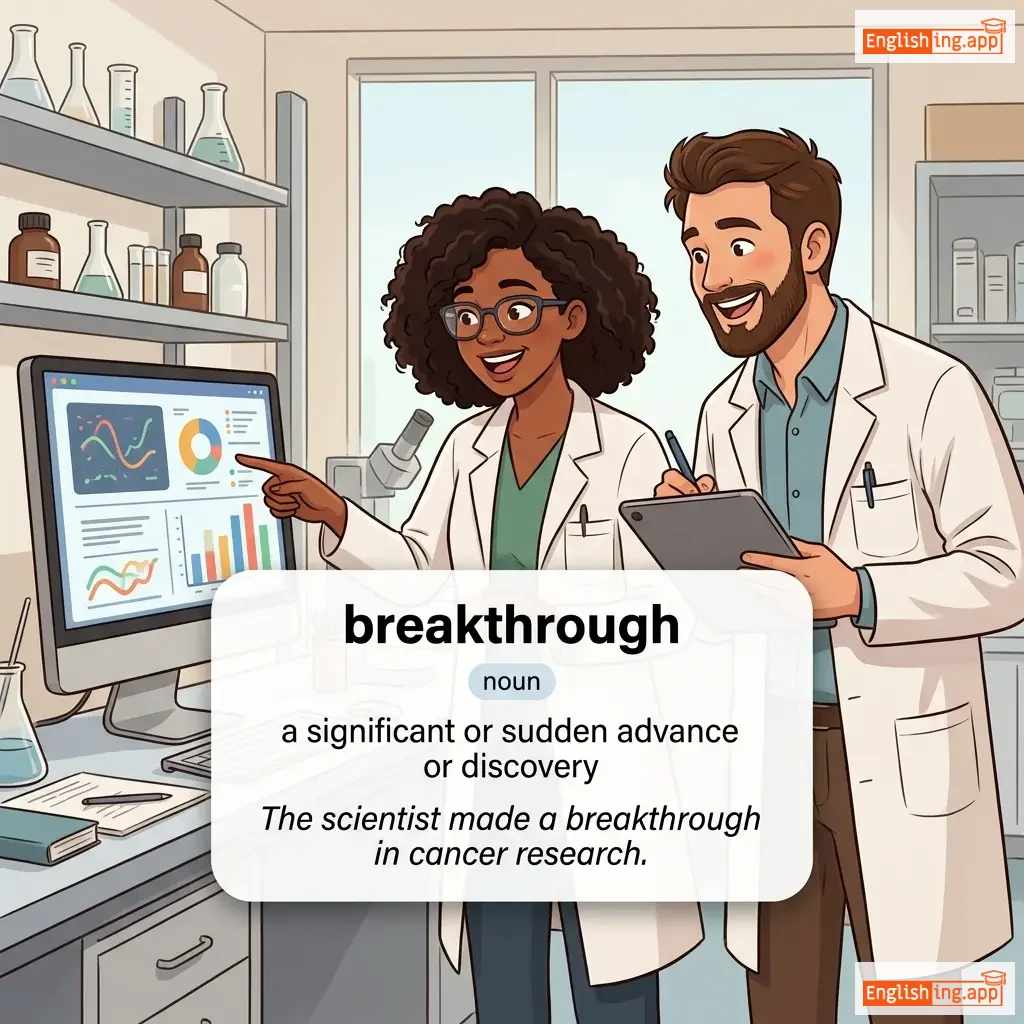
breakthrough definition card — visual illustration of the meaning
noun
/ˈbrɛkθruː/
avance (breakthrough)

a significant or sudden advance or discovery

"The scientist made a breakthrough in cancer research."

"El científico logró un avance en la investigación del cáncer." (El cientifico logro un avance en la investigacion del cancer.)
👩‍🍼

Breast (brest)

noun
/brɛst/
seno (seno)

Either of the two soft, rounded parts on a woman’s chest that produce milk after childbirth.

"The baby was fed from his mother's breast."

"El bebé fue alimentado desde el seno de su madre." (El bebe fue alimentado desde el seno de su madre.)
noun
/brɛθ/
respiración (respiracion)

The air taken into or expelled from the lungs during breathing.

"He took a deep breath before speaking."

"Él tomó una respiración profunda antes de hablar." (El tomo una respiracion profunda antes de hablar.)
😮‍💨

breathe (briz)

verb
/briːð/
respirar (respirar)

To take air into the lungs and send it out again.

"It was hard to breathe in the smoky room."

"Fue difícil respirar en la habitación llena de humo." (Fue dificil respirar en la habitacion llena de humo.)